
WILL MARCHINO – UNIVERSITY OF LOUISIANA MONROE WOMEN’S BASKETBALL ASSISTANT COACH – EPISODE 1283


Website – https://ulmwarhawks.com/sports/womens-basketball
Email – [email protected]
Twitter/X – @WillMarchino
If you listen to and love the Hoop Heads Podcast, please consider giving us a small tip that will help in our quest to become the #1 basketball coaching podcast.
Will Marchino is entering his first season as a Women’s Basketball Assistant Coach at the University of Louisiana Monroe. He spent the past three seasons as the head coach at Seward County Community College. He led the Saints to their second consecutive 20+-win season in 2025-26, recording a 57-39 overall record.
Marchino previously spent a season at Washburn as an assistant coach. He began his first stint at Seward in 2020, where he helped the Saints to four Top 25 wins and a finish in the Region VI semifinals.
Marchino spent the 2018 to 2020 seasons at Grand View University, assisting the team to the 2018 NAIA National Tournament, the first in Grand View’s history. Prior to his jump to the collegiate ranks, he was the head women’s basketball coach at Iowa Central Academy for three seasons. Marchino also owned and operated his own AAU program, the Iowa Dragons for eight years with his wife, Amanda.
On this episode Mike & Will discuss the differences in coaching dynamics across various levels of basketball, emphasizing the distinct challenges and opportunities presented at the collegiate level compared to high school and junior college. Marchino details the importance of fostering a supportive environment for student-athletes, highlighting the critical role of instilling confidence and accountability in their development. He reflects on the significance of relationships within the coaching landscape, particularly in light of the evolving impact of NIL and the transfer portal on the recruitment process. Throughout the conversation Will emphasizes the values that underpin successful coaching and the dedication required to cultivate both athletic and academic excellence in players.
Follow us on Twitter and Instagram @hoopheadspod for the latest updates on episodes, guests, and events from the Hoop Heads Pod.
Make sure you’re subscribed to the Hoop Heads Pod on iTunes or wherever you get your podcasts and while you’re there please leave us a 5 star rating and review. Your ratings help your friends and coaching colleagues find the show. If you really love what you’re hearing recommend the Hoop Heads Pod to someone and get them to join you as a part of Hoop Heads Nation.
Be sure to take some notes as you listen to this episode with Will Marchino, Women’s Basketball Assistant Coach at the University of Louisiana Monroe.
What We Discuss with Will Marchino
- His journey from the business world to AAU to High School to College
- The ability to instill confidence in players, which fosters their development and performance
- Why building authentic relationships with student athletes is essential
- NIL and the transfer portal have created a more transactional environment in college sports, challenging coaches to maintain strong relationships with their players
- Ensuring that athletes feel valued not just for their abilities but for their character and contributions to the team
- The college coaching experience allows for a deeper investment in players
- Building relationships is essential in recruiting, ensuring that athletes feel valued and understood rather than just being seen as assets
- The transition from junior college to Division 1 coaching requires an adjustment to the accelerated pace of operations and expectations
- The resources available at the Division 1 level significantly enhance the ability to provide support and development for student-athletes
Like this show? Please leave us a review here — even one sentence helps! Consider including your Twitter handle so we can thank you personally!

Your first impression is everything when applying for a new coaching job. A professional coaching portfolio is the tool that highlights your coaching achievements and philosophies and, most of all, helps separate you and your abilities from the other applicants.
The key to landing a new coaching job is to demonstrate to the hiring committee your attention to detail, level of preparedness, and your professionalism. Not only does a coaching portfolio allow you to exhibit these qualities, it also allows you to present your personal philosophies on coaching, leadership, and program development in an organized manner.
The Coaching Portfolio Guide is an instructional, membership-based website that helps you develop a personalized portfolio. Each section of the portfolio guide provides detailed instructions on how to organize your portfolio in a professional manner. The guide also provides sample documents for each section of your portfolio that you can copy, modify, and add to your personal portfolio.
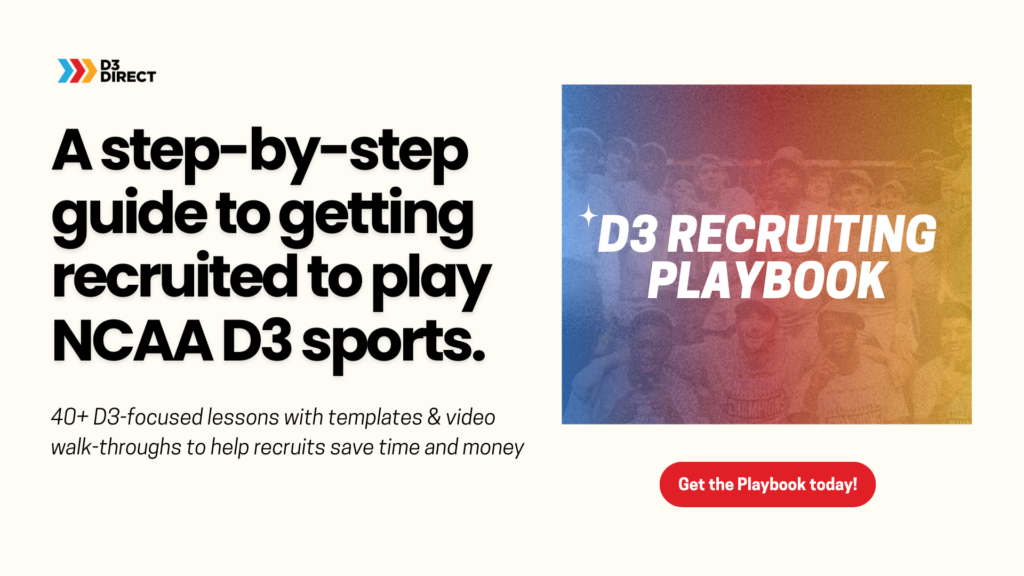
Aiming to go D3? The D3 Recruiting Playbook gives you a clear, step-by-step roadmap to the recruiting process – what coaches value, key milestones from early high school through application season, and how to build a target list of schools that fit your needs.
We’ll demystify researching D3 programs and how to stand out without chasing every camp or showcase.
The modules cover things like writing emails to coaches, building an effective highlight tape, using social media well, planning ID camps and visits, and navigating application strategy.
You’ll get templates, checklists, and an outreach plan to communicate confidently, learn how to compare financial packages, and avoid common missteps. By the end, you’ll have a prioritized school list and a decision framework you can use to land your best-fit opportunity.

Give With Hoops is a groundbreaking initiative that fuses basketball analytics with modern sponsorship. Built for teams who see data as opportunity, from AAU programs to college powerhouses.
By tying on-court performance directly to community and sponsor engagement, Give With Hoops help programs raise more while deepening support from those who believe in the game.
Traditional fundraising disconnects donors from the action. Sell candy bars, wash cars, beg for donations, it’s exhausting and ineffective. Players perform better when their stats matter beyond the scoreboard. That’s why Give With Hoops was created.
Give With Hoops connects game performance to community support. Every basket, rebound, and assist becomes a chance to raise funds. Transparent, exciting, and proven to raise 3x more than traditional methods.
THANKS, WILL MARCHINO
If you enjoyed this episode with Will Marchino let him know by clicking on the link below and thanking him via Twitter/X.
Click here to thank Will Marchino via Twitter/X
Click here to let Mike & Jason know about your number one takeaway from this episode!
And if you want us to answer your questions on one of our upcoming weekly NBA episodes, drop us a line at [email protected].
TRANSCRIPT FOR WILL MARCHINO – UNIVERSITY OF LOUISIANA MONROE WOMEN’S BASKETBALL ASSISTANT COACH – EPISODE 1283
[00:00:00] Narrator: The Hoop Heads Podcast is brought to you by Head Start Basketball
[00:00:20] Will Marchino: You can pour into your athletes differently at the college level than you can at the high school level. And that’s not a knock on high school, that’s not a knock on club sports, but it’s different. It just is. I call it getting called up, not getting called out, and they get called up every day and they buy into it.
[00:00:38] Mike Klinzing: Will Marchino is entering his first season as a women’s basketball assistant coach at the University of Louisiana Monroe. He spent the past three seasons as the head coach at Seward County Community College, where he led the Saints to their second consecutive twenty-plus win season in twenty twenty-five, twenty-six, including a fifty-seven and thirty-nine overall record.
Marchino previously spent a season at Washburn as an assistant coach. He began his first stint at Seward in twenty twenty, where he helped the Saints to four top twenty-five wins and a finish in the Region Six semifinals. Marchino spent the twenty eighteen to twenty twenty seasons at Grand View University, assisting the team to the two thousand eighteen NAIA National Tournament, the first in Grand View’s history.
Prior to his jump to the collegiate ranks, he was the head women’s basketball coach at Iowa Central Academy for three seasons. Marchino also owned and operated his own AAU program, the Iowa Dragons, for eight years with his wife, Amanda. Ever since I founded Head Start Basketball in 1993, we’ve helped young players develop their skills, confidence, and love for the game.
Now we’re partnering with coaches and athletic programs to bring the Head Start Basketball camp experience to new communities. Our camps run for five days, three hours per day, and serve boys and girls in grades one through six. You or someone on your staff directs the on-court portion of the camp while Head Start Basketball manages registration, promotion, parent communication, T-shirts, trophies, website setup, and administration.
There are no upfront camp planning headaches, and the profits are divided 50/50 between your program and Head Start Basketball. If you want to reach more families or strengthen your youth basketball pipeline or just create additional revenue for your program, visit headstartbasketball.com to explore hosting a camp.
Give with Hoops is the first platform turning basketball analytics into fundraising impact. Every stat tells a story, and now every story drives sponsorship, engagement, and team growth. Programs nationwide are transforming basketball stats into funding power. Learn to use performance data to attract sponsors, engage fans, and raise more with every play.
Give with Hoops will help you raise three times more money for your program as their stat-based pledges consistently outperform traditional fundraisers. Visit givewithhoops.com/hoop-heads-podcast to learn more and take your fundraising to the next level. Give with Hoops.
[00:03:07] Kevin Broderick: Hi, this is Kevin Broderick, men’s basketball coach at Nazareth University, and you’re listening to the Hoop Heads podcast.
[00:03:16] Mike Klinzing: Are you or an athlete you know planning to go D3? Check out the D3 Recruiting Playbook from D3 Direct. Their playbook gives you a clear step-by-step roadmap to the recruiting process, what coaches value, key milestones from early high school through application season, and how to build a targeted list of schools that fit your needs.
The playbook demystifies researching D3 programs and how to stand out without chasing every camp or showcase. The modules cover things like writing emails to coaches, building an effective highlight tape, using social media well, planning camps and visits, and navigating application strategy. You’ll get templates, checklists, and an outreach plan to communicate confidently, learn how to compare financial packages, and avoid common missteps.
By the end, you’ll have a prioritized school list and a decision framework you can use to land your best fit opportunity. Click on the link in the show notes to get your D3 Recruiting Playbook from D3 Direct.
Be sure to take some notes as you listen to this episode with Will Marchioneau, women’s basketball assistant coach at the University of Louisiana Monroe Hello and welcome to the Hoop Heads podcast. It’s Mike Klinzing here without my co-host Jason Sunkel tonight, but I am pleased to be joined by Will Marchione, assistant women’s basketball coach at University of Louisiana Monroe.
Will, welcome to the Hoop Heads pod.
[00:04:42] Will Marchino: Mike, thanks so much. I appreciate it and certainly looking forward to our conversation tonight. How are you doing?
[00:04:49] Mike Klinzing: Excited to have you o- excited to have you on. Looking forward to diving into all of the interesting things that you’ve been able to do thus far in your coaching career.
Let’s start by going back in time to when you were a kid. Tell me about how you got introduced to the game. What made you fall in love with it?
[00:05:04] Will Marchino: Man, I’ll tell you what, it was a… That’s a long time ago. I have to search back in my archives here a little bit. But I th- I think one memory that really sticks out to me, we were living in Denver, Colorado, at the time, and it’s actually kinda foreshadowing into where I’m at presently coaching women’s basketball.
My, my mother took me to a a camp that was a ran by a few women. And they took us through some shooting drills and, really it’s the first time in my young age I was– Shoot, I was probably seven, eight years old, where they had us lay on our back and they’d shoot the ball up in the sky and try to catch it back.
I was awful at it, and couldn’t figure it out as a little kid. So I went home and then subsequently continued to shoot on the floor of my bedroom. The ball’s knocking up against my bed and going over and hitting the door, and my mom’s wondering what’s going on in my bedroom, but I’m just trying to figure out how to get my rotation right on my shot so that it spins back to me.
And I think that was, like, the really the first concrete time where I was, like willing to go and put a ton of effort into trying to become better. And then it just it took off from there
[00:06:15] Mike Klinzing: It didn’t take much to get you hooked, man. Just laying on the ground- No … shooting the ball up in the air.
It didn’t take much.
[00:06:20] Will Marchino: No, that’s right. It was pretty easy, to be honest. It was just one of those things that it was just like, shoot, like, why don’t you just and obviously I was a young kid, so I was like r- like real concerned about how many baskets I made, right? You didn’t know yet that there were so many other facets of the game.
But I loved to watch the NBA on NBC on Sundays and that was, before it went to the different networks and then just making sure that for us, like when it came back, man, like I loved watching it here these last, this last year on NBC, like it brought back a ton of memories for me.
But those were the things that really got me hooked. And then obviously when you get supplanted in Des Moines, Iowa it’s just, it– Basketball is a lot more of a game and a sport there than people th- I think tend to realize. And once you get in Des Moines, Iowa, and you start working on your game, like lots of good things happen.
And I was fortunate enough to not only have a, a couple really good high school coaches that really just continued my passion and my drive. I, will raise my hand and say, shoot I was not a, a 20-point per game all-conference player. Shoot, I wasn’t even in the rotation my senior year of high school.
But it was one of those things that I loved the game and I was a, a basketball nerd, if you want to call it that or and loved to watch hoops, loved to make scouting reports as a senior in high school and just kept sticking with me. And I tried different things in my life before I got into coaching, and I just kept coming back to basketball and this passion that I had for the game and the sport.
And then, what ended up morphing into it was I really got excited with how to like seriously help others and be able to pour into others through this sport has just been tremendous,
[00:08:04] Mike Klinzing: going back To when you’re a kid and as a high school kid and e- and even earlier than that, when you think about the influence of the coaches that you had an opportunity to play for a- and learn from, can you think of anything from maybe a specific coach that when you look at yourself today as a coach, something that you can point to and say, “Hey, I took that from this coach,” whether it be just a characteristic, something about the way that they went about their business?
Is there anything that sticks out in your mind that you took from one of those early coaches in your life?
[00:08:41] Will Marchino: Yeah, I think, just, I remember moving back to mo- moving back to Des Moines, Iowa, where my mom is originally from, and we left Denver and moved to Des Moines, and then kinda started picking up.
And you’re in the fourth and fifth grade, you’re playing YMCA basketball, and I I got connected to a guy not affiliated with our elementary school, but affiliated with a, a little Y League team. And ’cause back then when– you didn’t, there wasn’t club basketball. There wasn’t AAU stuff going on in the winter.
That’s just, that wasn’t a thing unless you were one of the top 10 players in the state, and I was not that. For me, I think one of the best things was I was coached by Coach Hildebrand, and I think one of the really cool things was I ended up becoming really good friends with his son in high school.
But we didn’t know each other like that at that time. But what coach did for me was he instilled confidence in me. And I think when I go back and I think about all of the really good coaches that I had, I think about, man they instilled confidence in me to do things on the court even when I didn’t think I could do them, and I achieved it, even if it was something as simple as telling me that the next shot was going in and I had just missed my fourth three or whatever the case was like, But I really I took that from coach early on. I think, shoot, it was sixth grade when we first interacted with each other, and I’d, I played that winter with a bunch of guys that I had played baseball with in the previous spring.
I was awful at baseball. Hor- I- afraid to swing the bat. It was my first time playing baseball. I played with this little tiny glove that I had no clue what I was… I didn’t have an actual glove that I needed for my hand. Anyways they all were kinda like, “Oh, no, not this kid again.”
And then we got through the, the, the first game and all the parents were coming up to my mom afterwards “Man, your son’s a heck of a basketball player. Wasn’t very good on the ball diamond, but he’s a heck of a basketball player.” And it’s it just kinda goes to show you, too different people instilling confidence in you to even as simple as shooting the ball or just playing with confidence and including your teammates can go a long way, especially at the young age.
But then again, in the high– at the high school age, and I think about all my high school coaches that I really loved playing for, and all of them instilled confidence in all of us, not just me. It was a team thing. And, and I think that’s so huge, and I carry that with me today. I’m not– early on in my coaching career, I was probably a little bit more of a yeller.
But I’ve really kinda realized, like, where my niche is and how I can help people. And I really think it’s more of a cerebral approach and instilling and giving confidence to people. I use a term all the time “We want to pour into you, and I want to breathe life into you every day.”
And if I’m not doing that, shame on me. But if you’re not reciprocating that and then coming out and playing and practicing as hard as you can, then shame on you, and you’ve missed yourself an opportunity. And we’re only given so many opportunities in life. And I just think it’s so important to be able to pour into our student athletes and breathe life into them and watch them just take off.
And, it’s funny when you do stuff like that, even at the college level, gosh dang, they play so hard for you. And that’s the biggest gift that I could ever receive in return is when I breathe life into you and I pour into you, h- look how hard you play. And doesn’t that make you feel good? And that’s just i- it’s one of the, it’s one of the joys that I have.
So I had no problem– I worked in TV, I worked in sales. I was doing all sorts of stuff, and I just wasn’t finding anything that I was passionate about until 2010, and I started coaching. And at that point in time I was hooked and, and now we’re here today, 16 short years later.
And it’s just it’s been a joy the whole time. And we’ve had ups and downs, obviously, and different things. But I, I’ve really– that’s really stuck with me throughout my, my coaching career is taking those tidbits from those coaches early on, and even the coaches that coached me in high school, ones that instilled confidence in me, just, man I take that every day with me.
[00:12:39] Mike Klinzing: It’s a great lesson to learn early on as a coach, right? Is the ability to instill confidence in your athletes because we’ve all Watched players who are looking over their shoulder at their coach who’s going to have the buzzer ring every time there’s a mistake and- Yeah … and that confidence of that athlete, they put their head down, and before you know it, you’re not getting the best out of them.
And I think that the best coaches figure out a way to both instill that confidence and yet still have the ability to hold players accountable, and I think that’s something that the best coaches are able to balance those two, that, and that’s what allows them to get the most out of their players. And so for you to learn that early on as a player and play for coaches who were able to do that for you, and then kinda model that as you went on in your coaching career, again, just tremendous value to be able to learn that early on.
So let’s go back to when you head off to college, and at that point, again, as you described yourself, a basketball nerd, somebody who loves the game of basketball, what was your thought process as you went into school about what you thought- You wanted to do career-wise. Were you like most 18-year-olds that you had no idea where you were going to end up or did you have a solid plan as you were going into school?
[00:13:58] Will Marchino: No, I think at that point in time, how I felt like I was going to get my basketball fix was being on radio and TV. And I really dove all in on that and went to Kirkwood Community College, which is about an hour and a half from Des Moines in s- in a town called Cedar Rapids, Iowa. And what ended up happening was I got connected with a, an incredible professor and Gail Smetana, and she got me hooked up with the the TV, the student-run TV station at Kirkwood.
And you want to talk about somebody who holds you accountable and still is able to pour into you. I was a brat at 18, and she kicked me out of a class one day and but her and I still talk to this day. And it was just– it, it was one of those things where she got me involved in the TV stuff, and I was like, “You know what?
This is it. This is how I’m going to continue to get my basketball fix and continue to stay in the game, is I’m going to, I’m going to, call it for a living or be on TV and be able to call highlights or whatever the case is.” And started doing that in the wintertime and Kirkwood had some tremendous women’s and men’s basketball teams, and so we would call the double headers at home, and I just lived for those days.
As an 18-year-old, I’d dress up in a suit and tie, and I’d go over there, and I’d call those games, and I thought it was the biggest thing that anybody had ever seen, and that’s how I was getting my basketball fix, really. And I had no clue at the time that coaching was for me or that I would get hooked into coaching and absolutely fall in love with it and figure out that it was my passion.
And so I kept going through this on the TV angle and we were winning awards at Kirkwood and w- I was very blessed and fortunate with the opportunity to do that for two years. And then I transferred to the University of Iowa, and I finished up my, my studies at the University of Iowa, and I was the sports director at KRUI the, the FM radio station there, the student-run radio station on campus.
And then I did some other stuff kinda some freelance work on the side for a, for an internet station that I don’t even think you can find it anymore, but it was called The Palestra, and they had student reporters all over the country, and they’d send you a little handheld camera, and you’d go and you’d report on all the sport.
And that, that was my fix. And I loved going to the press conferences. At the time, Steve Alford was the head coach at the University of Iowa, and I loved going to his press conferences and setting up my camera and just listening to him talk. Scared to death to ask a question, but loved to listen to him talk and loved to listen to the reporters talk about the game.
And and then I loved, being able to interview the players afterwards and different stuff like that. And that’s kinda through college how I stayed in it. Hindsight 20/20 now, I wish I could have gotten the experience of being a student manager or something like that to get my foot in the door in coaching, but I had no clue.
And it was one of those things where I was so dialed into what I thought my career was going to be and it ended up not being that at all. But still involved basketball obviously and that’s just been so cool.
[00:16:56] Mike Klinzing: So tell me then about the tipping point for when you come to the realization that, hey, coaching is something that I want to do.
I know you got involved in the AAU world, so I’m assuming that i-in some way, shape, or form it connects to that. So just give me the lowdown on how that went down.
[00:17:12] Will Marchino: Yeah. My wife her and I were dating at the time and she was coaching a middle school basketball team at the St. Theresa’s Catholic Parish.
And and so she also on the side my, my wife was just a unbelievable athlete back in the day and she played full pad 11 on 11 tackle football i-in Des Moines. And so she was like, “Hey, I can’t come to this practice tonight, but would you be willing to go rebound? M- our head coach just wants somebody there to rebound and pass to ’em.”
And I was like, “Oh man, sure.” And I didn’t leave the parking lot and I called her and I was like, “If y’all ever need help again my goodness, like that was unbelievable.” And I didn’t do anything other than rebound and pass. I was like, “What’s your name? Oh, Sydney. Nice shot, Sydney. Good job.” But I was just rebounding and passing and loving it and I was like, man, I’m like back in the gym for the first time, like in a team setting and it was so cool.
And that was the winter of 2009 And by the spring of 2010, my wife and I had decided that we were going to start our own summer team, and we had nine gals and we called ourselves the Iowa Dragons, and I just thought, man, this is– who knows? We– I just remember sitting around in our duplex being like what’s our team name going to be?”
And so we kinda did a spin-off of the old Des Moines Dragons that played semi-pro ball that Mike Born helped start that organization and we were like, “Man, I hope nobody gets, gets upset that we’re calling ourselves this.” It was not a big deal, but in the, in– we thought it was at the time.
And we had nine gals, and the next year we had two teams, and the year after that we went from two teams to six, and the year after that we had 12. And then we just kept having more and more teams to the point where I was going to my sales job Monday through Friday, and I was leaving that job and I was going to third-grade girls’ basketball practice for an hour and a half, then sixth-grade girls’ basketball practice, and then high school practice in the evening.
And then on the, the next day it was, fourth and fifth graders and seventh and eighth graders and all of a sudden we were at practice five days a week and couldn’t believe it. And we just kept putting our head down. We were like, “Man,” “this is crazy.” “We must be doing something right because everybody keeps coming to our program.”
And we ju- we were just like, “Man, I don’t know.” “We’re just… we’re doing it ’cause we love it.” And my wife was so good with the young g- young kids, was incredible coaching them and I was a little bit better with a little bit of an older crowd. So we really meshed well from that standpoint.
And that’s when I got hooked and I came to a crossroads at my job and I thought to myself, “Man,” if I don’t If I don’t go all in on this, in the, I’m silly. And so I just said, “You know what? I’m going to continue working in sales but I’m going to…” I took a couple poset- positions that allowed me to get out earlier so that we could hold practice earlier.
And h- and I’m working these jobs and I’m like, “You’re going to work so that you can get done and go to basketball practice. What are you do- why is this not your job? Like, why is this not your life?” And all those things just kept ringing back and it… and I, I pride myself on the fact that, I wasn’t handed anything during this whole career.
I’ve really kinda– I’ve literally gone from the ground up. I didn’t walk into another organization and decide I was going to coach a high school team or get an opportunity to coach a high school team. We built our own organization in our 20s and I would not have the time or the energy or the effort now to be able to do something like that.
If somebody asked me at 41, “Hey, man go start your own AAU basketball or club basketball organization again,” I’d be exhausted. And so for us to be able to do that, we learned so many valuable lessons. I started working for, an incredible husband-wife duo, Bob and Sharon Hanson at Dowling Catholic High School.
I was a JV coach there for two years. This was before Caitlin Clark went there. And she’s an incredible talent and has done so much for the women’s side of the game. But this was before she got to Dowling and we had some really good teams. Unbelievable teams, but I learned so much from them from coaching and how to strategize and then, I thought I knew so much when we went to the state championship game and I was just a JV assistant.
I thought I’d take a, a small 1A high school varsity job and and that’s really how coaching kinda took off for me. Still working in sales at that time, still doing different stuff job-wise, and I really didn’t do– start coaching basketball full-time until I started coaching in college
[00:21:45] Mike Klinzing: Kind of an incredible story when you really think about just- Thank you
the career arc of where you started to where you are now. And-
[00:21:52] Will Marchino: Thank
[00:21:52] Mike Klinzing: you … again to be able to do it with your wife to get that going and to be able to, as you said, you guys meshed well in terms of the age groups that you worked with. And I’m just curious, when you look back on that now, and obviously you said that, “Hey, if I had to do it now at 41, I don’t think I could do the same thing that we could do when we were in our 20s.”
But obviously you did something right. When you look back on it now from your perspective of somebody who’s been in the coaching profession now for a number of years, what do you think it was about what you guys did AAU-wise that made you so successful? If you could point to one or two things that you think were the key to you from going from a team with nine girls in year one to you now have a big organization after several years, what w- what were the keys to your success, do you think?
[00:22:38] Will Marchino: I think it comes down to, to just really hard work. And I wasn’t willing to allow myself anything less than to try to be great for our teams. And so I used to, at the time, this was back when satellite TV was huge and now everybody streams, right? But I used to, we used to have DirecTV and, the little box had a DVR and you could record everything.
And I used to record games and go back and watch, and then I’d have pads of paper all over the house, and I’d be jo- jotting down sets or I’d be jotting down plays, right? And that, that was my opportunity to kinda take a look at stuff. I hadn’t gotten into the college game yet. I had no clue about synergy.
I had no clue about all these software things that I would assume were out then, but I didn’t know about. And I just worked hard. And I really made it my life. And, I think when I found out it- when I started coaching in college and I was like, man you’re at work all day and you’re looking stuff up on the internet about plays or drills or like, how are you going to make this…
you’re passionate about this. Hello? If this isn’t screaming at you in front of your face. And I’m, I- I really have a hard time with that in my life. Like I’m so focused and honed in on something that I don’t see what’s, really right in front of me in that message. And that was the message in that moment was, man, you’re working so hard at this.
Why are you not trying to make this what you’re doing for a living? And I didn’t get that message. I was like, man, I just I love all these teams. We have all these great group of young girls, and we’re just, we’re helping them so much, and this is awesome. And but I think it came down to one thing.
I think it just came down to hard work. And we– that’s what we were willing to do. I’m, I’ll raise my hand. I’m 41. I have a two-year-old daughter. I would say 90 to 95% of my friends when we were in our 20s were getting married and and they were and they were forming a family, creating a family with their wives.
And I was coaching basketball every weekend, 12 hours a day. And then I was showing up on Monday and going to my, and going to my job, and I was working there. And then I was going straight from work to, to practice until 9 or 10 o’clock at night, five days a week, and I loved it And so I think that’s really what it comes down to is it ca- it came down to hard work.
And I try to continue those values every single day. And, some days I’m not my best. I’ll raise my hand and things happen. But gosh dang, I try to work really hard, and I’m never one to say that I’m not mistake free. I’m far from perfect.
I, I made mistakes then. I still make mistakes today, but I feel man, like if I continue to show up and I work hard, like I, I can get past those mistakes. I can get past those things and, that maybe you don’t do right. And I appreciate your kind words about saying “Man, what a story,” but that- that’s what it is.
It’s mine and with my wife, it’s ours, and gosh dang, I wouldn’t want it any other way. It’s been incredible so far.
[00:25:39] Mike Klinzing: Hard work definitely can erase a lots of challenges and mistakes that you make along the way. A- and I think that, again, what I’ve learned in the coaching profession, just from my own experiences and also from the experiences of all the people that I’ve been fortunate enough to interview here on the podcast, is that, that hard work piece of it, right?
No matter where you’re at, whether you’re running an AAU team for nine girls in year one, or you’re running a big organization after year seven, or you’re coaching at the JUCO level, or you’re coaching at the high school level, or you’re coaching at the Division I level, the hard work piece of it is where it all starts, right?
You have to be willing to put in the time and effort in whatever job you’re at, whatever level you’re at. And if you do that, then maybe if another opportunity is meant to come your way, then it’ll come your way. But if you don’t work hard in the job you’re at because you don’t think it’s important enough or it’s not the job that you want, then I’ve heard so many stories of those jobs don’t– the next job doesn’t come to you if you’re not working hard at the one you’re at.
[00:26:41] Will Marchino: That’s right. And I kinda live by this old saying and it’s kind of a poor analogy now that I’m at ULM, but I used to tell people all the time like, wherever I’m at that’s my UConn. I’m not worried about going and getting UConn. Like I don’t want– I don’t– I think coaching with Geno would be incredible, sure.
But like- no. Where I’m at, that’s where it is for me. And I think that’s so huge. I’ll never forget the first summer that we were running the Iowa Dragons and we had our nine families there and we had a, a, a player-parent meeting and we were trying to be very professional.
We’re in our 20s and we’re talking to people that are our age now with their daughters and we asked them for $550 would cover uniform and five tournaments. And they all had five game guarantees and that’s what we were doing. And We asked him for that amount of money, and it was silent for 10 or 15 seconds in the room.
And I was like, “Oh, no.” “We– Oh, shoot, this is not good.” And all the parents were like, “That, that’s it?” Truth be told we did this thing for probably the first four years and never incorporated any of our cost into the cost to be a part of the club. So we were doing this stuff because we loved it, ’cause we f- we were giving back to the youth and and you’re so right.
Like I, I was never worried at Dowling Catholic on when I was going to be a head coach somewhere. And the Iowa Christian Academy job fell into my lap because I coached twins with the Iowa Dragons, and when their head coach opening came open, their dad approached me and said, “Hey, like I think you’d be a great fit.
I would love for you to coach my daughters in the winter.” Wow, okay. So then that happened, and you’re working hard at the, one of the smallest 1A schools in the state, which still to this day, whenever I get a new opportunity I hear from just about every single one of those parents on that Iowa Christian Academy program that I was able to coach their daughters for three years.
And the school’s not even open anymore. And it was all about community, and I thought those games were huge. Those w- little 1A games in rural Iowa on a Friday night, that was my Super Bowl. And I… That, that like went over to our team and it became their Super Bowl, and together it was ours, and we played really hard.
Not necessarily the most skilled, but they played hard. And we ended up having a lot of success in my last year there. We had a couple gals that had never dribbled, passed, or shot a basketball before come out for high school varsity basketball. And I think one of the biggest lessons that I learned was how to coach those people that have never done that before at, at the varsity level.
And we did that, and it was fun, and had a blast doing it. And then Grand View University and Gary Smith at the time came to me and said, “Man, we would love for you to come on staff and be a stipend coach. We n- we– You’re not, you wouldn’t be a full-time assistant, but we’d lo-” And I s- “Shoot, let’s do it.”
So I took a pay cut from that to that, and I still coached in sales, or still worked in sales, excuse me, for the first two years. And then when Coach Smith retired Kelly Greenway got the head job, and I was very fortunate enough that she felt that she could promote me to lead assistant. And I worked there and I took, this is a wild story. This was when I first took the, the opportunity to coach full time. I took an $88,000 pay cut from my sales job to go coach full-time college basketball. I said that to one of our coaches, one of our assistant coaches. We were out on the road recruiting here a couple weeks ago, and he was like, “You did what?”
And I was like, “Oh, yes, sir.” And I wouldn’t change it for the world. No offense to the job that I was working. I loved it, like whatever. Obviously made plenty of good money and was able to support my family and provide for my family, but like taking that job was so huge for me. And I could stop sitting at a desk, making phone calls, trying to sell something that I wasn’t passionate about, to be able to sell something that I was passionate about, the Grand View University women’s basketball program, and that, that’s when it kinda went in a, i- in overdrive mode, to say.
[00:31:15] Mike Klinzing: All right. So what’s that conversation like with your wife? Was that something that you guys had been talking about previously in terms of, “Hey, at some point I’d like to go full time into coaching,” if that was possible, or was that something that you only talked about once that particular opportunity opened up?
Just walk me back through what that conversation was like, what you guys talked about, ’cause I think this is a situation that, not exactly like a lot of coaches face, but a lot of coaches do face the question of, “Hey, should I take this job?” Or, “Hey, this opportunity, maybe I am going from being a high school coach and a teacher to maybe I’m going to jump to the college level and I’m a part-time assistant ’cause I want to get into college coaching, and I’m going to take that pay cut.”
So just kinda take us behind the scenes of what the conversation was like with your wife.
[00:32:04] Will Marchino: First of all, I’ll tell you this, not one time did I not have her support, and that was unbelievable. So that was like the easiest part of the, the whole deal, was I came home one night after practice at Grand View and or excuse me, it was a recruiting trip, and I went with with Coach Greenway and we had talked about making this happen.
And my wife was asleep and I woke her up and I said, “Hey, tomorrow I have to talk to you about something. Don’t let me forget.” And she’s like okay.” So the next day we have the conversation and she said, “You’re an idiot if you don’t do that.” And I said, “Excuse me?” And she goes, “You’re an idiot if you don’t do that.
I’m just going to tell you, and I don’t think you understand this, but every day when you wake up, you say one or two of the words that I can’t say on here.” And she says, “It’s always the first word out of your mouth And she’s like, “I’m sick and tired of hearing you say that when you wake up. I want you to be happy, and I want you to love what you’re doing.”
And I was like, “Holy cow.” How– Like that’s powerful to have your spouse look at you and go, “No, I don’t know if you know this.” And I didn’t know that. I didn’t realize that I was saying one of those two words every day that I’m not going to repeat on here. And I had no clue that I was doing that.
I just would… i’d get up, and I’d say one of those two words, and I’d go to the bathroom, and I’d get ready for work. And I don’t say that anymore. Now every once in a while we have an early morning weight session or something like that, I might be like, “Gosh dang,” like what? But but those are far few in between.
And and, I don’t do that anymore. And it’s one of those things where it’s about finding your passion. So it was the easiest conversation with my wife. And I think a lot of people, I don’t think they joke with me, but they kinda, they poke fun at me, and they’re like, “Man, like we, we’d almost have you on staff just so we can have Amanda around.
Like she’s great. Man, this is awesome. Like she’s way better than you.” I’m like shoot, she probably is.” And to have somebody support you like that and really take your vows seriously that’s incredible. And so we were able to have a pretty easy conversation with that, and obviously we had to change our budget and how we lived a little bit to be able to take a pay cut like that and be able to survive in the same home that we currently had.
And we did some different things from that route, but gosh, we made it work. And I feel like ever since 20– the spring of 2016 hit when I went to Grand View as a stipend assistant, I feel like it’s been all gas, no brakes ever since then. And not that it wasn’t before, ’cause shoot, I was, working a full-time job and then going to practice from five o’clock until 10:00 PM every night.
So it’s not like it wasn’t all gas, no brakes then either. But it was, It’s just been, it’s been tremendous and this sport has provided so much for my family and has allowed me to see different parts of the country that I probably never would normally. And so it’s been really cool
[00:35:10] Mike Klinzing: What did you enjoy most about the college game when you got there?
Or maybe what was the most surprising to you that maybe you didn’t realize having had the experience at the AAU level, the high school level? When you jumped to the college level, what surprised you or what did you really enjoy about it that made you know, “Hey, this is maybe the direction that I want to head with this”?
[00:35:30] Will Marchino: Yeah, I think every level has a certain level of– and people aren’t going to like to hear this, but I think every level at the college level has a certain level of heightened accountability that comes with it. And that’s been so interesting for me to kinda really see it at every level. Having coached at the NAIA level at Grand View, and then going to be an assistant at Division I junior college Seward County for two years, and going being an assistant at NCAA Division II Washburn for not even a year, about 10 months, going back to Seward as the head coach.
The level of accountability as a coach is different when you’re an assistant versus when you’re a head coach. And I know that sounds like, yeah, n-no kidding, but you feel it. It’s a lot different. And the people– I know this is totally off topic, but the people that are like man I just, I need an opportunity.
I need to slide over six feet or six inches to that different chair.” Let me tell you that is real. You feel that every day. You feel it at night when you go to bed, that d- there’s a different level of accountability when you’re the head coach, and it doesn’t matter what level you’re at. But and then now for me to jump from head coach at Seward County to assistant at the University of Louisiana Monroe, the level of accountability at the Division I level is probably a couple s- staircases up from what it was at the junior college level.
And we’re very fortunate, we’re very blessed that we have a great team that’s willing to be held accountable and be willing to I call it getting called up, not getting called out. And they get called up every day and they, they buy into it.
And we- we’re kinda in the middle right now of our eight weeks that we’re allotted by the NCAA to have them here over the summer, and they’ve been tremendous. That’s probably the, the biggest thing that really got me was like, man you can pour into your athletes differently at the college level than you can at the high school level.
And that’s not a knock on high school, that’s not a knock on club sports, it– but it’s different. It just is.
[00:37:24] Mike Klinzing: It’s funny to hear you talk about the accountability piece and the sliding over six inches. And again, I’ve never been a head coach at even the high school level, but I- I’ve coached my kids in their AAU games and and that kind of thing and I’ve been an assistant at the high school level.
And what I will say to you that kinda, again, when you were talking jarred my memory of just how I approach things as an assistant versus as a head coach, and I know that any time I’ve been an assistant, clearly the desire to win, the competitiveness while the game is going on, during practice, all those things are still there.
You still burn, you want to win, the same thing. But as an assistant coach Five minutes after the game was over, it was very easy for me to put that loss aside and move ahead and just be like, “Okay, we’re going to get ready for the next game.” Whether I was coaching my daughter’s team when she was in fourth grade as an assistant, or whether I was coaching a high school varsity team as an assistant coach.
But conversely, when I was a head coach, it didn’t matter if I was coaching third grade girls basketball or I was coaching my son’s team when he was in 10th grade. If I was the head coach and we lost a game, th- that loss stayed with me, Will, until the next time we got to get on the floor and compete.
And I wouldn’t sleep, and I’d be thinking about- … what I could have done differently. And I’m, and now you look back on it, you’re like, it was, it was eight-year-old girls that I was having trouble sleeping with, trying to figure out the, trying to figure out the strategy of what I should have done differently.
And you’re 100% right that it does hit you differently when you’re a head coach. There’s no question about that. The difference between being an assistant and a head coach in terms of that, just responsibility and accountability that you feel is huge. And then I think it, it’s interesting to hear you talk about the different levels of accountability as you go up levels or down levels in college basketball, and just how that works and again, how each different level and each different program sort of sets that level of accountability.
And obviously now at the Division I level where you are now, that’s at the highest point that it can be in, in the college game. And I think that for you going from being first an assistant, then being a head coach, and now back to being an assistant, one of the things I always find interesting when I talk to somebody who’s made those transitions is What do you think makes for a great assistant coach?
When you look at yourself and your evolution as an assistant, and then now after having been a head coach, having your own assistant coach or coaches, and now going back to being an assistant, what are the key things that you need to have to be a great assistant coach? For somebody who’s listening that is currently an assistant coach, maybe somebody young that’s just getting in the profession, what do they need to do as a young assistant coach to be the best they possibly can be?
[00:40:23] Will Marchino: I think sometimes like pe- people say the head coach and the point guard can never have bad days. They can never have bad practices. They can… no. I think assistant coaches can never have bad practices. Like you might be having a bad day. That’s fine. We all do that. But like you can’t have a bad practice.
You can’t bring that onto the court. And your team doesn’t deserve it, your other coaches don’t deserve it, and your boss, your head coach certainly does not deserve that. And so you have to bring it when you’re on that court. Now, if you can’t bring it after that, you need to go have a conversation with your head coach, that’s fine.
Like you need to do it, fine. That’s fine. But like– And you can’t bring that foul attitude or you’re salty because something’s going on in your personal life. No, you have to leave that at the door, especially when you start talking to your team about the same stuff, but you want to hold them accountable too, but you’re not bringing that yourself.
That’s not what we’re doing. That– You can’t do that. And that, that would be one thing. The, the next thing that I think is extremely lost in today’s society, especially at the college level, is loyalty. And I’m not asking for people to stay with your head coach and your boss for two, three, four, five years, but You, are you 10 toes where you’re at or are you already looking out the door for something else?
And don’t look out the door for something else. Like I said earlier, like wherever I’m at, that’s where it’s at. There’s no wondering what other programs are like. There’s no wondering about, your power fours or anything like that. No, like I’m worried about the University of Louisiana Monroe women’s basketball program.
I’m not worried about what anybody else is doing. I’m worried about if they’re beating us every day and as far as getting better. I’m worried about that and I hope they’re not. And we’re going to work dang hard to make sure that they’re not. But I think those are the traits like as an assistant coach and obviously having a different perspective on it.
Like I think now having gone from head coach now back to assistant like man I strive so hard to be perfect every day and I’m not, but I want to be. I’m trying to be to make m- to make our head coach’s life easier to make his job easier or her job depending on where you’re at.
Wherever you’re at, make their job easier. And I know that there are some days where I probably don’t do that. But gosh dang, I’m going to try every single day and I’m going to work my tail off to try to add value from that perspective. Don’t try to, I just feel like sometimes people get caught up in, in this program over here is doing this or so and so in our league’s over here doing that.
Like no, who cares? Like what are we doing? How do we get better? So I think those are just some pretty easy perspectives as far as being an assistant coach at whatever level you’re at. That, and that can go anywhere that can make you a really good assistant. I’ve had former bosses reach out to me every year asking about “Man, okay, talk me through your, your– like what did you do pre-game that helped us?
Like you knew what to do.” No, I didn’t know, but I learned along the way what we needed to do and I knew what would make your job easier. I texted one of them who asked me that question and the first thing that I texted him was “Brew a pot of coffee at, by 8:00 in the morning Oh, you did that on game day?
Yeah. No, I know you drink. No come on. Let’s start the tone, like, how are we going to do this? I knew he liked to drink coffee and that, and we joked about it, obviously, but gosh, I– come on now. I was there and I knew the coffee pot was on and ready to roll before he got into the office.
We’re setting the tone for the day, it’s game day. And I think that’s the biggest part of it. What are you doing to try to make your boss’s job easier? And I think that’s super important. Now I’m really fortunate that I’m at a program where my boss gives me a voice, and my boss allows me to coach and and he wants us all as assistants to coach and have, have a voice, and I think that’s tremendous.
It’s unbelievable. And that, that’s the environment that I really thrive in and he’s had to, continue to be like, “Come on,” “I need you,” “Get going here.” And that’s been awesome too, just to hear that because when you step back from a head coach back to assistant role, like I kinda stepped back and was like, “Okay,” “maybe I need to take a bird’s eye view.”
No, he wanted me in the mix. And and again, that kinda goes back to what have I taken from coaches that I loved that have coached me, and that’s like breathing life into me and filling me with confidence. He didn’t bring me here to sit on the sideline and shut my mouth. And I love it.
And that’s the environment that I thrive in. And so for him to be able to do that to me, like it, it spoke life into me and and I appreciate it more than he probably even knows.
[00:45:07] Mike Klinzing: Yeah. Good coaches, I think are, have that ability to be able to give their assistants that power to have that voice, right?
To, “Hey, you’re taking over this aspect of practice,” or, “You’re going to run this drill,” or whether you have an offense coordinator, defense coordinator, like some staffs have, where again, a coach is taking that responsibility. And I think that’s something that as a young coach, especially as a young head coach I’ve talked to lots of people who say they’ve struggled with that ability to delegate and to give responsibility to assistants because I want to have my hand in everything, right?
As the head coach, like we talked about with the accountability piece, like ultimately the wins and losses Those go next to the head coach’s name. They don’t go next to the assistant coach’s name. And sometimes, especially as a young head coach, you feel like, “I, I have to control every aspect of my program.”
And then you don’t necessarily utilize the minds and abilities of your assistant coaches ’cause you just haven’t learned that ability to delegate. And that’s one of the things that in the conversations that I’ve had, I’ve learned from guys who have been assistants, guys who have been head coaches, just how important that ability to delegate is from both perspectives, both from why it’s important to a head coach to be able to do that, and also why it’s important for a head- for an assistant coach to feel empowered to be able to teach and be able to do all those things.
And I think it just, again, goes to, as an assistant coach, you want to be able to have a voice. You want to be able to have a say in what happens. Ultimately, obviously, the head coach is the decision-maker, but you want to have a say in it. And then I think the other thing that I love that you talked about was just trying to find ways that you can add value to the program.
And not just, and this is a, a piece of advice that I think came through what you’re saying, but I’ve heard it themed throughout lots of interviews that I’ve done with coaches is, don’t just do what you’re asked to do. You have to look for other ways, like you said with the coffee. Nobody put that on your job description- Right
of, “Hey, get the coffee going early in the morning.” But that’s something that you’re just looking, “Hey, how can I make things better for my head coach, for my program, for my players?” And if you’re going that extra mile, and going back to what you said earlier about hard work, you combine all those things you just talked about, and now you are making the place where you are the most important thing in your coaching life, right?
You’re pouring everything that you have into the program that you’re at. And if you do that, then maybe another opportunity comes. It doesn’t come if you’re always looking out the door and trying to figure out, “Hey, what’s coming next for me?” And I’m slacking off on the place where I’m at- That’s right
’cause I’m already looking out the door to see what might be next. And so there’s some great lessons there in all those things that you taught. And so let’s transition from that to the opportunity at Louisiana Monroe. How does that come to you? Is it through a connection? Is it through… just explain to me how that gets to your desk and the decision-making process to take that job.
[00:48:12] Will Marchino: An unbelievable opportunity, first and foremost For it to come about the way that it did is just a, it’s like a microcosm of how this whole thing has gone for us as a family. And, it’s February and Coach McNeese, the associate head coach at the University of Louisiana Monroe, she sent an email to me about one of our players.
And I had gotten into my office early that day at Seward and I saw it and I took great pride at the junior college levels when anybody would email about players or especially specific players, I got right back to them. Man, like I’m accessible. Our players are accessible. We wanted this thing jumping at Seward.
We wanted you to recruit our players. We recruited high character individuals that wanted to come in and compete and work really hard. And so they emailed me about a player and I emailed her right back within five minutes and said, call me anytime. And I put my cell phone down. And sure enough, they called me and I just brewed a pot of coffee myself and I was, I poured that And I talked to them the first time, and a couple of days later, Coach Fletcher called me back and was like, “Man I really enjoyed our conversation.
Let’s get to know each other.” And then a couple phone calls after that, he was like, “Look there may not be movement on my staff, but I’d love to, keep you in the loop, not only now but in the future.” And I was like, “Oh, sure, anytime.” And here we are. And so it’s just it’s one of those things that, I think as a coach, like, and just I don’t treat different levels any different. If a Division III coach would email us about one of our players at Seward, I would respond. If an NAIA coach or whatever the case is, an, an NCCAA coach in the National Christian Association would email I would respond.
That was definitely something that I took great pride in as, as the head coach at Seward County. And it paid off because you, you make lots of different connections. You’re able to– I think JUCO is such a great tool, not only for student-athletes, but for coaches, because you learn so much at that level ’cause you have to do it all.
And and then you get an opportunity like this and it’s just been, it’s been incredible. It’s been something that has been an awesome transition not only for myself, but for my family. And we loved, we love, love, loved our time at Seward, and I’ll forever be grateful to that institution and President Bennett and Dan Artymenko was the athletic director that hired me, but Cody Cole was the athletic director the last couple years I was the head coach there at Seward.
Tho-those guys I’ll forever be indebted to them for giving me my first college head coaching opportunity. But when something like this popped up and, it’s not every day that a JUCO coach gets a opportunity at a Division I school, regardless of the position.
Assistant coach, director of mopping the floor or, a head coaching position at the Division I level. And to be able to have this opportunity I’m, I’m humbled and blessed and it’s something that has just been so incredible, not only for myself, but for my family as we’ve made this transition just unbelievable
[00:51:32] Mike Klinzing: Talk about some of the resources that you have at the Division I level that maybe you didn’t have at some of the other levels that you worked at, just to give people a, a, an idea, a concept of just what some of those things are that you have that enable you to give more to your players and to help yourself to build a better team.
[00:51:58] Will Marchino: Yeah, I just think it’s the it’s the ability to provide. You have a little bit more of a budget. You have a little bit more of an opportunity to provide for your student athletes. I think that’s really what it comes down to. And it’s easy things, what’s your budget look like when you travel?
Are you able to stay in really nice hotels? Do you have to stay in Super 8s? Not to say Super 8’s not, I don’t know, whatever everybody’s preferences are, but you get what I’m saying. And, do you get to eat at nice restaurants when you’re on the road, or do you have to go through the McDonald’s and grab a bunch of burgers?
What’s your budget? Here at this level from what I can gather only being here a couple months is, man, this is just it’s incredible to be able to provide the gear the lifestyle, the ability to nourish their bodies. We’re just really blessed here to be able to provide those things at a top-notch level.
And and then you get– you’re not even touching the nuts and bolts of the program, which is facilities and not only basketball facilities, including the weight room and different things like that, film room and all that stuff but also let’s talk about their living quarters. And I’m coming from dorms at Seward County to apartments here at the University of Louisiana Monroe.
It’s incredible. So just very blessed at those, those little amenities that maybe the, the average fan doesn’t see that really pushes our student athletes over the top and allows them to really not only take care of their bodies, but also their minds. And I think that’s probably the biggest jump is we’re able to provide so much for them, and I keep going back to that word provide.
But you can’t do that at, at, at a junior college level, not to the stature that we can here. And so to see that is just a, it’s a blessing to be a part of and it’s just so unique. And that’s huge. And then, just from a resource standpoint, like obviously, like if you wanted to do special things with your team, I’m sure in a year if you asked me the same question, I could rattle for 20 minutes about all the different things that we’re able to do as a program that maybe I haven’t had the experiences before at other job opportunities because of a, a budget or the ability to pour into your athletes.
But that stuff is just so huge, and it goes such a long way with the student athletes too. I know how appreciative our team is of that, and that’s just huge
[00:54:17] Mike Klinzing: We’ve heard a lot when it comes to college basketball and college football, and obviously the landscape with NIL and the transfer portal and all those things, how they’ve affected men’s college basketball, how they’ve affected college football.
And I think sometimes we don’t necessarily hear quite as much about NIL and the portal on the women’s side of the game. And so in this first summer that you’ve been at Louisiana Monroe, what are some of the things that you’ve seen in terms of the impact of NIL and the portal on the women’s game?
[00:55:01] Will Marchino: Yes, sir.
I think the easiest and best way to answer that question, Mike, is just to, b- back when I first got into college coaching, you could win with really strong relationships with recruits, and you could outwork other schools and coaches for recruits, and that was that, that was the…
For me, it was the easy part. We could have started, outside of somebody’s top five and win in a recruiting battle because we were just going to outwork you and we were going to show up when you weren’t. And now there’s a different maybe a, an asterisk next to that, and that is that NIL and rev share portion of it, and the gap is shortened so much.
And I really… This is the old school coaching in me a little bit. I, I really… it stinks for the, the student athletes nowadays that probably still crave that really good relationship with their coaches. But depending on the decisions that they make, could make a transactional decision Because man, it really enhances their life or their family’s life.
But in the long run, it doesn’t enhance their life outside of the monetary aspect of it because they- they’re not getting that relationship with a coach that they crave. And that, that’s the hard part of it. And that’s really– but NIL can also be a great thing. And I think the rev share aspect of it is a great thing.
And so while, there are some that you just, you’re like, man, like I, I– If she would’ve just made this decision to come over here, I’m not talking about ULM right now, but like just in general with other spots that I’ve been at, like she could have really succeeded. We could have set her up. That doesn’t mean she didn’t get set up by the other coaching staff.
That doesn’t mean any of that stuff. It just means it didn’t work out for us in the moment. Now, I have lost recruiting battles in the past as a head coach and ended up winning them as they transfer back to us at Seward because for the exact reasons I just mentioned. They were craving something and they didn’t get it, and they wanted it, and they got it here.
And I’m sure with Coach Fletcher here at ULM, the same things happened. And now I get to be a part of it from a different angle and a different viewpoint as an assistant coach and for me I think you’re silly as an assistant and/or as a head coach if you’re not trying to soak up as much knowledge about this as possible.
I don’t know a lot of this stuff, but gosh dang I’m willing to read up on it. I’m willing to figure it out. Like the five for five thing right now is an interesting subject. I don’t know what’s going to happen tomorrow with it. But it’s really interesting. And when I talk to club coaches or high school coaches or shoot, even these junior college coaches here in a couple of months at their events, w- what are your needs for the class of twenty twenty-seven?
We don’t know. There’s so many movable parts right now. So it’s really hard to say, “Oh, yeah, all this stuff,” ’cause we don’t know. And then the transfer portal opens up, and then you really don’t know. And it’s really easy for a student-athlete right now to go into the transfer port.
They don’t even have to talk to their coach. They can just go to compliance and go in. And that’s not– I don’t mean for that to sound negative. That’s an avenue for student-athletes, just like getting a new job for us as coaches is an avenue. So it’s not negative. It’s just gone are the days you have to go into your coach’s office and talk to him about transferring.
And you have to sit down and have a face-to-face discussion. You just can leave if you want to. So that all stuff is just movable. And I think the more of a grasp you get on it as a coach and a coaching staff, the better your– you are for it and the more prepared you are to go into recruiting battles, so to speak.
[00:58:46] Mike Klinzing: So how do you bring back the relationship piece of it? How do you fight for that once you have kids on campus in your program? Obviously, in the recruiting piece of it, it’s different, right? It’s not just about relationships. It is about the money piece of it, and there’s other things that maybe ten years ago wouldn’t have been a factor.
So how, once they get there, how do you build those relationships? What have you seen so far at Louisiana Monroe? And then what have you done in the past to build relationships with your players?
[00:59:22] Will Marchino: I think, and I should back up. I didn’t necessarily mean that there aren’t any anymore because yes, it is a little bit more transactional than it has been in the past, but m- you can still find those student athletes that value the, the transformational aspect of it over the, the transactional aspect of it.
And so for us, it’s finding those, those people and finding those families and trying to get them all on, under the ULM umbrella and being a part of our team. And in the past, it’s just been a- as, as crazy as this sounds like in the past, for me, as much as it was having somebody on campus we would have people on campus, not only were they trying to figure us out, but we were very much trying to figure them out.
And we were very much trying to figure out if they were a great fit. And we do that here at ULM too. And I think that’s huge. And you just, you continue to be true to yourself and I think that was one of the, the biggest factors of being able to join Coach Fletcher and his staff here at the University of Louisiana Monroe.
They’re true to themselves and for me that’s what I wanted. I didn’t want to try to pretend to be somebody that I’m not in a recruiting process just to land a, a student-athlete. That’s not right. And it doesn’t start the relationship off right either, and I tell recruits that all the time.
“If I were to, if I were to promise you X and anybody now as an assistant, if anybody on our staff here at ULM was to promise you X and then we didn’t deliver that, how would that make you feel?” And every single student-athlete says I feel like you lied to me.” And my response to that is if I’m lying to you about that, what else am I– Right?
What else am I lying to you about and how does that start our relationship off? Not very good, right? So I might not necessarily give you the answer that you thought you should hear from me in this recruiting call, or our staff might not give you that answer that you thought you should hear from us, but you’re hearing the truth.”
And I think that’s super important to continue to stay true to who you are consi- continue to stay truthful to the student athletes and their parents and their families. I just think it’s huge. And that, that aspect is big time, and I think that’s what continues to win in recruiting, is just being truthful and honest and not trying to just give people what they want to hear but rather telling them what they, what they need to hear and being honest with them is just so big.
[01:01:47] Mike Klinzing: Yeah, you can only trick someone or misrepresent something one time, and maybe that gets you one player in the door. But that player obviously isn’t going to be happy, and it’s not a sustainable way to build a program. And so if you build your program on transparency and trust and do that with good families and players who are looking for that kind of transparency and trust and truthfulness, then that’s when you’re going to be able to cultivate ultimately long-term success.
And I think in a short-term world, it pays to be looking at things from the long-term perspective, and I think that’s what I hear you saying, is that it can’t just be, “Hey, I’m telling you what you want to hear to try to get you in the door,” because once we get you in the door, you’re going to find out what the truth is.
And if it’s something different, then what’s the entire relationship built on? There’s no foundation. Then it’s hard really to move forward. And so if you’re trying to build a long-term winning program, I don’t think there’s any other way to go than to be transparent and truthful with players, not just before they get there, but once they get there, right?
Then you have to have those conversations about, “Hey, how do you get better?” And that kind of thing. And so I think that’s really important when it comes down to building a kind of long-term program that you would want to have All right, Will, final two-part question for you. Part one, when you look ahead over the next year or so, what do you see as being your biggest challenge?
And the second part of the question, when you think about what you get to do every day, what brings you the most joy? So your biggest challenge and then your biggest joy.
[01:03:22] Will Marchino: Going from the junior college level to the Division One level for me, just the speed at which we do things here is just at a much quicker pace.
And I’m not talking basketball here, I’m talking about all the logistics and different things like that outside of that. The Division One level just moves, it moves, it goes. So that’s going to be a challenge for me because once I feel like I’ve gotten to that bar that we need to be at and I’m moving at the speed we need to be at, then all of a sudden comes the basketball stuff, the scouts, the preparation for things and then it’s going to be a whole new set of speed challenges for me.
So I think in a year I’ll have my feet a little bit more underneath me, so to speak, from that level. And then the same thing that gives me joy is the same thing that has kept me so passionate about this game for as long as it has been, and that’s pouring into student athletes and seeing them have success on the basketball court and in the classroom.
I co- I could tell you about how our team has spent this summer session getting better in X, Y, and Z on the basketball court. But one thing that I will tell you is one of the things that gives me the biggest joy right now in this summer session is that all four of the, the ladies on on our team that I was their academic person and kinda held them accountable academically in the classroom, they got A’s in every single one of their classes this summer.
And so that brings me a ton of joy ’cause I was not that kid. I was not that student. But to see our students achieve that level of success brings me a ton of joy, and it sets them up for life, and it certainly lets them, skip different parts of the ladder that I’ve had to climb myself just because maybe I didn’t get it done in the classroom like I should have.
And so to see them do that brings me a ton of joy. Now the basketball piece of it has always been there for me. I love to watch them implement things that we work on in individual sessions or I love to watch our team implement things that we work on in practice, whether that is the easy stuff that we catch on with really quickly or even the hard stuff that, takes a while for, for us to really grasp in practice.
But once we make it click that brings me a ton of joy.
[01:05:29] Mike Klinzing: All right, before we get out, I want to give you a chance to share how can people connect with you, find out more about what you’re doing. Give me social media, email, website, whatever you feel comfortable with, and then after you do that, I’ll jump back in and wrap things up.
[01:05:41] Will Marchino: Yes, sir. I’ve– I’m real easy to find on social media. It’s Will Marchino is my username on every single social media. W-I-L-L and then M-A-R-C-H-I-N-O. You can find me on any of the social media outlets. For, for me I love to be a part of growing the game and continuing to make this game the very, very best that we can.
And we would love to have as many fans and as many followers of the University of Louisiana Monroe Women’s Basketball Program. We’re an up-and-coming program. We won the Sun Belt Conference record for conference tournament games won last year in Coach Fletcher’s first year. We’re looking to do more of the same in year two and continue to elevate it.
It’s a fun ride. We’re going to f- play a fun brand of basketball, and I think for us, it’s just continuing to grow the game and continue to do that positively. And the way that it helped me was when coaches would breathe life into me. Anytime I get a chance to pay that back, I want to do it tenfold.
So if you ever feel like you want to reach out, please don’t hesitate. Connect with me on social media and let’s keep this thing pushing, and let’s build the women’s game of basketball to the highest level we possibly can.
[01:06:51] Mike Klinzing: Will, can’t thank you enough for taking the time out of your schedule tonight to join us.
Really appreciate it. And to everyone out there, thanks for listening, and we will catch you on our next episode. Thanks.
Your first impression is everything when applying for a new coaching job. A professional coaching portfolio is the tool that highlights your coaching achievements and philosophies, and most of all, helps separate you and your abilities from the other applicants. The Coaching Portfolio Guide is an instructional membership-based website that helps you develop a personalized portfolio.
Each section of the portfolio guide provides detailed instructions on how to organize your portfolio in a professional manner. The guide also provides sample documents for each section of your portfolio that you can copy, modify, and add to your personal portfolio. As a HoopEd’s Pod listener, you can get your coaching portfolio guide for just twenty-five dollars.
Visit coachingportfolioguide.com/hoopheads to learn more
[01:07:54] Narrator: Thanks for listening to the Hoop Heads Podcast presented by Head Start Basketball