
DR. JOHN WILEY BRYSON – AUTHOR OF THE BOOK “BILLY – COACH. LEADER. LEGEND. FRIEND.” – EPISODE 1314
Website – https://www.johnwileybryson.com/
Email – [email protected]
Facebook – https://www.facebook.com/johnwbryson/

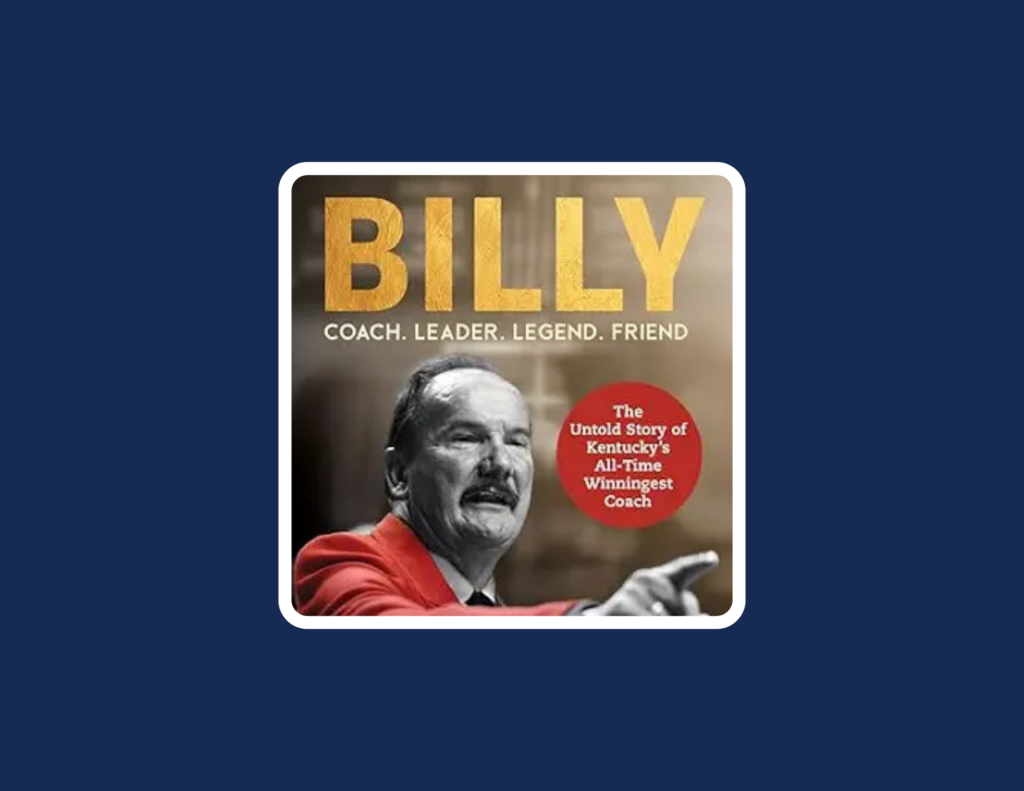
Dr. John Wiley Bryson is the author of the new book “Billy: Coach. Leader. Legend. Friend.” which tells the story of Billy Hicks, Kentucky’s winningest high school basketball coach. Billy is the powerful biography of a man whose impact stretched far beyond the scoreboard and into locker rooms, living rooms, and lives across the state of Kentucky.
On this episode Mike and Ken discuss the life and coaching legacy of Billy Hicks, Kentucky’s all-time winningest high school coach. Bryson explains how research, interviews, and memories from former players, colleagues, and family members came together to tell Hicks’s story. The conversation examines how Hicks’s upbringing and early coaching experiences shaped his approach, including his emphasis on fast play, man-to-man defense, preparation, and personal relationships with players. It also reflects on the pressures of Kentucky high school basketball, Hicks’s rivalry and respect with Bobby Keith, and the joys and heartbreaks of coaching alongside his family. Throughout, the episode asks what makes a coach’s influence last beyond wins: the people they develop, the culture they create, and the stories others continue to tell.
Follow us on Twitter and Instagram @hoopheadspod for the latest updates on episodes, guests, and events from the Hoop Heads Pod.
Make sure you’re subscribed to the Hoop Heads Pod on iTunes or wherever you get your podcasts and while you’re there please leave us a 5 star rating and review. Your ratings help your friends and coaching colleagues find the show. If you really love what you’re hearing recommend the Hoop Heads Pod to someone and get them to join you as a part of Hoop Heads Nation.
You will want to have a notebook by your side as you listen to this episode with Dr. John Wiley Bryson, author of the new book “Billy: Coach. Leader. Legend. Friend.”
What We Discuss with Dr. John Wiley Bryson
10 Key Takeaways for Basketball Coaches
- Build your coaching philosophy from the values you want players to experience.
Hicks’s approach was shaped in part by his own experience of feeling dismissed. He made a point of calling players by their first names, rather than reducing them to a surname. Coaches can reflect on moments that shaped them and ask: What do I want my players to experience differently?
- Learn who your players are beyond basketball.
Hicks took time to look players in the eye, ask about school and home, and talk with them before practice. Those brief conversations helped players feel recognized as people, not just as athletes, and strengthened the trust that makes demanding coaching possible.
- Use structure to create a focused, confident team.
Hicks scripted practices, minimized dead time, and planned details such as trips carefully. Players knew where to be, what to bring, and how practice would flow. That predictability reduced confusion and left more attention for competing and learning.
- Choose development over protecting the record.
Hicks sought stronger competition, even when it risked more losses. The episode contrasts a 72–68 loss with a 35–34 win: the higher-scoring game could be more useful preparation for tournament play. Coaches can evaluate a schedule by how well it prepares players, not just by how it looks on paper.
- Make practice demanding in ways that resemble pressure.
Hicks used tough free-throw routines when players were tired. That kind of practice tests more than technique: it asks athletes to execute while fatigued, as they may need to late in a close game.
- Create a clear identity through consistent choices.
Hicks favored playing fast and playing man-to-man. Whether or not a coach shares those preferences, the lesson is to make the team’s approach understandable and consistent. Players benefit when they know what the program values and what is expected of them.
- Use small moments to strengthen relationships.
The episode describes Hicks connecting with players through informal visits, fishing trips, and time with smaller groups. Coaches can make space for these interactions; a personal conversation or shared activity can build connection beyond the official team meeting.
- Make players feel individually known.
The episode’s nickname appendix illustrates how closely people in Hicks’s circle remembered one another. The takeaway isn’t that every coach needs nicknames; it’s that noticing players’ individual traits and treating them as distinct people can deepen belonging.
- Treat preparation as a form of care.
Hicks’s detailed practice plans and trip logistics showed that preparation was not just organizational, it helped create a setting players could rely on. Coaches can communicate care by being ready, respecting players’ time, and removing avoidable uncertainty.
- Build a culture worth remembering and passing on.
The episode’s account of Hicks’s legacy comes through many voices, including former players, family, and colleagues. A coach’s influence lasts not only through wins, but through the stories players continue to tell about how they were challenged, supported, and treated.
Like this show? Please leave us a review here — even one sentence helps! Consider including your Twitter handle so we can thank you personally!

Your first impression is everything when applying for a new coaching job. A professional coaching portfolio is the tool that highlights your coaching achievements and philosophies and, most of all, helps separate you and your abilities from the other applicants.
The key to landing a new coaching job is to demonstrate to the hiring committee your attention to detail, level of preparedness, and your professionalism. Not only does a coaching portfolio allow you to exhibit these qualities, it also allows you to present your personal philosophies on coaching, leadership, and program development in an organized manner.
The Coaching Portfolio Guide is an instructional, membership-based website that helps you develop a personalized portfolio. Each section of the portfolio guide provides detailed instructions on how to organize your portfolio in a professional manner. The guide also provides sample documents for each section of your portfolio that you can copy, modify, and add to your personal portfolio.

Aiming to go D3? The D3 Recruiting Playbook gives you a clear, step-by-step roadmap to the recruiting process – what coaches value, key milestones from early high school through application season, and how to build a target list of schools that fit your needs.
We’ll demystify researching D3 programs and how to stand out without chasing every camp or showcase.
The modules cover things like writing emails to coaches, building an effective highlight tape, using social media well, planning ID camps and visits, and navigating application strategy.
You’ll get templates, checklists, and an outreach plan to communicate confidently, learn how to compare financial packages, and avoid common missteps. By the end, you’ll have a prioritized school list and a decision framework you can use to land your best-fit opportunity.

Give With Hoops is a groundbreaking initiative that fuses basketball analytics with modern sponsorship. Built for teams who see data as opportunity, from AAU programs to college powerhouses.
By tying on-court performance directly to community and sponsor engagement, Give With Hoops help programs raise more while deepening support from those who believe in the game.
Traditional fundraising disconnects donors from the action. Sell candy bars, wash cars, beg for donations, it’s exhausting and ineffective. Players perform better when their stats matter beyond the scoreboard. That’s why Give With Hoops was created.
Give With Hoops connects game performance to community support. Every basket, rebound, and assist becomes a chance to raise funds. Transparent, exciting, and proven to raise 3x more than traditional methods.
THANKS, DR. JOHN WILEY
If you enjoyed this episode with Dr. John Wiley Bryson let him know by clicking on the link below and thanking him via Email.
Click here to thank Dr. John Wiley Bryson via Email
Click here to let Mike & Jason know about your number one takeaway from this episode!
And if you want us to answer your questions on one of our upcoming weekly NBA episodes, drop us a line at [email protected].
TRANSCRIPT FOR DR. JOHN WILEY BRYSON – AUTHOR OF THE BOOK “BILLY – COACH. LEADER. LEGEND. FRIEND.” – EPISODE 1314
[00:00:00] Narrator: The Hoop Heads Podcast is brought to you by Head Start Basketball.
[00:00:20] John Bryson: The role of literature, the role of a book, the role of a biography is for you to put yourself in those scenes, in those scenarios, sometimes as the player, sometimes as the coach, but always as a man going, “We have unique issues, but we don’t have different issues.” We’re all trying to figure out how to raise kids and take care of aging parents and make enough money to pay the bills and are we saving enough for college for our kid?
Those pressures are for every man. And so I spent a lot of years studying men, and so I knew I wanted to pull them into just a moment of a little deeper reflection than just Billy Hicks.
[00:00:57] Mike Klinzing: Dr. John Wiley Bryson is the author of the new book, Billy, Coach, Leader, Legend, Friend, which tells the story of Billy Hicks, Kentucky’s winningest high school basketball coach.
Billy is the powerful biography of a man whose impact stretched far beyond the scoreboard and into locker rooms, living rooms, and lives across the state of Kentucky. Ever since I founded Head Start Basketball in 1993, we’ve helped young players develop their skills, confidence, and love for the game. Now we’re partnering with coaches and athletic programs to bring the Head Start Basketball camp experience to new communities.
Our camps run for five days, three hours per day, and serve boys and girls in grades one through six. You or someone on your staff directs the on-court portion of the camp while Head Start Basketball manages registration, promotion, parent communication, t-shirts, trophies, website setup, and administration.
There are no upfront camp planning headaches, and the profits are divided 50-50 between your program and Head Start Basketball. If you want to reach more families or strengthen your youth basketball pipeline or just create additional revenue for your program, visit headstartbasketball.com to explore hosting a camp.
[00:02:06] Pete Gash: This is Pete Dash, men’s assistant basketball coach at the University of Maine, and you’re listening to Hoop Heads podcast.
[00:02:14] Mike Klinzing: You’ll want to have a notebook by your side as you listen to this episode with Dr. John Wiley Bryson, author of the new book,
[00:02:19] Pete Gash: Billy, Coach, Leader, Legend, Friend.
[00:02:25] Mike Klinzing: Hello, and welcome to the Hoop Heads podcast.
It’s Mike Klinzing here tonight without my co-host, Jason Sunkel. But I am pleased to welcome in Dr. John Bryson, author of the new book, Billy, about Billy Hicks, the all-time winningest high school basketball coach in the state of Kentucky. John, welcome to the Hoop Heads pod.
[00:02:45] John Bryson: Hey, Mike. I wanted to talk about Coach Hicks.
[00:02:48] Mike Klinzing: I’m thrilled to have you on. Looking forward to diving into the book, looking forward to learning a little bit more about what you had in terms of your process, the why behind it. But let’s start with a quick summation of the book for people who are out there in our audience that are listening. Let them know what the book’s about and what they can expect if they pick up a copy
[00:03:11] John Bryson: Yeah, I had always known Coach Hicks was special.
I had him early in his career, so I could have never dreamed of him becoming the all-time winningest coach in the state of Kentucky. But the, the book was birthed out of the tragedy of us losing him in December of ’22 or ’23, and I stayed up late one night after I got the news and just started writing out some things I wanted to remember about him, and ended up turning that into a tribute that just took off online.
The TV sta- stations and a lot of pe- and his family was like, “This captures Billy better than anything we’ve seen written,” all the nice words. And when I saw the response to that, I s- I saw an opportunity to really talk about Billy the man. Most of folks around here know him as a unbelievable basketball coach and all his state tournament wins and championship wins.
But I wanted the world to know who Billy was as a man, ’cause he was a whole lot more than just a basketball coach. And yeah the line I landed on was, “I’m going to keep at this until every kid in the world has a chance to play for a coach just like Billy Hicks.”
[00:04:17] Mike Klinzing: Yeah, when you feel that way about somebody that you had the opportunity to play for, I don’t think there’s any better endorsement that you can give to a coach that had an impact on your life than saying, “Man, I wish every kid had a chance to play for somebody,” either just him himself or somebody like him.
And so again, what a special way to be able to memorialize and remember and just go through all the stories and the things that you have in the book. And so let’s start there. When you have this idea, “Hey, I’m, I want to write this book. I want to be able to put all this down and help to remember, not only for me, but for people to recognize and understand that, yeah, Billy won a lot of games, but not only did he win a lot of games, but he also impacted a lot of lives.”
So once you settled on the idea of, “Hey, I want to write this book,” what do you do first? What’s the idea? Do you talk to somebody? Do you write an outline? What’s the first step from going from idea to, “All right, I’m actually going to do this”? What do you do first?
[00:05:18] John Bryson: I don’t know if this is the right way, I’m not an expert on book writing, but I started by just gathering the facts.
I had never looked at his records in some of the other schools where he coached and I kinda honestly just built a timeline. Said, oh, okay, he graduated in 1970 from high school and went to Wofford College and graduated there in ’75 and came back here. And so once I had that laid out, I started asking myself, “Who do I know that would’ve known him during each of those segments of time?”
Growing up, when he went to college, when he came back to coach at Everts, who do I know in Corbin? Of course, I know a bunch of people here in Harlan, and then him up in Scott County. And the secret little bird in my pocket was a college roommate of mine named Tim Glenn, we always called him Nut.
And he and I played, actually played baseball together at Asbury College, and he was one of Billy’s first hires at, in his hometown when he graduated back in Scott County. And so I had this super close friend working for and living with Billy day in and day out. And so he was able to fill in a lot of gaps and connect me to a lot of people as well.
But it was… The great joy in this was talking to former players sitting down with some remarkable men that were his friends or mentors or college roommates. Got to– Everybody said yes, literally to saying, “Hey, will you talk to me a little bit about your relationship with Billy and what you saw?”
And so I was– If the book had never gotten written, it was worth it to have those conversations with those people
[00:06:48] Mike Klinzing: How closely did your remembrances of your time with him line up with the remembrances that everybody else had? Obviously, I’ve read the book, so I know the answer to this question, but just as you thought about that and going back again, now as a guy in his 50s thinking back to what your high school experience was like, trying to remember that, making sure that it’s all accurate.
But again, when you talk to other people, did you immediately come to the realization that, “Hey, this guy just impacted everybody in the same way that he impacted me”?
[00:07:20] John Bryson: Absolutely. It was amazing. And some of his super close friends had nothing to do with athletics or anything, and so he had a wide range of friends.
Always had a fishing buddy wherever he… multiple fishing buddies. He loved the water as much as he loved the hardwood. And yeah, it… what I was encouraged by, I could see where he grew and changed in some things, like how he made chili and how he coached and then but yet we all laughed ’cause they would ask me, “Were y’all doing this?
Y’all did that?” Oh my gosh, yeah, that’s all we ever did. And so most of his drills, most… His philosophy stayed exactly the same. He always talked about sitting in his college dorm room with a couple of buddies who were very prominent men and went on to become very prominent men themselves. One is president of the Carolina Panthers, one is South Carolina’s all-time winningest high school basketball coach.
And so I would like to have been a fly on the wall in those dorm rooms. But he had written some things down, and a lot of that was from a bad experience in high school with his high school coach. And so he said, “I’m not doing that, I’m doing this, I’m not doing that, I’m doing this.” And the day he retired, he said, “I never wavered.
What I would tell young coaches is, find your philosophy and come hell or high water, live it out.”
[00:08:33] Mike Klinzing: One of those things is reflected in the title of the book, that he never liked it because of his large family, that as a kid growing up, everybody just called him by his last name. Yep. And that’s what he was known as.
And so he made a vow to himself that he was always going to call all of his players, all the kids that he was interacting with, his first name, by their first name, and hence the title of the book is not Hicks, it’s Billy. So talk a little bit about how that, just how important that was to him, ’cause I know that was a theme that kinda ran throughout the book.
[00:09:10] John Bryson: Yeah, he had a, a coach in high school, Coach Troutman, who actually later came to our school, so I knew of him as well, who was just your traditional 1940s, ’50s hard-nosed, angry, bark-at-ya, old school kinda coach. And Coach Hicks was one of nine or 10, and then he had three or four brothers older than him, so by the time he came through the school systems, yeah, he was just Hicks.
And he didn’t like that and he- so he mentioned that. He said, “Man, I’m… If I get a chance to coach players, I’m going to call ’em by their first name and not just some generic last name.” And then the second thing he did, he… This is 1969, ’70, ’71, and people were starting to play around with the full court man-to-man and man-to-man defense, and they were starting to play around with faster pace.
And he ki- his leadership started coming out when he was a sophomore and junior, and he went to that same coach and said, “Hey Coach, can we try some man-to-man defense, and can we try some a little faster pace?” And his, the coach looked at him and just went, “Who would you guard, Hicks?” But basically you’re not good enough defensive player to not play a zone.”
And so that deflated him and he left there. When he wrote his philosophy he was like, “We’re going to play fast courts, we’re going to play man-to-man, we’re going to let our defense open up our offense.” And he would famously say throughout the years, “I would rather lose a game 72-68 than win a game 35-34.”
[00:10:33] Mike Klinzing: Yeah. It, you could definitely feel how the things that he experienced in his life impacted him in terms of the way that he designed his coaching philosophy, the way that he then interacted with the kids that he coached. You could see the influences from his time as a student athlete himself and just his experiences in life.
One of the things that I think as you go through and you read the story, you find out that Billy’s family had, and the area that he lived in the geography of the area, I think is almost a character in the story in terms of just Kentucky and just everything that goes along with that and the coal mine.
So talk a little bit about, again, the choice that he at one point sort of had to make between, hey, I’m going to go and coach and, or I’m going to go into the coal mines. And it sounds like maybe his parents had– his dad had one idea and maybe his mom was a little bit more supportive of the other. So talk a little bit about that decision and again, what a monumentous decision it ended up to, it ended up being.
[00:11:39] John Bryson: Yeah probably every young man not the history of Kentucky, probably specifically Eastern Kentucky is where most of the coal country would be. You have your horses and your bourbon and everything else, and the UK and U of L in central Kentucky, and then there’s the western part of the state.
And so coal mining, coal was king here for multiple decades, and unbelievable if you just look at the numbers of pounds of coal that came out of here. And so it was the best job you could get with a college degree or without a college degree as, as far as pay. Now, not the best job you can get when you’ve got to go 15 miles down into a mountain and you’re in 36 inches of seam and you’re getting black lung.
And it was hard, back-breaking work. And so the way Billy described it, growing up as a teenager, you had one eye on the coal mines and one eye on, what else could I do? How can I not do this? And and his dad, yeah wasn’t very encour- encouraging at all. In fact, Billy would say he said to him one time, “What’s that old ball going to do for you?”
He thought work was sat above education or athletics, and that if you were pursuing a- education or athletics, it’s ’cause you didn’t want to work hard. And that was definitely a wound he was he was dealt with. But yeah, every kid had that choice here and then eventually was forced into the choice of something else as coal withered out.
But you can’t separate the coal industry from his first 30 years of life ’cause it influenced it.
[00:13:06] Mike Klinzing: It’s interesting when you think about just the juxtaposition from what his life could have been-
[00:13:13] John Bryson: Yeah …
[00:13:13] Mike Klinzing: had he chose to go into the coal mines on a permanent basis, and he still worked in the coal mines some.
Yeah, he
[00:13:19] John Bryson: did.
[00:13:20] Mike Klinzing: But having made that choice to go and coach, and then you look at obviously the impact that he had over the course of his career on all the players that he was able to interact with a- and be a part of. And so let’s talk to, talk your part of the story, because again, you came into contact with him pretty early on in his coaching career- and had an opportunity to play for him as a high school player. So as you were talking to some of the other people that he played for either earlier or later in his career, were there things that they said, I know again, that the ideas, the thoughts, the, the stories matched up. Was there anything that somebody brought to you that you were like, “Oh yeah, I forgot that he used to do that,” or, “I forgot that was one of his sayings.”
Was there anything that somebody jogged your memory that you might not have remembered on your own?
[00:14:10] John Bryson: There were a couple of drills that we constantly did. He, I don’t know if he invented this or stole this, but at the end… We didn’t ever shoot free throws until the end of practice ’cause he wanted us– He knew the most important free throws we would ever shoot in our life would be when we’re dead dog tired.
And so we always ended it. And a lot of times, sometimes each teammate would come to the line for two, and if you made both, nobody ran. Missed one, everybody, you know. Missed two, we ran twice.
[00:14:33] Mike Klinzing: Yep.
[00:14:34] John Bryson: So you had that pressure on you and but he developed this system, a scoring system that if miss the rim entirely, it’s a zero.
If you bank it in, it’s a one. If it hits the left side of the rim and goes in, it’s a two. Three. Front was four, back was five. No. Yeah, back was f- a swish was only four, which we all thought was the stan- gold standard, but he always didn’t want you to miss it short. So if you came in right off the back of the rim, and he would sit there charting every single one of us all throughout the season, and we all tried for, to get a 25 or a 30 or whatever, and nobody ever did.
But it was definitely a unique way to think about how he wanted us shooting our free throws.
[00:15:11] Mike Klinzing: Yeah. It’s funny to think back and I guess one of the things that always strikes me in a book like this is I try to then project myself into the story and think about my experience as a high school player or my experience as a college player, and try to go back and remember this game or this moment or this halftime speech or this drill or these practices, whatever.
And there’s clearly things that stand out for me, right? That I do remember, that I have vivid memories of. And then there’s a lot of things, honestly, Jon, that I have zero recollection. If I try to put together, “Hey, what about this game when I was a sophomore?” It… There, there’s things that, again, just don’t come back to me naturally.
So how easy was it for you to remember? And obviously, a lot of the story is told outside of your life experience with him because he coached many years where he wasn’t coaching you. But the stories and the things specific to your time, how easy was it for you to remember? What’s your memory like in terms of being able to recall some of those things that you guys experienced back during your high school days?
[00:16:23] John Bryson: Yeah, I would say I would be exactly like you. There’s no way I could remember that shot or that night or that situation or we got beat on the road, but we beat them at home. If somebody says it, I might go, “Oh yeah, I do remember that now.” And that’s how a lot of it came back to me, was talking to t- former teammates reading a bunch of box scores, reading a bunch of stories from the newspaper wherever he was during that year, and and then listening to other journalists interview him through the years.
All of that helped, back to your previous question, get enough of the story where I knew it was pretty much ballpark this is right and I want to tell that part of what somebody said.
[00:17:01] Mike Klinzing: Yeah, it’s Always good to be able to bounce your ideas and thoughts. Whenever I get together with teammates and people are quoting things a coach that we played for said, or- Yeah
thinking about, “Hey, do you remember when we used to do this drill or that drill?” And maybe I wouldn’t remember it on my own, but as soon as somebody brings it up, you’re like, “Oh yeah, I remember that,” and you kinda put it all together. Yeah. And then those pieces of the puzzle start fitting and you start seeing how that story plays out.
And obviously for you, in the quest to write a book, being able to pull those stories from different people and put them in the right order and in the right sequences- Wow … to be able to make the book ma- make sense, I think, again, to be able to have all those sources, as you said, that were willing to talk and share, I think is a big part of it.
Before we go further, I think at this point it probably makes sense to kinda put into context Kentucky high school basketball. And I think one of the things that is very unique about Kentucky high school basketball to this day is the way that the state tournament is set up compared to the way that-
The state tournament is set up in many other states. Like for example, here in Ohio now, we have, we’re up to seven classes of divisions- … in high school basketball, so we now have seven state champions every spring. But just talk a little bit about how unique Kentucky’s state tournament basketball is.
[00:18:21] John Bryson: Yes. W- I’ll tell you the end, then we’ll rework it back. But it’s, we’re the last state in the country that only one team ends with a win. Everybody else ends their season with a loss. And so Kentucky’s the Kentucky High School Athletic Association over the years, and for the last 50 or 60, 70, 80 years maybe has 16 regions that are geographic, and within that they’re broken into districts.
We’re the 52nd district out of the 13th region. And so you start, every team starts in the end of the year tournament. The district winner and district runner-up both go to the regional. The district runner-up plays the district region. It’s a draw. District run- and the district winner gets a other district runner-up.
And so that’s 12 teams here. And then each regional winner goes to the Sweet 16. So you have 16 teams all from literally every part of the state because of the geographic division. And so you could have a school of 200 kids and playing against Louisville Ballard of, 4,000 or something like that.
And so it’s it’s lots of drama at that state tournament. It’s every kid’s dream to get to play in a state tournament and it- Indiana held out with us for a long time, but I think 10 or 15 years ago they went to classes. And Kentucky has classes we just don’t apply it to the basketball tournament.
And we’re a Class A school in football, which is important because we try to schedule more Single A and Double A football games, but basketball’s wide open. And that’s one of the reasons Coach Hicks would take us anywhere in the summer to play bigger schools and brand-new schools because he was kinda always beginning with that end in mind of, “I don’t want to be brand new for these guys when it comes tournament time.”
[00:20:06] Mike Klinzing: To be able to have, again, that competition amongst different levels, it’s something that we just don’t see nearly as much in basketball today. Even outside of a state tournament format, so often we see kids from the time they’re in second or third grade, they just compete against other second graders or other fifth graders or other eighth graders.
And you think about the way that somebody who grew up in our era learned the game, right? And you’re playing and you’re going to different places and you’re playing pickup basketball. And I know, and I’ll talk about this section of the book in a little bit, but one of the things that in the coaching chapter of the book where you kinda laid out some of the beliefs and just ideas that Billy had about the game, and one of them is that you just have to play more basketball.
And I feel like that’s one of the things that in today’s world with trainers and it’s much more difficult for kids to be able to find places to actually just play. So many players today are finding time with a trainer to be in the gym by themselves with somebody else, working on their skills, working on their shooting.
And this is something that we’ve talked about a ton on here, John, is just the skill level of basketball has never been higher, but-
…
[00:21:22] Mike Klinzing: Kids just don’t play as much as, as they did. And in some ways I think that hurts maybe the competitiveness and the basketball IQ ’cause they’re just not playing the same way that that you or I or players of our era got an opportunity to do that.
I really when… As I’m reading through that coaching chapter and I saw that it just says, “Play more basketball,” right? And you say it seems almost counterintuitive to say play more basketball, but as I’m reading it, I completely understood what you meant there. That again, you guys were going, driving to different places, and he was taking you to play here and there and again, just giving you an opportunity to play and in order to prepare you for what was to come.
And I thought that was something that, again, if you don’t– If you didn’t grow up in our era, you may not understand it. But anybody who grew up in our era completely and immediately understood what the point was that Billy was trying to make and that you were trying to share through that section of the book
[00:22:15] John Bryson: Yeah.
And when we weren’t traveling, he would leave the keys to the gym in his mailbox. And he, he’d tell us at times, “I don’t want to see those keys in there. You boys need to get to the gym.” And even in the off-season, there were three or four regular games going on at three or four courts in town, and it…
Almost every time, you’d see Billy driving around. He wanted to see who was playing basketball in the off-season. He wanted to see who loved the game. And yeah, he was something else.
[00:22:41] Mike Klinzing: Tell me a little bit about the rivalry that he had with Bobby Keefe throughout his career, and somebody that the two of them as coaches went back and forth and competed hard against each other.
And I know that they had a tremendous amount of respect for one another, but just talk a little bit about that relationship with Bobby Keefe and the rivalry that they had over the course of their respective careers.
[00:23:07] John Bryson: Yes, Bobby Keith was he was just, he, it, he was Darth Vader and Coach Hicks was, Luke Skywalker, the young Jedi.
So Coach Keith was 10, 15 years older than Coach Hicks but by the time Coach Hicks came to Harlan and we were in the 13th region and Clay County had just had a … Bobby Keith had built a machine. He just had a death grip on the 13th region and his w- the numbers are crazy. They once won 112 straight home games.
They’ve gone, four or five y- they’ve gone to the state tournament sometimes seven years in a row. If they don’t go to the state tournament they’re usually the regional runner-up. And so you just, nobody got to enjoy the Sweet 16 here often except for Clay County and Bobby Keith until Coach Hicks got his teams going here and then in Harlan, or in Corbin.
And he had some really good teams. A kid named Tony Piotrowski who Coach Dale Brown recruited down to LSU and he finally broke through. But the, their match-ups during the regular season and their match-ups in the regional tournament are just the stuff of legends. I mean it is just crazy how competitive it was and all the little extracurricular things that would come in as well to make sure Clay County won
But it they ended up being really good friends. They always respected each other and when Coach Keith got sick Coach Hicks would go every day and spend time with him in the hospital. And before he passed, Coach Keith said, “I want, Billy, I want you to speak at my funeral,” and he did.
And it’s powerful. You can find it online, Coach Bobby Keith funeral. And Coach Hicks gives a, a awesome honoring of him and his life.
[00:24:43] Mike Klinzing: It’s really cool that two guys who were rivals and were going after the same prize year after year playing in the same region and knowing that they both wanted the same thing and they couldn’t both always have it, and yet they came to, as you said, not only build that respect between the two of them but also to build a genuine friendship to the point where, again, Coach Hicks goes and speaks at Coach Hicks’ funeral.
And you could tell just from the stories that you told in the book that rivalry was really intense- … and then as a result of that, that respect was deep. And then eventually that led to the two of them coming to an understanding about one another and realizing that, hey, we’re two guys that are going about things and trying to do th- things that are very similar.
And I think they came to that realization and as a result ended up developing that friendship that you talked about. And I think that’s a powerful thing when you talk about sports, right? That- Again, we all compete and we compete, and everybody wants to win, and yet ultimately we’re all in this same world where-
We want to try to be able to have an impact and do that with the players and the coaches and the people that we’re around. And to be able to use the game of basketball to do that, I always think is a very powerful thing. And I know that we talked a little bit about Coach Hicks’s family growing up, and I know another big part of the story is his family when he got married to his wife Betsy, ends up having two children, and eventually his son is able to play for him, and then- tragically, as I’m reading the story, I did not see this coming, that- Yeah … his son passed away in a car accident. Just the impact that he had on them, and of course for me as a parent, you read that and you project yourself into those situations and think about, “Hey, how would I handle that and how would that impact me and what I do every day?”
So just talk a little bit about his family, how important that was to him. Again, he was obviously a people person, but talk a little bit about his family and what you found out in your research about them.
[00:26:51] John Bryson: Yeah. He and Betsy grew up in Evarts. And they were kinda high school sweethearts.
Coach Hicks was three or four, maybe four years older than her, and so she was kinda working through high school while he was going through college. But he would come home every summer, and then they got married and and she is something else. She is- was an awesome wife. It but if God ever made a basketball coach’s wife he made her in the mold of Betsy Hicks.
She’s seen as much basketball as he has. And w- I said in the book, I think you could watch her during a game and know the score of the game, basically, because she was just so into it with him and they were just always together, enjoyed each other. And then kids started coming. Actually his daughter, his oldest was two or three when she was…
when they were here in Harlan, and I just remember her running around the basketball court, and at times Billy locked her in that ball rack, so she could- wouldn’t run out on the court. But she just grew up around it and then a couple years later, Tyler came. And his dream in life was to coach Tyler in the Sweet 16, and finally Tyler’s senior year, he got to do that.
And so that was an incredible, special moment. Then Tyler was trying to figure out, he wanted to play basketball at the next level and was considering the Air Force Academy or one of the academies. And so he had joined the National Guard or something here and was getting his life prepared to do that, and tragically had a, was in a car accident, a one-car accident off the side of the road late one night.
And man, Billy was just obviously crushed. And so that was definitely a, a, a tragedy and a tragic event. Ashley got married a little later. We’re now in the mid 20-teens and then had a little boy, Wyler, who became the apple of Coach Hicks’ eye. Probably helped him retire. And he got to be with him for four or five years and you could just tell loved every minute of it.
But all those folks, his wife and his kids, and then his exten- his extended family, his brothers and sisters just were always a part of his story. Just kinda always saw them around.
[00:28:58] Mike Klinzing: I love the little anecdote in the book where his wife said that, “Yeah, he won 1,000 games, and of that 1,000 games, I think I’ve seen 990 of those wins that he’s had,” which again is one of those things, as you said, when whenever I talk to coaches, and obviously one of the things that coaches have a challenge with is how do I balance my ambitions as a coach, the time that it requires to be an excellent coach in today’s world, and then how do I balance that with my family?
And I think what I’ve found i- in my interviews, John, is that the coaches who do that the best are the ones that figure out ways to incorporate the two together. Your basketball family and your, quote-unquote, “real family” kinda come together and again, then your daughter is running around the basketball practice court, right?
And so she becomes a part of that, and eventually his son plays for him, and his wife is at every game and supporting him. And I think with coaches that make it work, one, you have to have a spouse who’s super supportive of that and understands it, and then you try to incorporate and bring your family into the basketball program as much as you possibly can.
And I know that, like, when I started my coaching career as an assistant coach at the high school level, my head coach had two young sons, and I clearly remember those two young sons running around our practices all the time, either with a ball in their hand or hiding behind the wrestling mats or running behind the bleachers or all those kinds of things that just, again, they were there and around him and consequently our program all the time.
And then my daughter right now is a junior in high school, and her coach has two young kids, and they’re there all the time, and my daughter is just as attached to those kids as probably she is to the coach and- … her teammates and all that stuff. And again, it’s something that my daughter’s going to remember for the rest of her life is those kids being around practice because, again, it’s just the coach is doing a very good job of bringing those two things together.
That’s– I think that’s a powerful message for coaches out there, that if you can incorporate your family at home with your family on the basketball court, you’re probably going to have a lot better opportunity to… Again, I don’t know if there is really such a thing as work-life balance when it comes to coaching, but certainly by bringing the two of them together so that you can spend time with both of them in the same, at the same time, it makes it at least a little bit easier.
But it’s always a challenge.
[00:31:25] John Bryson: Yeah. Yeah, absolutely. And we were regulars in his home, and it wasn’t like they were fixing up the house to let us in. We were just kinda enough that we’re in their lives that it wasn’t even a hosting pressure. It was just a place we could go and be, and of course he’s home.
But yeah, we were just as much a part of his lives as, as his kids were
[00:31:47] Mike Klinzing: It’s interesting just as I read the book and I think about coaches that I knew back in the time when I was growing up, I think about coaches that I know now, I think about all the conversations I’ve had on the podcast, and you think about, again, just the number of times that you went fishing with him or that you went to his house, like you talked about.
And those are things that in today’s world, we don’t see that nearly as much, at least not on a informal basis. I think there are a lot of coaches that still try to do that, like with the whole team, right? They bring their whole team over for a meal, or they’re organizing team bonding type of activities.
But it’s much more rare to see, hey, this one kid is just going over to hang out at the coach’s house. And we all understand, unfortunately, the reasons why that is, that it’s just, again, you have to be very careful in today’s society to watch what you’re doing in the one-on-one and where you’re doing all those things.
And it’s un- it’s unfortunate, right? Because- Yeah … again, the impact that someone like Billy Hicks had on his players went far beyond what he was doing in a team practice. It was just building that relationship outside. But I don’t know if you’ve thought about that in any way, how your experience was different with him as your coach than what a kid might experience today just because of the connectivity you were able to have with him because it was a different era.
[00:33:11] John Bryson: Yeah, it definitely makes it unique and it definitely it’s sad that we’re to that point where if the basketball coach invited my teenager over, I’d be a little cautious, as I should be. And so- … that’s sad that’s not there. On the flip side, when you did see him you felt seen, heard, noticed.
He was curious about you. “What’d you just learn in history? Tell me more about that.” It was like he had been looking for you, and so he– And the only word I can come up with is love. He loved us, and he wasn’t even a big touchy-feely, huggy, fist bump. He, but he was interested, so curious and interested in your life and in your player, in player development.
I talk about that in there. That was his passion. He loved seeing a very mediocre to bad sophomore become a contributing senior, and that’s what he loved seeing, his players develop.
[00:34:06] Mike Klinzing: And the way he did that, again, was by pouring into them and learning about them, not just as basketball players, but as people.
And that’s something, too, that talk to a lot of coaches about, right? And they all say that one of the most important things that they do is build that relationship with The human being first
[00:34:25] John Bryson: Yes
[00:34:26] Mike Klinzing: And once you build that relationship with the human being and you let your players know that, “Hey, I care about you more than just what you can do on the basketball floor.
I care about you as a person. I want to know about your family. I want to know about your schooling. I want to know what you’re interested in.” And when you do that, you get more trust from your players, and then that allows you when you have to coach them in such a way where maybe you have to tell them some things that are uncomfortable, or you have to get them to work a little bit harder, you’re able to do that.
And I think the best coaches, which again, if I’m picturing Billy Hicks in my mind, I’m seeing somebody who does that pretty naturally. It’s not something where he has to sit down and go, “Okay, today I have to go over to John and I have to ask him about his sister’s dance recital because I heard…” It’s more just a case of, “Hey, John, how you doing?”
And we’re talking, and he already knows things about John’s life a- and it be- and it comes natural. And I think the best coaches, that’s kinda how they are. And I imagine in your relationship with Billy, that’s kinda how you felt, that it just, it wasn’t forced, it was just natural.
[00:35:28] John Bryson: No, yeah. And he wasn’t a, a extrovert, life of the party.
He didn’t like crowds. He didn’t like parties. He didn’t like weddings. He didn’t like pe- he was very much introverted. Yet one example is we practiced every day after school, right after school, and he was always on the court. First person on the court. And there was about a 10, 15, 20 minute window where guys were changing, getting up there, loosening up, stretching and he would talk to every player.
Maybe 30 seconds, maybe two minutes. And he called it eyes. He goes, “Let me see your eyes. I need to see your eyes.” And so you had to look him right in the eye, and he’s “How you doing?” “What happened today? What’s going on at home?” Or he might say, “Man, we’re really going to need you tomorrow night, and you’re going to learn why today, but you have to do something different tomorrow night against so and so keep your eyes and ears open.” So sometimes it wasn’t about my life, it was just about the team or the game coming up, but it was individual time. And he took advantage of, I don’t remember much, I don’t even know if I ever did anything just me and him. There were always two or three guys going fishing, three or four guys coming over for chili.
I’m going to take this group of six to go play this team over here. And he took advantage of m- many of us at the s- his one hour had a multiplying effect of four, five, six or seven because it, we were always traveling in small gangs, basically
[00:36:47] Mike Klinzing: In the course of doing the research for the book, did you ever get his chili recipe?
[00:36:51] John Bryson: I did not. I tell a story early on. First time I went over, he had just started. We looked down in that big old pot, and there were like… Everything was… Nothing was sliced. It was, like, full tomatoes. It was, like, full, ears of corn. But apparently he perfected it over the years because by the time we got to Scott County, and it was legendary.
People were wanting it. He had developed his recipe, and he always… He had a… Every time you went, he had a man pot and a mouse pot. And the man pot, boy, you better be… it would light you on fire. I’ve seen guys get physically sick, throw up, have to leave. He’d send them over to the mouse pot.
But y- it was awful for me ’cause ketchup makes me sweat. I cannot eat spicy hot things, but, boy, I wasn’t going to eat out of that mouse pot.
[00:37:36] Mike Klinzing: That’s good stuff, John. One of the things that I loved about the book, and I told you this when we talked a little bit before the podcast, was just at the end of every chapter, you included some opportunities for the reader to be able to reflect on the previous chapter that they had just read, and kinda think about some things that were lessons that you felt came through from Billy’s life in that chapter.
Tell me about the idea of why you included that. What made you think of that? Was there a, a light bulb moment where you’re like, “Oh, I really want to include this”? Or just give me the backstory behind why you included that section, ’cause I thought it really added something to the book in that it made me stop at the end of every chapter and really reflect on what I had just read, and then thinking about how it applied in my own life.
[00:38:28] John Bryson: Yeah I probably was already in that lane a little bit in that some of my previous work had been on creating some curriculums that really helped boys step into manhood. So I worked with a group called Authentic Manhood, built a series called 33: The Series, and we were getting men to think, to stop, think, reflect.
And also, I believe what you described earlier in th- this podcast the role of literature, the role of a book, the role of a biography is for you to put yourself, in those scenes, in those scenarios, sometimes as the player, sometimes as the coach, but always as a man going, we have unique issues, but we don’t have different i- issues.
We’re all trying to figure out how to raise kids and take care of aging parents and make enough money to pay the bills and are we saving enough for college for our kid? Those pressures are for every man. And I spent a lot of years studying men, and so I knew I wanted to, not push them, but pull them into just a moment of a little deeper reflection than just Bobby Keith and B- Billy Hicks because there was a core to Coach Hicks that was rich and deep, and his why was pretty solid.
And so what he did is so interesting, you can just stay up there, but I wanted to go a little deeper and go, boy, you’re not going to be able to live the life Billy Hicks did. None of us will. You got your own life, but what are those innermost things that are your why and what drive you to get up day after day and endure those hard seasons like losing a son?
[00:40:01] Mike Klinzing: It’s one of those things that as I was going through and reading the book, and I got to the end of each chapter, I think all the questions that you posed were ones that maybe sometimes you’re going through, and I’ve been trying to get better, John, as a note taker while I’m reading books. I went through a long stretch of my life where I would just read a book and, you’re going through and everybody does this, right?
While you’re reading, you’re getting an idea. You’re like, “Oh, yeah, I should think about that,” or, “Oh, yeah, that’s how this applies in my life.” And if you don’t write it down right at the moment, I feel like it gets lost. And so I’ve tried to do a much better job over the last three, four, five years since I’ve been doing the podcast and talking to people that do take notes religiously, that when I’m reading a book, I try to take those notes.
And it’s amazing, as I was going through and reading the book, looking at my notes, and then getting to the end of the chapter and thinking like, “Okay, wow,” like the questions that you were asking that then I’m asking myself go along with some of the things that I was thinking about or the notes that I was taking.
And so then as I’m answering the questions and thinking about them and putting my… Jotting my little answers down-
[00:41:16] John Bryson: Yeah …
[00:41:16] Mike Klinzing: it was interesting just how closely what I was reading was then connecting to the questions at the end. And so I really thought that section for me at least, again, as somebody who likes to take notes and think about what I’m writing and how it can– reading and how it can apply to my life, I thought those questions were really insightful and really helpful in helping me to gain a better understanding of what the book was all about.
And again, kudos to you for coming up with that idea, ’cause you don’t see it all the time. Sometimes you’ll see like a guide that goes along with, hey, if you’re going to use this as a book group book, here’s an extra workbook or whatever, but you don’t always see that included as part of the manuscript itself.
So kudos to you for that.
[00:41:56] John Bryson: Man, I appreciate you saying that. That’s super encouraging. I almost didn’t put those in because I got scared they would, might be goofy or corny or feel like a bait and switch. But you just described, that makes me feel great. There was a reason I was writing that chapter, right?
And it pulls you into really that final reflection. And so then it felt weird not having it in there, but I appreciate you saying that because that’s a special part of the book for me.
[00:42:25] Mike Klinzing: The one chapter that I think is, again, beyond the story of Billy directly, but that you and I, again, talked about before the podcast when we talked, was the chapter that just was related to some of the lessons, basketball-related, coaching-related, leader-related, that you were able to take from Billy’s life and include throughout the book, but then you summarized them in the chapter.
And we’ve already hit on a couple of them. You already hit about how important it is, player development. You hit about defense and his philosophy of playing full court and man-to-man and wanting to play up-tempo and getting as many possessions. And so I’m just going to pick out a couple of these for you to- Okay
talk a little bit about how they relate to what Billy was all about as a coach and how somebody who’s listening that’s a coach in our audience might be able to benefit from him. Talk a little bit about why attention to detail was so important to Billy. What did that look like for him and how do you think about that when it comes to good coaches?
[00:43:24] John Bryson: Yeah. He very much he would script every practice, we, we– he’d post it outside the locker room, three, 3:15 to 3:25, stretch, on the court, 3:25 to three 35, it may be this drill or that drill. And I think it was a way for him to think through the practice. It had…
There was a lot of clear starts and stops, and it kept everybody moving. He had, he said he spent half his life, his first part of his life in line, waiting for a drill. He said to, that we’re not going to have lines. We’re going to have people set up in different places and ev- I want every kid to have a ball in their hand and throughout the whole practice, and I want to keep them moving.
And he didn’t believe in suicides and wind sprints for punishment or whatever. He wanted us he would push us to play a fast tempo scrimmage to help as our conditioning. But you’re getting your conditioning while you’re playing basketball. So all of that detail, and then stuff I didn’t even realize till way later in life.
But on those trips, he was having to figure out where are we going to stay, how are we going to get there, how are we going to eat, when are we going to eat. He had obviously put some thought into, this is pre-internet world, some thought into organizing a trip for us. And I just remember never wondering when our next practice was, what time, what to bring to the game, what time to be there, what time the bus is leaving, what time to expect us home.
And that almost created like a safety to where, It just became a, a place you could function freely in because of those, those boundaries of pre-thought out details to those trips.
[00:44:57] Mike Klinzing: It’s very important, and I think I, I’ve come to realize how important some of those things in terms of just communication and time and whatever that I didn’t realize how important any of that stuff was, I don’t think, until I became a parent, and the coach- Yes
communicating with me what time practice begins and ends- … and when we’re supposed to be here and there and whatever. And I think about myself as a young guy when I was an assistant coach, and our head coach, he was young at the time, and we’d sometimes have practice, and practice would go for three and a half hours, but we never told anybody what time the practice was going to be ending.
I can only imagine the angry parents- Oh … thinking back now, sitting out in their cars, thinking the practice was going to be over in two hours, and we’re going an extra hour and a half because, who knows why at the time. Thinking, think- thinking back to how much value we were getting out of that last hour and a half of practice.
But you come to realize and understand how important that attention to detail piece of it is. And then a- another one that struck me was just, again, especially considering the era that Billy started coaching in, you talked about how much of an encourager he was, and you gave the example before about just kinda walking up to a kid and whisper in their ear, “Hey, you’re going to have Jimmy in the game on Friday night, and he’s the big star, and I can’t wait to see you guard him and shut him down.”
And- I think that’s something that when we think about coaches from that era the guy who probably comes to mind the most is that Bob Knight style of- … he’s fiery, he’s my way or the highway, he’s… and that’s not to say, again as you mentioned multiple times in the book, his persona as an in-game coach on game night-
again, he very much had that fire, but then there was this whole other side of him that you would see in practice that he was just always encouraging, always trying to develop his players. So talk a little bit about why that being a big encourager was so important to you as a player when you played for him, but just again, the experience that the average player who played for him might have had.
[00:46:58] John Bryson: Yeah I think in general we just live in a unbelievably encouragement deficient culture that that because everything’s criticism, especially with social media, it’s tearing down, not building up. And so when you can be that encourager, when you can speak life into people, and it may be, yeah, you’re going to take out Jimmy Friday night.
I don’t care if he’s the MVP, you’re going to hold him below 20 and he’s not going to know what hit him. Man, that just breathes into the soul. I’ll just speak for men of a man. When an older man… Certain things older men can only say to younger men for, for them to be received in a way that is soul transformational, and that’s usually going to be encouragement, right?
And that’s the funny thing about this and as people are reading this and contacting me if you just saw him on the sideline, he was Bobby Knight. You’d think in one second he’s swinging a chair, and he never did, but he is that intense. But personally, he was he was tender. He was encouraging.
He d- he didn’t shame you into better behavior or better skills. He drew you into that, gave you a vision for that. I told a funny story. I’ve been described a lot of things, been described with a lot of things in life, but nev- they’ve never been quick or fast or… and we were at some camp or something and we’re out there swimming and he was like, “Y’all do a race, y’all do a race.”
And I won the race and, he came up to me a couple hours later after we ate, and he was like “Man, John, if you can swim like that, you’ve got some quickness, man. We need to develop that.” I was just like, he had me believing I could run track that spring, but it was just a a, a great encourager, which is why he’s so loved, right?
Why he’s so loved.
[00:48:35] Mike Klinzing: I love the story in the book about the two weeks of plyometrics, and you have that listed under the section of him being a voracious learner. And it’s funny because when I think about plyometrics, so my father was a professor at Cleveland State and he taught exercise physiology and kinesiology.
Oh, wow. And so he had me when I was that age doing, again, what at the time would’ve been considered plyometrics, like jumping off a bench and landing and doing all, like I had rubber hoses tied to me and jumping- Yeah … and doing all these different things. So when I read that I’m like, boy, he was way ahead of his time of even thinking about that plyometric story.
But just tell that story ’cause I got a kick out of it. Again, it brought back some personal memories for me, but also just seeing him being like, “I’m going to try it,” and then for whatever reason it just kinda disappeared which I got a kick out of.
[00:49:30] John Bryson: He probably could’ve done a little better job of giving us the heads-up.
It’s like the start of a new season. Around here you can start practicing. Then it was, I think it was October 15th, maybe the 31st, one of those. So it’s the first time we’re out, and he’s “Boys, let’s go outside.” We’re like, “What?” And we had done that before when he ran us. He would see, that was one of the times he just wanted to see if we’d stayed in shape during the off-season.
We might have to run a mile or something. But he said, “All right, I want you to line up and we’re going to learn some plyrometrics.” And it’s me– The whole town and the whole school’s been out is looking at us. The cars are stopping and I can’t even remember what I- Like you hopped with your legs out, and then hopped with your legs up, then hopped with your legs out, then ho- forward.
And we’re like, this is pre-internet, like plyro- what are we doing? And I think eventually our ignorance just called him to pu-pull the flag on that. But m-maybe it helped us. I don’t know.
[00:50:26] Mike Klinzing: Yeah. I always say that I could never jump very high, and I was never the fastest guy on the court, and I spent a lot of time doing plyometrics and running sprints when I was a kid, and I always tell my dad, I’m like, “Man, imagine how slow and unable to jump I would’ve been if I hadn’t done all, if I hadn’t done all that stuff.”
It’s kinda crazy. So yeah, I can, I totally– Again, I laughed out loud when I was reading that story ’cause it brought back personal memories for me, and then just the fact that, again, he tried it and boom, he didn’t feel like it was working, or he felt like it got whatever he wanted out of it, and then it was time to, it was time to move on.
So I really enjoyed that that part of the story. Another one of the qualities that you talk about when it comes to Billy and for, for coaches to model is, and I think it’s one that sometimes coaches struggle with, is just the idea of fun, right? And what fun means, what fun looks like. So in your mind, tell me what you think Billy Hicks thought about when he thought about making basketball fun.
Maybe he didn’t even consciously think about making it fun, but how did he make the game fun for his players?
[00:51:38] John Bryson: We talked about one of them in that you were, practice wasn’t a drudgery. It was fast-paced, you were moving, you had a ball in your hand, you were shooting, you were you weren’t standing in line, 10 of you while one guy does the drill and then the next guy does the drill.
So he kept it moving, he kept it fun. He was funny light-hearted, would make jokes at your expense and about you i- in a very honoring way. But he was really fun in those… Because he was an unbelievable storyteller. He had unbelievable stories, and then he was an unbelievable storyteller, and then he became the story like, that we all had.
I put a bunch of them in the book. And so you just never knew what you were going to hear, what story, what illustration. Something from his childhood that we couldn’t even understand what he was talking about. And and then even just the adventures whether it was driving over to Kingsport, Tennessee, or up to Covington, Kentucky, or just wherever.
Just, that was the first time I’d been out and about as a young man. And and then he’d want us to, eat at a, a decent place, and if there was a hot new movie, he would take us to the movie. He was just fun to be with. Cool things happened when you were with Coach Hicks.
[00:52:44] Mike Klinzing: If you think about the total experience writing the book and all the people that you got an opportunity to talk to and interview and hear their stories Who was the one person that stood out to you the most? And it could be maybe they were the most valuable source, maybe they had the one funniest story, maybe it was somebody that you only talked to for a short amount of time.
Who’s the one person that stood out to you when you think about this book and this experience of writing it? Who’s the one person that you got an opportunity to interact with that you think that’s the person that kinda represents what this book and my experience writing it was all about?
[00:53:26] John Bryson: Yeah, I may cheat and give you a couple.
The most interesting, unique one was Coach Dale Brown, the, the LSU Dale Brown, Shaq Dale Brown. I was having lunch with Coach Hicks’ brother-in-law, and I asked him, I said, “Who are some coaches I can talk to that were close to Billy?” And he went, “Dale Brown.” I said, “How in the world does he know Dale Brown?”
He said he’d come to recruit one of his players, Tony Piotrowski.” And and so I get home and I find, like I Google something, how do you get in touch with Coach Dale Brown? And it was like they had an email for his agent or something like that. And this was probably the end of October. I email it.
I don’t hear anything, don’t hear anything back. Don’t expect to, honestly. And then Chri-Christmas morning, which is a madhouse, I got six kids. At my house, about 10 o’clock, my phone rings, and I’m like, “Who in the…” It had to be an emergency or tra… who’s going to call you on Christmas morning? I pick up the phone.
He said, “John, this is Coach Dale Brown.” And he went on for an hour and a half. My wife’s looking at me. I’m like, “I promise you you’ll be okay with this.” And he said that when he came to Corbin and watched a Billy Hicks practice, when he was looking at Tony Piotrowski, it was the best practice he had ever seen run in his life.
And he went on and on. He said, “And man, I want to know Billy, and he was so humble and down to earth, and I just love that guy.” Every year when they came to play Kentucky, he would leave Billy two tickets at the window. He’d come visit him. Coach Coach Brown came up and spoke at the Tyler Hicks Foundation inau-inaugural kickoff, and so they just became big buddies, which is so funny.
And he… This just came out of his mouth. He goes, “I’ll tell you what you can say. I’ll tell you what you need to say.” He said “Billy Hicks is a top five coach In the world, all sports. He said we’ll keep it basketball. He is as good as any pro coach I’ve ever pr-” he said, “I coached in 90 countries and at every level, and Billy Hicks is as good a coach top five coach.
He’d be on my Mount Rushmore.” That’s what he said. I guess coach is 90 or something now, and he and I email still back and forth and, And so he was so happy a book was being written about Coach Hicks. So that was a fun one. Of course, my friend Tim Glenn had tons of Scott County stories.
Rodney, who I just mentioned, was Billy’s was Betsy’s brother, and they were really tight throughout h- his life and had a… He’s just a good story rememberer and storyteller and could point me to different people as a family member, who was significant to him at each of those places. So yeah, this was a team, this was a tag team event.
It it’s the people sharing with me across Starbucks, Cracker Barrel, wherever we were, the phone that, that put this book together
[00:55:58] Mike Klinzing: Well, here’s what I’ll say about the Dale Brown story is anything that I’ve ever read about Dale Brown, and I’ve never met Dale Brown personally. I don’t know that I know anyone who knows Dale Brown personally, but I’ve certainly read plenty of articles and stories and things related to Dale Brown.
And the fact that he called you at 10:00 AM on Christmas morning seems to fit pretty well with- Is that right? … the personality of Dale Brown that I know. So I have no reason to question the the truthfulness of the story because it certainly fits with everything that we all know about about Dale Brown.
I want to hit on one final thing related to the book that when I got to the end of it, I had no idea that the nickname appendix- … was coming. And I honestly read through every one of the names a-and I’ll tell you why. Because I have two experiences with nicknames that always… I don’t know, there’s just something about nicknames that I find attractive.
And one of the reasons is there was a book back again in the time when you and I were probably in our early teens, and someone got me this book. It was called, I don’t know if you remember it at all, it was called The In Your Face Basketball book.
[00:57:16] Narrator: Oh,
[00:57:16] Mike Klinzing: yeah.
[00:57:17] Narrator: Yeah.
[00:57:17] Mike Klinzing: And it had a dictionary of basketball, like playground terms.
It had pictures of what players might look like in the inner city, what they would look like on a suburban court, what they would look like if they were a fraternity member, all these different, and just… And in that urban dictionary there was nicknames, and then- Oh … a definition of what type of player would’ve potentially been given- Ah
that nickname. And so that was one of the reasons why I like this list that you shared. And then the other thing is when I was younger, me and my friends, when we’d go to the courts or pretty much anywhere, we would always bestow nicknames upon players that we were playing against. Usually not to their face, but we would say- Yeah
“Hey, that guy looks like someone,” or- Yep … the guy would say something funny and we would then give him a nickname. So I’ll just give you one example. So there was a guy that we used to play with all the time that he would always, for some reason, he would always wear a yellow shirt And so at the time we were all taking Spanish, so we started calling him Amarillo, which means yellow in Spanish.
Yeah, that’s exactly. And so that was the name-
[00:58:24] John Bryson: I liked it so
[00:58:25] Mike Klinzing: much. Yeah. So those were the kind of things that we used to do, again, as kids when we were going to courts and playing, you just come up with all these silly nicknames. There was a guy one time who, he was actually the father of a kid who was our age, and we all thought he looked like the piano player Liberace, so we called him Li- so he was Liberace.
And so there was just all these crazy nicknames. And so when I got to the appendix and I’m just reading through all the names like I found myself laughing out, out loud at some of them. And I’m just curious again what was that like for you putting together that list? And then were you laughing as you were hearing some of the names?
[00:59:05] John Bryson: Oh my gosh. First of all, any of those names could have popped out of Coach Hicks during a story, a timeout, a post-game, pre-game speech, assuming you would know who he’s talking about. When old Dirty Ear used to… Dirty Ear I’m going to be like, “Oh, wait a second. What? Who’s Dirty Ear? You have to tell me this story.”
And and so my wife and I was talk- she’s from Texas, just outside of Houston, and I was telling her about s- I w- I did the same thing. I was like, “Yeah, I went with Snuffy and Choo.” And she was like, “Who?” I was like, “Oh yeah, Snuffy’s the guy who we grew up with. Choo was a year ahead of me.” And that g- I went home that night and I said, “I’m going to…
That’s unbelievable.” I started writing down all these names, that I knew, I remembered from childhood. I got to 150 or something and, And then I connected to a bunch of people on Facebook and said, “Hey, au- you know, authenticate these and give me any more you got.” And boy, the whole community was like, bing boom.
And so I was like, “Okay what am I going to do with this?” And I thought about writing an article for the paper and just listing them. And then I was like, when w- when I started talking with Ken Trivett, he talked about how nicknames were a part of the culture of Eastern Kentucky and tied it to history.
I was like, “Oh man, I’m going to put this as an appendix, and I’m not even going to mention it.” Just what you described. I want people to be shocked, and they’re either going to think this is the greatest thing I just ever read or this is the stupidest thing in the world. But it’s my book. And my book coach, my editor were making me think through it.
I was like, “I don’t have to think through it. This is going in there.” And then they fell in love with it too, so
[01:00:34] Mike Klinzing: I loved it. I thought it was an awesome way to end the book. And just like all the other things that I told you I related to and could see myself or my own life story in the life story of Billy Hicks, getting to that nickname appendix and just going through and reading those and just trying to picture like who, who was Cha?
Who was Head God? Who wa- who were these people, and why did they get that particular nickname? I just loved every part of that. So again, another part of the book that I’m super glad you were debating whether or not to include it or how to include it. At least by Mike Klinzing, you hooked me up with something that I really enjoyed that part of it- Oh, man
being able to go through a- and read it. So again, really well done. Before we wrap up, John, I want to give you one more chance to share with people how can they find the book? How can they reach out and connect with you? Just give us the lowdown on where we can get it and how we connect with you, and then after you do that, I’ll jump back in and wrap things up.
[01:01:38] John Bryson: Yeah, I you can get it on Amazon. It’s the easiest place to get it. Just Billy John Wally Bryson. Search it in Amazon and it’s there. It’s been on there a few months. If you want me to sign a copy for you or send one to you, you can just shoot me an email, [email protected]. Pretty easy, johnbrysonmac.com.
And I can ship it here and have it signed. And I put my email and my cell phone in the book. I don’t know if you saw it, where I put it, but it was like I wanted to interact with people. I wanted to hear from readers. I wanted to hear other stories that didn’t make it into the book. And that was another one my editor was looking at me cross-eyed.
But yeah, I would love to hear. I’d love for you to get the book, love for you to read it, love talking about it. There’s a lot we didn’t even get to that is just gold in my opinion, it’s funny you say that about Nick. We still do that today. I play some competitive golf, like invitationals and I go with the same three or four guys, and we often see the same 15 or 20, and we don’t know their name, but, “Oh, that guy told me he was from Detroit.”
“Oh, he’s the Motor City Madman. Motor City Madman.” I’ve been calling him that for 20 years. I don’t even know his real name. And I finally tell him, I was like- Yeah … “Motor City.” He was like… I was like, “We’ve been calling you that for 20 years.” So there’s something I find, and you do too, fun about Nick
[01:02:47] Mike Klinzing: Yeah, the nicknames are great, and I will say that I was much better at it before I had kids when my pop culture knowledge was super high.
Yeah. So then I could be like, “You look like… This guy looks like-” Right, and then I could name… Now, my pop culture knowledge is not nearly as strong as it used to be. But you can still go with, again, the- Oh, yeah … the Motor City Madman or my Armory. There, there’s still lots of ways that you can- Yeah … do that and enjoy it.
And what’s funny is that, and I’m sure you’re the same way, when you get back with your high school buddies or your college buddies and you’re doing those kinds of things, like, all that stuff comes back supernaturally. I was talking to my one friend, and we used to go and play at this health club, and a lot of us would…
That’s where we coined a lot of these nicknames, was sitting around at this health club playing basketball. And he’s like, “We should make a movie of the era.” And then he started listing off, like, all these different characters that would be part of the movie, and different little quirks about each of us that was a part of the group.
I’m like, “I don’t know if anybody else would watch the movie,” but- … the six or seven or eight of us, or 10 of us, we would sit down and we couldn’t stop laughing if we were- if this film were ever to get made. Nobody else might appreciate it, but we certainly would. So I can- It’s
[01:04:03] John Bryson: funny- It’s just, again- I’ve been gone for 30-
a special era … I’ve been gone for 30 years and just moved back to my hometown the last couple years, and I was at church a couple weeks ago, and there’s a girl I hadn’t seen in 40 years two rows in front of me. And I was like, I kept looking at her, “That’s Mousie.” I couldn’t think of her real name. So I texted a buddy of mine who lives in Lexington, and I was like, “Did everyone call her Mousie or did we just call her Mousie?
‘Cause I don’t want to go call her Mousie and her be, like, offended.” And he’s like, “No, everybody did.” I was
like-
[01:04:28] Mike Klinzing: Yeah … “
[01:04:29] John Bryson: Okay.” So after church I was like, “Mousie!” She was like, “Oh, hey.” But- … put a t- put a close to this, if you think… I just had this thought as you were talking. Why are we talking so much about nicknames?
In a way, it’s the bookend to hicks. Instead of this generic, you’re just one of a bunch of hicks not just your name, but you’re something… We’ve thought about you enough to connect you to other things and come up with a name for that. So that’s a pretty cool thought.
[01:04:55] Mike Klinzing: It’s great stuff. And John, the book is really well done, and if you’re out there listening, highly recommend that you go and pick up a copy.
One, it’ll make you think. Two, it’ll keep you entertained. Three, you’ll have an endless list of nicknames that you can then throw out with all your friends if you’re interested in that. It’s really well done, so go check it out on Amazon. Again, the book, Billy. Please go out and pick up a copy. And John, can’t thank you enough for your time tonight.
Really appreciate it. And to everyone out there, thanks for listening, and we will catch you on our next episode. Thanks.
[01:05:31] Narrator: Thanks for listening to the Hoop Heads Podcast, presented by Head Start Basketball.