PK CHERRY – PLAYER DEVELOPMENT SPECIALIST – EPISODE 1320
Website – https://www.bballprophet.com/
Email – [email protected]
Twitter/X – @PointGodBasket1

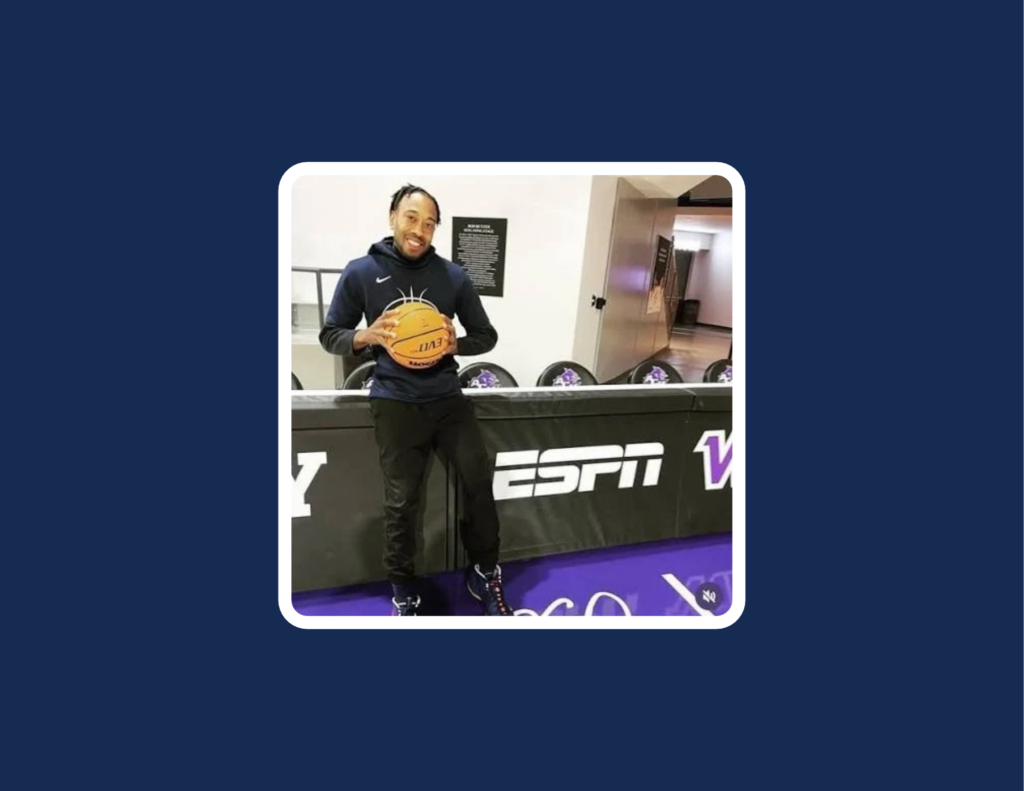
PK Cherry is a player development specialist and a former professional basketball player. Cherry has played in the NBA Gleauge, Dominican Republic, France, and Mexico. As a result of his playing experience, Cherry has unique insights into player development at all levels from NBA to NCAA. He has worked with numerous NBA players including Joe Johnson, Mike Scott, Deni Avdija, Kevin Porter Jr., and Wenyen Gabriel.
On this episode Mike & PK Cherry discuss his inspiring journey from childhood challenges to becoming a basketball trainer and coach, emphasizing the importance of love, purpose, and integrity in the game. This episode explores how to develop players holistically and foster a positive basketball culture.
Follow us on Twitter and Instagram @hoopheadspod for the latest updates on episodes, guests, and events from the Hoop Heads Pod.
Make sure you’re subscribed to the Hoop Heads Pod on iTunes or wherever you get your podcasts and while you’re there please leave us a 5 star rating and review. Your ratings help your friends and coaching colleagues find the show. If you really love what you’re hearing recommend the Hoop Heads Pod to someone and get them to join you as a part of Hoop Heads Nation.
Be sure to take careful notes as you listen to this episode with player development specialist PK Cherry.
What We Discuss with PK Cherry
10 Key Takeaways for Basketball Coaches
- Make sure every player feels included.
Cherry recalls kids coming to play on his backyard hoop but not choosing him for a team; that exclusion became a powerful memory. Coaches can make belonging and participation an intentional part of the gym culture.
- Turn setbacks into concrete goals.
After being left out, Cherry resolved to improve until he could compete with the older players and says he had surpassed them by age 15. Help athletes turn frustration into specific, achievable targets.
- Understand what’s behind a player’s behavior.
Cherry describes being raised by his grandparents after difficult family circumstances. His story is a reminder that players bring personal histories and needs into the gym, not just basketball goals.
- Value hard work, but don’t mistake hours for progress.
At 15, Cherry spent the day at the Y and dribbled late into the night; he also says he overworked and dealt with minor injuries. Coaches should pair effort with recovery and a clear purpose for each session.
- Help athletes find motivation that lasts.
Cherry says the desire to prove others wrong helped fuel him, but relying on that “chip on the shoulder” had a cost and could only go so far. Encourage players to connect their work to a personal reason, not only outside criticism or approval.
- Make workouts efficient and intentional.
Cherry reflects that, with today’s understanding of training, his 10-hour gym days could have been condensed into a much shorter, focused session. Plan practice around what players need to improve, rather than simply filling time.
- Choose drills for game transfer.
Mike recalls repeating essentially the same solo workout for years; it made him good at those drills, but he questioned how much it improved his play. Regularly ask: What game situation will this exercise help the player handle?
- Use film, but don’t let it tell the whole story.
Later in the conversation, Cherry emphasizes watching film and attending games, noting that film can miss things. Combine video review with live observation to better understand a player’s decisions and context.
- Coach development, not just workouts.
Cherry distinguishes his role as a player-development coach from simply being a trainer. A useful coaching question is whether a session is helping the athlete grow, not just whether it included impressive-looking drills.
- Keep development standards high.
Cherry discusses training players at different levels and describes approaching development seriously across those levels. Coaches can communicate that every athlete deserves purposeful instruction and a real opportunity to improve.
Like this show? Please leave us a review here — even one sentence helps! Consider including your Twitter handle so we can thank you personally!

XCIV.ai: Game planning for coaches, no film required. No video staff? No problem. Upload your opponent’s box score or a photo of the scorebook (or film, if you have it), and XCIV.ai builds a scouting report, a game plan, and a practice plan. It’s made for high school, middle school, and AAU coaches. Built in Colby, Kansas, XCIV.ai is a corporate partner of the Missouri (MBCA) and Indiana (IBCA) basketball coaches associations. There’s a free plan, and it’s on the iPhone.
Start free: https://hoopheads.xciv.ai

Your first impression is everything when applying for a new coaching job. A professional coaching portfolio is the tool that highlights your coaching achievements and philosophies and, most of all, helps separate you and your abilities from the other applicants.
The key to landing a new coaching job is to demonstrate to the hiring committee your attention to detail, level of preparedness, and your professionalism. Not only does a coaching portfolio allow you to exhibit these qualities, it also allows you to present your personal philosophies on coaching, leadership, and program development in an organized manner.
The Coaching Portfolio Guide is an instructional, membership-based website that helps you develop a personalized portfolio. Each section of the portfolio guide provides detailed instructions on how to organize your portfolio in a professional manner. The guide also provides sample documents for each section of your portfolio that you can copy, modify, and add to your personal portfolio.
Aiming to go D3? The D3 Recruiting Playbook gives you a clear, step-by-step roadmap to the recruiting process – what coaches value, key milestones from early high school through application season, and how to build a target list of schools that fit your needs.
We’ll demystify researching D3 programs and how to stand out without chasing every camp or showcase.
The modules cover things like writing emails to coaches, building an effective highlight tape, using social media well, planning ID camps and visits, and navigating application strategy.
You’ll get templates, checklists, and an outreach plan to communicate confidently, learn how to compare financial packages, and avoid common missteps. By the end, you’ll have a prioritized school list and a decision framework you can use to land your best-fit opportunity.

Give With Hoops is a groundbreaking initiative that fuses basketball analytics with modern sponsorship. Built for teams who see data as opportunity, from AAU programs to college powerhouses.
By tying on-court performance directly to community and sponsor engagement, Give With Hoops help programs raise more while deepening support from those who believe in the game.
Traditional fundraising disconnects donors from the action. Sell candy bars, wash cars, beg for donations, it’s exhausting and ineffective. Players perform better when their stats matter beyond the scoreboard. That’s why Give With Hoops was created.
Give With Hoops connects game performance to community support. Every basket, rebound, and assist becomes a chance to raise funds. Transparent, exciting, and proven to raise 3x more than traditional methods.
THANKS, PK CHERRY
If you enjoyed this episode with p-PK Cherry let him know by clicking on the link below and thanking him via Twitter/X.
Click here to thank PK Cherry via Twitter/X
Click here to let Mike & Jason know about your number one takeaway from this episode!
And if you want us to answer your questions on one of our upcoming weekly NBA episodes, drop us a line at [email protected].
TRANSCRIPT FOR PK CHERRY – PLAYER DEVELOPMENT SPECIALIST – EPISODE 1320
[00:00:00] Narrator: The Hoop Heads Podcast is presented by Head Start Basketball.
[00:00:19] PK Cherry: I try to go above and beyond and give every single kid that I work with as much of me and my knowledge in the game as possible.
[00:00:31] Mike Klinzing: PK Cherry is a player development specialist and a former professional basketball player. Cherry has played in the NBA G League, the Dominican Republic, France, and Mexico.
As a result of his playing experience, Cherry has unique insights into player development at all levels, from the NBA to the NCAA. He has worked with numerous NBA players, including Joe Johnson, Mike Scott, Deni Avdija, Kevin Porter Jr., and Wenyan Gabriel. Coaches, this episode is brought to you by XCIV.ai.
You heard founder Zach O’Dell right here on the Hoop Heads pod. Now, here’s what his team built. You’ve got a game Friday and no time to chase film. Take your opponent’s box score or just snap a photo of the score book and upload it. XCIV.ai turns it into a scouting report, a game plan, and a practice plan.
No film required. It’s built in Colby, Kansas, for high school, middle school, and AAU coaches, and it’s a corporate partner of the Missouri and Indiana Basketball Coaches Associations. There’s a free plan, and it’s on the iPhone. Go to hoopheads.xciv.ai. That’s hoopheads.xciv.ai.
[00:01:44] Rob Senderoff: Hi, this is Rob Senderoff, head men’s basketball coach at Kent State University, and you’re listening to the Hoop Heads podcast.
[00:01:52] Mike Klinzing: Be sure to take careful notes as you listen to this episode with player development specialist PK Cherry Hello and welcome to the Hoop Heads podcast. It’s Mike Klinzing here tonight without my co-host Jason Sunkel. But I am pleased to welcome in PK Cherry, player development specialist. PK, welcome to the Hoop Heads pod, man.
[00:02:14] PK Cherry: Hey, Mike. It’s a blessing to be here. Been listening to your podcast for some time, so I’m very excited to connect and talk some bask- basketball with you tonight.
[00:02:22] Mike Klinzing: Absolutely. We are thrilled to have you on. Thank you for the kind words. Thank you for being a listener. It’s always good to know that you’re not just talking into a microphone and that there are extra people that are out there listening to it.
Thanks for being one of those people, and definitely looking forward to diving in with you tonight and learning more about your background, your career, how you go about working with players, and what coaches out there can learn from the things that you’ve been able to do through your career. So let’s start by going back- Yes, sir
in time to when you were a kid. Yeah. Tell me about how you got introduced to the game of basketball. Tell me about some of your first experiences, what you remember.
[00:02:58] PK Cherry: Yeah. A very unique start to the game. Just a little background, I was actually raised by my grandparents. Both my mom and dad had some substance abuse issues, so I was raised a lot different than other of my peers.
And probably about 9 or 10 years old didn’t have a lot of friends. I have … Being raised by your grandparents is a generation gap, right? And all, most of my grandparents’ friends, their kids were adults. So we had to figure out a way to make friends, right? And, this is, in the early ’90s.
My grandparents, i, we grew up in Boston, Massachusetts, so they, they used to watch the Celtics and Lakers, ’80s rivalry. Even, I remember in ’86, I was three years old, and my grandmother brought me to the parade when the Celtics won. So basketball was always something, even kinda when I was young, it was unconsciously being put into my mind.
And so they decided to get me a basketball hoop. So I remember I got this real nice basketball hoop in my backyard, and I’d be on, out there playing by myself for hours. And on the next street over, in their backyard, there was a group of kids playing, and, but all they had was a milk crate they would look at me playing on a nice shiny hoop in the backyard like, “Man, I wish we could play on that hoop.”
And I’m looking at them like, “I wish I had somebody to play with.” After, a couple of weeks of kind of, you know, staring at each other back and forth somebody said something to to somebody and they ended up in my backyard playing. Now, these, they were a cou- some of them were a little bit older.
They had been playing a little bit longer than me and they obviously were better than me. So they would come… It was great to have them come and play. However, they would come and play and not pick me on the team. So imagine, kids coming to play in your yard on your hoop and you can’t play, and I remember that hurt a lot, as a 10-year-old, 11-year-old kid.
And, but I remember making a decision at that point, and even at that age, I was able to come up with the idea that if I get so good That I c– I will never have to feel this again. So one by one, I think my oldest– the oldest kid in the group was about four years older than me. So from 11 to about 15, one by one, I just took them out, and by the time I was 15, I was better than the kid that was 19.
And so early on, I had a chip on my shoulder in the game, but I learned that hard work was always the answer. And no matter how things went, how unfair things may come I learned early on that hard work was that answer for it. And for me, it was really- Sorry
a, a great opportunity to learn early on how to overcome challenges and to compete and get that what they call to have a dog in you early on. I started playing in church league after that, and I remember the first year I played church league the kid who was the star of the team, the coach’s son, he said, “Hey, man,” he said, “Next year, you’d have to improve by 120% if you wanted to be on an all-star team like me.”
Trust and believe that next season I was on the all-star team. So I always felt like I had something to prove. Again, being raised by my grandparents I didn’t get a start within the greater basketball community until much older when I was kinda able to go and make my own connections.
However, my family on my mother’s side, and my mother actually passed away when I was four, but my family on my mother’s side was really big time in basketball in Boston. Both my uncles were in the the New England College Basketball Hall of Fame. My uncle, Dwon Chandler, ended up being the last cut of the ’86 Celtics.
And his son, my cousin Andrew won a championship in high school and at the, at the– when it was still the the Fleet Center, and he hit eight threes in the championship game. So it was in my blood. The kinda s- the situation with my parents kinda separated me from my family, but as I got older, I got reintegrated with them.
Go ahead. You had a question?
[00:06:44] Mike Klinzing: Yeah, tell me about- Yeah … so the hard work piece of it, right? That- Yeah … you see these other kids that you want to improve, you want to get better, and you want to make sure that you can surpass their skill level. What did that look like for you? ‘Cause obviously, it’s a different era, right?
You’re- Yeah … as a kid- Yeah … not going on YouTube to find drills- Nah … that you can work on. You’re not going to a trainer to be able to figure out- No … “Hey, can you help me to improve?” You have to do that on your own. So what did that look like for you during that sort of middle school, early high school years of you trying to improve and get better?
What were you actually doing to improve your game?
[00:07:18] PK Cherry: Man, it was just hours and hours in the gym. Like I, I look now and I say, man, with all the information we have now, I probably c- I could condense being in the gym from like 10:00 AM to 10:00 PM, I coulda probably got out of there in two or three hours. We just didn’t have the information and the understanding that we have now of what’s, how long should you work?
What intensity? What are you working on? So the answer for me was just like, live in the gym. I remember the summer at 15 years old, I got a job at the Y, so I literally was there from open to close, and it was just like my work ethic became legendary. And then if I was not in the gym, I’d be dribbling up and down in the street till 12:00 AM, 1:00 in the morning.
Like people, neighbors calling my grandparents like, “Hey, we trying to sleep. All you hear is the ball bouncing.” And that’s all I that’s all I knew was just like, I’m I can outwork you. I got, I have enough inner push, like I’m going to always outwork you. And I made a name and a re- reputation out of it.
And I probably overwork. It I kind, I always just dealing with like little injuries because I didn’t rest well. And it bec- it, it can almost be a gift and a curse. That, it because I was really obsessed and the, the issue that I always tell my, my players is that chip on my shoulder was great in terms of helping me develop a high-level skill and competitiveness and desire.
But it also hurt in a lot of ways. I don’t know how happy I was chasing that because it was all about proving everybody wrong. And it’s like there’s, there, there’s a shelf life to that. That, that candle can only burn so long. You, that at some point it has to be something internal that motivates you as as- as opposed to external stuff.
So when I tell that story, it’s it’s great, like Mamba mentality but I think we’re probably a little bit smarter now, have a little bit more understanding of the physical training. Also the mental side too. I sacrificed a lot growing up to chase the dream.
And, I definitely could have been more well-rounded
[00:09:05] Mike Klinzing: Well, I think the efficiency piece of it is 100% accurate. I’ve told this story a bunch of times on the podcast, but when I was growing up, I had basically from the time I was maybe, let’s say, 14 to when my college career was over at age 22, I had pretty much one workout that I did if I was in the gym by myself.
Same drills- Yeah … same routine, same everything. And I’m sure I got really good at doing those drills. Yeah. But eventually, I’m not sure how much better I was actually getting in terms of when I stepped on the court to actually play. And now I look at, again, all the resources that we have, all the different kinds of drills, and just the variety and the just, the attention to detail that you can have by going back and watching film and copying- Yeah
this guy or watching yourself, and all the tools that you and I didn’t have I just did the same workout every single day. And I’m sure I got really good at that workout. And then if I was lucky enough- Yeah … maybe to have one other guy to work out with me, then I had a shooting workout that you would do when you were with a partner, so somebody could rebound for you, and then you could rebound for them, and then you could maybe play a little one-on-one and that kind of stuff.
But there was not the level of organization efficiency like what you talked about. I was efficient, but it was only because I was doing the same thing-
[00:10:22] PK Cherry: Exactly.
[00:10:23] Mike Klinzing: Exactly … every single day.
[00:10:24] PK Cherry: Yeah. Yeah.
[00:10:24] Mike Klinzing: And, you make a great point there, and I think your other point about the, the motivation and where your motivation comes from, right?
We’ve all had people say things to us or do things to us or just competing against someone where that motivation is external, right? Somebody says-
[00:10:40] PK Cherry: Yeah …
[00:10:40] Mike Klinzing: you can’t do it or somebody says you’re not good enough or this, and yeah, you can take that and burn that as fuel, and yet I think that part of what really drives you to the highest level of success is what you want to do internally for yourself- Yeah
because it’s important to you. And there’s probably a balance there that you’ve have to strike and figure it out. It sounds like, again, maybe at some points you were maybe calibrated a little bit more on that external proving as opposed to the internal. 100%. Yeah. And then as you move along you kinda figure out your why, right?
It’s the I have to know- Yeah … why I’m doing this. So talk a little bit about kinda the discovery of your why. When did that come? Was that when you were in high school? Did that not come to you or well into your adult years? When did you figure out what your why was?
[00:11:22] PK Cherry: It wasn’t until my senior year.
So I had played in Boston for three years. I played for East Boston High which is one of the historically one of the best programs in the city. I was in the back court my junior year with a kid who got drafted by the Pistons, Will Blalock. And, I mentioned being raised by my grandparents and that c- had a, had a lot of issues at home.
And my father had got out of jail and, as a young man, I was about 17, 18, you always want to know, who your father is and know him, and he was living in Manchester, New Hampshire. And I l- I moved from Boston to live with him in Manchester, New Hampshire. And funny story, I was playing and I was at a YMCA and I was playing really and no one really knew who I was so it was like, “Man, who he who is this kid?”
And two guys walked up to me. One name was Chris Brickley who was the famous NBA trainer. Other j- young man was Luke Bonner, who’s the little brother of San Antonio Spurs former player Matt Bonner. And we s- we they wanted to know who I was and they told their coach about me. And to make a long story short, I ended up playing on the AAU team with them that summer and then playing at the after high school with them.
But it, and it was at that point where I had went from a more competitive environment in Boston where I always felt like I had to prove something, and I also had to feel like I had to prove a lot at home. So it was– I really My life really changed, and it was at that point, and then I started getting accolades.
Like, when I got to New Hampshire everyone– I was ranked the number one player in the state after the summer I didn’t have to prove anything anymore. F- I was able to actually breathe and just enjoy and have fun with basketball for the first time. And and it’s a, a funny story.
Chris Brickley, he was a freshman the year I was there. I was a senior. And you talk about a kid who just was in love with basketball, and I… there was a piece of his innocence in the game of basketball and just how much he just– I always loved it and worked hard, but he loved it without that, and he worked hard, but he loved it u- without that chip on his shoulder.
It was just a pure love. I’m not trying to prove anything. I’m not trying to be nobody. I’m just in love with basketball. And obviously I had no idea he’d become who he is. But I always say that if anyone deserves t- that level of accolade as he’s gotten as a trainer then that’s a kid that deserves it because he just…
It was just all pure. And so me being a little bit older, seeing that, it kinda made me like, “Man, I have to kinda get back to where this started.” Some of– Somewhere along the line… And it was– I didn’t think, Boston, I grew up in a inner city and everyone’s trying to use basketball to get out.
So it’s a dog-eat-dog situation. Every game is it’s dog-eat-dog. And I got into an environment where it was still competitive, but people weren’t playing for their lives. People weren’t like, I have to be the first person to go to college in my family, and the only way that I make it out the hood is basketball.”
And so it was a different outlook for me. So that’s when I really started to love the game, and I had to deprogram myself over time. I think throughout college and moving on to the pros the, that love con-continually grew. But I had to spend a lot of time deprogram-deprogramming myself.
That Michael Jordan I’m using everyone as motivation, like all that it was cool, but I remember there was an article on ESPN a couple years ago, and it was talking about Jordan’s life after basketball, and it just didn’t seem like he was happy. And I said to myself, “If I if the greatest player of all time After you did all that, and then he’s, it was like he’s stay- he’s saying this, it’s almost like he still felt like he had something to prove.
[00:15:01] Mike Klinzing: Yeah.
[00:15:01] PK Cherry: And it’s like, and it’s okay, hard stop. This, is that the things that we elevate isn’t really what we should be teaching. And maybe that works for someone like a Jordan or Kobe, but it just can’t work for everyone. And I would like to pro- it probably won’t work for the majority of people. So what are we teaching?
What am I teaching myself? And then when I became a coach and a trainer, what am I teaching these kids?
[00:15:29] Mike Klinzing: So how do you take that realization and bring it around to a teaching point that you can share with one of your players? Because obviously the Jordan, the Kobe, right? That’s what people see. That’s what we put up on a pedestal.
Those are the guys that everyone looks up to. Man, the work ethic, the drive, the relentlessness, the win at all costs. I’m going to do whatever it takes for me to be able to win. And then, like you said, maybe you get to a point where you’re so competitive that when that area of competition when you can no longer do it at that highest level anymore, you have to step away, how do you ever replace that competitiveness in your life?
And I honestly think the answer is you don’t. I think it’s really hard- yeah … to step away from a competitive environment when you’re somebody like those guys. I know how hard that was for me when my career was over. I’m not sure I’m not sure I ever found anything that replaced the competitive drive that I had as a player.
I don’t sh- I don’t think I’ve ever felt- Yeah … even when I was coaching, I didn’t feel it in the same way as I did when I was a player. So how do you take that, again, idea that we put way up here, how do you take that idea and shape-shift it so that you can still have the idea of we have to work hard, we have to be relentless- Yeah
but make sure that there’s something more to it? How do you convey that to the players and the kids that you work with?
[00:16:57] PK Cherry: Number one is I l- I, is I help them recognize that they have an identity and a value outside of the game of basketball. For me, growing up, my gran- I got a lot of criticism at home.
So again, I, like I said, I was always in a have to prove my identity in some form or fashion lifestyle. So first things first, and I have this quote I always say. I said, you know Whether you make it to the NBA, whether you make a Division 1, whether you’re a high school All-American, all those things, all these things, I said, “I love you.
Your parents love you. Your friends love you, and you have a value, and you have a destiny in your life that no one can take away. It may be basketball. It may not be.” And I’ve got to the point where it’s a dichotomy because I spent my whole life in the game. I’ve been able to go around the country.
I live a really comfortable life. Like I- I’m, like, in I’m in Dominican Republic in a penthouse, like overlooking the city. My life is so beautiful because of basketball. But basketball is such a meaningless thing when we look at life. So I help players start to understand how in the grand scheme of life and identity how basketball is so menial.
But then the other piece of that is anything that we do and that we do decide to put energy in, that we dedicate ourselves to be the absolute best that we can be, and we give 110% at it. And I tell kids if this, if you’re not, if you don’t love the game enough to be able to do those two things, you need to stop playing, and you need to go find something in your life that you are willing to sac- make that level of sacrifice for.
Because if you want to be successful in anything in life, you’re going to have to, you’re going to have to give 100% to it, and you’re going to have to, you’re going to have to give your all and be dedicated and committed to it. So we’re going to do basketball, and you want to chase the NBA, I am all for it. I am all for it.
Let’s go as far as we can take it. Just understand just while we’re getting there, understand who you are and why we’re chasing this. ‘Cause you mentioned that earlier, the why. Why are we pursuing this? What are we trying to do? And if we do make it, what are we going to stand for? What is our platform going to be about?
One of the guys I’m working with, his name is Will Baker. He’s on a two-way with Atlanta Hawks, and he’s got a, a pretty big YouTube channel where he does videos, and it’s a lot of, religion and spiritually based stuff. And that is his why. And you know why he’s trying to get an NBA con- full contract, a spot, and we’re doing all those things, right?
But his platform is showing the journey, but the main purpose in, of the platform, the main message is that find out what’s God’s purpose for your life. Like what are you trying to do with this? Because I’ve also worked with players, NBA, G League and all that, who weren’t great people.
And I said, be a great person and a great player.” And a great person and a great player will always be better than that great player who’s not a good person. And that great person will always be, he’ll be a great husband, a great wife, a great employee, a great employer, a, a great father, a great mother, all those things, right?
And it doesn’t matter who you are. At some point, you could be LeBron James, but he’s going to spend probably more time in his, the second half of his life he’s going to spend being a husband and a father. You see what I mean? And if you’re not a good, if you couldn’t be a good person in a game it’s a child’s game.
If you can’t learn these values and ethics, then it’s going to be hard in real life because in real life you’re going to have to, you’re constantly going to have to deal with stuff where you’re going to have to stand up for those things in real life. And it may hurt. So why not we learn these principles in the game, and if we learn these principles in the game and we end up going high in it, hey, great.
Great. Hey, you can… I’m happy with my life, but I also understand it’s not for everybody, and I think we, within a youth basketball culture, within a grassroot basketball culture in America, we miss the point We missed
[00:20:37] Mike Klinzing: the point I love that. I love that, and it dovetails perfectly with something that I always say to parents.
I’ve said it in so many conversations with people that my kids have played on teams with, that I want my own kids, I want the players that have played for me to be the best basketball players that they can be, right? I want to be able to give them everything that I can to give them those opportunities to be the best that they can be, while at the same time using the game of basketball to help them become the best person that they can be.
Because like you said, using LeBron obviously a great example, the longevity of his career, there are th- the number is pretty much zero of people- Yeah … who are going to play competitively as long as LeBron has been able to play, and yet, as you said- It’s funny because he’s- … he’s still going to spend half his life as just a, quote-unquote, “regular person” living without the game of basketball at the competitive center of his life.
And-
[00:21:43] PK Cherry: Yeah …
[00:21:43] Mike Klinzing: isn’t it better to do that as a good person? Yeah. And for most of us, our career might end in middle school, or maybe it ends in high school, or maybe if you’re lucky- Yeah … enough to play at the college level, it ends there. And very few the smallest percentage, get to go on and play somewhere in the world professionally.
But no matter what level you get to, eventually the ball stops bouncing and you have to live your life. And if you can live it as a great person, how much better are you for hopefully the coaches, whether it’s a trainer, whether it’s your high school coach, your college coach, your pro co- whoever it is, somebody, your parent, somebody that poured into you to make you a great person beyond just being a great basketball player.
And I love that’s the direction that you took the conversation.
[00:22:28] PK Cherry: No, for sure. It’s … and I’ll add to that is you have to be a good person, and you also have to be happy. I I’ve been around enough NBA guys. We talked about Jordan, and a lot of guys are not happy. I did a coaches clinic in Las Vegas this summer with Coaching You, and the assistant coach from the Pacers was there, Jenny Boucek, and her whole presentation was on mental health.
And h- and this is at the NBA level, telling stories of, like, how guys cope with different things and how they struggle to be able to communicate their feelings, how to handle stuff, and coping mechanisms. And this is at the highest level. And, this is a … If she could’ve went into a middle school, she could’ve went to the high school, and she could’ve gave the very same verbatim conversation.
So that shows you that all the money in the world, all the fame, all the w- all those things that you can have, if you’re not grounded in your why, if you don’t have an identity- Of who you are, man, you get lost in the sauce. And the craziest thing is to have all that and not be happy. And I think a l- I would imagine a large amount of the NBA folks are not happy.
And that is really sad. That’s really sad. It hurts my heart, honestly. It’s really sad.
[00:23:39] Mike Klinzing: It is, and I think because so many people dream about it, right? Anybody who picks up a ball when they’re a kid, you dream about someday being able to play in the NBA. And now, unlike when you and I were growing up, where maybe it was just our dream, right?
‘Cause we were out on the court- Yeah … by ourselves, or with our friends, or playing pickup basketball or whatever it was. There wasn’t… Mom and Dad might have kinda supported you, or your grandma and grandpa- Yeah … might have kinda supported you, or maybe there was another adult in your life that kinda supported you.
But nowadays, like from the time you’re six, seven years old, Mom and Dad are super invested in your career, right? And so-
[00:24:18] PK Cherry: Yeah. Yeah …
[00:24:18] Mike Klinzing: if you get to those- Yeah … if you get to those levels and it’s still, you’re still unhappy. A- the thing that I’m, the thing that I’m thankful for is that at least there’s some awareness now of-
[00:24:30] PK Cherry: Yeah.
Yes …
[00:24:31] Mike Klinzing: the pressure that athletes are under and the strain that they’re under, and just, again, what it takes from a mental standpoint to be able to play. Let’s just take the NBA. To be able to play 82 games, or as a college player to play- Yeah … 25 or 30 games or whatever it is, depending on what level you’re at.
People take for granted that the people playing those games are human beings and they have all the same worries and fears and thoughts and- … doubts, everything that a normal- … person has every single day. Yeah. And I know thinking back to when I played college basketball from 1988 to 1992, there was never one discussion ever of, “Hey, how you doing mentally?”
Or, “Hey-
[00:25:17] PK Cherry: Not
[00:25:17] Mike Klinzing: at all … are you feeling all right?” Or, “Hey, this or that.” They were barely concerned about your physical well-being- … let alone- Definitely not the mental health … yeah, let alone your mental well-being. So I think the fact that there’s at least awareness now that guys can get help if they need it, and yet at the same time, I still think that there’s a stigma, right?
Even though we’ve had guys come forward, there’s still a little a stigma of, “Hey man, if you’re coming forward you’re not mentally tough. You’re weak if you need to go and see somebody who’s going to help you with your mental health- Yeah … or help you with your- Yeah … your mental performance.”
And so we still have to kinda, I think, get through that. I think we’re moving in that direction, which is great. Yeah. But again, I compare it to what it was like 10, 15, 20 years ago where- Yeah … this stuff was completely not on anyone’s radar. And I think you make a great point, right? That- If you achieve all those things that you dreamed about when you were eight years old, and you can get all that and still not be happy, then ultimately what is it that we’re doing?
And sometimes I find myself, honestly, PK, I find myself asking that sometimes as a parent, right? Of kids who have-
[00:26:21] PK Cherry: Yeah …
[00:26:21] Mike Klinzing: played and experienced and stopped playing at different ages and still playing and whatever. And sometimes I look back at it or I look at people who are just starting the journey.
Like my youngest is a junior in high school, so I look back at people who are… Their kids are seven or eight years old, and I see them at games, and I see the way they’re acting and talking and all, and I’m like, “Man, just if I could just give you one piece of advice, it’s just relax.” Like it’s all-
[00:26:48] PK Cherry: Yeah.
Yeah …
[00:26:49] Mike Klinzing: it’s going to work out the way that it’s supposed to work out. And-
…
[00:26:52] Mike Klinzing: 98% of what’s going to happen is going to have nothing to do with you as a parent. No. It’s going to be does your kid love it and want to work at it? And if they do, then they’ll probably achieve and do some good things. And if they don’t want to work at it, they’ll probably go and find something else, and you should probably encourage them to do that, like you were talking about earlier.
[00:27:11] PK Cherry: Yeah. Yep. Yep. Yeah. Even in my career post playing as a trainer and a coach, I’ve al- I’ve many times asked myself, what am I doing?” And I think it, that’s a question that we should all ask ourselves periodically throughout life, right? Because so many different things can pull at you.
And again, we’re in a youth basketball culture today where the focus is on so many other things than what it ha- than what it is, right? So as a coach and a trainer someone who’s dealing with kids and dealing with families you’re dealing with that as well. And you’re trying to navigate that.
And a lot of times- I left a lot of money on the table because I stood for doing things in the game the right way. You talk about mental health, being something that’s just become popular in the last couple years, and awareness. And I, about 10 years ago, I was talking about, I was talking about the AAU system which I believe contributes to bad mental health in players bad ethics and morals being constantly hurt.
Like these kids are, these kids… ‘Cause if you do a study and you look at these kids who came out of this AAU system 10 year- the last 10 years, and I’m talking about like the Zion Williamsons, Alonzo Balls, these guys, like how, like these guys are always hurt. Like these guys have never tooken off really because they’re always hurt.
But yeah, if you played 1,000 AAU games in, f- over four years, like you’ve played like almost three NBA seasons. But these kids are playing actually more games than NBA players. So yeah. But when I was talking about it 10 years ago, in, in certain places I become person non grata.
Nobody want to listen. He’s crazy. AAU works. And now it’s every social media influencer in the vein of basketball is calling out AAU. And I guess it’s cool now. And again, I’m glad that there’s that level of awareness, but like really nothing has changed. But you shouldn’t have let the game get run into the ground, right?
Whereas now, like the product of American basketball is bad. I’m like, you don’t, why do you think they’re going to have y- a a NBA Euro league? Why do you think that like they, the NBA they will go and try to take a player from the NBA or the G League or the Euro League and put ’em on a college team before they go recruit any high school kid that comes out this system because they don’t trust it.
And with all the money that’s on the line, college coaches they’re not going to lose their job because it’s going to take them two years to develop a s- a kid and give him information that he should have already known coming in. Because it’s so- some stuff that we knew coming in day one as freshmen in college, and it wasn’t necessarily about how good we were, it was about what we were taught.
Now how, h- what how le- high, what high level we could perform those things at, but some stuff was like, I… Some of these kids don’t know how to box out. Some of these kids don’t know how to s- how to set a screen and come off the screen. We don’t have to get into fancy, snake dribbles and all that.
This is simple stuff that we were taught that these kids could, and five-star kids, four-star kids, and they’re struggling to be taught this. I guess I lost a, I put a lot of money down that I could have got. But I’ve always been an advocate for things being done the right way.
And I’m glad that, the game has kinda caught up. I won’t say I’m a trendsetter because again, I wasn’t seeing anything that anyone else shouldn’t have seen. But I think a lot of money, clout, and fame has blinded a lot of people
[00:30:28] Mike Klinzing: Ever since I founded Head Start Basketball in 1993, we’ve helped young players develop their skills, confidence, and love for the game.
Now we’re partnering with coaches and athletic programs to bring the Head Start Basketball camp experience to new communities. Our camps run for five days, three hours per day, and serve boys and girls in grades one through six. You or someone on your staff directs the on-court portion of the camp while Head Start Basketball manages registration, promotion, parent communication, T-shirts, trophies, website setup, and administration.
There are no upfront camp planning headaches, and the profits are divided fifty-fifty between your program and Head Start Basketball. If you want to reach more families or strengthen your youth basketball pipeline, or just create additional revenue for your program, visit headstartbasketball.com to explore hosting a camp.
[00:31:16] PK Cherry: Let me ask you this. If you could take a magic wand and wave it over
[00:31:23] Mike Klinzing: the youth basketball landscape and make one impactful change on the way America does youth basketball, what would that one meaningful change be if you could pick out one thing?
[00:31:37] PK Cherry: And this is from somebody who’s made a profit off of basketball, grassroots training, coaching.
I take the money out of it. And what I mean by that, and I’m not saying that no one gets paid, but we can’t just have this anyone is a coach, anyone is a trainer, and then on top of that, I’m now going to monetize this and then try to sell this product to kids and families. It become… it really becomes distorted.
And, we all grew up… the coaches that we had coaches, and I’m sure that they did way more than what they was getting paid for. We know that anyone that’s coached high school even today, you know if you did per hour what, to what you getting, that stipend, you’re in the negatives.
You calc- you’re in the negative. But, but they were dedicated, did the things the right way, and they… So I’m not saying nobody gets paid, but it has to be, like, there’s way too much money going around and way too many people unqualified in it strictly for the money, and it ju- it just it just doesn’t work.
And if you go look at other countries and how they do it in other countries it’s not, It just doesn’t work like that. Hope the power didn’t go out. Yeah, I think, you know-
[00:32:40] Mike Klinzing: First time on the HoopEd’s pod we had a power outage, but your phone is still going
[00:32:43] PK Cherry: Hey, we got a little, I got a one little bit left electricity.
So- There you go … when the water rains here in DR- Yeah … the electricity pops off for a little bit, there you go. Is that a little bit better? We can… Okay.
[00:32:52] Mike Klinzing: That’s good. That’s good. There you go. And I can still see… Worst case scenario, I can still see the Swoosh, so you’re all good, man.
[00:32:58] PK Cherry: There you go.
We’re good. We’re good. Awesome. But no but yeah, that’s what I would do. I would really take the money out of it. And then I would yeah, I would take the money out of it. S- Simple answer.
[00:33:08] Mike Klinzing: I think by doing that what you’re doing is hopefu- hopefully realigning the incentives. And I think what-
Yeah
I always try to come back to is what we’re doing, and I’d never begrudge anyone, like you said, to make money off the game of basketball. I’ve run camps and made money off of youth basketball for many years. And I think what I feel like is, I think what you’re getting at is you take the money out of it and now you change the incentives.
And I always think that the incentive for what you do should always be what’s best for the kids who are participating in whatever it is that you’re running, that you’re doing. If you are in it to improve the kids’ experience, improve the kids’ game, improve what they’re doing within the game of basketball, then you’re there for the right reasons.
And I think sometimes in what we do today, we’re not aligned with what’s in the best interest of the players and the kids who are participating in the programs. We’re incentivizing the adults to figure out how to make the maximum amount of profit. And
[00:34:13] PK Cherry: Yeah
[00:34:13] Mike Klinzing: I do think there’s another way to do it, but I think in the way that we have it set right now, it’s really difficult to try to change how we go about running youth basketball.
Because again, there’s just… I always say there’s tons and tons of different fiefdoms of people. This guy has- Yeah … this group over here, this guy has this group over here, this group has a thing over here, and everybody wants to hold onto their piece of the pie.
[00:34:41] PK Cherry: Yes. Yes.
[00:34:42] Mike Klinzing: And as a result, nobody works together for the good of the game and f- of the kids.
I shouldn’t say nobody. Yeah. That’s an exaggeration. There are lots of good people doing lots of great things in youth basketball, but Generally speaking, there are challenges and difficulties- Yeah, 100% … and most of them trace back to the money, like you said.
[00:34:59] PK Cherry: No, 100%. And I think, what I always say is that when you provide good ma- good value people want to come back.
And if you do the right thing on the front end, you’ll get paid on the back end. Like I, like you said, like I said I never will sit here and make it seem like I have not got paid off the game and I haven’t got paid, premium price. However I am dedicated to offering a high level of value.
When I train kids, like we’re not just in the gym for an hour. Before we get in the gym, I’m f- watching film, thinking about putting together the workout from a half hour, sometimes an hour. I’m coming to watch your games in person. I’m watching your games on Hudl. If I see something that, I’m constantly on my mind.
If I’m scrolling, I see something, hey I sh- you know, copy it, paste it. I send it to you, send it to the kid’s parents. Always open for consultations, phone calls. I try to go above and beyond and give every single kid that I work with as much as of me and my knowledge in the game as possible.
And I believe if you do that it goes, it is not so much about how much you charge, it’s about how much you’re giving back. And, but when you try to do, when you try to cheat the game on the front end you may have some, some temporary success but the longevity’s not real.
And I think even in the training industry, like we’re seeing a switch too because a lot of these folks been training kids, and you k- you go through like a four or five-year cycle, and none of these kids that you train have done anything because it’s a hour of dribbling and step backs and all that.
And then at some point the parents start to see “Hey, like what am I investing in the money?” But then the, then what’s happening also with that simultaneously for individual trainers not doing it well the whole industry starts to look bad. I remember I was on a call with Gayden Baker, this was years ago, and he was like, “Man, I talked to so many D, D1 coaches,” and they’re like, “Man, what’s up with all these trainers?
Like what are we doing?” They’re like they’re not…” It- crazy story, like with Will Baker he lives in Austin, Texas. And I was living in San Antonio at the time we connected and, he’s from Austin, grew up in Austin, still stays with his parents in the off-season in Austin.
And I’m like, he’s like, “I don’t have a trainer.” And I’m like you’re a NBA player, you’re local. You went to the high school there. Like I’m, there’s not a, there’s not a line of people trying to train you?” He’s like, “Yeah.” He’s like, “None of them want to train me for what I need. They want to train me for what makes them look good.”
And he was like, “You’re the first person that came and come up with workout plan that’s for me.” And I’m like… i’m like, “It sure enough ain’t for me. I’m not about to go pl-” like I, I don’t know what I… i’m not about to go play, bro. You, I’m not on a two-way. You got the deal what are we here for?
And it just kinda shocked me man… I was happy that I was able to get him, but I’m… I said to myself, how many more guys are like that? And what does that say about the industry? You can’t get it right with an NBA guy? And I’ve had people criticize me ’cause they be like how come you haven’t been posting a whole bunch of your workout videos?”
I said, “Why do I need to post our workout videos? We’re in the gym working out in the middle of August. There’s nothing going on. He hasn’t… I haven’t even got through a whole year with him where I could be like I made him average th-” let me, let’s have some success, then I’ll maybe post a video.
But I also said you have to understand, at this level, those guys that just ev- imagine I get a workout with LeBron James, and the first workout bring a whole media team. That’s not going to work. He’s going to look at you like a joke. He’s going to probably walk out. He’s probably going to walk out and leave, and you just blew that opportunity because you’re more concerned about with the clout and all that other stuff than…
My job is to get this player better, and if I get the opportunity, the blessing, to be able to be in front of an NBA player, I don’t care if G League, two-way, whatever it is, if I get the blessing to do that, then my job is completely about him. It is not about me at all. And, and that’s have to…
the, the attitude gots to change, but like you said, it’s… the way things are set up now, it’s very difficult to change. However, what I’m telling people is the NBA, they are… everybody knows that is not going to change. You know what they’re going to do? They’re going to X you guys out, and where they’re going to make it so that distinction between these elite players is over here, and basically everybody else is playing some g- gloried rec basketball.
And that’s going to affect opportunities for those average kids who maybe get to go to a Division III or NAIA, because now you got Division I guys coming down to… it’s so convoluted now, and if you don’t got the development, you have just no chance And, and it hurts me because I…
In the next five years, I honestly feel like you’re going to see a huge decrease in kids playing basketball because there’s really going to be no route for them that’s meaningful. And the routes that is going to be there are going to slowly dwindle because people are not going to keep spending their money on a bad product.
[00:39:38] Mike Klinzing: It’s a great point. I think the routes, I’ve had multiple conversations in the last month with people. I had an author, Ken King, who wrote about this in his book, and then I also had John Verdine, who runs DY Sports, that they run AAU tournaments for lower level AAU teams- Yeah … and rec teams. And what both of those guys, what we talked about was the fact that you kinda have, in the game of basketball, you have one path that you follow, right?
And you keep- Yeah … trying to jump up levels and get to everybody’s elite elite. And maybe I start out at age seven. By the time I get to age 12, 13, I’m not good enough to be elite. And then- … if I still want to play basketball Where do I go? How do I find a way to still be able to play on an AAU team, but maybe it’s just a, a lower level AAU team that plays all local tournaments?
Or maybe I want to step back- yeah … and play in my local rec league. ‘Cause I still love playing, but-
[00:40:43] PK Cherry: Yeah …
[00:40:44] Mike Klinzing: either I don’t have the talent or maybe I just, I don’t want to grind on the pra- in pra- I just like to play- Yeah … and I want to play with my friends. Yeah. And we’ve taken away, I think, so many of those routes that everybody wants to just be on this track of, “I’m trying to get a scholarship,” or, “I’m trying to get NIL money.”
Yeah. “I’m trying to- Yeah. Yeah … eventually be a professional player,” instead of, again, focused on what’s my why, do I love playing the game? And if I do, there should be a place for me in the pathways, and I’m not sure there always is, PK.
[00:41:17] PK Cherry: You know what’s funny? Almost every NBA player I talked to and I asked them “What was your journey?”
And, except for, and maybe it’s the demographic of NBA guys I work with. I’ve never worked with somebody that was a five-star, like a LeBron. I never worked with a all-star player. So I’m working with guys ninth, 10th, 11th on the bench, G League guys, two league, two-way guys.
So maybe it’s this, this story that I get from them is because of the position that they’re in, but none of them got there chasing it. They all was just like, “We was just playing. I was loving the process. I was getting better. And then certain things just kinda went my way.” But it was never like just all out, just chase.
And it, and you, and it blows your mind because it’s… I’ve heard this story like seven, eight, nine times from guys and it’s weird. And a lot of these guys were maybe late bloomers. And kids who trained up until 10th grade, and by the time they hit the AAU season, they done, they killed 10th grade, 11th grade, and that’s all they needed.
No one had time to even find out. They go over their flaws. They just hit it so hard and so fast. Now they’re, top 50 ranked and they’re going here, and then, the rest of everything goes their way. But it’s all those that actually try, like my kids playing AAU from the third grade. I’m do- doing basketball year-round.
I’m not doing any other sports, and we’re chasing it. Man, I tell the parents, I’ll be like, “Man I hate to tell you, but you almost are guaranteeing your kid won’t make it. It’s almost a guarantee that if you take that route in 2026, it’s, they’re not going to make it.” And they don’t like to hear that, but I’m like, “It just it just hasn’t worked
[00:42:52] Mike Klinzing: I always say, PK, and I think back to, so my kids are they’re 22, 20 and 17, and I think back to when they were really little, and I remember having a conversation with people saying, “I look at all this travel basketball, and I look at teams that are practicing three or four times a week, and then going and playing three, four, or five games on the weekend.”
And I said, there are a few kids that I might have known in my life who were seven, eight, nine years old that wanted to play that much basketball. There weren’t very many.”
[00:43:29] PK Cherry: No.
[00:43:29] Mike Klinzing: But there were a lot that liked playing the game, but they didn’t want to practice for an hour and a half or two hours, three or four nights a week.
They didn’t want to go play five games. Nope. I don’t know who that’s for. That’s for one out of 500, one out of 1,000 kids, and yet that’s the position oftentimes that we’ve put kids in. Yeah. And you make a great point about just there… People have to understand and see that there are multiple ways to get there, and unfortunately, too often everybody gets thrown in the same funnel.
[00:44:03] PK Cherry: Yeah.
[00:44:03] Mike Klinzing: And everybody ends up in that funnel. It just keeps getting smaller and smaller, and not necessarily even because kids don’t want to participate. Yeah. They just fall out the funnel, and then there’s nowhere else for them to go to play. And then the other thing that I talked with Ken King about, just looking at the overall scope of youth sports, is in a lot of ways, let’s say a kid’s been playing basketball their whole life and it’s been their one sport, right?
Somebody told them to specialize- Yeah … you just do that. And so now suddenly I’m 12 and I decide, I don’t really want to play basketball anymore, but that’s all I’ve done. So now if I want to jump to another sport, that’s almost impossible, right? Because I’m so far behind-
[00:44:41] PK Cherry: You’re
[00:44:41] Mike Klinzing: right
those other kids that I don’t even- so then- … I’m, then I’m not even involved in athletics at all. It’s crazy.
[00:44:46] PK Cherry: No, and I’m glad you said that, and I always tell parents of young kids, I’d say probably 11 and under, “Please have your kid playing other sports. Please don’t have them play basketball.”
And there’s a lot of reasons why. There, there’s something about the psychological and movement and k- kinesiology that a kid develops when they’re playing multiple sports and have a different movement patterns. One thing that we do not teach our kids before they get on the basketball court is how to be good movers.
Basketball is a game where you have to run and jump, and half these kids do not know how to run and jump because they’ve been playing a one sport since they was fourth and fifth grade. And now these kids, there’s not very little free time to go to the park. Kids are not jumping fences and doing, all that stuff that you’ll learn.
I’m learning how to land. I just jumped over the fence, and I landed really hard, and that hurt. So now m- when I jump over the fence, I’m going to land a little bit softer. Now, when I get on the basketball court that unconsciously translates in all those different types of things. I’m running for the football, right?
I have to run. I have to move this way. Soccer. That’s why so many soccer players become great basketball players, is because they learn footwork in a h- in a harder situation. Now, if you … Them dribbling a basketball is much easier now because they had to dribble the ball with their feet. Now they have to dribble with their hands.
So I, all those things go into it and those are all the reasons … And, folks don’t study childhood and youth development, and if you’re going to be a coach and you’re going to be a trainer, I don’t care how much basketball if you don’t know how kids learn and grow and develop, then you’re going to be missing something.
And in other countries, they have you take courses. You have to be certified, and part of that certification process is not just how many plays you know. D- like, how do you know how to interact with kids? And that is what’s solely missing, and that is what’s breaking kids down and making so many kids quit and not pursue opportunities when they are there.
[00:46:41] Mike Klinzing: 100% on understanding as a coach how to deal with kids. It’s the number one thing that, especially when you’re talking about youth sports, giving kids their very first experience. I don’t care what sport it is. Yeah. It’s way more important that you know how to deal with kids and to interact with kids than it is that you know how to teach them how to shoot a right-handed layup or-
[00:47:04] PK Cherry: 100%
[00:47:04] Mike Klinzing: how to do a crossover dribble. It’s 100 times more important. I think about just coaches that my kids have had in various sports, and the best ones were not always the ones that were the best players previously of that sport. They’re not the ones who- Yeah … have the best technical knowledge of the sport.
They’re the ones who made the sport fun, knew how to get kids to, “Hey, you five over here, you five over here. Let’s get in a line.” They knew how to organize. They knew how to do those things. Yeah. Yes. And some of that stuff- yes … is stuff that I kinda take for granted ’cause been a teacher my whole life.
My parents are both teachers. So I just kinda- Yeah … just, that came, that part of it came to me naturally. But when you see someone- Yeah … who doesn’t have that, you’re like, “Ooh,” like that-
[00:47:44] PK Cherry: Yeah.
Yeah …
[00:47:44] Mike Klinzing: that really is, that really is- Yeah … a skill. And then the other thing I love that you said, which I find to be…
I still remember this exact moment, and this was probably in Oh man, it was probably right after I stopped coaching at the, in high school. So it was probably around 2010 maybe. Yeah. And I was in the gym, and I was doing some basketball training with a kid, and I looked over on the next court and there was a guy, and he had two or three, kids were maybe somewhere between the age of maybe seven and nine.
Yeah.
[00:48:13] Mike Klinzing: And they were running sprints and doing what we think of now as the athletic training piece of it.
[00:48:18] PK Cherry: Yeah. Yeah.
[00:48:19] Mike Klinzing: And I’m looking over there, I remember, and I looked and I’m watching, and I’m just… I remember PK just shaking my head going like, who would pay for this?
Like why would any-” just- … have your kid go outside. Like you were talking about jumping fences. I’m like, how- Yeah … I learned to run and jump? I learned to run and jump and throw by having an apple fight in my- … neighbor’s backyard.
Where I was up on the garage and I’m firing apples at other kids, and then I have to run and jump off the garage and get over the fence- right
before I can get belted in the head. And that’s how I learned athletic skills. But then-
[00:48:47] PK Cherry: Yes …
[00:48:47] Mike Klinzing: as time went on and I had my own kids and they grew up, I came to re- the realization that the, quote, “athletic training” that we do is probably way more necessary than I thought back in the moment, because kids- Yeah.
Yeah … don’t learn how to land. They don’t learn how to sprint. They don’t learn how to throw, just experimenting and do it naturally, ’cause we don’t allow them the same freedoms of childhood that- Yeah … that you and I had when we were growing up. Yeah. It’s just so interesting, again, the- Yeah … the dynamics of how kids grow up today versus how they grew up back in the day.
[00:49:23] PK Cherry: And I hate to be like, the old unc, where it’s like- No … back in the day, we…” And, and-
[00:49:27] Mike Klinzing: Yeah …
[00:49:27] PK Cherry: there, there is some truth sometimes. And I know when I was a kid I hate when my, older people say that, but there, there’s something true about the old way of doing things.
And as, as, as we get more advanced in things in the world sometimes I feel like we take a step forward and two steps back because we forget the things that got us here. And I’m all for always improving and making things newer and be- and being innovative, but we can’t try to reinvent the wheel.
The, this wheel, this basketball wheel was invented long before us and it will go on long after us. And we have to realize that we are but bit pieces. And I always say for me and for a kid growing up in a bad neighborhood who didn’t have his parents, basketball has just been so good to me.
Everything that I got, my name, my fame is off of the game, and I just, I owe my life. I s- I say I’m a basketball lifer. I owe my life to the game, and I will always give it the love that it deserves. And it may not always make me the most popular. And like I said I’ve known I’ve lost plenty of money.
There’s something almost spiritual about the game of basketball. I’ve seen it transform lives. It transformed my lives. I’ve seen it transform plenty other lives. I’ll leave you with this story. I remember I was in Kentucky, and I was moving from… I was in Kentucky coaching for about four years, and I got an opportunity to move to Houston and get at a big gym.
So I brought all my player, all the players I had worked with over the four years. We had a big going away party. And I’ve had k- I had kids that played at University of Louisville. I had a kid that ended up playing on the Harlem Globetrotters, but the one kid stood up stood out of them all, and he said, Coach, I want to thank you so much because I remember you used to come, you used to come, and you used to train us for free, and if we always need you, we could call you.
You never asked for anything.” And he said, “Because of that, now I work in a orphanage helping other kids who lost their parents.” And I can talk about the NBA guys I worked with, and I can name drop, and I can Chris Brickley, and I can do all that, but that kid was the star and the most important, one of the most important kids I ever worked with.
And he didn’t make the NBA. He didn’t go play Division I. But because I know that what I put in him, he is now going to go put back into somebody else, and then whoever that kid he put it into, that kid’s going to give it back to somebody else. And I’m not even talking about basketball, I’m talking about life.
[00:51:54] Mike Klinzing: Yeah.
[00:51:55] PK Cherry: And I know that- That’s really good … if my spark lives on for another 100 years of people trying to bless each other, then I know that I did my job
[00:52:06] Mike Klinzing: Yeah. I think there’s no question that the impact that you have on the players that you get an opportunity to interact with, sometimes you see it in the moment, sometimes you don’t see it for five, 10 years down the road.
Yeah. And what kind of person, like we talked about earlier, that player becomes as a result of having an opportunity to work with you. I want to ask you, if you don’t mind, just about your- Yeah … process for working with a player. And you can pick out whatever level you want to share with in terms of the player.
Yeah. But somebody comes to you, says, “Hey, PK, I want to train with you.” Just walk me through what does that process look like of you onboarding a client? What are you doing with yourself to get prepared? What are you looking at with that player to make sure that you’re giving them the things that they need?
Just walk me through your process of bringing a player into your training world.
[00:53:04] PK Cherry: Yeah. Number one, and I say this and without context people would probably jump on it. First, I train all my players no matter what level, like the NBA players. And people go, “Oh, you training them?” No. Here’s the context.
I treat everyone’s, I treat everyone like an NBA player because most of these kids, that’s their dream. And if you think that you’re going to go to NBA then you have to start to believe in it on the inside and manifest it in everything you do. In how you eat, how you sleep, how you walk, who you hang out with, what you do, how you take care of your grades, how you talk to the adults, teachers, coaches, all those things, number one.
And so when I get a kid, number one, I’m evaluating them to see what their strengths and weaknesses are. Like, what are you really good at? What do you need to work on? The younger that they are the more focused on just getting good at everything that we can and we do. As we g- as I’m g- we get older, we get into high school and college, obviously we start to specialize a little bit based on position based on strength, right?
Like I, if you’re g- I tell kids, “If you want to play at the next level, you have to be really good at least one thing.” So if you’re a shooter, you have to be the best shooter. If you’re a ball handler and a play maker, then you need to be the best ball handler play maker. If you’re a defender, you’re picking up people full court being disruptive, I’m going to be the best defender.
Whatever the, what I f- if I can finish, if I’m super athletic and I can finish at the rim I’m going to be the best finisher. And so but then, I try to ins- make the strengths Into, I try to make things that players are good at and make them elite while still working on the things they may not be good at and make them serviceable.
And again, that, that varies depending on obviously the levels. And, obviously you get to the NBA level when I’m working out with NBA players, we’re doing a lot of actions. Like we’re in pick and rolls, we’re in handoffs, we’re in pin downs. We’re in stuff that they’re really going to actually see in game action.
And obviously we try to implement a little bit that on the way up as we’re developing players from the draft, grassroots up. But ultimately, like when I work with the younger players is, I always say is I have to give real reads and then real reps. So I do a lot of teaching. I’m not just throwing the ball out and having guys do a whole bunch of drills.
I do stop and I talk, not just to hear myself talk, but I need the players to understand the why and the when, and not just the how. I don’t use cones. Everything is live. I will guard you. Is I do a lot of stuff with contact, on balance, because cones don’t bump you, cones don’t foul you, cones don’t try to cut you off.
So you have to be able to learn to be able to take those small bumps, being off balance in certain areas and still be able to, still be able to be efficient on your moves, on your shot, on your finishes. Again, like I said, every player gets a written workout plan. I get, I create a notebook for every player.
I’m taking notes at before every workout. I’m taking notes after the workout. If some, like if a parent ever wanted to see and I, either in that notebook or in my phone, like I have pages upon pages. Pro- I probably got 50,000 drills and workouts within my notebooks and phones because I come prepared I’m just not going to come in, in freestyle.
And even if I don’t particularly have every drill broken down, because in workouts you do have to leave room for variation, right? And you may have to stop something and work on something or s- do this instead of that. So I always leave that freedom. But w- when I come in the gym, like I know we, I know what we’re going to do for the next hour.
There’s no doubt about it. Watching film going to games is so important, right? When you’re going to games you’re able to see body language, you’re able to see responses to adversity interactions with players and coaches. You can do that on film as well, but I always like to get down there ’cause sometimes the film may miss something.
I want to see how if you missed three shots in a row, you’re tooken out, how you going to respond. The camera angle may not, we’re, this is not the NBA so huddle may miss that. But that’s all that stuff that’s important. And then obviously as we move up higher levels, I’m really big into analytics.
Really big obviously like working at the college and NBA level, always trying to look at analytics and try to use analytics to try to find something that is– I’m able to get these guys that they wouldn’t get anywhere else. You’re working at the NBA, even at the college level, these guys are in programs where they get, they’re getting great player development, right?
So like I’m working with Will and I’m like, you’re with the Hawks. These guys are with you every day. I don’t want to be repeating what they are already saying, but what I’m trying to find is something they may have missed. And maybe because my eyes is on you by yourself as opposed to f- 15, 18 players within that Hawks program, maybe I see something that’s specific for you, or I can give you something that’s for you.
But I really try to use those analytics to kinda guide me at the higher level. And the biggest thing that I also teach, and I even wrote a book on it called “The Inner Game,” is confidence, man. You have to have that at– you have to understand the why. You have to have that un- you have to understand how to have emotional intelligence, deal with anxiety.
Because so many of these kids, like we said earlier, dealing with so much stress and pressure, and how do you deal with that? And a lot of the, what I teach is helping players deal with that mental side, because if you don’t, if you can’t get past that, then it– I don’t care what drills we doing, I don’t care how good a trainer I am it’s not going to be effective.
So that in a gist is like how I, from start to finish, how I work with guys and girls as well .
[00:58:11] Mike Klinzing: How do you incorporate those conversations that you’re talking about, the conversation about being confident at the higher levels when you’re talking about a college player or a-
[00:58:21] PK Cherry: Yeah …
[00:58:22] Mike Klinzing: a, or an NBA player?
Obviously, within their team they have a role. I know one of the things that I’ve learned, and I think I probably already knew it before the podcast, but talking to so many people, one of the things that I’ve learned along the way is just that as you go up in levels the skill set that you have to have, you have to get really good.
You have to have an elite skill that you’re good at, that if you’re one of the NBA guys like you described, that’s a- Yeah … 9th, 10th, 11th guy, a, a two-way guy. Those guys are not just being handed the ball the way LeBron is- Oh, no … and said, “Hey, man, go do your thing.” You’ve have to be elite at, maybe it’s I’m corner threes and I can guard opposing point guards, or maybe it’s I’m an elite screener or whatever it is, and those are the things that are going to get me on the floor.
So how do you incorporate those conversations into what you’re doing while you’re training? Is that something you’re having a conversation with them on the floor as you’re kinda going through and doing things? Yeah. Is that a conversation that you have with them before or after a workout? How does that piece fit together?
[00:59:29] PK Cherry: Yeah. I give an example I’ll use Will’s example. We were working out, and toward the end of the summer he started having some back issues, like lower back issues that was really affecting, like, how he felt and how he moved, and he was going to a bunch of different trainers, paying out of his own pocket to get treatment because he was kinda in between deals, right?
He played for Orlando Magic last year. He’s waiting for the deal with the Hawks to go through. And, I remember one, one practice, man, and he was just like… He just was not moving well, wasn’t feeling well, and was very frustrated. He was like, “Man, I don’t know if I can figure out what’s going on.
Maybe I should just quit.” And I’m like, “Bro.” I’m like, “You’re about to, you’re about to get dis- you’re about to get what you’ve been working for. What do you mean you’re going to quit?” And I said, “Listen, man, how about we do this? How about you just rest?” “Oh, how can I rest?” And I’m still, I had nothing.
I don’t have anything that’s, it’s not locked down. My, he’s still chasing, right? He’s still nothing’s certain. Even though he’s about to get this, this new deal, there’s still not a lot of certainty with that. And it was like, “Bro you have to trust the work that you’ve put in.”
And I was like, “Two more extra weeks of working when you can be resting and preparing for to get out there and be in good p- in the best possible shape when you get there, and you’re going to waste that like being insecure and worrying?” And, he’s “Okay.” And then I was like, “You know what?
How about I’m not even going to come train you. I’m not coming out here.” “If you go get in the gym you go by yourself, but I’m not going to contribute to this. I’m good. I don’t want the money. You’re good.” And that next week he made a video, and it was about rest And about how players that we’ve been trained to just keep working hard, but how players need to rest.
And I said to myself, and I was like, wow. And it made me feel good and, but it made me realize my role in his life is just not these drills and me breaking down analytics. It’s like having those real-life conversations where you’re… These guys are fighting for their careers, they’re fighting for their lives, but still being able to give them some type of peace and “Hey, bro,” like a different perspective that otherwise they don’t have.
And I’ve had plenty of conversation with players at all levels like that, especially at the grassroots. There’s certain players on the grassroots level, every time we’re in the gym, we’re having a conversation about your confidence and your self-esteem and anxiety. And like I gave him the book, and the book I wrote has exercises, like meditation ex- pre-game exercises, post-game exercises, journal exercises.
I’m like, “Hey, I done wrote the book. I gave him the book for free. Use, use the stuff in there. It’s right there for you.” “I designed it for you guys to be able to have something that you can always go to when you’re dealing with these feelings.” So even with the book in front of them, you still have to reinforce those things at the younger levels.
So I realized that, again, my job I don’t call myself a trainer, I call myself a player development coach, because I’m developing a player. I’m not, just not rebounding, giving you drills to do. I’m developing you holistically
[01:02:23] Mike Klinzing: What do the conversations look like with the parents of younger kids when you’re working with somebody who’s a middle schooler or something?
[01:02:30] PK Cherry: And I’m … for me I, when I’m dealing with parents, I’m almost to the point where, and I hate to say it, is I try to give them reasons not to have their kid train with me. And the reason is because I make it really clear upfront what I’m about, what my expectations are what my, what my goal is in working for your child to help them meet, reach their goals, and how we’re going to go about doing it.
And it doesn’t include any an ego stroking or clout chasing or some of the stuff I do with these kids it’s not cute for Instagram. It’s funny, I’ll, if I post, like I, the … I’ll work you. And after in the workout, you’re exhausted you’re on the floor.
And it’s you laying on the floor like trying to reevaluate your basketball life, like that’s not the cutest, Instagram video, right? But it gives you it just it’s much more valuable. And then basic skill development. The younger you are, we’re working on your form, working on, your stance.
Like that’s not cute. Like that’s not going to get like a million views on Instagram, but it’s have to get it has to be done if we’re going to develop the right way. But sometime you’re dealing with parents and, they’re, when they’re choosing a trainer, they’re choosing like the most popular trainer, like who got the most views, who’s got the, the cutest videos.
But I remember Corey Harris, he’s a NBA trainer out of Atlanta works with Isaac Okoro, Shareef Cooper, a lot of guys, and he said to me, he said, if you ever wanted a job in the NBA or even at Division I level as a player development coach, and they go to your Instagram page and it seems as you’re really popular, you got cute videos, a lot of nice dribbling moves, they’re going to take your, at, your, at, your resume and they’ll throw it in the trash.”
So you, he said, the po- the most popular local trainers have pretty much made sure they’ll never have a legitimate basketball job. And that stuck with me and I said I didn’t want to, I don’t want to be cool, I don’t want to be the popular trainer, I want to be the effective trainer. I want to be the player that’s going to get your player better as a player and a person.
And if we can make some cute, YouTube, Instagram videos in the midst of that, cool. I got some of that, but that, that can’t be the basis
[01:04:26] Mike Klinzing: It’s a great point, and I think sometimes we lose sight of what the purpose of training is, right? And it’s to make a player better when it comes to game time.
Yeah. And it’s not to make them better at the drill, which kind of circles back to what I talked about with my own workout back in the day. And not that my workout was cute, but it was the same thing over and over again, and I got really good at the drill, and by the time I was done, I don’t know how much it was helping me get better- Yeah
in games. I probably would’ve been really benefited from having some variety in what I was doing. Yeah. And I think the point- Yeah … that you’re trying to make is that simplicity wins, and doing the basic things correctly is where it all starts from a foundational level with young players. And sometimes that’s not always cute, it’s not always pretty, it’s not always video ready, but- Yeah
it’s what helps to make the player better in the game, which I think is the ultimate judgment on what a trainer is all about. And sometimes, again, as you said, you’re going to lose clients because- Yeah … sometimes people don’t want to hear that. Yeah. And it goes back to the whole conversation that we’ve had in terms of what are the incentives, why are we doing what it is that we do?
And if we’re really, as a trainer, trying to help a kid to improve so that they can play better in a game, I think that looks different than getting them to execute a drill that looks good for Instagram, but that may not actually translate to something that they do in real games. And I think that’s where sometimes the disconnect happens, and I’m sure that all the time.
[01:05:57] PK Cherry: Yeah, no, 100%. I think what happens with social media is that, these kids, they watch NBA highlights, they see their NBA players, they see all the good stuff, all the made shots. And I remind them, I say, Steph Curry, best shooter of all time, right? Best three-point shooter of all time.
I don’t think anyone would pr- argue that.” And I ask the kids, I say, “How much– what do you think his three-point percentage is?” And they’re like, “What?” I’m like, “What do you think his three-point percentage is?” So they’ll look it up, and it’ll be like 40– 39, 40%. And I was like, “Do you understand what that means?”
[01:06:24] Mike Klinzing: Yep. “
[01:06:24] PK Cherry: So if he takes 10 shots, he’s missing six. So he’s missing more shots than he’s actually making, and he’s the greatest shooter of all time. So that should give you some perspective. So if you get in a game and you miss a shot or two it’s– you keep shooting.” Like it’s not, that’s not the time to just, to break down and just think it’s all lost.
But it’s perspective, right? And like I tell them like, when I train NBA players, guess what? They miss shots. They dribble off their foot. They make mistakes. They get frustrated. They get tired. All the same things that you’re feeling, they’re feeling too.” So like you have it, it really gets so…
I think social media, and again, and without going on this long anti-social media rant, is like it just, it distorts reality for playing, it distorts reality of training. It distorts reality of pursuing your goals. It distort– even distorts reality of like college basketball. It’s… kids are doing fake offers.
I mean it just not reality. And I tell kids, I say, “You know what, man? Put the phone down and get out there and just come to reality and it’s…” You may just, you may have to take a hi-hiatus from the phone. I could not imagine, ’cause I said before I was always in a fragile mental state as a basketball player coming up.
Yeah,
[01:07:43] Rob Senderoff: I can imagine.
[01:07:43] PK Cherry: And I could not imagine- … if there was social media. And I couldn’t imagine playing with not the pressure that I put on myself, if another adult were to add to that. Like without being dramatic, I may have been suicidal and I and I don’t I don’t say that any joking manner because like this is a lot these kids have to deal with.
And not just kids. Like I said, the patients are like this is stuff that NBA players are dealing with. How do they structure social media? If you have a bad game, like you know you might as well throw the phone off the roof because you don’t want to go on social media and have a and look and see what they have to say about you.
So I, how do we navigate that?
[01:08:24] Mike Klinzing: Yeah, it’s tough. I think about, I didn’t want to come back to my dorm room and have my roommate who wasn’t on the team ask me, “Hey man, how’d you do tonight?” if I had a bad game.
[01:08:33] PK Cherry: He’s
[01:08:33] Mike Klinzing: not even on the team. And now we’re talk- now we’re talk- yeah, now we’re talking about, again, the internet and everybody have an opinion on how you play and wondering what you’re doing and criticizing you and all those things.
Yeah, the pressure that kids have to feel as a result of that I’m sure is, I’m sure is huge. Look there’s a ton of things out there in the basketball space that, that are challenging that players and coaches, trainers, player development coaches have to navigate, and it’s always good to talk to somebody who’s doing things the right way and cares about more than just collecting the next dollar and posting the next video.
And so I want to ask a final two-part question to you, PK. Yeah. Part one, when you look ahead over the next year or two, what do you see as being your biggest challenge? And then the second part of the question, when you think about what you get to do every single day, what brings you the most joy? So start with your biggest challenge- Yeah
and then finish with your biggest joy.
[01:09:32] PK Cherry: I think the challenge is things that we spoke about, just continuing to stand out there on the island and advocate for the game to be in the right way and really continuing to not just talk about it, but be about it, and really start to develop relationships and partnerships and communities of folks, like yourself and other coaches who share the same beliefs, right?
I think I… and it– I think those who are doing it the wrong way, they may seem like the majority, but something tells me there’s probably more of us that’s doing it right, we’re doing it right than it may seem. So while we can sit around and talk about those who are doing it wrong, and there’s– I don’t think there’s anything wrong with that, but I don’t like to talk…
I- if I’m going to call something out, then I need to be the answer. So I’m just really working on continuing to build relationships with coaches and players and other basketball people that’s really like-minded and if we can kinda continue to push back we have the momentum, I think.
And I think, like I said before, there are things changing, and it may be changing behind the scenes, and it may– the full change may not be able to be seen until they get a little bit further down the road. But I believe that we are all part of that, that, that… and these podcasts, these conversations, we’re growing the game, we’re pushing the game forward.
So my challenge is always, like, how can I continue to grow the game? How can I continue to be a blessing to others through the game? And just and really just show the love, man and use the game to, to pass the love on. And for, for the second question, what keeps me going every day?
And like I said, man, I am, I’m a basketball lifer. As a kid who grew up in a bad neighborhood, who lost their mother early on, who didn’t have a father in their life. And I just can– I don’t care where I’m at, I don’t care how big I get, I always go back to that. I can sit on the balcony of a penthouse in Dominican Republic, and I think about the kid that was in that backyard who had a dream, and just wanted to play basketball, to want it.
I always wanted to be someone important in the game of basketball. And when I didn’t make the NBA, I– when I was young, I was like, “Man, if I don’t make the NBA my life is over.” And even though I had a decent playing career, I was able to turn that into a coaching career and a training career, and now it’s it was crazy in the last six months I had Steve Francis started following me, Cuttino Mobley, and I said to a friend, like- we used to play these guys on NBA 99.
We used to play NBA Live 99 at home and fight each other, like, and throw the controller and ready to break the game if you lose. And we was fighting over “I got the Rockets,” or, “You got this team.” And Steve Francis knows I exist. Cuttino Mobley know I exist. I’ve been able to impact the game positively enough that I have these guys’ attention.
To me it just as a child, it’s oh my God. Wow. And so I don’t say that just for clout. I say it as a little kid who got to meet their idols. You know what I mean? And when I’ve got to that point in my life, it’s just okay, I’ve accomplished the things on the bucket list.
I’ve become someone who has created enough value in the game that people like that actually know that you actually live and exist. And that’s what motivates me every day, man is knowing that I had a, a goal
[01:12:45] Mike Klinzing: that started in the backyard in Boston, Massachusetts, and I’ve been able to bring it
[01:12:49] PK Cherry: all over the world.
And every day I’m living a dream. And that’s the motivation
[01:12:56] Mike Klinzing: The ball has magic in it, PK. Oh, yeah. There’s no doubt about it that what basketball has done for me, what it’s done for you, there’s no way I feel like I can ever repay the game for- … what it’s done. I just think that the ball has magical ways of working and connecting people, and there’s no other sport in the world that does it the same way that hoops does.
No. And I’ll forever be indebted to the game. I can never give it back what it’s given me. So- Yeah … before we get out, I want to give you a chance to share how people can connect with you, find out more about what you’re doing. I want you to share email, social media- Yeah … website, whatever you feel comfortable with, whatever you want to promote.
And then after you do that, I’ll jump back in and wrap things up.
[01:13:40] PK Cherry: Man, awesome, man. Thank you first off. Before I even talk about how the people reach me, I just want to say thank you. I thank you for your platform. Thank you for having me. And just thank you for your love of the game. There’s no doubt.
Obviously, I’ve been listening to you for a while and actually get a chance to spend an hour and a half talking to you. There’s no doubt that you love the game, and so I just thank you for that. You can find… Folks can find me on Instagram. On my personal page is @bballprofit. My business page is Point God Basketball, Point God, G-O-D, Basketball.
Also Point God Basketball on YouTube. I also have a Twitter. It’s @pkcherrybasketballconsulting. You can reach me. My email’s going to be hoopsmasters, H-O-O-P-S M-A-S-T-E-R-Z, I’m @ the N, not S, @gmail.com. And man, I’m real free, man. You can call me, text me, 346-861-7453. I’ve had players find my number somewhere and just reach out randomly.
I know some people would probably be, like, cringe. But I truly believe that that God, he will send those who need whatever I have to give and I, I try to keep all, all openings available for that so thank you.
[01:14:51] Mike Klinzing: PK, I appreciate the support. I appreciate the kind words about what we’re doing here on the HoopHeadz podcast.
I’m thankful to have you as a listener. Now I’m thankful to have you as a guest. As we talked about during the pod, it’s always good to connect with people who are trying to do good in the game of basketball, and you’re certainly one of those people. So thank you for your time tonight, truly appreciate it.
Thanks. And to everyone out there, thanks for listening, and we will catch you on our next episode. Thanks.
[01:15:22] Narrator: Thanks for listening to the Hoop Heads Podcast, presented by Head Start Basketball