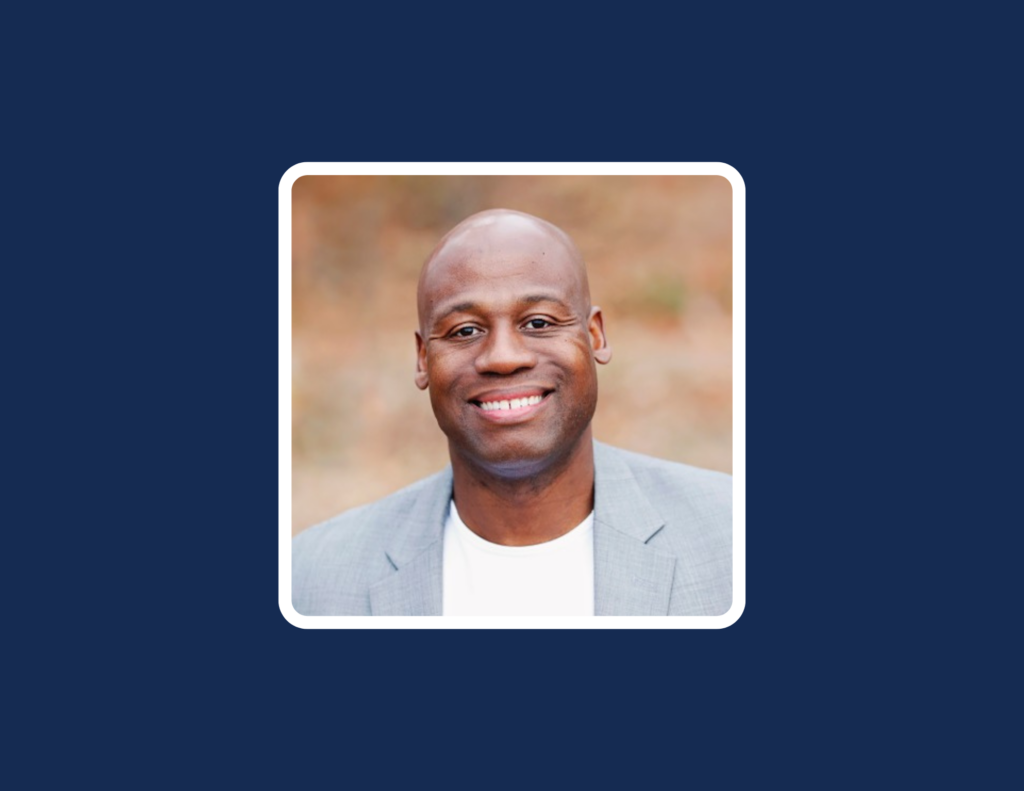
FREDDIE OWENS – AUTHOR OF THE BOOK “ECHOES OF STARK PARK” AND FORMER COLLEGE BASKETBALL PLAYER & COACH – EPISODE 1235

Website – https://freddieowensofficial.com/
Email – freddie.owens@icloud.com
Twitter/X – @FreddieOwens
If you listen to and love the Hoop Heads Podcast, please consider giving us a small tip that will help in our quest to become the #1 basketball coaching podcast.
Freddie Owens is the author of the book “Echoes of Stark Park” which tells his story of basketball, community, and faith. Owens takes readers from the heart of Milwaukee’s north side to the pressure of the Big Ten and the isolation of professional basketball overseas, revealing the lessons that shaped him far beyond the game.
Freddie is a veteran NCAA Division I coach with over 20 years of NCAA Division I coaching experience, including stints at Oregon State, Iowa State, Montana and Holy Cross.
As a player at Wisconsin, Owens delivered one of the most iconic shots in Badger history, a game-winning three-pointer against Tulsa to propel Wisconsin to the 2003 Sweet 16. Freddie is a 4-time NCAA Tournament Player (2001, 2002, 2003, 2004) A 4-time NCAA Tournament Coach (2010, 2012, 2013, 2016)
Freddie recently stepped away from the coaching profession and is currently a Health and Physical Education teacher in the Green Bay Area.
Follow us on Twitter and Instagram @hoopheadspod for the latest updates on episodes, guests, and events from the Hoop Heads Pod.
Make sure you’re subscribed to the Hoop Heads Pod on Spotify or wherever you get your podcasts and while you’re there please leave us a 5 star rating and review. Your ratings help your friends and coaching colleagues find the show. If you really love what you’re hearing recommend the Hoop Heads Pod to someone and get them to join you as a part of Hoop Heads Nation.
Have a notebook handy as you listen to this episode with Freddie Owens, author of the book “Echoes of Stark Park” and former college basketball player and coach.
What We Discuss with Freddie Owens
- Owens’ Book “Echoes of Stark Park” captures his journey through basketball, community, and personal adversity
- The early influence of his father on the basketball court
- Being a self-starter is crucial for maximizing one’s potential and achieving personal goals
- How a strong support system shapes individuals during challenging circumstances
- The evolution of basketball culture
- Resilience in youth sports
- How his upbringing and experiences shaped his character and commitments as a parent
- The transition from coaching to teaching has allowed Owens to impart life lessons to the next generation
- His desire to leave a legacy for his son
- The unseen challenges of playing professionally overseas
- His decision to leave coaching for teaching to spend more time with his family
Like this show? Please leave us a review here — even one sentence helps! Consider including your Twitter handle so we can thank you personally!

Give With Hoops is a groundbreaking initiative that fuses basketball analytics with modern sponsorship. Built for teams who see data as opportunity, from AAU programs to college powerhouses.
By tying on-court performance directly to community and sponsor engagement, Give With Hoops help programs raise more while deepening support from those who believe in the game.
Traditional fundraising disconnects donors from the action. Sell candy bars, wash cars, beg for donations, it’s exhausting and ineffective. Players perform better when their stats matter beyond the scoreboard. That’s why Give With Hoops was created.
Give With Hoops connects game performance to community support. Every basket, rebound, and assist becomes a chance to raise funds. Transparent, exciting, and proven to raise 3x more than traditional methods.
Aiming to go D3? The D3 Recruiting Playbook gives you a clear, step-by-step roadmap to the recruiting process – what coaches value, key milestones from early high school through application season, and how to build a target list of schools that fit your needs.
We’ll demystify researching D3 programs and how to stand out without chasing every camp or showcase.
The modules cover things like writing emails to coaches, building an effective highlight tape, using social media well, planning ID camps and visits, and navigating application strategy.
You’ll get templates, checklists, and an outreach plan to communicate confidently, learn how to compare financial packages, and avoid common missteps. By the end, you’ll have a prioritized school list and a decision framework you can use to land your best-fit opportunity.

Your first impression is everything when applying for a new coaching job. A professional coaching portfolio is the tool that highlights your coaching achievements and philosophies and, most of all, helps separate you and your abilities from the other applicants.
The key to landing a new coaching job is to demonstrate to the hiring committee your attention to detail, level of preparedness, and your professionalism. Not only does a coaching portfolio allow you to exhibit these qualities, it also allows you to present your personal philosophies on coaching, leadership, and program development in an organized manner.
The Coaching Portfolio Guide is an instructional, membership-based website that helps you develop a personalized portfolio. Each section of the portfolio guide provides detailed instructions on how to organize your portfolio in a professional manner. The guide also provides sample documents for each section of your portfolio that you can copy, modify, and add to your personal portfolio.

Hey coaches — you’ve got a game plan for your team… but do you have one for your money?
That’s where Wealth4Coaches comes in.
Each week, they deliver simple, no-fluff financial tips made just for coaches. Whether you’re getting paid for camps, training sessions, or a full season—Wealth4Coaches helps you track it, save it, and grow it.
It’s time to stop guessing and start building.
Subscribe now at wealth4coaches.beehiiv.com/subscribe
And follow them on Twitter @Wealth4Coaches for daily money wins.
Your money needs a coach.
Start with Wealth4Coaches.
THANKS, FREDDIE OWENS
If you enjoyed this episode with Freddie Owens to let him know by clicking on the link below and thanking him via Twitter.
Click here to thank Freddie Owens via Twitter
Click here to let Mike & Jason know about your number one takeaway from this episode!
And if you want us to answer your questions on one of our upcoming weekly NBA episodes, drop us a line at mike@hoopheadspod.com.
TRANSCRIPT FOR FREDDIE OWENS – AUTHOR OF THE BOOK “ECHOES OF STARK PARK” AND FORMER COLLEGE BASKETBALL PLAYER & COACH – EPISODE 1235
[00:00:00] Narrator: The Hoop Heads Podcast is brought to you by Head Start Basketball.
[00:00:20] Freddie Owens: You have to be a self-starter because if you’re not a self-starter, it don’t matter what resources or what kind of help you have, then it’s not really going to maximize your potential to be the best version of yourself. So for me, I had the support system, even though it was in a tough environment, but there was also the inner drive where I wanted to achieve goals that I had set for myself.
And for me, it was just a matter of not letting anything stand in the way of those goals.
[00:00:47] Mike Klinzing: Freddie Owens is the author of the book “Echoes of Stark Park”, which tells his story of basketball community, and Faith Owens takes readers from the heart of Milwaukee’s North side to the pressure of the Big 10. And the isolation of professional basketball overseas revealing the lessons that shaped him far beyond the game.
Freddie is a veteran NCAA Division one coach with over 20 years of coaching experience, including stints at Oregon State, Iowa State Montana, and Holy Cross. As a player at Wisconsin, Owens delivered one of the most iconic shots in Badger history. A game-winning three-pointer against Tulsa to Propel Wisconsin to the 2003 Suite 16 Freddie’s, a four-time NCAA tournament player and a four-time NCAA tournament coach.
He recently stepped away from the coaching profession and is currently a health and physical education teacher in the Green Bay, Wisconsin area.
Give with Hoops is the first platform turning basketball analytics into fundraising impact. Every stat tells a story and now every story drives sponsorship engagement and team growth programs nationwide are transforming basketball stats into funding power. Learn to use performance data to attract sponsors, engage fans, and raise more with every play.
Give with Hoops will help you raise three times more money for your program as their stat based pledges consistently outperform traditional fundraisers. Visit Give with hoops.com/hoop-heads-podcast to learn more and take your fundraising to the next level. Give with Hoops.
[00:02:26] Danny Gallagher: Hi, this is Danny Gallagher, girls varsity head coach at Magnifica High School, and you’re listening to the Hoop Heads Podcast.
[00:02:36] Mike Klinzing: Are you or an athlete you know planning to go D3? Check out the D3 recruiting playbook from D3 Direct. Their playbook gives you a clear step-by-step roadmap to the recruiting process. What coaches value key milestones from early high school through application season and how to build a targeted list of schools that fit your needs?
The playbook demystifies researching D3 programs and how to stand out without chasing every camp or showcase the modules cover things like writing emails to coaches, building an effective highlight tape using social media, planning camps and visits and navigating application strategy. You’ll get templates, checklists, and an outreach plan to communicate confidently.
Learn how to compare financial packages and avoid common missteps. By the end, you’ll have a prioritized school list and a decision framework you can use to land your best fit opportunity. Click on the link in the show notes to get your D3 recruiting playbook from D3 Direct.
Have a notebook handy as you listen to this episode with Freddie Owens, author of the book, echoes of Stark Park, and former college basketball player and coach.
Hello and welcome to the Hoop Heads podcast. It’s Mike Klinzing here without my co-host Jason Sunkle this morning. But I am pleased to be joined by Freddie Owens, former college basketball player, college basketball coach, and author of the book, Echoes of Stark Park. Freddie, welcome to the Hoop Heads Pod man.
[00:04:04] Freddie Owens: Hey, thanks for having me, Mike. Excited to be here.
[00:04:06] Mike Klinzing: So thrilled to have you on. Looking forward to diving into the book, learning a little bit more about your life, your career, and just the way that you’ve gone about your business from the time that you were a kid up until where you are now.
Choosing to step away from coaching and get into teaching, and we’ll talk about all that as we go through the book. Let’s start with the synopsis of the book, echoes of Stark Park. Tell people a little bit what the book’s about, the genesis behind it, and then we’ll dive into the details of your life.
[00:04:35] Freddie Owens: All right. The book is about the makings of a man, who comes from a tough inner city background and was able to fight through a lot of adversity to achieve his goals and things that he has set for himself. From a basketball standpoint basketball is the centerpiece of the book, but it doesn’t entail the entire book.
Just it’s about resilience, growth, and then ultimately leaving a legacy, having a positive impact on others and trying to, leave my mark on the world in a positive way.
[00:05:07] Mike Klinzing: And I know that you wanted to leave. A legacy for your son. So talk a little bit about that perspective of kind of the why behind the book.
[00:05:17] Freddie Owens: Yeah. Yeah. So the book initially it started off as a legacy piece for my son. I’m a middle aged man and both of my parents are passed and are no longer with us. For me there is a lot of unanswered questions that I have for both of my parents that I’ll never really get to ask them, I’ll never get to ask them.
So started thinking more and more about my son and, that’s where the idea of getting something on paper kind of came to fruition where I wanted to write down a lot of my experiences throughout life and more importantly, the lessons that I learned in each stage of my life so that he can have something as he continues to progress through the different seasons of his life where he can look back and reflect on and relate to and see what it is that I went through, what his dad went through.
At various points of his life to help shape and mold him into the man that he sees as dad today, and also the people that helped, along the journey.
[00:06:15] Mike Klinzing: Talk about the mechanics of the book from the first day that you have the idea of, Hey, I, I think I want to do this, I think I want to write this book to, you’re sitting in your kitchen and you’re actually holding a copy of that book.
What did the process look like? What was the learning curve from going from idea to actually creating and sitting down writing the book, finding a publisher? All the pieces that are, again, in the background when people think about writing a book.
[00:06:44] Freddie Owens: Yeah, it was definitely a huge learning curve. A lot of information that I had to learn along the way.
‘Cause this is new for me, but the main, the hardest part was just getting the ideas out and getting them down on paper and to try to, for me, trying to be as detailed as possible because, I was picturing my son reading the book at various stages of his life, and I wanted to be as detailed as possible with the information that I was giving him.
But it entailed a lot of long days and early mornings and late nights, and waking up out of my sleep with ideas and jotting down notes in my phone at two, three in the morning and my wife rolling over, looking at me like, what are you doing? But yeah, it was a very tedious and long process.
But once I got going and started writing the ideas, it was just a matter of getting everything out then going back. Organizing it the way I, I needed to. And then once everything was organized the way I needed to, getting the necessary help to make sure that it was polished the right way and done professionally and yeah, it just, it took off from there.
And, I just tell you it was no greater feeling than getting that first hard copy of the book. Knowing how much time was put into it and how much, heart and, going back in the memory lane and, digging up things that I hadn’t thought about in 30 plus years.
Yeah, it was just a very great experience where I learned a lot about myself and more about where I come from and even a lot about the people who have helped, along, helped me along in my journey.
[00:08:17] Mike Klinzing: How clear were your memories as you’re trying to put this thing together?
Because one of the things that I always think about when I talk to someone who writes a book. About their life. Clearly we all have things that we remember from when we were a kid, or you remember things from your playing career about this or that, but at least for me, I feel like I know the general idea of this story or that story, but I’m not sure that some of the level of detail that would be required of me to write a book about me.
But for you to write a book about you, how easy or difficult was it to clearly remember some of the stories that you tell in the book? And did you have people helping you that you went to and said, Hey, I think I’m remembering this, but can you help me to fill in maybe some of the gaps in my own memory?
What was that process like?
[00:09:09] Freddie Owens: Yeah. For me, surprisingly it was, that part of it was pretty easy. For whatever reason, I just have very vivid memory of the details. Of everything that sort of happened up to this point in my life. And yeah, it, it was just easy to get that down on paper. The hard, the hardest part for me was to decide what to keep in the book and, and what to take out or what to leave out, so it was just a matter of trying to get that piece organized.
And that was the hard part to try to make sure that it flowed well and things didn’t go off, on, on a bunch of different, a bunch of different areas and take a different path, bunch of different paths where it messed up the flow of the books.
For me that was the hardest part. Not so much remembering the details. It was just more of, okay, what to keep in the book and what to take out.
[00:09:57] Mike Klinzing: Now you got the be behind the scenes notes. So when your son wants to make this into a documentary, he’s got all the extra stuff. So when you want to get some scenes together, you can just pull all that stuff out of the file cabinet, even though it didn’t make it into the final cut of the book.
All right, let’s dive into the book. And for anybody who listens to the Hoops podcast all the time, you’ll recognize that a lot of our episodes are biographical in nature, where we’re talking to our guest about their journey and how they’ve gotten to the point where they are. And that’s really honestly, Freddie, what your book does.
And so let’s go back and start with your earliest memories of the Game of basketball, which are centered around your dad and him going and playing pickup basketball in Milwaukee, which we’ll talk about. But tell me a little bit about just your relationship with your dad early on and just how he brought you to the game of basketball and how that impacted you, not just in the moment, but moving forward.
[00:10:51] Freddie Owens: Yeah, it was huge. For one, I was blessed to have a father who was around to help raise me to be a man because I know the area that I come from, even a lot of my friends and people that I knew in our neighborhood, in our community, they, they didn’t have a dad that was around.
So my dad, he, we called him the neighborhood dad, the community dad because he was a dad who, tried to be there for other kids in the neighborhood who maybe weren’t afford the luxury of having a father around. And, he was always that guy who was giving out advice and, trying to pass gyms on to, kids my age or even kids that were older.
He was very well respected and liked in our neighborhood and looked at as the neighborhood dad. For me my earliest memories being, four or five years old, just following him around the inner city of Milwaukee. During the, mid 1980s he loved to play basketball.
And back then, growing up in that time it was all about, street ball and being on the parks. You go to the different neighborhoods, play against the different characters, different levels of competition and, it was just a thing of beauty. It was like, a nostalgia moment.
You go back and watch those movies from the nineties and in, in the mid to late 1980s, and that’s exactly what it was. It was just community. It was competition, it was fun. And, each park had its own unique set of characters. And I just remember at a young age, being on the sideline, dribbling my ball mimicking the moves that my dad was doing and the moves that, the players that he was playing against were doing.
And just watching how he carried himself and how competitive he was and and just how he moved and things of that nature. For me it was just a lot of just watching and learning and then that’s where I fell in love with the game, from an early age. And it’s something that’s been able to carry me up to this point in my life and I’ve been blessed to have a lot of really cool opportunities because the game of basketball.
[00:12:47] Mike Klinzing: Do you remember the first time that you broke into the top tier game at the playgrounds where you tended to go? ’cause obviously there’s a hierarchy. People today who are one up in the game really have kind of no idea how playground basketball worked back in the day. But for anybody who was alive or grew up in that era, you know that maybe there’s multiple courts at a playground and there’s the top tier court, and then there’s the second tier court.
And if you’re a young guy trying to break your way in. You either have to get there early or you have to get there late. So maybe they need a 10th guy and you’re just standing there waiting to get your turn. But what do you remember about the first time, you broke into the upper echelon of street ball or playground basketball, for lack of a better way of saying it?
[00:13:31] Freddie Owens: Yeah, it was definitely a pecking order. And the goal, was always to get on that top court, at the park I grew up on which is what my book is titled after stark Park. We had two full courts, so the one court was like for the kids and maybe, the older, adults who weren’t really, that good from a skill standpoint.
And then the main court was the court where that’s where the heavy hitters were. Growing up. As a kid, I would always be on one court playing with the kids or the adults who weren’t very good. And you look over and I see my dad and the other characters and people in the community, playing high competitive basketball on the other court.
And for me it was always that goal of getting there. And I finally was able to reach that peak at about 12 years old, 12 to 13 years old where I was able to get, on the adult court. And I always would ask my dad, growing up when I was like, 10, 11, Hey, can I play? He’s, nope, son, you’re not ready.
You’re not ready, you’re not ready for this level yet. And then, I got a little bit older, a little bit wiser, a little bit stronger, and I just remember the first time I played with those guys, I was, like I said, I was about 12 and it was a wake up call, it was like, wow, this is nothing like, the games that are going on the other court with my friends.
They didn’t take it easy on me. I got knocked down. I have marks on my body to this day, scrapes on my knees and elbows, from those games. And, it was a great learning experience because I had to figure things out. How am I going to get my shot off against an older adult who’s stronger and more athletic and faster and smarter than I am?
How am I going to defend a guy who’s bigger and stronger and faster than I am? So it forced me at a young age without me even really knowing it. I had to adapt and I had to be resilient and try to figure out ways that I can impact the game so that I can continue playing on that court.
And, by the time I was, 13, 14, I had figured it out.
[00:15:30] Mike Klinzing: You definitely learned that. You have to figure out what your role is, right? As a young player on those courts, you’re not going to go over there and start taking a lot of shots and then your team’s going to be sitting. And I’m sure Stark Park was just like the places that I played, where some nights you’re five, six teams deep waiting to get in and if you lose, it may be a long time before you get back on.
And so clearly everybody just goes out there and tries to figure out, Hey, how can our five guys we put together, how can we win? And if you’re 13, 4, 14 years old and you’re playing on a court with high school guys and college guys and adults, you learn very quickly that you better do what you need to do to help your team win and not try to do too much.
And it’s one of those things that I’ve talked about this so many times with guys that are of our era of Freddie in terms of just what’s been lost in the pickup basketball world disappearing, at least at a pretty high level. You can still find games. But in all honesty, when I look at some of the games that I see around my area, they’re games that when I was 17, 18, 19 years old, I probably wouldn’t have wanted to play in because there was, there’s inevitably a guy with a baseball hat on or there’s some guy with, jeans playing in the game or whatever.
And most of the game are like, yeah, I don’t want to be, I don’t want to be in that kind of game. And just the playground basketball has just gone away. And obviously we’ve gone to a system where players have much more access to gyms. There’s much more organized basketball with a coach and an official, and there are certainly positives that, I always say that players today are probably way more skilled than players have ever been.
But I think there’s a little bit of the competitiveness and basketball IQ that you described, right? Playing against a guy who’s older than you or playing with a group of guys who have a little bit more experience than you, that you just learned some things. On the playground that I don’t know that you ever learn in a gym at an A U practice.
And I’m sure you feel the same way. And that’s not to say that today’s system doesn’t have merits. ’cause it does. Obviously the players today are incredible. But I always say that, and I’m sure you feel the same way, that even with all the great things that you were able to do an organized basketball, and we’ll talk about a couple of them, some of my best memories are just from playing on the playing at the park, right?
Or playing pickup basketball here or there. Some of my most favorite basketball memories are those memories despite the PA fact that I played a hundred some college basketball games, which was great. But I have some really great memories of the park and I know for you that, you included several of those just with your friends and with your dad, on the playground.
[00:18:05] Freddie Owens: Yeah. It’s just a lot different, and things change, right? Things evolve, that’s life, but definitely, when I look back on those times. It’s different versus today in a sense where today everything is more external and back then it was more internal. It taught you a lot of internal things.
For example, ha you had to figure things out when you were thrown in the fire, and it just created a completely different dynamic internally where it created that competitive nature. It created an environment where you had to figure things out, if you wanted to be successful.
And not saying that today, kids aren’t put in those situations, but, it’s a lot more structured in a sense where you have the resources, you have the trainers, you have the indoors, in, in inside facilities. The kids work out in, when we were coming up. I even remember a time where we were too young to even play on the, the second court at Stark Park, and we had to be resourceful.
We cut out milk crates and nailed them to the telephone poles, and that’s how we played our games because we couldn’t get on the park courts, so it’s just we had to be resourceful. We had to figure things out. Or I’ll give you another example. What if you’re out there playing on a windy day?
You ain’t going to be taking a lot of jump shouts, right? You have to try to figure out, and if you’re, you have to figure out, okay, where the wind is coming from, maybe I’ll take a little bit off of it, maybe I put a little bit more on it. You had to deal with the elements. Now everything is so staged where, kids are not necessarily put in positions where they have to figure things out on their own.
They’re being told how to figure it out versus them having to figure it out internally. Yeah, it’s definitely a different day and age and, it’s neither good nor bad. It’s just different. And I wouldn’t change the way I was brought up in the environment.
I came up under, under no circumstance. And I was able to experience it from both sides as a player and as a coach. But yeah it’s definitely a lot different now. Kids where, if a kid plays hard now, they stick out, they, they stand out, wow, that kid plays really hard.
When we, when I was coming up, that was the standard, and what separated you was the talent. Everybody played hard, and now, you see a kid play hard, as a college recruiter, I coach for almost 20 years. You’re on the circuit and you watch a kid and you see a kid standing out because he plays harder than everybody.
It’s wow, we’re back when I was coming up, that was the standard, so it’s definitely a different game and it’s just, you’re dealing with different athletes and even different coaches. And you just try to evolve with it and try to figure out a way to get through to guys and help them get better.
But, the nostalgia of the eighties and nineties, man, I, there’s nothing like it growing up on those playgrounds. There’s nothing like it.
[00:20:51] Mike Klinzing: Could not agree more, could not agree more. So one of the themes that runs through your book is, and it starts with again, the why behind the book of writing it for your son, and then the first character that kind of gets introduced in the book is your dad and the influence that he had on you with basketball.
But you go through and you talk about a lot of your other family members, your mom, your aunts, and just the people around you from a family standpoint that had an impact. Your cousins, the people that had an impact on who you became and who you were in the moment. So why was it so important to include that at the very beginning of the book?
I’m guessing it was just to give people a sense of what your. Community, what’s your tribe looked like? But just talk a little bit about your family and the influence they had on you. Maybe not even so much as a basketball player, but just as a human being while you were growing up.
[00:21:39] Freddie Owens: Yeah. You, the old saying is it rings true. It takes a village, right? It takes a village. When you’re raising youth and you’re raising kids and the more hands that are involved to help that kid be the best that they can be, the better. And for me, that’s a perfect example of how I grew up.
It was a village, it was my community, it was my neighborhood. And, not saying that things were perfect because they were not perfect by any means, but, me having those relationships helped me get through a lot of tough times in my life. Dealing with, an unstable household, moving 10 times and, by the time I was, the age of, 12 or 13 or whatever it was, and.
Dealing with drugs and high crime and, my mom getting addicted to drugs and being basically on my own, in the seventh grade where I was had to fend for myself there, because of my family situation, it was just a lot of people that reached out and grabbed a hold of me and helped keep me in line so that I wouldn’t go off in another direction where I could have gotten into a lot of trouble, joined gangs and, selling drugs and things of that nature.
It was like my community understood that I had a talent and they did everything they could to shield me from all the bad things that was going on around me. And they cleared a space and cleared a lane for me to, be the best version of myself through the game of basketball. And I’m forever grateful for that because I know a lot of kids, they didn’t have those opportunities and I saw that, and even kids today, like a lot of kids don’t have that support system, for me, I wanted to make sure that I included that and I was as detailed as possible about letting the readers see that, all of the people that had a hand in helping me helping raise me into the man that I am today. And, I had cousins who were like brothers and sisters to me because that’s what they were, we were together all the time.
We did everything together. And I was the only child my mom’s only child. And then I had a half-sister when I was growing up that I didn’t meet until a little bit later in life. And, like they were my cousins were my siblings. And then, I had aunts and uncles and, grandparents and everybody chipped in, we didn’t come from much.
So there was always times where, we didn’t know where our next meal was going to come from. And then boom, you have an aunt that. Helps chip in and throws us a few dollars. It helps us get groceries, or they make a meal or, we can’t make rent. One of my parents loses a job and we can’t make rent.
We have to move out of the apartment that we lived in, and we have to move in with one, one of my aunts. And it was just always somebody stepping up to the plate to help us out. And, we’re I was forever grateful for that because without those people around, who knows where life would’ve took me and my family.
[00:24:24] Mike Klinzing: When you look at the situation that you grew up in, in totality, and then you look at the things that you’ve been able to achieve in your life, right? As you said, there are a lot of kids who grew up in similar circumstances to you who maybe didn’t have the same opportunities to have the success that you’ve been able to have in your life.
And I don’t know if you’ve ever thought about in exactly this way. But how much, when you look at your ability to rise above the situation where you were and be able to go and play college basketball, to be able to become a college basketball coach, to be able to become an educator, and all the things that you’ve been able to achieve in your life, how much of that do you attribute?
Because I always feel like for somebody who is brought into the world in circumstances that are less than maybe ideal from an outside perspective, that person has to have a certain strength of character to be able to get to a place where they’re able to rise above that. And yet, as you’re talking right.
You’re telling me about your family and all the people that helped you and make these situations. So have you thought about the balance between how much of it is what Freddie Owens had inside of him and your character, and then how much of it was the influence of the people around you that, as you said, they kept lifting you up ’cause they saw you had this gift with the game of basketball.
How do you put those two pieces parts together in terms of what’s allowed you to get to this point where you are in your life today? If that question makes any sense at all to you?
[00:26:05] Freddie Owens: Yeah, it does. It does. I think it’s a little of both, right? You have to have the support system, but you also have to have the inner drive.
And I’ll dig back to one of my coaching terms like you have to be a self-starter, right? Like you have to be a self-starter because if you’re not a self-starter, it don’t matter, what resources or what kind of help you have, then it’s just, you’re not really going to maximize your potential to be the best version of yourself.
So for me. I, it was a little of both, I had the support system even though, it was in a tough environment, but there was also an inner drive, where I wanted to achieve goals that I had set for myself. And for me, it was just a matter of not letting anything stand in the way of those goals.
Friends want to go party, they want to go hang out, they want to go do things that they shouldn’t be doing. Nope. For me, I’m staying on the court, I’m working on my game, and, I’m getting shots up and I’m trying to do everything that, that I can to maximize my talent.
To answer your question, I think it, it involves a little bit of both, and it also starts with the foundation, right? The groundwork, whether it’s, your mom or your dad or whoever it is that’s looking after you when you’re growing up, what’s the groundwork, what’s the foundation like?
And for me. I was lucky enough to have my parents at an early age, and they weren’t perfect, don’t get me wrong by any means. But they did do a great job of laying the foundation, of hard work and being a good person, showing empathy and showing love, and just doing things the right way.
I learned that at an early age. I just remember being, five, six years old and my mom and my dad always, getting on my case about, doing things the right way. And when I didn’t, I heard about it, and there was consequences and, that, that laid the foundation for everything that you see today.
And even through the tough times, growing up and even as an adult, I still have those foundations to look back on and draw back on to help get me through tough times and challenging times in my life. And, I just thank the great man above that. I had parents that, that laid that groundwork.
Especially in an environment that I come from.
[00:28:14] Mike Klinzing: Do you remember when you internalized that, where it went from mom and dad saying, Hey, this is what we should do, or here’s this situation. You should react this way to where you got to a point where a situation would come up with your friends or this or that.
Maybe it’s a party. Maybe it’s that where you internalized it, it was no longer, Hey, mom and dad are telling me I shouldn’t do that. Or That’s, but it was just, that’s not who I am. I’m Freddie, I’m going this direction. I’m veering away from that. Do you remember when you took ownership of that for yourself?
From the people who had instilled it in you?
[00:28:48] Freddie Owens: Yeah. Yeah. I vaguely remember being about six years old and the topic of bullying came up. We were talking about bullying at the kitchen table, me and my mom and my dad, and. I told him about this kid who was just terrorizing everybody on the playground.
I’ll never forget his name is Roderick, his name was Roderick. And he was just terrorized a little bit older, than most of the kids. And I went home and I was telling my parents about this kid. And I remember vaguely my mom and my dad telling him, telling me, you have to stand up to this kid if he bothers you.
You have to put your foot down, draw a line in the sand and stand up to this kid. And if you see him bothering anybody else that you feel as though they can’t defend themselves, you need to step in and interfere and take up for whoever it is that need help. And what do you know, a few days later a situation comes up where Roderick’s bullying somebody and it was a kid.
He was a lot bigger than, and I remember stepping in and defending the other kid, so to speak. And, let’s just, I won’t go into details, but let’s just say Roger didn’t bother anybody else from their on out. That’s, this is interesting. You look back, and okay, you wouldn’t necessarily teach a kid.
Things are just so different now versus how they were back when I was growing up. But it did lay a foundation for me to, you have to stick up for yourself and you have to stick up for people that are not capable of taking up for themselves as well. That’s just life in general.
And, the more people that are willing to reach out and help others in a time of need, it just helps us all, overall. And for me, I just remember that being an early learning point in my childhood where it was like, you stick up for yourself and you stick up for others.
And that’s something that I’ve always, held close to heart, in regards of what situation it may be.
[00:30:47] Mike Klinzing: Yeah, there’s nothing better than that, right? If you can get the people around you that instill those kind of values in you, and then you think about yourself as a parent, or I think about myself as a parent, and those values, like what you just described, are things that we hope we all can instill in our children so they can go forth and do some of those same things that you just described.
Tell me a little bit about your high school career as a basketball player in the book, you talk a lot about some of the experiences that you had with your team coming in as a freshman and playing time and trying to figure that whole piece out, and then your rival school that you’re playing against and going back and forth with them.
But just tell me about one of your favorite memories or two about being a high school player. When someone says, Hey, Freddie, what was your high school basketball career like? What’s the first thing that jumps into your mind?
[00:31:36] Freddie Owens: First thing that jumps in my mind is just walking into the school building on the first day of school.
I remember being a freshman, it was the first time that I had actually provided my own, not provided my own transportation, but went to school on my own. So I had to catch like three different city buses to get to my high school. So that in itself was like a long process. I had to get up super early in the morning, and take three city buses to get to my school in which the last bus dropped you off right in front of the school, so for me, the first memory that comes up is just getting off that city bus in front of the school, the very first day. And at the time my high school, we had close to 2000 students at the high school. Now it’s a lot different. It’s two 50 students in the entire school. But, back then, it was a huge school, huge incoming freshman class, and I just remember getting off that bus and just, it was just a lot of energy.
You got. Freshman in one area, you got, the upperclassmen in another area. You got your different cliques of everybody hanging out. And for me there was a lot of unknown, first day at a new school going into high school. And for me it held even more of a significance because both of my parents went to that high school as well, and they both played basketball at Milwaukee, Washington.
Washington had a huge tradition and it still has a huge tradition of basketball royalty. Tons of really good players, teams, coaches, state championships, so there was the pressure to be good enough to make the team, but then not only make the team, I have to represent my family name too.
There’s a little bit of internal pride there where it’s my parents walked these halls, they played on some really good teams here and. I’m not going to be the son who goes here and can’t make the team, or doesn’t, play so for me it was like, Hey, like I got a lot to prove here and I have to work like hell to, get better and make sure that, my, my name and our tradition and our legacy carries on.
There was, a lot of internal and external pressure from a basketball standpoint for me. Just walking through those doors on the first day and, walking through the halls, I remember you go through the main entrance and there’s just pictures of the past state champions and the trophies and things of that nature, and I was just like, wow, like my goal is to be on that wall one day.
I remember thinking to myself those first couple of days of school. So that, that’s one. And then to answer your question, the second one would be making it to. My senior year we went when I was a freshman and I played varsity as a freshman, I didn’t play a lot. But my senior year we made it, we were ranked in the top 25 in the country and we were just loaded.
We had six or seven D one guys on our team. And then, to make it even better, we played against our rival Milwaukee Vincent. They were also ranked in the top 25 in the country. So it was just a huge battle, city Pride on the line. They had a loaded roster full of division one players too.
And it was just, not only were we battling for the state title, we were battling for City Pride too. And to have two Milwaukee teams, inner city teams battling for a state championship was a pretty cool experience. So making it to state was a huge deal. That would be the second thing that I would, that would come to mind.
And then I was already committed to, to play at, the University of Wisconsin and so there was just, the stakes were really high. It was really high and it was just a fun time to be an athlete.
[00:34:57] Mike Klinzing: Tell me about the decision to go to Wisconsin and the story that you tell in the book is one that again, I found it am amusing in the sense that there really wasn’t much of a recruiting pitch other than, Hey, do you want to come to the University of Wisconsin?
You were like, yeah, I want to come to the University of Wisconsin. What else would I want to do? So walk me through that story and just again, why you felt that strongly about the opportunity in Madison.
[00:35:22] Freddie Owens: Yeah. The goal was always to, get out of the hood, and make something to myself through the game of basketball.
For me, I always had aspirations of getting a full ride to play Division one basketball at the highest level. I just remember growing up, in those early to mid nineties and watching the Marquette and Wisconsin teams play. And what drew me to Wisconsin as a kid watching those games on TV was watching Michael Finley and Tracy Webster and Rashad Griffith and those teams in Wisconsin they had some really good teams.
And I just remember watching those teams on TV and going outside and trying to mimic the moves that Michael Finley did, and Tracy Webster did. And, Tracy Webster was a, a left-handed point guard and he was really good. And I’m a lefty, so like Tracy was my guy and so for me there was always an early draw to wanting to be a badger, wanting to play for the University of Wisconsin.
And, I got an opportunity through a U coach of mine who was like my mentor who saw, some things in me that I didn’t see in myself at the time. And he was always. Pushing me and pushing those buttons to help me just figure things out and, helping me get better as a player and getting me to think about, the game and life beyond the game.
And yeah, he, talked to somebody on staff and told them that, I was the best best secret in the state. And, I got invited to their elite camp and went to camp. And, for me it was like, okay, this is it right here. I got a chance to display my skills in front of, the coaching staff.
And, not only am I going to be playing against, some of the top competition in the country because these are all the guys that they’re actively recruiting. I got a chance to make a name for myself here. Needless to say, the night before Elite Camp I didn’t get any sleep.
I just was, I’ve always been a person who had an imagined. I had an I used my imagination where I would put myself in certain situations, to where it was a positive outcome. So that night I was constantly putting myself in situations, picturing myself, hitting game winners and making the right plays and doing everything the right way so that I could attract the interest of the staff.
And when I got to Elite Camp, man, it was all out war. I told myself like, these guys are in the way of what I’m trying to accomplish. And, if I don’t make the most of this moment, it may never come back around. And, I used it as fuel and I went into that camp Hungry Man, and I walked out of there with a scholarship and, when Coach Dick Bennett.
Offered me the scholarship. It, for me, it was a no brainer. I knew that’s where I wanted to be. It was close to home, a very reputable university, from an academic standpoint. And my family and friends can just, drive an hour and a half to Madison from Milwaukee and to see me play every weekend, every home game.
And for me, it was just a win-win situation. So there was no need to go through the whole recruiting battle and try to get 20 offers. That’s just not who I am as a person. If I see something is the right fit and it makes sense, then that’s what I want to go with. And yeah, everything aligned and yeah, I was able to go there and have a amazing four year career.
[00:38:29] Mike Klinzing: Coaches, you’ve got a game plan for your team, but do you have one for your money? That’s where Wealth4Coaches comes in. Each week, we’ll deliver simple, no fluff financial tips made just for coaches. Whether you’re getting paid for camps, training sessions, or a full season, Wealth4Coaches helps you track it, save it, and grow it.
It’s time to stop guessing and start building. Subscribe now at Wealth. For coaches.beehive.com/subscribe and follow us on Twitter at Wealth4Coaches
[00:38:59] Narrator: for Daily Money wins. Your money needs a coach. Start with Wealth4Coaches,
[00:39:07] Mike Klinzing: what do you remember about the transition from high school to college? Both from a social academic piece, but also then just on the basketball floor, going from a high school player to obviously a very high level Division one program.
[00:39:21] Freddie Owens: Yeah, it’s like with any transition, right? You go to middle school, you go to high school, you go to college, like everything magnifies tenfold, at every level, so the transition going into college was like, whoa, and for me, being a inner city kid, coming out of the NPS, the Milwaukee public school system, I wasn’t exposed to a lot of things that I got exposed to in college. My first semester was like, wow, you get thrown in the fire.
There’s nobody holding your hand and telling you, be here or taking you to practice at a certain time, or taking you to study for the a CT. It’s like you get, you have to figure that out on your own. So for me, when I hit campus it was just like, whoa. Everything was magnified tenfold.
You got 40 plus thousand students going, every which way on campus. People from all different backgrounds and you got deadlines on assignments and you got a balanced practice and, getting, beat up physically and mentally with, the transition of trying to figure things out as a freshman athlete and trying to carve out your role and your niche and trying to figure out how can I crack the rotation?
And it’s just, it was a lot, for me. But for me it was great because it’s a challenge and I always enjoyed a good challenge and trying to figure out how to insert myself into an environment where it was challenging and demanding and, eventually I was able to figure it out and find my niche and yeah and the rest is history.
[00:40:44] Mike Klinzing: One thing that was historic that you did in your career, some people might associate the shot with Michael Jordan against the Cavs in round 1 19 89, game five, however. There is the shot in Wisconsin basketball, which is associated with one Freddie Owens. So take us through what the shot is in Wisconsin basketball history and what are your memories from that moment in the NCAA tournament?
[00:41:17] Freddie Owens: Yeah, so the shot references a game winner that I made in the second round of the NCAA tournament against Tulsa. And it was a very a unique and pretty cool experience. It’s March madness and you see a lot of crazy stuff. But we were down 13 with, just under four minutes to go in the game and things were just not going well for us.
We’re up against a lower seated Tulsa team that was loaded and talented and they had gotten the best of us for 36 minutes or so of that game. So we found ourselves in a double digit deficit late in the game. And. Now I just remember going to the huddle and, coach Bo Ryan, who’s a Hall of Fame coach, another one of the, hall of fame coaches that I was fortunate enough to play for and learn a lot under.
He just was very calm and, he told us all, Hey, this is one they’re going to remember for a long time, and referencing that we’re going to make a comeback and win the game. We all, we’re team full of fighters and we kept believing and all of a sudden, we get that 13 point lead down to two, and then all of a sudden we make a run and we’re in a late game situation and we’re in another timeout.
And, we have a NBA prospect on our roster. Devin Harris, who, Devin and I actually, a lot of people don’t notice. We grew up together on Stark Park, like same neighborhood right around the corner from each other. So we ended up being back court teammates, playing for Wisconsin. So that’s another story in itself.
That’s pretty cool. Devin ended up spending 15 years in the NBA and he was an NBA All star as well. So Coach drew up a play for Devin to come off a high ball screen and I was to clear through to the opposite corner to create a driving alley for Devin to come off the high ball screen to make a play.
And Devin made the right play. He didn’t take the shot because he drew two defenders in which one of the defenders was mine. And Devin, made a cross court pass and I happened to find myself wide open in the corner and, I was always ready and he made the right play and I was ready to knock it down.
And fortunate enough it went in, and yeah, we ended up winning the game and going to the Sweet 16. And yeah, it was a great experience. A lot of people don’t know this either. I was not supposed to play in that game. I had got hurt pretty bad in our first round matchup against Weber State where I had a high ankle sprain.
That was pretty bad. And. I wasn’t supposed to play in that game and I spent, the next two nights pretty much rehabbing my ankle to be prepared for that game. So I was not a hundred percent, it was just crazy how, the butterfly effect, right? Things kind of work out like that.
And, I wasn’t a hundred percent by any means, and I had a small, a small imprint on that game up to that point. And I made a few shots and, tried to defend to the best of my ability. But I wasn’t even supposed to play in that game. And here, there you have it.
I ended up knocking down the game winner. So it’s just funny how things work out, man, and it was an unbelievable experience and it’s cool to this day, that people, there’s not a probably a week that goes by where, somebody doesn’t bring up that shot me living in the state now, and it’s always cool to hear about, where people were and how they reacted.
When that happened.
[00:44:23] Mike Klinzing: It’s a stark park mentality, man, that kept you playing in that game. That’s what that was. That’s what that was all about. How much of your memory of that shot is your actual memory of the moment being a part of it versus now? I’m sure you’ve seen the video, the replay, the call, all the stuff over and over again.
How much of what you remember about it is your actual memory of being on the floor and making the shot versus seeing the TV video and the call. Do you still remember what it was actually like to be on the floor making that shot or has Yeah. Okay.
[00:45:02] Freddie Owens: Alright. Oh yeah. I remember it vividly, every detail of it.
[00:45:06] Mike Klinzing: That’s
[00:45:06] Freddie Owens: awesome. I even remember the guy running past me after I released the shot, like not, having a split second where I couldn’t really see the rim, after the release and. Seeing it go through and running back down court with my arms raised because they still had some time to get a shot off.
So it was like, Hey, we have to get back on defense. That, that mentality. But yeah, I remember it vividly, just walking out of the timeout and just having a strange feeling that, I was going to get the ball. I don’t know why, but it was just one of those outof body experiences where it’s like the ball could possibly come your way, so you have to be ready.
And lo and behold it did, and I was ready. But yeah, I remember every detail, just like with writing the book, blessed in that sense where I remember a lot of details about things that happened in my life because, over time the environment that I came up in, like you had to be observant because that’s the difference between you being in a situation that could be favorable versus unfavorable.
So for me, just, always being aware of my surroundings and being aware of what’s going on. It helps me be able to remember details very vividly.
[00:46:11] Mike Klinzing: Before we move on to your opportunity to play professionally, I want to just circle back to your relationship with your mom, because I know that’s a central part of the book and you mentioned earlier in the conversation that your mom suffered from an addiction that ended up making your relationship with her challenging just because of that addiction and how that thing played itself out throughout the course of your life.
So just talk a little bit about the influence of your mom, how her addiction impacted you and your family, and then think about how that shapes who you are today as a husband and as a father.
[00:46:48] Freddie Owens: Yeah, definitely. One thing about my mom, and I haven’t talked about this a lot, so being able to get that stuff down on paper was good and therapeutic because this is stuff that I’ve buried for 30 plus years.
Having my mom around early in my life, a lot of people seem to think, especially when it comes to things like addiction, they look at it in a sense where it makes the people a bad person, whereas for me, I was able to understand early on for some reason that it doesn’t make someone a bad person.
Like they’re just going through something that they’re trying to get through and they’re trying to fight. And that was a situation with my mom, in the eighties and nineties during the crack epidemic. That flooded a lot of inner cities throughout America. Milwaukee being one of them.
Drugs just had a huge stronghold on our community, and it had a grip that, a lot of people couldn’t get out of. And my mom was one of those people, both of my parents were teen parents. So trying to figure out how to raise a kid in that environment where you don’t have a lot of resources was tough.
My family being my mom and dad, they had to result to selling drugs to make, make ends meet and to take care of me and themselves. So because of that, my mom, she got addicted to, to crack cocaine, and it was a battle that she fought for a good period of her life.
And I just, vividly remember a lot of those times growing up, as a kid, seeing her in different states where it cut me deep and it hurt because I knew what she was like before she got addicted to drugs versus what I was seeing. So for me growing up, it was always like, I know she’s in there.
I just hope she can come out, and every time I saw her in the neighborhood, it was a matter of worrying and wondering, which mom am I going to see today? And it was just, it was a very stressful, high anxiety driven and sad time for me growing up because I knew what my mom was like before versus what I was seeing.
And I saw the transformation hit hard on a daily basis. I just remember times where I would be in the neighborhood playing basketball, and I would see her in the neighborhood, looking for drugs and buying drugs and, she was just a shell of herself. And it was just really scary for me as a kid because, at that age you’ve seen that and you know what’s going on at, 10, 11 years old and you just don’t know how to process it.
You don’t know how to deal with those feelings and you don’t, you know what you’re seeing, but you don’t understand, so for me it was just a really tough time growing up and seeing that. And, I remember times also where, I’m matched up against guys on the court playing against them.
And this is this very guy that was selling drugs to my mom, and he knew what he was doing to her and how it was affecting, her relationship with me and with our family and with my dad. And, here he is selling her drugs and, I tried to do everything I could as a 11, 12-year-old to punish that guy on the court.
Whether it was, catch him with an el extra elbow or, set a harder screen on him and just doing everything I could, as a kid to let him know hey, I understand, I see what you’re doing to my mom and I’m going to try to do everything in my power to let you know that I know what’s going on.
And, it’s just, it’s tough, especially reflecting and looking back on that time and, but, I had basketball, man basketball got me through a lot of those tough times because if I just, if I wasn’t able to go up to that park and get shots up and play with my friends and.
Have something to keep my mind off of what was going on. Who knows where I would be. That was just, that was a tough, that was a tough time for me. And it’s something that I’m still getting through to this day. When I think about my mom, because when I lost my mom, I was 27, 28 years old, and she had finally started to get her life turned around where she, was beating the addiction, something she had battled for a number of years.
And, right when she was getting to a point where she had turned things around and we were repairing our relationship, then she dies unexpectedly, of a blood clot, where it killed her. I feel even to this day, looking back on it, it angers me because I was robbed of time with my mom and, she doesn’t get to meet her grandkid, she doesn’t get to meet my son and, so now it’s just, I think about those times and it is heartbreaking because I have to imagine what she would’ve been like.
When she’s seen him and when she’s around him, and he’ll never get to meet his grandmother, yeah, it’s just, it’s a tough time and it’s a tough thing to deal with, but, at the same time it’s life. So I just try to cherish those moments and make the most of it and recognize that, I did have a mom, for a period of time where she was a good mom and she helped instill a lot of different, things and traits in me that helped make me the man that I am, she taught me how to love and she taught me how to, take care of people.
She would give a shirt off her back to anybody, in need. So those are the lot of the traits that I get from her. And, I try to make sure that, I show her, show my son pictures of her, even though he is three. I show him pictures of her on my phone and, Hey, who was that?
And he, Hey, that’s grandma. And just try to carry her legacy on, through me and through him.
[00:51:58] Mike Klinzing: It’s tremendous that you’re able to. Look back with that perspective of even when your mom was going through some of those darkest times in her life, right? You could still look at her and see the mom that I know is still in there despite this shell that the addiction has put around her, that’s made her into this different person.
And again, I think it speaks to the kind of person that you are, that you’re able to look back and you were able to, even in the moment, to look and still see, Hey, my mom is still in there. ’cause obviously there’s a lot of people that could have been bitter or upset at their mom or angry, and not that you, I’m sure you didn’t go through those feelings at some point as well, but just the fact that you were able to keep that perspective and even now as an adult, to be able to look back and see the good that your mom brought to your life.
And not necessarily always just focus on what you know, what could have been, and look at the positives that, that she brought to your life and. Again, that’s what we all hope for, right? And the people that we have as a part of our family, that they have some influence on us that makes us a better person for the rest of our life.
And clearly that’s what she gave to you. All right. Let’s jump back to sort of the progression in your basketball career after you done at Wisconsin. Clearly a guy like yourself who, basketball has been such a huge part of your life, you want to have an opportunity to play professionally, which you had an opportunity to do.
Talk a little bit about what that experience was like for you, what you liked about it, maybe what was challenging about it, and then we could talk a little bit about what’s next after basketball for you.
[00:53:36] Freddie Owens: Yeah. So the goal was to always be a pro, right? Growing up it’s Hey, if I can make it to the NBA, you know that would be huge.
So that was always the goal where, you know, only a very small percentage of people get to play at that level. I played against a lot of pros and with a lot of pros from an NBA standpoint. But, my career, although I had a good one, it wasn’t where it needed to be to make an NBA roster.
So after college although there was a lot of success from a basketball and a team perspective individually, I wasn’t where I needed to be to make an NBA roster. I did get invited. I had a small invite to the Milwaukee Bucks free agent camp. And then, once I was there, you’re playing against potential draft picks and people from all over the world, and it’s just whoa.
Like with any transition there’s levels to it, right? Yes. I played well at the camp, but not well enough to make a roster. My, my adventure took me over seas to Europe. Now it’s worth being noted, I took a year off from professional basketball through the advice of my dad and coach Bo Ryan to get my degree because.
I just, my dad, he was on me from the time I stepped on campus till, my eligibility was up. You’re not going to school just for basketball, I just, I could hear his voice in my head. Now you’re there to get that piece of paper, meaning my degree. So you’re there to get that piece of paper.
You’re not there to just play basketball. So for me, that, that’s always stuck with me. So I decided to forego a year of playing professionally, to stick around, to finish up a few classes that I needed to finish up to graduate. And during that time I was a student assistant coach for the men’s basketball team, in which, that was my introduction into coaching, which, I’m sure we’ll get into later, I won’t get into too many details about that.
But, so I set out a year, kept playing, stayed in shape, and then the following year I went over to Europe to play. And my adventures took me to. Was my first contract that I signed and it was over in Eastern Europe, and you want to talk about a culture shock and a wake up call. It was like, whoa.
It was a huge culture shock and wake up call for me in a sense where, here I am in a completely different environment where there’s not many people, if any, that look like me for one. And now you throw in a cultural difference, from a language barrier to food and transportation and just a variety of things.
For me that, I hadn’t expected up to that point, but for me, I’m always a person who is willing to learn and observe and, I want to experience different things in life. I took it as another challenge. You’re stepping into the unknown and here we are. So ended up going over and playing in Estonia.
Great experience, high level basketball in Eastern Europe. And but at the same time, you’re starting from the ground up. You’re working for that paycheck now you’re getting paid to play. The travel ain’t, what you’re used to. You ain’t, you’re not getting chartered flights and, steak and lobster for your team meals and, it was a different ball game even though you’re a pro athlete, being in Estonia was a different experience, but, I faced some challenges because things started to take a turn where I wasn’t getting my money on time. And, they didn’t give me an apartment when they were supposed to. And, things of that nature, I called them Eastern promises in my book, everything kept getting promised, but, nothing was being delivered.
So I had to go to my agent, and demand like, hey, like we need to find a better situation. And fortunate enough, where I had done enough in Estonia to where an opportunity came about in Lavia. And that ended up being a really good experience. Just a really good overall organization.
And they were very professional, did things the right way. It was a great level of ball. And when I went from Estonia to Latvia it was definitely a great transition, a great experience in a positive way where I was able to make an impact on the court, played throughout Euro, we played in the Euro Cup which is, I believe, a step under the Euro League.
Just high level basketball across the board. Got a chance to visit different countries and play against the different caliber of players and, take in the culture. And it was an overall great experience, so when I came back from Europe, I was definitely a changed man.
Here I am a guy from the inner city of Milwaukee, at certain points in my life, I didn’t know where my next meal was going to come from, and. I was wearing my cousin’s clothes. There were two, three sizes too big, because I didn’t, my family didn’t have money to give me clothes.
And here I am traveling the world, doing something I love, so when I came back I just had a completely different outlook and perspective on life. In a sense where I was, just overall more developed from a holistic standpoint.
[00:58:17] Mike Klinzing: When you think about that, where did that then start to point you in terms of the rest of your life?
Obviously we know that you eventually get into coaching and you mentioned earlier that year that you took where you were the student assistant, but that more worldview, what did you start thinking about as you were coming back? That your playing career at some point is going to end. What is it that you decide then I want to do?
What’s the next move that you make in order to to start moving forward? And how did that experience in Europe lead you in that next direction?
[00:58:50] Freddie Owens: So that experience in Europe, I was thinking at the time, I had to do more reflection and decide okay, is this something that I want to chase for the next 10 years?
‘Cause a lot of people don’t talk about, especially athletes, they don’t talk about how lonely it is, being a professional athlete. Yeah. You make good money and you get notoriety and, you get to play at a high level. But it’s a lonely business, especially when you go over to Europe, so for me, I was over there and it was just me, and it was very lonely. It was a challenging time and I had to do some self-reflection and ask myself, is this something that I want to continue to chase or do I want to pivot in another direction? And for me, through my experience the previous year of coaching it sparked a new interest for me.
And, I said, Hey, this is a avenue I can take where I can continue to impact the game in a positive way. Passed down knowledge that was given to me as I was coming up through the ranks as a player. And that’s where coaching came into play for me, where it was like, this could be a good transition, a good career path.
And I decided to get into coaching and yeah, from there was able to get some pretty cool opportunities where I was afforded to an opportunity to coach a u basketball when I came back from Europe back in my hometown of Milwaukee. And had a lot of good experiences with that and thought that I would be doing that for a few years before I was able to crack into the college ranks.
And then I coach a u for the spring, and then that summer, early that summer, an opportunity came about where I was afforded an opportunity to join a staff at a Division II school in Colorado. Adam State College. In the middle of nowhere in the mountains in Colorado. And when I got offered that opportunity, it, you might as well, it was like I, I got offered a job at Duke because I was just so excited, and my wife now, which was my girlfriend at the time she was just graduating and finishing up in Madison and I floated the idea of, hey, would you want to take on this journey with me?
And, and fortunate enough she said, yeah, so I knew I was a good recruiter right off the bat. I thought through to following me into the unknown in the middle of nowhere. And yeah man we moved to Colorado and we were there for a year and thought that was going to be a situation where we were in for a couple of years before I was able to, crack into the division one ranks.
And lo and behold, another opportunity comes about where. I get a call from TJ Berger, who was the head coach at Iowa State. Now heck of a coach. He was an assistant then at Iowa State and he had been watching me over the years and we come from the same area he is from the Milwaukee area as well.
And he calls and, offers me an opportunity to be a graduate assistant at Iowa State. And there was an opportunity that I couldn’t turn down. It was an opportunity to get into the division one ranks and then also get in an environment where, I could learn from some really good coaches.
Greg McDermott, who’s the coach at Creighton, who just retired, he was the head coach at Iowa State then. So we went to Iowa State and it’s thrusted into the, we get thrusted into the Big 12 environment. And what an experience, man. I learned a lot about the day-to-day of what it takes to, run a successful high level division one program.
And I was just trying to be a sponge in that moment and learn from all of the great assistant coaches. And, coach Mack and the players as well. And thought that I would be doing that for a couple of years, getting my master’s at time being, which takes a couple of years. And then lo and behold, another opportunity comes about a year later to be a division one assistant.
And Tony Bennett, he was the head coach at Washington State at the time. He had rubbed shoulders with Wayne Tinkle, who was the head coach at Montana. Wayne was just at Oregon State for a number of years. And Tony calls me and say, Hey, would you have any interest in, talking to the coach from Montana?
And I’m like, of course, Tony. Are you kidding me? So there’s context there. Obviously I played for Tony’s dad, my freshman year. That’s who recruited me to Wisconsin. So then I linked up with Wayne Tinkle and everything went well. And we, for a third year in a row, my wife and I were moving and we packed our bags and went out to Montana.
And that was just an amazing four years, man. We. I won three conference championships, went to the NCAA tournament three times in four years, and we lost in a championship game the game that we didn’t go. And we had some unbelievable teams and lot of success, lot of winning. And then, you know how it goes, man, the profession you win, it draws interest and interest.
I get a call from a good friend of mine, Nate Pomade, who’s actually now he’s second in charge for the NABC under Craig Robinson. And Craig Robinson was the head coach, who’s Michelle Obama’s older brother. And Nate Pomade calls me about an opportunity to join Oregon State staff. And that was quite the experience.
I had to work my tail off to get on that staff and was able to get on staff there. And that was an unbelievable experience. Not even just from a basketball standpoint, but more so from a standpoint of being around Craig Robinson. Being around a family environment, it, it opened my eyes to a different side of the business and the sport because everything is so transactional in college athletics, especially today, where a lot of people don’t necessarily put as big of an emphasis on the relationship piece, in my opinion, and the family environment.
And I thought Craig did a heck of a job of showcasing that within his vision and his program, where it’s just a family environment. And he taught us all, not only the staff, but the players about life outside of athletics and outside of competition. And it was just a very welcoming environment.
And, I just wish we had more time. We were on staff there for a year and then unfortunately we got let go. So here I am, another move for my wife and I. And long story short, man, we, we ended up going to a number of different places after that. But, the values and things that I took with me from each place, helped me carve out an identity as a coach and as a person, at all of those different stops and the different things that I learned, from the different cultures and the different coaches that I worked upon.
Almost 20 years in the profession, man. And, it was just a fabulous experience. And, it’s just so many things that I took from those experiences that, even to this day now that I’m a teacher I teach PE and health at the high school level in the Green Bay area.
There’s things that I take from those times at those different spots that I incorporate into my teaching as I try to help and shape and mold, the youth that, that, that’s coming up behind us.
[01:05:30] Mike Klinzing: First question, did your wife know what she was getting into when she agreed to go to Colorado for that first time?
Did she have any idea?
[01:05:38] Freddie Owens: I don’t think she did early on, but as it progressed, I think she understood, which is why she went back to school to become a doctor. Because, the profession is brutal as well as you, there’s highs and then those lows come shortly. Those lows come, as well as the highs do.
So she had some foresight where she understood how volatile the profession was and she went back to school to become a doctor. And that allowed me to transition from coaching into teaching a lot easier once she got pregnant with our first kid, man. I recognized that I had to make a change because I wanted to be around my kid growing up.
And the demands of coaching just doesn’t allow that, especially if you want to be good. I was able to make that transition a lot easier than I would have because my wife had the foresight, to go back to school to become a doctor.
[01:06:24] Mike Klinzing: When you weighed out the decision of staying in coaching, leaving coaching, and you thought about the two sides of that scale, what were the things that you weighed that you really loved about coaching that you knew you were going to miss versus the things that you were going to gain by stepping away from it and being able to, obviously one of those being, spending time with your family, but just how did you weigh those two things out when you were making the decision?
[01:06:52] Freddie Owens: Yeah, it’s a tough decision, like with any, anybody who’s making a transition, when something’s been a part of their life for so long, and then not only that, it’s helped mold them into the person that they are. Through the lessons, like it was a very tough decision in a sense where, you’re used to having the same routines, you’re used to being around players and other coaches and recruiting and having tunnel vision to where you’re trying to be the best that you can be to help the team be the best that they can be.
So for me though, when I weighed everything out versus, what was ahead of me, the decision was an easy one. I was choosing Team Owens all day, because my wife and I had put off having a kid for so many years because of the profession. We didn’t want to take a family through all of the different moves.
We moved 17, we moved 10 times in 17 years, so like we never really stayed at one place for too long. We had a couple of stints where we spent four years, but that was the most we spent in any one place. We didn’t want to take a kid through that, changing schools and relocating and having to find different friends and, all of the things that come along with being a coach.
Granted a lot of great things come along with being a coach, for where we were in our lives up to that point, I had to make that transition, for our family. My wife, God bless her, she’d been following me all around the country and for me it was just a matter of showing her some gratitude and respect as she was starting to take off in her career, whereas early on in our relationship, it was about following me around and doing everything that she could to support me and what I was trying to accomplish as a coach.
And now, it was like, okay, it’s about her now and our family, helping support her as she was thriving in her career. And then, ultimately trying to bring life. Bring life into this, into onto the earth and try to raise him, to the best of our abilities.
And I just thought that as a coach, it would’ve been really tough for me to do that. Not only am I putting a lot on her plate, because, she has a demanding career, as a pharmacist now, you throw a newborn on her plate and I’m gone all the time. And, it just wouldn’t have been fair in my eyes to put her through that, especially given the support that she’s given me all up throughout those years.
So for me, the transition and the decision was pretty easy. I knew what I would be giving up, but it wouldn’t have been close to what, I was gaining in the process.
[01:09:23] Mike Klinzing: I think that’s one of the most difficult things about the coaching profession. And I’ve talked to so many people, as I’m sure you have, when you were weighing that decision of the hours that it takes.
To be a great coach, to build a great program, to build the relationships with your players. All that stuff takes an incredible amount of time and incredible amount of energy and effort and all that energy and effort and that you put into your team and your players is energy that you maybe then don’t have for your family at home.
And I know that coaches at every level of the game, whether you’re talking about high school coaches, whether you’re talking about college pro coaches struggle with that, right? And trying to find, and I don’t even know if balance is the right word, but trying to figure out how can I do both of those things well, and I know that there are lots of coaches that struggle with that and try to figure out and come to that sort of fork in the road that you did right.
Where. Can I continue down this same path? Should I continue down this same path? Or is there another way for me to be able to have an impact on young people? And obviously you’ve chosen to go into a profession of teaching where you’re having an impact on young people through sport, through physical education in a different way than what you were coaching.
But still being able to pass down the lessons that you’ve been taught by, again, all the people who are part of your family, who came through your life in your book, and most importantly your son, which is takes us full circle back to the start of the conversation of why you wrote the book in the first place was to leave your son a memory of, Hey, this is what my dad’s life.
And there aren’t that many kids that get the opportunity to have their parents’ life written down in a book that they can go and they can reference it, and hopefully eventually as he gets old enough and he reads it and he goes through the stories, and that’ll enable you to open up even more lines of communication with him to share what it is that you’ve learned to be able to have an impact on him.
And I just think that, again, your story. For anyone who reads the book, and again, I would highly recommend going out and picking a up a copy of the book, the City of Milwaukee, the nostalgia of playground basketball, the, as you said, the resilience to fight through some of the experiences that you had, and you’d relate a couple of pretty scary stories that went on with you and your friends and being at gunpoint in the city of Milwaukee.
And just things that, again, as you’re reading that you think, wow. How did this guy overcome all that stuff? And as you go through and you tell your stories in the book, and through our conversation here, I get a good vision of, again, who Freddie Owens is as a person that enabled you to work your way through those circumstances to get where you are today.
And again, I really enjoyed the book. It is extremely well done. For anybody who’s in our audience, please go out and listen to it. It’s just really well done. Before we get out, Freddie, I want to ask you a two part question and then give you a chance to again, share where people can find the book. But the final question is two parts.
One, when you look ahead over the next year or two, what do you see as being your biggest challenge? And then part two of the question, I think it’s extremely relevant to you. What is your biggest joy? When you think about what you’re doing right now today, and you’ve done an and accomplished a tremendous amount of things in your life, but right now, today, what brings you the most joy?
So your biggest challenge first, your biggest joy, second.
[01:13:05] Freddie Owens: My biggest challenge, I would say for me right now is making sure I’m the dad that my son needs to me to be, I’m constantly thinking about that and also being the husband that my wife needs me to be, because those right now and will forever be going forward are the two most important things in people in my life.
So how can I be the best that I can be for my wife and for my son, and those are things that I think about constantly. Am I being enough? Am I doing things the right way? And, I feel as though I am. And if I wasn’t, my wife will let me know. ’cause that’s just the relationship that we have.
We communicate a lot and, regardless if it’s good or bad, we know where each other stands and. I think that’s that’s something that’s, gotten us through, almost 16 years of marriage and 20 years of being together. But, for me, that’s my big biggest challenge now and going forward.
And, there’s no doubt in my mind that I’ll be able to rise to the occasion. But it’s just things that, I think about, because I think about my sons three and, the high school kids, even now that I teach, the world is just changing so fast, and I constantly worry about what is it going to be like when my son is sitting in the chair as a high school freshman or, a middle schooler or, a high, a col, a college freshman, or, he’s graduating college, going into the workforce, doing whatever it is that, he has a passion for.
What is the world going to be like then? And then also, not only what is the world going to be like, how. Am I like, how am I going to evolve as a father up to that point, to be able to give him the advice that he needs to navigate, the challenges of the world and things that may present it, be presented to him, as he continues to progress in life.
Those are the things that I think about now used to be what play can we, what play can I draw up to help coach in the last, seven seconds of the game and we’re down two to get a three and, those are the things, or, how am I going to get this recruit that could really help us?
Things are just a lot different now, and I love every bit of it, man. So that, to answer your question, that would be the biggest challenge for me going forward. And then what brings me the most joy is obviously being around, having the time to be around my wife and son, it’s 20 years, man, where it’s just tunnel vision and, as a competitor you get so caught up in what you’re doing.
And then now that I’ve been out of the profession and not really around the game of basketball that I have been my entire life now I’ve been able to step back and see things from the outside looking in and I realize how much time I’ve lost that I can’t get back. Being around, family and being around friends and missing the big events and things that I just can’t get back.
Like I mentioned my cousins and I being like siblings, I like, I’ve missed their kids growing up because I was just never around. I was always traveling and being, at games and recruiting and practice and I wasn’t around, I didn’t get a chance to spend a lot of time around my cousins who I’m very close to and, see them be able to raise their kids.
I have a lot of younger brothers and sisters, half brothers and sisters, on my father’s side that I wasn’t around a lot, and their young adults now in their, early to mid twenties. I wasn’t around them much growing up. Being able to provide that big, brotherly advice, a lot of my best friends had kids. I wasn’t around, them. I’m godparents to a lot of those kids. Like I wasn’t around, so just looking back, it just, although coaching provided a lot of great experiences and opportunities, it just sucks looking back because I think about all of the time that I lost with loved ones that I can’t get back, so what brings me joy is, being able to have that time to hang out with my son, hang out with my wife, or go visit my cousins who live in a different part of the state, or go visit my best friends who live in a different part of the state. And, having the time available to be able to do those things.
And then also what brings me joy is being in a position to be a PE and health teacher. Teaching the youth the importance of exercising and eating and things that they’ll carry forward. In their lives for as long as they live. Because, it needs to be an emphasis on those things because times are just so different now.
You think about COVID and how it’s changed things for these kids because it forced them to be in a situation where they were in the house a lot, in front of a computer screen, in front of a TV because they couldn’t get out and be active. So like the mentality is completely different now when it comes to being active and doing things that benefits the body and, in a healthy way, not only just the body, the mind as well.
So being in a position where I can help make that impact as a teacher, like that brings me joy as well. Because there’s nothing like sitting in a classroom and you’re teaching a kid about something. And then I use a life experience of something that I went through or how things used to be, and you see the light go on, with one of these kids and they come and ask you questions and to me that’s really cool, because.
Coaching you’re giving back and you’re helping teach basketball and also life lessons related to sports. But now I’m teaching sort of those same lessons, but just in a different way now. And for me, like that’s very fulfilling.
[01:18:36] Mike Klinzing: It’s really good stuff, and I think it clearly summarizes what we talked about in our conversation and also the journey that you went through in your life to be able to take the lessons that you learned and now to be able to impact other young people who are coming up in situations that may or may not be similar to yours, but that you can have an influence on who they are and who they’re going to eventually become.
Before we wrap up, I want to give you a chance to share how can people connect with you, email, social media, website. Where can they find the book? Give us all the details of where people can connect with you and go out and pick up a copy of the book. And then after you do that, I’ll jump back in and wrap things up.
[01:19:17] Freddie Owens: Yeah. So for anybody interested in, having any just conversations, honest conversations as it relates to basketball coaching, life in general they can always reach me on my email at Freddie@iCloud.com. And then you can also follow me on my IG account, which is @FreddieOwens 24.
There’s also I have a website if anybody’s interested in keynote speaking and workshop opportunities as it relates to my book and the website is www Freddie Owens.
[01:19:59] Mike Klinzing: Perfect. Freddie cannot thank you enough for taking the time out of your schedule today to join us. Really appreciate it and to everyone out there, thanks for listening and we’ll catch you on our next episode. Thanks.
[01:20:12] Narrator: Thanks for listening to The Hoop Heads Podcast presented by Head Start Basketball.