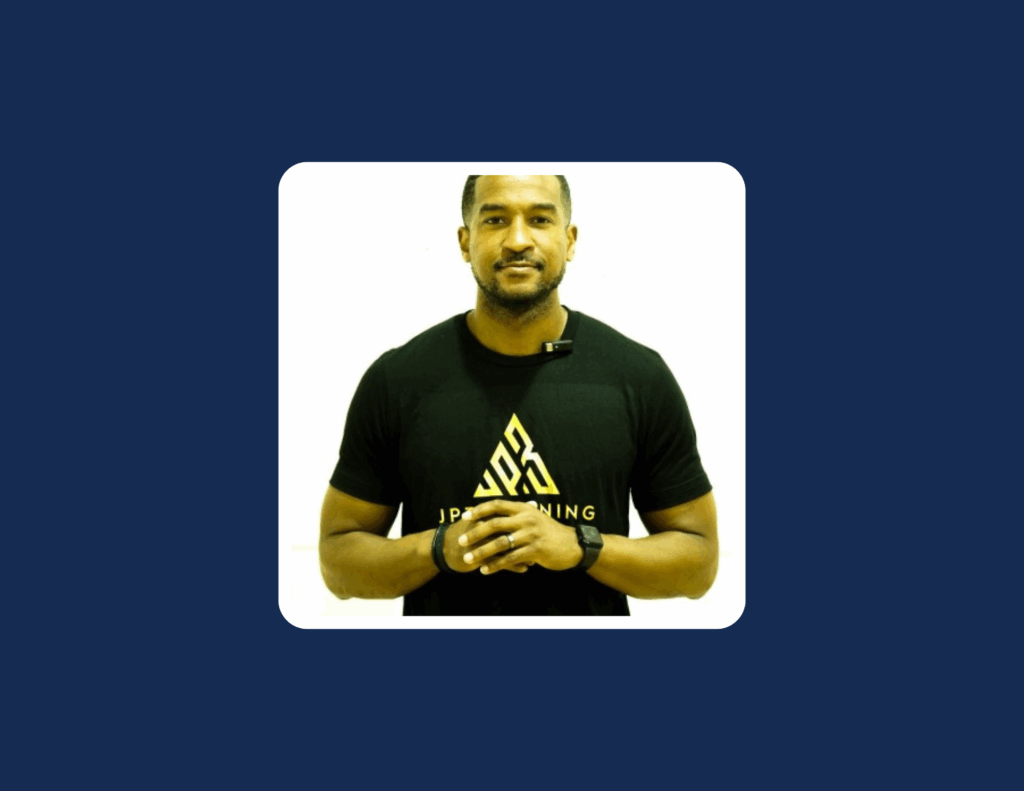
JASON PARKER – FOUNDER OF JP3 TRAINING – EPISODE 1156
Website – https://www.jp3training.com/
Email – [email protected]
Twitter/X – @jp_3training

If you listen to and love the Hoop Heads Podcast, please consider giving us a small tip that will help in our quest to become the #1 basketball coaching podcast.
Jason Parker is the founder of JP3 Training in Tulsa, Oklahoma where he strives to help basketball players grow their skills and aggressiveness. Prior to starting JP3 in August of 2025 Jason served 12 years as an athletic director at Muskogee Public Schools, Sapulpa Public Schools, and Monte Cassino School.
Jason earned his Juris Doctorate in 2012 from Tulsa and passed the Oklahoma Bar Exam in 2013. While completing his JD, he served as a graduate assistant in Athletics at Tulsa.
As a player, Jason graduated from Memorial High School finishing 3rd academically and was the school’s all-time leading scorer. He went on to play at The University of Tulsa where he played on an NIT Championship Team in 2001 and in the NCAA Tournament in 2002 and 2003. While at TU, he received several honors as a student athlete: 2004 College Basketball Student-Athlete of the Year Finalist; 2004 ESPN Second Team Academic All-American; 2003 ESPN Third Team Academic All-American; 2003 NCAA Tournament Second Round Player of the Game. He finished his playing career in the top ten in Tulsa Men’s Basketball history in points, assists, steals, and three-pointers. After receiving his undergraduate degree from Tulsa, Jason played professionally in top leagues in Italy, Russia, and Greece as well as the NBDL.
On this episode Mike & Jason discuss how the essence of development lies in cultivating life skills, particularly the ability to be aggressive, which Parker defines as the interplay of focus and force. He states that this concept transcends the court, impacting various facets of life, including personal relationships and career ambitions. Throughout the episode, we delve into Parker’s unique approach to training, which prioritizes a structured, intentional methodology that fosters both skill enhancement and personal growth in young athletes. This discussion not only underscores the significance of mindset in sports but also serves as a broader commentary on the essential life lessons that can be gleaned from athletic participation.
Make sure you’re subscribed to the Hoop Heads Pod on your favorite podcast app and while you’re there please leave us a 5 star rating and review. Your ratings help your friends and coaching colleagues find the show. If you really love what you’re hearing recommend the Hoop Heads Pod to someone and get them to join you as a part of Hoop Heads Nation.
Be sure to follow us on Twitter and Instagram @hoopheadspod for the latest updates on episodes, guests, and events from the Hoop Heads Pod.
Get ready to take some notes as you listen to this episode with Jason Parker, Founder of JP3 Training.
What We Discuss with Jason Parker
- The essence of basketball training transcends mere skill acquisition, focusing instead on personal transformation and the development of life skills
- Aggressiveness in basketball is intricately linked to focus and force, both vital components for achieving success in any endeavor
- The journey from failure to success is often marked by significant growth, driven by accountability and structured training plans
- Parents play a crucial role in the development of young athletes, providing support and guidance that can greatly influence their outcomes
- Transformation is the ultimate goal of basketball training, enabling athletes to cultivate skills that enhance their lives both on and off the court
- The importance of structured training and weekly accountability cannot be underestimated in developing young athletes into confident players
- The relationship between trainers, athletes, and parents plays a pivotal role in the athlete’s journey, emphasizing the necessity of open communication and mutual understanding
- The difference between intrinsic and extrinsic motivation is crucial
- Keys to developing mindset and character
- Life lessons that prepare athletes for future challenges
- Providing athletes with a clear pathway to achieve their goals
Like this show? Please leave us a review here — even one sentence helps! Consider including your Twitter handle so we can thank you personally!

We’re excited to partner with Dr. Dish, the world’s best shooting machine! Mention the Hoop Heads Podcast when you place your order and get $300 off a brand new state of the art Dr. Dish Shooting Machine!
Your first impression is everything when applying for a new coaching job. A professional coaching portfolio is the tool that highlights your coaching achievements and philosophies and, most of all, helps separate you and your abilities from the other applicants.
The key to landing a new coaching job is to demonstrate to the hiring committee your attention to detail, level of preparedness, and your professionalism. Not only does a coaching portfolio allow you to exhibit these qualities, it also allows you to present your personal philosophies on coaching, leadership, and program development in an organized manner.
The Coaching Portfolio Guide is an instructional, membership-based website that helps you develop a personalized portfolio. Each section of the portfolio guide provides detailed instructions on how to organize your portfolio in a professional manner. The guide also provides sample documents for each section of your portfolio that you can copy, modify, and add to your personal portfolio.

Hey coaches — you’ve got a game plan for your team… but do you have one for your money?
That’s where Wealth4Coaches comes in.
Each week, they deliver simple, no-fluff financial tips made just for coaches. Whether you’re getting paid for camps, training sessions, or a full season—Wealth4Coaches helps you track it, save it, and grow it.
It’s time to stop guessing and start building.
Subscribe now at wealth4coaches.beehiiv.com/subscribe
And follow them on Twitter @Wealth4Coaches for daily money wins.
Your money needs a coach.
Start with Wealth4Coaches.
THANKS, JASON PARKER
If you enjoyed this episode with Jason Parker let him know by clicking on the link below and thanking him via Twitter.
Click here to thank Jason Parker via Twitter
Click here to let Mike & Jason know about your number one takeaway from this episode!
And if you want us to answer your questions on one of our upcoming weekly NBA episodes, drop us a line at [email protected].
TRANSCRIPT FOR JASON PARKER – FOUNDER OF JP3 TRAINING – EPISODE 1156
[00:00:00] Narrator: The Hoop Heads Podcast is brought to you by Head Start Basketball.
[00:00:21] Jason Parker: This was kind of my light bulb moment. It’s not about the transaction of. Getting basketball skills. It’s about the transformation of getting the life skill of learning to be aggressive. Because when we break down the word aggressive, it’s comprised of two things, focus and force. Think about that focused and force. What can we do in life without those two elements?
[00:00:46] Mike Klinzing: Jason Parker is the founder of JP3 training in Tulsa, Oklahoma, where he strives to help basketball players grow their skills and aggressiveness. Prior to starting JP3 in August of 2025, Jason served 12 years as an athletic director at Muskogee Public Schools, Sapulpa Public Schools, and Monte Casino School, all in the state of Oklahoma.
Jason earned his Juris Doctorate in 2012 from Tulsa and passed the Oklahoma Bar exam in 2013. While completing his jd, he served as a graduate assistant in the athletic department at Tulsa. As a player. Jason graduated from Memorial High School, finishing third academically and was the school’s all time leading score.
He went on to play at the University of Tulsa, where he played on an NIT Championship team in 2001 and in the NCAA tournament in 2002. In 2003, while at Tulsa, he received several honors as a student athlete. 2004 college basketball student of the year finalist. 2004 ESPN. Second Team, academic, all American, 2003 ESPN.
Third Team, academic All American 2003, NCAA tournament. Second round player of the game. He finished his playing career in the top 10 in Tulsa. Men’s basketball history in points, assists, steels, and three pointers. After receiving his undergraduate degree from Tulsa, Jason played professionally in top leagues in Italy, Russia, and Greece, as well as the NBDL.
Coaches, the Dr. Dish Basketball Semi-annual sale is on right now. This is your shot to get a major discount on one of the best training solutions for your school. Training facility or even your home gym. Equip your team with the technology that’s proven to improve shot form, consistency and confidence.
Don’t miss this. Head to drdishbasketball.com and get your team ready for the season. Follow their incredible content @drdishbblall on Twitter, Instagram, Facebook and YouTube. Mention the Hoop Heads podcast. Save an extra $300 on the Dr. Dish Rebel, All-Star, and CT models. Those are some great deals Hoop Heads. Get your Dr. Dish shooting machine today.
[00:02:56] Matt Sayman: Hi, this is Matt Sayman head boys basketball coach at Grapevine Faith Christian School in Texas, and you’re listening to the Hoop Heads Podcast.
[00:03:07] Mike Klinzing: Coaches. You’ve got a game plan for your team, but do you have one for your money? That’s where Wealth4Coaches comes in. Each week, we’ll deliver simple, no fluff financial tips made just for coaches. Whether you’re getting paid for camps, training sessions, or a full season, Wealth4Coaches helps you track it, save it, and grow it.
It’s time to stop guessing and start building. Subscribe now at Wealth4Coaches Bee. Dot com slash subscribe and follow us on Twitter at Wealth4Coaches for daily money wins. Your money needs a coach. Start with Wealth4Coaches.
Get ready to take some notes as you listen to this episode with Jason Parker, founder of JP three Training. Hello and welcome to the Hoop Heads podcast. It’s Mike Klinzing here without my co-host Jason Kel tonight. But I am pleased to be joined by Jason Parker. Newly crowned head of JP three training. Jason, welcome to the Hoop Heads Pod.
[00:04:09] Jason Parker: Thanks for having me, Mike.
[00:04:12] Mike Klinzing: Excited to have you on. Looking forward to diving into all of the interesting things that you’ve been able to do in your career. You have a different path, I will say, than most of the people that we’ve had on the podcast. So let’s start by going back in time.
Tell me a little bit about your experiences with the game of basketball as a kid. What made you fall in love with it?
[00:04:29] Jason Parker: Well, it’s funny because some of my most indelible experiences with the game of basketball started with failure. And so I, one of the things I remember most was seventh grade thinking I was good enough to make the big local travel a U team, I didn’t make it.
They told me I wasn’t good enough to my face. Actually, they didn’t even do it like they cheat nowadays and put those numbers on it. I said, no, you’re not ready. No. And it just left a mark on me. Man. It burned a hole in me. It, it lit a fire underneath me. And then again, as a ninth grade student, I’d actually kind of had a bad experience at, at a middle school.
So my parents transferred me to a new school for ninth grade. And I remember, like I was big on goal setting and affirmations. And the very first day my dad dropped me off. I looked up at the marquee outside the school and I said, what? I’m going to be the greatest player to ever come from this school.
And then three months later I proceeded to not make the team. And so it was a rude awakening. But that’s when my dad stepped in and said, Hey, listen, you got these goals. You, you want to go on a certain path, but you, you don’t work. you’re not putting in the work. So if I give you the steps, if I give you the support, are you willing to to go through the process?
And I did. And I tell people all the time, that was one of the greatest decisions I’ve ever made because it essentially allowed me. To jump the line. I went in the next nine months from not making the varsity team at all to actually being a 20 point score, the lead on the team as a sophomore and ended up as the school’s all time leading score.
And so it’s debatable whether I’m the greatest of all time. A lot of people have their, their selections because we’ve had a lot of success. Tulsa Memorial High School, I think. Maybe the winningest program in all of Oklahoma at this point as far as state championship’s concerned. But my jersey’s retired, so I can at least say I’m, I’m one of them, one, so.
Okay,
[00:06:31] Mike Klinzing: nice. All right, so what does that look like? What’s the path? You’ve got goals now your dad steps in to say, Hey, here’s the work you have to put in to reach those goals. So what did that look like? What did the work look like? Is that you in the gym with your dad? Is that you in the gym by yourself? Is that pick up basketball?
Is that a combination of all those things? What did you do to get to that point? It was really weird because we see it all the time
[00:06:55] Jason Parker: now with kids going to trainers. I mean, it’s like everybody’s got a personal coach, but this was 25 years ago. And so literally my dad, he’s a law professor, so he had flexibility to, to come up to the school every day and we would basically work out after practice.
And my teammates, especially the older ones, used to make fun of me say, Hey, go down there to daddy day camp, or whatever it is you’re doing. And so like I said, it took about nine months before it. It took whole and really they started to see the difference. And it’s funny ’cause a lot of those guys reach out to me today and they’re like, they admire that so much that.
They’re actually going through that process with their kids. But to answer your question, it started with the structure. It started with the support, and then from there, because we see so many kids have skills, I tell people all the time, the average player today is more skilled than Michael Jordan was at At his same age, at their same age.
And so the amount of skills player players have is incredible, but. What we found is so many are missing that one key ingredient, which is the aggressiveness. And the reason is because aggressiveness is this taboo word. Everybody says behind closed doors, but nobody really defines and teaches it. And my dad was just great at it.
I I, one of the things I now teach about aggressiveness is the fact that it’s comprised of two things. Your identity and then your attention. So basically who you are in your head, and then the plan that you go about on the court. And my dad was great as at establishing a, a plan for me on the court maybe so too much.
Maybe he was too good at it because at, at some points my, my coaches would say, stop looking up there to your dad. But we would have a specific goal for how many paint touches I was trying to get in the quarter. How many looks at the rim, how many deflections, and all of this equaled.
Aggressiveness, aggressiveness. It was an accountability measure and I really tell people that’s what set me apart because I was your average kid, average size pretty smart kid. I would say good academically, and the only reason I say that is I was a good kid and it’s so hard for kids to be aggressive, mean doll to the court.
And I’ll never forget I had a substitute teacher. Maybe my 10th or 11th grade year and she, she was a long-term sub. She had been there for about a month or so, and she came to a basketball game and the next day I walk into class and she was like, Mr. Jason Parker. Who was that person out there on the court last night?
Like, I have known you for a month and you haven’t said a, and you were like this animal out there. And so it was really because I had that identity and that intention and I was just able to go when nine out of 10 kids are just hesitant. And I really think that was the difference maker for me.
[00:09:53] Mike Klinzing: I think the idea of having a plan and well, that so many kids who work on their game, right?
You see ’em at the gym or you see ’em at the park or wherever it is that they’re, they’re working out and it’s sort of like, yeah, I’m working on this, but. There’s not a plan, and what I sense from you is that what your dad put together for you was systematically, this is what we’re going to do. This is where we’re at right now, here’s the path, here’s where we want to end up.
And then all those structured steps along the way, I. Up, up building you to where you wanted to go. Whereas so many kids are just like, Hey, I’m going to work on my jumper. Hey, I have to have a better handle or whatever. And there’s not really a plan of how that all fits together to make you a better player when you step on the floor.
And so your dad put together that for you, which again, not many people have the opportunity to have someone to, to pour into them in that same way. So when you think about yourself. Today as a coach and what you do with the kids that you work with, what part of your dad do you see in yourself every day?
When you catch yourself and you’re doing something or you’re saying something, you’re like, oh, that’s, that’s my dad. What? What is that for you?
[00:11:11] Jason Parker: Well, I think it’s the ability to go from awareness to application. And so once you become aware of whether it’s a deficiency there’s a, a area of your name or you’re not good enough, like was was clear.
It became clear to me in the two situations I mentioned. Or you become aware of maybe a goal, like, I really want to reach this goal. The awareness is key because now you understand that there’s something to work towards. Once we have the awareness, then comes the accountability. And so the way we do that now with the players we work with is there’s a weekly check-in process.
These are your deficiencies that we’ve clearly defined. These are your goals that you define. Now here’s how we’re going to get to them. Either you’re following those steps or, or you or you’re not that accountability, then. Molds itself transforms into aggressiveness because now they have a plan on how to get to anything.
And once you have a plan, it’s just like a habit, right? You become confident in your habits because you’re doing them all the time. And so once you go through that three step process. Application naturally happens. So that’s where I see myself applying and that’s one of the things I try to even help other trainers in doing is to get away from just the skills and drills for no reason.
How does this apply in this particular game? And don’t, don’t get me wrong, there’s not a hundred percent application by any means, but a large part of what we’re doing should apply to the players’ games. And so I have to have intention in my training. And again, that helps the player because they now have context for, okay, I’ve been in this situation, this is where I’m struggling with my offhand, or coming off ball screens or defending and getting over ball, whatever the case may be.
Now as a trainer that informs me on how I need to conduct the training process and so on and so forth. So they basically feed into each other and that was the biggest thing that, that I learned from just coming up with that.
[00:13:17] Mike Klinzing: Let’s build on that. I know we’re kind of jumping way ahead through your story, but let’s stay with that training piece of it.
When you onboard a training client, so you have a kid that comes to you that, whatever, somebody heard about you or they, they, they, Hey, I want to go, I’m going to come work with Jason. What does that process look like? How do you go about. Putting together that plan, analyzing the kids’ game, getting a feel for what they need.
How do you go about doing that? How long does it take? What’s your process? Great question. ’cause
[00:13:51] Jason Parker: I think the process is no different than onboarding an employee or, or anything where this is a relationship based business, right? I tell parents I’m going to be like the fourth or fifth family member. Like, you’re going to see me at games, you’re going to be receiving text messages and videos from me.
And it all starts with. Conference hall just like this because they have to understand that they’re signing on to something that takes commitment. They didn’t get to where they were overnight and they’re not going to get past there overnight. So it’s a process where we’re going to work hand in hand.
And I really work hard to lay out the ins and outs of what that process is going to look like. The fact, most importantly, that there’s commitment required, like how many times you’re going to show up, there’s consistency required as far as the whether we’re doing six months or 12 months. You’re going to be a part of if you’re really going to be a part of it.
So that kind of sets the tone and that kind of weeds out those that really want it from those that don’t. From there we go into the weekly accountability with the players, or I just take a step back and say from there. They have a personalized plan, which is just a quick little five minute survey, which basically tells me what they want to accomplish over the next three to six months.
And then secondly, what do they see as the biggest impediments or deficiencies to stop them from getting it? We’re then going to attack it. You would be surprised but not have 10 kids. It’s really an competence. Deficiency more so than even a skill set because we’ve all seen kids who lack the skills, but have the confidence really be able to, to effectuate a lot of good things out on the court.
And so we, we get that plan and then we attack it week to week. They come in. Two times a week to see me. But in between times they’re receiving homework assignments which are quick videos. I do the research or either I make the videos myself on my YouTube channel and anybody can go to my JP three training, YouTube channel and see all the workouts we have from skill sessions, to finishing workouts, to dribbling, even stretching, stretch, and conditioning.
So my athletes get those workouts assigned to them every week, and then we follow up at the end of the week to make sure that they’ve been accomplished. Obviously, sometimes there’s full accomplishment there, sometimes there’s not so much. So that’s where the monthly report comes in. Where parents kind of receive a check in of what’s been going on.
And that basically addresses everything from the mindset to the skillset to what’s next. The third element, which I think is critical, is a film review. Every athlete gets at least one film review a month, or we’ll come to an in session game ourself or in person. And that’s where the application comes to, to vary because we’re really able to say, Hey, you’re doing great.
We’re also able to see context for the player because role is important fit opportunity in the team. So that allows us to really calibrate what we’re telling the athlete and what the cal and what the athlete’s expectations are. To their particular environment. So those three elements are really what tie it all together to go from that awareness to that application, like I talked about earlier,
[00:17:15] Mike Klinzing: as you were thinking about putting together your training business.
So for people who don’t know, and we’re going to get into this as we go along, Jason is a long time athletic director, so he wasn’t always a basketball trainer. So as you thinking about. Hey, and we’ll talk about the what, the why and all that stuff, but just how long did you kind of have the idea for JP three training in your mind, and what did you, how’d you go about putting together that plan that you just described for us?
How long had you kind of been holding that in your head that it was something that you, you wanted to kind of jump ship and do?
[00:17:54] Jason Parker: Well, so I played professional ball after I finished college and then I hurt my knee. So I played for six years, hurt my knee, and I end up back in law school and I’m like dreading it.
I hated, all I want to do is go hoop and, kids started to come to me or parents and say, Hey, can you train my kid? And so it was really this odyssey, which began over 15 years ago of just training kind of on the side as I built my athletic director career. And as you’re doing that in your spare time, first of all, you’re, you’re following, falling in love with it.
You’re gaining an expertise on what works with different players, what works in different environments, et cetera, et cetera. And then. It comes to the point where the rubber meets the road, and it’s like, what is the difference between the kids that apply it and the kids that know, because they’re all growing at skill level.
I mean, you can see that within a month’s time, sometimes even less. But what is that difference maker? And that’s where I was able to kind of harken back to my experience and say, well, what made me different? I wasn’t the biggest, I wasn’t the fastest. I wasn’t the strongest. Definitely wasn’t the smartest.
But I was the most aggressive. Now it’s about reverse engineering that and finding out how you become the most aggressive. And here’s the kicker to it all, because this is why this is key, and this was kind of my light bulb moment. It’s not about the transaction of getting a basketball skills. It’s about the transformation of getting the life skill of learning to be aggressive.
Because when we break down the word aggressive, it, it’s comprised of two things. Focus and force. Think about that focused and force, what can we do in life without those two elements, like without a, a clear path or a clear want and a sense of urgency, which is the the force part. We can’t accomplish anything, right?
We can’t even get a, a bite teacher at night. you can’t marry someone, you can’t get a degree, you can’t do anything without aggressiveness. And so once I had that aha moment, and I look back on my journey, I say. Well, I was able to finish this. My schools all timely in score. I was able to be a two time all American at the college level.
I was able to earn a law degree, play professionally be an athletic director, assigned larger schools in and throughout Oklahoma, become the Oklahoma president of the a d associate. All of these things. Based on focus and force. And so if we can get this instilled in athletes at a young age with the tool of a basketball, wow.
? Wow. And so I think so many, so often, even me as a parent, we forget that because it becomes about Xs and Os and score points and you have to be starting and blah, blah, blah. And it’s like, what I played for maybe. Accounting, college, high school, college and pro. I would say four. Four a let’s say, call it 14 years, which is a long career.
14 years is a small component of a lifetime, but I walked away with the skillset, which has impacted every. And so once I had that moment that, that realization, I’m like, I’m switching it all. I’m not, it’s no longer, I’m no longer leading with skills. I’m leading with the, with the mindset, the aggressiveness piece, the understanding of identity and intention in order to create transformation in student.
[00:21:31] Mike Klinzing: I think what you just said is a theme that. I’ve hit on, on the podcast with lots of different guests and it’s one that I always keep coming back to. And when you said you use basketball as a tool, right, and basketball as a tool to be able to, yeah, teach basketball skills, but also to be able to teach a kid about life and use the skills, use the mindset, use the things that you can apply in basketball and understand that it’s not just applicable.
On the basketball floor. These are things that can transfer beyond that to your life, your current life, but also your life, as you said, for all of us, no matter how good we are, no matter how much we love the game, at some point that ball stops bouncing and if the only right, if the only thing that you’ve gotten out of basketball.
Basketball, it’s a jump. Then you’ve missed that. You’ve missed out or somebody, somebody along the way. Some coach has not done what they’re supposed to do. To be able to give you more than just the game of basketball. You have to be able to develop those life skills and that mindset and that mentality that you’re talking about.
So that definitely struck a chord with me. It’s something that when I think about what it is that I try to do with the game of basketball now, is I try to. Give back in some way. Right. I try to utilize the game to be able to have an impact on people, whether it’s coaches through this podcast or whether it’s players that I work with in my camp or whatever it might be.
You’re trying to give them those tools that they need in order to, not to succeed on the floor, but to succeed in life. And it sounds like that’s sort of the grounding philosophy of everything that you did. When that light bulb went off for you, you were like, ah. It’s not just about basketball. I have to make sure the kids are getting more out of it.
And again, if I’m a parent, right, and I hear that, that’s what I want to hear. I, yeah, I want my kid to get better at basketball. But if they can get that other stuff, now we got something.
[00:23:31] Jason Parker: Well, and it’s so much about process, leadership process because I mean, I trained for 10 years as a skill guy and wanting to be the best skill guy and saying, well, I was super skilled.
I taught myself how to do this, this, and that. Let me give you these skills. Lemme give you these skills. But it’s only as you grow as a leader where you start to comprehend. What the real lesson is it, it’s almost, it’s a God thing really. It’s a, it’s a form of revelation where you start to understand this is really about something way greater.
And so what I encourage parents is to always make sure, whoever’s speaking into your kids’ life, make sure that their profile matches the persona. Because if it’s somebody who hasn’t really had. The experiences and the pedigree and hadn’t been through the fires and failed and survived, et cetera, et cetera.
If there’s no process there, there’s, they can really only speak to low level things as I was at one point as we all were you’re, you’re just trying to do it and make, make, make this much of an impact. And then when you start to see the bigger picture, you’re like, hold on. In, in less than a month.
I mean, let’s think about what you said. If all you get out of the game of basketball is basketball, you’ve got very little. But if you get one modicum of this transformation process, whether it’s aggressiveness, work ethic better nutrition, you’ve changed your life, you’ve changed your life, and so the reason that is important because.
If me as a leader can do a great job at communicating that first and foremost to parents, then to players now the outlook is completely different and I can sit on that bench or come off that bench or be a secondary role player or maybe not even make the team. There’s something I’m getting out of this.
This is all going towards a process that is important for my child. It, it changes the complete game because now it’s not about, you only score 14 points and you, you’re averaging 20. And why did Coach Knight give you that last three minutes? what I’m saying? And so it’s incumbent upon us as leaders to set the stage and to grow, first and foremost, do the work, to go through the process ourselves so that we can then usher the next generation through.
[00:26:03] Mike Klinzing: Really well said. And I think it’s something that when you look at the youth basketball, the high school basketball landscape, unfortunately too often we see players families. That don’t necessarily have that outlook, right? They’re focused on all those things that you just talked about that are just basketball, that are only basketball related, and they don’t see the bigger picture.
I often think of just the fact that, and I’m sure you see this too, that so often in the game of basketball. People and players and their families don’t enjoy the moment that they’re in. They’re focused on what’s next. If I’m a middle school player, I’m worried about what high school am I going to go to and when I’m going to, when I’m going to be on the varsity.
And if I’m a JV player, I’m worried about when am I going to move up to the varsity? And if I’m on the varsity, when am I going to be a star? And if I’m this when am I going to get my scholarship? And this kid over here has got one, and I don’t. And instead of. Being in that, in and enjoying it. It’s, it’s really, and it, it’s a hard thing to do.
I mean, that it doesn’t, you have to really be intentional and think about what it is that you’re doing, but I so often see people who are in the moment, and it should be a great moment, right? You should be enjoying high school basketball, or you should be enjoying middle school basketball. And people get so caught up and worried about all this extraneous stuff that.
Sure. Does it matter? Yeah, it matters. But the things that you’re talking about, right are things that they’re not just going to matter when you’re 17. These are things that are going to matter when you’re 40, when you’re 50. And those lessons that you take away from basketball. And you mentioned a bunch of them in terms of aggressiveness and work ethic and perseverance and all those things that when I think about what basketball gave me, those are the things that, yeah, I look back on my career fondly both as a.
Player and as a coach. But I think more about how did it impact me in TER in terms of what kind of person I became as a result of, of participating in the game of basketball. And there’s no question that somebody, somewhere along the line, coaches, parents, whoever it was. Poured into me that message and that impacted me.
It still impacted me today as a 55-year-old man. And to me there’s nothing more powerful than being able to do that, Jason.
[00:28:34] Jason Parker: No, for sure. And let me first say that I was absolutely the worst at that. Not only as a player, but even as a parent. Like with my oldest son, I almost show him from the game of basketball again.
I. Most indelible moments are my failures, right? And so as a 7-year-old when he’s like showing some prowess at the YMCA, I’m like, you have to play this kid two grades up. Like what are we waiting on? Like the pro contract is coming and so he goes up two grades and all of a sudden he can’t get to the ball.
Nearly lost it. Like it took three years to get him back to where he wanted to be engaged with the game. Because I was one of those dads just looking at the extrinsic rewards, yelling and go get the ball, be aggressive, but not teaching anything. I was the worst at that. And so I think that. We have to remember that the intrinsic rewards, although they’re harder to gauge and to see, they’re way more valuable.
And they are there. They are there whether we can touch ’em or whether intangible or tangible, they’re there. I just had a player who came to me as a junior at the end of his junior year. For three years. He did not make the high school team. Now this is a, this is a kid who’s six foot three can shoot the ball athletic, like I was flabbergasted, like you didn’t make your high school team comes and works with me after his junior year.
We get all the way up into the fall of last year going into his senior year and we, we have already, he makes the tone unbelievable. He was happy. Greatest thing ever. Fast forward a month later. He hasn’t played in one game like it’s his senior year. He finally makes the team, he’s built his skill level up.
He’s athletic, he’s gotten stronger, still a great shooter. Cannot get minutes. Like even I would come to his game and I’m like, I dunno
[00:30:40] Mike Klinzing: what to tell you because
[00:30:42] Jason Parker: it’s not like they got players. That’s better. Coach just isn’t playing. Maybe he’s going with the I.
This is all building something great within you. Focus on the intrinsic, not the because. You could end up being a coach. You could end up being a trainer. You could end up being a Fortune 500 executive, running your own bus, and these skills are going to be what separates you from others. The fact that you can come into a hard situation, face disappointment every single day and still work like nobody’s business like that is a life skill.
And so for about five to six weeks, that’s every single training like we’d have to spend. An hour after just keeping him from crying. fast forward, we get to about late January, he gets in a game late and the kid like rattles off seven threes so much so that, and they lost, but the, the coach from the other team was like, told his coach, I don’t care what you do, like that kid needs to play.
Like he’s the only player. You got that type of thing. Kid ends up starting the rest of the year. Average is like five, three partners made per game. Ends up working his way into a college scholarship. 80% covered at the NAIA level. And when I tell you It couldn’t happen to a better kid, first of all.
Secondly, it’s just the tip of the iceberg for the kid because he is a late bloomer. But it’s a great story about the ability of the kid and his parents. Focus on the intrinsic part because had they stayed with that part, and don’t get me wrong, there was frustration there. There were a lot of tears, like I said, but at the end of the day, they made that the focus and it paid dividends.
And so it’s hard. I’m not saying it’s not hard, but it’s something that we, like I said, as leaders have to do a better job communicating
[00:32:50] Mike Klinzing: to
[00:32:51] Jason Parker: the parents and the players.
[00:32:54] Mike Klinzing: There is no question, Jason, that what you just shared is something that we all struggle with and you sharing that you struggled with it.
I know that I struggled with it. There are still moments today that I struggle with that, right? Where you want your kid to play more, you want them to have a bigger role. You want. This for them. Things that they want. You want for them. Yeah. And like I know better. You at some point knew or know better.
Right. And yet we still, as people who are in it all the time, we still sometimes allow ourselves to get caught up in, as you said, those. Extrinsic things. And yet at the same time, I know that my son went through a couple difficult stretches during his high school career, and now he’s a sophomore in college.
And so last year as a freshman played in like seven or eight games, didn’t play very much, and. To be expected, but luckily he had a dad who, through the whole course of all those things, when you talked about were there tears, were there, were we upset? Were there moments, right? Yeah, there was, but. Through all that, we continue to have those same conversations that you just talked about, like right?
Like, Hey, there’s a bigger picture. There’s something better coming for you down the road, and maybe it’s on the court here, or maybe it’s off the court there, or maybe it’s at your next stop, or it’s the whatever. What are you learning from going through this adversity now? Are you going to be a better person?
Can we make you a better person as a result of this adversity? And yet, it’s so hard. It’s so hard. It’s so hard. It’s so hard to
[00:34:42] Jason Parker: do that. And I tell, I tell people all the time, I never saw my parents more frustrated, like more. Flabbergasted. Like just where they didn’t have answers. Right? You go to your parents for answers and when I could see the look at their, their face, kind of like the look I had with this kid last year, like, I dunno what to tell you.
You should be right. I dunno, in my opinion. And so it is so hard, but I’m smiling and I hear you recant because. That’s what’s going to make them. Like, I remember those times. I remember being, Hey, I’m going to transfer and this is the worst thing ever, and four, eight points in like five minutes last night, and now patients play me at all.
And that just set the stage for me. Like I would not be where I am without those moments. And so I’m, I’m actually happy for him. I’m reading for him because I know it’s still going to work out if he’s going through those type of situations.
[00:35:43] Mike Klinzing: It really is, it’s, it’s one of those things that I then come back to my, my next step of this conversation or how I think about it in my own head is always.
If it’s this hard for me, somebody who went through it as a player myself, somebody who has been a coach, somebody who talks about things like this with people from all over the country that have knowledge, that share, and all the conversations that I’m able to have, and it’s still incredibly difficult for me to be able to step back and do that.
Encouragement thing and to be able to support and then I think about what about the mom or the dad that has no background in this and they don’t have anybody to turn to. And you can see how people get caught up and how they get frustrated and how they end up saying and doing things that end up being detrimental to their kid.
Yeah. Because they just don’t have the experience. And to your point. It’s so hard, it’s so hard to have those conversations and to remain positive and effective. Like, look, I like, just like you said, I, I don’t understand how you can’t be playing. It just doesn’t, like, I, I cannot, I cannot explain it.
It makes no, it makes no sense to me. And that’s not really an answer that your kid or a player that you’re working with necessarily wants to hear, but then the next message has to become, well, if you don’t work hard. What’s that going to get you? If you don’t push through, what’s that going to get you? And the answer is nothing.
And you’re going to learn a lesson that when things get tough, you give up. And so as a parent or as a trainer, as a coach, right, the message is just like you said, can you work hard? Even when there isn’t that pot of gold at the end of the rainbow that you can see at this point right there, there may not be 32 minutes a game waiting for you.
At the end of the rainbow, at the end of that hard work. There’s something there, and maybe you won’t see it until you’re 35 years old, but it’s, it’s there. Yeah. I promise you. But those are hard conversations to have. Jason. Yeah, I’ve actually
[00:37:57] Jason Parker: started a weekly call for parents just with my back background.
It’s not only an athletic director, but obviously a, a trainer and a former athlete. Just allows me to see it from, from all angles. I really, really adept at being able to coach. People I wish, I wish I could coach myself because it’s one of the reasons I don’t coach and I choose to train because I know I can’t trust myself when I get between those lines.
And so I, but I’ve become really adept at being able to see it from the coach’s angle, being able to see it from the player’s angle, being able ever see it from the parent’s angle and give those parents some. Some advice and some counsel, whether it be, I mean, I just had one of my, my best player who one of top.
Girls athletes in the state she got cleared today from the OSAA. And so being able to counsel them through transfer situations or NIL or even something as simple as we’re, we’re not getting a play. Like what do we do? Like, do we panic? Do we, is it time to make a move? To the point where I’ve got journals that walk parents through the process and everything they need to consider when, when they’re talking about trash iron.
And so I’ve developed kind of a niche of being able to counsel parents and have these difficult conversations because nobody’s having them. And when you’re not, parents are making RA decisions and making different erratic behaviors that impact the kids when it’s like, Hey, if we just take a a breath here.
Think about this, there’s always pretty much some options. There’s always something we can do in order to ameliorate this thing that we’re going through. And so I actually have gotten to where I, I love those conversations. I love hearing what, what athletes are going through because I know what’s on the other side of it.
[00:40:04] Mike Klinzing: I think parent education. If there’s one thing, if I could wave a magic wand over the basketball world to make it better, the ability to have conversations with parents, to educate them on just what the landscape looks like. Yeah. What, what is important, what is not important, what you should focus on. To me, that is the one thing, and again, I know it’s incredibly difficult because we have the way youth basketball is structured today in terms of club basketball and trainers and qualifications and all the things that go into sort of contributing to the, the challenges that we see.
But if you could educate parents on, Hey, when your kid is eight years old, here’s what should be. Important in their basketball life. And then when they get to middle school, here’s what should be important. And so, and you just keep having those conversations. It would allow everybody to just take a deep breath.
No, it’s, and relax and understand that there’s multiple paths. To getting where you want to go, both on the basketball floor, but also as you’ve said many times in life. Right, right. And people just get so caught up that they end up making decisions that negatively impact their child, the player, and also have a negative impact on them Just.
In their life. Right. We’ve all seen the parents that are more stressed out than any player ever is. They’re they’re go, they’re going, they’re going crazy. And I can’t, I can honestly say that there’s been games and times I’ve sat in the stands and just you’re like, you’re, you’re like this, ?
Exactly. exactly what I’m saying. And yet I still come back to like, and I know better. Yeah, and I know better and it still gets me. And so I just think that parent education piece, what you’re doing there is a tremendous service to those parents and families, whether, whether they know it or not, even in the moment.
’cause sometimes they may not even realize what a gift that you’re giving ’em, but man, that is such a gift to be able to educate people on what it is that they need to be focused on and why. Again, that bigger picture beyond just skills and drills is so important.
[00:42:22] Jason Parker: Yeah, when we set out and we started the company, that’s why we named it JP three because it’s actually the P stands for the psychology, which is the mindset piece we talked about earlier.
The performance, obviously the skills. And the third P is parenting because that’s the third leg in in the puzzle. what I’m saying? And your parents. Can make you or break you from a standpoint of that consistency, that commitment kind of like I said with my dad, that support that accountability is huge.
Or sometimes it’s the, the negative voice. It’s sometimes the, the sense of urgency on their own things. And so there’s, there’s a drag down type element, a negativity elements that parents can sometimes unbeknownst to them be giving off to their, to their athlete. And so, and we’ve seen it, I know you as a coach, you’ve seen it ruin teams, even just that dynamic.
And so just helping parents has been. Of the fulfilling things for me, because I know it helps so many others down the line from players to coaches to complete organizations are different. When you can get the hold of that line stakeholder.
[00:43:36] Mike Klinzing: How much connection do you have to, if you’re working on the high school player, do you have try to make a connection with their high school coach to kind of try to get on the same page with that coach?
Where are you in terms of that communication? Well, from
[00:43:50] Jason Parker: time to time I do. It’s, it’s easy for me, obviously, as being a former athletic director and a player in the area. So I’m, I ha I have a lot of natural comp relationships that allow me to do that. But I don’t do it that often. Only when there’s an issue and we just can’t really.
Get to the end of it within our logic. And so there have been times that we had an athlete last year who was a starter, but she just wasn’t getting a minute to seem like every single mistake she was getting her taken out. Her coach was actually one of my longtime buddies. We used to play a lot of pickup ball together back in the day.
In high school and he does a great, great job with his program. And so he was open to me calling and just asking some questions about what it was he was seeing and how I could best help her as far as communicating what he wanted from her on the floor. And of course, I’m able to also go back on that other end and infuse that aggressiveness piece because.
One of the things we know is Coach Talk is generalized. And so there’s an element of equity, there’s an element of everybody’s the same, but we all know out on that court nobody’s the same. No one player plays the same role as any other player. So I think I’ve become really adept and it’s really been value to our clients to be able to get kind of that, okay, this is what coach is saying.
This is how that, how and why that matters to you. what I’m saying? Kind of that what you probably do with your son. And that, that, that behind the scenes element of, Hey, I know what coach is saying and he is absolutely right. It’s coming from a good place, but this is how I want you to actually hear it and this is how I want you to actually go out and use that information.
And so I think that’s something that’s been helpful for, for all of our
[00:45:46] Mike Klinzing: athletes. Yeah, it makes sense. When you got started, what was the hardest part of starting the business? Forget about the basketball side of it and the planning and all the things that we talked about, but just from a sheer, okay. I’ve been working this on the side.
I’m going to go full time. What was the hardest part of turning it into a full-time business?
[00:46:13] Jason Parker: Well, I think successful businesses cater to their ideal clientele, right? They have a specific market niche that they. A specific problem that they resolve. And so as a side hustle guy, I was a journalist just bring me your kids, I’m going to get on better.
And then when it morphed into this, Hey, we’re going to go after the mindset, we’re going to go after the transformation and everything else is going to be included for that in that. It gave me a really specific lane to run in and a specific avatar of, of an ideal client, and so at that point it became hard because you have so many others that you’re already dealing with.
From your generalist days, and so kind of having to either put them in this pot or kind of say, Hey, this is not going to work out, because as a, as a basketball guy we, we want to help everybody like you see potential in every single kid. But then I started to notice the, the characteristics of the kids that got the most, and the families that got the most of what we were doing.
First of all, they had a white hot commitment. Like they had that focus element as far as they had a goal they wanted to get towards. They were very clear in that. Second of all, they were very much in tune with their athlete. Meaning they knew their athletes’ deficiencies from a skillset they knew where their athletes were a as a mindset, and they knew where they were in their character, or whether that be work ethic or body language or any of those things.
And so. That’s the reason for the calls now, because I can, I can glean that in the course of 15, 20 minutes how well they know their athlete and how committed they are. And then it’s like, it’s go time. I don’t care where you are. I, I rate every player on a five star scale from. Somebody who’s off the team to somebody who’s on the bench to somebody who’s a role player, to somebody who’s a starter to somebody who’s a star for their team.
And I don’t care where you are on that system, if you’ve got those two elements that I mentioned earlier. We’re going to help you climb, like it’s inevitable. it’s just a, a life circumstance if you have those types of things and you have that commitment and then you get the right support and structure, like you’re going to succeed.
So that was the biggest thing, is kind of separating the ones that it would work the most for, and the ones that would make the, get the largest impact from those who maybe not, not as much.
[00:48:56] Mike Klinzing: Yeah, that’s a really good point in terms of thinking about the generalist, who just grabs, Hey, I’m grabbing this kid.
I’m grabbing this kid. I’m grabbing this kid too. Now suddenly I’m focused in on, here are the clients that I can best work with that are going to get the most out of what I’m doing, but also I’m going to be able to pour my best into them ’cause they’re going to be receptive to it and then that makes everybody’s job.
When we’re all on the same page, nobody’s fighting this way or that way. Everybody’s trying to row that proverbial boat in the same direction. So let me ask you this final two part question, Jason. So you look at where you’re at today, right? You’re a couple months into a full-time training business. So question number one.
When you look ahead over the next year or two, what do you see as being your biggest challenge? And then the second part of the question, obviously you left a different career as an athletic director. Now you’re here. What gives you the most joy about what you do on a daily basis? So your biggest challenge and then your biggest joy.
[00:50:00] Jason Parker: Great
[00:50:01] Mike Klinzing: question,
[00:50:01] Jason Parker: man. So I think a lot about this, but I just think as far as challenge, it’s going to be thinking too small, right? Because a lot of times, and when you get into, whether it be your basketball career and you get out of your city. you get on an AAU circuit or you get on the college level and you’re starting to see, man, there’s this whole world out there.
Like there. I’ll never forget my college coach was actually Bill Self and he recruited me when he was at the University of Tulsa. From that time I was a temporary. And all of a sudden around early in my 12th grade year, my name began getting a buzz and I started to get some national attention.
Some Notre Dame, some Arkansas, some of those came calling. And coach, she said, Hey, remember you’re a six two guard that weighs 1 65 pounds. You, you’re down a dust. Like there are a lot of used out there. Right? And so that’s kind of like the, the prevailing notion, not only as a basketball player, like you start to realize.
There’s this big world out there, and I’m just a small fish, but also even in the school context, because often schools and programs are framed more so on their limitations than their expectations. And so what this does is it gives you where you’re, you’re constantly thinking worst case versus best case.
And the reason I call this a challenge is because obviously I’ve got this unique skillset. Obviously I’ve got this unique background. How can I potentially impact. The most people like not just in my city, not just in my state, not just in nationwide, but worldwide even. What is that thing? I mean, that’s why even being on a platform like this is huge because you never know who’s listening.
You never know what opportunities are available out there. And so for me, the biggest challenge is. Not holding myself back not, not holding myself according to my limited beliefs. As far as the biggest thing that just. The biggest love, the biggest win. For me, it’s always transformation. It’s always going to be transformation because I don’t care what it is.
When a kid learns a skill or they open up a new area, up their aggressive answer in their mindset I’ve got a kid who’s a ninth grader now who, when he came to me six months ago. Like who couldn’t shoot the same shot twice, right? He is not a knock male shooter right now, but he’s super consistent in his mechanics and he doesn’t understand.
But that’s a huge transformation, right? And it may be six months from now where he seems to benefit of that, but his life is forever changed because he now has awareness and the ability to effectuate change based on that awareness. That’s a, and like I said, sometimes others don’t see it yet. his dad may call me like, man, he missed five threes tonight.
I’m like, don’t worry about it. It’s part of it. Step misses, right? But he’s so much better already. And so when I see those little things, I’m always just fired up man, and it keeps me going.
[00:53:18] Mike Klinzing: Well said, and I think it speaks to the entire conversation that we had, right about having an impact on people and using the game of basketball as the tool to be able to do that.
Before we wrap up, Jason, I want to give you a chance to share how can people connect with you, find out more about what you’re doing, share your social media, your website, your email, whatever you feel comfortable with. And then after you do that, I’ll jump back in and wrap things up.
[00:53:41] Jason Parker: For sure. Well people can get with me @JP3training on any socials from YouTube to Instagram, Facebook LinkedIn.
We also, like I mentioned, our YouTube channel with chock full of great videos for kids who work out on their own because that is a huge skillset to just. Be able to pick up a ball and be motivated enough to go out there on their own. So we want to provide the support where when they do that, there are no questions.
They know exactly what they need to be doing. So check out our YouTube channel. Also, you can email me at JP three [email protected]. So I’d love to connect.
[00:54:23] Mike Klinzing: Perfect. Jason, can I thank you enough for taking the time out of your schedule tonight? Really appreciate it, and to everyone out there, thanks for listening and we will catch you on our next episode.
Thanks.
Your first impression is everything. When applying for a new coaching job. A professional coaching portfolio is the tool that highlights your coaching achievements and philosophies, and most of all helps separate you and your abilities from the other applicants. The coaching portfolio guide is an instructional membership based.
That helps you develop a personalized portfolio. Each section of the portfolio guide provides detailed instructions on how to organize your portfolio in a professional manner. The guide also provides sample documents for each section of your portfolio that you can copy, modify, and add to your personal portfolio.
As a Hoop Heads Pod listener, you can get your coaching portfolio guide for just $25. Visit coaching portfolio guide.com/hoopheads to learn more.
[00:55:27] Narrator: Thanks for listening to the Hoop Heads Podcast presented by Head Start Basketball.