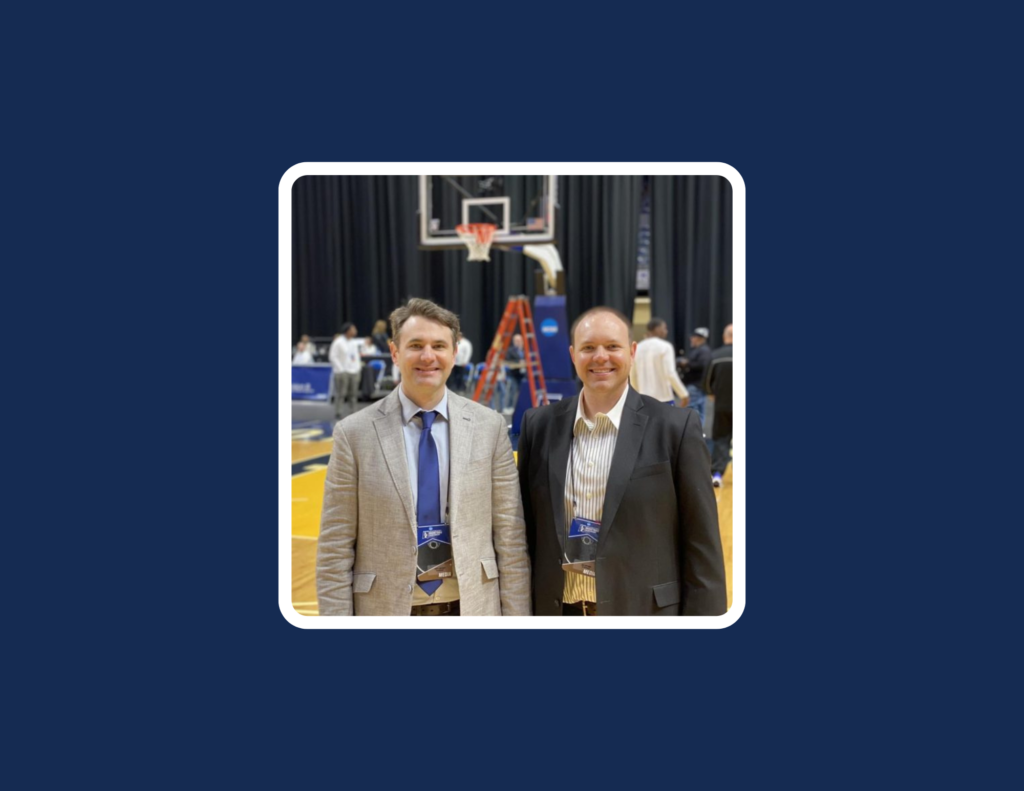
MATT & ZAC SNYDER – HOSTS OF D3 DATACAST – EPISODE 1072
Website – https://d3datacast.com/
Email – [email protected]
Twitter/X – @d3datacast @fftmag @ZacSnyder

If you listen to and love the Hoop Heads Podcast, please consider giving us a small tip that will help in our quest to become the #1 basketball coaching podcast.
Matt & Zac Snyder are the hosts of D3 Datacast, a YouTube Show, Audio Podcast, and Website. The Snyder brothers are graduates of Calvin University and avid followers of Division III basketball.
Matt & Zac take a lighthearted approach to D3 basketball and utilize their unique data in discussions on efficiency ratings, regional rankings, NCAA Tournament selections, and computer predictions of big games.
Matt and Zac Snyder share their passion for Division 3 basketball, stemming from their experiences at Calvin University. The brothers recount how their collegiate journey sparked a profound appreciation for D3 basketball, leading to the inception of the D3 Datacast. The discussion emphasizes the unique charm of D3 basketball, which often goes unnoticed amidst the dominant narratives of Division 1 and professional leagues. The Snyder brothers explore the evolution of their show, reflecting on how their initial simple idea has blossomed into a platform that connects a niche community of fans and coaches, fostering a deeper understanding of the intricacies of Division 3 basketball. Furthermore, they highlight the importance of data, efficiency ratings, and regional rankings, asserting that their analytical approach not only nurtures the community’s interest but also serves as a valuable resource for coaches seeking insights into tournament selections and game predictions. In essence, this episode encapsulates the journey of two brothers who transformed their love for a less celebrated division of basketball into a vibrant discourse that resonates with a broader audience, all while maintaining a light-hearted and accessible tone.
Follow us on Twitter and Instagram @hoopheadspod for the latest updates on episodes, guests, and events from the Hoop Heads Pod.
Make sure you’re subscribed to the Hoop Heads Pod on iTunes or wherever you get your podcasts and while you’re there please leave us a 5 star rating and review. Your ratings help your friends and coaching colleagues find the show. If you really love what you’re hearing recommend the Hoop Heads Pod to someone and get them to join you as a part of Hoop Heads Nation.
Have your notebook handy as you listen to this episode with Matt & Zac Snyder, hosts of D3 Datacast.
What We Discuss with Matt & Zac Snyder
- How Matt & Zac successfully created a unique platform for Division 3 basketball discussions, bridging their passion with their analytical skills
- Elevating the visibility of Division 3 basketball, sharing insights and data-driven discussions with fellow enthusiasts.
- The importance of community engagement, actively participating in Division 3 basketball discourse through social media and events.
- Their commitment to quality content, balancing personal enjoyment with the goal of providing informative discussions for their audience
- Creating content for Division 3 basketball where existing resources are limited
- Data analysis became a key focus for Matt and Zac in understanding D3 basketball
- Why the introduction of new metrics, such as the NPI, illustrates the evolving nature of Division 3 basketball evaluation processes
- Authenticity and passion are more important than high production value
- D3 Datacast serves as a unique outlet for both statistical analysis and personal storytelling within the niche of Division 3 basketball
- Balancing breadth and depth in their content, striving to cover both a wide range of teams and detailed discussions on specific matchups
- Bench culture reflects the health of a basketball program
- Efficiency ratings, tournament predictions, and team performance metrics
- Interacting with coaches and fans to foster a deeper understanding of Division 3 basketball
- The journey of creating content together and how their relationship enhances the experience of discussing their shared passion for basketball
- Balancing their passion for basketball content with their personal lives and professional responsibilities
- Players from Division III can and do succeed at higher levels, including professional opportunities
Like this show? Please leave us a review here — even one sentence helps! Consider including your Twitter handle so we can thank you personally!

We’re excited to partner with Dr. Dish, the world’s best shooting machine! Mention the Hoop Heads Podcast when you place your order and get $300 off a brand new state of the art Dr. Dish Shooting Machine!
Your first impression is everything when applying for a new coaching job. A professional coaching portfolio is the tool that highlights your coaching achievements and philosophies and, most of all, helps separate you and your abilities from the other applicants.
The key to landing a new coaching job is to demonstrate to the hiring committee your attention to detail, level of preparedness, and your professionalism. Not only does a coaching portfolio allow you to exhibit these qualities, it also allows you to present your personal philosophies on coaching, leadership, and program development in an organized manner.
The Coaching Portfolio Guide is an instructional, membership-based website that helps you develop a personalized portfolio. Each section of the portfolio guide provides detailed instructions on how to organize your portfolio in a professional manner. The guide also provides sample documents for each section of your portfolio that you can copy, modify, and add to your personal portfolio.
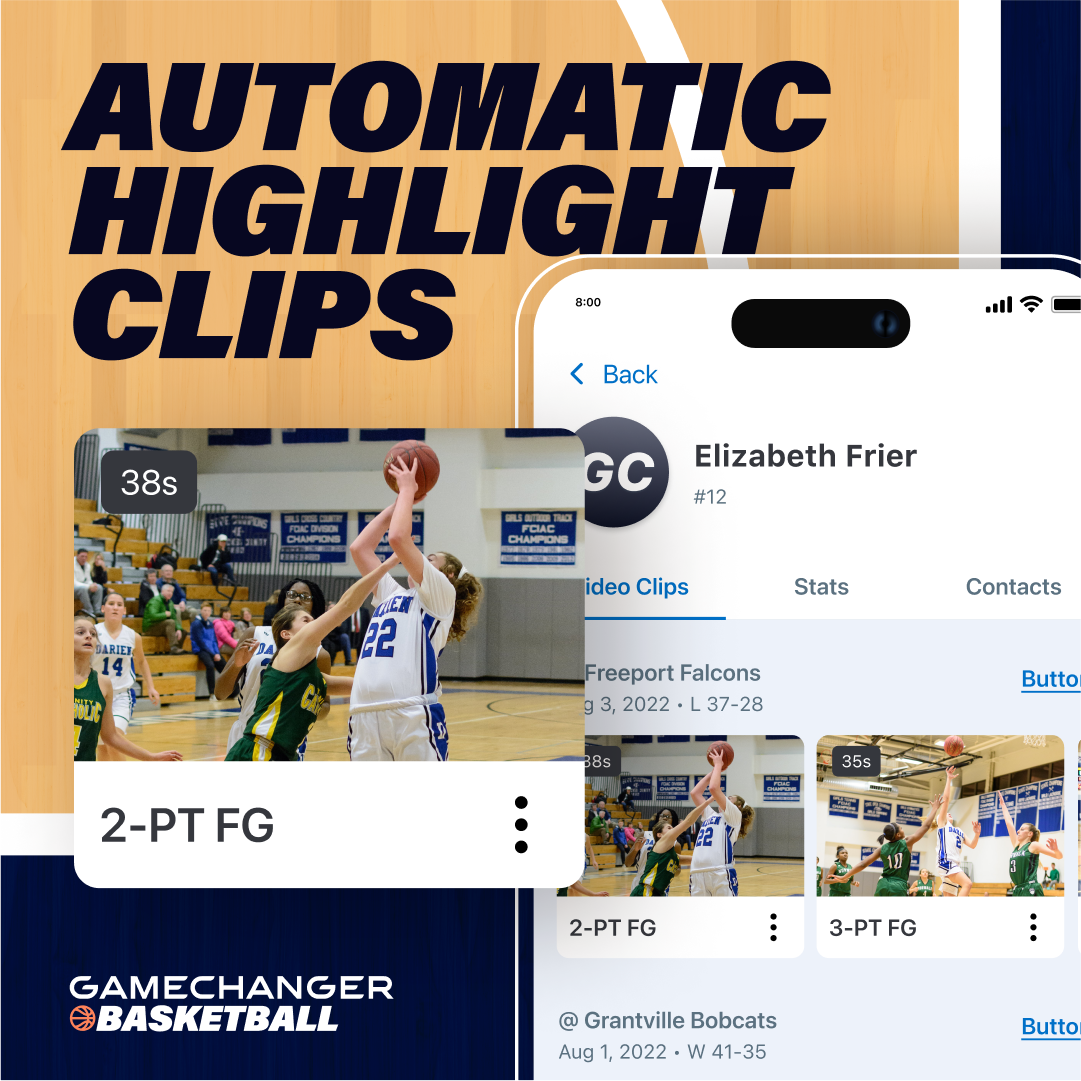
Hey, coach! Want to take your team to the next level this season? Introducing GameChanger, the ultimate game-day assistant with tools to give you a winning advantage. With GameChanger, you can track stats, keep score, and even live stream games, all for free! Get the stats and crucial game video you need to lead your team to victory, all from the palm of your hand. Coach smarter this season with GameChanger. Download GameChanger today on iOS or Android and make this season one to remember. GameChanger. Stream. Score. Connect. Learn more at GC.com/HoopHeads
THANKS, MATT & ZAC SNYDER
If you enjoyed this episode with Brad Cooper let them know by clicking on the link below and thanking them via Twitter.
Click here to thank Matt & Zac Snyder via Twitter
Click here to let Mike & Jason know about your number one takeaway from this episode!
And if you want us to answer your questions on one of our upcoming weekly NBA episodes, drop us a line at [email protected].
TRANSCRIPT FOR MATT & ZAC SNYDER – HOSTS OF D3 DATACAST – EPISODE 1072
[00:00:00] Mike Klinzing: Hello and welcome to the Hoop Head Podcast. It’s Mike Klinzing here with my co-host Jason Sunkle tonight, and we are pleased to welcome in from D3 Datacast, Matt Snyder and Zac Snyder. Matt and Zac, welcome to the Hoop Heads Pod.
[00:00:16] Matt Snyder: Thanks for having us on.
[00:00:19] Zac Snyder: Yeah. Thanks. It’s great to be with you.
[00:00:20] Mike Klinzing: We are excited to have you guys on, looking forward to diving into all things D3 basketball and getting a little bit of.
Background on how you guys got together, how you put together the website, the show, all the great things that you guys have going, let’s start Matt with you. Tell me a little bit about your background and how you’ve made your way into this niche world of D3 basketball.
[00:00:44] Matt Snyder: Yeah, well, it starts with my love of division three basketball, which began as a student at Calvin College.
Now Calvin University, which is a division three basketball school. And when I visited the school as a prospective student going to attend games with my older brother, Zach, who is already at the school. And that was a way for us to connect as brothers as students. And that was kind of the big sport.
Men’s basketball was the big sport on campus when we were attending school. So following them, they made tournament runs, made final four runs. You, you find it’s a small world division three basketball, but I think it’s an exciting world and I just got hooked. I think Zach got hooked and it was a way that we could stay connected over sports and, and our alma mater.
And that’s how we got initially connected into division three basketball as kids.
[00:01:30] Mike Klinzing: Were you guys fans of division three basketball? Cause when I think of a kid who’s. Eight, nine, 10 years old, right? I don’t think of a kid who’s watching division three basketball, unless maybe you’re growing up in a college town where you see that all the time.
So Zach, how’s that compare for you? Were you sort of the same way where you guys looking at division three basketball or was it not till you kind of got to college that the love of it kind of took over?
[00:01:58] Zac Snyder: Yeah, it really wasn’t until we got to college. We grew up primarily in the Metro Detroit area. So we, we grew up big sports fans, but.
it was watching the Pistons and the Red Wings and the Lions and the Tigers and in the family, we primarily were Michigan Wolverines fans. So when I was watching
[00:02:16] Jason Sunkle: yeah,
[00:02:21] Zac Snyder: that’s still a little bit of a sore spot, but he turned out to be, he turned out to be pretty good, so ended a little bit of a Pistons run there and he kind of took over, but yeah.
So yeah, we were really not like growing up. We were certainly sports fans, but it was about pro and, and major college. And it wasn’t until we were students at, at an institution that played at the division three level that I think that we really were aware of. Kind of what’s going on there.
And, and to be honest, part of it was just like, this is our school. So this is our team and, and really diving in just as, as sports fans. So it’s like, it felt natural then this is our school. So we’re going to support the teams here. And, and we ended up having a lot of fun with it.
[00:03:06] Mike Klinzing: What did you guys get hooked on in terms of Calvin basketball?
Was it the basketball itself? Was it the style of play? Was it the atmosphere? Was it just as you said, Hey, this is our school. This is our team. We’re going to support. How did the, how did the love for, for Calvin basketball really start to develop for you guys?
[00:03:27] Matt Snyder: Well, it’s always been a good team. That’s something we found out in the mid two thousands when we were students there.
20 years ago, there was still, there was a lot of student support. I think that’s something that’s maybe waned a little bit across all levels of basketball, but there was, you could have kind of that crazy, almost division one atmosphere in a student section. And then, and then follow the teams in trips to Chicago for the tournament and trips to Virginia for the final four.
So it was that whole experience. As Zach said, learning the division three level, learning the landscape, Hey, there’s teams in Minnesota, there’s teams in Virginia, there’s teams in Mississippi, and just learning that whole thing and finding it’s a whole. It’s a whole world. We just knew the Division one world just from following it on ESPN and the like.
But to find out that there’s, there’s pretty much the exact same thing happening at division three level. And it’s exciting. And it was our school, I think that’s what got it hooked. And it, and it turned out Calvin was playing at a high level then and even now. And it was just so fun to follow a team at D three that could compete with the other, best of the best in the D three level around the country.
[00:04:25] Mike Klinzing: Zach, same for you.
[00:04:28] Zac Snyder: Yeah as Matt said, like Kelvin was playing really well continues, it has been a one of the historical powers, the division three level in 2000, they won the division three national championship, the second in school history. So that was a couple of years before I got on campus, but.
really like what, what Matt was, was talking about and sort of the formative experience for us is during that time where we were on campus, my junior year, his freshman year, Calvin made another run to a final four and just being able to follow him along the way it was, it was more than just showing up on a Saturday afternoon at the field house and having a good time at a basketball game, but really having our eyes open to, okay who else could we be facing in a bracket who, who else is good around the country.
And. this wasn’t like the dark ages. We had the internet and d3hoops. com was doing their thing. So to some extent there were, there were resources available to get a little bit of context, but it wasn’t like today where you have all of these game streams available to you and you could really see teams for yourself.
It was mostly in those days at most you were getting like a, an internet radio broadcast. And it was just like seeing what the top 25 would be that week and, and whoever d3hoops. com happened to be writing about or whatever blurbs they were, they were putting out, like that was about as much access as there was to what was going on outside of what you might see showing up to whatever gym or arena you were going to for your school or, or anyone that you would be able to travel to nearby.
[00:06:01] Mike Klinzing: Would you say Zach that you guys started to look for that kind of stuff in terms of the detailed information about not just Calvin, but other teams? Was that something that you wanted to look for right away? Or was it more just starts out as we’re just fans of the team. We like going to the game. When does it, when does it become more where you’re looking for a deeper dive into Not just Calvin basketball, but D three basketball.
Was that something that happened right away or was that more as you became more versed in the division three world, maybe even after graduation?
[00:06:38] Zac Snyder: Yeah, I think, I think at a deeper level, it was probably later on. when you’re removed from the immediacy of, okay, we’ve got this tournament run. And so this group of teams are in the same part of the bracket.
I, I think it was really later on that we, we both post graduation so this was kind of like, the late aughts into, into the 2010s, you think about what was going on online and you started to see like a rise of like sports blogging and that kind of thing really becoming popular on the internet.
And so that’s something we had just being big sports fans. Like that was something we were able to get into. And I think at that time is maybe when Matt started looking at, some of like the team ratings and things, but I recall maybe like even 15 years ago, we were starting to dive into, okay, like what, what is the information that the men’s basketball committee is looking at when they’re making at large selections and doing regional rankings and whatever the various like kind of national level processes were.
And so I recall at that time is when we started doing some of our own mock bracketing and in mock selections and that type of thing and so it kind of came out of that interest of kind of the rise of of Internet content in general and just we were, it kind of hit a bunch of.
the timing of that, but, but also our interest of, of the game, our interest of data and information. We both we talked about being students at Calvin. We both graduated there with engineering degrees. So very kind of data binded. And so I don’t know, maybe it was just kind of right place, right time, a little bit of a perfect storm situation, but from there it grew and here we are today.
[00:08:18] Mike Klinzing: Oh, Matt, would you say at first that for you guys, it was for your own use, or did you see it right from the start as something that, Hey, we can sort of jump into this blogosphere into this. Area where maybe there are other people that are out there like us that have an interest, or was it more just for you and Zach to kind of be able to talk back and forth and debate things amongst yourself?
[00:08:42] Matt Snyder: I think a little bit of a combination. It was definitely for my own interest in my own use. I just like, I like numbers. I’ve always kind of approached sports with, with a numbers perspective being in engineering Zach and I can’t run a pick and roll, but we can run a spreadsheet. So that’s kind of what we do.
But it was also, I think. As a little bit of a benefit to the community, Division 3 basketball especially is more of a niche community. Zach mentioned d3hoops. com being a resource that’s been out there for 20 plus years. They also have the message boards, D3 boards, and we were active posters. And different people would, would share information or whatever they could gather.
So when I started calculating strengths of schedules and things like that. It was kind of initially as something that I could post on the message boards that might be helpful. To, to other people, there was a gentleman on there, I think he was from Washington University or something like that, that would post RPI numbers for Division 3 and start predicting regional ranking data, and I thought that was the coolest thing ever.
And then I think he actually unfortunately passed away on like an untimely fashion and I kind of was like, this is maybe something that I could do. I know how to find numbers and calculate information. So I started doing that and posting that on the message board, not necessarily looking for to make a name for myself in D3 blogging.
But it was, it was, it kind of grew into that as the information. Turned out to be maybe correct, something that could be pursued and then maybe was a little bit predictive too.
[00:10:05] Mike Klinzing: How long did it take before you guys started getting feedback as you put stuff out there that maybe wasn’t available publicly before?
And you guys are creating some of this data that nobody, maybe beyond some coaches who were maybe forward thinking, had access to it. When did you guys start to hear back from people out there that were like, Hey, I find this. To be valuable. This is something else I’m interested in. And then obviously that starts sort of the idea of building this D3 basketball community that you guys are now so deeply entrenched in.
How long was it when you were doing this before you started to see that feedback come in?
[00:10:47] Matt Snyder: Yeah, I think for me, I think you’re right. It was probably some, a few coaches looking for either an edge or just looking to see what was out there that maybe latched on to some of the numbers. I did get a few questions over the years of, hey, would it be better to schedule team A or team B?
What would that do to my strength of schedule? A few, a few coaches kind of tapped me as a resource there, which was cool. But we weren’t really pursuing Really an audience for a long time until we ended up starting D3 data cast as a show. We just, we just were, we’re doing it as part of the community, I guess.
So the feedback was, was pretty small. It was just people that were involved in division three message boards or the hashtag D3 hoops on social media. We were kind of Twitter users in the D3 hoop space. And that’s kind of only the really reach that we really looked for. So beyond, I guess my perspective is beyond the people that we kind of already knew in those spaces.
I don’t think we were really reaching a ton of people outside of that box yet. Who was the
[00:11:41] Mike Klinzing: first coach
[00:11:42] Matt Snyder: that reached out to you? Remember man, I’m gonna have to go in my, in my archives. I know, I know Jason Zimmerman from Emory has been corresponding me with me a little bit. He was maybe one of the early adopt adopters of kind of following some of this information or really looking at, Hey, if we want to get in the tournament, we got to make sure our strength, the schedule is up to, is up to par and they plan a great conference.
So he, his name definitely stacks out to me as one that’s been in contact for a, for a while.
[00:12:06] Mike Klinzing: What are some things that in those early days, Zach, that coaches started reaching out for? What were they, what were they looking for? The, those coaches who are kind of the early adopters that are looking for an edge, what were some of the things that you guys might’ve been doing or sharing that coach might’ve been interested in those early days?
[00:12:25] Zac Snyder: Matt might be better to, to answer that one because to be honest, we, so we started the like the YouTube show, the podcast kind of version of the D3 datacast. We’re in our third year now doing that. And, and Matt had been running numbers for a long time and I was kind of removed from that process until he brought up the idea of like starting this, this YouTube show with it.
And I I think that I always like to say, I think that he was half joking when he said it and, and he thought that I was maybe half joking when I, when I said we should pursue it, but, we ended up doing that and I know we, along, along the way, since we’ve done that and, and kind of built out d3datacast.
com is a central spot to host that stuff. I know there’s definitely some coaches out there that check it each day or after every game, cause they’re hoping, or they’re thinking like, Oh, we played really well. I, so they want to see that, that bump up in the rankings and they’re a little bit, maybe disappointed if that doesn’t happen.
So some of it, so I think just validation, they’re looking for validation that they are indeed playing well by the time that it it gets run through the, through the computer and stacked up nationally. I think, I think there’s a, there’s a lot of different reasons that coaches are, are looking for some of that information.
[00:13:36] Mike Klinzing: Matt, how’d you decide and look at Obviously you’re a numbers guy, how do you start to begin to formulate what kind of numbers you want to use? Where do you collect your initial data from? And then just give me the lowdown of how you create some of the things that you create in terms of. The data and you’re looking at the efficiency and looking at the different types of rankings that you put together.
How do you come up with the ideas for that? Are you looking at, well, there’s data that exists for this on other levels of the college game or at the program? And let me see if I can create those, that same. Data for division three, how much of it is original data? Just give me the lowdown on where the numbers come from.
[00:14:24] Matt Snyder: So when it comes to efficiency ratings, that is something that I will admit stealing almost entirely from Ken Pomeroy trying, trying to do a version, right? Not the exact version, but a version of the Ken Palm ratings for division three, which didn’t exist. Cause I thought that was such a cool idea when I thought about tempo free metrics and basketball and efficiency ratings.
And I was reading about that and just thinking like, man, that would be so cool if it existed in division three. And I think what Zach and I have now found over the years in division three is if you want something to exist, then you probably need to go out and make it yourself because no one is out there getting rich off of division three content or, or really even there’s only limited interest in making division three content.
So it was, I was reading the Ken Palm blogs and figuring out what’s going into his metrics and, and how would I start to make those? And so it started for me on those with an Excel spreadsheet. With like 400 web queries getting team schedules and data and, and calculating these formulas.
And, and I kind of still run a version of that when it comes to team efficiency rating. So it’s kind of trying to replicate what I thought was cool in some of the, the D D one discourse and bring it to division three. And, and I mean, it’s been fun to do, but it wasn’t an original idea for sure.
[00:15:35] Mike Klinzing: How long does that process take going through and figuring all that out and looking at the numbers? And try to replicate those formulas. How long does that process take you?
[00:15:45] Matt Snyder: I mean, when I was just starting out to do it, doing it, it was building out the concept over like lunch breaks at work for a few months.
Just working at it here or there for a half hour, an hour, putting things together, seeing does this work? Does it make sense? Do I think I’m doing it right? And then when you get to the point where you have a rating, then the rating can maybe make a prediction and then looking at it, how accurate does this seem to be?
Are, is it, is it getting a result that’s pretty close? Like these, these teams play a five point game or is it going to predict two tight teams are going to play a 20 point game? I don’t know. So it was, I think overall, like two or three months, I kind of had the bones of it done working lunch breaks kind of, kind of thing to put it together for my first iteration of it.
Now I have the bones of a system in place. And updating it daily or, or every for a season. it only takes me a couple hours to get going really.
[00:16:37] Mike Klinzing: Yeah, once you get a system in place, right, it’s a lot easier. I can speak to that for the podcast keeps getting easier and easier. Jason will attest to this that.
When we first started trying to figure out how to do all the things that were required to make it work took quite a bit of time and now the amount of time that it takes to put together an episode compared to what it took when we first started, I can’t even imagine going back and looking at the processes that we used at the beginning in 2018 compared to where we sit right now.
And I’m sure not only in terms of your numbers, but in terms of the YouTube show, I’m sure. The learning curve, once you kind of get your systems in place, it makes things go a lot faster for sure.
Let me ask you, Zach, when, when Matt and you come up with the idea of, Hey, let’s take this, this data set we have, and let’s take this interest that we have in division three basketball. And now we’re going to turn this thing into a YouTube show. What is, what are the iterations that you guys go through?
What do you talk about in terms of what you want it to look like, how you envision it? What are some of the things that you guys batted back and forth in terms of ideas before you sort of settled on what you wanted it to look like? And just like our podcast, as you go along, right, it iterates and there’s things that you think, well, this is going to be a part of what we’re going to do.
And then you’re like, eh, I don’t know that maybe it doesn’t work. And maybe there’s something else that you didn’t originally think about that you end up including. Just tell me a little bit about just the idea generation of where the YouTube show comes from. And then what you guys talked about kind of leading into the first episode.
[00:18:19] Zac Snyder: Yeah, I think that we, we definitely did a lot of brainstorming. I think we did a lot of just kind of looking around at types of podcasts that we listen to and like, and not trying to necessarily replicate or copy any one in particular, but like, what are the things about certain ones that we like? And, and try to implement those things in our show.
One of the things that I think worked well for us is that for, for episodes in season, we kind of have a few segments that we, we hit every week. Right. So we collaborate on a five game slate that we pick against Matt’s computer line just as like a fun pick segment. Matt’s a voter in the d3hoops.
com top 25 poll. So every week we look at what his ballot is for that week and talk through some maybe some of the interesting decisions that he made there. And then we, we usually have some sort of like main topic that is often data driven, whether that be efficiency ratings or in the past with the, the, the regional ranking system that was based on the criteria.
And whether that was just trying to look ahead for later in the season, what those implications might be, or if we were actually in like regional ranking season, putting out shows where we were like predicting them ahead of time. So yeah, it was, it was a little bit of just kind of building out a skeleton for, for helping guide us from week to week.
But other than that, it’s been a lot of just trying to do what we think is interesting and hope that if it’s interesting to us, we can build a little bit of an audience along the way. hopefully something that’s interesting to us. We can connect with, with someone else out there who would also find it interesting.
[00:19:57] Mike Klinzing: The technical side of it beyond the content, what were some of the challenges, Matt, of just putting together the show and figuring out, okay, yeah, we’re going to sit in front of the camera and we’re going to put a mic on here. We’re going to start talking, but what does that actually mean and how do we get it to where it needs to go?
And so just walk me through the tech side of, of putting together a, a YouTube show.
[00:20:19] Matt Snyder: Well, I, yeah, I think the interesting thing is we, we decided to do the show. That was step one. Step two was how do we do a show? So we didn’t, we didn’t know what software to use. Like we did like. A zoom call that we could kind of record, but we didn’t.
So we had to figure out what software do we use? How do we edit the show? How do we splice it together if we need to make any sort of edits or put on like a little intro slide or, or whatever. All that we didn’t know how to do. We had, we had never created internet video content before. We didn’t have equipment.
We’ve now like purchased basic microphones and headphones and kind of things like that, but we didn’t really have much of that to get started with. So it was really just a learning process. We just kind of. Knew we wanted to start doing it. But it was, I mean, all along this whole process for us is, is, is learning how to do the things when you decide you want to do them.
And, and we kind of joke that it’s, if people could see how we’re set up, it’s kind of tin cans and string and tape. And that’s just kind of how our whole show is done. Yeah. But yeah, we didn’t, we didn’t have any background in it. So it was, it was learning on the fly. And, and it was fun cause you learn something new, learn a new skill.
I don’t think we’re still great at it, but it’s, it, it’s, it works for now. So I think that’s good.
[00:21:27] Zac Snyder: Yeah, go ahead, Zach. I was just gonna say, yeah, even this, this we’re coming up on the end here of our third season covering division three basketball on the podcast. And to this day we’re using, I think, hardware that we already own computers that we already owned and a lot of free software.
So it’s not like. It’s not, it’s really not fancy. It’s just, it’s about, I guess that final product and it’s something that it looks a little bit better than, than I don’t know, just, just recording a zoom call or something like that. There’s, there’s some, some basic production value in it, but not much more than that.
[00:22:01] Mike Klinzing: Well, I think what we found and I think you guys are finding the same thing is that there is a limit to how high of quality you need to have in order to be able to produce. A show, a podcast that is pleasing for people to be able to listen to, or to watch now, again, if we were in an ESPN studio and every guest that we had came into the ESPN studio and it was soundproofed and we had beautiful radio sound, would that be nice?
Sure, but like the reality, when you guys have a guest on, or when we have a guest on that guest. More than likely is sitting on their couch, just speaking into their laptop microphone. And so it doesn’t matter how nice of a studio I have. We still have the guest audio that is going to be what it is. And so what we found, and I think this is the philosophy that I’ve gone with, and I’m guessing that you guys sort of have the same, is that I want somebody when they tune into the podcast to not turn it off because the production value.
Makes it hard for them to listen to whether it’s garbled or it’s unclear, or the volume levels are all mixed up or whatever, as long as the person can tune in and they can hear the podcast at the right volume, and it sounds clear to me, that is always been the most important part of it. And yeah, you could spend.
Thousands and thousands and thousands of dollars on equipment. Don’t get me wrong. There’s part of me that wants to do that. And this is, this is my second, this is my second mic. So the original mic that I had, Jason actually still has the original cause we bought two and I upgraded to this one probably, I don’t know, maybe a year ago and I don’t know, does it make a marketable difference to anybody who’s listening to the podcast?
Probably not, but it feels cool. I like having the microphone that I’ll look at. I do still have
[00:24:02] Jason Sunkle: the same microphone. I still use it. I know. That’s what I’m saying in mind.
[00:24:06] Mike Klinzing: I P I’d probably still be using that one. If the cord hadn’t gotten loose, where if you jiggle it, it goes out. So
[00:24:12] Jason Sunkle: here, Mike’s problem was he was always unplugging it and it got, it got it all loose.
Yeah, so I’m, I’m carrying
[00:24:18] Mike Klinzing: it around
[00:24:19] Jason Sunkle: so I can seen record stuff. Mine literally has moved to clean the desk, probably , and that’s about as many times as I’ve touched the microphones. Yeah, you gotta get it set and then don’t
[00:24:29] Mike Klinzing: touch it again, right? Yeah, that is right. That’s the right, my, I, I have a very mobile studio, so I’m in, I’m recording here.
This is my. This is my little weight room exercise room where I don’t have anything besides a blank wall. And then I’ve got my office upstairs where I record usually our NBA episodes, because that’s when everybody is already in bed that we start those. And then I take my microphone to school so I can record intros and that kind of stuff.
So I’m always carrying it around as opposed to just leaving it set, which is probably the better option, I’m sure. But anyway, so I agree with you guys that you just, you get your setup and then you make it work. What did it feel like the first time you guys recorded that first show, how comfortable or uncomfortable were you sitting in front of the camera trying to talk?
[00:25:16] Zac Snyder: I don’t know because I don’t want to go back and watch that one to
[00:25:20] Matt Snyder: be honest with you. I think the good news is we were making a show. I mean, Zach and I have known each other our whole lives, so we’re comfortable with each other. So I think that made the show a little bit natural. We didn’t have to learn someone else.
And it was just the two of us as far as we knew while we were recording. But I’m sure that first episode was terrible. I think the good news is the division three community it was fairly supportive and continues to be. So I think even though that was probably rough episodes with rough microphones and two hosts that didn’t really know what they were doing.
I think that there was interest in what we were doing. And, and all along Zach and I, we took the, the goal of really not taking ourselves in the show too seriously either. So I think, I think that helped people have a positive response to it. We just want, we’re not X’s and O’s, we’re not coaches, we’re not former players.
We can bring the number side of it and we can kind of have fun with division three basketball and talk about a bunch of teams. And so from that, the response was good. So I don’t think we had too many, too many nerves. I mean, there’s always the, what if people hate, hate the show, right? They like, what are these, what are these knuckleheads talking about?
But thankfully we didn’t really get any of that.
[00:26:21] Zac Snyder: And we also have, we also have the benefit of we’ve, we’ve done a few live things, but typically what we’re doing is we’re recording. And so if there’s something that we just totally flub, we do have the benefit of being able to edit out or, or start over, re rerecord.
We try to do as much one take as we, as we can, and we don’t, . Want to spend a lot of time editing because go back to what we talked about before, right? It’s not the goal isn’t like super high production value. We, we want to make things easy on ourselves, but we want a good enough finished product.
And I think typically now with a bit of experience, we’re a little bit better getting that out.
[00:26:55] Mike Klinzing: Yeah. You don’t have to be perfect. That’s I think the most important thing. And you realize too, I’m sure you guys felt this. After you did some episodes and you put them out there and then you start listening or watching other things that people put out, you watch it with a different eye in terms of, Oh, look at they’re doing that.
Or while listening to this podcast and I can hear their dog barking in the background, or there’s their kid coming in and opening up the door and talking to them during the podcast. And you just realize that it doesn’t have to be perfect. And that ultimately, I think what people appreciate is. The authenticity of what it is that you’re doing and the passion of what you’re doing.
And to me, that’s always been the most important part of it is, are, are people connecting with you? And I, I, I tell this story a couple of times on the podcast that really my interest in, in starting a pod, I used to go and drive. So my son who’s now a freshman in college, so whatever, he’s 19 years old, but when he was in like whatever, third, fourth, fifth grade, he and I would get in the car and we would drive to these AAU tournaments.
And we would drive to these AAU tournaments. We would listen to the hardwood hustle with Alan Stein and through a long, strange series of events, I ended up getting connected to Alan Stein and he actually became the first guest because our podcast was originally going to be a youth basketball parenting podcast where we were going to talk with about issues that people might face trying to get their kids through the travel basketball world and grassroots and all that kind of stuff.
And eventually it morphed. through a series of events. But anyway, I had Alan Stein on the podcast and he was somebody who I had probably listened to 75 or a hundred episodes of Alan Stein in the car with my son. So I felt like I knew him, like he would talk about his kids or whatever. And then when I met him that I actually did my first episode with him in person.
And so when I met Alan, I felt like I knew him. And he had no idea who I was other than our conversation for the, for the podcast. And so it’s kind of interesting that I think when you start talking about people watching you guys. On YouTube or listening to us, it’s always amazing to me. And again, it’s a very, very low level of celebrity.
Don’t get me wrong, but it’s funny that people will say, man, I’ve been listening to you, or I remember you talking about your son when he was in seventh grade and now he’s in college or whatever, those kinds of things are kind of funny. And it makes you, it makes you remember that. The, the humanity of what you’re doing, people aren’t looking for perfect.
They’re looking for you to be authentic and to be sharing something that you’re passionate about, which is, I think what comes across with you guys really, really well. We just
[00:29:40] Matt Snyder: had a moment earlier this, this season, Zach and I were at a basketball game and. At, at the end of the game, we were standing around talking to a couple of people and a woman walks by and stopped, looked at both of us and said, I was just watching you guys earlier today, and that was one of our first, like, someone was watching our show and now they’re seeing us in real life for the first time, kind of a things, that was just kind of a funny moment.
[00:30:03] Mike Klinzing: Yeah, that stuff’s funny. Zach, did you have something to add to that? Yeah,
[00:30:05] Zac Snyder: I, I, I just want to say like, like we talked about our background, we are coming to the end of this as, as Kelvin basketball fans, right? Like we want to have. A, a nationally focused division three basketball podcast at the division three level, everyone is coming into it with some sort of connection at an institutional level.
More so than just like, Hey, I live in Michigan and Michigan or Michigan state is like the big team. So I, I, I watched them follow them, whatever. Right. It’s, it’s usually because I went to this school, I work at this school, something like that. Right. So we always try to strike that balance. Like we want to be able to put on a show that we can talk credibly about any team, but we’re also coming at this.
Like. Fully admitting. Yeah, we’re Calvin fans. We’re do it. We, we want Calvin to do well, right? So it’s kind of that balance where recognizing Everyone in our audience is going to have that, that team that they are specifically a fan of, and they’re looking for a wider context. Right. And so even as the hosts, we’re doing that, we’re engaging in that wider context, but like we’re tuned in that Calvin game every time they’re playing, I don’t care what other games going on number one could be playing number two, but if that game’s going on at at the same time as the Calvin game, we’re tuned into the Calvin game.
Right.
[00:31:25] Mike Klinzing: So to go along with that part of it, Matt, when you are. A voter in the top 25 and you hear this right in any area where there are voters, whether it’s college football division, one college basketball division, one, when you think about NBA awards, where guys are voting and you always hear, well, how many games of this particular team or this particular player has that voter So how can they possibly know that team 16 is better than team 18 or whatever it might be?
So for you to be able to feel confident in what you’re doing and putting together your weekly poll that you’re voting on and that you’re putting out there for public consumption, how many games or pieces of games do you try to watch? What’s your process for gaining an understanding of those teams?
Beyond the numbers that you’re crunching, actually watching games, how much time are you spending in doing that to be able to feel like you’re credibly putting out there what you need to?
[00:32:28] Matt Snyder: It for, for me, it’s definitely more pieces of games than full games. And that’s just a way to get through. To see more teams, right?
So watch the first 10 minutes of this game and switch over to the second half of another game. I don’t watch division one basketball anymore. I, I, I watched division three basketball. So people are going to be talking about who’s this, these teams in the final four or the brackets are going to be coming out for D one in the next week or so.
And I’m going to be learning about those teams for the first time then, but that’s replaced all of my division one basketball, like these last four years or so. Because I used to watch a bunch, but it’s, it’s, it’s Tuesday nights, Wednesday nights, Thursday nights, I’ll tune into a few games as I can but also look, there’s.
Over 400 teams in division three basketball. So, so realistically, I’m not going to see everyone in a seat. I’m probably not going to see most teams in a season. So you try to get the list of, Hey, these are 30, 40, even 50 teams that I’m going to want to tune into and then try to catch as many, as many games here or there, but on any given week I’m only going to touch a small fraction of those, of those those teams.
So I try to do what I can, but I also admit that no, I can’t. I can’t see everyone or see everyone all the time. And sometimes you get the impression of like, I had a chance just to attend a game at university of Chicago because I happened to be in the, in the city this year and I saw them. And I think that was probably a game that was maybe one of their weakest games of the season, but that’s the one I happened to see the whole game of in person.
And sometimes that’s just kind of what happens is you tune in for a game. You’re hoping to see a team. And it was like one of their worst 10 minute stretches, but that’s your impression of them now until you can tune into them the next time. So I try to be cognizant of that. I try to tune into as many segments of games as possible, but yeah, I think it’s, I think it’s a true fact of any best, any sports voter or awards voter.
You can only see so much of the season. And I think especially true in division three basketball with over 400 teams. And again, not on broadcast networks, you got to tune in to streams and you’re limited to what’s the quality of the stream available for that game. So yeah, you do what you can, but I will also admit it’s, it’s only going to be sections here or there.
And the teams I’ve watched the most through a season, it’s probably 10 times. 10 would be an awful lot actually but, but do what you can and, and also admit that you’re not perfect. You
[00:34:43] Jason Sunkle: also forgot to mention you’re subject to whatever, whoever’s announcing the game too, right? Yes. Cause, cause that can be very questionable.
I’ve watched CG3 games on streams and I’m like, oh man and it’s no, sometimes it’s kids and sometimes it’s adults who are just. trying to live the glory days of, of broadcasting and it’s like, okay, guys, I think you, this is not your calling. No offense guys. I know offense. I mean, this isn’t your calling.
You get a student.
[00:35:11] Matt Snyder: Student broadcasts who are very professional and really great. You get student broadcasts who you can tell they rolled up five minutes before the game. This is the first they’re seeing the roster. They don’t even know half their own players. They don’t know how to pronounce names. And they don’t know how to pronounce any names.
So you get the whole range. They start cheating. You also get an awful lot of just like webcams with no, with no audio whatsoever. So it’s, you get the whole gamut in division three.
[00:35:35] Mike Klinzing: So I was listening to. One of our games at Ohio Wesleyan that I couldn’t make it to the game and I didn’t tune in at the beginning.
So I don’t know who the two guys were that were announcing the game. It was not the regular crew that announces the games from their discussion. At some point, I got the impression that it was two former players at Ohio Wesleyan. And at some point they started talking. They’re like. Hey, our national championship banner.
So I think they both played or at least one of them played on the national championship team in 1988. And they’re like, when we played, when we were here, I remember there being a big, huge banner in the gym. Where, where is that? Where’s that banner? Now they only have this little tiny banner and they’re like pointing they’re like pointing at it.
they’re, they’re talking about it. Where’s the banner? Where’s the banner? And then. My son at some point, I can’t remember if it was right before that or right after that, that he told me that he was wandering around in the gym and there was some storage closet that was open. And he saw or found the banner that those guys were talking about.
The giant 1988 National Championship banner. I’m like, man, you should have taken that and put it up in your dorm room. It’d be kind of cool to have the, have the national championship banner hanging up in your dorm room. He didn’t, he didn’t do that, but I thought it was funny that here’s these two guys on the game.
And again, I didn’t see the beginning, so I don’t know who they were, but they’re just talking about, yeah, I remember when the banner was up here, it was huge. And now they just have this little tiny one. So yeah, you definitely run the gamut of, of watching, but it is nice, right? That there’s live stream. I mean, it’s almost impossible to, to find a school at the division three level that or league.
That isn’t live streaming the games, which for what you guys do or for the fans or for the parents of players, whatever, to be able to have that as a resource. Tremendous. You think about what you guys would have to try to do in the era pre streaming. I mean, that’s, you’re talking about almost an impossible, almost an impossible task.
All right. So when you think about just what you guys are talking about in terms of the numbers, and you mentioned that. You don’t talk a lot of X’s and O’s and that’s one of the same things that I think we found on the podcast, especially because most of what we end up doing is audio. We put out very little video because at least I am always, I’m probably not the right demographic in that I, I’m not sure I watch, I listen so much to podcasts and I don’t necessarily watch podcasts.
And so I think X’s and O’s is something that’s really difficult to do. And first of all, it’s almost impossible in an audio format. And I think even. On a YouTube show, now you’re talking about the level of technical expertise that you have to have to be able to splice and share screens and do all the things that are necessary.
I can see where talking X’s and O’s is, is a challenge. So instead you guys get to talk numbers. What, when you talk to coaches, what are the numbers that coaches are most interested in? And then what are the numbers that you guys find are the most predictive of team success?
[00:38:47] Matt Snyder: I think, and Zach, you can correct me if I’m wrong.
I think what coaches are mostly interested in is how are we looking to get into the tournament this year? That’s exactly what They just want to know, are they going to get in?
[00:38:58] Jason Sunkle: Yeah.
[00:38:58] Matt Snyder: And, and this year division three went to a new selection process where they have a new number called NPI. And we were able to kind of recreate those calculations and then also do like a forward looking like simulated out version of where your NPI might end up.
So where is it now and where is it going? And coaches were really interested in that kind of a number. So we, we heard from a coach in a conference, actually two coaches of a co in a conference who were pretty close to tying for their conference lead. And NPI was going to be the tiebreaker in this conference.
So we heard from both coaching staffs before the final game, when these two teams were going to meet. Hey, if this team wins and we’re tied, who’s going to have the NPI tiebreaker. So they each wanted us to run different sim simulations and, and, and predict who would have the tiebreaker. So it’s those kinds of things that we hear from coaches.
That’s what they really want to know. I don’t think we hear a whole lot from coaches really about very much like what are the team strength ratings or the efficiency ratings where they fall. I think they’re more just interested in that, but they don’t it doesn’t really affect them very much.
They know they just have to go out and win the games. But the, the NPI part of it, the tournament selection metrics, that’s very much germane to what they’re thinking about, what they need to tell the teams of. If we, if we lose this championship game, are we still in the tournament or are we out? So I think that’s mostly what we hear from coaches as far as like what they’re interested in or what they’re checking on us every day.
[00:40:16] Mike Klinzing: All right. So tell me, what are the factors as you dove into NPI? What are the things that go into that final number that you guys have been able to discern? So
[00:40:27] Matt Snyder: NPI looks at a team’s winning percentage. It does a strength of schedule factor. So your opponents, each opponent’s NPI goes into your calculation.
And then it gives a quality win bonus based on if, if. your opponent that you beat is above a certain threshold. So once they give above a certain NPI threshold, they start to give a quality win bonus. So that gives you so it’s, did you win? Who did you beat? And if you beat a really good team, you get a bonus.
So that kind of what goes into it. NPI is also kind of unique in that you, you can’t calculate all of those things directly because each team’s output, each team’s number out goes in as inputs to every other teams. So, so that, That calculation has to iterate until it all stabilizes. So that’s kind of the trick we learned about NPI was you have to figure out kind of how that iteration works and then be able to run enough computer program to, to, to do like a hundred iterations.
So that finally settles out before you can get each team’s NPI number.
[00:41:26] Mike Klinzing: What does that look like for you guys trying to figure that out and calculate it? What, what, what are you guys doing to make that happen?
[00:41:33] Matt Snyder: I had always previously run numbers in Microsoft Excel. And I found out that wasn’t really going to be a good solution for NPI.
So I learned how to code in Python to do this. And, and I had no experience. So probably someone who did have experience coding could have done this very fast, but I had to learn from. April and this was off and on, but in my free time between April and I don’t know when I was finally confident in exact like August or September that I could actually
[00:41:59] Jason Sunkle: July.
Yeah, yeah,
[00:42:00] Matt Snyder: so it took me a few months just to learn how to code make sure I was coding NPI correctly and then I started with a fall sport with football calculating NPI and I felt confident that I was getting it correct. Then I can apply it to basketball in the winter this year.
[00:42:16] Mike Klinzing: Yeah. To be able to go through, first of all, just to run the numbers that, as you said, to feel like are the numbers saying what they’re supposed to say and try to get some validation that that was the case.
I’m sure it was a little nerve wracking after you spent all the time trying to learn how to code and then actually looking at the numbers.
[00:42:33] Jason Sunkle: When it, when it came down to it, how accurate are you on through that throughout the season?
[00:42:38] Matt Snyder: Pretty, pretty, I mean, pretty good. If I have the correct data set, which is its own challenge, then I get the numbers to match.
That was a little bit easier in football because they have a very basic home and away multiplier. In men’s basketball, they made things a little bit more challenging where they, they have a multiplier for home games and road games, but then that multiplier was different if it was conference or non conference.
So now all of a sudden it was very important for me to have all of the games in the dataset to make sure I knew exactly which location or neutral site all those games were played, and whether it was a conference game or a non conference game, which is challenging when some teams from conferences schedule a conference mate in a non conference game.
And you have to know like what is being counted as a conference schedule or not. So I think most of our differences were in the data set that I pulled in and I used Massey ratings has a really actually convenient for basketball, a data set to pull in, which was really nice. But there was also some like self validation that we had to do.
Zach and I actually spent a long, long time in the kind of pre basketball season, combing through team schedules and finding those. Like conference mates playing non conference games, the oddities, yeah, yeah, because those are the things that are going to throw you off is these like really random one offs.
So that was one of the biggest challenges with making sure that our data set was accurate and cleaned up and that it wouldn’t like change week to week.
[00:43:57] Zac Snyder: Because one of the things that we, one of the things we find is that in conferences that don’t play a double round robin, a lot of times you will have rivalry games.
Where one is accounted for in the conference season. And since they don’t have that double round Robin, they will choose to play that the other game at the other location, but then that becomes a non conference game. So the, the way that as Matt explained with, with NPI, how the men’s basketball committee decided to tune those dial settings that they, they had choices to make on they were weighted differently because one was a conference game and one was a non conference game.
So, yeah, we had to go through and make sure that we had all of those. And there was there’s rivalries in the Northeast with the NESCAC schools that they play a single round Robin conference schedule, but like Amherst is going to play Williams twice. They’re going to play Wesleyan twice and then the ODAC where they play everyone basically a time and a half where you play everyone.
What, three times over two years, right? So I think this year was a year Randolph Macon and Hampton Sydney were only scheduled to meet once. So they’ve got the non conference version to kind of play both sides of that rivalry earlier in the season.
[00:45:03] Mike Klinzing: It’s funny, just again, the quirks in the schedule.
And as you said, when you look at that and you’re not crunching the data, you’re like, Oh, that’s interesting. And then for you guys, it’s like, Oh, that’s not really that interesting. Oh, you have to go through it, find all those games and get all that together. When you guys are looking at the numbers for you and to boost your knowledge of what you think is going to happen on the court and be predictive, what are some numbers that you guys have found to be predictive in a head to head matchup?
Are defensive metrics more important? Offensive metrics more important? What, what are some of the things that when you guys look at a head to head matchup are, are telling in terms of who may or may not win that game?
[00:45:48] Matt Snyder: Yeah, I always find it’s funny because sometimes I think I’ve really locked it in you look at like offensive rebounding rate like this.
Oh, this, this, this is a really bad rebounding matchup. And sometimes it plays out. So you’re like, you feel like a genius because you’ve, you’ve, you’ve dialed it in. Other, other times it doesn’t go the way you think it is. So I haven’t really found for, for division three basketball that like I can really key in on a defensive efficiency metric versus an offense or vice versa, or, or something like turnover rate.
Yeah. to be particularly predictive in and of itself. I’ve opted to take a little bit more of a holistic approach. And instead of keying in on like individual metrics just for myself, I, I really do take kind of more of a overall, like offensive efficiency versus the defensive efficiency and then get my view that way.
And then just to see like how, how close of a game do I think this is going to be? Rather than finding one or two key metrics that I find to be more predictive than the others. All
[00:46:46] Mike Klinzing: right. When we’re not talking just numbers, when we’re just talking about aesthetically, what are some teams that you guys like to watch?
Obviously Calvin’s one of them. So we’ll, we’ll, we’ll put the, we’ll put that aside, but yes. Yeah. I mean, aesthetically, they always
[00:47:02] Zac Snyder: look great. The moon and gold
[00:47:04] Matt Snyder: always looks great. I don’t know if it’s always the most aesthetically pleasing style, but I always I found myself liking to watch teams that play hard on defense, teams that can move their feet really well and keep opposing dribblers in front of them or keep them out of the middle or whatever they’re trying to do on, on defense, I really I just like to see players work hard and you can see them really work hard on defense and it’s, it, sometimes it can make a game a grind if teams are kind of both playing that way but I’ve, I find I can really see that that’s when I know a team is, is both playing hard and playing together as a unit, depending on how they’re working on the defensive end.
[00:47:40] Zac Snyder: Yeah, I think I’ll just point out maybe kind of in a similar vein, but maybe more specifically Redlands out in California is a team that’s fun to watch because they’re not like one of these teams running the system like a Grinnell, but they are one of the faster paced teams in Division 3.
And A lot of it is just because of the pressure that they put on you right from the inbounds out of, out of bounds coming up the floor, like they’re just going to contest everything. They’re going to try to deny everything, make everything that you’re trying to do difficult, right? So just like bringing the ball up the floor is going to be difficult.
There are a lot of fun to watch causing, causing turnovers. And shout out to coach Eric Bridgeland out there. I think he’s got a great culture going because those guys, like they, they just have fun. You can, it comes through even on like watching on a stream, like the kind of joy they play with.
They have fun doing what they’re doing. And so just even beyond what they’re trying to do, just seeing them have a good time doing what their coaching staff is asking them to do is kind of pretty cool to see.
[00:48:42] Mike Klinzing: One of the things that I’ve found that I watched a lot this year when I wasn’t at games.
In person was just watching the benches of different teams is just watching how engaged the benches are. And it’s amazing the differences on some teams between the team where the bench is up on every positive play. And you could tell that the kids who aren’t maybe getting as many minutes are excited.
And then there’s other teams where maybe half the guys are standing up or maybe a couple guys are standing up begrudgingly slapping and. You see to your point, Zach, about a program where guys are having fun and you can definitely see that when you look at not just the guys on the floor, but when you also look at how engaged the benches are, I always find that to be interesting.
I think it’s probably an underrated part of having a great program because either those guys are your important bench guys that are going to come in and play or they’re guys that maybe are sitting now, but in another year or two, they’re going to become your guys that are going to be out on the floor for you.
And I just think that that the, the bench culture for lack of a better way of saying it to me is always something that I find to be interesting and I really found myself watching it again, because just on the stream, it’s something that I think you tend to notice more again, when you’re talking about, you’re not paying as much attention necessarily to the announcing team, like we talked about, and I’m watching the game and getting to know the teams that we’re playing against or whatever, and then you get to see their benches.
And I just found that to be really fascinating this year, for sure.
[00:50:14] Matt Snyder: I, I actually noticed that in an opening round Division 3 game there was a team playing, and I saw their bench, I happen to know this, it wasn’t, it wasn’t Calvin, but it was a team that I know quite well, and there was a senior on the bench who, for whatever circumstance, doesn’t get a ton of playing time, but I noticed him being really engaged off the bench I think kind of coming in and out of the locker room through halftime or whatever.
And I think that’s probably a really good model for that program to have a senior who’s not getting on the floor very much and yet being engaged through the process, through the game and showing the younger kids like, Hey, this, you can be a big part of this program, even if you’re not seeing the court right now.
And I think that shows, like you said, the healthy programs, the big culture of a program when you can get an upperclassmen not seeing the floor and still having a great time out there supporting the teammates.
[00:51:03] Mike Klinzing: Absolutely. In the last three years, since you guys have been doing the pod, who have been your favorite players to watch?
Maybe you can throw out one or two names of guys that you’ve watched that you really have enjoyed watching and maybe what you’ve liked about their game. What’s made it enjoyable for you to be able to see them play. Zach,
[00:51:22] Zac Snyder: why don’t we start with you? All right. Well, I’ll, I’ll start right with one of our guys from Calvin here.
And that’s he just finished his grad year, Uchenna Egekeza. He’s man, he, he’s been fun to watch now. fortunately we got him for the fifth year being able to watch him for five years with that COVID year. He’s just a guy who he was raw coming in. You could see that he was athletic, but like he couldn’t, he couldn’t hit a free throw his, his freshman year, but it was just like every single year he got better.
Something added to his game. Like he started making, making the free throws and the next year it’s like a little bit of a jump shot. And then he added the three point shot. And so you could just see that steady progression on the offensive end, but it’s really the way that he is like 100 percent on both ends of the floor.
His, his role was always that lockdown defenders and just to see, to see him develop and have to give like full effort on both ends of the court is just a lot of fun to watch. there’s, there’s a lot of gifted scorers and they’re, and they’re fun to watch maybe on one end of the court, but.
They get the benefit of maybe being able to, to, to, to take it easy, take an easier assignment on the other end. He’s one of those guys that’s always been guarding the toughest guy. And even in all of that really turned himself into a really good and an efficient offensive player league MVP and and defensive player of the year this past year.
So he’s just been certainly this year, but just a lot of fun to watch, like what he was and then what he. It turned out to be five years later.
[00:52:57] Matt Snyder: Yeah, for me Zach, some of the guys that you’ve highlighted on D3 Dunks. We’ve used our, our platform on Twitter and YouTube to kind of show some of the athleticism that is out there in division three.
So some guys that are multiple time offenders on D3 dunks, like Jair Knight from Emory or Christian Green from Trinity or Owen Varnado from Calvin. I think those kinds of guys who can show you that athleticism kind of surprising how explosive they can be in getting up for a dunk. That’s just fun to see.
You don’t always see it at the division three level, so it’s been fun to highlight some of those guys as well.
[00:53:27] Mike Klinzing: Well, that is cool. I gotta admit, I’ve checked out on Twitter a couple of times. Scrolling through and being like, oh, look at those D three, D three dunks. I, I like, I like seeing those and it is Kyle of, yeah, I got to
[00:53:36] Jason Sunkle: see Mike’s kid to throw some dunks down.
Mike.
[00:53:40] Mike Klinzing: Yeah. Warmups. Yeah, warmups. He’s
[00:53:41] Jason Sunkle: getting a lot of, he’s nice. He’s getting
[00:53:42] Mike Klinzing: a lot of, he’s getting, he’s getting a lot of warmup dunks, so hopefully we’ll have some dunks. He send me some videos. Him
[00:53:47] Jason Sunkle: dunking
[00:53:48] Mike Klinzing: warmups. There you go. And real games. You gotta, you gotta latch onto what you can latch onto in, in in your freshman, in your freshman year.
So hopefully we’ll see some more on the floor as we, as we move forward. But I think one of the things for me that’s been interesting is. Growing up again, I wasn’t necessarily that familiar with division three basketball. And then when it came time for Me to make a decision about college basketball. I was pretty heavily recruited by division threes here in Ohio.
And I always felt like I was a division one player. You weren’t going to see me on division three dunks on division one dunks on playground dunks. You weren’t, you weren’t going to see me anywhere. Near any of, any of those types of highlights. Sneaky athletic
[00:54:27] Jason Sunkle: basketball players. Sneaky
[00:54:31] Mike Klinzing: athletic meant that I was skilled and I could kind of get to where I wanted to go.
It didn’t mean I was really truly athletic, but anyway, it’s so my familiarity with division three growing up and then even through my adult years was pretty low. And then as I got into the podcast and had an opportunity to interview division three coaches and kind of get to pick their brains and see.
What they, what they were all about and how, how well they knew the game and taught the game. And then with my son playing, and again, I came to the realization pretty early on that if he was going to play college basketball, that he was probably going to be a division three player. And so that started to get me to pay more attention to what was going on in the D3 game.
And I laughed, Matt, when you were talking about, I don’t really know much about the Division I basketball anymore because I look at it as a kid. I knew, I mean, I could name a hundred college basketball players and I knew the starting lineups for so many teams. And when it came time for the NCAA tournament, I could actually make a pick intelligently based on my own experience and actually knowing the teams.
Division. Now, if you told me, well, who’s the all America team in division one this year, I couldn’t tell you, but if you ask me some questions about division three, I would be much more knowledgeable because again, it’s just where I’ve kind of found my interest over the last couple of years, up until probably three years ago, I don’t think I had ever looked at a division three NCAA bracket in my entire life.
And this year I’ve spent way more time looking at it. It’s just. Again, division three basketball, and this goes back to the point that you guys were making about sharing the, sharing the D three dunks is that when you get a chance to watch division three basketball, you just come to appreciate, I think the skill level of the players that are out on the floor.
And you also come to realize that a guy that has sort of that division one athleticism really does stand out because there just isn’t that many guys at the division three level that have it. And yet at the same time, you look at the skill level and the skill level in division three from a shooting, ball handling, basketball IQ is, I would say every bit the equal of what you see in division one, it’s just in a different athletic package where a player who’s a standout at division three, it’s, it, they just don’t have, they just, they’re just not in the six, five to 10 package that a division one player is in.
And yet if you just. Yeah. Flip flop, the athletic package that the skills are in, I think players could have the same level of success. If that makes any sense, what I’m saying, I’m sure you guys have seen that with players that you guys have watched over the years.
[00:57:27] Zac Snyder: Yeah, for sure. Yeah, I, I think with, with college basketball player movement at an all time high, I think we’ve even seen that guys like Miles Barnstable, who started his career at Whitewater, UW Whitewater, it’s gone on to, to St.
Thomas. And Well, I, I don’t know if he was like the league MVP, but like a first team type guy there, right? Like he goes in. And makes an immediate impact at the, at the division one level. Again, he’s not making the jump to the ACC, right. But I think when you’re talking about some of those other leagues, like the, the difference in level is not as stark as maybe some people think that it is.
They all there’s division one, then there’s division two, then there’s division three. It’s like, no, in reality, there’s quite a bit of overlap. each, each one of those divisions is kind of a band and they, and they overlap with each other in some way. So. maybe, maybe some of these guys who are division three, all Americans, maybe they weren’t.
Maybe they weren’t ready to, to play like at a division one level, like a lower division one level when they were getting recruited, but by by the time that they’re ending their careers, they developed into that and a lot of these guys who do go division three, who are highly highly recruited a lot of times they did have.
Opportunities at division two or division, even division one level. And for whatever reason, they felt like the better fit for them was at the division three school. So, yeah, I think, I think those of us who have followed it closely, always knew how good some of the top teams and the top players are.
And just with the transfer portal and increased opportunities for some student athletes who want to get that other experience, making the jump, they’re able to do it and, and a lot of them are finding a lot of success.
[00:59:04] Jason Sunkle: Duncan Robinson, so many ways. Duncan Robinson. Yep. Played D example,
[00:59:08] Matt Snyder: but yeah. Yeah, he’s, he definitely, I mean, I know,
[00:59:10] Jason Sunkle: listen, you gotta take him when you can have him, right?
Yeah. Right. He was a D three player, played one year, went to Michigan, then played in the NBA, so,
[00:59:17] Matt Snyder: yeah,
[00:59:17] Jason Sunkle: and I’ve heard him on
[00:59:18] Zac Snyder: other podcasts too. He still speaks very highly of the division three basketball experience he got. And there’s certain aspects. That he preferred over the division one experience that he got.
Right. So it’s, it’s not all division one is better than division three. There’s a lot of overlap and there are certain things that of the overall experience that maybe our division threes credit.
[00:59:41] Mike Klinzing: Well, and I think the other thing too, is when you look at the way that basketball has continued to grow worldwide and the opportunities that division three players have to play professionally.
Overseas when their careers over, like we had Eric Demers on the pod, maybe, I don’t know, a month or two ago. And then we had Michael Raniak, who does the, the, we are D3 TBT team. And you talk about those guys who are division three college basketball players and they’re earning a living playing basketball professionally overseas.
I mean, that is something that, again. It may have happened 30 years ago when I was in college, but it was very, very, very rare. But as the game has expanded and opportunities have expanded, it’s given players at all levels the opportunity to be able to at least consider the possibility that they can go and play, even if it’s just for a year or two.
I mean, anytime I talk to any player or somebody who is even older, who had the experience of playing overseas, Even if you can just do it for a year to be able to go and live in a foreign country and adapt and be able to play the game of basketball for fun for one more year and just have that cultural experience to me, I think that just the fact that that door is open now to players at all levels, and I think Zach, you make a great point of thinking about the overlapping bands of, Hey, there’s a kid who, if you’re a high level division three player, her You’re probably more than capable of playing a pretty good role on most division two teams and probably some lower level division one teams and vice versa.
You could have guys who go and sit on the bench division one and if they had gone and played division two or play division three, maybe their career looks a lot different. They get a lot more minutes and obviously every player is different, right? I mean, ultimately that’s where players have to make decisions about what’s important to them.
But I think that. The big thing for me, as I’ve gotten more familiar with division three basketball is just the high quality of the players. And this is something that I think I knew this before we started the podcast, just the quality of coaches at every level of the game. It doesn’t matter if you’re coaching high school basketball, you’re coaching division three, NBA.
There are guys who are outstanding at every single level. Of the game. And that’s, what’s been so interesting for us is to be able to talk to coaches at all levels and just hear the amount of knowledge that’s out there. And I’m sure you guys see the same thing when you talk to coaches, whether it’s on your show, or you’re just having a conversation with them, or they reach out to you it’s just, it’s amazing that the level of basketball knowledge that’s out there at every single level of basketball.
[01:02:37] Matt Snyder: Yeah, you have to, you just have to love basketball to, to coach at the division three level with, with how much you have to do, how many hats you have to wear to get the team run. You’re not making a Tom Izzo salary while you’re doing it. So what, what they have to know and what they have to want to do, I mean, they, they’re, they’re all wanting to be teachers, right.
To teach students, to connect with students. And I think that’s, what’s really cool at the division three level, they’re, they’re not like these, they’re not going to big time you. They’re they have a big passion for the game and they have a big passion for the division three level at the most part
[01:03:08] Mike Klinzing: when you guys think about your show and where you’re at right now, what do you see as the future?
Where is the show going? Do you see? We’re always, I guess. This is one of the things that we’ve kind of tried to talk about, think about in terms of what the show is, where’s it going. Like I said, we started out as a youth basketball parenting podcast and then sort of morphed. Where are you guys at? Do you think in the evolution of your show and where you see it right now and where you see it may be going in the future, what are some things you’d like to.
Take away just, where are you guys at in the, in the, in the growth and evolution of your show, I’m sure you guys have talked about it, had internal discussions, however much you want to share here with us right now.
[01:03:56] Zac Snyder: Yeah, I’m sure that during the off season, we’ll have some of those discussions more in depth.
Like I talked about earlier, we, we kind of crafted a little bit of a a skeleton to serve as the basis for every show that it’s during the season. And in some ways I. maybe we got lucky or maybe we actually planned it out pretty well, but a lot of what we’ve been able to, to do starting with that first season, we’ve been able to carry through.
So I think we’ll, we’ll probably do a lot of thinking of just is this working as well as we think? Does it feel like it’s getting a little bit stale? Are there some things that we should maybe look at or do a little bit differently? here we’re still in the, in the thick of, of tournament time in the season, so we haven’t really taken that, that deep breath.
And had those conversations, but I think we will. Yeah, so we’ll see. A lot of, a lot of it comes down to, I mean, this is still like very much a hobby for us. And so a lot of it comes down to just how, how much willing, how much time are we willing to to, to sacrifice family. Are you still enjoying it, right?
Like you have to Oh, absolutely. Absolutely. I, I think if, if, if time was unlimited, we’d, we’d be putting even more into it, but we have. work in real life, real life and all that kind of stuff to balance. So that’s, that’s something to consider too. And I think one of the discussions,
[01:05:09] Mike Klinzing: henceforth, we’re all podcasting at 1115 at night here.
So with that completely, completely relate. Sorry to cut you off, Matt. Go ahead.
[01:05:17] Matt Snyder: No, no, it’s good. I think another discussion we have with, with the D3 landscape is do we do more breadth? Do we talk about more teams and more conferences or do, do people, are people interested in more depth? Like, do we want to just focus on.
The national picture and not go too far out of that. I know just from being a fan and listening to other shows or reading other websites mostly like hoopsville and d3 hoops. com things that have been around for a while. When I was a student, I was just waiting for them to mention my school.
So from that standpoint, like you want to talk about as many different teams as, as possible and bring them into the context of the national picture. But then you can only go so deep in that and other people really want to know, do we want to break down a matchup or look up a rivalry and, or go into the really power conferences and, and go up and down the standings and see who’s in the mix there.
So I think that’s one of our struggles is, is what do we, what do we want to do? Continue to develop that. And I think, I think our first year, we maybe opted more toward Brett’s and this year we may be focused a little bit more on depth, but it’s still a growing thing and we’re trying, we just want to figure out what is engaging to people and what is interesting to people and make kind of shows and content around that.
[01:06:28] Mike Klinzing: Hard to get to 400 and some teams over the course of, over the course of a season and have any kind of real discussion around any of them. But yeah, I completely understand what you guys are saying in terms of when you start looking at how the national picture plays out in terms of who’s going to make the tournament Do you focus in that area on the teams that are going to make it, the teams that are going to be on the bubble and having that kind of discussion and looking at those teams, it seems like once you get beyond that, then, man, how do you pick and choose between let’s cover team 150, let’s cover team 250, let’s cover team 350, how do you make sure that you balance all that out and be able to get people what they, what they want and what they need?
When you guys are putting a show out and you get feedback from people, what kind of feedback do you hear from whether it’s fans people reaching out to you, what are some things that people like about what you guys are doing? What have you heard over the course of the time that you’ve been doing?
[01:07:26] Zac Snyder: I think Matt mentioned, we, we don’t take ourselves too seriously and I mean, we’ve.
We’ve, we’ve grown up together being brothers, like we know each other really well. So there’s some of that brotherly banter that maybe would be a little bit different if we were just two friends who met in college or something like that. And so I think some people have definitely connected with or enjoy a little bit of that informal kind of brotherly banter back and forth.
[01:07:54] Matt Snyder: Yeah, I think that’s what we hear most is the lighthearted nature of it, that people kind of enjoy. It’s, we don’t take it too seriously. We don’t take ourselves too seriously in the process. So we just try to keep it fun. We try to make division three basketball fun and, and, and, and talk about what we enjoy about it and hope that other people get into it as well.
[01:08:10] Jason Sunkle: Hey Mike, I didn’t tell you this one. I got to tell you this one. So I don’t know what the comment was, but like three weeks ago I said something at the NBA podcast. And my team that I coached boys, middle school boys have been listening to our NBA pods, Mike, they’ve been listening to our NBA pods. They, they clipped audio of something that I said that was ridiculous.
And I don’t even remember what it is, quite frankly. And I just show up to practice and they would play, had our music on. And it was just me repeatedly saying the stupid, stop this stupid comment.
[01:08:43] Zac Snyder: Over and over. That’s, again, that’s a problem with putting yourself out there and people can weaponize it together.
You I’m
[01:08:47] Mike Klinzing: like, right. At least someone’s listening. That’s, that was my takeaway. That’s right. Right. And kids will definitely find a way to poke fun at you if they can. There’s no question about that. That’s, that’s a, that’s, yeah. I can, I can, I can. I always say that I wanna make, I always laugh. When I was coaching, we always said I wanted to make a coaching tape of like the 10 things that we would say at practice.
Like 75 times, you could just press play and have it go over the loudspeaker. And so the kids could just, just hear it. That’s kind of what the kids are. That’s kind of what they’re doing. that’s kind of what they’re doing to, that’s kind of what they’re doing to you there, Jay. All right. So when you guys look forward and think about kind of where you’re at right now and where you’re going to continue to take this thing, what do you see as being the biggest challenge to continue to.
Enjoy doing what you’re doing. I clearly, clearly you guys love the numbers. Clearly you guys are huge fans of division three basketball. What do you, what do you need to do to, to keep, to keep going? What’s going to keep, what’s going to keep you guys engaged, energized as you move forward?
[01:09:56] Matt Snyder: Yeah, I mean, I think we’ve enjoyed the process of making Division 3 basketball content and being part of the community in that way.
Like I said before, in Division 3, you kind of, if you want to see something, you kind of have to make it. And there are other people out there making great content as well. Bob Quillman does the Q Cast and Dave McHugh does Hoopsville. And a couple of guys out in New York KJ and Ruta do the not even D2 podcast.
There’s other stuff out there for Division 3 and we want to be just a part of that. And we’ve enjoyed doing that. we, we mentioned before, if we had more time, if we could, if this could be a full time gig, which it’s like nowhere, even remotely close to being that then we could do more shows or we could fold in more topics, which would be amazing to do.
But probably once a week, maybe twice a week during the, the peak times of the season is, is kind of what we’ve been doing. And that’s probably where we’re going to continue to go to not, to not hit that burnout wall with parenting and full time jobs and everything like that. So we, we, we would like to grow.
We would have to kind of figure out what that looks like kind of around those parameters and within that. But yeah, we figuring out what’s next is, is going to be one of our off season projects probably.
[01:11:05] Zac Snyder: Yeah. Every off season, I feel like we, we kind of brainstorm a little list of, of projects, things we want to do.
Like we launched the show and we were strictly on YouTube. And then it was, I think maybe that first off season is when we decided we would build a d3datacast. com to kind of serve as a central repository for everything. And then like Matt had an old blog site that efficiency ratings was, were posted on, and so we kind of migrated that.
Once we were sure, like, okay, this is a thing that we’re really doing and we’re going to continue to do kind of turn it into more of a central hub for everything that we’re doing. So we, we usually have some sort of big picture project that we take on during the off season. I’m sure that will be the case again.
I’m not sure what that will be. But again, just going back to make sure that like, we’re not that we’re not kind of just. I don’t know, going through the motions with the content and that it’s staying fresh or it’s, it’s, it’s staying as something that we are having fun with, right? Cause we, we do this show as a way to have fun during the basketball season to a fun way to follow the basketball season.
And we hope that it’s, it’s that for people who tune in to listen as well. And so just trying to make sure that we’re always thinking about, about that and that it’s not, we’re not just doing everything that the way that we did it a year ago. That we’re, we’re continuing to, to make sure that what we’re doing is something that we want to do, that makes sense, that there’s not a better way to do it.
So it, other than that, I think it’s just trying to be consistent, right? I think we’ve been really good about during the season, every Monday morning at 8 45, we have a new episode posted, right? So we build in that. That expectation that people who follow us, they know when a new episode is going to drop, because it’s the same time every week and they, they know they can count on that.
So that’s been really important for us to have that kind of consistency, to be able to build an audience. And it’s just going to be hopefully through word of mouth and social media and all the different ways that people seem to find their way into finding that, that there’s, Hey, there’s people out there that are talking about division three basketball.
Hopefully they be. Just with that kind of consistency over time, more and more people find it and the audience continues to grow. I think
[01:13:17] Mike Klinzing: that you guys and your connection and the fact that clearly you enjoy working with each other and making it fun for the two of you. To me, I think that’s an important piece of it.
I think Jason and I, when we look at our podcast, we almost have, we probably could have two different podcast feeds. So we have the interviews with coaches and people in the basketball world. And then we have the NBA episodes, which. Jason and I, I would say probably have the most fun just going back and forth, the two of us.
And really in so many ways that we do have some NBA guys on, but. I would say more of the podcast we ended up having on coaches that are college coaches or high school coaches and the NBA is just, it’s almost just for Jason and I, and some people listen like Jason students and then make fun of them and record some stuff like that’s great, but he and I love having those episodes because again, it, it allows us just like you guys like to connect and your lives obviously haven’t grown up together.
You guys are in separate places, but you get to come together and put this, put this thing. Out there for the world to consume. And I think Jason and I, our friendship, the fact that we get a chance to once a week, we know we’re going to sit down for an hour and just be able to talk NBA. We’re both fans and we’re, we’re talking about it and sharing our thoughts and our opinions.
And yeah, maybe somebody listens to it, but maybe nobody does. And even if they don’t, we still, we, we sign off at the end of those episodes, like we’re both smiling because we had fun going back and forth and making our silly little side bets and all the things that we do. So again, I could totally relate to the passion.
That you guys have for, for what you’re doing. And that’s why we’ve been, you guys have been going at it three years and we’ve been going on it. We’re getting close to, I think, seven J. So it’s kind of crazy when you start to talk about the consistency and you guys are a hundred percent right, Zach, when you talk about people wanting to know that, Hey, it’s going to come out on Monday morning at 8 a.
m. And ours, we have a set schedule and we’ve, I guess, every once in a while when we’re on vacation or something, we might throw a rerun in there. Other than that, we’re three days a week. People know the episodes are coming. I think that’s an important factor. All right. I want to wrap up final question for each of you.
I’ll let you both answer it. We already kind of talked about, usually I make it a two part question with a challenge and then a joy, but we’ve kind of already talked about what you guys foresee and how you want to move going forward. So let’s just start with just the joy of when you think about. The process of putting this whole thing together and getting to do it with your brother all the time.
Talk about something that you’re passionate about. What brings you the most joy about D3 Datacast? Zach, why don’t you go first and then Matt, you can take it after him.
[01:16:04] Zac Snyder: What gives me the most joy? I don’t know if this is the right way to answer it, but you talked about like When you guys are doing an episode, even maybe no one listens to it, but you’re at the, at the end of it, you’re smiling.
Right. So I, I definitely had that feeling like there’s, there’s been certain times we get done recording. And a lot, so I talked about, we were, we drop episodes Monday morning. So a lot of times it’s Sunday night that we’re, that we’re recording. And there have definitely been times where I just feel like, oh, that was a great episode.
I really liked the way that it ended. And I have like this post recording high that I can’t actually just like calm down to go to sleep. Right. So I, I feel like that’s just confirmation of the passion we have for it. And that like, okay, this is, this is something good to do. There, there’s a purpose and a reason that we’re doing it.
And it’s just, it’s just kind of funny to experience that, that like. I, I, I should go to bed. I need to go to bed. I got work in the morning, real life stuff, but like, I just have such a good time doing it. I, I, I need like something to help bring me down. Cause I, I have that post episode eye and I can’t go, I can’t go straight
[01:17:12] Jason Sunkle: to bed.
That is a common theme with Mike and I’s episodes, NBA episodes. We’re like, Oh, we’re starting this late. We’re going to go too long. And then we go too long. And then what happens after, like we sit and talk for 15 to 20, last night was a prime example. We stopped recording at like 1147, something like that.
And then the next day I know it was at 1217. I’m like, oh crap, this has been 30 minutes. I was just talking about nothing. Like we’re not even recording. Finally,
[01:17:38] Mike Klinzing: one of us, finally, one of us will be like, I gotta go. I gotta go to bed. So, all right, Matt, you’re up.
[01:17:47] Matt Snyder: One of the funnest things for me, and it probably drives our families nuts.
Is so Zach and I, we, our families live on the opposite side of the state now, but when we get together in the summers maybe up north at our parents place, then when we get together in person, I feel like. All we talk about together is D3 Datacast or division three basketball in general. And I think they’re just like, okay, you guys go through the whole season talking online together and now you’re in person and now all we have to hear is D3 Datacast.
But that’s, I mean, it really is, I don’t know what it’s 75 percent of what we talk about when we’re together too, not just online making the shows. It’s what we talk about offline as well, but I mean, that’s kind of. What’s fun about doing this project with someone that you have a brotherly relationship. I have with Zach is that we share so much of it together and it’s our real life and it’s our online life together at the same time.
And we apologize to our parents for having our families and parents for having to listen to it all the time. But they do support us very well and we’re thankful for that. But it’s just kind of funny how all of our conversations end up devolving back into D3 Datacast.
[01:18:53] Mike Klinzing: All right, before we get out, I don’t know which one of you wants to take this, but how can people find out more about what you’re doing?
Share the website, share where they can find the show, social media, give me everything that you got. And then after you do that, we’ll jump back in and wrap things up.
[01:19:09] Zac Snyder: I’ll take it. Yeah. D3datacast.com will kind of get you anywhere you need to go. Everything’s there. We put up a, just like a quick blog post for every.
Show that we put out there. So that’s got a direct embed with, with the YouTube video. It’s also got links to all our socials, everything right there, but pretty much d3datacast on all the major social networks and yeah. But other than that primarily our show is D3 Datacast on YouTube, but we do also have an audio version that should be on all the major podcast platforms.
Although we distribute it through Spotify. But typically we’re putting up slides different numbers and things. So it definitely is primarily a visual show. The YouTube format has definitely been the primary, but we have had people that wanted us to do an audio only, which we didn’t have the first year we were able to add that as well.
So, but d3datacast. com really, if you go there, you can find anything else from there.
[01:20:09] Mike Klinzing: Zac, Matt, cannot thank you guys enough for taking the time out of your schedule tonight to join us. Really appreciate it. And to everyone out there, thanks for listening and we will catch you on our next episode. Thanks.