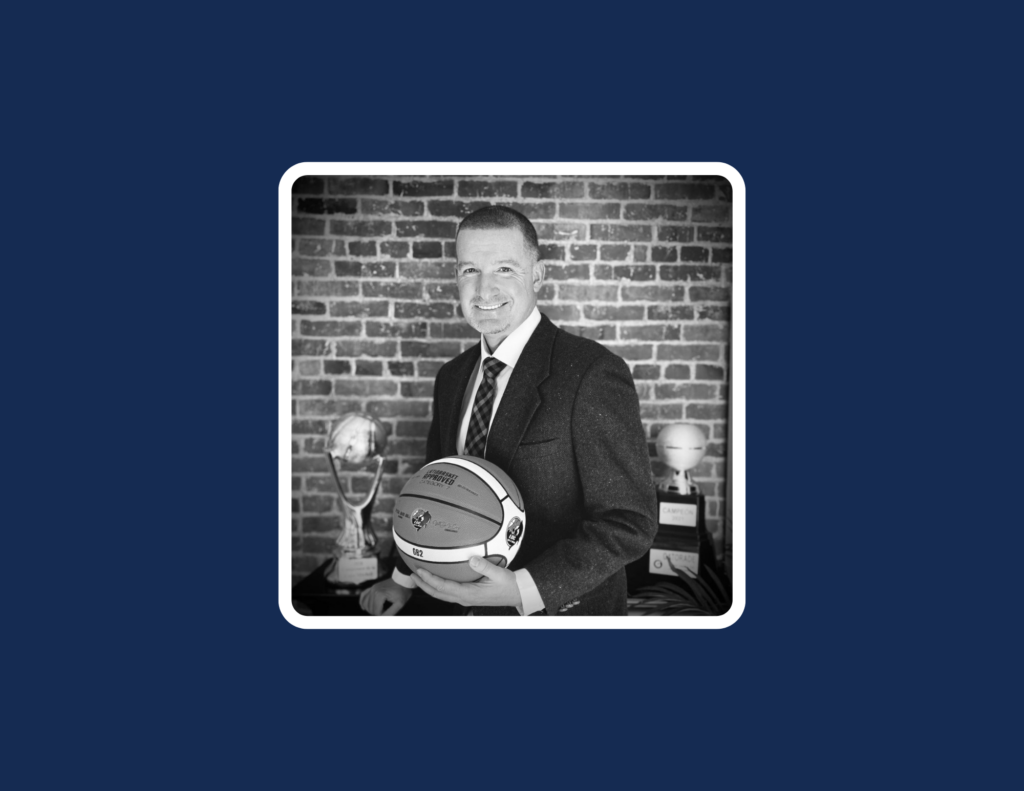
TRAVIS McAVENE – GLOBAL BASKETBALL GRASSROOTS DIRECTOR FOR BIG BALLER BRAND – EPISODE 1203

Website – https://bbbexperience.com/
Email – [email protected]
Twitter/X – @bigballerbrand
If you listen to and love the Hoop Heads Podcast, please consider giving us a small tip that will help in our quest to become the #1 basketball coaching podcast.
Travis McAvene is the Global Basketball Grassroots Director for Big Baller Brand (BBB) where he is responsible for developing basketball clinics, All-Star games and AAU tournaments across the United States and Internationally. McAvene has 27 years of high level basketball coaching experience at the prep school, college and overseas professional level.
Since 2012, McAvene has coached in the following countries at the professional level; Taiwan, Dominican Republic, Turks and Caicos, Lebanon, Tonga, Belize and Mexico. During this time, his teams have won Championships in Taiwan, Dominican Republic, Lebanon, Tonga and Mexico.
McAvene started his coaching career in 1998 and has coached at the NCAA Division I, NAIA and NJCAA college basketball levels. He also won back to back Prep School National Championships in 2003 and 2004 and built the best prep school basketball program in the Midwest at Harmony Prep in Cincinnati, Ohio from 2005-2006.
McAvene served as Head Coach for the USA Jones Cup Men’s National Team in Taiwan from 2012-2013. During this time, he won silver and bronze medals against Olympic Men’s National Teams throughout Asia and the Middle East.
McAvene was also a key part of the recruiting and talent evaluation process with the world famous Harlem Globetrotters from 2010-2016, where he served as a professional scout. During this time, he recruited and signed several college basketball players to play for the Washington Generals.
Follow us on Twitter and Instagram @hoopheadspod for the latest updates on episodes, guests, and events from the Hoop Heads Pod.
Make sure you’re subscribed to the Hoop Heads Pod on Spotify or wherever you get your podcasts and while you’re there please leave us a 5 star rating and review. Your ratings help your friends and coaching colleagues find the show. If you really love what you’re hearing recommend the Hoop Heads Pod to someone and get them to join you as a part of Hoop Heads Nation.
Take some notes as you listen to this episode with Travis McAvene, Global Basketball Grassroots Director for Big Baller Brand.
What We Discuss with Travis McAvene
- Striving to expand Big Baller Brand’s grassroots program by organizing basketball camps, clinics, and tournaments
- Why working for Lavar Ball allows for creative freedom in decision-making and implementation of new ideas
- Flexibility and adaptability are crucial traits for coaches navigating the evolving landscape of college basketball today
- His extensive experience as a basketball coach, spanning 27 years across various levels and countries
- The importance of building relationships and networking in order to facilitate opportunities in grassroots basketball
- The current college basketball environment requires coaches to be proactive in recruiting and marketing their programs effectively
Like this show? Please leave us a review here — even one sentence helps! Consider including your Twitter handle so we can thank you personally!

We’re excited to partner with Dr. Dish, the world’s best shooting machine! Mention the Hoop Heads Podcast when you place your order and get $300 off a brand new state of the art Dr. Dish Shooting Machine!

Give With Hoops is a groundbreaking initiative that fuses basketball analytics with modern sponsorship. Built for teams who see data as opportunity, from AAU programs to college powerhouses.
By tying on-court performance directly to community and sponsor engagement, Give With Hoops help programs raise more while deepening support from those who believe in the game.
Traditional fundraising disconnects donors from the action. Sell candy bars, wash cars, beg for donations, it’s exhausting and ineffective. Players perform better when their stats matter beyond the scoreboard. That’s why Give With Hoops was created.
Give With Hoops connects game performance to community support. Every basket, rebound, and assist becomes a chance to raise funds. Transparent, exciting, and proven to raise 3x more than traditional methods.
Your first impression is everything when applying for a new coaching job. A professional coaching portfolio is the tool that highlights your coaching achievements and philosophies and, most of all, helps separate you and your abilities from the other applicants.
The key to landing a new coaching job is to demonstrate to the hiring committee your attention to detail, level of preparedness, and your professionalism. Not only does a coaching portfolio allow you to exhibit these qualities, it also allows you to present your personal philosophies on coaching, leadership, and program development in an organized manner.
The Coaching Portfolio Guide is an instructional, membership-based website that helps you develop a personalized portfolio. Each section of the portfolio guide provides detailed instructions on how to organize your portfolio in a professional manner. The guide also provides sample documents for each section of your portfolio that you can copy, modify, and add to your personal portfolio.

Hey coaches — you’ve got a game plan for your team… but do you have one for your money?
That’s where Wealth4Coaches comes in.
Each week, they deliver simple, no-fluff financial tips made just for coaches. Whether you’re getting paid for camps, training sessions, or a full season—Wealth4Coaches helps you track it, save it, and grow it.
It’s time to stop guessing and start building.
Subscribe now at wealth4coaches.beehiiv.com/subscribe
And follow them on Twitter @Wealth4Coaches for daily money wins.
Your money needs a coach.
Start with Wealth4Coaches.
THANKS, TRAVIS McAVENE
If you enjoyed this episode with Travis McAvene let him know by clicking on the link below and thanking them via Twitter.
Click here to thank Travis McAvene via Twitter
Click here to let Mike & Jason know about your number one takeaway from this episode!
And if you want us to answer your questions on one of our upcoming weekly NBA episodes, drop us a line at [email protected].
TRANSCRIPT FOR TRAVIS McAVENE – GLOBAL BASKETBALL GRASSROOTS DIRECTOR FOR BIG BALLER BRAND – EPISODE 1203
[00:00:00] Narrator: The Hoop Heads Podcast is brought to you by Head Start Basketball.
You have to work at it. You’re not going to get paid unless you work at it and produce. And that’s the one thing I like about working for LaVar, is he doesn’t micromanage what I do. I put some things into place, give my ideas and put it into action. I was saying if it makes money, it makes sense. that’s what he is about.
He is a very easy person to work for in that aspect.
[00:00:44] Mike Klinzing: Travis McAvene is the Global basketball Grassroots Director for Big Baller brand, where he is responsible for developing basketball clinics, all-star games, and a a u tournaments across the United States and internationally. McAvene has 27 years of high level basketball coaching experience at the prep school, college, and overseas professional level.
Since 2012, McAvene has coached in the following countries at the professional level. Taiwan, Dominican Republic, Turks and Caicos, Lebanon, Tonga, Belize, and Mexico During this time, as teams have won championships in Taiwan, Dominican Republic, Lebanon, Tonga, and Mexico. McAvene started his coaching career in 1998 and is coached at the NCAA Division 1, NAIA, and NJCAA College Basketball Levels.
He’s also won back-to-back prep school national championships in 2003 and 2004. And built the best prep school basketball program in the Midwest at Harmony Prep in Cincinnati from 2005 to 2006. McAvene served as head coach for the USA Jones Cup men’s National Team in Taiwan from 2012 to 2013. During this time, he won silver and bronze medals against Olympic men’s national teams throughout Asia and the Middle East.
McAvene was also a key part of the recruiting and talent evaluation process with the world famous Harlem Globe Trotters from 2010 to 2016. He served as a professional scout during this time. He recruited and signed several college basketball players to play for the Washington Generals.
Hey Hoop Heads. I wanted to take a minute to shout out our partners and friends at Dr. Dish Basketball. Their Dr. Dish shooting machines are undoubtedly the most advanced and user-friendly machines on the market. Learn more at drdishbasketball.com and follow their incredible content @drdishbball on Twitter, Instagram, Facebook and YouTube.
Mention the Hoop Heads Podcast and save an extra $300 on the Dr. Dish Rebel. All-star and CT models, visit drdishbasketball.com for details. That’s a great deal Hoop Heads. Get your Dr. Dish shooting machine today.
[00:03:17] Tyler Coston: Hey, this is Tyler Coston with Savi Performance, and you’re listening to the Hoop Heads Podcast
[00:03:26] Mike Klinzing: Coaches. You’ve got a game plan for your team, but do you have one for your money? That’s where Wealth4Coaches comes in. Each week, we’ll deliver simple, no fluff financial tips made just for coaches. Whether you’re getting paid for camps, training sessions, or a full season, Wealth4Coaches helps you track it, save it, and grow it.
It’s time to stop guessing and start building. Subscribe now at Wealth4Coaches Bee. Dot com slash subscribe and follow us on Twitter at Wealth4Coaches for daily money wins. Your money needs a coach. Start with Wealth4Coaches.
Take some notes as you listen to this episode with Travis McAvene, global Basketball grassroots Director for Big Baller Brand. Hello and welcome to the Hoop Heads podcast. It’s Mike Klinzing here without my co-host Jason Sun tonight. But I am pleased to be joined. Travis McAvene from Big Baller Brand Travis, welcome to Hoop Heads Pod.
[00:04:01] Travis McAvene: Nice to, nice to be on tonight. It’s, it’s a pleasure. I always enjoy doing new podcasts and meeting new people, so it’s great to be online tonight.
[00:04:09] Mike Klinzing: Absolutely. Excited to have you on. Looking forward to diving into all the interesting things that you’ve been able to do in your career, and then get a feel for what your role is with Big Baller brand.
Let’s start by talking a little bit about your coaching career. How did you get into the coaching profession to begin with?
[00:04:25] Travis McAvene: Well I just finished up my 27th year of coaching last year. I started my college basketball career in 1994. Coming out of high school. I graduated from Centerville High School in Indiana.
Rising, I was an all conference player and got a basketball scholarship at North Florida Junior College in Madison, Florida. Played four years of college basketball. I finished up playing at Taylor University. At Fort Wayne in 1998 and got into coaching right away. So it, it goes by fast, but I was real fortunate to get a head coaching job at 21, going on 22, and was just blessed to, to be around great people and get an opportunity early in my coaching career to, to move up the ladder.
[00:05:10] Mike Klinzing: Did you always know as a kid while you were playing that you were going to end up in coaching? Or was that something that you didn’t realize until after your playing career was over? Or as you saw it winding down? When did the idea of, Hey, I want to be a coach, was that something you always knew?
[00:05:25] Travis McAvene: Absolutely. I mean, I knew when I was in middle school and high school once I got done playing, I wanted to get into coaching basketball.
I remember being in, at our a a U national tournament in Salt Lake City, Utah in 1989 and coming back home and doing a, they did a feature story on me and my newspaper back home. And at that time, I can go back and read what do you want to be when you’re older? And I stated at that time.
I wanted to get into coaching and be a basketball coach. And so, I mean, I’m doing exactly what I was meant to do and loved to do. So nobody’s surprised at 49 years old that I’m still involved in, in coaching basketball.
[00:06:07] Mike Klinzing: What were your biggest takeaways when you think about your life and where you are now and what you’re doing, what are one or two big takeaways from your time as a college basketball coach that you feel like, feel like are still impacting your life today?
[00:06:21] Travis McAvene: You mean as a player or as a coach?
[00:06:23] Mike Klinzing: As a coach. As a coach. What are things that are still influencing you today that you learned early on in your college coaching career?
[00:06:29] Travis McAvene: I think it’s good to be stay, stay flexible and stay driven. I at a early age I kind of had a chip on my shoulder because I finished as an NAI college player.
and I wanted to, to get to the division one level. It didn’t work out as a college player, so I was really determined and driven to get to a division one level as a basketball coach, and I was able to accomplish that by the age of 30 in my first division one college basketball job at Cop and State University.
That’s where I got my division one start years ago, back in 2006. But I mean, the things that I’ve learned over the years, it stays with you. As far as just being, being flexible and learning to wear different hats, I think that’s the biggest takeaway that I’ve, that I’ve got on every level that I’ve been at, that you just sometimes have to wear different hats.
It’s not always just about being a head coach or. Being a general manager or being an athletic director, I think you have to be adapt to change. And I think as we’re getting into a whole new world of college basketball with the transfer portal and things of that nature, I think it’s allowed me to stay flexible and grow with the profession.
[00:07:46] Mike Klinzing: There’s no doubt about that, that flexibility, especially somebody with your background and having been at all these different levels of the college game, right? You’ve had different roles. You’ve been a head coach, you’ve been an assistant coach, you’ve been at the N ai, you’ve been at the division one level.
I think flexibility as a coach, if you were looking for a piece of advice to give, the coaches are out there. Certainly the ability to be flexible and to adapt, and as you said. Today’s college basketball world in so many ways, right? When you think about your time as a basketball player at the college level or early on in your coaching career, the landscape of college basketball today, Travis, and what it looks like, it’s, it’s, I don’t know about for you, but for me.
It feels almost unfathomable the way that the game has, has gone in terms of, and I think coaches are feeling that, right? You can sense it in almost every press conference that these major college guys are giving, that there’s just a, a complete overwhelming sense of like, they don’t even know which way to turn and how to handle it.
And so I think your point about flexibility is huge.
[00:08:44] Travis McAvene: Absolutely. It’s, man, it’s just, it’s crazy to see where things are at from say 2003 or four. To where it’s at right now, as far as just the rules and regulations and what you can do and can’t do. Players getting money scholarship money that’s allowed and not allowed.
And every level’s different. I think it’s, it’s been nice to be at every level. I’ve been a head junior college coach. I’ve been a head NAI coach I’ve been a head prep school coach. And of course I’ve been overseas the last 13 years as a head international. Coach, coach, but coach, regardless, I think it allows you to know all sides of the business on every level and what’s what’s expected and what’s allowed at the same time.
[00:09:31] Mike Klinzing: When you’re talking to people in your circle of influence that are still involved in the college game, what are the things that you’re hearing from guys who are still in the profession that, you know? What’s the general sentiment about kind of where things are? because I talk to people and a lot of the guys I’ve had on the podcast, you could tell.
That to some degree they are a little apprehensive about the whole thing right there. There’s something that just doesn’t feel necessarily like college sports, and yet ultimately as the conversation goes on, what they all ultimately get to is, is that this is the situation that is presenting itself and whether or not we love it.
Or we don’t love it. We kind of have to just figure it out and adapt and understand that, hey, we used to be able to impact guys for four years. Now we might only be able to impact them for one or two. So how can we still do what we love, still have an impact on the kids, and yet do it in this new landscape.
So what are you hearing from some of the people that you still talk to in the college game? I
[00:10:32] Travis McAvene: mean, I still have a lot of friends that are, you know major college basketball coaches. I mean, I’ve got even former players. I was just talking to one of my former players that I coached years ago that’s at South Carolina State right now.
They’re in the mec. His name is Jarrell Redden. We were just talking last night about helping him get international players and being able to, to help him out as much as I can because of what they’re allowed in NIL money. That’s an example. I’ve got a former player of mine that I used to train here locally in Dayton, Ohio.
And I’m good friends with his dad. His name is Juan Cranford. He was at St. Francis University in pa, which was low major division one. Now he’s at Eastern Kentucky University where he is on an NIL deal. So he goes from not getting a whole lot of division one scholarships out of high school to really doing well last year in the NCAA tournament.
Now he is making good money at as an NIL player at a bigger college and university. So those are two examples of, of both on the coaching side and playing side with what’s going on in today’s landscape.
[00:11:41] Mike Klinzing: That’s a whole new world without question. And then you have the experience also, not just with the college game, but also as you talked about some of that international experience and clearly international guys are this, this scenario for them in terms of.
NIL and be able to not only come over and get a scholarship, but in some cases to be able to, to tap into some of that NIL money is, is huge. Tell me a little bit first before we kind of jump into your last couple years, how did you get into the international game in the first place? What was your roadmap to to get overseas and get some opportunities there?
[00:12:15] Travis McAvene: Well, years ago I was heavily into bringing in international players when I was the head prep school coach. I brought in a lot of talented international players from. My time when I was at a big time prep school head coach. But as far as coaching wise I was able to, when I got done coaching college basketball in 2008, I was able to get into the minor league landscape and was able to get a lot of coach of the year accolades with the Euro basket and was able to get my first international coaching opportunity in the summer of 2012 when I was coaching in Taiwan.
At that time I was supposed to go work for Kobe Bryant’s dad, Joe Bryant, and that did not work out. He ended up taking a, another job, which kind of landed that job for me as a head coach and got me my first opportunity on the international scene. And I think as every year has gone along, I think that the more that I’ve been able to win and win championships in different countries.
It’s allowed me more opportunities to, to move up the ladder and get bigger and better jobs as, as the years, as years have gone along and progressed.
[00:13:24] Mike Klinzing: When you look at the international game and the way that players are developed internationally versus the our system that we have here in the us, which again, clearly, if I think back to the time when I was a player.
Or you think back to the time when you were a player? Certainly much different. How I came up in the game. How you came up in the game, right. Compared to how kids play today. Completely different. I played so much pickup basketball and was in the gym by myself without a trainer. Now of course, everybody’s playing a a u and you’re traveling around, right?
Got all this, so it’s completely different. And then you think about. Sort of the, again, European model or international model where there’s more, more practice, more training time and maybe less games. Whereas here in the US we’re playing so many a a u tournaments and guys are playing 50, 60 games in a summer.
How do you look at the two systems and compare and contrast, not to say one’s better or worse than the other, but just when you think about the two systems of how kids are developed, just gimme your thoughts on, on both the American and sort of the international system.
[00:14:27] Travis McAvene: Well, I mean, being on the international level as a head coach and general manager, both since in the last 13 years in eight countries, I mean, I’ve seen how much talent is over there and sometimes you don’t realize that players sometimes on the international level are.
Harder working sometimes. There are kids here in the States because they’re not as spoiled. and they’ve, they’ve watched the NBA so long especially since the 1992 Olympics with our dream team. And as it’s progressed, I think the international game has gotten better and better which makes.
College basketball coaches more appealed sometimes to bring to international players because they really know how to play their fundamentals are sound and they they just have a better, sometimes they’re, they’re more hungry to prove themselves sometimes than what we see here amongst our kids here.
There’s not rankings and this and that. Sometimes when you get. On the international scene, it’s okay. where, where’s talent and every country has a different style of basketball. whether I’ve been in Asia, the Middle East, or Europe or the Caribbean, Latin America players all play different.
So I think it’s just a matter you as a college coach or whoever you’re dealing with what style do they want to play? And I mean, for example, like my, my time in Dominican Republic they have great guards. So I mean, it’s like if I’m a college coach, I definitely would go in, go in that direction sometimes to find great guards that can play fast, be up tempo, and be athletic at the same time.
whereas sometimes in different parts of Europe you see a lot of great shooters and guys that can really spread the floor and shoot the three well, so it’s just. This varies from country to country.
[00:16:21] Mike Klinzing: Yeah, absolutely. I mean, clearly when you look at the international game and the way that the players have developed and you look at the very top right, you look at the very top of the NBA and we’ve got international guys that have won, what, six or seven of the last.
MVP awards in the, in the NBA and so clearly that internationally the game is, has grown by leaps and bounds. The way that players are developed overseas is clearly working from a fundamental standpoint. It is just amazing. As you, you referenced the the 92 Dream team in the Barcelona Olympics, and just what a watershed moment that was for the game of basketball.
Around the world, right? People prior to that, obviously were watching the NBA and other parts of the world, but to bring those guys to the world stage in Europe, to be able to expose everybody to the game. And then just think, I think back to again, like opposing players getting autographs from those guys during the game while while they’re going to play them.
And just, again, it was, it was a crazy, crazy scene that. Just blew up the game internationally, and we’re continuing to see the results of that over time. For sure. What’s your favorite country that you’ve been in? Not necessarily to coach basketball, but just in terms of a place that you really enjoyed living in that was unique to, for, for you, from an experience standpoint,
[00:17:43] Travis McAvene: I can take away a lot of things from different places that I’ve been at and coached.
I think the most beautiful place. I’ve worked at and coached in is Turks and Caicos and the Caribbean because it’s so beautiful there, the beach, the atmosphere. But I mean it’s I enjoy my, my time in Taiwan with the culture there. I enjoy my time in years in Dominican Republic. I just finished up a stint last summer in Del Carmen, Mexico, which is right outside Cancun.
And all the, all the places have been great as far as dealing with players, dealing with imports, the way I’ve been treated, it is all been positive. I’ve taken away a lot of things and my time as being an international head coach. But I would say as far as the most beautiful place I’ve been to is definitely Turks and Caicos.
[00:18:32] Mike Klinzing: If you had to give a piece of advice to a young coach who maybe for whatever reason, coaching internationally. Is appealing to them, and they’re a young coach here in the United States and, and they, they look at it and they say, Hey, maybe that would be something that I’d be interested in getting involved in.
What piece of advice for you would you have for them if they wanted to take their career in that direction? What, what’s, what’s a, what’s a step or two, what’s a piece of advice you’d give them?
[00:19:00] Travis McAvene: I think definitely have a good balance with your. Your work and family life, make sure that they’ve got great support, whether it be from their girlfriend or their wife.
as far as going abroad, you know during different times, being internationally and being abroad my daughters just got, she just graduated from playing college volleyball and she was young at the time, and it was, it was challenging at times to balance that work and life. Being away from home and trying to be the best dad you can be.
So, I mean, it’s, that’s the most challenging part I would tell a younger coach. Make sure that you’ve got great support from your loved ones back home. And I think it can work out. But I see so often coaches they, you have to be all in. Sometimes people, they, they think it’s just because it’s so cutthroat overseas, you’ve have to win.
Or you’ll lose your job and, you know you can come back to nothing if you’re not careful. I think that’s one thing that I tell people. Make sure that they, they get the right job and have the great, the right support surrounding them. And I think things can, can go their way. But I think sometimes people don’t realize when you’re coaching internationally, you’re going to move around country to country.
You’re not going to be all in one place for the duration of your career. It’s just the way it works.
[00:20:22] Mike Klinzing: During the time while you’re coaching internationally, and I know it probably varied year to year and country to country, but how much time in a given year are you spending overseas in a, in a typical, if there’s such a thing in a typical season, are you over there for six months out of the year?
Are you over there for nine months? What’s, what’s the schedule look like in terms of overseas versus home with your family?
[00:20:46] Travis McAvene: I think it just depends on what country you go to or what area of the world I’ve seen seasons a go two and three months long call them short seasons, and I’ve seen some go six to nine months just depending on where you go.
And what what, you could also go there to coach a major events too which I’ve done as well. So I think it’s just a matter of what part of the world you’re going in. But most cases it’s three months on a low. In nine months on a high as far as being gone away from home
[00:21:19] Mike Klinzing: makes sense.
I mean, again, you would expect it to vary when you’re in different countries and at different levels. Obviously it’s not the system for anybody who is familiar with basketball overseas, knows that the system is, is different from, it is where it is here where you’re in a country and you have different tiers of their professional leagues and that kind of thing.
So you would expect that you would have a varying amount in terms of the length of the season. Let’s talk Big Baller brand. And get started with, first of all, how do you get hooked up with LaVar and the brand? Where does that start? And then we’ll get into kind of your role and what, what you do day to day.
[00:21:55] Travis McAvene: Well, I mean, I took on my role as global basketball grassroots director for Big Baller Brand LA last October. So October of 2024. I was able to get linked up in that role through a, a good friend of mine. His name’s Tony Cole. He lives in Indianapolis, Indiana. He replaced me as a head coach at a program that I started in Indiana all the way back in 2000 and four 2005.
And we’ve remained in touch over the years and I’ve actually helped place international players with him at his program as he’s. Expanded and they wanted to hire somebody. Him and LaVar wanted to hire somebody with great international experience to help expand their brand as far as globally, not just here in the States.
And that’s what I’ve really taken a lot of pride in doing is being that that person to, to help expand their basketball grassroots with big ball brand.
[00:22:54] Mike Klinzing: So when you’re out there and you’re trying to expand the brand, explain for somebody who may be like me who doesn’t understand exactly, what does that mean when you say expand the brand, who are you talking to?
Who are you trying to expand it to? Obviously in your title it says grassroots, so that means you’re trying to reach youth players, get to guys who, when they’re, when they’re young as they’re developing. But just talk to me a little bit about exactly who it is that you’re talking to and how you’re trying to help the brand to be able to grow and get more exposure.
[00:23:23] Travis McAvene: I mean, most people realize when you’re working for a shoe company on the grassroots side, I mean, there’s so many levels, but as far as what we do, I mean, we’re handling things from all the way with basketball camps and clinics throughout the world to, to now starting AAU circuit. Last year we started doing middle school and high school all-star games, and then also doing what you call transfer portal workouts.
Unsigned senior workouts where we bring in college coaches and help those, those young men get recruited to transfer as needed. We’re also in the talks and preliminaries of, of possibly working with the TBL, which is a minor league and that’s recognizable. with going to prep the pro model.
Which is going to be huge news. If it pans out, we’re in, we’re in talks that way. players out of high school that don’t want to go to college, they can go to the prep school route and then go profe, then go professional. But there’s so many levels to it. And I enjoy all aspects, whether I’m helping, coordinate, coordinating a high school all star game or helping a a transfer portal workout.
The chance to network with college basketball coaches once again, which that’s where I ultimately want to get back to sooner than later is get back to the major college basketball level as a coach. But, but right now I’m in a position that I’m in and I’m trying to utilize it and help, help the brand grow.
And I think that the basketball grassroots is, has been great to helping open up a lot of doors for me.
[00:25:07] Mike Klinzing: Give with hoops is the first platform turning basketball analytics into fundraising impact. Every stat tells a story and now every story drives sponsorship engagement and team growth programs nationwide are transforming basketball stats into funding power. Learn to use performance data to attract sponsors, engage fans, and raise more with.
Every play give with hoops will help you raise three times more money for your program as their stat based pledges consistently outperform traditional fundraisers. Visit give with hoops.com/hoop-heads-podcast to learn more and take your fundraising to the next level. Give with hoops
when you start talking about getting involved with camps. Clinics starting a a u tournaments. Mm-hmm. What does that look like in terms of who are you talking to? Where are some of the locations that you’re trying to go to? Explain a little bit more of the logistics of how you’re trying to get those events started or partner with some existing brands to be able to, to kind of grow and again, expose big Baller brand to, to more people.
[00:26:18] Travis McAvene: Well, this year, this summer will be our first year of actually being on an aau, circ a, an AAU circuit. But we’re in the, the final stages of finalizing that for this upcoming spring and summer. the target is seven cities. if we end up finalizing five and it be being successful, we’ve won that battle.
But we’re not trying to really compete with other shoe companies like Nike, Adidas, under Armour, new Balance. That’s not, that’s not the goal. We’re trying to set up tournaments that can provide AAU teams, a quality tournament to be competitive and they might be going to three other tournaments, five other tournaments that are totally separate shoe brands.
And we’re okay with that. We’re not trying to, to battle anybody, if that makes sense. And I think that’s that’s why we try to add other categories to our grassroots, like the All-Star games and transfer portal workouts. We also have been running very good basketball camps and clinics.
We just got back this past September in, in the Navajo Nation community out Phoenix, Arizona, which is a great experience to deal with the Navajo Nation community and Native Americans, and seeing how big basketball is out there and how it’s trying to grow and how we’re we’re able to help them grow as a community.
[00:27:40] Mike Klinzing: Yeah, to be able to touch again on maybe some groups that have been underutilized or underserved by some of the other bigger brands that that you mentioned earlier there. When you think about just. The opportunities that exist in grassroots basketball. Clearly it continues to expand, right?
The pie continues to get bigger and bigger and bigger as more and more kids get involved in it. And then as you look at just the way the college landscape has changed, AAU basketball, if you’d have told me again, this is something that. When I go back, like let’s say 10 years ago and somebody would’ve told me, oh yeah a a u basketball and how important it is in the recruiting process and this and that, and compared to high school basketball and until my son kind of went through the recruiting process and.
Ended up as a Division three player, so it’s not like we’re not talking about a big time major recruit, but still at the same time talking about a kid who all of his college opportunities came through a U basketball, right? Once he was identified in a U basketball, people watched him play and then coaches would come to his high school games, but they already knew who he was from a a U.
And so it’s just again, the pie. The grassroots space has gotten so big and it’s allowed for, again, as you said, you guys to be able to reach out and find, okay, we want to run camps, we want to do some clinics, we want to get involved in these AAU tournaments. And so as you start to set those things up. You start to set up a camp, or you set up a clinic or you’re setting up an a, a U tournament and you’re targeting, whether it’s a given city or a given age group of kids or whatever it might be, what’s the first step if you want to run a camp in a particular place?
Who are you talking to? What are the, what are the steps that you go through to get something like that started in a particular location, whether it’s a camp, clinic or an AAU tournament?
[00:29:30] Travis McAvene: I think as part of my, part of my role as being a grassroots director, I have to utilize all. 27 years of my background and experience and networking and knowing people where I can, like for example, where I’m dealing with a, a good friend of mine in Nashville, Tennessee right now to set up all-star games and so on and so forth.
And another former player of mine that’s in Chicago, Illinois. I think you have to utilize your relationships in the basketball world to set those things up where it goes a lot smoother because you have some trust. And some rapport with those people. And I think that’s what I’ve relied on the most whether it’s been here or globally as we’re setting up a lot of things internationally as well.
And and going back to the a a U topic, I mean, I was real fortunate to play for a legendary a a a U coach in Indianapolis, Indiana. His name is Tom Red Taylor, if you look him up he, he is, he is just, he is the best. I mean, he ran an organization called Municipal Gardens, A a U. That’s where I grew up playing at and had a multitude of teammates that have gone on to great things, whether they’re college or pro coaches.
One of my former teammates is Brad Stevens, which is president of basketball operations with the Celtics. And we were teammates for a long time, and I could go through countless players that I still stay in touch with and have relationships with, but a a u was that start. I was able to win a national championship in 1988 and a national runner up in 1989 and countless state championships and state of Indiana growing up as a kid.
I’m born and raised in Indiana, but it’s just a a u was such a, a big part of my life growing up as a kid and allowed me opportunities to, to play college basketball. And I look back on that and I want to give that back now as I’ve gotten older as an adult. There are great people in the AAU world just as much as there’re bad people, but that’s what, that’s that way in high school and college too.
You have great coaches and you’ve got crappy coaches, so I think it just goes hand in hand and I just try to surround myself around good people. I think good things happen.
[00:31:39] Mike Klinzing: I agree with you a hundred percent there. I think that sometimes, and I think this is, I don’t know if it’s gone away completely, but I do think that there was a stretch where lots of people looked at a a U as being sort of this evil stepchild of the basketball world and that the high school basketball space was.
More pure basketball, for lack of a better way of saying it. And I think that people have come around on that to see that. Yeah, there’s positive in both sides, right? There’s, there’s positive in high school basketball, there’s positive in AU basketball, and I think you said it really well that no matter where you go.
There are good coaches and there are good directors that are doing things the right way that are in it for the right reasons. Yep. And yet, if you want to look for people that are doing it wrong and doing it for the wrong reasons, you can certainly find those people too. And so when I look at what you’re trying to do and I think about what.
Big Baller brand is, is trying to accomplish, right? You’re trying to put on those first class events that are beneficial for the kids who are participating in them. I hear you talking about running the workouts, right? For guys who are trying to get an opportunity to play college basketball, ultimately what you’re there to do is try to serve the kids.
So when you think about the vision of looking ahead, 2, 3, 4, 5 years out, four. Big Baller brand and what you’d like to see, what Lava’s vision is for the whole thing. What’s sort of the, the end game or, or the, or the long-term goal of what you envision this brand becoming?
[00:33:06] Travis McAvene: I think it’s been easy and I was able to, I was fortunate to get invited out to his home and do a camp out in la.
In Chino Hills this past July and got a chance to really sit down with him and get to know him as a person and let him get to know me and see what his vision’s about. And obviously he is got two sons that are in the NBA Alonzo and Lalo, and they, they, they made a great name for themselves and helped build everything that he’s built in house.
I think he wants to be able to have things going on every month out of the year, whether it be here in the States or globally and have a great grassroots program from start to bottom, whether you’re dealing with young kids that are elementary age, or guys that are college going into professional. So I think it’s, it’s, it’s, it’s off to a great start with what we, we’ve built since last October and it keeps getting bigger and bigger and better and better.
We still have a lot, lot of room for growth and we’re still looking for, for new ways to expand and meet people like yourself. we talked about that earlier today on the phone. We might be able to work together in the future on projects and you’d be able to use my resources as much as I can use your resources and network, and that’s what it’s about.
I think sometimes you have your own circle of people and people you trust. You never know who your next best friend might be. Yep. And who you build relationships with. We started a foundation called Triple B Cares this past summer, and I actually served as a board member and have another board member that’s a head college basketball coach out in South Dakota.
That’s what the Lakota nation native Americans. So it’s, it’s, it’s crazy how, and you, you meet people out of coincidence, but they know who you are and you have no idea who they are, but they’ve been following you for years and you’re like, okay, this is great. And you hit it off right from the start.
But I think it’s this, this basketball world is somewhat of a fraternity at times. And I think it’s awesome to meet new people. And grow because grow I’m far from, from being where I want to be at. I still have a lot of things I want to get accomplished, so,
[00:35:23] Mike Klinzing: well, your answer there.
Answered my first question, but it also answered my next question, which was, what do you find to be the most rewarding or fun part of the job? And I’m guessing that the answer’s going to be the people, right? The people that you get a chance to interact with, that you get to work with, whether it’s people that you already knew or new people.
So I’m going to skip over that because I kind of feel like you, you already answered that part of it, right? So lemme go to the second part of the question, which was, when you look ahead to what you guys are trying to accomplish, what’s the biggest challenge? In getting that vision to come to reality, what do you see as being the hardest part of making that dream come true?
[00:36:01] Travis McAvene: I think there’s always challenges. I mean, right now putting together an A A U circuit is challenging because you’ve got so many different teams across the country that are already a part of a circuit, whether it’s Nike, Adidas, new Balance, under Armour, whatever it is, and I think it’s trying to, to sell people on the fact that they can come be a part of our tournament.
And not get anybody mad and there’s enough food to go around the table figure of speech. But that’s, that’s one of the few challenges I think too is as we’re trying to get more merchandise out there, we have a sales and marketing director, his name’s Greg Ruff and he is real passionate about getting teams and uniforms and getting them into shoes and putting apparel.
On teams across the country and across the world them utilizing our brand to wear, whether it be practice or games and things like that. So those are always challenges to, to get brand awareness, get people familiar with Big Baller brands. Some people are like, you are familiar with it, but some people are not.
so it’s like, that’s what I try to take a lot of pride in is, is getting our name out there more and let them get more familiar with what we’re doing.
[00:37:15] Mike Klinzing: You get the circuit up and running. What do you envision that looking like in terms of, I know you mentioned earlier trying to get to seven cities, but let’s say you get that circuit going this summer, this spring, summer.
What does that look like in terms of the reach? How many teams do you think you can put together on the circuit? What’s the ultimate goal? What does that look like?
[00:37:35] Travis McAvene: I think anytime you’re getting close to 30 to 40 teams at each event, you know. It’s a winning situation. We’d love to have 80 or 90 teams.
But at the end of the day, I think every city’s different. What you’re going to get in LA is going to be different than Dayton, Ohio, or Indianapolis, Indiana. So I think it’s more of the people we have working with us and for us that are doing the marketing and getting the name out as far as the events.
That’s the hugest piece is getting those people involved with what we’re doing because. Not, you’re not a one man army. You’ve got a team of people that you’re trying to work with and there’s that’s why I tried to get people involved that are great at, you know recruiting. because that’s what it’s about.
you could be the best organizer you can be, but if you don’t have somebody recruiting and hitting the streets for you and getting people to get registered for your tournaments and events, you’re not going to succeed. We work hard at it. I mean, because this is a position that it is contractual and people have, people have the, the myth or theory that, that you’re making big time money working for a shoe company.
And there, there can be times where you can make good money doing it, but you have to work at it. you’re not going to get paid unless you work at it and produce. And that’s the one thing I like about working for La Var, is he doesn’t micromanage. I do, I put some things into place, give my ideas and put it into action.
And if it makes it I always say, if it makes money, it makes sense. And that’s that’s what he is about. He is, he is a very easy person to work for in that aspect.
[00:39:22] Mike Klinzing: I’ll say if you are in the basketball business of any kind, your comment there about recruiting and being able to go out and sell yourself and promote what you do, there is no question that you had better be able to do that with.
As crowded as the landscape is, I always say there are plenty of opportunities that if you don’t want to come to my camp or play in my tournament or do this, there’s always. Another guy right next door that’s running another tournament or running a camp or doing training, whatever, you better be able to, to sell yourself.
And I think that’s a great point that you make, that you really have to get out there and get on the streets and talk to people and get people familiar with what you’re trying to do. And if you don’t, you’re just not going to be able to, you’re just not going to be able to have success. All right, we’re coming up on our time limit and I want to give you a chance to share how can people reach out to you?
How can people find out about. More about Big Baller brand, what you guys are up to share, social media, email, website, whatever you feel comfortable with. And then after you do that, I’ll jump back in and wrap things up.
[00:40:25] Travis McAvene: Well, I mean, it is our grassroots website is bbbexperience.com. Anybody can go there as far as getting in touch with us via email. It’s, we’re not hard people to find. Obviously we met on LinkedIn, I’m on LinkedIn, I’m on Instagram, TikTok, Facebook, I’m very easy to find and very approachable. So I mean, we want to build a network of meeting new people and anybody that’s interested in getting involved with us.
Whether it be a tournament an AAU tournament, transfer portal, workout, hosting a basketball clinic, it could be in Cleveland where you’re at. We’re open-minded to, to doing that and very accessible.
[00:41:11] Mike Klinzing: Awesome. Travis, can I thank you enough for taking the time out of your schedule tonight to join us?
Really appreciate it, and it’s everyone out there. Thanks for listening and we will catch you on our next episode. Thanks.
Your first impression is everything. When applying for a new coaching job. A professional coaching portfolio is the tool that highlights your coaching achievements and philosophies, and most of all helps separate you and your abilities from the other applicants. The coaching portfolio guide is an instructional membership based.
That helps you develop a personalized portfolio. Each section of the portfolio guide provides detailed instructions on how to organize your portfolio in a professional manner. The guide also provides sample documents for each section of your portfolio that you can copy, modify, and add to your personal portfolio.
As a Hoop Heads Pod listener, you can get your coaching portfolio guide for just $25. Visit coaching portfolio guide.com/hoopheads to learn more.
[00:42:45] Narrator: Thanks for listening to the Hoop Heads Podcast presented by Head Start Basketball.