
“THE TRIPLE DOUBLE” #16 WITH ROB BROST, BOLINGBROOK (IL) HIGH SCHOOL BOYS’ BASKETBALL HEAD COACH – EPISODE 1056


Website – https://il.8to18.com/bolingbrook/athletics/basketball/b/v
Email – raidershoops@comcast.net
Twitter – @BrookHoops
If you listen to and love the Hoop Heads Podcast, please consider giving us a small tip that will help in our quest to become the #1 basketball coaching podcast.
The 16th episode of “The Triple Double” with Rob Brost, Bolingbrook (IL) High School Boys’ Basketball Head Coach. Rob, Mike, & Jason hit on three basketball topics in each episode of “The Triple Double”.
- Pre-game warmup philosophy
- Preparing a team for state tournament play
- Lessons learned as a parent that have made him a better coach
On this episode Mike and Jason welcome back Rob Brost to discuss what his team does during pre-game warmups, how he prepares his team for state tournament play, and lessons he’s learned as a parent that have made him a better coach.
Be sure to follow us on Twitter and Instagram @hoopheadspod for the latest updates on episodes, guests, and events from the Hoop Heads Pod.
Be sure to have your notebook handy as you listen to “The Triple Double” with Rob Brost, Bolingbrook (IL) High School Boys’ Basketball Head Coach.
What We Discuss with Rob Brost
- Pre-game warmup philosophy
- Preparing a team for state tournament play
- Lessons learned as a parent that have made him a better coach
Like this show? Please leave us a review here — even one sentence helps! Consider including your Twitter handle so we can thank you personally!

We’re excited to partner with Dr. Dish, the world’s best shooting machine! Mention the Hoop Heads Podcast when you place your order and get $300 off a brand new state of the art Dr. Dish Shooting Machine!

Prepare like the pros with the all new FastDraw and FastScout. FastDraw has been the number one play diagramming software for coaches for years, and now with it’s integrated web platform, coaches have the ability to add video to plays and share them directly to their players Android and iPhones via their mobile app. Coaches can also create customized scouting reports, upload and send game and practice film straight to the mobile app. Your players and staff have never been as prepared for games as they will after using FastDraw & FastScout. You’ll see quickly why FastModel Sports has the most compelling and intuitive basketball software out there! In addition to a great product, they also provide basketball coaching content and resources through their blog and playbank, which features over 8,000 free plays and drills from their online coaching community. For access to these plays and more information, visit fastmodelsports.com or follow them on Twitter @FastModel. Use Promo code HHP15 to save 15%
Your first impression is everything when applying for a new coaching job. A professional coaching portfolio is the tool that highlights your coaching achievements and philosophies and, most of all, helps separate you and your abilities from the other applicants.
The key to landing a new coaching job is to demonstrate to the hiring committee your attention to detail, level of preparedness, and your professionalism. Not only does a coaching portfolio allow you to exhibit these qualities, it also allows you to present your personal philosophies on coaching, leadership, and program development in an organized manner.
The Coaching Portfolio Guide is an instructional, membership-based website that helps you develop a personalized portfolio. Each section of the portfolio guide provides detailed instructions on how to organize your portfolio in a professional manner. The guide also provides sample documents for each section of your portfolio that you can copy, modify, and add to your personal portfolio.
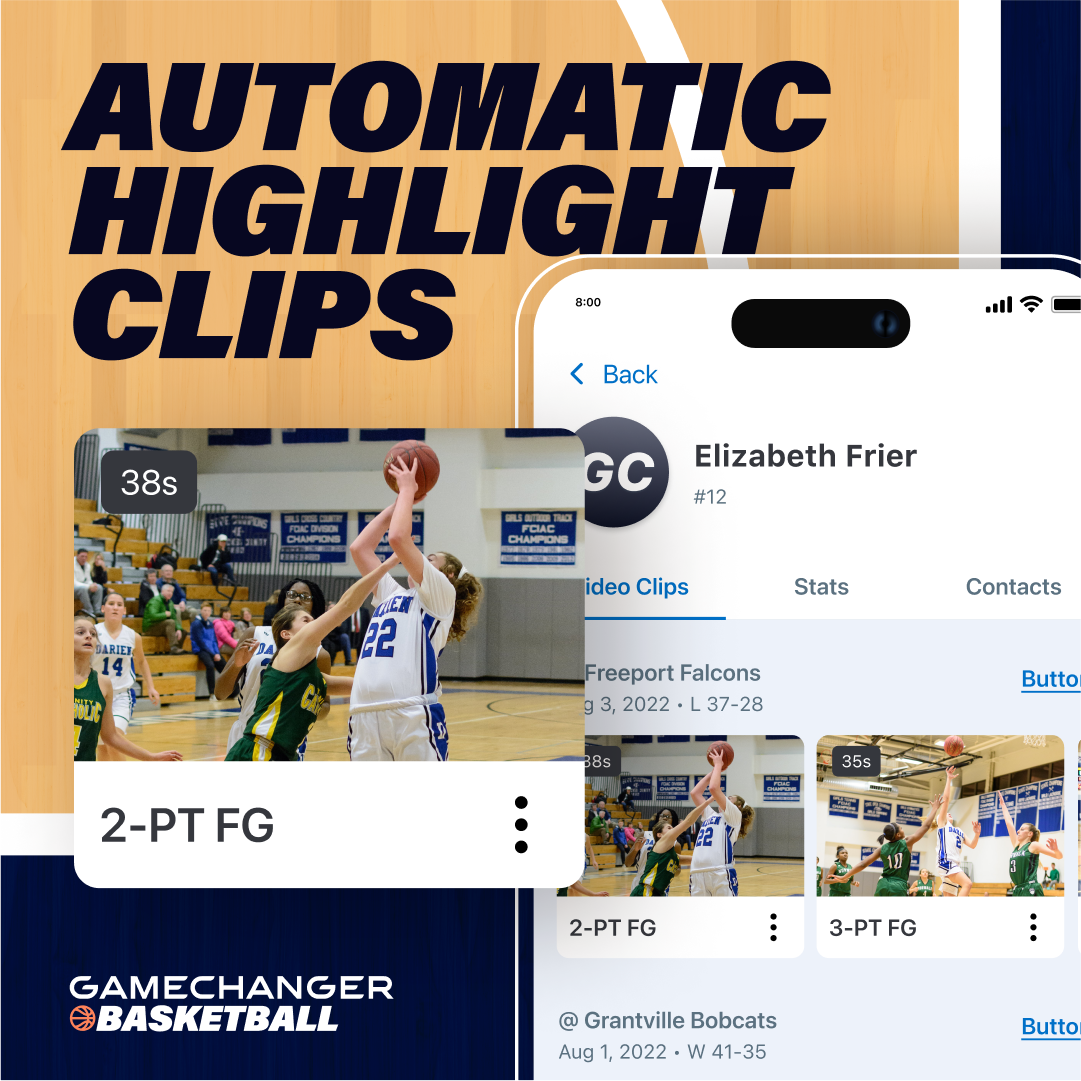
Hey, coach! Want to take your team to the next level this season? Introducing GameChanger, the ultimate game-day assistant with tools to give you a winning advantage. With GameChanger, you can track stats, keep score, and even live stream games, all for free! Get the stats and crucial game video you need to lead your team to victory, all from the palm of your hand. Coach smarter this season with GameChanger. Download GameChanger today on iOS or Android and make this season one to remember. GameChanger. Stream. Score. Connect. Learn more at GC.com/HoopHeads
THANKS, ROB BROST
If you enjoyed this episode with Rob Brost let him know by clicking on the link below and sending him a quick shoutout on Twitter:
Click here to thank Rob Brost on Twitter
Click here to let Mike & Jason know about your number one takeaway from this episode!
And if you want us to answer your questions on one of our upcoming weekly NBA episodes, drop us a line at mike@hoopheadspod.com.
TRANSCRIPT FOR “THE TRIPLE DOUBLE” #16 WITH ROB BROST, BOLINGBROOK (IL) HIGH SCHOOL BOYS’ BASKETBALL HEAD COACH – EPISODE 1056
[00:00:00] Mike Klinzing: Hello and welcome to the Hoop Heads Podcast. It’s Mike Klinzing here with my co-host Jason Sunkle tonight. And it is time for Triple Double #16 with Rob Brost, head boys basketball coach at Bolingbrook high school in Bolingbrook, Illinois, Rob, welcome on.
[00:00:18] Rob Brost: Hey, thanks for having me again. 16, we’re getting right up there.
Now they’re going to start calling me old. I’m really looking forward
[00:00:25] Jason Sunkle: I’m really looking forward to hearing your hall of fame speech where you mentioned 16 time member of the visiting the podcast,
[00:00:32] Rob Brost: Right?
[00:00:32] Jason Sunkle: That’s right. It’s going to make the speech. It’s going to make the speech and
[00:00:36] Rob Brost: I’m going to have it recorded just so I can play it back for you guys.
[00:00:39] Mike Klinzing: There we go. We’ll, we’ll, we’ll make, we’ll be sure to include that in one of the episodes without question. The unedited, unabridged, uncensored version. Of the Hall of, of the Hall of Fame speech. 400 16, 16 time. Yes.
[00:00:52] Rob Brost: So, anyway.
[00:00:53] Mike Klinzing: That’s right. You’re not going to be like Michael Jordan and trash everyone on your way up to the Hall of Fame speech right now.
[00:01:02] Rob Brost: It’ll be exactly the opposite actually. There’s no way I could have got anywhere close to that by myself still. Every little bit helps a guy like me for sure.
[00:01:08] Mike Klinzing: Absolutely. All right. So, tonight we’re going to throw three topics at Rob. And bat them around a little bit. We’re going to start with topic number one, which is pregame warmups for your team.
What’s your philosophy? What do you like to have your team do? You leave the locker room, you get out on the floor. How do you go about putting together the pregame? What’s that look like for your team?
[00:01:28] Rob Brost: Yeah, I think like so many of my philosophies that you’ve asked me about, this is really kind of molded into.
What it is now and, and it’s definitely a change from when I first started coaching. And so, excuse me, when I first started coaching, I wanted everything to be exact, you know, at the 15 minute mark, we were gonna start with tipping and then 13 minute mark, we were gonna go to this and 10 minute mark, we’re gonna go to this.
At the 8 minute mark, we’re gonna have captains. Excuse me. And so, you know, it was very rigid. Now, I just want my guys to be ready to go. And so, to be quite honest with you, I put my assistants in charge of this. And they have latitude to do whatever they want with it. With the only caveat being that the players need to be ready to go.
If a player feels like he wants to zig zag dribble, it’s not that we’re all doing different things, but we talk about it beforehand, right? And our assistants go over it with them. And then we actually practice it. And so, you know, it’s not complicated. We do two line layups. We do a little shell and then we shoot.
We play in so many different arenas and so many different backdrops and so many big different gyms. I want, especially our guys that play a lot to get shots up in that facility. And if we’re forced enough to have a walkthrough beforehand, that’s primarily what that is for as well. So I want the warmup to be.
Mostly shooting so that they can get as comfortable as they can with that.
[00:03:07] Mike Klinzing: When your guys are shooting, your main guys, are your other guys primarily then rebounding and kicking out to them? Is that sort of how it works? Yeah, and so
[00:03:17] Rob Brost: we have the top seven or eight guys do most of the shooting. Now, obviously everybody gets to shoot a little bit, so it’s not like we’re exclusive to those guys.
And, and I want, you know, during that time for our guys to have autonomy to do. What they see fit some guys a couple of our top guys like to stretch kind of just static stretching on their own At the beginning of that, you know, whatever six or seven minutes that we’re just free shooting And some of our other guys zigzag dribble and work on some passing and some other things so I want them to have autonomy with what is happening, but still within the confines of of getting ready and then you know, obviously You know, if we’ve had five or six games where we’ve struggled at the beginning of the game, then we might think about changing it.
But that hasn’t really, you know, been the case. I, like I said, I used to be really rigid in what’s going to happen with the 15 minute pregame warmup. Now I’m, I don’t even really pay attention to it, to be honest with you. I’m just, you know, making sure that, you know, I’m ready with what I need to be prepared for.
And so that when the guys need me, then I’m, I’m ready for them. Why did that change, Rob? You know, I think, you know, I would start games frustrated and the game hadn’t even started. Because, you know, I would see, you know, so and so doesn’t even have a sweat going. And then I would be irritated before the game even started.
And then said player would be fine. He’s ready to go. And so the issue was me. And so I think as I’ve matured, you know, as a coach you know, I don’t ever want the problem to be me. And I was the issue with that because I thought everything had to be done a certain way. And the truth is that each player, you know, kind of gets ready how they, how they see fit.
And we talk about that. We talk about, hey, are you prepared? Are you ready? Do you need to talk to an assistant coach about your matchup? Do you need to, you know you know, static stretch? Do you need to do the band work? You know, whatever it is that gets you ready. After we do two line layups and we run out, obviously, as a, as a whole.
And, and then after that, I want it to be shooting and them getting prepared, however that is for them. And so, I think each player is a little bit different. We have, like this year’s team, we have a couple guys that are hoorah guys that really want to. High five and get it going. And then we have other guys that play a ton that are just, Hey, we’re just going to kind of get relaxed here.
There’s usually a pretty packed gym and it’s usually kind of pressure packed for us because of who we are. And, you know, they just want to kind of get relaxed, which is also fine. And so, you know, I think you got to respect all of those things while at the same time, getting prepared as a unit and ready to go.
Do your guys,
[00:06:13] Jason Sunkle: do you guys watch the, through the third quarter of the JV game or what, what do your guys do? Yeah,
[00:06:19] Rob Brost: so, yeah, so this is typically our, like we have a game tomorrow, so it’s a home game, so our routine is pretty structured. You know, the guys that need to get taped will get taped at halftime of the JV game.
And then we do this kind of team, our strength and conditioning guys. Kind of take our guys through this I don’t even know what you call it kind of getting their legs engaged or I don’t even know what the fancy term is for But he has one of course and so they’ve kind of got in the habit of doing that and that starts at the beginning of the fourth quarter And then they need to be seated and ready when I come in with three minutes to go in the in the jb game And so whatever they need to do to get ready.
It has to be ready at the three minute mark And they better pay attention if you’ve got a running clock situation going on, right? Well, yeah, that’s, yes, that is definitely true. So I just want them ready for me when I come in. And from that point on, we’re kind of all together. They do that you know, live warmup and all, all of those things.
They’ve kind of got a routine with that and I let them have that. And the thing is like, if they think it helps and by they, I mean the players, if they think it helps them, then it does help them. So.
[00:07:33] Jason Sunkle: Even if it’s just a placebo effect, right? Even if,
[00:07:35] Rob Brost: you know, it’s in their head. Correct. And so, I don’t, you know, I just want them to be ready.
And, you know, ready is a different thing for everybody. And so, you know, I’m not a really hoorah guy. We just kind of go through the same things every time and the routine is the same. Which kind of gets me into You know, what, what we might talk about in our second topic, but, you know, I, I tend to prepare relatively the same, no matter who we’re playing, when we’re playing them or anything like that.
So I’m not a big Hoorah guy. I, I obviously will, you know, hold our guys accountable and all of those things and get excited during games for sure. But you know, I think it’s primarily up to each individual within the collective to, to be ready to go.
[00:08:21] Mike Klinzing: Yeah. I think that to me. I always try to look at it from the point of view of a player because as a coach standing on the sideline, yeah, we can go back to the way that you did it earlier in your career where you have drill X, drill Y, drill Z, and we have these specific things that we’re trying to do.
But ultimately, like you said, you end up getting frustrated over whatever. I remember when I was at Kent and our assistant coaches would stand on the baseline and during warmups when we were doing whatever drills we were doing. Like if guys weren’t going hard enough or doing something that they deemed incorrect, like you’re getting yelled at during warmups as you’re trying to prepare yourself for the game.
And I know again, speaking as a former player, that there were things that I wanted to do. Things that I felt helped me to be prepared and to what you and Jason were talking about. Maybe they did, maybe they didn’t, but in my own mind, I feel like these were the things that I needed to do in order to get myself ready to play, whether that be something that I’m physically doing or where I’m at mentally, whatever.
And so I think as a coach, I like how you framed it as it’s up to the individual player, but we’re still kind of doing it within a sort of an amoeba type framework where there’s some, there’s some movement within like, okay, we’re going to shoot for six or seven minutes. But. If instead of getting shots up, you want to spend half that time doing some static stretching or doing some zig zag dribbling, great.
If that’s what helps you to prepare, that’s sort of the time for when that type of thing is occurring. And I do think that putting the, putting the prep in the hands of the players Is the right way to go. And then if it doesn’t work, if, as you said, you come out in every game, you’re falling behind 10 to two and it takes you a half a quarter before shots start going in.
Okay. Then maybe as the coach, I need to step in and say, Hey, Hey, we shouldn’t just be static stretching for 15 minutes here. When we come out, we need to be getting ourselves moving and get some shots up and that kind of thing. But I think generally speaking. Players know what they need to do in order to be prepared, especially when you’re talking about, it’s one thing if you have a third grade basketball team that really doesn’t have any experience and doesn’t know what to do.
It’s another thing when you’re talking about. Your team full of players who are experienced high school players who are high level going to go on in some cases and play college basketball or you’re talking about a college basketball team. I think the players at that level know what it takes to be able to step out on the floor and have themselves ready to go.
[00:11:09] Rob Brost: And I, I think. You know, I, I say this to our guys all the time. You don’t want me involved because if I’m involved, then something has gone awry because you know what the expectations are and we talk about it. It’s not like our warmup is just Willy nilly and everybody’s doing their own thing. That’s not what it is.
And, and we talk about it ahead of time. Hey, what do we want to get accomplished? What do you think we should do? What works best for you guys? What do you think? And then we, we talk. And so, you know, it gives them a little ownership and I’ll give you an example. A couple of games ago, one of our kids. Eighth or ninth guy on our team.
He, you know, I just watching him shoot around and he’s shooting left handed and he’s right handed. Well, 15 years ago, I would have been furious with that kid. And I would have been having a conversation with him before the game even started. This happened three or four, I didn’t say one word to him. I don’t care if he wants, if he thinks that’s getting him ready now, obviously if he’s just chucking up, you know, half court shots, I was going to say, what about half court shots?
But
[00:12:11] Jason Sunkle: you
[00:12:13] Rob Brost: watch, you know, you watch step warm up and he does some crazy stuff out there that if some of my kids would do it, people would be like, Oh my gosh, that’s ridiculous. And so, you know, I think there’s, there’s just a level to it and you know, your guys and, you know, You know, your culture and you know, you can just feel it.
Right. And so that that’s kind of how we handle it. I’m not saying it’s right or wrong. If I was just starting, I might do it a different way. And I did do it a different way. When I first started, but now, you know, I don’t really even pay attention to the warm ups. And maybe it’s more for my own sanity than for, for anyone else’s.
I don’t even watch the warm ups. I’m not concerned with it unless somebody’s hurt or something like that. And then I might watch how a kid’s moving off his ankle or You know, cutting or something like that.
[00:13:03] Mike Klinzing: These warm ups are designed to keep Rob Bros blood pressure low. That’s what, that’s what, that’s what this warm up is designed to do.
What about your son? Do
[00:13:12] Jason Sunkle: you watch, do you watch your son more than, or do you not? I don’t really. Same tactics. I
[00:13:17] Rob Brost: don’t, same tactic, but, you know, I’d be lying to you if I said, you know, his mom and his sister didn’t watch every warm up. Like, oh man, he was hot during the warm up. He didn’t miss a shot. Okay, I get that.
But we’re, we’re playing a game here, so. You know, usually when nobody’s in front of him, he does make most of his shots.
[00:13:35] Jason Sunkle: Mike, Mike sends me texts about his son during warmups when he goes to the game sometimes.
[00:13:40] Mike Klinzing: Yeah. Now, how now, when my son is warming up and that’s pretty much what he gets to do, he’s played in like six games out of their 16, but he’ll, he’ll throw it out some.
So in college, he’s throwing down some dunks and warmups. So that’s my picture.
[00:13:55] Jason Sunkle: Dunk, pregame dunk champion.
[00:13:57] Rob Brost: Good, I did that, to give you a little perspective, I did that with my daughter when she was in 6th grade because she didn’t play at all, like, at all in the games, and it wasn’t, I mean, she just wasn’t good enough.
So we literally would record the layup lines and then we would, like, compare that to the next game’s layup lines and see if she could make a few more the next time because she wasn’t very good, so. She does not play
[00:14:20] Jason Sunkle: basketball anymore, Ralph.
[00:14:21] Rob Brost: She does not play basketball. I was in sixth grade when that was it.
She’s a dancer. And so you know, we still joke about how we counted every shot that she made in the warmer.
[00:14:33] Mike Klinzing: Plus you gotta have something, plus you gotta have something to send a relative. That’s right. Besides, you know, you gotta have. That’s exactly right. You gotta have something to, you gotta have something to send away.
Now
[00:14:39] Rob Brost: she’s, now she’s 20. Jay, what are you doing? And so now she’s, you know, completely retired from basketball, obviously, but that sixth grade year was her max, max out.
[00:14:49] Jason Sunkle: Jay, what do you do with your team’s warm up lines? We have a kind of a set routine. We try to follow what the high school program does since it’s a middle school program.
But at middle school level, I’m sure Rob knows this. I mean, I don’t know what it’s like in his state, but A lot of times it’s a, the amount of time that my team has totally depends on the place that we’re playing. So like when we play, when we play a home game we tend to, the kids tend to get like eight minutes, but from when the seventh grade game ends, so the eighth grade game starts.
Now if like tonight, for example, we had a later game, so my guys had a shoot around beforehand, so I wasn’t super concerned. But if it’s a away game, sometimes we get. You know, seven minutes and I don’t have a place for them to shoot before or like earlier in that, in the, in the time. So it really, really, really varies.
My main thing is I want guys to get up like, like Robson gets shots up. I, I used to do like three on two on one, and then I had a bad experience where my kids were playing three on two on one and the kid broke his ankle and three on two on one. And not like he would. Not like, not like it’s going to not happen in a game, but I was like, I’m never going to do that in a warmup again, the way that the way that we were doing it we do it, we do a two on one instead of a, you know, three on two situation, just because it’s less chaotic.
And the other thing is middle schoolers aren’t as. Controlled with their bodies. So in a half court space, it’s a little more difficult. So we so I’ve adjusted that, but for the most part, it’s, we, we want to get shots up you know, I’m not as worried about it in home games cause we practice in the gym that we play.
It’s the away games. I want to get in the way more shots up. So that’s, that’s the main focus. And then I normally call them over depending on how much warmup time there is. We’ve talked about our theoretical game plan. But it, it, you know, they, they know what the expectations were and. Like tonight, for example, there’s a kid on the the team that we played that is going to be going to Ignatius.
He’s has been, and been dropping like. 35 to 40 points in a middle school basketball game, like consistently. So my game plan was we’re going to sell out on him and make someone else beat us and he only had 15 tonight. So I felt like that was pretty productive. We were very, very productive. We lost, but we did a good job forcing the game plan was there.
So they knew the game plan. As long as they know the game plan, they get shots up. That’s, that’s the main goal.
[00:17:03] Mike Klinzing: I would agree with that. I think that you could, you could sum it up that way is just, again, have, have your players ready to play, whatever that means for them and, and get shots up and understand what’s about to happen.
So I think that’s all, that’s all good advice. All right. Topic number two, Rob sort of alluded to it earlier, but topic number two is preparing your team for state tournament slash post season play and just how you approach that, whether it’s mentally, what you’re talking about with your team. Preparing for a specific opponent.
And I know that Rob, you’ve said that you kind of like to keep things the same and prepare for each game in a similar fashion, but is there anything specific to preparing for a tournament opponent? Whether that be what you do on the practice floor, or whether you, whether you do that in scouting, you know, that kind of thing,
[00:17:56] Rob Brost: the prep for us as coaches is much more intense.
than a regular season game especially as we move forward in the playoffs. But for the players, I want it to be not exactly the same, but close. And so, you know, the information that we choose to give them will pare down like it’s a regular scout. And then I think most, most importantly, the most important thing that I think about in the playoffs is are we healthy and are we rested?
And so, you know, you’ll have a practice before a game in the playoffs where we’ll just watch 20 minutes of film. We’ll walk through a couple of inbounds underplays and maybe their favorite sets. We’ll walk through and that’ll be it and we’ll leave. That’ll be the day before. And so, I think I’ve changed in that respect as well.
I think, you know, if our top guys are not healthy and are not fresh, We’re not gonna win. And so that’s my main thing. And then I don’t wanna overload them with information. Of course, we know every single set that the other team has run the last five games. Of course we know that. But we’re gonna pick out the top two or three and we’re gonna defend those.
And then we’re gonna defend actions that we’ve been defending all season. And so I don’t want them to overthink it and I don’t want them to perceive. That we are preparing in a different way because then that may subconsciously or otherwise makes them think what we were doing before wasn’t good enough or wasn’t right.
And so how we do things is how we do them and you know, obviously we adjust a little bit as a staff and as, as you know, I go a ton on feel and just how I feel about my team and what they need. My assistants do a great job of scouting and. You know, they’ll send me, you know, 73 clips and then I’ll say, you got to get it down to 10 or whatever it is.
And then, you know, we’ll discuss which 10 those are and all of those things. And so, you know, it’s very strategic from a standpoint of what we’re presenting to the players, but the actuality of it, I want it to come off like it’s exactly the same. Right, because at the end, it is about the same as the regular game because we’re giving them the same, relatively the same amount of film, relatively the same amount of sets, and all those things.
But we know, as a staff, you know, everything that there is to know, I think. About the, about the opponent. And it’s, it’s too much. If you ask me and my assistant, well, maybe we need to meet it. No, we, we, we’re good. We’re good. And I can appreciate those guys. Cause I’m probably too far on the other side. Now I’m probably too far on the, Hey, we’re good side.
And they do a really good job of preparing, not only me. But our guys with the pertinent information that they need.
[00:20:55] Jason Sunkle: I was just going to say, so like for us, for my tour, for my tournament, we play only in our conference primarily. Like our, most of the games that I play in my season are conference games.
And then the tournament comes around and I’ve already played the teams. So like the kids know the tendencies and they know. You know, you know, sometime, you know, in years past, we’ve had film. We definitely have film this year. We may have got a camera middle school level this year for the first time.
So I, and I, we’ve been able to like take the camera and film and, and actually talk about things a little more constructively than when I had some random eighth grader filming it in the stands and you’d hear their conversation while you’re talking about it. And it was not something that I necessarily wanted to hear.
Whereas with the huddle cam, you just hear fans yelling and things. So but it is nice to have that. And you know, what’s really nice to just have it. I know you guys. You guys, obviously, I, we, the kids, our kids love watching film for whatever reason. My kids do. And seeing themselves and, you know, sometimes it’s positive reasons.
Sometimes they just want to look at each other and clown on them a little bit, but I just, it’s definitely being able to look the film, talking about their tendencies and we know, we know what we’re going against, you know,
[00:22:10] Rob Brost: no question
[00:22:10] Jason Sunkle: because we’ve already played them all. So it’s not, it’s not like I’m going to get surprised.
I will say my favorite tactic is, like, one year I got the tournament bracket, and I found out that I was playing the guy in the tournament, like, two days after I played them in the regular season, so I just, like, sat in a 2 3 zone the whole game, and so he Had planned his next two practices to break a two three zone, which I did not run the whole tournament game
It was that was one of my, it was my favorite, one of my favorite memories because he totally had spent the whole time planning against the two three zone because, so I was like, we’re gonna do everything that we don’t do today. Go, we’re stay out and have fun. But, you know, that was when I was young and dumb.
But you know, it is, like I said, we, we know the tendencies. We know what they’re doing. That’s it.
[00:23:00] Mike Klinzing: When, Rob, did you sort of flip on the philosophy of that rest versus, Hey, we got to go, we got to go hard the day before a game. How long were you into your time at Bowlingbrook before you
[00:23:13] Rob Brost: came
[00:23:13] Mike Klinzing: to the realization?
Probably only three or
[00:23:15] Rob Brost: four years into it because to win at the level that we’re expected to win or is expected of us, you know, we need our top players to be fresh and healthy. And so. You know, I will say, as you move through the tournament, and we’ve been lucky enough to play in the state finals three times, and you know, as you move the information, as you move along, the information that you’re presented is much greater, right?
You know, when we’re in the Elite Eight, for some reason, as soon as we win, I’m getting bombarded with tape from, you know, everybody that I didn’t even ask for and now all of a sudden I have 20 games on our next opponent. And so, you know, you really have to do a good job of sifting out what’s important and what you really need to do to help you win the game.
And so that’s what I try to think of now. Like, is this going to help us win or isn’t it? And, and a lot of it is too much. I think a lot of it is overload. I think a lot of it is just too much. I hear coaches all, well, we watched an hour of film yesterday. That will not happen at Bolingbroke High School in one setting.
No chance. And I know there’s guys out there like, really? It’s so valuable. I get it. I get that it’s valuable and we watch it too and we send clips to our guys and all of those things. We do all of that, but I just am now convinced that too much is too much. And so I just want our kids to be able to play free so to speak and be able to you know, make decisions as they go.
Rather than trying to guess what the decision should be. And before it happens, obviously we scout our teams as well as anybody I think. And that’s due to my assistant coaches and how well they prepare our kids for each team. And so you know, I, I hear it mostly from Trey cause I live with him and he is coach G is the best scout guy that I’ve ever seen.
Well, he’s only really played for one, one guy coach G is in charge of all of our scouts. So he. He does a really good job with doing it but mostly we want our guys to be able to play free and lose.
[00:25:31] Mike Klinzing: I’ve always been of the mindset too, Rob, that I feel like if you take care of what you do. That ultimately that’s the best way to win games.
And if you’re uber focused on what the other team is doing, then I feel like, especially at the high school level, that you lose a little bit of remembering that, Hey, we’ve got to do what we do. And too often, I think when you over scout, when you overshare, when you overwork your team. I’ve always felt like the teams get burdened down physically and mentally, and then they’re not, as you said, then they’re not playing free and they’re not playing at their best.
And I know that teams that I coached, I feel like they were at their best when we focused on what we had to do, what we were doing, what we were trying to accomplish, as opposed to trying to react to. What the opponent was doing and going back a long a long time to when I was playing I always felt like yeah, it was nice to know some of the tendencies maybe of the guys that I was defending like Individually and of course was a different time where you didn’t switch and have all the defensively The game was played in a much different way back then but I always felt like if I had just a little bit of information about the player that I was guarding, most of the other stuff was superfluous to my, to my performance as a player and to our performance as a team.
And so I do think that what you’ve done in terms of, yeah, we as a coaching staff have all the prep that We need, we know all the things that need to be known so that in case maybe there’s one situation in the game, maybe there’s a timeout where there’s one thing that you have to pass along that maybe in that moment could make a difference, but yet at the same time, you’re not overburdening your team.
And then again, I think that. It’s amazing how the game from a coaching perspective has changed in terms of how coaches have come to recognize the value of rest and the value of having your players fresh. And I know I’ve said this to you before, but I think about the times when I was in college and I think my junior and senior year, I probably played 36 or 37 minutes a game and basically never came out unless there was.
a blowout or I had foul trouble or whatever. And yet the day after a game, like let’s say we played a Wednesday, Saturday, the day after a game that Thursday, well, you’re two games, you’re two days away from another game. And that was a two and a half hour practice in February between game 23 and 24. And it didn’t matter if you had played zero minutes or you were like me and you had played 37.
We were going hard that day. And then the day before a game, you’re going an hour and a half for an hour and 45 minutes. And look, I didn’t know any better at the time you look back on it and say, what could we have done had we done it in a, had a different approach. And it’s just interesting the way that coaches have come to understand that having your guys fresh is probably more important than beating them into the ground, learn one more set.
Yeah. I mean, there’s this, I mean, again, it’s not, but it’s not, I mean, it is load management in a sense of practice, man, you’re having an understanding while you’re having an understanding of what. Your guys are physically capable of and how often you can put your best effort. out on the floor. And obviously, any coach, you want the best effort that your team puts out on the floor, not to be in practice two days before the game.
You want the best effort that they’re going to put forth to be on game day. And so how do you get them to that point? I think that’s, I think that’s where coaches have become a lot smarter.
[00:29:21] Rob Brost: And I think one really quick story, we were in a playoff game. This was like six or seven years ago at an opposing school.
And we were There was a game before ours and somehow we got back into the locker room and there was a scouting report from the other team in our locker room of us. And I mean, that thing was 20 plus pages long. I mean, he had stats from the last five games on all of our top eight guys. I don’t even know how he got them.
And I, I don’t even know if they’re acting, but then I saw that and I was like, dude, I am never ever giving this to our players, like anything even remotely close to this. And it was like, yeah, we did. We did. But we, I mean, it was everything down to, okay, if we need to foul and these five guys are on the floor, this is who it will be.
Okay. Well we have that too, but the coaches have that. And then guess what? I can tell the guys that are in the game that instead of study that beforehand and then approach, they will, you know, who to foul, you know, if these five guys are, no, no, no, no, we’re not doing any of that. And I know there’s some coaches out there who are probably listening to this.
This guy is not prepared. He is never ready. And, and you could make that argument for our teams for sure. But this is the way we do it. And, and I’m, I’m not, I think Florida win says otherwise. Well, I mean, you would, you would say you’re just
[00:30:42] Mike Klinzing: Rob, you’re, you’re just, you’re just the Google, yeah, you’re just the Google of your team.
Your players just gonna ask who do we, who do we follow? They don’t have to have that memory. And we do, they don’t have that memorized. We do have that information.
[00:30:52] Rob Brost: We just don’t present it to them prior to the game. That’s
[00:30:56] Jason Sunkle: a need to know basis. Yeah. We’ve
[00:30:58] Rob Brost: played 23 games so far this year, 24, whatever it is, and you know how many times we’ve needed that?
Never. Never. In these games. Now, we might need it. That’s why we have the information, because we might need it. My point is you don’t have to present it to them and make them memorize and all that stuff. So anyway.
[00:31:15] Mike Klinzing: Absolutely. Yeah. There’s no question about that. All right. Topic number three. I’m interested to hear what you have to say on this one and.
The question I threw at you was lessons that you’ve learned as a parent that have made you a better coach.
[00:31:32] Rob Brost: I think the biggest thing, you know, you always expect more from your own kid. And this is obviously playing out for me like right in front of me because my son is our starting point guard and was last year and knock on wood will be next year.
And so, you know, I think just being patient. And letting the players, and in this case, my own son, work through whatever he needs to work through. Just like I would with any other player. You know, if one of our top guys doesn’t play particularly well, we don’t have a meeting about it or talk about it.
He needs to work through that and be ready to go the next day of practice. Same thing with Trey. And so I’ve learned, you know, just to be patient with the whole thing. And be patient with my team. Because everyone is doing the best they can when they’re out there. And so, you know, they’re not playing necessarily the best that they’re able to, but they’re doing the best they can when they’re out there.
No one is messing up on purpose. And so I think patience has been a really critical thing for me. And then the humility part of it plays a huge role for me. You know, everybody Talks about our games and you know, you know, we’ve lost games before too and it’ll be okay if we lose one and we lost one on Saturday and so you know, you just, anything that happens is gonna be good because we can learn from whatever it is and we got killed on the glass on Saturday and so, you know, we’ve, we’ve enacted a couple things in practice that I think are gonna help us and they did help us for Tuesday’s game and I think they’re really gonna help us for Friday’s game and so, What happened on Saturday was good for us and I know everyone hates to lose and we certainly hate to lose in a huge game like it was on Saturday, but, you know, I think at the end of the day, it’s going to help us as a group and it’s going to help our guys individually as well.
[00:33:40] Jason Sunkle: I was going to say, patience was mine, and when I was first coaching middle school basketball and I didn’t have kids. I was not patient with them at all, and I’ve gotten way more patient with them. And the other thing, the other thing is ironic because I, I, you know, I like to be in the classroom. I like to be like the funny guy because it makes, I could make the kids laugh, but I’ve just learned to laugh at things when they happen and move on because more because you’re like, how is this even real?
You know, how is this even real life that this just happened in the game? Like I’ll talk, there’s a, there’s a kid on my team, for example, tonight and. You know, he’s been, there’s been a few games, he’s a little out of control with some of his shots and I had a conversation with him. I was like, listen, you just got to get within, get in control and, you know, three seconds left in the quarter, he gets the ball and gets trapped.
And the quarter bell goes off and he, and he takes a good shot right after the buzzer and it goes in. And I go, you knew there was three seconds. He’s like, well, he’s told me to stay in control and not just chuck up a shot. And I’m like. I can’t even, I just laughed. I was like, I can’t even be mad at him because, because he did exactly what I asked him to do.
And I was frustrated because he did. He of course made it by the way, which, but luckily he was able to take that into the fourth quarter and he made two threes in the fourth quarter. So it was good. It was good for him to, to see that ball go through the net, but it’s just patience and just laugh when situations happen and move on and don’t let things fester for sure.
[00:35:17] Rob Brost: I think the other thing. That I’ve learned is not to react to every single thing that happens. And so, you know, the stuff, when you sit where I sit, people are going to come to you with various things every single day. You know you know, what about our team meal? What about this? What’s happening? This is happening.
So and so just got a D on his biotech. Like, we’re not going to have a reaction to every single thing. We’re going to take care of what we need to take care of, and we’re going to do what we need to do, but we’re not going to have An emotional reaction to every single thing that comes up and that, that includes during the game that we’re not gonna, you know, there’s no room for panic.
I say that all the time to our guys. And so you know, that’s just one of the things that has helped me both as a parent and as a coach. Just we’re not gonna. React to every single thing and Oh, well, so and so’s okay. Okay. Well, we’ll, we’ll deal with that when it’s time to deal with that. Well, what are you going to do?
I’m, I’ll deal with that when, when it’s time to deal with that. So I think those are the big things for me individually.
[00:36:27] Mike Klinzing: Yeah, no, I think all four of those things that you guys just shared. Patience definitely is something that I think anybody who has become a parent. realizes that if you don’t have patience, that your life as a parent is going to be pretty miserable.
And I think as a coach, if you can take that lesson to heart, I certainly think that there’s value in that. And I think the emotional side of it again, Rob is something that when you talk to coaches who have experience, almost all of them say, when I was younger, I was much more emotional, emotional. I was much more reactive to things that were happening on the floor.
I got angrier. I’m thinking about you just. 20 minutes ago talking about how you used to get angry during four months about what your team was doing. And certainly I think that developing that emotional stability to be able to put something aside and not react to it in the moment. I think that’s a strength as a parent, as, as a, and as a coach, Jason, you’re, you’re laughing at situations.
I don’t necessarily, I’ve, you, I’ve thought about that as a coach, but I definitely think about that as a teacher. I mean, there’s times where. You know, I got a class that’s just going, like, I’ll be coaching or I’ll be teaching one of my kindergarten classes and I’ll just sit there and I’ll look around the room and I’ll be like, Oh my God, like I can’t even believe what is, what’s, I can’t believe what I’m seeing, like what, what they’re doing compared to what they’re supposed to be doing.
And I’ll just, I’ll just laugh sometimes and be like, you know, it is what it is. They’re five. And. Yeah. They’re not ready to do X, Y, or Z. They’re just going to run around and scream and act crazy. And maybe they just need to do that for 10 minutes. And I just need to sit here and accept that. That’s what, that’s what’s going to happen.
And then, so I think for me, when I think about a lesson that I’ve learned as a parent, that I’ve been able to apply to coaching situations, it it’s making sure that I’m not always focused on. The negative and not always seeing the mistakes. When I think about myself as a young coach, I think about somebody who sat and watched practice or coached a practice and just was always trying to not necessarily pick out the negative, but just always trying to make corrections, which means in essence, I’m looking for mistakes that players have made.
And I know that I’m probably unusual as parent who, as a sports parent watching my own kids in that I usually see all the things that they do wrong. And when somebody tells me, Oh, your kid really did a good job of this, or they played really well in my, I’ll always say, Hey, they did a good job. But in my head I’m like, yeah, but, and then I have a list of 20 things that they could have done better.
And I think as a coach and as a parent, what I’ve learned is, is that oftentimes it makes a lot more sense to keep those lists of negatives to myself and maybe find one or two things that are actionable that my kids or my players could improve on and instead focus on all the good things that they’re doing and try to encourage those behaviors, both with my kids as a parent and with my teams As a coach, and it’s not necessarily easy for me to do that.
It’s something I consciously have to make sure that I’m focused on. Hey, you did a really good job of this, this, and this, even though I might have 25 things that gosh, if you had just done this, this, and this, your performance or my team’s performance would have been so much better. And so I don’t know if either of you have kind of experienced that piece of it.
And obviously, Rob, you with. Trey on your team, do you have the added bonus of not just critiquing him as his dad, but also critiquing him as his coach and trying to get the most out of, out of him and push him and you have a, again, a, a, an added incentive beyond just him playing well for him playing well for your team, but also just.
Again, as a parent wanting to see him, him do well,
[00:40:49] Rob Brost: no doubt. And the, you know, you bring up a good point on the pointing out mistakes. And I think I’m probably better at that with my players than I am with Trey, if that makes sense, because I expect it does more from him because I’ve been around him and I know what he’s, I mean, I know what all our guys are capable of, but.
You know, I’m proud. I’m not. Probably I am harder on him than I am the other guys, but I try not to overdo that piece of it. And we, we don’t talk basketball a lot in our house or really anywhere unless he brings it to me. And I just want it to be, you know, relatively normal. You know, and, and he’ll bring some things up, like, what do you think about this?
Or what do you think about that? But it’s usually days a day or two after. You know, said event has happened. So, you know, I think you bring up a good point about you know, pointing out the positive things and really sandwiching the, the positive things, you know, maybe with one thing that they could improve on, but sandwich it around some, some positive comments as well.
And I think in general, that’s what I’m, I’m pretty good at with our players. I need to get better at that with, with Trey, for sure. And he probably echoed that as well.
[00:42:08] Mike Klinzing: Well, I think the thing is, Rob, too, is that your expectation for your own kid is You’ve been around him since birth and he’s heard your, he’s, he’s heard your, he’s heard your, he’s heard your messaging from the time that he could function.
And so then when, when, when he’s not living up to that standard, then you can, it’s, it’s harder, I think, maybe to accept the fact that like, look, man, I’ve been telling you this for, did you coach him when he was young,
[00:42:36] Rob Brost: I didn’t, I didn’t coach him at all when he was younger. I, I purposely didn’t. You know, I got asked to, Oh, will you do the fourth grade team?
Will you do the fifth grade team? And I purposely didn’t even where he was now, obviously we did some stuff. You were
[00:42:49] Jason Sunkle: even allowed to do it or not.
[00:42:50] Rob Brost: Yeah. I mean, they have specific rules. Like you can only coach three of your guys, you know, at a time or whatever it is, but I tried to stay out of the whole a, you think as Mike knows, cause we met up in Louisville the one time.
And I just want to be able to watch and enjoy. You know what’s happening and now that’s even getting harder because now he’s, you know, they’re on the Under Armour circuit. So now there’s pressure to win and they get shoes and now it’s like, it’s just not, I don’t want to say it’s not enjoyable, but it’s, it’s a, that’s your favorite.
It’s not your favorite. Right. It’s not your. Yes. And, and he, he’s on a high level team and, you know. You know, so I’m always thinking like, can we push the ball a little bit more? We share the ball, you know, but obviously I don’t share, I don’t say any of it to, to anyone. You’re,
[00:43:41] Jason Sunkle: you’re like Mike, who you just sit in the stands quietly and you don’t say anything.
I’ll
[00:43:44] Rob Brost: say let’s go if we’re not hustling or something like that. But I, I won’t ever like, you know, say no. Can we get Trey some more shots? Or can, you know, can we just let Trey, things kind of go through Trey sometimes, which, you know. Now it’s on this national podcast, but sometimes I want to say those things like, Hey, he will spray it to the other guys, just let him have it.
And then he’ll get it to the guys that have to, but I get it. There’s a lot of factors and he has some high kind of high profile guys on his team. And so I get all of that. And so you know, I think that gives me perspective as well. And I just want to watch, watch him play and just enjoy watching him compete.
And, you know, whatever happens, happens out there and you know, it’s, it’s been a fun year and a half that he’s been, you know, as a sophomore, he was on the varsity and, you know, I’m looking forward to the next year and a half here as well.
[00:44:44] Mike Klinzing: Absolutely. I think what’s interesting, Rob, is just hearing you talk about that AAU experience, and I know we’ve talked about it before, but when you watch a game as a parent, you watch that game through the lens of your own kid.
And so there’s times where, right, you’re watching that game and you’re thinking, Trey should have the ball. And you’re probably right. Yeah. But, there’s also You don’t know all the things that are going on with that coach and their, their relationship with this other player or their relationship with this other family or their, their, cause there’s always, no matter what we want to say, there are always things that creep into decisions that are made on a basketball court.
And, and when you’re not at practice all the time. And so it’s very, very difficult as a parent to sit in the stands and look, I’m as guilty of this as anybody. Usually the only person that ever gets to hear those thoughts are the little person inside of me that I have conversations with,
[00:45:48] Jason Sunkle: or Jason will,
[00:45:51] Mike Klinzing: Jason will sometimes hear things in a, in a private conversation, usually not on a podcast or my wife.
That’s exactly what I was going
[00:45:59] Rob Brost: to say. My wife will come up to me and say what are we doing?
[00:46:02] Mike Klinzing: I don’t, I don’t know. I’m not sure
[00:46:05] Rob Brost: what we’re doing.
[00:46:06] Mike Klinzing: It’s hard. Yeah. Yeah. And it’s hard. And those, and those. And those conversations and those thoughts are, you forget when you’re watching the game as a parent that coaches have lots of things going on, lots of things that play into the decisions that they make.
And as much as you wish they would look at things only through the lens of your child, they just, they just don’t. And usually by the end of my own personal conversation with myself, I’m able to, at least to some degree. Get to an understanding of what the coach is saying. And I would just know Jason is smiling at me.
He’s smiling. He’s smiling at me, but there is, I’m not saying I agree with every single situation,
[00:46:57] Jason Sunkle: but I’m saying that most people are not, no one’s watching this. Mike, you didn’t have to make that comment. I was just smiling.
[00:47:03] Mike Klinzing: I was doing, I know, but look, it’s worth, it’s, it’s worth, it’s worth me addressing.
I’m just saying that when you get into a situation and you really look at it, you try to be unbiased and you realize, and again, the coaching profession and coaching a team from the inside is way more difficult than any single person outside of that team environment understands, because there are so many things coming at you as a coach from your players.
The parents of your players, your administration, your assistant coaches, whoever, and all of those things, regardless of whether they hold 50 percent of your weight or they hold 0. 002 percent of the weight. They do have an effect on the decisions that you make and until you’re there in that position, Rob, nobody knows what that coach really is trying to accomplish.
[00:48:00] Rob Brost: I really like Trey’s AAU coach and the program he plays for and all the players and all the parents or I wouldn’t let him play for them anyway. And so, you know, you just want what is best for your son and you’re always thinking like. Is this the exact right situation? And it’s never going to be the exact right situation, right?
Like I tell my guys, it’s never going to be perfect and it’s never going to be perfect for him. So you know, those things I’ve learned to. Except because I am a coach and because I’ve sat in those seats and I know some of the factors and I don’t want to be a contributor to those factors. Because, you know, they, they’re doing a really good job given all the factors that, you know, are, are coming up.
So and that’s in large part why I didn’t want to coach AU and all those things, because, you know, there’s so many of those things that, that play into it. And. The limited practice time and a myriad of other things, but that’s a topic for another, for another day. So but you’re, you’re exactly right.
[00:49:09] Mike Klinzing: Triple double number 17 topic number one, doesn’t want to coach. Why I said no, no, no. Next time. Next time. So you’re jumping the gun at me here. You’re trying to cut me off. And. You to act like I don’t know what I’m doing over here. Try and triple double number 17 topic. Number one, why coach Brose does not want to coach AAU.
Man, that might be the only topic necessary. Here we go. Might be the single single, single, AAU bingo. Yes. This first one. There it is. Right. That’s it. I like it. All right. Well, triple double number 16 and the books, Rob can’t thank you enough for taking the time again to share your insights on those three topics.
Jason. Thanks for sharing your insights. We got a lot of input from you today and it was impressive. You kind
[00:49:54] Jason Sunkle: of thought you were going to, you really contribute to this one. And then you just, it was your eloquent speaking Hall of Fame Rob Roast that made me inspired to share my stories.
[00:50:04] Mike Klinzing: This might’ve been your high game. This might’ve been your career high. I think it is. Words per minute. We’re going to have to look it up, do a transcription or something and see what you came up with. Did I say more words than Mike Klinzing tonight?
[00:50:18] Rob Brost: It’s possible.
[00:50:19] Mike Klinzing: It was close. It was close. Yeah, it was close. All right, gentlemen, thanks for checking out tonight’s triple double number 16 everyone, really appreciate it. And to everyone out there, thanks for listening and we will catch you on our next episode. Thanks.