
“THE TRIPLE DOUBLE” #15 WITH ROB BROST, BOLINGBROOK (IL) HIGH SCHOOL BOYS’ BASKETBALL HEAD COACH – EPISODE 1039


Website – https://il.8to18.com/bolingbrook/athletics/basketball/b/v
Email – raidershoops@comcast.net
Twitter – @BrookHoops
If you listen to and love the Hoop Heads Podcast, please consider giving us a small tip that will help in our quest to become the #1 basketball coaching podcast.
The 15th episode of “The Triple Double” with Rob Brost, Bolingbrook (IL) High School Boys’ Basketball Head Coach. Rob, Mike, & Jason hit on three basketball topics in each episode of “The Triple Double”.
- Rob’s induction to the Illinois Basketball Coaches Association Hall of Fame
- End of practice drills/activities to end practice on a high note
- Keys to a good scouting report
On this episode Mike and Jason welcome back Rob Brost to discuss the honor of being inducted into the Illinois Basketball Coaches Hall of Fame. Rob shares insights on the selection process and the most influential figures in his career.. Rob also shares his philosophy on ending practices positively to maintain energy players. Finally, Mike, Rob, & Jason look at effective scouting strategies and game preparation.
Be sure to follow us on Twitter and Instagram @hoopheadspod for the latest updates on episodes, guests, and events from the Hoop Heads Pod.
Be sure to have your notebook handy as you listen to “The Triple Double” with Rob Brost, Bolingbrook (IL) High School Boys’ Basketball Head Coach.
What We Discuss with Rob Brost
- Rob’s induction to the Illinois Basketball Coaches Association Hall of Fame
- End of practice drills/activities to end practice on a high note
- Keys to a good scouting report
Like this show? Please leave us a review here — even one sentence helps! Consider including your Twitter handle so we can thank you personally!

We’re excited to partner with Dr. Dish, the world’s best shooting machine! Mention the Hoop Heads Podcast when you place your order and get $300 off a brand new state of the art Dr. Dish Shooting Machine!

Prepare like the pros with the all new FastDraw and FastScout. FastDraw has been the number one play diagramming software for coaches for years, and now with it’s integrated web platform, coaches have the ability to add video to plays and share them directly to their players Android and iPhones via their mobile app. Coaches can also create customized scouting reports, upload and send game and practice film straight to the mobile app. Your players and staff have never been as prepared for games as they will after using FastDraw & FastScout. You’ll see quickly why FastModel Sports has the most compelling and intuitive basketball software out there! In addition to a great product, they also provide basketball coaching content and resources through their blog and playbank, which features over 8,000 free plays and drills from their online coaching community. For access to these plays and more information, visit fastmodelsports.com or follow them on Twitter @FastModel. Use Promo code HHP15 to save 15%
Your first impression is everything when applying for a new coaching job. A professional coaching portfolio is the tool that highlights your coaching achievements and philosophies and, most of all, helps separate you and your abilities from the other applicants.
The key to landing a new coaching job is to demonstrate to the hiring committee your attention to detail, level of preparedness, and your professionalism. Not only does a coaching portfolio allow you to exhibit these qualities, it also allows you to present your personal philosophies on coaching, leadership, and program development in an organized manner.
The Coaching Portfolio Guide is an instructional, membership-based website that helps you develop a personalized portfolio. Each section of the portfolio guide provides detailed instructions on how to organize your portfolio in a professional manner. The guide also provides sample documents for each section of your portfolio that you can copy, modify, and add to your personal portfolio.
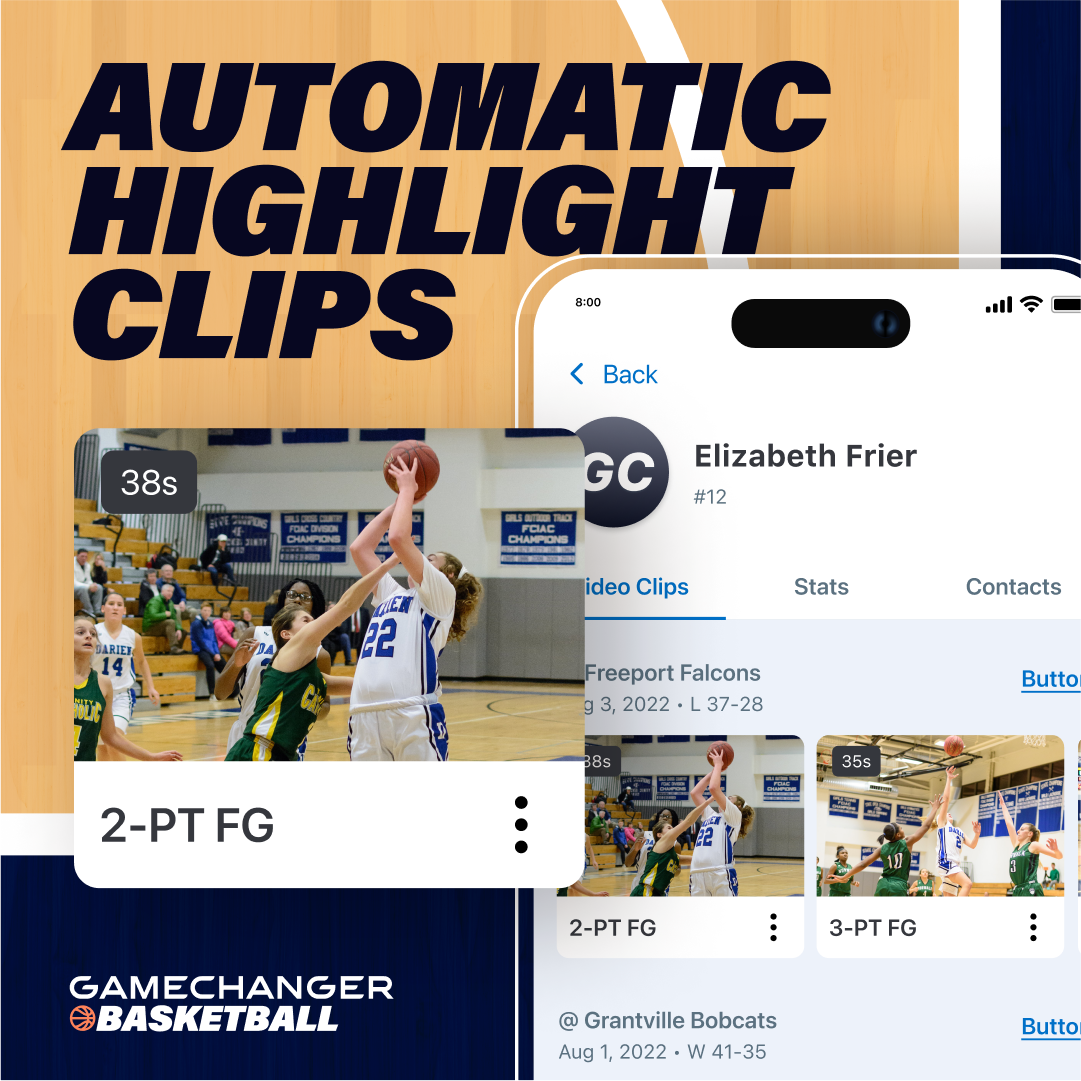
Hey, coach! Want to take your team to the next level this season? Introducing GameChanger, the ultimate game-day assistant with tools to give you a winning advantage. With GameChanger, you can track stats, keep score, and even live stream games, all for free! Get the stats and crucial game video you need to lead your team to victory, all from the palm of your hand. Coach smarter this season with GameChanger. Download GameChanger today on iOS or Android and make this season one to remember. GameChanger. Stream. Score. Connect. Learn more at GC.com/HoopHeads
THANKS, ROB BROST
If you enjoyed this episode with Rob Brost let him know by clicking on the link below and sending him a quick shoutout on Twitter:
Click here to thank Rob Brost on Twitter
Click here to let Mike & Jason know about your number one takeaway from this episode!
And if you want us to answer your questions on one of our upcoming weekly NBA episodes, drop us a line at mike@hoopheadspod.com.
TRANSCRIPT FOR “THE TRIPLE DOUBLE” #15 WITH ROB BROST, BOLINGBROOK (IL) HIGH SCHOOL BOYS’ BASKETBALL HEAD COACH – EPISODE 1039
[00:00:00] Mike Klinzing: Hello and welcome to the Hoop Heads Podcast. It’s Mike Klinzing here with my co-host Jason Sunkle tonight, and we are jumping on for Triple Double #15. And this is the first Triple Double though with a Hall of Famer.
[00:00:15] Jason Sunkle: Wait, aren’t you in the Strongsville Hall of Fame, Mike?
[00:00:19] Mike Klinzing: I guess that’s true. That is true, I guess. So, maybe I misspoke.
[00:00:22] Jason Sunkle: Come on, man. Sell yourself a little bit short. I mean, it’s a big, first one of the I think Rob’s is a little bit bigger than the Strongsville Hall of Fame.
[00:00:30] Rob Brost: I don’t know. Nah, man, I don’t know. The Strongsville, I don’t know what that means, but I would like to be a part of that.
[00:00:33] Jason Sunkle: It’s his high school Hall of Fame.
[00:00:35] Rob Brost: Oh, well, that’s, hey, that’s something.
[00:00:39] Jason Sunkle: Are you in the Kent State Hall of Fame?
[00:00:40] Mike Klinzing: I am not. I don’t think I’m going to make the Kent State Hall of Fame. I think my Well, maybe there’s a veterans committee that I can get my, one of my friends on or something.
[00:00:50] Jason Sunkle: Sincere broke your record last year and your record would have stole, or it’s two years ago, your record would have been like 25 years old. Maybe you could be in the Kent State Hall of Fame.
[00:00:58] Mike Klinzing: It lasted a long, it lasted way longer than I had any right to hold any records. Let’s put it that way. So we’ll leave it there. Back to, back to this.
[00:01:06] Jason Sunkle: Sorry. I apologize. All right.
[00:01:08] Mike Klinzing: So, so first of all, Rob, welcome and congratulations on that honor.
It’s again. I think that obviously nobody goes into their career thinking that at some point they’d like to make any hall of fame, but clearly something that recognizes the sustained success that you’ve been able to have at Bolingbrook.
[00:01:25] Rob Brost: Yeah. You know, I jokingly say to people, it’s mostly because I’m old and I’ve been doing this a long time, but in actuality, you know, I’ve been the coach at Bolingbrook high school for 17 years.
And so that’s not a huge, you know, eternity of time, I guess. And so, you know, obviously having really, really good players and having really, really good assistants and having really, really supportive admin and community, all of that, you know, makes what I do which in actuality, I don’t think is as much as people think you know, makes what I do a lot easier.
And I’ve said this before to anybody that would listen, but Bolingbrook high school boys basketball is kind of like a big, you know, aircraft carrier with a lot of stuff going on. And I’m just the little rudder on the back that hopefully nobody notices. Right. And, but if the little rudder in the back that’s giving it direction, isn’t paying attention to what everything is doing, that big aircraft carrier is going to run ashore and bad things are going to happen.
So. You know, I, I liken it to that. But truth be known, it’s mostly because we’ve had really good players and I’ve had really great assistant coaches. And you know, that’s been the best part about it because the relationships that I’ve been able to forge over these years and the outpouring of, you know, former players that, you know, Either saw it on social media or heard from another player and then contacted me.
That, that is you know I got a little emotional sometimes, you know, with how many of the kids have contacted me and former players. And then on top of that, you know, then we were preseason number one. And so then a lot of players were, you know, contacting me about that. And so it’s just great to hear from them.
And great to have them still be a part of it. They’re obviously a huge part of it because none of it would be possible without them.
[00:03:41] Jason Sunkle: Rob, I want you to know too how much it meant to me that I was the first retweet that you had. I want you to know that. I, I just wrote that after I saw it and then, and then you retweeted me and then I looked and I saw that I was the first retweet and I was like Nah.
Why is he retweeting me first?
[00:03:56] Rob Brost: I did it now in, in my defense of you being the first one.
[00:04:04] Jason Sunkle: Well, no,
[00:04:05] Rob Brost: When something like this happened, which, you know, something like a hall of fame doesn’t really happen all the time, but I always attempt to respond to every single person. Not necessarily in the order that they got in, but maybe that was the first one I saw when I started doing that or whatever, so.
I try to respond to every single person as best I can. I’m sure I’ve forgotten a few. I’m sure I overlooked some. But I would never overlook you, Jason.
[00:04:36] Jason Sunkle: I, well, listen, you just wanted me to, you just thought that if I didn’t, you didn’t retweet me, I wouldn’t show up for this episode. But you probably thought
[00:04:42] Rob Brost: Yes, that is, that is true.
[00:04:46] Mike Klinzing: So all right. Well, Rob, the next question I’m gonna ask is one that you’ve probably already answered here for, for people, but when you think back to the start of. your run at Bolingbrook and you look at the totality of what you’ve been able to accomplish. I’m going to kind of put words in your mouth here, but I’m guessing that You’re going to say that the most important part of what you’ve been able to do and the biggest thing that you attribute your success to starts with the relationships, both the relationships with your kids, with your coaching staff, with the community, with the school administration, all those things.
Am I accurate in saying that that’s probably where you would place the biggest amount of, I don’t know what the, I don’t know what the right word is, but in terms of what’s been most important, the relationship piece of it, I’m guessing is probably the most important to you.
[00:05:42] Rob Brost: One hundred percent, it’s the most important thing and it’s really the only thing that matters.
The, the wins and the hall of fames and the state tournaments and the, you know, USA basketball assignments and the stuff that kind of happened, happens because of the relationship, right? And so obviously you have to have some sort of acumen to deal with everything that you have to deal with when you’re a head coach at this level.
And I think people sometimes underestimate that. You know, we play on Friday, but today, the last thing on my mind was, what are we going to do at practice? The things that were on the forefront of my mind are, are our kids, you know, getting prepared for finals. Are our kids healthy? Are our kids All of those things that people don’t necessarily realize when they come to see us play on, on Friday night.
So you know, those things are, happen because you have good relationships with your players and not everything is rosy all the time. I certainly don’t want to come across like, you know, it’s perfection at Bolingbroke High School because it’s certainly not. But, you know, we try to make it a do it all place.
You know, you have to do it all at our place. You have to, you know, be a good student. You have to be you know strong in the community and then you have to perform when it’s your time to perform on the court. And that’s part of it too. And so, you know, all of those things come from the relationships that you’re able to build.
And so, you know, when the coaches association contacted me about the I didn’t even, I wasn’t even aware I knew I was close, but I wasn’t even aware that I was over 400 wins and all of the things that I guess that they count or check boxes off. I don’t know what, what the criteria really is, but and to, to go in, you know, while I’m still coaching and while I’m still, you know, active and while we still have a very strong program, you know, at this particular time you know it is refreshing as well.
And so you know, I came to Bolingbrook for a reason and they brought me here for a reason. And it wasn’t because the basketball had been, you know, phenomenal before I got here. So you know, they had always had talent when I say they, before I got here, there was always talent, but I think we have been able to, you know, kind of cultivate it and fertilize it.
You know, make it grow in a way that is beyond, you know, my comprehension for sure. When I got here, the last thing I was thinking about was, Hey, am I going to be in the hall of fame and have 400 plus wins? And, you know, I, I just don’t think like that. And so you know, to have this happen and you know, to, to be honored by a group of what is really your peers and guys that have coached and they know what it’s like.
Is, is refreshing and humbling all at once. And sometimes it’s hard for me to talk about myself, but I’m a little bit forced to do it in these situations. Know, I’m just a, I say this as well. I gave the, you know, aircraft carrier analogy. I’m just a small spoke in a big wheel. That’s bowling, rook, boys, basketball, and, you know, from our booster club and The way they support us and all the things that go with I’m just proud to be the coach at Bolingbrook High School.
[00:09:29] Mike Klinzing: How much do you know about the process for being selected? So you hinted at the 400 victories. Yeah, I like who, who votes? What’s the process? How much do you know about the process? I don’t really
[00:09:41] Rob Brost: know. I got contacted via email several months ago saying my name was getting forth some group, I’m assuming it’s the board of the Coaches association.
And so at that point I knew there was a chance, but then at that point I wasn’t like running around saying, Hey, this could happen. And then I got the official letter, I don’t know, two weeks ago or three weeks ago, something like that, that said, you’re in the class of 2025. So you know, how many people are in
[00:10:09] Jason Sunkle: that class?
[00:10:11] Rob Brost: I’m not sure about that either. You could see, you could see how concerned I am about all of this. I don’t know. Oh, I, I, I’ve heard a couple of the names, but I haven’t been able to confirm, and I don’t, I’m not gonna like Yeah, well you’re not gonna blow seek it out or,
[00:10:26] Jason Sunkle: yeah.
[00:10:26] Rob Brost: Yeah. So at any rate you know, I’m just thrilled to be, you know, in the discussion or in, in, in the steamed group and you know, we, like I tell our players all the time, yeah, that’s all fun and everything’s great, but you got, you got a job to do and you got.
this stuff because you did your job. So you need to continue to do your job. And my job is to be the coach at Bolingbroke high school. And so every day I practice every day at school. You know, the, that’s, that’s where, where my focus is. Is
[00:11:08] Mike Klinzing: there anybody in the hall of fame that you know of, or who that’s in the hall of fame, would you most like to sit down and have dinner with, if there’s a name, if there’s somebody that.
You’ve seen in your career that you’d like to pick their brain or just have a conversation with.
[00:11:27] Rob Brost: Well, I, I would, I would say nothing against the Illinois coaches, but you know, my high school coach coach Jerry’s like, this was in the Iowa basketball coaches association hall of fame. And he won, I think 400, 500 games, something like that.
And so he w he would be my number one choice. He, of course, for the regular listeners know that he’s passed and he would be my number one choice. He was just a, you know, a great mentor of mine. And then, of course, Coach Showalter is in, you know, every Hall of Fame, and one day I know he’ll be in the Naeslith Hall of Fame, like the biggest Hall of Fame that there is for basketball.
And, you know, obviously my relationship with him. You know, helped me become who I am, not only as a coach, but as a person as well. And so those two guys would be the guys that I would, would pick. But luckily you know, I still, I talk to show, in fact, I talked to him today. So you know, all of those things are, and that relationship is still, you know, forefront on my mind for sure.
You know, when the banquet is. I think it’s in May. My wife said it’s May 3rd. I think she looked over all the . That’s my dad’s birthday. That’s a good day. Yeah, that’s why, that’s why they’re ha I think she, I think it’s May 3rd she put on our calendar, I think she read the literature that we got from the IBCA little bit more careful than I did.
So you know, I think it’s May 3rd. So
[00:13:02] Jason Sunkle: do they hold that in Chicago or where do they hold that at?
[00:13:04] Rob Brost: It’s actually at Illinois State. So in normal. And they have it at Redbird Arena and you know, it’s a pretty, pretty nice deal. I’ve been coach of the year a couple of times and been down for the event, but obviously I’ve never been down there as at like at the head table, like I will be this time.
Well, that’ll be a different experience.
[00:13:24] Mike Klinzing: Absolutely. And again, Rob, from Jason and I, a sincere congratulations for that honor. And I know, you know, sometimes it’s hard to really think about and appreciate that. in the moment as it’s happening. And I think that it’s something that, again, as your career goes along, you’ll continue to be able to just look back upon that and say, wow, that’s something that, again, as you mentioned earlier, just being recognized by your peers and, and by the committee that does the voting.
I think that’s an honor. I always feel like the hall of fame is something that means more as you go along and you don’t always in the moment as it happens, especially for you who isn’t retired. It’s still coaching, have a tremendous amount of success. You’re, you’re far more focused on what your, what your team is doing right now and, and what it, what it takes to continue to sustain that success.
And there’ll be a point it’s you know, in the future where you’re going to look back and I think appreciate this even more than you do in the moment. But again, from Jason, I, congratulations on that. It’s a. It’s a tremendous honor that not everybody who coaches high school basketball obviously gets an opportunity to, to be inducted into a hall of fame at that level.
So, so congratulations to you on that.
[00:14:43] Rob Brost: Yeah. Thank you guys so much. And thanks to everybody, you know, that’s a part of it. I just, you know, somebody tweeted yesterday, I love to hear coach Brose talk hoops. This is a person I’ve never met before, never seen, or, you know, really met at any level. And so I appreciate, you know, all of, you know, like you guys, and I appreciate the person that tweeted yesterday and I appreciate all of the people.
I appreciate the guy who emailed me two days ago about man left with questions about that. So it’s, it’s all encompassing, right. And it constant, I talk about that all the time with my assistants. It’s constant, you know, there’s always something that you need to address or something that’s going on. And I think that’s a good thing, right?
Because people respect you enough to ask you your opinion, number one. And then number two, they value it enough to a lot of times do what you ask them or what you suggest to them. And so you know, I’m thankful for all of those folks as well that have trusted me, not only with their kids. You know, with their programs and people that call and people I get on phone calls with and, you know, we’re, we’re talking hoop for sometimes a half hour, sometimes an hour, all of those people.
And I think you guys this platform has been, you know a refreshing a part of me growing as a coach and, and I appreciate you guys having me on as much as you do. And I look forward to, to continuing this the whole whole thing here.
[00:16:26] Mike Klinzing: To me, it just speaks to, again, the, the basketball community and what it’s all about and the willingness of, of all of us to share what we know and try to make the game better because we just simply love the game of basketball.
And that’s something that. I always say that I knew that prior to starting the podcast, but after doing this thing for six almost, what are we, we going on seven years, Jay? Almost seven, almost seven years. It’ll be seven in June, right? So yeah, so we’re six and a half years or whatever. And I, I feel even more strongly about how just tight knit and willing to share and just the love for the game that the basketball community has.
And certainly you and this particular set of episodes is just a great way for us to be able to give back and share and give you an opportunity to, to speak to people that are a part of our audience and share what you’ve been able to do in the game and hopefully help them to make their programs, their teams, their experience in the game better.
Then that’s really what it’s all about. So on that note, we’ll move from the hall of fame discussion to topic number two, which is more along the lines of Rob sharing his knowledge. And so the question or the topic that I threw at him was at the end of a practice, if you’re trying to end on a positive note, you’re trying to get the team out sort of on that high.
What’s an activity, a drill, something that you go to, good, could be a team building activity. It could be anything. I kind of left it open ended of what do you do if you want to kind of end practice on a high note with your team? And I don’t know if the question fit directly with anything that you do, but I’m curious to see what he’s going to say.
Half court knockout. That’s what he’s totally going to say right now.
[00:18:19] Rob Brost: I, I, I wish, I mean, He
[00:18:22] Mike Klinzing: throws a 10 bill down in half court and has everybody firing away until somebody wins the 10. That’s my summer camp trick, Mike. Okay, I like it. That’s my summer camp trick where I put the 10
[00:18:33] Rob Brost: bill, so. But to get to your question, I think, first off, let me just be clear that I think all of practice is important.
I don’t necessarily think a certain part of practice is more important or less important than the other. I also don’t necessarily think you have to end on something that’s. always spectacular or always great, right? My philosophy has kind of changed on that. I, my practices are now not as crisp as they were 15 years ago and that might confuse some people.
I, I think our practices are more choppy. I think they’re, uglier, so to speak. And it’s kind of like a game, you know, we do something for a while, we do it really hard and then we kind of have a timeout and we get water and we kind of, you know, reset and then we go and do it again. And so you know, like today I thought we had a really good practice overall but we ended with some competition shooting today, for example.
And so, You know, that gets competitive, but it’s also fun. There’s some, you know, good hearted trash talking going on between your teams. And, and I like that. And I think that’s good. Whatever can bring energy to your practice, I think is good. And I think having fun with your guys is an enormous part of it.
I think it’s much more important now than I thought it was when I first started. Right. I, I think, you know, as practice is going on, you know, I’ll, I’ll go around as practice is happening. Like, Hey, what’s with so and so today? You see him blow that layup and, you know, just in good hearted fire, like, you know, so I want to make sure that they’re free so to speak, and mostly in their mind, free to just be at practice.
Right. And it’s not so serious that every little thing. It is, you know, being hounded upon, right? And so I want them to be comfortable not only in practice, but mostly comfortable talking to me about, you know, anything, obviously not during practice, but, you know, I want them to be comfortable and I want them to know that you know, this thing that we’re doing, although really important and we want to win, it’s not as important as a lot of other things.
And so I think there’s a holistic approach to the whole thing. Right. And so that’s how I try to look at it. So I don’t know if we do anything specific. But like today I just turned to my assistants. I didn’t even have it on the, Hey, let’s end with some competition shooting and let’s get going with it.
And we put five minutes on the clock and did various competitive things. Some from the three and Jason brought up the half court. We were shooting from the volleyball line as one of the spots. So, I mean, that, that’s a spot that we would rarely shoot from in the game. And so, do you
[00:21:26] Jason Sunkle: participate in any of these drills, Rob?
I mean, I
[00:21:29] Rob Brost: mean, Jason, I don’t know if you know this, but I’m fat, bald, although the bald doesn’t really have to do with anything and really out of shape. So you know, I might get in and shoot a free throw or something like that, but I wouldn’t, I, I can’t even get in the shooting contest because there’s a reason why those AED machines are all throughout the gym and I don’t want to be the reason why that, that is, that, that is there.
So so back to the question, I, you know, we don’t do anything specific like every single day. To end on a positive note, I, I think the way our practice flows and, you know, I always talk to them as a group before practice, and then I talk to them as a group after practice is over and then and it, it just depends on how I feel.
So the end of practice is just us talking every time, even today, after everybody was running around the gym when they won and one group is doing five pushups, another group is running around like they’re won the national championship. You know, those are healthy things to me when kids are having fun, when kids are like, oh, and then another kid saying, well, you only did four of your five pushups, you know, just goofy things like that.
And I think those. are important snippets of time that, that are important. And I think you really gotta be confident in yourself as a coach to allow those things to happen and allow those things to continue to happen because that’s why kids play. And, you know, obviously they want to win and obviously it’s competitive and obviously we have a job to do.
I get all of that, but I, I’ve realized as my career has moved on that the having fun part of it is, is an enormous piece of it. And so we have to add that to it as well. And You know, sometimes I think coaches can take that too far. I, I, I like to think that we don’t take it too far. But you know, it’s just a feel thing.
And I’ve talked about that on this show many times. I just go off of feel almost all the time. Like what do I think we need? And then I’ll change the practice plan. I’ll throw it out. We’ll go to something else. And so I don’t know if that helped you at all with the question at hand, but that’s just kind of how we do it.
[00:23:49] Mike Klinzing: Well, so you’re talking about a fun B energy, I think are the two things that from what you just said that come through to me in terms of practice. So if you can keep the energy level high and you can keep the fun level by being balanced with obviously, as you said, working hard and making sure that you’re doing what needs to be done, you can have all of those things in your practice setting and therefore you’re going to come out of practice getting what you need.
From that particular practice session, when it comes to like the banter back and forth with players, like, Hey, man, did you check out Steve missed that layup or whatever it might be? Was there a point where did you start out your career having that kind of banter with kids or what point did you sort of change over?
Because the thing that, so I’m going to give you a story from just back again, this is back from when I was playing. And so when I was at Kent with coach McDonald, this is the story that I always tell to people. When they asked me, like, what were your practices like? And I say, well, there, they were very, very serious.
There was very little, I mean, you could generate your own fun because you were playing or you were at practice, whatever, but there was no fun necessarily being built into the practice. And I remember one time we were at practice, Rob, and one of my teammates like planted, I think we were doing some kind of four on four drill or something.
Maybe we were in shell and planted his foot. And his shoe ripped like Zion in soul. No, it was not Zion, but it was a similar, but it was a similar, similar theory to that. And it made this incredibly loud, what sounded like a farting noise and everybody stopped. Cause I mean, this thing was like, I mean, his shoe ripped, it made this huge, like, the, you know, like the stitching ripped and it just sounded like somebody had cut a huge fart.
And. Everybody in the gym, like it was funny, like everybody should have been like doubled over in laughter and everybody just turned and looked at coach McDonald to see what he was going to do. And he was just sitting there and he was like stone faced and everybody else just kind of looked at each other, stifled whatever laugh they were going to have.
The kid who’s shoe ripped apart, got one off to the sideline, they subbed somebody in for Boom, practice started. So that was kind of the environment that I practiced in all the time. And you look at that, you’re like, man, that’s crazy. And then at the same time, Kevin Mackey, who was the coach at Cleveland state
[00:26:29] Rob Brost: back
[00:26:29] Mike Klinzing: when I was, when I was in high school and, and then when I was in college, I would go down to play at their open gym sometimes.
And his players would make a shot. And then they would literally, he’d be standing on the sideline and they’d literally turn and swear at like, how do you like that? You know, MFR and this and that, you know, and I’m like, wait, like I can’t even laugh at this thing. And here are these guys going back and forth with this.
It was just a, it was such a dichotomy of how you can run a practice. And obviously both guys were successful in different ways and whatever, and there’s more than one way to skin a cat. But when I think about that banter back and forth with players, it’s one of those things that I think you have to find your comfort zone is the way I look at it.
[00:27:17] Rob Brost: And I think it’s a comfort level with the coach and you have to be yourself, right? And so kids understand if you’re being authentic with them and if that authentic ness for lack of a better term is being tough and hard nosed and that’s you, then that’s what you should be. And if You know, in my case, I don’t say a whole lot at practice anymore.
I, I, you know, I correct effort things. Of course, I, I correct some technique things and, you know, my philosophy is over the whole program. I get all that. But, you know, I’m, you know, my philosophy with all that has completely changed. In, in the last 10 or 15 years and where I wanted control of everything before.
And I wanted everything to be exactly a certain way and done a certain thing. And now I’m almost the exact opposite of that. And so it’s allowed our players some freedom and we’ve lost some games because because of it. But it’s just more my personality, right? I think when I first started, I. Would go to a college practice and then I would try to be like ex coach.
And then I would go to another college practice and then I would try to be like ex coach the next day, you know, the next week. And so. You know, that’s not really conducive to who I am. And, you know, people hear me talking about, well, it’s easy to be who you are if you’ve won 400 games and you, you know, you’re in the hall of fame and you can do whatever you want.
Well, no, that it’s the exact opposite is true because you have to you know, continue to do things the right way. Right. And the right way is different for different people. And so. The way I do things certainly wouldn’t work if I was at a different school per se. But I know our guys and I’ve known them for a long, long time.
Most of them have been coming to our camp for years at a time. And so particularly our best players, you know, have been in our, you know, area for since they were little. So it’s good and I’ve had their brother and I’ve had their older brother. And so you know, it’s. It’s fun that way and they know what to expect and you know, I know them and they kind of know me.
So that, that is all helpful for sure.
[00:29:39] Mike Klinzing: Yeah. And part of that is growing into yourself, right? No course. And getting an understanding of who you are. Obviously when you’re a young coach, a lot of your influences are coaches who you played for or coaches that no doubt you played under. And then as you gain more experience and you go to a college practice, you obviously can’t be that coach.
Maybe you steal one thing or one particular part of it that you can combine into your personality and use it in such a way. But I do think that it takes time for you to discover who you are and not just, we’re all copycats to some degree, but I think as you’re not a copycat of one person, you’re a copycat of, I take things from 25 people or I take things from 30 people or however many you want, whatever number you want to throw out there.
And then eventually. You become comfortable in your own skin and then you figure out, okay, how can I apply all the things I’ve learned, take what I need, take, throw out what I don’t need. And now this is who Rob Brost is as a coach, as opposed to this is a bunch of little things that I’ve just stolen from other people and tried to make a, make a kaleidoscope of, of coaching.
So I, I do think that that’s a process that you grow into and I think it’s something that if you have the mindset of continually learning and wanting to improve and get better and putting yourself in situations where you’re around other great coaches and where you can grow and learn. Like I think about you with the opportunities that you’ve had with USA Basketball and the minds that you’ve been able to connect with there and the things that you get to see and That there’s no way that that can’t help you to grow and become better.
And then now that you’ve had yourself established, you can take those things and incorporate them into who you already are as a coach. If that makes any sense.
[00:31:26] Rob Brost: Yeah, there’s no doubt about that. And I think about this all because every time I get back from a USA basketball thing, someone asked me, well, what’d you learn?
What X’s and O’s thing did you learn? We’re not reinventing basketball here. More I, I learned is the nuances of how to. You know, connect with players and how to pull a kid off to the side and kind of connect with him and like, Hey, Hey man, instead of shooting that three, maybe take it to the hoop next time.
You know, just little things like that, how people interact. And, you know, when you see guys like Charmin White, you know, who has multiple gold medals and, you know, double digit state titles, you know, he’s not reinventing the wheel, but he, he has a way of connecting with his players. And that’s what really differentiates him from everybody else.
And people think it’s some big, and he’s great at X’s and O’s don’t get me wrong. I think he’s awesome. But the way that he can connect with players and not only players, but with people in general is what makes him, sets him kind of apart. And, you know, so if you can gleam a thing or two from people like that You know, that, that I think is, is great.
And that’s the, the best part about experiences like USA basketball.
[00:32:42] Mike Klinzing: Absolutely. All right. Topic number three, keys to putting together a great scouting report. And whenever I think of a scouting report, I kind of think of it in two pieces. I think of what is important for you to know as a coach, as you’re preparing to play an opponent, and then to go along with that, how much of what you want to know as a coach.
is worth passing along to your players so that they can utilize it and not feel overwhelmed. Because I think no matter what level of basketball you’re talking about, it’s very, very easy to give players too much information that is either irrelevant to them, meaning they’re never going to be able to apply it, or you give them so much that They get confused and what they really need ends up getting lost in a larger message.
So I guess the question is twofold. One, what do you want to know about an opponent? And then two, what do you think it’s important for your team individually to know about your opponent?
[00:33:45] Rob Brost: Yeah, I think, you know, again, this is just how we do it. And I don’t ever want to come across like this is how everybody should do it.
But I have one assistant who handles all the scouts and he is, you know, Hedious would be a massive understatement of how he is. And he handles every scout for a reason because he likes it and he loves to break down film and all those things. So basically what I want to know is from a scoring standpoint, and we’re playing another opponent, who is scoring and where they’re scoring from?
The top three of, of, of those things. So who are their top three scorers and where do those top three scorers score from? That’s what I want to know. And then also the top three actions or sets that they run and the top three inbounds unders that they run. And once we have those things figured out, or my assistant has those things figured out, he’ll send me, I mean, a bunch of clip and then I’ll say, you need to get this down to X amount of clip to show the team, so like tomorrow.
is the day before a game. So tomorrow we’ll go over who the top three scorers are, where they score from, and their top three actions and their top three out of bounds unders on film first, and then we’ll go on the court and, and do those or defend against those, right? And so that’s as far as we go.
Now, obviously he has tendencies and individualized on their top six or seven players, usually just tendencies. Hey, if you’re guarding number 15, you know, he likes to reverse pivot and come back to the right all the time. If he’s driving left, he is going to reverse pivot and come back, right? Most of the time tendencies like that.
And so there’s a moniker of that, but we don’t, we don’t give our players and coaches are create think I’m crazy. We don’t give our players anything on paper, nothing. We don’t give them a sheet. We don’t give them, you know, all the tendencies written down. Nothing. We watch film, probably 10 to 15 clips max, but those are clipped, right?
So they’re quick. And then we go over those tendencies and then on the floor after we do our stuff, we go through those things on the floor for about 20 or 30 minutes. And so you know, obviously a lot of times we’re preparing for teams like today, we did a bunch of stuff in the full court that the team that we’re playing Friday does, but we didn’t tell our guys like, hey, this is what the team we’re playing Friday does.
We just, you know, run offense against the defense that they do. Like today we went against a lot of box and won because I’m anticipating on Friday they’re going to throw some junk D at us because. You know, we have one guy that’s averaging 25 and we got another guy that’s averaging 20. Then after that, we don’t have anybody over, you know, double digits.
And so, you know, I’m anticipating that they ran that, you know, a couple games ago against another team that’s similar to ours. So we’re preparing all the time, but for the specific scout, it is dependent on A, who we’re playing and then B, what my assistant gives me initially. And usually it’s a lot. I mean, he’ll give me.
The last four or five games shot charge. He’ll give me the last four or five games. And then I tell him to pair that down to 10 clips. And sometimes he’s not really happy with me about that, but we’ll pair it down to 10 clips and then I’ll tell him you have 15 minutes of film and you got 15 minutes on the court.
And so. We just want our guys to be familiar with, but not fixated on, if that makes sense the, the team that we’re playing. But we’ve prepared so much to defend certain sets anyways, that we just say we’re gonna guard this like we normally guard. We’re gonna, you know, ice this. 123 has the ball and we’re going to hedge this when, you know, 32 has the ball or whatever it is.
So we don’t do a ton of in depth scouting. My assistant does a ton. And then, you know, as the game’s going, he’ll be like, coach, if we need to foul, we got to foul. So, so he has all of that, you know, down, but we haven’t gone over with our guys, like who we would foul, where, you know, all that. We, That’s just for us.
So we’re way more prepared than our players, I guess, if that makes sense. But our players have just enough to, you know, play, but play comfortably. And again, I just go on feel on that. That’s just how, how we do it.
[00:38:35] Mike Klinzing: What does it look like on the practice floor when let’s say you are going to go against, maybe you’re anticipating a box in one.
[00:38:44] Rob Brost: Yeah.
[00:38:45] Mike Klinzing: Do you take A second group and quickly try to teach them the boxing one. So here’s what, like tomorrow,
[00:38:52] Rob Brost: tomorrow, for example, when we go out for practice and it happened a little bit today to coach my coach that does all the scouts, we’ll take five of the guys on a side court and start going over their stuff while we review our stuff, right.
Our specials, our things you know, our, you know, all of our stuff. And then. That’s 10 to 15 minutes. And then when they are ready, then they come over and run their stuff against us and their defense against us and their offense against us. And again, part of that evolves throughout the week, depending on how many days we have to prepare.
But a lot of days, like in big shootouts, like last week we played Friday night and then we played in the Chicago league classic, we’re playing a top team. in the country the next day. So we, we didn’t really have time to do that. So we came in early, watched the 15 clips, walked through, you know, 10 minutes on the court, and then we played.
And so that’s what I’m talking about. We, we want our kids to be prepared, but not paralyzed by the preparation. Those five, those five kids that go
[00:40:00] Jason Sunkle: off the sidecourt, are they
[00:40:02] Rob Brost: not your starters? Are they, yeah, those are, those are guys that wouldn’t normally get playing time if we were at a tight game. Luckily, knock on wood, we’ve, we’ve been able to play all of our guys in several of our games so far this year, which is a good thing.
And we’ve been in three or four close games already as well. So You know, normally those scout guys are guys that wouldn’t typically play a lot or at all if we were in a close game.
[00:40:31] Mike Klinzing: Is there one of those guys that loves to shoot and gets to be the top scorer on the other team? Every, every team has one of those guys that loves, he’s like, all right, I’m the number one scorer.
You are Jordan
[00:40:41] Jason Sunkle: Clarkson. You are Jordan Clarkson. You know, some guys will even come
[00:40:45] Rob Brost: ahead of two or three games ahead, like, Hey, can I be so and so? Cause they know he shoots like every ball for the other team. Can I be so and so on Thursday? And so, cause you know, like I’ll say, if we’re doing a scout, like I’ll say when you catch it from three, when you catch it, you can shoot a three at any time.
And if it hits the rim, we’re counting it. So like, that’s how tough we’re guarding the shoot, you know, stuff like that. So. You know, guys will anticipate that sometimes and be like, Hey, can I be soandso? You know, so and so’s the best player, but you have to have at least some of the physical characteristics of that player,
You can’t be like, you knows Kevin, you like rock
[00:41:22] Jason Sunkle: roast pretending to be LeBron James. Yes. Consider exactly
[00:41:26] Rob Brost: that. That’s a great analogy. Jason. I’m glad you came for the show. So that’s a perfect analogy. Yes. You gotta have at least some of the traits obviously. Another team’s best player. You are, LeBron
[00:41:36] Jason Sunkle: is balding.
So at least you do have
[00:41:38] Rob Brost: that. That’s it. Yes. Yes. But I do not spend near as much money on my body as him. And, and, and, and it showed.
[00:41:48] Mike Klinzing: All right. Let me ask you this.
[00:41:49] Rob Brost: Yep.
[00:41:50] Mike Klinzing: So in the, in the order of something, I don’t know if it’s funny, but tell me about a scout that went wrong. Can you think back to a time in your career where you had something scouted And you thought you had it all figured out and then the game went the opposite direction or a kid that you thought, this kid’s never going to score anything.
And all of a sudden that kid has, has a career game.
[00:42:16] Jason Sunkle: DeAndre Hunter like, you know,
[00:42:17] Rob Brost: This is a good example and it ended up in our favor. So it’s a great story itself is that being okay, we were playing an undefeated team last year at their place. They were like 22 and zero and we were something in two or something like that.
Yeah. Definitely. You know, I said to our guys, if this kid beats us from three, I will raise my hand at the end of the game and be like, Hey, this was a terrible scout, whatever. Well, we come out, the kid told us six for seven in the first quarter from three and you know, we’re down, of course we’re down like, you know, 23 to like, I don’t know, 11 or something like that.
And everyone’s just like, what are we doing? And we stuck with it. And the best thing that happened to us was that he went six for seven from three in the first half. And so we just stayed with it and we ended up beating them and winning pretty handily. But I mean, How many threes did he make the whole game?
Six? I don’t know. He, I think he had a couple in the second half as well. So maybe eight, but I mean, but he chipped firing and I mean, he got us back into the game. And so he’s a really good player and our point was like, if he gets to the lane, then he’s really going to carve us up. And so, you know, you have never, and it was allowed Jim sold out, of course.
I mean, even our players were like, coach, do you think, you know, we should probably go to something else? And we didn’t, we just stuck with it and it ended up being okay. Mostly because we have really good players and, you know, we kind of got back in the game and then he missed a few, but. It did not start out well at all, and it didn’t look good, but at the end of the day it turned out okay.
[00:44:02] Mike Klinzing: Scouting is always an inexact science. There’s always No doubt. Outliers that come in and you’re like, what, where did the, I haven’t seen this kid make a three or I haven’t seen this kid put the ball on the floor and go left ever. And suddenly the first six plays in the game, five of them are left handed drives for legs.
[00:44:18] Rob Brost: That’s exactly right.
[00:44:19] Mike Klinzing: It is inevitable that that happens. So no doubt. All right. Well that finishes up topic number three. So, Rob, again, before we wrap up, I just want to say congratulations to you on the election to the Illinois Basketball Coaches Hall of Fame. Tremendous honor for you, and again, we’re thrilled that you want to come on and share your knowledge with us and It’s always a pleasure to do these episodes.
It’s a lot of fun. And I know that you and I have traded texts before, but the friendship that you and I have been able to develop over the course of starting out doing a podcast way back when for our very first one, and, you know, here we are now after having done, I don’t even know, probably we’re up to 17 or 18, but this is the 15th triple double.
And it’s one of those things that You can never, you just can’t measure again what the basketball community you know, means out here and, and just the, the ability for, through this silly podcast for, for you and I to develop a friendship and for, for Jason and I to be able to have someone of, of your caliber as a, as a, as a high school coach to come on and, and share your knowledge has just been tremendous.
[00:45:33] Rob Brost: Well, this might sound a little sappy, but. It’s true. I like, I wouldn’t be who I am without you guys. And so it’s, it, it sounds like, you know, I’m putting a little more levity to it than maybe there should be, but I truly believe that. Right. And not only with you guys, but like my players, my admin, all of that, I wouldn’t be who I am.
And I couldn’t, you know, be who I am without you guys. And so you guys have been a tremendous, you know and I just appreciate both you guys on a personal level as well as a professional level. So thank you guys for everything you guys do. It’s really kind of you to say that after the analogy you just made.
[00:46:13] Rob Brost: I appreciate that. Jason, I really want to thank you for actually being on several of the episodes in a row after like a two episode hiatus there for a while. So I think that’s great and we’re really moving it forward. So thank you guys in all seriousness. Thank you both of you as well. So I really appreciate you guys.
[00:46:32] Mike Klinzing: Well, we are rolling on and the next time we talk, it will be 2025 hard to believe, but that will be Triple Double number 16. So again, thanks to Rob. Thanks to Jason and thanks to all of you out there for listening and we will catch you on our next episode. Thanks.