
STEVE BREITENSTEIN – SPORTS PERFORMANCE & LEADERSHIP COACH FROM WINNING LEADER – EPISODE 1004

Website – https://www.winningleader.com/
Email – breitensteinsteve@gmail.com
Twitter/X – @SteveBstein
If you listen to and love the Hoop Heads Podcast, please consider giving us a small tip that will help in our quest to become the #1 basketball coaching podcast.
Steve Breitenstein from Winning Leader has been coaching in a variety of settings for 20 years, spending the last 12 years as a sports performance coach in the private sector. He also coaches leadership development with Jeremy Boone and co-hosted “The Business of Speed” podcast. Steve previously served as the Director of Coaching at TCBOOST Sports Performance.
Beyond coaching speed development at a high level, Steve is an expert at leading and developing a staff and interns, small business development—including marketing and sales—and personal brand creation.
Steve holds positions on the Illinois State Board of the National High School Strength Coaches Association (NHSSCA) and the College of Lake County and McHenry County College Boards of Health and Wellness Advisory.
Be sure to follow us on Twitter and Instagram @hoopheadspod for the latest updates on episodes, guests, and events from the Hoop Heads Pod.
Make sure you’re subscribed to the Hoop Heads Pod on iTunes or wherever you get your podcasts and while you’re there please leave us a 5 star rating and review. Your ratings help your friends and coaching colleagues find the show. If you really love what you’re hearing recommend the Hoop Heads Pod to someone and get them to join you as a part of Hoop Heads Nation.
Get ready to take some notes as you listen to this episode with Steve Breitenstein from Winning Leader.
What We Discuss with Steve Breitenstein
- Being a highly competitive kid that was devoted to winning
- Growing up a multi-sport athlete before eventually choosing basketball
- The influence of his high school coach
- “Early on it was cemented that if I do what the coach is asking, I’m going to get an opportunity to play.”
- Coaching younger kids at a skills camp while he was in high school
- His first coaching job back at his high while he was working for the city
- Playing JUCO was “just this weird mix of characters that were all jammed together, trying to create a team setting.”
- “It is the hardest coaching job in America is being a JUCO coach.”
- “I never really enjoyed the coaching games aspect. I enjoyed working with the kids behind the scenes. That’s why I love the speed and strength side of this thing.”
- The tibia injury that ended his pickup basketball career
- “I have a skillset that I dedicated 15 years of my life to getting really good at, and it’s just useless at this point.”
- “I would consume anything and everything that somebody recommended to me to just try to gain some knowledge about what I was doing.”
- Getting his first speed/strength jobs (at a high and a YMCA)
- “I’m a savage by nature and an overachiever.”
- “I just showed up and tried really hard, even if I didn’t really know what I was doing at the time.”
- Working for somebody else vs working for yourself
- “Leading by example is not the end of leadership. It’s a very, very small piece of being a quality leader.”
- “I need someone to mentor me in leadership. I can’t just do this on my own consuming content from every corner of the internet and every book I find.”
- His connection with Jeremy Boone from Winning Leader
- Finding your direction as a coach, not just a title
- “If you’re the owner or you’re the head coach, every assistant you have on board, every coach on your staff, you’re aligned on the same path initially. It’s very unlikely that everyone just stays on that same path forever though. Eventually your assistant coaches need to go off on their own and become head coaches.”
- Coaching leadership in addition to sports performance and the work life balance he’s achieved
- “You can get faster as a basketball player by spending time getting better at your mechanics.”
- “Go into every day open, looking for opportunities, be open and aware of what’s going on around you. We get blinders on and we get stuck in the routine of day to day. And we just miss things that came by that could have been life changing, career changing moments that we just missed.”
- Lean into opportunities while keeping your guardrails up so you don’t get overextended
Like this show? Please leave us a review here — even one sentence helps! Consider including your Twitter handle so we can thank you personally!

We’re excited to partner with Dr. Dish, the world’s best shooting machine! Mention the Hoop Heads Podcast when you place your order and get $300 off a brand new state of the art Dr. Dish Shooting Machine!

Prepare like the pros with the all new FastDraw and FastScout. FastDraw has been the number one play diagramming software for coaches for years, and now with it’s integrated web platform, coaches have the ability to add video to plays and share them directly to their players Android and iPhones via their mobile app. Coaches can also create customized scouting reports, upload and send game and practice film straight to the mobile app. Your players and staff have never been as prepared for games as they will after using FastDraw & FastScout. You’ll see quickly why FastModel Sports has the most compelling and intuitive basketball software out there! In addition to a great product, they also provide basketball coaching content and resources through their blog and playbank, which features over 8,000 free plays and drills from their online coaching community. For access to these plays and more information, visit fastmodelsports.com or follow them on Twitter @FastModel. Use Promo code HHP15 to save 15%
Your first impression is everything when applying for a new coaching job. A professional coaching portfolio is the tool that highlights your coaching achievements and philosophies and, most of all, helps separate you and your abilities from the other applicants.
The key to landing a new coaching job is to demonstrate to the hiring committee your attention to detail, level of preparedness, and your professionalism. Not only does a coaching portfolio allow you to exhibit these qualities, it also allows you to present your personal philosophies on coaching, leadership, and program development in an organized manner.
The Coaching Portfolio Guide is an instructional, membership-based website that helps you develop a personalized portfolio. Each section of the portfolio guide provides detailed instructions on how to organize your portfolio in a professional manner. The guide also provides sample documents for each section of your portfolio that you can copy, modify, and add to your personal portfolio.
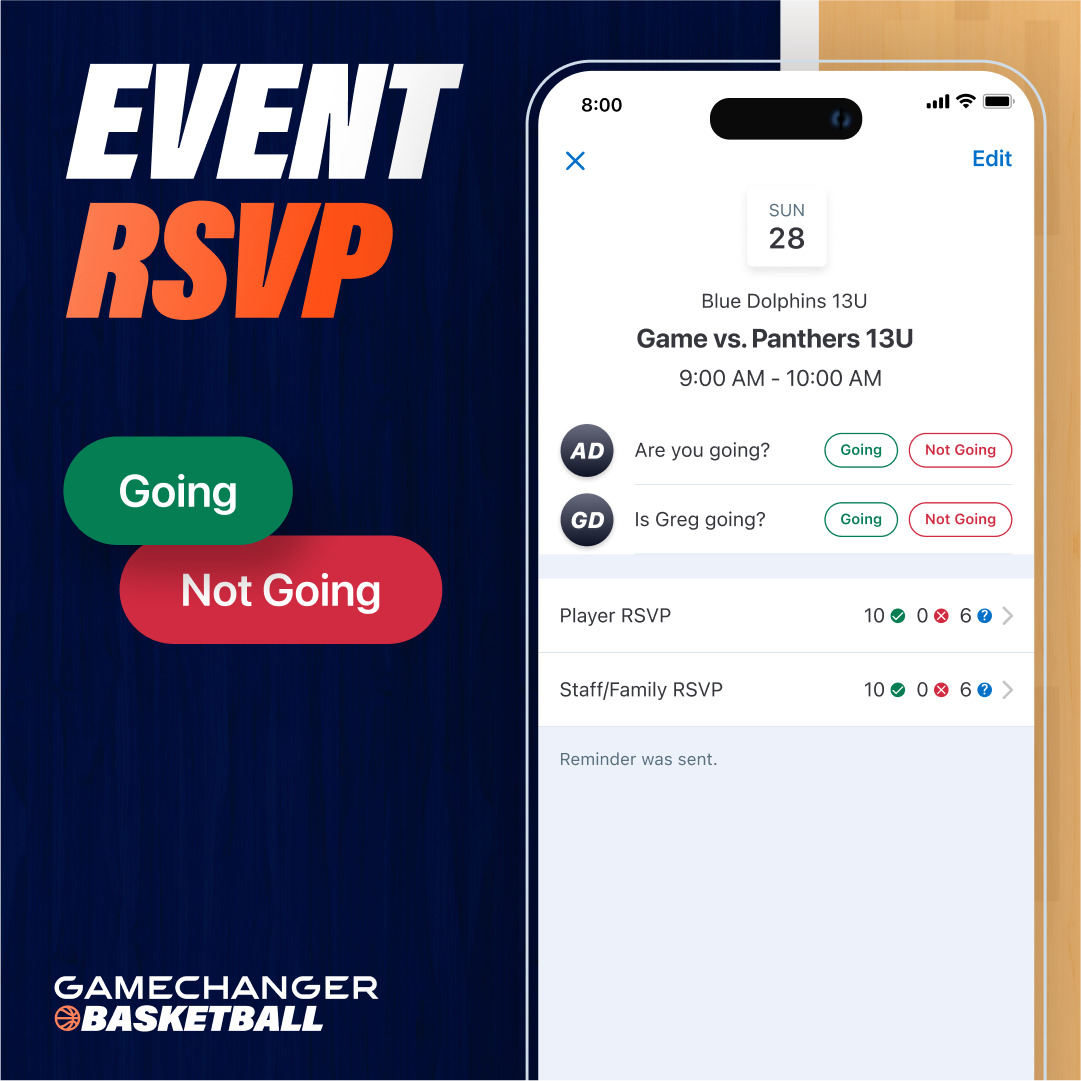
Hey, coach! Want to take your team to the next level this season? Introducing GameChanger, the ultimate game-day assistant with tools to give you a winning advantage. With GameChanger, you can track stats, keep score, and even live stream games, all for free! Get the stats and crucial game video you need to lead your team to victory, all from the palm of your hand. Coach smarter this season with GameChanger. Download GameChanger today on iOS or Android and make this season one to remember. GameChanger. Stream. Score. Connect. Learn more at GC.com/HoopHeads
THANKS, STEVE BREITENSTEIN
If you enjoyed this episode with Steve Breitenstein let him know by clicking on the link below and thanking him via Twitter.
Click here to thank Steve Breitenstein via Twitter
Click here to let Mike & Jason know about your number one takeaway from this episode!
And if you want us to answer your questions on one of our upcoming weekly NBA episodes, drop us a line at mike@hoopheadspod.com.
TRANSCRIPT FOR STEVE BREITENSTEIN – SPORTS PERFORMANCE COACH FROM WINNING LEADER – EPISODE 1004
[00:00:00] Mike Klinzing: Hello, and welcome to the Hoop Heads Podcast. It’s Mike Klinzing here with my co-host Jason Sunkle tonight. And we are pleased to be joined by high performance coach, Steve Breitenstein. Steve, welcome to the Hoop Heads Pod.
[00:00:17] Steve Breitenstein: Hey man, thank you guys for having me on and congratulations to you guys. I know you recently celebrated 1000th episode, huge accomplishment. It’s no small feat to have that kind of consistency.
[00:00:27] Mike Klinzing: It is crazy. Jason and I will attest to the fact that When we were sitting at his parents kitchen table, when we started recording the very first episodes of the podcast, one, we had no idea what we were doing, which I guess if you were listening to our, well, if you were around for the recording of our previous episode tonight, you would have thought we still, even after a thousand episodes, that we still had no idea what we were doing, but we got through the earlier episode and nobody will even know what that episode is because through the magic of editing, we’ll figure it out.
But yeah, we feel like we’re a little bit better at this thing. Then we were when we started and it’s hard to believe that we’ve been going at it basically three times a week for six years. So it’s kind of crazy, Steve.
[00:01:12] Jason Sunkle: The audio is far superior now to what we were running at the beginning. And it is clear and evident. If you listen to the thousandth episode, Mike, I listened to it today and you can hear all of our audio now. And we, we had to put a clip in Steve from the thought from, I don’t know, like year one or two. Yeah. And the audio is just. It’s bad. So it’s embarrassing at times. Those early ones for sure.
[00:01:40] Mike Klinzing: Well, Jay, honestly, not to interrupt the podcast with Steve to do some personal podcast business, but when I put the Jefferson Mason story in there, Jason. I did a lot of magical editing on that thing in order to get it sounding even remotely close to as good as it did.
If you would have listened to what it sounded like when I first queued it up to add it to the episode, I don’t know how anybody ever listened to anything that we were doing probably for the first two years. So to anyone who was listening.
[00:02:14] Jason Sunkle: Shout out to Riverside. Shout out to Riverside.
[00:02:16] Mike Klinzing: Yeah, shout out to Riverside and to anyone who was listening in 2018 that is still listening today.
Kudos to you for putting up with all this distraction and junk and everything else that we put out there. So a thousand episodes. Yes, Steve. Thank you very much. We appreciate that. And we are excited to have you on and talk about what you’ve been able to do in the coaching world. Let’s start by going back in time though, Steve, to when you were a kid, tell me a little bit about your athletic background and kind of how you got started in sports.
[00:02:49] Steve Breitenstein: Yeah, early on I was really attracted into the realm of baseball and hockey when I was really young. That’s where I spent all my time and it was just in my DNA. I had neither a mother or a father that ever really pushed sports or encouraged it. It was just something that called to me and pulled me in and you know, like of those highly competitive, fiercely.
Devoted to winning at all costs. That’s just kind of in some kids. And that is the type of kid I was. I was the one that at four years old was crying because my team lost at T ball. And I was just so competitive and wanted to win. And that guy carried me through my early years of athletics. And as I transitioned into middle school, it started to change the love I had for sports and basketball came into my life at no particular real influence, just, it was around and for something, reason or another, it just got pulled me in.
And I had to make that decision of, do I keep going with baseball, hockey, A little bit of soccer here and there. Or do I try to get better at basketball because I wasn’t very good when I first got into that in seventh, eighth grade. And that’s where my heart took me. And by the time I was a sophomore in high school, I no longer pursued any other sports.
One, I realized that I wasn’t a good at baseball, especially when people started throwing curve balls and I just started striking out all the time. That was a, that was a good indication. I said, I think my, that’s what I’m saying. Right. I think my record I had was that I hit the most foul ball home runs immediately followed by a strikeout.
Cause I would just. Pull the ball wildly. And then they’d throw me something off speed away and I wouldn’t even come close to it. And that was my baseball career. So basketball became the direction I wanted to go, but man, looking back, I joke now that six foot two, like 205 looks way better on skates than it does on a basketball court and I, maybe I messed up the whole thing, but it’s definitely take me on the journey that has been my coaching career. That set me up for that.
[00:05:01] Mike Klinzing: So as you started to take basketball more seriously and dropped some of your other sports, what did the process of getting better look like for you?
[00:05:13] Steve Breitenstein: It was that moment in time where you become just obsessed with it, where you’re shooting on your basketball hoop outside of your house all the time listening to anybody and everybody as far as just what they thought you should do and get advice about.
How you can dribble better, how you can shoot better. I was raw. Like I didn’t, I wasn’t very good early on. I just liked it. I had some natural touch, but man, I had no coaching. And it was one of those things in the Midwest, especially during the winter time you’re in love with it because you would go and shovel off the court nearby.
And you go shoot when it’s snowing still, just so you had some space to just go and play around. And that was when it really became, not only do I love it, but I’m sacrificing to try and get better at it. And the moment I received some actual coaching is when things really got exciting. And that influence was a coach named Dan DeBrooker who played at Batavia, was Aurora University in Illinois, fantastic shooter. And I remember the first day he watched me shoot a basketball and he was like, stop, what are you doing? I’m like, what? I’m shooting some threes. He’s like, no, we’re fixing all of that. And I mean, it was tough to hear at that time as a 15 year old when obviously I knew everything.
But man, it made a huge impact on me on what getting better really meant.
[00:06:41] Mike Klinzing: When you think about your experiences with coaches, both from a youth level, when you think about those other sports, and then as you got more serious with basketball, what are some of the things that when you look back on that time that coaches did, shared, said that are still influencing you today?
[00:07:07] Steve Breitenstein: That’s a good one. Early on, I remember that I never really had like a really great coach. I had dads that they cared and they, they did their best to make it fun for us in those early years. And that’s what kind of brought me along in it. But my inner competitiveness is what really drove it. It wasn’t that the, the coaches that I had were really teaching me a lot early on when we’re talking about 5th grade, 6th grade, 7th grade, 8th grade.
Yeah. In seventh and eighth grade, I wasn’t really even good enough to make the team in seventh and eighth grade. So I was playing for my science teacher. She was the coach. And I think even at that point, I kind of knew more about basketball than she did, but she, she cared and she wanted to help out. And she was just there as somebody to supervise when we were in the gym and supervise when we had games on the weekend.
And that always stuck out to me in those early settings. And then I think the real first time that I had coaching was by freshman year of high school. And that is when I had coaches that were really intense, man. I’m a little bit in that middle range. I’m not completely in the old school category, but I had some old school coaches that our warmup was a mile run and our, our speed training was conditioning.
That’s all we did. And if we got in shape, we’d be better. But they were the first ones that showed me that if I’m willing to sacrifice and follow their lead as the coach, I can be rewarded with playing time and opportunities. And so early on that kind of ingrained that, that if I’m going to follow this coach, I’m going to get a chance.
Now, later on in my career, there were moments where that wasn’t true and that was difficult to deal with. But early on that was cemented that if I do what the coach is asking, I’m going to get an opportunity to play.
[00:09:11] Mike Klinzing: Hoop Heads Nation, at this point in the interview, I completely lost all internet connectivity and Jason ably stepped in to complete the interview with Steve. So please enjoy the rest of the episode with Jason as your host. Thanks.
[00:09:37] Jason Sunkle: I’m going to just wing it. Here we go, Steve. All right. Go ahead. All right. So when you, so obviously we talked about you playing, like, when did you realize that you wanted to get into coaching or, or kind of taking over the mantle? Like who was the person that inspired you or what inspired you to do it?
[00:09:54] Steve Breitenstein: Yeah, man, the first opportunity I had was as a sophomore in high school when we ran our summer camp skills for all the younger kids. And I’m sure we all can remember attending those camps when we were in like seventh, eighth grade and putting all those seniors in high school on a pedestal. They were like godlike figures when you saw them.
And then if you saw them play in person, it was amazing. And I remember attending the camp and saying, I can’t wait till I can be that coach. That’s just the player that was on varsity level. And the younger kids just look up to me. But then when I actually got it, I really enjoyed working with the kids after my sophomore year in high school and just seeing their enjoyment, seeing them improve because I was giving them a tip, them leaning in to me because I was helping them become a better player and sharing experiences and stories.
That was the thing that got me really excited about. Man, this is kind of fun being a coach. This is, this is something we could kind of do. And at the same time, one of my best friend’s dad was a phys ed teacher and a football basketball coach at our high school, and that was really looking like this is an awesome job.
He gets to play badminton all day long, and then he coaches football and basketball and comes and plays in the open gyms a little bit with us. And to me, it just seemed like that was going to be the dream job of, man, I can be a teacher and then just coach, really coach kids up at different levels. I run a skills camp during the summertime, and this is what I’m going to do for the rest of my life.
That was those, those first really early influences into wanting to coach others.
[00:11:45] Jason Sunkle: Yeah, I think back to like when I was playing basketball and I, like you said, looking up to those players in high school when I was in middle school, like younger kid and like the guy actually looked up to is my podcast cohost, Mike he graduated high school in like 89, so I was like three when he graduated, but he was, he had just finished college and started his basketball camp and like me going to his basketball camps will got me started.
So it was just kind of crazy. And now here we are hosting a podcast together, isn’t it? Just. It’s a crazy world.
[00:12:16] Steve Breitenstein: The journey is so fun. You know, on a slightly similar story, the, my sophomore year, Dan DeBroeker, it was his first year out of college. And so he was 22. I’m 15, about to be 16. We’re pretty close in age in that space.
Fast forward though, I got opportunities to coach with him and he became the best man at my wedding. But again, it was a person I was looking up to as a player kind of first, cause he could just ball out as a 22 year old playing against 15 year olds.
[00:12:48] Jason Sunkle: Yeah, yeah.
[00:12:48] Steve Breitenstein: But yeah, you make that same impact and you go, man, as you look down the line of what has happened and what the experiences have been, you’re like, man, this is somebody who’s so important in my life.
But they were a coach first and now they’re one of my closest friends.
[00:13:03] Jason Sunkle: And that’s something we found with the podcast too is like. All these people we’ve had on, like, just who would have thought six years ago, I know we’ve referenced a thousand episodes, six years ago when we started this thing that we were going to get life, like lifelong friends out of it.
Like we’ve had, we’ve met we’ve met people out, we’ve gone to snow Valley. We’ve met people at snow Valley. We’ve like kept in contact. We’ve seen people go through like job changes and transitions, their kids coaching their kids in high school. And now their kids are coaches in college. Like they’ve gone from seeing their kids. It’s just, it’s just a crazy, crazy world. And I think how small the world is the Disney ride, it’s a small world. And literally basketball is a small world. So it’s crazy. So when you think about all your experiences and getting into the coaching realm, Like what’s your first step once you’re done with your playing career?
Like what, what’s your first step into into coaching slash you know, form performance based coaching and what do you do next?
[00:14:06] Steve Breitenstein: Yeah. I mean, here’s where we take. The wild ride of non traditional path into coaching. So I graduated high school and I really wanted to keep playing, but I was super conflicted about where or what I wanted to do.
And I ended up at the local junior college and I just was like, man, I’m, I’m done. You know, like you have that, that end your high school career and the recruiting maybe didn’t go the way you’re hoping for, and you’re just kind of over it. Man, I’m just going to school. So I went to school without playing for a year and I realized that I didn’t enjoy school at all without playing basketball and I was like, all right, well, maybe, maybe this isn’t what I want to do either.
And so I kind of, I left school and I just started working and I was just working hard jobs, like anything I could. I was. At Borders Books and Music back in the day before that went out. Oh man,
[00:14:59] Jason Sunkle: Borders, oh yeah, Borders is the place, man, Borders is the place. That was my spot,
[00:15:03] Steve Breitenstein: I worked for like The City, I worked at UPS but along the way, Dan DeBrooker, who I just referenced, who is the head coach at my high school, he reached out to me and just said like, Hey, I know like you’re not really doing anything yet, but we would love for you to just kind of be on the coaching staff in some capacity.
And so I was 19 when I started coaching high school basketball. So I was working with the sophomore and freshman level at 19 years old. And then at 20, I still hadn’t figured out what I want to do school wise. They pulled me up to be an assistant on varsity while helping with all of them.
[00:15:41] Jason Sunkle: So played with some of those guys, you had played with some of those guys, right?
[00:15:43] Steve Breitenstein: I had played with the guys that were seniors now, were freshmen when I was a senior in high school but I was always taking that seat of If they were leaning into me, I’m going to do everything I can to help be a coach on staff. So I was running their skills stuff during the summertime. And then I was helping with the basketball program and it was an odd path to get into it.
Cause I remember to going to a U of I basketball camp and Bruce Weber was speaking and Tom Izzo were speaking. And then everyone was going out to the bar afterwards. And I was like 20 years old. I’m like the only person that couldn’t legally be there of all these high school coaches in Illinois. But that’s, that was how I got into the coaching space and also had an opportunity to kind of coach AAU basketball at that time.
And I was like, well, I’m on a non traditional path now, but I wanted to coach basketball and that’s where I’m at. And that is how I got kind of initiated into coaching. Right now I had one year of school under my belt and now I was just coaching and working odd jobs, trying to figure out really what I wanted to do.
The, the weird twist to that is I was kind of a late bloomer physically. And so along this way, I was playing pickup basketball, I don’t know, 12 times a week. Somehow I was just fitting it around the schedule, right? But I was getting way better at basketball and I was maturing physically with my strength and my speed at the same time.
And so it kind of came to a point where like, I’m playing men’s leagues, I’m coaching, and I played a men’s league against some guys and they’re like, man, like you’re, you’re a solid player. Where did you play? I’m like, nowhere. Like, what do you mean nowhere? I’m like, I played high school, but like, I’m, I’m 20, 21 now.
I just play men’s league. I played D2, you should be playing somewhere that you’re, you’re too good to just be playing men’s leagues and just like wrecking 40 year old guys right now, like go play real basketball. And they were the ones that guy got me going to go back to the junior college and just raw, try out and play basketball.
And that’s what I’ve took me back into my playing career after I’ve essentially given up on it for two years. So I took a non traditional path that I went to coaching full time before going back to playing full time.
[00:18:05] Jason Sunkle: So when your first, so your first practice or tryout when you’re showing up and you know, obviously you’re a few years older than most of the guys probably trying out or showing up, like what was that like for you?
Like being, being, I don’t want to say being the old man, but, but kind of being the old man in the situation that you were in.
[00:18:23] Steve Breitenstein: Yeah, it was, it was interesting atmosphere. This was at the junior college by me, just kind of walked in for just the open gym tryout. And you, you had to kind of go back to re earning your stripes as far as being a player now I, I had a little edginess to me.
I always did. And so half of my team was from Louisville, Kentucky, and the other half of it was from local area in the Chicago land area. So weird kind of mix. And it was definitely a little off putting feeling like. These guys are 18 and now I’m 21. We’re, we’re in different points in our life a little bit, but in the JUCO, luckily you got crazy stories all over the place.
You know, I, I talked to my players at times. I’m like, have you guys watched Last Chance U at all? And like, yeah, I was like, did you watch the basketball one? Like, yeah, I watched it. I’m like, that was literally what it was like guys in the JUCO setting. Those are all real stories. People have kids, people have been in jail, people have should have been playing D1, but failed out of it.
It was just this weird mix of characters that were all jammed together, trying to create a team setting. At first, the quickest way to bond is attempting to fight everybody in open gym. Obviously, that gives you cred immediately off the jump with everyone that’s there. But that like brought us close together and allowed us to really do something special that that first year together where we won a conference championship, the first one in school history.
But my coach kind of leaned into me at the same time as an older guy that I was now putting like this captain’s role. And it just kind of felt like I was repeating this process of, all right, well, I’m playing, but I’m still in this coaching role at the same time. The head coach saw it in me. He knew I’d coached.
And so he leaned on me to help coach the guys on the team alongside. Not just be a player. So I had a little bit different responsibility coming in as a quote unquote, freshman basketball player.
[00:20:16] Jason Sunkle: Which was kind of a unique 21 year old freshman. You’re red shirted like three times or something like that.
Now that’s more common, right? After the COVID, now we got, well, there’s a guy, the other guy, there’s someone else got hurt. I is the guy who, I don’t remember what team he’s out for the football. But he said nine years of eligibility and he got hurt and like, Oh, you know who I’m talking to? That one quarterback.
And he, and they’re like, well, and they might give him an injury exception. So it’ll be his 10th year of playing. It’s so crazy. Dude, at some point you just got to move on. I’m not trying to be crushing guy’s dream, but you’re,
[00:20:46] Steve Breitenstein: Come on now. You have to. You have to. And I mean, that’s the point that I got to, right?
Is after battling through the junior college setting, it’s, it’s a tough atmosphere. If you guys have had any junior college coaches on here, man, props to them. It is the hardest coaching job in America is being a JUCO coach.
[00:21:05] Jason Sunkle: Especially now, right? Especially now. It’s even worse. It’s gotta be, like, we’ve talked at length about the transfer portal and how much people are just, there’s no one’s using, like, they’re using the transfer portals, the JUCOs and The NAIA schools, they’re just, they’re going there. They’re playing a year and they’re just trying to go somewhere else. They’re not playing for that team. They’re playing for themselves. 100%.
[00:21:29] Steve Breitenstein: And like I referenced my freshman year, we caught lightning in a bottle. Like we had a great mix of guys and we won a championship.
The next year was a 180 from that. It was a disaster. We had way too many guys trying to get their opportunity at the next level. And we forgot about winning. We forgot about actually playing good basketball. And by the end of that season in the history of my life, I’ve never quit a team in the middle of a season.
I’ve never thought about quitting a team in the middle of a season. That one pushed me to the edge as far as what I thought was going to be possible for me. I was like, man, this is just so unenjoyable. Every day is a mess. Like our culture is terrible. I don’t want to be a part of this anymore. And so coming out of that, is when I had an opportunity to play at Southern Virginia University, which is a small school down south with a buddy I’d known in high school.
I did a tryout with them and it was all set to go and I had no money to go there. You know, I was like, I need to make some money. And I ended up taking a job during the summertime selling home security systems door to door, hoping that I’d make my tuition from doing the sales job. Well, it turns out I sucked at it and I didn’t make the money to get tuition.
So I couldn’t end up going there for school, but. That was probably the best thing that ever happened to me is at that point being pretty much like a 24 year old now, not sure what I’m going to do, took another gap year. And I was just, again, working jobs and I’m like, I don’t know what direction I’m going.
I saw my buddy who is the head coach in the high school start having heart issues and he was having a hard time in his coaching position because of the stress. And for me, I never really enjoyed the coaching games aspect. I enjoyed working with the kids behind the scenes. Another coach on the staff actually had a Strength and Conditioning background, and he was letting me help with that, even though I didn’t know what I was doing, I was just following his lead.
And that’s where I started figuring out, for me, I don’t know if I really want to be a head basketball coach. But I love helping players develop and behind the scenes. That’s what I love doing. That’s why I love the speed and strength side of this thing. And maybe that’s where I’m meant to go. And that’s where I was at when I wasn’t going to school.
I was just working jobs. I was kind of helping out with this. And I had a different idea of what coaching really was and what a coach could be. And I had some serendipitous interactions with a few people that kind of directed me into going towards. Maybe personal training, being like a strength coach, being a speed coach of some capacity.
They directed me to go into UIC in the city, in Chicago, and At this point, I was like, maybe I could try to walk on there. Like it might be fun to play. And I had a very serious girlfriend at the time. And she told me that I’m not good enough to play there. She was very honest with me. And I said, I said, I don’t know.
I’ve played with them at the rec in like, I’m not bad with them at the rec. And forward to fast for you fast forward, a few years later, I got invited to come to watch a game and I brought my then wife In about three minutes in the game, she’s like, I think you could have played here. I’m like, I told you, I know that I could, the tallest guy was 6’4 at the time.
I could have been the 15th guy, but the course load was pretty challenging. And I wanted to really dive into the education point at this point in my career. And so I was like, I’m just going to retire from playing and focus everything onto moving into the next piece of my life, which is going into coaching.
I don’t know where I’m going to be at. I’m not exactly sure what I’m going to be doing. But it doesn’t feel like I’m coaching basketball anymore. I love the sport and I just want to be able to work with the athletes. And that’s what got me into like where I was at in college spending time in weight rooms and strength and conditioning departments before moving into kind of the private space.
[00:25:24] Jason Sunkle: So, so I got to ask you one more question. Like when you retired, did you just go full cold Turkey or did you still play pickup basketball?
[00:25:31] Steve Breitenstein: I played so much pickup basketball. It was stupid. I played even as I got into my career. And like actual coaching. I was playing about five or six days a week.
[00:25:42] Jason Sunkle: Oh man,
[00:25:42] Steve Breitenstein: I’ll playing basketball with the teachers at the high school that I was doing strength and conditioning work for.
Oh no. Oh yeah. 6 AM bringing the ball. Achilles or ACL? No, no, no, no, no. So my claim to fame is I didn’t get blown out by an old guy injury. I was driven the ball from the left wing across towards the mid court line. And a guy went for a steal at 6AM. Why? Like we’re all waking up still. And he got dove across me to try and get the steel and instead clip my knee and hyperextend my knee all the way back and shattered my tibia apart.
So I shattered my tibia. I had to get nine screws and a plate put in my knee while my wife was pregnant. And she was not very pleased with me at that time. And she said, you’re never playing pickup basketball ever again. So you’re officially retired. That was at age 30. So I’m almost at 10 years since I have played an actual game of basketball.
[00:26:41] Jason Sunkle: So just quick, I played I’m 37 now and I played a whole bunch and then COVID happened. And then like I have young kids and it just wasn’t the thing. And. I finally played in a summer league this year again for the first time. How did it go? Let me tell you, it went, I stayed, I stayed healthy most of the year which is really basically the time commitment, not that it required, I did not, the problem was, I’m not playing enough to, to be physically fit.
Actually theoretically get better. You know, I coached middle school basketball and I was playing with the boy. I played a coach middle school. I can actually coach the girls and boys team. And I was playing with the boys. I practice this because like there’ll be days I only have nine guys and I need to be the 10th guy and I play with them.
And I mean, there are seventh and eighth graders. I mean, I’m, I’m six, four. I’m not, they’re not going to do much against me on defensive end of the floor. They’re faster than me, but they’re not going to so that wasn’t preparing me to play in a summer league, but man, it was exhilarating playing basketball that there was one game.
I like, there was one game I just played so well, I played out of my mind. And I just said, man, this was totally worth it just because I played well, that one game.
[00:27:48] Steve Breitenstein: Like it’s so addicting, man. It’s intoxicating, isn’t it? It’s hard. And I explain it when people ask like, man, is it tough not playing anymore?
And at first it was so difficult and I said, now it’s a bit comical because I have a skillset that I dedicated 15 years of my life to getting really good at, and it’s just useless at this point. I just do nothing. The only thing I have is like when I work with some of my athletes and we’re in a gym space and I shoot a little bit afterwards and they’re like, oh man, you, you shoot pretty good.
I’m like, I haven’t played in 10 years. Don’t even say that. It’s so upsetting to me that my shooting is still okay and I don’t do anything ever.
[00:28:30] Jason Sunkle: And Mike is another perfect example of this. Like, he he’s got, he had records until Sincere Carry broke them at Kent State. He had records at Kent State 25, 30 years after they, he set them.
And Like I always joked with him that he should just come and play in our league when I was, this was like four or five years ago. You can just, Mike, you don’t even need to play defense. I just want you to stand in the corner. Cause I’m going to just pass you the ball. You’re going to hit a bunch of threes and that’s all he needs to do.
Cause he can still shoot the ball. That’s it’s impressive. And I mean, I haven’t actually seen, I don’t know if I’ve seen him shoot in a while, but man, yeah, it’s still there. It’s still there. It’s, it’s just, it’s like riding a bike, right? You just, you get back at it. So then you’re playing careers over and you’re finally like getting into the space that you’re in, like, what’s your first step like to, to growing what you wanted to do, figuring out what you wanted to do and like getting to where you are now.
[00:29:29] Steve Breitenstein: Yeah, man, I had no direction coming out of college still. I didn’t know what I was going to do. And in, in my field of like the high performance, sport performance, athletic development type things. Back then you had kind of either you’re going into personal training or you’re going to be a college strength and conditioning coach.
That was kind of it. This was like 13, 13 to 15 years ago or so is when you’re kind of getting into this space now. And I didn’t know where I was going to go. I was just kind of trying my best to connect with guys. I took opportunities to shadow people, just go and meet people. I would consume anything and everything that somebody recommended to me to just try to gain some knowledge about what I was doing.
And so I, right as I was ending my time at UIC. I was interning there. I really connected with the assistant strength coach there. We stayed in contact. I was working at a YMCA doing personal training and fitness. I was at the high school helping with strengthening and conditioning. I started interning at a facility in the Northern Chicagoland suburbs.
There was a speed training facility. So all about speed development, which I had no idea what it was about, but they had reached out to UIC asking if they had an intern when I was there and I got recommended for this internship. So I just kind of kept taking opportunities. I didn’t know where I was really going.
I didn’t have a great plan in place. I didn’t realize the type of control I actually had over my career. I was just hoping somebody was going to hand me a job at one of these points. And so then I interned there and start working part time there. I’m working part time at the YMCA, part time at the high school.
I’m just doing things all over the place, just trying to make ends meet. I just spoke at the college, my junior college today. I was talking to their intro to kind of this field, their class. And they were asking me like, how’d you figure it all out? So I don’t know. I just kept doing stuff. You know, I was just trying.
I’d coach here, take that opportunity there, do this. I was just trying to make money so I could pay my bills. You know, I was getting married and I just want to be able to do that. That was my number one thing. I didn’t really know what I wanted to do yet as far as what or why, but I was just going and throughout that process, I got offered, offered full time at the YMCA for a cushy $37,000 salary.
With the potential to go up to $41,000 if I did a great job at that. So I immediately quit that job. And then I just took a chance at going out into the North shore suburbs of Chicago and just take a chance on myself and there it was, I’m trying to sell me that I’m a coach. I can add value. I’m learning how to really coach the guys the way that this facility has been doing it for 20 years.
But my biggest asset is that I’m a savage by nature and an overachiever. You know, like so many of us as coaches were players that weren’t the most talented. We were the kids that we understood what working hard at a skill, getting better at it and overachieving led to. And then we become coaches to really connect with those types of kids.
Well, I still had that mentality. I had that chip on my shoulder still of like, I wanted to be the highest performer at this facility. I wanted to, I had all this checklist of titles I was really trying to get to. And that’s what drove me early in my career was just pursuing what I was saying was success.
How many clients and athletes could I work with? How many hours could I coach in a week? How much money could I make in a month? Could I get to be a director of coaching type title? Those were my first steps, man. I was just following it along and I kept getting opportunities. Cause I just showed up and tried really hard, even if I didn’t really know what I was doing at the time.
[00:33:11] Jason Sunkle: Yeah. So I take a lot away from that. Like I think showing up, like the last thing you said, showing up and just taking every opportunity you’re given I joked with Mike when we recorded our episode the other day about, about what we, like how, why coaching was the right thing for us. Like I literally fell into my job.
Like literally I started my, my teaching job and then like, The day of girls tryout, a coach backed out and they’re like, Hey we, we need another coach. And like, I didn’t have my teach coaching certificate. I didn’t have it. And then, and they were like, do you want to coach? And I’m like, sure.
And he’s like, well, tryouts are tonight. What can you get done before tryouts? And I’m like I’ll try to get first aid done. At least that’s a start. You just not allowed to coach tonight. I’m like, okay. And then the next day I showed up with my coaching license from the state of Ohio. It was just, it was a whole craziness.
Anyways, I take a lot from that. So you get, you take all these opportunities. What was the, what was the hardest part of getting started? What was the, what was the, like the thing, like. Is, was it not knowing exactly where you were going, not knowing the stability of the profession that you were in?
Was it not knowing how you were going to market yourself? Like, what was the hardest part at the beginning of the process?
[00:34:24] Steve Breitenstein: Yeah, I think luckily early on ignorance is bliss. Like I didn’t realize that I didn’t know any of that stuff. You know, the hardest part was just driving all across the state of Illinois to try and make a paycheck.
You know, there was times where I would start out in Crystal Lake at 6 AM, then I would go to a different facility in Crystal Lake, and then I would drive across to Northbrook. I would either intern or work with one client, drive back, do another client. Then I’d drive back out there, do some after school weight room type activities, and then drive back to work to finish the night off.
You know, and those, those were the biggest challenges was just trying to figure out like, well, how do I make this into a job that is more of a career than just a part time gig where I coach people here and there? And like being uncomfortable like that is what drove me to want to make it something.
There’s a lot of personal trainers. There’s a lot of coaches that they end up always working at three or four places. Cause it’s a bit scary to just say like, well, I’m not going to do this anymore. I’m just going to risk it and try to make that my thing. But there came that moment where I had to go and do it.
I just had to be courageous to just go for it. Not knowing for sure when you get to that point where you’re like, I’m 80 percent the same income way wise, I think I can make it if I do this, this and this. And so that was the moment that you had to lean into that was challenge. It was just not really knowing what’s next.
But having a direction enough that I think I can make something out of it. And really just, you’re kind of betting on yourself at that point.
[00:36:09] Jason Sunkle: What was the tipping point? What made you make that decision? Was it just the stress of having to travel so much? Was it? Not knowing how much work you’re going to have to do each day, the inconsistency, like what was the final, like the straw, straw that broke the camel’s back, so to speak.
[00:36:27] Steve Breitenstein: Yeah, for sure. All of that was just loading the camel up for sure. And then right around that time is when the YMCA offered me full time. And you know, like I had been, I had that as a loose opportunity to say like, Oh man, maybe if they offered me full time, I’ve been there for eight years now. In different capacities, like that could be all right to get something going.
And then when they came back with that was going to be my salary. And I was like, well, this is a dead end. Like, I’m glad I got to go there to start things off and just trial and error, figure out how to coach a little bit. But man, this is, that’s a hard ceiling. When someone says you could work your way up to 41K, like that’s the peak.
And you’re like, oh, well, that’s not going to be what I’m looking to do. And then you kind of look at this other opportunity and they go, well, there really is no like cap on you. You can coach as much as you want right now. You’re kind of making this much. I think if you just spend a little bit more time out here, we’ll fill your schedule up.
And that was really the moment where I was like, all right, forget it. Like, I’m just going to go all in on this. Like if I’m just there all day long, pretty sure I’ll be able to get clients coming through the door and there’s going to be opportunities. And that was, that was really what changed. It was just realizing that what I perceived as an option really wasn’t an option anymore. So we had to kind of shift what our plan was.
[00:37:40] Jason Sunkle: All right. Cool. So the next step in the process, like where, where, where, I don’t know if, I don’t know if we’re at where you’re at now or if there’s been other steps along the way.
[00:37:50] Steve Breitenstein: No, so there’s several twists and turns.
[00:37:53] Jason Sunkle: So what’s the next step for you? So where do you go after the YMCA slash what’s the next part of the journey?
[00:38:00] Steve Breitenstein: Yeah. So I ended up at the sport performance facility out here. It’s called TC Boost sports performance as a speed training facility. And that’s where I went all in to just see what I could make happen there. And man, I had great opportunities.
And after I originally took that job and said, man, what’s the most I can make. And I want to know what the record was for a personal trainer in their setting. I achieved that within a year and a half. And then from there I was like, well, the only other thing I can see is I want to be director of coaching.
Like that’s an awesome title and titles equal success at that time in my life. You know? And so three years later, I’m the director of coaching. I got a staff of eight or nine guys. And. I was a good coach at this time. Now, now I’m about four years into interacting in the space. I’m a, I’m a pretty solid coach.
I don’t really know how to lead anybody really. ‘m a coach, but I’m not really leading a staff. That’s a little different than leading players. And so I’m able to kind of have that position, trying to feel it out, figure things out for a couple of years, but frustration starts to set in. And I was realizing that although the title was exactly what I wanted, the impact I was having was not even close to what I was hoping to have for a staff of coaches that were looking up to me for guidance.
And I wasn’t receiving a ton of help. It was one of those situations where I was a savage as a coach and I kept getting put in these positions of leadership saying, well, if you can make everyone else more like you, Man, we’ll really achieve some great stuff, but leading by example is not the end of leadership.
It’s a very, very small piece of being a quality leader. It’s necessary. It’s a great initiation point for gaining followers and influencing, but man, that’s really all I had was that and I was getting frustrated and I was consuming everything I possibly could. on leadership. I consumed everything I possibly could on coaching.
Have you guys ever seen the 25 books to be a better leader? Oh, yeah. Like I was like, dude, I like ran through those things. What was your favorite one? I don’t even know. They all blend together after a while. Like I probably consumed like 50, 60 books in the course of a year. Like I was just crushing books.
And the content was so great, but the application didn’t quite fit in the settings I was in. And I was getting more and more frustrated because now it’s like, well, I know how this should go based on what was in, how to make friends and influence people, right? I understand how those conversations go, but they’re not happening the way that the book says they should go.
And man, I’ve, now I’m educated on it and I still can’t make it happen. Like, what am I missing? And is this what the future is for me in this job? Now I have this title that either I’m going to be the owner or this is it for the next 25 years. Am I just gonna be frustrated by underperforming as what I am holding myself to as a standard, as a leader for my team?
And I was a place that I, on the surface of everything, was having the most success ever in my career. The title, check. The income was better than probably 75% of the strength coaches and personal trainers you’re gonna touch base with at that moment. But I was coaching 12 hours a day every single day.
[00:41:25] Jason Sunkle: You weren’t in the right head space at that point.
[00:41:26] Steve Breitenstein: I wasn’t that. I wasn’t there and I was putting so many hours into this thing saying, it’s gonna pay off. It’s gonna pay off, it’s gonna pay off. I wasn’t feeling it and now at this point, now I have my first daughter was born and now I have my wife, my daughter, my wife owns her own business.
She’s a slot owner and there’s a lot of stress going on as far as I’m worried about work all the time at home and I’m worried about home all the time at work and I’m never present fully in either one of those. And I know I’m doing a disservice to the job. My, and my family, and it was a hard place to be in.
And that was that’s probably my lowest point in this profession was just saying, man, maybe I just need to get out of this altogether. Like, if this is what it’s going to be like for the next 20, 25 years, like I’ll do landscaping and construction maybe, and just turn my brain off and just become like a robot out there.
And I had that conversation with my wife, like, I don’t think I can do this any longer. And it was a tough point, but serendipitously people. And opportunities come into your life when you need them most. And around that time, I was invited to attend a strength conditioning clinic for high school strength coaches in Indianapolis.
And I’d been reaching out to a coach to have on one of my first podcast variations back in the day. I’ll self promote The Speed Podcast. It’s since dead, but if anyone wants to go back and find it. Resurrected it. Resurrected it back from the dead.
[00:42:52] Jason Sunkle: What year was this?
[00:42:52] Steve Breitenstein: Oh God, this is maybe. 2017 ish. 2017 ish was the first iteration of this, but I’ve been reaching out to a coach named Jerry Boone for a while, trying to get him to come on the podcast.
And he was very friendly about it and said, yeah, man, let’s schedule this. Now I’m very, very close with him. He’s probably my closest friend. And I just realized he’s very aloof about being on podcasts. So he was saying it to be nice, but he had no intention of actually being on the podcast with me.
[00:43:24] Jason Sunkle: We’ve met a few of those people who say, Oh, Oh, come on the podcast. And then they never respond. They never followed through.
[00:43:33] Steve Breitenstein: But I saw that he was going to be at this conference. He was speaking and I said, Oh, I got him. Like I got this guy. I’m going to, I’m going to nail him when I see him there. And so I was in a giant gymnasium in a, in a, a weight room area that was massive at Noblesville high school down in Indianapolis and Micah Kurtz, who now is the president at Oak Hill Academy was presenting and he pointed pretty much right at me and goes, there he is.
There’s the man. And I was like, Oh man, I don’t even know this guy, but he’s pointing me out and saying I’m the man. And so I like, I’m looking around, I turn over my shoulder and Jeremy Boone is standing right there behind me. Less than two feet. He just snuck in. And in that moment, it’s so easy to shy away and just be like, oh man, it’s awkward that he’s right there.
Or you go, man, there’s a reason why he just walked in behind me. I’m going to really take advantage of that moment. And thankfully that’s what I did. I immediately, when the presentation was over, turned around, started a conversation, followed up about the podcast. And he’s like, again, yeah, man, that sounds awesome.
I’m glad you’re able to touch base with me. Why don’t you come to my breakout? And I said, Hey, I’m in like, I want to see what you’re all about as a coach. I didn’t really know a ton about him. I knew that he was a good name and he did good stuff, but his breakout was all about leadership. And I’ve never been so challenged as a coach to say, yes, I need someone to mentor me in leadership.
I can’t just do this on my own consuming content from every corner of the internet and every book I find. And we followed up and I ended up investing in myself to go through his personal leadership mentorship program. This was about nine years ago and it made all the difference in the world. I came out of that understanding how to make a better impact with my team, where I was really going wrong with my approaches to it.
And it gave me a little bit more direction about what I really wanted to be doing impact wise. Getting out of that mindset of I have this title and saying, well, what do you want to be doing impact wise? In this field and don’t limit it to what you’re currently doing. What do you really want to do? And when I came out of that completely sparked a revelation of what I was doing for the people I was leading and what I was trying to do impact wise in the field as a whole.
[00:45:59] Jason Sunkle: What was the biggest change you had to make that you felt at the time, like after going through that, well, like what was the thing that you said, I need to change this to not only better myself, but better the people that were working underneath me.
[00:46:11] Steve Breitenstein: Yeah, man. I. The first part was just me. I had to change me. I was so caught in my own story and narrative, and I kept getting caught thinking I should insert the rest. You know, in my moments of frustration, I would see someone else get a position somewhere and go, man, that should be me having that. Or I’d see somebody get recognition at a clinic.
And I go, that should be me having that, that certificate of recognition for what I’m doing. Half the time I didn’t want those jobs, but my frustration in my desperation for someone else telling me I was doing good. And that I was doing the things the right way was completely clouding my ability to really help lead the people on my staff because I had no direction.
So I’m trying to force them into the box that I’m in because I thought that that’s what they should do in order to be successful in the field. And the challenge was identifying what I wanted to be doing clearer and then providing that same idea for my coaching staff, like what, what’s the impact you want to be making.
Whether it’s here or not, hopefully it’s bigger than just being a part time coach here, coaching a few sessions a week. And how do we really put a plan in place to help make that a reality for you? Now, now I’m making an impact with those I’m leading, but it’s also checking the box for me to feel I’m making the difference that I want to be making.
It wasn’t Just coaching athletes. I wanted to see coaches and athletes achieve things they didn’t even know were possible because they interacted with me and I was able to inspire and guide them through that. That’s what was giving me the satisfaction now in my career, but I needed that direction. I didn’t have it.
I thought it was just going to be another title was going to be what was going to make me happy.
[00:48:11] Jason Sunkle: So how quick of a process was that for you to make that change?
[00:48:14] Steve Breitenstein: Not quick. Not quick at all. It was hard work, man. It sucks. You got all this information inside your brain and you’ve got years of trying to work through this stuff.
And it’s a process that takes about 16 weeks of really diving in and wanting to be a better leader for others. But you had to have clarity around why you want to be a better leader too. Again, I couldn’t just have it be the title of I’m a good leader. It had to be more than that. It had to be, there’s so many layers to, at this point in my life, I was just in the perfect place to lean into this and just give up on the control of saying, I know what I’m doing.
I’m a good coach. You know, like, and just say like, man, maybe I just don’t know anything anymore. And let’s start from scratch to a degree. And then after a year of really implementing it is when it became a little bit more. Of a second nature as far as some of the language pieces and some of the ideas and how my thought processes were going on versus just trying to regurgitate quotes and ideas.
And I’m sure that you guys have run across people like that where they just quote other people all the time and it’s, well, yeah, I get it. You memorized what they said, but have you really made it what you believe? And how you make it what you do day to day, instead of just referencing what other people have said over the years, over and over and over.
And that was the challenge, right? Like I need to ingrain it in me and it needs to become me versus me just quoting somebody else.
[00:49:51] Jason Sunkle: Yeah. I will this first of all name remain nameless because I’m not gonna say anything, but I just think back to someone that I’ve seen coach in my lifetime recently.
They’re all about using quotes, and I’m like, Mm-Hmm. , they’re so, it’s, it’s, to me, it’s empty. It’s, Mm-Hmm, , it’s empty. It doesn’t, doesn’t mean anything. Just regurgitating and saying the same thing, or like maybe changing the phraseology a little bit to make it sound a little more. Like current isn’t gonna, if you’re not gonna do things the right way and you’re not going to, I just, I feel like what you just said, the quote thing really, it does, it makes me think of someone once again, remaining nameless, just, just like not Doing it the right way, in my opinion, I just,
[00:50:44] Steve Breitenstein: Yeah, it’s, it just feels inauthentic, a hundred percent it just, it just comes across like it’s emotionally just dull and it doesn’t connect and, and that was the challenge is, is how do I make this me and how do I get me to think like this all the time?
And this is how I want other people to experience me every single day. I want to provide value to them in every interaction. And this, this was the turning point, right? What was really neat, unbeknownst to me, is that along the way, as I was going through this mentorship program, the person on the other side that was mentoring me identified something that they liked.
And so throughout this process, they started pulling me in to opportunities to be in leadership conversations and leadership coaching with. Some coaches around the country, athletic directors around the country, doing small parts here and there, offering little challenges, which I thought was just part of the program, right?
Like, Oh man, I went through this program. Now I’m being tested over and over. Now I know I was being tested. Yeah, because they were hoping at some point I’d be able to come on board with them and do this as a job. And through COVID is when I realized that the direction of the facility I was at was not really aligned with me anymore on the same path. With anybody that you bring onto a team, if you’re the owner, you’re the head coach, every assistant you have on board, every coach on your staff, you’re aligned on the same path initially. It’s very unlikely that everyone just stays on that same path forever though.
Eventually your assistant coaches need to go off on their own and become heads. You know, eventually every coach on your staff has their own opportunities in their own pursuits and passions and they’ve got to pull off the path. To this point in my career, I’d been locked in on the same path as the facility.
We were one in the same and coming out of COVID, I just realized that my path was taking me a little bit different direction and I had that conversation with my owner saying, you know what? Like long term, I’m not going to be here. And of course their response is, well, what’s the timeline? Should we be ready for this?
I said, I don’t know. Cause I don’t have the opportunity right now to leave. I’m not searching for the opportunity. But I just no longer term I’m going to be pursuing something a little bit different. And so over the next four to five years, it was this game of I’m, I’m pouring into the facility I was at working with basketball programs, baseball programs, soccer clubs, field hockey programs, adding value, speed wise, jumping, strength training, just pouring into athletes, nonstop pouring in my coaches nonstop, and then on the other side of it, I have a mentor now who’s slowly pulling me in and scaling opportunities in this leadership space.
And up until this past fall, fall of 2023, the conversation turned into, at some point, I want you to come on full time with me. And I said, man, I love that. I’m excited for that challenge. I can’t wait to do it. I’ll do it tomorrow. No, no, no, no, no. We’re not there yet. I’ll let you know when it’s time. We got some things we’re working on.
There’s a couple more things I want you to kind of work on for yourself and I’ll let you know it’s time. And so I kind of again laid it out to the owner to say, man, like, I love what I do here. I love this facility. I love everything about it, but for me, I got to leave. And it feels like it’s coming sooner rather than later.
You just want to be up front and honest. I never want to like leave us in a lurch if I take another opportunity. Well, we went through the fall. It’s feeling like it’s happening without actually happening. Like there’s just these conversations, excitements building around the opportunities, man. We got some stuff on the, they’re on the burners, man.
If it hits, we’re in. But after years of kind of being in this business, you know that you can’t control if things hit or not. So you’re, you’re calming yourself down, not trying to get too excited. Come Christmas, Christmas Eve, Christmas day, I get a call Christmas Eve from, from my mentor Jeremy Boone. And he goes, Hey man, how’s it going?
I go, it’s great. You know, Christmas Eve, we’re heading down to Charleston tomorrow morning. We’re excited. After he goes, all right, man, I got good news. I go, what? He’s like, everything hit. And I go, what, what do you mean everything hit? He goes all this stuff we were just talking about, they hit, we’d have to have a serious conversation.
I’m like, yeah, it was everything hit. And I go, oh, so what’s the conversation? He goes, I need you full time. I go, when? He’s like, tomorrow. And I’m like, oh man, well, we both laughed. I’m like, all right, well, we know that’s not possible. I’m leaving out of town, but three weeks from now, I need you to come with me out to Vegas and we start kicking this thing off because we’re going to a national convention for one of the corporate accounts we’re going to have leadership wise.
And so I had to return back. I had to kind of say like, I got three weeks. I want to do everything I can to help the facility be ready for me to leave. And then I’m jumping into this, just going for it full bore after a eight year kind of mentoring process to be able to bring me into this space. And so that’s what happened.
February 2nd of 2024, I got pulled from being in a performance space for 15 years coaching. As my only kind of job really that I love doing for 20 years. Now I’m coaching leadership and small business development as my coaching realm, and now I get to do the individual coaching for athletes as a fun little side piece worth versus man having to jam my schedule full to make a living.
So that. It was kind of a wild ride of like, well, how did I get into this space? And now that’s where I’m kind of living is in this hybrid entity type coach. I coach with Jeremy Boone and Winning Leader is the company that we coached through for leadership development. But then I’m a hybrid nomad coach that has no home when it comes to doing speed development, jump training.
I’m in a basketball gym one day. I’m in a turf facility the next day. I’m working with football players. I’m working with basketball players. I’m working with a basketball team. It’s all over the place.
[00:56:59] Jason Sunkle: The thing is probably now too for you is like, you get to make your own schedule and it’s not like when it comes to that kind of coaching, like you don’t have to, like, obviously you, you might set it.
It’s not like you can just up and say, I’m going to coach this kid today, but like you can pick and choose, right? Like that’s more, it’s, it’s not, it’s not like you’re not. Not that you were doing it for the man before, but now it’s like, I want to do this today, so I’m going to do it.
[00:57:25] Steve Breitenstein: Dude, you’re spot on, man. That was a huge part of it. You know, like I always said, there were three boxes for me when it came to just career opportunities. I needed to have better control over my time. I needed to have more autonomy over what I was doing. IE for me, that meant loss, less bosses. I’m not very good with having lots of bosses.
And then I needed to make the money that just made sense. I was never somebody who’s like, man, I just need to make this amount anymore. It was like, I just need to be able to pay my bills and my family to be okay. And that autonomy piece has been fantastic. As far as saying, Man, I worked with a lot of clients over the years.
I’m probably in the thousands and thousands of clients at this point, and there were some that, man, they paid the bills. It wasn’t the most enjoyable hours of the day, but you had to fill your schedule up. And so now it’s really who are the athletes that really get value the most from it? Who are the ones that I see?
A little bit of myself in that, man, if I would have had somebody like me when I was in high school, I would have just ate that up. I’ve been sweeping the floors to pay for sessions like, just, just give me a chance to learn and I’ll try to apply this like crazy. And so it’s fun to be able to do that.
And then I have fortunately some, some colleagues that I’ve made over the years that have an AAU program or a feeder program. That I can jump in and just add speed and jump training and athletic movement to their programs and just add value to their program and their kids without having to do it for eight hours every single day.
I’m able to be at home, see my kids, leave for a couple hours, come home, still see my kids before they go to bed.
[00:59:02] Jason Sunkle: And that all of a sudden, that’s, Ultimately that, that probably fills your bucket way more, right? Like that just. That was it, man. Fill in the bucket. So what’s your current, I’ll ask you a few more questions and then we’ll wrap it up.
what’s your day to day schedule? Like I’m, and maybe you don’t have a, maybe you don’t have a set schedule, but like what is a typical day in the life of Steve right now?
[00:59:26] Steve Breitenstein: Yeah, man. So with the, the leadership. Work that we do, it, it keeps us on our toes, which is what I love about it.
It’s funny you asked that question. I literally was just speaking at the college and that was one of their questions and as I shared it, a bunch of them started just like turning white. I think at the chaos that is my life and my week because at times based on speaking engagement or corporate commitments to go and do site visits, I might be traveling.
Three days a week. Or I might be at home on zoom calls for five to six hours a day meeting with individual clients or small groups, or going through big team calls in the leadership space, or having just phone calls with some of the, the businesses that we do mentorship with. So a lot of it is me interacting with people all over the country throughout the day.
Then we have a platform where there is kind of a social aspect to it with prompts and responses. I interact with people throughout those throughout the day as being able to like serve our clients and the leadership side. And then in the afternoons, I have some free time cause people usually don’t want to really dive into leadership calls when they’re at home with their families.
So that allows me to be open in the afternoons that sometimes I’ll be able to go over and hop in an AAU practice here, or we’re with a couple of clients there, or I’ll go, I, the random opportunities are what’s so fun about it to me because it keeps us so fresh every single day. Thanks For the first time in my career, I’m able to just go and visit as a, as a coach, it’s so great to be able to just go and talk with another coach or go and watch their practice.
You know, like if you’re in the. the sports realm, right? But for me, I have these invitations that have been sitting for years as far as like, Hey, come over to my gym. I’d love to have you watch me coach and give me some feedback. We can talk shop a little bit, man. That’s awesome too. I love doing that.
Like I was able to go to a facility today that they invited me over. It’s a boxing and Muay Thai, Jiu Jitsu. But they knew me and they’re like, we want to do like some speed work and just like go through a workout with you. Like whenever you have time. And so I was able to go over there for an hour and just take the owner and three of his coaches through some speed work.
And so that’s like a rough outline of my day because it’s wild every single day. But at the same time, I’m with my kids. Like I have two kids in school that I walk them to school every day, mostly throughout the week. I’m there to get them when they come home. My son is two years old and so we get to hang out all day.
He takes full advantage of me when I’m on zoom calls, just bringing me snacks nonstop because I can’t tell him no, cause I’m on a call. So I have to open it in secret. So he takes advantage of me. And then Saturdays get like a client in the morning, maybe a couple of basketball players in the afternoon, just cause it’s almost basketball season.
They want to train a lot. And that’s a week for me, man. It’s, it’s all over the place and I love that it’s all over the place.
[01:02:33] Jason Sunkle: That’s cool. So I know you mentioned, you kind of hinted at earlier, we’ll do a little cross promotion here. Like you have a podcast now. Do you do some stuff with the podcast? Is it linked to leadership or is it separate from leadership or?
[01:02:45] Steve Breitenstein: Yeah, man. So another piece is right after that, that COVID time, another coach that I connected with at that same event where I met Jeremy Boone, he, And I became friends starting through the COVID kind of process with just more phone calls and engaging. And in the fall of 2020, he was like, man, I’d like to start a podcast.
And I’m like, sweet, man. I’ve already, I’ve had one. I ran through it pretty hard on just purely a interview basis. And we kind of just brainstormed like what kind of podcast speaks to us that we wish we had as a younger coach, but still is interesting to us at this point in our coaching careers. And we came up with the business of speed is our podcast.
And it is three segments. The first one is performance training of some capacity, whether it’s speed, jump training, strength training, but we both have a speed background. So it’s heavily biased towards how do I really get athletes to run fast? How do I get. Non traditional athletes of the speed variety to really move better.
Basketball players specifically are one of my favorite ones to work with, with my basketball background. They get away with horrendous running mechanics all the time because they just have amazing lower leg strength.
[01:04:05] Jason Sunkle: So you don’t know, you don’t know this about me, but I coach cross country and I coach and I, and I try and I drives me nuts when I watch basketball players running up and down the floor. I’m like, you have the worst mechanics in the world.
[01:04:16] Steve Breitenstein: It’s the worst and they run fast and they get away with it. It’s horrendous. I’ve worked with basketball players so many years in the speed side. And I’ll tell you for anyone listening, you can get faster as a basketball player by spending time getting better at your mechanics, 100%.
It’s not always the easiest task. Because basketball players are fantastic cheaters and they just figure out ways to move pretty quickly even though it is not the best way to do it. Not efficient. And so they’re so good at compensating. It’s wild. It, but it’s a battle, but I’ve seen it year after year, after year, after year, after year, that they move faster.
They move easier on their body. They jump better because of it. So it can be done. So that is, that’s the first part of our podcast is performance training. The second one is always about business development. Whether we talk about an entity coach like myself, who’s just a vagabond who just tries to find a spot to coach people.
Or you have a brick and mortar business, or what are we doing marketing and sales online, social media usage, but it’s always about business development. And our third segment, like you said, is leadership. And luckily I have a pretty good experience workload and leadership now that I’m able to hopefully share some insights about application, not just concepts.
There’s so much content out there, man. You can find everything everywhere. It’s the context and how you apply it is what makes all the difference, but that’s the business of speed podcast that we’ve been running for four years. Now, have you gotten your buddy on it yet or not?
[01:05:50] Jason Sunkle: Is he refused still?
[01:05:52] Steve Breitenstein: I did finally get him on there. I did finally get him on there. I figured since we work side by side and talk three times a day, every single day, I had to get him on there. So Jeremy Boone is on one of the episodes. Jeremy Boone, if you don’t know him, I recommend everybody look up Jeremy Boone. He is a premier leadership coach across the country.
I am so fortunate to be in his circle working with him. And now I get paid to be educated on leadership every single day of my life, which is a huge blessing for me individually and be able to share that and add value to other people’s lives. But Jeremy Boone is lights out when it comes to leadership.
And man, every coach There’s going to be value taken from anything you come across from him.
[01:06:44] Jason Sunkle: All right. So all those things that you’re doing right now, we’re going to kind of, we’re going to cramp it up with one two part question. Yeah. What is the biggest joy that you, in the foreseeable future and what’s going to be the biggest challenge in the foreseeable future for you?
[01:07:00] Steve Breitenstein: Yeah, man, the biggest joy is that this is still the beginning of this chapter. And as we talk to our players. Often, right? It’s not about the end. It’s about the journey getting there. And can you find joy in that? And what’s so exciting for me is that I am nine months into this being more my full time career, man.
And this ride has been amazing already in nine months. And I am so excited to be on this ride for the foreseeable future and I’m ready to be open to what’s going to come next. I give two pieces of advice all the time. For coaches, for young professionals is one go into every day open, looking for opportunities, be open and aware of what’s going on around you.
We get blinders on and we get stuck in the routine of day to day. And we just miss things that came by that could have been Life changing, career changing moments that we just missed. So if you can just go into every day, eyes open, just ready to have conversations and opportunities are gonna come your way, man, they’re going to start coming your way.
And the second part is when you see those and recognize them, have courage. To lean in. It’s easy to do the small things and it’s easy not to do the small things, just like every athlete, right? Same thing happens in your career and in your life. There’s so many moments that happen in every day that you could have leaned into, and it may have been a little awkward.
We don’t know how it went or I played it safe and I just leaned away and went about my day. So recognize the opportunities and leaning into opportunities. That’s what is the most exciting thing going on in the next. Phase of my career and where I’m able to make impacts. The biggest obstacle is for me as a high performer and a savage by nature, when it comes to just diving into things, trying to keep the balance that I so desperately looked for and sought.
Between family time and these coaching opportunities, because it’s crazy as it seems, the less that I want coaching opportunities, the more keep coming my way. And at scale at times, like the, the times where I was desperate for clients and man, I was just reaching out to people right, left. It felt like nobody wanted to train with me.
And now every time I have a conversation with somebody, it feels like, like, Oh man, man, it’d be so great if you were able to come over here four times a week. And I just know. It’s so easy for me to fall into that trap of just saying yes and giving and giving and giving and giving. And then I’ll wind up in the same place I was at previously where I didn’t have boundaries and I didn’t prioritize what I meant to prioritize.
So keeping those guardrails on myself is the biggest challenge, honestly, because I love coaching. It’s so much fun and every coach if you took out all the BS stuff around coaching. It’s so fun to just work with the kids. You know, when you see a kid get better at their skill or you see a kid get faster or they jump higher, that’s such a great feeling knowing that you added value and you added value from something you’ve gotten better at as a craft over years and you can help.
And so it becomes almost addicting at times that you just want to keep adding value over and over and over. But you gotta have the guardrails on yourself to not let it consume you.
[01:10:48] Jason Sunkle: I couldn’t have said any better myself, I really couldn’t have, you put that so perfectly and succinctly I’m experiencing it firsthand this year with our cross country team You know, we thought they were going to be good, but we, they have been great this year.
Like they’ve just grown so much as it’s just crazy. So Steve, we couldn’t, we couldn’t thank you enough for hopping on the podcast tonight. We, before we end the episode, what’s a way that someone who’s listened to this podcast, who’s taken a lot of this insight about leadership and, and your journey could reach out to you.
You, can you share email contact info, social media, whatever you’re willing to share. We will do that and then I will wrap the episode.
[01:11:29] Steve Breitenstein: Oh yeah, man. You can find me anywhere. I’m, I’m on every platform known to man. You’ve probably been spammed by me at some time with my content coming across your page, but the main, the main ones @SteveBStein, that’s where you can find me.
I spend a lot of my time on Instagram, just kind of sharing the videos of my kids. Like I love to highlight the athletes I’m working with. And show their stories of success. So I think that’s such a fun place to be able to share those. The leadership piece is a little bit more on Twitter. LinkedIn, we share a little bit more of that.
Facebook has a little bit of a mix of all that stuff, but you can find me on any of those platforms. Feel free to reach out and email me directly. It is breitensteinsteve@gmail.com. Man, I love having conversations with coaches. I love visiting coaches whenever I have a chance to. And like I said, my most recent version of my day to day actually allows me to schedule that in.
And it’s been great to have conversations with guys that at times are struggling at same places in their careers where I once was. And maybe you’re just able to share a little bit of your story and it turns around somebody else’s perspective on where they’re at and what they want to be doing next.
And I love having those moments. So yeah, reach out on any of those platforms or email me directly.
[01:12:48] Jason Sunkle: Sweet. Yeah. Well, we will definitely share that out and posted in the show notes and Steve, we couldn’t thank you enough for hopping on the podcast tonight and to everybody that was listening, thanks for, thanks for stopping by and we will catch you on our next episode. Thanks.