
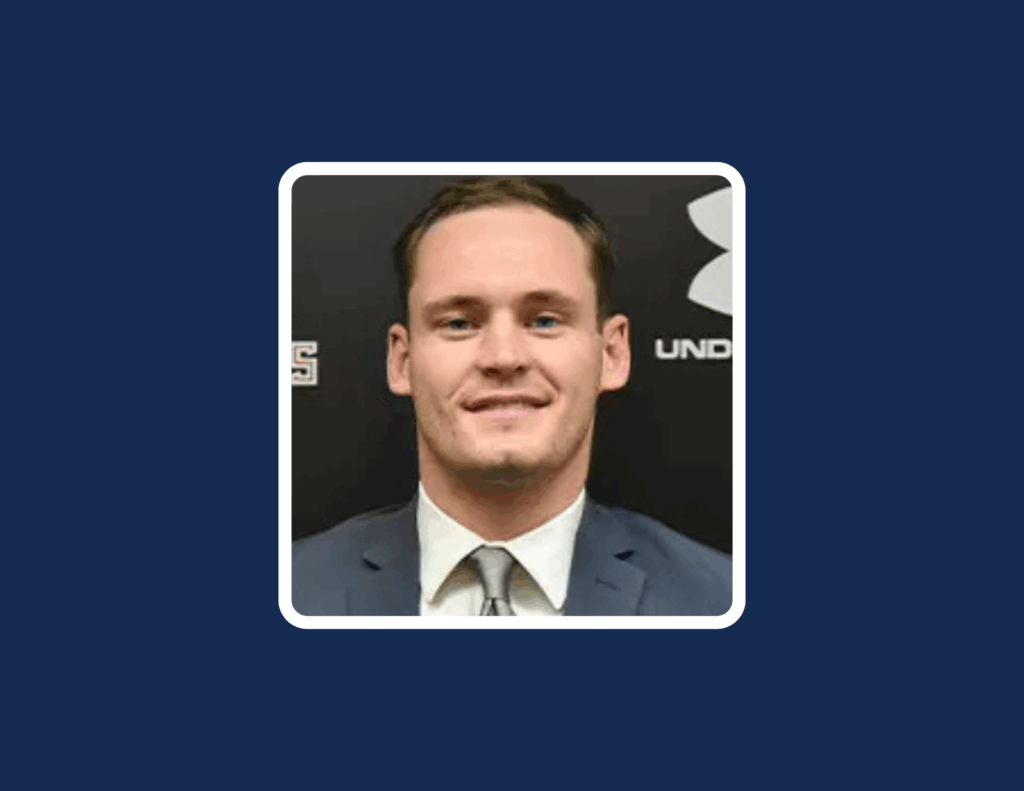
SEAN HANNA – EAST STROUDSBURG UNIVERSITY MEN’S BASKETBALL ASSISTANT COACH – EPISODE 1119

Website – https://esuwarriors.com/sports/mens-basketball
Email – shanna1@esu.edu
Twitter/X – @seanhanna_
If you listen to and love the Hoop Heads Podcast, please consider giving us a small tip that will help in our quest to become the #1 basketball coaching podcast.
Sean Hanna has been a Men’s Basketball Assistant Coach at East Stroudsburg University for 4 seasons. Hanna previously served as a graduate assistant for the program from 2017-19.
Since graduating with a master’s degree from ESU in 2019, Hanna served as the director of basketball operations at Division I Lafayette College.
As a student-athlete at Moravian College, Hanna averaged 10.2 points per game during his senior year, ranking second on the team in assists and steals. The guard distributed 213 assists in his career, which ranks 10th all-time in program history. Hanna served as a captain for Montclair State Head Coach Justin Potts for two seasons at Moravian.
On this episode Mike & Sean discuss the importance of instilling a robust work ethic in players, and why the foundation of effective coaching transcends mere tactical knowledge; it fundamentally hinges on teaching athletes the necessity of exerting maximum effort at all times. This episode delves into Hanna’s coaching philosophy, highlighting his experiences transitioning from player to coach, and the invaluable lessons he gleaned from various coaching environments. We also explore the complexities of recruiting in the current landscape, where balancing the acquisition of both high school talent and experienced transfers poses a significant challenge. Ultimately, Hanna’s reflections on player relationships and the joy derived from fostering their development underscore the profound impact that coaching can have on young athletes’ lives.
Follow us on Twitter and Instagram @hoopheadspod for the latest updates on episodes, guests, and events from the Hoop Heads Pod.
Make sure you’re subscribed to the Hoop Heads Pod on iTunes or wherever you get your podcasts and while you’re there please leave us a 5 star rating and review. Your ratings help your friends and coaching colleagues find the show. If you really love what you’re hearing recommend the Hoop Heads Pod to someone and get them to join you as a part of Hoop Heads Nation.
Jot down some notes as you listen to this episode with Sean Hanna, Men’s Basketball Assistant Coach at East Stroudsburg University.
What We Discuss with Sean Hanna
- His first year as a GA at East Stroudsburg was a learning experience filled with responsibilities
- The essence of effective coaching lies not merely in strategies but in instilling a relentless work ethic among players
- Building relationships with players is essential for a coach’s success and contributes to their overall development
- Recruiting dynamics are shifting, necessitating a careful balancing act between high school recruits and transfers
- Utilizing film for player development involves a balance of highlighting strengths and addressing weaknesses in practice sessions
- The importance of adaptability in practice planning allows coaches to cater to the specific needs of the team on a day-to-day basis
- Understanding the nuances of coaching in different environments
- Consistent practice intensity can mitigate player errors and enhance overall team performance, thereby fostering a competitive edge
- Recruiting at the collegiate level necessitates a keen understanding of not only player ability but also the dynamics of their mental fortitude and competitive spirit
- The pressing style of play demands not only skill but also a high level of effort, which must be consistently cultivated throughout practice
Like this show? Please leave us a review here — even one sentence helps! Consider including your Twitter handle so we can thank you personally!

We’re excited to partner with Dr. Dish, the world’s best shooting machine! Mention the Hoop Heads Podcast when you place your order and get $300 off a brand new state of the art Dr. Dish Shooting Machine!
Your first impression is everything when applying for a new coaching job. A professional coaching portfolio is the tool that highlights your coaching achievements and philosophies and, most of all, helps separate you and your abilities from the other applicants.
The key to landing a new coaching job is to demonstrate to the hiring committee your attention to detail, level of preparedness, and your professionalism. Not only does a coaching portfolio allow you to exhibit these qualities, it also allows you to present your personal philosophies on coaching, leadership, and program development in an organized manner.
The Coaching Portfolio Guide is an instructional, membership-based website that helps you develop a personalized portfolio. Each section of the portfolio guide provides detailed instructions on how to organize your portfolio in a professional manner. The guide also provides sample documents for each section of your portfolio that you can copy, modify, and add to your personal portfolio.

High school and middle school basketball program directors, listen closely. Coaches are expected to do far more than just coach. You know this. It doesn’t matter if you’re doing the coaching yourself, or you have a full staff of coaches with you. You know very well that coaches handle scheduling, academic issues, parent communication, leadership development, and even mental health concerns for athletes. A lot to deal with, and they haven’t even gone home yet to balance those responsibilities.
No matter the passion for the game, and burning desire to help athletes develop, this level of responsibility can lead to burnout, inefficiency, and less time spent on actual coaching. You know it’s true.
When coaches are stretched too thin, it impacts the development of athletes, team morale, and the overall success of the program. Now here comes the outsiders throwing their two cents in about what’s happening. Then come the parents complaining about how you’re running things, as if they know what they’re talking about. When’s the last time you went to their place of work chiming in from outside their window?
Before you let that fire fizzle out, know that it doesn’t have to be that complicated. There are several ways to prevent you or your coaches from feeling overwhelmed. However, I’ll tell you one of our favorite ways to keep coaches firing on all cylinders, and that’s athlete-driven accountability and organization.
Instead of coaches constantly reminding players about assignments, grades, and practice schedules, our programs at Playmaker Planner puts the responsibility back on the athletes. By tracking their own academics, goals, and commitments, student-athletes become more self-sufficient, which of course allows the coach to put their babysitter hat in the closet, and put their coaching hat back on, allowing them to focus on what they love doing.
Are we offering planners that you can get at the dollar store as a solution? Of course not, but we are starting a conversation with you to see if our programs can be a compliment to what you’re already doing. Let’s find out. To learn more visit https://playmakerplanner.com/stop-is-this-for-you
THANKS,SEAN HANNA
If you enjoyed this episode with Sean Hanna let him know by clicking on the link below and thanking him via Twitter.
Click here to thank Sean Hanna via Twitter
Click here to let Mike & Jason know about your number one takeaway from this episode!
And if you want us to answer your questions on one of our upcoming weekly NBA episodes, drop us a line at mike@hoopheadspod.com.
TRANSCRIPT FOR SEAN HANNA – EAST STROUDSBURG UNIVERSITY MEN’S BASKETBALL ASSISTANT COACH – EPISODE 1119
[00:00:00] Narrator: The Hoop Heads Podcast is brought to you by Head Start Basketball.
[00:00:20] Sean Hanna: The biggest thing, especially early, is not even a X’s and O’s thing, just coaching them how hard they have to play. It’s almost like showing them it and saying, if you’re not playing as hard as you can, none of this matters. We need to make sure that we’re playing as hard as we can at all times for us to get anything out of this.
And if you’re doing that, if you’re playing hard, you’re going to cover up some of those mistakes.
[00:00:41] Mike Klinzing: Sean Hanna has been a men’s basketball assistant coach at East Stroudsburg University for four seasons. Hanna previously served as a graduate assistant for the program from 2017 to 2019. After graduating with a Master’s degree from ESU in 2019, Hanna served as the director of Basketball Operations at Division One Lafayette College from 2019 to 2021.
As a student athlete at Moravian College, Hanna averaged 10.2 points per game during his senior year ranking. Second on the team in assists and steels. The guard distributed 213 assists in his career, which ranks 10th all time in program history. Hanna served as a captain for current Montclair State head coach Justin Potts for two seasons at Moravian.
Hey Hoop Heads. This month only our friends at Doctor Dish Basketball are giving you an exclusive $2,000 off plus free shipping on your purchase of a doctor Dish. CT Plus All Star Plus or Rebel Plus. Hurry to secure your savings before June 30th or while supplies last. Learn more @drdishbasketball.com and follow their incredible content @drdishbball on Twitter, Instagram, Facebook and YouTube. Mention the Hoop Heads podcast and save an extra $300 on a Dr. Dish Rebel Plus, all Star Plus and CT Plus models. Those are some great deals. Hoop heads. Get your Doctor Dish shooting machine today.
[00:02:11] Narrator: This is Dre Baldwin from Work On Your Game Incorporated and you are listening to the Hoop Heads Podcast. Work on your game.
[00:02:22] Mike Klinzing: Coaches, you’ve got a game plan for your team, but do you have one for your money? That’s where Wealth for Coaches comes in. Each week we’ll deliver simple, no fluff financial tips made just for coaches. Whether you’re getting paid for camps, training sessions, or a full season, wealth for Coaches helps you track it, save it, and grow it.
It’s time to stop guessing and start building. Subscribe now at Wealth4coaches.beehive.com/subscribe and follow us on Twitter at Wealth4Coaches for Daily Money wins. Your Money Needs a coach. Start with Wealth4Coaches
Jot down some notes as you listen to this episode with Sean Hanna, men’s basketball assistant coach at East Stroudsburg University. Hello and welcome to the Hoop Heads Podcast. It’s Mike Klinzing here without my co-host Jason Sunkle tonight. But I am pleased to be joined by men’s basketball assistant coach at East Stroudsburg University, Sean Hanna.
Sean, welcome to the Hoop Heads Pod. Mike, thanks a lot. Appreciate you having me on. Absolutely. Excited to have you on. Looking forward to diving into your career. Let’s start by going back in time to when you were a kid. Tell me about your first experiences with the game of basketball. What do you remember about those early times with the game and what made you fall in love with it?
[00:03:41] Sean Hanna: Yeah, probably like most started playing at a young age. Just starting off in the driveway with my dad. I would say he’s probably the one who got me into it as a kid and my mom and my dad. I would say both parents. And kind of played a little bit of everything growing up. To be honest.
Whatever season it was, it was, that was the sport I was playing. Basketball, football, baseball. So really just gave me an opportunity to. Play every sport. But kind of as I got a little bit older and growing up, it, most of that focus shifted towards basketball. But don’t come from a traditional dad to coach or parents or big athletes, anything like that.
So I didn’t really have that, I guess your traditional background in terms of, hey, my, my dad was a coach. I always wanted to do it, something like that. But dad really enjoyed sports basketball even growing up. Grew up in Philadelphia Northeast Philadelphia, so a lot of good basketball in the area.
So even growing up when I wasn’t playing basketball me and my dad were always going to all the games in the area, right? So it was a love for basketball, but also appreciation of it as well, where on a given Tuesday when I was in elementary school, I could go to a really good high school game in the area and just watch basketball before I got to, to high school.
So that, that’s kind of a little bit how it, how it went about kind of growing up and, and getting into the sport.
[00:04:58] Mike Klinzing: Was there a coach in your early years that you look back on now and say, Hey, that person had a pretty big influence on me, both in terms of my love for the game and, and just as a player?
[00:05:11] Sean Hanna: Yeah, yeah, definitely. So I grew up in a like I said, Northeast Philadelphia. Small pocket of Northeast Philly. So growing up played on my local rec teams local CYO programs, things like that. And but it was a real small sample size of kind of what the game of basketball was, right? So usually was one of the more talented players in those teams.
And kind of as I grew up, my dad was pretty influential with it, saying, Hey, we need to get you around more talent, right? And better players where you’re not the best player on the team or you’re not one of the guys who’s making all the plays. And I think in, in the long run that helped with my development.
But I was able to kind of go to teams where, okay, now you’re going down to north Philadelphia. West Philadelphia, where there’s more talent, more people. You’re seeing basketball a little bit differently, right? So I definitely credit my dad for that, for getting me outta my small pocket of, kind of northeast Philadelphia basketball and kind of expanding that to the whole entire city.
And with that, I was able to be coached by a guy named Mike Sharp. He actually is now involved with an a a U program in the, in the city Philly Revolution. He kind of helps out with that. But he kind of was the first coach to really take it to another level, right? The preparation, the travel, the practices, multiple times a week.
Like, so he was a guy that, watching him and, and getting into coaching, I saw how detailed he was, how organized he was, and how much he really cared and wanting to really make me into a better player. But everybody on the team.
[00:06:39] Mike Klinzing: So when you think about that process of becoming a better player and you sort of morphing from somebody who played all the sports and played what was in season when you were younger, and as you start to take basketball more seriously, you get exposed to basketball outside of your small section of Philadelphia, you’re now seeing players from all over the city.
Obviously you look at that and you say, man, I have to keep getting better if I want to be able to compete with the guys that you’re seeing now for the first time. What did that look like for you in terms of becoming a better player? How did you go about doing that? Were you working mostly on your own in the gym?
Are you going around playing pickup games? Just what was your process for becoming a better player as you start to take the game more seriously as you get into high school?
[00:07:28] Sean Hanna: Right. Yeah, so my overall, I, I would say my, my mindset. With that was, and I think I try to share this message with a lot of players that are either recruiting or when we have camps, talking to high school kids or even our current players.
Like I was, I embraced the role that I was in for those teams and, and, and things, but always worked to be more than that, you know? So it was like when I was on the team, I really embraced the role and knew what I was. But at the end of the day, I was trying to work on some of the things that maybe helped me, maybe hurt me from jumping in another role the next year.
Right? So a combination I would say of individual workouts open gyms playing outside in a lot of leagues over the summer all around the city. I, I would say that individual workouts weren’t as popular. Then at that time it was kind of just, you’d go in with your buddy and maybe get some shots up or work on handles on your own, things like that.
I used to watch the pistol Pete dribbling videos and, and try to try to replicate them as much as I could. But I was always small growing up. I, I was always one of the smaller players on my teams and in general. So really tried to focus on being able to handle the ball of being one of the smarter players on the court and, and shooting, right?
So those were the things that I focused mainly on. ‘Cause I knew at my size I wasn’t super athletic. I wasn’t the guy who was jumping up, grabbing rebounds. So just trying to find a niche and find a way. But really just putting as much time as I could playing in as many competitive runs as possible, whether that was in a gym, most times it ended up being outside.
Just, just going to a local park and playing or traveling around the city and playing. But really just focusing my time strictly on basketball. And like I said, once I kind of grew out of those other sports. As I got closer to high school, I was able to put a lot more time and effort into, into basketball.
[00:09:18] Mike Klinzing: Are there’s still good art outdoor runs in Philly? Can you still find good outdoor runs anywhere?
[00:09:23] Sean Hanna: Yeah. Yeah, I would say you could. Yeah, definitely. I mean, I think it’s more summer leagues now, like they turned into leagues. Okay. Rather than just people going to the park and playing naturally. But there are still a lot of good summer leagues in, in the Philly area for sure.
[00:09:37] Mike Klinzing: Yeah. ’cause here in Cleveland outdoor basketball, and again, I’m much, much older than you, so I’m 55, so we’re talking about when I was a player, we’re talking about the mid to late eighties into the, into the early nineties. And outdoor basketball was huge for me as a player in terms of my development, in terms of just my enjoyment of the game.
And I look around now and it’s almost impossible to find a high quality, pickup game, or most leagues have now migrated indoors. You just don’t see as much outdoor basketball here. And if you do find it, the quality of that outdoor basketball right, is nowhere near what it used to be back in the day.
It’s, it’s, it’s, it’s much more, it’s much more difficult. And my son, he was a freshman this year at Division three, Ohio Wesleyan and just trying to find some games to be able to play in and put together 10 guys who want to go and play anywhere, let alone play outdoors in a lot of ways, guys, that right, he grew up playing with.
And I’ll say, Hey, I used to spend a lot of time playing pickup basketball outside and playing at a really high level. And they’ll kind of look at me like the dog that hears the whistle. they’re looking at me sideways going, what? I’ll play play at a high level outside. I don’t even know. I don’t even know what that is.
They can’t even wrap their head around like, what shoes do you wear? How do you Exactly.
Yeah, it’s like, it doesn’t, I’m like, yeah, I used to have to put shoe go on the bottom of my shoes. ’cause the, the, the soles would now nobody’s soles of their shoes wear out. You’re, you’re tearing through the, you’re tearing through the upper part of the shoe way before you wear out the soles.
Whereas back when I was a kid, it was completely different. I’d have these shoes with the toe, I’d have a hole through it and all this everything else. So it’s, it’s just interesting how the game has evolved and it’s cool to know that at least there’s some places in the US where you can still play some good pickup basketball outside, or at least play some, some serious basketball on an outdoor asphalt court, which is kind of where I cut my teeth as a, as a player for sure.
So it’s interesting how the game has evolved and even just from the time hearing you talk about, yeah, I just went in the gym with a friend and worked out as opposed to going and paying a trainer or working with somebody to improve your game. It was just kind of you, you and your imagination getting out on the floor and figuring out how to, how to get better.
[00:11:57] Sean Hanna: Right? Yeah, exactly. Exactly. And then even like, kind of back to playing outside. I remember like sixth, seventh, eighth grade, like playing in, in kind of like rec centers that there’s, there’s an announcer, there’s people, it’s packed around the, the outside of the court. Like there’s people talking during the game.
Like it’s just an atmosphere that as a sixth, seventh, eighth grader, like it’s pretty cool to be in, right? Whether you’re, yeah, you’re doing well or not in it. You’re just getting to see high basketball, you’re playing in front of fans. You’re almost has that Rucker parks field that, that most people know about.
But almost preparing you for the kind of the atmosphere and, and competitive nature that you’re going to see when you get to high school.
[00:12:37] Mike Klinzing: What’s your favorite memory from high school basketball?
[00:12:41] Sean Hanna: I would probably say my junior year we, we started off pretty well in the, in the preseason in.
I went to a, a Philadelphia Catholic League high school father judge. So very competitive league. There’re not, not too many games you play that you have a night off and I think it’s pretty known nationally as one of the better leagues in the country for high schools. So just being a part of that every day was just great for me.
Like I said, like I started off with like somebody who obviously loves basketball but also appreciates it. Like even if we weren’t going like playing in the game, we would go to a, a new Andretti verse Roman Catholic game. What’s your two high level high schools in the area? Like just going to watch other teams play.
So like obviously there’s a competitive side of it that you want to beat those teams, but also appreciating that you’re in an area that has a lot of talent that you can go see. Future NBA players first round picks high major players like just being around that. On kind of like a, for four years that I was in high school.
But my junior year we, we back to the story there, we ended up beating one of the better teams in the area early in the season. It was a really big win for us. And just kind of seeing the comradery of the team. And then the other team had about four or five division one players. And at that point, father judge actually is really good now.
They won the Catholic League this past year, but at that point we were kind of middle of the path. So not, no one was really expecting that to happen, but just the feeling of playing against guys that I know are going to end up playing on TV or go to the league and it’s like, wow. We, we were able to get them on that that night.
Now if we played them 10 more times, we probably weren’t getting them again, but, but at that night it felt pretty good.
[00:14:21] Mike Klinzing: College basketball always on your radar growing up in terms of wanting to be a college player?
[00:14:27] Sean Hanna: I would say in the, in the back of my mind, yes. I, I think naturally just I. I was kind of in the moment, right, with everything, whether it was playing in grade school, playing in high school just trying to be the best player I could be, and not really focused on the next steps, which I prob looking back, I probably could have been more prepared and focused, things like that, but was kind of just living in the moment, being a normal kid.
But as I, as I got on to I would say junior year is probably when I started taking it a little more serious. I hit a major growth spurt between sophomore and junior year. I, I probably came into high school about 5 4, 5 5 sophomore year, right around the same. And then by junior year I was 5 8, 5 9, senior year, right around 5 11, 6 foot.
So naturally my, my growth helped me out there kind of junior to senior year. And then once I started seeing myself have some success at the varsity level. Of high school kind of sophomore, junior, senior year. Kind of got more on my radar, I would say, and, and became a something that I definitely wanted to strive for.
And probably didn’t start getting recruited heavily until more into my senior year. And made a decision after my senior year, but not directly on the front of my radar, but something that I always dreamed of and wanted to do growing up. For sure.
[00:15:44] Mike Klinzing: What did that process look like in terms of making the decision?
What were some factors that you looked at that were important to you and how did you end up making the decision to go to Moravian?
[00:15:55] Sean Hanna: Yeah. So what was really important for me and ended up being my deciding factor was just the relationship with the coaches at Moravian Jim Walker, who was there for a really long time.
I would say Moravian kind of separated themselves throughout the process with me recruiting. And division three, obviously different than the division one, division two level with scholarship money. It’s more academic money grants, different things like that. So obviously the financial piece played a part in it, but from an overall standpoint, kind of going throughout my senior year they kind of stayed the most active.
They were at the most of my games. And I went up to campus multiple times. One for just a normal visit, one to watch a game, and it just felt like home. I might sound coin to say, but it felt like it was the right place to be. I actually went there with a teammate of mine from high school.
So that was, was a, was a reason as well. I was pretty comfortable having someone that I knew going up there with me. But just the overall, like I would say, commitment to me and kind of them showing me that I was a priority for them kind of stood out.
[00:16:59] Mike Klinzing: Amazing to me. The number of coaches that I’ve talked to.
And then I. In my own experience with my own kids, the number of people that describe their decision making process, almost identical to the process that you just described, where you get to a place, you go on a visit, you meet the people, whether that’s the coach, the players, all of it together, the campus.
And if you ask, well, what was it about that particular school? The answer is much more of a general, it just felt like the right place for me as opposed to, Hey, they had the best program in my major, or it was the coach’s style of play, or it was this one guy that I stayed with on my recruiting visit, or whatever it might be.
It ends up being not just one factor, it ends up being just. I’m at a place, and while I’m there, I feel comfortable and I feel like it’s the right place for me. And I’m amazed by the number of people that have had that experience. And like my daughter, she doesn’t play sports and she’s a senior, well, she’ll be a senior in the fall at Denison.
And we went and visited a bunch of different schools we’re on campus and she’s kind of like, eh she’s talking about this or that, or whatever. And we ended up going and visiting Dennis. And then within like 15 minutes of being there, we hadn’t talked to anybody. We hadn’t done like anything. And she’s just like, I feel like this is the right place for me.
We’re like, all right, this is the right place for you. And turned out to be a great decision. So you said a great first three years there, but it’s amazing to me how many people have had that similar experience to what you had. So you make the decision to go to Moravian. What’s the adjustment like for you both just as a college student in general, academically, socially, but then on the basketball floor?
What do you remember about the adjustment? Jumping from high school to college?
[00:18:51] Sean Hanna: It was, it was tough. Overall, I would say just to being on your own all all the things that we try to preach to our student athletes at time management and getting on a schedule and doing things the right way. It was, it was, especially, I would say my first semester as a freshman, getting used to all that, all that freedom and my class schedule and study hall practices, things like that.
Like, I think a, a lot of people probably don’t realize that division three basketball isn’t just show up and, and roll the balls out and play like it’s a pretty high level basketball. I think some people think that, Hey, this, this kid’s a good high school player, he can probably play in college at division three.
Like it’s a lot more than that and they might be talented enough or they might, might be able to do some things, but it’s just the daily, can you do it daily? Right? So figuring that out wasn’t adjustment. At first. Little bit of everything basketball wise, it was. Everyone was a little bigger, stronger, faster, right?
You’re, you go from being a senior in high school where I was 17, 18 playing against some sophomores who were probably 14, 15 right Now. You get to college and you might be playing against a 2223, and nowadays they’re even older than that. But you’re, you’re playing against a much older person when you come in as a freshman.
So just getting used to that. Obviously I think coming from a pretty strong basketball school and basketball area that, that helps me with the competition side of things. But just the overall adjustment of playing against guys that were bigger, stronger, faster was tough at first, but I, I think I was able to kind of figure it out as I was able to put everything together, right?
Not just basketball, not just social, not just academics, but on a daily basis. Just figuring all those out together and kind of seeing the holistic approach.
[00:20:32] Mike Klinzing: Were you thinking about academically slash career wise? Going into college, are you like most 18-year-old kids and you’re still thinking about your basketball career, you’re still kind of thinking about, I I have no idea what I want to do.
Where, where was your mindset at?
[00:20:47] Sean Hanna: Yeah. I, I was that, that typical 18-year-old? I, I had no idea. So when I, when I talked to recruits now and asked them, and they don’t have an idea, I, I understand where you’re coming from. That’s, that’s not an issue. You can figure that out. But I wasn’t even really thinking about that.
I, I knew as I got into college, I wanted to do something within sport. Whether that was coach game management just some type of thing that will keep me in sports. And, and obviously you come in, you do that, you think, all right, sport management, like that’s what everybody does. That’s something that I could probably figure it out.
Like if I get that degree, I can stay within sports. So coaching, I, I wouldn’t say was like at the number one thing on that list, but it was within that. Range of, Hey, I want to stay within sports. And had a couple internships throughout college on more of the administrative side of things. And I realized that that was not what I wanted to do.
I worked with like a semi-professional football team in the area at Moravian and kind of worked like game day operations, ticket sales, some different things within administration and, and realized that’s not what I wanted to do. And then was able to kind of turn towards coaching. My, my junior year we had a coaching change and, and Justin Potts who, Sean Rossey was on the podcast into ease, his assistant over at Montclair State.
He was my head coach at Moravian for my last two years. Junior, senior year. Did a really good job turning around. The program at that time we were five and 20 my sophomore year. More than doubled the wins my junior year he was able to, and then by senior year we won 19 games and we’re playing in the conference championship.
He obviously has kept that success going, won two championship chips at Moravian after that, and then has won at Montclair State this past year. So I would say in terms of switching my focus to coaching as my college career went towards my junior senior year Justin Potts really got me involved and made me start to think like a coach, right?
He was the one who kind of said, Hey, is this something you’d be interested in? And then as my senior year when I started to think about that a little more seriously and he was able to gimme the opportunity through a connection at East Burg where I was able to be a graduate assistant. After graduating from Meridian,
[00:23:01] Mike Klinzing: did you start to look at the game differently as a player?
Once you started thinking that, hey, maybe coaching is a direction that I wanted to go, because I know that there are some guys, and I would include myself in this camp, that while I was playing, I wasn’t necessarily looking at the whole picture of what was going on in the game. I was focused on what do I need to do?
Maybe how does what I do fit in with the team? But I wasn’t necessarily worried about what Guy X is doing over here. I just have to do my job and know that Guy X is going to do his job, and I’m not really worried about what that is and how it fits into the overall strategy. I was concerned with what I was doing and I was focused on me as a player as opposed to looking at the bigger picture the way a coach has to.
So do you think that you always saw the game as a coach while you were playing? Or did that maybe flip or did it not flip until you really decided, Hey, I’m no longer playing, I’m, I’m now coaching. I don’t know where you fall, sort of on that sliding scale.
[00:24:04] Sean Hanna: Yeah, I would say maybe a, a little bit of both. I would say growing up definitely didn’t always think like a coach.
But I think naturally just because, like I said, my size, my lack of athleticism and, and even talent to a degree with who I was playing against, I, I had to find different ways to have success, right? So I think naturally my, I was always developing my basketball IQ or, or coaching, I don’t want to say philosophy, but just mindset kind of throughout the years, but never really thought of it how you just explained it, like growing up it was more just, Hey, I, I have to be smarter than some guy because I’m not quicker than him.
Or I have to find a way to get to that point before he does, and I’m not quicker than him, so how can I do that? More thinking like that. But like you said, as as I kind of thought about the coaching trajectory, I did start to think a little bit more. On a holistic picture, like, okay, I know what I’m doing now.
And some of that was probably being familiar. I’m, I’m a senior now in college, so I know what I’m supposed to do, right? So now I can look at look at it through a bigger globe and maybe it’s not even just looking at what the team’s supposed to be doing, but how is Coach Pott’s coaching us? He just told us to make X amount of shots in, in a minute.
Like, that’s impossible. Like, why, why is he doing this? Like, he’s doing it for a reason. Right? So like, just thinking like that and finding different ways like that, that coaches maybe do things. So I think that helped me out before getting actually into the coaching profession while I was still in college.
[00:25:34] Mike Klinzing: It’s funny to hear you say that about like, why is this guy doing this when there’s something that’s clearly impossible? Because I could think back to a ton of experiences when I was a player and hearing my coaches say. X, Y, or Z or having us do something as a team. And I just remember myself thinking, and again, this just points out that I completely thought the game as a player.
’cause I never took that next step that you just took of, Hey, I wonder why this coach is doing this. Maybe there’s some reason behind it. My, all my thought was always this, this guy is crazy. Like, what, what’s he talk like, what’s he talking about? Like, this doesn’t, like I, I’m just trying to play the game.
This doesn’t make, this doesn’t make any sense to me. And so I never really thought about it in the way that you just described in terms of, well maybe there is a method to the madness. I only saw the madness. I never saw Right. I never saw the method until I was, until I was actually, until I was actually coaching.
The, the team you come into,
[00:26:29] Sean Hanna: you come into the gym after a a big win practice the next day and like he’s just. On one from the beginning, and it’s like, what’s, what’s this dude’s problem? Like, what’s, what’s going on here? Exactly. We just won a game, like we didn’t do anything wrong, and he’s just setting the tone early.
So it’s like little things like that where I would say growing up my whole life, it’s like, all right, just there’s something wrong with him. Like, why is he doing this? And then it’s like, okay, well maybe there is, like you said, a method behind the madness.
[00:26:55] Mike Klinzing: That’s good, man. I love that. All right, tell me about getting the GA position at Strassburg.
What’s that like? How when you actually get for the first time to sort of peek behind the curtain, right? You’re no longer a player, now you’re a part of the coaching staff. What was surprising to you maybe about that first year, the coaching profession? Something that maybe you didn’t realize while you were playing that you’re like, man, I didn’t realize coaches did so much of this, or I didn’t realize they did any of that.
What were, what was something that surprised you?
[00:27:27] Sean Hanna: Yeah, so I found that out. Right away. We had division two, you’re not able to bring your guys back in the summer, so you start when school starts. So we had like a coaches meeting, I think the weekend before everyone came back. And Jeff Wilson head coach at East Stroudsburg is, is great.
But with them for a while now the best with details and organization, making sure everything is, is a certain way. There’s, there’s nothing left up for, for chance. Right. Something, everything he does is for a reason. He’s going to make sure his team operates the same way. So we had a beginning of the year staff meeting and I’m fresh outta college just getting done my plan career.
And we go into this meeting and he had hands out like a staff manual almost, and it’s like as thick as can be and we’re in, and I’m looking through it and I’m like all the responsibilities of the staff and what goes into it. So right there I realize like. How much I did not know goes into coaching from a player standpoint.
And just everything, little details of game day responsibilities, who’s working out certain positions who has which scout? Recruiting responsibilities, everything. But I, I would say to, to answer your question, probably everything. Like, I thought it was just, yeah, naively just show up, practice, maybe talk about practice afterwards and hey, let’s get ready for the next game.
Like, but and I think especially I’m super appreciative and lucky to have for that have been in my first spot to learn as, as a GA at East Stroudsburg, under, under Jeff Wilson. Like, ’cause I think I, I saw the way that things are supposed to do, right? Everybody does things differently. But the way he was able to run his, he still does run his program.
I think it was a great starting point for me because it was like, okay, this is the, this is the top now. Like now I know how it’s supposed to be done. So anything under that really is, is unacceptable or that’s kind of the barometer. So I think I was really lucky and fortunate to get into a good position to learn, and I came into it like, Hey, I, I don’t know any, I know nothing, right?
I don’t know anything. Right. I’m going to be a sponge. Like if you tell me this, I’m going to agree with it. I’m going to do whatever you need. Like I, I wanted all the responsibilities. I wanted someone to do something. I’ll figure it out. Like I just came in with, hey, I, I know, I, I know I don’t know anything. Right.
Which I think helped me in the long run. It definitely was overwhelming at first trying to figure everything out, but I think the mindset I had kind of helped with that process.
[00:29:47] Mike Klinzing: Yeah. I could see that. Right. I mean, I think that’s one of the things when I talk to, especially young coaches, that idea of just.
Gimme more, right? Put more on my plate, gimme more responsibilities. Allow me to learn as much as I can. Allow me to have my hands in as many different areas as possible. Allow me to sit in and see what the more experienced members of the staff are doing so I can learn from them. I think that’s one of the things that almost every young coach that I’ve talked to has talked about the value of an experience like that, where they work for a head coach who gives them responsibility, who helps them along the way, and who puts them in positions to be able to do things that they know are going to benefit them later on in their career.
Thinking back to that first year as a ga, what got you hooked immediately on coaching? What part of it, as you got into the job, and obviously as you said, there was a lot that you didn’t know in terms of what you thought. College coaching was compared to what it actually was. So what was the hook? What were one or two things that you were like, yeah, this is why I want to do this for my career?
[00:31:01] Sean Hanna: So early on, I would say the, the first couple months or so was just the relationship with the players, right? And at that, at that age, it’s, it’s tricky, right? It’s yeah. Fresh outta college, there’s guys that have redshirted or have been in college for five years, so we’re the same age, if not, they’re older than me, right?
So trying to bridge that gap and obviously gain their trust and respect but also not try to be the guy who’s screaming and yelling because they’re not taking to that, right? So just finding that gap, bridge that gap between, okay, I’m a coach now. I want them to look at me a co as a coach. I want them to trust me but also have to make sure I’m, I’m not the guy who’s screaming, yelling at all times.
So just trying to figure that out. I, I enjoyed that process though. I, I did, I was always trying to get in the gym with guys or watch film with guys, which I think helped with that. They sh it showed them that I cared, right? I, I might not have been showing them the right thing on film or telling them to do a move that didn’t make any sense.
But at least it showed them that I, I was invested in them. And then what really clicked for me that, that first year that I, I really enjoyed it. And, and as soon as I got out on the road recruiting, like I, I loved the recruiting process. I really enjoyed what we were doing, like our workouts, our practices film sessions, all that.
But once I started to be able to recruit a little bit and get out and just, and it wasn’t even really like calling recruits and, and getting a kid to commit. It was more just like going out to watch two players play and compare and contrast and going back to the head assistant and Coach Wilson, the head coach, and just.
My thoughts and ’cause at that point as a ga you’re not calling the top guys, right? They’re not having you call the, the number one and number two guy on the list. So you’re trying to go between seven and eight. And at that point I felt like I was recruiting like top kids in the country, like trying to, trying to give my input on them two.
But I really enjoyed the recruiting process overall. And as obviously I showed, I was more capable. Okay, now you’re getting more phone calls, now you’re going out to see more kids. Now you’re talking to a a u high school coaches. So I really did enjoy that pro. I still do love the recruiting process.
Honestly, it’s, it’s a lot of times and it’s a lot of moving parts, but just the overall process of it and when it all comes together, it’s a great feeling. But during that first year, that’s when I kind of was able to get out on the, out on the road and recruit a little bit. And that really really kind of took it to another level from a coaching standpoint for me.
[00:33:27] Mike Klinzing: How long did it take you to feel. Confident slash comfortable with being able to semi accurately identify guys that could play at the level that you needed them to play at for Stroudsburg? I, I guess my point is, is that sometimes you go in a gym and like I can look at a player and say like, that kid can play.
But then I start thinking about, okay, is that kid good enough to be an impact player on a division two team where he is going to be a difference maker? Or is that kid a difference maker at division three? Or is that kid a backend of this mid-major roster or where do they fit? How long did it take you to feel like you had some confidence in being able to trust your eye, for lack of a better way of saying it?
[00:34:14] Sean Hanna: Yeah, I would say that was probably a process throughout the whole first year. I would say as we got a few months in and I was able to really see the. The guys on our team play and see how they could play and also fit our style. Like coming from Arabian division three, like there’s some really good players and talent, but when I got to East Stroudsburg and, and watching teams in the psac, I’m like, okay, this is, this is different.
Like this is, these guys don’t look like division two players. Like they could be confused for division one players to me. Like, and that’s all throughout the league. Like the PSAC is a very competitive league and all across division two, right? There’s a lot of good leagues around, so throughout that year, I think the biggest thing was kind of watching our players play kind of their bodies, their athleticism, their skill level, competing against each other was just as important I think during that process than going out and watching kids.
Right? Because now I’m trying to figure out who can play at our level from a talent standpoint, right? That’s probably. Something that obviously is important and you can point out. But also like physically, athletically, like that’s something you can usually point out right away. Like you can show up to a game and say that, that guy looks like he could play for us or that guy looks like he can play at our level.
But also seeing, okay, does the talent match the athleticism? Is this kid’s talent higher than it looks, but he is not that athletic. Like how does that fit in? So and then we, we run and press like, so we need guys that can do that, right? And then not just physically, but also mentally. We talk about recruiting guys that are not just physically athletic but also mentally strong that can press for 40 minutes, right?
’cause you could be the most athletic guy in the world. If you don’t know where to go, you’re not getting anything done, or you get tired, you shut it off. It, it’s tough to be successful like that. So but back to your question, I would say kind of throughout that whole year was a process. And maybe going in, to the end of that year, into the summer, I felt pretty confident that, okay, this is, this is what we look for. This is the type of player that could play in our system, in our league and have success. And we’ll be able to figure out the, the style of play and play the way we want to play.
[00:36:17] Mike Klinzing: Sticking with recruiting, when you think about the guys that you’re recruiting now for the program, what are some of the intangible things?
Obviously as you said, there’s a clear level of talent and skill that you have to be able to have to play at your level in division two, but from an intangible standpoint, when you guys sit down as a staff and you start thinking about what are the quote unquote type of player that we want to have in our program, what are some of those, maybe less physically, visibly, o visible things that you’re looking for in terms of intangibles?
[00:36:56] Sean Hanna: Yeah, so a big thing for us we. We talk about it all the time as finding guys who who can play hard and compete, right? Like that’s something that is a non-negotiable for us, especially the way we want to play. Playing out tempo, we press every day, right? So it’s not just like we show up on Wednesdays and Saturdays and we’re pressing, like our practices are, we’re pressing.
So like if you, if you’re not a guy that can do it every day, like that’s going to be tough for you to make it through a season or ever have success at East Stroudsburg. So finding guys that we talk about, the biggest skill is how hard you can play, right? We would constantly say, even to recruits like our league is, is really good.
There’s a ton of talent in our league, and when you say skill guys, think of shooting, passing, dribbling, right? But we look at it as playing hard, like playing hard is a skill for us. So if you can play hard consistently and you can develop that skill for us, that’s always going to be the most important thing.
And then I, I would say the next one would be toughness. Both physical and mental. I, I think. I think guys, especially nowadays, players get confused what toughness is. I think it’s almost confused for like extracurricular things or talking after a play or flexing what one different things like that.
And just trying to get guys to realize like that’s, to us, that’s not toughness, right? Toughness is not reacting to something like that. Or playing when things get tough, you hit some adversity, like you’re not showing any signs of breaking down, right? So while physical toughness is important, the way we play, like we need guys to be mentally tough on a daily basis and we’re going to put them in situations in practice that kind of like I alluded to earlier, like they might not be able to to get what they’re supposed to out of this drill and we would make it like that so they feel what it’s like to fail or feel what it’s like to have to give a little more extra after that.
But those are just two of the things I would say. We have other things that we look at, but playing hard as being a skill. And then that mental, the physical, but more or less the mental side of things and, and toughness.
[00:38:55] Mike Klinzing: How much do you have to watch a player to be able to feel confident that they have those two traits?
In other words, are you able to watch a kid for a half and be like, man, this kid plays hard. We feel confident that he’s going to play hard in every situation. Or does it take watching them in their a a u environment, in their high school environment, in their practice environment, talking to coaches, just what’s the process for vetting their ability to, to har to work hard and to have that mental toughness that you’re describing?
[00:39:27] Sean Hanna: Yeah, we, we we definitely try to do our homework as much as we can. Watch as many games talk to as many coaches talk to as many people around them. We even ask like guidance counselors and we can get in touch with a teacher. Just small things just to see how they are outside of basketball.
So definitely we try to do our homework to make sure we’re bringing in a, a good person that has those characteristics. Right away, I, I think you can get an idea. Honestly, if you watch a kid for a half or a game, you can, you can get a feel. And then if you have to see ’em two or three more times and you’re still looking for those things that it might not be there.
you can only, yeah, you can only go back so many times till you realize, okay, maybe they, maybe they just don’t have it. But I, I do think you can catch a kid on a bad game. But I think naturally if you’re watching and you really look for those things, they, they stand out pretty quickly whether they’re doing them well or whether they’re not doing them well.
[00:40:22] Mike Klinzing: How important are the relationships that you establish as a college coach with both high school coaches and. Coaches, tell me a little bit about developing those relationships and what advice would you maybe have for a high school coach, an AAU coach, an AAU program director in terms of how they can help to facilitate one of their players being recruited, if that question makes any sense.
[00:40:51] Sean Hanna: Yeah. Yeah. So the, the, the first part I would say the, the, the relationships I think have to be genuine. With these high school coaches, a a u coaches you can’t just pick up the phone and call every time you want a player, right? So kind of cultivating that relationship. And you can do it on the phone, obviously with phone calls, text, things like that.
But I think to really be able to get what you want out of recruiting and build those relationships, you just have to be out, right? You have to be at a a u tournaments, you have to be at high school games like the amount of kids that we’ve been able to see. When we’re recruiting a, a senior and, and we see a sophomore or a junior that we really like, okay, put him on the list for future.
Right? And then when we’re recruiting one kid on the team, we talk to the coach about the other one. So now it’s like a almost a, a situation where it’s, you’re not just calling them every time you need a player, but finding ways to connect and, and show them that you genuinely care and, and really are interested in their, their players and feel like you have their, their best interest.
So I think being out recruiting helps the most because you’re developing that face-to-face relationship. But also, like I said, checking in, finding things to talk about or bring up and not just making it seem like, oh, he only calls me when he wants something. Something along those lines. And then in terms of advice to high school and AU coaches, it’s I, I think I.
Now it’s, it’s a high school and au coaches do a really good job with that. ‘Cause I do think they do a really good job of marketing their players, sending emails. There’s so much film out there nowadays. So I think film is a big resource for high school and au coaches highlights game film.
And I think that’s pretty easily accessible nowadays that they can just send them out to college coaches. Every college coach in the country’s email is, is on their website, right? So I think being able to, to send emails to college coaches with players’ information, maybe their GPA stats.
Highlight film and then also attaching a game film, right? That’s what we like to tell recruits or high school and au coaches that have guys that they, they want us to check out. Sending those things. ‘Cause it kind of checks all the boxes. Like, are they a good student? Highlight film looks great, but there’s no turnovers, there’s no miss shots on highlight film.
So if we like the highlight film, we’ll watch a game film and then obviously the next step seeing them in person. So just providing as much information you can to, to college coaches would, would be my best advice for high school and AAU coaches.
[00:43:23] Mike Klinzing: High school and middle school basketball program directors Listen closely. Coaches are expected to do far more than just coach. You know this. It doesn’t matter if you’re doing the coaching yourself or you have a full staff of coaches with you. You know very well that coaches handle scheduling, academic issues, parent communication, leadership development, and even mental health concerns for athletes a lot to deal with.
And when coaches are stretched too thin, it impacts the development of athletes, team morale, and the overall success of the program. There are several ways to prevent you or your coaches from feeling overwhelmed. However, I’ll tell you one of our favorite ways to keep coaches firing on all cylinders, and that’s athlete driven accountability and organization.
Instead of coaches constantly reminding players about assignments, grades, and practice schedules, the programs that Playmaker Planner put the responsibility back on the athletes by tracking their own academics goals and commitments. Student athletes become more self-sufficient, which of course allows the coach to focus on what they love doing most coaching.
Let’s find out if the programs from Playmaker Planner can be a compliment to what you’re already doing. Visit playmaker planner.com/stop. Is this for you to find out more
when you’re looking at a player with their high school team versus looking at them with their A A U team? Obviously different environments, the player may have a different role. Do you look for different things in the high school environment than you might look for in an A A U environment? Do you often maybe see things differently in those two roles?
Do you have a, a preference for which way you like to look at a player? Obviously, A A U provides you the opportunity to see lots of players under one roof, and the time efficiency of being able to do that clearly is a benefit of A a U. But just where do you stand on being able to evaluate the player with their high school team versus with their A A U team?
[00:45:21] Sean Hanna: Yeah, I think it’s we definitely like to see both. Definitely something where we would want to see with your high school team and your a a U team. Like you said, a a U’S great, there’s ton of games, ton of courts at these facilities where you can see 20 to 30 players in, in a weekend, right? So now you got a big pool to choose from.
Now you have to figure out who fits more and, and who’s better with your style. High school probably I would look at as being more structured, right? You’re, you’re with them more often. You practice more, you get to know players a little bit more, you’re playing with, so you could be a little more comfortable in a high school setting.
For, for me specifically, it’s, it’s fitting the way that we want to play, right? Whether that’s high school or a a u. So it’s not as much in watching the difference in high school and a a u games, it’s more I. Okay, if, can they play our style right? Can they play uptempo? Yeah. If we’re pressing, can they get from point A to point B fast enough and offensively can make they make quick decisions off a two-man game?
Or we play through the post. So can they get the ball into the post if they’re open? Like, are they a good enough passer where they can make that pass in the post? And then I think that’s a skill that’s definitely not worked on enough. Is, is that, but that’s a side note. But overall, I, I think it’s more specific to can he fit what we’re trying to do more than, Hey, I like him better with his AU team or high school team.
Sometimes it’s, it’s more fitting for us in a a u games because naturally it’s more uptempo. Like sometimes the game gets going a little bit, it gets a little messy, right? So can guys play within that chaos but also have a little structure with it as well. When it comes to playing like that. So I would say a combination of both, but we do like to see guys as much as we can both with high school and AA U teams.
[00:47:06] Mike Klinzing: That makes sense. I mean, obviously the more eyeballs you can get on a player, the more times you can see ’em, the better your evaluations going to be in terms of a, can they play at your level? And then b, obviously, can they play your style of play and can they fit in with what you’re trying to do? And so, yeah.
Yeah. The more times you can see ’em and the, and the more varied environments you can see ’em, the better your evaluation is eventually going to be. Right. Tell me, tell me about the experience at, at Lafayette.
[00:47:34] Sean Hanna: Yeah. Lafayette was great. So I was there for two years right from my GA at at East Stroudsburg.
We had two really good years as a GA at East Stroudsburg when I was there, so it was. I was almost probably a little too lucky. I thought that was just all the time. You’re going to have two good years. We won the league the one year we went to the N NCAA tournament twice. I’m like, this is great. Like even if it’s easy, it’s easy.
How can I hate coaching? Everybody would say, how’s it going? And my first two years it was, it was amazing. So how could I hate it? So it was, it was but it was a good transition. And it was, I think, good for my development too, because from a basketball side of things at East Rosberg, I would say we were more defense oriented where we were going to get a lot of our offense from the defense.
Right Now, obviously we ran a lot of sets and different things to get some actions and I thought we did a lot of good things offensively, but to be a good pressing team, you have to focus a lot of your time on defense, right? So when I got to Lafayette, it was the opposite. Ano Hanlin is unbelievable offensively X’s and O’s and putting guys in situations to have success.
So it was good for me seeing that shift. Now sometimes I’m thinking in practice, like maybe we could spend a minute or two more on defense and the, but his offense was great and the way he ran his PO program was great as well. He was great to me for two years. So it was great. The transition was smooth.
But it was really good seeing a different side of basketball and just seeing a coach that thought things differently. ’cause even when I was at Moravian as a player Justin Potts was with Jeff Wilson for 13 years at East Stroudsburg. So even though he added his own twist to things, like I was used to hearing the same terminology, right, similar drills, similar things like that.
So for two years as a player and two years as a ga, I was pretty much the same thing for four straight years. So going to Lafayette for two years was really good. Just to see things differently. And obviously you’re bumping up a level. You’re in the Patriot League, you’re recruiting a different kind of player.
You were able to get kids from all over the country really if you want to. Where at East Stroudsburg we’re a little more local and regional by Lafayette. It was good just to see a bigger picture of things. Getting to recruit a little bit, I was the, the director of ops for the two years I was there.
And I actually got bumped up to assistant right before I went back to East Strausberg. But just seeing, and then from an administrative side of things, like when I went back to East Strausberg in 2021 as a full-time assistant at division two, like you’re like everything. So I was doing everything there, right?
So my time at Lafayette as the Dobo, I was booking hotels, I was doing itineraries. I was planning, recruiting visits telling everyone where they’re going, recruiting like. Day-to-day operations, like practice plans, like printing them out, like every, like, just from the smallest thing to something as booking a hotel and getting our meals sent.
Like, so I was able to see things from a, from a bigger picture at Lafayette and doing a lot more hands-on things behind the scenes, right? So when I got to back to East Stroudsburg, it was like, okay, you’re, you’re recruiting, you’re scouting you’re involved heavily in practice, but you also have to make sure we have our meal for Saturday and where are we staying at next Wednesday for our hotel?
And I need everybody’s class schedule. How are these guys doing academically, right? So going to Lafayette, it was, it was great for me, great learning experience. And again, Ferrando Hammond was great to work for and he’s a genius of a coach. But just my overall role there I think was good for my development because I was doing a little bit of everything that was preparing me for my, my next job.
[00:51:07] Mike Klinzing: I think that being able to. See both the big picture and see the small details, I think is critical in a coach’s career development, right? Where you get an opportunity to maybe step back, see the whole picture, and then you get the ability to dive in and really get your hands dirty and Yeah, book a hotel or Yeah, make sure we got this meal arranged on the road, or whatever it might be.
Things that, again, when you were a basketball player, you’re not really thinking that the coaching staff is spending time trying to call Chick-fil-A and make sure you got Yeah, an order of food ready to go on the bus after away game X. It was like, as a player, your sandwich just kind of showed up on the bus, right?
Fi hey, somebody, somebody, somebody made that call 10 minutes ago and got us, got us a sandwich. And once you’re coaching you realize there’s, there’s a lot more to that than, yeah, than what than what meets the eye for players. There’s no doubt about that. And especially
[00:52:01] Sean Hanna: especially in that dobo role when you’re on the way to a game or on the way to a meal before the game and you got your coaches.
Head coach and assistant coaches who are worried about, okay, how are we guarding this ball screen and how are we going to look offensively? And the, the kids are all sleeping in the back and you’re just sitting there. I, I just hope that the food’s hot when we’re there and I hope the food’s ready. I hope I didn’t call the wrong restaurant and stuff like that.
So you, you don’t see that side of it For sure.
[00:52:28] Mike Klinzing: I hope the head coach’s sandwich doesn’t have tomatoes on it whatever, whatever the special order is. Yeah. That that’s, that’s good stuff. Tell me about being in a high academic environment like Lafayette and what that was like, both in terms of, you mentioned obviously from a recruiting standpoint you’re now opened up to be able to recruit nationally, but just how that impacted and whether it did, whether it’s the feel of the program, whether it’s just how the guys interacted with the coaching staff.
How much did you enjoy that ability to co interact with the student athletes at Lafayette?
[00:53:03] Sean Hanna: Yeah, it was great. It was great. I mean, it’s just a different obviously environment going to a, a Patriot League school and, and guys that you, you don’t really have to worry about as much on an academic side of things.
Like they’re going to, they, they’re there to play basketball, but they wanted the degree as well, right? Like they, they want to get something outta this degree. So just seeing like you said, being able to, to see recruiting at a little bit higher level and, and just meeting new coaches and, and developing relationships with different high school and au coaches that maybe ended up will, will end up helping me down the line at, at east s Strausberg or somewhere else.
But at the time it was more like, okay, like I, at East s Strausberg, we were recruiting Philadelphia really hard other areas of Pennsylvania, New Jersey a little bit. We weren’t really getting past many of those, those local areas. So it’s like, okay, now we have a kid from Australia and we have a guy kid from California and then here and there.
So just being able to interact with the players that were from these different areas and ended up had getting really good degrees and were probably going to, if they didn’t continue playing professionally, we’re going to get really good jobs and do really good things with their lives. It was, it was, I don’t want to say a culture shock, but something I wasn’t used to, even when I was at Moravian or growing up in my area, right.
I wasn’t surrounded by many people who had that ability. Right. So just being at that level of not only Division one, but Patriot League, Lafayette, really good institute where it’s like, okay, these, these kids are a little more polished than I was at that age. That’s for sure.
[00:54:38] Mike Klinzing: It’s definitely a different, it’s a different animal without, without question. So to follow that up, tell me about the decision to come back to Stroudsburg, as you said right before you make that move, you had been promoted from your dobo position. So what goes into the decision? What factors did you weigh and what ultimately led you to the decision to come back?
[00:55:06] Sean Hanna: Yeah, that was, that was a really tough decision. Really tough decision, especially, like I said, Ferrando. Hanlin was awesome for me during my time there. It, the Dobo position was not full-time. He found ways to, to help me out whether it was meals or give me a little extra stipend one month, like just trying to help me as much as he could to get by, because obviously he knew what I was living off of and, and, and trying to make it work.
So as we got to the second year and we had two really good years at Lafayette. We, we won the second year was COVID, so that was a little different. But the year before we won 19 games made it to the semifinals at the Patriot League tournament. Had some really good players. The next year we, we had another good year.
It was, I think we were nine and six. We played Loyola, Maryland like six times out of the however many games we had ’cause of COVID. It was, it was a crazy year, but the two years were great there and I love who I worked for. The guys on the staff that I worked with were great. They’re all doing great things now.
So it was a really fun environment and our staff was really young. I think our oldest assistant was a little over 30 and, and I was the youngest at I guess I was 23, 24 at that time, like coming out of, of my ga spi Stroudsburg going there. So it was. It was, it was a fun staff to be a part of.
It was a fun group to be a part of. And then once Jeff Wilson reached out to me about there possibly be an opening at Stroudsburg to come back as the full time, it was like, wow. Like when I left as a ga that was something that I kind of hoped for, right? Like, maybe I can down the line to get back there and and, and become the, the assistant there.
But a lot of conversations with, with people. Close with a lot of conversations with Coach O’Hanlon. And he kind of pointed me in the direction of, Hey, it’s, we’d love to have you here. And I kind of knew he was getting towards the end of his career, right? So we had a, a pretty good conversation and, and he didn’t tell me he was leaving soon or being done soon, but it was almost one of those things where like, I can roll the dice here, right?
And, and become an assistant. Which on the outside looking in, it sounded great. Like, I had people reach out to me when I took the Stroudsburg job, like, what are you doing? Why would you do that? Like, you’re right, whatever. One of the, probably one of the youngest assistants at the time in, in division one when I, when I would’ve got the job at Lafayette.
But just knowing the overall situation, like with Coach O’Hanlan not knowing how much longer he had. Like I didn’t want to be a year or two, three years from now, like now I don’t have a job. Right? Like, I knew Coach Wilson was going to be there for a long time and, and knew that he had a good situation for me.
So it was really just weighing a lot of those factors, talking to a lot of people close to me, and I’m thinking what would be the best long term? Right. For me, I, I didn’t want to be the guy who was jumping from job to job and chasing the division one route if that wasn’t for me. Right. That’s great. Like, if, if the opportunity would present itself, that’d be amazing.
But I just thought at that point in time where I was at it, it made more sense to. Go back to East Stroudsburg have a full-time position there. Little more overall stability, I would say with, with that. And and I was familiar with it, right? I, I love East Stroudsburg. When I, two years as a ga, there were amazing.
So it was, it made the decision, it was an overall tough decision, but the fact that it was going back to somewhere I was and knew that we could have success that made the decision a little, little easier for sure.
[00:58:27] Mike Klinzing: You talked a little bit about the different coaches that you were fortunate enough to be able to work under, and I know that one of the things that as an assistant coach guys often do is collect things that they like, collect things that they don’t like.
Start to sort of build a portfolio of, Hey, if I ever get an opportunity to have my own program, these are some things that I want to be. You’re starting to develop your coaching philosophy. So do you have a system for collecting things like that as sort of a career portfolio that you’re putting together that not only help you as an assistant coach, but who knows someday might help you if you ever get the opportunity to take over your own program?
Do you have a system for doing that?
[00:59:19] Sean Hanna: Yeah, I think it started when I was a ga right outta college, going back to reali realizing I didn’t know anything. So every meeting, every even practice when I could, like carrying a notebook with me writing things down. Whether it was a saying or terminology philosophy, like a drill, anything like that, I think I could take with me.
I was trying to write down, right, so every meeting I was writing things down. When I got to Lafayette, that was, that was great for that. Like I probably took it to another level when I got to Lafayette just because of all the. Offensive terminology and offensive actions and different things that, that Coach O’Hanlon did there.
It was like eyeopening for me. It was like, I’ve never heard a lot of these terms. Right? He was really good player. He played professionally for a while, so like he’s been around a lot of good coaches himself and, and obviously turned himself into a really good coach. So I would say when I got to Lafayette, it was like, okay, I’m writing down everything he’s saying because he’s obviously had success with it and I wasn’t familiar with a lot of the things he was talking about.
And then I would say once COVID right around that COVID time, I started to make more of a coaching philosophy. Like almost a book. Like if, if I played offensively I would do this and defensively I would like to do a little bit of this. So I would say overall I would. Kind of kept a running log constantly writing things down and always asking questions and, and just making sure I was as prepared as I can be for when that that opportunity presents itself.
And I, being at East Berg, like I, I, I, I know if I get a head coaching job, I’m going to want to press. Like, that’s just something I’ve been around. Like I, I love coaching it. I love watching it. Like from a philosophy standpoint, that’s just something I know I’ll, I’ll want to carry with me if I’m lucky enough to, to get a head coaching job.
Just being around it and seeing the success and, and getting guys to play that hard it’s something to me that I, I definitely want to carry with me. Like I said, if I’m fortunate,
[01:01:18] Mike Klinzing: how do you guys divvy up on the practice? Just with what you guys do and, and, and how you go about putting together offense, defense in practice, what are the roles, how do you guys talk about that?
How do you define it in terms of what your roles and responsibilities are?
[01:01:37] Sean Hanna: Yeah, that’s something that’s honestly, we’ve been trying to, to figure out for a few years. The perfect way to do it at our level. We really, we have Jeff Wilson, the head coach, and then we have me as the full-time assistant.
Other than that, we don’t have anyone else that’s full-time. Like we have a volunteer assistant, we have a graduate assistant. Obviously both of them have other responsibilities that they have going on, so they’re not they’re great. They’re both great. They both do a ton of stuff for, for what we’re trying to do.
They’re just not there on a daily basis, on an hourly basis. Right. Like where we can have these conversations, like a division one staff could. So we’ve been trying to figure out some things, whether it’s offensive, defensive coordinator. We do have position groups where we, we break it down where one coach has the bigs, one coach has the guards and they work specifically with them.
Watch film, individual workouts on court. Probably focus a little more on those position groups as you’re, as you’re the coach. But we’ll pretty much do that on a, on a day by day basis. Of, Hey, coach, today you’re going to be focusing on the offensive cutting, or your focus is going to be on how we’re guarding ball springs, right?
And it’s, it stinks because we don’t have the luxury of, of having five or six guys that are there 24 7. So we have to be a little more creative with it, but we, we’ve tried different things and, and try to maximize our staff the best way we can, whether that’s an offensive coach, defensive coach for a day.
Or just focusing on certain things on a daily basis. But I think that’s good too, because you see a little bit of everything. Like I don’t feel like I am just coaching offense. Right, right. Yeah. I don’t feel like I’m just a recruiter. Like I’m able to do a little bit of everything. And that’s something going back when I started with Coach Wilson, like, you’re going to get a feel for if you want to coach or not.
’cause you’re going to see everything, right? You’re going to be rolling the balls out to practice, but you’re also going to be going over a scout with the team. Like, so you’re going to do a little bit of everything. And I think it’s nice to have a designated coach for one thing or another because you what your focus is and you can spend a little more time on those things.
But for me it’s been great to get a holistic approach and get kind of my hand in a little bit of everything that we do as a, as a program.
[01:03:44] Mike Klinzing: Yeah. From a coaching development standpoint, I think especially when you’re young, right? It’s, it’s great to be able to dip your toe into all the different areas of on floor.
Coaching and not maybe have to zero in on, I’m just focused in on the defensive side of the ball, or I’m just focused in on offense or whatever it may be. Even getting more specific than that, and as you said, when you have a division one staff and you’ve got multiple people that you can sort of assign roles to, there’s benefit to that, right?
Because you can dive deep and you have more time to be able to do that and more resources. And yet at the same time, when you’re talking about division two, or you’re talking about division three, you’re talking about sharing responsibilities and having everybody have a hand in, in designing the offense, the defense, getting involved in the drills and everything that you guys do on a day-to-day basis.
And so I think from a, again, a coaching, professional development standpoint, you’re definitely ahead of the game when you get a chance to have your hands in so many different things. As an assistant coach, how do you guys design? Practices, what’s the process? Do you and Coach Wilson sit down and go through it together and write the p practice plan?
Does he write it and then come to you and bounce ideas off, off of you? Do you give him ideas and then he goes and takes some of those and does the plan, what’s, what’s the process for what, putting together a daily practice plan?
[01:05:06] Sean Hanna: Yeah, that’s usually a I would say a daily meeting between always being him and then if one of our other assistants is around or both of ’em are around, they’ll be in the meeting as well.
But just kind of talking through things that we want to focus on. And, and like I said, he’s, he’s the best when it comes to detail and getting the most out of a, a practice time. Like he’s got practice plans saved from years past and what did we do at this time last year? Like, so he’s constantly finding ways, okay, how can we get better at this today?
Or, this is something we struggled with, let’s make sure we’re focused on that. Like, so on a daily basis, I would say we’re meeting and meeting and, talking those things through. And it’s, I, I feel like I had just as much input as he does, right? At the end of the day, he’s making the decision, right?
And, and as an assistant you always have to be fine with that. You give your input. And when a decision’s made, the decision’s made, right? You can’t show anything that you’ve gone against the decision. And luckily during my time here, we haven’t had many situations like that. ’cause I think we think pretty similar.
Similarly when it comes to our philosophies. But just being able to express my thoughts and opinions. Or if he does say, Hey, I think this drill we need to do, I, well coach, I think we did that a couple days ago. Like, I don’t see much benefit in, right? Like me being and getting to know him more and spending more time around him throughout the years, like being comfortable having those conversations where it’s I think it’s healthy, right?
You can’t just agree with everything he’s saying either. So making sure that I’m giving my input. But I would say on the daily basis we’re meeting especially beginning of the year, we we’re able to film practice. So we’ll watch the practice film, individually after, and then talk about our thoughts the next day.
Like, hey, in, in the prac. So it’s not just me coming in and saying, Hey, let’s get more shots up. Like it’s no, we missed 90% of our shots yesterday. Let, let’s get, let’s do some drills where we’re working on our footwork. Things like that. So it’s, it’s definitely has a, there’s a plan to it, right? We watch a lot of film and whether it’s practices or games and, and things that we feel like we need to get better at, we’ll meet as a staff and talk that through from a pla practice plan planning standpoint, sometimes those meetings probably take longer than they need to just because there’s so many ideas being thrown out and right.
Next thing you go down a rabbit hole where you’re talking about one thing for 15 minutes and it’s like, I, I have to type this up. We have to practice in 10.
[01:07:22] Mike Klinzing: Your practices always have the same structure. In other words, do you, let’s say, start with some player development stuff and then go into team offense and then special situations and then defense and it kind of flows the same way? Or is it more on a daily, what does the team need today and then you kind of just adapt and adjust to, to where you’re at and kind of the ebb and flow in the season and what, and what you need on a, on a given given day-to-day basis.
[01:07:47] Sean Hanna: Yeah. I would say definitely more of the, the second one. More of Okay. Kind of depending on what the team needs. And now we do have our, our traditional drills and I keep talking about pressing, but as a pressing team, you have to, you have to, you have to press and practice, right? No matter what. Especially early in the year, it gets tough during the year.
Especially when we, like this past year we were low on bodies, so it’s tough to press when you only have 10, 11 healthy guys. Nobody really has a sub. But in order to be a good pressing team, you have to press in practice, right? So we want to make sure we’re doing that as much as we can. But also as the season goes, like, Hey, we have a game on Wednesday, like it’s Monday, Tuesday, we can’t kill them in practice.
Like, we have to make sure that we’re competing and getting better, but also realizing like, hey, if one guy goes down, like that’s, we don’t need that. So I would say more of a daily what do we need that day, but like, kind of combining both, both of your answers where it’s we have our traditional drills and, and different things that we like to work on on a daily basis.
And we encourage guys to get to the gym early. We pretty much make it mandatory without we’ll be here 20 minutes early, get some extra shots, stretching again at our level, division two, it’s, it’s tough at times because depending on the year, you got the volleyball team on the court or women’s basketball’s in there before you, so you have to wait till after to get shots up.
So. All depends on the day really. Kind of like you said.
[01:09:10] Mike Klinzing: I think that’ll be flexible. Right. For sure. All right. Tell me about working on the press, how much of what you guys do is taught in a five on five setting versus how much of it is breakdown and does that vary? In other words, early in the season in the preseason, are you doing more breakdowns of specific, like, okay, we’re looking at this three man part of the press and you’re doing some three on three stuff, and then later in the season, is it all come together as five on five?
Just what’s the teaching progressions when you guys are installing the press and getting your guys to understand what you want ’em to do?
[01:09:51] Sean Hanna: Yeah, early on it’s definitely more of the breakdowns, like you said. Now from a starting point, we like to show it in its whole. So everybody kind of gets a feel of where they would be and what it looks like, almost perfect, and then go into those small sided breakdowns with it.
But at least at first, showing them the different rotations areas that we’re trapping. The biggest thing with, especially early is not even a nexus and os thing, like just coaching them how hard they have to play, right? Like it’s almost like showing them it and saying, if you’re not playing as hard as you can, none of this matters, right?
Like, we need to make sure that we’re playing as hard as we can at all times for us to get anything out of this. And if you’re doing that, it covers up some of the maybe you, maybe you make a wrong ta, wrong rotation, but you still get a deflection out of it. Like if you’re playing hard, you’re going to cover up some of those mistakes.
But really trying to get them to realize how hard they can play. And then obviously teaching the technical side of things with that as we get into practice and. Or one assistant, it kills him because he’s very technical and wants things to be done a certain way. And, and Coach Wilson will, will let them play for five, six minutes with 10 15 mistakes.
He’s like, they have to learn to play like that, right? Like there’s, there’s have to be a situation. Like if we’re pressing, we can’t stop it every, every time down the floor and correct a mistake. Like that’s not going to happen in a game. Right? So getting them to realize that they have to play through fatigue, play through mistakes and not stopping it every time and making a correction.
And, and that’s a big reason why we utilize film as much as we do in practice. Like, Hey, we’re going to go back and, and correct that on film later today or tomorrow in a, in a position meeting or a team film session. Like, we don’t need to stop ’em right here and tell ’em what they did wrong. Let ’em know when they’re coming off the floor break it down so we can watch it tomorrow in a film session.
And then they can learn from that, right? But it’s to develop that pressing mindset. It’s tough to do if you’re constantly stopping and, and over teaching it.
[01:11:51] Mike Klinzing: Yeah, no question about that. So to go along with that, how much film are you sharing with your guys and how do you go about doing that? You talked about showing it in position meetings, which I’m assuming, which I’m assuming is small group.
Then you’ve got maybe are you doing it individually and then you’re doing a team session? So in a given week, let’s say it’s preseason or in season, whether there’s a difference or not, how much film are you sitting down as a staff or with one coach, with a group of players? How much film are the players getting that’s coming from you guys?
Obviously they could sit and watch as much film as they want on their own, but how much are they getting with you and Coach Wilson on a whatever weekly basis, I guess?
[01:12:35] Sean Hanna: Right. Yeah. I would say we’re, we’re definitely I. We share with them more film than they probably watch, that’s for sure. Yeah, I’m sure I, I know they’re all not breaking it down when they go home at night on, on their own.
But we do have a, we have a camera system that we’re able to film practice and then obviously any games or, or broken down through Synergy that we able to use. But, and again, with division two, it’s we’re on a certain hours constriction, right? So I can’t be, can’t be outing myself and saying, we’re watching all this film and it’s like someone comply.
I want to be a compliance officer listening to the podcast.
[01:13:09] Mike Klinzing: Those 30, those 30 hours of film you guys are doing may not be, may not be legal, Sean, is that what you’re saying? I’m just kidding. No, but yeah, we have
[01:13:16] Sean Hanna: certain amount of hours that we, we get depending on the time of the year. Early in the year, we really kind of, throughout the whole entire season, we like to watch as much film as we can.
We, we do pretty much on a daily basis, we’ll do definitely position meetings with film point guards, wings bigs, kind of break ’em down like that and, and watch clips specific to them, right? Because in a film session as a team, you might be making a correction. And a guy in his mind, he said, I, I will never be in that position, so what, what am I paying attention for?
Right? So we do do film sessions obviously, but in terms of early in the year and teaching we try to do those almost daily where it’s not long. Right. And, and we’ve realized over the past few years too that the 45, the hour film sessions aren’t, aren’t it anymore. They, they can they can’t sit through those.
And I think even the coaches sometimes like, okay, let’s just get out to the floor. This is too much. But I would say making them shorter, like 20, 30 minute sessions, specific clips. Very pointed, right? If you have any questions, ask as they’re going. But making sure that we’re being very specific and making corrections that we feel that either a specific guy continues to do, or as a team, we do a lot like just trying to make sure that we’re correcting those and if they’re doing it right, showing them that as well, right?
You don’t want to belabor them with negative clips or negative things they’re doing ’cause they’ll, they’ll tune you out. So making sure, hey, if we, if we just had a big win and we had like three or four plays that were just energy and, and playing hard, like we make sure we show them either first or last so they’re fresh in their minds, right?
Like, this is the way we need to play, right? Like, last time we played them, we didn’t do these things. We also see the difference in that we did these X, Y, and Z and we were able to win. Like these things matter. So being able to break that down. But I would say we do watch a lot of film, whether it’s beginning of the season, during season probably just as much.
[01:15:06] Mike Klinzing: Do you think about that balance between the positive of, Hey, here’s what we did well versus, I don’t want to necessarily say the negative, but the teaching points where a mistake was made. Do you think consciously about the balance between the two or just like with practice, is it, is it more of a is day-to-day, what do we feel like the team needs?
Like maybe our confidence is low, we have to show ’em a bunch of good things to kind of get ’em back on track. Maybe, maybe they’re starting to feel themselves a little bit and maybe you have to show ’em some things that, hey yeah, maybe we want three in a row, but there’s still some room for improvement.
Just how do you think about balancing the positive and negative?
[01:15:44] Sean Hanna: Yeah, that’s, I I think that’s exactly the way we look at it, is, is we want to make sure that kind of depending on the, the mood or the, the situation that we’re in, like let’s say we had a really bad game and. Everybody knows it, right? Like, we’re not going to show up and watch 45 minutes of the negative things we did, right?
We’re going to talk about it, make sure we need to work on ’em, maybe show a few of them, but also show, hey, this is what it should look like, right? Like, or when we’re watching the negative clips, it’s not jumping someone from doing it. It’s okay, like, you did this wrong, but for us to be as good as we can be, you need to do it this way, right?
We need to find that balance between that. But like you said, on a, on a given basis, that all depends. Now, if it’s a situation where we just had a really bad practice and we’re in a bad losing streak, something like that, you might need to, you might have to be the bad cop, right? And, and show ’em all the bad edits and kind of jumped them a little bit in the locker room.
So it, hopefully that clicks.
[01:16:39] Mike Klinzing: Alright. Final two part question, Sean. Part one, when you look ahead to the next year or two, what do you see as being your biggest challenge? Then the second part of the question, when you think about what you get to do every day as a college, basketball, basketball coach, what brings you the most joy?
So your biggest challenge followed by your biggest joy?
[01:17:01] Sean Hanna: Yeah. I would say the challenge basketball specific is just trying to figure out, continue to figure out the, the recruiting landscape, right? And the changes with things that trickles down to our level. Obviously, we’re not at the level where we’re paying guys or guys are asking for x amount of money or I’m leaving.
But we kind of see both ends of it. Like we’re, we’re the reality of it. Our league is a good enough division two league where if you have a good year or two, like you’re going to be able to, to transfer up like, like a, a division one school is going to look at you and say he’s, he’s a sophomore, that average whatever a game.
And in the peace act like he’s probably good enough to play in our league. So it’s, it’s that side of it. And then. Balancing the, how many freshmen do we take? How many transfers do we take? Right? I, I think that’s always kind of what you’re trying to figure out. But as of recent, I think with the transfer portal and the amount of names in there nowadays, it’s, you don’t want to feel like you have to take transfers every year to win, right?
You still want to build a program, you want guys to come in and develop for four years and graduate. Like that’s still something you, you want to do. But you also want to make sure that you’re able to, to win games at a high level, right? So just finding that balance of getting really good freshmen and, and if you need to supplement ’em with a transfer too, you can.
But we still want to make sure we’re recruiting freshmen. I think it helps us in the front end. Like I think some of the talent in the high school landscape right now is being under recruited probably because of the transfer portal, right? So we might be able to get a kid that would’ve normally got a division one scholarship.
But ’cause a lot of division ones are focused more on that transfer side of things, like, hey, we might be able to get the kid for, for now. And yeah, it’s a different part of it if, if they leave in a year or two because they’re that good. But at least on the front end we’re able to recruit that, that type of player.
Yeah. But yeah, just, just staying true to your identity and, and staying true to those things that, like you said, you talked about that you look for in recruits, right? That that doesn’t change. So you’re still looking for the same things. It’s just finding that balance between the, the high school and the transfer and navigating that whole thing.
And then bringing me the most joy. I, I think that’s an easy one for me, that the relationships with the, the players is, is a huge thing for me, right? Like I, i’m getting older, right? But I’m still a fairly young coach, so I’m able to relate to them. I want to make sure I utilize that as much as I can before I get to the age where it’s like they look at me differently.
But it’s, it’s definitely something that just recruiting process coaching, ’em, talking to ’em about their personal life, meeting their families, taking them out to lunch, like after a practice, Hey, you had a rough practice, like, what’s going on? Like, maybe it’s something else than just the basketball side of things, right?
So that brings me a ton of joy. It always has ever since I started coaching. So definitely something they try to keep, develop those relationships and keep them as much as you can. And it’s, I think that’s the, the best part of it. Like, I, I’m invited after, in August, I’m invited to a former player’s wedding.
Like that’s, that’s awesome to me it, it’s a great feeling. It’s it’s not, you don’t do it for those reasons, you know what I mean? But like during the process, it’s just great to be able to kind of develop those relationships and they continue when they graduate, right? So that, that’s a great feeling and that’s really that’s why you do it, right, for, for relationships like that and, and to continue that.
And then when someone graduates, you get a whole new batch of them, so it’s onto the next one. And trying to figure out how you can relate to them, like relating to them might be different than relating to the guy that just graduated, right? So what is your talking points with them? How do you find a way to get involved in their life?
And little things like that. It definitely brings me a lot of joy
[01:20:40] Mike Klinzing: ultimately building those relationships and having an impact. Kids. And it’s one of the things that so many coaches, when I ask ’em that question, it comes back to the people, the relationships, the impact, all those things. And what I always say in response is that we’re also lucky that we get to use the game of basketball.
That we love to be able to have an impact on young people. And there aren’t very many people in the world who have a job where they can use something that they love to be able to have an impact. And I think that was very well said, and it’s a sentiment that I think a lot of coaches would echo. Before we get out, Sean, I want to give you a chance to share how can people get in touch with you, find out more about you and the program, just share email, social media, website, whatever you feel comfortable with.
And then after you do, I’ll jump back in and wrap things up.
[01:21:32] Sean Hanna: Yeah. So social media wise, I would say Twitter probably use the most. If you just type in Sean Hanna, you’ll, you’ll find me on Twitter. Would definitely love to connect with anyone. And then email is just shanna1@esu.edu.
You can also look it up on the website, but two probably best forms of communication, email or Twitter is what would be the best there.
[01:22:01] Mike Klinzing: Sean, I cannot thank you enough for taking the time out of your schedule tonight to join us. Really appreciate it.
And to everyone out there, thanks for listening and we will catch you on our next episode. Thanks.
Your first impression is everything when applying for a new coaching job. A professional coaching portfolio is the tool that highlights your coaching achievements and philosophies, and most of all helps separate you and your abilities from the other applicants. The Coaching Portfolio Guide is an instructional membership based website that helps you develop a personalized portfolio.
Each section of the portfolio guide provides detailed instructions on how to organize your portfolio in a professional manner. The guide also provides sample documents for each section of your portfolio that you can copy, modify, and add to your personal portfolio. As a Hoop Heads Pod listener, you can get your coaching portfolio guide for just $25.
Visit coaching portfolio guide.com/hoop heads to learn more.
[01:23:04] Narrator: Thanks for listening to the Hoop Heads Podcast presented by Head Start basketball.