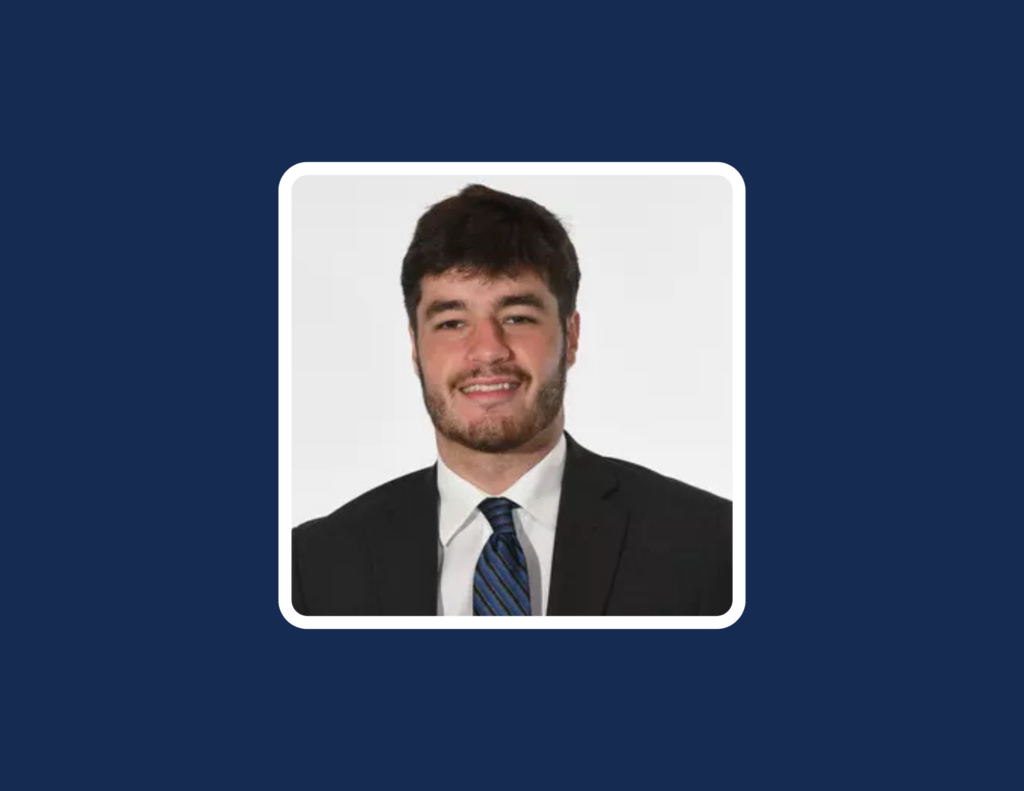
RJ BELL – DUQUESNE UNIVERSITY WOMEN’S BASKETBALL ASSISTANT COACH – EPISODE 1268

Website – https://goduquesne.com/sports/womens-basketball
Email – [email protected]
Twitter/X – @rj_bell5
If you listen to and love the Hoop Heads Podcast, please consider giving us a small tip that will help in our quest to become the #1 basketball coaching podcast.
RJ Bell is entering his fourth season as an assistant coach and sixth season on staff for the Duquesne University Women’s Basketball Team. After a two-year stint as a graduate student, Bell was promoted to assistant coach ahead of the 2023-24 season.
In his first season as offensive coordinator, Bell helped transform Duquesne into one of the top three-point shooting teams in the Atlantic 10 during the 2025-26 season.
Bell joined the staff after wrapping up his collegiate playing career at Geneva College. He played in all 65 games over his final three seasons with the Golden Tornadoes and helped lead the team to an appearance in the 2020 Presidents’ Athletic Conference (PAC) Championship Game.
On this episode Mike and RJ discuss being a coach’s kid and carving out his own path in coaching, emphasizing the significance of relationship-building and character development within a team. We examine the intricacies of his transition from a graduate assistant to a full-fledged assistant coach, highlighting his new role as offensive coordinator and the ambitious goals he has set for his team. Additionally, we reflect on the vital importance of communication and cultural understanding in a diverse team environment, particularly as it pertains to leadership development among players. Bell shares the joys and challenges inherent in the world of college basketball coaching, as well as the commitment to fostering a positive and successful team culture.
Follow us on Twitter and Instagram @hoopheadspod for the latest updates on episodes, guests, and events from the Hoop Heads Pod.
Make sure you’re subscribed to the Hoop Heads Pod on iTunes or wherever you get your podcasts and while you’re there please leave us a 5 star rating and review. Your ratings help your friends and coaching colleagues find the show. If you really love what you’re hearing recommend the Hoop Heads Pod to someone and get them to join you as a part of Hoop Heads Nation.
Have your notebook ready to go as you listen to this episode with RJ Bell, Women’s Basketball Assistant Coach at Duquesne University.
What We Discuss with RJ Bell
- Growing up in the gym because his Dad was a high school basketball coach
- Understanding the individuals you lead is critical for effective coaching
- Effective communication within a team fosters an environment where players understand their roles
- Why building a positive team culture requires prioritizing character over talent during recruitment processes
- Leadership development is essential, especially for diverse teams, and can be cultivated through structured programs
- Duquesne’s success with international players enriches team dynamics, fostering a culture of understanding and collaboration
- The significance of mentorship in player development
- Developing your coaching philosophy as a young coach
Like this show? Please leave us a review here — even one sentence helps! Consider including your Twitter handle so we can thank you personally!
Your first impression is everything when applying for a new coaching job. A professional coaching portfolio is the tool that highlights your coaching achievements and philosophies and, most of all, helps separate you and your abilities from the other applicants.
The key to landing a new coaching job is to demonstrate to the hiring committee your attention to detail, level of preparedness, and your professionalism. Not only does a coaching portfolio allow you to exhibit these qualities, it also allows you to present your personal philosophies on coaching, leadership, and program development in an organized manner.
The Coaching Portfolio Guide is an instructional, membership-based website that helps you develop a personalized portfolio. Each section of the portfolio guide provides detailed instructions on how to organize your portfolio in a professional manner. The guide also provides sample documents for each section of your portfolio that you can copy, modify, and add to your personal portfolio.
Aiming to go D3? The D3 Recruiting Playbook gives you a clear, step-by-step roadmap to the recruiting process – what coaches value, key milestones from early high school through application season, and how to build a target list of schools that fit your needs.
We’ll demystify researching D3 programs and how to stand out without chasing every camp or showcase.
The modules cover things like writing emails to coaches, building an effective highlight tape, using social media well, planning ID camps and visits, and navigating application strategy.
You’ll get templates, checklists, and an outreach plan to communicate confidently, learn how to compare financial packages, and avoid common missteps. By the end, you’ll have a prioritized school list and a decision framework you can use to land your best-fit opportunity.

Give With Hoops is a groundbreaking initiative that fuses basketball analytics with modern sponsorship. Built for teams who see data as opportunity, from AAU programs to college powerhouses.
By tying on-court performance directly to community and sponsor engagement, Give With Hoops help programs raise more while deepening support from those who believe in the game.
Traditional fundraising disconnects donors from the action. Sell candy bars, wash cars, beg for donations, it’s exhausting and ineffective. Players perform better when their stats matter beyond the scoreboard. That’s why Give With Hoops was created.
Give With Hoops connects game performance to community support. Every basket, rebound, and assist becomes a chance to raise funds. Transparent, exciting, and proven to raise 3x more than traditional methods.
THANKS, RJ BELL
If you enjoyed this episode with RJ Bell let him know by clicking on the link below and thanking him via Twitter/X.
Click here to thank RJ Bell via Twitter/X
Click here to let Mike & Jason know about your number one takeaway from this episode!
And if you want us to answer your questions on one of our upcoming weekly NBA episodes, drop us a line at [email protected].
TRANSCRIPT FOR RJ BELL – DUQUESNE UNIVERSITY WOMEN’S BASKETBALL ASSISTANT COACH – EPISODE 1268
[00:00:00] Narrator: The Hoop Heads Podcast is brought to you by Head Start Basketball.
[00:00:21] RJ Bell: If you’re gonna lead somebody, you have to know the person that you’re leading
[00:00:25] Mike Klinzing: RJ Bell is entering his fourth season as an assistant coach and sixth season on the staff for the Duquesne University women’s basketball team. After a two-year stint as a graduate student, Bell was promoted to assistant coach ahead of the 2023-24 season.
In his first season as offensive coordinator, Bell helped transform Duquesne into one of the top three-point shooting teams in the Atlantic 10 during the 2025-26 season. Bell joined the staff after wrapping up his collegiate playing career at Geneva College. He played in all 65 games over his final three seasons with the Golden Tornadoes and helped lead the team to an appearance in the 2020 President’s Athletic Conference Championship game.
Have your notebook ready to go as you listen to this episode with RJ Bell, women’s basketball assistant coach at Duquesne University.
GiveWithHoops is the first platform turning basketball analytics into fundraising impact. Every stat tells a story, and now every story drives sponsorship, engagement, and team growth. Programs nationwide are transforming basketball stats into funding power. Learn to use performance data to attract sponsors, engage fans, and raise more with every play.
GiveWithHoops will help you raise three times more money for your program as their stat-based pledges consistently outperform traditional fundraisers. Visit givewithhoops.com slash hoop dash heads dash podcast to learn more and take your fundraising to the next level. GiveWithHoops.
[00:01:56] James Jones: Hello, this is James Jones from the Yale Men’s Basketball Program, and you’re listening to the Hoop Heads Podcast.
[00:02:04] Mike Klinzing: Are you or an athlete you know planning to go D3? Check out the D3 Recruiting Playbook from D3 Direct. Their playbook gives you a clear step-by-step roadmap to the recruiting process, what coaches value, key milestones from early high school through application season, and how to build a targeted list of schools that fit your needs.
The playbook demystifies researching D3 programs and how to stand out without chasing every camp or showcase. The modules cover things like writing emails to coaches, building an effective highlight tape, using social media well, planning camps and visits, and navigating application strategy. You’ll get templates, checklists, and an outreach plan to communicate confidently, learn how to compare financial packages, and avoid common missteps.
By the end, you’ll have a prioritized school list and a decision framework you can use to land your best fit opportunity. Click on the link in the show notes to get your D3 Recruiting Playbook from D3 Direct.
Hello and welcome to the Hoop Heads Podcast. It’s Mike Klinzing here tonight without my co-host Jason Sunkle, but I am pleased to be joined by RJ Bell, women’s basketball assistant coach at Duquesne University. RJ, welcome in, man.
[00:03:18] RJ Bell: Hey, thanks for having me.
[00:03:20] Mike Klinzing: Absolutely. Excited to have you on. Looking forward to diving into all of the interesting things that you’ve been able to do in your basketball life to this point.
Let’s start by going back in time to when you were a kid. Tell me about your introduction to the game. What are some of your earliest memories of basketball?
[00:03:35] RJ Bell: Yeah. Ever since I can remember, I was in the gym. My dad was a high school basketball coach, a boys high school basketball coach in Pittsburgh for about 30 years.
And so four or five years old, after school my mom would drop me off at the gym, and I’d be there watching practice. So I was alw- always able kind of to see the game from the coach’s perspective just being around him, and obviously, all of my coaching philosophies and everything I’ve learned about basketball started with him started with my dad.
I went on all the road trips with the team, where they weren’t far 30 minutes down the road. Road trips with the team, got to sit in the coaching meetings from a young age, and I took full advantage of that all the way up through up until I play– I eventually played for him when I was in high school for four years.
And learned a lot while I played for him, obviously, and just how to, like, how to manage people, how to just how to get across to people how to motivate people. Even though me and him have a different, And people that know us that are listening to this, me and him are, have different demeanors.
He’s a lot more intense than me but we all, we have the same thought process when it comes to basketball, but he’s just a little bit crazier than I am but in the best way possible. But yeah, just being a coach’s kid is like a dr- like a basketball person’s dream. Just have access to things that a lot of people don’t, and I try to take full advantage of it
[00:04:47] Mike Klinzing: How old were you when you finally realized that your experience as a basketball player, a basketball kid, wasn’t the same as everybody else’s in terms of the ba- the gym access, right?
The- Yeah … being able to sit in on the coaches meetings, all those kinds of things. How old were you when you realized “Hey, my buddies don’t really have this in the same way I do,” unless they’re tagging along with me.
But when did you realize that?
[00:05:11] RJ Bell: So honestly, probably not until I was probably in sixth or seventh grade.
My dad was actually good friends with Tom Crean. They worked camps together back in the day. So Coach Crean let us come out to Indiana when he was in Indiana every fall from fifth, sixth, seventh, eighth grade on, and we used to sit in on their practices a w- week leading up to their first game and then watch their first game.
So I think then was when I was like, “Man I’m kinda lucky that I get to, have a dad that’s in coaching and knows people and knows the game,” and just sitting in on Indiana’s film sessions with Victor Oladipo and Cody Zeller sitting right next to me, I would say that those are the, those days are probably like, “Yeah, this isn’t normal. Not a lot of people get to experience this stuff.”
[00:05:52] Mike Klinzing: Did you find yourself, even while you’re playing… I think it’s always interesting just thinking about the perspective of somebody who ends up in coaching, and especially somebody who had a father who was so involved in the game from that perspective.
When you were playing, did you find yourself Thinking the game from more of a coaching perspective maybe than some of your friends did. I know for me, like I, I felt like when I was playing, like I was just a player, for lack of a better way of saying it. I was not, I don’t know if interested, but maybe just not aware of the bigger picture of everything that was going on.
It was more just, “What’s my role? What do I need to do? How can I help the team win?” Not necessarily looking at the big picture strategy of why this decision was made or why this decision was made. So I don’t know if you were consciously aware of the fact that, hey, I’m thinking about the game as a coach, or maybe I’m just thinking about it as a coach when I’m off the floor, and I…
when I’m playing, I’m just playing. What was the mindset in terms of that player-coach thought process balance for you as, let’s say, a high school player?
[00:07:03] RJ Bell: Yeah, I think I did. I think I did think about it a little bit differently. I probably led any player of all time in calling timeouts, like falling out of bounds or just situations.
I probably called more timeouts than any player ever. So yeah, I do think I looked at the game from a coaching perspective. I wasn’t a point guard, so I think that maybe deterred it a little bit ’cause I didn’t have the ball in my hand. I was more of a wing player. But yeah I think from a young age, like my dad would always say when we’d be watching games together even when I was little, like I would say certain things and he’d be like, “Whoa,” “You’re thinking like that already?”
So yeah, I always think I looked at the game from a coaching perspective. But, just had trust and faith in all the coaches that I always ha- you know, ever had ’cause, I think that’s what a player should do, and give suggestions and try to look and make it easier for them. But, trust in what they’re trying to do as well.
[00:07:49] Mike Klinzing: What was the balance between you and your dad? Obviously, you played for him as your high school coach, but as an off-season type of situation, how much did your dad work with you? How much did you go to him when you’re saying, “Hey, I wanna work on this,” or, “I wanna get better at that”? What did your guys’ off-seasons look like?
We’ll jump into the seasons a little bit-
[00:08:11] RJ Bell: Yeah …
[00:08:12] Mike Klinzing: here in a minute. But just what did the off-season look like in terms of him helping you to develop your game, and you wanting him to help develop your game?
[00:08:19] RJ Bell: So because of how intense he is, people always thought that he probably pushed me super hard, which he really didn’t.
Anytime we worked out, it was me asking him, and I think, and I really thank him for that. I didn’t really understand it at the time, but now I do. He wanted to make sure that I didn’t hate basketball and hate him. So any time that we did work out, it was me initiating it, and it w- it was a few times a week, go in and get shots.
And I always asked to shoot. I kinda wish I w- asked to work on other stuff, too, ’cause all I could really do was shoot in my career. But yeah, it was more initiated by me, and then he would always ask when we’d go in “Do you wanna work hard or are we messing around? Are we going to play Pig against each other, or are we actually working?”
And so he’d always ask that question on the way to the gym, too. But I just think the fact that he initiated it, ’cause a lot of coaches that coach their sons, they push them too hard, and maybe I would’ve been a better player, but then we wouldn’t have had the relationship that we have now, and I can almost guarantee you that
[00:09:12] Mike Klinzing: It’s so interesting that you say that, and that was gonna be my follow-up question.
Have you ever had a conversation with your dad about that particular aspect of whether or not it was easy or hard for him to maybe not be that more pushing, overbearing dad saying, “Hey man, I gotta get RJ in the gym. He’s gotta get better. He’s gotta do this.” Did he ever give you you wonder…
And I’ll give you my perspective with my own son here in a second, but just curious if you’ve ever had an adult-to-adult conversation kind of about what that relationship was like at the time.
[00:09:45] RJ Bell: Yeah, we have. I was pretty self-motivated to, for the most part, so I don’t think it was, like, where he ha- he was like, “What the heck?
What are we doing here?” But n- I- He, he’s talked to me about it and pretty much just said what I just said. He didn’t want me ever to hate basketball and resent him. That’s the conversations we’ve had about it. But I was decently self-motivated. I could’ve been better about getting in the gym, but but yeah.
I- ju- the conversations that we’ve had have just been similar to what we just talked about.
[00:10:12] Mike Klinzing: Yeah. I love the way that you described it, right? That the way your dad approached it was that he didn’t want you to hate the game of basketball because he was pushing it on you when you didn’t want it, and then number two, he didn’t wanna sacrifice the relationship that he had with you in order to make you into a better basketball player, and that’s one of the things that my son’s now, he’s gonna be a junior in college next year, and that’s one of the things that as a basketball guy with my son that I had to really be very cognizant and aware of those exact issues that you were talking about that your dad probably wrestled with when he was away from you and laying in the bed at night and thinking about all this stuff, is how much do you push, how much do you not?
And I eventually came down on the same side of the coin that your dad did, that I’m gonna provide opportunities, which obviously your dad, keys to the gym, high school coach, lots of opportunities to provide you with chances to, to go in and work on your game and with me coaching and doing things.
I always had access to be able to get my son or my daughters to places to be able to play. And there were times where I’d be going to the gym maybe to do a workout with some kids or doing a group session. I’d be like, “Hey, you guys wanna go?” And sometimes they’d say yes, and sometimes they’d say no, and I’d have to be like, “Man, I woulda killed to have a gym and have my dad say, ‘Hey, we’re just gonna go to the gym.’
I woulda killed for that when I was a kid.” And yet I had to make sure that I dialed myself back and realized that, hey, it’s about them. And then of my three, two of the three eventually took over- On their own, kinda like you said. They started asking me, “Hey, can you take me to the gym? Hey, can we go shoot?”
And I didn’t have to do it. And that was a great moment for me as a dad, as I’m sure it was for your dad, that hey, now it’s not, it’s no longer your dad’s career. It’s yours, right? And we’re gonna help facilitate that as the parent, but we can’t drag you along to make you do the things that you don’t wanna do.
As you said, that self-motivation is important. And I think the biggest piece for me that when I hear you talk about that it’s ultimately the relationship, right? That now you and your dad have a great relationship. You’re gonna have a great relationship for the rest of your lives. And we’ve all heard the horror stories of parents who have pushed their kids way too far in whatever, whether it’s basketball or something else, and now that relationship is fractured.
And to me, ultimately, that was never worth whatever. That price was never worth making my son or my daughter 10% better as a basketball player. The relationship was always more important. So I think your dad came at it from the right perspective and but it’s, it sometimes was tough.
Like I gotta admit that. There were definitely times where I’m like, “Come on, we gotta go.”
[00:12:59] Narrator: For sure
[00:13:01] Mike Klinzing: All right, let me ask you then about just what it was like playing for your dad in high school. Obviously, there’s lots of different things that can trip that up, perception of other people, whether that’s- Yeah
other players on the team, whether that’s other parents of players on the team. There’s always challenges there. So how did you and your dad navigate it? What do you remember about that time playing for him?
[00:13:24] RJ Bell: Freshman year I dressed varsity but played JV and didn’t play at all varsity, and then…
And I shouldn’t have. I didn’t deserve to. And then sophomore year, I kinda was, like, in the rotation varsity to start the season playing, a lot of the games, and then eventually his coaches said, “Will you please just start him and not take him out of the game?” He was, I think… And I think he was doing it for me.
He was almost overcautious- Yeah … with it, and would, almo- I was coming off the bench when all the, all their coaches were saying I should be starting. Then eventually he did my sophomore year. And then from then on we had a really good core group of players where nobody was like s- my junior and senior year especially, where nobody really stood out as the best player.
There was, like, three or four of us that on any given night could be. So I think at that point everybody kinda just recognized that I deserved it. But he really s- eased myself in, e- eased me in, and almost it was almost like no choice. Like, all the coaches and even some of the parents were like why do you keep taking him off the floor?”
Type of thing. But he c- he eased it in fo- for me, I think and he has said that, just so I didn’t get any pushback and which, I’m thankful for that as well.
[00:14:27] Mike Klinzing: Yeah, absolutely. I think that’s one of the things that is sometimes difficult to navigate, and I’m sure that you’ve seen it with players that you’ve recruited, whether it’s travel, somebody coaching their their own kid, and you see the situations where maybe the kid isn’t quite good enough to get some of that treatment or that starting spot, or whatever it may be, and then that’s when all that resentment really builds.
And you said, I think that as the parent coach it’s really important to almost bend over backwards, right? To be, I don’t know if, I don’t know if anti-fair is a word, but to be anti-fair to the, to your own kid, just to make sure that, there’s no backlash towards you as you as the player playing for your parent.
I think that’s a again, another thing that Player coach coaches who coach their own kids, that’s one of the things that I think that is a key to success, is to be able to make sure that whatever your kid’s getting, he’s earned it and probably earned it two times over before they get anything, for sure.
When you think about yourself right now as a coach, and then you think about your dad and who he was as a coach, and you said that your guys’ personalities are different. But I’m sure that over the course of time, playing with him, now coaching with him, there’s certainly some things that he’s done, characteristics that he has, traits, things that you’ve carried over, that you’ve looked at him and you’ve copied or incorporated into who you are as a coach.
So what’s one or two things that when you look at yourself as a coach that you say, “Ooh, yeah, that, that came from my dad. I definitely took that from him from being around him, being coached by him, watched him coach all the time.” What are those characteristics that you took from him?
[00:16:09] RJ Bell: I would say that there’s two main ones.
The first one would being he loves the quote “Players don’t care how much you know until they know how much you care.” And he was just always– I– he always had great relationships with his players. And it wasn’t like obviously where he couldn’t push them. It wasn’t like a buddy-buddy relationship.
It was just a, it was a trust relationship, and so I really try hard to build that trust with our players at Duquesne. And then I feel like once you do that, then you can coach somebody harder, and they respect you more. If they realize that you really care for them and off the court as a person then they’ll work harder for you on the court, and he definitely has taught me that.
And really the other thing too, the other main thing is really attention to detail and not really to ever leave a stone unturned. I just remember our game plans, they were always we… he always was thinking up. We always did junk defenses and just there was always a lot of attention to detail in everything we did.
And simplicity to it, but we just drilled the basics and, a lot of attention to detail, and we just did it until we got it right, and I… That’s what I I use that every single day in my workouts and when we’re in the gym. So I would say those. It l- is a lot of other things obviously as well, but those are the two main things that, that really come to my mind right now
[00:17:19] Mike Klinzing: What’s your favorite memory from playing high school basketball for your dad?
[00:17:23] RJ Bell: Yeah, that’s a that’s a great question ’cause my… I would say probably my senior year, we had the most wins in school history up until they actually broke our record the next year. We had 20, we had 23 wins my senior year, and we beat North Allegheny in the first round of our, the playoffs, who’s like a powerhouse in Pittsburgh, and they had three Division 1 kids, and we had a bunch of Division 3 kids, and we were up by 20 in the first half just killing them.
I made a half-court shot at the buzzer at halftime and we won- Nice … that game, and just b- being the underdog in that game and w- and winning the first round of the playoff game there that’s… I would say that game is probably my best memory with him
[00:18:00] Mike Klinzing: That’s always fun. Buzzer beaters.
[00:18:02] RJ Bell: Yeah.
[00:18:02] Mike Klinzing: Halftime. Yeah. End of game. It’s tough to beat buzzer beaters as a memory. I c- I could tell you that much, that’s for sure.
[00:18:08] RJ Bell: Yeah, absolutely.
[00:18:09] Mike Klinzing: Tell me a little bit about the recruiting process and how that went for you, how you ended up at Geneva.
[00:18:15] RJ Bell: Yeah I was decently recruited by a lot of Division III schools in this area, and a couple outside of the state.
I, I went to one of the Hoop Group camps in Albright College and had a good week there. So I had some schools from out of the state that saw me. And then I actually, I had a couple of D2 schools that were recruiting me later in my career in high school, like Edinboro University and a couple others, Wheeling Jesuit.
And coming down to Geneva was just… they came to almost all my games my senior year, and they showed that they really wanted me, and they had a lot of faith in me, and that, that was important to me. The quote, “Go where you’re wanted,” and I felt like they wanted me. And Coach Jeff Senesero, who was there for many year- 30 some years, and he actually just retired this past year he was a big reason.
He was a, he’s a great guy. He had a really successful career. So just the sh- they showed that they really wanted me and w- and showed up at, almost every game my senior year.
[00:19:05] Mike Klinzing: What was the influence of your dad in terms of his knowledge of kind of the process and helping you to work through, whether it’s levels, whether it’s trying to narrow things down?
What do you remember about your conversations with your dad as you’re going through the process of making that decision?
[00:19:19] RJ Bell: Yeah, it was really go where you’re wanted. Level, he di- he told me really not to worry about the levels because people get hung up on that. Like obviously, I was enamored with the D2 stuff when it started to happen, and that’s normal for a 17-year-old kid.
But he just kept saying just those schools didn’t, they didn’t even know who you were a couple weeks ago. You’ve had a good playoff run, so now they know of you. Go… you can, look there and visit there, but, remember the people that have been there the whole time. And it, Geneva just seemed like the best fit for me and, I’m super happy I went there.
Just, I met my best friends there. I’m actually in one of the, one of the guy’s weddings th- this weekend and so yeah. That’s… He just, go where you’re wanted and don’t get enamored with the level.
[00:19:54] Mike Klinzing: Yeah, great advice, right? Yeah. It’s something that, as you said, as a 17-year-old kid, sometimes it’s hard to keep that perspective.
You obviously had the advantage of somebody who had gone through that process with other players and had a good understanding of what the landscape looks like. There’s a lot of kids that don’t always have that perspective, and so then you get caught up, as you said, in the levels. And I think the idea of go where you’re wanted and find the right fit athletically, academically, socially, all the pieces that go along with that I think are so critical, and I’m sure those are the same things that you preach to the players that you’re recruiting at Duquesne, right?
Trying to find the right level, somewhere they can have success, match their talent, temperament, character with your coaching staff, where they can find that success. I think that’s always a big piece of getting it right, getting that college decision- Correct. And it sounds like for you that ended up being the case.
When you get to Geneva, are you pretty well set on the fact that you wanna get into coaching at that point? Are you thinking about, hey, I wanna follow my dad into high school coaching, maybe be a high school teacher? Are you thinking college coaching? Are you not thinking coaching at all? Are you considering maybe another career?
Just what was your mindset as you entered college?
[00:21:06] RJ Bell: So it’s funny. So it’s actually funny you bring up the teaching. So yeah, I actually went into Geneva thinking I was gonna be a high school teacher and a high school coach. And on my visit they set up, academic meetings for me, and I met with the academic, the educa- school of education, and she was giving me a talk, and my dad said midway through he knew I wasn’t doing it.
I was zoned out. I was like, “I c- I’m not doing this.” So I actually ended up doing business a- and that was honestly… I always kinda knew I wanted to coach in college but that was just just in case college didn’t work out, I was gonna be a high school teacher, high school coach. But I was like, I don’t know if I can do four years of education, and I wasn’t a big school guy anyway.
I always did good in school, but, I didn’t really love school. So I was like… So I ended up doing business and then I kinda sold out to the fact that I was gonna be a college coach after that. And once I kinda, made my mind up on going business and school, I thought business would kinda help out with college coaching and recruiting.
And then I kinda had my mind set up that I was gonna be, a college coach after that.
[00:22:02] Mike Klinzing: Yeah. I got a degree in business, too, and I felt like I had no idea what I wanted to do, and business was kinda like you could do anything, right? Yeah. It’s ah, I could go here, I could go there, I could do this.
And so that’s why I ended up choosing it, ’cause I had no idea going into school what I wanted to do. Tell me about the adjustment of playing for a coach, a coaching staff that wasn’t your dad. Obviously you’ve grown up watching him coach, playing under him. All of a sudden now you’re in a new environment, new coach New level of play.
What was that adjustment like for you kinda on all levels going from high school to college?
[00:22:36] RJ Bell: I would say the one biggest adjustment was that I didn’t know what was going on all the time. With my dad, I live with him, I could ask him, “Hey, like what…” I don’t live with the coach in college, so I, I just didn’t really always know what was going on, which was a different, a different perspective.
But no, the… My coaches at Geneva were great. It was a seamless transition. Coach Santacero, he was the head coach for 30-some years there, and then Coach Zach Stitt was our assistant coach, and he was a young assistant, and I’m still fr- I’m friends with him now to this day. He was in a, he’s the head coach at Morris High School with the girls now.
He was a women’s assistant at Cornell for a little bit. And, they’re just great guys and they, I… They always had our best interests, and it was pretty a seamless transition. But yeah, like I said just not knowing all the time what the game plan was, what the, what we were doing, what the ins and outs were, just because I wasn’t, wasn’t in the, wasn’t in the loop as I, much as I was in high school.
[00:23:25] Mike Klinzing: That make you think about how important communication is as a coach to be able to make sure that your players understand, whether it’s role, strategy, whatever? So I think that’s one of the things that if I think about my time, A, as a coach, that probably me or the coaches that I worked with probably didn’t do enough of is communication, and then seeing it as a parent And looking at it from, hey, what do my kids who are playing on this team, what do they need to know?
What do they wanna know? What are things that are important that are gonna make them more comfortable or more understanding of what’s going on? I think that communication piece to me is an area that is huge, and some coaches do it really well, and there’s other coaches that don’t do it very well at all.
So I’m just curious, did you learn that lesson because, hey, you had the behind-the-scenes deal with your dad. Now all of a sudden that faucet is shut off.
[00:24:15] RJ Bell: Yeah, I think communication is super important. Obviously there’s certain conversations that the coaches have that the players can’t know.
But y- I think everything that they need to know or should know, they have to know and be told it a lot especially in this day and age ’cause they wanna know. They wanna know the why. A lot of players wanna know why, and I think I think, it’s up to us as coaches to almost over-communicate the why and why we’re doing things, and over-communicate their roles and what we’re expecting them to do, even though they might not like it.
Not everybody can be the 15-point-a-game scorer. But getting them to realize that the person that’s setting the screen for the scorer is just as important. It might not look like it, but to the team you are. So I just think o- over-communicating that stuff as well as communicating not just a player’s role to them, but their roles to each other.
So “Hey, why does this person get to shoot all those shots?” ‘Cause they’re in the gym, and they’re the one… They practice those shots, and we feel like they need to take those shots to win. Just to cut out all the sidebar locker room talk with let’s get it all out and communicate everybody’s role to each other, and I think that’s very important as well.
So yeah, I don’t think you can over-communicate
[00:25:17] Mike Klinzing: Yeah, things that are left unsaid often get filled with other stuff. The vacuum sucks all that other stuff in, and then it gets filled with things that you as a coach probably don’t want it to get filled in with. You’re much better, you’re much better off filling those vacancies with the actual truth of what’s going on, rather than have the players trying to guess and speculate and figure it out.
That, in my experience on both ends of this, never really goes well. It doesn’t turn out the way that you as a coaching staff would hope that it did. Over the course of your four years, did you talk to your staff at Geneva about, “Hey, my goal at some point is to coach”? And did you have those kinds of conversations beyond just them coaching you as a player?
Did you ever go to them and talk to them about, “Hey, I’m thinking about getting into coaching,” and then they maybe gave you a little bit more because you were on that coaching track, so to speak? Was that something that you tried to take advantage of?
[00:26:09] RJ Bell: Yeah, so they, yeah, they– Once I became a captain especially, I was a captain my last two years, they th- especially then, they really allowed me to be in more of the, the meetings and stuff like that, and they knew I wanted to get in coaching, so they helped me with that.
I actually went recruiting with them a couple times when I was in college. They allowed me to go with them. And then when I graduated, the Pitt Jam Fest, which is the huge AU tournament here, they– I went with them in Geneva stuff, like I was coaching with them. So like they, they allowed me to do stuff like that.
So yeah, I helped them with the scouts here and there. So they, yeah, they were really good with knowing that I wanted to coach and allowing me to have an input and, here and there as my career went on.
[00:26:45] Mike Klinzing: Yeah, to be able to have those little touch points, to be able to get that experience, get a feel for what that recruiting trip looks like.
And I’m sure going to the Jam Fest, completely different walking in there as a coach than what it was like for you walking in there as a player and kinda seeing it from the other side of the curtain. Super interesting, I’m sure, to kinda get that feel for what that would’ve been like. Tell me a little bit about graduation day.
What does the job search look like? Tell me about how you go about the process. It’s always interesting to hear from guys that I sent out 350 emails,” or, “I reached out to this guy and this guy who I knew through this and that.” And obviously you had your dad and his connection. So just walk me through how you went about trying to go through the job search.
[00:27:28] RJ Bell: Yeah. So I’m the type of person, like I, I’m not a big reach out to 500 people and hope somebody sticks. Like I’d rather reach out to a couple and really build a relationship with those people. So actually oddly enough, I was set up to be the men’s GA at Duquesne. So I pre- I met with them a few times my senior…
My whole senior year I would talk to them. This was when Coach Dan Bratt was the coach. And I talked to Coach Wi- Terry Wygant, who’s now at Akron, almost every day, drove him nuts. And I was actually set up to be the GA there for the men’s team here. And then a co- a assistant’s job opened with the women, and Coach Burt called called my dad and sought him out for the job.
And whenever he hired my dad, he called me and said, ’cause I’ve known Coach Burt, we’re from like the same town, and he said I heard you’re gonna be with the men. Why don’t you come be with us instead?” I said, “That sounds good to me.” I said, “I’m in.” We met over coffee and I said, “That sounds good to me.
I’m, I’m in. Let’s do it.” And the rest is history there. I, I said yes on the spot and n- kind of now we’re here.
[00:28:29] Mike Klinzing: All right, so two things from that. One, just let’s start with the graduate assistant part of it As you’re going through, obviously you have two things that you’re trying to accomplish, right? You’re trying to get your graduate degree, so you gotta go to class, you gotta take l- classes online, however it is that you had it set up, and then obviously you have your responsibilities to the basketball program.
So how did you, at that point in your life, how did you balance those two things, the academic side of it with your responsibilities with the basketball program?
[00:28:59] RJ Bell: Yeah. I was lucky. Coach Burt saw something in me for some reason. I don’t know what it was. But he, from day one he really had a lot of faith in me and, I o- I owe him a lot to what, where I am today.
Obviously, I’ve stayed in the same place and he’s hired me a couple times. And he pr- he let me do a lot from day one. Like I… He let me do, work, he let me work people out. I was able to on courts coach a little bit only like when other coaches were out because of compliance rules and stuff.
But he allowed me… he took me under his wing from day one. And he really taught me, ’cause he’s known to be like the best international recruiter in Division 1 women’s basketball, and he started showing me the ropes with that from day one. And he allowed me to…
Obviously, I couldn’t go out and recruit when I was a GA, but the FIBA YouTube channel, it was like my best friend, and I used to watch the FIBA YouTube channel like crazy and he let me just run with it and showed me like what to look for, what countries that we look for. And so I was able to do a lot of basketball stuff especially like the behind the scenes basketball stuff when it came to recruiting, like on-campus visits and organization of that.
And I was… Also had to do some of the ops stuff like setting up hotel rooms buses, meals and stuff like that, as well as doing my grad school. And I did a master’s in leadership. It wasn’t too difficult, but it was very beneficial for what I want to, for I want to do in coaching. But no, they treated me like all the staff when I, when I was a GA.
They treated me like another assistant coach and took my input during games, in practice, into meetings. So I was very fortunate that, the whole staff, but especially Coach Burt saw something in me and, had a lot of belief in me from the beginning.
[00:30:37] Mike Klinzing: Do you feel like that- freedom or that opportunity that you were given, do you feel like that helped you to find your coaching voice, your leadership voice, maybe sooner than if you hadn’t have gotten that opportunity?
[00:30:52] RJ Bell: Definitely. Yeah, I think it gave me the experience early ’cause I was thrown into the deep end. A lot of GAs, as they don’t get to do really much besides, film and do the laundry and order meals, and I was lucky enough that, like I said, I could do pretty much everything.
And yeah, it definitely gave me the experience that was needed, what is needed for where I am now. And I also got to coach… We have male practice players in women’s basketball, so we have a full squad of n- guys that are just stu- students on campus, and I was, like, their head coach during practice.
So I was able to implement other teams’ plays with them, and so that, that really helped me a lot to get to, where we are today, for sure.
[00:31:30] Mike Klinzing: Yeah, that ability to get those kinds of reps I always think is super important. I’ve done tons of interviews with guys, RJ, that talk about just getting reps.
Maybe it was in the summertime with a seventh grade AAU team, or maybe they were coaching the JVs back at their high school for two years while they were working another job before they realized that, hey, they wanted to get into coaching. And to a man, all those people always tell me that those reps of being a head coach and making decisions and, like you said, being able to see things on film and then implement that with your practice squad, to be able to do that clearly, again, is a, is an opportunity to Take some knowledge over here and apply it over here with the team, and being able to do that directly for yourself, I think again, I’m sure is invaluable to you as you’re gonna continue to move along in your career.
So the other thing that happened for you is you go in with the idea that you’re gonna be coaching on the men’s side. Your dad gets the job, you get the job. Suddenly you’re coaching on the women’s side. I don’t know if that’s something that you ever thought about while you were playing or while you were considering your coaching career.
But when that opportunity presented itself, as you said, you jumped on it. Was there any… I don’t know, you obviously didn’t have anything to adjust to because you hadn’t coached at the men’s college basketball level, but that’s clearly the level that you were playing at. What was the adjustment in terms of coaching women?
What do you love about that piece of just being able to coach the women’s game?
[00:33:03] RJ Bell: No, honestly, before Coach Burke called me, I really didn’t have any plans to coach women’s basketball. And it’s the best decision that I ever made to coach women’s basketball. And he said that it would be.
He said that just how I am, I would fit women’s basketball perfectly. And I love coaching women. They have– they want to learn. They really, they wanna learn and they wanna absorb. And like I said earlier, they… Once… With them especially, when you, when they really know that you care about them, they’ll run through a wall for you.
And yeah I’ve really enjoyed coaching women, and now I’ll never look back. Like I– people always say “Are you ever gonna switch to the men’s side?” N- no. I’ll be on the women’s side my whole career. Just be- just the relationships that I’ve built and have built with them and just the, just like I said, the appreciation that they have for us is I don’t think you see it as much on the men’s side.
You do, but I just think more so on the women’s side, they really appreciate, whenever you do take the time to get to know them as people.
[00:33:56] Mike Klinzing: Would you think there’s more ego on the men’s side for sure when it comes to- Thinking how much they know about the game it’s definitely different.
I, I think that’s clear when if you’ve coached both, and I’ve been fortunate to coach boys, and I’ve been fortunate enough to coach both my daughters many times. And I do think that there’s certainly, as you said a level of desire to learn on the women’s side that I’m not sure is…
It’s there in some male players, but it’s probably there in a lower percentage than it is on the women’s side for sure. When your GA position ends, is it clear at that point had it already been established that you were just gonna transition into another position on the staff at Duquesne, or was there a moment of uncertainty that maybe you were gonna have to go out and get a job somewhere else?
[00:34:46] RJ Bell: So there was there was some moments of uncertainty. I really wanted to stay at Duquesne just because of the relationship I’ve had with everybody. And obviously my dad’s here. Coach, me and Coach Burt have become really close. And so it’s funny, like in between when I was a GA and assistant, I just never went away.
I always… I’m gonna make, I’m gonna make them tell me to leave. So I just kinda kept coming in. Season was over, kept coming in, and Coach Burt was like, “I’m gonna hire you if I can. I wanna keep you, but like I’m not gonna fire anybody, but then we actually had a couple coaches leave and take other jobs and I was fortunate enough to be, he hired me, right there when they left, and I was obviously very happy.
But I pretty mu- I told him, I said, “I’m giving you no choice. I’m not gonna leave until you tell me to leave.” And but it worked out very nicely and I’m very fortunate how it kinda all played out.
[00:35:29] Mike Klinzing: You’re not the first person to try and be successful with that strategy of I’m just gonna be around, and eventually, “Hey, this guy’s around all the time.
We’re just gonna, we’re just gonna keep him on the staff. We’re just gonna hire him.” So good strategy, RJ. It definitely is one that I’ve seen work before, without, without question. So tell me then about the transition from graduate assistant to being a hired member of the staff. How did the responsibilities change?
What did your day-to-day look like? How was it different?
[00:36:02] RJ Bell: So it was seamless ’cause like I said, they kinda treated me like an assistant to begin with. I took over as the recruiting coordinator when I first w- when I first was the assistant. And so I decided to go, I went on the road a lot more than I was when the GA.
And we do a lot of international recruiting, so I- I’ve been to Europe I’ve been to Africa, which was what, a lot of people go to Europe, not many people go to Africa. And in s- in specifically Senegal, I’ve been to Senegal twice, and a lot of people have said that there, that I’m the only Division 1 women’s coach to ha- that has been there.
Now I don’t know if that’s true, d- nobody hold me to that, but I suppo- that’s what they say when I go over there, that I’m the only women’s basketball coach to go over there. And really, the real reason why we kinda started going over there, we had a player my first year actually as GA that transferred into us from Western Kentucky.
Her name was Fatou Pouy, and we just loved her. She was a great player for us and just a great person, and she was from Senegal. And that kinda built that network and I went s- two years ago now, and I’ve gone the last two years and was fortunate enough to get a couple players, bring a couple players back with me that are on our team now.
And and it’s been a, it’s been really, it’s been life-changing for me to be able to recruit, overseas as well as domestically. We do a lot of domestic recruiting as well, but, we have this year on our team’s roster that’s coming up, we have eight different countries represented which is exciting for me.
And so it’s gonna be a lot of fun. But yeah, like I, I think from day one, just m- more recruiting and more on the road is kinda what changed the most when I first became an assistant.
[00:37:31] Mike Klinzing: What’s your favorite country you’ve been to?
[00:37:34] RJ Bell: I would say S- Senegal, one, ’cause they’ve kinda adopted me there for some reason.
Like they, when I go there, I get like special treatment and it’s been a lot of fun going there. I r- and I really do love it. The people there are amazing. They’re so welcoming and so great. But I’ve also, I really enjoyed Hungary too. Budapest, Hungary is where Coach Burt, his wife is actually from there.
So we’ve been over there a few times. They, he has an apartment there, and when we go recruiting in Europe, we stay there. And Budapest, Hungary is a fantastic city. So I would say between Hungary and Senegal right now, but there’s still a lot that I have to go to and v- visit a couple of our players that are on our team now from different countries.
So yeah the verdict is still out, but I would say those two right now as we stand
[00:38:16] Mike Klinzing: When you go to Senegal, where do you go? What– Are you going to an event? Are you going to a specific venue? Are you connecting with the same group of people? What does that look like logistically going to Senegal?
[00:38:30] RJ Bell: Yeah, so the first time I went I didn’t really know what I was getting into.
I kinda had a plan, but it was like I really had no idea what to expect. And so SEED Academy is where I usually go, and that’s where a lot of the players are. It’s an academy that was started by Coach Samba Fall and he– it’s where all the best players from Senegal are asked to go and play.
It’s in Ch- Chess Senegal, and there’s a men’s team and a women’s team, and there’s the junior teams, and I spend a lot of my time there when I go, and there’s, there’s a lot of tall players there. Obviously, we have two players now that are six six and six five from SEED Academy. So I spend a lot of my time there at SEED, and then just from going there, I’ve built other connections.
There are kids that don’t play at SEED that are really good that people say, “Hey, you gotta come check this kid out at this gym. Come check this kid out here.” So it’s kinda turned into– I’m kinda turned into the real-life Adam Sandler in the movie Hustle when he goes over to Spain or wherever he goes to find…
That’s kinda me. That’s kinda how my life is going right now, and it’s been a lot of fun. But yeah, I go in with an agenda, but it kinda usually just gets wherever I end up and wherever kind of where they pull me to go is where I go. But yeah, SEED Academy is where a lot of the good players are.
[00:39:43] Mike Klinzing: Gotcha. Yeah it’s funny when you go and the, you’re flying by the seat of your pants, right? It’s just, “Hey, let’s see where we can find the players.” Yeah. And we’ll go where the players are. H- to go along with that, how long did it take you to get a feel for the women’s game and having an eye for the level of talent that a player needed to have to be able to have success at Duquesne?
‘Cause I would think, again, this is just me talking, as a 22-year-old male college basketball player coming into the women’s game and then going and trying to evaluate players, whether it’s at an AAU tournament, whether it’s in a foreign country, whether it’s in a high school game, trying to evaluate that and figure out, hey, what level is this girl?
I would think there would’ve been a little bit of a learning curve. So what do you remember about just trying to figure that out of, hey, how do I… What’s my eye for talent when I’m trying to figure this out?
[00:40:42] RJ Bell: I think, as coaches, we’re all still learning always and still evolving. But I think just having…
‘Cause Coach Burt has been at Duquesne for 20 years, and has had 20- 21 season, like 17 out of those 20 years, and so he’s showed me what we look for. And we there’s really, to me the way I always explain it, there’s really no secret formula. I just look for people that can play and fit what we do.
And that’s just depending on what position we need. For post players, we want as big as we can get, obviously at Duquesne, but we wanna make sure that they can run, they can catch, and they can finish. And then hopefully everything else that we can teach them. But when it’s, from taking me to look, to me, basketball is basketball too, so it didn’t take me too long to recognize what is needed for a good player at this level especially with the guidance that I had.
But like I said, still learning, still, still adapting, still trying to f- you know, figuring out, like everybody else what, the best players are and what that looks like. But I just try to trust my eyes and, if I think a player is good and others might not I, I trust my gut and trust my eyes and, bring that player to Coach Burt.
And it’s kinda, it’s k- worked thus far, and hopefully it continues to work.
[00:41:47] Mike Klinzing: The art and the science of coaching, right? There’s some scientific things, there’s some size, some speed, some stuff that’s easily observable, and then there’s some art to figuring out, hey, I, I don’t know maybe necessarily exactly what it is about this kid that I like but there’s something.
Or maybe it’s just something that you know fits with your program that you’re like, maybe s- this player’s being overlooked because of X, Y, or Z, but they have this intangible quality that I know is gonna fit and work for us. And I think that’s, again, the sort of the art and science of coaching.
There’s no one exact way that it’s always gonna work. You kinda gotta have that feel to go along with sort of the the metrics that that everybody’s looking for. As an assistant coach, what’s your favorite part of the X’s and O’s side of the game that you like to get in the film room and really dive into?
Do you have one side of the ball that you really like to go in and dive deep on? Or just give me an idea of X’s and O’s wise what you like.
[00:42:43] RJ Bell: Yeah. So I’m actually fortunate enough this year I’m moving over to being our offensive coordinator which I’m very excited for. I’ve always been more of an offensive minded person.
And and that, and coaching the practice squad really helped me out with that. So luckily this year I’m gonna be running our offense and we’re gonna be doing a lot of five out, four out, one in motion with a lot of concepts that can be stacked. And just letting the players make reads while all, hopefully, we do so much in practice and teach them in practice that we don’t have to say much in the games, and it’s just them making the reads and them making the plays.
But the way I’m gonna construct it is I can control– we can control it from the sideline if we have to as well as having set plays for shooters to get shots, drivers to get down hills and posts to get post ups. But yeah, the, I love the offensive side of the ball and I’m always l- looking at Twitter and YouTube and coaching clinics about how to expand, what just different concepts and set plays that we can run to help us be successful.
[00:43:42] Mike Klinzing: Yeah, I think it’s an ever evolving process, right? One of the questions that I always like to ask, especially guys who are first time head coaches, is how set in cement is your philosophy, right, basketball-wise? As you said, there’s so much out there now that you can continue to learn from and continue to take, and I think the best coaches they have a core philosophy and then they’re able to tweak and m- add little different things that can give you a wrinkle maybe that fits your personnel for that particular year in a given way.
And so I think that’s really the right way to approach it when you start talking about, “Hey, I’ve got this. This is what I know we wanna do. This is our core,” and then we’re gonna pull little things out and add it and tweak it based on, again, our personnel year to year, maybe our particular opponent. So it’s good to have all those little wrinkles as a part of what you wanna do.
When you’re trying to teach decision-making and players making reads, for you guys at Duquesne, what does that look like in a practice environment? As you said, you wanna give the players as many reps as you can during practice to be able to make those decisions so that when it comes time for the game, they’re comfortable with doing that, and they don’t always have to look over to you at the sideline.
So for you guys, what does that look like in a practice setting?
[00:44:57] RJ Bell: Yeah. So we try to do a lot of like disadvantage situations. So we do a drill called 4 v. 3, where the offense has four and the defense has three, so we’re, we’re penetrating. It ends up being four on four, but the defense is shifting, so the o- we have to make reads and decisions in real time.
We do that drill a lot. And we also do 5 v. 5, but we can’t dribble. So no dribble. So it forces our cuts, our screens, our passes to all be extra crisp. And so we just try to make our practices harder than the games whether that’s disadvantaged stuff or no dribble. But yeah, that… And just really repping and re- drilling everything that we wanna do into their minds so it’s second nature when the games come.
[00:45:38] Mike Klinzing: Does Coach Hurt have a set way of designing your daily practice schedule? In other words, is it, does it always start with player development stuff, and then go to defense, and then go to offense? Or is it kinda we just figure out what the team needs day-to-day? What’s the overall practice planning process look like amongst you guys as a staff?
[00:45:59] RJ Bell: So it’s different from the summer and in the season obviously. So in the summer, it’s a lot of kinda getting in the basis of our offense and defense to kinda get our principles in. And a lot of skill work. A lot of skill work. We get a lot of shots up. We have them do a shot challenge.
A lot of stations, a lot of breakdown work. And then when the season rolls around, we usually start off practice with a couple, drills to get warm then some stations for player development to develop some, ball handling, shooting finishing. And then from there, we break it in between offense and defense.
The offense might go first, and we, we’ll rep our s- what stuff we wanna run. We’ll do those advantage drills that I talked about. We’ll run over some of our sets. And then we’ll– And if we’re preparing for an opponent, if they guard a certain way we’ll go over that. And then we’ll flip the defense and we’ll go over, how we’re gonna guard certain plays, how we’re gonna guard their motion offense if we’re gonna fire in the post, double-team the post player, if we’re gonna, how we’re gonna defend ball screens.
So usually it’s breaking up into segments, with the beginning being warm-ups and player development, and then offense and defense spread out separated from there
[00:47:00] Mike Klinzing: Are you locked into the clock schedule of, hey, we’re doing this drill for 10 minutes, and regardless of where we’re at, when it gets to 10, we’re moving on?
Or is it, hey, we’ve got certain things we want to accomplish in this 10 minutes, but if it takes us longer, we’re gonna kinda extend it? Is it a feel thing that you go through by day by day in practice?
[00:47:17] RJ Bell: Feel thing. Mostly a feel thing. Yeah we’re kinda loose with the practice plan. If we need– If we’re doing a drill for 10 minutes and we need to do 10 more to get it right, we’ll do 10 more to get it right.
Coach Burt, usually monitors that and and if w- and if I see something offensively that I wanna add more time, I can go over to him and tell him. Same thing with the defense. Yeah, it’s ki- we’re kinda flexible with it and just wanna make sure we get it done right.
[00:47:40] Mike Klinzing: Tell me about the positives of having your dad on the coaching staff with you.
What are the big things that you think make it unique and that make it a positive for the two of you, but also for your program, for your players? Obviously, there’s that dynamic between the two of you that again, not many people get the opportunity to do that, so just throw me the positives.
[00:48:03] RJ Bell: So our staff feels like a family dynamic to begin with, and I feel like obviously having a father and son helps with that. And I think that’s a big positive. This year is w- this upcoming season will be the first year I’m the offensive coordinator, and he’s actually been our defensive coordinator for a while.
So I think we’ll be very aligned with what we’re doing offensively will fit what we’re doing defensively. So I think that’s a big time positive just because we’re, we’re together a lot and we think so much alike. So I think that’ll be a big ti- that’s a big time f- positive as well.
And like I said, I just think the whole, the family atmosphere of having a father and son on the staff that are connected and our whole staff is kinda connected like that which makes it, a lot, very enjoyable to be around and it’s… I think it’s better for the players’ success too.
[00:48:46] Mike Klinzing: Absolutely What’s something that over the course of your guys’ time together that you’ve disagreed with, and what did that conversation sound like?
[00:48:56] RJ Bell: Yeah, so we do have some disagreements and I think he thinks they’re more than I do. It’s just, it’s just funny. But yeah, somet- we’ll disagree with how regarding a certain action or what we should be do- you know, a certain play, and then we’ll usually just talk it out and we’ll come…
sometimes we- he’s right, and sometimes I’m right. And but yeah, it’s always professional and, we… Is any, we always, we’ll have disagreements here and there, but we just kinda talk about it and come to a conclusion when whatever works best for the team.
[00:49:23] Mike Klinzing: How easy or hard is it for you guys to step out of your roles as assistant coaches for the same program and just have a conversation over dinner that doesn’t re- directly relate to the team? Is that something that you guys find easy to do, or is it something you find hard to do?
[00:49:42] RJ Bell: It’s actually probably dec- it’s decently hard because we care so much about it, and we talk a lot about it.
We try not to, just to ca- you know, have talk about other things, but we end up do talking about it a lot. And, It’s a healthy amount but like ’cause we want, both wanna talk about it. But yeah, we do talk about it a lot. But we do make sure that we, there’s certain times where we say, “All right, we’re not talking about it today.
We’re just gonna, we’re gonna go to the, the Pir- Pittsburgh Pirate game and enjoy the game together and not talk about basketball at all.” But yeah, we, a lot of our time is definitely talk about Duquesne women’s basketball for sure.
[00:50:13] Mike Klinzing: How does your mom handle all this stuff?
[00:50:16] RJ Bell: She’s used to it ’cause she’s been…
She’s really not a basketball person, but she’s used to it because she’s been around basketball so much. And but yeah, she, she just, she loves coming to the game. She’s really proud of both of us obviously. But she doesn’t, she’s really never been a basketball person, never coached basketball, never played basketball.
So she leaves the basketball conversations to us. But she loves coming to the games and supporting both of us.
[00:50:39] Mike Klinzing: Yeah, that’s very cool. And I think that obviously as you well know, and I’m sure your dad well knows, that the spouse is always an important figure in a program, right? I- in terms of being supportive of the person who’s coaching, but also just being supportive of the team and building relationships with the players who are a part of it.
So it’s cool to hear that’s how you guys have put it together and handled it. With your dad being a longtime high school coach and then stepping into a role at the college level, have you g- guys had that conversation about, “Hey Dad, what was it like coaching boys for 30 years at the high school level and now coaching women at the college level?”
Just when you guys talk a- and you’re asking him those kinds of questions, what are some of the answers that he gives you?
[00:51:29] RJ Bell: Yeah. I’ve asked him that a couple times and really he says it’s really not much different. And he says what I said earlier, basketball is basketball and people are people, and, they just wanna be treated equally and like people and cared about.
So yeah, we’ve talked about that, especially early on when we first started. And yeah he… not much of a difference. Like his coaching st- from what I have seen, I played for him now, his coaching style hasn’t really changed. He’s very intense. He’s intense but positive, and he coaches, yeah, he coaches our women here just like he coached us when I was in high school.
[00:52:01] Mike Klinzing: To be able to have a steady personality and a steady coaching style, again, that sort of transcends in this case gender and level and you gotta coach who you are, right? I think that you made that point indirectly at the very beginning of m- me and my dad are different in the way that we approach our coaching, but yet you have to be who you are, and that’s when you’re gonna have the most success.
I know that, again, thinking about somebody my age, so I’m 56 years old, so when I’m coming up through, a lot of the coaches that I played for, a lot of coaches that I watched on TV were that Very intense, right? Very demanding, very it’s my way or the highway. And so when I first started coaching, that doesn’t really fit my personality.
That’s not who I am. But there was a huge part of me that in my first year or two of coaching that I felt like when I was coaching like myself, that I wasn’t really coaching the way that I should be, if that makes sense. Because what I had observed and seen for so long was the fiery coach and the guy getting in your face, and that was just never who I am.
But yet, when I didn’t do that, I felt like, oh, this is… I’m not sure I’m coaching the way I’m supposed to. Am I really coaching? Am I doing what I’m, am I doing what I’m supposed to be doing? But you do have to really find your voice and find your personality a- and figure those things out in order to really be able to have the kind of success that you wanna have as a coach.
‘Cause ultimately, if you’re phony or fake, the players figure that out pretty quickly if you’re not coaching a- and being who you really are on a day-to-day, on a day-to-day basis. When you think about the culture that you guys have built at Duquesne, what are some of the things that you’ve done that you think might be applicable to other coaches, maybe at the high school level who are listening, something that they could take away that you think has helped your program to build a good culture?
[00:54:00] RJ Bell: Yeah. Now obviously like high school level, you can’t really control who’s on your team as much. But we- … do a very good job of not sacrificing character like taking a good player that’s not a good person. And I- and I think at the high school level you just don’t have to deal with it.
If a kid maybe is really good and not best for the team, like I, he might not be best for your team. And I think we do a great job of not sacrificing character for talent. We w- we want good players. Obviously, we have to have good players to win. But we really vet our recruits well and make sure that we’re bringing in good, high quality character people, and I think that’s so important.
‘Cause, you see a lot of horror stories of coaches that, quite frankly, they get desperate and they bring in players that aren’t very good citizens for their program, and I don’t think that’s ever worth it. And we do a very good job and that starts with Coach Burt at bringing in good quality human beings first, and that, that happen to be pretty good basketball players as well.
[00:55:00] Mike Klinzing: And it’s obviously more fun to coach those kids too, right? When you have high character kids that are gonna do some of the things that you want them to do. They’re gonna be fun to interact with both on and off the floor. And it just- Makes the coaching that much more enjoyable when you can do it with players that you like, not just as players, but you actually like them as people.
I think that’s a huge part of what it’s all about. And clearly, as you said, at the college level, you’re able to recruit and bring in players that you think are gonna fit your program, which obviously helps to build the culture. Once you have those players on campus, and you think about developing leaders on your team, what does leadership look like on the Duquesne women’s basketball program?
How do you guys develop leaders? What’s the philosophy on how you put leaders in position to lead? Talk to me a little bit about that.
[00:55:53] RJ Bell: Yeah. Especially for… Now a lot of colleges now are going international route. But since our team is such heavy international, so many different cultures, so many different personalities, the team building and the leadership is very important for us, just because we have kids from all over the world that they don’t know how each other kinda operate.
And so we actually we got– we get out in front of it a lot. In the summers especially, we do a lot of team building. So if that’s, We– the Kennywood’s our amusement park. We’ll go there. We’ll do different field day activities. We’ll do cookouts and all that stuff, just so they get to know each other as people which is very important, because if you’re gonna lead somebody, you have to know the person that you’re leading.
And so that’s very important to us. And then every every week in the summer, as well as every week during the season, we have a leadership course that’s actually taught by my dad, because he was a high school teacher, and one of his teacher classes was leadership. So he puts the players through a course of leadership As the th- throughout the whole year, and it’s just molding them in how to be leaders and letting them, some of them know “Listen, not all of you in this room are leaders and that’s okay.
You need to have followers on a team as well.” So it’s showing people how to be leaders and followers. And then when it comes to picking leaders it’s just what we observe. We don’t make it a player-voted thing because as we all know, that becomes a popularity contest. We appoint the leaders and the captains, and it’s usually two, two players every year, and it doesn’t always have to be upperclassmen.
We’ve had freshmen, we’ve had sophomores that w- you know, that were leaders. And so we just, we pick those, but we try to mold them all to be leaders as well as letting them know, “Hey, if that’s not some- that’s not who you are, it’s okay to be a follower as well.”
[00:57:32] Mike Klinzing: What are the roles that your captains have?
What are some responsibilities that if they’re named a captain, what are some things that they’re expected to do, or what are some opportunities that they get as a captain?
[00:57:44] RJ Bell: Yeah, it’s more, it’s like the middleman between the staff and the players. If any, any issue arises with amongst the team, they’ll k- they’ll let us know.
If they need something, if the team needs something, they’ll let us know. They if we’re, little things like where they want, where does the team want to go to dinner when we arrive at, on the road trip stuff like that. And we’ll have them up. We’ll have meetings with them just to, go over, certain things game plans, b- and whatnot.
And it’s really just like the mediator from the rest of the team and the coaching staff is w- is what I would say is the best way to describe it.
[00:58:15] Mike Klinzing: Again, that, that goes back to what we talked about before, right? In terms of the communication, right? It’s one more line of communication. Staff, yeah, maybe a direct line to a player, but maybe sometimes that message goes through the captains, and then the captains can relay it, and sometimes it means more or it’s more impactful coming from player to player as oppo- as opposed to maybe coming from a coach directly down to the team.
If they hear it from one of their fellow teammates, all of a sudden maybe that message resonates a little bit more. So that makes a ton of sense to me At this time of year summertime, you guys are getting into your summer program here. What’s the process for Coach Byrd delegating some of the things that you guys do in the summertime?
I know one of the things that I always say is when I think back to my playing career, that as a Division I player back in from 1988 to 1992, summer was completely different. Our season ended and I got handed like a two-page work sh- document. “Hey, here’s your workouts. We’ll see you back here.
We’ll see you back here in August.” And that was it. And obviously now you guys have far more access and ability to work with the players. But one of the things that I always think is that, man, to hear the same voice or voices for 11 months out of the year, you gotta be really careful that you’re not burning them out on one voice or this or that.
So how do you guys handle the summer? How do you approach that to make sure that you’re getting the most out of the contact time you have with the players, and yet at the same time not burning them out so that when they come in the fall and the season rolls around, that they’re fresh and ready to go and excited to be playing and start practicing?
[01:00:00] RJ Bell: No, that’s a good point, especially ’cause these days that’s all these kids do is play all year round and they really don’t get much of a break. So we’re able to go eight weeks in the summer and a lot of teams are practicing now. We- we’re only gonna go six. Just try to shorten that a little bit just because we don’t want that burnout or that, those injuries, those, those injuries to happen.
So we’re going six weeks. And the good thing about us is, like I said, we have coordinators as well as the head coach, so they’re hearing different voices. But, so that’s good from that aspect and, but the important thing is they’re hearing different voices, but it’s all the same message. We’re all on the same page which is very important obviously.
And so them hearing multiple people like offensive coordinator, defensive coordinator, head coach, it kinda keeps it fresh ’cause you don’t have one person coaching it the entire time. And like I said we tr- we try to give them time off when we can. If- If in the summer w- ’cause we can go four days a week.
We’re gonna go four days a week in the summer when we start. If the first three days are fantastic, and they seem tired by the last day, we might give them that fourth day off, just to keep them fresh and keep them ready. And, Coach Burt always has a, he has a quote that he wants his teams to be mentally and physically fresh for January and February and March, those last three months, ’cause those are the most and three important months.
So we really try to not over, overwork them in the, in the summer months. That way, they are fresh for those later months.
[01:01:21] Mike Klinzing: And what does that look like in the season? So as you guys are coming down to the end of your conference schedule. So you’re into February, and obviously everybody knows Division I basketball season, it’s a long season.
What do practices look like? Do you guys start to taper down? Do you start doing more film work? Just what does it look as you get into the tail end of your schedule to make sure that you’re keeping the women on your team fresh?
[01:01:46] RJ Bell: Yeah. So yeah, we usually taper it down, and we always say, “Let’s just do the stuff we have to do.”
So we’ll get in the gym, and if… we’ll get the scout, the scouting report out of the way, and that’s the stuff we have to do. We’ll go over their plays, how we’re gonna, how we’re gonna do certain things. And then we’ll get some shots up, and then that’ll be it. We, we want the keep– we want their legs to stay fresh and yeah.
So as the season goes on, our practices get shorter and shorter. They start off, two hours, and by the end we’re only going an hour, if that, just to get, what we absolutely need to get in so they can get off their feet and get rest and stay mentally fresh as well.
[01:02:20] Mike Klinzing: On a pers- on a personal level for you, when you think about your time at Duquesne from when you started to where you are now, what area of coaching do you think you’ve had the most growth from day one to sitting here in the chair tonight on June the 10th?
[01:02:39] RJ Bell: Yeah. No, that’s a great question. I would just say really enjoying every moment.
And I really started to do that this year. I think ear- I’ve always enjoyed it, but it was a whirlwind for me at the beginning ’cause I was, the GA, and then I was, like, one of the youn- I was 23 when I got hired as an assistant, so I was, like, one of the youngest assistants across all Division I.
So it was just crazy. But this past year, just set- stepping back and really enjoying everything. This is pretty cool that I get to do this for a living. And just having greater appreciation for where I’m at and and it’s, it’s pretty cool situation that I’m in, and I don’t take it for granted.
And I think this year I really did a better job of stepping back and seeing that. And I think it made me a better coach just because it, more appreciative and it, it helped me coach the girl- the women better.
[01:03:22] Mike Klinzing: That’s a great answer, RJ, because I think no matter what profession you’re in, but particularly in coaching We often get so focused on the day-to-day, the moment-to-moment, the next game, the preparing the scout, the making sure our own team’s ready.
And it’s hard sometimes to just take a step back and take five minutes to just sit in a chair or sit on the couch and reflect on what it is that you get to do and h- how enjoyable it really is, even though there are obviously moments of stress, and nobody likes when you lose games. And there’s clearly a lot of tough moments along the way, but the highs of being able to coach and use the game of basketball to have an impact and help your team win games.
All those things, we get caught up in all that stuff, and sometimes, like you said, to be able to just take a deep breath and look and say, “Man, like this is great that I get an opportunity to do this.” I think it’s a good point. It’s an answer that I haven’t necessarily heard too many people give me that answer, but I think it’s a great answer because it just points out again that we sometimes are going, and to just stop and be able to gather ourself and realize where we’re at, I think it’s a really good perspective that you have from that standpoint.
I wanna ask you a final two-part question here. Part one, when you look ahead over the next year or two, what do you see as being your biggest challenge? And then the second part of the question, when you think about what you get to do every day coaching women’s college ba- college basketball at Duquesne, what brings you the most joy?
So your biggest challenge first, and then your biggest joy.
[01:04:59] RJ Bell: So biggest challenge I would say since it’s my first year, running the offense, and I set lofty goals for myself. So I already looked to see who, led the A10 last year in points, and that’s the goal. That’s gonna be, the goal that I have for our team this year, which is 73 points a game.
So I want us to average 73, and that’s obviously gonna be a challenge. We have a decently new team, just like everybody else these days how the climate is. So just getting the new team to play as one and kind of mesh that’s gonna be a challenge, and I’m excited I’m excited for that challenge.
I’m excited to try to, average those 73 points a game. And then I’m sorry, what was the second part? Second part, your biggest joy? Biggest joy? I would just say that doing what I’ve always wanted to do, which is work in basketball. I learned from a young age I wasn’t gonna play in the NBA, and so I knew that I was gonna ha- have to coach to stay in the game.
And just being around our, our great young women every day from different cultures. Like I said, eight different countries, so they get to teach me how they live, and I get to see it firsthand when I get to go over there. And so just being around our women and around our, coaching staff and just like I said, appreciating every moment along the way throughout the season.
[01:06:09] Mike Klinzing: Really well said, RJ, and I think it encapsulates the entire conversation of what we talked about, right? Growing up son of a coach, always have coaching in the back of your mind as you’re going through your playing career. You get an opportunity. Now the challenge that’s in front of you is to continue to build your knowledge, your skills, be able to pass that along to your team in your new role as an offensive coordinator.
And then, as you said, the joy is just getting an opportunity to interact with the young women on your team and continue to grow in your profession. Really well said. Before we get out, I want to give you a chance to share, how can people connect with you, find out more about what you guys are doing? Share email, social media, website, whatever you feel comfortable with, and then after you do that, I’ll jump back in and wrap things up.
[01:06:52] RJ Bell: Yeah. Feel free to reach me out anywhere. My Instagram is rj_l5. I’ll give my number out here. I don’t care. 724-554-3079. That’s 724-554-3079. Anybody, feel free to reach out to me. I love connecting with people and learning from people and, helping people out, and so yeah, feel free to reach me out on number or Instagram whatever works best for you.
[01:07:19] Mike Klinzing: Perfect. RJ, cannot thank you enough for taking the time out of your schedule tonight to join us. Really appreciate it, and to everyone out there, thanks for listening, and we will catch you on our next episode. Thanks.
[01:07:37] Mike Klinzing: Your first impression is everything when applying for a new coaching job. A professional coaching portfolio is the tool that highlights your coaching achievements and philosophies, and most of all, helps separate you and your abilities from the other applicants. The Coaching Portfolio Guide is an instructional membership-based website that helps you develop a personalized portfolio.
Each section of the portfolio guide provides detailed instructions on how to organize your portfolio in a professional manner. The guide also provides sample documents for each section of your portfolio that you can copy, modify, and add to your personal portfolio. As a Hoop Heads Pod listener, you can get your coaching portfolio guide for just twenty-five dollars.
Visit coachingportfolioguide.com/hoopheads to learn more
[01:08:23] Narrator: Thanks for listening to the Hoop Heads Podcast, presented by Head Start Basketball.