
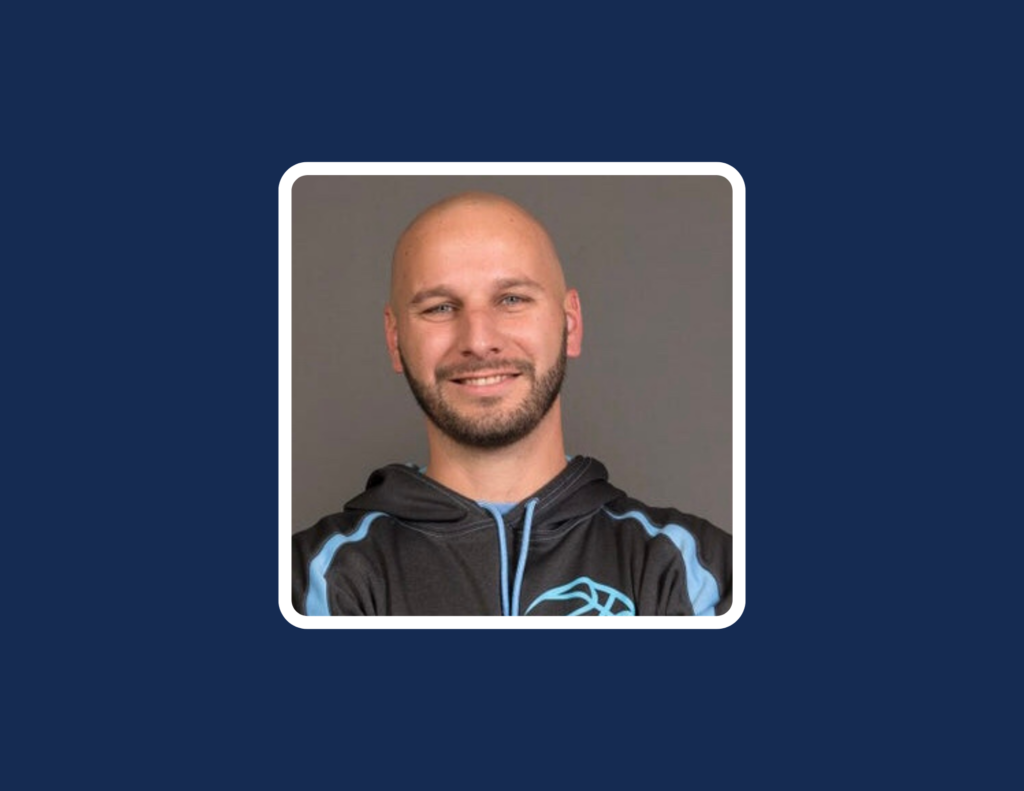
PAT WOODS – CAPE HENLOPEN (DE) HIGH SCHOOL GIRLS’ BASKETBALL HEAD COACH & FOUNDER OF FACTORY SPORTS – EPISODE 713
Website – https://www.capevikingssports.com/page17224 https://www.factorysportsde.com/
Email – [email protected]
Twitter – @pwoods330

Pat Woods is the Girls’ Basketball Head Coach at Cape Henlopen High School in Delaware. In his 4 seasons the Vikings have won 4 Division titles, 3 conference titles and been 2x State quarterfinalists, 1x State Final Four 2020. Pat is a 2x conference coach of the year, has coached 4 conference players of the year and has had 5 scholarship players. Pat was previously the boys JV Coach at Cape Henlopen for 5 seasons.
Woods is founder & CEO of Factory Sports which started in 2011. He directed 3 years of summer camps then opened the facility in 2014. After being shut down in 2020 Woods created and published “The Player’s Journal” for players to work on their game on their own.
Woods played his high school basketball at Cape Henlopen and then moved on to Wesley College where he scored over 1,000 points and finished in the top ten all time in assists and three pointers made.
If you’re looking to improve your coaching please consider joining the Hoop Heads Mentorship Program. We believe that having a mentor is the best way to maximize your potential and become a transformational coach. By matching you up with one of our experienced mentors you’ll develop a one on one relationship that will help your coaching, your team, your program, and your mindset. The Hoop Heads Mentorship Program delivers mentoring services to basketball coaches at all levels through our team of experienced Head Coaches. Find out more at hoopheadspod.com or shoot me an email directly [email protected]
Be sure to follow us on Twitter and Instagram @hoopheadspod for the latest updates on episodes, guests, and events from the Hoop Heads Pod and check out the Hoop Heads Podcast Network for more great basketball content including The Green Light, Courtside Culture and our team focused NBA Podcasts: Knuck if you Buck, The 305 Culture, & Lakers Fast Break We’re looking for more NBA podcasters interested in hosting their own show centered on a particular team. Email us [email protected] if you’re interested in learning more and bringing your talent to our network.
Be ready with pen and paper as you listen to this episode with Pat Woods, Head Girls’ Basketball Coach at Cape Henlopen High School in Delaware and the Founder of Factory Sports.
What We Discuss with Pat Woods
- How playing with his brothers taught him that when things are going bad to just keep competing
- “I made a deal with our middle school janitor that I would mop the floor if he let me stay and play.”
- Coaching players that don’t have the same drive that he did as a player
- Making sure that working with a trainer is the kid’s decision and not the parents
- His approach to coaching multi-sport athletes
- Using proactive communication to head off problems
- “We don’t say anything because I don’t want to offend you, right? And we think we’re doing a good deed, but really we’re being selfish about it because we don’t want the feeling of offending somebody.”
- “There has to be that level of I trust that you want the best for me and I need you to know that I want the best for you.”
- Learning to have difficult conversations within your team
- Training players while he was in college, but never really thinking about becoming a coach
- “The bigger thing was not gaining the acceptance of my coaches. I needed the respect of my teammates.”
- How an injury to a teammate opened the door for more playing time for him in college
- Why pulling players out of the game after a mistake makes it tough on them
- Having an assistant coach handle the substitutions
- “Players know going into the game how much time about they’re going to get.”
- Scripting out players’ playing time
- Making sure his best players get the minutes they have earned, even in blowouts
- “Break it down into four minute increments if you want, and try to win those four minutes and try to win the next segment, just keep on competing.”
- “Play relentlessly no matter what the score is, no matter how much time there is. On both sides, my team and their team. That’s how everybody gets better.”
- Holding the ball at the end of games
- Getting his Factory Sports Business started and the business lessons he learned
- Attracting players to the Factory and building the basketball business
- How working in the business wore him out until he learned to delegate with the help of his older brother
- Why training helps him be a better coach and vice versa
- “We have to rep the shots that you’re going to get and the skills that you have to have for your team.”
- Teaching players actions that are applicable in any offense
- “I’m trying to educate them, this is how coaches think.”
- Mixing players of different genders and ages together during training sessions
- “My focus has always been on improvement. I’ve found that I surround myself with people who want to get better.”
- “That’s one thing I love about the business is that we only get people that come in there are trying to get better at whatever they’re doing, otherwise they don’t show up.”
- “The biggest challenge is always the same. It’s trying to balance a passion that I have for a sport with time spent with my family.”
Like this show? Please leave us a review here — even one sentence helps! Consider including your Twitter handle so we can thank you personally!

We’re excited to partner with Dr. Dish, the world’s best shooting machine! Mention the Hoop Heads Podcast when you place your order and get $300 off a brand new state of the art Dr. Dish Shooting Machine!

Prepare like the pros with the all new FastDraw and FastScout. FastDraw has been the number one play diagramming software for coaches for years, and now with it’s integrated web platform, coaches have the ability to add video to plays and share them directly to their players Android and iPhones via their mobile app. Coaches can also create customized scouting reports, upload and send game and practice film straight to the mobile app. Your players and staff have never been as prepared for games as they will after using FastDraw & FastScout. You’ll see quickly why FastModel Sports has the most compelling and intuitive basketball software out there! In addition to a great product, they also provide basketball coaching content and resources through their blog and playbank, which features over 8,000 free plays and drills from their online coaching community. For access to these plays and more information, visit fastmodelsports.com or follow them on Twitter @FastModel. Use Promo code HHP15 to save 15%

Your first impression is everything when applying for a new coaching job. A professional coaching portfolio is the tool that highlights your coaching achievements and philosophies and, most of all, helps separate you and your abilities from the other applicants.
The key to landing a new coaching job is to demonstrate to the hiring committee your attention to detail, level of preparedness, and your professionalism. Not only does a coaching portfolio allow you to exhibit these qualities, it also allows you to present your personal philosophies on coaching, leadership, and program development in an organized manner.
The Coaching Portfolio Guide is an instructional, membership-based website that helps you develop a personalized portfolio. Each section of the portfolio guide provides detailed instructions on how to organize your portfolio in a professional manner. The guide also provides sample documents for each section of your portfolio that you can copy, modify, and add to your personal portfolio.

United Basketball Plus has over 3,000 plays, 45 Deep Dive Courses with some of the best minds in the game including Tyler Coston, Paul Kelleher, Tobin Anderson, Dave Love and more. You can also view United Basketball Clinics, and receive 50% off in-person clinics. United Basketball Plus partnered with Jordan and Joe Stasyzyn from Unleashed Potential to create their Skill Development Curriculum. United Basketball Plus is a one stop shop to help you grow as a coach, leader and culture builder. Use the code ‘clinic’ and receive an annual membership for $50.
THANKS, PAT WOODS
If you enjoyed this episode with Pat Woods let him know by clicking on the link below and sending him a quick shoutout on Twitter:
Click here to thank Pat Woods on Twitter!
Click here to let Mike & Jason know about your number one takeaway from this episode!
And if you want us to answer your questions on one of our upcoming weekly NBA episodes, drop us a line at [email protected].
TRANSCRIPT FOR PAT WOODS – CAPE HENLOPEN (DE) HIGH SCHOOL GIRLS’ BASKETBALL HEAD COACH & FOUNDER OF FACTORY SPORTS – EPISODE 713
[00:00:00] Mike Klinzing: Hello and welcome to the Hoop Heads Podcast. It’s Mike Klinzing here with my co-host Jason Sunkle tonight, and we are pleased to welcome to the podcast Pat Woods, the head girls, varsity basketball coach at Cape Henlopen High School in the state of Delaware, and also the owner of Factory Sports, which we’re going to get into and talk about as we go through the pod. Pat, welcome to the Hoop Heads Pod.
[00:00:21] Pat Woods: Thanks for having me on.
[00:00:23] Mike Klinzing: Absolutely excited to have you on. Looking forward to diving into all the interesting things that you’ve been able to do throughout your coaching career and also on the business side of you sports. Let’s start by going back in time to when you were a kid.
Tell me a little bit about some of your first experiences with the game of basketball.
[00:00:40] Pat Woods: I’m the youngest of four and so my two older brothers were basketball players and they kind of taught me how to play. So it started for me at a very young age. I’m saying like three or four or five years on a stone driveway in Pennsylvania.
That’s pretty much all we could do in our neck of the woods was play basketball. So we just, I would say, Mom, can I go out and play? And that’s what we did. We just went out and played basketball or football in the street or whatever. But that was my introduction, was going to their games. I was the guy, I was a little kid that would run around at halftime, slide on the floor and climb on the bleachers and kind of was raised by the whole basketball community there.
[00:01:20] Mike Klinzing: When you think about trying to keep up with your brothers, was that something that you feel like helped you as you got older, that the fact that you were always kind of chasing them and they were always a little bit older, a little bit bigger than you were?
[00:01:33] Pat Woods: Yeah, for sure. That was the best, probably the best teaching I had was my oldest brother was significantly older, and so I spent some time with him.
I remember him teaching me how to shoot a left-handed layup, like there was a string tied from my elbow to my knee. I remember that teaching point. I still use it. And then he went away to school. So I had my other brother who’s three years older than me, so we got to compete all up into high school.
And that ended , those competitive one-on-ones in the driveway usually ended with me crying and running in the house and him talking trash and sometimes throwing the ball at each it just got, if you’ve experienced it, you know what I’m talking about for sure. It was just, but it taught me how to compete and he would always say there, just go quit again.
And so it taught me how to like when things are going bad, just keep competing. Keep competing. And once I got to where I could have some level of success, or at least just stay out there and catch a couple L’s right in a row without just getting so frustrated that I can’t stand it I, that was just a good learning experience.
I think you taught me how to talk trash a little bit and taught me how to withstand trash talking. And just to compete,
[00:02:47] Mike Klinzing: As you got older and you get into high school, what do you remember about your experiences as a high school basketball player?
[00:02:53] Pat Woods: So this same brother we moved to Delaware from Pennsylvania and suddenly when I used to be the annoying brother, always hanging around, playing with his, him and his friends now suddenly I was like we were best friends because we were the only friends that we had when we first moved here.
One of the things I remember when I would go to their open gyms now when we moved, we chose Cape Henlopen because they were one of the top teams in the area and they actually, I think the year that he got here, they lost an estate final or something like that. So they were loaded and I would go to the open gym and the rule was you had to lift before you play. If you didn’t lift, you couldn’t play. So here I am, a young middle school kid, couldn’t lift anything. The coach would just like, just try to get that bar up and then you can play. But I remember when as I kept on following him around, he would always pick me. So he was like, he’d be the senior now and he’s picking me.
And I knew that there was tons of guys better than me, but that meant something to me. So he always had my back. But you know, just going through the high school it was nice to have someone on the team. It was nice to kind of be included as I came through. I was familiar with the players, I was familiar with the coach.
And even as he graduated, he would come back and watch my games. And so I always had at least one fan in the stands. So yeah, my high school experience was great. I played JV as a freshman and sophomore year was that devastating swing year where you play JV and varsity, which usually means you sit both right in a night and I try not to do that to my players and yet it happens sometimes. And then junior and senior year was great and got an opportunity to play in college after that.
[00:04:40] Mike Klinzing: As you started to take the game more seriously in high school, and you’re obviously not spending quite as much time beating up on your brother in the driveway or him beating up on you, how’d you go about getting better?
What was your process for trying to improve as a player?
[00:04:56] Pat Woods: I was a junkie. I still am. I can’t help myself. Like I just want to play and I want to get better. I’m still that way now, but I remember watching Michael Jordan come fly with me. Yeah. I remember watching they called it the kiss the rim dunk and his footwork where he would plan his right foot and pivot and then jump.
I’m like, How is he? I would pause it, I’d run outside and I’d try to mimic it, and I come back in and I watch it and I pause. I run outside and try the shot on Craig Ehlo, I hit like a hundred times in the driveway. You know, it was one of those things where we’re from Cleveland, Pat
It was literally like watching those game films. And then I remember when I was in high school, I went to a camp in Jersey and it was right when the first And one mix tape came out. So literally every single kid to camp, we were watching the And one mix tape every single night, and then, The game became chaos the next day.
It was like guys throwing the ball at people’s heads and traveling all over the place. But it was like, that’s what it was for me. It was just loving the game and watching it and then just playing. I remember missing dinner multiple nights just because I would just be on the court and, and just after school you go to the court and you play until the lights turn off and try to get a ride home and just try to figure it out.
I made a deal with our middle school janitor that I would mop the floor if he let me stay and play. So there was just times like that. I don’t see that a lot. It’s sometimes it makes it hard for me to understand when I don’t see it. Right. But I’m learning now that it was probably just uncommon. My friends weren’t with me when I was doing that I was doing it by myself then.
And then one of the big development points was, as you said, as I started getting more serious, like from my junior year to my senior year, I developed a lot because I knew I was the only returning varsity player on our team. I was a starter my junior year, and then the next, the other four starters my senior year were all JV players year before, so I knew I was going to have to carry a large load of the work, right. And so I would train with a guy who was in the process of trying out for some NBA teams and played overseas. And so we would just go at it and he was the first one in our area to really just beat the snot out of me. Like he would beat me 11- nothing multiple times.
And he was just so fast, just lightning quick. I never saw anything like it, I never played against anything like it since him, and I knew if I could get some points against him and, and try to hold him a little bit, I would be all right. And it just caused my growth to be kind of astronomical as far as my quickness improved so drastically.
He’s a six two point guard, just like he would cross over and I’d still be at a three point line by the time he’s dunking. And I was like, and I never faced that even in college. Like, he was just so much better than anybody I’ve ever played against. But it just got me better.
[00:07:44] Mike Klinzing: I think hearing you say that, looking back, you realized that you were kind of unusual in the way that you approached it and the fact that you were a junkie and that you were going and making deals with janitors and working out with guys who are trying out for the NBA. And those are things that most kids, even kids who are playing on the varsity basketball team probably aren’t doing.
And I could certainly relate to that description. I think a lot of people probably would’ve said similar things about me when I was a player that, hey, there’s Mike on his driveway, or there’s 13 year old Mike riding up on the, to the park to play with high school kids and college kids and adults and whatever.
And I think it’s just something that whatever you have that sort of innate drive to, to want to get better and just that love of the game. And I think one of the things that was always hardest for me when I first became a coach, I’m curious to get your perspective on it, is when you see. Kids that approach it in a slightly different way, because obviously there aren’t quite as many maniacal kids like you or I might have been that you’re getting a chance to coach.
And it took me a while to sort of, I dunno if accept is the right word, but just to sort of understand that not every kid that I was going to coach was going to approach and feel the same way about the game that I did. So I’m just curious about when you first started coaching, how did you sort of handle the idea that not everybody was going to be as driven as you?
[00:09:11] Pat Woods: I was just going to ask you the same question.
[00:09:15] Mike Klinzing: I’ll let you answer it first and then I’ll answer it.
[00:09:18] Pat Woods: Okay. Yeah, I mean, I still struggle with it to be honest, it’s been a problem with my second son and I just can’t understand it. Now, the, the problem for his situation is my wife is a division one athlete.
She’s the athlete of the family, so she was the same exact way. So he gets like no break, right?
[00:09:36] Mike Klinzing: There’s no respite, right?
[00:09:39] Pat Woods: There’s no compassion. You know what I mean? We’re just kind of like, I don’t under, like, if you want to be who you say you want to be, then why aren’t you out?
You know? And I’m like, I used to do this and do that. And I had one of my players probably two years ago just look me in the eye and say, Coach, I’m not you. just like, Yeah, that’s very true. Now, on the flip side of this, like, and it might have been because I don’t have the gifts that a lot of my players do, like, they’re, they’re exceeding what I did in terms of like I got scholarship players and I wasn’t a scholarship player.
I was a division three player. So they’re exceeding what I did and they can do things that I could, I told my son that I was like, I wasn’t doing, I don’t even know if there was a step back when I was playing. I wasn’t doing this stuff that you’re doing. Yep. Yeah. Like you’re far, I’m just, I’m talking about the grind of it.
The raw love for it. So I do still struggle with that. I think the best thing now is I’m aware of it and I’m aware of that fact that they don’t do it the way I do it, but they’re also really, really good and they might consume more content than I did just because they can.
Yeah. I don’t know about that, but I don’t know, I’ll be honest, I still struggle with it. But there are some kids that are still grinders. I had to cancel, I was home sick with one of my kids that was sick and I had to cancel a lifting and open gym session the other day and I got an immediate call saying, Hey, can we get in the gym and shoot when you’re not there from one of our players.
So they’re still out there, You know what I mean? Where I probably would’ve just not asked and broke in or something. They’re asking and getting in the gym, so they’re still there.
[00:11:15] Mike Klinzing: Yeah. So I would answer pretty similar. I, I think when I, now, when I first started coaching, it’s a long time ago, now you’re talking 30 years ago when I first started coaching, but I know that that was a really hard adjustment for me.
I remember it being frustrated with players that didn’t want to work as hard as I did, and I should have realized it. Even when I played in high school or when I played in college, the level of dedication of different players that I played with was, was different from mine. And I probably should have recognized that, but I really didn’t, because I was kind of at that point, you’re kind of focused on yourself and just, Hey, I have to get better and I have to do this and I have to do that.
And then obviously once you start coaching, it becomes, you’re not just responsible for yourself anymore, you’re responsible for your entire team and for each individual player and all those kinds of things. And so it was definitely frustrating for me and as I got further along in my career, I just came to understand the fact that there just wasn’t really anything.
We could do that. It was, you could try to make the things that you were doing fun. You could try to encourage, you could try to give reasons. You could try to explain, just like you did with your son of, Look, if this is where you want to go, then that doesn’t happen by accident. There are things that you have to do in order for that to happen, and if the kids didn’t take it the way that they should have or the way that you wanted it to, you kind of have to just.
You have to move on and you have to figure out, you have to meet ’em where they’re at. You have to try to make ’em as good as they can be within the confines of who they are. You have to keep providing opportunities. So from a coaching standpoint, it was always, it was always a challenge. And it was always something that, just like you said, like I don’t, I don’t understand the, the mentality of if you’re going to be doing this, why wouldn’t you want to do it?
And try to maximize what you can be within, within the game. And so, That was frustrating. And then I’ll take it one step further with my own family. So I have three kids. My daughter just went to college. She stopped playing basketball in ninth grade. My son is going to be a high school junior this year, and he’s still playing.
And then I have a seventh grade daughter. And so I would say for a long time, the theme on the podcast was that none of my kids were really wired like. And my son was a kid, so my daughter stopped playing in ninth grade, like I said, and she played rec basketball for a while and then she played a season of travel and then she played in middle school and she got to the high school and was in ninth grade.
She was a reserve on the JV team. Probably played like six minutes a game. And she came home with the end of that season was like, Dad, I, I don’t want to play anymore. I don’t enjoy, I’m not enjoying it. I don’t like, particularly the kids that I’m playing with and I don’t want to do it anymore. So we said, Fine, you have to find something else to do.
And she ended up going and playing tennis for a couple years. Then my son was a kid who always loved playing and he would go to practice. Hard worker, super coachable, but just didn’t want to put in necessarily the extra time, Hey, I’m going to the gym, you want to go? Nah, I’m good. Mm-hmm. And about probably now it’s been, it’s probably been two and a half years where that just completely flipped and now he’s in the gym all the time.
Wants to get better. Cares about it has gotten tremendously better from where he was. But for a long time, like I would just look and be like, I don’t, I don’t understand. Like I can’t, I just can’t. I cannot understand what you’re doing. Why, why you don’t want to do it. And yet I made a conscious choice and I loved what you said about like, now you’re aware of it.
And so I tried to be aware of it right from the beginning in terms of how much do I push, how much do I not push? And I guess this is more of my own parenting advice, but I think they have to come to it on their own. Because my experience with people that I know that if you push a kid to do something that they don’t want to do, it’s very, very rare that all of a sudden that kid starts to love it because, Mom or dad forced them to go to training or forced them to work out or forced ’em to do this.
It just doesn’t happen. And I think they come to it on, on their own. You just have to keep providing ’em opportunities. I think from a coaching standpoint, it’s sort of that way too. Like, look, if you’re going to open up the gym three or four nights a week, or you’re going to be available for individual workouts or you’re going to do a bunch of stuff as a high school coach, the more stuff you have available to them, the more likely it is that they’re going to show up and start to develop that love.
And I think as a parent, it’s the same thing. You just have to keep providing opportunities and asking and saying, Hey, we’re going to do this. And then eventually either they do it or they don’t. And as you know, if you don’t work at it, you’re never going to be good enough anyway to accomplish what you want to accomplish if you don’t, if you don’t work at it, unless you’re some naturally blessed athlete, which not many of us are.
[00:16:19] Pat Woods: Yeah, for sure. And it’s funny that you say that because. I”ve been the trainer that I’ve had kids come in and I’m like, after the session I’m like, listen, I need to know that it’s the kid’s decision and not your decision. Like to the parent. Absolutely. You know, because it’s going to be a waste of everybody’s time if it’s not their decision.
And yet, as the parent, I want to push my kid because I don’t want ’em to have regrets come basketball season. Right. You know what I’m saying? Like, that’s kind of where I come with it. But I’ve also had one of my players come to me last year in like January, and her jumper wasn’t falling and she’s like, Coach, I think missing out on fall workouts is coming back to bite me.
And I was like, Yeah, I think so. And she’s like, Can we get in the gym tomorrow? And we went in on a Saturday and we were right back at it. So like, she, she recognized it as well. So you’re right. Everybody’s going to have to get there on their own. So I can recognize that.
You know, as a coach, and it helps me having, I got a lot of multi-sport players, so we’ve had a discussion in a team meeting where I was like, How many of you want to play college basketball? And this was last, at the time we had probably three or four. Okay. Maybe five. Raise their hand. And I’m like, so I explained to the multi-sport athletes, like these girls, this is their main sport and this is like what they’re working on at all times.
Like in the summertime, in the fall and the spring, and now during the season, they’re working on this stuff. And so we need all of you guys to give a maximum effort for, For them this is very, very serious to them. So this isn’t like their third sport or their second sport. Like this is the main thing.
So like, you guys need to know that they’re about this and this is very, very important for them. The exposure events that we go to are very important for them. And then on the flip side, these girls are, a lot of ’em are trying to stay in shape. They love the game, they want to keep playing. But they’re also going to go to college and play division one lacrosse.
So like it’s a little bit different and you need to recognize that as well. You know what I mean? So like we just try to whenever we have any kind of conflict where like that, we always just try to get it out in the open and talk about it. And it seems to help, you know? So and I understand that those players aren’t grinding they probably don’t touch a ball until it’s November.
Right. You know, and my plea to them is like, I just need you just one hour a week. Just one hour a week. Yeah. And it usually doesn’t happen. But they obviously bring a lot to the table just in terms of their athleticism and killer instinct and things like that, so For sure. Yeah. I think it’s about understanding.
[00:18:51] Mike Klinzing: Yeah, I think it’s a great point of making those conversations happen, because at least if you get it in front of everybody and everybody kind of understands where. The other ones stand, it makes it easier for them to connect and then to be able to relate to sort of the mentality of what is going through everybody’s head.
To me, that makes a lot of sense. If you can have those conversations, and I think when we talk to coaches on here, I think one of the things that comes through is the fact that you have to have that proactive. Communication in so many different circumstances, whether it comes to a situation like this where he is just helping teammates to understand where they’re coming from, whether it’s player coach, talking about roles on the team, whether it’s expectations.
There’s so many things that you can head off problems by proactively communicating with your kids. And I think if you do that, you’re going to end up with a lot better environment for both yourself and ultimately for your team, which again, translates eventually to results and the wins and losses and just a better experience for everybody who’s involved in it.
That that communication to me is critical.
[00:20:03] Pat Woods: Yeah, a hundred percent. We had a, during my exit interviews with my team last year, that was the main thing that they brought up. We had some internal conflicts last year, and my question was, how do we prevent those? You guys obviously had a lot going on that we were unaware of, that half the team was unaware of.
How do we prevent that from kind of festering next year, and almost every single player, including the seniors, were like, I think a lot of the problems are going to graduate this year, they said it about themselves, That’s fine. And then, but they were also like, but that we had a meeting before one of our games that we, it was a total like, kind of blow up and just kids just weren’t having fun even though we were winning, I know we were like a 10 game winning streak. They just weren’t enjoying it. And I was like, Well, how do we become aware of that? And it was just the proactive piece is that this year we’re going to have to make sure that we’re having those sit downs with the entire team and just having those discussions on a weekly basis.
So we put in a protocol, our coaching staff is like identifying, Okay, each one of us has to have one brief conversation with each player per week, just about non basketball stuff, just to during stretches, just make sure that you. Touch on each, in each player in the gym once a week.
And then we’re going to have to have like a weekly meeting. It won’t be as long, but just to make sure that whatever needs to be said gets said quickly. Because the team felt great afterwards. I felt terrible afterwards. But the team, the players felt great after this meeting, just to get some things off the chest.
And but yeah, it’s the proactive, have the discussion. It’s also, that’s a life skill is like when you have stuff going on, you have to talk about it, right? And come up with a solution. We’re not placing blame, but once we address it, the rule is always okay, we address it. We’re not bringing it back up.
We’re dealing with it. It’s dealt with whatever. Like, we do that with a punishment, All right, we ran our sprints, It’s over. No one bring it back up. It’s done. And then we move on from it.
[00:22:04] Mike Klinzing: When something’s hidden like that, I think that’s one of the toughest things to, to deal with as a coach.
And it’s one of the things that I think when you talk about different issues or problems that arise on teams, I think so often when there’s something going on that not everyone can see, whether that’s not everyone on the team, whether that’s not the coaching staff and, and I think by, by being conscious of having those conversations and by making sure that it’s not just you as the head coach, but also assistant coaches and you’re talking, the kids are talking amongst themselves.
And the more you can get people communicating, I think number one, it builds that trust. And then once you have the trust in place, now you get a case where if there is something going on, you’re much more likely to have the girls on your team be honest and say, Hey, here’s what is going on. Here’s what I see.
And then that gives you a chance as the coach to be able to address that and bring it really out into the open so that. Everybody can talk about it and then, as you said, move on to the next piece of whatever it is that you’re going to do in your practice or your season, and just make sure everybody’s on the same page.
But that’s, that’s a challenge. It’s not easy to do that. Like you said, it’s a huge life skill to be able to, to build that up, to be able to build that trust, to build that conference and to have those tough conversations. Because we all know that it’s, it’s a lot easier to just kind of push those things under the rug and just pretend like everything’s okay when the reality is that you need to have that conflict.
If there’s, if there’s an issue, you want to get that out in front of it and make sure everybody’s talking to one another.
[00:23:41] Pat Woods: Yeah, for sure. We deal with that. I know you want to talk about the business side of stuff, but we do that as well. Like, you have to be willing to have conflict and tough conversations.
One is having the conversation and trying to be clear and express yourself without. Obviously it’s a trust issue without fear of I don’t want to offend anybody. Right? That’s usually how we think. We usually, I don’t say anything because I don’t want to offend you, right? And we think we’re doing a good de, but really we’re being selfish about it because I don’t want the feelings of I’ve offended somebody.
We’re trying to ourselves from that way. But once we do that, there’s also the skill of, okay, after these things have been said and we kind of can deal with the issue, there’s also like, how do we, how do we get back? Like how do we bounce back and recover from some hard things? Were just said from the next practice and the next getting after.
There has to be that level of I trust that you want the best for me and I need you to know that I want the best for you. And while I might say some things that could be hurtful or just things that I recognize that might be a blind spot for you. It’s not like I’m trying to harm you, I’m trying to help you and help us.
So that’s just, like you said, that’s a hard thing to go through, and it takes a lot of time. It’s not like a, there’s no strategy I don’t think to figure that out. But as you guys know, that’s a family situation that you have to go through with your spouse and with your kids.
And so if we can teach them these things and, and have some experience of like, here’s how you have like a healthy conflict and discussion in a basketball team and in a, where it’s, where it’s obviously really important to us, but it’s not really important like this will be a great life skill that they can carry with them for the rest of their lives. So we have to be willing to have it.
[00:25:32] Mike Klinzing: Yeah, absolutely. I don’t think there’s any question that if you can utilize the game of basketball in a situation like this to be able to help them to understand how to deal with that, and then when they get into it in their real life.
They’re going to be way, way better off. And like when you think about your family, right? When conflict arises in your family, you can disagree and you can hash that out and then you can move on from it because you have this shared history of trust and you know that ultimately you have a shared common goal as a family of maintaining the, maintaining the happiness and helping everyone to be their best and all those things which are the same things that you have on a team.
Obviously on a smaller, as you said, less critical scale, but still very important to everybody who’s involved in it. And to be able to, to go through those processes and then to be able to talk about them and help kids to understand that this doesn’t just affect us here in basketball, but there’s eventually going to be situations even if you haven’t faced them yet in your life that you’re going to.
And I think that’s one of the great things about coaching, is the fact that not only do you get to coach basketball, but you’re also getting to use the game of basketball to. Teach those life lessons to have an impact on the players that you get to be in front of every day. And when you think about it, let’s go back a little, let’s go backwards a little bit.
When, when you’re playing and you’re a high school player, you go on and talk and playing college, at what point do you start thinking about coaching and were any of the coaches that you played for influential in your decision to become a coach?
[00:27:15] Pat Woods: I don’t remember ever thinking about being a coach, like the way I coach now.
I don’t remember ever thinking about that as a player. I always thought I’m going to play forever, you know? Right. Yeah. You know, it’s just out of the way. It’s the same way now at the same time, at a very young age, I was one of my first jobs was running basketball camps. And helping out and then I was the camp director, and I’ve been coaching for the longest time I was like, I don’t have any coaching experience. And then I look back and I was like, Man, I’ve been coaching basketball camps for like 15 years prior and coaching and training because I was trained my junior year in high school onto in college I would have people, If you’re the local guy in town that can play and is playing in college, people just call you up and say, Hey, can you work with my kid?
So you started doing stuff like that and I would always be involved in training that way. I would be the guy that was running the workouts in college in the off season when the coach wasn’t around, so I would do that stuff. I never thought about it in terms of being a coach.
Like, I just never thought about it. Now, once I decided I wanted to coach a team, a high school team, my first calls were to my high school coach and an assistant on my college coaching staff. So obviously they had an impact for sure. Like, I called those guys immediately and I sat and I went to meet with ’em and I sat down and said, I want it all.
Tell me everything that you do, give me and you know how well most coaches just want to share everything they have for sure. And so they’re just like unloading more than I could probably handle at the time. But they certainly had an impact on me. I never thought about myself as going into coaching after playing.
But it was pretty natural because I was a point guard, so it was kind of my role as a player. I just never thought about it in those terms.
[00:29:27] Mike Klinzing: Yeah, it’s funny. I was exactly the same way. Like it never dawned on me whatsoever that when I got done playing that I was going to coach. And part of it, I think, I love what you said of I thought I was going to play forever.
I think I’m going to play forever. And I think I felt that way too, that just my identity for so long had been as a basketball player that I just had a hard time ever thinking about, am I going to shift gears and do something else? It was just never on my radar at school. What’d you major in?
[00:29:57] Pat Woods: Sport management.
[00:30:00] Mike Klinzing: So what was the idea? What was your thought process in terms of career?
[00:30:05] Pat Woods: I mean, I had to choose a major and I was like, I like sports. I think that was as far as it got. You know, I looked into at an early age, like I remember even like in, I think it was like elementary school, I had a project where I was looking in they make you like, pick a career and study it, whatever.
And I wrote a, a letter to Jack Nicklaus. I wanted to be a golf course designer. You know, that was, that was very short lived. But like, that was the idea. I always just wanted to be involved in sports. Sports. Gotcha. Somehow. Yeah. Yeah. Cool. And then in college, I forgot about this until my dad brought it up.
Once we started our business was, My senior, one of my senior projects, and one of my classes was a gym, a private gym that we built and called the Factory. I just, for somehow it just like, and then we did it like years later. Yeah. And somehow my dad held onto everything, just like whipped out this project that I did in college and, Hey, remember this?
I was like, Oh my goodness, I can’t believe you still have it. That’s hilarious.
[00:30:58] Mike Klinzing: How much of it was applicable?
[00:31:00] Pat Woods: Not much. You do a budget and I’m like, You have no clue how much stuff costs, you know what I mean? To the point where we started our business, we had no clue how much stuff costs and like, I’m sure, whatever we originally planned, multiply by a factor of six before we actually opened our doors up.
So it was, it was a process, but that was a whole nother education. I probably learned more in that whole process than I ever did in a classroom.
[00:31:25] Mike Klinzing: I’m sure that’s the case. What, what you, what you drop in a business class or in a sports management class or anywhere, or a coaching class for that matter compared to what you actually do when you have to do it is a completely different story.
I don’t want to shortchange your college career. Tell us a little bit about your, your playing career in college.
[00:31:43] Pat Woods: It was, I mean, it was great. I just told this story to one of my players who’s now, she always left practice. This is part of the conversation.
Like not everybody’s a basketball player. This girl had to miss lots of practices because she was like a band major. Like she let our band, So now she’s in college in a band and she’s talking about making all these, well, I don’t know, like jazz band. And there’s like, I don’t know much about it, but there’s like a whole bunch of different groups that she needs to join.
So she has all these auditions and tryouts and she feels like I’m not good as, as, as good as these players or whatever. And I’m just like, so I, I recounted the story. I was like, I remember it was our last tryout my freshman year and the coach that recruited me was like, You might start for us as a freshman and get a lot of time.
And I was stinking it up. I think I was just shocked the physicality and the speed of the game was, I had a hard time adapting to it early on and I was just so light. I was playing behind 2000 point scorers and the one dude I remember he was running a shuffle cut and he would just pick me up off the ground and slam me into this pick and I can’t do anything.
Stop it from happen. And, and then I’m getting ripped to shreds because I can’t guard this guy. Like, I’m just like hanging off for dear life, trying to survive. And he calls, this is our last scrimmage and calls a timeout. And he like, looks me dead in the eyes. Now he’s addressing how this goes, addressing the whole group.
Nobody, nobody’s names are mentioned, but everybody knows he’s talking to me. He’s like looking at me right in the eye and he’s just like, Some of you guys, we really thought were going to have an impact and you’re on the verge of getting cut and not even being on this team. And I’m like, ah. You know? So like I went through that and I don’t think I played much better that game.
I was barely kept on. And then I was like the backup point guard, and then the very first half of the first game in a tournament in Roanoke, the starting point guard breaks his ankle. And I’m in there and I’m like trying to keep it together. The college basketball. Yeah, that’s right.
And so like, and for me, the bigger thing was not gaining the acceptance of my coaches. I needed the respect of my teammates. Like I, I knew that they didn’t trust me and that was a problem. So like, I wanted to earn their respect more so than I wanted to earn the coaches respect. And in that first game, I don’t know, I think the first shot I hit was like a kick out three at the top of the key, and I just buried it.
And then like, I hit like a couple more and ended up with 12 points. And like, I remember after like we won the game and I had a huge part of that. Like, I think they were all like, Oh no, what’s going to happen? You know, our point guard’s gone, right? And I stepped up and just performed. And I started from that game on ever since.
And it was just kind of like, it was just one of those moments that like there’s the opportunity, things went well and, and that was it. I remember praying a lot in the locker room. I remember just not knowing how it’s going to go. Totally different environment. And turned out to have a great career though.
I really enjoyed the point guard that went down and he just never came back from his injury and just, he was one of those guys that had like the short leash where like you make one mistake and you get yanked out of the game. I never understood it. I thought we were better when we were on the court together.
But that’s just how it went for him. And I just never came off the court. I was the point guard and if he would come in, I’d get moved to the two and I just was able to stay on the court just because I think it was IQ and I was just always in the right spot. I knew what was going on, I wasn’t the, the best scorer, I wasn’t the best whatever.
But I was always on the court so I ended up being on the record books and scoring and assists and three pointers just because I was always on the court.
[00:35:34] Mike Klinzing: It’s so much easier to play when you know you’re going to be on the floor and Yeah, for sure. There’s like, I think about myself as a player.
I think about watching my own kids play. I think about the again, just the sheer number of games that I’ve watched and. As a college player, my experience was sort of similar to yours. I didn’t play very much as a freshman, but then from my sophomore year to my senior year, I started every game and I think, I think I averaged like 37 minutes a game, you know?
So I wasn’t getting pulled out for mistakes. I was able to go out there and play, and if I missed some shots, I just I was out there and it’s so much easier to play in that environment. And then you watch, you watch some teams, you watch some coaches coach, and there’s, there’s players that immediately, as soon as they make a mistake, even if they’re starters and they’re, they’re on the bench and even if they’re out for 30 seconds and then back in, like to me that’s always just such a tough, tough way to play.
I’m just curious, how did that, has that impacted, when you think about your experience as a player, has that impacted sort of the way you coach and handle your rotations and substitutions or the way that you deal with players in game? I’m just curious how your experience impacts that.
[00:36:49] Pat Woods: Yes, absolutely. I felt the same way.
Cause I’ve we’ve all been there where you’re playing not to make a mistake, and so inevitably you make a mistake you just can’t, you’re thinking about way too much rather than just playing and maximizing your time in there. So yeah, I was. Even when I was like a, an assistant with the boys varsity, I was always like, We have to like just let him go a little.
We can’t just yank him out as soon as they make a mistake. Now on the flip side, there’s some games where you just like, sorry, like you can’t get comfortable if you’re not ready to go right now. Right, this kid can get back in. He’s had a minute. He’s good. Like, so there, there are some games like that.
But the way we do our subbing, number one, I don’t think I’m good at handling substitutions. So one of my assistant coach does all of our subbing, so we talk because I’m just like, Look, I’m so focused on what’s going on in the court that I can’t worry about who’s on the bench. I mean, there’s times when I was doing everything as a JV coach for the boys, and I remember looking down the bench.
I was like, Somebody get him out. And then, I don’t want any of you guys in the game.
[00:37:53] Mike Klinzing: I know I want to go before trying to sub and coach, coach the game. I think people who have not coached or have not been in that position as a head coach, and I don’t care what level it is, it is so difficult to try to track and manage, like even, I’ll say, even on the youth level, like when I’ve been coaching my own kids, and let’s say I have a team of nine or 10 and I might go into the game and prepare and think about a rotation of how I’m going to sub those players in.
But as you’re standing up there coaching, like to try to remember and make sure I have to get this one in and that one in, and this one’s been in for four minutes, and now I have to rotate that person out. Unless you have, if you are there by yourself, which oftentimes as a JB coach, you’re there by yourself.
That is. Unbelievably hard to do. I think people severely underestimate how difficult it is to coach the game and be able to sub even in the way, even if you take a lot of time to plan it beforehand. It’s really tough.
[00:38:54] Pat Woods: It didn’t take me long to realize, I can’t do this. I need you to handle it, So our statistician, I was like, I need you to handle all the subs.
Right. And he loves that kind of stuff. So we talk throughout the day about rotations and stuff. You cool with this, you cool with this? We went to a team camp in the summer. We were doing this. Like we’re, he’s as crazy as I am as far as like, we want to make sure. So it works out really well.
We have lots of conversations, and we had a super competitive team the last couple years. We just had athletes like they can just, they could just go, There was games where I didn’t have to pay attention and we would win by a lot in our conference. We were just really dominant and so we had two players were really concerned, like, Coach, am I even going to play this year? Or are we going to get up really big and I’m going to play part of the first half and then sit the rest of the game? I said, No, no, you earned the time. You’re going to earn your time. And so we would say, Okay, our, our top players are playing whatever, 28 minutes.
And then the next, the next tier is 26, and the next tier is 22, and the next tier is 18, and the next tier is six. So we’d have like, it mapped out, and then they, and then in practice they’re competing and we’re trying to like, put people into these spots. They’re like, All right, so, and so they know going into the game how much time about they’re going to get right.
You know, obviously it fluctuates with foul trouble and it fluctuates what the how the game’s going. But it was so nice, I think for the players. Some of ’em didn’t like it, especially when they were coming out. We would have our best some of our top players of stars, look, you’re starting, but at the four minute mark, you’re coming out every single game.
It doesn’t matter how well you’re playing or how poorly you’re playing, you’re coming out. You’re going to get a minute break on game clock, minute break, and then you’re coming back in for this player. So they knew right away. So what it did was it totally took out the arms flying up in the air. Why am I coming out?
You’re coming out Cause it’s your time to come out. Yeah. So like it that we never have that problem. We never have people wondering why they’re coming out. They know exactly why they’re coming out and they know when they’re going back in. Right. You know, unless something crazy happens, according that’s off script.
That’s what’s going on. So we played some top teams in the country last year. And we would have my coach, my assistant coach would be like, , Do you want her coming in? And I’d be like, No. There was one time where I said that too loud.
And the player was like, Coach, that was hard to hear. Like, yo, do you want her in the game? And I was like, No, no. I was like, What’s, no, you can’t have her. And it was, That’s funny. Ah, she heard that conversation, but no, so we map it all out. And it’s, for that reason that you brought up was that I don’t want them, I want them to know about how many minutes they’re going to get.
So you always have those players, like for whatever reason our five and six have always been kind of like equal, like on the, on the depth chart. Like right, Oh, which one do you start? Which one do you not start? And so it’s very much like a, who needs their name announced at the beginning of the game and who can handle coming off the bench?
You, it’s always one of those conversations. And I’d be like, you guys are going to get the same exact amount minutes. It’s just about we’re going to start her because I think it’d be better for us to start this way and you come in and give us a spark off the bench. And they’ve always been cool with it. And I think that’s super unselfish of them, of the players.
And a lot of girls have been in those situations and it just makes for a better one of our core values is unselfishness. So you have to sacrifice a little bit and for what’s best for the team and they handle that. But like I said, it, it takes away. As soon as I make a mistake, I’m out of the game.
No. As soon as your stint in the game is up, you’re coming out of the game.
[00:42:33] Mike Klinzing: That’s proactive communication again, just like we talked about earlier, right? Where yeah, you’re going into it where it’s not, you’re not having to explain it as the girl’s coming off the floor and she’s have to sit down next to an assistant and go through, Hey, here’s why you’re coming out.
Here’s where you’re going back in. Like everybody already knows that. So to me that makes a ton of sense. And I love the thing that you said about your best players, especially when you have a good team and you’re winning a lot of games, you’re blowing teams out and now those kids are looking going, Man, I’m only playing, I’m only playing half the game in some of these games because mm-hmm.
We’re killing teams. And I know that I’ve experienced that as a player long, long time ago, but more recently I’ve experienced it like with my son’s team, where he’s a starter and you’re playing and all of a sudden come off after the game. You’re like, How is that game? Oh man it’s terrible. Like we won, but you know, we won by 40 and you know, we played less than half the game.
And at a certain point, I think you look at it, you say your best players, especially if you’re in a situation where, I mean, if you’re winning big a lot, and let’s just say, especially as you said, like you’re dominant within your conference, which means you’re probably going to win a lot of conference games by big numbers.
If those kids aren’t going to play as much at a certain point, it’s like you have to get, you have to get, your best players have to play. They deserve it. Again, there’s a reason why they’re the best players and so you want them to be able to, to maximize their playing time. But I think that’s something that people often don’t necessarily think about.
Like there’s the fine line of right people, I dunno, feel sorry for is the right word, but there’s always the, well we have to get player 11 or 12 the these minutes. But the reality is, is that players one and two, they’re better players for a reason probably because they put more time into it probably because at least in the off season they care a little bit more about it.
They care about being better. And so it’s a fine line. It’s a fine line there between like how do we obviously want to be able to get everybody in the game when you’re winning big. But at the same time you don’t want your best players to feel like, man, every time we play really well and blow a team out, then my minutes go down.
I don’t play as much. And that, that doesn’t seem fair either. So again, I think it’s communication, but it’s a point that you don’t often hear brought up that winning big sometimes cuts down on, cuts down on your best players playing time.
[00:44:55] Pat Woods: Well, so we played 20 games in a regular season, and 14 of them are conference games.
So like when we would play, we were scheduling like Paul the VI out of dcs, who we had, we played them this year, we played Westtown, like we played like really top teams in our region. Right. I can’t have my starters playing half a game for 14 games. Right, For sure. Absolutely. And then be ready for playoffs and and we’re kind of hindered by our schedule to where we can’t schedule appropriate to our ability.
So we have 14 games that are going to be blowouts. So it’s really hard to keep them fresh, to keep them engaged, to keep Cause then the other thing is like, they don’t have to play as, as well as they can play in order. Correct. Absolutely. So like, so one of the things we did this year is I say, All right, you guys got five sprints.
And they’re like, Why? I’m like, These are the five sprints. Unless if you outrebound the opponent by this, we’ll take one off. If your assisted turnover ratio is this, we’ll take one off if you do And, and if our field goal percentage is this, we’ll take one off. And if you score 50 points by half time, all bets are off.
And that, So then I said my seniors. So we had games where seniors, you get the first half, the, the 2023 teams get the second half. So those are your marks. And so like there was maximum effort taking place all throughout that first half. Like they were, like, they were talking to each other, they were huddling up, like they were totally locked in.
And I felt like they really got a good workout in that half the game. And then we were still able to. You know, the other girls a max, an entire half for their game. So now obviously it’s a good problem, right? And I’m not trying to make light of that because there’s going to come times where we have other problems, but like, it was legit a problem.
We spent a lot of time thinking about how do we do this? And what about the sportsmanship concern with the other team, like, Right. And I had one of my assistants say, Coach, you can only coach one team. Like, as much we’re not trying to blow people out, but we’re also trying to coach our team.
You know, and the way you, you perform well is, like I said, this is no different in practice. We don’t let ’em get away with laziness or you can’t just like miss a closeout or not box out or like, you can’t do that. So we’re going to jump you. So in the game, I’m going to jump you too. Well what that equals is not many mistakes and the other team not scoring much, you know?
So like, if a team struggles they’re really going to have a hard time with the way we were playing defense. So like it, it ended up in being lopsided scores, but the focus was always, we’re trying to win in March and we have to prepare for that. As much as we want to get everybody equal time and all this kind of stuff, we have to prepare because these girls have spent their entire lives working towards this.
Right. And we can’t just shortchange ’em because the rest of the team, the schedule that we’re playing is not as competitive. So we feel obligated to our team. Absolutely. Yeah. you have to get ready for next year. We have to get you guys ready for college.
[00:48:02] Mike Klinzing: You have to play hard, you have to execute.
And I think when you do that, regardless of who’s on the floor, look, there’s, there’s times where can you, can you do things within the confines of your system of how you play, where you can dial it back.
[00:48:18] Pat Woods: Multiple reversals, Right? You can dial it back only, only wide open lays or whatever. For sure.
[00:48:23] Mike Klinzing: There are, there are ways that you can dial back what you’re doing again.
I wouldn’t be an advocate of playing a team that you’re up 50 and you’re still throwing your diamond press or you’re running jump at ’em in the second quarter when you already have a 40 point lead. Like that to me is not good sportsmanship, but if you get upset, because we’re going to continue to play hard within the confines of what we do and we want to execute.
To me that’s never rang true. I know there’s been times where I’ve coached teams, especially at the youth level, where you run into a team that’s way better than you and sometimes you get coaches that have good sportsmanship and do what I just described. And unfortunately sometimes you have coaches who even at the fourth, sixth grade level, they’re up 30 in the first half and they’re still going to press you and.
I don’t like it. It’s not necessarily what I would do, but when people would come to me and say, Well, hey, they shouldn’t be doing this or that, my response is always, Well, we have to get better. And you Yeah, as an individual player. And if a parent comes to me, I say, Hey, your son, your daughter has to get better.
And we have to get better as a team and we don’t have to like it. And I wouldn’t do that to another team or another coach, but if they’re going to do it, The response to me is always, I have to figure out a way to get better. It goes back to what we talked about at the beginning with sort of your mentality as a basketball junkie and someone’s going to keep working at it.
Like my, my response is probably more a response of me as a player. Like, I’m not going to let somebody do that to me. I’m going to go out and get better and work at it so that doesn’t happen again. Yep. And I think as a coach, that’s the mentality and kind of the way I’ve always tried to approach it. And yet I think what you have to do, no matter which side of that equation you’re on, is you want your team to play hard and to execute whether you’re up 30 or you’re down 30.
And to me, that’s really what coaching is, right? That’s what the best coaches do is it’s not, Hey, we’re winning this game against an inferior opponent. So I don’t really care that we’re making a bunch of mistakes because we’re winning. And conversely, As a coach, if you lose, sometimes you can play to the best of your ability and compete as hard as you can, and sometimes you may not win on the scoreboard.
And so I think good coaches understand that and really try to make sure that what you’re focused on is, as you said, coaching your team and trying to make sure that they’re executing the best they can regardless of what the game situation is. And I think if you do that, which it sounds like that’s kind of where your program is, is that now you’re maximizing what your team can do, but also at maximizing what each of your individual players can do by putting them in those positions.
[00:50:56] Pat Woods: For sure. I used to say that the fourth quarter we’d have, say we would have the JV team in the fourth quarter, and I’m like, I don’t expect you guys to go out here and lose. Like the score is zero to zero right now. I’m going to coach you and you’re going to play so that you can win the quarter. You have to do that.
And I always used to think to myself like people would get upset. It really actually didn’t happen too often, but if the other team was upset, I’m like, Well, you’re more concerned about the score than I am. Right? Like, I’m not thinking about the score, I’m thinking about how we’re playing. And I think you’ll have to do the same thing, break it down into four minute increments if you want, and try to win those four minutes and try to win the next just keep on competing.
That’s the only way we can get better, which is exactly what we did. Like we got blown out by Archbishop Carroll the same year that we were blown others out. And it was a, in our state it was, they were up by 35 and in the second half and it becomes a running clock. Okay? Now in Pennsylvania, I don’t know if that was a rule.
And so they brought the both coaches together and explained that rule and asked us if we wanted to do it. And simultaneously, me and the other coach said, No, stop. We’re trying to get better, right? Like, I don’t want to just get the game over with, because I know we’re not going to win, but we can work on some stuff and do some things like, So this summer we were getting, a team was pressing us.
And like I told you, we weren’t allowed to practice in the summertime, so we had no press break in. And I have a whole new, we lost our top six seniors last year. They were five starters and a six man. So like, I got all new kids and I haven’t taught them much of press break or whatever, and he jumped up on us by 20 and he is like, All right, girls we’re pulling off the press and at half-time I say, Hey, can you put the press back on?
He’s like, Really? And I’m like, What are we doing here? Like, I want to win a summer league game. Like, what does this matter? But what I need to do is learn how to run a press break. I’ll tell you when it’s enough, but I’m going to try to make a change. I’m going to put some people in different spots and I want to teach them live, how to break a press, right?
And we’ll go from there. So like, and he completely understood that and he was like, I just so you know, we’re not trying to, I said, I know I’m asking you to because we’re trying to get better. I don’t care where the score is. I’m just trying to learn and get better and this is the best way for us to do it, is to face the press and to do it.
I said, Who cares about score? Doesn’t matter. Let’s try to get better. And I think that mentality, I wish I had that mentality all the time. You know, like we should always have that mentality with the score. Obviously there’s time and score in certain situations, but to be able to play relentlessly no matter what the score is, no matter how much time there is.
On both sides, my team and their team. That’s how everybody gets better.
[00:53:30] Mike Klinzing: Yeah, no question. That running clock rule came in in Ohio, I think, last year. And I remember sitting in the stands and there was a game that my son was playing in and we were up by whatever, I think it was 35, I forget the, and I forget the time mark where it turned into, where it turned into a running clock.
But all of a sudden I’m looking up at the clock, I’m like, the clock’s running. You talk about a terrible situation for those kids who were at the end of the bench, right? Yep. So here’s, here’s a case where, Those kids could have gotten a lot of minutes, and you and I both know that when the clock is running, like especially in, it’s one thing to run it in a summer league game, but it’s another thing to run it in a real game like that goes so unbelievably fast.
[00:54:14] Pat Woods: Yeah. The refs are not in a hurry to get the ball to the shooter at the filter line. Everybody’s like taking their time. Yeah. It’s cause nobody and we don’t have, Yeah, we don’t have one either. You could literally just, That was the other thing I was like, if I just hold the ball. And we win this game at the no one’s learning anything, right? This is not good for anybody. It’s not good for the girls that are in the game. I don’t want to put them in at the end of the game and they just get to hold it like that’s no good and right, when I’m down, I don’t want them to hold it. Correct. Like I’d rather you run the score up than hold the ball.
It’s much more frustrating when you’re playing keep away and I can’t even play the game.
[00:54:50] Mike Klinzing: I could not agree more. Like to me, I always feel like that there’s a perception among some coaches that you’re up by 25 and you get down to like the last minute 10 and you’re just holding the ball and you’re just playing keep away and.
To me that’s the opposite of good sportsmanship. Like if I’m on that other sideline, like I want to keep playing, because chances are at that point I probably have my subs in the game and those kids never get to play. And so for their, for them just to have to run around and chase the ball doesn’t do that many good.
And I’m sure the other coach has their subs in the game at that point. And those kids want to play. They don’t want to just. Hot potato, the ball around for a minute and 30 seconds as to run the run the clock. I’m always like, just, just play it out. Like what does it at that point, what does it matter? Like the kids want, the kids want to play.
I guarantee you could pull all 10 of those kids and they’re like, they, they want to just, they just want to play the game regardless of what the score is. Cause again, most of the time they’re just not the ones that are in the game all the time. So it’s, there’s so many little, I think, subtle things that. If you really look at them or you really think about them both from a, from a playing and a coaching perspective sometimes that we, we get things kind of goofed up.
The scoreboard sort of jades us in terms of what we should be doing to try to help our, help our kids really get better and to help ’em enjoy it. I mean, because ultimately that’s a big part of it too, is what’s their experience like. And I think that, yeah, if you’re going to play against a team that’s just going to hold the ball in the, to me that’s goofy.
I’d rather just keep playing.
[00:56:24] Pat Woods: Agreed.
[00:56:25] Mike Klinzing: All right. Let’s talk a little bit about the business side of it. Tell me how the Factory, how you get that started and what the genesis of it was is. I know you said you’re working with your dad on it, but just how long you guys been in business and what was the original idea and how has it changed?
As you said, you got a huge education going through the process, so just tell us about the original vision and kind of where you guys are now.
[00:56:50] Pat Woods: Yeah, so this is year nine I believe. And really it, it. It started with, well, I, I used to run the sports program for YMCA locally, and then I had a job interview with a YMCA in Missouri.
Now we’re in Delaware. It’s like, it’s like 15, 20 hours away and, and my in-laws live right next door. And so they were like, So let me get this straight. You’re going to get a job in Missouri and take my, our daughter and our grandkids 20 hours away.
[00:57:25] Mike Klinzing: Well, so you are a pretty popular guy.
[00:57:28] Pat Woods: So my father-in-law also owns a custom cabinetry and millwork business that he is had forever.
And so they have warehouses and he’s like, Well, this warehouse is empty. What about doing it right? So the idea from him was like, if you’re going to do want to run sports programs, the YMCA, I just do it right here. And so I’m like in there and I’m like, I don’t know that this, they had a second floor. So I’m like, anyone who builds things like my father-in-law does, can like see through walls.
Like, they’re like, Oh, just take that wall down. I’m like, What do you mean? Just take the wall down? So he’s, he’s like, Can it fit in here? And I’m like, I don’t think the ceilings aren’t high enough. It’s not why. I had all the reasons why it wasn’t going to work. And then and then we started doing some measuring.
I was like, This might work. So we ended up gutting the building and taking the top floor out and And my original plan was like literally paint lines on concrete slab and have portable rims in there and just try to run programs out of there. At the time, we had already run three summers of summer camps in the local schools, which was so difficult to try to get them to commit to us being in there.
And by the time all the paperwork was signed, it was too late to like market it. So it was just, it was just really difficult to make that happen. So having our own facility would, would work. So we were pushing up on July. We knew we could have the summer camps in there, but like I said earlier, like the, we started with concrete slab and lines and whatever money we planted on spending at that time ended up being six times that one of the turning points was the floor.
We, I was actually looking for bleachers and I saw a hardwood floor for sale on this website. If you’ve ever seen a hardwood floor not laid out, it’s just like stacks of wood. Like you can’t really tell what it is. Right, right. So I’m like, I don’t, I don’t even know. And I’d never looked for a hardwood floor before, so I don’t even know what I’m looking at right now.
But it’s hardwood and it’s we, we had an estimate coming in for poured rubber. Right. Some of our middle schools have the rubber synthetic course. Yeah. Okay. So it was going to be the same cost for the hardwood. And my wife’s like, Well, what would you rather have rubber or hardwood? I was like, If I can have hardwood, I would definitely want hardwood.
So we were just praying about it. We were kind of like, okay, well if we get this floor, we’re moving forward. Because if we get it, once we do this, there’s no turning back. So like we were just praying about praying about it and I think the Philadelphia Police Athletic League was interested in it.
They’d already gotten floors from these guys. And I was like, Listen, if I can write you a check tomorrow, if I can have this floor. And then I called the bank, I was like, Hey, can I write a check tomorrow? Get this I was like, I didn’t even know how I knew this work. You know, I’m just a basketball guy, right.
So like, they’re like, Yeah, but you have to find out who this is so you don’t write a check and never see the guy again. I’m like, Oh wow, great idea. So I start investigating and like, Well, who do you work with? It turns out the floor is from the Meadowlands, from the Continental, from the IZOD Center. It was the Nets floor from like when they played.
[01:00:20] Mike Klinzing: I seen those courts a lot of times.
[01:00:21] Pat Woods: Jason Kid and those guys. Yeah. That, that’s the floor that we got in our building. So I was like, what? I definitely, Why didn’t you lead with that? I definitely want this floor, like the history of it.
Immediately I’m thinking J Kidd and Vince Carter, and that’s my first thought. I’m like, we’re going to get to play on this. Turns out we had to sand, all the logos off and not use them, but like it was really cool for a week when we invited all the high school kids in to come play on this NBA floor.
Right, right. So like once we did that everything was full steam ahead.
[01:00:52] Mike Klinzing: Did you have climate control issues with the wood floor? I know sometimes, depending on what your building looks like, that that can be an issue.
[01:00:57] Pat Woods: A hundred percent. It was definitely an issue that the flooring guy, the flooring guy is excellent.
Like they still do you know, like Madison Square Gardens and a bunch of colleges and all in that area, like they still do those floors and they do our floor. So he was like, I’m not putting this in unless you have climate control. So we put an HvAC unit in that was astronomical.
It felt like we put that in. Right. So yeah, so that was all taken care of. We sealed it all their section, so like they can move a little bit. So like in the wintertime sometimes they’re, the gaps get a little bit bigger and we have to like tighten things up or whatever. But summertime, everything humidity, swells a little bit and everything tightens up.
But we never really had any serious, The biggest issue was if you’ve ever seen those things put in, they’re built for arenas. So you put in a corner, you slide it. Well, our building is like, there’s walls all the way around the floor, so there was no way to slide those last pieces in.
So we had to cut ’em and just like drop ’em in there. , the flooring guy was like, How in the world did you get these in here? And he’s like, Walk alongside. He’s like, Oh, that’s how it was, I mean, we put it together. He’s like, I can have my guys from Madison Square Garden come down, they’ll charge you this amount of money and put the floor down.
We were like, Whoa, whoa. We got it. We’ll figure this out. Yeah. So that’s how I’m always like, I’ll figure it out. That’s how I think. And , that was a long process. We laid each panel, 185 pounds, we’re laying it down and then we’re like, Oh, it’s off. We have to pull ’em all back up and then lay it back down again.
But it was fun going through it all. So anyhow, once we got that all done, then it was just a matter of programming. And the whole time we were letting people know what we were doing. We were taking pictures, they were seeing the floor. So there was kind of like an excitement. And some people were familiar with the camps that we had run and people were familiar with me because I played in the high school in the same town. Right, right. So there was just an excitement about this new, this new thing. So we just started running clinics and my first week, we just didn’t charge anybody anything. We just did everything for free. Just so people know what we’re doing and if it was worth their money to spend it.
And once we started once we started doing that you know what happened was we got some of the best players from our local league that were training with us. And I was like, I don’t want to run the league, I just want to train you guys. Cause I’ve seen what the youth practices look like So I want to, like, I can really help you guys get better.
At the time I’m coaching JV boys, so I would take my JV boys practice plan and run it with fifth grade boys an hour later And we would just, so we were teaching press breaks, We were teaching inbound plays. We, and this is a youth league that we’re doing all this, right? And, and so like, I was like, you guys just go play in your league with the Y M C A and just train over here.
And they’re like, We want to do leagues right here and just like this. So we didn’t even play games for the first five. We were doing three on three and I said, We’re going to do this the way I want to do this. And so like, I taught ’em and I had to convince all the parents cause like, listen, once we start playing you’ll see why we did it this way.
Right? And then sure enough, once we started playing, kids are like passing setting screens. They’re like, there’s, there’s obvious basketball happening. You know, they’re reading screens, they’re, it was, it was so much fun. And then that first year we had like 90 kids in the league and quickly ballooned to like 300, which is much more difficult to manage because the talent’s kind of diluted a little bit.
And now you really need people that can coach and teach skills and yeah, along the way. So mostly basketball. We also do other sports to kind during the, the down times. And my favorite thing is I all summer long, I have morning workouts before our summer camps. So from like seven to nine every morning we live at a beach resort.
So we have. Once Covid hit and, and the E Y B L was shut down, we had some kids that played in that that were coming down for training. So we have a kid that is now at Virginia Tech, his sister plays at Penn State, and Luca Garza was in, was in the gym for a week. And that was a lot of fun. So we had like, some really high level guys that we were able to work with and that was a great experience for me.
And then some of the local kids got to play against them so they have to see how they work. Right. And we talk about my kids trying to get like a you know, like the, the desire to play once he was in the gym at 6:00 AM with Luca Garza. And Lucas’s coming back at, he’s got a beach workout at 12 and he is coming back at eight o’clock at night.
And he was just tagging along with me. He was like, Dad, I want to go to the gym. I want to go to the gym. I want to go gym. So Luca had a big part of that’s cool of my son having a real desire to get better.
[01:05:27] Mike Klinzing: Is a lot of it now, word of mouth in terms of getting people in the door?
[01:05:32] Pat Woods: Almost all of it.
I have a strong distaste for spending money on marketing because I feel like I’m flushing it down the toilet. You know, it’s always been,
[01:05:39] Mike Klinzing: Plus you have to know what you’re doing, which is, you never know.
[01:05:43] Pat Woods: Right, right. Unless you’re tracking it with different promo codes and stuff, it’s just really hard to figure out.
So yeah, it’s always been word of mouth. You know, I, I got to the point where I had to leave the school and leave coaching because it, it got so big, so fast to just to manage it. So I did that for a couple years and this was not all easy, man. There was times where I was like, I felt like Jason I had, I had all these, I was doing a hundred things with all these kids.
Yeah. Just doing way too much and ended up even having a, I was in the hospital. I thought I was having a heart attack. Like it was just so stressed out on my mind because I was bottlenecking everything what you’re talking about. Well, good. That’s good. You’re managing things a lot better than that.
I was not, It’s not the truth. It’s not the truth. I’m sorry. All right. So it was just like, I had to learn how to delegate, which was a great teaching point for my coaching staff Now, like I wasn’t a full-time head coach at the time. So once I got the full-time head coaching job, I knew how to, like, give responsibilities of people so I don’t kill myself and slow things down.
That’s the biggest problem is like I had to make every decision so nothing could get done until I touched it and made a decision. So just by my brother my oldest brother came up, he’s a business consultant. He was like, You need to do this. This is, He sat with me for a week and just taught me how about business?
Because I didn’t know anything about business. I knew stuff about sports, but I didn’t know how to, like, I didn’t know the accounting side of it. I didn’t know management. I didn’t know any of that. So he gave me kind of a crash course and helped myself and my wife and really helped my sanity and he was very much on my side like this, You need to do what’s best for you first and your family, and then figure out how this fits in.
So, so once we did that I got to the point where I understood management. I didn’t do everything I wasn’t, At one point I was working seven 15 maybe a 6:00 AM workout, going to school at seven 15 coaching JV basketball, and then sticking around for basketball and then open gym until 10 o’clock at night.
And I was like doing this for a year. And that’s when I had like a I feel like, I think it was my wife and I had our first argument in like 10 years. We never had an argument and it just destroyed everything. I was just like, I need, I need help with this.
[01:08:01] Mike Klinzing: It’s kind of tough when you’re never home.
[01:08:03] Pat Woods: Yeah, for sure. So, and really the reality of it is I was just going, I was going, I was in the gym, I was doing all this stuff, so I didn’t really think too much about it. Right. Whereas, as you guys know, she’s at home with the kids and that’s a whole different ballgame, you know? Yep. So she was handling all that, so I felt the stress of that.
But we got to the point now where we have a general manager who runs it. So I was able to get back into school, because what I missed was I had all the training and the skill work and I could see guys get better, but then I had to go watch them play. I missed the team, I missed the, the competition.
Yeah. You don’t get that in the summertime, you know what I mean? So like, I really missed that. So I wanted to get back into coaching. That’s when I got back in and started coaching the, the girls team.
[01:08:45] Mike Klinzing: Yeah, it’s definitely different. I mean, you can get your fix, there’s no question when you start talking about the training side of it, the camps and clinic side of it, which is, that’s primarily where I’m doing most of my basketball stuff now.
And up until this past season, I’ve coached my kids at AAU and some travel stuff. But yeah, I think the one thing that, when I think about missing coaching at the high school level that you just, there’s no, there’s no replacing that competition piece of it. Training with kids, and yeah, you’re seeing ’em improve and there’s definitely satisfaction in that and seeing kids get better and the camp piece of it is always fun, and I enjoy that.
But you definitely can’t replace the competitiveness of going out there and competing in a high school varsity game and being able to. Match wits with the other coaches and just the amount of time that you put into it. And then you get to measure yourself, right? You get to measure yourself against somebody else, which you just don’t get to do when you’re talking about training.
And you can get a tremendous amount of satisfaction out of helping those kids get better. But it’s, it’s still not the same as going out and competing in front of the fans and in a real game.
[01:09:53] Pat Woods: You don’t go through the adversity like that. So, like, there’s a lot gained when a team is going through adversity and the different personalities of the coaching staff and the players and the parents is like, everybody’s going through it and trying to work it out and figure it out and come up with a solution, and you just don’t deal with that in the off season.
And rightly so. You can’t, I don’t think you can be in the pressure cooker like that all the time. Right. But you know, I just missed that. So I wanted to get back into coaching. Now here, I want to stay in coaching. I don’t know. You know, we’re looking into now where we are with the business is people have reached out to us about another facility, about 30 minutes south of where we are now.
So we’re in the process of going through feasibility of that. Right. Which is looking good. At that point I’d probably have to get back in full time with the business, but one of the discussions I had with one of our partners was that like, well, actually he brought it up. I felt it, but he brought it up was like, You need to stay in coaching because that’s who you are.
You know what I mean? That’s kind of like, and it’s like with the team, but it’s also like it if you’re doing camps and you’re doing training and you doing clinics and stuff, you know what it is? Coaching. Those can be different things with like if you’re a trainer that’s never been a coach, you’re missing a huge part of it.
Like there’s some things, what I see people doing and. No coach would allow that in a game, right?
[01:11:15] Mike Klinzing: That’s those 79 dribble moves. That’s right. Pull that
[01:11:20] Pat Woods: That’s right. Pull that off. There’s no way that’s getting up in a game. So like I’m, I was able to change how I train people because I was like, I need you to do these things that your coach is going to do.
So, like when we have my friend who who’s at Virginia Tech, it wasn’t Memphis last year, is like, he needs to come off of Zooms and one two year old pull up and hit this. So like, we designed the workout based on shots that he’s going to get for his team, not just based on what, you know what I mean? Like, there’s certain things that are just a waste of time, like for sure.
So we have to rep the shots that you’re going to get and the skills that you have to have for your team. So like, if, if you, that’s one of the values of being a coach and working on training and clinics and stuff. Also with the youth. I know what these kids need to be able to do to make Jason’s team, to make a middle school team and then to make the JV team and to make the varsity team, there’s certain things that you need to be able to do. And sometimes I’m like, and that’s not it. You know, one of the biggest things is learn how to work, learn how to be unselfish, learn how to move the ball, learn how to play defense.
Like, so it just gives you a perspective that I think is invaluable for the business side of things that we can con, so like my general manager now is also coaching a high school team. And so like we have lots of our coaches, we’ve actually lost a lot of our youth coaches because now they got high school coaching jobs or middle school coaching jobs, which is good.
Which is, that’s great. That’s what we want, we want the players to be able to make those teams and we want the coaches to be able to become coaches. Now We just need more coaches all the time.
[01:12:46] Mike Klinzing: Well, I think anybody who owns any kind of a business will attest to the fact that finding staff Yeah.
And good staff that’s going to do and, and do the things that you want and, and do ’em in such a way that fits with what you’re trying to accomplish. That’s always, I think, the biggest challenge. And then when you find somebody who’s good at their job and who does a, Fanta does exactly what you want them to do and more those people, you have to hold onto ’em tight because if they don’t, they don’t last long
[01:13:15] Pat Woods: Right.
[01:13:15] Mike Klinzing: They’re onto something bigger. Yep. There’s not a whole lot of ’em out there. And you have to continuously work to make sure that you’re putting the right product in front of people. There’s no question about that. It’s interesting. I love what you said about the training piece of it in terms of making sure that.
People that you’re working with, that the, the players you’re working with are actually working on things that they’re going to do in games. And I think that’s one of the things that, as we’ve talked to coaches at all different levels, particularly the higher up you go, there’s much, so much more of a focus on like, what do, what do you do, right?
As a, as a third or fourth grader, we’re working on trying to work on everything, right? You’re trying to develop all your skills and then the further up you go, the reality is, is there just aren’t many players who get to do everything on the floor. And there’s many more role players that, whether you’re talking about high school varsity basketball, you’re talking about college basketball, or certainly you’re talking about professional basketball, like you end up, most players end up finding their niche.
Fight because they’re good at one or two things and they’re not the person that just gets to get the ball in their hands and do whatever they want. And so it’s just interesting when you think about training at the different levels, that with younger kids, we spend a lot of time developing their all around game.
We want them to have all the skills. And then the older they get, the more you can kind of dial in of like, Hey, here’s the kind of shots you’re going to get. You don’t need the 17 dribble moves from half court. Because the honest truth is you’re never, ever never going to get to do that. And so being able to understand that as a trainer, and I think coming at it, as you said from a coach’s perspective is so important.
And I’m sure you see that with the players that you work with
[01:14:53] Pat Woods: For sure. And so we always teach actions like all summer long with that morning crew is I’m just teaching ’em actions and I’m like, I don’t know what your team’s going to run. Sometimes you the coaching situation. Is always flip flopping.
We have a girl’s playing at Harvard and I was like, Well, you just had a new coach come in and a girl from Arizona State just had a new coach in. I’m like, What are you guys running? They’re like, We don’t know yet. Like, so I can’t even, So I’m like, Right, well, you have to have, These are the actions that happen in any offense, right?
You know, you have to be able to handle a pick and roll. You have to be able to handle a dribble handoff and, and probably a flare screen and coming off of pin downs and things like that. And so, like, there’s certain things that is where you do it and when you do, it will be different from team to team.
But like, you have to know how to make these reads and these decisions. So like in the morning time, we spend a lot of time just in decision making, like making the reads when the defender goes under, or like, okay, recognizing where the tag is coming from. Is it coming from the strong side? And then a lift out of the corner that’s a read.
And so like we just drill this over and over andI love it. It’s so much fun. College guys playing with high school guys, high school girls, college girls, and they’re all playing together and they just don’t it’s like the way we do it is whoever has the most personnel on the court, that’s the ball we use.
We got more girls we’re playing with, we got more guys. We playing with the guys. I like that. And so I can’t, as a player, that would’ve drove me crazy, but we’ve been doing it so long. Like that’s cool. Like one of our players that I’ve been working with since he was, man, I think the first time I met him, he was in preschool and he just won a national championship, Division three at Randolph. Macon. And so like, he’d be in there and, and he’s like, Nah, coach, I get it. It’s fine. We’re working on decision making anyhow. But like, so he’s working with like high school girls and things, but it’s we, I would match up with him, right? So he’s have to handle me on the ball or you know, another college player.
Yep, yep. But at the same time, we’re training. I don’t need him to score on that. That girl, he needs to be able to see as many teams are becoming more conceptual offensively, like it just lends itself well to they know how to do these actions. So then okay, you’re running a Princeton offense, you’re running these split cuts and, and you know, high post flash or however, whatever it might be, they know how to do the action now.
They just know how to wear, how to wear and when to do it. Yeah. And they recognize the language, so I’ll like share with them the language. So it’s very much like I’m trying to educate them, this is how coaches think. And the sooner you can start thinking like that, you’re going to grasp offenses much easier than, than anyone else.
[01:17:25] Mike Klinzing: Yeah, no question. That makes a ton of sense. That’s fun man. It’s fun to be able to have a variety, I’m sure for you as a trainer to be able to work with kids at different levels and the different genders and all that type of thing. Just makes it a lot more interesting when you get an opportunity to work with players at, at varying levels.
And clearly you’re working with some players that are at. A high level. And that’s always fun too. Cause then you get to feel like you get to use your expertise. Whenever I got a chance to work with higher level players, it was always fun. And in addition to a lot of the work that I did with younger elementary school players where you’re teaching ’em the basics.
Yeah. But that’s fun to be able to go into and, and teach some of the things that maybe your expertise lends itself better to when you’re working with those higher level players. It’s fun. It’s, it’s cool that you have this whole variety of different things that you’re doing both on the business side and getting to do the training and then you get to come back and, and work with your team and see it from both perspectives.
Perspectives. And I’m sure that helps you to be able to be better at both of those jobs. So we’re coming up here close to an hour and a half. Pat, I want to ask one final wrap up question. Two parter. First part, when you think about what you get to do day in and day out, what brings you the most joy? And then as you look ahead and you can answer one or both of your main , your main professions here, just what do you see as the biggest challenges ahead in the next year or two?
Obviously you have the potential of maybe opening up another building and continue to win and be successful with the high school team. So just talk about your biggest challenges and your biggest joys.
[01:18:53] Pat Woods: I think the biggest joy it would have to be just seeing, seeing the development in players. I went through the same process on the business side, with our staff as well as our coaching staff on the school side.
And it was identifying. Basically, who are we what are, what are our main advantages? How are we going to be successful? So we went through the same process, had our staff read a book called The Advantage and, and went through. And when we came down to core values, tthey were like the same they were some of the same exact things, because I’m involved in it and that’s it. But one of the things has always been improvement, both on the business side and on the player side, is that our focus, my focus has always been on improvement. I’ve found that I surround myself with people who want to get better.
Whatever area of life that is, I gravitate towards those people that are lifelong learners, that are always trying to figure out ways to just improve. Some of those people are 75 years old, but they want to get better, whatever it’s they’re doing. I just want to hang out with those people That’s one thing I love about the business is that we only get people that come in there are trying to get better at whatever they’re doing, otherwise they don’t show up.
Right. You know, in school sometimes they have to be there, but on the business side, the biggest joy is seeing people improve, whether it be their skill or their person or their community. We’re focused on improving those three things. So just seeing some, as working with people, you don’t always see the fruit of your labor.
In fact, I think it’s pretty rare. So when you do see it, it just brings me a lot of joy. It reminds me of why I’m exhausting myself to try to help out for sure. Whatever that growth might be. It’s great hearing from kids that have graduated and seeing the success that they’re having at the next level or just growing as individuals.
I think that’s probably the biggest joy. And then the biggest challenge I see coming up is well, it’s always the same man. It’s trying to balance a passion that I have for a sport with time spent with my family and my wife and my kids, and making sure that the people that I’m responsible to, my family, my players, my staff, and that everybody is getting what they need from me.
And I’m not short changing anyone with family, my wife, and then my kids being first priority. That’s really, it’s, it’s, it sounds shocking for me to say this, but it’s. That can get out of place really quickly. And I don’t, it’s never intentional. It’s just like it’s, it feels urgent at times. You know, we’re coming up, you guys have already started, but we’re coming up, We’re starting our season, week and a half.
I’m taking off next week from workouts and open times and stuff just to make sure that a dial in some time. My wife and I are going to go spend some time together and it’s just like, I don’t think someone who is always purposeful about making sure that I spend this kind of time with this person, that person, I’m kind of just like, I just roll with it and go and go on and stop and then fall asleep.
It’s kind like I feel like I’m in a tornado half the time, but it’s like that’s how I function. So making sure that I have designated time with each of my sons and making sure that I’m attending their event. They’re going to be having sports in the wintertime that I’m going to miss some of them.
And that’s going to be like, I don’t ever remember my dad missing my stuff. Yeah. Like I feel like he was there for everything. So it’s like a burden of mine and they understand it, obviously. But like, I just want, the biggest challenge is always trying to balance, making sure I’m providing for the family.
And then also not sure changing my responsibilities that I have at the various. Things that I’m doing.
[01:23:07] Mike Klinzing: Yeah, that makes sense. It’s a huge challenge, I think for a lot of coaches, especially when you start talking about the amount of time it takes. I’ve said it numerous times, the amount of time it takes, the baseline just to be even remotely competitive.
I know it’s so much higher, The bar is so much higher than it’s ever been. And then you talk about if you want to excel. That the amount of time that you have to put in as a high school coach is unbelievable. And then you’re doubling down with the business side of it. So I can completely understand just the breakneck pace that you’re going at and how challenging it has to be to be able to balance that with a family and, and doing all the things that you need to do as a dad, as a husband, and everything that goes along with that.
There’s, there’s a lot, there’s a lot there. Pat, there’s definitely a lot there. Without question. Before we wrap up, I want to give you a chance to share how people can find out more about you, about what you’re doing, whether you want to share social media, website, email, whatever you feel comfortable with.
And then once you do that, I’ll jump back in and wrap things up
[01:24:08] Pat Woods: I guess probably Twitter is the thing I frequently check. I don’t even know what my handle is. Hang on a second. @PWoods330 is the handle. That’s probably the best way to contact me. Our business is factorysportsde.com.
That’s mostly just information for the local programs we have going on, but just to chat, which I can, I could geek out and talk to you guys about hoops and stuff forever. Absolutely. And the business side of it too. So you know, maybe that’s the best way to chat with people that I haven’t met yet is contacting me through that.
[01:24:44] Mike Klinzing: Perfect. Pat, can I thank you enough for taking the time out of your schedule tonight? Really appreciate it. And to everyone out there, thanks for listening and we will catch you on our next episode. Thanks.