
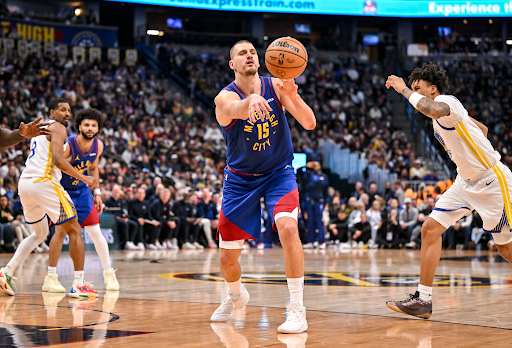
Basketball statistics tell us who scores, rebounds, and records assists. They rarely explain who creates the conditions for those numbers to happen. Nikola Jokić has made that distinction increasingly important, transforming Denver’s offense through an unusual combination of passing, positioning, screening, and decision-making.
His influence also reflects how modern NBA audiences interpret basketball. Fans increasingly follow advanced statistics, tactical breakdowns, and possession-level analysis alongside conventional box scores. In Louisiana, where NBA coverage intersects with the regulated sports wagering industry, resources covering a louisiana sportsbook bonus represent another part of the broader basketball information landscape. Yet understanding what actually happens on the court requires looking beyond promotional offers, predictions, and headline statistics.
Jokić provides an especially useful case study because his offensive contributions frequently begin before a teammate attempts a shot. A well-timed screen, an unexpected passing angle, or a defensive rebound can change an entire possession. These actions reveal why basketball’s most influential decisions are not always visible in traditional statistics.
Why Does Nikola Jokić Make Denver’s Offense Different?
Most NBA offenses rely heavily on guards and wings to initiate their primary actions. Denver frequently uses Jokić, a center, as the central decision-maker. This arrangement changes how defenders approach possessions because the player traditionally responsible for finishing near the basket can also orchestrate the offense from almost anywhere on the floor.
His 2024-25 regular season illustrates the scale of that responsibility. Jokić averaged 29.6 points, 12.7 rebounds, and 10.2 assists per game, becoming the first center in NBA history to average a triple-double across a season. Those numbers established his production, but they only partially describe how he controlled the offense.
Consider a possession in which Jokić receives the ball near the elbow. He might find a cutting teammate, initiate a dribble handoff, or exploit a defender who moves too aggressively toward the passing lane. Each decision creates a different defensive problem, forcing opponents to account for several potential outcomes simultaneously.
The important distinction is that Denver does not need every possession to end with a spectacular Jokić pass. Sometimes his presence creates the opening, while another player receives credit for the final action.
How Does Jokić Create Opportunities Without Recording Assists?
An official assist recognizes a pass that directly leads to a made basket. That definition is useful, but it excludes many actions that contribute to successful offensive possessions. Jokić’s playing style demonstrates why broader measurements are necessary.
His offensive influence often emerges through four interconnected mechanisms:
- Defensive manipulation: Holding the ball long enough to attract attention before creating an opening elsewhere.
- Screening: Establishing positioning that allows a teammate to separate from a defender.
- Passing anticipation: Delivering the ball before a teammate reaches an advantageous position.
- Offensive continuity: Moving the ball into another useful action rather than forcing an immediate shot.
A typical Denver possession might begin with Jokić receiving the ball at the top of the key. He passes to a teammate approaching from the wing, then positions himself to obstruct the defender’s recovery. The teammate uses the screen to attack the basket and score.
Jokić may receive a screen assist in tracking data, but not a traditional passing assist. The distinction matters because his decision and positioning helped create the scoring opportunity.
Similarly, an early pass can force a defensive rotation that eventually produces an open three-pointer. The original passer may receive no conventional statistical credit despite initiating the advantage.
These situations demonstrate why evaluating playmaking exclusively through assists can underestimate the contribution of players who shape offensive possessions.
Which Advanced Metrics Reveal the Hidden Contributions?
Modern basketball analysis offers several measurements that help explain offensive influence beyond points and assists. None provides a complete assessment independently, but together they offer a more detailed picture of how a player affects possession outcomes.
| Metric | What it measures | Why it matters for analyzing Jokić |
| Traditional assists | Passes directly resulting in made baskets | Captures his most visible passing contributions |
| Potential assists | Passes to teammates who shoot within one dribble | Identifies opportunities created even when shots miss |
| Secondary assists | Passes immediately preceding an assist under the NBA’s tracking definition | Highlights his role in initiating quick passing sequences |
| Screen assists | Screens directly leading to a teammate’s made field goal | Recognizes scoring opportunities created without passing |
| Points per possession | Scoring output relative to possessions | Helps evaluate the efficiency of offensive actions |
| Assist-to-turnover ratio | Assists recorded relative to turnovers | Adds context about decision-making and ball security |
These categories measure different aspects of offensive creation and should not simply be added together. A single possession may involve several overlapping contributions, and tracking definitions impose specific conditions.
Potential assists are especially informative when examining passing. If Jokić delivers an accurate pass to an open shooter who misses, the conventional assist column remains unchanged. The underlying opportunity still matters when evaluating the decision.
Meanwhile, points per possession helps shift attention from individual highlights toward overall offensive outcomes. A spectacular pass does not automatically make a possession efficient, just as an ordinary-looking action can produce an excellent scoring opportunity.
The strongest evaluations combine these measurements with film study and lineup context rather than assuming that one statistic establishes a player’s complete offensive value.
Why Is Rebounding Part of Jokić’s Playmaking?
Defensive rebounds are typically categorized separately from assists and offensive creation. For Jokić, however, collecting a rebound can become the first step in organizing Denver’s next attack.
His ability to survey the floor immediately after securing possession allows him to recognize teammates moving into advantageous positions. A long outlet pass can advance the ball before the opposing defense establishes its preferred matchups.
Even without an immediate transition opportunity, a rebound gives Jokić control over the beginning of the possession. He can advance the ball, select the initial passing angle, or wait for teammates to establish the offense.
This creates a connection between rebounding and playmaking that traditional box scores cannot fully capture.
Jokić’s rebounding therefore matters not only because it ends an opponent’s possession. It also determines how Denver begins its next offensive sequence.
What Can Coaches Learn From Jokić’s Decision-Making?
Jokić’s approach offers lessons extending beyond professional basketball. Youth coaches and developing players can study his positioning, anticipation, and movement to understand how effective offense depends on coordinated decisions rather than individual athleticism alone.
Three principles stand out.
First, recognize defensive movement before attacking it. Jokić frequently watches how defenders position themselves relative to teammates. This awareness helps identify passing opportunities before they become obvious.
Second, understand the value of timing. A pass delivered one moment too late can allow defenders to recover. A screen established at the correct moment can create separation without requiring extraordinary speed or physical strength.
Third, maintain offensive flexibility. Players become more difficult to defend when they can pass, shoot, screen, and move into useful positions. Jokić demonstrates how these skills reinforce one another.
Importantly, his methods are not entirely dependent on his physical profile. Younger players can practice decision-making through small-sided games, passing drills, and exercises emphasizing recognition of defensive rotations.
The underlying lesson is that basketball intelligence becomes most effective when players understand how their decisions influence everyone else on the floor.
Why Possession-Based Analysis Matters for NBA Fans
Jokić’s influence also highlights an important limitation in evaluating NBA performances through box scores alone. Two games with identical individual statistics can involve substantially different offensive contributions.
In one game, a player might accumulate assists through straightforward passes to teammates making difficult shots. In another, the same assist total might reflect repeated creation of high-quality scoring opportunities against an organized defense.
Understanding the difference requires examining spacing, defensive reactions, shot quality, and the sequence of actions preceding each attempt.
This perspective is particularly useful for fans comparing elite playmakers. Rather than focusing exclusively on who records more assists, they can investigate how each player generates advantages and whether those advantages translate into effective team possessions.
Possession-level analysis also encourages caution when interpreting single-game performances. Shooting variance, opponent strategy, and lineup combinations can influence results even when the underlying decisions remain sound.
A more complete evaluation therefore considers repeated patterns across games, not just isolated highlights or unusually productive nights.
The Bigger Picture: Basketball’s Value Beyond the Box Score
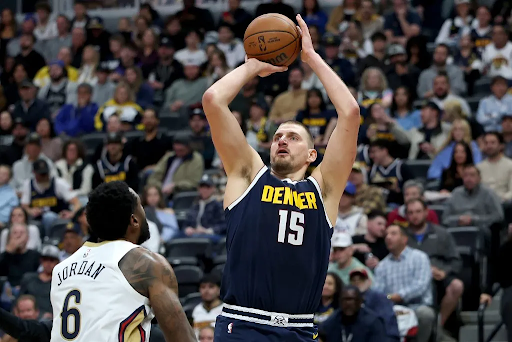
Nikola Jokić challenges traditional expectations of how an NBA center should influence offense. His scoring and rebounding remain essential, but his greatest impact often comes from linking individual actions into productive team possessions.
A screen that creates separation, a pass that forces a rotation, or a rebound that initiates an attack may receive little attention in a conventional statistical summary. Together, however, these actions help explain why Denver can organize so much of its offense around one unusually versatile player.
For coaches, the lesson concerns timing, awareness, and coordinated movement. For fans, it is about learning to recognize basketball contributions that cannot be measured through points and assists alone.
Ultimately, Jokić demonstrates that offensive value is not simply a question of who finishes a possession. It also depends on who makes the right decision to create it.