
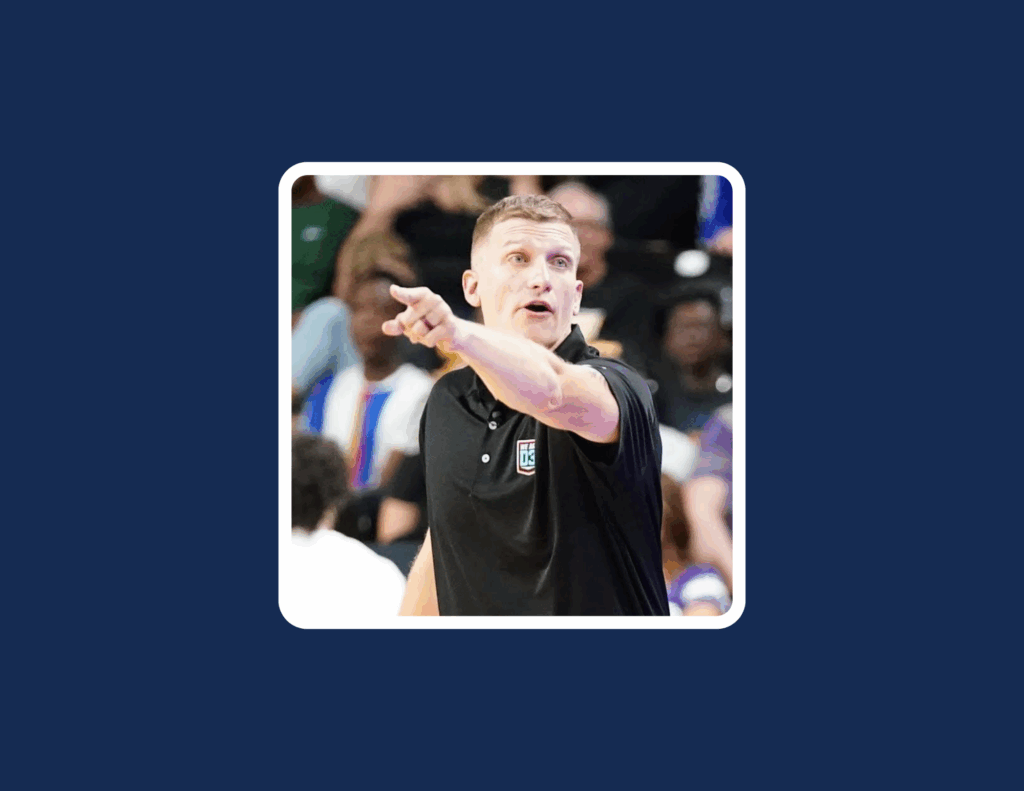
MICHAEL REJNIAK – GM & HEAD COACH OF WE ARE D3 – EPISODE 1149

Website – https://tbthoops.com/teams/we-are-d3-2/
Email – mrejniak@ncsasports.org
Twitter/X – @Coachrej
If you listen to and love the Hoop Heads Podcast, please consider giving us a small tip that will help in our quest to become the #1 basketball coaching podcast.
Michael Rejniak has been the GM and Head Coach of the We are D3 TBT Team since 2018. The team competes annually in the TBT and is comprised of all former Division 3 All-Americans who are currently playing professionally.
On this episode Coach Rej and I talk about We Are D3’s run to the semifinals of the 2025 TBT showcasing the exceptional talents of former Division III players. We discuss the impact of this achievement, emphasizing the significance of providing opportunities for underrepresented athletes to shine on a larger stage. Throughout our conversation, we delve into the intricacies of preparing for high-stakes games, the importance of team dynamics, and the mental fortitude required to navigate the pressures of competitive basketball. Rejniak also reflects on the invaluable lessons learned from the tournament experience, both for himself and his players, highlighting the importance of relationships and personal growth within the sport. Ultimately, this episode serves as a testament to the former D3 players and the enduring spirit of teamwork that drives their success.
Make sure you’re subscribed to the Hoop Heads Pod on your favorite podcast app and while you’re there please leave us a 5 star rating and review. Your ratings help your friends and coaching colleagues find the show. If you really love what you’re hearing recommend the Hoop Heads Pod to someone and get them to join you as a part of Hoop Heads Nation.
Be sure to follow us on Twitter and Instagram @hoopheadspod for the latest updates on episodes, guests, and events from the Hoop Heads Pod.
Take some notes as you listen to this episode with Michale Rejniak, the GM and Head Coach of “We Are D3”.
What We Discuss with Michael Rejniak
- The journey of the We Are D3TBT team during the TBT tournament
- The significance of their achievements and the impact on players’ careers
- The preparations and strategies employed by the coaching staff to navigate the rigorous tournament schedule effectively
- The importance of team dynamics and the cultivation of a supportive environment
- The potential future growth of the We Are D3 brand, aiming to bridge the gap between Division III players and professional opportunities in basketball
- Enhancing the We Are D3 brand recognition and opening new opportunities for players
- Providing a platform that connects Division III basketball players with professional opportunities globally
- The experience of competing against teams from Syracuse and UConn was transformative for players and staff alike
- Garnering attention and support from a wider community, highlighting the value of Division III basketball
- The importance of mental resilience during tournament runs
- Showcasing the potential of Division III players on a national stage
- Building relationships with agencies to secure better opportunities and contracts in professional basketball
- Increased opportunities for players and potential corporate sponsorships
- Expanding We Are D3 agency services to support players’ transitions from collegiate to professional basketball, ensuring they have the representation they need
Like this show? Please leave us a review here — even one sentence helps! Consider including your Twitter handle so we can thank you personally!
We’re excited to partner with Dr. Dish, the world’s best shooting machine! Mention the Hoop Heads Podcast when you place your order and get $300 off a brand new state of the art Dr. Dish Shooting Machine!
Your first impression is everything when applying for a new coaching job. A professional coaching portfolio is the tool that highlights your coaching achievements and philosophies and, most of all, helps separate you and your abilities from the other applicants.
The key to landing a new coaching job is to demonstrate to the hiring committee your attention to detail, level of preparedness, and your professionalism. Not only does a coaching portfolio allow you to exhibit these qualities, it also allows you to present your personal philosophies on coaching, leadership, and program development in an organized manner.
The Coaching Portfolio Guide is an instructional, membership-based website that helps you develop a personalized portfolio. Each section of the portfolio guide provides detailed instructions on how to organize your portfolio in a professional manner. The guide also provides sample documents for each section of your portfolio that you can copy, modify, and add to your personal portfolio.

Hey coaches — you’ve got a game plan for your team… but do you have one for your money?
That’s where Wealth4Coaches comes in.
Each week, they deliver simple, no-fluff financial tips made just for coaches. Whether you’re getting paid for camps, training sessions, or a full season—Wealth4Coaches helps you track it, save it, and grow it.
It’s time to stop guessing and start building.
Subscribe now at wealth4coaches.beehiiv.com/subscribe
And follow them on Twitter @Wealth4Coaches for daily money wins.
Your money needs a coach.
Start with Wealth4Coaches.
THANKS, MICHAEL REJNIAK
If you enjoyed this episode with Michael Rejniak let him know by clicking on the link below and thanking him via Twitter.
Click here to thank Michael Rejniak via Twitter
Click here to let Mike & Jason know about your number one takeaway from this episode!
And if you want us to answer your questions on one of our upcoming weekly NBA episodes, drop us a line at mike@hoopheadspod.com.
TRANSCRIPT FOR MICHAEL REJNIAK – GM & HEAD COACH OF WE ARE D3 – EPISODE 1149
[00:00:00] Narrator: The Hoop Heads podcast is brought to you by Heads Start Basketball.
[00:00:20] Michael Rejniak: There are certain agencies that we’ve developed relationships with throughout the years that are really accepting of our best players in our division, and they place them and the players do great. It’s just getting that foot in the door type of thing. So I would love for us to take these players no matter what division, quite frankly, just underrepresented or whatever, and be able to connect them, be that void of an agent where we can now connect them with teams. That would be the ideal dream scenario.
[00:00:52] Mike Klinzing: Michael Rejniak has been the GM and head coach of the We Are D3 TBT team since 2018. The team competes annually in the TBT and is comprised of former division three all Americans who are currently playing professionally on this episode, coach Rej and I talk about We Are D3’s run to the semi-finals of the 2025 TBT
Coaches. The Dr. Dish Basketball semi-annual sale is on right now. This is your shot to get a major discount on one of the best training solutions for your school training facility or even your home gym. Equip your team with the technology that’s proven to improve shot form, consistency and confidence.
Don’t miss this. Head to drdishbasketball.com and get your team ready for the season. Follow their incredible content @drdishbball on Twitter, Instagram, Facebook and YouTube. Mention the Hoop Heads Podcast and save an extra $300 on the Dr. Dish Rebel, All-Star and CT models. Those are some great deals Hoop Heads…Get your Dr. Dish shooting machine today.
[00:01:59] Liz Kay: Hi everyone. This is Liz Kay. Head girls basketball coach at Wahcona High School in Dalton, Massachusetts, and you’re listening to the Hoop Heads Podcast
[00:02:09] Mike Klinzing: Coaches. You’ve got a game plan for your team, but you have one for your money. That’s where Wealth4Coaches comes in. Each week, we’ll deliver simple, no fluff financial tips made just for coaches. Whether you’re getting paid for camps, training sessions, or a full season, Wealth4Coaches helps you track it, save it, and grow it.
It’s time to stop guessing and start building. Subscribe now at Wealth4Coaches.beehive.com/subscribe and follow us on Twitter at Wealth4Coaches for daily money wins. Your money needs a coach. Start with Wealth4Coaches.
Take some notes as you listen to this episode with Michael Rejniak, the GM and head coach of We Are D3.
Hello and welcome to the Hoop Heads Podcast. It’s Mike Klinzing here without my co-host Jason Sunkle tonight. But I am pleased to welcome back to the Hoop Heads Pod Coach Rej Michael Rejniak. We are D3 fresh off a run to the TBT semifinals, my man. All right, well Rej, welcome back man. Take two.
[00:03:17] Michael Rejniak: Thanks, man. You’re my good luck charm. We have to do this like right before the turnaround run again next year. Like I, let’s need, let’s do it, man. Let’s put it on the calendar. I need you. I need you. No, it was, it was a good, it was a good time. Thanks for having me back on. Look forward to chatting it up with you, man.
[00:03:32] Mike Klinzing: Absolutely. So let’s start here and just give us an idea of an overview of what the experience was like for you and your guys. We’ll dive into more of the details game by game and some of the particulars and specifics, but just when you think about the totality of the experience.
What’s something that you personally took away from it?
[00:03:57] Michael Rejniak: For me and the guys in the di division kind of for us, it was, it, it really was like one of those like kind of runs that was like, kind of crazy. and it was like life changing, like, for me and kind of like, all of a sudden, like I, after when we beat Syracuse, like I looked down on my phone and there’s like 1100 text messages.
Like, what? Like, that’s just, that’s crazy. But like like, so it was it helped the guys make some more money in terms of contracts and things like that. It helped us as a brand, kind of like now we’re talking to people that weren’t listening before. so like, it’s, it’s very helpful on, on all fronts and it allows us to kind.
Grow our platform and kind of what, what we’ve been doing. And it’s just been it’s just been awesome. And it’s, it was funny, like you take three weeks to do the TBT and then all of a sudden like, I get home to relax and then I go to my, my wife and kids, we go to Disney World and Universal.
So it’s like really just starting to settle down like right now. But like it was a was well,
[00:05:11] Mike Klinzing: you weren’t relax, you weren’t relaxing at Disney World and Universal with your kids. That is not a no, that’s not a, that’s not a relaxing vacation where you’re laying by the pool, let’s put it that way.
[00:05:21] Michael Rejniak: No, it is not, it is like waiting in the sweltering heat of 96 degrees while, while I’m waiting for the Donkey Kong ride that lasts 30 seconds.
That’s what that was. But no, like, but it was a, it was a good run. And like now I’m, it’s starting to hit me a lot of it. and kind of a what we were able to do and. I look back and very blessed and fortunate and we got the awards and that was nice too as well.
But it was, I was really happy for the team for sure.
[00:05:51] Mike Klinzing: In the moment as the run is taking place. And you just briefly hit on it in terms of the recognition, the ability to maybe get into some rooms that you couldn’t get into before, the ability of your guys to be able to capitalize to make some more money playing overseas, professionally, is any of that, are you guys talking about that, coaches and players talking about that together while the run is going on?
Or is that something that you’re just focused on, Hey, we’re just working on, we got, we have to focus on the next game. We’re just trying to win. How much of it is big picture? How much of it is just game by game?
[00:06:30] Michael Rejniak: It literally was game by game. I really like because to win that tournament, it is so difficult.
It is, it is an NCAA tournament run in a span of a shortened amount of time and it’s with pros so it’s even more intense. it doesn’t, what I did re what I tried to do, like, I was very blessed to have a final Four run with with Coach Xin at Amherst and Goldie Goldsmith, who he had on from Middlebury.
He was, he was with me on that, on that run too as well. I just remember I was in my twenties at that time, mid twenties. I just remember when, when this was going on. Now this time I was like, I am going to embrace every second of this. because it’s, it was kind of just trying to stay in the now and go game by game.
because like, runs like that are very difficult to kind of replicate. because you need, you do need a lot of luck and you, you need the good players and you need good coaches, and you need good support all around. So a lot of things need to align, and I just remember just kind of trying to embrace it moment by moment.
Game by game.
[00:07:41] Mike Klinzing: All right. For people who didn’t listen to your first episode, first of all go back and listen to the first episode, but if you didn’t listen to the first episode and you’re listening to Reg for the first time, just walk everybody through the process for putting together the roster.
What’s that like? How do you guys put together who’s on the team and figure that part of it out?
[00:07:59] Michael Rejniak: Yeah, so the whole we are D three brand is, is we fill this niche between D three and professional basketball, and we’re kind of in that realm, in, in kind of that realm where, back around eight years ago, wanted to start I had a lot of players when I coached division three that wanted to go play pro and to kind of give them a platform.
To play pro and to get better contracts. because everybody says D three can’t play, or D three is glorified intramurals and things like that. So we wanted to provide a platform where they could prove themselves to better contracts, better teams, opportunities with agents. And TBT gave us that platform where it’s the now it’s like some about $1.5 million tournament winner take all and there’s 64 teams and you kind of battle it out in the summers, but it’s literally we’re the only brand that really caters to division three.
The rest, like we’re going against heavy hitters of the blue bloods like Kansas and Syracuse and Yukon and all these kind of other big, big fish. And we’re like the little fish trying to swim upstream. So it is been going on for like, kind of now eight years and we’ve kind of expanded the brand where.
we run pro combines now which helps kind of provide some more opportunities. We got a lot of things on the horizon now with like agencies and so on, so forth and so just because continued to grow kind of as the years have passed. But it’s just been one of those things where we’ve just kind of filled that void to, for division three basketball players.
they just have to play a lot of them now kind of are porting up I don’t know if that’s even our right term anymore, but like, portal up to division one and that’s the kind of guys. Take where they kind of go up to division one and we kind of help, help kind of on their journey.
But kind of, we have kind of established ourselves as, as the premier brand in, in those regards. So it’s been it’s been a heck of a ride. But the main thing is we’re providing opportunities for players that to get looks where otherwise they might not
[00:10:19] Mike Klinzing: take me into the mindset.
Going into game one, what are you thinking about as the tournament is beginning? Clearly as you said what the road looks like the competition who may or may not be ahead of you as you continue to advance, but what’s the, we know what the scouting report looks like for a, a college team and the preparation that goes into that.
What is the preparation for. Game one. Do you even know what your first opponent looks like heading into it? Yeah. Do you have any idea what that, what that’s going to be? Just talk, talk, talk to me about the preparation for the, for the tournament.
[00:10:56] Michael Rejniak: Yeah. So like, game one, like when you’re playing established brands you can kind of look at film from the past and say, kind of know their style.
But the team, we played Lane’s Hope they were mostly out of Central New York, very well coached. They all Division ones a lot of them played at Villanova and Buffalo and things along those lines, kind of that, that area, but with, but had Central New York ties and they were playing for a cause which was Lane’s Hope.
And they used to be Jim or Fredette’s team. So they kind of had that backing behind them. And so. It was a essentially an all-star team put together. So when you go against an All-Star team, it’s kind of like a, a u, essentially, right? Like it’s more personnel driven than anything else. So like when it came to our scout we clipped up clips of all their players we have access to all their film and their profil, and now YouTube and you got Synergy.
And so like, we’re kind of doing our research and really a lot of it was prep work on tendencies. Like what does a player like to do? And kind of made it like five essential, like one-on-one matchups, like, and kind of like saying like, this is your responsibility. These are our kind of tendencies and this is kind of what we’re focusing in on from a prep viewpoint for them.
Because it’s first game, you don’t have another game to kind of look at. New team, kind of Joe Cremo from Villanova, very talented player. So I got, we have to know exactly what he likes to do in these scenarios and how he likes to act and kinda move without the ball and move within the ball.
And then he got Charlie Marquardt, who’s a D two kid coming out Long Island, but he just led the Canadian League in three point percentage and very efficient score. So you kind of like piece together a scout report that way. and really you kind of really focus on them a little bit, but really you’re more towards kind of what we do and kinda kind of be more prepared for what, what we have to be doing.
We were fortunate that week where we played two scrimmages and we won both of them. So with those scrimmages. They really, we learned a lot about ourselves and I learned a lot about the team and coaches learned about kind of like how to interact and what we have to be doing there. That was very beneficial to prepare us for game one, which is a lot of pressure because you’ve have to, in a tournament like this, you have to get momentum.
Otherwise the bandaid gets ripped off really quickly. And we’ve been there many times and it took us like years to get our first win because there is a, I do think there’s a formula for what we do and how we have to do it to get to where we’re winning. And I think this year it just all came together, but that was a lot of pressure last year.
We have to win. So this year you can’t go bouncing out in the first round. You got, you got the favorable seed, so you want to make sure that year two you can continue to kind of earn your stripes here in
[00:14:12] Mike Klinzing: terms of year to year. How consistent do you try to be with style of play and philosophy of how you’re trying to go about doing things in terms of, okay, this is what we want to do offensively, as you said, yeah, you’re trying to get a D Scout report on the other team, but you’re also trying to make sure that you got the things that you want to do, that you got those things down.
How much of that is a carryover from year to year? And guys have an understanding who played on the roster the year before. Have an understanding of what you want to do as a coaching staff and what you’re trying to accomplish as a team.
[00:14:43] Michael Rejniak: A lot of it, a lot of it is, and that’s where we get our edge. Because it’s almost like It construct the team, like it’s an NCAA team.
So I got my returners that are very well seasoned vets, like a, a Ty Nichols or Mark Caesar or Demetrius Underwood. Then we got a slew of guys in the middle that maybe have been with us one or one year, and then we got some newbies coming in. In order for us to keep doing what we’re doing, I have to keep things relatively consistent.
So our play style, you can I can tell you like, it’s all read and react stuff with different rules and things like that, but it’s like every look down the court, it looks different because there’s different reads and these are pros that can do different things. And we have our philosophical tendencies that we do.
So that stays consistent. But as far as kind of like the play and how it looks, we’ve instituted it now like three years in a row where it’s looked different year to year because the players kind of figure out different nuances of how to play with one another and where a player likes to get the ball to score.
Versus where they’re uncomfortable. So we kinda there’s little tweaks here and there, like the packages we call it like your, your out of bounds packages will look different. Sideline stays the same because we’re just trying to get the ball in whatever. But overall, like maybe an after timeout might be different.
But as far as like who we play and what we do and how we play, that’s, that’s really stayed consistent. Like we’re not a prototypical D three team where a lot of people will get thinking like, Hey, they’re just going to shoot a ton of threes and if they shoot the threes, then, then, then they’re going to win the game.
And if they don’t, then they’re going to lose. That’s really not what we, what we do, we’re actually like just average three point shooters, quite frankly. Yeah,
[00:16:40] Mike Klinzing: 32% for the tournament. I was looking as I was reading sta it’s nothing crazy,
[00:16:45] Michael Rejniak: ? And really our whole philosophy was like, hey, like we’re going to take this shot.
We get it, but that’s not really what we’re looking to do. really it starts with us on the defensive end. And I think that’s where Wichita State, when we played them, they, I thought they did a great job on us defensively. And we kind of we chose a, a bad day to have a bad day.
But I think like that’s where offensively and defensively those, I think we finally figured out kind of what works for our personnel and what we’re about and it kind of really showed this year.
[00:17:20] Mike Klinzing: How many practices do you guys have leading up into this?
[00:17:24] Michael Rejniak: Let’s see. We do a lot of Zoom calls.
So like, because everybody’s coming in from overseas when it comes to July. So like we do kind of zooms kind of discussing tendencies and what we have to expect. I’ll send them some stuff, I’ll send them to Scout, wait prior once we find matchups. And so like we try and do as much prep work as possible.
I bring in the guys a week prior. And really it’s more like, so that they can get acclimated to the area but also acclimated with playing with one another. And typically our structure is we’ll do a teaching practice in the morning and then we’ll let the chains off in the afternoon and they’ll play in this case it was scrimmages and things like that.
To kind of really start to where we can teach and kind of go back and forth, but week prior, so like you’re looking at maybe realistic, like actual teaching practices. Maybe about four or five. So like that’s where having the returners coming in really help. And then obviously you can get more momentum as the tournament goes on.
So like you can just get past game one well, then you got two more practices and then you get past game two and then you got two more. Now you start to like, almost like have an actual season where you can really start to kind of do some really cool stuff.
[00:18:50] Mike Klinzing: So watching the team from the outside and seeing the way that they play together.
I know that one of the things right, that coaches, I don’t want to say struggle with, but something that every coach wants to have their team buy into is, yeah. that excuse me, that no one cares who scores, no one cares what their role is. Everyone executes what needs to be done in order to help this team succeed.
Right? That’s the coach’s dream of, that’s the kind of team. That you want to coach where every guy buys into the role that the coaching staff lays out for him and just watching it from the outside. That’s exactly what this team looks like, that everybody slots into the role, everybody’s comfortable doing what they do.
And so I’m just wondering if my perception as an outsider watching that team, team, do those pieces fit together as smoothly on the inside? As it looks like from the outside,
[00:19:47] Michael Rejniak: there’s a lot of management in, in the, in the, in the, in the locker room. Like, like, because like we try and get to that point, right?
And I think every coach wants that. I think when it comes to getting guys to play together, like when I’m watching the games and I’ve watched some of the games, quite frankly, I haven’t fully watched some of them because I can’t listen to myself talk half the time, but the they played so.
Fluid together because they were playing for a common goal. Like for these guys, these players, for my staff and I to play on Fox Sports and to continue to win that provides them a platform that they’ve never had. So like that is enticing in and of itself. And when we’re winning, what are you going to say?
Like, when we’re taking down these tournaments, it’s very easy. If we got bounce first round, they’ll come with torches and they’ll burn my house and the staff’s house down. But like it’s it’s that week of practice that’s, that’s a bonding moment for us. But then when game one happens then roles start to get established.
so you have to talk coach Hixson at Amherst used to always say, you have to weed your garden daily. And these are pros. So you have to do a lot of weeding. Lot of we and like honest communication. And they might not agree with it. They may not understand it, but they at least, and I always say this, it won’t be equal, but will treat you fair.
And I think like that’s, I think they respect that. and we’ll have honest conversations and if they don’t disagree with it, if they disagree with it, then they’re more than welcome to go to other teams and things like that. But at least here they know that we treated them fair.
And I think like that’s where that playing together, they genuinely like each other. We do a lot of personality vetting when we’re bringing guys onto the team because you bring in one bad apple, it’s going to ruin the whole thing real quickly. So we do a lot of kind of, it’s almost like. My staff and I almost like interview these players.
And these are guys that we talk to, they’re college coaches and we talk to their pro coaches and how do they handle themselves and like, what do they do when certain when they don’t get the time that they want or they do, and how do they react in certain moments? So we do a lot of that on the backside.
So I’m pretty confident in their personalities prior, so like they kind of know what to expect. And we, we always year to end, year out, you’re, if you’re a returner, your role could change from one year to another year but it’s one of those things where these are guys that are true pros and kind of, they’re, they’re really good personalities to have.
So it’s easy when they’re playing. We do a lot of that vetting prior to them even taking the quarter, inviting them to the team, quite frankly. Yeah,
[00:22:49] Mike Klinzing: for sure, for sure. All right, let’s go to game two against Bahai’s Army. Obviously a huge win beating the alum from Syracuse. I want to frame my question about that game around the EAM ending and what it’s like to coach in a game with the EAM ending.
What does that feel like? Is the strategy different? How do you think about that as a coach? Yeah, as opposed to the way we normally coach, right? Where you got the clock and when the clock hits double zero, the game’s over. The eel ending obviously is different. Talk to me about how it’s different from you for, from your perspective on the sideline.
[00:23:31] Michael Rejniak: It’s if you’ve never coached in it, it’s, it’s like crazy. It makes players and, and rightfully so. Coaches do crazy things because when that clock hits like four minutes, you, you add eight points to the winning score. Okay. So if you are a team that’s down. You have to like really kind of really lock in defensively.
If it’s, if you’re up, then you want to continue to do what you’re doing you can’t, what I’ve seen happen, you can’t go like hero ball and just start chucking a ton of threes. You’ll lose, you’ll lose, you have to stay focused. So it’s, it’s a different mindset. It’s almost like the three quarters. In, in TBT you play four quarters, which by the way, basketball should, all levels should go to four quarters.
But anyways, I digress. So it’s like three quarters is like your normal game. Then the mindset of fourth quarter as kind of the first up until leading up into Eli ending is a little bit different. And then Eli ending is different. Basically all the tools I’ve been trained and coached with my entire career, stretching out the clock, fouling, everything, like all the tools that we all learn are basically thrown out and basically said, alright, you better hope you’ve talked about this with your team so that they know they can coach themselves essentially on the court as well.
Because furthermore, if you’re in the bonus if the other team is in the bonus and you foul, okay, they not only get one, they get one free throw, but then they also get possession of the ball, which is, which really penalizes you and you can’t do much. So it’s one of the, when we were going into that Elam ending against Bahai’s Army, we talked about it like we almost against Lane’s hope, and this showed up again.
Down the road when we played Fail Harder, we were up big against Lane’s Hope, and we started doing some crazy stuff. Crazy stuff where it’s like, wow. And it happened later, but I think because of that, we were a lot more composed against, against against Bay i’s Army. And in that game I saw one of, like, the most special performances I’ve ever seen in my coaching career by Ty Nichols.
He was the best player on the court versus all of Syracuse and hit game winner and every shot he took, I was like, that’s in, that’s in like, it’s like, it’s like easy as a coach when that’s going on. But like what a, I knew at halftime of that game. When we, we didn’t look well. I feel like we were down 13.
We came back. I knew when we were, let’s see, we out rebounded them, or sorry, we out rebounded them. We had like three or four more turnovers than them and we shot the ball worse than them. And we were only down by a couple or something like that. We’re down by six or something. So I knew, like when looking at that box score at halftime, I was like, we have a chance here because we didn’t play our best and we took their best shot and we’re only down six, we should be down by like 90.
So like I knew kind and that’s how I felt against Yukon too. Very similar kind of type of deal. But so like I knew going into that second half if we came out and punched them in the mouth. I felt like they would start to bend a little bit and we did like we started kind of doing some things that the I felt they weren’t ready for.
And so like we were ended up kind of kind of shock and the world there. There was a great headline on the Syracuse newspaper, which I I printed out and I’m going to frame it and it says literally devastating, but it goes d and then the three, the stating fricking Awesome.
That’s awesome. That’s cool. Awesome. And then Buddy BA’s like walking off the court, it says it hurts really bad. Oh, it was beautiful. But nothing better than that. Great locker room material for sure.
[00:28:02] Mike Klinzing: Alright, so clearly anybody who saw the ending of that game, the game winning shot, the reaction of your team, what’s the locker room like?
After that game, when you guys walk into the locker room collectively as a group, after winning that game, what are the conversations like? What do you say to the team? What’s the mood? Obviously you’re ha obviously you’re happy, but Yeah, now I have to think that’s giving you confidence, right? Like, hey, hundred percent.
Yeah, we just knocked off, we just knocked off Syracuse, let’s go. Let’s go chase another big East team.
[00:28:34] Michael Rejniak: Let, let’s, let’s get another one and let’s, let’s win the region. Because I felt like Beam’s Army was predicted to win the whole thing. And so like I knew when we went toe to toe with them, I knew we had something special.
And for us as a program we really lacked that signature win. So to get that was, was awesome. In Syracuse, like six years prior I lost to them on free throws in a heartbreaker. So it was kind of like it was awesome to come out of that arena and kill ticket sales. Like that was awesome. Like, literally there was like six fans and it was my mom, my dad, my, my best man at my wedding and my kids.
It was awesome. And my wife of course but so like that was just so special. But it was one of those things where the mindset was kind of really like super excited, but like really kind of level, quite frankly. Like, it, it kind of like didn’t hit us. And I think like that’s what kind of kept our focus for Yukon and kind of moving forward.
It was kind of, it was like really awesome, but then it was like, all right, now we have to win the whole kind of region type of thing. Because we now had a, a path ahead of us because quite frankly, when you got Syracuse and Buddy Bahe and Jimmy Bahe and you had Frank Mason who was the national player of the year at Kansas on their team you have to go through them.
You quite frankly can’t look past. Any, anything but the possession ahead of you. So it was but it was, the locker room mojo was great. But it was, it was more like, to be honest, like celebrate, we celebrated that night. We had beers together as a team, which is different than also college. Like, you’re allowed to celebrate with these pros and we took them out afterwards.
because wins like that don’t happen too often. And so like but then the mindset was like, Hey, let’s, let’s, why not? everybody says, why not us? It was like that, why not us stuff, ?
[00:30:34] Mike Klinzing: So two days in between games. Right. So what does it look like? What’s the itinerary from the win against Bahai’s Army, turning around and playing stars or stores, university of Connecticut.
What are you guys doing in those? Mm-hmm. Whatever, less than 48 hours. What are you guys doing during that time? A lot
[00:30:52] Michael Rejniak: of mental reps quite frankly. And like it’s one of those things where. The way our team was constructed. Like we have players that like fit certain roles. Like we had three different types of bigs.
Like one was a finesse big kind of like and Alex Sobel, we had Christian Parker was kind of like a young buck who kind of like finished around the rim, could shoot the three a little bit. And then he had David Murray, which was kind of like a big strong dude that can set screens and really talented.
So like three different types of big. So at the way I, we constructed it was like each game I call for a different type of player depending on how the game is played and things on those lines. So you have to make sure like your, your time. We talked about weeding the garden. Your time might not get called against Beam’s army, but it’s going to get called against Yukon.
And so like when we called on David Murray against Yukon, he did a great job. because he he did a, it’s one of those things where during those days of prep, it’s, if you didn’t get any burn against Bahe or whatever, we still have to get you to sweat going, we have to get, get some sweat going.
We have to make sure we’re, you’re fresh and ready to rock. And then also on the flip side, if if you did get a lot of burn like Ty did, it’s more like, hey, like you just chill and listen to your beats and like rap to yourself or do whatever you have to do, get some treatment or whatnot.
So that you’re managing the injuries or the bumps and bruises. because when you get hit with a screen by those big guys, those are some big screens to fight through for sure. So it’s, it’s kind of you’re trying to the back half of the roster stay fresh and let’s get a burn and let’s get some sweat.
For the guys that played a lot, it’s kind of managing kind of their bodies and. Then also we’re all doing mental reps on what we have to do to prepare and to prepare them as much mentally as possible scout film, what do they do well, what do we have to do? Well, and then furthermore, they had a couple players kind of come in on the fly that we had to get to know real quick that didn’t play.
So it’s, it’s like TBT is like adult sometimes a a u basketball where it’s the, a wild, wild west and you’re like, dude, where is this dude coming from? For, for us, for other teams, they can do that. For us it’s like, we got what we got. So it’s a lot of mental stuff during those, during those days, just like how you would on a normal NCAA weekend, like you’re kind of doing a lot of that stuff.
You want to get in the gym so that they’re not hanging out in their hotel rooms all day and get some shots up and kind of manage it that way. so it’s kind of, that’s another like weeding the garden piece. You’re talking with guys, talking about what they saw, talking about how to work, what, what, what can we do better as a team and as a staff and how do you feel I need you to keep kinda really pushing us because your role is valuable and all of them, like every coach says this.
But when you’re a player, you don’t necessarily believe it. But every role is so important and for roles to, to buy into roles and to be selfless, that takes a lot of, of sacrifice. And you’re going to have to just kind of bite your tongue a lot of times. Like, because I’m sure there are other hindsight’s always 2020 as a coach and I know like all these guys are pros, so I know they can perform.
But was it the best of what we needed in that moment? I tend to, I go with what my staff and I feel like was the best in that moment. So it’s a lot of those conversations be like, I know you’re good at this. I know you do this well. But right in that moment, that’s what we, what I felt that team needed.
And at the end of the day, a coach’s role is to service the team to get the win. ?
[00:35:06] Mike Klinzing: Did you sense, in those conversations in between the Syracuse and Yukon games, did you sense kind of a quiet confidence building in your guys? Like could you feel that as a coach, as you were having the conversations, as you’re working with your team, as you’re thinking about where you’re at, did you start to feel like, yeah, I think these guys are really starting to believe that we can, we can do that.
Not only do what we’ve already done, but there’s, there’s still more ahead of us. Did you start to sense that?
[00:35:38] Michael Rejniak: Yeah. And I, I think like you, you sense that within the team and you sense that within the staff. And now, like, like whether it be me and how I’m talking or whether it be Coach Harris or Coach Clark or Coach Luquette, like now all of a sudden, like I’m a big energy guy.
You feel on, you feel energy in a room you feel it. And then when it starts from coaches, players, guys, we have around us the sponsorships, the constant nice message we receive from like you and from other media outlets and from like people, we don’t hear from like all of a sudden now, like you start to kind of roll and like you start to kind of.
The belief is, is there it’s always been there, but it’s very difficult to have belief when you don’t have a resume belief that’s real.
[00:36:36] Mike Klinzing: Now it’s real, right? So before there was belief, but it was, it was belief. That belief, but then it’s like, hey, I really believe, I really started
[00:36:44] Michael Rejniak: to feel like we were going to be like the Tommy Fleetwood of the TBT.
Like we always, we always come in second in that golf tournament, but we believe we can win it, but we haven’t won it yet. types of stuff. So, yep, it was, it’s very easy to say you have belief, but when you start to have a resume to believe it now you really start to have actual belief. So like the confidence I think was starting to grow within the staff, within the players.
And when you’re all kind of pulling the rope at the same time, it just makes it easy. Like I knew. I knew against Yukon. Like I I was, that ironically, that was probably the most comfortable I was before a game. Like because paranoia sets in game one, you’re playing Bahai’s Army Game two.
I was eerily calm against Yukon. because just I knew what they were. I watched them a couple games. I knew their personalities. I knew how the strategies of the coaches, I knew kind of that, that they roll up on a bus with their logo on it. So I know that they’re entitled, which is like we’re staying at a, at a Holiday Inn or Best Western or whatever we were staying at, and they’re staying in at the Marriott downtown and Right.
they’re eating like 10 steak dinners and. We’re eating at Tully’s in Syracuse, which has great chicken strips by the way. It’s amazing. But like, because they gave us 20% off the bill, which was amazing. Nice. But like that’s, that’s where it’s like I was most confident against, against Yukon just because of their makeup and kind of how we matched up against them and things on those lines.
And we had a couple things that we did during that game that I, that I was really happy that we executed to perfection.
[00:38:38] Mike Klinzing: So you get that game and now you’re onto the quarter finals. And obviously at this point now you’ve beaten two big time, big name programs. And just talk to me about the mindset after the Connecticut game.
Are you now thinking that it’s realistic? We. We really got a shot. And it, again, you can’t obviously look past, past any opponent, but, but is it becoming real that you’re like, holy cow, we’re in the quarterfinals. Like we we’re one of the last eight. We become, we got a chance to win. Yeah.
[00:39:13] Michael Rejniak: It starts to become real.
And then also like the mental grind. It’s, it’s really one thing I think that it, we take different things from every experience that we always go through, right? But like, one thing that I took through this experience was just the mental grind of it. It is a, it is a grind, like from scouting, logistics team management in a span and roll that crank it up to 90 on the, on the main skid row because it’s like for a million dollars right now.
One thing we had to plan with was after. Syracuse, we win the region, now we have to fly all the way to Wichita. Okay? So people, people in TBT, like they, you, you get money per round. But that money is gone for flights, for meals, hotel rooms, right? You don’t win, you don’t get money until you actually like, win money.
Like Wichita State, the aftershocks, they didn’t have to move, so they’re pocketing that money, right? That they win. But we’re not, we’re trying to make sure, like Ty Nichols from Springfield, Massachusetts can get out to Wichita, like, and because, because we need them there. And like these players, we gave them a couple days at home.
So like a lot of them drove those that have flights, we, we got them their flights home so that they could relax for a couple days, just get some, a recharge, a mental recharge. And I went home for a day. Have to see my wife and kids, and then then you fly out to Wichita and then all of a sudden, like, it’s like, all right, mindset flip again, we got that.
I wanted the players to get some home cooking, right? whether they need to see their wives, their girlfriends, their family members be familiar in their sleep, in their own bed at night, and then time to get back to work. ? And so like it is like now you start to think like, Hey, like this is a final push where we could do, we could do something.
I just need you, I just need you for another 72 hours, or whatever it was. Then let’s make a run.
[00:41:32] Mike Klinzing: Mental grind or physical grind. Tougher.
[00:41:36] Michael Rejniak: Mental, mental. I think, I think if your mind goes, it breaks any man. I think it breaks any man. I think physical. Physical, you, if you have a good mindset, you have good heart you’re, you can push your body to do amazing things.
Like, I watch all those shows on Discovery Channel where like, your kid’s trapped under a car and the guy like, lifts the car, right? Like, that’s like physical is like crazy. But like, I, I think the mental grind is so much tougher. And I think to be honest, that’s what, that’s what gets our profession. I think that’s where you’re starting to see like what we saw this past year, like the mental grind of recruiting a new team each year.
With NIL and portal like Laga from Miami was like, peace, I’m out. Deuces. Yeah. Jay Wright was done with it. And I think that mental grind, I think the mental grind and then you add in stress of you have to win because of an ad every year. I think the mental grind will, will, will break break people for sure.
[00:42:40] Mike Klinzing: I could not agree with you more on that piece of it. When it comes to coaching, especially at the college level, I look at the landscape of college basketball right now and what coaches have to go through every single year to put together a roster. It’s one thing in the past when you go through and you have to get a recruiting class, or maybe you have a big group that makes it all the way through their four years, and now you have to have a four or five, six player recruiting class, and that’s tough.
But now you’re talking about teams are turning over 50% of their roster almost at a minimum every single year. And so you have to build your culture every single year. You have to build in the guys who know what you’re going to do, like again, most of the time, right, most of your team in the past, almost all your team is returners.
So when you start calling out drills, when you have protocols, when you have things. The freshmen, the new guys just kind of look to the returning guys and you just follow along and it all kind of goes smoothly. Now you have to reteach that and simple every year. Yeah, every year. And you’ve got the money piece of it.
I can’t imagine what it’s like trying to manage a locker room with NIL and this guy’s saying, I make this much money and this guy’s getting that much money. And then you talk about playing time and all the other things like I know a locker room’s hard enough to manage without the money part of it. And then you take it, look, the guys you’re dealing with, right, are professional players who have been in situations, at least where money is involved in the process.
When you talk about college kids, you’re talking about 18, 19, 20-year-old kids who have little to no experience dealing with 25 bucks in their pocket, let alone the kind of money and the numbers that are being thrown around today. And to ask those kids to handle it, but then on top of it, ask coaches to manage that.
The stress level from that standpoint has have to be unbelievable.
[00:44:38] Michael Rejniak: It, it’s, it’s have to be unreal. Like, I see it even with, with us and we are D three, like we get money, like players some players are more mature than than others when it comes to dealing with money. Right. And now you’re making a business aspect into a game.
So now, like with college, with us, it’s a business. and like certain players may or may not understand like, hey, that money went towards flights. It’s not like, Hey, because we won, you get 10 grand. Right. like that’s not how it works. if you want to handle all your flights and pay out of pocket, we’ll give you a stipend by all means.
But like, see, like, understanding that piece, these are overseas pros typically, unless you’re top level, they’re not making a lot of money. Unless they’re playing really high euro basket. Like you might get your, your apartment taken care of car, maybe some meals, and then you’re basically making 500 bucks a month, maybe depending, and then you kind of grind your way up.
So that type of you’re making that much money in college now, like a, a crap to more than that. And then you have to manage all the other logistics. Like, I mean, Patino like said he is like not recruiting any high school kids and quite frankly, he doesn’t need to because he is got a financial backer to do that.
I think it’s like the Vitamin Water guy. and I, and I think Cali Perry, Cali Perry’s the smartest one out of all of them. He went to the Purdue Chicken guy or, or Tyson Chicken or whatever. So he, he knew when he was going from Kentucky to Arkansas, like they had a money like type of deal.
And that’s kind of what, what, that’s what we’re in right now. And you’re going to see the same, now I’m going on a tangent, but you’re going to see the same teams in the NCAA tournament now every year. And you’re going to see the same Final Four pretty much relatively a cycle of like 12 dudes going to be kind of the same kind of as we kind of go through because we’re all trying to figure out this landscape that’s absolutely crazy town.
[00:46:48] Mike Klinzing: I remember. When I was playing, getting my $300 meal stipend for over Christmas break and being like, totally, Hey, can I pocket? I think if I can get by on 200 bucks of meals over that, over this month of Christmas when everybody’s gone, I got a hundred bucks to buy myself a pair of shoes. This is like the greatest thing I’ve ever seen in my life.
And so now to imagine percent to imagine the money that’s being tossed about at again, and obviously it varies depending upon the level we’re talking about. The at, at the very highest level, we’re talking about money that I can’t even begin to fathom an 18 or 19-year-old kid being given. But even at the lower levels of division one or division two, in some cases, the money that’s out there just, I mean, if somebody a, a a thousand dollars when I was playing college basketball would’ve been, somebody’s going to gimme a thousand dollars to do this.
Like I mean, yeah, I’m getting my scholarship and I’m getting my whatever, but. Yeah. I can’t even, I honestly can’t even wrap my head around it. It, it’s, it, the idea of it’s stip, it’s crazy used
[00:47:53] Michael Rejniak: st I bought ramen noodles super on the cheap, and then I used the rest of it to play poker to help kind of navigate.
There you go. That sounds about,
[00:48:03] Mike Klinzing: that sounds about right. That sounds, that sounds about right. All right, so you get through the Quarterfinal game and now you get to play the home team again, and you got Wichita State. Oh, we play
[00:48:16] Michael Rejniak: Fail
[00:48:16] Mike Klinzing: Harder next. Yes. Right. That was the quarterfinals, right? Yep. Yep. So talk a little bit about winning that game and then you get to then you get to the semis against the aftershocks, but give us the rundown on the on the fails Harder game.
[00:48:29] Michael Rejniak: Yeah. Like, well, we we’re a part of basketball history in the fact that we are literally in the Guinness Book of World Records for the longest Elam ending ever in history. Which is a, a perfect storm. Of you being up really big where we were up really big and then the other team just basically having everything coming back to being by up by one and then literally me like being like, wow this could be the greatest collapse in history and basketball Gods take me as you see.
But like that was for three and a half quarters. That was about the best basketball we’ve played. Like it was Masterpiece. We were up by 29 and then Elam Mening happened and we started doing some crazy stuff and everything started to shift. So like to come out of that game, I honestly feel like yes, we won and win’s a win, all that types of stuff, but that game, that was an extra 40 minutes or we played so like essentially almost a another.
Game and a half of BA A game. We played a game and a half of basketball at a pro level. I feel like that hurt us against aftershocks because we didn’t take care of business when we should have. And we are coming in, we came in a lot mentally fatigued again from that mental grind because in the fail harder game, we were in the bonus.
So if we found they’re, they’re one point away, they had to get to 94 and they’re at 93 and we’re at 92. And so we had to get six stops without fouling. Like That’s crazy. That is, that is crazy. Yeah. Six stops without fouling. Okay. And there was four reviews. Media reviews by Fox Sports and we lost all of them, so that’s cool.
So they all went the other way. And so, and then we ended up I had one time out and we I was like, we have to kind of do this, this, this Demetrius Underwood had a great take, which on the replay was goal tending, but they weren’t going to call it goal tending. And Christian Parker had the putback.
So like, that game was so mentally taxing for everybody. And I think that hurt us against Aftershocks. because I think like we didn’t show our best against Aftershocks. We didn’t play well. I felt like we played a, a good quarter, but it just wasn’t, I felt like we didn’t show our best.
And like that’s the thing in a tournament like that, you want that game to happen game six or game five, you don’t want it to happen game one. So like, I felt like. In that arena. And Wichita State is very rabid about their basketball. Very, they don’t care whether you played for Wichita State, whatever, because they, they’re like kind of a, a conglomerate.
But that arena, the way it is shaped it’s a, it’s a circular arena, Coke arena and just the noise comes down on you. So against fail harder against Wichita State aftershocks, I have to go to all hand signals. So to call the plays and kind of what we do and all that types of stuff.
So that’s kind of like, we tried to mimic that going into practice and we cranked up music and things like that try and get used to it. But for those guys to play in that environment. Between after the game fail harder and kind of in that we kind of looked like a little bit dazed and confused kind of in, in certain moments.
But I felt like and because then if we win that game, then we have to go somewhere else again. So it’s like we have to, I have to talk to TBT and we have to fix that. But that’s where I felt like kind of, we were a little bit dazed when we came in. And that’s where, kind of going back to your question earlier, it wasn’t physical with us.
It was the mental piece from the game before from the tournament run. And I think that’s the biggest thing that we kind of learned throughout this run is now we have to prepare mentally even more. So what it looks like to kinda, if you’re going to take this run all the way, everybody says they want the run.
Are you prepared of everything that it’s going to take to get through that run? And we learned a lot about ourselves. I learned about a lot about myself as a coach how to kind of manage the team, my staff and I we were kind of lockstep the entire, but after it, it was like, what just happened?
? So aftershocks was kind of like a, they had a lot of things going on for them. we played five row games, they played five home games, six home games. It’s a lot easier to win when you have that arena behind you. So, but they were very talented. one thing is we’re not the underdog anymore, so everybody prepares well for us.
so it’s kind of like knowing that, and the players do, but that’s where having the returners kind of back next year are going to even further help us. But yeah, after Shocks was crazy, arena. They got all the promos going. it’s, it’s it’s a great place to compete for sure.
[00:54:05] Mike Klinzing: The aftermath of that game, whether immediately following it or in the days or weeks after that.
I know you talked about just kind of feeling like even now you’re just kind of coming down from the whole thing, but haven’t had a chance to reflect yourself. And then I’m assuming having conversations with your coaches and some of the guys that that you had an opportunity to coach through the whole experience.
What are some of the key things that you’ve taken away besides just, again, knowing that next year going into, you have to continue to prepare for that mental grind? What were some of the conversations like that you had? What were some of the key takeaways from the run?
[00:54:43] Michael Rejniak: Yeah, I think how special it was.
Like, I’ve gotten so many texts, emails, like. A lot of the D three guys said it’s the greatest run that our division has ever had. That’s crazy to me. I think just the conversations of how do we capitalize on this as a brand. And I think like when it comes to corporate sponsorships now when it comes to expanding the opportunities because we’ve been involved with all the players that we really want, but now even more players want to be a part of us and kind of how do we expand our brand to kind of help service the division, but also like what do we do really well and what are some things that, that we need to improve on?
Like I think one thing that we need to iron out specifically is, is just clarification of where do funds go? What do we need to do? So that we can, and continue to within the construct so that like players did, like want to know like, hey, like where did this money go? And I was like, well, that went to this.
And so like, just being clearer, communicating in those regards. But also with the staff and myself, like my assistant David Clark, like he’s taken now like becoming a, a, a Sports Agent certification. coach Harris is continuing to develop the combine and also kind of his gear and, and what we do and like the logos and everything like that.
And I myself, I’m kind of like furthering to try and benefit everybody and to try and help kind of where do we pick different kind of avenues to kind of grow. So it’s kind of coming down and kind of like, reflecting on everything. A lot of the players now it’s September.
They’re going to their respective teams if they’re not already there right now. And a lot of the players that didn’t have contracts prior now have contracts and they’re like sammi Willoughbys now in Finland. Whereas if, if he’s not with us, I don’t know if that happens or Sobel in France and ties in Greece and living the great life there.
And Marcus is he is overseas and Demetrius is in, in Slovakia and things on those lines. So like all these players are now kind of going out and they’re kind of now seeing what, what the pro Avenue is like. And I think it’s one of those things where it’s tough to appreciate it when you’re in it and when you’re, when you’re in the run, when you’re with me and the team, it’s a lot easier to take a step back now or.
When you have different perspectives and that’s what I’m taking and the players and coaching staff be like, wow, like that was really special. so like that’s kinda what we’ve kind of all the dust is settling and you’re kind of processing everything and how you can improve to get better.
because like we’re still not satisfied. I think we can still win the whole thing. so like what do we can do to improve, whether it be from a coaching perspective, from a management perspective and what pieces do we need to add to the team to take it to even another bump to that to kind of I want to be able to SubT tie nickels out.
I do, he shouldn’t need, need to play like 90 billion minutes a game for us to win. So I’m finding kind of like that piece to kind of help give, give his legs a rest and things on those lines. And so it’s kind of just kind of how do we now mold and get better on all fronts?
[00:58:22] Mike Klinzing: So clearly continuing to build.
Team, right. To get to the point where you feel like, hey, we can, as you did this year, make a deep run into the tournament every year, give yourself an opportunity to be able to compete for winning the whole thing. So clearly on the court, that’s, it’s clear the direction that you want to go with that. That’s, that’s ultimately what you’re trying to do, how you do that.
There’s different methods and the process, what that’s going to look like. But I’m curious as far as the platform and the off the court things, and you talked about being able to maybe get in the room with some people that you weren’t able to get in the room before. So if you could take the proverbial magic wand and say, three years from now, here’s what I’d like the off court we are D three to look like.
What’s one or two dream scenarios of things that if you could make it happen?
[00:59:15] Michael Rejniak: Yeah.
[00:59:16] Mike Klinzing: Money is money aside, connections aside. Yeah. What does that look like?
[00:59:21] Michael Rejniak: I would like us to be an agency that services everything. I, I don’t like, I think TBT provides us with a great platform and it’s an awesome summer experience, all that stuff, and very blessed that they have us and they’ve been very supportive of us.
But our identity can’t just be attached to TBT. So that’s where the combine comes in. I would, I would love for us to fill completely that void of graduating player to professional opportunity. I would love to completely fill that. And, and so, because like one of the biggest things that I still see is the best players still struggle to get agents.
And a lot of pro teams won’t talk to a player unless they have an agent. So. There’s certain agencies that we’ve developed relationships with throughout the years that are really accepting of our best players in our division and things on those lines. And they place them and the players do great and they’re fine.
It’s just getting that foot in the door type of thing. So I would love for us to be that where like, hey, like we take these players no matter what division, quite frankly, just underrepresented or whatever, and be able to connect them, be that void of an agent where we can now connect them with teams.
That would be the ideal kind dream scenario because that way we can still, we’re still staying true to what we believe in and the principles and kind of what we do and kind of growing in those regards. And I’ve also thought about we’ve talked about this a little bit as also kind of branching out to the women’s division.
I think that that’s a growing overseas professional women play women’s basketball overseas and now division three porting women or whatever. Like they, they, that’s weird. It sounds weird, but like I like they, like, they’ve been now starting to start to get some opportunities over, and especially like kind of with the boom and the WNBA and what that has been.
I think there has been a talk about us branching gender as well. And I think that’d be kind of cool. So I think if I had my magic wand to be that, to kind of service kind of that what’s crazy is I’ve also had so many calls from pro teams and and so like, I’m kind of potentially entertaining that down the road as well.
But I think like that’s been really cool. the accolades that we got, like that’s a credit to the players and the staff. I’m just the guy that stands with the hands in the pockets with the weird stance. So like that’s,
[01:02:12] Mike Klinzing: unless you, unless the, unless the arena’s loud, then you got, then, then you’re signaling, right?
Yeah. Then I’m signaling it’s still hands in pockets.
[01:02:18] Michael Rejniak: Okay. There you go. Little did they know our number one play call was hand in pockets. But, but I think like that’s where I’m kind of like I think to have NBA teams call us and G League and things of that it, it just it was, it was really special and to have coaches kind of reach out to me and as it has been awesome.
It’s kind of like, why, why you do this podcast, like with all the hoops community. They kind of all showed up and showed out for us, which was cool. And for a couple weeks in the summer, we kind of made people be entertained. Then it was pretty pretty cool. Like the parties that my town was having watching us on tv, I was like, oh, I wish I was there.
That was a good, good one. Good, good rager that the adults had. But but no, it’s, it’s been so like if I had a crystal ball, I’d be kind of maybe gender kind of going over the women’s basketball realm and also kind of servicing, just kind of being that one stop shop for kind of everybody in, in those scenarios, because I still see that that’s the biggest problem that, that, that needs to be kind of, we need to figure out.
[01:03:28] Mike Klinzing: Makes sense. I mean, it’s kind of like putting an umbrella right over the entire process of like, Hey, yeah, right now we kind of got this piece, there’s a little bit of that piece over here. Maybe there’s somebody else that we’re connected to that’s doing this over here. If we can just kind of bring all that under one roof to be able to be, as you said, the one stop shop so that somebody can go start to finish through the process with the same people, with the same representation.
You can totally see the value and then, then obviously when you start talking about doing the same thing on the women’s side as the men’s side, again, providing that value and being able to do that. I certainly think that there’s, there’s value there. And then the second thing, and goes back to what you talked about, just the amount of support that you felt.
When you look at, again, people forget how many division three colleges there are that are playing basketball across the country. And then not only are you talking about the current coaching staffs. The current players, but you’re talking about anybody who’s an alum of one of those programs or a former coach that is having sort of that groundswell behind you of all those people That, to be honest, right?
Again, division three is often underrepresented. When people think about college basketball, they’re not thinking about division three very often. More often than not, they’re thinking about the big boys, the Blue Bloods, all the teams that we talked about earlier. And so to be able to put division three on the map, not only for yourself, your coaching staff, the guys who are on the team, but you guys are carrying this whole collective group of people with you that doesn’t, as you said, often get the media platform and the coverage that you guys were able to bring to.
Bring the attention to division three in, in such a positive way that I, again, like 1100 text messages is crazy. It’s crazy.
[01:05:24] Michael Rejniak: I
[01:05:24] Mike Klinzing: took a screenshot of it, it’s nuts.
[01:05:26] Michael Rejniak: And then it was like 1200 after Yukon. I was like, oh my God. And like, it’s, it’s so you talk about mental taxing, that’s it too. And all the social media, right?
Like I got a, we got a taste of what it like meant to be like the 12th guy on the Celtics or something like that. Right? For sure. It’s like intense. So, and one, one of the best messages that I got, so like we, during the run we ran a GoFundMe, which was phenomenal with support. because that money really helped us with hotel rooms and meals and things like that.
One of the donations that came in was like, it was like a hundred and. $37 or 39 I’m blanking on the number. And I was like, oh, somebody must have mistyped or whatever. Like, like when I’m on, like my phone and my big thumb sitting. But the message was from a son whose dad was a a D three football coach, and he coached for that amount of years, 39 years.
And he just wanted to say thank you for bringing the the service to the division like my dad did. That’s like pretty damn cool. That’s very cool. Like, so like that’s like the types of stuff that, that, that we received. And I sent him a nice note back and I was like that’s very touching. and it was just really cool moment like in that, and like the whole run was filled with moments.
Like we had Nathan Hardy who was Justin Hardy’s brother. And Hardy Strong is our premier sponsor. They will always be our sponsor with us. And and we had him after game one place, the placard on the bracket. That’s a pretty cool moment. So these, these moments, it’s not necessarily the games, it’s those moments that, that, that make it really cool and really special.
For sure.
[01:07:24] Mike Klinzing: Yeah. It’s funny that you say that because the last couple episodes, reg that I’ve had with coaches, that’s been one of the big things that for whatever reason we’ve hit on, is that theme of what’s the experience like, right? Because again, game to game, and obviously we spent a lot of time tonight talking about each one of the games and how important those wins are, and just the opportunity that then affords you as a team and as a group and an organization, everything that goes along with that.
But then ultimately, right as you look back on it, yeah, you’re going to remember the wins, but you’re also going to remember that. Experience and you’re going to remember what it’s like as a team, what it felt like, as much as you’re going to remember a specific shot or a specific play or a specific practice. And I think that to kind of bring it all back around to themes that have run through the course of my interviews with coaches at all different levels, all is the day to day’s important.
The day-to-day we talked about it, the pressure to win at the college level. There’s things that you have to do, players have to perform, coaches have to perform. But the honest truth is 20 years down the road, how much are you going to remember? Any one specific game? Yeah. There are some that stand out, but for the most part, a lot of that stuff kinda runs together into one big thought process of what was that experience like.
And for us to sit here tonight and talk about your experience this year in the TBT with the guys that you were able to have the experience with and then. To feel that support of all of Division three being behind you and getting the opportunity to showcase the players and just showcase how good division three basketball can be and how good it is.
That’s an experience that you can’t, you can’t duplicate that. And to be able to create that environment for the guys on your team and your coaching staff, but then to carry everybody along with you, to me, that’s really what it’s all about.
[01:09:26] Michael Rejniak: 100%. And I think like, it’s like, it goes down to like so I have two kids a daughter and a son, a 12-year-old, 9-year-old, and we want sport to teach our kids life lessons, right?
Because of those moments and the experiences, they’re going to remember relationships with teammates and things like that more so than the wins. That doesn’t change because I’m 43 like this, this, I learned so many lessons through sport on a daily basis. It’s just right now, God and basketball are teaching me a lot and I’m like learning it right along the way.
And that doesn’t change when you get older. Like I’m going to remember a lot of the experiences and lessons that I learned from the players teaching me, coaching staff teaching me more so than the, than the beating Yukon. But I will remember Syracuse because Jimmy, because coach Heim didn’t shake my hand.
I will remember that. But like, that’s, that’s another podcast there. Then go. But then but that’s where, like, what I mean? So like, it’s one of those things like that’s why we’re lifelong coaches, lifelong educators for the same reason when you’re coaching, it’s about relationships.
It’s always been about relationships. If you’re a true coach, it will always be about relationships. If it ever is about winning, if it’s ever about money, then you’re not in it for the long haul and you’ll be out. But I think like for those of us that are in it for the right reasons and for those I’m equally as excited to coach my daughter’s a a u team.
This, this, this this spring I have, we have workouts starting on Sunday. I’m excited. I’m going to be in a gym that maybe holds like, maybe 10 kids. So like to go from like 30,000 to 10 kids. Awesome. Yeah. But like it’s one of those things where, like you said, the lessons the memories, the moments.
It’s not games, it’s moments for sure.
[01:11:32] Mike Klinzing: Yeah. And you take that too as a parent, right? I think as a parent I find myself trying to think about my perspective and how my perspective has changed on what’s important over the course of time, right? As, as a young kid, and when I was playing, I always tell people the day-to-day of my performance was what was most important to me.
How was I going to play in this game? How was I preparing to be at my best and help my team win? And the wins and losses, my mood, my identity, what I was all about was so tied up in how we did, how I performed that day-to-day was the most important thing. And yet when I look back now, the day to day, like I couldn’t tell you whatever.
I played a hundred and some college games, I maybe remember. Probably, probably no more than 10 that I could give you any kind of real detail or information about whether we won. We lost that game, what year it was. again, you play conference opponents 8, 9, 10 times over the course of your four years.
I have no idea how we did in this game that year against who, but I could tell you what the experience was like. I could tell you what my teammates were like. I could tell you what the funny story on the bus. I could tell you what happened in the hotel when we were here or there or whatever. And now as a parent, I look at it, and again, you have to, as an athlete, right, prepare day to day as a coach, right?
With your team. You have to prepare your team as best you can to prepare to help them to win. But yet, ultimately it’s going to be about the experience. And 100%, that’s, that’s the lesson that you want them to take away. But part of getting a good experience is you have to put the work in. And that’s something that I think there’s, there’s a balance there, especially as a parent.
Yeah. Or as a coach is, right? Like if you want to have a good experience, well guess what? If you stink and you never work at it, your experience is going to be very good. Not going to be,
[01:13:25] Michael Rejniak: not going to be too fun.
[01:13:27] Mike Klinzing: No, it’s not going to be too fun. If you work hard and you put effort into it and you do the right things, that’s going to lead to more success.
And generally speaking, more success is going to lead to a better surrounding experience. because you’re going to be around other people who work hard and all the different things that we could go into a, it’s all another pod. How, but you get what I’m saying?
[01:13:43] Michael Rejniak: How many former coaches, former former players, would pay any amount of money just to be put on the line and run a 17 or a ladder in a practice?
Yeah, absolute. I would pay a lot of money. I would blow my Achilles out and I would’ve a blast doing it. It’s like I think it it’s, it’s those, those moments of, of embracing the grind and, and I miss those as a player, which is why I’ve been a coach for life. ? It’s because it’s, it’s so.
Special and as a parent to remember that and to try and say, Hey, yeah, I know it’s about winning and you have to want to win, don’t get me wrong, but like just take time to smell the roses a little bit because it, it don’t get much better than this for sure.
[01:14:32] Mike Klinzing: I always tell people, the thing that I miss so much in my life today is I’m often tired where my kids will make fun of me, or my wife will get mad at me because I’ll sit down on the couch and two seconds after I sit down on the couch, I’m asleep.
But what I, what I miss more than anything is being physically drained and exhausted from playing four hours of pickup basketball or going to a three hour practice or playing a game and just coming home and back to the apartment or back to my dorm and just sitting there and being, like, being physically exhausted and I miss.
That feeling maybe more than anything as an athlete. Yeah. I miss being physically exhausted or I can just sit on the couch and feel like I don’t have to move for the next four hours and I’m going to be perfectly satisfied just sitting here because I’m physically exhausted.
[01:15:23] Michael Rejniak: And furthermore, being able to heal from that.
Yes. Now think about that’s true. You can do that now, but you’re going to be on the, on the, on the, on, on for the week. Like I got, I got a softball in, in, in my leg from my, my daughter pitching. She’s a pitcher too as well, along with hoops. Okay. And I caught it right in the shin. It’s about the size of a baseball right now.
And it, and that was like about a couple days ago. It ain’t looking good. So like it’s the healing too, to be, to be physically exhausted and wake up the next day and be able to do it again. Yep. That is true. And not, and not walk like you’re bow-legged. I get it.
[01:16:01] Mike Klinzing: That’s some old man talk right there for you, Rej.
That’s right. All right, before we get. Share again, how people can get in touch with you, follow what you guys are doing. At We Are D3. After you do that, I’ll jump back in and wrap things up.
[01:16:14] Michael Rejniak: Yeah, all the socials. So like for me it’s @CoachRej on Instagram and X and @WeareD3TBT.
We’re all over, dm, us, respond, you”ll see all of our stuff. We are kind of taking a little bit of break from socials just because, but yeah, DM us and I love to, I always love talking hoops every, anybody wants to like hire me as an agent.
I’m a free agent, so by all means reach out. But like really everybody’s been great sport, but. Love hearing from everybody. And thanks again, Mike, for all that you do and I really enjoy talking hoops with you and the relationship that you and I have kindled this year.
we’ll have to do an episode for our one year anniversary, that’s it before next year’s TBT, but really appreciate all that you do too.
[01:17:07] Mike Klinzing: We’ll call that one the four leaf clover episode. I think that’s what we’ll have to go with, so, well, hey, again, congratulations on the terrific run this year.
It was a lot of fun watching you guys and seeing what you were able to accomplish. Kudos to you and your team, and your coaching staff and to everyone out there, thanks for listening tonight. Really appreciate it and we will catch you on our next episode. Thanks.
Your first impression is everything when applying for a new coaching job. A professional coaching portfolio is the tool that highlights your coaching achievements and philosophies, and most of all helps separate you and your abilities from the other applicants. The Coaching Portfolio Guide is an instructional membership based website that helps you develop a personalized portfolio.
Each section of the portfolio guide provides detailed instructions on how to organize your portfolio in a professional manner. The guide also provides sample documents for each section of your portfolio that you can copy, modify, and add to your personal portfolio. As a Hoop Heads Pod listener, you can get your coaching portfolio guide for just $25.
Visit coaching portfolio guide.com/hoopheads to learn more.
[01:18:22] Narrator: Thanks for listening to the Hoop Heads Podcast presented by Head Start Basketball.