JOHN VERDUIN – FOUNDER OF DYSPORTS – EPISODE 1306
Website – https://basketball.latinbasket.com/player/Michael-Martinez/
Email – [email protected]
Instagram – @michaelmartinez__

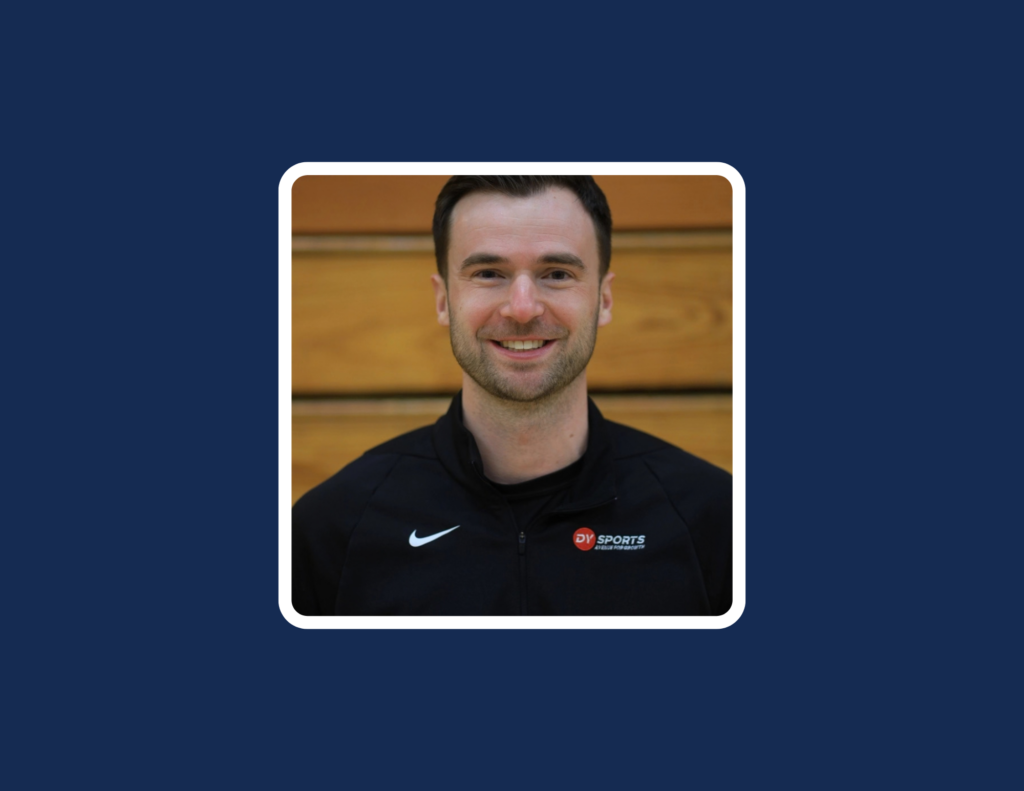
John Verduin is the Founder of DYSports, starting the business in 2018 while he was earning his MBA at Seattle University. DYSports specializes in hosting basketball tournaments designed for boys’ and girls’ youth teams in grades 3 – 11 who are developing their skills. DYSports events are ideal for teams looking to compete against opponents of similar talent, providing an environment where growth and improvement are prioritized. John grew up in Seatlle where he played multiple sports, including football and basketball at Ballard High School. He later continued his basketball journey at Willamette University in Oregon. Through his experiences, both as a player and coach, John recognized the need for more competitive levels for youth athletes to develop their skills. His mission is to create environments where kids can compete, improve, and foster a passion for the game.
On this episode Mike and John discuss how he built youth basketball tournaments around developing teams that are often overlooked by elite-focused events. John shares how the idea grew from his own experiences as a coach and from seeing the impact of repeated blowouts on players, parents, and coaches. John discusses how DY Sports works to create more competitive matchups, including its team-screening process and use of AI as the company scales. He also explains why the organization limits tournaments to three games and how facility relationships, local demand, and market fit shape expansion. Throughout the conversation, John offers a broader perspective on youth sports and the importance of creating opportunities for kids to compete, develop, and stay in the game.
Follow us on Twitter and Instagram @hoopheadspod for the latest updates on episodes, guests, and events from the Hoop Heads Pod.
Make sure you’re subscribed to the Hoop Heads Pod on iTunes or wherever you get your podcasts and while you’re there please leave us a 5 star rating and review. Your ratings help your friends and coaching colleagues find the show. If you really love what you’re hearing recommend the Hoop Heads Pod to someone and get them to join you as a part of Hoop Heads Nation.
You’ll want to take a few notes as you listen to this episode with John Verduin, Founder of DYSports.
What We Discuss with John Verduin
10 Key Takeaways for Basketball Coaches
- Prioritize competitive games over prestige.
DYSports focuses on the broad middle and lower levels of youth basketball rather than chasing only elite teams. Coaches can apply that by seeking competition where players have a genuine chance to execute, adjust, and grow, not just tournaments with the biggest name.
- Treat blowouts as a learning and experience problem.
John explains how lopsided games affect kids, parents, and coaches, not just the scoreboard. When a mismatch happens, look for what can still be taught, but also consider whether the team is regularly being placed in competition that is too far above or below its level.
- Match players and teams thoughtfully.
DYSports’ approach is to place teams where they fit instead of relying on labels such as “gold,” “silver,” and “bronze.” Coaches can use the same principle when forming practice groups or entering events: assess actual ability and readiness, then adjust as players develop.
- Build trust through dependable basics.
Strong operations mean showing up staffed, keeping gyms clean, starting on time, and treating people well. Coaches can create a better team environment through the same habits: clear communication, prepared practices, reliable routines, and respect for facilities.
- Use frustration as a clue to what needs improvement.
John’s idea grew from seeing how repeated blowouts felt for kids, parents, and coaches. Coaches can pay attention to recurring pain points, confusing roles, unproductive practices, or mismatched competition and use them to identify changes that could improve the experience.
- Keep evaluating as the team grows or changes.
Matching teams became harder as DYSports grew from 15 to 190 teams, and that feedback from coaches prompted better screening. A coaching takeaway: reassess your assumptions when the roster, competition, or results change, and use feedback to refine decisions.
- Adapt communication to the audience.
John describes how different markets responded to different outreach channels, rather than one method working everywhere. Coaches can take a similar approach with players and families: learn whether they need a quick message, a conversation, or a consistent written update and communicate accordingly.
- Check fit before committing to a competition.
John recounts that Las Vegas was not a good fit for DYSports because its model was built around travel teams, while theirs relied on local demand and repeat participation. Coaches should assess whether an event suits their team’s goals, travel capacity, and level before signing up.
- Don’t assume more games always means more development.
John advocates for three-game weekends and explains that an extra game every weekend can add up in wear and tear, particularly for young athletes. Coaches can weigh game volume against recovery, practice quality, and the players’ long-term enjoyment of basketball.
- Make development and the player experience part of the plan.
Across the episode, the central idea is that youth basketball should offer meaningful competition, not merely more events or higher-status labels. Coaches can make that concrete by setting goals beyond wins, such as better decision-making, stronger fundamentals, and players wanting to keep coming back.
Like this show? Please leave us a review here — even one sentence helps! Consider including your Twitter handle so we can thank you personally!
Your first impression is everything when applying for a new coaching job. A professional coaching portfolio is the tool that highlights your coaching achievements and philosophies and, most of all, helps separate you and your abilities from the other applicants.
The key to landing a new coaching job is to demonstrate to the hiring committee your attention to detail, level of preparedness, and your professionalism. Not only does a coaching portfolio allow you to exhibit these qualities, it also allows you to present your personal philosophies on coaching, leadership, and program development in an organized manner.
The Coaching Portfolio Guide is an instructional, membership-based website that helps you develop a personalized portfolio. Each section of the portfolio guide provides detailed instructions on how to organize your portfolio in a professional manner. The guide also provides sample documents for each section of your portfolio that you can copy, modify, and add to your personal portfolio.
Aiming to go D3? The D3 Recruiting Playbook gives you a clear, step-by-step roadmap to the recruiting process – what coaches value, key milestones from early high school through application season, and how to build a target list of schools that fit your needs.
We’ll demystify researching D3 programs and how to stand out without chasing every camp or showcase.
The modules cover things like writing emails to coaches, building an effective highlight tape, using social media well, planning ID camps and visits, and navigating application strategy.
You’ll get templates, checklists, and an outreach plan to communicate confidently, learn how to compare financial packages, and avoid common missteps. By the end, you’ll have a prioritized school list and a decision framework you can use to land your best-fit opportunity.

Give With Hoops is a groundbreaking initiative that fuses basketball analytics with modern sponsorship. Built for teams who see data as opportunity, from AAU programs to college powerhouses.
By tying on-court performance directly to community and sponsor engagement, Give With Hoops help programs raise more while deepening support from those who believe in the game.
Traditional fundraising disconnects donors from the action. Sell candy bars, wash cars, beg for donations, it’s exhausting and ineffective. Players perform better when their stats matter beyond the scoreboard. That’s why Give With Hoops was created.
Give With Hoops connects game performance to community support. Every basket, rebound, and assist becomes a chance to raise funds. Transparent, exciting, and proven to raise 3x more than traditional methods.
THANKS, JOHN VERDUIN
If you enjoyed this episode with John Verduin let him know by clicking on the link below and thanking him via Twitter.
Click here to thank John Verduin via Twitter
Click here to let Mike & Jason know about your number one takeaway from this episode!
And if you want us to answer your questions on one of our upcoming weekly NBA episodes, drop us a line at [email protected].
TRANSCRIPT FOR JOHN VERDUIN – FOUNDER OF DYSPORTS – EPISODE 1306
[00:00:00] Narrator: The Hoop Heads Podcast is brought to you by Head Start Basketball.
Mike (00:01.367)
Hello and welcome to the Hoop Heads Podcast. It’s Mike Klinzing here tonight without my co-host Jason Sunkle, but I am pleased to welcome in John Verduin, the founder of DY Sports. John, welcome to the Hoop Heads Pod.
John Verduin (00:15.128)
Thanks, Mike. It’s pleasure to be here.
Mike (00:18.731)
I’m excited to have you on, looking forward to diving into what you’ve been able to build with DY Sports, which is something that is, I think, pretty unique around the country. And we’ll dive into why that is as we get further into the conversation. But I want to start with your athletic background, going back to when you were a kid. Tell me a little bit about how you fell in love with sports, what made it so special for you.
John Verduin (00:44.748)
Yeah, I I was kind of born with a basketball in my hand. My my mom was all American at Seattle U. she’s got her jersey retired, up next to Elgin Baylor in the gym. so basketball was was a given. but I grew up playing soccer, baseball, and then seventh grade I was able to get into football. but I played all sports growing up.
by the time I got to high school was when I started to pick the ones that I was better at and it led to football and basketball. and then played all four years at Ballard High School. And then after Ballard High School I went to Willamette and played basketball there for a couple of years.
Mike (01:35.787)
Was Kip Ion your coach? All right. So Kip’s been out of coach. I didn’t realize that. Didn’t realize that connection. All right. So I got to ask you, what was it like playing for Kip? Because I’m going to have to talk to him now.
John Verduin (01:37.548)
Yes he was.
Mm-hmm.
John Verduin (01:47.936)
All right. No, I love Kip. He he he gave me a chance. I was hurt for two years. so playing football got pretty beat up in high school. I went to college, wore the pads for a week, and was never able never put them back on. so it took two years to get healthy. It was a back injury and I remember calling them up headed into junior year.
just to make sure he he still remembered me because I hadn’t been around for a while. it’s just like I’m ready to go. and so I I he put me on there at at the D three level, some of the schools got a J V team. So I played we play a lot of community colleges and I mean when you go from being the starter in high school and playing really well at basketball and then sitting on the couch for two years, it was pretty hard to play
on the JV team at a university. but by senior year I worked my way up and was able to start about half the games. So no, I Kip is a a good friend. I really respect him and he gave me the opportunity to go play at that college level. and I s I still see him every once in a while. I was actually texting with him last week.
Mike (03:16.599)
How did you work your way back from those injuries? What were you doing to just get yourself back in shape, to be able to work on your game, trying to come back from that? Cause again, as you said, that’s not easy to be out for that length of time and then be able to come back and especially to get yourself back on the floor to the point where you’re able to be in the starting lineup. So what were you doing both from a just physical recovery standpoint, but also just working on your game?
John Verduin (03:42.403)
Yeah, you know it’s funny, when I went started looking at schools, people would say, Go to the school that it’s not all about one thing or sports, like y you could just enjoy going to school there. And I looked at only basketball. and then when you get there or playing sports, and then when you get there and you lose your your identity, that’s basically that was my identity playing basketball or playing sports.
So it made it really hard. Freshman year was really tough. I I was able though to find a trainer off campus that I started to work with work out with. And it wasn’t really just one thing. There was multiple trying to a ton of different things and working with this trainer though, he was able to get me moving again.
So it took a year just kind of figure out what was wrong. It wasn’t like just a pinpoint and injury, but after kind of figuring that out, then I was able to start training and whatnot, and and then it was just getting back in shape. and it you know it’s amazing how quickly you lose things, like the ability to run and catch a pass at the same time. Like those are things that like the hand eye coordination you really we you really had to work on.
I found a trainer out there as well. Her name was Ashley Corral in Vancouver and she she kicked my butt, but we she she showed me moves on the the floor that I wish I knew in high school. so with all that combined, I I learned a lot from it. like I’d say a lot of the stuff, the things I’ve learned
from that experience is what’s helped me build my business today because it was not an easy path. and so yeah it it was not fun, but I I did learn a lot and I am proud that I was able to get to the point where I was I was starting again.
Mike (05:57.973)
What was the career that you were thinking about when you were in school? Did you have in mind that you wanted to get into coaching? Did you have in mind that you wanted to start a business? Did you have in mind that you wanted to be in basketball and sports? Just what was your mindset academically and sort of thinking about what your career potentially might be when you were done with school?
John Verduin (06:20.21)
Yeah I I really didn’t think that far. I just I I was in school, I wanted to play sport. I I did know though, growing up in a family where my grandfather owned two pharmacies. my uncle owned his own construction company. My dad was owner of his firm that he would been with for as long as I remember when I was a little kid.
So that like doing my own thing was always I think an aspiration for me, but I I wouldn’t say I was sitting in my college dorm room thinking about what I wanted to do later on. and then about a sports opportunity came about, and that’s where I started to pursue it. But yeah, if you asked me sophomore year what I wanted to do.
I had no idea.
Mike (07:21.831)
So you were a completely normal kid is what you’re telling me.
John Verduin (07:24.815)
yeah. And and I wasn’t I I was unable to even make something up. I I I don’t know.
Mike (07:32.678)
Yeah.
I just retired last October and when people ask me, I’m like, I still don’t know really what I want to do. So and I already was retired from one career. So it’s I can completely relate. When I went to school, I had no idea what I wanted to do. And ended up majoring in business because seemed like it had the widest array of directions that I could go. And then of course when I graduated, both my parents, my dad had been a professor at Cleveland State, my mom taught elementary school. And so I graduated.
John Verduin (07:42.622)
Yeah.
Mike (08:04.582)
and was out looking for jobs and had an interview with Nestle, the big food company. And they said, we’ll hire you. And this was like maybe in I don’t know, May or June. And they’re like, we want you to start on July 1st. And I remember I came home from the interview after they told me they wanted to hire me. And I talked to my dad. I’m like, they want me to put on a suit and go to work in July. I’m like, I’ve never seen anybody work in July.
in my entire life. And so that was my s signal that hey, maybe that wasn’t the direction that I should go. And then I went back to school to get a t get a teaching degree and and start coaching. So yeah, I I’m right there with you in that I had no idea what I wanted to do. And it’s interesting how our career paths kind of just find their way, right? We eventually find our way to the things that we really love. So talk a little bit about after graduation.
What’s the next step for you? How how do you go about planning the next stage of life?
John Verduin (09:06.764)
Yeah, so I was able to get into an MBA program at Seattle U while I was there. That that moved me back home being from Seattle. I was there I did the girls practice squad. so I was still able to kind of be part of a team. and then I was coaching my high school assistant coach, started his own program,
is it and he needed a coach so I was like sure make some money on the side and so that’s where I started coaching a team and let’s say they might have been a level above the bad news bears and it was fun but we weren’t in a level that we we were never in the right room court and so I kind of took the idea
at school with one of the classes, like whoa, what if I what if I did this? What if we hosted a tournament for the lower level teams? and that’s what led to BY sports. but yeah that it was it was all within about a year since graduating at Willamette.
Mike (10:30.614)
So let me ask you this, because to me, this is probably at least initially my thought in terms of the most interesting part of this story is how do you go from that idea and that experience of, hey, I’m coaching this team, and we never get on the right court or in the right gym or in the right tournament. It always feels like we’re just not able to compete. And yet when you look
at the basketball landscape joint right everybody is selling elite supreme whatever name you want to put onto it right that’s what everybody’s trying to sell right because in theory that’s what attracts customers
John Verduin (11:17.944)
Mm-hmm.
Mike (11:18.046)
No kid wants to sign up for, hey, come play for the mediocre stars, right? Everybody wants to play for the elite stars. They don’t want to play for that other team. And yet we know that there are kids at all levels of the spectrum that like and enjoy the game. So I I see where the idea came from. And then
As you started to kind of formulate this idea of, hey, maybe there’s a way that we can take and give teams that are like the one that I was coaching some opportunity, what were some of the initial challenges or obstacles that you ran into that you had to overcome thinking back to that time?
John Verduin (12:01.142)
Yeah, so fortunately, starting in the city I grew up in, I I had a few connections. And so I started calling some people. I’m like, hey, this is an idea. What do you think of it? And I think I called like four people. and then I or I called three and they were both like, I don’t think that’s going to work. And then I’d set I my high school
My AAU coach, Michael Johnson, he played at Ballard and then he played at at UW as well. I met with him and he had his little daughter with him at the time. I drive by this Starbucks every once in a while. and I was telling him about this idea, and he was pretty intrigued. And then we got to the end, and he goes, So when are you going to start? And that’s all I needed to hear. and so I
I mean, that was probably like September of 2018, and I didn’t host the first tournament until March of 2019. So there was a lot of reaching out, marketing. but there everything you said before this is true, but there are a lot of groups out there that shit just it’s not fun to coach.
and get killed. It’s not fun to deal with parents after your team gets killed. and there are there are a handful of groups out there that just all they care about is development or all they care about is being the op sh the quote unquote second option for the team that the player that doesn’t make the elite team in the neighborhood. And so I sent out an an email blast and I got a phone call from a a coach.
Who is still a great customer of ours. I didn’t even have a sales pitch. Like he responded so fast to the email. I I didn’t know what to even say. but our first tournament we had like 12 teams. the refs fell through the night before. so I had friends, I had my mom out there refing. I had I and I met some new refs through it.
John Verduin (14:27.816)
And the first few events were s were small, but I was able to utilize my connections. and I and from coaching, I saw the pain points. I saw the look on the kids’ faces when they couldn’t get across half-court. I saw the look on the parents’ faces when one, their child is getting beat down on, and two, they’re paying a lot of money for their child to get beat down on. And then I saw
they they knew I couldn’t do it. I was just the coach that showed up to coach the team. I wasn’t the one getting paid or I wasn’t the one taking checks or this or that. So I I saw the pain point to program directors. Like, okay, group has ten teams. They’re not all ten elite. Like program has thirty teams. Not all thirty teams are elite. Like and you got if you want
If you want to have some peace of mind while you’re running a big program, if you can find a place to put your bottom third teams and they can compete, I’m not saying win, just compete. The parents are happy, the kids are happy, the kids get better, and the coaches can coach. as when I was coaching, I’ll never forget, we got done with our last practice for our first game, and the director of the pro the co director, one of them.
up to and goes got a zone offense and I look at him and I go we can’t pass dribble or shoot what are you talking about a zone offense and and they were fifth graders at the time and we sh lo and behold we show up to our first league game and we get one three one zoned and just annihilated. so at our events we I I started in f enforced man to man fifth grade and below because you shouldn’t be learning an offense in
Fourth grade. You should be learning the basic skills to just play. so when COVID hit, it wiped it out, but COVID was kind of a blessing in disguise for our business because I was still working on the side. I was I was wearing a suit. I was going into the warehouse, working for a supply chain company and
John Verduin (16:52.056)
I was able though to just pick it up and go. As soon as I I was in Washington, so they had some of the hardest restrictions on on COVID stuff, but as soon as they gave the green light, it was up and go. and so from there, I mean parents were just kicking kids out the door. Go play, go play. so that’s how we got things going and I mean there were a lot of
speed bumps along the way to get to that point. But I just kinda I d I had a feeling that there was there was something there because no one else was was doing it.
Mike (17:32.872)
It definitely is unique. And I can honestly say that I have in all my vast experience with basketball at all levels, I I’ve never really seen or heard of someone directly appealing to those teams at the lower parts of the youth basketball spectrum. But yet I can completely resonate with
what you’re talking about, both your experience as a coach, both parents’ experience when their team is losing, a kid’s experience when the other team that’s bigger, faster, stronger than you is pressing and you can’t even inbound the ball, let alone try to get a shot off. I think everybody probably at some point has been there. I know I’ve been there as a coach with all three of my kids where
John Verduin (18:21.9)
Mm-hmm.
Mike (18:31.209)
My teams were pretty good and yet we’ve run into teams that we had no business being on the court with and that’s no fun. And we’ve all been to multiple AAU tournaments where you show up and maybe your team is a really, really good team, and then you’re playing a team that’s not very good. That game’s not fun. It’s not fun for either team. It’s not fun for the really good team and it doesn’t help them in any way. And it’s obviously not fun for the team
John Verduin (18:56.024)
No.
Mike (18:59.933)
On the other end of it. So to be able to find a tournament where I can be matched up with a team that is at a similar level to me, I would see as being really appealing. And so let me get to that part of it and maybe you can speak to how that has evolved over time. But thinking back to when you first started.
How did you try to match those teams up? Because if you only have twelve team teams, you only have 14 teams or 16 teams, obviously you don’t have a huge range of teams that you can pick and match up. And obviously now as you’re running bigger events, it’s probably I don’t want to say easier, but there’s more teams to choose from to be able to find those matchups. But just talk about how you try to match teams up and what your in-to-take process looks like for a tournament.
So that you can make sure that what you’re selling is what a team that signs up for your one o one of your tournaments is actually going to get, which is hopefully a competitive game.
John Verduin (20:01.516)
Yeah, no, it’s it’s funny, people find out we host tournaments with like as many as a hundred and ninety teams and they’re like, man, that’s crazy. I go, you know what’s c harder to do? It’s a fifteen team tournament. and in one it’s pulling teeth to get teams to to join, but another you hit you nailed it on you’re trying to match games up. and so when I when I first started, I mean I was hands on with everything. So
I and it was every message was developing teams. and you don’t it it’s not always perfect, we’ll put it that way. You get I mean, from you if it’s a brand new team or a team you’re not familiar with, you have to go off of the coaches of description. Sometimes they aren’t aware, other times they were and they might have not told us correctly.
But you get the lay of the land. Like it takes, like every time we go to a new market, it’s similar to how I started. You get 12 to 15 teams, and that’s a win. But now you want to start getting it with the right programs. so what I used to do, or when you register at our events, we ask you to describe your team. So we use that information. We also don’t have a gold, silver, bronze.
We have all the teams just register in the division and then we break it up how we see fit. and the main reason I didn’t do that is because if you’re doing if you’re putting gold on there, it’s either going to scare the developing teams away, or it’s going to be the elite the the higher level teams are like, I can jump in now. Because we a lot of times we end up with we have a scenario where a team’s not are not a good fit.
Well, we run such organized events. They keep trying to get in and we’re like, well, we’ll play you up a grade. but they don’t want to go to the other ones because they don’t they’re not getting what they’re paying for. and that’s even like just starting on time. So we if we have a team that’s pretty comp turns out to be the little bit is above the level that we are, we follow up with them and we’ll either
John Verduin (22:28.974)
Tell them to play up a grade or be like, hey, you’re ready for the next level. And it’s a lot easier to tell a team you’re too good than it is to tell a team you’re not good enough. this past season, I mean, my our operations were built off of when I was hosting like 500 teams a year. Now we’re at 5,000. and I I sat in the offseason, I like to sit down with as many.
Mike (22:37.598)
Yeah, for sure.
John Verduin (22:57.486)
Teams and program directors just to get their feedback. and one thing I was hearing is that we’re not we weren’t vetting as well. And so then I’m like, all right, we have to figure something out. So now we what would take like 20, 30 hours of work, we’ve been able to implement AI in the background and it’s just screening teams, screening scores. We can put it in a spreadsheet, and then we’re able to
if this team comes in in Chicago and just is too good, we put on a spreadsheet and we can we can keep an eye if they come back and if they’re not playing up. Or if it’s a Phoenix or this or that. So it was good it’s never fun to hear that you’re not achieving what is expected of you. But it’s good to hear that feedback ’cause it really put my team to work ’cause
I even had a coach, he’s like, that was that was the coolest thing when you reached out and told me my eighth grade girls were were ready for the next level. Like and so that I hearing that and then hearing some of the feedback from other coaches, we were like, This is really what we’re going to dive into this off season and there’s there’s a way for AI to get into youth sports now.
Mike (24:17.587)
Yeah, that’s one of those things again that like thinking back and I think anybody who runs a business and starts it themselves, you look back at the way that you did things at the beginning and how you went about it and what your process looked like, and then you think about how it’s evolved over time and obviously the technology and the tools that you have available get so much better and the things that you used to do by hand that now you can just hand over and
and go through and and put a process in place so that you can then in your case vet the teams. I can speak to that, John, with the podcast. I think about where I am now in twenty twenty six.
and the tools that I have available compared to the tools I had available when I started in twenty eighteen and the things that now AI does to save me on editing the audio, to save me on coming up with show notes, to save me on writing a summary of the episode. There’s so many things that I used to do by hand.
go through I honestly up until about maybe a year and a half ago, I would go through a transcript of every episode and try to pull out quotes and highlights and different things. And I was going through that literally just printing out the the whole transcript and then going through it line by line and trying to pull stuff out. And now I can do that in twenty seconds and then just kinda go through and make sure it
aligns with the things that I think are important and edit it, boom, it’s done. And so to your point, to be able to have all that available to just be able to vet your teams and and I’m sure that it does it very, very well. And obviously you have the oversight to make sure that it’s doing what it’s supposed to. But yeah, the tools are just amazing what what we can do compared to compared to what we did when we when we started. It’s it’s crazy.
John Verduin (25:53.486)
Yeah.
John Verduin (26:14.296)
Mm-hmm.
Yeah, not only is it faster, it’s actually a little more accurate than me. We in in the end of last this past season, our season ended August 31st, and the new one starts September 1st. And the last few events that we had, I was letting AI just match up games. And I was sitting there and it was like cool to see it’s improved, but it was kind of a bummer to be like, wow, it was beating me.
Mike (26:21.191)
Yeah, yeah.
Mike (26:43.731)
That’s what
John Verduin (26:45.688)
But it it just takes all the data we can provide it and it’s and it’s good to put good matchups together.
Mike (26:52.999)
Yeah, absolutely. All right, let’s go back to the beginning. How long was it after you started that you knew you had a viable business? Obviously, you have the idea, you get a few teams in the door, you run an event or two. How long into this process was one of like, yeah, I I think this thing can be an actual business. I think this could be my job, my career, my my business.
John Verduin (27:18.784)
Yeah, so it would before COVID I mean you’re I was counting pennies after each event. but I was I I had that that itch. I’m like I want to I want to keep pushing this thing and so COVID wiped it out. but post COVID it started selling out and when when you’re hosting events and the demand, I mean you you’re selling out I mean we sold out
almost every event for a year and a half straight. and y the more it grew in the air in Seattle, that was where we were only hosting. the more I realized like this this is something. and I I think it was right before the Super Bowl I had an event that I
in twenty twenty two or something and just got done putting all the numbers together and whatnot. And I’m like, I think this could be this could be something. I remember telling my dad. And so after that, most of my hires were referees. and after a while I figured out why they were is because I have to watch them work. and it’s like they’re these there there’s certain ones that were sticking out and I’d be like, hey you would you want to do more?
And that went from running one facility to running two facilities in a weekend. And then I met a guy that lived up north of me and Josh, and he he brought an idea for an event up there. I’m like, well, how about we do that event, but then we’ll start running DY Sports events up there? Because we were getting all the teams coming up near the Canadian border. They’re driving down. and then we went south to Tacoma, so south of the airport for Seattle.
And at that point, I mean when you’re hosting, we were just getting close in Seattle, probably like 90 team tournaments. there were when you start out a business, you might not have everything in order. And there was a few things I’m like, I have to get these in order. And once I do, I’m going to go for it. And I I would never forget, I I
John Verduin (29:37.815)
I’m thankful for the job that I had while I was running the business, but it didn’t give me a whole lot of purpose. Let’s just put it that way. And I went over to my parents’ house one day and I was like, man, I just I I’m depressed at work. I just it’s not it. And my dad goes, Well, you could quit. The next day I went in and put my two week notice. And that’s right after that, we went to Spokane, where Gonzaga is, and Portland.
So I I chose Portland as the first big location outside of Seattle because I grew up going to Portland. President’s Day tournament, and a couple others as well. But like my team, we’d always go down, stay at the hotels, and playing at Willamette, I knew a couple people in the area. so I would drive down there and it was it got to be a lot, but
I saw growth and potential there. So I’m working full time. And then I hired Maddie who to our team full-time and she was an official as well. and then that’s when we started Phoenix. That was our first like get on a plane and go. I chose Phoenix because I wanted some sun. there was no other reason to it. I it was a big population and I wanted some sun.
and then after that we we just started picking other markets that we that we know somebody in so we can train them up and then we don’t have to travel. but one thing we noticed is every market we go to is like you’re saying, it’s a bloodbath for the top. Everybody wants the elite and we were and every city’s got teams that lose every game. So that’s when I I went. It’s kinda how we’re
were able to get into a market. Some have been hard, but we got there. Others just didn’t work out. Like Vegas was not it. it’s just not a market for what we’re doing. We gave it a try. We learned a lot of lessons and we’re we’re moving on. but yeah that’s that was kind of how we we got moving to new locations.
Mike (32:01.714)
How easy or hard was it for you to hire somebody and put this thing that you had created in someone else’s hands? I think that’s always I think about myself, like my basketball campaign business that I had for and continue to have for a long time. There’s been moments where I’ve thought maybe I should grow this and obviously I was like you, I had a full time job teaching and so
It was one of those things that I often thought about, never really did. Occasionally I tried it. I’d give somebody a camp and I thought I had them all trained and then it would end up not going the way that I maybe had anticipated. So what was that experience like for you taking this thing that you had created that you thought was capable of becoming something bigger and handing it to someone else? What did that feel like? How easy or hard was it for you?
John Verduin (32:59.018)
Yeah I I did a pretty I guess if I pat myself on the back, I would say I’ve done a pretty good job on the people that I’ve I’ve brought in. the thing about running basketball tournaments is and you hire someone and you give them whether it’s a part-time weekend job or or f the people I’ve hired full-time, they love it. Like it’s
I I’m not putting them in a cubicle. I mean they’re we’re we’re we’re s and it’s not like the business is in every state like corporate world, like we’re w everybody’s wearing multiple hats. so everyone that I brought in a f full time I I’d seen them in action before. and I think some of s a lot of them shared the
the drive and the love for DY Sports just as much as I do. that being said, I go I I hear what you’re saying though, like going to a new market and so I will send out people that that I know know our way and like how we function to go and kind of set the tone
of how our events are going to run. and it’s not as much it’s not a franchise, but y y with regional managers that are running the events, they it’s kind of their thing as well. So they take pride in it. and and I think it really all comes back like we just got done with a retreat. I brought all my managers out here to Seattle and I mean it was a fun weekend. It was a fun group of people.
some of them have never met each other before, but I mean they’re all all there because they love basketball. they and they love the kids. And I I it is fun. Like, don’t get me wrong, I’ve gone to the elite tournaments and it’s fun to watch high-level basketball, but there’s nothing that beats a kid making his first layup or the the cheers of
John Verduin (35:21.568)
team I’ve had a dad rip a score sheet out of my hand after a game and I was like whoa whoa and he’s like I need this we haven’t won this is our first win of the season I need a photo so you see a lot of that stuff and I think it’s a fun community like when when we finally get our feet under us in the area. so yeah that I think all those play a factor in but you still have to hire the right person.
Mike (35:27.708)
Ha ha ha.
Ha ha ha.
John Verduin (35:50.665)
And we d we’ve done pretty good with that. But I I think I think that the level in the community kind of attracts that as well.
Mike (36:01.827)
What’s the key to moving into a new location? Is it making connections with club directors? Is that the most important thing? Is finding facilities? what’s the key to moving into a new market besides the person that you’re sending there to kind of get those things going? What what’s the key thing that that person has to accomplish?
John Verduin (36:22.242)
Yeah, I think I mean this probably accounts for almost any business, but demand solves about ninety percent of your problems. so it is making the connections, it’s marketing correctly. it’s funny, you go to one market and emails get people’s attentions. You go to another market, emails don’t, but phone calls do. And I’ve even been to a market where it was only Instagram messages.
they they got coaches attention. So we every market’s different. I do have to say the bigger population, the better chance you have. but it’s like I I got we got fortunate on a lot of locations that we picked, worked out. But like when we what we learned from Vegas is
And we should probably put a little bit more analytical research into where we go versus just throwing a dart at a map. but yeah it it to me you always have to figure out how to get your message across the right way in those markets.
Mike (37:45.189)
What did Vegas look like that made it not work in your mind? What was it about the Vegas market that made it so challenging?
John Verduin (37:55.797)
At the very core, our events are for local teams, which I love because travel is an absurd amount of money for parents and teams today. So we’re we’re we’re we attract the local teams, but in Vegas, Vegas is built off of travel teams and the local teams help. So we might in most of our locations, we might get
Like in Seattle, we go two times a year we get Alaska teams to come down. Or we’ll get a Spokane team to come to S Seattle, or Seattle will go to Spokane. But it’s it’s never more than ten percent of the teams. So when you’re in a market like Vegas where everyone comes to town, it makes it it’s a very uphill battle, let’s put it that way. So
There were our best event in Vegas had f five states playing it. But we only did it one time. And after a while it’s you see the writing on the wall and you’re just like, we’re going to we’re going to put our time and energy into either the current markets or or newer ones.
Mike (39:17.113)
I’m assuming that when you get into a market that initially there’s a lot of marketing that you have to do to get your name out, to get people to understand what it is that you’re doing, whether that’s through whatever method you might be talking about, whether it’s through Instagram, whether it’s through email, whether it’s through phone calls, but just getting people educated on what it is that you guys do. And then then over time I’m guessing that
once people know what you’re all about, that then if I’m a club director, I know if I have these teams that year after year, I know what I’m getting when I send them to a DY sports event. And it sounds like maybe in Vegas there wasn’t that collection of local teams that like you could just count on repeat business over and over again because it was always teams traveling, I’m guessing it was more difficult to market. Does that make sense what I’m saying there?
John Verduin (40:11.884)
Yeah, no, you let’s put it this way. After about four events, either myself or my staff that goes out there and the staff that we hire is going to see a future or not. And in Vegas, it was very bleak. In these other markets, like we just stepped into the Bay and we just stepped into Chicago. those are big cities. There lots of kids running around.
They both got their their roadblocks that we as a business have to figure out to get around. But you see a you see a future. and so yeah, the marketing, I I didn’t we we just got into kind of social media ads and whatnot. You get to a certain size and you’re like marketing while you sleep is beneficial versus just the outreach and whatnot. so very excited.
So see what that does. and and the other thing too is like our our level is developing, but these developing teams they still want to get an interview. They still want to be seen on Instagram. They still want to win the prize. Like there’s that’s half of what we’re able to provide is like
Where they go play in a competitive tournament, they’re thrown in the back gym, and they might be the only chance they get a videographer is if he was told to go to the wrong court. So it’s like they get they get everything at our event that they would get at another while having the opportunity to play a competitive game. so yeah, it’s lots of different strategies in each market you go to. and some
take off and others is is a battle, but if as long as you see li light at the end of the tunnel, it’s worth continuing to to make to to build the connections, to find new gyms, all that.
Mike (42:20.453)
How far along in the social media journey are you in terms of feeling like you have a pretty good grip on what works in certain markets, what doesn’t, which channels, which forms of social media should you be using? Should you be on Facebook? Should you be on Instagram? Should you be on X? W how far along in terms of understanding that are you, do you think?
John Verduin (42:43.426)
I’m not at the beginning, but I’m not at the end. It’s I we have a we have a media team or I hire a third party media team, Momentum Media. we’ve been working together a long time and I’m familiar with Instagram. and like growing up with Facebook, but they run the YouTube and the TikTok and whatnot. I I don’t have
I don’t use those much. I think all of them play a factor. I think investing in it will make a difference. but I we also hired another group to help with our ads because we did try it in the past and you almost just felt like you were giving your money to Meta. and so
You I mean there’s with AI today there’s there’s so many things you could work at to figure it out on your own. But sometimes it’s nice to just work with prof a professional. and so we’re only like three months in and a month and a half of the social media ads were like the dead period. but I I do believe it’s really putting I mean we’re getting clicks. People are looking
And that’s all it takes is like if we get every thousand clicks, you get two potential customers. That over time that stuff adds up. So we’re we’re excited about that. we’ve found that’s the other thing too, is like our s our events there’s I we’ve probably I could probably in the eight years we’ve been doing this, there’s probably been seven dunks.
So it’s like you look at a lot of the other elite tournaments, like the main hoops or this or that. It’s like kids literally jumping over another kid and dunking. Well those are what go viral. So we we found other ways to like I mean like the post the championship posts, those help. a lot of people get excited there. And then some of our best stuff has just been like an interview. Look, asking a kid some question that gets them all riled up. So what’s your favorite
John Verduin (45:04.078)
pre game song or this or that as has definitely helped. But yeah, there’s a lot of different you’re always learning.
Mike (45:17.659)
That is true. I think that’s the number one thing. I think the very first part of your answer was spot on that you’re not at the beginning, you’re not at the end, and I don’t think you’ll ever be at the end because when you get to the end, then something changes and you have to adapt and adjust. And I I I found that same thing with what I’m doing. I actually experimented with Facebook ads a little bit with camp last summer and I started to try to expand to a couple of new areas and you’re
John Verduin (45:31.661)
Yeah.
Mike (45:45.796)
statement thereof it felt like you were just handing meta your money. There was certainly a stretch where I felt like I’m spending how much every day and what am I getting back for that? I’m not sure what I’m getting. And eventually I looked at it as I was paying Meta to help me to learn what worked and what didn’t. It was kind of an expensive lesson but
John Verduin (46:09.281)
Yeah.
Mike (46:11.811)
I do feel like I came out on the other side knowing that, hey, next camp season, here’s some things that I would do differently. Here’s how I would set it up differently, here’s how I’d budget it differently, all those kinds of things that you don’t really know until you get into it. And then to take your point a step further, when you hire somebody or a company that knows what they’re doing in those areas, then you obviously take that off your own plate from a workload standpoint, but also
hopefully they’re up on the trends and know exactly what’s working in the moment and makes those ads that much more effective. So I think social media for whatever business you have, but certainly for any business in youth sports, it is a continuous work in process.
John Verduin (46:52.572)
yeah. No, I remember I I went to an event with one of my employees and the comp the marketing firm that we hired, he he was giving the speech and I got like two minutes in, I just put my pen down and I’m like, I’m not taking this is the guy I need to talk to. I’m not taking any more notes.
Mike (47:10.193)
Right. That’s a that’s a delegation right there. That’s a handoff. You take you take take take this take this and run. All right, let me ask you about facilities because I know that here in the Cleveland area, that is always a challenge. It’s a challenge from a couple of standpoints. One, there’s just so many tournament operators running so many events on a given weekend.
John Verduin (47:15.811)
Yeah. I’m like this g this this he’s got it. I’m in.
Mike (47:39.109)
There are obviously lots of schools that will rent you a gym, but there are lots of schools that will not rent you a gym. There are lots of places that may have four courts or six courts that are pretty good for hosting a tournament, versus you have to go to a gym that has one court here and one court across town and all those kinds of things. So talk to me a little bit about how you try to secure the locations, build relationships with the people who have.
Access to those facilities. What does that look like for you guys?
John Verduin (48:12.342)
Yeah, we spend about fifty percent of the time reaching out to teams and the other fifty percent is locking in facilities. it’s gold in new sports, in basketball. you you got you have to build those relationships. you we start in Seattle, we thought gym space was tough. We go to Port like way harder.
Though Portland was tough, we go to Phoenix, even harder. Go to Chicago, it’s like it’s so hard. It’s unbelievably hard. some markets are easier. The smaller ones, there’s but you you you’re you’re right, like some schools won’t rent. Some schools are so expensive it costs a team fee for a game.
Some schools you have to have five custodians and three security guards. And next thing half the stands is staff. it’s
Youth Sports is going up in costs a lot, and it’s pretty obvious. I think half of it a good amount is due to to greed, and we could spend a lot of time there. But another big aspect is the cost of rent. and it it is it it it takes up
a such a chunk of an event if the rents are astronomical. And so w we could spend less time finding gym space and just taking the first thing we find. But I my goal is is not to be the most expensive town. I I I mean I I understand it it’s everything costs a lot today. So
John Verduin (50:20.962)
Can we find ways to keep the lowest or lower and team fee? Can we find ways not to charge twenty-five dollars a day at the door that you’re seeing a lot? And so rent is huge, and it’s really building the relationships and in some and and w
We cater to developing teams and we go we the the whole customer facing side. But on the back end and operations, we take care of the facilities. Like every I want every facility that works with us to be like I want them back. and if I ever hear of anything that that doesn’t go that way, like we address it. Like we we take care of facilities because
Some markets we’re in, I’m not worried about the quote unquote competitor in the area. I’m worried about how they treat the venues because all it takes is one mess up and then you lose a whole school district. And because they they throw us in that category. and I I I’ve talked to some facility consultants that have helped build facilities all over the country and
And they that’s like the number one thing they tell these facilities, like, just cause it’s a shoe brand doesn’t mean you want to let them in because who knows what’s going to happen. and then there is the private side on facilities. I if they have to they have to cover
alone. They have to cover, they have to pay the bills and this and that. So some some markets that’s beneficial going that route. Other markets it’s not as much. Every schools and facilit and private gyms they have their pros and cons. we have found it best schools and being that if you could take
John Verduin (52:26.89)
a main gym and split it into two and run two games at one time. so for the size of a business we are, when sponsors or different groups have reached out to us, they found it kind of interesting, harder to work with us because we’re not all under one roof. We’re not at the 30 court facility. but our events average like 50 teams.
in each of our locations. We’re not like a one big event. so if we can find a a high school with three team three gyms that’s a reasonable rent that we don’t need it up our gate, we make that work. but no it’s facil I mean I’ve I have looked at some gym spaces and I’m like is this a a different currency? Like w what’s going on here?
But I always tell my staff you never know who walks in the door to a tournament of keys to a gym. So it’s you find what you can get and then we keep we keep working from there and yeah it’s I mean at the end of the day, like any any business, it’s all relationships. but yeah, no, it’s I I’m not surprised that you say rough where where you are because I keep thinking I’m going to land on a a s a a market that’s going to be good gym space.
But there’s just a shortage. Like at the end of the day, there’s just a shortage everywhere.
Mike (53:59.921)
There’s so many teams playing, right? There’s just so many teams that are playing now that there’s so many tournaments that are operating every weekend. It just makes it tough on the facility side. You mentioned something that caught my interest in terms of treating your facilities right and and handling your business as a tournament operator here.
What does that look like when you say that you’re treating your venues well? Just walk me through some of the things that you want to make sure that you do in a weekend tournament to make sure that that venue is happy that DY Sports was there running the tournament, not somebody else.
John Verduin (54:40.088)
I think the the easiest one is you staff it. And like as crazy as that sounds, there’s a lot of tournaments out there that that are completely understaffed. And like you have to you have to have a person there that can run the gym, and then you have someone there working the door. and so that that’s night and day difference. and then the work
I mean if there’s a janitor, you don’t have to sweep the courts and whatnot, but picking up trash, and you just keeping an eye like you got a bunch of kids running around and the the closed up bleachers, it’s like, no, we have to we have to get down. and then honestly it’s just be a nice person. Like I I I have friend or the people that work for DY Sports are are friendly and they’re happy to be there. And I
Don’t I from what I hear it’s not like that always elsewhere. so you I mean, you don’t want you don’t want a c coach that let you in the gym or the janitor that shows up to clean up and there’s trash everywhere and kids are running rampant and or you’re going over time or I the it’s just like I mean at the end of the day, leave it looking as good or better than
When you got it. and things I I mean, these places are built for foot traffic and stuff’s going to break, but it’s just like doing more than nothing to keep an eye on on everything.
Mike (56:29.079)
When you think about the environment that you’re creating and providing for the teams that come into your tournaments, I know one of the things that I read on your website talked about just that there are many tournaments where teams can play a multitude of games in a weekend. And
We know that over time, right, that that amount of stress on a developing body army isn’t always good. So tell me a little bit about your philosophy when it comes to the number of games and kind of how you organize your tournaments.
John Verduin (57:05.844)
Yeah, I I get this a lot. I I we do three game tournaments. one being that in some of our bigger markets, we get a wait list and it’s like if we did with the less with the scarcity of gym space, if we did four there’d be even a longer wait list. so that’s one aspect, the scheduling, getting the team getting more teams in. But
If a kid plays basketball, let’s just say every other weekend, and it’s from fifth grade to senior year, one extra game every weekend adds up. I don’t care how much they look like a piece of Laffy Taffy when they hit the ground in fifth grade and they just bounce back up, that it adds up over time. And and I mean you just see
These injuries all the time in high school. or when I first started DY Sports, I remember reading an article, Adam Silver saying the biggest threat to the MBA today is the specialization at a young age. And it’s the wear and tear on these kids when it when they’re in seventh grade and they can run and run and run. It’s like one less game.
every time they play is that w one more game they can play later on. and I even I mean I hear it a lot. Like we we’d love the fourth game and I’m like I hear ya and I get it so much where I said I was with my dad one day I’m like man you keep getting this he’s like you have to stick to your gut your beliefs and I’m like and that that helped because it’s like I truly believe kid doesn’t need to play
f fo four or five games in a weekend. And so if you offer a four-game guarantee, there’s a solid chance you get a fifth. If you have odd numbers. And the same go so if you get three, then there is a chance for a fourth. But it’s not always going to happen. And I just I firmly believe that over time one extra game every weekend just adds up. and and you won’t see it until it’s too late.
Mike (59:33.742)
Have you had people approach you about starting your own teams? Cause I know that most tournament operators in a lot of places start out with an AAU club, a travel team, and then it kind of morphs into, Hey, I’m running tournaments now. Whereas you’ve kind of started on the opposite end of running tournaments and you have a philosophy that obviously has resonated with a lot of people.
I’m assuming that at some point people have approached you and said, Hey, what about starting your own teams? Just curious what you’ve thought about the conversations that you’ve had around that, if you’ve had any at all.
John Verduin (01:00:15.03)
Yeah, it’s it’s definitely popped up a few times. I I coached high school JV at my high school for six years. And the year after COVID, I was just done. Like I was burnt out of coaching. So I had no interest. I loved I loved the business side and and the operation, but I also got to be around basketball. Like I love basketball. So I
I wasn’t too inclined into jumping into running teams. and then the other aspect is like yeah, I’ve seen a lot of what you’re you’re talking about, having their own teams. But if you start building teams and taking away from your customers, you might burn some bridges. so we really just focused on that. And I also learned
We tr we tried to run pickleball tournaments. and what I learned from that is you stay in your lane and like we’re really good at running basketball tournaments for developing teams. And so we’re going to we’re going to focus on that and we’re just going to grow. and down the road would it be beneficial to I mean, you see a lot of groups like maybe there’s a coach that’s got ten teams and he’s just burnt out and
It’s like, all right, we’ll either we could they could join our group or however all that might work. I’ve I’ve seen a lot of groups getting bought out here or there. But it would be beneficial to have a market, say, I don’t know, San Diego. You’re just down in San, we’re not there, but in the future, it’s like, all right, I have I’m running a tournament and they’re now I have 10 teams. It’s not, it’s like, you know how much easier it is to build.
run a tournament when you’ve already started with ten teams. So in the I mean I wouldn’t I’d never s never say it’s not an option. It’s just like I am r really dialed in my team of we’re running basketball tournaments and we’re going to we’re going to go grow our footprint to help youth youth basketball in these different markets. And I do have I’ve had some
John Verduin (01:02:38.05)
good conversations with with programs that that truly understand the development level. I I’ve heard a lot of BS and but then every once in a while you have some phone calls and you go meet the person it’s like they they get it. They they they truly understand like the the the importance of development and it if you we do it right then the they grow.
over time. but right now y not not something we do, but maybe later on if it worked out or if it it was felt right.
Mike (01:03:19.875)
I think the interesting thing about what you guys are doing and obviously I think staying in your lane is a really good thing in terms of you get really good at what it is that you do and you realize if you step outside of that you’re the things that you’ve learned and the things that you understand may no longer apply once you’re outside of your lane. But what I do love about what you’re saying is when you think about that development piece, right? That
There is often it’s thought of by parents, by youth coaches, by club directors, that there’s kind of only one pathway.
through basketball, right? I have to get on a great travel team or AAU team when I’m in third or fourth grade. And I’ve got to stay with that team and I have to try to progress and we have to try to play in as many elite tournaments as we can and we have to travel and we have to do all these things. And that’s a lot of what people see. It’s a lot of what people hear. If they’re on social media, they’re looking at that stuff all the time from players to teams and what everybody’s posting and this and that and the other thing. And
At least here in this area, there’s a lot of we’ve have to play that style of basketball, that style of basketball, or we have to play in like the city rec league, which might only be kids who have never played basketball or kids who are really young and
there’s not necessarily sort of a middle pathway, which is kind of what I feel like you guys are providing. And I think that there’s in every sport, right, this is one of the challenges that we face in youth sports when it comes to the idea of special specialization, which you talked about, right? That by the time I’m in third, fourth, fifth grade, people are already telling me adults are telling kids, you have to pick soccer or you have to pick basketball or you have to pick tennis or whatever it is that it i that you do.
Mike (01:05:21.561)
You have to specialize early. And the problem is that if you do that, and then you get to sixth, seventh, eighth grade, and either you burn out or you don’t love it enough to want to practice four days a week and drive an hour and a half to practice and play six games in a weekend. But maybe you still like to play, but maybe you just don’t like to play at that same level of intensity.
There’s nowhere for you to go. So you end up leaving the sport altogether, even though that might not really be what you want to do. Maybe you just want another path. And traditionally and right now, there isn’t a lot of other paths. And I think that what you guys are doing provides another path for kids to be able to enjoy the game of basketball. And let’s face it, John, one of the things that is the most frustrating, I think, for people who are involved with youth b youth basketball.
And really care about the sport is that we don’t really know what kids are going to be capable of until they get to puberty and we find out who’s going to be tall, who’s going to be strong, who’s going to be fast, who’s going to be this. And we don’t really know any of that when they’re eight or nine years old, and yet so often we put on this track that may not be right for every kid. And I love that you guys are providing this other developmental track that
doesn’t exist everywhere in the youth basketball space. And I just think again, having kids have alternate pathways to get into the game, but also to shift lanes as they’re going through the journey. To me, I think it’s super valuable. And I don’t know if you see it that way or not.
John Verduin (01:07:02.696)
yeah, I mean I grew up playing sports and the teams that were not good, some of them became good later on. But some of the kids that were really good when I was in fifth grade, they were unheard of by the time we got to just sophomore year of high school. some of the kids that wanted decided to only play basketball where their mom was five feet tall.
the so the the the the genetics wasn’t going to help. the and then I mean I I’m not a fan of having to schedule around a soccer game, my building schedules, but at the same time I love it because it means the kids are playing another sport. our level that we provide, we might have a kid on a team that is really good.
But he’s able to play or she’s able to play multiple sports in sixth grade because they don’t have to practice every day for basketball to go and compete in this elite tournament and travel the country. So you get kids running in from baseball i in the spring or they’re running out in their baseball outfit.
And in it like this weekend alone, I I got a schedule around like three girls soccer games. But they’re playing other sports and I mean I I loved my I played football and basketball in high school. I became I invested more time in football as a quarterback, but the more I played football, the more I loved basketball. Like
I was trying to explain this to someone really like you don’t you you you’re not going to be th thoroughly injured playing basketball. Football, I was out there and like I I’m making sure that I walk off this field. So when I got to go play the basketball season, it was just like, man, let we’re having fun. Like I I you put me out there against anybody, I was ready to go have fun. but I wouldn’t have had that same
John Verduin (01:09:23.348)
love for basketball if I hadn’t gone through what I did with football. And and I loved football. but it was just the the stress levels were a little different. And so yeah I I love that kids play multiple sports with with us. I another thing too, I love that there’s there’s rec center teams out there. There’s boys and girls club teams that clean house.
In their leagues, but they might be wearing wristbands to determine who they’re guarding, or they have crazy rules to keep the g games competitive. So going from that to an elite tournament, I played at the college level. My sister played at the college level. My sister’s first game after Boys and Girls Club, they turned a score clock off. Like, so even
Two people and we got beat so bad by this team that came up from Portland that it was I mean it I think they just stopped keeping score. but even two people that ended up playing at the collegiate level, like that jump is huge. And and especially on the girls side, they boys can get beat up, they’ll dust themselves off and show up the next week. The girls side it it it’s not as easy for them. And
So by having this n other level, this in between, we’ve seen Spokane. They had no seventh, eighth grade girls teams when we first got there. And now, especially in the winter season, f lots of teams. Phoenix, there’s a lot. There was I mean, it was like unheard of to have girls divisions, and now we’re starting to see more and more. but yeah, it’s
It’s all about letting kids play multiple sports, have fun. and and like you said, you never you never know. Like I mean, there there’s kids that it it takes to the s eighth or ninth grade to figure it out. I mean I when I understood basketball, like I remember it was seventh grade, I learned how to shoot a jump shot. And it just the game the pace of the game just kinda changed. But
John Verduin (01:11:47.014)
I mean I could have picked just gone all in on soccer or all in on football and it never would have figured that out. so that’s that’s I think that’s a very important thing.
Mike (01:12:00.109)
Yeah, I love what you guys are doing. Again, I think it’s super unique in terms of the experiences that I’ve had, the experience my kids have had, the experience that other parents and people that I know it’s just not a pathway that’s out there in a lot of places. And
I can see the need for it. I can see the benefit of it. It all is very clear and it makes complete sense to me. I want to ask you, John, a final two part question to wrap things up. And the first part of the question is when you look ahead over the next year or two, what do you see as being your biggest challenge?
And the second part of your qu the question is when you think about what you get to do every day, what brings you the most joy? So your big biggest challenge first and then your biggest joy.
John Verduin (01:12:48.512)
Yeah, I think challenge wise, honestly, I th we’re headed into an economy where cost of living is is a lot. And it it I don’t think you sports we’d could ever get hit like a housing market or or the tech world or this or that. But the cost of a kid being able to play two sports in one season
could be too high. so it it you could I think we could see a a dip in number of teams. and then I mean this is a whole nother topic, but the private equity world is making a difference in youth sports. And that’s it with dra it’s changing fast, let’s put it that way. so
Between those two, like that was my message to my my team this past week, and it was like we could see a dip. and it’s inevitable. Like there’s that’s just how the world works. There’s ups and downs. We haven’t seen anything like that in a long time. I mean, I wasn’t even old enough to experience like an 08, but I think there it the cost of living is going to have a factor on on sports. but
We host good events, we take care of the people around, we do what we say we’re going to do. and w everything else kinda lands where it does. So I mean at the same time I’m very excited about this next year. Some of the stuff I’ve talked about, like improving our our screening of teams and our investing in
marketing to help get the word out because some of the biggest problems when we go to a new market is no one’s ever heard of a development tournament. And you have to explain that. And once they do, then they start to come back. but at the same time I I do think there’s some economic factors that will play a fact will will ha play a factor as we go forward.
Mike (01:15:08.492)
What’s your biggest joy when you think about what you get to do every day?
John Verduin (01:15:12.686)
there’s two parts to this. One, I love being able to provide
John Verduin (01:15:21.782)
events where these teams can come and play and compete and have fun. I mean these these kids are w we deal with a lot of w whether it’s upset coaches or customers or this or that but when you sit there and you watch these kids play, they’re having a blast. and so I love that, but one thing that I’ve really, really become to love
Is giving somebody a job with a purpose. And there are so many people out there working jobs that they’re just they’re rotting basically and they have no purpose. And then DY Sports comes along with an opportunity to hang out in a gym, watch basketball, and and run a tournament. And
I’ve had it took me a while of like peop of sort of my employees thanking me for the opportunity and I just realized like how much purpose it gives to to hang out at the gym. I mean, you have to be a certain kind of person to want to hang out at the gym all weekend. And being able to provide that person with it is I mean, it’s pretty awesome. and I mean at the retreat this past week and I I had a guest speaker come,
and talk and he talked about that. But I also had some of my employees get up and and talk about what they’ve been doing and just being able to sit there and and watch that. That was that was pretty awesome. So my goal is to give all these guys full time jobs because they’re knocking on the door and they love they love it. But I was at I was recently at an event and I was asked the same question and I
I love the watching the kids play and I I love giving opportunities to for jobs and purposes.
Mike (01:17:25.529)
That’s great stuff, John. And it’s well said and I think it goes along with everything that you talked about during our conversation. Before we finish up, I want to give you a chance to share how can people connect with you, find out more about what you’re doing with DY Sports, share your website, social media, email, whatever you feel comfortable with, and then after you do that, I’ll jump back in and wrap things up.
John Verduin (01:17:50.166)
Yeah, no, we are we’re exp we’re growing, we’re expanding. If you or someone listening to this that has a developing team, our website is dysports lc.com. our Instagram is at DY Sports L L C and my personal Instagram is John J-O-H-N underscore verdine, V-E-R-D-U-I-N.
We we’re pretty dang good about getting back to people. I’m I’m I’m a stickler for that ’cause I know how it is to not get a response. but yeah, if you like hoops, talking hoops, I’m I’m always always interested in chatting and then even on the the business side of if you’re running a program or whatnot, I’ve if you’ve you have a problem, I’ve probably dealt with it and vice versa. it’s pretty amazing,
how similar everything is, especially when you’re you’re trying to run run the show. But no, I really appreciate being on here, Mike, and it’s always fun talking hoops and landscape of youth sports and business.
Mike (01:19:05.813)
Absolutely. A lot of fun and we hit on a lot of different topics. again, business, the basketball side of things, the overall picture of youth sports. Really enjoyed the conversation, John. And I want to thank you for your time tonight. And to everyone out there, thanks for listening. And we will catch you on our next episode. Thanks. All right, Jeff.
[01:19:51] Narrator: Thanks for listening to the Hoop Heads Podcast, presented by Head Start Basketball