For a long time, the NBA had a dirty little secret. You wanted a good draft pick? Lose games. Lose a lot of them. Front offices figured this out pretty fast and started doing it on purpose, gutting rosters, benching veterans, tanking through entire seasons just to get better lottery odds. It worked, technically. But it also made a chunk of the regular season unwatchable and basically punished fans in struggling cities for years at a time. The league got tired of it. So they blew the whole thing up.
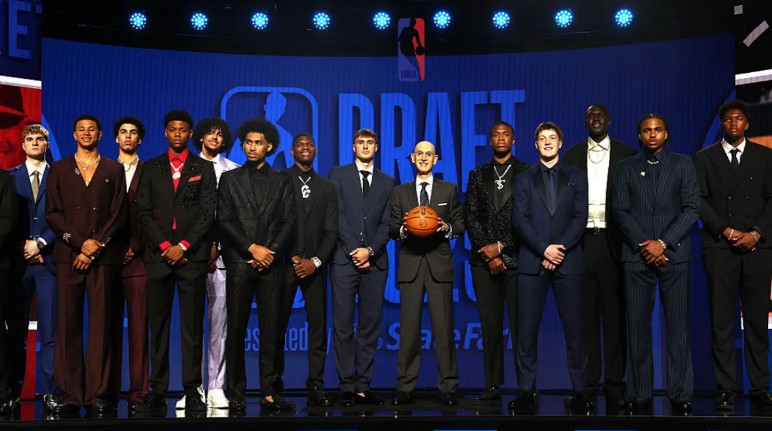
The new “3-2-1” lottery reform changes the math completely. The three worst teams in the league now get fewer lottery balls, not more. Finishing last used to come with a real shot at the top pick. Now it comes with a penalty. The lottery also expanded to 16 teams, which means teams that barely missed the playoffs are suddenly in the mix for a top pick too. That’s a genuinely big deal and most casual fans haven’t fully processed it yet.
For fans trying to figure out how all this affects their team’s future, whether you’re tracking roster moves or just trying to understand lottery odds NBA style, things got a lot more complicated. Meanwhile, for fans trying to wager on the outcome of NBA games and other sports events, especially those in Poland, a platform like 888Starz can be a great place to begin, you can use the website or download the 888Starz app to begin. And, for those who might want to take things further by playing casino games, trusted reviews and feedback have shown that the 888Starz Casino offers the same reliability as the sportsbook app.
Why the NBA Introduced New Draft Lottery Rules
The short answer is that tanking was getting embarrassing. Like, openly embarrassing. Teams weren’t even pretending anymore. The league voted 29-1 to pass the reform, which tells you how fed up everyone was. When a vote is 29-1, somebody almost universally agrees something needed to change badly.
The longer answer is competitive balance. Small market teams, big market teams, teams in between, the league wants all of them to feel like they have a real shot at relevance without spending three years losing on purpose first. When too many teams check out by December, TV ratings drop, ticket sales fall off, local broadcast deals suffer, and the whole product gets worse for everyone. Fans in rebuilding markets deserve actual basketball, not an extended science experiment in losing.
The new rules basically say: fight for your position or get penalized for not doing it. Simple as that.
Understanding the Key Changes in the Draft Lottery System
The new lottery system differs from the past. Here’s how:
- Old system: the three worst teams each had a 14% shot at the first pick. Equal odds, flat distribution, race to the bottom made total logical sense.
- New system: the worst team gets 1 ping-pong ball. Second worst gets 2. Third worst gets 3. That’s literally where the name comes from. Teams just outside the playoff picture, sitting around 9th through 12th, now have genuinely competitive odds at a lottery jump.
What this means practically is that finishing dead last is now kind of the worst possible outcome. You don’t get the pick. You ruined your culture. You lost ticket revenue. You got nothing but a damaged reputation and slightly worse odds than the team that finished four spots above you. The math used to reward the bottom. Now it punishes it.
The expansion to 16 teams is the other massive piece. A team could theoretically make a play-in run and still hold a real pathway to a top selection. That was impossible before. Now it’s just Tuesday.
The Role of Probability in Draft Outcomes
Because the lottery is more random and spread across a bigger pool now, front offices actually have to prepare for multiple outcomes instead of one. Teams build simulation models to map what happens if they land in different spots. What do you do if you expected a rebuild year but somehow ended up with the fourth pick? What do you do if you competed all season and then the lottery jumps you into the top two?
For fans asking when is NBA lottery going to matter to their team, the honest answer is it probably already does, because 16 teams are now involved. More fan bases have a legitimate stake in the drawing than ever before. The watch NBA draft lottery viewership numbers should honestly go up because of this. More teams in the pool means more fanbases tuning in with real stakes.
The Decline of Traditional Tanking Strategies
Let’s be honest. Some teams will still try to lose on purpose. Human nature doesn’t change overnight. But the math just doesn’t reward it the same way anymore. You’re giving up lottery balls by being the worst team. You’re destroying locker room chemistry. You’re chasing away free agents who don’t want to sign somewhere deliberately bad. You’re making your fans sit through a miserable product for months.
And for what? A worse shot at the top pick than you’d have gotten by just being a mediocre team that competes hard every night?
The franchises that figure this out fastest are going to win this era. The ones that don’t are going to be stuck in permanent basketball purgatory, cycling through coaches, running the same failed rebuild every four years, never actually getting anywhere.
How Front Offices May Change Roster Construction
In many ways, things are expected to shake up in the league.
- General managers can’t just hoard picks and tanks anymore. They actually have to build something real and functional.
- Rebuilding teams now need to find players in the middle of the draft and actually develop them. They need veterans who set a standard in the locker room day to day. They need a real culture because young players genuinely develop better when they’re not spinning their wheels on a deliberately bad roster going nowhere.
- Contending teams benefit here too in a weird way. A team that finishes 10th or 11th in their conference now has a legitimate shot at a top pick, which could mean adding a blue chip prospect to an already decent core. That’s potentially a fast track to contention without blowing everything up first.
- Roster flexibility is the new premium asset. Clean salary books, short term deals, cap space that can be weaponized in a trade, these things matter more now because you have to be ready to pivot quickly when the lottery goes sideways on you.
The Growing Importance of Draft Scouting and Analytics
This is maybe the biggest quiet shift nobody is talking about enough. If you can’t guarantee the top pick, you better be genuinely good at finding players who weren’t obvious top picks.
Look at the history.
| Player | Draft Position | Career Highlight |
| Giannis Antetokounmpo | 15th Overall | 2x NBA Most Valuable Player |
| Kawhi Leonard | 15th Overall | 2x NBA Finals MVP |
| Nikola Jokic | 41st Overall | 3x NBA Most Valuable Player |
| Jalen Brunson | 33rd Overall | All-NBA Selection/Knicks Anchor |
These guys became MVPs and franchise cornerstones and most draft rooms didn’t see them coming at the time.
Front offices that can consistently find those players throughout the draft are going to thrive. The NBA draft best available philosophy matters more now than it ever has. You take the best player on your board, period, because your slot is unpredictable and you can’t plan around a specific position. Analytics departments are getting bigger budgets. G-League programs are being treated like genuine pipelines rather than afterthoughts. This is where the competitive edge lives now.
How the New Rules Affect Trade Strategies
Things are different now, and that affects the way teams behave when trading.
Rising Value of Future Draft Picks
Unprotected future picks used to be valuable. Now they’re even more valuable because they could theoretically jump anywhere in that expanded 16-team pool. Nobody wants to hand one over without serious protections attached.
More Aggressive Pursuit of Proven Talent
You’re also seeing teams get more aggressive about trading picks for proven players. If the draft is more random and harder to predict, a known commodity like an under-30 star is worth more in relative terms. Teams like the Knicks have been extremely careful about managing Knicks future draft picks for years, building top-four protections into almost every deal they make. That’s just smart management in the current environment. When the lottery itself is volatile, a good trade can sometimes deliver more certainty than the drawing ever could.
The Impact on Small-Market and Large-Market Franchises
Small market teams have always leaned on the draft because superstar free agents just don’t sign there as often. That’s reality. Now their clearest path to a franchise player got harder to navigate.
To compete, those organizations need to be elite at development. They need to build a reputation as a place where players actually get better and careers take off. It’s possible but it requires real organizational competence, not just losing games and crossing fingers.
Big market teams get a slight structural edge here. They can compete while sitting in the expanded lottery and hoping for a lucky jump. Better lifestyle markets attract veterans. More financial resources help with development infrastructure.
Team-Building Strategies Most Likely to Succeed
The teams that win this era are the ones that build real culture, stay flexible, scout well, and develop players properly. Not the ones that deliberately field the worst possible roster and hope the ping-pong balls cooperate.
Here’s what ESPN’s Tim Bontemps said about the whole shift: “The NBA’s new ‘3-2-1 lottery’ is a fairly revolutionary overhaul of the draft system, designed to immediately curb the league’s annual race to the bottom and incentivize more teams to compete late in the season.”
Hybrid Rebuilding Models
Hybrid rebuilds are replacing full teardowns. Keep useful veterans. Build a fighting culture. Stay competitive enough to avoid the penalty zone while letting your development system do the real work underneath. The franchises doing this well right now are the ones everyone else will be copying in five years.
Final Thoughts
The NBA basically told teams: stop being professionally bad on purpose. And the rules back that up now with real mathematical consequences. Front offices that adapted quickly are already pulling ahead. They’re investing in scouting, building developmental pipelines, keeping cap flexibility, and staying just competitive enough to benefit from the expanded lottery pool without tanking into the penalty zone.
The franchises still chasing the old model, clearing everything out and hoping to win the lottery, are running a strategy that doesn’t really work anymore. The regular season means something again. Competing means something again. And the teams that treat every game like it matters are going to be the ones cutting down nets while the tankers are still waiting for a ping-pong ball that probably isn’t coming.
FAQs
How does the NBA lottery work under the new rules?
Sixteen teams enter the drawing. The bottom three records get hit with a penalty, 1, 2, and 3 ping-pong balls respectively instead of the old equal 14% odds. The top four picks get determined by the ball combinations drawn. Everyone else slots in by record after that. The worst team now genuinely has the worst odds, which is kind of the whole point.
When is the NBA lottery held each year?
Mid-May, usually right in the middle of the second round of the playoffs. Which is actually pretty good scheduling because you’ve got real basketball happening and then the lottery drama on top of it.
How to watch the NBA draft lottery live?
ESPN covers it live every year. The NBA App also streams it if you don’t have cable. It’s pretty easy to find. Just search for how to watch the nba draft lottery a few days before and you’ll have options.
How do I get NBA draft tickets?
Through the official arena box office or the NBA’s primary ticketing partners. Sales usually open in June ahead of the draft, so keep an eye on announcements if attending live is on your list.
How do I watch NBA draft live?
ESPN is the main broadcast home. The NBA App streams it too. If you want to watch NBA draft live and catch every pick, trade, and front office reaction in real time, those are your two best options. Pretty straightforward.