
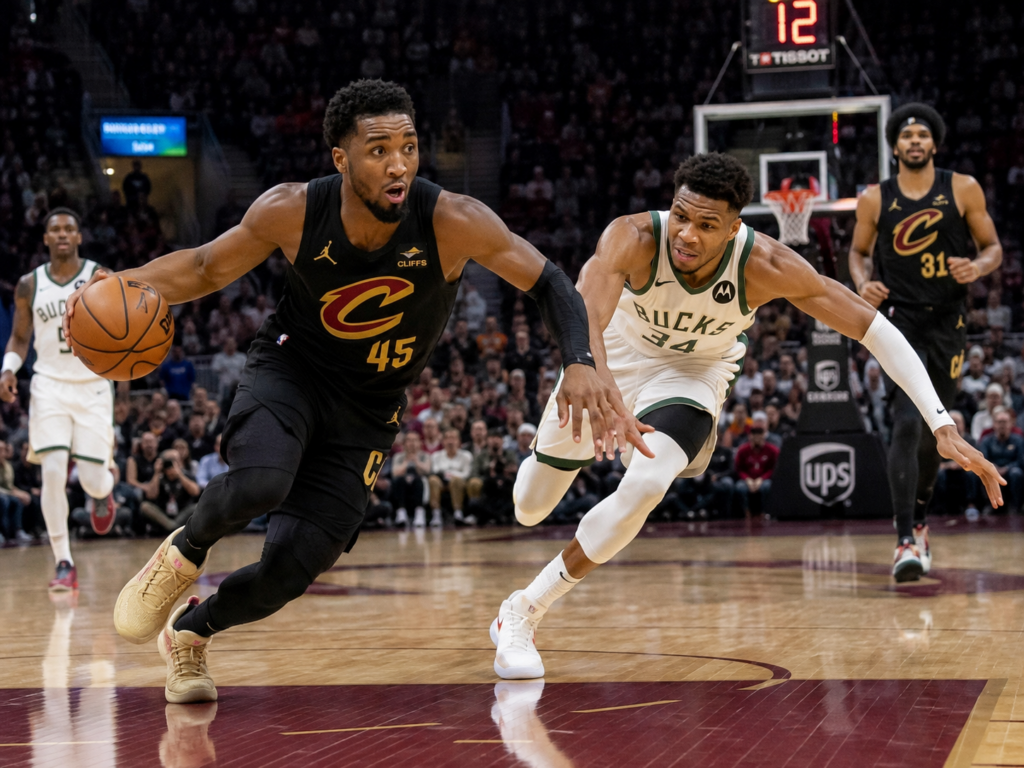
The late closeout that arrives a half-step too late usually gets blamed on tired legs. That explanation is only part of the story. A defender who reacts slowly to a drive or a swing pass is often losing time in the brain before the legs ever move, and one of the quiet causes is fluid loss. Defense is a reaction sport, and reaction speed is one of the first things dehydration takes.
The 70-Millisecond Penalty
The clearest look at this comes from a study that pushed 21 athletes to a 2% loss of body weight using treadmill work and a sauna, then measured their reaction time. Total reaction time rose from 1,305 milliseconds before dehydration to 1,375 after, an increase of about 70 milliseconds. That number sounds tiny until it is put in court terms. Seventy milliseconds is the gap between a hand up in the passing lane and a clean deflection sailing past it. On defense, the margin between a stop and a blow-by is measured in exactly that range.
The same study found the effect was not uniform. Women showed a measurable slowdown, while the men trended slower without reaching statistical weight. Reaction time also splits into two kinds, and both suffered. Fluid loss dulls the raw speed of a response and the speed of choosing the right response, and defense depends on both at once.
The Neural Bottleneck
A defender’s legs get the blame because they are visible, but the delay often starts higher up. Dehydration lowers blood volume, which reduces blood flow to the brain, and a brain running on less flow processes incoming information more slowly. The eyes still see the drive begin. The signal to move takes longer to form and longer to send, and that delay alone is enough to surrender a step.
This is why the breakdown shows up as a beat of hesitation. A well-conditioned defender late in a game may have plenty of energy left in the legs and still react a step slow, because the bottleneck is neural. The legs still have their strength, and the message telling them where to go is what arrives late.
Simple Reactions Versus Reads
Defense uses two separate reaction skills, and they break down in different ways. A simple reaction is a fixed response to a known cue, like sliding the moment an offensive player picks up the dribble. A choice reaction is harder, because the defender has to read several possibilities and pick one, like deciding if a ball handler is driving, pulling up, or kicking to the corner.
The choice reaction decides most defensive possessions, and it draws on the reaction time that fluid loss stretches. A dehydrated defender moves slower and, worse, reads slower. He commits later and recovers from the wrong guess with less time to spare. The gap compounds across a possession, because each late read leaves less margin for the next one.
Replacing the Lost Fluid
Guarding through four quarters means losing fluid and the sodium dissolved in it, and both need to come back for the brain and legs to stay sharp. Plain water suits a short, cool game, but a full night of hard defense usually calls for more, and a best electrolyte powder for hydration mixed into a bottle is one way to put that sodium back, alongside plain water and sports drinks. The right choice depends on a player’s own sweat, its volume and the salt riding along with it.
The point is to stay ahead of the deficit rather than chase it. A defender who drinks on a schedule through the first three quarters protects the reaction speed that the fourth quarter will test. Waiting until the reads already feel slow is waiting too long.
The Mixed Evidence
The research here is not one-directional, and the honest picture includes the studies that found little. Some experiments measured no reaction-time change at mild fluid loss, while others found vigilance, the ability to stay alert and catch cues, dropped by 3 to 4% at under 2% dehydration. Reviews of cognitive performance and fluid balance land in the same uneven place, with real effects that refuse to settle on a single size. The effect also appears to vary by person and by sex, which fits the wide range seen in every hydration measure. In the reaction-time study, the women showed the measurable slowdown while the men only trended slower, a reminder that no single hydration rule fits every player on a roster.
What holds across the studies is direction more than size. When fluid loss changes reaction and vigilance, the movement is always toward slower, and never toward faster. For a defender whose job is built on catching cues early, even a small and inconsistent penalty is a penalty worth removing, because defense offers no reward for reacting late.
A Chain of Defensive Reads
A single possession of good defense is a run of quick reads stacked back to back. Point the ball, jump to help, recover to the shooter, contest without fouling, box out. Each link depends on seeing the play and responding before the offense finishes it, the kind of demand that shows up across team sports when players run low on fluid. Slow the reads by a fraction and the whole chain loosens, since every late reaction steals time from the reaction after it.
This is the part that never shows in a box score. A blow-by gets logged as a defensive lapse, and the fluid deficit that added a fraction of a second to the read never appears in the numbers. The player looks a step slow, and the easy call is to question effort or conditioning, when the real variable might be sitting unopened on the bench.
The Overlooked Variable
Coaches spend hours drilling defensive slides and closeouts to shave fractions of a second off their reactions. It is worth asking why the same fractions get surrendered for free through poor hydration. If a 2% fluid loss can add 70 milliseconds to a reaction by dragging on the brain’s performance, and a season turns on possessions decided in that window, then the water bottle belongs in the same conversation as the footwork drills. The reactions a defender trains all week are only as fast as the fluid balance that carries them into the fourth quarter.