
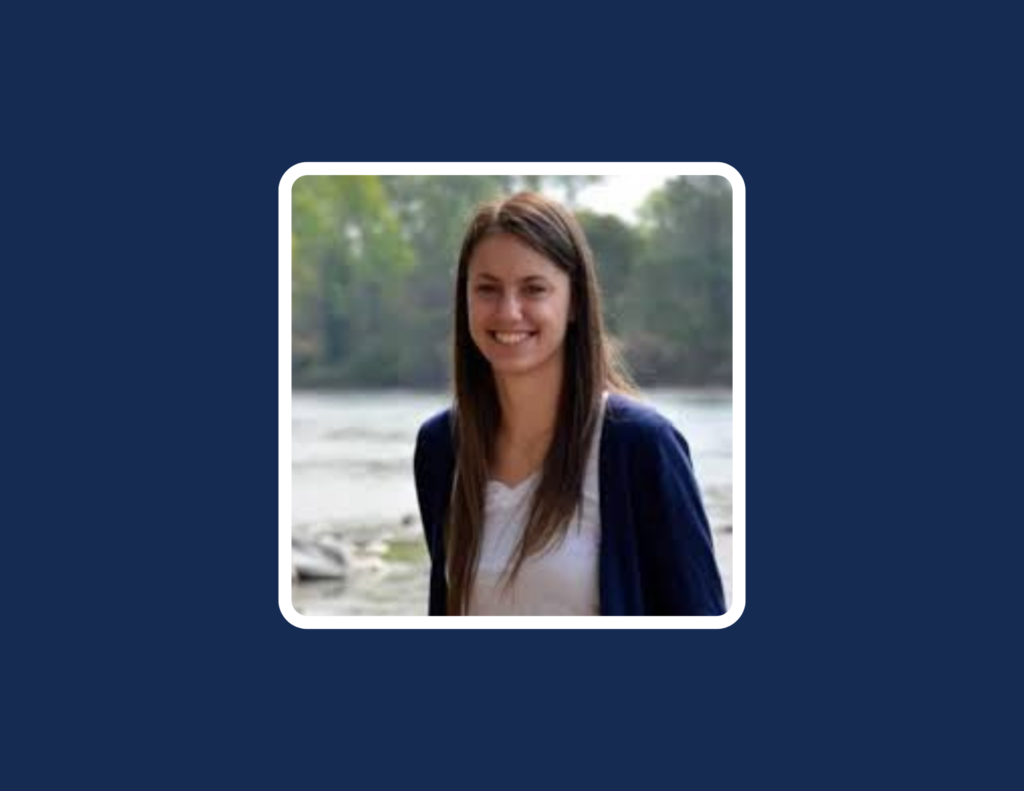
HANNAH DEWATER – UNION MINE (CA) HIGH SCHOOL GIRLS’ BASKETBALL HEAD COACH – EPISODE 1030

Website – https://umhsathletics.com/sports/girls-basketball/
Email – hdewater@eduhsd.k12.ca.us
Twitter/X – @hdewater_
If you listen to and love the Hoop Heads Podcast, please consider giving us a small tip that will help in our quest to become the #1 basketball coaching podcast.
Hannah Dewater is the Girls’ Basketball Head Coach at Union Mine High School in El Dorado. California. Hannah previously served as a student manager and then assistant coach at her alma mater, Simpson University.
On this episode Mike & Hannah discuss the importance of building a strong, united program that lasts beyond the season. With a focus on core values and fostering a competitive spirit, Hannah aims to create an environment where players can thrive on and off the court. She shares her journey from a young basketball enthusiast to a dedicated coach, highlighting the influence of her own experiences in shaping her coaching philosophy. As she prepares for her second season, she acknowledges the challenges of leading a young team while cherishing the joy of witnessing player development and growth. Her commitment to instilling a sense of teamwork and accountability is central to her vision for the Union Mine program, making her an inspiring figure for her athletes.
Follow us on Twitter and Instagram @hoopheadspod for the latest updates on episodes, guests, and events from the Hoop Heads Pod.
Make sure you’re subscribed to the Hoop Heads Pod on iTunes or wherever you get your podcasts and while you’re there please leave us a 5 star rating and review. Your ratings help your friends and coaching colleagues find the show. If you really love what you’re hearing recommend the Hoop Heads Pod to someone and get them to join you as a part of Hoop Heads Nation.
Have your notebook ready as you listen to this episode with Hannah Dewater, Girls’ Basketball Head Coach at Union Mine High School in the state of California.
What We Discuss with Hannah Dewater
- The importance of building a program that lasts beyond just one season
- Strong core values should be instilled in every player on your team
- Healthy competition and unity
- The necessity of being proactive in the college recruitment process
- Developing leaders within the team who will take initiative
- Being in top physical shape is a key element of competitive play
- Creating a supportive environment where teammates uplift one another
- Why coaching at her alma mater provides a unique commitment and motivation
- Good communication and accountability among teammates fosters growth
- Building a strong staff is essential for a successful program
- The dedication and passion required in coaching, especially for female coaches
Like this show? Please leave us a review here — even one sentence helps! Consider including your Twitter handle so we can thank you personally!

We’re excited to partner with Dr. Dish, the world’s best shooting machine! Mention the Hoop Heads Podcast when you place your order and get $300 off a brand new state of the art Dr. Dish Shooting Machine!

Prepare like the pros with the all new FastDraw and FastScout. FastDraw has been the number one play diagramming software for coaches for years, and now with it’s integrated web platform, coaches have the ability to add video to plays and share them directly to their players Android and iPhones via their mobile app. Coaches can also create customized scouting reports, upload and send game and practice film straight to the mobile app. Your players and staff have never been as prepared for games as they will after using FastDraw & FastScout. You’ll see quickly why FastModel Sports has the most compelling and intuitive basketball software out there! In addition to a great product, they also provide basketball coaching content and resources through their blog and playbank, which features over 8,000 free plays and drills from their online coaching community. For access to these plays and more information, visit fastmodelsports.com or follow them on Twitter @FastModel. Use Promo code HHP15 to save 15%
Your first impression is everything when applying for a new coaching job. A professional coaching portfolio is the tool that highlights your coaching achievements and philosophies and, most of all, helps separate you and your abilities from the other applicants.
The key to landing a new coaching job is to demonstrate to the hiring committee your attention to detail, level of preparedness, and your professionalism. Not only does a coaching portfolio allow you to exhibit these qualities, it also allows you to present your personal philosophies on coaching, leadership, and program development in an organized manner.
The Coaching Portfolio Guide is an instructional, membership-based website that helps you develop a personalized portfolio. Each section of the portfolio guide provides detailed instructions on how to organize your portfolio in a professional manner. The guide also provides sample documents for each section of your portfolio that you can copy, modify, and add to your personal portfolio.
Hey, coach! Want to take your team to the next level this season? Introducing GameChanger, the ultimate game-day assistant with tools to give you a winning advantage. With GameChanger, you can track stats, keep score, and even live stream games, all for free! Get the stats and crucial game video you need to lead your team to victory, all from the palm of your hand. Coach smarter this season with GameChanger. Download GameChanger today on iOS or Android and make this season one to remember. GameChanger. Stream. Score. Connect. Learn more at GC.com/HoopHeads
THANKS, HANNAH DEWATER
If you enjoyed this episode with Hannah Dewater let her know by clicking on the link below and thanking her via Twitter.
Click here to thank Hannah Dewater via Twitter
Click here to let Mike & Jason know about your number one takeaway from this episode!
And if you want us to answer your questions on one of our upcoming weekly NBA episodes, drop us a line at mike@hoopheadspod.com.
TRANSCRIPT FOR HANNAH DEWATER – UNION MINE (CA) HIGH SCHOOL GIRLS’ BASKETBALL HEAD COACH – EPISODE 1030
[00:00:00] Mike Klinzing: Hello and welcome to the Hoop Heads Podcast. It’s Mike Klinzing here without my co-host, Jason Sunkle this morning, but I am pleased to be joined by Hannah Dewater, the head girls basketball coach at Union Mine High School in the state of California. Hannah, welcome to the Hoop Heads Pod.
[00:00:17] Hannah Dewater: Thank you so much for having me.
[00:00:19] Mike Klinzing: Excited to have you on. Looking forward to talking to you about all the things that you’ve been able to do in your coaching career so far. Let’s start by going back in time to when you were a kid. Tell me a little bit about some of your first experiences with the game of basketball. What made you fall in love with it? How’d you get involved?
[00:00:35] Hannah Dewater: Yeah. So I was five years old and got taken to my dad’s men’s league game. And it was the first time I ever saw it. And I remember afterwards we were in a, in our van and I unbuckled and I was a rule follower. So that was a big deal. And I crawled up to the front and I remember just grabbing my mom’s shoulder and being like, I want to do that one day.
She’s like, what are you doing? Go sit down. But I mean, as a really young kid, I just, there was something about the game that drew me in and I’m sure it was not a good basketball I was watching, but it was basketball. And from there I was hooked.
[00:01:12] Mike Klinzing: So. Once you started playing after you watched your dad play, what about it did you really like?
What part of the game do you think really attracted you if you think back to your, your five year old mentality?
[00:01:25] Hannah Dewater: Yes I think there’s so many different skills involved and so there’s always something to be working on. There’s all, you can never get bored. And then as a player, I loved defense because I wasn’t extraordinarily skilled, but I really saw how your hard work could pay off.
Little things little but not little, like communication plays a big piece. Being fit plays a big piece. And then just kind of having that grind it out mentality that you might go down, but you’re going down with a fight really resonated with me. And that’s where I kind of
[00:01:59] Mike Klinzing: came through.
That being fit piece, I tell that to players. I’ve told that to my own kids when they play. That being in good condition is such an advantage. When you think about it again, there’s all different level of athletes in any game that you play in, right? There’s some people who can run and jump and are quick and all these things and some of that stuff, obviously you can improve, but there’s oftentimes a limit to that.
But your ability to be in great shape, I think, is always just such a separator because when you think about, okay, this player might be faster than me when it’s the first quarter, but by the fourth quarter, if I can still run at. 98 percent of my speed that I could run with in the first quarter. And they’re, they’re at 80%.
All of a sudden I’m looking a lot faster. And I just think it’s one of the sort of hidden things about being a great player.
[00:02:52] Hannah Dewater: Absolutely. I remember having the mentality, like, I’m going to make you take more steps than me in the first half. Whether that means I’m kind of pushing you out or I’m making you chase me.
And knowing like, this is, this is all for that last quarter or those last couple of minutes, and then you can kind of blow the game open, hopefully.
[00:03:11] Mike Klinzing: Yeah, absolutely. What were your experiences like growing up as a female and working and trying to find games to be able to get better? What was your process for improving yourself as a player and how accessible was basketball to you growing up as someone who really liked the game and being able to, being able to play and improve your game?
[00:03:33] Hannah Dewater: Yeah, that’s a great question. So I live in, yeah, rural Northern California, but we have a Parks and Rec department here. And so, I was able to play a couple years there. I’m pretty sure I was wearing sweatpants. So, again, not for an athlete by any means, but just a kid running around, but still just getting that exposure.
And then just playing through the school, honestly as I got older, I was able to play on a few like club teams, but, and then also lucky I’m about an hour from Sacramento and the Monarchs used to exist. And my parents definitely supported my dreams of playing. And as a little kid, being able to watch professional basketball players and women playing, I, I did have the dream that I would, I wanted to play in the WNBA one day.
And I think that really just came from I got to see it and I got to see it up close going to those games and seeing those players and seeing what could be definitely was motivating and just inspiring beyond the basketball court.
[00:04:41] Mike Klinzing: What’s your favorite memory of being a high school basketball player?
[00:04:46] Hannah Dewater: Oh, my favorite memory? So my senior year, our team was not very good. And we played a team in our league who went on to win the division one state championship. And my motivation that whole year was I had to guard their best player who went on scholarship to Stanford. And I, I held her to eight points because again, defense now she didn’t really need to score a bunch on us.
Her teammates handled business. But that was a cool moment. And my coach told me after the game that you run up and shake coach’s hands before. He said, Hey, their head coach told me he went back to the huddle and said, that girl’s not scared of you guys. Like she looked me in the eye and she had a good handshake and she wasn’t sweaty.
Like look out for her. I mean, I didn’t do very much damage, but I know that’s kind of a big picture moment, but it’s still like that kind of captures who I was and who I am is just a competitor. And I was proud that, yeah, we went down, but again, went down with the fight.
[00:05:50] Mike Klinzing: Absolutely. I mean, it makes sense, right?
I think anytime you can put your best foot forward and compete and challenge yourself, that’s really, again, as a player, it’s all you can ask of somebody is to be able to do that and give their best effort and challenge the people that are, that are in front of you, even though there may be a little bit of a disparity in talent across the board from, from team to team.
At this point in high school, are you at all thinking that Coaching is something that you might want to do in the future, or are you still kind of just focused on being a player?
[00:06:24] Hannah Dewater: 100 percent just on being a player. I, yeah, I was, my goal at that point was to try to play in college, which I got the opportunity to.
But yeah, coaching didn’t come into the picture till later.
[00:06:38] Mike Klinzing: What was the recruiting process like for you?
[00:06:41] Hannah Dewater: I, our school hosted a college fair and I was annoyed because they were using the gym and I wanted to shoot. And someone said, Hey, yeah, but maybe go check out these schools. And so I truly like at one of these college fairs went in, saw a logo that I liked, started talking to the rep and it was a small school near the ocean.
They had sports. And he ended up connecting me with the coach and that ended up being where I went and it was a great, great experience.
[00:07:13] Mike Klinzing: Nice recruit. You did your own recruiting. You took all the pressure off the staff. That’s the way to, that’s the way to do it. It’s, it’s funny because again, obviously we’ve talked to a ton of coaches at all different levels and had experience like working with different players who have played at different levels.
And when you’re talking about playing at the small college level, so much of it is how proactive. You are in getting your name and your information to potential schools and coaching staffs that might be interested in having you play. And I think so many people still, despite the fact that there’s a ton of information out there about recruiting, because so much of it is focused on the big schools and Division I and all this stuff, that a lot of the small things that players who do have the capability of playing at the college level, but maybe not at the Division I level.
that ability to be proactive and reach out and find a school that you feel like is a good fit for you and let them know that you’re out there. I’ve heard so many stories of like yours where it works out right and you end up having a great experience both athletically and academically and it sounds like that’s definitely what happened for you.
[00:08:21] Hannah Dewater: Yeah absolutely and I think being on the other side like I’m grateful that I didn’t have just that like D1 or bust mentality and people around to help encourage you and I mean, if you play beyond high school at any level, I don’t care if it’s junior college, NAIA, Divisional, I mean, it’s a huge commitment.
It’s a huge step from the high school level. And it, I think it just takes a certain type of person, like you’re saying, to step out. to want that, to chase that, to pursue that, to stick with that. And then have that be beyond the sport as well. Cause at the end of the day, like the ball stops bouncing.
It’s like, where, where are you at? What have you, what have you done to kind of set yourself up for further success as well?
[00:09:09] Mike Klinzing: Yeah, absolutely. I think that there’s no question that when you start talking about playing basketball beyond high school, most people have no idea how good you have to be at.
whatever level of college basketball that you end up playing at, people just have no idea how difficult it is and how good the players really are at those levels. If you go, there’s so many people that haven’t gone to watch a division three basketball game or an NAIA basketball game. And when you go and you show up at an AAU tournament and you listen to players and parents talk, and you just realize again, how uninformed people are, unfortunately, about how good those levels of basketball are and how great those experiences.
can be. And I think that’s one of the things that we’ve certainly tried to do around the podcast is to just provide a forum for coaches at those levels to be able to talk about what the opportunities are when you’re talking about a division three or an AI or division two institution. Again, ones that aren’t necessarily always on TV that everybody knows about, but places where you can have a tremendous, tremendous experience.
So when You’re there, Simpson, and you’re starting your academic career. What are you thinking about at that time, as far as what you might want to do when you get done with college, or were you just a clueless 18 year old like most of us are?
[00:10:35] Hannah Dewater: So when I entered college, I was pretty convinced I wanted to be a teacher.
[00:10:39] Mike Klinzing: Okay.
[00:10:40] Hannah Dewater: I’d wanted that forever. So I was super happy to pursue basketball and set myself up to be a teacher. And then kind of realized I don’t, I don’t want to be a classroom teacher. I have a ton of respect. I always did, but I mean, yeah, that is a job. And so I pivoted a little bit. And my first college was actually Bethany University.
So I was there my freshman year. That’s where I played. And then I ended up changing my major and I suffered career ending concussion. I’ve had 10 concussions again, defense playing hard. If they told me to hit the brakes, I didn’t listen. So yeah, I changed my major. I got that concussion that I was kind of like, okay, basketball’s off the table.
And then that college actually ended up shutting down over the summer. So then I transferred to Simpson and was kind of in a very, I mean, vulnerable on one side, but also exciting on the other of just like, okay, my whole life just took a one 80 and now I’m in Redding, California, which is very different than Santa Cruz.
And from there still, I mean, I ended up getting recruited on a cross country scholarship. So I did one year of that and then I was injured because cross country is insane as a basketball player. And I was actually in the training room getting worked on every single day with the trainers. I met basketball players who ended up pitching me to their coach and I ended up being their manager and then their head team manager.
And that turned into. An assistant coaching job at the NAI level at Simpson.
[00:12:15] Mike Klinzing: When they approach you, when the players start trying to convince you that, Hey, why don’t you come and be a part of the program? Was there resistance? Were you immediately like, Oh, I should have thought of that myself or just, where was your mindset at, at that point?
[00:12:30] Hannah Dewater: Yeah, I was, well, I didn’t know what a college team manager did, first of all. So I was like, what do you, they’re like, no, no, like you have any experience. Like we would love to have you. And I wasn’t interested in it. There was definitely a grieving process of if I do this, I’m, it kind of felt like I was really closing the door on ever playing again.
[00:12:54] Mike Klinzing: Right.
[00:12:55] Hannah Dewater: So just kind of like processing that, but then meeting the coach and believing in his vision and what they were trying to do once I kind of got back in the gym, honestly, it was like, okay, yeah, I can make an impact here. I just want to serve and learn. And I think. Coming in as a manager, I mean, I learned so much just being around every aspect of the game behind the scenes, and that I think has benefited me now as a head coach.
[00:13:25] Mike Klinzing: What were you surprised about in terms of what coaches had to do on a day to day basis? Because I know, and I think about my own experience a long, long time ago, but talking to other players who aren’t really thinking about coaching before they jump into it, A lot of times they’re just like, I don’t, I didn’t realize that coaches did so much of X, Y, and Z.
I think there’s a mentality among players that. Coach shows up at 3 o’clock. We have practice. It’s 5 o’clock. I go back to the dorm and or I go back to the dining hall and eat dinner and the coach is going home and I’ll see him again the next day at at practice at 3 o’clock. So, what surprised you when you kind of went behind the curtain?
[00:14:08] Hannah Dewater: I mean, definitely the time commitment because I was pretty much there when the coach was there. So, we would have morning practices and we’re rolling in at like 4 a. m. to set up the drills and the court and everything like that. For I mean, and just so the time and then just how the balance of how many details have to be executed as well as maintaining that big picture vision, it’s just down to what socks are they wearing on game day to making sure uniforms are clean to the travel, especially at a small school we were a small staff and so just the amount of.
things they had to do outside of actually coaching basketball and the time of recruitment visits. I mean, when these young student athletes come and are interested in your school, I mean, it takes a lot of time and effort to host them and do your, your deal and you don’t get most of those students.
And so, like, how do you maintain that that joy and that, As you’re trying to coach your current team, but also build future teams. And yeah, I just think realizing like how much they had to manage and how much to me that translated to, okay, are they balanced in their life? And that would translate to the court kind of, and seeing that like, Oh, this could really consume you.
And I mean, I love basketball. So the idea of that sometimes sounds amazing, but that’s not sustainable. And so watching people kind of maintain those boundaries and have that, that balance and that support of their family. I just definitely made an impression on me of, okay, at the end of the day do I want a thousand players that said she was great?
Or do I want I mean, hopefully a thousand players, but also still have friends and family and your health intact.
[00:16:03] Mike Klinzing: Absolutely. That is one of the things that from a, I guess, work life balance standpoint of, of trying to figure that out and navigate it. And the funny thing about the coaching profession, Hannah, is a lot of people.
Get into coaching, especially if you’re talking about someone who kind of went the route that you did, where you go and you start out at the college level where you’re most likely single and don’t have a family. And you’re most likely not making a lot of money. You probably aren’t living in a, in a super duper nice place to hang out.
And you’re probably in somebody’s basement or a spare room, or you got four roommates or whatever it is. And you have just all this time. And so, Because you love basketball and you’re so into it, that those initial years when, again, you don’t have very many responsibilities, the time doesn’t necessarily, it doesn’t work the same way as when you get a little bit older and you have a little bit more responsibility.
And so you kind of set up this situation where I’m spending all this time. And then when you do eventually have a family or you have other responsibilities outside of basketball, Coaching, then it becomes, okay, how do I make that work? Because when I started, I was just kind of 24 seven, I could be there and it didn’t matter because again, it was just, it was just me.
And I think that’s one of the things that’s interesting about how people get started and sort of how you have to make sure, like you just said, that you have to be careful that you maintain that balance in order to be able to live a healthy, healthy life and not just have it become where basketball consumes.
Every moment of your every, every moment of your life, it can become, it can certainly become difficult. What went that, that first year as a manager, what were some of your like day to day responsibilities? Did you get an opportunity to sit in on any coaches meetings or was it just a case there where you kind of build trust and then that’s kind of stuff maybe happened a little bit later, but how much, how much exposure did you get to sort of the planning process of, of what the coaches were talking about in the coach’s office?
[00:18:07] Hannah Dewater: Yeah, they, once they realized that I did have some background and yeah, just was kind of, I was also pretty neutral. I wasn’t coming in like, I have all these great ideas. They allowed me into most spaces. So yeah, like practices were kind of where people probably saw me the most whether that was setting up drills I’d be part of drills either as like dummy defense or making entry passes into posts or just rebounding or whatever.
And then on the flip side I’d be with coach when he’d be cutting up film for game prep, he’d get our packets out of the scouts to teams. I, I was, it was important to me, and I don’t know if this was necessarily asked of me, but that I knew what is the scout, what are we wanting as someone that would be on the bench during games to know what, what am I looking for?
How can what’s a word I could maybe give a player if things aren’t going well to, to bring them back. On track. I didn’t want to just be blue list. So I was in those spaces. I helped with recruiting visits as far as, yeah tours and showing them the facilities and kind of showed them what we’re about.
And then game days, man, I was all luggage and yeah, all the, and it was my, my jerseys were my responsibilities. So making sure they’re washed clean, we’ve got them hanging them. Nice. even just like the little things that you want it to be nice. Feel semi professional for these student athletes.
And then yeah, like meals and running to go pick up the subway order or whatever it was. Those are the things that kind of come to mind of, I wasn’t necessarily being asked to drop a play or what do I think about this offense? But they would, I think, lean on me a little bit of like another set of eyes.
Just cause I had my, my hand in so many different areas.
[00:19:56] Mike Klinzing: Yeah, absolutely. So again, you were able to To see what was going on. And as far as a coach education, right? That’s an important piece of it that you were able to sit in and be a part of it. And even if you weren’t necessarily always contributing, I’m sure in your own mind, as you were sitting there and listening to the scouts and watching the film and doing those things that you just described that in your mind, you’re kind of thinking, well, here’s maybe what.
I would do in this situation or asking the questions in your head of, Hey, why are they doing that? Now that’s to me, a huge coach education piece, right? Is that you get, you get your hand, as you said, in all these different areas. And I’m sure that was invaluable to you as you continue to move on in your career.
How would you describe how that jack of all trades sort of induction to coaching has helped you now, as you’ve moved on and eventually got an opportunity to be a head coach at the high school level?
[00:20:48] Hannah Dewater: Yeah, I think like, so starting as a manager with no intention of coaching again, you, I went in really just open and I, I think understanding the amount of work, the amount of details, like I was saying as I became an assistant and then now I’m a head coach.
I’m, I think I’m just like a less surprised than maybe other people that are just entering coaching that are I mean, I don’t, I guess I don’t know where they’re getting their idea of what it is from, but if you’re you’re wanting that moment where you hit the game winner and your players hug whatever that moment is, you think, yeah, I want to be a coach or most people enter cause they want to use the sport to impact lives.
And I definitely want to do that as well. But yeah, if you don’t see the work behind it first, I could see that being A pretty big culture shock. So now being able to coach and kind of just like, yeah, of course I’m doing everything from the budget to the staffing, to the game plan, to the practice plan, to everything parents, administrators, like none of that feels like, Oh, I have to do that.
Oh, I have to do that. And more just like running towards those challenges. And like, I think it’s
[00:22:05] Mike Klinzing: more of a, it’s more of a statement, right? It’s I have to do that as opposed to I have to do that.
[00:22:09] Hannah Dewater: Right. And just like, if it’s not me, it’s, it’s nobody. Cause I saw that at the college level, even it’s like, if it, yeah, you can let things slide or you could not give things the care and the attention it needs because it’s not glamorous.
It’s not fun. It might not be what you’re naturally good at. And that’s where I think the best coaches shine because they either bring in people that have those strengths or you become really determined to, to become proficient at those things for the betterment. of your program and ultimately your student athletes, right?
So I think that has definitely served me well.
[00:22:49] Mike Klinzing: Yeah, that’s a really good insight in terms of understanding yourself, right? That ability to self analyze or be self aware and say, Hey, this is something that I’m not necessarily the best at. So if I can bring in somebody on my staff that can fill that gap for me, or as you said, if I can continue to grow and improve in that area, because for whatever reason, I don’t have a person on staff that can take that responsibility on, then instead I can just continue to grow and work.
And I think that’s something that. Takes some coaches a long time to be able to learn that. We always talk about the ability to delegate and how difficult that can be, especially as a young coach, where you feel like I want to have my hand in everything and I want to make sure that it’s all running the way that I want to, especially again, when you’re a head coach and it becomes your name that is the one that’s associated with the record.
Things definitely get different when that becomes the case. I think as you go on in your career, what happens is you just get better at what you just described. So if you’d already have. Insight of like, Hey, this is something that maybe I’m not the best at, or maybe it’s not something I enjoy and I need to find somebody on my staff that can take over.
And probably a, they’re gonna do it better and probably do it with more enthusiasm than, than you might if it’s something that you don’t that you don’t really enjoy. Tell me about getting the head coaching job at Union Mind, how that comes to pass, and then we’ll kind of dive into what you’ve been doing to build your program.
[00:24:11] Hannah Dewater: Yeah, so I had lived in Reading for eight years and I moved back to Placerville and I started working at the high school. So I graduated from Union Mine and so getting the opportunity to work at my alma mater was awesome. I run the College and Career Center so my job is just help students with their next steps and some people found out I was back and told the current coaches that I had some experience and so I started out as a JV assistant.
And I did that for a few years and then the head coach for varsity moved on so that I became the JV head coach and then they moved on from the varsity coach and then applied for that position. So similar to college, it was a pretty natural entry point where I still, I still at that point had no, not desire, but no goals of being a head coach.
But I thought, yeah, I can help. I’ve been a coach, so I’m like, sure, I’ll help with JV. Like, I love developing players. And so doing that, and then, oh, I get to be the JV coach. And then I ran my JV program. I mean, very similarly to how I’m running the varsity program, just because of who I am. And so, but I did that because again, it was just a need that needed to be filled.
And I was there and I care about the kids and fit. So, and then it’s like just that progression of. I knew when the varsity position opened the first time, I knew I wasn’t ready because I had never been a head coach at any level. And so taking over a high school program that had been successful in recent years I just didn’t feel ready for it.
And then COVID hit and it, that was a great decision I made to keep learning my job and just the coaching world without all of that. And so when the opportunity came up last spring, I, I jumped on that and I’ve felt just this deep peace and joy of like, this is what I want. And again, I think my personality, I’m a slow burn.
And so it was like, it gave me even more confidence, even though obviously you have a lot of, I don’t know if fear is the right word, but you’re like anticipation of, I don’t, do I know what I’m doing? Do I know how to play basketball, coach because it had been that slow process and it wasn’t like, Oh, I just care about this end goal.
Okay, I got my end goal. Now what? Because it had been just so let me fill this need, fill this need. Let me grow and develop. I was going to camps and clinics and trainings as a JV coach. So then when the opportunity arose, it felt just like perfect timing.
[00:26:47] Mike Klinzing: Was getting that job the moment where you switched and said, I’m a coach or was it a little bit into the tenure of being the head coach that you felt finally, like, Hey, I’m a coach.
Cause it sounds like up until that point, you were kind of like, well, there’s an opportunity. I think I’m going to coach, but that’s different than I think describing yourself as a coach, which I think how you would describe yourself now. So was there a, was there a light bulb moment or again, was it more of that?
I take this job and it’s the slow burn or it was the interview process or when did, when was the moment where you flipped and you said, I’m not just coaching, but I’m actually a coach.
[00:27:24] Hannah Dewater: Yeah. I think there were moments. So even that first year when I was the JV assistant, the varsity coach had me on his bench for like our league final game.
And with the game on the line, he asked us what we thought. And I gave my opinion, which was different than other assistants. And he listened to me. And that was, that was probably the first moment and it, thank goodness it worked out. It was one of those, do we foul or not foul? And I was like, we play defense till we die, like we don’t foul.
And I think that was honestly the first where I was like, Oh, and he, and just the, like, respect and trust he had with me with not knowing me very well. I think that was the first time where I thought, Oh, like maybe there’s something to this. And then when I became the JV. Head coach. I think that was when I really, I took it pretty serious just cause especially in high school you don’t know, you might have a kid for four years, you might have them for one year and just wanting them to have the best experience possible basketball, but then also just like, what’s the culture of your team?
What’s the values that you’re living out? I, I felt a burden even at a lower level. And so I would say that’s when I really started to like grow in the role. And then. My last year, I definitely, I started to feel that itch a little bit of, Oh man, like what if I had a program one day how would I want to And so again, I think that led to that enthusiasm when I got the position because it wasn’t like, it wasn’t just this light bulb, it was a growing desire to, yeah, build a program at a small high school that hopefully makes an impact on these kids now and in their future.
[00:29:14] Mike Klinzing: Absolutely. All right. So talk to me a little bit about building the program when you take the job. What are some of the key things that you feel like are gonna be really important heading into last season? Your first one as the head coach, what are the things you feel like you have to get done that are you’re gonna build your success on both in your first year, last year, and then moving forward?
[00:29:39] Hannah Dewater: Yeah, so last year, like our, our theme was better together and I really wanted us to be unified from top to bottom. This I, I. Knew I needed to build a strong staff. I wanted to have a competitive varsity team that was united. Kind of win or lose in my first year. I mean, I hate losing, but having that mentality of we got to do this together and we need to build something that lasts beyond this season and then developing the lower levels.
So I think having core values and just drilling them into everybody and emphasizing them. Every which way I can think of and just that it’s not, these aren’t just empty words. This is how I want us to be defined how we define ourselves, but also how outsiders looking in can define us. So that was really important to me.
And then being competitive, honestly, like it was that mix of I want our program to be different and not like different for the sake of being different, but for the sake of it matters. And I’ve had really impactful coaches in both directions. And so wanting to, to be impactful in a positive way for these students.
And then also like, let’s, let’s be competitive. Let’s, I want good basketball. I want people to enjoy watching our games and the, the actual skill that’s on display, but how we do things. And so I think those two things were kind of my main, my main goals.
[00:31:13] Mike Klinzing: All right. When you talk about your core values, can you give me an example of One of those core values and then talk about how you kind of incorporate that day to day into what you do to make it more than just a word or a slogan on the wall.
How do you put that into practice so that your players see that and live that every day?
[00:31:36] Hannah Dewater: Yeah, so we, fortunately, I have a really strong principal at our school who also ruled out core values. So we kind of went off of his, which was a natural cohesion. It was great. So. I would say the one that we talk about the most and it’s our first, it would be being united.
And so one of the ways that that just comes up is if something happens and I mean, even if it’s just body language an upperclassman to a younger player that is maybe less skilled it’s like pulling them aside and talking like, Hey, is, are we being united as like, yes, your team on the court, but then beyond that.
And. I just think team is such a special thing in this world and I want our players to have that freedom to know that like you, you can make mistakes and your teammates are there to have your back. Because I think if you just have that fear then it’s really hard to try your best. And if, if you don’t have a goal in mind.
And you don’t know what you’re working for. It’s hard to go full speed. And if what I mean, it’s hard to know, like, what are the, what are the boundaries that coach has for me, that my teammates have for me, that I should have for me. And so to me, being united is yeah, you’re being a good teammate, but also like, we’re reminding ourselves of our goals and our goals are we’re pursuing excellence on and off the court.
And it’s like everything we do you can just point back to it. To that. And are we being together on that? And they do, I mean, they bring them up to each other, which is fun. When one of them is being mindful, if they ever get a little loose with their talking. It’s, I love when it’s like, that’s not very mindful of you.
And you’re like, I love that 16 year old is saying that phrase right now. Awesome.
[00:33:37] Mike Klinzing: Coaching at your alma mater. How special is that? Does it feel? Easier, harder, different than what it might feel like to coach at another high school. Obviously you haven’t had that opportunity to be a head coach anywhere else, but thinking about coaching at your alma mater, how special has that been for you to be in a place that obviously you were very familiar with as a student and as a basketball player to be able to be the head of that program?
Just talk about a little bit about what that means to you.
[00:34:02] Hannah Dewater: Oh, it, it’s the best. I mean, I’m like, I don’t know how you, I could be more committed to a place. And just a mission of a school. So I think walking back in that gym with a completely different role is yeah, it’s super motivating.
And I think just taking your life experiences and I always try to remind myself what, who was the adult that I needed in my life? the safe, the, the person that held me accountable, the person that believed in me, that pushed me, like. There were definite people in my life that did that to get me where I am.
And so just trying to be that for these students is super special. And I love that. Yeah. It’s like, there’s no conflict of who am I rooting for? Who am I loyal to?
[00:34:52] Mike Klinzing: It’s like
[00:34:53] Hannah Dewater: through and through, you’re not going to get anybody more committed to Union Mine period, but Union Mine basketball.
[00:35:01] Mike Klinzing: And you walked in those shoes not too long ago.
So that’s always, I think, a powerful thing too, that When times get tough, I think you can use that to your benefit as a coach. And I always do think that there’s, there’s an advantage. I don’t know how you measure it, but I do think there’s an advantage for coaches that are at their alma mater, just because of what you just described in terms of just that commitment and that belief and that it’s something inside of you, right?
That you, when you’re coaching at the school where you went, it just gets that, I don’t know if it’s 1%, I don’t know if it’s a half a percent, I don’t know if it’s 10%, but there’s just something that little extra. That pride that you have, that you were a part of the program when you were younger, when you were playing, and then to be able to go back and have that same impact as a coach and, and impact the young women that you get an opportunity to interact with, I think is just, it’s a special thing to be able to work at your alma mater without, without question.
Before we wrap up, I want to give you a chance to answer a two part question. So the first part of the question is when you think about the next year or so going into your second season What do you see as being the biggest challenge? And then the second part of the question is when you think about what you get to do every day, what brings you the most joy?
So your biggest challenge and then your biggest joy.
[00:36:16] Hannah Dewater: So I would say for this year, I mean, our biggest challenge is staying healthy. I’ve got, I’ve got a young crew that I got to, I’ve, I’ve been their coach since they were freshmen. So we’re going to be very junior heavy. And yeah, so for that, I’d just say being healthy.
Helping them grow as leaders. And now that it’s kind of like, Hey, look around, it’s you, there’s no senior. It’s, it’s you I need you to take that shot or you to step up. That’ll be our challenge. And I’m I’m still a young coach and we’re a young team and I’m choosing to just think, Hey, that makes us a wild card.
And so that, yeah, but that’s, I definitely think our experience Would also be a challenge that we get to face this year. And then what brings me the most joy is getting to see young people grow and develop. And I, I don’t think I will ever get tired of that. And when you, you teach things, when you live things with them, I mean, our team is pretty close and we’ve gone through a lot on and off the court, just in their own lives.
And to watch them stick together, and grow and make good decisions and hold each other accountable. I mean, it’s like, to me, that’s the sign of a strong team is it shouldn’t just be me telling them Hey, are you doing the right thing? When they do that for each other and they’re calling each other out and they’re encouraging each other.
I mean, that just, that’s, that’s the good stuff.
[00:37:53] Mike Klinzing: Absolutely. There’s no question about that. Hannah, before we wrap up, I’d like to give you a chance to share how people can reach out to you, get in touch with you, whether you want to share email, social media, website, whatever you feel comfortable with. And then after you do that, I will jump back in and wrap things up.
[00:38:09] Hannah Dewater: Yeah. I would say I’m on MaxPreps. School email, definitely reach out, my cell phone’s on there. My email’s on there, but I’m accessible and I love collaboration. That’s how this came about. So yeah, reach out with anything.
[00:38:24] Mike Klinzing: Terrific. Hannah, I can’t thank you enough for, usually I say staying up late, but for getting up early with me this morning to record the podcast, really appreciate it.
And to everyone out there, thanks for listening and we will catch you on our next episode. Thanks.