
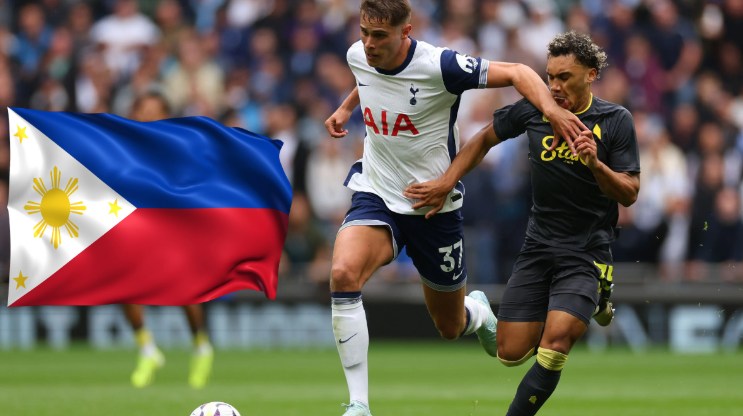
Speed has always been one of football’s most thrilling qualities. From wingers blazing past defenders to strikers bursting through on goal, raw pace brings fans to their feet. Speed today is more than just an entertaining sight, it is one of the very important elements that has defined how the game is played.
For football fans from the Philippines, they have constantly been bedevilled with a pressing question: who is the fastest football player in the world 2025? This article understudies the art of speed and how it influences the sport. If you enjoy following football while engaging more interactively, platforms offering sports betting like 1Win (https://1win.com.ph/) make the experience even more exciting.
The Role of Speed in Modern Football
In the current era, where tactical systems are increasingly complex, pace has become a decisive advantage. Speed contributes to both sides of the game:
- Attacking Play – Quick sprints stretch defensive lines, create gaps, and fuel dangerous counter-attacks.
- Defensive Play – Recovery runs allow defenders to chase down opponents, covering mistakes and neutralizing fast forwards.
For top managers, a player’s ability to sustain high-speed runs can be the difference between success and failure. This is why speed has become a key differentiator among elite players.
Measuring Speed: From GPS to Sprint Tests
Gone are the days when speed was judged by the naked eye. Today, technology provides precise data:
- GPS Trackers – Lightweight vests record every sprint, acceleration, and deceleration during matches.
- Match Statistics – FIFA and UEFA track peak speeds, offering official benchmarks.
- Sprint Testing – Clubs use 30m and 40m sprints to evaluate maximum acceleration.
These tools don’t just capture who is the fastest in terms of top-end speed — they also reveal who has the quickest burst acceleration, a critical trait in football.
Factors That Influence a Player’s Speed
A footballer’s top speed is dependent on a host of factors. When any of these factors are not in place, we can say that the player is out of form. This would mean that although it’s the same player, they will underperform significantly. Below is a careful analysis of these factors:
- Physical Attributes – A player’s height, muscle mass, and stride length determine running efficiency. This is the primary determinant of a player’s ability to achieve certain speed. No matter the quality of their positioning on the field and the extent to which they train, if their bodily frame is not athletic, it will affect their overall performance.
- Training – No matter how physically fit a player is, a rigorous training routine is vital in their development of a great form. Sprint mechanics, gym work, and resistance training helps them to develop explosive power and agility.
- Playing Position – Wingers and full-backs mostly the ones engaging in higher speeds with a longer range due to open-field runs, while strikers and front wingers rely on short, sharp sprints.
- Injury History – Hamstring and knee issues can slow even the fastest players if the situation is not managed carefully.
The Fastest Football Players in 2025

The vital question who is the fastest football player in 2025 is addressed below with a careful analysis of all recent match stats, players position, and their form. Also captured below is their respective clubs, country of origin giving a demographic background to these players that have made their unique marks in the game.
1. Kylian Mbappé – Unmatched Acceleration
- Club: Paris Saint-Germain (PSG).
- Country of Origin: France
Kylian Mbappé has retained his designation as football’s speed king. This is largely due to his unbelievable and breathtaking acceleration. Not a lot of defenders can keep up with him when he takes a plunge with his eyes locked on the goal post.
- Sprint Stats: Careful analysis has revealed that his speed gets up to 36–37 km/h especially in very competitive matches.
- Team Role: This is vital for PSG’s counter-attacks and France’s transitions.
- Signature Runs: Mbappé has become famous for breaking away from offside traps and sprinting from midfield until he eventually gives an assist or nets the ball. This has made him the terror of many defenders as they can be seen composing a structured marking system that involves sprinting in several games.
Why He Stands Out: Mbappé’s sprint mechanics and plyometric training ensure unmatched explosiveness. He is in a world of his own due to his unique style of play that defies the strength of the defense system of many teams.
2. Adama Traoré – Raw Power and Pace
- Club: Wolverhampton Wanderers.
- Country of Origin: Spain
Traoré is a unique player that combines sprinter-level pace with a powerful well-built physique. His training rigour and his natural bodily form keeps him at an advantage in the class of strokers.
- Top Speed: He is known to maintain a consistent speed of around 36 km/h in the games he plays. His speed and goal netting accuracy is a threat to defenders and they would often be seen plotting a unique marking style to keep him in check.
- Strengths: His major skill is his swift acceleration which he uses to dominate one-on-one duels. His great form allows him to speed up swiftly and precisely as he plunges for the goal post of his opponent.
- Impact: Adama is known to create chaos in the defense system of his opponent by forcing double-marking. This clever move opens up the floor for his teammates to do a grand finish. When defenders pay attention to him out of fear, they open the door for others who are less feared and less marked to do the job instead.
3. Erling Haaland – Speed with Strength
- Club: Manchester City.
- Country of Origin: Norway
When it comes to players that stand tall yet run like sprinters, Haaland is leading the charts. He is a solid proof that size and speed can coexist perfectly. His huge form sometimes gives off a subtle signal that he might not be in as much form as some of his counterparts, but wait until you see him on the pitch.
- Recorded Speed: His speed is averagely above 36 km/h especially in Premier League games. This is really scary to midfielders and defenders due to the fact that tackling him is best before or immediately he acquires the ball.
- Tactical Use: Deadly in counters and long through-ball situations. Attempts to intercept his passes have been futile in many instances.
- Biomechanics: His long stride and conditioning make him almost impossible to chase once he gains momentum. A defender’s best bet is double-marking and other careful techniques that grant them access to the ball before or immediately it gets to him.
4. Alphonso Davies – Lightning Down the Flank
- Club: Bayern Munich.
- Country of Origin: Canada
Davies redefines what it means to be a fast full-back. His position and the advantage of more bandwidth when compared to full forward and strikers gives him a unique advantage in exploring his full speed.
- Top Speed: His top speed is somewhere around 35.9 km/h in Bundesliga matches. He attains an average of this speed in his other play fixtures.
- Consistency: Hitting your top speed is one thing, but maintaining such a high pace across 90 minutes is insane. Davies is known to keep up with his pace for the entire period of the game unlike many other players that only strike their top speed from time to time.
- Tactical Role: Bayern relies on him for overlapping runs and recovery speed. His team benefits from his form when it comes to striking a great recovery pace after a counter-attack.
5. Vinícius Júnior – Explosive Agility
- Club: Real Madrid.
- Country of Origin: Brazil
Vinícius Júnior is known for his rapid sprints that would completely disorient defenders. He does this with such technical finesse that it’s almost hard to see the move coming. His unique performance always piques the interest of lovers of the game.
- Peak Speed: His peak speed reaches 35.7 km/h in La Liga and Champions League games.
- Specialty: One unique strategy that Vinícius has adopted that has led to effective strikes is his quick change in direction that would end up destabilizing defenders. He can be coming in a particular direction and their entire marking strategy is camped around that move, only for him to make a sharp turn or slight reversal, often leading to them losing pace, falling or becoming briefly disoriented. The exact way he does this has become his unique signature.
- Contribution: Vinícius has a key weapon in breaking compact defenses. The team is ably represented in the front lines due to this. You can be rest assured that once the ball gets to him, he will finish it off in grand style.
Side-by-Side Comparison
| Player | Club | Peak Speed (km/h) | Distinct Strengths | Playing Style |
| Kylian Mbappé | PSG | 37.0 | Acceleration, Counter play | Explosive bursts, direct runs |
| Adama Traoré | Wolves | 36.0 | Power + Agility | One-on-ones, wing dominance |
| Erling Haaland | Man City | 36.2 | Speed + Strength combo | Long strides, counter runs |
| Alphonso Davies | Bayern Munich | 35.9 | Stamina, Overlaps | Wide runs, defensive recovery |
| Vinícius Júnior | Real Madrid | 35.7 | Agility, Dribbling + Speed | Directional shifts, breakouts |
From the chart above, it is clear that Mbappe tops the chart when it comes to top speed. However, the various speeds of these top players are often unleashed as a weapon due to their great form and unique tactics. Also, in talking about who is the fastest football player of all time, football records name Arjen Robben and Kylian Mbappé with a uniform speed of 37km/h.
Evolution of Speed in Football
Past Legends
When discussing who is the fastest player in the history of football, names like Thierry Henry, Arjen Robben, and Gareth Bale stand out. Each of them dominated their respective era with iconic speed-driven moments and specialities that stood out uniquely. The only issue that many of these players faced is the lack of sophisticated softwares for training as we have them today.
Modern Era
In the modern era, the strength of the players, their unique form and agility combined perfectly with the availability of amazing tools that have increased the finesse of training that these players undergo. Their abilities cannot be in any way undermined by these tools as they are simply an aid to pull out their true form. GPS-based training, Biomechanical sprint analysis, as well as, Resistance and plyometric conditioning have taken football sprinting to new levels.
The Future
Football academies now put much emphasis on sprint development as they have discovered the unique potential captured in such prowess. This will help to maximize a player’s form bringing out the best in them. As the years go by, there is a major projection about the rise of Smarter injury prevention to prevent career derailment courtesy of hamstring issues and next-gen wearables to accurately trap players’ vitals and customize their training further.
Conclusion

So, if you’re one of those wondering who is the fastest football player, we have determined through careful analysis that Mbappé tops the charts. Haaland consistently comes on board with a new scheme of work, proving once and for all that strikers can be as swift as wingers. Davies and Vinícius on the other hand have shown us how speed can drastically transform the defence and attack of a team. Although Mbappé leads due to his pace, we can learn a thing or two from every one of these top players.
Ultimately, football’s fastest players provide not just entertainment but also crucial tactical value. And for fans in the Philippines who want to enjoy the thrill of football with a more interactive twist, 1Win offers a platform to stay engaged while following the world’s top speedsters.