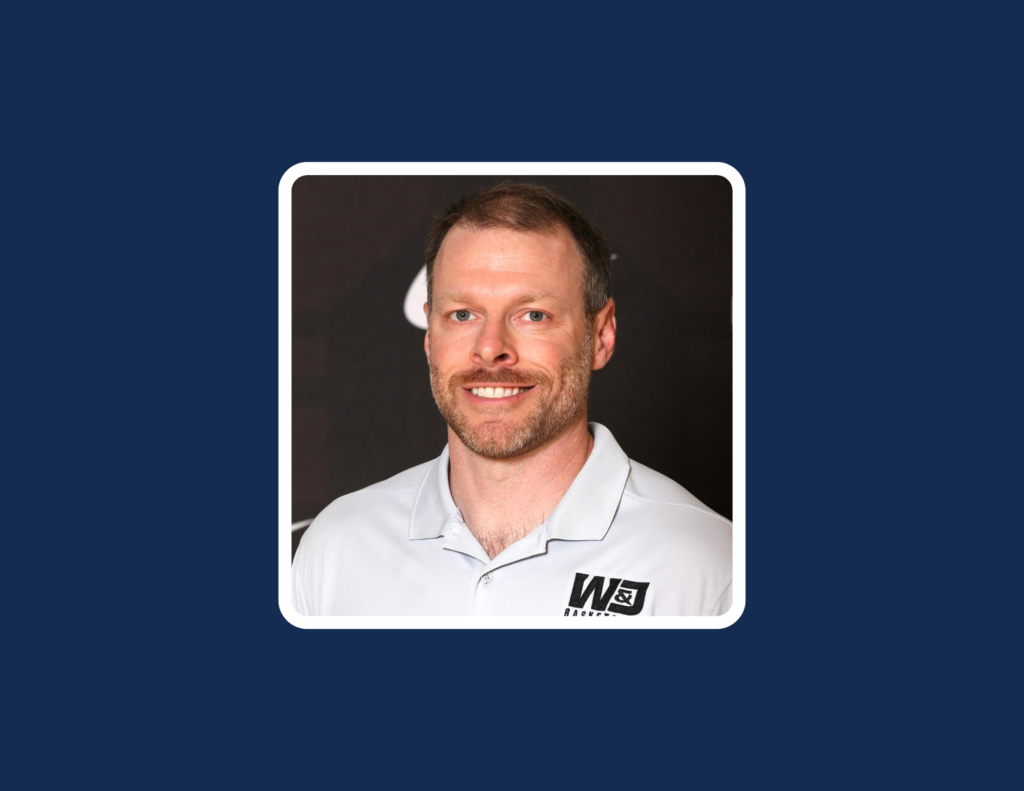
ETHAN STEWART-SMITH – WASHINGTON & JEFFERSON COLLEGE MEN’S BASKETBALL HEAD COACH – EPISODE 1207

Website – https://gopresidents.com/sports/mens-basketball
Email – estewartsmith@washjeff.edu
Twitter/X – @coachestew
If you listen to and love the Hoop Heads Podcast, please consider giving us a small tip that will help in our quest to become the #1 basketball coaching podcast.
Ethan Stewart-Smith is in his 11th season as the Men’s Basketball Head Coach at Washington & Jefferson College. Faced with the task of rebuilding the program from the ground up when he took over in 2015, the Presidents have enjoyed great success with five winning seasons in the past six. W&J has twice finished the regular season atop of the PAC. The Presidents captured the 2021-22 PAC Tournament title and reached the finals again in 2024-25.
Stewart-Smith joined W&J after a successful season as an assistant at Carnegie Mellon University in 2014-15. Prior to that, he spent five seasons as an assistant at Dickinson College.
Before heading to Dickinson, Stewart-Smith was an assistant coach for one season at his alma mater, Penn State Altoona, where he graduated in 2007 with a Bachelor of Science degree in business with concentrations in marketing and management. Ethan was a four-year starter at Altoona, where he was an all-conference selection as a junior and finished his playing career as the school’s all-time leader in assists and steals. He still ranks in the top 10 in numerous statistical categories for the Lions.
On this episode Mike & Ethan discuss Ethan Stewart Smith the challenges inherent in the collegiate basketball landscape. Ethan hits on the often-overlooked learning curve that high school seniors and their families encounter when transitioning to a college program, particularly at the Division III level. Coach Smith emphasizes that many players, despite their prior successes, underestimate the rigorous demands and competitive nature of collegiate athletics. He also shares insights from his own coaching journey, highlighting the importance of resilience, adaptability, and the cultivation of a strong team culture, particularly during the rebuilding phases of a program. Throughout this episode, we delve into the multifaceted aspects of player development, recruitment, and the profound impact of mentorship within the realm of college basketball.
Follow us on Twitter and Instagram @hoopheadspod for the latest updates on episodes, guests, and events from the Hoop Heads Pod.
Make sure you’re subscribed to the Hoop Heads Pod on Spotify or wherever you get your podcasts and while you’re there please leave us a 5 star rating and review. Your ratings help your friends and coaching colleagues find the show. If you really love what you’re hearing recommend the Hoop Heads Pod to someone and get them to join you as a part of Hoop Heads Nation.
Don’t forget to grab your notebook before you listen to this episode with Ethan Stewart-Smith, Men’s Basketball Head Coach at Washington & Jefferson College.
What We Discuss with Ethan Stewart-Smith
- The keys to his successful rebuild of the Washington and Jefferson College men’s basketball program
- The transition from high school to college basketball often presents a significant learning curve for players, which may be underestimated by both athletes and their families
- Building a cohesive team culture requires intentional efforts to connect with each player, regardless of their standing on the roster, to foster relationships and commitment
- Recruiting players who have experienced success in their high school programs
- Effective communication with players about their roles and expectations is crucial
- Maintaining motivation and ensuring that players understand their contributions to the team’s success
- A successful coaching philosophy emphasizes both the development of individual skills and the importance of nurturing player relationships throughout their collegiate journey
- Creating a competitive practice environment
- Understanding the competitive landscape of Division 3 basketball
- The benefits of developing a locker room that expects to win
Like this show? Please leave us a review here — even one sentence helps! Consider including your Twitter handle so we can thank you personally!

We’re excited to partner with Dr. Dish, the world’s best shooting machine! Mention the Hoop Heads Podcast when you place your order and get $300 off a brand new state of the art Dr. Dish Shooting Machine!

Give With Hoops is a groundbreaking initiative that fuses basketball analytics with modern sponsorship. Built for teams who see data as opportunity, from AAU programs to college powerhouses.
By tying on-court performance directly to community and sponsor engagement, Give With Hoops help programs raise more while deepening support from those who believe in the game.
Traditional fundraising disconnects donors from the action. Sell candy bars, wash cars, beg for donations, it’s exhausting and ineffective. Players perform better when their stats matter beyond the scoreboard. That’s why Give With Hoops was created.
Give With Hoops connects game performance to community support. Every basket, rebound, and assist becomes a chance to raise funds. Transparent, exciting, and proven to raise 3x more than traditional methods.
Aiming to go D3? The D3 Recruiting Playbook gives you a clear, step-by-step roadmap to the recruiting process – what coaches value, key milestones from early high school through application season, and how to build a target list of schools that fit your needs.
We’ll demystify researching D3 programs and how to stand out without chasing every camp or showcase.
The modules cover things like writing emails to coaches, building an effective highlight tape, using social media well, planning ID camps and visits, and navigating application strategy.
You’ll get templates, checklists, and an outreach plan to communicate confidently, learn how to compare financial packages, and avoid common missteps. By the end, you’ll have a prioritized school list and a decision framework you can use to land your best-fit opportunity.
Your first impression is everything when applying for a new coaching job. A professional coaching portfolio is the tool that highlights your coaching achievements and philosophies and, most of all, helps separate you and your abilities from the other applicants.
The key to landing a new coaching job is to demonstrate to the hiring committee your attention to detail, level of preparedness, and your professionalism. Not only does a coaching portfolio allow you to exhibit these qualities, it also allows you to present your personal philosophies on coaching, leadership, and program development in an organized manner.
The Coaching Portfolio Guide is an instructional, membership-based website that helps you develop a personalized portfolio. Each section of the portfolio guide provides detailed instructions on how to organize your portfolio in a professional manner. The guide also provides sample documents for each section of your portfolio that you can copy, modify, and add to your personal portfolio.

Hey coaches — you’ve got a game plan for your team… but do you have one for your money?
That’s where Wealth4Coaches comes in.
Each week, they deliver simple, no-fluff financial tips made just for coaches. Whether you’re getting paid for camps, training sessions, or a full season—Wealth4Coaches helps you track it, save it, and grow it.
It’s time to stop guessing and start building.
Subscribe now at wealth4coaches.beehiiv.com/subscribe
And follow them on Twitter @Wealth4Coaches for daily money wins.
Your money needs a coach.
Start with Wealth4Coaches.
THANKS, ETHAN STEWART-SMITH
If you enjoyed this episode with Ethan Stewart-Smith let him know by clicking on the link below and thanking them via Twitter.
Click here to thank Ethan Stewart-Smith via Twitter
Click here to let Mike & Jason know about your number one takeaway from this episode!
And if you want us to answer your questions on one of our upcoming weekly NBA episodes, drop us a line at mike@hoopheadspod.com.
TRANSCRIPT FOR ETHAN STEWART-SMITH – WASHINGTON & JEFFERSON COLLEGE MEN’S BASKETBALL HEAD COACH – EPISODE 1207
[00:00:00] Narrator: The Hoop Heads podcast is brought to you by Head Start Basketball.
[00:00:21] Ethan Stewart-Smith: You just got guys that maybe think that they should be a scholarship player that aren’t, that then think they’re just going to walk into a Division three program and it’s going to be easy from day one and it, it’s just not, there’s such a learning curve with anybody that goes through this experience that I think when you’re a high school senior or a parent, you just don’t understand it until you get to college.
[00:00:47] Mike Klinzing: Ethan Stewart-Smith is in his 11th season as the men’s basketball head coach at Washington and Jefferson College faced with the task of rebuilding the program from the ground up when he took over in 2015. The Presidents have enjoyed great success with five winning seasons in the past. Six WNJ has twice finished the regular season at top of the PAC.
The presidents captured the 2020 1 22 PAC Tournament title and reached the finals again in 2020 4 25. Stuart Smith joined Washington and Jefferson after a successful season as an assistant at Carnegie Mellon University in 2014, 15. Prior to that, he spent five seasons as an assistant at Dickinson College.
Before heading to Dickinson, Stewart-Smith was an assistant coach for one season at his alma mater, Penn State Altoona, where he graduated in 2007 with a Bachelor of Science degree in business with a concentrations in marketing and management. Ethan was a four year starter at Altoona, where he was in all conference selection as a junior and finished his playing career.
As the school’s all time leader in assists and steals. He still ranks in the top 10 in numerous statistical categories for the lions.
Hey Hoop Heads. I wanted to take a minute to shout out our partners and friends at Dr. Dish Basketball. Their Dr. Dish shooting machines are undoubtedly the most advanced and user-friendly machines on the market. Learn more at drdishbasketball.com and follow their incredible content @drdishbball on Twitter, Instagram, Facebook and YouTube.
Mention the Hoop Heads Podcast and save an extra $300 on the Dr. Dish Rebel All Star and CT models. Visit drdishbasketball.com for details. That’s a great deal Hoop Heads, get your Dr. Dish shooting machine today.
[00:02:32] Alex Sarama: Hi, this is Alex Sarama from Transforming Basketball, and you are listening to the Hoop Heads Podcast.
[00:02:42] Mike Klinzing: Give with Hoops is the first platform turning basketball analytics into fundraising impact. Every stat tells a story and now every story drives sponsorship engagement and team growth programs nationwide are transforming basketball stats into funding power. Learn to use performance data to attract sponsors, engage fans, and raise more with every play.
Give with Hoops will help you raise three times more money for your program as their stat based pledges consistently outperform traditional fundraisers. Visit give with hoops.com/hoop-heads-podcast to learn more and take your fundraising to the next level. Give with Hoops.
Be sure to grab a notebook and pen before you listen to this episode with Ethan Stewart Smith, men’s basketball head coach at Washington and Jefferson College.
[00:03:35] Mike Klinzing: Hello and welcome to the Hoop Heads Podcast. It’s Mike Klinzing here without my co-host Jason sunk tonight. But I am pleased to be joined by Ethan Stewart-Smith head, men’s basketball coach at Washington and Jefferson.
[00:03:47] Ethan Stewart-Smith: Thanks a lot for having Mike, I really appreciate it and look forward to catching up.
[00:03:51] Mike Klinzing: Absolutely. We’re excited to have you on. Looking forward to diving into all of the great things you’ve been able to do in your basketball career. I want to start by going back in time to when you were a kid. Tell me a little bit about.
Your first experiences with the game, what made you fall in love with the Yeah, it was, what do you remember about growing those early days in central Pennsylvania?
[00:04:06] Ethan Stewart-Smith: Grew up just outside of State College, where Penn State is a small town called Beon, right. Again, one of the suburbs, and was lucky to grow up down the street from my elementary school.
And at my school there was an outdoor court, so just kind of growing up had a big neighborhood with a, a lot of kids, similar ages and walking distance to the court. Just kind of grew up with a ball in my hands. my earliest memories. In many cases we’re just dribbling the ball down the street to the park to start shooting a couple childhood friends had their hoops in the basement as well.
So a lot of my earlier memories of being with friends and going to other people’s houses and people coming to, I’d always just ended with playing basketball in some capacity, right? Whether, again, it was me fortunate to be able to walk over to, to the park and really I think started to enjoy playing the game there.
As a younger kid in elementary school and then up to middle school, always being around it was able to just again, go there on my own. I grew up with three sisters so we were all about two years apart, so I wanted to get out of that house pretty regularly and again, just wanted to walk down and get shots up at the park.
So was really fortunate to be exposed to it. There. And then leading up to high school time played a, throughout my entire life, the youth leagues and then high school and growing up 10 minutes from Penn State really got to start playing regularly with just older people pretty much my entire life.
that was back in the days where when I’d go to the park in sixth, seventh grade, there’s. 20 people at the court outside playing pickup. So have to play with older folks there. And then going up to State College in Penn State and playing in those buildings, playing with college kids since I was in eighth, ninth grade as well.
So really just started to appreciate the game and play it with, I think it was important to play with older people that were better than me throughout my entire life, which was a lot of fun. I think he was able to learn a lot again, about the game and passing the ball and all, all those kinds of things, which is a little bit different these days with just the a a u type scenes.
But really got my first e exposure with being so close to Penn State and being able to play consistently there.
[00:06:22] Mike Klinzing: I want to ask you about the pickup basketball scene and kind of compare and contrast it with the way that your guys that you coach today grew up in the game. But before you do that, you mentioned playing games in your friend’s basement.
Now, I played a lot of basement basketball when I was a kid, and if your games were anything like mine, they were. More of a high hybrid of basketball and football than they were pure basketball. Because honestly, we would play in, in my basement, Ethan, we would play where we didn’t even have a basket. We had the steel beam and then the rafters.
And so there was one cutout. there was one area between the steel beam and the rafters that was the basket. So when you’re going up the. Dunk that your arm is slamming into that steel beam. And I just remember me and my friends just, gosh, killing each other.
[00:07:13] Ethan Stewart-Smith: One of my friends they cinder block walls, so we didn’t put holes in those or anything, but you’re bouncing off the walls.
Another friend, nice finished basement, drywall, we put some holes in that. Then at my house, we actually had one in the kitchen. I don’t know how my mother let us do that. We have to move the kitchen table out of the way. And the, the hoop was right above the doorway. So, yeah, it was, it, it was a little bit different than I think what some of these guys are experiencing these days.
So yeah, it’s very different back in the day. Geez. E everybody had to wait to play. you don’t, there were winners, courts, and then sometimes not even room for losers courts, and you walk in with random people and just have to pick your five. And if you lose, you don’t get on for another hour or so, or you have to go to a back gym or a side hoop.
And again, just the overall accessibility with more open runs. It just, I think a lot of basketball’s just much more structured these days.
[00:08:14] Mike Klinzing: It certainly is, there’s no doubt about that. And I think you mentioned just learning how to pass and playing with older guys. And I tell people all the time, and anybody who’s listened to podcasts on a regular basis knows that basis.
I say this anytime we get into this discussion, but the opportunity to play with older players again, especially as like, I started going to, the courts kind of like you, right? I’m 13, 14 years old. I’m playing with high school guys, I’m playing with adults, I’m playing with college kids. And it certainly puts you in a different spot in terms of just.
Again, how you develop your game, you have to, when you’re 13 or 14 years old
[00:08:50] Ethan Stewart-Smith: mm-hmm.
[00:08:50] Mike Klinzing: You’re not going to be the guy on your pickup team. You have to figure out ways, what can I do? How do I get the ball to the guy who likes to score? How can I play a little defense here or there, or do all the little things right.
That helps your team win. So somebody will pick me up and I can play again. And I think that’s something that, again, in, in today’s world, has been lost. And clearly the players today, just from a pure basketball skill standpoint, are far superior to the basketball players that I played with against myself.
I just look at the ball handling, the shooting, the skill level that these guys have. And I have no question that, that the skill level is much higher today. Sometimes I wonder if the competitiveness and the basketball IQ is there in the same way, simply because of the number of games that you played, or I played from a pickup that, just from that perspective again, I know kids are playing a lot of a a U games and Right.
That’s always the conversation of our kids playing too many games today, and they probably are when you start talking about an organized game. But I would venture to guess that my son, who’s a sophomore in college, the number of games that I’ve played in compared to him is I mean, it’s astronomical how big my lead is when I was a sophomore in college compared to where he, because again, I just played so many games to 11, win by two and one in my driveway.
And so when you think about. Maybe what your guys are missing out on. How does that impact what you do as a coach to try to draw some of that stuff out that maybe you and I learned naturally just playing pickup basketball on the playgrounds or in the basement
[00:10:33] Ethan Stewart-Smith: or the kitchen? Yeah. It’s, it’s, it’s, it’s certainly a different world, but just really I think talking about, like you said, the competitive aspect of it, and I think the conflict too, like I mean we think back to our days, like it’s very different when, say you’re 12 years old playing with other 12 year olds.
Like nobody’s really going to tur you that much or tell you that you’re doing something wrong. But when you’re playing with older folks, and again, they take their basketball seriously and you’re a young kid and you make a mistake or don’t do something, or try to do something you’re not capable of, like, they’re going to call you on it.
And being a, a kid playing with adults, like you’re going to listen to them and I just. so just trying to be that voice of reason and say like, Hey man, like when we correct something, it’s because we care about you and we want you to do well and our team wants to do, like, don’t be afraid of that.
Like that, that means you care. Right. So just trying to put it in kind of a different perspective, I guess is what we try to do pretty regularly with our guys. because just, again, the way that they’ve been through the game, it’s just, it’s, it’s very different. I don’t think that many of them, have played a whole lot of games that haven’t either been officiated or haven’t had a coach in the gym.
Like it just doesn’t happen quite as frequently. So trying to break down those walls of just being a good teammate and doing what’s right and listening to your teammates that have been through it before.
[00:11:53] Mike Klinzing: Yeah, that makes sense. I mean, I think, again, you’re always looking for how can I maximize my players’ experience and what they have and build on the strengths, which.
Again, clearly I think the skill level of players, as I said, is super high today. And so then it’s a matter of how do you teach them how to apply those skills in a team setting and get the competitiveness and all that. And I think we’re all, we’re all always searching for how do we get the most out of, how do we get the most out of our players?
And I think that was well said in terms of how we do that. When you look back on your time as a young player and by young player, I’m thinking grade school through high school, is there an adult or two, a coach or two, somebody that you look to as kind of your basketball mentor or somebody that. When you look back now, feel, you feel like they had a huge influence on who you were as a player, but then also who you’ve become as
[00:12:45] Ethan Stewart-Smith: a coach?
Great question. And my, my path it was a, a little bit unorthodox and I don’t think that there’s a blueprint really for anybody getting in this business that’s consistently the same, which is one of the reasons why I was drawn to coaching to provide a, just a stable, consistent experience.
Probably like my seventh and eighth grade coach was probably more heavily involved. just always around driving people to, from workouts. Mike Hendershot, Hindu was his name. He coached baseball as well, so we were like kind of together year round. He was our, again, middle school coach, that, that was the most structure that I had up to that point.
So he just really kept us connected with my, my age group as well, and was influential in kind of bringing us together and holding us accountable. So that was kind of one of the first experiences there. But after that, then. played for three different coaches in high school. Was recruited by one coach in college, then new coach was there before I got on campus.
Then played for another coach in my senior year. So when I think about my experience from a coaching perspective, that’s like six coaches in eight years pretty much. Right? So that part of it was wildly inconsistent and so it’s really tough to draw any direct kind of mentorship or anything like that.
But I still keep in coach with, in touch with my high school coach, that coach from my senior year. And then my college coach for my senior year as well was who kind of got my foot in the door with coaching.
[00:14:13] Mike Klinzing: Do you think that playing for all those different coaches, maybe you didn’t realize at the moment, but now looking back retrospectively that maybe just being exposed to all the different ways of doing.
Things as a coach, right? Because a lot of times, especially when we come off our playing career, I played for the same high school coach my entire career, played for my same college coach my entire career. So when I became a coach for the first time, like the only thing I knew is what those two guys had done.
And every drill I had, every offense, everything that, that was the extent of what I knew. When I went to run a practice or figure out what my team was going to do, I’m like, all right, well, we’re going to do what one of these two guys did. Whereas again, you had maybe the experiences were kind of all over the place.
It was a rollercoaster ride. Yeah. But you did get exposed to a variety of coaching styles and philosophies. Good, bad, evil, whatever. But nonetheless. That exposure? How do you look back on that in, in terms of thinking about it from a coaching perspective
[00:15:12] Ethan Stewart-Smith: as opposed to your experience as a player? Yeah, I think it really did help shape kind of my vision for what I want the experience to be, right?
I think you, you get exposed to so many different things with so many different coaches. you see a lot of things that you really like about the experience. You see some things that you think could have been done better and it, it, it just kind of really reinforced again, the fact that one-on-one coach and two again, how I think it should be run.
because again, I was really fortunate to have that type of exposure and just see a lot of different things done a lot of different ways and a lot of that stuck with me and still kind of has an impact on how we do things day to day.
[00:15:51] Mike Klinzing: What was your re recruiting experience like? Tell me
[00:15:54] Ethan Stewart-Smith: about the decision to go to Penn State Alona.
It was a little bit weird and probably could have done more from my end, just really not having much experience with it. Not having any family members that had gone through the recruiting experience? No. Older teammates or anybody that ended up playing in college. So it, it was it, I played my last high school game.
I still remember it, man. We were, we, we lost in the first round of districts and after the game it was Coach Mack, Kenny Ma Macklin was from Penn State Altoona at the time. He, he came outside our locker room and got an opportunity to talk to him there. Wasn’t heavily recruited or anything. Growing up, again, in central Pennsylvania.
Not a hotbed for college basketball. we’re, or high school basketball either we’re three a team, so kind of on the smaller side in the state. I didn’t get to go to a ton of exposure events or play au or anything like that. So very minimal recruitment. Got a couple letters here and there from like a juniors lead valves, those types of places.
My mother works for Penn State. So that was kind of a natural fit for me, especially as I’m on this end of it now as a coach and seeing financial aid packages and all that, having to deal with the layers there. I was fortunate that my mom worked for Penn State, so that, that made sense for me and I was able to visit campus and enjoyed campus.
It was the first year, my freshman year was the first year that we would’ve been transitioning to division three at Penn State Altoona. So felt like it was a good fit for me and again, liked campus. I, obviously Penn State’s got a great reputation and it was about an hour from home. So it felt like that was the right fit for me and decided to go there.
And then shortly after that, later in the summer Penn State Altoona decided to make a coaching change and let coach Matt go and hired Arman Gilliam. So the hammer played at UNLV and was a top five pick in the NBA draft 13 year veteran. So walked into a situation where I got to play for Coach Gillian for three years.
[00:17:52] Mike Klinzing: So. Obviously, the name right? As soon as the coaching change is made, not a typical division three coaching change where somebody new comes in, you’re, well, who’s this guy? Right? You come in and you immediately, there’s, there’s, there’s, there’s name recognition there no problem in that, in that area, but still had to be an adjustment that, okay, the guy who recruited me, all of a sudden, definitely he’s not there and I have to make a I, I have to just kind of shift my mentality and then now get used to again, a new guy despite the fact that the new guy is somebody that at least by name and face who he is.
So what was the experience like playing for a coach who had such a, a playing career on the level that he did? And again, not typically what you see again at the division three level, right? Yeah. You don’t usually see former NBA players taking division three jobs. Bringing an, an unusual, yeah. Again, an unusual experience, let’s just say for, for players at the division three level.
So what do you feel like was his calling card? What made him special as a coach? Or what did really enjoy the play for him?
[00:18:59] Ethan Stewart-Smith: He was just really honest. And now my teammates and I from college still just joke about it every time we’re together, I was one of my college teammates is an assistant in North Carolina Central now, and they just played Penn State over the break.
So I was able to go watch that game and another teammate came to it and we just laugh every time that we’re together about the stories. because man, he was just, he was just very honest, obviously an NBA player, like his, his competitiveness. It was just through the roof. And again, I mentioned we were transitioning to division three my freshman year.
so. And now again, I, now that I’m on this side of it, I have a little bit more respect for just kind of understanding what was, what he was trying to do in, in many ways. And he, because he, he cut the entire team from the year before. I think he kept maybe two players my freshman year from the previous team.
So it, it was just a really unique experience because it was a bunch of freshmen that he didn’t really recruit either. Got some guys in there late, a couple transfers. So it was really just a mismatch type of group that were there for my freshman year. We won one game. I mean, we were, we were not good and he practiced a lot that year.
So playing against an NBA veteran every year. I mean, he is a six, seven power forward, six, eight power forward. Our post player was like six two. So he’s like up and under on guys, like just again, compete level will screw the roof. But I think that’s where you really started to learn how to kind of deal with conflict because he, he was very, very blunt with how he addressed you.
He consistently challenged you every day. if you weren’t ready to practice, you, you were going to hear about it, ? So I think that was hopefully one thing he appreciated, appreciated about my game. The three years, like we had our ups and downs freshman year for sure. There were days that we did not like each other.
I was in the doghouse for long stretches. I hung around. I made a little bit of a push late my freshman year and then kind of didn’t look back after that. So I think as, as my career progressed, we were just had a mutual respect for each other and understanding it was a little bit different.
I was never coached by someone with that competitiveness, and that was that direct and had those types of expectations. So it was a little bit of an adjustment for me, but I wasn’t going anywhere. I was, I was ready to kind of compete on a daily basis and appreciated that aspect from him.
As far as coaching,
[00:21:16] Mike Klinzing: were you thinking about coaching? At this point in your playing career, was that something that was on your radar or were you still just a hundred percent focused on Yeah, being a player? Because usually I find right, that people are one of two camps. There’s the kid that in third grade, they’re drawing up plays on a napkin or scratching stuff with a stick on the dirt with their, with their teammates.
And then there’s other guys that they don’t even think about coaching until their playing career is over. So I don’t know if you of
[00:21:43] Ethan Stewart-Smith: those past, yeah, I always about it. my high school team would come back out to Altoona o over the course of summers and I was an RA in college, so I just stayed in my apartment and worked out on campus for a couple summers and when they were playing summer league, I’d go back over to the gym and watch and talk to my high school coach a little bit and kind of involved a tiny bit from a distance.
It was something that I was always kind of interested in, but I was never really sure exactly maybe how to kind of take that next step and actually get involved. So I wasn’t. I was not thinking I was going to coach. until then that coaching change happened. Coach Gilliam got let go my junior year going into my senior year and.
That was when Al Retty, coach Reddy, he who’s at Dickinson College now. He came in and was my coach my senior year, and it was just a different type of relationship and that, that was where it, I started to think a little bit more about possibly doing it long term. I still had an internship to finish up after my playing career ended, so I took another semester that fall semester and helped out as a student coach when I was finishing my degree with Coach Retti and just got a little bit of exposure there.
And then entered the workforce after that for about a year and a half. And then was kind of between jobs again kind of figuring out exactly what I wanted to do. I didn’t really like the corporate stuff. I was working for a minor league baseball team at that point in, in state college running a single a box office, so in sales and doing all that type of stuff.
And then Coach Reddy called me when he got Dickinson and had an assistant job available and asked me if I wanted to go with him. And I kind of jumped at its sight unseen because I wasn’t exactly sure what, what I wanted to do. I knew it wasn’t sales not really knowing that coaching is so much sales.
But that’s when it really started to hit once Coach Reti got got al to, and I was able to spend the year with him and just learn. And there was, it was much more relationship based with his coaching style as opposed to Coach Gilliam’s. And again, that was eye-opening for me and it was really influential and kind of me getting my foot in the door.
[00:23:47] Mike Klinzing: Yeah. Yeah. Two different styles, right? Again, going back to what we said a little bit earlier, right? You’re learning from different people in terms of not just what they’re doing on the floor in terms of X’s and O’s and philosophy, but just in terms of, yeah. Demeanor and just approach with players and relationships and all those kinds of things.
And I’m sure as you go through and you, you’re going through your career, you’re able to look back on those and reflect and say, Hey, this is something that I really liked about this guy. This is something that I maybe didn’t like as much. And you’re trying to take those bits and pieces along as you go.
So when you think back to getting that first assistant job at Dickinson, obviously you have a familiarity because you, you’ve already played for Coach Retti, so that may gives you a gives you a leg up in terms of the, the relationship from that standpoint. But what do you remember about just maybe learning the coaching profession, some things that you picked up in that first season about the coaching profession that made you think, yeah, I think I’m in the right place.
I think
[00:24:47] Ethan Stewart-Smith: this is where I think this is where I belong. Yeah. As players, you just, and they shouldn’t understand what’s involved in, in kind of building a team, but you’re first. A couple months in the office, just learning about what has to happen to be successful is just really eyeopening because like you can talk about it, but until you’re actually kind of doing it, you don’t understand how much is involved in one, putting a team together and then just what are you going to do with your team?
How do you build offense, defense, and then all the office stuff and recruiting stuff and preparation for games. So I was really thankful. At Dickinson, coach and I actually shared an office. So I got kind of firsthand experience with like, what we do on a daily basis, right? Like it wasn’t a great situation because we shared an office, like it’d be nice to have a little bit more space.
But it was really, it was really good for me to just be directly exposed to it and just be able to kind of copy what, what we’re doing on a daily basis. Being there. He is very diligent with, being in there early, staying late, back then when. We texted a little bit, but all the recruiting was done in the office on phones in the evenings, right.
So that was again was just really exposed to kind of expectations with the work level of what it’s going to take to kind of have a successful program. So that was again, really influential with me understanding that this is what it takes and seeing it pay off as well as our first year, second year, third year, like, just the, the progression and the challenges that come with that I thought was just really, really, really rewarding and was something I really enjoyed.
And I still love that challenge of kind of maxing out like we talked about early in this call. Like that’s our, our goal is to get the most out of our teams and kids. And the challenge of doing that is something that really drives me.
[00:26:48] Mike Klinzing: What was something that you felt like took the longest time for you to, I dunno if master is the right way to phrase it, but in terms of your skill as a coach, what’s something that you felt like.
Hey, I started out kind of on this level and over the course of time I’ve gotten much better at it throughout film.
[00:27:07] Ethan Stewart-Smith: I think just preparation, I’ve
[00:27:08] Mike Klinzing: been coaching
[00:27:09] Ethan Stewart-Smith: when you’re first kind of exposed to it and don’t really have much of an idea of even what you’re looking at, like, it, it, it takes a little bit of time to be able to understand and terminology to when you’re working under somebody else.
Like it just, and without having any coaching experience, like I wasn’t real technical with terms about what this action is or what this screen is or what this play is. So it took me a long time to to work at that and figure that stuff out. And that, that’s where again, just being able to watch film with coach a lot and talk about actions and how we’re guarding them and what that action is like.
That was definitely took the longest and was the steepest learning curve for me. I I didn’t really do a ton of actual coming up with my own scouts until year two or three. because it is just a really long process with understanding how to game plan and what you’re looking at.
[00:28:00] Mike Klinzing: I’m going to jump ahead, but then I want to come back to the next stop in the, in the journey, but just from your own perspective as a head coach, you talked about terminology and being able to just think about from a technical standpoint, how you want to teach whatever your offense or defense to different subtleties within it.
Within that, how long did it take you after becoming a head coach to feel like you had cemented sort of the vocabulary that you wanted to use to be able to teach your offense and defense and just the things that you’re putting in on a day-to-day basis? When did you feel like you really had a grasp on all that stuff?
So you could just, boom, we’re doing this, you can teach the players, you can teach your assistant coaches?
[00:28:41] Ethan Stewart-Smith: I think I really started on the same page. Comfortable probably like year five. I think that was it once we kind of got through our first recruiting cycle and had a little bit more consistency in that year, kind of.
Four to five. It, it, it started to just be a little bit more comfortable and a little bit more consistent with how we were doing things and what we were talking about and terminology and all that type of stuff. Because your first couple years, your head spinning and especially I was really fortunate to have coach at the places I did with really good talented players and having high end guys and then you kind of hit the reset button with getting a head coaching job and it’s a complete rebuild and you just don’t have the same type of caliber players, right?
So you think you’re going to be able to come in and do a lot of the same things that you did when your boss was making decisions the year before. And it just, it, a lot of times it doesn’t translate right. So just in those first few years of trying to figure out what we need to do to be successful was kind of hit or miss, right?
So it just took a few years to kind of get a little bit more consistency, especially with kind of how we do things.
[00:29:49] Mike Klinzing: Tell me about the opportunity at Carnegie
[00:29:51] Ethan Stewart-Smith: Mellon. How it was across was, it was one of the toughest decisions of my life. I loved loved my time at Dickinson there five years.
Which again, it’s crazy. It felt like it was, it five years felt like such a long time. And now I’m in year 11 here at WNJ. So it just, and it, it flies by. I was unfortunate at Dickinson. I was not full-time coach there, so I was still doing got a little bit of a stipend for coaching and then helped out with our SID stuff a little bit the, the usual college coach routine, right?
You’re just kind of making ends meet with some odd jobs around campus. At that point CM U’S assistant got a head coaching job late. It was October when, or it was like early September when he got the job. So started an interview process at CMU in September as well. And again, man, we had a really good team coming back.
We were coming off in an Elite eight at Dickinson, so we were really good and going to be good again that year. But it, it was a great opportunity. CMU had just had a full-time job opportunity come open. Both of my parents grew up in Pittsburgh as well. So, so I spent a ton of time coming out here in Western Pennsylvania throughout my childhood, visiting grandparents, aunts, uncles, all that stuff, right?
So my sister lived here at the time in Pittsburgh. So it, it just was a really natural fit for me. Coach WinGen I had known him a little bit. Justin Jennings was another former assistant of his, he’s a Penn State Baron guy that I played against in college. So I was able to talk to him a little bit about the experience, and again, UAA, like really.
Good league, obviously. So just being exposed to that level of basketball was just a no-brainer for me. And I was really fortunate that that job came open so late and it made sense for me. So I was really fortunate to get that job. It was October when I got it though. So October 1st was my first day in the office at CMU, so it was a really tough decision to leave.
I loved our team at Dickinson. I barely said two words before starting to cry in front of our team at Dickinson when I had to tell them that I was taking the opportunity. But it was really fortunate to get that and we kind of had no choice but to hit the ground running. When I get the job on October 1st at CMU.
[00:31:59] Mike Klinzing: Absolutely. Yeah. You’re you’re behind, you’re behind the eight ball. When you get the job on October 1st, there’s no doubt that you’re, you’re scrambling to try to figure things out and put stuff together. Yeah. I think that leaving your previous team, and I don’t care if it’s a head coach taking a new head coaching job or leaving as an assistant to go in and take another job.
I think that’s always, it’s always really difficult and I think that it’s something that whenever I talk to somebody, and obviously most guys have experienced that at some point in their career I think it’s always one of the toughest things that guys talk about, that leaving a job and just leaving those players that people don’t.
I think people outside of coaching and outside of athletics don’t understand just how intense going through a season Yeah. With a group of people. They don’t understand the bond that that creates. Again, going through the highs, the lows, the tough times, the good times, and what that creates. And then to have to walk away from that, I’m sure was really difficult.
You could have showed them your paycheck, you could have just showed your guys there like, Hey, this is my paycheck for the last season. I, I probably nothing against you guys, but I just, I’m trying to upgrade a little bit from the, from the paycheck that I, that, that I’m getting here. So I’m sure they would, I’m sure they would’ve understood.
But yeah. And then the opportunity obviously at Carnegie Mellon with the, again, as you said, the UAA, which is such a unique division three league with the travel and just the major cities that you get a chance to visit with that. And obviously the academics there are second to none when you start talking about Carnegie Mellon.
So I’m sure that that experience was one that really continued to prepare you for the opportunity to, to get ahead coaching job.
[00:33:46] Ethan Stewart-Smith: Coaches, you’ve got a game plan for your team,
[00:33:48] Mike Klinzing: but do you have one for your money? That’s where Wealth4Coaches comes in. Each week, we’ll deliver simple, no fluff financial tips made just for coaches. Whether you’re getting paid for camps, training sessions, or a full season, Wealth4Coaches helps you track it, save it, and grow it.
It’s time to stop guessing and start building. Subscribe now at Wealth4Coaches.beehive.com/subscribe and follow us on Twitter at Wealth4Coaches for daily money wins. Your money needs a coach. Start with Wealth4Coaches.
Was becoming a head coach. When did that get on your. Radar screen, was that something that you were already thinking about? Or, or how, how does the Washington Jefferson job,
[00:34:36] Ethan Stewart-Smith: where’s your thought process at the time? I, I wasn’t sure if I was ready or not. I had gone through a couple phone interviews with some head coaching jobs while I was at Dickinson and never got on campus or anything.
So working under Coach Retti, he was still kind of wired almost like wired, like an assistant. Like he did a lot of the grunt work still. Like we were really collaborative with recruiting efforts and he still did many of the scouts. I didn’t do, I did maybe a third of them, like he was still really involved in day-to-day stuff.
I would clip the film he made all the decisions with coaching, would ask for input and that type of stuff, but it wasn’t like I was, I was installing or saying, Hey, let’s run this play. Like those types of things. He was still handling a lot of those things. And then when I got to Carnegie Mellon with Coach WinGen, it was just much more like, Hey, you got the defense.
What do you want to do? so that’s where then I started to be able to actually install things. And I did all of our scouts and film work almost single-handedly there. So Tony and I, we would meet and discuss and come up with plan game plans together. But he really kind of gave me the keys and let me run with it.
so that’s where that, that year we had a good, really good year and played well and beat a couple top 25 teams. And again, we were over 500 after losing a couple seniors that were talented the year before. So it was just a really kind of positive year. And I felt really prepared.
I was proud of the work that we did, the preparation that we, we kind of had. And so that really just to me, and Coach WinGen said it too in our midseason off season, he is like, I think you’re ready for it. If an opportunity were to come up, like, what do you, what do you want to do? And that’s another thing that I was really grateful for.
Tony and Coach Retti, like they’ve been through it and they understand there’s no good time to leave anywhere. Right? So that’s something that has always stuck with me. A as a head coach, like if one of my assistants has an opportunity, I don’t care when it is, I’ll support you. Like we’ll figure it out.
Don’t worry about like timing of it or finding a replacement. Like that’s not your job. Your job is to try to get a better situation. Right. So because it was, I was only at Carnegie Mellon for six months. I got there in October and then W and j had made the decision to open up their job in April.
And Coach Retti was actually an assistant here at WNJ before coaching me at Penn State Altoona. So as the longer I do this, you also start to realize that the relationships matter and. Many people have pretty deep ties to a lot of different places, then that, that influence can really help.
So I wasn’t really sure if I was going to have a cad coaching opportunity after year one at WJ or after year one at Carnegie Mellon. But again, WNJ kind of opened up and it just, it, it was a really good fit. It made sense. It, it had a lot of similar alignments to kind of what we had gone through at Dickinson with taking over a program that hadn’t had sustained success for long periods of time.
We knew we were looking at kind of a complete rebuild. It was something I was comfortable with. Felt like the school in in general had a good infrastructure and were moving in the right direction with some facility projects and those types of things. So I was really fortunate that got my name in the hat there and I think especially the relationships that Coach Retty had there.
And one of my other best friends was an All American football player here who was also in coaching. So he knew the ad trainers, some people that were involved on the interview process. So there were just some pretty, pretty nice deep relationship ties to w and j that really helped me get my foot in the door and at the end of the day, helped solidify the job.
[00:38:20] Mike Klinzing: What were some of the key questions that you had for them during the interview process and when you were making your decision about whether or not you were going to take the job? What were things that you wanted to know from. Administration about whether it was the support for what would eventually become the
[00:38:38] Ethan Stewart-Smith: program.
Just a little bit about that I think. Is there investment in the program? Like do we care about being successful here? Right? And if the answer is no, then our vision is not going to align. But it was really self-explanatory. I didn’t have to ask a ton of specific questions because they had the renderings and drawings and everything all ready to go with these major investments in athletics here.
So when I got here our building is from the 1970s and now this year, 11 years later, we just finished our $3 million locker room renovation downstairs in this whole building now that was built in the 1970s has now been completely renovated, top to bottom. So I just wanted to make sure that I was in a good situation.
Valued winning that had a good academic reputation. when you think about the liberal arts rankings ours is near the top in the league. We’re a top hundred small college, private liberal arts college. So wanted it to be a, a good academic experience where we we’re going to be able to recruit more than just Western Pennsylvania.
And there’s been a commitment here from a facility standpoint, from an admission standpoint. it’s, it, it’s been a really good experience where we feel supported and feel like we’ve got what we need to kind of be successful here. And again, I think at the end of the day that that’s what you want out of the experience.
You want to be able to provide your team with things that college athletes should get. They should have nice facilities. They should have a weight room, they should have a, a locker room, like they should have travel gear, like all those types of things that we don’t have to nickel and dime our families for
[00:40:07] Mike Klinzing: in that first year.
If you think back to that time, and yeah, you said it was a rebuilding job and clearly it was, but when you think about day one, and obviously as a brand new head coach, first time head coach, you have a vision that you’ve built up over the course of your career of what you want your program to look like, what you want it to, what you want to do, what you want the culture to be, all these things, right?
You have a picture in your head of what you want it to look like. How different was the process of implementing that vision than maybe what you thought it would be prior to becoming
[00:40:49] Ethan Stewart-Smith: Yeah.
[00:40:50] Mike Klinzing: A head coach, if that question makes
[00:40:51] Ethan Stewart-Smith: any sense. It really like comes out and punches you in the face day one. Yeah.
You you always think that, I think as a coach, you think you’re just going to be able to step in there and you’re like, I can. because of me, we’re going to get 10 wins or whatever the number is. Like, you just, you just really kind of overshoot it and it, it took a one practice to realize that we got a long way to go.
? And again, when I say complete rebuild, man, we had, we ended our, my first season with six healthy players as a college basketball so yeah, I think that’s the other thing. When you’re a young coach, you kind of have to draw a line in the sand and you’re either with me or not. And it’s okay to not be on the same page with people.
So there were probably three or four guys that were. Thought we might, might be involved or on the team in some capacity, and then you talk a little bit more and our divisions just don’t align and you just go your separate ways and that’s okay too, ? So that, that first year was just it was a bumpy ride.
We had some injuries and just some guys that weren’t, weren’t college basketball players. we had some managers from the year before playing for us, like guys that just really weren’t recruited and they showed up. And I think when you think about toughness and effort and the amount that they cared, like that was near the top of the 11 years that I’ve been here.
But we just weren’t built to be successful in any capacity that year. So we had a, had to get a big recruiting class in there. It was just, again, six healthy guys first year we’re playing zone. I’m not a zone guy. I have no idea what we’re doing, what zone, just because have to protect our players.
Like it was just it was a, a very humbling experience after again, being a really different situations at CMU and Dickinson.
[00:42:35] Mike Klinzing: What do you feel like you put in place culturally that first year? Obviously the conversations with guys who had previously been on the team who, as you said, we’re going to go our separate ways.
Obviously that speaks to the type of culture that you wanted to build and who was going to be a fit for that. So when you think to that first year, what were some of the building blocks that you felt like you put in place, despite the fact that maybe the one loss record obviously wasn’t where you wanted it to be, and as you said, you weren’t ready to really compete and prepare at the level that you needed to.
But culturally, what did you do right that first
[00:43:07] Ethan Stewart-Smith: season? I mean, I think sort of set the foundation moving forward. We definitely set a, a certain expectation for how we were going to do things. I felt like we really showed that we cared about our team. Our relationships are super important and I’m proud to say that two guys from that team are going to be here this weekend for alumni day.
Right. So again, I think that’s one thing that is, is fun about. Our teams and college programs. Like, it’s not always about what you are specifically going to do during your time here. Like for us it was just kind of getting through a year and just kind of laying the foundation. That’s it, right? So that, that group did that.
That’s the dirty work, right? Just getting through a year, starting to build some kind of competitive habits. And we talked about it at length through throughout the course of their years. Like at some point this mansion is going to be finished. We’re getting closer to it. You guys are the one that kind of dug the trenches and laid the foundation for what our team is able to experience now.
So I was really proud of that group, man. Those guys showed up and practiced every single day. Come competitive. Like we, we were in it together. There was just a deep level of respect in that locker room because we knew how hard it was and really again, kind of shared that experience and that that was special.
I think we really leaned on each other. We knew we weren’t good enough. But we got through it. And again, like I said, a few of those guys are coming back this weekend, which I’m always excited about and grateful for.
[00:44:37] Mike Klinzing: Yeah, very cool to be able to have those guys. I think, like you said, that is a special part of college athletics, right?
Is the connection between not just guys who even played together, but just, Hey, this guy is eight years older than this guy and yet they still have a connection through the program and through events and through coaching staffs and all that kind of thing. To me, that again is, is one of the best parts of being part of a college program, is just being always, always feeling a connection to it.
And I think the best programs do a great job of keeping their alumni engaged with just, whether it’s having events or just communicating and all that kind of thing. I think it’s always a huge plus for any program that can, that can do that. You talked earlier about when I asked you the question about terminology and kind of how long it took you to feel like you, Hey, I know exactly what I’m teaching.
I know exactly what I want to do as a head coach, and we’re getting there. So to go along with that same idea. I’m assuming that about that same time is kind of when your team on the floor started to really represent what you felt like you wanted your teams to look like. Clearly, as you said, in year one you’re playing zone, you don’t have the kind of personnel maybe to play exactly the way that you want to.
So by the time you get to year four or five, is that where you kind of feel like, alright, now these teams are really starting to reflect who I am as a head coach and what I want my teams to look
[00:45:57] Ethan Stewart-Smith: like? Like is that kind de Definitely. We started, talked about it to, to get better and again, year five I think was the first year we were over 500.
And then the COVID year hit after that. So that, that year to really. Kind of get us to that next level. I wanted to play fast. I didn’t have a ton of experience playing fast especially on the defensive side of the ball. So another kind of influential piece of how we’ve gotten to where we are was just with hiring my current assistant now Evan Benor coach b, he, he came from east Stroudsburg.
He was a GA there. And they press and one of the best pressing teams in the country at the division two level. They were in the Elite eight, his first year there as a ga. He was bouncing around after leaving east Stroudsburg. And again, I was eager to learn more, pressing to get tempo, kind of moving, and was really fortunate to hire him.
And I’ve now passed the reins. Now he, he handles all of our full court pressure. I’m the half court guy. But that’s really allowed us to kind of change how we play and solidify the tempo that I had kind of envisioned. And he’s, again, it’s a really collaborative experience. He does. He’s, he’s essentially an associate head coach, handles a lot of the recruiting and game day coaching.
He completely coaches the press and full court pressure stuff. So that was another kind of big big help to get in our program to where I felt like we could be right with that style of play and tempo. He’s done an incredible job of getting us to that point.
[00:47:30] Mike Klinzing: So there’s one way that you learn, right, from hiring good people and you learn from them.
But obviously as a head coach. And somebody who loves the game, you’re also trying to improve and get better and work at your craft all the time. So from your perspective, if you were going to give advice to another coach at the college level in terms of where do you go to learn and continue to improve?
Are you going to mentors? Are you reading, are you watching YouTube clips from European Pro teams? Are you watching the NBA? Are you watching other college programs? Probably a little bit of all of the above, but just maybe gimme some of your favorite resources for Coach. Yeah, I
[00:48:11] Ethan Stewart-Smith: think for growing coach somewhere to highlight tapes and that type of stuff, you see some, some blurbs pop up everywhere on Twitter, the algorithms got you, right?
So I’m constantly seeing many bloggers and YouTube folks just posting clips and stuff. So I think that’s a good early exposure. And then with Synergy and everything, we’re able to just hop in and just watch film on teams in the offseason, right? So when we think about. how we build our playbook, especially on the offensive side.
Like now the resources are endless so I’ve got some other groups of coaches. There’s six of us that talk every single day basketball stuff off season we’re, we’re calling, we’ve done back in the COVID days doing zoom sessions on certain topics and those types of things. So I think like many of us, it’s a balance between the film work and watching and studying teams on synergy and then bouncing ideas off of your other coaching friends.
fortunately for us, some of us played each other this year, so I think there’s no better resource than exchanging scouts and talking about our teams after we play each other to just get better. so I’m really fortunate to have that network of guys that we can talk about basketball type of stuff.
Alright. If teams are doing this, what do you like teams running ball screen motion. What options do you like out motion to if a team’s guarding it this way? So it’s, it’s definitely a group effort with. Looking at up stuff on Synergy and then just picking up the phone and talking to friends.
[00:49:36] Mike Klinzing: How often do you find something cool and you’re like, ah, I love that, but it just for whatever reason, doesn’t fit with either your personnel or just every
[00:49:45] Ethan Stewart-Smith: day.
Often
[00:49:45] Mike Klinzing: does that happen
[00:49:46] Ethan Stewart-Smith: in my Twitter that I’m like, alright, someday maybe we’ll be able to pull this out and it’ll make sense for us. Right. But yes, there, and I think that’s the other hard part sometimes as a coach with, with the access to information that we have now, like how do we implement it all in a way that makes sense, right?
Because you want it all to flow. You want everything, but there’s just, there’s just so much stuff out there. There’s just not enough time to get everything in that you want to.
[00:50:18] Mike Klinzing: Yeah, I agree. I’m not really even coaching a team. I’m like the assistant coach for my daughter’s 10th grade a a U team, and I have. I probably have a Twitter bookmark page of like 45 or 50 outbound baseline out of bound plays. I’m like, I’m like, what am I doing? Like why do I, some of them are like LOBs for dunks to the guy who’s six 11.
I’m like, I have 10th grade girls. I don’t think this play is really going to work for us. Yeah. But I’m like, it looks really cool in this particular highlight. So I highlight, I can completely relate to sort of the, again, the picking and choosing. So when you talk about putting together a cohesive plan that works for your team, at this point in your coaching career, do you feel like you have a pretty good rhythm?
Let’s go back to the fall, right? Division three,
[00:51:05] Ethan Stewart-Smith: yeah.
[00:51:06] Mike Klinzing: Recently adds the eight practice days that you can use outside of the normal time. But how do you organize your preseason in terms of, yeah. Getting things in, right? If, if there’s a pacing to it, to make sure that you get everything that you need to be prepared for that first game.
So just maybe walk me through kind of what the process looks like for you, thinking about it and then putting it on paper and then putting it out on the court with your guys.
[00:51:34] Ethan Stewart-Smith: Yeah. Really, once we, in of that pre-season, you start getting ready for things like I got the big whiteboard in my office and it’s just got everything all right.
Offense, defense, all the layers to it. But my kind of thought process, the longer we’ve done this is what do we want to be good at? That’s first and foremost, right? What’s kind of our identity. So we’re going to practice those things the most early on, right? We’re from day one. I think the early part of the season is kind of who can impose their will on their opponent, who can control the terms of the game.
So we really want to make sure that we’re really clean and seasoned in those areas that we want to kind of be good at, right? And for us, it’s our defensive pressure. So day one we’re starting our deny drills. We’re starting to put in some full court slides. We’re, we’re starting to talk about our rotations.
If, if this happens, then we’re here. ? So really starting to build building blocks with our pressure system and then our transition offense, right? Because that pressure and transition kind of goes hand in hand. So those are kind of the two starting blocks for us. Then our base half court offense.
So we usually early season we’re probably doing about 45 minutes of live stuff a day and early season it’s much more just competitiveness, right? It’s not going to be super clean with organization and principles and structure and all that type of stuff. We just want to be in shape and we want to compete.
so about 45 minutes alive, probably do about 30 minutes of teaching where it’s breakdown stuff. Here’s how we guard these actions, here’s some pressure stuff. And then we got another, say, 45 minutes or so left of more just skill building stuff. because again, I think at the division three level, that’s kind of one of the toughest things for us since we don’t have as much time in the off season to build skills because we don’t have individual workouts.
Finding that balance within our practice schedules of still carving out time to build skill when we’ve got so many other things to get to, right. Because usually we’re going to have about 20 practices before our first game. That’s it. Right? So it’s just been really important to us to kind of really,
[00:53:40] Mike Klinzing: yeah.
[00:53:40] Ethan Stewart-Smith: Kind of lay the foundation with our pressure system and break it down in a bunch of different ways as well. Right? So we’re doing different kinds of stations on a daily basis and then breaking down just what we’re doing in offense and kind of some different groups and building blocks, just so that, and when the full picture comes to, kind of comes into focus.
We’ve already done some of the little pieces, maybe in groups of two or three,
[00:54:04] Mike Klinzing: if you’re working on one side of the ball. So let’s say you’re in a segment of practice where you’re working on half court offense, let’s say. Are you typically then going to transition out of. So we run a transition play. Defense gets to rebound.
Are you going down the floor with a transition after that, even though the focus is on your team that has the ball and you’re working on half court offense, do you like to play and transition out of the drills even when the focus is on one end of the one side of the ball or the other? Are you still going up and down?
Just because we are usually, if we’re doing half court
[00:54:36] Ethan Stewart-Smith: stuff, we’ll call it just one and a half trips and we’ll still give another team the opportunity to transition down. we’ll do some like shell live and some competitive half court stuff where we do keep it in the half court. That’s a little bit more hectic and movement.
But yeah, we rarely do anything. That’s just one trip in the half court,
[00:54:53] Mike Klinzing: day to day, putting together a practice plan. What does the process look like for you putting together a daily practice? Is that you sitting at the computer? Typing it up, is that you writing it out? Pen and paper? Is that you and your assistant talking it through?
Just what’s your process? I’m a computer guy
[00:55:13] Ethan Stewart-Smith: now, together, a daily practice plan. Got my computer I’ve got our practice plan on the TV in the office, and then my assistant will come over and we’ll talk about building that plan on a daily basis. So again, there, there’s going to be some staples there, right?
we’re working on our early offense every single day. We’re working on pressure slides every single day. And then this time of year we’re usually doing two live segments. We’re still doing early offense pretty regularly again, just trying to work on transition. And we’re a ball screen motion team, so we can get ball screen motion reps in against kind of how we’re going to be guarded.
And then usually something in the full court as well, working on the pressure systems. But yeah, depending on who we play. that’s why my system and I will sit and talk about all right, what, what do we need to do? Five on five or four on four defensively? What do we need to do? maybe two on two or three on three with opponents actions that we’ve got coming up.
It’s a just, again, a really collaborative experience, bouncing ideas off each other about what we need to do on that certain day. So, try to get some prep stuff in. Again, we got two days of prep e every game we play, we’re in a Wednesday, Saturday schedule. So usually Monday, Mondays and Thursdays are a little bit more about us and things that we need to fix, and then Tuesdays and Fridays are a little bit more prep.
What do we need to do to make sure we’re ready for this opponent?
[00:56:34] Mike Klinzing: Are you or an athlete planning to go D three? Check out the D three recruiting playbook from D three Direct. Their playbook gives you a clear step-by-step roadmap to the recruiting process. What coaches value key milestones from early high school through application season and how to build a targeted list of schools that fit your needs?
The playbook demystifies researching D three programs and how to stand out without chasing every camp or showcase the modules cover things like writing emails to coaches, building an effective highlight tape using social media, well planning camps and visits and navigating application strategy. You’ll get templates, checklists, and an outreach plan to communicate confidently.
Learn how to compare financial packages and avoid common missteps. By the end, you’ll have a prioritized school list and a decision framework you can use to land your best fit opportunity. Click on the link in the show notes to get your D three recruiting playbook from D three direct.
When you’re scouting another team and you and your assistant are going through the film, and clearly there are things that you’re trying to pull out that you want to know as a staff, but then there’s also conveying that information to the players in a form and in an amount that they can consume that could actually help them to perform and play better.
So how much. Film slash information slash scouting report. Do you give your guys, yeah. After you go through and study a team and you feel like you’re prepared, how much do you give your players again, when you’re balancing that, Hey, let’s work on what we do, let’s be good at what we do, versus this is the specific things that Yeah,
[00:58:18] Ethan Stewart-Smith: that’s a great question.
And I think that question has gotten harder and harder with the more information that we’ve got available. Right. So we, we try to keep it as simple as possible. it’s a scout. Our scout is front and back. Just the player, their stats, kind of what their tag is, whether it’s a playmaker, whether it’s a score, whether it’s a shooter, whether it’s a a lefty, big, whatever the case may be.
And then one thing we want to execute against them, right? So it’s maybe you, two or three sentences on their game what they are some of their habits and what they do and then how we want to guard them. And then on the backside, just a brief overview of all the plays that they do and how we’re covering them.
we try to go over them. I don’t want guys to memorize the plays necessarily, but we try to rep the actions that we’re going to see in small groups, just with a lot of pace and try to get quantity over quality at that point, right? Like, we’re just getting the quantity of it. So if it’s a back screen, we’re guarding it this way, they’ll do it 10 times in four minutes, then switch ends and get that rep on the other end, right?
So we, we try to just kind of point out triggers, how we know what’s coming. We don’t want to, I’m not big into like, play calls necessarily and having guys memorize exactly what everybody’s doing, the action that they’re going to score on, we try and rep that a, a bunch of times leading up to practice.
And then we watch about probably 30 minutes of scout of our opponents personnel clips, and then some of their plays where we can talk through what we just worked on in practice. And then another probably 15 minutes or so if they press offense and the slides that we want to take and how we want to match up and those types of things.
So usually film is about 45 minutes to an hour the day before games.
[01:00:01] Mike Klinzing: What’s the pregame talk look like? Yeah. In terms of reviewing any of that information, motivation, what’s your philosophy on, you’re in the locker room waiting to go out on the floor. What does that look like for you? Is there, is there a typical game?
[01:00:14] Ethan Stewart-Smith: Yeah, a little bit
[01:00:14] Mike Klinzing: by talk deal.
[01:00:15] Ethan Stewart-Smith: It’s always by feel, review and the scout. So we got on the board, we got our personnel list, we got all there, what plays they’re running and our terminology. So guys know what it, what to expect, what they’re doing defensively. Hey, remember they’re going to they’re going to blitz ball screen, so we have to make sure we drag it out and hit the hit, or call it the sprint raise guy who shake action, right?
So just reiterating what we’re doing against offense defense. And then certain themes come up on different days depending on who we’re playing, how practice has been. So sometimes we don’t need a whole lot of motivation. And then other days you feel just start to go a little bit and feel like you need to say something a little bit different.
So it’s, it, it’s a little bit hit or miss, but I think for the most part . Young people. These guys, they’re, they’re usually pretty ready to play. Like motivating guys to play a college basketball game isn’t too much of a battle in most cases. Now, whether they come out and execute or not, that’s another story.
But their willingness, excitement to be there for sure. Really a question.
[01:01:14] Mike Klinzing: What does game day look like for you? Let’s call it a Saturday evening home game. You get up in the morning, depends. What does
[01:01:20] Ethan Stewart-Smith: your day look, look like as a head coach? It depends on what my wife is doing that day. Again we mentioned it, we’re, we’re both college coaches, so sometimes sometimes it’s getting up and hanging out with the kids a little bit while she has practice and then we flip flop.
But usually we’ll do a shoot around on at 10 o’clock or so Saturday morning. So I’ll get up, have my coffee, make breakfast for the kids, and then come into the gym usually about a half hour, 45 minutes early, get our practice plan together, just kind of review my end game stuff. And then I like to be here for our women’s game.
That starts at one o’clock, so I’ll go home after our shoot around. Hang out there for a little bit help out with the kids if needed. And then our women’s games are usually at one o’clock. I like to get here for that. And usually during the women’s game I’ll go back through my scout and that’s usually when I’ll start to take a look at maybe some end game stuff of the opponent we’re going to play.
Just really want to make sure if they’re playing in any, if they’ve played in any tight games I’ll review that and just. Kind of remember what to prepare for if we need to in an end game situation, whether it’s side out, baseline out then fourth quarter hits and I start to get into game mode.
I get my polo on my game shoes on and go down and start to draw the board up. So I don’t really have any other specific like routines or anything that I do every single day. I’m more a go with the flow kind of guy, but definitely need my coffee in the morning. And then again, just use the women’s game to review some men game stuff.
No, not real superstitious. Superstitious, my assistance. Have been superstitious about what we wear whether it’s Polos. I think Coach Staley, he’s over at he’s the assistant at Case Western now. He tried to get us to burn Polos a couple times because he said every time we wore them we lost. But no, I’m not an overly superstitious type guy where I to eat the same thing at the same time or anything like that.
I just kind of show up and am ready to go.
[01:03:12] Mike Klinzing: Makes sense. Makes sense. All right, so we’ve kind of danced around this, but going back to the beginning of your tenure there, clearly the lifeblood of a program is the recruiting. And you mentioned earlier the ability with the academics there to be able to recruit nationally.
So tell me a little bit about recruiting philosophy. And again, I always say that there’s a requisite level of talent that you have to be able to have in order to play college basketball, whatever level we’re talking about. So let’s kind of put the. The talent may be aside, but when you think about the types of players from an intangible standpoint that are going to have success playing for you, what are some of those characteristics?
Yeah, toughness and resilience
[01:03:54] Ethan Stewart-Smith: players. I think that’s one thing I like to watch in high school games when we’re watching kids, you don’t see it maybe quite as much in the a a u events just because the preparation there is different. And I think that the adversity and the, just the challenges that come with an AAU game are a little bit different than like a rivalry high school game or something like that, where you’ve been scouted and you’ve been playing against these guys every year for four years.
Like that’s one of the parts that I really enjoy about watching games and seeing guys go through some tough moments. Like, I want to see how those guys respond. I’m, I’m sometimes overly emotional, right? So I get probably a little bit too worked up at times. My assistant is the same way. We both have a little bit of a short fuse on game day.
So we just kind of coach with an edge. I want guys that are going to play with an edge that are going to respond to when, when the moment gets tough. So just kind of seeing that overall toughness and then guys that just aren’t phased with different environments and teams that have them scouted.
Like I just, again, want to see guys respond and play through that stuff. It’s and guys that come from winning programs is, I think also something that’s really important. And I feel like we’ve done a pretty good job of building a roster with a lot of guys that. Came to us from high school programs that won a lot of games.
And I think that’s another skill that’s very underrated and something you can’t really replicate. If guys haven’t been in a winning locker room, then they don’t really know what it’s like. And that, that has been a, a big thing for our program. I mean, even when we’re down in games, we just got a a, a locker room with a lot of guys that have been in that situation before, whether it’s high school or now with us, where they just don’t think that they’re going to lose.
And they also understand what it takes to be a part of winning team when they’ve been on winning teams. So I think those coming from winning programs and just again, just seeing how guys handle tough moments is really important in the recruiting process.
[01:05:49] Mike Klinzing: What’s the most misunderstood thing by high school players and their families when it comes to being recruited?
What misinformation do you see out there when you’re talking
[01:06:01] Ethan Stewart-Smith: to families and talking to players? It’s just really difficult to understand. How hard it is to play early in college basketball, no matter what the level, it’s just different, right? So I think that you, you just got guys that maybe think that they should be a scholarship player that aren’t, that then think they’re just going to walk into a division three program and it’s going to be easy from day one.
And it’s just, it’s just not, it’s just such, there’s such a learning curve with anybody that goes through this experience that I think people in those circles tell them that and try to tell them that. But when I think when you’re maybe a student, a high school senior or a parent, you just. Don’t understand it until you get to college.
Right. So I think just that overall learning curve is one of the toughest aspects of it. You just have kids that have been the best players or are the best players on their teams and it’s really hard for the player to go through that and kind of hit the reset button in college and have to kind of earn everything.
And then parents who have watched their kid be really successful for three or four years at the high school level, think that they’re untouchable and then they get to college and they’re not quite good enough. We’re ready from day one. Right. So I think it’s just takes a little bit of time and honesty through the recruiting process as well to say, Hey man, this may happen a little bit slower than you would’ve liked.
It just takes a little bit of time for families to understand that and I’m thankful we’ve got great families. Like you see a lot of the horror stories coming from high school programs about pressure with coaches and all that type of stuff, and we’ve got, we’ve got incredible families that are supportive of us and our team and our players, and I’m glad I’ve never had to really deal with any of that type of stuff.
[01:07:50] Mike Klinzing: Talk about building the relationships with guys once they get on campus. So obviously in the recruiting process, you’re trying to find guys who are going to fit your personality, who you feel like can excel. Once they get there, what are some of the things that you do to continue to build those relationships?
Yeah. One of the things that I think is always challenging, right? Division three level, yeah. Your roster is typically bigger than maybe it is at some of the other levels of college basketball. So you’re going to have guys at the back end who maybe aren’t getting the kind of minutes like you just described, right?
They may think, Hey, I’m coming in and I’m going to play, and now all of a sudden they’re not playing. And we all know that players oftentimes equate playing time with that relationship with their coach. So how do you build relationships with your star player and Player 20 on your roster? What are some things informally or formally that you do to try to, again, make everybody feel a part of it?
[01:08:45] Ethan Stewart-Smith: It’s connected to each player on the team. It’s the hardest parts of this job, especially at the division three level with limited coaches in many capacities, right? I mean, there’s two of us. So. To myself and Evan my assistant. So you have to be really mindful of it and work at it, and that’s probably something we have to continue to do a better job with.
Right. But some things we do early on, we’ll we’ll have probably five or six individual meetings throughout the year where we’re real transparent about expectations. And again, as this whole experience is really collaborative for us, like I want feedback from our guys. I want to know what they feel like we can do better as a team, as coaches.
So like we ask, try to ask questions and reiterate that it’s an open door man. If you have questions about why things are the way they are, like, come in, let’s talk. And we’ve got guys that take advantage of that, right? So from a formal standpoint, we’re getting in front of them six times a year.
We’re talking specifically about basketball, summer plans, internships, grades, like all that type of stuff, right? Outside that we’ll have a couple team meetings. We always got team barbecue every year at my house too, so it’s good to get all the guys over to the house and just have some downtime there with our team meals and everything like that.
Which is always really fun. And then just try to make a mindful effort any time we can walk through the gym every day and somebody’s getting shots up. Different guys are getting shots up at different points throughout the day, so just make it a point to go. Just have five minutes of talking to guys while they’re getting shots up throughout the course of the day.
Then outside of that, when it’s a rollercoaster year when things are going up and down, we’ll do some smaller more individual film sessions as well, just to keep tabs on guys, right. And see what’s going on. Here’s things that we’re seeing, just being able to talk about those types of things.
So and then also early season, we’re in the weight room a few times a week. We’re lucky to have a strength coach, so I’m able to just pop in and say what’s up to guys in the weight room, and a little bit more of an informal capacity, both in the preseason and then after our season as well. So we’re trying to see guys in the preseason.
Almost every day guys are in here for pickup or shots. We’re, we’re checking in, we’re talking. Same in the postseason once the season starts, we see each other for two hours a day, every day pretty much. So we get plenty of face time throughout the course of the season, but it, it’s definitely hard as a coach with the roster of 22 guys to make sure we’re carving out enough time to meet the needs of every single guy
[01:11:08] Mike Klinzing: in postseason meetings.
What do you go through with the players on an individual basis in terms of giving them something. To shoot for in the summertime workouts, skilled things that they should be developing. Yeah. First, what do those postseason meetings look
[01:11:26] Ethan Stewart-Smith: like? We do, we try to do one immediately after the season too. because I feel like anytime that I’ve waited, like a couple weeks, so like things start to slip away that you’re, you were feeling when the meeting, or right when the season ended.
So we’ll meet as soon as the season ended and just get feedback. Hey, would you, how’d you feel about the year in general? What did we do well? What did you do well? What are things we need to improve on? And then the last part of it is just role development for us, where we give just honest feedback about the year.
Here’s what you did well, here’s why things went the way they did for good or bad. Here’s what you need to do if you want this to happen. Right. And then talk about goal setting as well. I think what’s your goal for the spring? And for me personally, like I’m pretty hands off in the spring. Our goal as a team is to hopefully be playing end of, end of March.
Which means we would’ve had a six and a half month season at that point. So if a guy doesn’t want to pick up a basketball for three weeks or a month, that’s cool with me. Like you need to kind of reset and usually after spring break we’ll hit it get back in the weight room and guy ball better find its way back into your hand for the last couple months on campus.
And then we’ll meet again before guys leave campus with a specific plan. Right? Right. How’d you feel the spring was? Did you improve on any of these areas? All right, now, summer plan, here’s what you need to do. How are you going to do it? Where, what gym are you going to? Or do you have a job? Are you lifting in the morning?
Are you lifting in the evening? Just trying to be a little bit more definitive with. Execution of what was talked about in, in the meeting, right? So and that’s a combination of looking at our stats and we’re fortunate with Synergy. It’s got the analytics on it as well. So we can kind of build a picture of improvement areas with some film marking with stats and some strengths too.
I think it’s very important that our guys are making sure they maintain strengths that they’ve had worked on for years to build, right? So it’s always a couple things that we need you to maintain and here are two things you need to do a little bit better.
[01:13:31] Mike Klinzing: You give them specific drills and say, Hey, we want you working on X, Y, and Z.
Or is it more, Hey, you’re a post player. Yeah, we need you to really develop your post play. Or, Hey, you’re a guard. You have to get better at handling the ball. Does it get. No, it
[01:13:49] Ethan Stewart-Smith: don’t believe guys have been, that’s another big part of the recruiting process is just understanding work level and getting feedback from high school coaches about whether or not they are in the gym and whether or not they’re working.
I’m confident that guys understand how to work out and what they need to do. So we’re, I have lists of drills and links and stuff if they need them, but rarely do I feel the need to send them specific drills or anything. Obviously they’ve got some things that we’ve done in practice, but it’s a little bit more broad on, Hey man, like you just really need to work on ball screen decisions, or you need to, or really be consistent with your catch and shoot or, yeah, post guys, like you need to develop a left hand or a counter move for your jump hook.
Like those types of things. And then say, Hey, if you want more feedback or specific drills, like, come talk to us. But I’m just confident most guys are able to kind of figure that stuff out on their own or. A lot of guys now have trainers when they go home and are working out with either other college players or they’re working out with a trainer which is great.
And again, it’s good to get pushed by somebody else.
[01:14:47] Mike Klinzing: Right. Yeah, that was going to be my question, like what percentage of your guys are working with a trainer over the summer? I’m sure it, I’m sure it varies year to year, but probably, probably quite a few of they are, whether it’s trainer,
[01:15:00] Ethan Stewart-Smith: somebody, I’m guess a lot of them have great relationships with their high school coaches too, so they’re still going home over the course of the summer and getting worked out by their high school coach.
So they’re, they’re still being coached in some capacity in most cases over the summer.
[01:15:13] Mike Klinzing: It absolutely makes sense. All right. Before we get out, I want to ask a final two part question. So, part one, when you think about the next year or two, what do you see as being your biggest challenge? And then the second part of the question, considering what you get to do every single day.
What brings you the most joy? So your biggest challenge,
[01:15:36] Ethan Stewart-Smith: geez. I think biggest and then your biggest challenge. Our biggest challenge is definitely going to be again, continuing to build our roster from a recruiting standpoint. Again, I think about these next two years. We were fortunate we didn’t have any seniors on our roster last year.
Right now we start two juniors and two seniors. So just keeping that funnel full. Because our, our league is there’s a lot of parody in our league as well. Since I’ve been here, there have been, this is year 11, I think there’ve been seven different teams that have won our league title. So super competitive.
Just need to, to really build a really good recruiting class for this next year, I think by far is going to be our biggest challenge. And I think the thing that gives me the most joy is just seeing growth in young people. And again we get them when they’re 18, 19 and to be a part of their journey and.
Fast forward to four years later, where now you go a teenager to like a young adult is really rewarding and just seeing the work pay off again, man, this whole journey, like you think about the journey of a college athlete, like they spend 18 years preparing for a four year opportunity and it, it’s just, it’s really rewarding to see the work pay off.
Right? And again, some years the, the ultimate goal is to cut down a net. And that’s by far the most rewarding year of my life when I’ve been able to be a part of teams like that. And I’m hopeful that our team this year is able to experience that. But it, it just, overall, I think the transformation that you see in young people over the course of four years and see them grow up and be rewarded for hard work, whether it’s team wins or individual accolades is just really special and fun to be a part of.
[01:17:22] Mike Klinzing: Yeah, well said. Right? It’s about developing the person along with the player and then it goes back to a couple things that you talked about of having guys from your very first team coming back to be a part of alumni weekend, right? I mean, that ultimately is what it’s all about. The wins and losses are great, and everybody, we all know we’re judged.
Yes, we are in the coaching profession by, by wins and losses. And yet, at the, and yet, and yet at the same time ultimately when you look back, some of those wins and losses kind of melt away. And it, and it is about the people and the relationships and the, and the guys that you get an opportunity to coach and impact when they’re, when they’re young and developing as as 18 to 22 year olds.
And again, it’s a lot of again, like I said, it’s an intense experience to be part of a, a college basketball team. And, and the bonds that are forged through that are, again, things that you’re going to have for the rest of your life, whether you’re a player, a coach, with any particular group. So, really well said, Ethan.
I want to give you a chance to share before we finish, share some ways that people can get in touch with you. So whether you want to share email, social media, website, whatever you feel comfortable with. And then after you do that, I’ll jump back in and wrap things up.
[01:18:32] Ethan Stewart-Smith: Email should be on our website. It’s estewartsmith@washjeff.edu and then Twitter. Lemme check my handle. I think it’s just @CoachEStew is the main mode there.
[01:18:52] Mike Klinzing: Perfect. We’ll put that in the show notes once we throw all that together. So Ethan, I cannot thank you enough for taking the time out of your schedule tonight to join us.
I really appreciate it. Conversation was a lot of fun. And thanks to everyone out there for listening and we’ll catch you on our next episode. Thanks.
Your first impression is everything when applying for a new coaching job. A professional coaching portfolio is the tool that highlights your coaching achievements and philosophies, and most of all helps separate you and your abilities from the other applicants. The Coaching Portfolio Guide is an instructional membership based website that helps you develop a personalized portfolio.
Each section of the portfolio guide provides detailed instructions on how to organize your portfolio in a professional manner. The guide also provides sample documents for each section of your portfolio that you can copy, modify, and add to your personal portfolio. As a Hoop Heads Pod listener, you can get your coaching portfolio guide for just $25.
Visit coaching portfolio guide.com/hoopheads to learn more.
[01:20:00] Narrator: Thanks for listening to the Hoop Heads Podcast presented by Head Start Basketball.