DYAMI STARKS – TRAINER & PLAYER DEVELOPMENT COACH FOR ALL IOWA ATTACK – EPISODE 1084

Website – https://dyamistarks.com/
Email – dyamistarks@gmail.com
Twitter/X – @dyamistarks
If you listen to and love the Hoop Heads Podcast, please consider giving us a small tip that will help in our quest to become the #1 basketball coaching podcast.
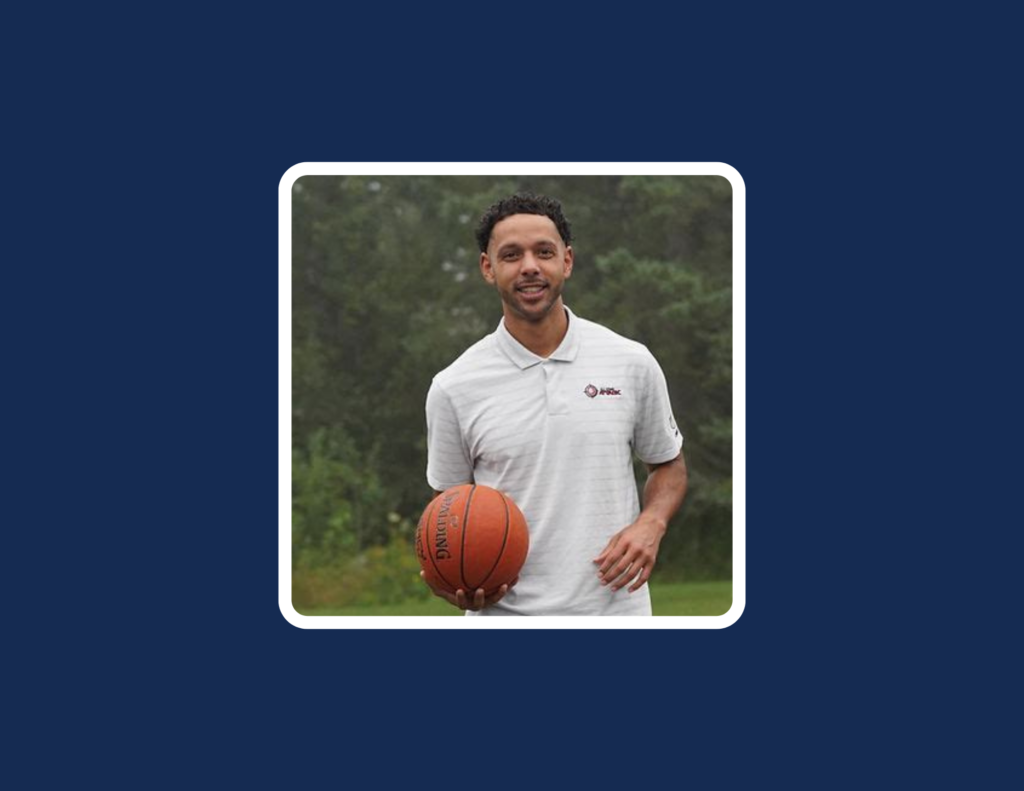
Dyami Starks is one of the Midwest’s premier basketball trainers. His approach to training combines professional-level insights with data-driven development strategies. Starks also serves as the player development coach for All Iowa Attack, the director of Starks Elite AAU program, and as an assistant women’s basketball coach at The College of St. Scholastica in Duluth, Minnesota.
Dyami was a Division I standout at Bryant University and enjoyed a professional career that included stops in Australia, Kazakhstan, Turkey and Latvia.
This episode features an enlightening discussion with Dyami Starks, a distinguished basketball trainer and player development coach, who shares his insights on effective training methodologies for young athletes. Central to Starks’s philosophy is the belief in fostering critical thinking among players rather than merely directing them through drills. He employs a conversational approach, often utilizing the Socratic method to challenge players to articulate their understanding of the game and their personal development goals. This technique not only enhances their technical skills but also equips them with the resilience needed to navigate the competitive landscape of basketball.
Starks reflects on his own journey from a young player to a professional, highlighting the pivotal role that self-awareness and adaptability played in his success. He contrasts his experiences with those of the current generation of athletes, emphasizing the importance of personal growth in conjunction with skill development. The conversation also addresses the contemporary challenges facing young players, particularly in light of the recent shifts in college recruiting dynamics due to NIL regulations and the increasing prominence of AAU basketball. Starks argues for the necessity of maintaining a genuine love for the game amidst these pressures, advocating for a training environment that prioritizes enjoyment and personal connection over purely competitive outcomes.
As the dialogue unfolds, listeners are encouraged to consider the deeper implications of athlete development, recognizing that success is not solely defined by accolades but by the relationships and lessons cultivated throughout the journey. The episode serves as a profound reminder of the transformative power of sports, illustrating how basketball can be a conduit for personal development and community building, making it an essential listen for coaches, parents, and players alike.
Follow us on Twitter and Instagram @hoopheadspod for the latest updates on episodes, guests, and events from the Hoop Heads Pod.
Make sure you’re subscribed to the Hoop Heads Pod on iTunes or wherever you get your podcasts and while you’re there please leave us a 5 star rating and review. Your ratings help your friends and coaching colleagues find the show. If you really love what you’re hearing recommend the Hoop Heads Pod to someone and get them to join you as a part of Hoop Heads Nation.
Be sure to take some notes as you listen to this episode with Dyami Starks, trainer & player development coach for All Iowa Attack.
What We Discuss with Dyami Starks
- Why his father introduced him to basketball as a tool for connection
- The importance of developing resilience in young basketball players, which is crucial for their transition to higher levels of competition
- Why one-on-one training is not always beneficial for young players
- In player development, clarity is key; trainers must provide a clear understanding of what players need to improve and how to achieve their goals
- Starks advocates for a balanced training regimen that includes challenging workouts against varied competition to foster growth in athletes
- The evolving landscape of college basketball recruiting highlights the significance of finding the right fit for players, particularly in the context of AAU participation
- The utility of basketball as a developmental tool for youth
- Understanding each athlete’s unique needs and developing individualized training methodologies
- Increasing a player’s adaptability in transitioning from high school to college basketball
- Engaging with the athlete’s social environment is essential, as strong relationships within teams can significantly impact their motivation and enjoyment of the game
Like this show? Please leave us a review here — even one sentence helps! Consider including your Twitter handle so we can thank you personally!

We’re excited to partner with Dr. Dish, the world’s best shooting machine! Mention the Hoop Heads Podcast when you place your order and get $300 off a brand new state of the art Dr. Dish Shooting Machine!
Your first impression is everything when applying for a new coaching job. A professional coaching portfolio is the tool that highlights your coaching achievements and philosophies and, most of all, helps separate you and your abilities from the other applicants.
The key to landing a new coaching job is to demonstrate to the hiring committee your attention to detail, level of preparedness, and your professionalism. Not only does a coaching portfolio allow you to exhibit these qualities, it also allows you to present your personal philosophies on coaching, leadership, and program development in an organized manner.
The Coaching Portfolio Guide is an instructional, membership-based website that helps you develop a personalized portfolio. Each section of the portfolio guide provides detailed instructions on how to organize your portfolio in a professional manner. The guide also provides sample documents for each section of your portfolio that you can copy, modify, and add to your personal portfolio.
Hey, coach! Want to take your team to the next level this season? Introducing GameChanger, the ultimate game-day assistant with tools to give you a winning advantage. With GameChanger, you can track stats, keep score, and even live stream games, all for free! Get the stats and crucial game video you need to lead your team to victory, all from the palm of your hand. Coach smarter this season with GameChanger. Download GameChanger today on iOS or Android and make this season one to remember. GameChanger. Stream. Score. Connect. Learn more at GC.com/HoopHeads

High school and middle school basketball program directors, listen closely. Coaches are expected to do far more than just coach. You know this. It doesn’t matter if you’re doing the coaching yourself, or you have a full staff of coaches with you. You know very well that coaches handle scheduling, academic issues, parent communication, leadership development, and even mental health concerns for athletes. A lot to deal with, and they haven’t even gone home yet to balance those responsibilities.
No matter the passion for the game, and burning desire to help athletes develop, this level of responsibility can lead to burnout, inefficiency, and less time spent on actual coaching. You know it’s true.
When coaches are stretched too thin, it impacts the development of athletes, team morale, and the overall success of the program. Now here comes the outsiders throwing their two cents in about what’s happening. Then come the parents complaining about how you’re running things, as if they know what they’re talking about. When’s the last time you went to their place of work chiming in from outside their window?
Before you let that fire fizzle out, know that it doesn’t have to be that complicated. There are several ways to prevent you or your coaches from feeling overwhelmed. However, I’ll tell you one of our favorite ways to keep coaches firing on all cylinders, and that’s athlete-driven accountability and organization.
Instead of coaches constantly reminding players about assignments, grades, and practice schedules, our programs at Playmaker Planner puts the responsibility back on the athletes. By tracking their own academics, goals, and commitments, student-athletes become more self-sufficient, which of course allows the coach to put their babysitter hat in the closet, and put their coaching hat back on, allowing them to focus on what they love doing.
Are we offering planners that you can get at the dollar store as a solution? Of course not, but we are starting a conversation with you to see if our programs can be a compliment to what you’re already doing. Let’s find out. To learn more visit https://playmakerplanner.com/stop-is-this-for-you
THANKS, DYAMI STARKS
If you enjoyed this episode with Dyami Starks let him know by clicking on the link below and thanking him via Twitter.
Click here to thank Dyami Starks via Twitter
Click here to let Mike & Jason know about your number one takeaway from this episode!
And if you want us to answer your questions on one of our upcoming weekly NBA episodes, drop us a line at mike@hoopheadspod.com.
TRANSCRIPT FOR DYAMI STARKS – TRAINER & PLAYER DEVELOPMENT COACH FOR ALL IOWA ATTACK – EPISODE 1085
[00:00:00] Mike Klinzing: Hello and welcome to the Hoop Heads Podcast. It’s Mike Klinzing here without my co-host Jason Sunkle tonight. But I am pleased to be joined by basketball player development coach Dyami Starks. Dyami, welcome to the Hoop Heads Pod.
[00:00:14] Dyami Starks: Mike. Thanks for having me, man. Big fan of the show.
[00:00:17] Mike Klinzing: Excited to have you on. Looking forward to diving into all the interesting things that you’ve been able to do in your basketball life. Let’s start by going back in time to when you were a kid. Tell me a little bit about some of your first experiences with the game. What made you fall in love with it?
[00:00:31] Dyami Starks: Well, first of all, it was through my father. That’s what connected us. You know, my dad played ball, moved up to superior Wisconsin. Played ball there. And then that’s where I’m from, Duluth, Minnesota, kind of sits right on the border there in Minnesota, Wisconsin. And then just started playing. He coached me all the way through, for better or worse.
And then from there, just, just fell in love with all the travel, all the connections just seeing, you know, all the different areas of the country that. I really realized basketball is a connector. Right. And that was my, my father’s biggest thing was he said basketball was a tool. So that really, that really stuck with me.
And then obviously when you get good at something, when you spend time in something, it’s, it’s fun to do something. I always joke, I tell my kids like, monopoly is not fun when you’re nine or 10 years old, but when you start getting good, it’s a lot more fun. So I think at first it was an acquired taste, and then from there it just took off.
[00:01:16] Mike Klinzing: When it took off. What did that look like for you when you compare the way that you grew up in the game versus the way some of the kids that you’re currently working with today? How did your experience compare and contrast with theirs?
[00:01:29] Dyami Starks: Yeah, great. Quiet. I mean, every kid’s a little bit different. So I was one of those kids, I was the classic kid that was six one in eighth grade and never grew an inch since then.
Right? Like maybe half an inch, you know, I’ll put on my license. I’m six two. But you know, my dad was smart. He was well ahead of his time, right? Like I was, I was our main primary ball handler from sixth, seventh, and eighth grade. Through high school. Minnesota’s a little unique, you know, you can play varsity basketball in seventh and eighth grade.
I, however, was in Wisconsin, so Wisconsin doesn’t allow that. So, you know, I was playing travel team basketball with kids that were a lot smaller than me having to handle the ball against them and just having to, you know, figure out ways. That’s when you start seeing the boxing wands and the triangle and twos and all that stuff.
So I had an early experience with that. And then I ended up moving across the bridge to Duluth and then started playing varsity right away. So my, my experience was, was a little unique, but pretty, pretty normal from a development standpoint. What you see now with kids, I mean, it’s really exploding and it’s, it’s one of the topics with parents I talk about aloud is what, what exactly does a development track look like for kids nowadays?
And especially with all the options that kiddos have, which I’m sure we’ll dive into, but, but for me it was pretty normal. My dad was pretty smart. He’s kind of let me grow organically, if that makes sense. And then there was no talk of chasing division one. There was no talk. I mean, the only talk he had with me was, son, listen, it’s.
It’s going to be really difficult for us to, to, to pay for college. So this is your best route out. But at the time, I mean, even nowadays, I mean division threes offer packages, you still have the NAI level, so you know, it’s not D one or bus, there’s other ways to do it. Basketball opens those doors. So for him, basketball again was always a tool to kind of get me out of there.
And then I want to say maybe my junior year of high school is when it, you know, really came to fruition, started receiving offers and the rest is history.
[00:03:12] Mike Klinzing: So tell me about the decision making process. How do you end up going to Bri, choosing Bryant and just what was the process like for you?
[00:03:20] Dyami Starks: Yeah, so for me actually it’s interesting because, you know, six two guards, stop me if you’ve seen six, two guards at every level, like all over the place.
And I was actually led every team that I was on in scoring from grassroots all the way up. To being a pro. So again, stop me if you’ve seen shoot first six, two guards. Like it’s, you know, there’s, there’s a lot of us. So, you know, for me it was just learning how to adapt. One of the biggest, biggest things I tell kids that translates to the college level is resiliency.
Like your ability to figure things out. There’s a million ways to shoot a ball. There’s a million ways to handle a ball. There’s a million ways to get something done when you go from whatever your experience was in high school to college. You have to have the ability to adapt. So the, the reason I chose, well I actually started school at Columbia University was, you know, kind of hedging your be a little bit, you know, I’m thinking, okay, I can get this Ivy League degree.
I had a coach who knew me, his name was Joe Jones, and then he ended up going to Boston College right before I started my freshman year at Columbia. So then I played that year out. It was a mutual decision for me to leave. And then I ended up transferring to Bryant University. So I had my first taste of the portal before the portal was a thing.
And Brian really stood out because you know, that coach, I think he saw one game. I had one game early on where I played pretty well and it was a blowout game. So coach kind of emptied the bench and I had a pretty good second half. And Brian Coach saw that and he was able to pick apart little things that I was doing.
He said, Hey, we can take this and grow. You’re so much more than a shoot first guard. And he actually helped me kind of transition to being a pro. Al Skinner was on our bench too. So by coach at Bryan, Tim, osha, you know, has been around the block. He was actually under Al Skinner at Boston College when Al Skinner was, you know, running a big time show over there.
So Al Skinner would come into practice and then he became a volunteer assistant. Best tutelage I think I ever had. So Brian really kind of paved the way, if you will, for me to understand the value of coaching, because these guys didn’t have to take a chance on me, and they actually took my game and took it to another level.
[00:05:24] Mike Klinzing: What did that development process look like for you in terms of the evolution? Of your game from where you were when you first got to Columbia to where you are once you’re at Bryant, and as you go through a couple years under their tutelage.
[00:05:38] Dyami Starks: See, the the coolest thing, and this is, I just had this talk with my kids the other day.
I didn’t have a trainer. I didn’t have somebody that, you know, like back in our day, I’m sure, you know, it’s like your parents rebound for you. You go on the ly park and you play like training was going to the park and hooping with the older guys. Like when I transferred from Columbia to Bryant, I’m on the East coast, my dad wasn’t there.
I didn’t have money to pay for a trainer, so I would just go to the YouTube library of Infinite Knowledge. I’d go, you know, before the days of Twitter, I’d try to hit up different guys I knew and I was like, or even just watching TV and I would say, man, I, I like what he’s doing. Like a early guy I liked for me was Fred Van Fleet.
Like I love the way he played basketball, Wichita State. And I was like, man, like everything he’s doing at six Foot even, or Tus Jones, a local legend here in Minnesota, I’m like. These guys are figuring it out in ways that if they were six eight, man, they’d be good. So I’m thinking like, how can I implement some of the things they’re doing and what I’m doing, like in my shooting workouts on my own, or getting on the gun, or how do I add decision making?
Like there was, I just had an inquisitive brain at 18, 19 years old. And I think that gave me the platform to really expand and explore without having to be put in a box. And that’s why I tell kiddos now, I said, Hey, you don’t need a trainer. In fact, my number one training philosophy is provide clarity.
All I want to do is provide clarity. Get those obstacles out of the way, help you see what’s what, and then you fill in your own with your own paintbrush. So that’s been my fly. And that kind of started that that freshman year going into sophomore year for me at Bryant. And it gave me the opportunity, it’s like behind every prom’s a big opportunity.
Like I was like, I gotta figure this piece out. So ultimately it was myself. Nancy, a question.
[00:07:17] Mike Klinzing: So as you’re working out during your off seasons at Bryant, what does that look like? For you, what do your workouts look like? Are they different every day? Do you have a set routine you’d like to go to? Do you have two or three different workouts that you’re cycling through?
Just what does that off-season work look like for you?
[00:07:35] Dyami Starks: Yeah, so I like to phase things out with green, yellow, red. So at the time I would say I didn’t understand this or have it perfectly plotted out, but what I like to use now is green, yellow, red just signifies like what kind of day you’re having, what kind of week you’re having.
I kind of go through a point system with my kids like maybe you had a tough lift. We all know what it’s like to shoot after a tough lift. So like my workouts in the off season, I would pretty much green light. So meaning there’s no big game around the corner, there’s nothing I need to rest for. I don’t need to get in shape for anything.
So a green light would simply mean whatever’s needed we’re going to hit. You know, if I need to get two workouts in, I’ll do it. And typically if I got a two workout day in, it would look something like a lift in the morning. A lot of shooting, a lot of skill work, like base level block skill work in the morning.
Then the afternoon, I’m either playing live or I’m getting a buddy in the gym and we’re doing something that’s a lot harder. Like maybe we’re doing more decision making, maybe we’re playing more one-on-one, maybe we’re doing some constraints. So that’s what it looked like for me. Luckily I was in New York City when I was still, you know, preparing to transfer, so there was no shortage of runs.
And we would bounce all around St. John’s runs, we’d go to the park like I played at Rucker. We, we did all the things that was, you know, that was pretty fun. So that’s what it would look like. And then during the season, if you take that green, yellow, red framing, you know it leading up to a big game, you know, it’s all about confidence and rhythm.
Like basketball’s a rhythm game. So, you know, that workout for me on, you know, let’s say we play on a Friday, Saturday, that workout for me on Monday, Tuesday, I might go in pre-practice, get 45 minutes of shots up with a coach, just get on the gun. Post practice is all about recovery. I might get some extra free throws in.
And then Thursday, Friday, I had the same routine. Same routine. I had to make 300 threes, a hundred free throws. Whatever it was in that, you know, so like let’s say in that game, I knew I was going to be a bigger guard, so let’s work on some Barkly turnarounds or you know, hey, let’s work on some ball screen. We know they’re going under, let’s shoot behind it.
So I’d mix in about 50 of those nights.
[00:09:37] Mike Klinzing: While you’re still playing at the college level, are you thinking the game at all from a coaching perspective at that point? Or are you still strictly looking at what do I need to do to improve myself as a player? What can I do to help my team be more successful?
Or is there some part in the back of your mind thinking that, hey, as I’m doing these things for myself, maybe there will come a time where I might want to do this for other players?
[00:10:07] Dyami Starks: Yeah, it’s a great question because, well, two things that jump to mind on that. Number one. It’s one of those classic things where my coach said, you’re going to be a great coach one day.
And I was like, I don’t want to coach. And you’re a player. You think it’s forever, right? Like that is true. Absolutely. So I, and, and besides like, you know, you, you, you don’t want to dilute your focus anyway, right? Like, I, I, I’m all in basketball is my all time favorite thing. Like, I like hoops, hoops, hoops, hoops, hoops.
Talking it, watching it, playing it, training it. So when I am, you know, in my career, and I blessed with youth and I’m thinking I can play forever. Like all of my focus was how can I perfect my craft? And so like, yeah, yeah. The, the best years of my life we’re being a pro because we’re, that’s all we’re doing.
There’s no, there’s no studying, there’s no finals, there’s no midterms. I’m like, it’s basketball, sun up to sundown. That’s when I really got to perfect my craft. The, the, the ironic part in all this was, that’s what made me a good coach because connecting those dots, figuring out how to perfect my craft, I, I was very intentional and, and I credit my dad for that.
Like everything has a purpose. He wasted no time. So from your routine to recovery that like, you know, he was just well ahead of that. And then that coaching staff at Bryant took that too. And I remember preparing for the pros, I had an old coach who ended up going to providence and he really trained, like, he was like, Hey, like this is, you know, he broke down the differences between, you know, you’re playing FIBA level basketball versus college game.
Like, do you even know the lane looks different? You know, the big trapezoid? Like, like do you know, like these little things. So he was like, the angle of the glass on a pull up is different than it is in college. Like, little things like this. And I was like, well, I’m, I’m fascinated with that stuff, you know?
So my point there is like, I was a coach in training if, without even realizing it, if you will. And then the second memory I had was, it kind of makes sense because, and this is kind of a, a real corny story, but it’s true. Second grade, I had a buddy who was down the street and football, everybody played backyard football.
And he was like, man, you’re really athletic. You’re good second grade, right? Like, what are you really good at? He is like, what do I like? What do you do? I literally put him through 45 minutes of drill in football and we took out my lunchbox and I had a little canister like of old apple juice. I poured it out.
I said, yeah, four steps out. No, you gotta plant better. You second grade. So I was like, I look back on that, I’m just like, man, that was some goofy stuff. But I think, I don’t know, maybe I just always had the coaching was always the call and just didn’t know it.
[00:12:33] Mike Klinzing: You were a coach, you weren’t aware that that was where you were headed.
Tell me about the opportunity to play professionally when you graduate from Bryant, what’s the process that you go through to enable yourself to have the opportunity to play overseas?
[00:12:51] Dyami Starks: Yeah, so at the time it’s, it’s interesting, like you can look at phases and by no means am I a historian, but of even going overseas 20, 20 to 30 years ago, if you were an American.
It was very easy to get your foot in the door. Like very few guys knew there were opportunities to even go overseas. Who knew there was basketball in Slovenia? Like who knows that? Right. And so there was a lot of guys, I knew Bryant was actually a good example ’cause Bryant was a former D two that transitioned to a division one.
So like when I got there and I had the red shirt, this was back when you had the red shirt a year. We had a guy on the roster who was a D three player, transferred to Brian as a D two and now he’s a D one player. So like imagine that over the course of two years, you all levels right. And he was telling me he wanted to play overseas, so he was three years older than me.
So we’re talking 2012 and he gets a two year, or I’m sorry, a two week kind of tour contract around Italy, which is pretty common just to try to make a team from different stops could showcase yourself. And he made a team. Not three years later I meet with my agent or my, at the time I’m meeting with prospective agents and they say the market has shrunk.
Six two guys are really hard to place. You’re going to have to grind it out. So he told me he is like straight up. My first year was in Kazakhstan and Kazakhstan. I joke with everybody, best experience in my life. ’cause I was a first year pro. I didn’t care where you put me, but Kazakhstan was Kazakhstan.
That’s all I’m going to say. And he was like, you know what, there’s probably five games and a 60 game schedule we played that year. There’s five games that you need to play well at. So he was like, we’re going to gear you for those five games. So everything we did training wise, we circled those games. Like that was, that was the goal, because that’s what it took to get the job you really want.
So in just a three year window, I got to see a guy who was a Division III player get placed like that. And then I had to go to Kazakhstan, grind it out, you know, play for, you know, less than $8,000 a month. And really just take anything I had. So the market changed rapidly. So my point is before that, if you’re an American, everybody thinks you’re Michael Jordan.
Everybody thought you were Michael Jordan. And the one thing I tell everybody is that typically Americans are seen as these flashy big and one playing dunking guys, you quite literally can pull a a six figure contract just by putting on a dunk show and warmups. So as the game grew, as you started seeing more and more international players start, you know, becoming better and better and the game grew globally, now you had to be able to do both.
’cause there’s guys like Luca Donitz overseas that you’re compet that you’re competing against. So then it, you started to see advanced analytics, take it another step. So it was it was interesting ’cause I was smack dab in the middle of that and you had to find a niche. So that was my main thing was just what’s your niche?
It doesn’t matter what you did in college, what can you do to get the best job and keep that job? So what was the niche? Yeah, so. That niche for me. So it was a loose rendition of three and d. It starts there, usually three and D guys, 6, 8, 6, 9 with length. For me it was that Fred Van Fleet role, right? Can you, you know, are you, can you be a good game manager?
Can you knock down an open shot? Can you take care of the ball? Can you pick up full court? And that’s the one thing about European basketball is you’re picking up full court the entire game. Like there’s no, with very few exceptions, but there, there’s no breaks. So, you know, you, you, you have to quickly adapt to the speed of the FIBA game.
And then lastly, just how big they are on pr, analytics, usage rates, all of that. Turnovers, turnovers killed you. I mean, if you had one turnover and it was almost like guys were like, like if it was a bad pass, they wouldn’t even try to catch it. Because the moment that ball hits your hands, that’s your turnover.
So if it’s a bad pass, guys are like, no, if I’m not catching the ball. So your niche is quite honestly is like be the most impactful player. I mean, tell players all the time, rebound defense, take care of the ball, make open shots, you’re going to help a team win. Anything beyond that, that’s what they’re bringing in guys to do.
So if you’re a 20 shot per game guy, they’re bringing somebody in for that and they’re telling you, no, that’s that guy. Don’t waste your time running intricate ball screens and snaking through the middle off an ice. Nope. We need you to guard full court, take care of the ball, make open shots. You do that.
The good news is, you know, you can play your way into a role where you’re playing sustained minutes every game so you know what you’re getting. And then another team or maybe an injury happens and they say, Hey, can you expand into this role? So you, you, it’s kinda like a ladder. Find your niche and then work your way up.
What was your favorite country you played in Australia? Not close. I loved Australia.
[00:17:38] Mike Klinzing: What about it?
[00:17:40] Dyami Starks: One the people and two, they spoke English. So Australia was super crazy. Easy, easy transition. But I played in the Sibel League, which was a step down from the NBL. And it was great because you had NBL guys who would play in that, in their off seasons.
So it was a great league. And we played all in the Melbourne area, so the southeastern coast, just beautiful, beautiful coastal area. And it was, it was like five months of bliss. I loved it. The only weird thing was it’s 90 degrees during Christmas time ’cause you’re in the summer southern hemisphere. So that took some getting used to.
[00:18:13] Mike Klinzing: Yeah, I’m sure. Absolutely. It’s just like when when the old folks moved the Florida Right. They gotta get used to, gotta get used to that. All right. What’s your craziest overseas? Basketball story that you can tell on a podcast.
[00:18:27] Dyami Starks: Sure. All right. We’ll keep it PG 13, but I think this one mostly fall in those bounds.
So while we were in Kazakhstan, we would do these tours like we, we called it the Stan Tour because you have Stan, it was Beki, Stan, and Kazakhstan. And, you know, just all around. And during the same trip, we take a two week trip to Kyrgyzstan and we go through the border. So we’re driving, we have a caravan of vans and we’re driving through and I’m the only American at this time.
So as we going through the checkpoint, you know, you got the military police, you know, they got the, they got the big guns, they got the big this, they got the frozen faces, they’re speaking the different language. They got the big dogs. So I’m just like, oh, I’m going to go play basketball after this. And they separate us.
So, you know, all the guys who are from the stands get to go on one line. And here goes me. They grab me and say, Nope, you’re over there. And they, you know, they do the whole thing. Go through the bag, get the dogs on you, you know, what have you. I had to walk the border was about two miles. I had to walk with all of my stuff for two miles, surrounded by six guys.
With, with, with, with armed rifles. And I gotta say, I was like, I don’t know if I’m coming home. I didn’t know where they were taking me because my teammates got to go back in the car and keep driving. I’m like, why can’t I get in the car? So that was interesting. But on the same trip, later on, we had a game that night and massive brawl in the stands.
So we’re in a foreign country, like this isn’t our country and our host is supposed to be a good host. Well, they start throwing trash cans at us and doing this and doing that. I’m just like, what is going on right now? It was all on the same day and I was just like, I, I, my agent might got a text or two from me that night.
We all ended up just fine. It was all good. And then we, we did a whole tour. Luckily the next city was, was awesome, but that was pretty narrow. 24 hours. Yeah, you earn your money.
[00:20:17] Mike Klinzing: I, I love those stories ’cause almost everybody who’s played overseas has at least one
[00:20:22] Dyami Starks: a hundred percent just
[00:20:23] Mike Klinzing: cra crazy story of this or that or the other thing.
And so yeah, it’s it’s always amazing when you hear just about what people were able to experience and like you said, to be able to go over there and, and have the experience of living in different places and the language and the culture and, and just all the things that you get to experience, not just, not just with basketball itself, but then also just the other things that sort of surrounded that.
And then to your point, when you could just focus as a pro, right, on basketball and you’re not worried about taking this exam or this class or whatever, you’re just, I gotta figure out what I have to do to be able to extend and, and create my basketball career into what I, into what I want it to be.
[00:21:01] Dyami Starks: Hundred percent. A hundred percent. It’s all about how about,
[00:21:04] Mike Klinzing: yeah. How about the transition then? How hard was it for you when it was time to hang it up from a mental standpoint? How did you sort of reconcile the end of your playing career? And then what was your first natural inclination of where you wanted to head for the next phase of your life?
Were you immediately onto, I gotta figure out how to keep the game close to me? Were you thinking maybe I get out of the game and go do something else for a while? Just, where was your mindset at as you were retiring from the game?
[00:21:36] Dyami Starks: So one of the earliest things when I came back home was most pros or most guys who play, they, they train on the side.
It’s, it’s always been a hustle for guys and, and, and rightfully so. It’s really cool for kids to see that, but it’s also cool to give back. So it’s a mutual thing and that’s what I did. My dad passed away right before I started my pro career. So he was kind of the guy back home when he passed away.
There’s this big vacuum. So when I came back home, I kind of extended that. My dad ran a men’s basketball league. My dad would train and he was also a coach. So he coached at a local high school. So when I came back, I continued the league. I kept training kids that I knew about and I was trying to figure out if I wanted to coach or not.
And really, I, I love, love, love, love the player development side simply because you can dive into some really good details when you’re, when you’re looking at it from a team standpoint. I mean, we know everything that goes into that. You’re a piece from a player standpoint, you can really build a relationship with a kid.
And I mean, that, that is why I do what I do. It’s why my dad did what he do. So that was the main driver was just staying in the game so that I could continue what he was doing. One, but two, connecting with the kiddos back home and kind of look, looking at it a way to give back. So we started a nonprofit in 2018 is when I hung it up and I had a chance to go back to China and China’s got, I mean, it was a lot of money in China at the time.
There was a lot of good leagues to play in. But again, it it, you just felt the why, like you felt the calling and it was like, Hmm, I think I’m, I want to be here. And I didn’t really, didn’t know what it was, you know, I just kind of was like, I’m just going to take this and get back. And then a really influential family offered to help me build this into something which eventually turned into what it is now.
But we started a nonprofit, then we started slowly building a a u from that. By default, a a u was never the goal, but I just, what became a need really quickly, and for those who don’t know, Minnesota, Duluth is about two hours north of Minneapolis, so the next closest good place to play was two hours away.
A lot of parents couldn’t do that. So again, just looking at it from a, a service standpoint of, of giving back. Then training just kind of weaved its way through all of that. So like, I’ve had kids, you know, I had Jordan Zubich play in my AU program who’s at North Carolina right now. She ended up going to play for Minnesota Fury, which is an Under Armour program.
Chloe Johnson right now, who’s probably going to be somewhere in the top five, top 10 for the 28 class she played for me. She’s playing all Iowa Tech now. Gianna Napkin’s, another one who’s in the portal right now as we speak at Utah. Really good kid. Probably going to be a pro. She played Minnesota Fury. So there’s all these examples of kids in my area where it’s like, Hey, you can start here, A a u, you can start here, kind of, kind of build your foundation, but then when it’s time to move on, it’s like, boom, go graduate.
So that was really how I looked at it. It was more of a stepping stone, and then I kept my grounds and what I thought was most important, which was player development. So yeah, it wasn’t a hard transition for me mentally because I got to exercise my brain, but there’s nothing going to be quite like playing.
I think I get the best of both worlds right now.
[00:24:37] Mike Klinzing: I could not agree more with that particular statement. I always tell people that. As much as I’ve done with the game of basketball after my playing career, my playing career ended when I was done with Col playing in college and never had the opportunity to play overseas.
But nothing, nothing’s ever replaced playing. As much as I love coaching and I love the game, and I love doing the podcast and all the things that I’ve done in basketball still, when I lay down at night and put my head on the pillow and have a dream, I never dream about winning a game as a coach. I never dream about player development.
I never dream about doing a podcast. I dream about being a player and it’s just, there’s nothing, there’s nothing that has ever replaced it for, and there’s some guys that it does, there’s some guys that’ll tell you that are coaches, that they’re like, I love coaching as much, if not more as I did, you know, when I was playing.
And for me, that was just never, that was just never the case playing. Just never. It was, it was impossible to, it was impossible to replace for me, for sure,
[00:25:34] Dyami Starks: a hundred percent.
[00:25:36] Mike Klinzing: All right. Let me ask you about sort of the evolution of your training methodology. So when you first come back from overseas, or you’re doing it during your off seasons, how has the way that you’ve gone about and approached it, has it changed at all?
Has it evolved? What does that evolution look like?
[00:25:56] Dyami Starks: This is, this is a great question and you can go a lot of different ways with it. I would say the simplified version of what I do now is connect dots for players. Player development is more about the player it’s built in. The name coaching is more about the player, but like we said, coaching, you have 15 different guys.
With player development, you really get to hone in on what that kid needs. So connecting the dots is always going to be my theme and providing clarity. Very rarely will I tell a player what to do. Like my, my, my training sessions are very unique. Like I mentioned Gianna Napkins earlier. I’ll use her as a good example.
So this was one of the first kids I ever trained when I came back home. And early on from day one, our workouts, let’s say we’re in the gym for 90 minutes, doing a one-on-one. There are some workouts where, I’m not kidding, 45 minutes of that workout. We’re talking like, we’re going back and forth, we’re dissecting things.
I’m asking her questions. I’m big on questions. Kids a lot of times aren’t used to her. Like, I want to dribble around a cone. What are we doing? And it’s like, no, we’re breaking things down and I’m asking que and I’ll do the whole Socratic method. Like, I’ll keep asking a different version of that question until the kid gets that answer, right?
Because I mean, you know this as coaches, like a lot of times players know the answer. Our job is to put them into positions to succeed and let them do their thing. Now each level’s a little different and you gotta figure out what your player doesn’t know. That’s the art of coaching. But that’s goes right back to connecting dots.
If I know what your end.is and I know where you are, it just makes that pathway a lot more clear, and that’s where players really start to grow in their confidence. So a workout, going back to Gianna could be 90 minutes where we’re going just all out hard. It could be really specific, like we’re spending 90 minutes on something that we saw last game, that we get to attack from all angles.
Or it can be that whole breaking down a conversation and going back and forth over things. It’s, I feel like that kind of repertoire and that rhythm is different for every kid, but you can really start to see things stick, you know, if that makes sense. So that’s the simplified version of what it looks like now early on.
It’s just figuring things out. I mean, it’s still figuring things out. Every training session’s a sandbox for me. Like, I always try to break things up where something new is in there where I’m trying a new constraint, or I’m trying a new SSG, like I’m, I’m doing something in that plan where it’s new and then the rest of it is just rinse and repeat.
I mean, if you can just do the same thing in different ways or add different constraints and that becomes your teacher, you’ve done your job. So really it’s all about the preparation, if that makes sense. And then once you’re in there, you figure it out.
[00:28:35] Mike Klinzing: All right. So tell me about the prep. So I guess we can look at it in two different ways.
’cause the prep is probably different in these two scenarios. So I’m thinking, what’s the prep like for a player who’s brand new, somebody’s coming to you for the first time and says, Hey Dami, I want to work with you. What does that prep look like? And then conversely, you have somebody that you’ve worked with for a year, two years who you know their game pretty well.
You have an understanding of where they’re at, where they want to go, what they need. Talk to me about the prep for an individual workout in each one of those scenarios.
[00:29:08] Dyami Starks: I think you hit it right on the head with, you know, what a player needs. So if I’ve had a player for a while, or even just a new client who I’m able to go back on synergy huddle, whatever, and look at a lot of film, that is going to take a lot more prep simply because it’s going to be very specific to that player.
But I know them. So, you know, a, a typical prep for a workout might be, we lay out three specific things. I like the rule. 10 33 10 minutes on a drill, 30 seconds if you’re going to stop and talk, and which I break all the time. And then three things you want to work on, right? Don’t try to overload a player with more than three things.
So with that framework, if I know what a player is, it’s easy to fill in the gaps, but the difficulty is like, what constraint does this player need in order to teach the thing we’re trying to do? So, in other words, how can I put them in a position where we don’t have to stop as much? That takes a lot of prep.
Whereas a kid on the other side of the spectrum, I don’t know. I have a whole easy template that’s just plug and play where I get to evaluate the player. And that might take place over three sessions, right? If I’m doing an individual workout, I’ll get a good sense, you know, within 30 minutes of what that player does or doesn’t know.
But again, every player’s unique. So within three sessions and within those three sessions, I’m bringing somebody in. And I just want to make a quick aside. Sixth grade parents, if you’re asking for one-on-ones, you’re missing the boat. One-on-ones are not good for your kids at that age. They need to socialize and play with other kids.
One-on-ones are great for tho that age. If you’re working on something very, very, very specific, so like a mechanical issue or you know, doing something that may, maybe pre-practice where it’s spending 15, 20 minutes on something, but hour, hour and a half, one-on-one. I’d argue after 30 minutes you’re not getting a whole lot done.
At some point that trainer’s going to be just watching your kid do a drill and you can just do that at home. When you are paying for trainings, make sure there’s competition and decision making built in. Make sure that’s my one aside advice. But yeah, that’s a
[00:31:08] Mike Klinzing: great piece of advice.
[00:31:10] Dyami Starks: I’ll, that’s a great piece
[00:31:11] Mike Klinzing: of advice.
[00:31:12] Dyami Starks: Yeah, no, I, it, it needs to be said more. And I know a lot of people are saying it out there, but you know, a lot of times parents, they don’t want to mess it up. They think one-on-one attention is like piano lessons. You know, I’m going to pay for the highest end thing. I want all that attention. Unfortunately, basketball is a 5 1 5 sport.
But yeah, you can figure out pretty quick. And then from there, same preparation method I just said for a player I’m familiar with. What
[00:31:35] Mike Klinzing: are the conversations look like with the parent of a player? And again, obviously it’s different depending on the age level of the kid. Let’s think about maybe a player who’s a high school player.
What does the conversation look like when someone comes to you and says, Hey dmi, I want you to train my son, my daughter. What is that conversation like with you and the parent? What are some key points that you like to bring out so the parent understands what you’re all about, what your training’s all about and what the kid needs to both put into it and what they can expect?
[00:32:07] Dyami Starks: Yeah, another really good question. So if I have a kid ’cause it’s important to distinguish the work I do in Minnesota and Iowa, like, so, you know, I coach for all Iowa attack and I’ll see those players a lot less. You know, obviously up here in Duluth I’ll see ’em a lot more. So if I’m working with a player up here in my backyard, one of the things I’ll tell them is, you know, the more you come, the better it is, right?
Like we want consistency, we want wrench repeat, we want share the same terminology. Would you want that shared cognition? So I can help you connect those dots. So a lot of times I’ll put ’em in three different groups. I love the 33% rule, right? 33% of the time play against people at your level. 33% of the time, play against people better than you and 33% of the time play against people that you are way better than.
And that’s really, really important. Because you’ll take, I, I see this all the time with great players. I mean, this is, this is a classic thing. You see a great player on an EYBL circuit, guys or girls, they go back to high school and they don’t look the same, right? Because you got all the junk defenses, the game slowed down.
It’s a little more clunky. I mean, let’s be honest, like, you know, if I’m playing in Nike Nationals, that’s a little different than playing in Bismarck, North Dakota, right? So there’s all those challenges that if a player’s not prepped for that, they will go backwards in their winter season. So, you know, if I’m dealing with a new guy or gal that’s, that’s in high school, I’m saying make sure you understand that, that stipulation, and now I’ll put them in workouts with that same kind of split, you know, as best I can.
The other thing too is a lot of my top end girls have to play against boys. They, they get to the point where that physicality is needed. So it’s a little awkward for new boys and new girls to do that, but that quickly breaks down. So a lot of times, like with high end girls, I’ll say, Hey, are you comfortable working with boys?
This is going to challenge you, push you, and then we’ll slowly kind of iterate that, if that makes sense. And then for boys, that’s a perfect 33%. I’m better than you split, you know, because I, I, you know, I mentioned Chloe Johnson. Chloe is a big kid, you know, Chloe is, is a ninth grader, ninth grade girl. She’s six foot tall and I want to say above one 60, like she’s built, she’s bigger than a lot of boys, her grade.
And I have another boy who’s a sophomore who’s a lot quicker, just kind of strong, same weight class, but she plays bully ball. And it’s fun watching those two go back and forth. He’ll get her, but it’s also good for him to kind of know, okay, so how am I going to navigate around this, you know, the equivalent of like a bigger, slower guy.
Like how do I, so it, it’s, it’s a perfect split. So like, and then the last thing with that is I’ll test to see kind of what your mental makeup is. You know, if I’m putting you in the 33%, you, your peer group, you’re probably going to be most comfortable. If I’m putting you. Where you’re playing against people better.
Let’s see what your character’s like when you’re getting your butt kicked. And then vice versa. Are you going to be a leader in that bottom group or are you going to be somebody who’s like, why am I here? So once I know those things, again, connecting dots, I’ll begin to have conversations with that parent and that player like, Hey, we’re going to get better in basketball.
That’s the easy part in this skills, the skill acquisition’s, the easy part in this, but here are those intangibles. I’m seeing those things gotta get better if I’m going to keep working with them.
[00:35:12] Mike Klinzing: So one of the things that I think is oftentimes missing in the trainer, player, family, parent relationship is there’s a lot of trainers out there, unfortunately, because it’s obviously a very unregulated industry, and I’m sure where you are, just like where I am, there’s plenty of dudes that have their shingle hanging up.
And are happy to collect their 50 bucks, 40 bucks, 75 bucks, whatever it is that they charge per hour, and just tell people what they want to hear as opposed to telling that player, that parent the truth and having an honest conversation with them. ’cause they don’t want to lose that 50 bucks an hour, that 75 bucks an hour.
And that’s one of the things I think when you look at the training business, I think that’s one of the things that is among the most challenging for a parent is how do I know I’m getting what I’m supposed to be getting? And also I have to go into it with my eyes wide open, knowing that if I’m really, if I really want my kid to improve, I gotta be willing to hear what their deficiencies might be.
Or I have to have a realistic conversation of, you can play at this level. You cannot play at this level. What do we need to do to get you to have realistic expectations? So from that standpoint, as you’re having conversations with both players and parents, just talk to me a little bit about how important in your mind that truth telling piece of it is.
And just maybe give some examples without going into names of just conversations maybe that you’ve had that have parents that have been receptive, or maybe parents that haven’t been receptive to those conversations, if any of that that I just said makes sense.
[00:36:59] Dyami Starks: That makes perfect sense. And I think that’s at the crux of what we’re seeing now.
Like we’re seeing our game explode, which is great, but we’re also seeing exploitation, solicitation representation, like all these extra things that just weren’t there before. And it’s tough, like parents, it’s, I, I feel for you, it’s, it’s hard for us as coaches to kind of root through it. I can’t imagine a parent who just wants the best for their kid.
And, and, and what about the parents in an area where there’s not a lot of access, so guys kind of dominate the market, right? Like it’s, it’s difficult, which is why. Go back to what we’re talking about in the beginning. Learn the ability to develop yourself, right? There’s so many tools out there, right? I I, I tell my kids all the time in, in my workout, you, you don’t need me here.
And I, so these questions, like, one, one question I asked a kid was we were working on a crab dribble, so, you know, an advanced concept, but it was for a 13-year-old. So she was doing her best and she’s doing it on air because I wanted her to feel it out. And she turns her body. So you could imagine the, the ball is facing where the defense would be.
And she’s, so it’s, it’s like a, it was, it was the cutest crab deal ever. It was hilarious. And I said, kiddo, where’s the defense right now? And she goes right here. Immediately her body started reflexively turning. So I said, did you need me here to say that? And she was like, no. I said, what did you change? Oh yeah, I gotta, didn’t tell her a thing.
So if you can teach kids one trainers, this is for you, teach kids how to develop on their own, which I get it might hurt your bottom line, you’ll actually get more repeat customers. Because they’ll begin to rely on you to kind of structure their growth. Anybody can run a drill, very few can teach you how to translate it to a game.
So if you can show that ability, I promise your business will explode. Explode. And you’re helping the kid. Parents develop the, you know, even if you’re not a basketball person, I live in a hockey area, Northern Minnesota is dominated by hockey. So I get all these parents that are just like, my kid loves hoops.
What do I do? I was like, let ’em have fun. Let ’em have fun. Let ’em latch onto somebody. Like, I’m so glad Caitlyn happened. So glad. You know, all these little girls in Iowa that are just like, oh, I want to be the next Caitlyn. Let ’em dream. Let ’em do it. Because guess what, when they’re going home, they’re watching Caitlyn, they’re going to those Iowa games, they’re watching her for fever.
Like they’re doing all these things. So when they’re coming to practice, that’s in their head. So now all you gotta do is say, Hey, what do you think? How hard do you think Caitlyn would do this drill we’re doing right now, Susie, how? How hard do you think she’d be doing it? Boom. Probably don’t even have to answer that question.
So parents get them to love the game and if they love the game, they’ll watch it more. And if they’re watching it more, just take ’em to the YMCA and let ’em play with other kids. Take ’em outside, get ’em a hoop to shoot outside. If you’re in Minnesota, you can only do that three months out of the year. For the most part.
We pretty much all have access to gyms, teach ’em that ability or let them just kind of fail on their own and figure it out. It should be a fun game. And my last point in all of that is if you really, really, really want to test, if a trainer’s really good parents, go watch sessions. I invite all parents to come watch my sessions at all Iowa Attack Dixon invites all parents to come watch sessions.
And here’s why we want you to take home what we’re teaching, one ’cause you reinforce that. But two, we don’t hold anything back. So when you’re trying to see if attack or me or whoever’s good, go compare it to other people. When you’re watching them, this is what you want to look for. How clunky is that workout?
How clunky is the practice? Because if it looks smooth and there’s a videographer in there, don’t get me wrong, I have videographers sometimes in my sessions too. It’s part of it, right? But if they, it looks all pretty and they’re doing this and it’s like, good. If every other word is good, it’s probably not good.
You want things to be messy because growth is messy and kids need to make mistakes. Last point I’ll make on this, I had a convo with a kid. She’s a a another top rated 28 kid out of Wisconsin who plays for us. And she brand new at attack, so she doesn’t know what to expect. And one of the questions I asked her, I said, what kinda mistakes do you want to make today?
She was like, huh. She thought I was trying to trip her up. And I said, no, what kinda mistakes do you want to make today? So she didn’t understand. I said, what do you want to get better at? What do you want to do? And we kind of reversed engineered from that. And she was like, well, I want to get better getting into the rim.
Well, I want to be more physical. Well, I want to play high level Division one basketball. So it’s like, okay, right now, if you’re not as physical getting to the rim, what do you think a good mistake would be then if you’re trying to get to the rim? And she was like, I don’t know, maybe dribble off my foot. And I was like, good.
I want you to dribble off your foot 10 times this weekend. So like, those conversations go a long way. We never touch the ball. You know, parents, you can have that conversation with your kid. And that’s, that’s all growth mindset, that’s all, that’s all great stuff. You can, there’s a ton of stuff on growth mindset.
Give your kids that, they’ll be fine.
[00:41:51] Mike Klinzing: I think a big part of that Dami, to go along with it is this is something that as a parent, it’s, and look, I, I know just like as you’re talking about, and I heard you say, I can’t imagine trying to be a parent, trying to navigate all of it just with the all the complications that everything that goes, goes into it and you’re in it every day.
I’m in it every day. Like I, like, I know the pitfalls of where things can go wrong. I don’t claim to know everything, but compared to the average basketball parent, I’d like to think I know at least, at least a little bit, at least a little bit more. But at the same time, I think one of the things that I found to be, to work for me, but that was not easy to accomplish in any way, shape or form.
And it goes to what you were talking about in terms of letting your kids have fun, letting ’em fall in love with the game. And there was a time where, so I have a son who, he’s a freshman at a division three school here in Ohio, Ohio. And then I have a daughter who’s a freshman in high school. And then I have an older daughter who she stopped playing in like 10th grade.
But what I found is that it was very difficult for me sometimes as a parent, especially someone who played themselves and wanted their kids to be successful, to not. Push to find that line between, Hey, dad’s going to the gym to train this kid, or dad’s going to the gym ’cause he’s got camp. You want to come along.
And there’d be times where my kids would be like, no, don’t want to come. I’d be like, what? Well, let’s you know, let’s go whatcha talk, whatcha talking about I killed someone for a gym that I could go to anytime when I was a kid. And what I found was, is that I had to let my kids either come to the game naturally on their own or I had to kind of let them go.
Now that didn’t mean I didn’t keep providing ’em opportunities, but I tried very, very, very hard not to be the person forcing them to go do things that I wanted them to do, but that they didn’t want to do. And eventually my older one, she, after her ninth grade season, I. She said, dad, I’m not having any fun with basketball.
I don’t like the players that I’m, I don’t like the girls on my team. I, I’m just not having fun. Every day practice comes after school and I, I don’t want to be there. I said, well then you need to go find something else to do. You know, go, let’s, let’s figure out what that other thing is. And then my other two light came on for ’em.
And all of a sudden now I’m just either the chauffeur or like my son who’s in college now. I mean, every once in a while he’ll ask me something, but for the most part, he’s in charge of his own destiny. Now, you know, I’m, I’m, I’m no longer involved. And that’s, I think, something that as parents, so often you see people just dragging their kids to things that you and I both know, that the kid doesn’t really want to be there.
And that’s when nobody’s going to end up happy. Like, you as a parent are not going to end up happy and the kid’s not going to end up happy. And so I always tell people, any parent asks me, you gotta let the game come to you. Gotta let the kid come to the game, if that makes sense.
[00:45:03] Dyami Starks: I totally agree. So the way I frame it is treat the game like a puzzle.
Like most kids love puzzles. Every kid has a favorite board game. Well, we can say video game now, but most kids love something, right? And so whatever it is, call of Duty, monopoly or or, or chess or basketball, like whatever it is, everybody loves a feeling of growth, right? So there’s two things that all human beings really, really thrive in, whether it’s adults or kids.
It’s, I want to feel like I’m getting better at something and I want to feel valued, right? So you said it right there with your, with your ninth grade daughter when she decided, or your, your 10th grader who decided to stop at ninth grade. Like she friends are huge on both sides. This is not a female only thing, it’s on both sides, right?
Guys are just taught to push through it. And then, so right now you’re not, you’re not feeling the value, you know, if I’m not getting friends around, like, what’s the point? My friends are over here. Like, I don’t even feel like I’m a part of something. Why would I want to sacrifice everything for it? Then two because of that.
Now this is mostly for girls, is relationships are huge on girls teams, right? So on guys’, teams, you see this in the n ncaa a, a, like that, that double the amount of kids in the portal. It’s a mercenary team now. Like guys are good with that, guys know they’re going to transfer. I played on teams with guys who transferred, I transferred, like still friends to this day.
And it’s what it is, right? Girls, if, if, if things aren’t clicking on that level, if there’s, if there’s any type of animosity, jealousy, what have you, like, you’re going to feel it. You’re going to feel it. And so it’s not sexist to say that that’s, that’s the dynamic of what we’re doing, right? And it’s the, the, the numbers bear that out.
So how do you provide value to a girl’s basketball team is a little different than how you provide value on a guy’s basketball team. So that’s number one. And then two, if those girls don’t have that foundation to feel, you know, comfortable, safe, vulnerable, et cetera, they’re not going to get better. They’re going to get worse, right?
This is where guys and girls aren’t different guys will too. They’re taught to push through it. But that’s when you start to see those weird injuries, you start to see guys numbers go down. They start, I mean, you saw guys earlier this year crying because they felt like, I’m getting paid all this money and I let my team down.
Like, you’re not getting better in those circumstances. So, you know, my point is with those two things are met, what I tell parents is turn it into a game and define the value. Build their self-esteem around growth. I build their self-esteem around, Hey, okay, you don’t like that girl? Okay, well she’s probably, you know, projecting her own stuff and not feeling welcomed or not feeling valued.
Like, no kid is evil. Go, go ask her what she likes to do. Go invite her to something. Go do this, go do that. Which is why player led teams are often the best led teams because they root a lot of that stuff out. And coaches, we can’t do that. So when, when players, when, when we frame it in, in terms of here’s the game, here are the codes, here are the rules, here’s how you can perform.
I haven’t found one kid that fell out of love with the game. Now the hard thing is getting synergy across a a u high school training home. That’s tough. And that’s what it sounds like you were talking about there. But for the most part early on, if you can teach them to look at it like a game that I can get better at and I can strategize and figure out, strategize and even make friends through, it’s the sky’s the limit for those kids.
That’s not cliche to say
[00:48:22] Mike Klinzing: No. I agree with you there. I mean, I think it always has to be about more than just the game of basketball and improving, right? Because I’m sure you feel the same way, but I know when I was playing and I’ve talked to my own kids about it, and they don’t have the same value of perspective that I have of having played such a long time ago.
But you know, in the moment, right? What was so important to me was my performance as an individual and the win loss record of my team. And yet when I look back at my playing career, what I remember more than anything is. The teammates, the bus rides, the hotels, the, the ancillary things. And you could ask me about a specific game from my sophomore year against whoever, and I’d be like, I don’t know.
Did we win that game? I don’t know. How did I play? I have no idea. And yet in the moment, that was that piece of it was the most important part. And yet it’s really the other things that end up being the memories that oftentimes you create. Now, clearly there are games and moments from the basketball side of it that you remember, but it speaks to the greater point of what you’re trying to get at, which is there has to be, there has to be more to it, right?
There has to be something intrinsic that you’re getting out of it. There has to be something socially that you’re getting out of it. And when you provide those opportunities, you’re going to keep more kids ultimately in the game, which makes the game better and obviously helps the kid to, to continue to develop not just a basketball player, but as a human being.
And I think that’s. That’s really where the secret sauce lies, for sure.
[00:49:52] Dyami Starks: Yeah. One more thing to add to that, because I’ll use Sahara Williams as an example, who’s Oklahoma now. That was one of Dixon’s kids in Iowa that really relied on him. He took her out of a tough situation, right? So like basketball’s our only way out, right?
Your daughter has a choice, some kids don’t. And then you also have parents that, you know, like my dad was honest with me, I can’t afford your college education. There’s other ways. But you know, I mean it, it was kind of that pressure to be like, my dad honestly told me this is my way of paying for education.
I’m going to get you good at basketball. So there’s a lot of dads out there that like that, you know, it’s like, my daughter’s going to be good, my kid’s going to be good, you know, I’m going to make ’em do this and that. And here’s what I would say to tho those kids in those situations, those parents, that’s where it’s really crucial to turn it into a fun challenge or a series of games.
Because, and this might sound counterintuitive, but when. You put all that pressure on them and they don’t want to disappoint you. There’s double negatives there. One, they’re not intrinsically motivated, and two, they’re constantly going to be looking at you for approval. So as a coach, that’s like the first thing we see going to a a u tournaments, I’m a, I’m a division three coach, and I also coach EYBL.
So I’m seeing the whole spectrum. I’m looking at kids and it’s like, doesn’t matter how talented you are, there are always kids who are going to be looking at mom, looking at dad, looking at coach. You don’t want that. So parents like, break that off early, please. That’s number one. But two, like kids don’t play best like that.
They just don’t. So like, if you really want your kid to do really well, let them fail and figure it out and grow in love with it over time. You know, starting in fourth grade with like all these drills you see some of these kids on, on Instagram, it’s like doing these amazing, amazing things on the court.
No knock on those kids. I’m just saying those aren’t the kids that grow up to be Michael Jordan. What’s that classic Michael Jordan anecdote got cut as a freshman. Like he got beat up by his brothers, couldn’t even beat his brothers one on one. I don’t think his mom was saying, you gotta get better. I’m paying all this money for you to do this.
Like, that’s not happening. So if it’s good enough for Michael Jordan, I think it’s good enough for the rest of us. I would just say go back to making it a fun game, and I promise you they’ll reach their ceiling faster.
[00:52:06] Mike Klinzing: Alright, let’s fifth gears, not completely, but let’s go to the world of college basketball recruiting, how the portal and NIL has changed the landscape for specifically high school players and what that looks like.
Take us through, and I’m going to leave this open-ended. I’m going to defer to your expertise. Take us through some things that we need to know as high school coaches, high school parents, high school athletes, to help us to better understand what this process looks like.
[00:52:40] Dyami Starks: So the first thing I’ll attack this from is I.
High school perspective, high school coaches. You know, I, I, I, I would love for you guys to hear me. I’m, I’m not coming at you. I, my dad was a high school coach. We all know what the job entails for very, very, very little money and no thanks. What I would say is this, a a u is here and it’s not going anywhere.
You have to find a way to work synergetically and well with these a a u directors and coaches, and lord knows they’re not fun. We’d work with all the time. They’re not. Right. I can, I can attest to some of my own experiences, like just having so many disconnects with high school coaches and priorities in the off season and the in season.
It’s, it’s tough. I get it. But the more friction there is there, the more your kids suffer. And what I would say is whatever a a u programs are in your area, there’s two things you can do. Number one, coordinate with schedules. Almost all of us have schedules made before January. Almost all of us, right?
Local teams not, you know, a little different, but EYBL we know our schedule well ahead of time. EYCL, we know our schedules. S 40, you know your schedules, you at least know where you’re going to play and what dates. Second thing is you’re going to know your practice dates. So what I would say is right when your high school season ends, which is typically March a a u is starting a week or two right after that, it just, I don’t agree with it, it just is what it is.
And I coach a aau, it’s just what it is. And these kids, they feel the pressure, and these parents have fomo. They do not want to miss out, and they feel like bad parents. So if they’re getting pressure from their high school coach to do a captain’s practice in, in, in, you know, March or April, it’s going to get tough.
And those kids are going to, you know, it’s, it’s not going to end well for anybody. So what I would say is get the schedules first, and then coordinate number two. Coach in a a u programs. Now, I’m not saying it’s always fun, but it’s a great way to keep growing the game. Like my local a a u program, we have five college coaches, D three, and now D two can coach a a U.
So for one, it’s great for them to recruit so they can just go recruit on a dime and get paid both ways. It’s awesome for college coaches and they can use that as their sandbox High school coaches, why not do the same thing, right? Like, why not go out there and experiment and coach new kids and work on some things you couldn’t work on during the season?
It’s all pressure free. I’m telling you, every single AAU program I’ve ever seen wants coaches. If you’re good at being a coach, if you’re passionate, even if you’re just passionate and love to be around kiddos, they’ll find a spot for you. So those are two easy ways to get in the AU space, and I think that’s so important, Mike, because I’m just seeing a, a u get bigger and bigger and bigger and I’m seeing high school just get just more and more weird.
You got overtime league on the boys side. The girls now prep school’s blowing up. Like we had our top player, Aliya Crump went to go play for Mount Verde this year. That’s to my knowledge, hasn’t really happened in Minnesota’s history. So what’s the next page? Becker’s Caitlin Clark going to do? We don’t know.
But if the high school coach isn’t willing to work with the AU coach, I know what they are going to do. They’re not going to play for you. So building that synergy, I just, I kn I, I know it sounds a little, you know, ’cause au coaches, whatever, but that’s number one. Number two, I’ll attack it from the AAU side of things.
A a u is, it’s getting trickier and trickier to navigate. You know, you, you’ve always had top teams, but you didn’t have circuits. So back when I played, there was a super 64 in Vegas, Reebok, Adidas, Nike. I mean, we all played each other. I know Reebok not even a thing anymore, but we all played and now you have all these things.
Competing against each other and they’re exclusive and come join Under Armour, Steph Curry Camp and go do Nike Skills with Kevin Durant there. And it’s like, eh, lost and all that. Kids aren’t, kids aren’t getting a lot better. I, the, the coolest stat, maybe not cool, but the best stat I use Mike is, you know, we have access to synergy as a college coach and on the UYBL circuit.
And if you look at the play types for those who don’t know what play types are and synergy, a play type is how that possession ended. So if you come off a ball screen and shoot a jumper, that’s a ball screen play type. If you hit it in the post and score, that’s a post up. So you have about, you know, 10 to 15 different play types.
And college basketball overwhelmingly is spot ups. Spot ups is just the ball moves. We’re in flow. I’m either catch and shoot or I’m attacking a closeout simple. That’s how the overwhelmingly mo most possessions teams are going to play with is going to be number one, spot ups. Number two is typically going to be transition stops and scores.
Or you’re going to have, if a team loves post up, you get the idea. You can imagine if you were to take one, guess what EYBL is for? A lot of teams isolation. These kids, you’ll see some players just going one-on-one all the time and you’re just like, you look at the difference in play types, it’s like college basketball’s this order, EYB L’s like flipped.
It’s like the things on the bottom of, I’m like, this stuff doesn’t translate, but Right. Because we have to keep that kid because we’ve made promises to this kid because it gets on Courtside films and all these other video platforms, that stuff just becomes more and more emulated. We all see it. So what’s tricky is, are you really getting better on these circuits?
So my first piece of advice to parents and players is chase the right fit practice that in A-A-U-A-A-U should simulate more or less what college basketball’s going to be like, right? So if you’re going to play, you know, let’s say you’re a high level division one player, you probably have your pick of a litter.
You’re going to want to probably play somewhere where you’re going to be developed for whatever program you’re going to be or whatever prototype you’re going to be. 3D kid. All right? Go pick a team where you’re not going to get stuck on a post go play on a team where you’re not going to be getting 20, 40 shots a game off a ball screen.
That’s not going to help you. So if you pick that right fit, conversely you want to make sure you have a development plan, and that’s where high school comes in. So if you’re doing off season high school events like June fall leagues, or I’m sorry summer leagues, and then you get into fall leagues, like that’s a great time to work on those other things, right?
So like those two things can work hand in hand. Now if you’re a mid-tier player, so anywhere from a mid-major low major to a division two kid in girls basketball, that’s pretty much the same bubble, a high level D two kid, and this is important, can play at a lot of lower division one schools, right? And so for people that don’t know lower division one schools, it doesn’t mean they’re bad.
It doesn’t. We all saw the Ivy League, that’s called typically considered low major to mid-major, those teams, no. I ask p fours, they don’t want to play Princeton, they don’t want to play Columbia. So good teams. And then your mid-majors, you know, you have Gonzaga, which is now considered more of a a B, CS school, but no football.
So they’re still technically a mid-major school. And then you have Creighton kind of sitting in the middle. And then you have some like South Dakota State, which for girls, Gino just was, was famous quote before, he is like, I’m not playing South Dakota State. So those schools can typically recruit from the same pool as high level division two schools.
Your Mankato, your Drew, your Northerns, Ords, those types of schools. The, the, the schools on the East coast, like Bentley and Assumption, those are really high level schools. And the best part is a lot of those are high academic schools. So when you’re playing, you know, if you’re a mid-level kid. Chasing fit is so important.
Don’t go play for an EYBL program to get all the gear and all the stuff. And you’re not getting better and you’re not playing. Makes no sense. And then you’re going to play in Phoenix, in Alabama and New York and Cali. Great experiences, but nobody’s recruiting you at those spots. You could just stay right here at home.
So finding fit is so important. And then lastly, Mike, you have the lower level of A A U where you really don’t have to leave the state you’re in. That’s my program. My program that I run up here in Duluth, Minnesota. Starks is a lot of division three, division two kids, right? So like we’re never leaving Minnesota.
We have one of the best division two conferences and one of the best division three conferences right here. We don’t need to leave. So our kids are getting better, they’re getting exposure and they’re saving money. Parents that if you play it right and you kinda are honest about where your, where your player is at, you’re going to have a great experience.
You that preps you for college. So I think that’s a great way to kind of tie in those two angles, if you make sense. And then we can dive deeper in recruiting if you want.
[01:01:10] Mike Klinzing: So I’ll share just quickly to piggyback on what you just said. So my son, who ended up being a division three player, we knew sort of early on, he and I had conversations all the time as he was going through his high school career, do you want to play college basketball?
And from the beginning of his high school career, the answer from him was yes. And we came to the conclusion that he was going to be a Division III college basketball player, and we kind of lucked out in the A A U program that we got connected to. We had a great coach who ran the program, ran the team, like a college program, real practices, real accountability team, was based upon ball movement, sharing the ball, playing defense.
A lot of the things that we don’t often see unfortunately in the A A U game when you’re talking about isolations, that was like the exact opposite of our team. Like the ball just, I’ve never seen 10 talented kids who just moved the ball the way that this particular group of kids did on this AAU team.
And so we had a really, really great season going into his junior year and nobody watched us. We were out. Playing games. Playing games. And I think we were 37 and three beat some really good teams, stayed not completely in the state of Ohio, but we went to some neighbor. We went Todi, we went to Indiana to Fort Wayne a couple times, but we weren’t traveling across, we weren’t traveling across the country because nobody, no schools outside of our immediate Midwestern area are recruiting anybody on this team.
So that’s a great point that you make. There’s, there’s no need if you’re a division two or division three player, there’s no need. If you’re from Ohio to go play in California, there’s no need to play in Arizona. ’cause there’s plenty of schools right here that, that’s the schools, they’re going to recruit you.
So anyway, nobody, nobody watched that team play when they’re heading into their junior year. Then you get to the summer after their, or the spring after their junior year heading into their senior year. Now all of a sudden, coaches are watching, right? Division two, division three, that’s who they’re paying attention to, is kids who are going to go into their senior year.
Then what I found interesting that you said also is just when you look at a a u basketball and you look at high school basketball, I remember when my kids were, so this is probably 15 years ago, I remember telling people, I can’t believe that somebody would ever choose to do something with their a a U team over their high school team.
Like, it just made, like I, I in my old age couldn’t wrap my head around the fact that A, you could potentially be more important in certain aspects than high school basketball. And what I will say is that the recruitment for my son as a division three player came almost entirely through his experience in a a u in terms of being identified, in terms of teams having an interest.
And then once he was on their radar, then sure they came to his high school games, but not to identify him as a prospect. They came to solidify the fact that. We’re interested in you. We want you to come to our school. That’s why we’re here at your games, to let you know. It wasn’t to say, well, we’re checking him out to see if he can play.
They had already made that identification through a a u. So I think you make a ton of great points that it’s super important to make a good decision with where you play a a u and how that team or that organization looks at things. Because if you do that and you do want to play college basketball, the opportunities, if you do it right, will come.
Again, you gotta have the ability to play at that level, but if you figure that out, then good decisions can help you to have a lot more options when you eventually decide where you want to go to school. So everything that you said was a hundred percent right on track.
[01:05:03] Dyami Starks: Yeah, I way to tie it in with a personal experience because I’ll, I’ll, I’ll share another one too.
So this is my third year with all Iowa Tech and I, I actually floated a, like, how, how do you make a program that had Caitlyn Clark and wins all these championships better, right? It’s like, how do you, how do you do that? Well, you just get a little bit better in the margin. So like, I would talk with Dixon, I said, Hey, I’m getting a lot of questions from people because they want to play EYBL, they want to play division one, they want to do this, they want to do that.
How do we have honest conversations with kids early? Let ’em know how the recruiting process works so they don’t have to bombard you at tournaments about who’s watching. And then it’s like, also, can we tie it in to make them better? Right? Because that’s my role with tax player development. And I said, one thing I really did with my team up north was we’d have these early preseason talks where I’d go through the list with every kid.
So parents, you can do this. High school coaches, you can do this too. Ask your kids never too young, right? I’m, I’m not kidding. Seventh, eighth graders. It’s not too young. Start thinking about those. I mean, we ask kindergartners, what do you want to do when you grow up? So that’s never too young to start talking about this stuff.
Ask them, Hey, you know, do you prefer a male or a female coach? That’s a big one for girls. Do you prefer public versus private school? Right. And if they don’t know, paint it out for ’em. Or do you prefer a city, campus, rural campus? Do you want to stay close to home? Do you want to leave? You’d be surprised how mature seventh and eighth graders are.
But yes, definitely by ninth, 10th grade, these questions you want to start asking. So it’s in their mind if nothing else. And then you’d be surprised by junior, senior year, to your point, when schools are really, really, really precedent. Kids have to make decisions they don’t know and they rush and they’re doing this and they’re doing that, and they’re freaking out.
And so parents always ask like, what do we do to get on the radar early? And Dixon, as I’m telling him all this, he’s like, yeah, we can do that. So he did a meeting and he gets on there and he goes, he. Get better. That’s our recruiting meeting. That was, that’s what he said. Now. Now obviously we went into more depth, you know, right.
Than that. But the point is, and this is so true, this is so true. You might roll your eyes out if it’s true. I am a college coach and I am telling you there is no shortage of ways for me to see your kid play. We talk if nothing else. I will always say this recruiting’s about relationships. We talk all the time to coaches and coaches.
It’s not some weird thing where we all hate each other. Like coaches talk to their opponent mid-season about, Hey, what do you think I should do with this player? Like we talk, it’s a small group of people. So if they’re like, Hey, I don’t have money enough in this class, but I like this kid, you should take them.
Coaches talk. So you know, if your player is playing on a team, like you said, that doesn’t get eyes on them. Eventually they will. Right? And so make sure you’re playing for right program so you’re playing in front of the right eyes. But eventually they will. And what I would say is, go back to Dixon’s point.
Get better because exposure goes both ways. If you’re not ready to play, you will get exposed the other way too. So now I just wanted to make sure we tied it all back to what it’s all really about is having fun and getting better.
[01:08:06] Mike Klinzing: Absolutely. That makes a hundred percent sense to me. And I, I think it’s something that there’s, there’s so much simplicity in a d and yet at the same time in so many ways, we make it way more complicated than, way more complicated than what it has to be.
And when you start talking about, as you said, having those conversations of what do you want to get out of the game, right? There’s power in that. There’s power in that for the kid. There’s power in that for the parent, hearing the answer from the kid, because sometimes what the parent thinks the kid wants and what the kid actually wants are, are two completely different things and, and ultimately it comes down to, I think.
You want your kid to be in a place, whether you’re talking about high school, whether you’re talking about aau, whether you’re talking about trainer, you want the your kid to be in a place where they’re valued both as a player and as a human being. And to go back to what you said, where they have an opportunity to grow and see that improvement, which is what people want.
So, all right. I want to ask final two part question. Part one, when you look ahead over the next year or two, what do you see as being your biggest challenge? Second part of the question, when you think about what you get to do every day, what brings you the most joy? So your biggest challenge, and then your biggest joy,
[01:09:24] Dyami Starks: biggest challenge will piggyback right off recruiting is getting kids to stay focused.
And it’s, it’s a legitimate concern because I, I’ll start at the YBL level. Every, every, everybody is talking about money, NIL and revenue share. Everybody. You’re seeing an explosion, all of a sudden, everybody’s a certified agent now. All of a sudden, you know, your crazy Uncle Mo is calling up coaches saying, my kid’s worth this much money.
And, and in the past, head coaches would look at that phone and say, I’m not answering this call. Now. They have to. So it goes both ways. I don’t think there’s enough market checks yet to keep everything. And the NCA would admit that, I mean, the NCA is, you know, I’ll talk to anywhere from, you know, two to 10 coaches on a given day all levels.
And they’ll tell me, they’ll say, Hey, I got a call from the NCA last week asking us what we think we should do. What are you hearing? So it’s, it’s, it’s a bunch of nobody knows. And in the middle of that, you’re getting a bunch of people that see that and say, Hey, you’s a payday for me. So you can imagine how difficult it is to everything we touched on in this conversation, Mike.
Now you’ve just got the pressure of where’s my clout? Where’s my post? Where’s my money? Where’s my this, where’s my that? And you can only have kids be, you know, put the blinders on for so long. So parents, oh my goodness. Monitor screen time, filter out what they’re seeing. Like the basics, right? And then two, our I should say piggybacking off of that is make sure you’re surrounding yourself with good people.
Because eventually the dam’s going to break. There’s only so much our kiddos can hear before they just go like, what’s that over there? And then they fall into who knows what for sure. So we quick on the NIL pieces, there’s going to be a ton of real changes coming. There’s a lot of lies and phony numbers being thrown out there right now.
That’s the easiest way to put it. And what I would say is parents don’t be in a rush to do that at all, at all. I saw a ninth grader commit to a major, major, major academic institution, and apparently it was for a lot of money. I said, it’s a ninth grader. How are they getting into this academic institution without any type of, you know, real courses as a junior and a senior.
But because it was a big flashy number, dollar sign by it, you see the point. So, you know, my thing is parents continue as best you can to chase the right things, put up the right filters, and pick the right programs. That’s number one. So that’s the biggest challenge. And then you asked me what I look forward to.
[01:11:45] Mike Klinzing: Biggest joy.
[01:11:46] Dyami Starks: Biggest joy. Oof finding the button for each kid. Finding what button to press it is like a never ending. I, I mentioned the tag, just joining the program, it’s like, how, how, how do you come in this, I have my own methodologies and approaches and I’m, I’m probably the youngest guy in the program and I played pro and I’m from Minnesota, and it’s just all these differences, right?
And like finding out how each coach works, how each player works, how each this, how each that, like, I, my first six months, I don’t think I said more than 10 words, you know, Dixon’s like, do you want to come on the floor? I was like, yeah, I’ll watch. Like, I just love sitting back observing and seeing what’s what, which goes back to my playing days, watching YouTube and watching this and watching that.
So like when I see those kiddos, that light bulb click when I see like, you know, you only have a finite amount of attention span with these kids. So if you don’t know their buttons, you’re just talking to a wall. So when you can find that and figure out, you know, you can teach a kid anything. And that, that to me is fun because a kid knows that.
They feel that that’s authentic. So then when you tell ’em to do something, they’ll run through a wall for you. That is, that gives, there is no joy for that. And I always say basketball I love, I fell in love with it. But it could have been chess, it could have been swimming, it could have been whatever. That relationship dynamic and coaching is what this is all about.
So I think that’s going to cut through all the nonsense I was talking about earlier.
[01:13:10] Mike Klinzing: Getting a chance to use basketball to be able to have an impact. That’s what I always say. I feel blessed to be able to do that. I mean, that’s, there’s nothing better. Something, something you love that you get to then use, that’s something to be able to have a huge, huge impact on young people.
That’s, that’s really what it’s all about. Alright, before we get out D mean, I want to give you a chance to share how can people get in touch with you, find out more about what you’re doing, share social media, website, email, whatever you feel comfortable with. And then after you do that, I’ll jump back in and wrap things up.
[01:13:37] Dyami Starks: Yeah, so dyamistarks.com. Very simple. Just launched a new website. It’s awesome. Everything you’ll have on there, contact me looking at trainings, the whole nine. On Instagram and Facebook. It’s Dyami Starks Basketball, so you can go ahead and check that out. If you just, there’s not a lot of Dyamis out there, so just go ahead and type in Dyami in the search bar.
I should be coming up there. Yeah. And then all Iowa attack, so be sure to follow us this year. I think we have a great squad. We’re really fun to watch. If you don’t know much about Iowa Attack, it’s where Caitlin Clark played AAU and the way Dixon coaches. There’s nothing else like it. It’s going to be a really fun brand to watch, so be sure to check us out on that front.
[01:14:17] Mike Klinzing: Dyami, cannot thank you enough for taking the time out of your schedule tonight to join us. Really appreciate it. And to everyone out there, thanks for listening and we will catch you on our next episode. Thanks.