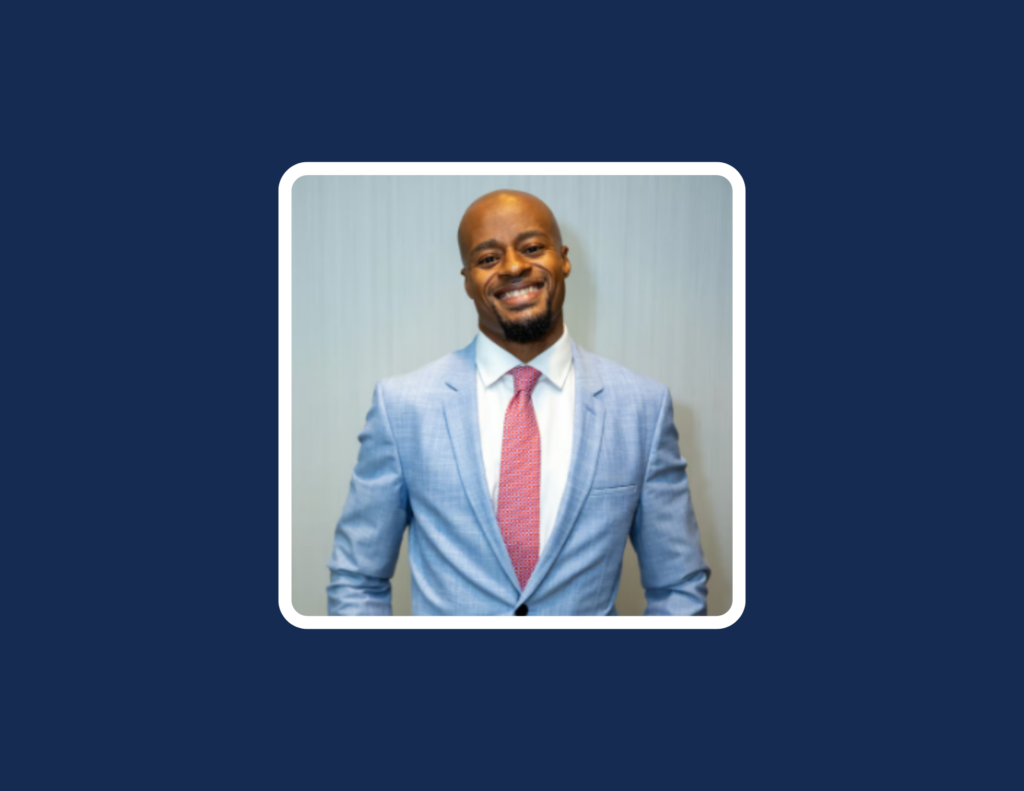
DRE BALDWIN – FORMER OVERSEAS PROFESSIONAL PLAYER, ENTREPRENEUR, AUTHOR, & FOUNDER OF WORK ON YOUR GAME – EPISODE 792
Website – https://www.dreallday.com/
Email – [email protected]
Twitter – @dreallday

Dre Baldwin is a former D3 College Basketball Walk-On and 9-Year Professional Basketball Player. He is the author of 27 books, including “Work On Your Game” and has given 4 TEDxTalks on Discipline, Confidence, Mental Toughness & Personal Initiative.
Baldwin started out selling $4.99 basketball training programs in 2009 and has sold over 15,000 of them to date. Dre has worked with people in 20+ industries, from athletes to freelancers, solopreneurs, financial advisors, health & wellness experts, marketers, authors, students, and more.
Baldwin’s Work on Your Game framework specializes in helping professionals and rising talent earn a full time living from their passion and through helping others.
If you’re looking to improve your coaching please consider joining the Hoop Heads Mentorship Program. We believe that having a mentor is the best way to maximize your potential and become a transformational coach. By matching you up with one of our experienced mentors you’ll develop a one on one relationship that will help your coaching, your team, your program, and your mindset. The Hoop Heads Mentorship Program delivers mentoring services to basketball coaches at all levels through our team of experienced Head Coaches. Find out more at hoopheadspod.com or shoot me an email directly [email protected]
Be sure to follow us on Twitter and Instagram @hoopheadspod for the latest updates on episodes, guests, and events from the Hoop Heads Pod.
Have a notebook in hand as you listen to this episode with former professional player, author, and entrepreneur Dre Baldwin from Work on Your Game.
What We Discuss with Dre Baldwin
- His late start in basketball at age 14
- Getting cut from his high school team until his senior year when he finally made the team
- Attending college at Penn State Abbington where he tried out for and made the basketball team
- The story of a random campus meeting that led to him transferring to Penn State Altoona
- Playing at Penn State Altoona until Armon Gilliam was hired and why he ended up not playing the 2nd half of his junior year and his senior year
- Attending an exposure camp in Orlando after he graduated
- Trying to find an agent that could help him land a pro basketball opportunity
- Getting robbed by the police while playing in Mexico
- “I asked myself the question, how can I get control of my career and make money and stay doing basketball stuff?”
- “From 2009 through 2015, that’s when I stopped playing. I kind of had two things going on, so I was playing ball, but I also had this audience on the internet.”
- “When I saw the internet, I knew it was for me. And when I saw what we now call social media, I knew I would be active on it.”
- Getting started on the internet with basketball training videos
- His latest book, “The Third Day”
- “What separates the true pros from the amateurs is what do you do in the times when you don’t feel like being at work.”
- Work on Your Game University – Helping entrepreneurs
Like this show? Please leave us a review here — even one sentence helps! Consider including your Twitter handle so we can thank you personally!

We’re excited to partner with Dr. Dish, the world’s best shooting machine! Mention the Hoop Heads Podcast when you place your order and get $300 off a brand new state of the art Dr. Dish Shooting Machine!

Prepare like the pros with the all new FastDraw and FastScout. FastDraw has been the number one play diagramming software for coaches for years, and now with it’s integrated web platform, coaches have the ability to add video to plays and share them directly to their players Android and iPhones via their mobile app. Coaches can also create customized scouting reports, upload and send game and practice film straight to the mobile app. Your players and staff have never been as prepared for games as they will after using FastDraw & FastScout. You’ll see quickly why FastModel Sports has the most compelling and intuitive basketball software out there! In addition to a great product, they also provide basketball coaching content and resources through their blog and playbank, which features over 8,000 free plays and drills from their online coaching community. For access to these plays and more information, visit fastmodelsports.com or follow them on Twitter @FastModel. Use Promo code HHP15 to save 15%
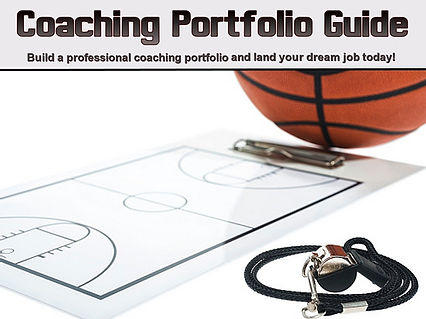
Your first impression is everything when applying for a new coaching job. A professional coaching portfolio is the tool that highlights your coaching achievements and philosophies and, most of all, helps separate you and your abilities from the other applicants.
The key to landing a new coaching job is to demonstrate to the hiring committee your attention to detail, level of preparedness, and your professionalism. Not only does a coaching portfolio allow you to exhibit these qualities, it also allows you to present your personal philosophies on coaching, leadership, and program development in an organized manner.
The Coaching Portfolio Guide is an instructional, membership-based website that helps you develop a personalized portfolio. Each section of the portfolio guide provides detailed instructions on how to organize your portfolio in a professional manner. The guide also provides sample documents for each section of your portfolio that you can copy, modify, and add to your personal portfolio.
THANKS, DRE BALDWIN
If you enjoyed this episode with Dre Baldwin let him know by clicking on the link below and sending him a quick shoutout on Twitter:
Click here to thank Dre Baldwin on Twitter
Click here to let Mike & Jason know about your number one takeaway from this episode!
And if you want us to answer your questions on one of our upcoming weekly NBA episodes, drop us a line at [email protected].
TRANSCRIPT FOR DRE BALDWIN – FORMER OVERSEAS PROFESSIONAL PLAYER, ENTREPRENEUR, AUTHOR, & FOUNDER OF WORK ON YOUR GAME – EPISODE 792
[00:00:00] Mike Klinzing: Hello, and welcome to the Hoop Heads Podcast. It’s Mike Klinzing here without my co-host Jason Sunkle this morning. But I am pleased to be joined by Dre Baldwin from Work on Your Game, Dre All Day. Dre, welcome to the Hoop Heads Pod.
[00:00:12] Dre Baldwin: I appreciate being here, Mike. Thanks for having me on.
[00:00:14] Mike Klinzing: Excited to have you on.
Looking forward to learning about all the things that you’ve been able to do, both as a basketball player and as an entrepreneur. Tell me a little bit about how you got in the game of basketball when you were a kid.
[00:00:22] Dre Baldwin: Sure. So I was always into sports. You know, I come from the city of Philadelphia and played the normal sports, backyard or I guess driveway sports.
We didn’t really have a yard, but kickball in the driveway. Two-hand touch football, somebody might get up one of those portable basketball courses you keep in a garage out in the back. So I played all those sports and tried a little bit of everything. Played some football. And never really got serious in football Mike, just because my family couldn’t afford the football equipment.
So I never really played football. Then I played baseball for a while. I wasn’t really that talented at baseball. Finally got into basketball probably around age 14, which is pretty late. So that’s where it started, was when I started playing basketball and not any other sport was around age 14.
[00:01:09] Mike Klinzing: And then you have kind of an interesting story in that went out for your high school team, got cut several times and finally ended up making it as a senior.
And that’s not usually a path where people then end up getting an opportunity to play college basketball and then getting an opportunity to go on and play some professional basketball as well. So just kind of walk us through sort of what that journey was like for you and, and take us through each one of those stages and then we can talk a little bit about it and dive into it a little bit more.
[00:01:33] Dre Baldwin: Sure. So high school at the time in City of Philadelphia, I went to a public high school. Our school only had one basketball team. It was just the varsity team. There’s no freshman team, no jv. And even the basketball team only had one coach. He didn’t even have an assistant coach. It was just one team, one coach.
So everybody tried out for that one team, and if you didn’t make that team, you didn’t play. So I tried out every year and know didn’t make it till my senior year, and then know that. Funny thing is my senior year, the coach decided to start a JV program, I guess because he wanted to groom future talent. So he by himself started a JV program when I was a senior.
So he had a bunch of guys on the JV team. But that year I sat on the bench and scored like two points per game and then, Coming out of high school, of course, as you just said, nobody’s checking for you to go play college. No coaches are recruiting you or anything like that. But Mike, I knew I was going to go to college.
No, just on no academics, just on a personal level. I knew I was going to college, so it was just in my mind, like whatever school I go to, I’m just going to try out for the basketball team wherever I end up. Happened to go and I just happened to go to Penn State, Abbington, which is right outside of Philadelphia.
And at the time it was provisional division three, which most of your listeners probably know what that is. They were trying to be full fledged D three, but at the time at Abbington, you can only play two years of sports. Now they’re full D three today, but back then you can only play two years at Abbington.
So I figured, okay, I’ll go to Abbington. Played my two years, but then I have to get out of here because I want to play four years of college sports. So I played, my first year actually became a starter. Cause I was growing, I was getting better at basketball at that time, but it’s not, like Abbington is some hotbed of hoops.
So I went there, made the team. Started, averaged, probably about eight, nine points. A game as a freshman was better than I did in high school. And then that summer what happened is I used to go up to the campus because Penn State, Abbington’s campus was, there are no dorms on that campus, so this is a commuter campus.
You literally live at home and you go to school every day and go home every day. I would drive up there and use the gym because growing up, Mike, again, the era that we come from. We didn’t have indoor gyms. Just practicing whenever you felt like it. I grew up playing ball on the concrete outdoor court.
So if it was raining outside, then you just couldn’t play ball that day. I would go, I grew up playing at my local called Finlay Recreation Center in Philadelphia Mount. Now that I was in college, I had access to the facility at Penn State Abbington. So I would drive up there every day to use the indoor gym to work on my game, and the gym would be dead empty.
There’d be nobody in there. And Abbington’s Gym is a beautiful gym, beautiful basketball court. I would just use it by myself every day and one day I’m up there. And I was about to go to the gym to workout, but I walked across campus to get some food from the cafeteria because I hadn’t eaten breakfast that morning.
That summer, I’m 19 years of age at this point. I had a job, I’ve been working jobs since I was 15 years old. So that summer. I’m working at cvs, the convenience store. Yep. Now I would usually work at CVS at night. I would work the night shift like two to close, or four to close, something like that.
So in the morning I would wake up, go work on my game at Abington, come home, shower, then go to work. So this morning I hadn’t eaten breakfast, so I go to the cafeteria to get something to eat and this guy just walks up to me and stops me and he says, Hey, what position do you play? Now I know I don’t know this guy because Penn State Abbington is a very small campus.
It has like four buildings, literally four buildings, and I’m a black guy walking around in Abbington, PA was the suburb of Pennsylvania, so I know all the black people on this campus. So there’s a black person walks up to me, I know him, and this guy’s black, and I don’t know this guy. So he’s asking me what position I play.
I’m like, who is this dude? And again, where I’m from, you don’t just people and start talking to him. So I’m like, how do you know? I even. Now, what are you talking about? And he’s like, well, I’m just asking. And I said, well, I play guard, so I assume he was talking about basketball. I said, I play guard. So he strikes up this conversation.
He starts asking me about my major. He’s an older guy. He’s kind of like my dad’s age. So he is asking me these questions about my major and things like that. And I’m engaging with him. I’m just trying to figure out who this guy is and why he’s talking to me. Finally, he pulls out a business card. Hands me his business card tells me that he is from a different campus. He’s from Penn State, Altoona, which is another, Penn State has 23 different campuses, so he works at one of the other campuses. Now, I don’t know why he’s on Abbington’s campus, but he gives me his card and he’s one of the admissions directors at Altoona. So he goes and recruits students to come to Penn State, Altoona, and he also had another job. His other job was, he was the head basketball coach at Penn State Altoona. Now, one thing I knew about the Altoona campus was that they were the only other campus in Penn State system that was not provisional.
You could play more than two years. So there’s the main campus, which is D one with the football team and all that. That’s what most people know about. Then there’s Altoona D three. Every other campus in Penn State system at the time, you could only play two years of sports and that was it. Now a bunch of them are D three, but at the time it was only two years.
So I knew Altoona was the only other campus that was four years. So I said, oh, you all are D three, right? He was like, yeah, but he kind of glossed over that. He was really focusing on the academic aspect and I guess is what college coaches have to do, at least they did at that time. But he was recruiting me to play basketball.
Now, as soon as that conversation ended, I already knew. I’m going to Penn State Altoona and this guy, and it turns out like the funny thing, he did not know me. It’s not like he was there scouting me and knew I was going walk past that day. He was there doing other business and he later on told me, well, I just saw you walk by and you looked like the kind of player that I knew I needed for my roster the following season. Cause he knew he needed like an athletic type of wing player. And that’s kind of what I was in college. So when he saw me walk by, he said, I figured you might be the kind of player I needed. And it was only after we met, he says to me, I went and did my due diligence on this, and I called your coach and found out, no, if you could actually play, but he had no idea.
So it is funny, right? So that’s how I got recruited to Penn State, Altoona. He ended up getting replaced after I played one year for this guy. His name is Kenny Macklin. He gets fired the next year. He gets replaced by a former NBA player by the name of Armon Gilliam. I don’t know if people know who he is.
Yes, Armon Gillum replaces Kenny Macklin as the coach. I only lasted eight games with Gilliam. Gilliam didn’t really want any players from the previous regime, and he and I butted heads pretty quickly. We had about six, or I think nine returning players from the previous season. None of them lasted into Gillian’s first season, all of them gone.
He replaced the whole roster. And my last year and a half of college, my second half of my junior year, last of my senior year, I did not play on the basketball team at all. So I graduated from college division three college that had never produced a pro player. Nobody had gone pro out of Penn State, Altoona like, and after graduating my first year, It’s 2004 to give everybody a frame of reference here.
I worked at Footlocker. It was my first job out of school as an assistant manager, and then I worked at Balley Total Fitness, selling gym memberships, and Balley’s is now out of business, but not because of me. I did a pretty good job. I sold a lot of memberships at Balley’s, and then in the summer of 2005, I saved up my money and I went to this event called an Exposure Camp.
Which most people are familiar with now because they have them for all different levels. At the time, they weren’t as prevalent as they are today. But this exposure camp, basically you pay money for the opportunity to go and play your game and show your ability in front of a bunch of decision makers who can either rank you, scout you, or you know, say that you’re good enough to play at the next level, whatever it happens to be.
So I paid $250 to go to this exposure camp. This camp is in Orlando, Florida. Now I’m in Philadelphia. Me and a couple of my college teammates rented a car. In Philadelphia and drove from Philly to Orlando. That’s a 19 hour drive for anybody doing the math. Hopped out. We got the car Friday afternoon.
The camp was on Saturday and Sunday. We hopped out of the car. 9:00 AM Saturday morning in the parking lot at Orlando, at this gym, and the camp started at 9:00 AM so I could get away with that at age 23. Probably couldn’t do it now, but I did it then. All right. Hopped out the car and we just started playing two days, two games each day, two on Saturday, two on Sunday. I played pretty good at this exposure camp. I had a couple dunks. My thing was athleticism back then, so I had a couple dunks and I stood out cause of that. So I played good at this camp. I got a good scouting report from the, the agents and the coaches there at the camp, and I got the footage from that camp.
So now again, I’m still working at Balley Total Fitness, Mike. So for this weekend, because I had to get off Friday, Saturday and Sunday from my job just to go to this camp. I had to be back at work on Monday. So we had to leave as soon as the camp ended on Sunday afternoon. We got right back in that rental car and drove back to Philly because I had to be at work Monday morning.
And as soon as I got back to Philly, I went on Google and I started Googling basketball agents. Because mind you, I did not sign a contract on the spot. So it’s not like I signed a contract on a spot and they whisked me away on a plane to Portugal. It didn’t happen like that. I had to go back home and I started Googling basketball agents and any agent I found who had a phone number, I called them.
So I’m literally cold calling basketball agents because the reason I’m calling them at this point, Mike, cause now I have some collateral, I have something that I can sell. I can say, Hey, here’s my scouting report, because there was a link to a website of my scouting report. Again, this is 2005 and I have my footage from the exposure camp.
So I’m calling agents saying, Hey, here’s my scouting report. I’m sending a link to the scouting report. And I called about 60 basketball agents. Out of those 60, about 20 of them actually returned my call and they said, okay, let me see what you got. I sent them the link, and then of those 20, they said, okay, let me see your footage.
Now, mind you, this 2005, there’s no link to footage. This footage was on this thing Mike called a VHS tape. You remember those? Oh yeah, absolutely. So I had a double decker VCR at home. Now for those millennials listening to this, you’re under 30. Don’t know what that is. Google it or ask your parents, they’ll tell you what a VCR is.
I was making copies of my VHS tape, because I went to this drugstore called Eckert. I don’t know if they still exist, but I’m by a 10 pack of blank VHS tapes from, and I would make copies of my footage from that exposure cam on the VHS tape. And I’m going to the post office and mailing out these tapes physically to the agents that asked to see it.
I sent about 20 of those tapes out to different agents of those 20 that I mailed out on my own dime. One agent reached back out to me and said, Dre, I’m interested in representing you. He became my agent and he’s the one who helped me get my first contract. That was in Townes ,Lithuania, this was late August, 2005, so that’s the time period between when I played my last college game and I signed, my first Pro contract was two and a half years. I was off the team in college in January. It was more than two and a half years. It was January, 2002. I signed my first contract in, no, yeah, 2003, excuse me. I signed my first contract in the late summer 2005, so that’s how I got into pro basketball.
[00:12:17] Mike Klinzing: That’s crazy, man. I mean, Pretty rare for somebody to have the experiences that you had at the high school and college level, and then be able to find your way to being able to make some money playing professional basketball. I know one of the stories that I, one of the things that I always love to ask guys who played overseas is, there’s all kinds of different experiences, but what’s your craziest story that you have from the time you were over there?
[00:12:42] Dre Baldwin: Oh man, we got so many. So I would have to go to, I would actually come back across the water and I would go to Mexico, which is technically not overseas, but it’s overseas. It had to be Mexico. I got so many stories from Mexico. It’s crazy. The craziest one is probably when me and one of my teammates got robbed by the police.
The police robbed us. So we went to a club in Mexico that we like to go to. I remember it was called Wall Street. And we would go there every Tuesday and we went to this club. We got a ride to the club, but we didn’t have any money on us to get home. And we also didn’t know the directions to get there.
We figured, and this is the thing, we got a ride to the club, so I’m looking out in the streets as we’re riding to the club and I’m like, I’ll remember the way back just in case we need to get a ride back. I’ll remember the way back that did not work. So we leave the club, it’s like two in the morning.
We don’t have a ride home. We’re trying to figure out how to get there. We like me and my teammate is the guy’s named Tim. He was from Mississippi. It was like, alright, let’s just start walking. We’ll figure it out. We’ll find our way. And we start walking and we’re walking in this random residential neighborhood.
We don’t know where the hell we are. And the cops roll by now. Anyone who’s been to Mexico, I don’t know how it is now, but if you been to Mexico in the residential areas, the cops there are not like the cops in America. And. Mind you as a citizen, you don’t have the same rights in Mexico that you have in America when you’re dealing with police.
They ride around in these big trucks and there’s like four cops in the back and they have these big guns strapped across their chest. They don’t have these little handguns, like American cops. They got big guns, and mind you, they’re speaking Spanish. I did speak a good amount of Spanish, but not completely fluently.
So they hop out. They pull up on us. They just hop out, and they immediately. Put us on the car and start frisking us. Like there’s no questions, there’s no asking nothing. They just, they just do what they want to do out there. Now my teammate had like 40 pesos in his pocket, which is not that much money.
It’s like $4. But the cops frisked him and they took the money out of his pocket and just, they just put it in their pocket. They just kept it. And I’m speaking Spanish, so I’m telling them where we’re trying to go. I gave them the name of the street that we wanted to go to. No. So after they robbed us, They gave us a ride home.
Nice. And yeah, so they, they robbed us and then gave us a ride home. So that was the craziest story that happened in Mexico.
[00:15:00] Mike Klinzing: That’s a good one. It’s amazing just the different stories that we’ve heard and just from guys that I knew back from when I was a player that played over there, and you just, you just hear it.
Some of the things you can’t, you can’t even believe or wrap your head around the things that. Sometimes go on over there that again, we take for granted sort of what we have here in the United States in terms of just our. Systems, for lack of a better way of saying it.
[00:15:24] Dre Baldwin: So yeah. Can I give you one more? Now I’m thinking about it. I got another one. So this was my first job was in Lithuania. This is my first time out of the country, so I mean, Countess, Lithuania. And luckily for me then it was like three other Americans were in that town, so, and Countess, those who don’t know.
One of the biggest teams in Europe is called z. This was Arvidas Sabonis. I think he owns the team to this day. But many big name guys, like guys who went D one, they would play there. So it was a guy named Reggie Freeman. He played at University of Texas. I think he was the player of the year in the Big 12, I think it was back then he was there and it was a couple other Americans on my team, and it was an African guy who spoke fluent English.
So we’re all there in that town at the same time. Now Reggie, he was already in town. So he knew about the club. So he’s like, we’re going to go to this club tonight. So four black guys walking into this club, and it’s called Exit the Club’s called Exit. So we go to this club, it’s like midnight and it is packed.
This club is packed and there’s a ton of people in there. Everybody’s dancing. I’m like, okay, I’m familiar with his world, I just came from college. I know what this is like. So we’re in there, and mind you, and here’s what was crazy about it, Mike, is that these people seem to be. I couldn’t explain it.
It was a downstairs and there was a upstairs, so downstairs, like a normal type of club, people standing around, drinking, talking some people dancing, just normal lounge type, club place. But then upstairs was the dance floor and it was really dark and they had these strobe lights and these people are dancing and it was just something that seemed off about it.
Mike, because I’m looking around, these people were like, It’s like they’re in a trance. Like they never stopped dancing. Like the music didn’t stop. There was not, see, in America, there’s a separation between one song and the next song. You could tell when one song ends and the next song begins over there, the songs just kept going.
It’s like one long song. It never stopped. And the people never stopped dancing. And I’m like, and there’s girls in there. There’s guys in there. I’m like, these people don’t, I’m talking to my teammate. My teammate is a guy named Mike. He was a black guy from New York, and I’m like, why do they seem to not get tired?
Like their energy never changed. Like they just kept dancing and it kept going, going, going. We didn’t leave the club till like seven in the morning and these people never, their energy never changed. It was the same energy the whole time. I’m like, I don’t get it. How are these people not getting tired?
They’ve been dancing for like five hours straight and I’m looking at them and I’m like, I didn’t get it. I didn’t quite understand. 23 years old, there was something I hadn’t seen before and I finally realized that months later. Reason why the club is called Exit because they were all on ecstasy and they were all high on this drug.
And this is why they seem to be in a trance because I’m like, yo, these people are not getting tired and they don’t stop dancing and not drinking water. They’re not eating, they’re not doing anything. They just keep, and I’m talking to hundreds of people. This is not a small group. So, and that’s when I finally realized why the club was called Exit.
And this is, I mean this is the name of the club. And I guess they allowed this over there, that people are actively taking ecstasy before they got there and that’s why they never got tired.
[00:18:15] Mike Klinzing: That is an education all in and of itself, right? I mean, there’s so many things culturally and just different places in the world that we have no idea in the way that things go, and I think that’s one of the.
When I think about guys that have got, had an opportunity to go and play overseas, I mean, I think there’s obviously the, the opportunity just to, to play basketball, but just the opportunity to be exposed to all these different things and you learn about the world and expands your mind in ways that I don’t think you even really understand.
As you said, when you’re 22, 23, 24 years old, you’re not really wrapping your head around all the things that the life experiences that you’re gaining that can help you as you move forward. So, As you go through and you get the chance to play and you play in a lot of different places, a lot of different countries over the course of your career, what are you thinking about?
When does the next step of your life start to come into focus? What are you thinking about as you start to see, Hey, my career’s going to wind down and you know, I’m going to have to kind of walk away from the game. What did you start to look at in terms of your post basketball career, what you wanted to do?
[00:19:18] Dre Baldwin: Great question, Mike. I started thinking about it from the very beginning because coming from a D three school you understand as a player yourself that they’re looking at your pedigree, right? Right. Anytime you’re assigned overseas, they’re looking at where’d you come from. So if you came from a D one school, you could sit out for three years, they might still sign you, right?
Because you play D one. So you’re obviously talented, but you played D three every time you get a contract. That might be the last one. So, There was a time around 2009, so about halfway into my career. I had played in a few places, but the phone was not ringing at that time. I’m home in the United States, phone’s not ringing, and I started focusing on, I asked myself the question, how can I get control of my career and make money and stay doing basketball stuff?
That’s when I started focusing more on building what we now call personal brands. So, putting more videos on YouTube. because I used to put all these basketball drills on YouTube blogging, cause I’m always been a big writer. So I started really focusing on that and that’s where I started building an audience on the internet.
So from 2009 through 2015, that’s when I stopped playing. I kind of had two things going on, so I was playing ball, but I also had this audience on the internet and I was making products and writing blogs. And then I started writing books. So I had this whole business going on, on the internet. So if basketball didn’t keep going, I would’ve been fine from about 2009 on, so I already had that in my mind, Mike.
And then by the time we got to 2014, 2015, I knew I wanted to start winding it down because I started to see other opportunities. I started to meet people who were in things like professional speaking and they knew about making courses and how to write books and how to make this into a business.
There was a business you can make out of this. And at the same time, I understood as a basketball player, as soon as I wasn’t on the court every day and making those videos on the court every day to the basketball players, I wouldn’t be top of mind to them because I wasn’t actively doing it. So I was already thinking about it.
To answer your question from the very beginning of my career, and it was around 2009, about four or five years into my career, I knew what I was going to do after basketball. And then probably about 2010, 2011, when I started making my own products and I’m selling them, I said, okay, if the phone doesn’t ring again and my agent never calls me again, I never get another chance to play overseas.
I can just do this. So for the last four or five years of my career, Mike, I was comfortable if the phone did not ring. Luckily it did, and I got a couple more opportunities, but I already knew what I was going to be doing the last five years of my career. I already knew what I was going to do after basketball was over.
[00:21:41] Mike Klinzing: The internet personal branding pretty early on. I mean, that’s, yeah. When you think back to that time, there wasn’t that many people that were going this route compared to obviously what there is now. How’d you go about learning what you needed to do, how you needed to do it. Was there a mentor?
Was there people that you were just kind of modeling yourself after or was it more a case of, Hey, I’m just going to experiment. I see what’s here. Let me just try some different stuff and see what works. What route did you take to be able to put together everything that you did, and figure it all out?
[00:22:17] Dre Baldwin: Mostly it was the last one. I was just doing stuff because I’ve always been a computer geek. I’m an athlete, but I’ve always been a computer geek, always been a big computer person. So when I saw the internet, I knew it was for me. And when I saw what we now call social media, I knew I would be active on it.
And when I saw you can write your own blogs and you can kind of publish yourself on the internet through YouTube and, and self-publishing of books, soon as I saw that, I said I can make my own stuff. I don’t have to go through a gatekeeper and I can just put it out straight to the consumer. I knew that’s exactly where I needed to be, so I jumped straight into it and I figured a lot of things out.
I’ve always been a big reader, as I said, so I’m reading Robert Kiyosaki back in the day, and then Tim Ferris was the more modern version, and I would just pick up ideas. So here’s how you can create a product. Here’s how you can put it out. Here’s how you can sell it. Here are the applications you can use to actually create a product, put it out, put a price on it, sell it, and make money.
And you don’t have to pay anything to get started. So this is something that our parents couldn’t do, Mike, like our parents couldn’t start a business for free on the internet from your couch, right? I had the opportunity to do that, and so when I saw the tools and I figured I could do it, I just started making my own product.
So the first product I made was a $4.99 Program for basketball players called Simple to Advance Ball Handling Drills $5 and another one for shooting. All right. That’s how I got started. And over the years we sold tens of thousands of those products and all I did was make a YouTube video doing a shooting drill.
Then I said, you want to hold program for how to do this? Click on the link down below. And people went and clicked on the link. And that’s how I got started in business literally. How I got started with selling $4.99 training programs to basketball players through YouTube videos. So that’s how I got started.
And then over the years I learned more about how do I actually run this like a business and building and things like that. And luckily for me, I never deleted anything. So I always had this list of things, but I just had to put it all together and figure out how to make it make sense.
But now I do it in a much more professional, organized, intentional way. But back then I was just doing stuff and just seeing what worked.
[00:24:12] Mike Klinzing: All right, so tell me where you are right now. What do you have out there? Give people out that are listening. Give them an example. Just walk through some of the different things that you have out there and what makes your brand what it is.
[00:24:24] Dre Baldwin: Sure. So my company, nowadays today is called Work on Your Game. And what we do here is help people perform at a higher level, be more consistent, and of course make money in your business. And that is, of course, I have a lot of ball players, still people who used to watch me back then when they were playing ball, A lot of them are not ball players anymore, but some of them are clients of mine.
Some of them are members of my university. They were watching me when they were in high school and they thought maybe they would go to the nba, but most of them didn’t even play in college, let alone the pros. But they started their own IT firms. They’re married now, they have kids. So these people have grown up with me, Mike, over the years, over the last decade plus.
And what we have now is, man, I got a lot of books out there. We have courses, we have programs. Tell me what specific type of person that I can direct people towards. One specific thing.
[00:25:07] Mike Klinzing: Yeah. I would say we’re thinking about, a lot of the audience that we have are college coaches, so we’re talking about basketball coaches.
I have a lot of people I think, that listen, that are interested in the personal growth side. I know that’s something that. I’m always passionate about, I like to learn. I think no matter what profession you’re in, I think coaching, obviously this is a factor, but you can talk and take it to lots of different professions, is how do I just improve and, and get better as a person?
Cause I think if you can get better as a person, as a leader, as a learner, then I think you can apply that to whatever position it is that you’re currently in. So I think if you could take it that direction, that’d make a lot of sense.
[00:25:41] Dre Baldwin: Perfect. Yeah. So my latest book is a book called The Third Day. And the subtitle is the decision that separates the pros from the amateurs, and this one coaches what relate to very well players as well.
So you think about the first day, Of training camp for a basketball team, the first day of practice, everybody’s excited. Everybody’s showing up, active. Everybody’s early, everybody’s trying to impress, right? And everybody’s doing good that first day. The second day, energy goes down just a little bit.
Everybody’s not super excited, but everybody’s still doing their thing. The situation still has that new car smell, so to speak, but by the third day, Now you start to see people’s real personalities, sorry. By the third day you start to notice attitudes. By the third day people are showing up just as the whistle was bomb by the third day, you’re starting to see the real, you’re starting to see people’s real person, what people are really about by that third day.
Because they’re not trying to impress anymore. But the third day is about, is the moment when everyone realizes that the thing that they signed up for is not all fun and games is not one big party and there’s some actual work involved. And what this book is about is. Systematically and strategically, how do you handle that third day and what decision do you make?
Cause the third day is not about the occurrence, it’s about the decision that you make in that moment. How do you show up and give your best effort when you least feel like it? And as an athlete, we all understand this professionals, business owners. We all understand it that we’re going to have those days.
And what separates the true pros from the amateurs is what do you do and the times when you don’t feel like being at work. Because as a professional you don’t have a choice but to show up and do your job. So that book is my latest and I give people a free copy of it and all they have to do is go to thirddaybook.com.
I can send you a physical copy of the book. We just ask that you cover the shipping. So the US is just $9.95 for the shipping and we will send you a free copy of that book. Again. It’s called the Third Day and that’s thirddaybook.com.
[00:27:30] Mike Klinzing: That’s good stuff, man. I mean, I think, I know you’re very prolific in all the stuff that you put out and the things that you’re doing for people out there.
I think if you get a chance, if you’re a part of our audience, please make sure you check out what Dre’s doing because he’s got a lot of good stuff. That you can use to improve yourself as a coach, as an entrepreneur, as a potential business owner, as a player. There’s just a lot of stuff out there that Dre talks about in terms of mindset and just making yourself better.
Dre, when you look ahead to the next couple years, what do you see on the horizon? What are your biggest challenges moving forward?
[00:28:03] Dre Baldwin: The biggest thing here definitely is expanding Work on Your Game University. That’s where I coach entrepreneurs on building their businesses and of course, making money in their business.
I mean, it’s the reason why we show up to work every day is to make money. So that’s the biggest thing that we’re focusing on right now in everything, is sending people towards work on your game university and just expanding that, bringing more people in, bringing more people in internally. So building a team.
Building sales teams adding staff so that we can service people at the highest possible level. That’s the biggest thing we’re focusing on. Just trying to stay on one thing instead of having a bunch of things going at once.
[00:28:39] Mike Klinzing: Makes sense. All right. Before we wrap up, let people know how they can get in contact with you.
Share the website, I know you already did for the book, but social media, email, whatever you feel comfortable with. And then after you do that, I’ll jump back in and wrap things up.
[00:28:50] Dre Baldwin: Sure. So of course we got the book, thirddaybook.com and Work on Your Game University is where we have our coaching program and the entrepreneurs out there, social media.
My Instagram is @DreBaldwin. That’s probably where I’m most active social media wise. But I’m on all the apps. I’m on TikTok, Facebook, LinkedIn. Twitter, YouTube, all of them. Just whip my name up and I do send out a daily motivation text message for free every single morning to everyone in my text community.
All you have to do to join it is text me at my number, which is 305 384 6894. You’ll get a message that’ll get you focused, sharp and on point to start your day. You just text me at that number and I’m sure we’ll have that in the show notes just in case anybody didn’t catch it.
[00:29:28] Mike Klinzing: Absolutely. Dre, I cannot thank you enough for taking the time out of your schedule this morning to join us?
Really appreciate it, and everyone out there. Thanks for listening and we will catch you on our next episode. Thanks.