
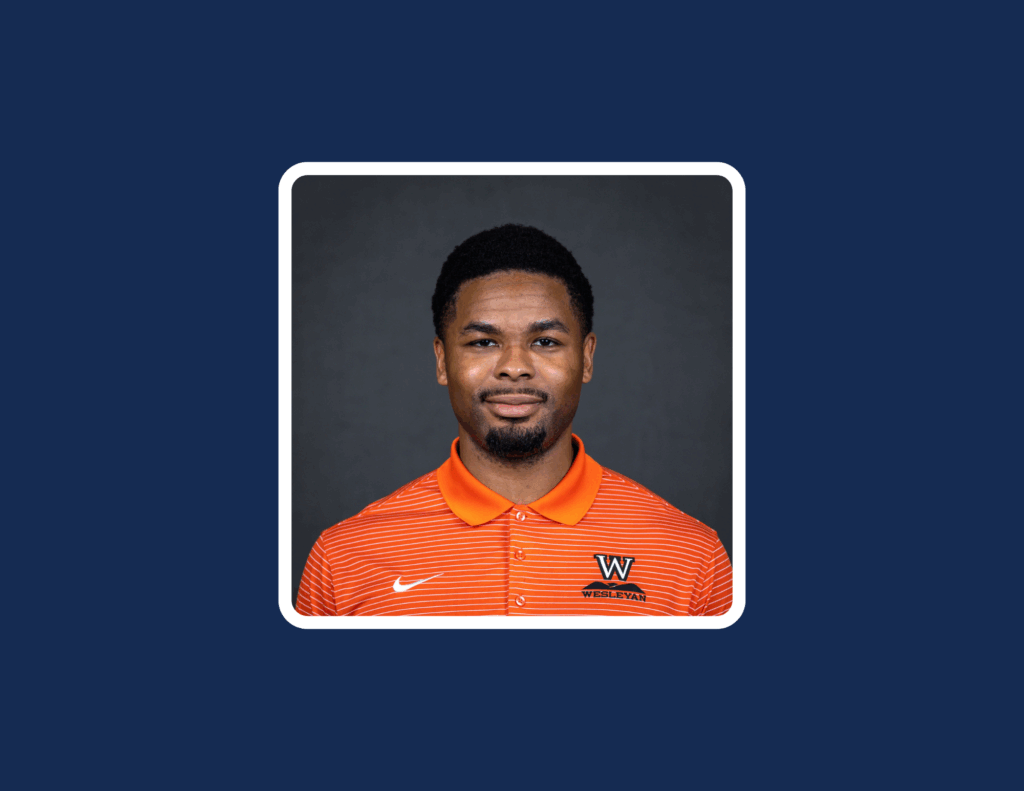
DEREK SLOAN – WEST VIRGINIA WESLEYAN COLLEGE MEN’S BASKETBALL HEAD COACH – EPISODE 1137

Website – https://wesleyanbobcats.com/sports/mens-basketball
Email – sloan.d@wvwc.edu
Twitter/X – @CoachDSloan
If you listen to and love the Hoop Heads Podcast, please consider giving us a small tip that will help in our quest to become the #1 basketball coaching podcast.
Derek Sloan is entering his 5th season as the Men’s Basketball Head Coach at West Virginia Wesleyan College. He spent two seasons as an assistant coach on previous WVWC head coach Nick Patella’s staff and was appointed as the interim head coach on Aug. 10, 2021 before taking over the Bobcats’ program officially on September 15, 2021
In 2018, Sloan served as an assistant basketball coach at Culver Military Academy in Culver, Ind. The Cleveland, Ohio native was a member of the Cleveland State University men’s basketball team from 2013-2018 where he earned his bachelor’s degree in Business Administration.
On this episode Mike and Derek discuss why every drill and practice session must embody the pace and principles that you want to see during actual games. Throughout our exchange, we explore Sloan’s coaching philosophy, which prioritizes efficiency and energy in practices, ensuring that players not only develop their skills but also understand their specific roles within the team framework. Furthermore, Sloan shares insights regarding the challenges of navigating the evolving landscape of college athletics, particularly in light of recent rule changes impacting recruitment and player eligibility. Ultimately, this conversation underscores the profound impact of deliberate practice design and the cultivation of a cohesive team culture on the overall success of a basketball program.
Follow us on Twitter and Instagram @hoopheadspod for the latest updates on episodes, guests, and events from the Hoop Heads Pod.
Make sure you’re subscribed to the Hoop Heads Pod on iTunes or wherever you get your podcasts and while you’re there please leave us a 5 star rating and review. Your ratings help your friends and coaching colleagues find the show. If you really love what you’re hearing recommend the Hoop Heads Pod to someone and get them to join you as a part of Hoop Heads Nation.
Prepare to take some notes as you listen to this episode with Derek Sloan, Men’s Basketball Head Coach at West Virginia Wesleyan College.
What We Discuss with Derek Sloan
- Why effective practices must closely mirror the desired pace and style of play for the team
- It is imperative that coaches establish clear expectations for players’ roles early in the season
- Player development requires ongoing assessment and feedback
- Understanding the dynamics of both high school and AAU basketball is crucial for developing effective recruiting strategies
- How individual growth enhances overall team performance and cohesion
- Maintaining high energy levels during practices to maximize efficiency and effectiveness
- Building relationships with players off the court
- Recruiting players who display a strong motor and positive attitude, as these traits are indicative of their potential to thrive at West Virginia Wesleyan
- Keys to evaluating player performance through film analysis
Like this show? Please leave us a review here — even one sentence helps! Consider including your Twitter handle so we can thank you personally!

We’re excited to partner with Dr. Dish, the world’s best shooting machine! Mention the Hoop Heads Podcast when you place your order and get $300 off a brand new state of the art Dr. Dish Shooting Machine!

Your first impression is everything when applying for a new coaching job. A professional coaching portfolio is the tool that highlights your coaching achievements and philosophies and, most of all, helps separate you and your abilities from the other applicants.
The key to landing a new coaching job is to demonstrate to the hiring committee your attention to detail, level of preparedness, and your professionalism. Not only does a coaching portfolio allow you to exhibit these qualities, it also allows you to present your personal philosophies on coaching, leadership, and program development in an organized manner.
The Coaching Portfolio Guide is an instructional, membership-based website that helps you develop a personalized portfolio. Each section of the portfolio guide provides detailed instructions on how to organize your portfolio in a professional manner. The guide also provides sample documents for each section of your portfolio that you can copy, modify, and add to your personal portfolio.

Hey coaches — you’ve got a game plan for your team… but do you have one for your money?
That’s where Wealth4Coaches comes in.
Each week, they deliver simple, no-fluff financial tips made just for coaches. Whether you’re getting paid for camps, training sessions, or a full season—Wealth4Coaches helps you track it, save it, and grow it.
It’s time to stop guessing and start building.
Subscribe now at wealth4coaches.beehiiv.com/subscribe
And follow them on Twitter @Wealth4Coaches for daily money wins.
Your money needs a coach.
Start with Wealth4Coaches.
THANKS, DEREK SLOAN
If you enjoyed this episode with Derek Sloan let him know by clicking on the link below and thanking him via Twitter.
Click here to thank Derek Sloan via Twitter
Click here to let Mike & Jason know about your number one takeaway from this episode!
And if you want us to answer your questions on one of our upcoming weekly NBA episodes, drop us a line at mike@hoopheadspod.com.
TRANSCRIPT FOR DEREK SLOAN – WEST VIRGINIA WESLEYAN COLLEGE MEN’S BASKETBALL HEAD COACH – EPISODE 1137
[00:00:00] Narrator: The Hoop Heads Podcast is brought to you by Head Start Basketball.
[00:00:20] Derek Sloan: Everything you do in practice should model how you want your team to play from breakdown, whether three on three, two on two teaching principles to how you want to get shots up. I think everything you do has to model how you want your team to look on the floor. If you want your team to play fast paced, which we do, everything we do is fast paced.
we don’t walk from drill to drill. We make sure we sprint through everything.
[00:00:47] Mike Klinzing: Derek Sloan is entering his fifth season as the men’s basketball head coach at West Virginia Wesleyan College. He spent two seasons as an assistant coach on previous WVWC head coach Nick Patella’s staff, and was appointed as the interim head coach on August 10th, 2021, before taking over the Bobcats program officially on September 15th, 2021.
In 2018, Sloan served as an assistant basketball coach at Culver Military Academy in Culver, Indiana. The Cleveland, Ohio native was a member of the Cleveland State University men’s basketball team from 2013 to 2018, where he earned his bachelor’s degree in business administration.
Hey Hoop Heads. Train smarter and win more this upcoming season with the number one selling shooting machine in America, Dr. Dish. This month grab a certified pre-owned machine for as low as $3,995. You’ll get a three year warranty, 250 plus drills, and quick three to five day shipping from Minnesota.
Inventory moves fast, so don’t miss out on these savings from our partners and friends at Dr. Dish basketball. Learn more at drdishbasketball.com and follow their incredible content @drdishbball on Twitter, Instagram, Facebook and YouTube. Mention the Hoop Heads Podcast and save an extra $300 on the Dr. Dish Rebel All-Star and CT models. Those are some great deals Hoop Heads. Get your Dr. Dish shooting machine today.
[00:02:10] Narrator: Hi, this is Jonas De Bruyne, International basketball coach, and you’re listening to the Hoop Heads Podcast.
[00:02:19] Mike Klinzing: Coaches, you’ve got a game plan for your team, but do you have one for your money? That’s where Wealth4Coaches comes in. Each week, we’ll deliver simple, no fluff financial tips made just for coaches. Whether you’re getting paid for camps, training sessions, or a full season, Wealth4Coaches helps you track it, save it, and grow it.
It’s time to stop guessing and start building. Subscribe now at Wealth4Coaches.beehive.com/subscribe and follow us on Twitter @Wealth4Coaches for daily money wins. Your money needs a coach. Start with Wealth4Coaches.
Prepare to take some notes as you listen to this episode with Derek Sloan, men’s basketball head coach at West Virginia Wesleyan College. Hello, and welcome to the Hoop Heads podcast. It’s Mike Klinzing here tonight without my co-host Jason Sunk. But I am pleased to be joined by Derek Sloan Head, men’s basketball coach at West Virginia Wesleyan College.
Derek, welcome to the Hoop Heads Pod.
[00:03:18] Derek Sloan: Thank you for having me, Mike. I’m looking forward to our conversation today.
[00:03:22] Mike Klinzing: Excited to have you on looking forward to diving into all the interesting things that you’ve been able to do in your career. Let’s start by going back in time to when you were a kid. Tell me a little bit about your first experiences growing up with the game of basketball.
What made you fall in love with it?
[00:03:35] Derek Sloan: Yeah, basketball’s always been a huge part of my life. My older brother played it. My father played it there. Pretty much the ones that got me into it and showed me how the game is played and taught me everything that I know. And I’ve been playing it since elementary school and just picking up from them and going to parks and playing and just learning and watching all the college games on TV and that sort of thing, and being dragged out to different events with family and friends.
Basketball was just always a part of everything that we did. So growing up something that I fell in love with very quickly throughout middle school and high school, school and sort of, sort of started taking more serious played for some great coaches when I was younger.
And that was something that sort of shaped who I became as a player and now today as a coach.
[00:04:30] Mike Klinzing: Alright, let’s start with pickup basketball. Where’d you used to play when you played pickup in the Cleveland?
[00:04:35] Derek Sloan: Yeah Euclid Creek was always the number one spot for me, you know my brother played at Euclid for a Sean O’Toole and I actually ended up playing for him at St.
Ignatius’s High School, but that’s where it all started. My father would also take me up there and we would get it in you had to be tough to play up there. So that was some good ba battles. Definitely toughens You toughens you up e exactly. mentally and physically. Yeah, it’s tough, man.
It’s
[00:05:00] Mike Klinzing: tough finding, it’s tough finding good pickup games anymore if you’re a high school or a college kid, man, trying to find games where you play outside anymore. Yeah, for sure, man. It is, it’s a struggle without question. So as you got older and you’re getting into high school. How’d you go about, besides playing pickup ball, how’d you go about improving your game?
What were you doing by yourself or just what was your plan for, for becoming a better player as you got up into high school?
[00:05:22] Derek Sloan: Yeah, just, you know wanting to be an all around player and develop all of my skills. And a big part of that came from just watching my favorite players on tv. who did I want to emulate and watching where I wanted to be next.
So, my goal was always to play in college at the highest level. And watching those guys on tv, you realize that you have to have a wide variety of skill. you have to be able to handle the ball, you have to be able to shoot the ball, you have to have a great IQ feel for the game. And so. when I’m by myself whether it’s outside on the court or finding an open gym I just wanted to be able to develop those things and be the best player that I can be.
[00:06:05] Mike Klinzing: Were the guys you tried to emulate.
[00:06:07] Derek Sloan: So obviously being in Cleveland, LeBron everybody wants to play like him. But I love Tracy McGrady, Carmelo Anthony, guys like that. anybody on Ohio State when I was growing up was always something that every kid was striving to play for and striving to be like play, be able to compete at that level.
that to the good old days where they were playing they, they had lost to Florida in that national championship. Was hoping they had pulled that one out. But all those guys and a lot of those Cleveland, Cleveland area guys too just watch trying to emulate those guys.
Were were definitely had some ideas in my head.
[00:06:44] Mike Klinzing: Cleveland area basketball. I mean, just over the last 25, 30 years, there’s just produced so many great players. And obviously well the history of, of high school basketball here in the Cleveland area. And you mentioned a guy who’s a legend as a high school coach here, Sean O’Toole, who I’ve been fortunate enough to mm-hmm.
Know Sean since way back in the day we played against each other when I was at Strongsville. And he was at, he was at Ignatius. And so he graduated a year before me in 87, and I graduated in 88. And so I’ve known Sean forever and obviously a great coach. When you think about the influence that Sean had on you as a player and maybe some of the other coaches that you had in those younger years, what are some things that you took away from them that you feel like are still a part of who you are as a coach?
Maybe something from Sean or something from somebody else that you remember.
[00:07:32] Derek Sloan: First of all playing for Coach O coach Sean O’Toole. He, he toughens you up, you know? And I remember when I first going to play for him so he, he had coached my brother. My brother’s about 10 or 11 years older than me.
He had coached my brother. So I had already knew him and he knew me. And so I knew his style. you, you have to be tough to be able to play for him physically and mentally and so I got a lot of, a lot of great stories with him, with that. And we still keep in contact to this day.
But his attention to detail is something that really stuck with me and. Something that continues to be a part of me as a player and a coach. he was, you’ll never find anybody more prepared. You’ll never find anybody that runs a practice more efficiently than he does. Every detail matters.
if you’re supposed to hedge a screen and if you’re, if your works two degrees off it doesn’t matter. He’s going to let you know about it in a loud but loving way. And you have to be able to take that. But it’s all for the better. And I knew it was all out of love.
And so I definitely loved playing for him. And like I said all of his players come back and, and keep in contact with him today. I work his summer camps every summer and a lot of my former teammates come back and do that as well. And so, but that attention to detail. That preparation and the sense of urgency is something that he instilled in, in all of us.
And so I’m glad he did that. What’s your favorite memory from high
[00:09:08] Mike Klinzing: school basketball?
[00:09:09] Derek Sloan: Oh, man. I think just playing in those postseasons, when, when I was playing we had, we held our district district games at Sona High School, and I know they changed it up a few times throughout the years of how they format those things.
But just being able to play in front of those big crowds you feel the pressure that you, you feel the how much love everybody has for the game. And we got to play against some great players. we, we, we can never get past Shaker Heights. For some reason, my last two years, they, they knocked us out, but they had some great players, Issa Amma, Terry Ro Robert fbe, all those guys so they, they had some really, probably their most talented teams that I’ve seen since, for sure.
They always gave us fits, but just playing in those environments, was definitely probably the biggest experience when it comes to high school basketball that I had.
[00:10:00] Mike Klinzing: Yeah, there’s nothing like state tournament basketball in Ohio. They, now that we’ve got seven divisions though, Derek, I don’t know man.
It’s you, you start out, man, you’re already in like the district semifinals or the district final in your first game. It doesn’t, it doesn’t seem right that you only have to win, like That’s right. Four, four or five games to win a state championship. But I’m still having a hard time wrapping my head around, oh, they got it easy today.
Yeah, exactly. Exactly. It was, it was seven or eight back in the day. Tell me a little bit about your recruitment and decision to go to Cleveland State.
[00:10:26] Derek Sloan: Yeah, Cleveland State was they were always at the top of my list just being in the city and I, going to St. IgnatiusHigh School, I remember my mom, she would take me to school every morning and pick me up.
And I would always see, especially when they made their run in the tournament in the NCAA tournament, billboards all over the place and. we would see them working out at 6:30 AM outside carrying weights and all of that stuff. So that was always my dream school. And when they came knocking, I was ready to jump on that right away.
And so there, there was no hesitation on my end. I visited they fed me good and coach O’Toole came with me on that visit as well. And coach Waters was coaching, was was the coach there at the time who I still have a great relationship with. And we still talk all the time.
And he still gives me great advice. He’s a big, big time mentor to to me in my coaching journey. But yeah, there was no hesitation on my part. had a few other offers, but when CSU came calling. I was, I already knew that was where I wanted to be.
[00:11:33] Mike Klinzing: It’s funny, I grew up with Cleveland State Basketball because my dad was a professor at Cleveland State and he retired, I think in maybe 1995.
But I grew up going to, going to all the games and I’m like from like 1980. So Franklin Edwards and Lee Reed and Mike Sweeney and Darren Tillis, and those are guys that when I was in like fourth, fifth, sixth grade, that those were the guys that I watched. And then when they went, wow. When they went on the run in 86 with Mouse and Kenny Robertson and, yeah.
And Clinton. And Clinton and Clinton and the, the whole the whole get the whole group. I was just getting to the age where I could go and try to sneak into, try to sneak into some pickup games down in, down in Wooding gym. And I always say that, yeah, Clinton Smith always, Clinton Smith always looked out for me if he could sneak a.
16-year-old skinny white kid who could shoot into a game. He tried to, he tried to, he tried to sneak me in there every once in a while. Yeah. But man, just all those teams and growing up and seeing Coach Derringer first, and then Coach Mackey, obviously with the team that that made the run in the tournament.
I spent a lot of time in Woodland Gym and back in the day public hall when when the Vikings used to play over there. Mm-hmm. and then obviously Coach Waters had previously been at Kent where I played came in a couple years after I graduated and really I think got that thing started where I look at the program that I played in and then I look at what it has since become.
Coach Waters obviously started that off, and anybody that I know from, from Kent or from Cleveland State, just like you. Has nothing but great things to, to say about Coach Waters and who he is, not just as a basketball coach, but also as a person. And it sounds like that he had that kind of influence on you both just as a player, as a person, and then ultimately as a coach.
[00:13:11] Derek Sloan: Yeah, for sure. You I think that’s what makes, makes the great coaches great. coach O’Toole, coach Waters they, it is bigger than basketball. it’s bigger than B you there would be times where we’re, we’re all dressed up for practice and ankles taped. we’re sitting in the film room expecting to watch maybe 15, 20 minutes of our next opponent.
But it turns into a two, three hour session of just life. And but, and he didn’t, we were thinking, we’re sitting there thinking, is he forgetting about practice? But nah, he, he, he let I didn’t forget. We, he just think this is more important. So that that’s the stuff that really stuck with us.
Definitely stuck with me. And like I said, I try to sort of emulate some of that stuff and in my coaching days today. And, but we talk before every season and after the season and we go through goals and everything like that. And I ke keep him updated and he keeps he keeps me grounded in what I’m doing and so I definitely still have a great relationship with him.
[00:14:11] Mike Klinzing: Thrown into school. I know you ended up getting a business a business degree. And that’s the same thing I got a business degree in. And I could tell you that when I went to school, I had no idea what I wanted to do. I was completely, completely clueless. So I’m like, well, what gives me the biggest range of options?
I think I’ll, I think I’ll try business. So where were you at? Were you thinking coaching at all, or what was your mindset academically, career wise?
[00:14:33] Derek Sloan: Yeah. I had no clue what I wanted to do. I, I definitely never saw a coaching in my future. Especially if you probably asked some of my teammates, they, they’d be shocked.
They were shocked when they saw that I got into it. I was by no means the most vocal guy. I spoke up when I had to, and I’d always call out the picks and everything like that, but I wasn’t the the rah rah type of guy. But I stumbled into coaching where actually my senior year.
After our season. And coach Dennis Felton, who’s assistant up at Providence right now, he called me in, he was our head coach at the time. After Coach Waters retired, he called me, called me in the office. And we started talking about some of these things and he asked me what I wanted to do.
I said, I wasn’t sure. And he said, well, you love sports, you love basketball. Why don’t you keep trying to follow that path? I said, okay. And, a couple weeks later somebody who also went to the same high school that I went to, St. St. Ignatius’s High School in Cleveland. Ed Kelly, he works he’s at Culver Academies a boarding school out in Indiana, small town Indiana.
And he gave coach Felton a call and ask if Derek would be interested in teaching or coaching. And I say, yes. And that was actually my first time stepping into coaching. I coaching high school basketball. Four year coach helped out with the freshman team and the JV and varsity teams. But yeah, I had no clue throughout my whole I started as a finance major I’m sorry, I actually started as a health science major.
Wanted to get into pt, but then I failed my summer chemistry two class, so that wasn’t going to work out. Then I got into finance and then eventually just settled for business administration. But yeah, I had no clue that coaching was going to be part of my future.
[00:16:18] Mike Klinzing: So when you get to Culver, what’s that experience like for you?
Do you immediately say, oh man, this is the right place for me? Does it, is it take you a little bit of time to figure it out? Just where are you at mentally as you take that job and you start getting into it for the first couple weeks?
[00:16:34] Derek Sloan: Yeah, I, I was just one of those guys where, wherever I ended up, I wanted to be all in.
I wanted to put my best foot forward. I sort of wanted to prove myself, but I’m a big believer in no matter where you’re at take pride in what you do. So whether it’s middle school, high school, college I believe in putting in the work, putting in the time, and putting in the effort.
And so when I, when I got to Culver I started out actually watching Ed Kelly, the guy who had hired me, he was the head freshman, basketball coach. So started out as his assistant and after a couple games he was sort of let me take over the head role. But I always sat on the bench for JV games and varsity games.
Started working with the players and player development, working them out. We have some very talented guys too. So I really enjoyed that. And so taught myself how to do film work and that sort of thing. I just wanted to use that experience to learn everything that I could about coaching behind the scenes and on the court.
And so I was very excited to be able to get that opportunity
[00:17:37] Mike Klinzing: figure hard, easy or hard to flip the switch from player to coach. For you.
[00:17:41] Derek Sloan: For me, it was pretty easy. I I I have patience, which I think you definitely have to have, especially going from division one college to high school where not everybody can do the same things.
We, we have four division one level players on the team, but not everybody was like that. And so for me being they say patience is a virtual. I’m glad I had that ’cause that, that definitely carried me a long way. But. I, I think, I think, I know it’s tough for, for a lot of guys to be able to, oh, why he, why can’t he do what I did?
Well not everybody’s built like that which is fine. So you have to be able to work with everybody. So It came pretty, pretty simple for me.
[00:18:24] Mike Klinzing: As you’re getting into the year and you realize, Hey, I really like this coaching thing. What do you start to think about in terms of your plan moving forward with coaching as a career?
Were you thinking, Hey, I might want to stay at the high school level? Obviously as a guy who played collegially, division one basketball, there’s always the draw of, hey, I’m familiar with, with college basketball and the opportunity to get back to, to college coaching, which obviously eventually you did.
But just tell me, what were you thinking about? What was the strategy? Was there a plan or were you just kind of, I’m just going full out in what I’m doing right now and the, the next step in the process was kind of still far off?
[00:19:05] Derek Sloan: Yeah, I definitely wanted to get to the college level. Once I started working, working at cover at the high school level, definitely you I felt like I could take it more serious at the college level as far as what you demand as a coach and what you can dive into.
You can sort of put all of your time into that aspect. So when I was coaching at Culver, I was also working in the communications department, which definitely helped me a lot too. learning how to do different things technology wise. But I definitely wanted to be able to put all my, put all my time into coaching basketball and so when I wanted to get to the college level, so I started to build up my network build up connections.
That was sort of the first thing, first step for me. But then just continuing to help out with every aspect of the program so I can grow my skills and be prepared for that next level.
[00:19:57] Mike Klinzing: Which part of coaching do you feel like. Became the most naturally to you, what were you pretty good at right out of the gate, do you feel like?
Because everybody always has the standard answer. Derek is always, man, I didn’t really know anything. I had to learn everything. But most of us have one aspect of something that we feel. Pretty comfortable with right out of the gate, something that grabs and store like, man, I, I see this and yeah, I got areas to grow, but I’m pretty good at this Right off, right off the bat.
What, what was that for you?
[00:20:24] Derek Sloan: Yeah, for me it was definitely player development, you know? I feel like that, and even still to this day, I feel like that’s sort of my niche there. Just whether it’s film, work ’cause I’m very detailed. And, and organized. But on the court as well, I played for two different head coaches in college and I got, and they were both, both are considered great, but both are very different.
So I got to see a lot of different things as far as processes player development different on court workouts. And part of that was realizing again that every player is different. There’s not a one size fits all thing. And so if you can take the time to, to learn each guy and see, hey, this is player A needs this, player b needs that player development was definitely, and it was a big passion of mine.
And when I was at Culver, I started getting tapped in with John Lucas, assistant coach for the Houston Rockets, Houston legend. and so I was working his camps and got to see what he does up close and personal and a lot of his close trainers and coaches as well, just learning from them.
And so that player development aspect for me, I think was definitely one of my strong suits and continue, continues to be to this day. How
[00:21:39] Mike Klinzing: did that connection with Coach Lucas come about?
[00:21:42] Derek Sloan: So actually right before I started at Culver a couple weeks before I had moved up there one of their assistant coaches at Culver, bill Ey, who’s still there, he is their head girls coach now.
But he was a varsity assistant and he had been working with John Lucas for a few years by that point. And he had asked me Hey, do you want to come down to Houston and, and work these camps and work these these these showcases? I said, yeah, sure, I would love to. And so he’s the one that sort of got me hooked up.
With that. And Coach Lucas was great. he would bring all the coaches in one room especially whether he met you or not, first thing he’d do would gather all coaches probably be about 10 or 12 of us. And he’d just look at you or point at you, all right, what do you got? What you going to do?
And you, you like, whoa, you better be ready to say something and it better be good. So you had to be on, be on your P’s and Q’s. And so first time, well, my first time doing that, I struggled and he was like, clean that up a little bit. And, but after that I sort of I got the hang of it and I came in, I was prepared, I was ready to go.
[00:22:45] Mike Klinzing: Yeah. I think Coach Lucas’s reputation, obviously in the game, going back to coming out of Maryland as the number one, people forget that he was the number one overall pick in the NBA draft. And he also played, did you like play college tennis? Played college tennis at Maryland, which is kind of crazy when you think about a guy.
And the way that we, the way that we do specialization today. Here’s a guy who was the number one overall draft pick in the NBA. And he was, he was playing collegiate tennis too, so
[00:23:11] Derek Sloan: Sure. Did believe he was all American.
[00:23:13] Mike Klinzing: Yeah. Coach Lucas obviously has a tremendous reputation after the year at Culver, and you’re working with Coach Lucas.
Tell me how the opportunity at West Virginia Wesleyan comes your way.
[00:23:25] Derek Sloan: Yeah, so I after that first year at Culvert again, I knew I wanted to get to the college level. And so at that point I didn’t have too many connections, but I had a couple, but I was just applying to jobs I was applying to everything that I saw and I was willing to go anywhere and do anything.
And actually I didn’t hear any, I didn’t hear it back from anybody until the end of the summer, really late July, early August, and that was from Nick Patella, the head coach. Then he was the head coach at Davison Oaklands College Division two down, down there in West Virginia, in the Mountain East conference.
And he reached back. He had a part-time position open went down there, interviewed, he hired me and so I’m always grateful to him for that. And we still talk to this very day, great coach, great, even better person. But he hired me at Davidson Elkins was only there for a month until he got the head job at West Virginia Wesleyan.
And he, he, he, he took me with him. I was blessed enough for him to be able to take me with him. And it was even better too, ’cause it was a pay bump. It went from full-time to or part-time to full-time making five grand to 20 grand. So that was, I was definitely clapping my hands about that one.
But I was his assistant for two years. He ended up retiring and I took over for him. And I’ll be going into my fifth year as head coach.
[00:24:46] Mike Klinzing: Tell me about your experience as. Assistant coach at the college level, what do you think made, what makes a good assistant coach in your mind? And what were some of the things that you felt you did well to help and and support Coach Patella?
[00:25:01] Derek Sloan: Yeah. The first thing is trust and loyalty. That you your head coach has to be able to trust you. He has to know that you’re loyal to him and that, that that branches off to a whole bunch of different things. If he gives you a task, you want to make sure it gets done right, you want to make sure it gets done the way he wants it done.
But he also has to know that you have his back in any type of situation. You’re not going to talk bad about him. You’re not going to you’re, you’re basically an extension of him, you know whether he’s around or not. And so that’s something that, that I took a lot of pride in and I still do.
And so as an assistant, your head coach has to be able to trust you. He has to know that, you’re going to do whatever it takes to make his program successful because at the end, at the end of the day is his name. Stamped to that program. And so that’s what I wanted to do for him. And so I I wanted to learn all I could, I wanted to just do my part to make sure everything was running smoothly.
I wanted to anticipate problems that before they became his problems and find solutions. never bring them, never bring your boss problems, bring him solutions. And so that, that was, that was what I did. I took the initiative to do certain things and clipping up film and wa making videos and scouting reports I found a more efficient way that we wanted to do that.
How to use synergy and huddle and that sort of thing. be able to, I got a little fancy with that stuff I just wanted to make the program better and do my part to to help make Coach Patella look good. And so I had a great time working for him. He empowered me a lot, gave me a lot of different responsibilities, which in turn helped me to grow and learn at a high rate, at a fast rate, and so I’m always thankful, thankful to him.
When
[00:26:49] Mike Klinzing: you
[00:26:49] Derek Sloan: think
[00:26:49] Mike Klinzing: about the amount of time, and you mentioned it earlier in a previous answer about being able to teach yourself how to watch film. Obviously up until the point when you got to Culver, you’re watching film as a player as opposed to watching film as a coach. So when you start watching film as a coach and you’re an assistant, would you say that your level of knowledge of offense or defense, which one do you feel like you benefited more from watching film?
Was there one side of the ball that you really felt like you were able to. Accelerate your growth with film or were they both pretty equal?
[00:27:26] Derek Sloan: Definitely offense. I was always a big defensive guy. That’s how I played when I was, when, when I was younger and still a, still an active player. So I definitely had a in inkling towards the defensive end of the ball.
But I knew my offensive IQ had to grow, right? I knew I had to, that was a area where I had to continue to learn to get better for sure. And so I stayed and I even still to this day every off season, I watch the top 10 offensive teams, offensively efficient teams and watch multiple games of them just to see what they’re doing just to pick up something new.
And so now I would actually say I’m a better offensive coach I guess if that’s the term, to use a better offensive coach than a defensive coach just because I put so much time and effort into that side of the ball.
[00:28:15] Mike Klinzing: You were going through and dissecting film and you’re watching Coach Patella and obviously at some point probably came sooner than you thought in terms of getting an opportunity to be a head coach.
But while you were an assistant for those two years, what did your note taking slash kind of putting together your thoughts for the eventuality that maybe you might be a head coach someday? Were you thinking that far in advance of kind of collecting stuff and putting together, whether it’s a Google drive or a a, an old fashioned three ring binder or just how were you going about sort of preparing yourself for the eventuality that maybe you could become a head coach one day?
[00:28:52] Derek Sloan: Yeah, for sure. And it is, it is funny you use that term note taking. I was a big note taker. I brought a couple notebooks. Actually one of the assistant football coaches had gave me he, he, when I, when I met him, he said, you get yourself a couple notebooks, keep a pen in your pocket.
You never know when you’re going to have to write something down. And so I was note taking every single day. Learning a lot from Coach Patella and also putting together different plans of what I would do if I was a head coach. just preparing myself and sort of building that portfolio up.
And so, by the time that opportunity came around, I had just pages and pages of offense, defense, how to handle certain situations off the court, that sort of thing. And just journaling, writing down thoughts. so I was that I was already in preparation for those two years as the assistant coach.
‘Cause you never know you have to be ready for the opportunity. You never know what could happen, whether it’s at the, at the place where you at currently, or if it’s somewhere else. And so I definitely wanted to be as prepared as possible. And so I was writing, I was just a big writer writing everything down.
Tell me about coaching.
[00:30:00] Mike Klinzing: During COVID and how you and Coach Patella handled that situation. And clearly everybody had to adapt and adjust and kind of go through it. But for you it’s your first time as a college coach and you’re kind of going through that. Tell me a little bit about what that’s, that experience was like.
[00:30:18] Derek Sloan: Yeah, it was pretty crazy. I believe it was March so we’re right towards the end of the regular season and then boom, everything gets shut down. And so obviously very disappointing for everybody. But you fast forward to the next school year. We are actually the only school that doesn’t have students on campus for that first semester.
And so we’re constantly communicating with the guys virtually, but you got the other schools in our, in our league, the Mountain East Conference they’re on campus. And so first semester ends, guys they’ve been taking online classes and, and things like that. They move on to campus.
In January, we start doing two a days because we only have 10 days to prepare for our first game. Nobody played in the first semester. Games starting in the second semester. I think we had 10 or 11 game season, something like that. But we only had yeah, 10 days to prepare. And so we were a little bit behind the eight ball with that one.
But we made it work. we definitely made it work two a days morning shots, afternoon practice weightlifting and that sort of thing. We had to be strategic with it because you can’t just. Break down their bodies completely within such a short time span and you’re getting ready to play play conference games.
But it was definitely a strange feeling for sure.
[00:31:40] Mike Klinzing: You make it work in those circumstances, you can make it work under any circumstances, right?
[00:31:45] Derek Sloan: Yeah, for sure. Absolutely.
[00:31:48] Mike Klinzing: So as you go through that season or as you go through that off season, I should say, coach Patella ends up retiring, as you said, and you get named the interim coach.
What was that process like from him and you having a conversation about, Hey, I’m going to step away to you getting the interim job to you eventually, a few weeks later, getting named officially as the head coach. Just walk us through what that looked like from your perspective.
[00:32:17] Derek Sloan: Yeah. He had actually throughout that year.
He had talked about walking away nothing concrete, but he had mentioned it before. he, his family was getting bigger. He was had three little kids at home. And actually when he had hired me a couple years earlier, he was he was in the midst of having, of having his his daughter, his first daughter.
And so there were times he was at the hospital and I was back with the guys doing workouts and skill work and that sort of thing. So he definitely had a lot of off-court responsibilities that he wanted to make sure were a priority. And so that was the right decision for him and.
I had a great relationship with the athletic director at the time, Randy Tinney. And he was, he was a conversationalist he was always just looking to talk and, and he would come into the office all the time and talk with us and sit with us. And we’d get to we’re actually, we’re still friends to this day, but had a great relationship with him.
And so when Coach Patella made that decision to step down I sort of had an idea that I would be in the running to, to be the next man up. And so like I said, I’d already been preparing as as far as what I wanted to do and what I wanted that role to look like for me. And so when it happened.
I definitely got real excited, but I was grateful to Coach Patella. He recommended me as well to Randy Tenney our ad at the time. And so Randy was I forever aeb for to him, for giving me my first opportunity.
[00:33:55] Mike Klinzing: What was it like for you transitioning from an assistant coach in the program to becoming a head coach?
Obviously the roles are different. A lot of times you hear the assistant coach, right? Is the guy that the players come to. He is the, he’s the good guy that the head coach ends up having to be the bad guy who’s, who’s the guy who determines the playing time. But clearly the, the dynamic is different between an assistant coach and players.
And a head coach and players. And oftentimes, right, a coach comes from outside the program, they don’t have a prior relationship with the kids. And so it’s easier maybe to see that coach in that head coaching role because they didn’t know that coach in any other role. So for the guys that played for you as an assistant, now you’re transitioning to becoming the head coach.
What was that process like for you? Were there any challenges in doing that?
[00:34:45] Derek Sloan: Yeah it was, it was actually great, those guys, and I’m so thankful. So very thankful to them. They played hard for me. They listened. They they set the example. I also think when I first came in as a young assistant, I think I was 24, 23 at the time, something like that.
I knew before I even came in that I had to sort of draw that line. And just, like, Hey, I’m not their peer, I’m their coach. Because it’s easy at that age. And I even see it in a lot of young coaches today. They want to be their their peer you can’t do that. You have to draw that line.
You are their coach, and that’s how it has to be. And so I did that from day one. And so when I became head coach, we had a, I had a great relationship with the guys, but also they saw me as coach, right? And so that I think was the biggest aspect in me being able to coach those guys and and having great relationships with them.
[00:35:45] Mike Klinzing: When you think about the relationships and how that leads into building a great culture around your program and having guys who day in and day out can do the things that you want to do so that your vision of the program can be established. When you think about those first months on the job, before you guys play a game that first season, what are some of the things that you’re trying to do to establish that culture?
And then to build on that, what have you continued to do in your program to be able to build the kind of culture that you want to have, both from an environment standpoint and then how that environment eventually leads to winning?
[00:36:25] Derek Sloan: Yeah. I’m a big believer in how you do anything, is how you do everything.
And so for us, it started off the court, showing up on time, going to class being respectful to professors you in, in that all, all of the, all of those things that rep are representative of what you would want your athletes to be when you’re not there holding their hands, watching them.
And so we set that standard from, from the jump and. I think that was key into what we did on the court. But especially where I’m at now, we’re, we’re academics first. And so those are the type of guys that we recruit. but, and I was talking with one of my mentors a few weeks ago, Jason G great coach, a lot of people know, and he said something I was sitting in on their practice at Coastal Carolina and he got on a kid and he said, one of their new kids, and he said, we don’t become you, you become us.
And that’s something that, and I thought he put it perfectly and that’s something that we do, you know we want guys that want to be where, where we are. And so if they can’t be who we are, then this isn’t the place for them. And I’m not the coach for them, but. I’ve been blessed to have guys that want to be want to be coached and want to play for us and want to be held to those standards.
And so I, but I, again, I think it definitely all comes back to how you do anything is how you do everything. And so we made sure that it was bigger than basketball. We build great relationships with the kids. We make sure they’re doing the right things off the court, and everything else will take care of itself.
[00:38:12] Mike Klinzing: So that, I’m assuming, starts with the recruiting process, right? Is trying to identify the right guys who have those characteristics that you’re looking for. They’re good academically. They’re the kind of kids that you can count on. So when you’re out there and you’re at an AAU tournament or you’re watching kids, what are some of the intangibles that you’re looking for?
I mean, clearly there’s a skill level that you have to be able to play to play at your level of basketball. It goes without saying that. Basketball skills is an important piece of being recruited. But beyond that, what are some of the intangible things that are important to you when you go watch a kid?
What are some things beyond their skill level that you’re looking for that make you think, Hey, this kid’s going to be a good fit, playing for me and playing for our program at West Virginia, Westland.
[00:38:59] Derek Sloan: Yeah. The first thing I look for is motor. what, what, what is your motor like? Are you sprinting back on defense?
If, if you, if you crash a glass for an offensive rebound and you don’t get it, what do your first couple steps look like? Are you, are you dropping your head and, and walking up the court? Or are you sprinting out the gate? How do you guard a ball screen? If I’m a guard, I want guys that are tenacious and trying to get through ball screens.
If I’m a big guy, I want guys that are not afraid to go up and hedge ball screens and then sprint back to their roller or the popper that sort of thing. Am I boxing out? Just what does that motor look like for guys? And so that’s always the first thing I look, I look at their attitude. How do they handle tough plays?
How do they interact with their teammates and their coaches because that’s something you don’t want to bring into your program. And I think especially once you get to the college level, it’s hard to change guys. Right? You’re not going to get a guy that’s never played with a motor before and all of a sudden he is going to come to you and start playing with the motor.
It is just not going to happen. You’re not going to get a guy that’s been a bad teammate his whole life and then turn them into a good teammate. It’s not going to happen. And so those are the two things that I look at when I first start recruiting guys, watching them in person. those are things you can’t really tell just from watching film on a computer or on a phone.
You have to see these guys in person and how do they communicate? But those are the that motor I think is the biggest piece for me because you have to be able to compete. I think there’s a difference between playing hard but then competing, I think takes it to a, to a to a whole nother level.
I, I think we playing the best division two conference in the country and so we need guys that’s going to compete, that’s not going to quit. And that’s going to go out and give it their all every night. When you think about.
[00:40:57] Mike Klinzing: Recruiting. There’s obviously two main avenues that you get access to players through a a u and through their high school teams.
And I think that probably more and more that the identification process and figuring out who you’re going to recruit is becoming more and more that A A U is the area where you first identify players and you can see so many guys at the same location and all that kind of thing. And then once you’ve identified those players, then you can kind of follow up with them, be at their high school games, watch ’em there to let ’em know that you’re interested.
But how do you weigh the value of a player’s performance in high school basketball versus a A U basketball versus what you try to see when you’re watching the kids in that environment? Just how do you think about the high school level and the a a U environment when you’re recruiting? How do you use those two venues to be able to help you to.
Make an accurate evaluation of the player that you’re trying to recruit. Right.
[00:41:57] Derek Sloan: when it comes to high school ball the goal is to win. I think winning is important to a a u as well, but it’s more about showcasing your abilities. And so if you’re a recruiting a player, they might play a completely different style in a a u than they do for their high school team.
You know their high school coach is going to do and they should do whatever it takes to win. And so if you’ve got a kid that’s just a dominant sits four post player for his high school team, but then he’s playing the guard for his au travel ball team, you know you’re going to two, you’re going to see two different sides of him.
And so I think realizing that is important. But I love watching kids in their high school setting because. It’s more, I think it’s a more representative of what it’s going to look like in college for them as far as playing together as a unit and being able to build chemistry with your teammates and being, and normally high school systems are more organized, right?
And so you’re being able, you, you get to really see how their IQ is. You a lot of these a a u games is alright, whoever touches the ball first pass half court is going to get the shot, you know? And so that’s, and it can be hard to watch for me at times, but I, so I think definitely watching guys in both setting is very important.
But realizing that. And I hate that high school ball is getting diminished a little bit these days when it comes to the recruiting process. At least in my opinion it is. But I think it’s just as important as watching kids at these big A A U tournaments.
[00:43:42] Mike Klinzing: I think you make a great point about the fact that being able to evaluate a kid with their high school team, where, again, if they’re being recruited by a college program, chances are they’re one of the better players on their high school team.
Again, depending upon the level of that particular team. But still, you have kids that are more likely to be fitting into a role on their high team versus in an A a U team. It’s more of that all star environment, as you said, where guys are just kind of, Hey, I got the ball, I’m going to go and do my thing, and then maybe you’ll get a turn next time down the floor.
[00:44:13] Derek Sloan: Yep.
[00:44:13] Mike Klinzing: So when you get guys on your team and they’re in your locker room and they’re on your practice floor, and you start to kind of identify. Hey, this is what I need this kid to do and this is what I need this kid to do. And you’re starting to put together the roles that your players are going to have.
Obviously guys, when they come in, anybody who is good enough to be recruited to your level, who’s probably a really good high school player, had the ball in their hands a lot, got a lot of opportunities to do things. And then when you get to the high school level, or I’m sorry, when you get to the college level, not everybody gets those same opportunities.
Guys have to fit into a role. So tell me a little bit about your communication with players as you’re heading into the season, during the season, just to make sure that guys understand what their roles are and what you need them to do. How do you communicate that? What does that look like on a day-to-day basis for you?
[00:45:05] Derek Sloan: Yeah. guys that aren’t willing to fit into a role, never last long, and we let ’em know early. We, we have multiple individual meetings with our guys and they’ll, they’ll found those to be very productive. We let them know from the jump this is what we expect from you. You know? And some of them you know kids truth hurts sometimes, right?
Not every, not every, not everybody can dribble the ball. Not everybody can shoot the three even if they think they can, you know? It’s, that’s, that’s not, basketball is not an equal opportunity sport, right? And so we let them know early and we’re constantly giving them evaluations throughout the preseason throughout practice, before we play before we play in, in our first game, during the season.
We’re constantly evaluating and giving them feedback. I think that’s the most important thing. You have to give these guys constant feedback. Let them know what you see. Let them know what they’re doing well, what they let them know what they need to improve on. But you have to let them know early what it is as a coach, what you expect from your guys.
And if you do that, I think you’ll be in good shape. But you have to have that line of communication open with them. And so a lot of meetings with us, we watch, I think, I really do think we watch more film than anybody to let these guys know, Hey know my guys are, my coaches are great at pick, picking out specific plays whether it’s from practice or games and things like that.
We had a kid last year who’s about sit seven, sit eight, probably the best athlete in the conference. And he can be dominant on the block when he wants to. But actually last week I went through and I charted all of his shots of when he took more than three dribbles, because sometimes he falls into that trap where I want to be a guard.
Well, you’re six eight and nobody can stop you on the block. Go down there and dominate, you know? And so I charted every single one of his shots throughout the season to where he took more than three dribbles, and a lot of those started outside the three point line. And it’s like, look, this doesn’t work for you.
you sh you shot 32% on these shot attempts and you have a 20% turnover rate. get down there and do, do what you do, what we need you to do. And so doing those sorts of things have been real helpful for us as far as helping guys identify what their role is. But I think you bring, you recruit them for a reason and so whatever it is you think they can bring to the table for your team when you were going through that recruiting process.
Stick to that. some guys have they go through their high school career and might have been a 25% three point shooter. Rarely do you get to the next level and see that improve significantly, you know something you need to work on. But you’re not going to jump from 25% to all of a sudden you’re a green light, 40% shooter.
It just doesn’t happen. And so you have to help these guys be realistic, be realistic in in their expectations.
[00:48:19] Mike Klinzing: Yeah, it’s well said. And I think that when you do do that, as you said, the honest conversation right, is you have to be able to tell guys the truth and have them understand. And the film obviously helps the more film that you can have to, yeah.
Back up. It’s one thing for a coach to sit here and tell me, Hey, you’re not good shooting off the dribble, or you shouldn’t be putting the ball on the floor, but when you could pull up 25 clips of me missing shots or turning the ball over whenever I dribble. That holds a lot more weight. ’cause obviously, as we all know, the film doesn’t lie.
So being able to have those honest conversations with players, one of the things that really helps them to be able to understand and buy into their role. And it’s something that we’ve talked to a lot of coached about on the podcast. So I think that’s a key piece of advice, is making sure that you’re being honest with players, having those tough conversations and making sure that they understand what their role is.
All right. Tell me a little bit about your philosophy on practice design. How do you put together a practice plan? What’s important to you?
[00:49:15] Derek Sloan: Right. I think efficiency is important. I think I don’t like a lot of dead time in our practices moving on from one thing to the next, and I think you have to be strategic with them as well.
E everything you do in practice should model how you want your team to play from breakdown, whether three on three, two on two teaching principles to how you want to get shots up. Right. I think everything you do has has to model how you want your team to look on the floor. If you want your team to play fast paced, which we do, everything we do is fast paced.
we don’t walk from, from drill to drill. We make sure we sprint through everything. We practice at a, at a at a at a efficient speed. And so I think that’s the biggest thing. But then you have to have energy there’s no sense of practicing. If your guys aren’t going to have energy.
And so we set that standard from the jump. Even if you have to fake it you fake the energy, but make sure you’re bringing it. I’m a big believer in if you’re not bringing it, you’re taking it. so there’s no, there’s no such thing as just, I’m going to come here and come in here today and slide under the, slide under the radar.
You know? If you’re, if you’re not enthusiastic, if you’re not clapping, if you’re not vocal and encouraging I think that you’re just wasting your time and you’re taking away from the team effort sometimes. There’ll be days where we, we will pick our energy guys and a lot of times it’s going to be a guy that’s not that vocal, that’s not that animated, but we want, we want to set that standard to say, Hey, nobody slides under the radar here.
If you’re not giving it, you are negatively affecting our team and we want to have efficient practices. It’s not like we need to be in there for three hours every day, but if we’re going to do this, we’re going to do it right. And so having energy, being efficient, but then modeling what you want your team style to be, I think is a very important for us.
[00:51:11] Mike Klinzing: Do you like to have the same schedule format for practice every day? In other words, like, do you come in and, Hey, we’re going to work on player development first for 20 minutes, then we’re going to defense, and then we’re going to offense. You like to mix it up? Do you have some pet drills that you do every single day or every day?
Do you try to mix it up? Just what’s your philosophy on sort of putting together that practice plan and what it looks like day to day?
[00:51:35] Derek Sloan: Yeah, I, I definitely like to mix it up. I think especially kids today they they like change they don’t like doing the same things over and over and over again.
So, some days we’ll be heavy in player development. Some days we’ll just be team aspect things. a lot of times, we’ll, we’ll start defense then offense, or we’ll do, do it vice versa. I definitely think you have to switch it up. But and I go back and forth because in the game you have to a guard tired, but you also have to be able to execute your offense tired.
So when do you put those in, in your practice? Do you want, do you want to put it at the end where they’re sort of sucking wind a little bit? You and they, now that all of a sudden they have to be in the defensive stance and get three stops in a row or. Do you want to put your offense at the end where they really have to focus where they’re tired and not turn the ball over and be able to make shots and make fri throws and still run the floor and be strong with the basketball and that sort of thing?
So I definitely, I’m a big believer in switching it up, but yeah. Kids these days, man, that I think you have to keep ’em on their toes keep ’em, they get bored easily. And so but you I, I love doing certain things. There’s certain things that we’ll do every day. Perfect passing is something that we do every day.
I got that from one of my old coaches. We got basically playing five on five and defense is in the passing lane the whole time. Offense, you’re not looking to score. You get points for making a perfect pass, two hand, two hand catches no, no tips, no deflections. You get 10 in a row, that’s a point for you.
Then you switch it up doing things like that. Defense getting four on three defense, making sure we got four offensive guys, three defenders. They’re scrambling and just constantly looking for the next guy, the next rotation. So we do, those are a couple things that we do every day, but I’d definitely like to keep to keep our players on their toes for sure.
[00:53:26] Mike Klinzing: How do you work in your special situations? Sideline, baseline, out of bounds. Last second stuff. How do you work that into a practice?
[00:53:33] Derek Sloan: I usually do ’em at the beginning. I think that’s when guys’ minds are fresh, you know? So we’ll put that in at the beginning and then we’ll wreck it live right away, you know?
I think the more time, the more opportunities you give them to play through that stuff, hopefully they’ll be more prepared. Come game time not something you can completely control, but you can definitely do your part to put them in the right situations. We had quite a few of those situations during our, during our season this past year.
And so I I was definitely glad we put the time into doing that. And so I, yeah, I like to put those situational stuffs in, at the beginning of practice where they’re focused, their minds are fresh, they’re not really thinking about anything else. They’re not thinking about what they’re going to have for dinner or the homework that they have to do or anything like that.
They’re ready for practice.
[00:54:22] Mike Klinzing: That makes sense. I mean, I think if you can get their minds fresh and get ’em, be able to concentrate and understand what their role is and what they’re going to execute in those special situations, that definitely without question, I think helps ’em, how do you handle putting together which guys play with who during practice?
So in other words, are you a, Hey, we got our seven guys, or eight guys who are in our rotation. Those guys are always playing together, and then your second group’s going against ’em. Do you like to mix it up? Are you mixing it up in the preseason, but then once you start playing, you kind of keep the starters together?
Just what’s your philosophy on putting together groups that play together in practice?
[00:55:00] Derek Sloan: Yeah. I, I definitely go back and forth. Most of the time I mix it up especially like you said towards the beginning, you don’t even, you really don’t even know who’s going to be in your rotation.
You have a good idea. But there’s always going to be guys that surprise you. But I’m also a big believer in, you know. If you got your top seven or eight guys you, you want them to be able to compete against each other as well to get that high level of competition. So by the time they, they get in the game they’re used to going up against some, some high caliber high caliber players.
And so and sometimes there’s different lineups that happen in games that you didn’t expect would happen. So you’re like, Hey, I want to see these guys together and practice more, that sort of thing. But yeah, I like to keep, again, I like to keep the guys on their toes, man, and, and let them sort of, sort of see them in different environments, see them in different situations.
And so yeah, more, more, more often than not, we’ll mix and mingle the guys and see who plays well together and just give them. A different look, you know? And I like to have our point guard, our starting point guard going up against our backup point guard just to get that competitive edge going, that sort of thing.
And so yeah, we’ll, we’ll mix it up a lot. Definitely.
[00:56:18] Mike Klinzing: Let’s flip it to off the court responsibilities. As a head coach, what’s the one thing that you spend the most time doing that doesn’t directly relate to coaching your basketball team on the floor? What do you spend the most time outside of coaching on the court or recruiting?
What do you spend the most time doing that’s still related to your job but isn’t directly coaching basketball?
[00:56:48] Derek Sloan: Man, that’s a great question. it, it, as it’s, it’s a whole lot. From doing inventory especially this time of year we’re doing a lot of inventory to see what we need for the coming season.
Practice gear shoes, shorts, shirts, all of that stuff. Scheduling, gym time especially at at the, at the smaller school level. we, we’ve got two gyms and you have to make sure you’re getting in your practice time and, and working, working together with the other sports in your, in your, in your athletic department, that sort of thing.
A lot of paperwork just a lot of administrative tasks. And I like to, again, I like to empower our assistant coaches so that, that way they’re learning as well. And hopefully they’ll be in the position, position that I’m in, being a head coach. And so I like to, you know delegate a lot of stuff to them.
So that way they’re prepared for that moment. But I don’t think people realize how much time that you spend not coaching basketball or not doing anything basketball related. And so it definitely is time consuming, for sure.
[00:57:55] Mike Klinzing: Tell me about how you divide responsibilities amongst your staff.
What do you do? How do you delegate? How do you have it organized for your program?
[00:58:03] Derek Sloan: Yeah, I think the first thing you have to do is look at their strengths and weaknesses, you know and I’ve, I’ve got a very unique staff. My, my one assistant, he’s I think 62, 63 years old coach, high school ball for a long time.
Then he’ll be going into his third year coaching NCAA division two ball for the first time. Right? And then my other assistant, he played for me. Two years ago. And he’s got a completely different skillset. And so he, he’s great. He, he handle our young guy. He handles all our social media.
He’s great with player development. He does he does, he does that fancy stuff on the computer with the Photoshop and graphics and that sort of thing. our, our older assistant coach, he’s good with reaching out to outside organizations. That’s a project he’s working on right now.
Getting outside organizations, building partnerships with them, come to our games and that sort of thing fundraising and, and just reaching out to the older alumni and that sort of stuff. He’s good at that, at those things. And so, two very different people, but yeah, just looking at. What they do well and putting them in those positions to do that stuff.
That’s the, that’s the biggest
[00:59:18] Mike Klinzing: cool. You got so many different, you got different perspectives with a guy who’s in his sixties and then you got a young guy in his twenties, and obviously you’re still in your twenties. But it’s just to be able to have that, that diversity of thought, right? And guys can have your conversations in the coach’s office and hash some things out and everybody brings their own perspective and then you figure it out and obviously you as the head coach get to make that get, to make that final decision.
Unlike when you’re an assistant, you can just make those suggestions. I’m sure that that’s right. The opportunity to be able to be able to make, be able to make those decision, be able to make those decisions. I’m sure that everybody that I talked to that goes from assistant to head coach first, they say, man, the number of decisions you have to make is overwhelming.
But then the second thing they always say is, it’s, it’s great to be able to be the guy that ultimately makes those decisions and not just, not just give him suggestions anymore.
[01:00:07] Derek Sloan: Absolutely. Absolutely.
[01:00:11] Mike Klinzing: All right, before we get out, I want to give you a final two part question here. So, part one, when you look ahead over the next year or two, what do you see as being your biggest challenge?
And then the second part of the question, when you think about what you get to do every single day as a college basketball coach, what brings you the most joy? So your biggest challenge and then your biggest joy.
[01:00:36] Derek Sloan: Yeah, I think the biggest challenge is just dealing with the, the changing landscape of college athletics today.
You know especially over the last year or so, there’s been quite a few changes and you really have to, you really have to stay up to date with everything that’s going on from rule changes, whether, you know I think last, this past year, they gave if you were. In your last year of competition, and you went juco, they gave you an extra year, and that sort of changes how recruiting is done.
And this year they’re looking at giving guys giving everybody five years, starting with this next incoming class. And so you never know what’s going to happen and, but it’s going to affect how you especially your recruiting and your team management and that sort of thing. So that’s definitely, I think the biggest challenge.
But I, I get, I get joy just working with the guys every day in practice. And I I’m sure it’s the opposite for them, but I love practice more than I love games. seeing the progress that they make and just reaching different milestones, reaching different goals.
And we, there’s been seasons obviously where we struggle. we, it’s, it’s like when you’re struggling and you, you’re, you’re losing a lot. What, what do you, how do you keep guys motivated? Maybe we’ve been struggling with our giving up too many offensive rebounds.
So until, until we get that right in games, that’s going to be our goal. And then finally, boom, we have a great game or two where we don’t give up offensive rebounds like we were before, and that feels like a victory. And just keep stacking those good days. Keep stacking it. But seeing those guys achieve things like that, seeing those guys come in every day, work hard and do something and improve, improve in things that we’re asking them and improve on.
That’s the biggest joy for me,
[01:02:25] Mike Klinzing: Being able to see your players grow and improve. I think that when I talk about what it means to be a basketball coach, I always say that the opportunity to impact players both on the basketball floor and off the basketball floor and use. The game of basketball that we all love to be able to do that.
I think that’s what makes coaching special is not everybody gets to use something that they love to be able to have an impact on other people. And so to be able to again, coach your team and watch ’em grow as people and watch ’em grow as players and watch ’em grow as a team, I could see where that again, brings anyone joy and it’s, and it’s refreshing to hear you say that.
Before we wrap up, Derek, I want to give you a chance to share how can people get in touch with you, find out more about your program. So if you want to share social media, email, website, whatever you feel comfortable with. And then after you do that, I will jump back in and wrap things up.
[01:03:19] Derek Sloan: Yeah, sure. I definitely welcome anybody.
I love talking and just connecting with different people, whether they’re a coach or a player or whoever. At any level, my Twitter is at Coach d Sloan. And our team Twitter is @WVWCMBB. We’re very active on Twitter, very active on Instagram as well. My email is sloan.d@wvwc.edu and so yeah, I’m definitely would love for people to reach out and start a conversation and see where we can take it.
[01:03:55] Mike Klinzing: Derek, it’s been a lot of fun tonight. I really appreciate it. Can’t thank you enough for taking the time out of your schedule tonight to join us and to everyone out there, thanks for listening and we’ll catch you on our next episode. Thanks.
Your first impression is everything when applying for a new coaching job. A professional coaching portfolio is the tool that highlights your coaching achievements and philosophies, and most of all helps separate you and your abilities from the other applicants. The Coaching Portfolio Guide is an instructional membership based website that helps you develop a personalized portfolio.
Each section of the portfolio guide provides detailed instructions on how to organize your portfolio in a professional manner. The guide also provides sample documents for each section of your portfolio that you can copy, modify, and add to your personal portfolio. As a Hoop Heads Pod listener, you can get your coaching portfolio guide for just $25.
Visit coaching portfolio guide.com/hoopheads to learn more.
[01:04:59] Narrator: Thanks for listening to the Hoop Heads podcast presented by Head Start Basketball.