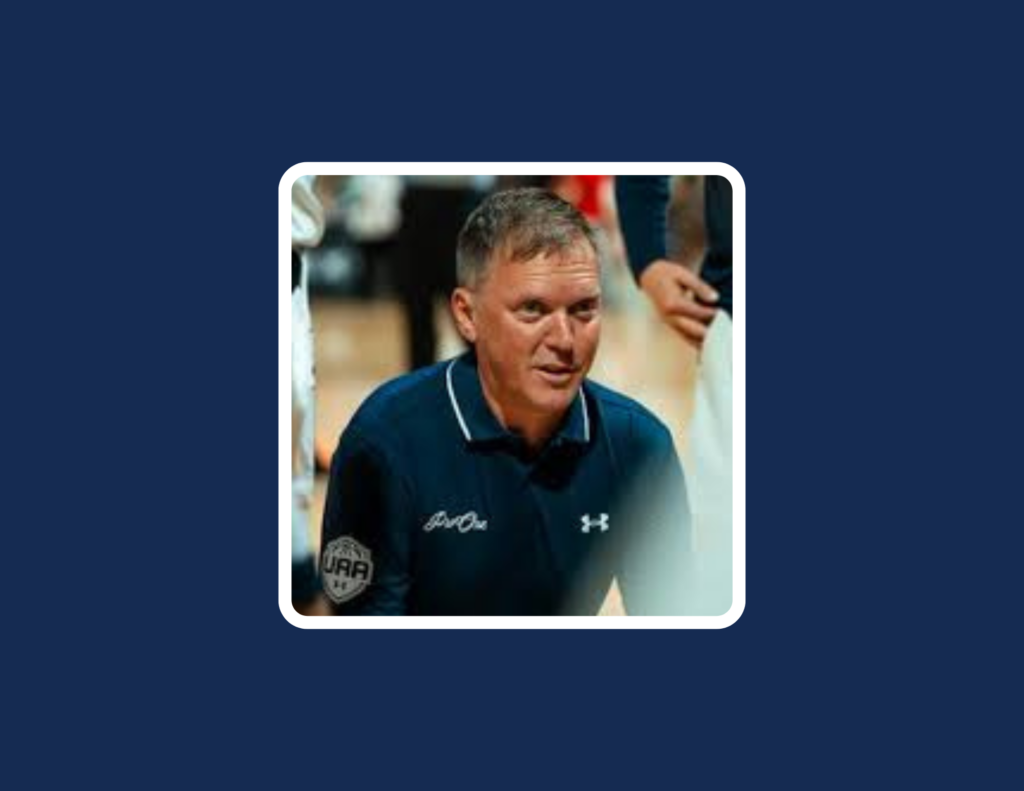
DANNY SERVICK – FOUNDER OF PRO ONE BASKETBALL – EPISODE 1290

Website – pro1basketball.com
Email – [email protected]
Twitter/X – @Pro1Basketball @dannyservick
If you listen to and love the Hoop Heads Podcast, please consider giving us a small tip that will help in our quest to become the #1 basketball coaching podcast.
Danny Servick founded Pro One Sports in 2003 and built the company into one of the top global agencies in the business. Danny served as an NBA and FIBA agent, provided scouting services for top teams all over Europe, and helped players and coaches all over the world.
Servick ran day-to-day operations for Pro One in the U.S. where he specialized in scouting, recruiting, contract research, negotiations, and draft preparation. He also oversaw player development programs, creating and implementing comprehensive training programs for draft prospects and free agents.
In addition to making an impact on the professional level, Danny has become a thought leader and influential voice in youth basketball as well. He has built Pro One Basketball Club, a nationally recognized Under Armour program, into one of the premier travel programs in the southeast.
Follow us on Twitter and Instagram @hoopheadspod for the latest updates on episodes, guests, and events from the Hoop Heads Pod.
Make sure you’re subscribed to the Hoop Heads Pod on iTunes or wherever you get your podcasts and while you’re there please leave us a 5 star rating and review. Your ratings help your friends and coaching colleagues find the show. If you really love what you’re hearing recommend the Hoop Heads Pod to someone and get them to join you as a part of Hoop Heads Nation.
Be prepared to take some notes as you listen to this episode with Danny Servick from Pro One Basketball.
What We Discuss with Danny Servick
- Finding players who align with Pro One’s unique culture and ethos
- The growth of Pro One Basketball Club and the excitement that comes with 91 players competing in college basketball this year
- Why player development includes not only enhancing basketball skills, but also fostering a positive experience that contributes to a player’s overall growth and well-being
- The necessity for coaches and players to adapt to the changing dynamics of recruing
- Developing effective communication with both players and parents
- His time as an agent and how that has shaped Pro One Basketball Club
- Why college basketball is operating like pro baseball in terms of its structure
Like this show? Please leave us a review here — even one sentence helps! Consider including your Twitter handle so we can thank you personally!

Your first impression is everything when applying for a new coaching job. A professional coaching portfolio is the tool that highlights your coaching achievements and philosophies and, most of all, helps separate you and your abilities from the other applicants.
The key to landing a new coaching job is to demonstrate to the hiring committee your attention to detail, level of preparedness, and your professionalism. Not only does a coaching portfolio allow you to exhibit these qualities, it also allows you to present your personal philosophies on coaching, leadership, and program development in an organized manner.
The Coaching Portfolio Guide is an instructional, membership-based website that helps you develop a personalized portfolio. Each section of the portfolio guide provides detailed instructions on how to organize your portfolio in a professional manner. The guide also provides sample documents for each section of your portfolio that you can copy, modify, and add to your personal portfolio.
Aiming to go D3? The D3 Recruiting Playbook gives you a clear, step-by-step roadmap to the recruiting process – what coaches value, key milestones from early high school through application season, and how to build a target list of schools that fit your needs.
We’ll demystify researching D3 programs and how to stand out without chasing every camp or showcase.
The modules cover things like writing emails to coaches, building an effective highlight tape, using social media well, planning ID camps and visits, and navigating application strategy.
You’ll get templates, checklists, and an outreach plan to communicate confidently, learn how to compare financial packages, and avoid common missteps. By the end, you’ll have a prioritized school list and a decision framework you can use to land your best-fit opportunity.

Give With Hoops is a groundbreaking initiative that fuses basketball analytics with modern sponsorship. Built for teams who see data as opportunity, from AAU programs to college powerhouses.
By tying on-court performance directly to community and sponsor engagement, Give With Hoops help programs raise more while deepening support from those who believe in the game.
Traditional fundraising disconnects donors from the action. Sell candy bars, wash cars, beg for donations, it’s exhausting and ineffective. Players perform better when their stats matter beyond the scoreboard. That’s why Give With Hoops was created.
Give With Hoops connects game performance to community support. Every basket, rebound, and assist becomes a chance to raise funds. Transparent, exciting, and proven to raise 3x more than traditional methods.
THANKS, DANNY SERVICK
If you enjoyed this episode with Danny Servick let him know by clicking on the link below and thanking him via Twitter/X.
Click here to thank Danny Servick via Twitter/X
Click here to let Mike & Jason know about your number one takeaway from this episode!
And if you want us to answer your questions on one of our upcoming weekly NBA episodes, drop us a line at [email protected].
TRANSCRIPT FOR DANNY SERVICK – FOUNDER OF PRO ONE BASKETBALL – EPISODE 1290
[00:00:00] Narrator: The Hoop Heads Podcast is brought to you by Head Start Basketball
[00:00:20] Danny Servick: We don’t want the best players. We want the best players for us. That’s one of my favorite lines. I didn’t think that when we started that we would have multiple kids this year in college playing in the SEC and ACC. This is so far beyond what I thought it was going to be.
[00:00:34] Mike Klinzing: Danny Servick founded Pro1 Sports in 2003 and built the company into one of the top global agencies in the business.
Danny served as an NBA and FIBA agent, providing scouting services for top teams all over Europe, and helped players and coaches from all over the world. Servick ran day-to-day operations for Pro1 in the US, where he specialized in scouting, recruiting, contract research, negotiations, and draft preparation.
He also oversaw player development programs, creating and implementing comprehensive training programs for draft prospects and free agents. In addition to making an impact on the professional level, Danny has become a thought leader and influential voice in youth basketball as well. He has built Pro1 Basketball Club, a nationally recognized Under Armour program, into one of the premier travel programs in the Southeast.
[00:01:21] Larry Shyatt: Hi, this is Larry Shyatt, former college basketball coach, and you’re listening to HoopHead’s podcast.
[00:01:28] Mike Klinzing: Ever since I founded Head Start Basketball in 1993, we’ve helped young players develop their skills, confidence, and love for the game. Now we’re partnering with coaches and athletic programs to bring the Head Start Basketball camp experience to new communities.
Our camps run for five days, three hours per day, and serve boys and girls in grades one through six. You or someone on your staff directs the on-court portion of the camp while Head Start Basketball manages registration, promotion, parent communication, T-shirts, trophies, website setup, and administration.
There are no upfront camp planning headaches, and the profits are divided 50/50 between your program and Head Start Basketball. If you want to reach more families or strengthen your youth basketball pipeline or just create additional revenue for your program, visit headstartbasketball.com to explore hosting a camp.
Be prepared to take some notes as you listen to this episode with Danny Servick from Pro1 Basketball. Hello, and welcome to the HoopHeadz podcast. It’s Mike Klinzing here without my co-host Jason Sunkel tonight. But I am pleased to welcome in the founder of Pro1 Basketball, Danny Servick. Danny, welcome to the HoopHeadz Pod.
[00:02:36] Danny Servick: Mike, I appreciate you having me on. I’ve I’ve been looking forward to this and excited to talk a little ball with you.
[00:02:42] Mike Klinzing: Thrilled to have you on. Looking forward to diving into all of the interesting things that you’ve been able to do in your career in a var- wide variety of different ways. I want to start by going back in time to when you were a kid.
Tell me about your first experiences with the game of basketball. What made you fall in love with it?
[00:02:58] Danny Servick: Yeah, it’s funny, we were– as we were talking earlier, we were a family that moved down from up north down to Huntsville, and so from those roots, I was a hockey, soccer, baseball.
Basketball was really my fourth sport. And didn’t really I would say, fall deeply in love with it until probably my freshman year of high school. And it was interesting. I was a little 5’6″, 5’7″ kid when I went into high school, and was, I played for a, a legendary high school coach and when I got in, the, the goal was, like, I didn’t even know if I was going to make the team, and I did, and then I fell in love with the sport.
And the running joke that he used to say is I’d get in when the mascot did. And at the end of that freshman year, I just was, like, all in on it. I just… And I quit playing baseball. I quit playing soccer, and it just kinda grew. I was the backup point guard on my JV team my 10th grade year, and then just kinda kept working and but I was later in life falling in love with the sport than probably a lot of the other people you’ve talked to with this
[00:03:55] Mike Klinzing: What did working on your game look like for you?
Obviously, and I have this conversation with lots of guests who are of our same generation, how differently you grew up in the game versus the way that the kids you’re working with today grow up in the game. But just walk me through, what did it look like when you’re a junior in high school? How does Danny Servick get better at the game of basketball?
What were some of the things you were doing?
[00:04:17] Danny Servick: Yeah, no, that’s a great question, and it’s something in talking with these kids now it makes you feel like you’re a dinosaur in talking about it. It was strictly just the high school coach and the impact of him. Ronnie Stapler was the coach. I played at Grissom High School.
And, again, I was the, never played as a freshman, backup point as a JV on as a 10th grader, earned the varsity spot, and then won the starting job, and then that year we won state and then yada, yada. But I think the part of, of– and I always like to share when I talk to families now with, with these kids of I just worked at my game and got better by myself.
That’s the thing that I always fell in love with basketball is this was pre-trainer. This was pre-everything. All you just needed was a ball and a goal, and you worked. I remember I was a huge Indiana fan. I love Steve Alford. That was, like, one of my things. I bought the 50-minute All-American Workout, the VCR tape, and, and-
[00:05:06] Larry Shyatt: Oh, yeah
[00:05:06] Danny Servick: Would put that in and do that. And I remember the first time I put it in, I was like, “God, this is…” And I remember throwing up in my backyard doing it ’cause I was just like, “This is unbelievable.” And no, it was just the high school coach op- Coach Stapler opening the gym, going and working with other guys and playing, g- playing in summer leagues within town.
I associate now we’re– a- and we’re, we’ll get into it. We have a lot of different levels of teams, but, I never would’ve been asked to been on the sec- the regional team, let alone the select or the circuit team. And so I think part of that is part of my journey where I just kept working on my game and just kept doing the things that I, working on my handle, working on whatever, with the whole goal of just making my high school team, the varsity team.
That was the goal. There was never, I fell in love with the sport and really wanted to coach. That was the part, ’cause I didn’t think I would ever be good enough, to play in college. And that was, I think, probably part of just developing that work ethic and, but just getting a ball and going to goals and just working on… And my social life probably suffered severely from that, but that was okay
[00:06:10] Mike Klinzing: Listen, man, I was at the $1 open gym at the local community college on my prom night senior year. That’s where I was. I’m paying my $1 to go play pickup basketball.
Yeah. So I, I know all about the, the no social life piece of it. I was right there. I was right there with you. How scientific or intentional were you when you got in the gym by yourself to work on your game? ‘Cause one of the things that I’ve told people, Danny, is when I was a kid I had this workout that I did pretty much every day I was in the gym, I did the same set of drills.
If I was by myself, I had this workout that would take me, whatever, an hour and 20 minutes, hour and 30 minutes, and I would do it every day. And I’m sure I’ve got really good at those drills, but I’m not sure exactly how much of it translated. Whereas I look at all the stuff that’s available today that you could do to improve, and maybe if I was lucky enough to have somebody else to shoot with, I had another workout that I would do if I had- Yeah.
… One other person that would work out with me. But I was basically doing, from the age of 14 to age 22, I basically, every time I went in the gym by myself, I kinda did the same thing.
How intentional were you about what you were doing when you got in the gym? Did you go in there every day with a plan, or what did it look like?
[00:07:16] Danny Servick: Yeah, I would say so. That’s a good question. I was pretty maniacal about it. And I, pre I’m 55, so obviously pre-internet and things, I think you would get things from just your own creative space of watching games or watching a player that, you really liked and you try to replicate that.
But then I think you also I know I would get things from older players or ones you looked at, and you’d see them work out and you would just get, You would do something, or, and I want to try that specific move or something. And and as I, progression got older and through college I mean into college then coaches would kinda start to do stuff.
But I do think I was very regimented in certain things, especially like with ball handling. But I think I just would probably like a musician, you’d kinda grab a little bit from someone’s song or see them play, and you’d add that to yours and same thing with mine
[00:08:03] Mike Klinzing: Yeah, it’s a great point.
I think watching older players, certainly I remember watching games and then immediately going out to my driveway and being like, “All right, I’m going to work on this and try to do, Yeah … do that move,” or I just saw this.” I remember doing those kinds of things, ’cause as you said, again, you didn’t have everything at hand the way you did.
I almost think today it’s almost overwhelming, but then I just look at, man, me as a kid, if I would’ve had access to all this stuff, what I would’ve done and what I would’ve tried- Sure, yeah. No, that’s a good- … and how I would’ve looked. It’s just, again you think about just the Alford video and going around the chairs and doing the things that- he did. I think about Pete Maravich ball handling drills and all that- Yeah … kind of stuff that I’m sure you were doing the same ones that I was doing. And yeah, it’s just a different, it’s just a different upbringing in the game the way that kids come up through it today, and we’ll talk more about that as we get into kind of what you’ve done and how your career- Yeah
has progressed through, through those areas. Tell me about the college recruitment for you. When did college basketball, as you said, you were focused on, “Hey, I just want to be a starter. I want to be on my high school team.” When does college basketball get on your radar? Maybe it wasn’t something you were always dreaming about, but when did you start to think about it?
And then just walk me through the process that ended you at McNeese.
[00:09:13] Danny Servick: Sure. Yeah, so you know, it was- Our junior year at Grissom, we ended up winning state. So 6A, biggest school in Alabama. And back then, the state championship used to be at, it would alternate between University of Alabama and Auburn.
And when we won, it was at Coleman. And we won the championship, and I had two guys that were seniors my– that were being recruited, and one of the coaches kinda came up to me and said, “Hey, we’re going to recruit you.” And I literally was standing on the floor of Coleman Coliseum, and I was like, “For what?”
That’s how naive I was. And so I… That probably started it, so March of my, junior year. And back then, there was– I didn’t play any travel basketball, any of that, so you would go to the Cage Scope up in northern Kentucky by Cincinnati, or we did the BC All-Stars over in Georgia, and that’s where all the college coaches would go.
And from that, that’s when some of the schools really kinda started to recruit me, would be in those summer camps. And then it just escalated and took some visits. I didn’t have a lot. As we were talking about before, it was like Ohio Wesleyan, Wittenberg, because my ties were from up that way.
Mississippi College was one that did. And then that’s when it kinda started escalating where it was Evansville and then McNeese State and landed on McNeese. And so it was just really late. And then, it j- it was quick. I ended up, I took my visit early, but I was so kinda locked in on I felt like if I committed, I was going to be like short-changing my high school team.
I can’t do, go commit to something else. And so I played and McNeese State committed to me, which now in this climate, these kids have about two weeks to make a decision. They move on to someone else. And so they waited and did and signed in the spring and ended up in Lake Charles
[00:10:53] Mike Klinzing: And in the school, what was your idea in terms of career?
Are you like most 18-year-olds where you have no idea? Or I know you said, hey, you thought maybe at some point you felt like coaching was kinda in your blood. Yeah. Was coaching at all on your radar? Where were you at career-wise? What were you thinking about?
[00:11:09] Danny Servick: Yeah. Coaching never left. So I went to McNeese.
A guy by the name of Bill Peterson is the assistant who recruited me. Steve Veltri was the head coach. McNeese went to the NCAA tournament that US when they, in, in ’89. They had Anthony Poole or Michael Cutright played for the Nuggets. Lost to Illinois. I come in as a freshman on the heels of that where they had the majority back.
The point guard had left. I end up at the end of camp winning the starting job and then come in and so it’s it was the interesting thing. So I go from this guy that has this late run through high school of never, making varsity, late doing, and then I’m starting my first college game.
My second college game we’re playing at LSU and I’m guarding Chris Jackson, Shaq’s freshman year, Stanley Roberts, and you just kinda jump, you’re thrown to the wolves at it in doing that. But from a career standpoint, coaching, basketball was what I wanted to do and was never g- I never deviated off that in terms of entering college with that thought process.
Ended up, so I s- played at McNeese for two years, started every game there, loved it. But at the end of that sophomore year, got the itch a little bit to get back closer to home and transferred back to Birmingham-Southern. That was back in the old NEI glory days and in the pre where you have to sit out if you would go Division I.
And had some really good opportunities to, to, to do that to go down to Auburn to play for Tommy Joe Eagles and some other places. But Duane Reble, Birmingham-Southern had just won the national championship the year before, ’90. I had one of my high school teammates who was a All-State post player, Chris Shaver, that was there.
So I went to Birmingham-Southern, played for the legendary Duane Reble there. And so had, had the best of both worlds in terms of getting that Division I experience and that, but then also understanding the ability to play in g- I went from buses and planes to vans.
And, but just enjoying that experience and really just loved my whole entire kinda college career in terms of playing
[00:12:57] Mike Klinzing: Did you find yourself thinking about the game while you were playing it as both a player and a coach? In other words, were you looking at, “Hey, this is what we’re trying to do,” and you’re seeing the whole picture of what that means for your team?
Or I always tell people, I feel like I never really thought the game as a coach when I was playing. I feel like most of what my thought process was, “What’s my job? How is what I’m going to do play into what our team is going to do? What can I do to help our team be successful?” But I wasn’t necessarily always seeing that bigger coaching- Yeah
picture. Do you feel like you always saw the game as a coach even while you were playing or?
[00:13:38] Danny Servick: I think s- I, I, that would be probably a little naive to say that my freshman year at McNeese and I’m out there playing LSU and those guys and I’m thinking like that. It’s probably a little more survival.
Obviously, I think probably one of the things y- if you went back and read scouting reports on me, it would be, “He’s like a coach on the floor,” type stuff, whether that was in high school or in college. So there obviously was an element to that. I don’t think, though, it was until…
I know when I was at Birmingham-Southern, I really started getting into more thinking through. Even I know my senior year I would go on when the coaches would go scout, I would go with them, sometimes and do and learning the process of that and learning the whole intricate of, o- of the things like Coach Rebholz.
Bucky McMillan, who’s the coach down at Texas A&M, and the whole Bucky-ball. He got that– Coach Rebholz was– That’s all of that was from his family tree, and obviously Bucky’s adjusted it to, to his format. But, my– when I came from McNeese where we were a half court, set calls, really to Birmingham-Southern where it was full-on press, full-on things it wasn’t until my senior year, it was probably like a NFL quarterback, like a rookie coming in and not really understanding the system of that.
My– And then spending a lot of time watching film, a lot of time with Coach Rebholz. And then my senior year, though, I really started to think through that process more of that, for sure
[00:14:53] Mike Klinzing: Yeah, I think that when you know that coaching is something that you want to do– I’ve talked to so many guys, Danny, that kind of have, even if initially they don’t necessarily process the game that way, as they went through their college career and they started to think, “Hey I want to get into coaching at some point,” they start to then shift that mentality.
And they also, just like you did, start to spend more time with their coaching staff talking about, “Hey, why are we doing this? Hey, let me sit in on this film session so I- Yeah … can understand more of that.” And so I think that’s one pathway for sure that a lotta guys get into the coaching profession, is by transitioning almost while they’re still playing, right?
It’s like- … “Hey, I, I have to start to pick up on some of these things, and I’m right here with my coaching staff as a player, and I get that understanding that then enables me to make that next transition once, once I graduate.” So talk to me a little bit about when you graduate, where are you at, what’s your mindset then?
We talked about your mindset coming in to McNeese. Yeah. Leaving Birmingham-Southern, what’s the mentality? Where are you at mindset-wise at that point?
[00:15:57] Danny Servick: Yeah, it’s an interesting thing and it’s one of the things on my journey where I it took a little bit of a turn where so I finish. I was going to join Coach Rebelle as an assistant there.
My dad had gotten really sick my junior and senior year in college, and so w- it was at this crossroads, a little bit of do you stay as the young assistant making no money or do you use your degree from, this great academic institution at Birmingham-Southern and go to work?
And so I made the decision to kinda come back and started working and did the investment business for almost nine years. And midway through that, and this is where my path starts to kinda go all over the place a little bit Coach Peterson, who signed me at McNeese State, had gone to work by this point at the Dallas Mavericks.
And about halfway through, I guess four years into that I got married and then my dad had his liver transplant, and so I was at this thing of like, all right, let’s go coach now. How do I, what do I do with that? I have this, passion inside me for it, but didn’t really know the direction of that.
Coach Pete flew me out to Dallas in training camp. They had just drafted Nowitzki. They had Wang Zhizhi. Nash was there, Michael Finley. Coach Nelson was– who just passed, was the coach And it was interesting kind of that was my first entry point to seeing the NBA in the pro side. And that led for like this next four or five years, this journey of learning the pro game, learning the business of basketball, learning how to scout, how they evaluated.
The whole time, like obviously I had the fire inside me of the sport and, but I never really quite figured out how do I now jump back into the coach stuff, and through all that, that was when I crossed paths with Michael Curry, who was a starter with the Pistons but was w- equally as prominently known, he was president of the NBA Player Association, and we had crossed paths and I guess it was in 2001, maybe 2002.
And we just began talking basketball every day. It was like they would land at 2:00 in the morning, he’d call, we would just talk about the game that night or s- just, and he had played his first four or five years overseas. I had by this point doing the stuff with the Mavericks, I had developed this, this network internationally and just was just, just meeting people, learning stuff.
An NBA team would call us like, “We got this guy in camp, can you find him a job?” And I wasn’t their agent. I wasn’t making any mon- I just was passionate about it. And so did that, and then that was when with Mike’s urging that when I created Pro One Sports, the agency back in, in ’03 and then put my head down for another 15 years with that and grew that.
But it was always about the basketball, and I think that was probably the thing for me and even like during all those times doing that, helping out at a high school, doing youth teams for, for not even… my kids weren’t even old enough at that time to do. And then when it in that 2017 timeframe when my oldest was, I guess getting into fourth, fifth, sixth grade, whatever, in that timeframe, and then, I kinda hit this crossroads of 18, 22-year-old Danny wanted to coach, and now it’s like I’m in Italy or I’m in Philadelphia and I’m not even necessarily getting to coach his youth team.
It’s like, what do I want to do type thing. And that’s when we, that’s when we kinda started up the teams. That’s when I kinda paused the agency. The irony now in this world where agents and coaches and travel and all that’s all one and the same. It wasn’t obviously then. … And that’s when we started doing the teams.
Lenny Acuff is one of my closest and dearest friends, and he was the coach at Alabama Huntsville for many years. And we were having lunch, and he was the one that’s like, “Hey, why don’t you just start doing teams and just have fun and coach them?” And so I did. And I’m a, a lot of my friends know I’m a huge music guy.
I love Pearl Jam. That’s like the soundtrack of my life of doing it. And we joke with like the, the first couple years of these Pro One teams, we were like Pearl Jam, we’re just doing garage bands. We weren’t… Kids whoever wanted to play, we’d play, we’d h- get some jerseys, we’d go have fun.
We’d, teach them and never with any intent of What in the heck? It’s now whatever the heck it’s become. It just organically happened because, even as an agent and as this, it was always about the basketball. It was always about… and that’s the driving force of, for me th- kind of this whole journey.
And it’s taken me some years to get to the point, but the, the, the coaching part of me or the element finally got to it and just now view that this is what I thought maybe what I was 22 professionally going to do that where I have the impact on a broader number of kids now from the club side, I’m getting to do that.
[00:20:32] Mike Klinzing: Let’s jump back to starting the agency, the connection with Michael Curry, the Mavericks, working the investment side of things.
Was there a light bulb moment that you remember where you’re like, “Hey, I, I have to go and I have to do this basketball thing full time,” or was it more of a slow burn to get there?
[00:20:52] Danny Servick: I’d say it was a slow burn at first. And then the moment when, I think when we, The agency part about it, I was really reluctant to do it, to jump into it thinking that I had my notions of what the heck, I thought it was Bob Sugar. I used to tell I was Jerry Maguire in the backyard th- And and but the kind of, there, there was just this moment, and my wife was incredibly just encouraging about jumping off to do it and try it and you want to do this.
And no, and it did. And look and it was something that I really enjoyed and the connectivity the relationships and network made through that and the, represented a lot of really good players and really good people. Met a lot of great coaches, helped a lot of their players.
The, the funny thing is, going back to where this spot where I wasn’t in the travel space, the only way that I ever signed players was through the college coaches. I never worked around them, did. And I think that’s part of now, in the eight, eight or so years, whatever, that with the club those relationships of either guys that I represent or they trusted me with their guys.
Now, that’s why I think it helps so many of our kids in that space where they’re playing. But yeah I would s- I would say that was the, that would probably been the moment of let’s just jump off and do this type thing. But I probably have always been chasing the, the like I want to coach type thing too.
And so that’s what it… There probably was another moment that I don’t know if I necessarily remember as to the why, but did and and absolutely love it now,
[00:22:16] Mike Klinzing: as an agent, what was the key to your success? If you could point to one thing, maybe two, that you think led to the success you had what were those things?
[00:22:24] Danny Servick: I think being honest with the guys like just, that was the– my, my reluctance from the agency standpoint was that I would… No one would want to work with me ’cause I’d be too honest and too direct, and I just thought that you’d just have to, BS guys all the time and tell ’em, be like, “I’m going to be the worst agent of all time,” because they’re not going to…
But I think, someone might, I had someone tell me, he’s like, “You’re going to be different without trying to be different,” and that was kind of the thing. You just you found the ones that wanted to work with people that were like that. And I think just working hard and really kinda communicating with them.
But I just kinda think the honesty part of and just being direct with them and not not telling them what they want to hear. And I didn’t work well with those guys, and it’s not, obviously wasn’t for everybody. But I think for the, the ones that wanted to do that and that was probably the thing that I, I, is my biggest takeaway.
[00:23:14] Mike Klinzing: What was the toughest part?
[00:23:17] Danny Servick: The travel. The majority of my guys played in Europe. I would have some guys that were here in the league or, in the D-League, but just the travel, In just being gone and being, probably being– To, to be really good at that space, you have to be more present to them all the time than yourself, your family, whatever.
And so I would say that, that was probably the hardest.
[00:23:39] Mike Klinzing: And so that leads you back to that moment, right? Where- It is … you’re looking around going, “Here are my own kids that I’ve dreamed of being a coach my whole life, and now I’m not around to be able to coach my own kids.”
And so that is what makes you have that transition.
So let’s start there with when you get an opportunity to coach your own kids, what’s that experience like emotionally? How did you handle it? What are some of the– what were some of the positives of just being able to get out and exercise, scratch your coaching itch, for lack of a better way of saying it- Yeah
but being able to do it initially with your own kids?
[00:24:14] Danny Servick: Yeah, no, so it was, It’s funny, you could probably ask my son that, and there’s probably a long list of things I did wrong, in terms of being o- one of my really good friends who’s a great high school coach, Andy Blackson, coaches at Brentwood Academy now in Nashville but coached at, in, in Huntsville for years and won five, six state titles.
He’s just the best. Another great Pearl Jam guy, too. And his son Drew and my oldest, Sam, were the same age, and so we would just have these, we, It started as these, the, we called them the Pearl 1 kids, and we would just get them some jerseys and we’d go play, and we would teach them, making the extra pass or doing whatever.
So there was just a lot of enjoyment with that. There probably was a lot of, I probably was probably trying to jam too much through at one time, trying to make up for time that I didn’t. And now, with age comes, a little bit more wisdom in hindsight of try to s- When I see, guys coaching their kids now, trying to talk about maybe more appreciating a little bit more.
But obviously getting to do that was a lot of fun. And just getting to just feel like you’re there for that, and and it’s something that I remember that I really enjoyed doing and, with Andy together and with our kids and watching them as they developed through
[00:25:22] Mike Klinzing: Did it feel natural-
[00:25:23] Danny Servick: 100%
[00:25:24] Mike Klinzing: to go back and coach?
[00:25:25] Danny Servick: Yeah. Yeah, it did. It’s it’s funny, it’s one of the things too now with the club and all the teams in, in, when we’re, we have so many, a lot of times the actual coaching is the least amount I get to do ’cause you’re worried about the million other things.
And but still, at the end of the day, that’s what, that’s what I love. And that’s the part and even through the years here with doing the, the stuff with Pro One I was the, the, I- I kept it as the interim JV coach at this little private school in, in, in Huntsville where my kids went and just, and had a blast doing it.
You go from the world of everybody’s stressed all the time about college and recruiting and things, and you go just to a bunch of smart kids that are just, going from football to play basketball before baseball and, the joy of just doing that. Yeah, it felt really natural to, to get
Anytime you’re on the si- any- that’s the joy for me, is when you get arou- a chance to get around a group of kids and learn the personalities and, figure out what, what buttons. And it’s one of the things I go back, when I when I finished college, before I made the pivot, I got to go up and work as a counselor at Duke for their basketball camp.
And I remember this, this is one of my, those memories that you go back and you eat- just like yesterday. And the Thursday night, the last night of the … before we w- we would go home, Coach K, they did a big pizza party type stuff where they, he would just come and he sat up all night with the coaches.
In the dorm, my roommate was Mike Malone, who’s now coach at North Carolina, and obviously after his amazing career coaching in the NBA. And and you’re around, Quin Snyder was a, just finished playing, he’s in there, and Johnny Dawkins and Amaker, and it’s just this room. And I just, and I always remember, At some point, and again, this is, you have to remember, this is in 1993, ’94, so this is probably when Coach K was probably had fallen a little out– Where him and Coach Knight may have not been, in sync.
And so I was– I played at a high school program where it was very Indiana, Knight, very, this is, it’s our system and all that. And I and Coach K that night said something that just stuck with me. So I was 21, 20, or I guess 22, 23 when he said this, and he’s “Everybody thinks coaching’s X’s and O’s.”
And he goes, “Coaching is getting the X’s to work together and the O’s to work together, and that’s the key.” And I just, I’m sure there’s a lot of people that say different things like that, but that stuck with me at 2:00 in the morning or whatever time it was. And I think for me, that has been the piece that’s always, whether I’m dealing with these kids that are high major kids or I’m dealing with my little interim JV team, the Bandits or whatever I’m d- and that to me, that’s the joy of coaching
[00:28:02] Mike Klinzing: It’s really cool when you think about something that was said to you 35 years ago that you still carry with you-
That continues to have an impact on what you do every single day. And I think about things that coaches said to me that I carry through in my life today that have motivated me or steered me in a direction, or helped to shape who I am. And then the next step of that is I always try to remember, as a coach, that the players, the campers, the kids that I’m dealing with as a teacher, whatever-
[00:28:36] Danny Servick: Okay
[00:28:38] Mike Klinzing: somebody’s going to take something that I said that I’m probably never going to remember, and they’re going to carry that with them for the rest of their life, and it’s going to impact them. And you hope that it’s going to impact them in a positive way. We’ve probably all, and you could probably think of things that somebody said to you that you carry with you-
[00:28:54] Danny Servick: Yes
[00:28:54] Mike Klinzing: in a negative way that burns and motivates you from something that they said that was negative. But I guess when I think about what I try to do day in and day out when I’m interacting with players, when I’m interacting with kids, is I try to give them things that if they do remember it and I don’t, that it’s going to be something that they can take with them that’s going to have an impact on them.
And again, for, like I said, for what he said there or what Coach K- … shared with you back when you’re- … sitting there as a 23-year-old, for you still to be carrying that with you today and it having an impact day to day on what you do and how you think about-
[00:29:27] Danny Servick: Yeah …
[00:29:27] Mike Klinzing: your entire coaching life, that’s hugely impactful.
And I think sometimes as coaches, we forget how much impact we can have on the people that are in front of us, and how they can carry things that we don’t even remember.
[00:29:40] Danny Servick: No doubt. I… Listen and that is, I’m sitting there chuckling to myself that even this year, like you could probably go through our roster of like stuff that I said that was insanity, that I probably– And I think I’ve gotten much better, much calmer.
But you’re totally right. Like the impact you can make on, on, on these guys and the stuff that you, y- you say. And you, it, that, that’s the best part, right? When you like, for me now there’s been times where you come across somebody and you’ll see at the grocery store, you’ll see out at a restaurant and it’s like, “Hey, you coached me when I was 12, and you were just the night…
I just remember that you did…” And, and it’s stuff that like you don’t even kinda remember at the time. And it’s like- Okay … if the… And that might’ve been their last time they played basketball. But like just trying to make that experience feel great and, that’s really You know, we talk about still even today with our teams with Pro One, that I tell all my coaches, like at the end of the day, our first two goals are to have the best possible experience they can have and then to get better.
The college stuff I get that’s a thing and we don’t minimize that and for the ones… we have a lot of kids that play with us that just want to enjoy the experience, play, and then they’re going to go be an engineer or go be an architect or go, and so let that moment exper- And then let them learn from that, and you know this and for guys that there’s a lot of people in the business world that love guys that played sports ’cause they’re, in specifically team sports and working together and overcoming adversity and, being able, to deal with when things aren’t going great and how do you work out of that.
And I think those are the lessons that you really want to try to teach and help make a difference. Not about how much better you can shoot the basketball or, how to attack a dribble drive or something so like that. But so that, those are the things for me that still and, not being not being naive to the fact that there’s also some guys that now in this current climate are you’re talking serious dollars where it’s a business too.
So there we get all the, the different aspects, but I just still think even in this climate that we’re in right now with college, that it’s just still have to be about the journey and and again I, it goes back to like we talked about how I got started in the sport. I was the kid that would have you go sit at the gym for a two-hour open run hoping that you- someone’s tired, that you get picked up to get in, and, that’s how I made my way and I relate more with that kid than I do the kid that’s got SECs and ACCs calling them. I understand how to deal with those guys, right? ‘Cause I did that for my whole professional career as the agent, but I also can relate, and I think that’s one of the things that hopefully we’re, we can touch a lot of kids and lives and their journey and really being understanding and not making them…
Like everybody’s journey is their own journey, right? So if you go play at Wittenberg, you go play at Birmingham-Southern, that doesn’t make you’re not as important as if you go to Alabama or Ohio State. And just kinda having that knowledge and dealing with the kids that way, and I think hopefully they pick up and they can learn from stuff like that
[00:32:39] Mike Klinzing: I think a huge part of what you’re talking about there is just the ability, and sometimes we lose this in today’s world, is the ability to just enjoy and focus on where you are in the given moment, and just enjoy my experience playing for Pro1 basketball this year, this spring, this summer- Yep
this July, and make that the best experience that I can be. Yep. ‘Cause what I see and what I’ve experienced, and this is something that I’ve tried to, again, and I haven’t done it perfectly with my own kids or when I talk to people, it’s like everybody wants to rush to the next thing, like you said, with- Yep
college basketball, especially the way the landscape is today. And again, if you’re a high-level player, the opportunity to make some really good money during the time- … you’re in college is certainly there for some guys. But I think so often we see the kid who’s in fifth grade is already worried about what AAU team am I going to play on- Right
when I’m in eighth grade- … and what’s my middle school going to look like. And the middle school kid is worried about what high school am I going to go to, and the high school kid isn’t really even worried about their high school experience. They’re just worried about, “What am I going to do when I get to college, and how much money am I going to…”
And we sometimes forget, and I think as parents we forget, sometimes as coaches we forget that, man, you only get to do this- Yes … once. L- once you get to be an old guy like you and me we’d kill to go back and be able to experience the opportunity to play again and just, you have to enjoy and be in the moment.
I think the more that we can help kids to slow down the world, ’cause again they’re… And then they’re not only seeing the real world, but they’re also seeing the, I’m scrolling through and seeing this. And I, when you and I were playing you might’ve known where the kid down the street was going to college, but you didn’t know where the kid- No
two cities over. You had no idea where that kid was going, what his stats were, how good he w- You had none of that.
[00:34:26] Danny Servick: Yeah.
[00:34:26] Mike Klinzing: Now kids know every single player across the country. You can compare yourself, and it’s easy to get caught up in all that and forget that I just want to have a great experience- Yeah … and have fun playing my best in the moment.
[00:34:38] Danny Servick: No, that’s a great… I, there’s a couple things in that, e- when you’re saying, that made m- thought of. This guy named Ricky Austin, he’s the, he’s now the women’s coach at Jacksonville State. His daughter’s a s- star at Alabama, and he had two older boys that back when we had the Pro1 kids, when we were just getting going, and one of his boys played on our team.
And he lived over in East Alabama, and it was a good two-plus hour journey each direction. And so we were like, you’re talking his sixth graders, and so we, everybody else was from around the Huntsville area, and we would practice a couple times a week. And I remember it was the middle of the summer, and I was sitting there talking to him, and I was just like Why do you do this?
I was thinking like what in the world? You’re insane for driving all this. And he started this– He laughed at me and he’s like, “Danny,” He’s like, “Why would I not do this?” He said I get a chance to spend four hours with my boy just with the windshield where we can talk and s- and be together and have him get around a bunch of good kids and families and coaches and like that, those are the times.”
And I and that was another thing that kinda really is in– with these club teams as we were starting off, like I really kinda… That stuck with me of like what’s important, right? To what you’re talking about. And just as you’re going through that and never forgetting that and that, look, we’ve– I think this, and I think we have 90, 91 kids I think are planning college this year, from our past five kinda classes, which is amazing. And that is equitable from, I think a third of those are Division I, Division II, Division III, and it’s all good. One of the cool things is then you’ll see some kids that are in college that are just, they’re just students, they’re frat guys, but they still talk about that experience of playing with that, that group of kids and the stories of, when they get older, they’re, I don’t know if they’re all going to eat pizza and play putt-putt together and stuff like that, but they just remember that bond of togetherness and being and then, maybe their intramural teams they’re talking about and having that.
That’s the joy because the other side of the equation, like you talked about, and we see this firsthand, it’s one of those things, like I said, we have– we’re fortunate enough to have a lot of really good players that… But we’ll see it where like you talk about on the phones and it, one, one of our kids will get an offer.
And it’s to the point now with the stuff of where the pressure and they’re not being bad for– but for every kid that we do, we probably will get 10 plus calls from people stressed because, “Hey, I haven’t.” And it may be more than that. And so it’s such, everybody talks about social media and you’ll see on the female side, but in the, with what outfits or what party, whatever the heck they, but from the boys’ side on the sport, that’s what it is. That’s the social impact. And maybe not even just with the kids, with the parents. And, that’s the part where you have to really focus on the moment, like you said, and it’s, in those times. And, I’d give anything to to have to complain about going for an 8:00 AM tip on a Saturday and paying 20 bucks to get in to go watch my kid, ’cause it’s, when it’s done.
And then, and so I think now really one of the things I’m trying to do is trying to try to express that as best you can. I get that look, w- people probably could say that we’re, we’re part of the problem of causing it, of like the, the social media and the things and the guys playing and that’s kind of part of the new culture of the travel space.
And we try to do it in a good way, but we also understand, we try to be sensitive to the stuff of the impact of where, that can negatively impact people too, and just try to, at least within our camp, talk about that
[00:38:18] Mike Klinzing: Yeah, it’s a fine line, right? The, the landscape of college basketball has shifted so dramatically in the last 10 years.
If you go back 10 years, there’s no way any of us could have possibly envisioned the system that we are dealing with today. It just, it would’ve been unfathomable. I always laugh ’cause I think back to the Chris Mills, Dwayne Casey envelope at Kentucky, and it was like- … 700 bucks that spilled out of the envelope.
And that was the hugest scandal in the history of college sports. And now we look at the numbers that are being tossed around, and you think about the FanDuel and the DraftKings- Yeah … and just all there’s just so many things that 10 years ago nobody would have envisioned being a part of the landscape that are a part of it today.
And so it just, again, it goes back to what we just talked about, right? You still want to make every experience for the kids who are participating and for your families the best that they can possibly be. And you have to navigate that within the greater landscape of- Sure … of what’s out there. So to piggyback on that thought, when you first get the idea of, hey, I want to come back and I want to coach and I want to coach- my own kids, and we’re going to put together this Pro1 kids a- and we’re going to figure out what this looks like, what was the initial vision? Was it anything more than just, hey, I want to put together an organization so that I can get my own kids involved and provide them with a good experience? Was there a greater vision?
How close is what you thought it was going to be compared to what it ended up being or what it is today?
[00:39:49] Danny Servick: Yeah. Great question. And I tell this, I was just up in Baltimore this past weekend. Under Armour had the City Classic, and it was a, a great event. Went up there and, and we have a kid that plays with us, this Drayden McDaniel kid, that’s the number one or number two prospect in the country in the ’29 class.
And I just was like, this is the most unintended consequence that ever… we didn’t, it never, it, there wasn’t a vision to, for it to be this, we really, one of the, we just, we had the whole line. We were one of the ones that wanted to be there. Let’s just get a group of kids, have some fun, ball, learn the lessons from it, do.
Now we we’re junkies about it now, don’t get me wrong. And we run it like it is a probably like it’s a pro shop. We have some of my former clients that are NBA general managers, coaches, college, and they’re, not to take a spin off your podcast, they’re pro and hoop heads. That’s what they are.
And we have– We run it probably if I was working for an NBA at the same level of, our, our roster evaluator scores our positional profiles, all our different things. Granted, like on our ninth grade or eighth grade team, we don’t do that. But we don’t really do a lot of younger teams because we don’t– We wait, we’re not busy like that. We let, let the ones get to us and we, we’ve– I think when we started it out, we were really drawn to high school coaches’ kids from high school coaches that recommended. We were talking before we started that I was, I came up in a time when all the recruiting was done through the high school coach, right?
And now for a variety of reasons, in these limited access times, it’s through the travel stuff, and the month of June is, has come back to where that’s an important period now. So the high school it is as the calendar always evolves and with the transfer portal and when they start watching.
But I think from the outset of us like looking at, it, it was just to ha- to get a bunch of kids together, teach them ball, have a great experience, get them better to go back for their high school team. And it just was it was an unintended consequence. But I think it’s because we– I think we we try to make it about the right things and then the, the interest of that, and we obviously don’t do everything right and we try to learn each year. We, we get to the end of each season and evaluate what did we do good, what can we do better, and, or what can we improve on really in that constant kind of evaluation. But and look I also, I realize that we had some inherent assets in our camp just from my background coming from the pro side and relationships and, but I think really just trying to stick to our culture of who we are and, just, we don’t want the best players, we want the best players for us. That’s one of my favorite lines that, Coach Acuff uses and I’ve heard others say that and we’ve really not tried to get that a couple times.
Through the years we may reach on something and that comes back. It’s like, ah, probably shouldn’t have done that, and I think from it evolves every year. I didn’t think that when we started that we would have, multiple kids like this year in college playing in the SEC and ACC.
I used to get really excited if Delta State or, Berry College, like that, that would, Sewanee down here in the South, like we would get fired up, like Case Western up there on your way up in Cleveland or career like that’d be unbelievable, and now it’s it’s pretty humbling to think that, but we still– we have, this year in our class, we’ve got kids that are going off to Huntington, off to MIT and we– I get just as juiced with those guys and hearing from them. And I think I think that’s, that was when we started it.
We haven’t deviated off that. And that, that’s– So yeah, it– there wasn’t– I get asked that a lot, they’ll– We’ll come across some clubs that are, from wherever they’re at. They’ll come up to you and say, “All right. How– we’ve got your blueprint. We’ve got your plan.”
I’m like, “What’s the…” There wasn’t like, I appreciate that you think that we were that detailed in thinking that there was but it was just kinda st-stuck to it. And look there’s obviously an element to where it goes back to what we talked about that, I’ve, I view this as kind of my program that I thought I was going to do when, 30 years ago.
But now I’m doing it. And from the standpoint of that I try to still have a program values and things and reali– and look you know this, that, we’re in a space where we really have these kids March through July, and in June they’re with the high school. So you’re really March, April, May, July.
But I think most of the people that you talk to around us, and I think for any good club team, we’ve– there’s a 365 kind of connectivity year-round of support with their programs. We try to be a great asset and partner with the high school coaches of how we can help with them. We– That, that’s from the mindset of viewing it like it’s our program.
But there wasn’t– Yeah, to your question, there w- th-this, this is so far beyond what I thought it was going to be,
[00:44:43] Mike Klinzing: Makes sense. So as you’re talking, what I’m hearing is there’s a culture that you believe in, that you brought as the head of the snake, and then you want to bring in players who fit the culture-
[00:44:56] Danny Servick: Yeah
[00:44:56] Mike Klinzing: of what you want to do. But before you can do that, you as the founder can’t do everything. And I know- Yeah … from experience that one of the things that people sometimes struggle with as they’re building a basketball organization is, how do I find good people to coach my teams- Yeah … to be a part of my organization?
So what has that looked like for you as you’ve grown bigger? How have you put together the right people, the right staff? What’s been your process for building your organization with the kind of people that are going to support and grow your culture?
[00:45:33] Danny Servick: Yeah. Great. Look, the– it’s all about it’s all about the coaches, right?
At the end of the day getting really good coaches. What, what– where we have really been fortunate is to have a constant flow of like young coaches that they really fall in a couple different buckets. Young coaches that want to learn and improve their, g- get better and maybe get to better high school jobs.
We’ve had some that are really good high school coaches at things that want to try to get to college, and they come to us in the, in… And then we have some that are have been in their journey that they just, we’re always in kind of the process of you look for someone’s time, talent, and treasure, right?
Advancement 101 and getting their talent and their time is the most critical part that they want to pour back into the game. One of the things that we really try not to do is have a– and again, m- the majority of our teams are in the high school campus. It– we have some in the middle school, but we don’t really have exposure.
We don’t really go below seventh grade. We’ve tried a couple, and we’ve failed miserably at the younger ones ’cause we try to do our… It’s just… and so we kinda know what we’re at, but you get ones that, Yeah. We’ve just been, we’ve been really lucky with that of in that window of those.
And, the, the death for us is when you have young coaches in, that are doing this and they’re pouring their time, they’re volunteering or l- and then their wife gets pregnant or a little kid. That’s the kill, that’s the kill shot for us. And how do you go back and go find more, right?
How do you backfill and, So that’s the constant thing. It, and really what you have to do is you have to be looking, I think a lot of people, you know, you think you have to try to go find players every day. We try to go find coaches every day, like that. And you don’t. And just to kinda check and see and who, what can be.
And then obviously th- there’s different levels, and do they want to try to coach on one of the Under Armour teams. They want to be on our academic select teams. They want to, and so we do that. We don’t really… W- we’ve had a couple exceptions, but we don’t really let parents coach after the 15U year, for a couple reasons.
One, I want the parent just to be, enjoy the parent, and then just to try to remove that extra level of, “Hey, he’s playing his kid ’cause it’s the coach’s kid.” And so you’re really, you’re always kinda… Now, sometimes we’ve had some that it’s, they just, it- it’s worked really and we’ve had we’ve done that.
But yeah, finding really good coaches and then, and not just coaching. We have other guys that help with the club from an administrative standpoint and a support staff that are just as important as getting someone that can, go get 10 rebounds in a game or… ‘Cause if you don’t have those guys that do that, there’s, and really our thing, and w- we’ve got some really good and just we’ve been blessed to have some great corporate partners that help support and, every time you can kinda r- you find a good coach that can get some funding to go do some stuff then, gr- and how we function, but, you can offer eight, nine, 10 kids more of a chance to go have that experience, right?
And really that’s what that’s what we try to focus on, getting the really good coaches, really getting the good people and then giving them the platform then to go play
[00:48:41] Mike Klinzing: Was there a moment when the players started coming to you more than you had to go and actively seek out players? Was there a specific moment when you remember where it flipped where “Hey, we don’t have to spend a ton of time getting out there and getting our name out there and now guys are coming to us”?
[00:49:01] Danny Servick: So we’re actually, and I think people think we’re, you know– You know, we’re almost inverted from that standpoint to where one of our things is that we don’t ever– we don’t go recruit. Like we want… and now, so we’ve missed on a lot of people and it’s always the big internal debate in staff meetings of trying for them to convince me like, “Hey, we need to go recruit.
Do that.” I just, I, I– and it started very in– And I don’t– There’s nothing wrong with doing that, obviously. It just, I… From my standpoint, I was like, “I’ll go back to being an agent if I have to go chase kids.” I’m not into that. Again, of how it was created. And so from that, that’s where we know whether it’s the high school coach or the word of mouth, that’s how they would come.
The, the part where it’s pivoted, where we’ve actually gone the other way is when we got elevated to the Under Armour Association to, Nike’s got EYBL, Under Armour UAA, and Adidas, the 3SSB. That then when you get to that level of if there’s a specific piece of doing, But we’ve really only done that once, I think we– Or twice. And so I think people think that we’re just a machine. It’s like we’re, it’s not. It’s the other way around. And I, and I– But I do think just through the communication through, through the coaches and how we go about it, they know that. It’s one of the things that makes it different for us.
Who knows? We may go through– We, we do a staff retreat every October. And who knows? We might go in there and be like, “Let’s go. We’re going after everybody this year.” I don’t know. And I remember early on by not doing that, I had some friends and their kids, and they’re like, “Oh man, we really wanted to play Pro 1.”
And I’m like, “Why’d you not call me?” And they were like, “We figured you would call us, and you didn’t.” And and that kind of stuck with me a little bit of like, how do we, how do you do that? And I don’t know, it just feels that if you start the process that early pitching some 13, 14, like convincing them, I don’t know.
I, I, that just doesn’t, I… it just feels like you open yourself up more to where then someone’s going to be in their, you start that whole… You can get, you can get intoxicated with that, with people wanting you. And I just think it goes back to the whole our culture piece of you want the ones that want to be there.
And now, don’t get me wrong, like I’m not saying that if someone like lets us know they want to play, like we’ll engage, and like then we can talk about it. I’m not– We don’t just sit back and be like, “Hey, come play.” We’re not, I’m not… I don’t say that from an arrogant standpoint by no means.
But that’s our baseline though. That is our foundation. Our foundation is to not do that. Although, but so we’ve gone the other way around. Like we do find people that call us. We’ve been blessed always and fortunate with that. But I do find us now a little bit more if it’s like, I really need a little, I need a guy that can be a little bit more go get us a few more rebounds, or who can get something off the bounce, and like this collection of people that have come to us, we don’t really have this piece.
We need to go find this piece. And for us, that might be calling our high school coach network, calling college coaches like, “Hey, we’re looking for this on our 16U team,” or, “We’re looking for this on our academic…” So we will do that for sure. And but who knows, we could talk this time next August, and I might be totally a different strategy.
[00:52:13] Mike Klinzing: You might be out on the recruiting trail all, all year. I might
[00:52:15] Danny Servick: be like, “I’m in a Super 8 tonight. I have to go see some kids tomorrow play,”
[00:52:19] Mike Klinzing: so we all know that as part of what you do as a club team, there’s relationships going both directions, right? You and your staff have to have great relationships with the college coaches so that there’s trust going back and forth both ways, so that those coaches trust that if you send them a kid or you say, “Hey, you should take a look at this kid,” that they know that you’re making a good, honest evaluation.
You’re not just selling them a, a bill of goods- … about a kid who can’t play at their level. So you have that side of it. But then you also mentioned too that you also have to have relationships with the high school coaches so that when you go and say, “Hey, we do need a kid,” or, “Hey, a high school coach is trying to look at where should we send a kid?
What program do I want my kid to be associated with?” You want to have those good relationships so those high school coaches will say, “Hey, you should go look at Pro One as one- … of your possibilities.” So how do you, obviously you from your agent time, have those relationships which you talked about earlier.
How do you help your other coaches and kind of your entire organization build those relationships on both sides of the ocean?
[00:53:24] Danny Servick: Yeah, no, really I like that. One of the things is to really try to empower them, like from our coaches and our staff, especially if you know that they’re trying to build their network and build their, to and to almost have the, the college coaches go through them, like talk to them. I realize, I think one of the things that I really enjoy and I’ve never cheated out or embellished and I always just respect the game too much to where like coaches will call us and ask me about players that don’t play for us ’cause they know I’m not going to, I’m not going to be like, “That guy sucks.
You should sign our guy.” “That guy’s really good,” or I think And so I think that’s part of, it goes back to you talked about why I thought I was a good agent, one of the reasons of that. Of, honestly, again, going back to me, it was always about the basketball and being able to evaluate and then being honest.
But then also though, like to, to your thing with the coaches, like, “Hey, call my coach. He’s learning and doing,” and it’s really cool to kinda see those guys and develop their network of going through it. So 100% that spending time with our coaches internally to let them kinda ask.
Like one of the things I really enjoy when we have the opportunities, we get an Airbnb house where the coaches all stay together. It’s like the old MTV Real Wor- or Road Worlds, whatever that show was. And, but some of my favorite memories through these past seasons are sitting up hey, someone posing a question like, “Hey, I’ve got, I’ve had an issue with a parent.
How have you guys dealt with this?” Not just like, how do you attack a zone? H- and so bigger, broader things like that. And then that will lead then into, sometimes it’ll be like, “Hey, I’ve got a kid that, got… D- do you guys know anybody at this school?” And then, kinda get into that, and then having them call and do that.
So th- that’s really been another… You talk about unintended consequences from the club is the growth and seeing our coaches that have gone on to become really good high school coaches and get jobs and improve upon. Maybe they were a 3A high school and now they got to a 6A, 7A.
And that, that’s been a lot of fun. Like that that, that has been something to kinda help our coaches from ha- has been has been something that is, a- again, that runs parallel with, you, you try to help a lot of the kids and the families. But from that standpoint. But it also, like you said on both sides of it then continuing, ’cause there’s obviously a whole new world of coaches in the college side that have no clue that I, what I did before in something, and there might be somebody on their staff that did or they know or they’re… And, obviously we- we’re fortunate. There’s a lot of guys that I worked with that, that are now on staff, and one of my– Heck, one of the, the very first client when I signed, when I started proling back in 2003, I signed Derrick Allen.
He played at Ole Miss. Great story. Kid was eight and five, eight and five, undersized center. Went to Iceland for 1,200 a month for seven months. Made $8,400 his first pro contract, and then escalated and jumped up, and then went on and had a 17-year career. One of the top five all-time leading scorers in the Bundesliga in Germany.
He’s coached in the G League. He’s been in Spain coaching the past years, and he just came back ’cause he wanted to get into college finally, and he’s an assistant up at Duquesne, up in the Atlantic 10. And he’s hitting me, two weeks ago “All right, I, didn’t…” He’s locked in and it was cool for me to kinda…
here’s one of my former… the first player that was the pro, Pro 1 guy, and seeing him and talk about and trying to, “All right, help me out. What do I need to…” ‘Cause he’s been on, strictly on the pro side his whole time, as a player, as a coach. That’s cool. And then, I had dinner a few weeks ago, Jonathan Wallace, who’s the GM of the Denver Nuggets, who I represented, and just a dear friend.
And, I’m sitting there picking his brain, learning from him just as much, and he’s… And that, that’s the stuff you talk about on both sides of it, from helping our coaches to the other side, but then also trying to help on those. And that, that is something that is obviously a really cool part about it.
[00:57:12] Mike Klinzing: That’s what’s awesome about basketball. Forget about any specific this relationship, that relationship, college, pro, high school. What I’ve found, and again, I think I knew this before I started the podcast, Danny, but man, have I found it out through the conversations that I’ve had, that so many of us just love basketball so much- Yeah
that we want to do whatever we can to advance the game and help other people have success in it. And that’s really where the relationships come from, is just everybody wants the game to grow and to be better. Yeah. And so consequently, people are willing to share and have those kinds of conversations.
That, that’s what I’ve found to be one of the coolest parts about doing the podcast, just the number of people who are like, “Hey, yeah, whatever I can do to help you- Yeah … or whatever I can do to help the game,” it just is, Again, it’s really cool. It’s really cool.
[00:57:55] Danny Servick: It’s one of my favorite things of sport of where you and I cannot know each other at all, and we have a common person that’s “Hey, Mike’s legit.
Danny’s leg…” And we’re like, “We’re besties.” Because, like- … a, a common thread, and there… It just, it’s one of the coolest things, and then you instantly are then like, “Hey, what can I do to help you?” Or what, and it’s real and that is to like you said, it’s the great thing about it.
And I couldn’t agree with you more
[00:58:22] Mike Klinzing: Yeah, it’s I’ll give you a great story. So when I started the podcast my initial, my very first interview I did, I, we had done some… The original idea for this podcast was it was going to be like a youth basketball parenting podcast, ’cause that was the stage I was in.
We were just going to give pe- give people advice on kinda how to navigate and whatever. And then eventually, I got connected through a series of events to Alan Stein. I don’t know if you remember- yeah … Alan. He was at-
[00:58:45] Danny Servick: Yeah …
[00:58:46] Mike Klinzing: MacArthur. So anyway, so Alan was… I ended up connecting with Alan and then connecting him with a friend of mine who was doing these retreats for business leaders, and Alan was just switching over from basketball to business.
And after I got done doing my first interview with Alan here in town, ’cause he was, he came to be a part of my other friend’s networking event thing, whatever. And then Alan connected me to John Searby, who was working with Jay Billas on his camp.
And then he also connected me to John Shulman.
And-
[00:59:18] Danny Servick: Yeah …
[00:59:19] Mike Klinzing: I called up Shulman. I remember exactly where I was. I was sitting in my office at my school where I teach, and I called Shulman on the phone to see if he was going to, if he wanted to do it, and I was probably, at that point I had probably done seven or eight interviews maybe by the time I was making this phone call.
And I’m like, “Hey, John,” whatever, and I had texted with him before, and so he knew where the introduction came. And I was talking to him, and he talk- we’re talking for 30 seconds. He’s like, “Dude, you don’t have to say any more, man. You’re a basketball guy. You’re one of, you’re one of us, man.
I can tell. We’re going to be, we’re going to, we’re going to be good. We’re going to be good- Yeah … for a long time.” And I’m like, “All right. Yeah, I get it, totally.” And then John has been one of the guys, like you heard me talking to- Yep … Linda about our roundtable episodes. John’s probably done, out of 92 roundtable episodes, he’s probably contributed to 86 out of the 92.
That’s right. He’s just been incredibly gracious to me. And like last year when they opened up with North Carolina, I retired in October, and one of my dreams as a kid, I grew up loving North Carolina basketball. And so last year when I retired in October, I’m like let me check the North Carolina schedule.
I have to figure out. I’m going to try to get down to a game.” And I open up their schedule, and of course, the first game was against Central Arkansas. I called John, I’m like, “Hey, can you get me, can you get me into that North Carolina game when you guys open up at Carolina?” He’s like, “Sure.” And then got to go on the floor while they were- Yeah
While they were practicing. They had their shoot around and got… Jeff Lebo took us around the locker room, and just, it was one of those things that again- We didn’t know anybo- we didn’t know each other- Sure … any more than you or I knew each other, and we just called up and boom, basketball was the connection.
And now he and I would say, have been friends for, seven or eight years now. Yeah. It’s cr- it’s crazy.
[01:00:57] Danny Servick: That’s awesome- Crazy … stuff, man. No, really, it, look, that’s the greatest thing about, It’s again, it goes back to the journey and e- and the experience, and then, like, when you find someone like that, that is about it it they stick
[01:01:12] Mike Klinzing: Tell me about the scheduling for your teams and how important that is in terms of getting your teams to the right places at the right time- Yeah
so that if they do have an interest in playing college basket– ’cause I know that’s one of the things that I think there’s a lot of misinformation out there with parents who don’t necessarily understand, again, what tournaments they’re supposed to be playing in, where they’re– what club how the clubs make the schedule.
So just talk a little bit about that aspect of it and how important it is, and how you guys go about that.
[01:01:41] Danny Servick: Yeah. Good, really good topic. So we really break it down into t- to two, two things when it terms with with our older teams for college. Obviously for Division I it all comes down to the live periods, right?
And so for now, for– in our sport right now, you have three. You have one in May, you have two in July it w- with the club. Obviously in– the high schools have, depending on what state you’re in, one weekend, some have two. Most circuits, like with us, we play on, on– with Under Armour, we have four stops. We have a non-live session in April.
We have our live in… And so for me for, for– and for those kids, for, with the UA teams, the Division I k- it’s built around the live periods. So we really kinda roll back and we build our schedule. And again, this– I go back to my pro stuff with this, of when I had clients that were getting ready to go to Portsmouth in the pre-draft camp or to the summer league, you have to get ’em ready for that, ’cause that’s when the eyes are going to be on ’em.
And so we look at terms of, you, you get these kids– So we play less than other groups, like we– ’cause to me, if you’re a 17-year kid in this climate, if, and you’re wanting to play Division I college basketball, if there’s not a college coach there, there’s no reason to play. Like other than if you’re working on, the, the– I can make the exception if there’s some stuff in terms of with the social media, the following, and things like that in the competitive and in…
But, I think everything’s built on– ’cause you get these kids, they, they– If you think about the calendar from this, going back to the schedule they’re starting their– In, in– Here in the South, we’ve already started school. We’re two weeks into it. So they started their lifting and skill and practice, and they do, and they play, and they go nonstop.
And they finish the end of February, early March, and then some of them, they just jump right into it, and then they just go, and they… Like, when do you– when they rest? A-and so we really build in with those teams that we practice more, play less, and we build in off times. For us, w- we’re a weekend-only practice shop.
We’ll do local things. Our footprint’s a little bit broader that we draw from. We practice in Birmingham with those Under Armour teams. Our select teams may be in different cities based upon the makeup of the roster, but, we really– we start our schedule based off of the live periods, and then we kinda build in what do we think is a good lead-in?
What do we think will build us up into if, hey, if there’s a non-live event, but we think we need a– in– let’s play a little bit and so we do that. For the kids, though, and this is one of the things that I think a lot of parents don’t realize, and with the constant rule changes, right?
Division IIs, Division III is NAIA, they can go out every week. There’s, So every week’s a live period for those kids. So we have our, our academic select and our select teams. They play a little bit more because the, in the South, we play a lot of hoop scene and on the radar and in– over at Lake Point at the Rise events.
B-because of the, the success we’ve had with these kids from these teams, like the really good Division IIs and Division IIIs, they’ll be at everything those kids play. So we-we’ll, we’ll try to put them out a little bit more realizing that, hey, they might need some more eyes, more opportunities.
But still with the c- the context of hey, the live period is still a thing ’cause there might be a bigger event and more teams, but we’re not naive to the fact that, hey, they’re– it’s not– they’re a little bit different. The Division Is are the only ones that really have that, that special thing.
And we kinda treat the two a little different. We try to play them together when it makes sense, but we really try to build upon rest and lead up because if, if a kid’s hurt and can’t play one of those live periods, that’s a serious you can’t do.
And you have to get them there. And so the days of, I see, It’s almost like an inverted curve. When you’re younger, you play a ton, and as you get older, you play less. And, and- Yeah … that’s our methodology.
[01:05:35] Mike Klinzing: How have you seen just the club basketball scene in relation to college basketball?
How has it changed as the NIL era here has evolved? How has what you’ve had to do as the director how has it changed what you do, how you approach things, how people approach you, how parents, kids? Just w- how has it evolved as this NIL thing has gone in whatever direction it’s gone?
[01:06:01] Danny Servick: Yeah, it’s, it is, w- I like to think that our kids are a little bit more, just from how our approach and obviously I think from my past experience, I think we have a, a little bit more of a captive audience from the parents to listen a little bit. That being said I would say I would bet you at least 50% of our kids, if not more than that, get hits from agents.
And and I’m talking like 16 year olds. So t- and I’m not talking, kids that we’ve had that have been… we’ve had a a, a stretch now every year we’ve had someone in the NBA top 100 and some… I get those a little bit. But I’ll get a a, a text or a call from a parent of a 10th grader that I’m like, it’s like, “
Hey, someone’s hit we think we need an agent,” yeah. And I’m like, “For what?” And, but that’s the world that we’re in right now. And w- the, one of the challenging things that you get in talking with the college coaches is that, we’ll have these kids and we’ll put them on and give them the opportunity and they’re seen, and we’re talking to the coaches and we’re doing.
But, you get the, a certain agent that gets locked into a kid that gets outside your gate, like a f- and then all of a sudden it becomes totally against what we’ve been talking about doing, about fit, about, school and doing. And then it becomes like, hey, they want X or they want, th- that makes it, a little bit more frustrating. And so it… But, that’s, I would say that’s the biggest impact, we we don’t, we haven’t had… It’s not to say that it doesn’t. I hear stories of things. We haven’t had kids call and say, “Hey, we want to play with you, but, we need this.”
Like that, that doesn’t, But it obviously it’s a constantly changing space that everybody’s going through and figuring it out real time and going through. And it’s a mess right now just with everyone trying to figure out are these extra kids playing and doing and, with the fifth-year guys are coming back, but are they going to come back?
They don’t know. And, it’s affecting the high school kids right now for sure because, the pipe’s kind of clogged a little bit. It reminds me a little bit to the COVID year when they were giving those guys a year back and then people were I I still of, am of the opinion as I know a lot, is that I think with the five for five that it actually should in in, in this world of NIL, it should help the high school kid.
And and not so much from– I understand that redshirting is not a thing anymore and, a lot of college coaches are like: “I don’t want to waste time developing, I want guys that are ready right now.” But, if you come straight from a, a financial standpoint, the high school guy is the best cheap player you can get.
And if we joke that two’s the new, is the new four, and so if you can, “Hey, come to our school for two year…” Like it– everything is so out of the here the pitches of this and… like the thing and I was telling some of the kids that played this year, I was a transfer.
Back in, I went to McNeese and played two years and I transferred to Birmingham Southern, so I’m not like telling guys at tr- like I, I was one, so I get it, the difference was like now it’s like the college coaches are just, “Hey man, come here for two years and we’ll help you get on.”
If for, guys at good mid-majors to move on or it’s… I heard the analogy that, college basketball now is like pro baseball, that you just have to get in the system. And like you might start in low A, maybe you go NAIA, D3, and if you’re really good, the market’s going to, you’re going to get there.
Or you may go straight to the show and not be good and you’re going to get demoted. And that’s really where the space– I, I think we’re comfortable in the space because of all my years as an agent, because really what college basketball to me is it’s European basketball. Like there is no cap like in Spain, Barcelona and Madrid had the most money, so they had the best teams.
It’s people have used the analogy like with baseball, right? That the Dodgers and things. But then every year the guards make the Indians, they make the playoffs somehow with the smallest budget because they know how to do it. And so there’s still really creative people.
And I think in college basketball, the ones that kind of figure out, and you see some of the teams and you hear him talking with them that I, we see the programs that sign the high school kids and, and they’re consolidating maybe their monies to go after and put into a few players.
And if you identify and you pick your max contracts right, you’re going to be good. And look at that’s what the, all these, the Spurs and okay, like they’re getting a lot of good second round, two-way contract. That’s what I think the high school guy is. And I think, trying to understand that and communicate that.
And I, yeah, I… One more thing too and on that point I don’t think I don’t think it, it’s this thing where everybody’s l- a level below what they were previously. I just think the capacity right now is tighter. Like our, some of the, our players that played really good are getting recruited exactly to where from a scout where I graded them out in February, March.
The problem is, whereas before if a school would go sign four, maybe they’re signing two, or instead of signing three, they’re signing one. And if you had any… Like that, that is the, that is a thing that we are seeing though, just from a numbers standpoint. And then it trickles down. So then what are the division twos?
Do they wait? Do they… It’s a buyer’s market then, so we’ll just kinda wait and see and do and that’s the part that make is an interesting thing to see. But the whole NIL portal experience not only affects college, it trickles down to that, and then obviously where, and then where it lands in our lap too.
It makes people more anxious and more… And so it’s obviously j- and just trying to have awareness. From our standpoint, we just try to communicate it all the time and not… I think it kinda goes back to your question earlier about wh- when I was an agent, why, of just being direct and being honest and, if you start telling fibs about, “Oh, I got all these coaches calling me, man.
You’re doing really good,” and you lead that family or that kid on and they’re not calling. And when the rubber meets the road, then you’re going to, it’s better just to kinda rip that Band-Aid off a little bit at the time and then and kinda stick to it and… But it’s it definitely has made the space interesting right now.
[01:12:17] Mike Klinzing: Yeah, for sure. I think you hit it on the head where communication with people. When most people, again, as a high school parent, as a, even as a high school player you don’t necessarily have the same level of understanding that you guys who are dealing with it all the time year over year.
Even though things are changing, you still have a lot of experience in the space. So for you to then be able to communicate to them what the situation is, where they’re at, how that relates to them, I think the, the professional baseball analogy is a good one that I haven’t heard before. But I do think that fits pretty well, right?
With-
… “
[01:12:52] Mike Klinzing: Hey, if I can get in, it’s maybe it’s a year here, and then it’s a year here, and then it’s a year here. And a- again, we can argue whether or not that ultimately is good for- … the kid as a human being. We can debate whether that’s good from that standpoint, but if you’re talking about the opportunity to move up the ladder or conversely move down the ladder, certainly that opportunity is definitely there- once you get yourself into the system. But you also have to be able to communicate the pa- that to people. And then I think on the other side of it, and I’m sure you’re finding this too, is college coaches are having to recalibrate kinda what we talked about, where you’re using the game of basketball to have an impact on people, and you used to be able to count on, hey, at least the majority of my roster is probably going to be around for four years.
Yeah. I might lose a guy to a transfer, or a guy might leave early for the NBA, and I could have four years to impact a player. Now, I might only get, I might only get that kid, he might show up at my campus on, in August and might be gone by March. I might only have him for-
[01:13:57] Danny Servick: Yeah …
[01:13:57] Mike Klinzing: nine months or seven months.
And so trying to figure out how can I still have an impact on this kid positively, which is why a lot of people get in, right? That’s why we get into it- 100% … is to be able to- Yeah … have a positive impact. And now that four-year period that I used to have is now condensed down to a year or less. I think a lot of coaches are struggling with that, Danny.
[01:14:15] Danny Servick: No I think that is, that’s the thing. Like I… look I’m friends with Dusty May, and like that’s one of the things I’ve read some reports of in t- like it’s one of the reasons– That’s why a lot of these guys I think are leaving, right? Because they get the frustration of that and and or in the context of like basketball is the least amount of things they’re doing.
They’re having to go fundraise and do, and it… No, it definitely is a, a, a challenge. It– Look I’ll say this too. It’s one of the things in, you go back to from our standpoint in trying to communicate and lay it out. One of the things that I’m really proud about in talking about and communicating with college coaches and what I think also illustrates with our families.
So the 2025 class was our first class when we got promoted up to the top circuit with Under Armour, and our top seven kids on that team all signed Division I, ranging from SEC to the Atlantic Sun, right? So a broad stroke. All seven of those guys are back for year two. And the thing that I think that it illustrates from both sides is that, A, they were properly recruited to level, that there wasn’t that people came and evaluated, we communicated, they did.
But secondly, to the families and the players that the, there was a fair level of expectation of going in of what it was going to be. And a lot– Some of them didn’t get a lot of opportunities to play. Others played significant minutes. And so to me, I take a lot of pride in that as we head into this practice and this new college season.
And there’s nothing wrong for the ones we did. We had a kid a couple years ago, Adrian Woolley, that went to Kennesaw State and was like 10-time Conference USA Player of the Week. Freshman of the Week. And he obviously jumped up to Louisville, and now he’s back to Louisville for year two, and he’s on NBA mock draft boards.
He was so far below what is true like market, so to speak, that he bounced up. Yeah. And so you see it both ways. And I just think that staying in the system and communicating it and being flexible, it’s like the book Who Moved My Cheese, right? Trying to stay with it. And so that’s what we’re trying to do.
[01:16:15] Mike Klinzing: Yeah. It’s not easy, right? Everybody’s trying to navigate a world that nobody knows what the rules are going to be tomorrow- Correct … morning when they wake up. And so trying to figure that out and do right by all the constituents that you’re trying to do right by is a challenge. And I think everybody’s trying to figure it out, and I don’t think anybody knows.
I- if you were to describe what the system looks like five years from now, and I was to describe what it looks like five years from now, our views on it could be completely diametrically opposed. I don’t think anybody has any idea how this thing is going to settle out and what it’s going to look like. And so I think all of us are just trying to figure it out, going through a- and doing our part.
Again- Yeah … because everybody loves basketball, everybody’s trying to do the best they can to make it work for, for all parties involved, and hopefully we’re going to get there. Whatever that ends up looking like, hopefully we’re going to reach an equilibrium point where it’s a system that’s good for players, that’s good for coaches, and that’s good for families.
And I think we’ll get there eventually. It’s going to be still, I think, some more growing pains to really figure it out. So we’ll see. I agree. We will see. All right. Final two-part question for you- Okay … Danny. Part one, when you look ahead over the next year or two, what do you see as being your biggest challenge?
And then the second part of the question, which I could probably already guess the answer, but your biggest joy. So your biggest challenge first, and then your biggest joy second.
[01:17:32] Danny Servick: So biggest challenge as, as we look out over the next couple years, I just think it… and we kinda touched on it some, is like how do we continue to w- within our program, within our bubble of as we, as the watermark continues to rise, as I say all the time with level of player, with expectation, with exposure, how do we maintain culture?
How do we maintain our why? And with that, how do we help be a good resource for our families that play with us in navigating this new world for our kids that are playing in college, but then also for the ones that are wanting to enjoy the experience, enjoy that before they go on to college? So that, that’s still a constant for us when we get to the end of each summer We could do this next year and I’ll probably give you the same answer like that, that is always the biggest thing.
The biggest joy for me has now expanded upon I’m doing what I thought I was going to do w- in terms of having a program, getting to impact lives positively through the sport developing relationships and, and obviously now in the context of the, of… It’s different, right?
Because I have levels at the grassroots, I have college, I have pro. So there may be different parts of joy depending on what level in the space from day to day, from the program standpoint, from our club teams, looking as, as we embark here, as we’re starting from college, seeing 90 plus kids playing in college.
But then also going to a tailgate at an SEC football game and seeing different kids that played for Pro One that are now fraternity, that come up and have the same level of joy and just seeing that and them talking about, whether that was through my own son’s eyes and seeing that in, in doing a pickup or an intramural game to that.
So that to me is still my why of making those positive impacts and getting to like every now and then in the middle of all the chaos, in the middle of people and all the challenges to have that moment to sit back and be like, we’ve really created something and that’s the biggest joy
[01:19:32] Mike Klinzing: Very cool.
And again, it’s impact through something that you love. Yeah. And I always say there’s nothing better than that, than being able to use the game that we all love to be able to have an impact on people. And not just your kids who are going to play in the SEC, but kids who are going to the SEC just to go to school.
Correct. And it have the impact on them long beyond the time when they’re playing basketball. No doubt. So well said. Danny, before we wrap up, I want to give you a chance to share how can people connect with you, find out more about what you’re doing with Pro1, share email, website, social media, whatever you feel comfortable with.
Yeah. And then after you do that, I’ll jump in.
[01:20:08] Danny Servick: So the we- the website is currently being constructed, so there’s not really any of that. The e- the easiest way I would say is on our social platforms. We have a really good staff that on those, on Twitter, @pro1basketball.com.
And then I guess it’s just @pro1basketball, it’s not .com on Twitter. And then on Instagram you can find us, pro1bc. Those are the easiest ways to reach out. They can reach us out on email pro, the number 1, and then [email protected] is the simplest. But social media is the best format.
We’ve got two really good pages and people that follow that and they can dump back in and, or is the old school way of having their high school coach call me. And so that’s the best.
[01:20:51] Mike Klinzing: There you go. Danny, cannot thank you enough for taking the time out of your schedule tonight to join us.
Really appreciate it. And to everyone out there, thanks for listening, and we will catch you on our next episode. Thanks.
GiveWithHoops is the first platform turning basketball analytics into fundraising impact. Every stat tells a story, and now every story drives sponsorship, engagement, and team growth. Programs nationwide are transforming basketball stats into funding power. Learn to use performance data to attract sponsors, engage fans, and raise more with every play.
GiveWithHoops will help you raise three times more money for your program, as their stat-based pledges consistently outperform traditional fundraisers. Visit givwithhoops.com/hoop-heads-podcast to learn more and take your fundraising to the next level. GiveWithHoops.
Are you or an athlete you know planning to go D3? Check out the D3 Recruiting Playbook from D3 Direct. Their playbook gives you a clear step-by-step roadmap to the recruiting process, what coaches value, key milestones from early high school through application season, and how to build a targeted list of schools that fit your needs.
The playbook demystifies researching D3 programs and how to stand out without chasing every camp or showcase. The modules cover things like writing emails to coaches, building an effective highlight tape, using social media well, planning camps and visits, and navigating application strategy. You’ll get templates, checklists, and an outreach plan to communicate confidently, learn how to compare financial packages, and avoid common missteps.
By the end, you’ll have a prioritized school list and a decision framework you can use to land your best fit opportunity. Click on the link in the show notes to get your D3 Recruiting Playbook from D3 Direct.
Your first impression is everything when applying for a new coaching job. A professional coaching portfolio is the tool that highlights your coaching achievements and philosophies, and most of all, helps separate you and your abilities from the other applicants. The Coaching Portfolio Guide is an instructional membership-based website that helps you develop a personalized portfolio.
Each section of the portfolio guide provides detailed instructions on how to organize your portfolio in a professional manner. The guide also provides sample documents for each section of your portfolio that you can copy, modify, and add to your personal portfolio. As a Hoop Head’s Pod listener, you can get your coaching portfolio guide for just $25.
Visit coachingportfolioguide.com/hoopheads to learn more
[01:23:42] Narrator: Thanks for listening to the Hoop Heads Podcast, presented by Head Start Basketball