
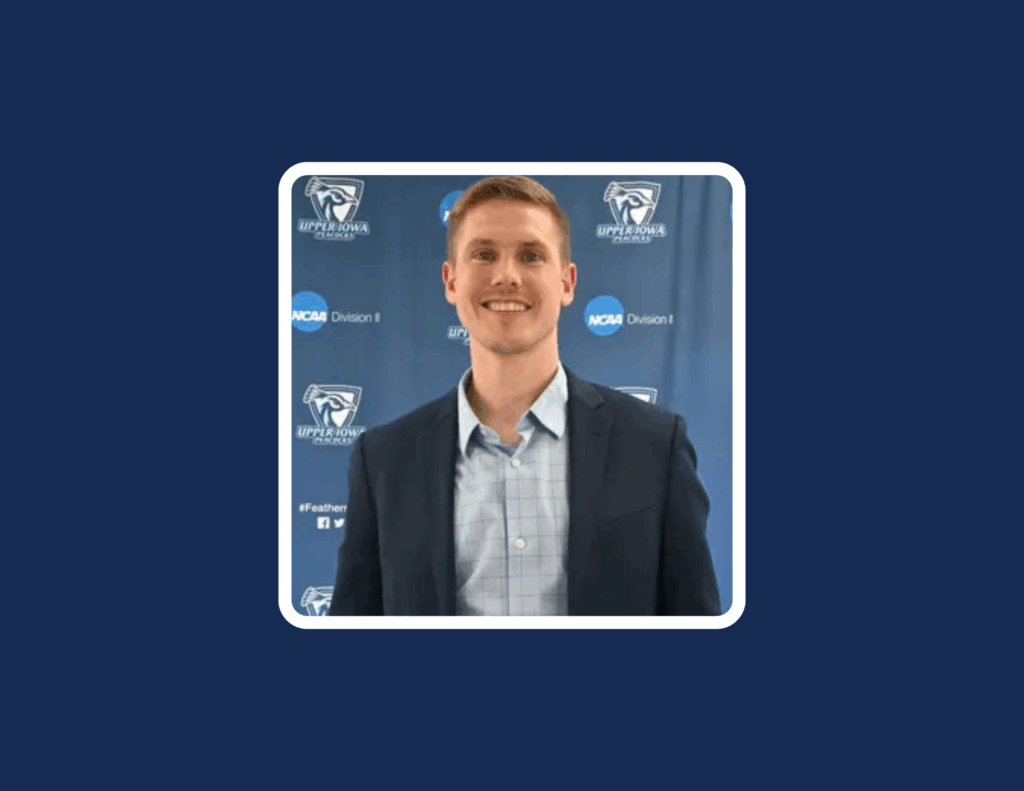
CASEY KASPERBAUER – UPPER IOWA UNIVERSITY MEN’S BASKETBALL HEAD COACH – EPISODE 1130

Website – https://uiupeacocks.com/sports/mens-basketball
Email – kasperbauerc@uiu.edu
Twitter/X – @ckasp12
If you listen to and love the Hoop Heads Podcast, please consider giving us a small tip that will help in our quest to become the #1 basketball coaching podcast.
Casey Kasperbauer is entering his first season as the Head Men’s Basketball Coach at Upper Iowa University.
Prior to his position at Upper Iowa, Kasperbauer was an Assistant Coach with the University of South Dakota men’s basketball team from 2018-2025. During his time with South Dakota he served as Offensive Coordinator for four seasons, the Defensive Coordinator for one season and the Director of Opps for two seasons
Kasperbauer also spent a season (2017-18) as a skills coach for Pure Sweat Basketball in Des Moines, Iowa, where he developed training programs for various skill levels.
A 2016 graduate of the University of South Dakota, Kasperbauer was a 1,000-point scorer for the Coyotes and is USD’s all-time leader in free-throw shooting, with a career percentage of 90.8%. He played professionally for BC Rustavi in the Republic of Georgia (2016-17), averaging 13.5 points per game.
Follow us on Twitter and Instagram @hoopheadspod for the latest updates on episodes, guests, and events from the Hoop Heads Pod.
Make sure you’re subscribed to the Hoop Heads Pod on iTunes or wherever you get your podcasts and while you’re there please leave us a 5 star rating and review. Your ratings help your friends and coaching colleagues find the show. If you really love what you’re hearing recommend the Hoop Heads Pod to someone and get them to join you as a part of Hoop Heads Nation.
You’ll want to take some notes as you listen to this episode with Casey Kasperbauer, Head Men’s Basketball Coach at Upper Iowa University.
What We Discuss with Casey Kasperbauer
- The transition from assistant coach to head coach entails significant responsibility and decision-making, which can be both challenging and rewarding
- Building relationships with players is crucial for a successful coaching tenure, fostering trust and communication
- Identifying players with a high basketball IQ and competitive nature during recruiting
- Establishing a culture of competition and allowing players to make mistakes in practice can lead to quicker growth and understanding of team concepts
- The importance of emphasizing specific core values and skills on a day to day basis
- The joy of coaching comes from witnessing players develop and grow both on and off the court, transforming into better athletes and individuals
- Why engaging players in a competitive practice environment enhances their development and helps identify their strengths and weaknesses
- The ability to adapt coaching methods to each player’s unique personality and skills is vital for achieving team cohesion
Like this show? Please leave us a review here — even one sentence helps! Consider including your Twitter handle so we can thank you personally!

We’re excited to partner with Dr. Dish, the world’s best shooting machine! Mention the Hoop Heads Podcast when you place your order and get $300 off a brand new state of the art Dr. Dish Shooting Machine!
Your first impression is everything when applying for a new coaching job. A professional coaching portfolio is the tool that highlights your coaching achievements and philosophies and, most of all, helps separate you and your abilities from the other applicants.
The key to landing a new coaching job is to demonstrate to the hiring committee your attention to detail, level of preparedness, and your professionalism. Not only does a coaching portfolio allow you to exhibit these qualities, it also allows you to present your personal philosophies on coaching, leadership, and program development in an organized manner.
The Coaching Portfolio Guide is an instructional, membership-based website that helps you develop a personalized portfolio. Each section of the portfolio guide provides detailed instructions on how to organize your portfolio in a professional manner. The guide also provides sample documents for each section of your portfolio that you can copy, modify, and add to your personal portfolio.

Hey coaches — you’ve got a game plan for your team… but do you have one for your money?
That’s where Wealth4Coaches comes in.
Each week, they deliver simple, no-fluff financial tips made just for coaches. Whether you’re getting paid for camps, training sessions, or a full season—Wealth4Coaches helps you track it, save it, and grow it.
It’s time to stop guessing and start building.
Subscribe now at wealth4coaches.beehiiv.com/subscribe
And follow them on Twitter @Wealth4Coaches for daily money wins.
Your money needs a coach.
Start with Wealth4Coaches.
THANKS, CASEY KASPERBAUER
If you enjoyed this episode with Casey Kasperbauer let him know by clicking on the link below and thanking him via Twitter.
Click here to thank Casey Kasperbauer via Twitter
Click here to let Mike & Jason know about your number one takeaway from this episode!
And if you want us to answer your questions on one of our upcoming weekly NBA episodes, drop us a line at mike@hoopheadspod.com.
TRANSCRIPT FOR CASEY KASPERBAUER -UPPER IOWA UNIVERSITY MEN’S BASKETBALL HEAD COACH – EPISODE 1130
[00:00:00] Narrator: The Hoop Heads Podcast is brought to you by Headstart Basketball.
[00:00:20] Casey Kasperbauer: If you can have players that are naturally high basketball, IQ, and naturally pretty tough and competitive, you can really maximize their potential pretty quickly. In my mind,
[00:00:32] Mike Klinzing: Casey Kasperbauer is entering his first season as the head men’s basketball coach at Upper Iowa University. Prior to upper Iowa, Kasperbauer was an assistant coach for the University of South Dakota Men’s Basketball team from 2018 to 2025.
During his time with South Dakota, he served as offensive coordinator for four Seasons, defensive coordinator for one season, and director of ops for two seasons. Kasperbauer also spent a season as a skills coach for pure sweat basketball in Des Moines, Iowa, where he developed training programs for various skill levels.
A 2016 graduate of the University of South Dakota, Kasperbauer was a 1000 point score for the coyotes and his USD’s all time leader in free throw shooting with a career percentage of 90.8%. He played professionally for BC Rustavi in the Republic of Georgia from 2016 to 2017, averaging 13 and a half points per game.
Hey Hoop Heads. Dr. Dish’s 4th of July sale is here from now until July 31st, 2025. You can save up to $4,000 on the top shooting machines chosen and trusted by thousands of coaches across the United States. Secure your Dr. Dish CT Plus All Star Plus or Rebel Plus while supplies last. Learn more at drdishbasketball.com and follow their incredible content @drdishbball on Twitter, Instagram, Facebook and YouTube. Mention the Hoop Heads podcast and save an extra $300 on the Dr. Dish. Rebel All Star on CT models. Those are some great deals Hoop Heads. Get your Dr. Dish Shooting Machine today.
[00:02:13] James Leath: Hey, this is James Leath from Unleash The Athlete, and you’re listening to the Hoop Heads Podcast.
[00:002:19] Mike Klinzing: You’ll want to take some notes to listen to this episode with Casey Kasperbauer, Head Men’s Basketball Coach at Upper Iowa University.
Hello and welcome to the Hoop Heads podcast. It’s Mike Klinzing here without my co-host Jason Sunkle tonight.
But I am pleased to be joined by the new Men’s Head basketball Coach at Upper Iowa University, Casey Kasperbauer. Casey, welcome to the Hoop Heads Pod.
[00:02:34] Casey Kasperbauer: Thanks a ton for having me on, Mike, and shout out Brandon Ubel for connecting us as well.
[00:02:39] Mike Klinzing: Absolutely, no question. Thanks to Brandon. I always say to anyone who connects us to a new guest, that good people always bring good people.
So I’m excited to be able to have a similar conversation with you to the one that we were able to have with Brandon a couple weeks back. Let’s start by, I think even before we go back to when you were a kid, let’s maybe start with just the opportunity at up and then we’ll come back to it, but maybe just kind of give us the.
Quick, short version of the opportunity, how it came to you, why you thought it was a good job, and then we’ll kind of swing back to when you were a kid and then eventually work our way back to, to taking the job at Upper Iowa. But maybe just start off with sort of the how and the why.
[00:03:19] Casey Kasperbauer: Yeah, for sure. Now Brooks Macallan is the former coach here before me at Upper Iowa, and Brooks is a friend of mine and has been a friend for almost a decade now.
When I got out of playing basketball, he was one of the first people I connected with and he actually offered me a ga spot here about 15 years ago. So kind of starts there and when I had heard his name being in the mix for other jobs, I just said if you get another job, would you mind throwing my name out to the athletic director here at Upper Iowa?
And he said, yeah, no problem. And from there, as it always does or seems to always happen. It moves so quickly that you kind of, your head is spinning. So it was, it was a very quick process where the athletic director here, Rick Hartzel, he emailed me one night at, at about nine or 10:00 PM and said, if you’re interested in the job, call me tomorrow morning.
I called him and he kind of told me what the job entails, asked me if I’d be interested, and next thing you know, I’m in the car and I’m heading to to Fayette, Iowa. And then to make a long story short, it was, I wasn’t necessarily looking to leave the University of South Dakota unless three boxes could be checked and one was a regional opportunity close to home.
I’m actually from Iowa, so just check that box. An opportunity to be a head coach. ’cause I have been chomping at the bit to lead a program. So obviously that box was checked and then an opportunity to win. I didn’t want to just take any job. I obviously I wasn’t desperate by any means.
And that that box is checked here. So pretty easy decision once I got offered the job and I’m, I’m really excited to be here now.
[00:05:00] Mike Klinzing: Absolutely. All three of those things clearly make sense when you think about where you’ve been and where you are now and where you want to go. I think all three of those reasons make a lot of sense for you to jump and take this job.
So we’ll come back to, and dive into it a little bit more in detail of what you’ve been doing since you took the job and the transition from assistant coach to head coach and what that’s been like and just what you’re looking forward to in the upcoming season. But let’s circle back to when you were a kid and just tell me a little bit about how you got into the game of basketball.
[00:05:32] Casey Kasperbauer: Yeah I was like many kids, I tried to go to every camp ’cause camps are so fun when you’re growing up and you’re a kid and you you get to be with your friends and just competing and playing one-on-one and three on three, and you just be around. A lot of times you’re going to college camp, so you’re being around.
Iowa State basketball players or you and I basketball players, whatever the case may be. And I think really what opened my eyes to how good I could, I could maybe be at playing the game is I was actually attending a camp in Carroll and noticed that I was kind of winning some drills and having fun out there.
And it was in fifth grade that I made the decision you know, I’m falling in love with the game. I feel like I’m progressing pretty well at the game. And there’s an opportunity now to play club basketball for an a a U team and. From there, fifth grade on, I kind of just started to blossom with my career and fell more and more in love with the game.
My dad coached me in everything, so I think that helped. Just I was, I was around competition all the time too, so I played all the sports growing up, everything that was kind of available to me. I tried soccer, track, baseball, basketball, football, everything. And it was basketball that I fell in love with first and got to be on this great a a u team around great teammates that are still friends.
And that led to opportunities to play play basketball at the next level in college. And then really, but like I said, it really started in fifth grade when I decided to play AU basketball. I just, I’ve been in love with the game, it feels like since then.
[00:07:08] Mike Klinzing: Were you and your dad the GMs of the team?
[00:07:13] Casey Kasperbauer: No. No. That, not quite. We didn’t, we didn’t have, have that, have that amount of, of juice just.
[00:07:20] Mike Klinzing: All right. So when it comes to your dad, obviously if you spend a lot of time playing for him, he’s clearly one of your major influences in your life, both as a player, but I’m sure shaping you in terms of how you think about coaching.
So when you look back on that time spent with your dad and think about yourself as a coach, what’s one or two things that you can point to that when you see yourself doing those things or when you think about, Hey, I do it this way, what are some things that come from your dad that you can kind of trace that line back to?
[00:07:59] Casey Kasperbauer: Yeah, it feels like, and I haven’t thought about it too deeply, to be honest. That’s a great question. The first thing when you asked that question I thought of was just his competitive edge and. Again, it goes back to I was always around competition. He was the same way. But just that edge that you need to kind of maybe for me, I guess specifically, I wasn’t always the most athletic person, but I felt like I could gain an edge by just my refusal to lose.
I thought my dad had that for sure as a coach. And that, that helped. And then just, he was always around and it’s a credit to also the people that he worked with, the head coaches that he worked with in every sport. But just giving your players freedom. I think there’s so much power to that where I think the higher level you go, coaches want more control, but you hear it a lot.
The, the really good coaches, the great coaches, all the former players talk about the amount of freedom that their coach gave them and thought my dad was the same way and again. The coaches that he worked with were the same way where you felt empowered to be creative and use your imagination. And that’s how real development happens in my mind.
[00:09:15] Mike Klinzing: Yeah, there’s no doubt about that. I think that’s a really fine line for especially young coaches to walk, right? Because
[00:09:22] Casey Kasperbauer: yes. Yep. We can sit
[00:09:23] Mike Klinzing: here on a podcast and talk about, hey, give your players freedom. Yep. And there’s differing degrees or differing views of what freedom may or may not look, look like.
And so I think for, I know I could speak back to when I was young a long time ago, and just how difficult it was to be on the sideline, and as you said, sort of seed control of some of the decision making to the players because you kind of feel like. I I’m the coach, I should be able to control it.
And of course, I grew up more in an era where there was a lot more of the, my way or the highway type of coaching. And you’re trying to navigate that, being able to allow your players to play free, because I know, I’m sure you can relate to this, but when I was playing or when I’ve been the parent of one of my kids and they’re playing, I know I played better, my kids play better.
When you’re not looking over your shoulder for every mistake, that is, the buzzer going to be going off and I’m going to be coming out of the game immediately. And you want to be able to maximize your opportunities when you get the chance to play in a system where you have the autonomy to be able to make the kinds of decisions and try things and just again, bring out the best in what you can be as a player.
And yet as a coach, I think that’s something that it’s. It’s really hard to define that Casey, I guess is what I’m saying, and hard to figure out how do I give the players freedom and yet still make sure that I’m getting them to do the things that I want them to do within the confines of that greater system, if that makes any sense.
So how have you kind of walked that line?
[00:11:11] Casey Kasperbauer: Yeah, I mean that is the, like you mentioned, that is the balance that you have to find as a coach. How I’ve walked the line obviously I haven’t always had control of the program until now, and so That’s right. I think, I think let’s start there because as you, as you know, I mean, if you’re an assistant coach, depending on who your boss is, you, you get so much freedom or you know, vice versa.
So, but I’m lucky enough, I’ve had really good bosses that I’ve worked for that have, that have given me a lot of, a lot of freedom. I think. What it comes down to is you trust your eyes with recruiting. You know, first of all, you, you recruited them for a reason and so let’s give these guys, let’s empower them to be creative and make plays.
But you do have to give I’ve always, or almost always been on the offensive side of the ball. And it’s important ’cause there’s a lot more gray on the offensive side of the ball in my mind where you should give them a, this is my opinion, you should give them a template to work from. And you give them the concepts and you help them understand what does a really good possession look like?
What are we emphasizing within our team structure? And then it’s your job to go out there and let them play to their strengths. And if they’re not doing that, especially early on, that’s where, that’s where the learning can take place, especially in terms of film studies nowadays you’re, you have access to a camera pretty much all the time.
And so you help them understand that way, but it, it’s a fine balance because games are, are won and lost, and then careers are are on the line because you might have given somebody too much freedom. But I think it’s important that your culture shines early on. And if you, if you do empower the players long-term with their development and within the team standpoint, if, if you empower your players early on, just, just giving ’em that freedom, everyone flourishes.
Later on in your system,
[00:13:17] Mike Klinzing: it’s almost like you work backwards, right? From the outcome. This is the outcome. This, you said, this is the type of possession, this is what a good possession looks like. And then within the confines of the concepts that you’re teaching your players figure out what are the solutions that work for them to be able to get to the outcome that you ultimately want.
To achieve in a given possession or a given game or however you want to look at it. And it’s not easy to do, like I said, I think that there’s it’s, you kind of look at it and say, it’s the art of coaching, right? There’s, there’s some science to it, but there’s also some feel to figuring out what does that look like?
What does that feel like when I’m on the sideline, what does that feel like for my players? And there’s no, I know I asked you a black and white answer, but clearly there’s no, there’s no black and white answer to that question. It’s gray area. It’s gray area. And every coach, I think, has a slightly different approach to what freedom means to them and then consequently what it means to their players.
For sure.
[00:14:19] Casey Kasperbauer: Yeah. And I think that’s you have to be consistent as a coach with what you’re emphasizing. You can’t one day you want this, and the next day you’re looking for this, and then the players are so confused, well, what does he actually want out of the, out of these possessions offensively?
So it’s almost like. In a way, it doesn’t matter what you emphasize, but, but you have to be consistent with what that is. And then if, if you’re a true program, in my mind, by the end of guys’ careers, they’ll be able to coach the younger guys up. You know, and this is what, this is what coach is looking for.
’cause he’s been consistent with his messaging. Not that it can’t you can always make minor tweaks throughout the season, all that. But your main things that you want to emphasize players are not stupid. They’re going to pick up on those things and you’re going to be able to you, you should celebrate the successful possessions and make sure people know, the players know, the staff knows this is not what we’re looking for as well, but everyone’s going to pick up on those cues.
I think it’s very important that you’re consistent though with, with what you’re emphasizing and teaching every day
[00:15:26] Mike Klinzing: at the beginning of your coaching career, when you first transition from playing to coaching. How difficult was it for you when you stood on the sideline for the first time and you’re watching a practice, or you’re watching a game, or you’re watching an individual player during practice, you’re noticing tons of things maybe that you would do differently or that you would maybe want to help the player?
Correct. And then it goes back to what you’re talking about, trying to emphasize the main things. And so as a coach, one of the things that I feel like it took me a long time to be able to understand was, I remember I’ve told this story on the podcast before, but I think it’s worth repeating here. When I got my very first coaching job was coaching at JV high school basketball team.
And I remember my very first practice and I walked in and it was just me. And I had never really coached anybody anywhere. And here I have 12 kids and we’re doing a drill. And I remember after the first drill, just standing on the sideline, thinking to myself, oh my God, what am I going to do? Like they. They just did like 500 things wrong in this one drill for five minutes.
How am I possibly going to correct all these different things and how am I going to even get through anything because I have to stop and I have to fix this, I have to fix this, I have to fix this. And I had to figure out, to your point, that you’ve have to understand, I think as a coach, what you want to emphasize, what’s important and ’cause otherwise you just are all over the place and it’s so scattershot.
So how did you, did you have a similar experience? Did you think about just the transition from playing to coaching and trying to figure out, Hey, how do I figure out what’s important? And obviously as an assistant it’s a little different because you kind of take the cues from your head coach, but what do you remember about those first experiences as a coach?
[00:17:15] Casey Kasperbauer: Yeah, I remember I was very passive and just, and maybe this wasn’t the right way to handle it, but I was just such a, I tried to be such a good listener and a sponge and take it all in. Come in with a mindset that I have a lot more questions than I do answers, even though I probably did have a, a pretty strong opinion on a lot of things like you mentioned, but yeah, I do remember that first summer I was, I was 24 years old or whatever I was when I was hired.
And you, you, because it goes back to what you just mentioned about black and white. You know, you, I, I just like you, I played the game a certain way and at a certain point you think I was a guard. You think, well, all guards need to play this way. It’s have to be cookie cutter, black and white, and you just have to stop yourself.
And this guy has different skillset than me. Better at a lot of things. He’s worse at some things. He’s whatever, whatever the case may be. And you have to stop yourself and you have to really. I think go home and think about it and really, really give it some thought about what, what was the most important thing there?
And if, if the more, most important thing is getting your team a basket, for example, then I guess it doesn’t matter how you get there, but that person, that player has a specific skill set he’s going to use and let’s help him along that way. But yeah, it was, it was a lot of listening earlier on, early on, and just soaking it all in.
I worked for a head coach who was, and my first, my first head coach I worked for was basketball wise, just a genius. And I tried to pick his brain about everything and just listen and then fill in the gaps as needed. But really pick his brain is, is what I was doing that first summer.
[00:18:56] Mike Klinzing: That’s so important I think, as a young coach to be able to have somebody that you can look at.
Learn from right from the get go and be able to internalize some of those lessons earlier in your career so that you can take them with you as you continue to progress. I think that if, when, I’ve talked to lots of coaches here on the podcast and so many of are influenced by that first head coach that they work for, both in terms of their philosophy, in terms of just the things that, like you talked about a minute ago.
What do we emphasize? What are the things that are important to our program? And just like anybody, it’s kind of like the same way your parent has an impact on you when you’re young, right? There’s that imprinting stage where you kind of end up, you might think your parents are crazy, but eventually you probably end up kind of being somewhat similar to them because you spend so much time with them in your formative years.
And I think coaching is a similar, is similar in that way that you kind of take the things from those head coaches that you work for especially, especially early on. Were you one of those guys that, did you always know you wanted to coach when you were done playing? Or were you just focused on being a player until all of a sudden you look around and you’re like, Hey, now, now I have to figure out what I’m going to be able to do to stay in the game?
Or, or were you always thinking coaching?
[00:20:17] Casey Kasperbauer: Yeah, that’s a good question. I, I wanted to always be around the game and when I was going through it especially early on in college, but then, especially in high school, like many people, I was just going to play in the NBA forever it was just going to be, yeah.
And I was going to play in the NBA and then I was going to be able to retire and sail off into the sunset. But I think it, it kind of hit me in the face, maybe sophomore or junior year of college that my playing career was probably going to be short-lived. And so what’s next? And. It was just such an obvious, I didn’t have to think about it for very long.
It was such an obvious choice for me. I was just going to try to go into coaching as soon as my playing career was over. I can’t envision a scenario where I’m not around the game. And because like I said, just being around my parents, my dad specifically was my coach and everything. And but being around just sports all the time, it’s what It’s all I knew.
And so there was a, I guess to answer your question, a little bit of both where I didn’t think about what I wanted to do after playing forever. And then it was like 20, 21 years old and it’s like, okay, what’s next? Easy, easy decision. It’s coaching.
[00:21:34] Mike Klinzing: Makes sense. What was the last sport you gave up before before you went all basketball?
[00:21:40] Casey Kasperbauer: The last sport? Is that what you asked?
[00:21:43] Mike Klinzing: Yeah, what’s the last, what’s the last sport you gave up? Because you played everything. What was the last one that you, that you, that you gave up when you went all hoops?
[00:21:50] Casey Kasperbauer: Football. So I actually played football my senior year of, of high school, and I was a quarterback and a kicker.
And so I think in Iowa baseball season is just the summer. And so I had to choose early on was it going to be baseball or a a u basketball. So I really didn’t have a decision there to make, but I really did enjoy baseball. I would’ve played that forever, I think, and as long as I could. But yeah, football for me.
[00:22:19] Mike Klinzing: Tell me about this decision to go to South Dakota. What was the recruitment like for you?
[00:22:24] Casey Kasperbauer: Yeah, so a little bit unique. You know, I was recruited at a pretty high level freshman, sophomore year, high level, meaning I had big 12 teams sniffing around and I had Missouri Valley teams ready to, get me on campus for a visit. And then the summer the summer going into my junior year, I broke my kneecap. Weird deal. Just a scary, weird injury. I broke my kneecap the very first A a U pro a a u tournament of the summer and it, it put me out put me out for basically eight or nine months.
And my recruitment fell off. I mean, nobody really was talking to me for that whole year. And then going into my I didn’t have any offers. And the offers that I did have were, were basically pulled the teams cut off communication and at the end of it, it was, it was just the University of South Dakota that had offered me a full scholarship and a couple other teams that were, again, just sniffing around.
But to me, it was all about going to school on a full scholarship to a team and a program that fully believed in me. So at the tail end of it, it wasn’t. Hard because it was just the University of South Dakota. It was two hours and 30 minutes away from home. So that checked the box first year division one postseason eligibility so I could lead help lead the program through the transition.
And that was the recruitment. And then my story gets really interesting because I stayed at USD for four years. This is probably what shapes a lot of my coaching too, but I stayed at USD for four years and, but had had three different head coaches in four years at the same institution. So easy choice to go to USD, easy choice to stay at USD, but definitely not definitely a very unique college career, I would say.
[00:24:11] Mike Klinzing: Do you think that that opportunity or what, maybe opportunity’s not the right word, but do you think playing for three different head coaches. Now when you look back at it, maybe it was a challenge as a player, but now as a coach, being exposed to three different head coaches, three different systems, three different ways of doing things, do you think that’s benefited you and your coaching career?
[00:24:35] Casey Kasperbauer: I would say, I don’t know what, what would be any more beneficial than that for me, like when I look back on it, it’s been the most beneficial thing for me to, and I’ll, I’ll go even further three head coaches in four years, then I go, I play overseas for a year, so that’s a fourth head coach.
Then I come back and I have a year in Des Moines where I do skill development, and then I get hired by a new head coach at USD. So I did the math and I think I had seven different head coaches that I worked for or played for in 12 years. And it totally has shaped my philosophy in terms of.
You know, I think people have coaching trees, which is great and I do certainly have my network for sure that that have helped me into this point in my career. But it’s also been a unique case of I’ve just been able to pick apart all the great things from each coach and essentially I’m stealing the great things I’ve loved about the seven head coaches in 12 years and pick those things up and I’ve used that as my own philosophy.
It’s been so valuable to me. ’cause I’ve seen everything. I feel like I I first coach, I played for, never played man-to-man defense. He was only zone defense. Very, very old school. But all about relationships too. But you know, you talked right away about the old school, my way or the highway very much that way.
And then. I’ve worked for a boss who’s really just like hands off we talk about freedom, like ultimate freedom guy all about kind of raising money on the side as well. And then I’ve worked for everybody in between and so it’s, it’s been crucial in my development as a coach for sure.
[00:26:22] Mike Klinzing: As you were going through that, do you have a system that still is with you today in terms of preparing for, in most cases guys are preparing for a head coaching job, but just writing things down. Are you a journaler? Do you have notebooks? Do you have, are you a technology Google Drive, Evernote? What do you, what do you use to kind of collect all your coaching thoughts and materials that you’ve gathered throughout the time that you’ve been coaching?
[00:26:50] Casey Kasperbauer: I wish I wish I could say I’m, I’m a lot more organized than I actually am in real life. ’cause I kind of have a hodgepodge of all of that. You know, I have, I do, I do have a ton of journals, handwritten journals notebooks probably 10 to 20 notebooks that are at my house right now that have just been notes.
I’ve written since I, since I’ve really started taking classes in college on coaching and so that’s probably the majority of the notes I’ve taken. But I also have Word documents in a folder on my hard drive that I’ve written just notes on podcasts I’ve listened to, or I’ll be in the office working and I’ll be, I’ll have a YouTube video up and.
Maybe that YouTube video is also a podcast and I’m just I’m typing away notes as I’m hearing things or reading a book, and I am handwriting notes on that. So it is, it is like a Russian roulette of, it’s like, I’ve got notebooks in every corner of the house, but I’ve also got hard drives and so I’ve got a little bit of everything.
But to your point, it’s every, it’s every coach I’ve worked for or played for that I’ve carried notes from. And then there’s the professors that have, that have taught me intro to coaching men and women was the head track coach at USD and the, basically the whole class was lessons of John Wooden.
So it’s been, it’s been great, like I said, to just get my hands into kind of every philosophy I could find.
[00:28:20] Mike Klinzing: Being able to have as much experience with different coaches that like you’ve had to me, I always think that that is. Invaluable. ’cause again, like I said earlier, it just provides you with so many different viewpoints of how to look at things and how you can get to the same end result. Doing it many, many different ways.
And to your point, then you can pick and choose and take the best things from each person, the things that resonate with you. And now you can incorporate that into your own philosophy as you move forward. And especially here now as you take over your own program. I want to ask you though, about playing overseas.
Tell me about just what you needed to do after you graduated. How’d you hire an agent? What did it look like? Finding a job? And then what was the experience like going over and playing in the Republic of Georgia?
[00:29:12] Casey Kasperbauer: Yeah. The agency process, I made sure, and I I had gotten feedback from a lot of college coaches and mentors of mine that who should I hire?
And I knew the NBA, the G League, that was probably out of the realm of possibility at that time. So the feedback I got from the people I asked was go with more of a small time agent who doesn’t represent a hundred kids and or people that are going to he’s going to sweep you under the rug and you’re going to be option 50 or 60 for him.
So I got a smaller agent who was European and so he only had, let’s say a handful or a dozen clients. And so he was always working for me, which I thought was, was great, making phone calls. And he presented a lot of opportunities to me. Honestly, I don’t know if I made the right decision or not in terms of what the club that I went to or the country that I played in.
All I know is in September of 2016 the Republic of Georgia team called BC Ruta called me and wanted me to, to join the team and team. The, the contract was great. The league from everything I had understood at that point was a really good league and an opportunity for me to play, but also play on a winning team and a good league.
And so I went to the Republic of Georgia and actually my roommate at USD played on a different team in that same league about 30 miles away. That, that definitely helped. Just having that comfortability there if, if I ever need anything or he needed anything, we were 30 miles apart, but. You know, the experience, it’s Eastern Europe and you know, it is at times you have to create your own entertainment because the country is, it’s a beautiful country, but there wasn’t a whole lot to do, and English certainly wasn’t the first language.
So you had to get used to the culture and all, and any language barriers there too, which was an awesome challenge and a great experience for me. But playing overseas for me individually was really fun because I had a, I was on a really good team and I did get to play and I, and I did play well.
I made the All-Star game and I won the three point Con competition and all that. And finished my year. You know, I did 10 months there and finished my year. And really what it came down to was I could have gone back. I had played well enough where I could have gone back to Europe and kept playing, but plethora of things happened.
But mainly I my body was kind of starting to. Wear on me a little bit, and I did want to get into coaching, but definitely an awesome experience. And anybody who has that opportunity, I would highly recommend going overseas. You, you won’t regret it. And even if you only do one year like me, it’ll be, if nothing else, you’ll have a, a bunch of stories to tell for the rest of your life.
[00:31:58] Mike Klinzing: All right, so to follow up on that, everybody who plays overseas, and this is my standard question, Casey, what’s your craziest PG 13 story from playing overseas?
[00:32:11] Casey Kasperbauer: Oh boy. Well, you tripped me up with the PG 13 ’cause I think no. Okay. It’s no I don’t know if this is, there’s not, there’s not one story to go along with this, but in the Republic of Jor, in the town that I stayed in, which was Ruta there are, I don’t know, hundreds, let’s say hundreds of stray dogs.
Kinda like where I’m from in Iowa here, there’s squirrels that kind of just run around campus here. Okay. Yeah. It was, it was like that. And so you’d walk out of, you’d walk out of your apartment, I said in an apartment at the time, and there’d be dogs that sometimes they were hungry and if you had food in your hands, they would try to get the food from your hands.
Or if you’re, if you’re in the gym late at night and you’re walking back to your apartment late at night, you kind of had to walk. You, you kind of had to try to be safe and look around every corner. And normally you’re not looking around every corner for a dog it’s like, so you had to get used to that.
There, there wa there’s no specific story to that other than you, you would hear on the news or your, my Georgian teammates would tell me all the time, weekly that did you hear about the, the, the dog that attacked the human. And that was just such a unique thing. You had to be careful of.
You don’t think about things like that in a different country that you have to look out for for stray dogs. But there, there were a ton of stray dogs in my town.
[00:33:41] Mike Klinzing: Well, I have never heard that one. So that is a new one on me, Casey. I like it. And certainly yeah, that, that could be, that could certainly be disconcerting as you’re walking with your, with your peanut butter and jelly sandwich as you walk outta your apartment and you’re, you’re carrying it and all of a sudden, boom, there’s a dog at your side trying to get it away from you.
So I get it. Yeah. I think just to go back to what you said earlier about the opportunity to play overseas, I do think that anybody who gets an opportunity that I’ve ever talked to that has had the chance to go and play basically echoes the same sentiment that you just shared, that the opportunity to.
Immerse yourself in a different culture and whether it’s a different language, a different food, just living in a different place, the way that you’re able to grow from that and the experiences that you get, I think are completely invaluable. And then the other thing that I think is interesting that you mentioned, just when you talked about the fact that your, you felt like your body was kind of breaking down.
It was getting tough for you to be able to continue to play. And you think, okay, here you are 23 years old, and then you think about some of these guys that play, whether it’s overseas or play in the NBA, obviously the, the all time leader in the clubhouse is LeBron. And just to be able to do the things that guys who are playing professionally for 15 seasons, I mean, you kind of take it for granted.
I mean, I had a four year college career and I would’ve loved to have been able to keep playing. It didn’t happen for me, but I just think about the grind that it was to play four years of division one basketball, and then the idea of. Throwing in all the travel with playing professionally, and then obviously in Europe, the way you’re traveling and just everything that goes along with it.
I think there’s a lot of guys that sort of had the same sentiment that you did that this is fun. I’m glad I did it, man. I’m feeling like I’m beat up. And maybe time to, maybe time to get onto the real world.
[00:35:35] Casey Kasperbauer: Yeah. I mean, like, like you said, it, it just makes everything, when you go through it, it makes everything that LeBron guys like, LeBron and Steph, older guys in the NBA, how they’ve sustained excellence makes it so much more impressive because everything has to be next level.
Like your, your love for the game has to be over the top. Your physical fitness has to be over the top. The the resources that you pour into your recovery have to be over the top. And then your luck, honestly, too, has to be, you have to get really lucky to be in a situation where you can play for that long.
But it’s, I mean, d different, different, a different livelihood. I understand that they’re living to be able to afford the things that they are, they’re afforded to have with as far as recovery goes, but so impressive that guys like that have been able to, to keep playing at such a high level.
[00:36:29] Mike Klinzing: It really is unbelievable when you consider, again, the, what the body has to go through in order to be out the best. And then not only just to be able to, just to be able to play first of all and forget about how well you’re playing, right. It’s, it’s one thing to just be able to then say, okay, I’m going to go out and be able to run up and down the floor.
It’s another thing to be at the level that these guys are at, into the well into their thirties LeBron case you know, in his case, into their forties. It’s, it’s, it truly is. It truly is incredible.
Coaches, you’ve got a game plan for your team, but do you have one for your money? That’s where Wealth For Coaches comes in. Each week, we’ll deliver Simple, no fluff financial tips made just for coaches. Whether you’re getting paid for camps, training sessions, or a full season, wealth for Coaches helps you track it, save it, and grow it.
It’s time to stop guessing and start building. Subscribe now at Wealth. For coaches.beehive.com/subscribe and follow us on Twitter at Wealth for coaches for Daily Money wins, your money needs a coach, start with Wealth for coaches.
All right, let’s shift gears to the start of the coaching career. So you get done playing, you come back to Iowa and you spend a year working with Pure Sweat, doing a lot of player development stuff. Talk to me about the value that you gained from. That year working player development and just how that’s impacted you moving forward as a coach?
[00:38:02] Casey Kasperbauer: Yeah, if I look back on it, it’s really the value in hustling to be honest, because I got the freedom to kind of use, use pure sweat basketball’s template in terms of what they’re doing. But it was on me to put myself out there with marketing and getting the clients and the players and that’s why I say hustling was the most important thing I learned because it’s all on you to make the money.
I could have. I could have been hired by them and had two clients, and I’m making nothing and I’m not really helping anybody. But what, what I learned is kind of is recruiting like you send emails, you go to high schools, you, you try, you try to work with whoever will accept you and you, you have to try to sell it too.
You have to sell the fact that you’re, this is your resume and this is what you did. But then the other part is for me, I was living in the Des Moines area and the value of, like, I was, I was driving to a town that was 45 minutes away at five 30 in the morning, because I had five, I had five people at a high school east of Des Moines that wanted to work out before school.
And then I’d I’d come home and I’d eat my breakfast and then I’d go the other direction an hour and a half sometimes, and I’d be in the gym during, during while school was in session. I had to wait till school was over. So. Three 30 was my first group all the way up until nine 30 and then I’m not getting home until 11 o’clock at night and I have to do it again.
I’m waking up at four 30. So there was just so much value to me and like you realize how quick, you realize very quickly how in this college high school coaching world. And I know I understand a lot of other professions too, how sometimes you have to, you just have, this is what it is, you have to be available at these times.
Sometimes it’s a Sunday night or a Sunday morning or whatever the case may be. But yeah, like I mentioned, it’s just I learned right away how, how hard you have to hustle and how hard you have to work to, to be able to a lot of times be, be really successful in the industry.
[00:40:15] Mike Klinzing: Do you always think that college coaching was where you wanted to end up?
Was there ever any thought of. Going into high school coaching, maybe going back and getting a teaching license, what was your thought process in terms of long term where you wanted to take your, your coaching career?
[00:40:32] Casey Kasperbauer: Oh, I kind of I kind of thought about it in the same sense that I thought about playing where I wanted to play in the NBA, I just kind of wanted to coach at the highest level.
So I got lucky, of course, that I was hired at a division one at age 23, 24 years old. But I, I guess that was my thought press is I didn’t really have to try to think too hard about high school coaching because this college coaching opportunity came about pretty early on in my career.
So since then, I’ve just kind of wanted to, I wanted to coach the highest level of player I could. I wanted to lead and I wanted to just be around basketball all day, every day. So, college coaching, you kind of get that.
[00:41:12] Mike Klinzing: What was it like going back to your alma mater and. Stepping behind the coach’s office door from a place where you had played, you had had so much experience in a program, obviously you played for a bunch of different coaches, so it’s not like you didn’t step back in and work for your former head coach, but you did still step behind the coach’s door office.
What was that like being on the other side of it, and then how do you think that that helped you in that first couple of years? Obviously once you’re there for a little bit, you kind of get adapted and whatever, but in your first couple years, how do you feel like it helped you to have been a player in the program previously?
[00:41:57] Casey Kasperbauer: Yeah when I took the job, it truly felt like a dream come true. And I spent seven years there on staff and it really did feel like a dream come true to be back at my alma mater and to, to truly work my way up. In terms of job title and responsibility and all that, that part was great.
I thought I was valuable in terms of, I knew what I had fun with at USD as a player and how I could translate that to recruiting success, if that makes sense. And I got to, I think I got to wear that hat a lot when we had recruits on campus where I could tell them there’s not a lot of programs that have former players on their, on their staff.
And so I could, I could sell that in terms of this was my experience as a player and this was this was where, this is where you can flourish in the community on the campus, the the fans love you, whatever the case may be. And then on the flip side of it, to the current players, I could share my experience as well and I, because I did, I did have some individual success, success as a player at USD and I could share that with the players like.
You can be a, not just a successful college player, you can be a successful player here at USD, and here are some tips and tricks and kind of what I learned along the way. So those first two years when I could actually still get up and down the floor too. I think it, it did help the current, the, the players on the team see that there’s a member of the staff that played college basketball, played, played at USD and can still kind of play every now and again.
So I really enjoyed wearing that hat, especially early on.
[00:43:45] Mike Klinzing: Tell us about how your role changed over the time that you were there. You come in as the director of ops and then as you said, you slowly work your way up to staff. But just tell us a little bit about what you did in each one of the roles that you had while you were there.
[00:44:00] Casey Kasperbauer: Yeah, I’m super grateful for this because I got to wear every hat. I was hired as the director of bas of basketball operations, and most everything I did was the behind the scenes stuff. But again, it was great, especially now in the chair, I’m sitting in where I got to handle the budget. I got to handle team travel, I got to handle video editing, video coordinator responsibilities.
The staff at USD had three assistants and the director of operations at the time, so the director of operations handled basically you, you hear people joke about the other duties as assigned. I was basically that, like I was, I was other duties as assigned every single day. And it was great. I did that for two years and like I said, the team travel, the meals, the hotels the ground transportation, I booked airfare.
I did all of that stuff. I did the budget. All that stuff was great. And then what I learned is if you knock all that stuff out and you do a great job with that, then the head coach will start to entrust you with other things and will slowly start to ask for your opinion on basketball things. And so you learn that too.
Like if you, if you really do a great job with the things you’re assigned, you’re going to be given other things. And then that’s when you start to, you start to gain a little bit of some momentum. And so I did that for two years. I got bumped up to assistant after two years. And that first year I was a full-time assistant.
I was actually on the defensive side of the ball, and that was the only year that I was ever doing defensive scouts. But I have so many notes from that year because of how detailed my head coach was with defensive scouts. And like I said, he was a genius with basketball. I mean, it was like basketball 1 0 1 every single day.
So I got to do the defensive side of the ball for a year, and then I got to do the offensive side of the ball for a year. For him as well. And so I got to do kind of literally for my first head coach that ever hired me, Todd Lee, he, he gave me everything. I mean, I literally got to work my way up from all the other duties as assigned to both defense and offense.
And then I was super lucky because then the new head coach came in, Eric Peterson, who’s currently at USD, and I just stayed on the offensive side of the ball and fast forward three years and here I am.
[00:46:21] Mike Klinzing: It’s amazing how when you look at the progression of a career and you try to think about what’s the best way to learn and prepare yourself for that next step along the journey.
And I think you hit on a very important point that we’ve tried to emphasize in a lot of the interviews here on the pod, and that is that you’ve have to do an outstanding job in whatever the job is that you currently have. You may. In the back of your mind, have your eye on the next thing. But if you want to be successful, you better make sure that you are doing all the things that you are supposed to do.
And let’s, let’s be Frank Casey, right? Going above and beyond the things that you’re being asked to do and looking for even more ways that you can add value. And when you do that and you do the job that you currently have, well that tends to be when those other opportunities are presented to you, whether those are in your case for a number of years on the same staff, or whether that means that you may get an outside opportunity because somebody that you’ve worked for will vouch for you, recommend you, whatever the case may be, because you’ve done great work in the position that you’re in.
I think that’s one piece of great advice for young coaches out there, is making sure that you get. You get the job done that you have and not worry about, Hey, what’s coming, what’s coming next? Especially when you think about, again, if you’re taking a job and a lot of guys start out in volunteer positions or they start in jobs that aren’t as well paying.
And so you’re looking around dreaming, going, man, I wish one day I’m going to get a bigger paycheck. And you have to just keep remembering that you have to do the job that you’re in, and when you do the job and you’re in, you do it well, that’s going to afford you some new opportunities. And obviously that was the case for you starting out in the director of ops.
And then as you said, you kind of work your way up and you’re, you’re, one of the things that I always think is interesting with the, with the ops position is you think about how much you love the game of basketball, and most people who are getting into coaching have a similar feel for the game, and yet.
There’s a case where you, you don’t even really get to get on the floor and coach basketball with the players you’re doing, as you said, all those behind the scenes things. And that always seems to me like, yeah, it’d be fun and you’d be into it, but man, it’d be a kind of a tough way to start your coaching career, not really being on the floor or coaching.
How’d you handle that part of it?
[00:49:03] Casey Kasperbauer: Yeah, I mean, what you just said is a hundred percent correct in terms of like, be a star in your role and then you’re going to get you’ll get, you’ll get your break eventually. But the other thing to answer your question and to your point is you don’t necessarily have to love it all the time.
You just have to do the job. Right. You’re not going to, so that’s how I handled it, is like you, you had to, you almost had to trick yourself a lot of times. Like you wake up and your jobs are. I have to book this hotel, I have to call the sports information director and make sure that the interview for this player is moved to a certain day.
And I have to make sure that the, the pre-game meal is on time. Well, those things aren’t fun because you don’t, you don’t wake up and you’re, you’re not super motivated to do that. But you almost have to trick your brain into, I’m going to crush this. I’m going to do as good of a job as I possibly can.
And then if I have an hour at the end of my day, then I’m going to, I’m going to share with my boss some thoughts on a recruit that I watched that he didn’t ask me to watch, but I did it anyways because that’s how I can chip away at this thing. And there, there were so many lessons I learned in that.
And honestly, Mike, you can, you can really relate that to a lot of players in their role. You know, only one player can be the best player on the team. Only one player can be. The leading score, but you know, if you want to be the leading scorer you, but what we want right now is for you to be, what we need for our team is for you to be the best cutter on the team.
Well then be the best cutter on the team. And if you’re, if you’re a star in your role and then you’re you get, you get to cutting and you cut all the time, well then this off season we’ll work on your scoring ability because you’ve proven that you can do you can perform tasks at an elite level and then maybe you can be our best scorer after that.
But there, and every walk of life, I think that that’s probably the key thing is you don’t have to always love what you’re doing or love the work that you’re putting in, but go knock it out. And then people are going to notice, and then you’re going to be called on to do the do, to do the things that maybe you’re more passionate about.
[00:51:26] Mike Klinzing: That is the ability, I think, to be self-aware, right? You have to know, yes, who you are and you have to know what you are. In the moment. And oftentimes, and I’ll think about this both as a player and as a coach, we think of ourselves in a certain way and somebody else thinks of us, or our title allows us to do certain things.
And if we fight back against those things because we have a different image of ourselves, or we don’t think that that role, that we think that role is below us, whether it’s, again, on the floor as a player or on a staff as a coach, that becomes very, very obvious when somebody is disgruntled with their role.
Whether it’s, and we could take it beyond far beyond basketball coaching staff, just think about the business world, think about in a family, whatever, whatever it might be. And I do think that. The ability to be self-aware and understand that yes, maybe I would rather be doing X, but right now my job is to do Y and so I need to make sure that I’m doing Y to the absolute best of my ability.
And I think that’s really great advice for coaches on a staff. And I think from a, from a playing standpoint, and again, this is something that I’ve talked to a bunch of coaches about Casey, is there’s just the idea of, and you talked about it, Hey, we need you to do this on this team. This is your role.
This is what we need you to do. We need you to be the best cutter on the team. And the higher the level of basketball that you go up, the more almost specialized your skill. Has to be, it’s kind of counterintuitive, and I’ve said this before, but Mike Procopio, who he was the Dallas Mavericks player development guy, and he worked with Kobe Bryant and he was the first one that sort of raised this to me saying that when he works with guys, the back end of an NBA roster, you’re basically working on one or two skills that are going to keep you in the league.
Like these are the best guys in the world and they’ve been stars throughout their entire career. And now if they want to stick in the NBA, like you just have to be able to make corner threes at a 42% clip and you’re going to stick in the league and all the rest of your skills. Yeah, we can keep working on ’em, but you have to be able to do this one thing at an elite level.
And it’s kind of counterintuitive because then you think, what do we do with youth players? Right? We want to have them. Teach, we want to teach ’em every skill. You think it would be the opposite? Like if you don’t really, if if you stop and you’re like, well, the NBA players probably are working on every single thing and maybe youth player only has to be good at one thing.
Now it’s kind of the opposite. Just in terms of how players develop. And so it’s interesting, there’s so many different ways to look at developing as a player and developing as a coach. And obviously there’s guys who get into coaching like you, who started the division one level, started an ops job or started a GA job and they’re part of a huge staff.
And then we talked to other guys who started the D three or they started JUCO or they started in AI and they’re kind of thrown in the fire and they’re not only are they doing all the things that you were doing at, at South Dakota, but then they’re coaching on the floor and they’re, I mean, again, it’s just, there’s all different ways into the coaching profession.
But I think bottom line is you have to excel in whatever it is that you’re doing. And if you do, then that’s going to afford you whatever that next opportunity might be.
[00:55:03] Casey Kasperbauer: Yeah, no, that’s exactly right. And I mean, your your story about NBA players is exactly right and it’s the ones, I feel like the stories that you hear about the players that stick in the league, they just don’t get in their own way.
You know, they’re just, and you hear them talk about it in interviews or they’re at a camp and they’re talking about it. Like, what, what this team needed from me this season was to just set a ball screen and roll and protect the rim as a big guy. That’s all, that’s all I needed. And I can score on the block and I can post up, and that’s probably why I got drafted.
But that’s not what the team needed this year. And it’s on the flip side, it’s, it’s those players that are outta the league pretty quickly because they fight that. And I think you can look at every level and every, every coach that you could ever talk to will have a story on both sides, where this guy wasn’t as talented, but we told him all, he all, he really was.
Was a cutter for us, and he needed to guard the best player. And he’s like, yep, coach sounds good. And we had a super high level talent that we told him he’s our sixth man. And he said, no, I’m a starter. And so he left the team and I never heard from him again. And so, I mean, it’s everything we’ve been talking about for the last 15 minutes about this, but it’s, it’s so true.
I mean, I think players might think it’s a very cliche thing for coaches to say, but you, I mean, coaches do have favorites, and it’s the ones that are going to sacrifice whatever they think they should be doing for what the team needs most.
[00:56:36] Mike Klinzing: Yeah, and I think the other thing too, that when I think about a player and a coach having a conversation about role, and I think about the normal experience for a player, right?
On any given team, there’s one best player, and even that one best player on most teams. The coach doesn’t just hand that player the ball and say, Hey man, go ahead. Do whatever you want. Do your thing. Now, there are guys that are capable of that. There are guys even at the NBA level that are capable of that.
But I would argue that not every NBA team has a guy that the coach just gives ’em the ball and trusts implicitly to do everything. And most guys are going to be in a role. And so therefore you have to figure out, like you said, what does the team need me to do? And there are guys who figure that out at the college level, at the high school level, at the pro level, and those are the guys that stick around and the guys that fight it, the guys that still fancy themselves as the, Hey man, just gimme the ball and let me do my thing.
Those guys don’t always last because again, a team can’t be made up of five guys who think it’s, Hey man, gimme the ball and get outta the way and let me do my thing. That just doesn’t, that just doesn’t, that doesn’t translate to winning basketball on any level, let’s put it that way.
[00:58:04] Casey Kasperbauer: No, it doesn’t. And to, to relate this to coaching too, that’s the, that’s your, that’s my job as a coach.
That’s coach’s job too. That you can’t help every player realize that, but to an extent, you have a responsibility to, to try to get players to understand how their role you might not love your role right now, but your role, this could be what it ends up if you, if you are a star in your role.
So I do think coaches, coaches have a role in this too, in terms of. Yeah, if they’re fighting you, well, maybe you need to try something different. Or have you tried, have you tried showing ’em? Have you tried asking them, have you tried? Or are you just we talk about the my way or the highway, and there’s nothing wrong with that.
I’m not saying that, but may maybe the my way or the highway won’t work for a certain player, and are you just going to move on from that player and not give him another chance? Or can you find other ways to reason with him and help him understand this, you might not be happy with your role, but your role is very much needed.
And if you’re the, if you’re really good in this role, you could be the MVP like you, you just never know. You never know what could happen.
[00:59:14] Mike Klinzing: I think that goes to, as a coach, knowing your players and getting to understand that not every single person is motivated. Not every single person is. Can be pushed in the same way.
Like everybody needs different buttons to be pushed, to be motivated in, in certain ways, to be pushed, to be coached. And it’s not a cookie cutter approach. And I think the best coaches figure out how do I communicate with this, excuse me, with this player, to get the most out of that player as opposed to, Hey, we’re just all going to do it this same this same exact way.
And I think the best coaches get to know their players, both as players, but also as human beings. And that helps them to be able to get the best out of them. And that’s not easy to do. I mean, it’s not easy to do, but I think the best coaches do it really well.
[01:00:10] Casey Kasperbauer: Yeah, I totally agree. And I think you, you hit the nail on the head with, you can’t, you can’t use the same approach to every player.
It’s very important that you get to know your players so that you can understand. Not going to get it right every time, but you can understand. This is how I need to approach this conversation with this player, and I have to have the exact same conversation with this player, but it’s have to go a totally different direction with how I start this conversation or what I mean?
Like, and I think certain levels players are at different stages of their career and they’ve, they’ve, they’ve had every role on the team. So that conversation looks a di a little bit different from the freshman who’s coming in and is eager and wide-eyed. And that conversation might hurt a little bit more, whatever the case may be.
But it’s the, it’s the tricky part of this profession. But it’s it’s also the really fun challenge because on the flip side of everything we’ve been talking about, when you get that player that buys in to their role and you watch them flourish in it, and then they’re happy and then you’re winning games and their minutes are going up, there’s, there’s really not too many greater feelings as a coach.
[01:01:17] Mike Klinzing: That’s good stuff without question. I mean, I think being able to have that impact and seeing players have success, and then obviously if you have individual, excuse me, individual player success, that’s going to lead to, that’s going to lead to team success. All right. Let’s talk about taking, taking over at Upper Iowa and what you’ve been doing since you got hired in April.
What’s been the most fun part of taking over your program? Obviously you haven’t coached the game yet, but what have you enjoyed the most about being a head coach?
[01:01:54] Casey Kasperbauer: I I’ve really enjoyed just getting to wear all the hats and it’s, it’s it’s a lot of work for sure. There’s a lot of work that goes into it, but to be able to make you’re making the decisions now, you’re not just suggesting and there’s some fun in making suggestions too, but, like I mentioned early on, this was, I was chomping at the bit to be the decision maker in all this. And so it’s been, it’s been just a lot of fun with making the decisions within our team. I mean, every, every decision is going through my desk and that’s gr that’s been fun. And then. The other thing and probably even more fun and more enjoyable than that is getting to know everybody on the team.
It’s tricky because at the division two level, you can’t mandate than anyone’s on campus for the summer. And I basically took the job at the end of the spring. And so I haven’t been able to get a whole lot of face time with players ’cause they’re back home, but some of them are in town. And and then it’s just a lot of old school like get on the phones and just call people and get to know ’em.
And so I’ve gotten to know what what makes everybody tick on the team and what motivates ’em and their stories. And that’s been, that’s been a lot of, a lot of fun for me. It’s that that part hasn’t changed. I’m always trying to get to know the players that I’m coaching, but that’s that’s why a lot of coaches get into it.
That’s definitely why I’m, why I’m in coaching is just to be transactional as possible and or transformational as possible. And get to know everybody and get to know their stories.
[01:03:22] Mike Klinzing: When you were having those conversations, as you’re getting to know them, obviously they’re having to get to know you, right?
A new head coach comes in, players, and I’m sure you can relate to this, right? Players are always nervous, like, okay, I kind of had established myself with the previous head coach. I kind of knew where I stood. Some players maybe are excited that a new guy’s coming in ’cause maybe they didn’t have as good a standing.
Some guys are a little nervous ’cause they were returning starters or whatever the case may be. Everybody’s trying to get to know you. So in addition to getting to know your players, how did you want to help them to get to know you? What were some of the things that you tried to get across to them about you and what you were going to do with the program?
[01:04:02] Casey Kasperbauer: I basically just wanted to be an open book right away. And I told them that right away that I am an open book. I really don’t hide anything about who I want to be as a coach and what I value. And so I thought they noticed right away. I was pretty vulnerable about I just told them the honest truth about why I took the job and I told them, honestly what, I’m trying to get what type of players I’ll try to add to the program.
I made sure they knew no, like nobody’s spot was in jeopardy. I’m not, I’m not going to ask anybody to hit the transfer portal. I’m really not going to strip anybody’s financial aid agreements up. Like, and and I did under, I was sensitive to the fact that every coach could say that. And so I had to also prove that and that I was about relationships and I did want to know them and their family and you know, what, what their life has been up to this point.
I thought that was the biggest contributor to them just feeling that safety net that I’m going to share with you. Everything that I am as a coach and what I’m about. And you guys are all good. You guys are all safe here. And then let’s, let’s figure out what you want your experience to look like.
’cause this is, this is my vision of the program, and if it doesn’t align, then we can go our separate ways. But if, if we can find some alignment here, I’d love to, I’d love to have all of you guys a part of it. I thought that was big. And I’ve just been trying to communicate that all summer and recommunicate that every chance I can getting them on team Zoom calls has been important just to make sure they knew I’m, I’m, I’m still the same person I was when I took the job.
That wasn’t a sales pitch. That this is me and I am about relationships. I’m trying to be as transformational as possible every day. And so I think that’s, I think that’s certainly helped with hopefully everyone, but I know a, a good majority of the players.
[01:06:08] Mike Klinzing: Clearly that outward communication with your players is critically important to get them to understand what you’re all about, helping to yourself to understand what they’re all about, and beginning to put together the outline of what your team’s going to look like.
What are the things that you’ve been doing behind the scenes that nobody, besides maybe you and your staff have seen that you feel are going to have the biggest impact as you head towards the season?
[01:06:37] Casey Kasperbauer: Trying to get our players as many resources as we can through raising money. I think that’s, that’s a big thing probably no one knows, is the amount of work I’m trying to put in, in terms of getting, getting that stuff done.
I mean, every institution in the country will tell you they wish they had a little bit more. And so I’m trying to do that. And then the obvious one. So that’s, that’s the first thing. Just trying to get our players in better situations resource wise. And then the, the, the obvious one is just recruiting the, the class of 2026, they’re starting to make decisions, so getting ahead on 2020 sevens as well has been important and just trying to.
The, the format and the template’s kind of already in place here in terms of recruiting locally as much as possible and trying to maybe dabble with some international flavor as well. But you know, that’s, that’s an every day as you know, Mike, every day, all day 24 7. You’re trying to find the best fits for your program.
[01:07:41] Mike Klinzing: When you think about, obviously, there’s a certain level of talent that a player needs to be able to have to play at your level, what are some things from an intangible standpoint that are the types of players that you feel like are going to have success playing for you as a head coach and playing in your program?
[01:08:00] Casey Kasperbauer: It’s, again, it’s, it’s pretty obvious ’cause every coach will tell you this, but toughness I really love I think you can be, you can be very limited with. Athletic ability or size. But if you’re really tough, I think you can overcome a lot of things. With toughness comes a competitive edge competition, you have to love it.
Because we will compete with everything. And if you don’t love competition, it’s going to be really hard for you to play. And I think that’s anywhere any good program. But the other one would be high basketball IQ because we are going to be a pretty complex team. Now there’s, there’s going to be some sim, some simplicity, especially offensively with allowing you to, to be the player that you’re capable of being or that you are currently.
But high basketball iq, I think. That’s what every coach, I mean, in my seven years coaching basketball so far, we get to January. The staff that I’m a part of, we get to January, February. And we just want guys that we can trust to make the right decision. And I think a lot of it comes with how you’re structuring practice for sure.
And how, and how, what the players do with their off season development. But if you can have players that are naturally high basketball, IQ and naturally pretty tough and competitive, you, you can you can really maximize their potential pretty quickly In my mind, I
[01:09:29] Mike Klinzing: think being able to identify those two traits on the recruiting trail and bringing guys into your program that already have those things.
Make it so much easier when you build on ’em, right? In practice, when you build in a competitive practice environment, if you already have competitive dudes on your team, it makes it, it makes those, that competitive practice even more effective. If you have guys that you bring into your program with a high IQ and now you’re asking ’em to make reads and make decisions and giving them the freedom that we talked about earlier, now suddenly you’re sort of doubling down on the strengths of those two intangibles.
So I think that those two things, when you look at trying to bring guys who are competitive and guys who have a high basketball IQ into your program, and then you’re obviously taking that and trying to compound it and trying to grow it by the way that you structure the practices, the way you structure your team dynamics, all that kind of stuff makes it a case where.
You’re just, it’s almost like a compound interest, right? You, there’s, there’s returns there, but then there’s, there, there’s that 10 times return where if you have somebody who already has those traits and then you put ’em in an environment where those traits can flourish, that’s when you really that’s when you really have something without question.
[01:10:49] Casey Kasperbauer: Yeah. No, I a hundred percent agree. And just to add to that too, I think if you’re tough and you’re smart, you, you can you can almost trick yourselves and the opponents into thinking you’re a lot more athletic than you are because you’re not hesitating. You’re just like, it’s right now, you trust your instincts.
You tru, you trust your competition. You trust your competitive edge, and you trust the fact that you know the game. And so I think, and I’ve seen it before. Guys that are just really hardworking, tough dudes, competitive dudes who are smart, they’re, they’re going to cover ground more quickly because they’re just, they’re not thinking they’re they, they can look like a freak athlete out there at some at some times because it’s like, right now they’ve made the decision and they’re at the point that they need to be.
[01:11:36] Mike Klinzing: What’s it going to look like in the fall when your guys get back on campus? How are you going to go about getting ’em together? What, what’s the plan for the fall preseason?
[01:11:45] Casey Kasperbauer: Yeah. You know, sorting through that right now. I think the more research I do and reaching out to other coaches, the more you know, coaches I trust that have had a lot of success and listening to podcasts, honestly what can translate to success quicker is letting ’em play a lot early on and figure out what I’ve got.
You know, you get an idea, you get an idea in your head of how you want to play and what each individual will bring to the table when you’re recruiting, and then when you’re watching film and all of that, you, you can get a pretty good sense of what everyone’s going to bring to the table, but you might not have it a hundred percent figured out.
So in my mind right now we try to play as much as we can, and it’s not just open gym I think a lot of people get that confused, but it’s small side of games or advantage disadvantaged games, or three on, three on one side of the court, or whatever the case may be. Putting them in tons of situations where they’re competing and playing.
That also establishes your culture of competition. But then you, you can see what everyone’s about, what they bring to the table, and who’s good at what, who’s maybe not, not so good at what. So I’m kind of reverse, I’m thinking about reverse engineering. You know, the, a lot of people go one on, oh, to start and just make sure everything looks good and looks cool and you’re wa you know, you’re driving home and you’re happy because no one made a mistake.
I kind of, I kind of want to do the opposite of that and watch everyone help, help people along, but let them make mistakes and let them just be in competition and see what everyone can bring to the table and then, and then strip it back from there and figure out what we can break down after that.
[01:13:28] Mike Klinzing: So, who’s competitive and who has a high basketball iq, right?
[01:13:31] Casey Kasperbauer: That’s right. Yeah. Yeah. Might as well be consistent.
[01:13:34] Mike Klinzing: Let’s figure it out. Right? Let’s figure it out Right, right from the get go. Alright, final two part question here, Casey, when you look ahead over the next year or two, obviously being the head coach for the, for the first time at a new program, there’s going to be some challenges ahead of you.
What do you think are going to be, what’s your biggest challenge over the next year or two? And then second part of the question, when you think about what you get to do every single day as a college basketball coach, what brings you the most joy? So your biggest challenge and then your biggest joy?
[01:14:07] Casey Kasperbauer: Yeah.
The challenge is I’m a young first time head coach and so I’m eager and I want the team to be good at everything. So the challenge is how can we avoid emphasizing everything? You know the old saying, like, if you emphasize everything, you’re really emphasizing nothing. And so the biggest challenge to me is figuring out what we’re about the two to four, however many handful of things that we’re really going to emphasize.
And that’s what we talk about every single day. And maybe the those other things. And people would argue, well, what if you’re not good at this? You didn’t emphasize it. Well then that’s okay because. We’re going to be great at the other things, we’re going to be great at the things we’re going to emphasize. So the challenge I mean, to me personally is avoiding trying to be good at everything and then you’re sacrificing and you’re as average at everything.
So that would be the biggest challenge. And you said Joy is the, is the second part of this question. Correct? Yes. You know, I think the, the best, the biggest joy I’ve had out of this whole experience as a coach is just watching a player stick it, stick with it, and get through it. And I think it’s, it’s important to watch them go through all their phases of development where they’re, they get frustrated, they get upset.
And maybe this goes to their role too that where they might be a little bit upset, but they stick, they stick with it, they stick to it. You watch ’em go through all the phases of their development in their career and in two years time, they’re a different player and they’re a different person and they’re a different teammate.
And that, that’s, to me, in this, in this business so far, that’s what’s given me the biggest joy, is cultivating that relationship with the player where they can trust me to help them with their development and then watch them go through it all and work at it, and work at it and work at it, and then they leave and they’re just a totally different person and player.
[01:16:17] Mike Klinzing: Being able to have an impact with the game of basketball. I always say that when I think about what coaching is all about, with anything that I’ve ever done, whether I’m coaching a team, whether I’m working with an individual player, whether I’m doing camps, it’s all about can you use the game of basketball, which we love to be able to have an impact on the people that we’re coming in contact with and.
You said that very eloquently and in such a way that, again, clearly what you’re trying to do is have an impact on the players that are part of your program, both as basketball players, but you know, more importantly, helping ’em to grow as human beings. Before we wrap up, Casey, I want to give you a chance to share how can people get in touch with you, whether you want to share social media, email, website, whatever you feel comfortable with.
And then after you do that, I’ll jump back in and wrap things up.
[01:17:06] Casey Kasperbauer: Yeah, for sure. I think the easiest best way to, to get in touch with me is just my email address. I think if you don’t know how to spell my very long last name, I’m pretty sure it’s on the Upper Iowa men’s basketball website, but it just email me Kasperbauerc@uiu.edu and I usually do a pretty good job responding and obviously I love connecting, so would love to connect with anyone who’s out there listening.
[01:17:31] Mike Klinzing: Perfect. Feel free to reach out to Casey. I cannot thank you enough, Casey tonight, for taking the time out of your schedule. Really appreciate it and to everyone out there, thanks for listening and we will catch you on our next episode. Thanks.
Your first impression is everything when applying for a new coaching job. A professional coaching portfolio is the tool that highlights your coaching achievements and philosophies, and most of all helps separate you and your abilities from the other applicants. The Coaching Portfolio Guide is an instructional membership based website that helps you develop a personalized portfolio.
Each section of the portfolio guide provides detailed instructions on how to organize your portfolio in a professional manner. The guide also provides sample documents for each section of your portfolio that you can copy, modify, and add to your personal portfolio. As a Hoop Heads Pod listener, you can get your coaching portfolio guide for just $25.
Visit coaching portfolio guide.com/hoopheads to learn more.
Thanks for listening to the Hoop Heads Podcast presented by Head Start Basketball.