
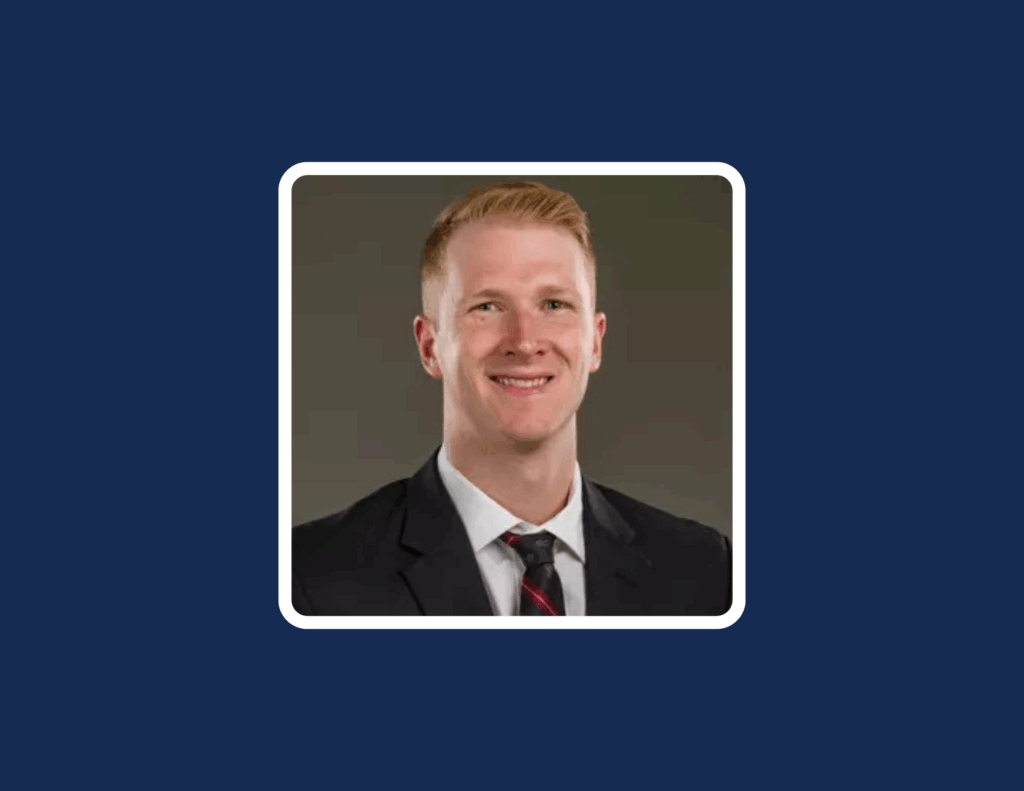
BRANDON UBEL – UNIVERSITY OF SOUTH DAKOTA MENS’ BASKETBALL ASSISTANT COACH – EPISODE 1112

Website – https://goyotes.com/sports/mens-basketball
Email – brandon.ubel@usd.edu
Twitter/X – @BrandonUbel
If you listen to and love the Hoop Heads Podcast, please consider giving us a small tip that will help in our quest to become the #1 basketball coaching podcast.
Brandon Ubel will be entering his 4th season as a Men’s Basketball Assistant Coach at the University of South Dakota. Prior to his time at South Dakota Ubel was the director of scouting at the University of Utah for one season in 2021-2022. Ubel began his coaching career as a graduate assistant coach at Utah State from 2019-21.
Ubel was a four-year standout at the University of Nebraska from 2009-13. He played his first three seasons under Doc Sadler and his senior season under Tim Miles. Ubel appeared in 125 games and started 89 games for the Huskers. In his senior season as team co-captain, Ubel averaged 11.5 points per game and finished seventh in the Big Ten with 6.7 rebounds per game. In addition to his success on the court, Ubel was a three-time academic all-american, earned the 2012 Nebraska HERO Leadership award, and was a nominee for the Big Ten Sportsmanship Award in 2013.
Following his collegiate career Ubel played five seasons overseas in Belgium and France before beginning his coaching career in 2019.
On this episode Mike & Brandon discuss his insightful journey from a budding basketball enthusiast to a knowledgeable coach, highlighting pivotal moments that shaped his career. He reminisces about his childhood fascination with the game, recalling the significant impact of witnessing Michael Jordan’s legendary performances. Ubel’s narrative transitions through his formative high school years, where he developed under the guidance of esteemed coaches, leading to a successful collegiate tenure at the University of Nebraska, marked by notable achievements both on and off the court.
The discourse further delves into Ubel’s coaching philosophy, emphasizing the importance of cultivating a strong team culture and the challenges associated with sustaining success. He articulates the critical role of player development, recounting stories of transformation where players have evolved from benchwarmers to key contributors within the team dynamic. Ubel’s experiences underscore the significance of mentorship and belief in a player’s potential, accentuating how personal growth extends beyond basketball.
As the episode progresses, Ubel addresses the operational aspects of coaching at the collegiate level, discussing the delegation of responsibilities within the coaching staff and the intricacies of practice planning. He advocates for a philosophy that encourages resilience, where players are empowered to learn from their mistakes without fear of repercussion. This culminates in a discussion on the strategic vision for the University of South Dakota’s basketball program, as Ubel strives to establish a legacy characterized by consistent excellence and player empowerment. His insights resonate deeply with aspiring coaches, providing a profound understanding of the complexities involved in building a successful basketball program.
Follow us on Twitter and Instagram @hoopheadspod for the latest updates on episodes, guests, and events from the Hoop Heads Pod.
Make sure you’re subscribed to the Hoop Heads Pod on iTunes or wherever you get your podcasts and while you’re there please leave us a 5 star rating and review. Your ratings help your friends and coaching colleagues find the show. If you really love what you’re hearing recommend the Hoop Heads Pod to someone and get them to join you as a part of Hoop Heads Nation.
You’ll want to take some notes as you listen to this episode with Brandon Ubel, Men’s Basketball Assistant Coach at the University of South Dakota.
What We Discuss with Brandon Ubel
- His high school training involved dedicated practice and mentorship from experienced coaches like Scott Wedman
- The transition from player to coach involves a profound shift in perspective, enabling one to appreciate the intricate dynamics of team strategy and individual development.
- Focusing on mastering a few key skills is paramount over attempting to excel at many
- Effective communication and trust-building between coaches and players are essential for fostering a successful team environment
- Allowing players to play freely without fear of mistakes is crucial for their development and confidence
- Maintaining a competitive edge in your program requires continuous improvement and consistency in player development and team culture
- Collaborative effort among the coaching staff is essential in creating effective practice plans that align with the team’s style and philosophy
- How players can evolve from supporting roles to key contributors on the team
- Establishing a foundation that fosters continuous improvement
- Ways to help players navigate the pressures of competition and foster resilience
- The power of belief from coaches can significantly impact a player’s confidence and performance
- Mistakes are part of the game, and players need to be encouraged to move on from them
- The joy in helping players realize their potential
Like this show? Please leave us a review here — even one sentence helps! Consider including your Twitter handle so we can thank you personally!

We’re excited to partner with Dr. Dish, the world’s best shooting machine! Mention the Hoop Heads Podcast when you place your order and get $300 off a brand new state of the art Dr. Dish Shooting Machine!
Your first impression is everything when applying for a new coaching job. A professional coaching portfolio is the tool that highlights your coaching achievements and philosophies and, most of all, helps separate you and your abilities from the other applicants.
The key to landing a new coaching job is to demonstrate to the hiring committee your attention to detail, level of preparedness, and your professionalism. Not only does a coaching portfolio allow you to exhibit these qualities, it also allows you to present your personal philosophies on coaching, leadership, and program development in an organized manner.
The Coaching Portfolio Guide is an instructional, membership-based website that helps you develop a personalized portfolio. Each section of the portfolio guide provides detailed instructions on how to organize your portfolio in a professional manner. The guide also provides sample documents for each section of your portfolio that you can copy, modify, and add to your personal portfolio.

High school and middle school basketball program directors, listen closely. Coaches are expected to do far more than just coach. You know this. It doesn’t matter if you’re doing the coaching yourself, or you have a full staff of coaches with you. You know very well that coaches handle scheduling, academic issues, parent communication, leadership development, and even mental health concerns for athletes. A lot to deal with, and they haven’t even gone home yet to balance those responsibilities.
No matter the passion for the game, and burning desire to help athletes develop, this level of responsibility can lead to burnout, inefficiency, and less time spent on actual coaching. You know it’s true.
When coaches are stretched too thin, it impacts the development of athletes, team morale, and the overall success of the program. Now here comes the outsiders throwing their two cents in about what’s happening. Then come the parents complaining about how you’re running things, as if they know what they’re talking about. When’s the last time you went to their place of work chiming in from outside their window?
Before you let that fire fizzle out, know that it doesn’t have to be that complicated. There are several ways to prevent you or your coaches from feeling overwhelmed. However, I’ll tell you one of our favorite ways to keep coaches firing on all cylinders, and that’s athlete-driven accountability and organization.
Instead of coaches constantly reminding players about assignments, grades, and practice schedules, our programs at Playmaker Planner puts the responsibility back on the athletes. By tracking their own academics, goals, and commitments, student-athletes become more self-sufficient, which of course allows the coach to put their babysitter hat in the closet, and put their coaching hat back on, allowing them to focus on what they love doing.
Are we offering planners that you can get at the dollar store as a solution? Of course not, but we are starting a conversation with you to see if our programs can be a compliment to what you’re already doing. Let’s find out. To learn more visit https://playmakerplanner.com/stop-is-this-for-you
THANKS, BRANDON UBEL
If you enjoyed this episode with Brandon Ubel let him know by clicking on the link below and thanking him via Twitter.
Click here to thank Brandon Ubel via Twitter
Click here to let Mike & Jason know about your number one takeaway from this episode!
And if you want us to answer your questions on one of our upcoming weekly NBA episodes, drop us a line at mike@hoopheadspod.com.
TRANSCRIPT FOR BRANDON UBEL – UNIVERSITY OF SOUTH DAKOTA MENS’ BASKETBALL ASSISTANT COACH – EPISODE 1112
[00:00:00] Narrator: The Hoop Heads Podcast is brought to you by Head Start Basketball.
[00:00:21] Brandon Ubel: If we play 31 games in our regular season, if we’re really good at these four things, we’ll probably win 26. But if we start trying to be really good at 15 things, then are we really going to be good enough? So that’s the battle. Constantly. There are so many things that you can do, but should we?
[00:00:40] Mike Klinzing: Brandon Ubel will be entering his fourth season as a men’s basketball assistant coach at the University of South Dakota.
Prior to his time at South Dakota Ubel was the director of scouting at the University of Utah for one season. In 2020 1, 22, Ubel began his coaching career as a graduate assistant coach at Utah State from 2019 to 2021. Brandon was a four year standout at the University of Nebraska from 2009 to 2013.
He played his first three seasons under Doc Sadler in his senior season under Tim Miles. Bel appeared in 125 games and started 89 for the Huskers in his senior season. As team Co-captain Bel averaged 11.5 points per game and finished seventh in the Big 10 with 6.7 rebounds per game. In addition to his success on the court, Ubel was a three-time academic.
All-American earned the 2012 Nebraska Hero Leadership Award and was a nominee for the Big 10 Sportsmanship Award in 2013. Following his collegiate career, Ubel played five seasons overseas in Belgium and France before beginning his coaching career in 2019.
Hey Hoop Heads. This month only our friends at Dr Dish Basketball are giving you an exclusive $2,000 off plus free shipping on your purchase of a Dr. Dish. CT Plus All Star Plus or Rebel Plus. Hurry to secure your savings before June 30th or while supplies last. Learn more @drdishbasketball.com and follow their incredible content @DrDishBBall on Twitter, Instagram, Facebook and YouTube. Mention the Hoop Heads Podcast and save an extra $300 on a Dr. Dish Rebel Plus, all Star Plus and CT Plus models. Those are some great deals. Hoop heads. Get your Dr. Dish shooting machine today.
[00:02:30] Dyami Starks: Hi there. This is Dyami Starks, trainer and player development coach for all Iowa Attack and you’re listening to the Hoop Heads Podcast.
[00:02:39] Mike Klinzing: Your first impression is everything when applying for a new coaching job. A professional coaching portfolio is the tool that highlights your coaching achievements and philosophies, and most of all helps separate you and your abilities from the other applicants. The Coaching Portfolio Guide is an instructional membership based website that helps you develop a personalized portfolio.
Each section of the portfolio guide provides detailed instructions on how to organize your portfolio in a professional manner. The guide also provides sample documents for each section of your portfolio that you can copy, modify, and add to your personal portfolio. As a Hoop Heads Pod listener, you can get your coaching portfolio guide for just $25.
Visit coachingportfolioguide.com/hoop heads to learn more.
You’ll want to take some notes as you listen to this episode with Brandon Ubel, men’s basketball assistant coach at the University of South Dakota. Hello and welcome to the Hooped podcast. It’s Mike Klinzing here without my cohost Jason sunk tonight. But I am pleased to be joined by Brandon Ubel, men’s basketball assistant coach at the University of South Dakota.
Brandon, welcome to the Hoop Heads Pod.
[00:03:51] Brandon Ubel: Thank you very much. Happy to be on.
[00:03:55] Mike Klinzing: Excited to have you on. Looking forward to diving into all the interesting things that you’ve been able to do in your career, both as a player and as a coach. Let’s start by going back in time to when you were a kid. Tell me about some of your first experiences with the game of basketball. What made you fall in love with it?
[00:04:11] Brandon Ubel: It was always just into sports in general. My first basketball memory though sitting on my grandma’s floor watching ga I believe game six of the NBA finals, Michael Jordan hits the shot at Utah where people claim he pushed off. But I mean, that’s a normal basketball play in my opinion.
Exactly, exactly. We could probably argue that one for a little bit, but No, I mean, I’ve just, I’ve kind of always loved basketball, played a done sports growing up. But that was kind of always the one and then. I was tall growing up, but then kind of late bloomer ish sophomore year went from six foot to about six eight.
And then that’s kind of when things kind of started to heat up a little bit basketball wise in high school. So, always loved it. But then the skill and the size and stuff kind of all started to gel together in high school. And I played at Blue Valley West High School for Donnie Campbell.
So, some people might understand the, the reference here, but Ted Lasso, if you’ve ever watched that show, Jason Sudeikis, he played for Donny Campbell and based his characters like mannerisms and everything on Coach Campbell. And so if you ever watched Ted Lasso, like that’s, that was my high school coach essentially.
But no, he was a great coach, Bobby Knight, traditional motion. So learned how to play and read the game under him and was really, really fortunate to play for him. He’s won a ton of games at the high school level. We won a state title when I was in high school there. And and then played summer ball.
With the Wedman Pumas played for Scott Wedman who played for the Celtics for a long time. Played for the Kansas City Kings when they were a thing for two years and back when there weren’t shoe circuits or anything like that. So we’re really going back now if you think about the, the landscape nowadays.
And then, yeah, kind of into that junior year of high school heading into senior year recruitment and everything picked up and had a, had quite a few offers ended up going to Nebraska. So, I mean, obviously that’s a lot to cover in a short amount of time. But yeah, I, I’ve always loved the game, but yeah, kind of a light bloomer in terms of things kind of coming together for me.
[00:06:34] Mike Klinzing: Were you still playing other sports prior to that growth spurt in high school? Were you still playing formally on teams?
[00:06:41] Brandon Ubel: I was playing baseball. I was exclusively pitching. And to be honest with you baseball was more about hanging out with my boys. all my, all my good friends kind of, we all played a lot of the same sports.
So we went straight from basketball season, then we would play baseball and then we would play stuff in the summer. And and then so I was playing baseball through my sophomore year of high school. And then that sophomore year is kind of when kind of the a a u stuff, the summer stuff and recruitment is really picking up.
And that got to be a little bit too much in terms of like I was, we were on the road, we were playing basketball, I was going straight from baseball practice to basketball practice. And so decided that that was kind of the end of it, especially because it was just. I wasn’t, to be honest, I wasn’t great, so I was just more, I was on the team, I was chewing seeds sitting in the dugout, hanging out with my boys.
So there you go. So yeah, really focused in on basketball there later on. Yeah. What did
[00:07:44] Mike Klinzing: that focus look like for you as a high school player in terms of getting better? Obviously as you just talked about, the way that basketball players develop and the way the youth basketball scene environment looks like today compared to what it was like when you were playing.
What was your off season look? Did, what did that look like? How’d you try to go about getting better as a player?
[00:08:08] Brandon Ubel: I was super lucky. my high school coach, I mentioned Donnie Campbell. he gave me a key to the gym and so I was able to get in, into the gym, get up shots. If they were doing any camps or any other sport was in there, I would he would let me go in the side gym.
And so I was always kind of had that, that access And then, and then when in the summer seasons with the Pumas and and that program Scott Weedman I would go basically right from school. I’d go home, I’d get a snack, and then I would drive about 45 minutes north in Kansas City where I’m originally from.
And I would work out with Coach Wegman and kind of just one-on-one workout for about an hour. And then after that we would have our team practice and that would go for probably two hours there at night, and then I would get home around 9:00 PM. So and our school went later, so in spring ball we were traveling in April, so it really started kind of as soon as we could after our high school season.
So that was kind of the routine. There was three, four times a week. I was right after school, I was driving up and then I was there for about three or four hours. And then on the days that I wasn’t, I was in, in our high school gym, shooting or doing whatever I could there. So it was a lot, but it was one of those things where you look back on it and you think, man, that was a big time commitment, but it was just like, this is what I do.
Right? So obviously it didn’t end up paying off. But yeah, that was that. I was super, super fortunate to have really good coaches and really good individual trainers, probably in a time before. The trainer became a thing which probably feels like best six or seven years now everybody’s got a trainer now, so so yeah, for
[00:10:02] Mike Klinzing: sure.
[00:10:02] Brandon Ubel: I,
[00:10:03] Mike Klinzing: I was going to say you were a little bit ahead of your time with having the opportunity to, to work with Weedman an that individual basis. You think about, as you said, the way the training business has exploded, the way the kids that you’re coaching today, the amount of time that they’re spending working with trainers compared to the average person back in the time when you were playing, what do you remember about those conversations during the time when you were working with, we weedman, forget about like, the basketball side of it and the drills and the things you were doing, but what, what were some of the things that he was talking to you about just in terms of trying to pass along the knowledge that he had, obviously of being an NBA player and playing at a super high level.
[00:10:40] Brandon Ubel: Yeah. when I was in my 16 U year, I played up on a 17 U team and I played with a lot of players that ended up going division one at a pretty high level. Clint Mann ended up going to Iowa State, Garrett Stutz played at Wichita State, and a couple other guys went division one on our team.
And so I was the young guy on that team that was more. Playing a role. So then when I came back, I kind of just had that mentality on when I, when we came back and it was like, it was going to be my team, I guess you could say. Right. And so a lot of it was centered around that being like, you’re not just, you’re not passing up shots anymore, you are hunting them.
You’re like, we almost want you to take bad shots. And so that, that was kind of the mentality flip of rather than always making the right play what the team might have needed at the time was for me to go make something happen. And so that was, that was an interesting flip, but it was also kind of what, to your point, those, those conversations during our workouts and then also during practice were just preparing me to.
To showcase what I could do to then get to the next level and, and continue that way. And that wasn’t easy just to switch your mindset, I guess. But it obviously, it really, really helped and that was a huge, huge part of my development for sure, was the mental side with him.
[00:12:12] Mike Klinzing: I’m going to ask a personal question.
So, my daughter was a freshman on her high school team this year that was kind of a senior dominated team. She basically was, her role was to come in and defend and move the ball to the next person. And I’ve spent since last off season until right now having those same conversations, it sounds like that Scott Wegman was having with you in terms of getting you to kind of shift, Hey, you have to do stuff.
You are no longer just a person standing there. So if you gave me one piece of advice that you remember, something that stuck with you or how you turned the corner, what, what is it? What can I, what can I tell my daughter?
[00:12:47] Brandon Ubel: If it was funny, I went, I went one game. I was, I was six for six from the field, and he was like, that’s an issue.
He said, he said that, that means you’re only taking unbelievably perfectly great shots. Like if it’s a, if it’s a decent shot, take the decent shot. Like you just have to, like, it was, it was even like, if you take a bad shot, I’m going to clap. If you pass up anything, like, we’re going to run. ? So it was, it wasn’t even necessarily one thing.
It was just chopping wood a little bit to kind of one thing after another. Like every time he saw something it was like, boom, boom, no, like, no, no, no. Yes. So yeah, it, I, I can’t say it was necessarily one thing. But yeah, it was definitely, it was a process for sure.
[00:13:36] Mike Klinzing: You down, it sounds like that’s what it was.
Wearing you down, wearing
[00:13:38] Brandon Ubel: you down to build you up. That, that was that was.
[00:13:43] Mike Klinzing: Tell me a little bit about the recruiting process, what that was like for you, and then ultimately the decision to attend Nebraska.
[00:13:50] Brandon Ubel: Yeah. Recruiting was a little bit different then than it is now. You weren’t allowed to text and I think calls were limited to one call a week, and then there was like certain periods where you could get up to two calls a week.
And so that sophomore to junior year was a few people just calling, sending things. You would get mail way more. because you, you couldn’t send a graphic through text. Right. So much less like, direct conversations than it was just receiving different things in the mail. And then that junior to senior spring and summer is when things really took off.
just. I was a six foot 9, 6 10, 4 5. I could shoot a little bit. I could handle a little bit. I, I wasn’t like an amazing athlete, but I wasn’t a bad athlete. So just started to kind of get the attention. And then once the first offer came in I believe it was Drake that offered me, Mark Phelps was the head coach at the time.
Kareem Richardson was the assistant recruiting me. And once that one came in, it was almost like the floodgates open up a little bit. And then the, the live periods, the recruiting periods, there were more of them and they were longer. So there was just way more opportunities for coaches to, to be in the gym and, and see, see us play.
My sister actually ran track at Nebraska, so I was familiar with it. And then was starting to take some like unofficial visits and seeing campuses and things and and all those kind of during the, the end of that summer before school year started and was narrowing in.
And I, Nebraska was definitely in the, they were in the Big 12 at the time, so I had grown up in Big 12 country in Kansas. And so that was super intriguing to me. I had some offers out at Stanford and Cal and Marquette and some things in different areas of the country, but the opportunity to.
Play at Kansas and to play at Iowa State and at Texas and the teams I grew up watching was, was awesome. Plus the familiarity having my sister there. It was far enough away from home about three hour drive, but not too far away. A lot of things came into it, but then it’s, I believe it was August or so when people could start calling two times a week.
And man, it was your, you were on your cell phone and the home phone would ring, and so then you would call the person back on the home phone and then your cell phone would ring and, and that was, it was like all day, every day there for a little while. And it was just like, all right, I think I know where I want to go and at this point I’m just spending my day on the phone and I think I know where, what I want to do here.
And the coach at the time was Doc Sadler. And they did an awesome job recruiting me and building a great relationship. The assistants and everybody and had been to campus a few times and so finally kind of shut everything down probably earlier than, than most would have before taking official visits and all that good stuff.
[00:17:06] Mike Klinzing: Who was the most difficult? No,
[00:17:09] Brandon Ubel: That’s a really good question. Probably Greg Marshall at, at Wichita State. Like I mentioned, a friend of mine that played a a u with me that was a year older had gone there and was having a good experience and they were. They were still in the valley at the time and winning 28 to 30 games.
And and Coach Marshall’s an intense dude, obviously. And they, and Coach Jans, Chris Jans was the assistant recruiting me at the time. So obviously they had a, a heck of a staff there that that was just doing a great job. And that was probably the toughest one for me. And it was in state and all that fun stuff.
But I think at the end of the day, I knew I knew I was making the right choice for me.
[00:17:54] Mike Klinzing: And into your freshman year, what are you thinking about academically, career wise? Are you the typical 18-year-old that you kind of have no idea what you’re going to do and you’re kind of focused on playing hoops?
Obviously mentioning Cal and Stanford, obviously you were really good student, but just where was your mindset at as you were, as you were entering school?
[00:18:15] Brandon Ubel: Yeah, so I actually knew what I wanted to study. I was a broadcast journalism major. Funny enough being on a podcast now. so I, I enjoyed everything with, whether they, the behind the camera stuff, producing putting, putting edits together the weatherman stuff. Like we were doing all that stuff for our high school TV show. And so I, I kind of fell in love with that, so I knew exactly what I wanted to do that way, and that, that actually helped, obviously with some of the, the college stuff was that I, that’s what I wanted to study.
So kind of going in, I had, I had an idea of what I wanted to do and it was a pretty unique deal. Not everybody’s just, yeah, broadcast journalism, but but yeah, that I, I knew right away, which, yeah, made me probably a little bit more unique especially at, at at the higher levels.
[00:19:10] Mike Klinzing: At all. On your radar at this point or no?
[00:19:13] Brandon Ubel: Probably not right away as like going into college that probably developed later on. I knew even with the broadcast journalism stuff, I wanted to be around basketball. like if I were in broadcast journalism, my, my golden dream or whatever would’ve been like being on college game day and, and doing that type of stuff, or being a play-by-play or color commentator or something like that, I think would’ve been the dream job that way.
But I knew I wanted to be around basketball. So that the coaching piece definitely developed later on in college. But yeah, that was more so my junior senior year where I started to kind of have those thoughts about it.
[00:19:58] Mike Klinzing: What’s your favorite memory on or off the court from your time at Nebraska?
[00:20:03] Brandon Ubel: Oh. I, I loved my time in Nebraska every, every year, every second. There was a lot of, a lot of change there. When I was there after my sophomore year, we switched to the Big 10. So the opportunity to opportunity play at one university and kind of develop at one university and, but still also have the opportunity to play at all of those cool places in the Big 12 and in the Big 10.
I mean, you’re talking about some of the. The most historic places in the country and without transferring, I, I was able to do that. I think that was pretty cool. Especially looking back at the landscape now on the court for sure. We beat on my sophomore year. We beat Texas when they were ranked number one.
They had an awesome team. I think it was Avery Bradley and Jordan Hamilton and Tristan Thompson. Like they were loaded and they were ranked number one and we beat them at home and rushed the court and all that. that was, that was pretty cool. But yeah, I mean, I, I just, I really enjoyed my time in Nebraska overall, I mean.
Good people. I had a lot of good coaches. I went through coaching changes even during my time. And just that whole environment was, was great for me and, and was awesome for my development on and off the court.
[00:21:33] Mike Klinzing: Tell me about something from one of your college coaches that you took with you that you still feel like is a part of who you are today as a coach.
Whether it’s a personal characteristic, whether it’s just the way they went about their business, whether it’s a a, something that they specifically taught you that you still think about and share with guys that you’re coaching today. Just what’s something that stands out to you that you still carry with you from your time as a player at Nebraska?
[00:22:03] Brandon Ubel: Yeah, that’s an awesome question. I’ll give you a couple answers because I played for a couple different guys. Doc Sadler, he, he was we were a very defensive minded team. We were an extremely tough team. We, we grounded out at times offensively, but you knew what we were going to do. we were going to guard you, we were going to be tough, we were going to be physical.
And I was not that coming in. I was some could say I was soft. I was the skilled shooting big stereotypical that guy. So just the it’s, you probably don’t appreciate it as much while you’re in it. But then when you look back now, especially as a coach taking that his principles and just getting us to.
Buy into exactly what we were going to do and be flying around and committed to it. And we did not budge on our, on our system like we were going to do what we were going to do and we were going to do it better than anybody else. And and so that, I think you look back on that now as a coach and you’re just like, man, we played really hard for that dude.
And I think a lot of that went into, he was really tough on us, on the court, but he had built these relationships and you knew he cared about you. off the court. And as soon as, as soon as that, that four hours was done at times, which was a long day or two hours or hour and a half, whatever we went, you, you knew like he was able to do such a good job of, of switching that flipping that switch to then check in with you and make sure everything’s good.
you, you knew he cared and that made you play even harder for him. With, with Coach Miles, I think Tim Miles, who I played for my senior year he, when he came in, it was a very similar thing with Scott. We. Was just the, the power of belief, right? Is, is what he gave me saying that, no, you can be, you can be one of our best players.
You can be a go-to guy, we’re going to put the ball in your hands, you can do these things. So kind of that evolution of being one of the guys to one of, like a guy on the team again I think then that really propelled me to be a pro and be in, like, be given an opportunity to play in Europe. And I’ve always remembered that that his, the power of just one coach, it can be an assistant, it can be a head coach, it can be anybody to truly and fully believe in a player.
And, and give that to them. I mean, that’s special. So I think that’s definitely something that I’ve taken from him is to always make sure I remember I’m telling the guys that I’m working with and, and the guys on the team like, no man, like you are awesome. Like you are a really good player. You can do X, Y, and Z for us.
And making sure that they know that every day. And I think that’s something I really took from him.
[00:25:11] Mike Klinzing: It’s really an important lesson to remember and it’s sort of an offshoot of something that I’ve talked about with lots of different coaches on the podcast, Brandon. And that is that when you think about yourself as a coach and the interactions that you have with players, you have things that when you think about your time as a player that coaches said to you that you remember that you’re going to carry with you for the rest of your life that had an impact, are probably continuing to have an impact and are going to have an impact.
You for the rest of your life. And yet probably if you went back and you asked one of those coaches, Hey, do you remember when you said X to me? Chances are that coach has no recollection of that particular interaction. And I think sometimes as coaches or my day job as as a teacher, I think sometimes you forget that your words do have that kind of power that you just described, where here’s a guy who just believed in you, told you you could do it, said, Hey, you’re capable of doing this.
And that gave you the strength, the mentality, the ability to then go out and do those things and speaks to the power of our words as coaches, as teachers that we sometimes forget. Now, kids don’t remember everything we say. Obviously we wish, we certainly wish they did, but they certainly pick and choose.
And there there’s things that again, may seem innocuous to us that. They end up taking with them that has an impact on them for the rest of their lives. And it’s always, one of the things that I try to keep in mind whenever I’m interacting with, whether it’s players or students, is that somebody I could be talking to, someone who 20 years from now, 30 years from now, is going to be having a conversation just like this and saying, Hey, I remember when Coach Klinzing said this to me, and man, that really had an impact on me in the moment.
And it’s continuing to have an impact on me. And I think sometimes we forget how powerful those words can be as a coach.
[00:27:10] Brandon Ubel: No question. I mean, that’s nailed it on the head right there. I mean, it’s yeah, I, I’ve heard it from a few different people, but when you, when you get it when you experience it or you see it firsthand, I mean, it, it can kind of change your view on, on some of those things and on, on what can, what sticks with you, like you said, is just, it can be something that, like you said, it’s just we might forget it.
or not even remember that we said that or, or did that for somebody, but it meant something. And, and that’s, it’s, you try to remember to that that can happen because I know like how it is in the season. You can just kind of get into this malaise and this, this routine of scouts, practice shots up, scouts, practice shots, like all those things.
And, and you can forget to just like have a real conversation with somebody about, like, Hey, how’s your family doing? Like and just, right, hey, do you want to go grab a bite to eat quick and just something small like that, that might feel small is, is really big for some guys.
And trying to remember that through winning games is difficult at times. But the more we can do that, I think tho those two things are very, very correlated.
[00:28:32] Mike Klinzing: That’s a hundred percent right. And as you said, it’s sometimes difficult to see through the haze of winning and losing and the grind of what a season involves and the amount of time that everybody’s putting in to try to win as many games as possible.
And it’s important to sometimes step back, right, to remember that that human touch of everybody’s, everybody needs something. Everybody needs that kind of human connection, that relationship. And when you can step back and remember that, I think everybody ends up in a better place. And more often than not, you win more games when you build better relationships, right?
When you have, whether that’s player coach relationships, whether that’s coach, coach relationships, whether it’s player to player relationships. When you have a team that is strong in all those areas, you end up, I think with a better record on the floor wins and losses. And you also end up with a better experience when you have all those kinds of positive relationships.
When you finish at Nebraska, obviously you get an opportunity to go and play overseas. So walk me through. From the time your season ends as a senior at Nebraska, how do you go about taking those steps that were necessary to get yourself that opportunity to play overseas?
[00:29:42] Brandon Ubel: Yeah. Kind of during the season probably pretty similar to how it is now.
There’s agents that start hitting you up maybe for different reasons. But yeah, so some, some agents had just said we’d love to talk to you after the season and . S about representation and those types of things. And coach Miles had, has had quite a few guys that went overseas and, and and played at a pretty high level in Europe.
And so he, he had some connections there and knew some people that, he could kind of help guide me or at least say like, yeah, I know that person and I know they do a good job or I don’t know them at all. Which is almost just as good of advice. So started to kind of have those conversations and then fairly quickly had found representation signed with Adam and Ben Pens.
They have kind of their own, it’s a smaller, at the time, a smaller agency more so focused on Europe. Right. Some of the bigger agencies are, they can be humongous and they’ve got their NBA sector and they’ve got their Asia and Europe and all that stuff. And I kind of knew my game and, and those types of things would really fit well and fit best in Europe.
And so I knew that somebody that was really dialed in there would probably be the best thing for me. And then from there it was kind of just, Hey, here’s a, here’s a few opportunities what do you think of this? And I mean, it’s a little bit like recruiting process. maybe a little less relationship based and more so.
Here’s the money, here’s the opportunity, here’s the country, here’s what I think. What do you think? And then in the next four or five days, you’re either saying yes or no. So a little bit like like the transfer portal probably for a lot of people now that a little bit like speed dating. But but yeah, it was, it was a little bit like that.
And so actually pretty quick, I had signed with a team in Belgium in Brussels. And had kind of had locked that in before I think school was even done. Which is pretty unique once you get into the Europe world. Typically you’re signing your contract June or July or agreeing to your, your deals later in the summer.
And so I had kind of locked that up pretty quickly and and so then I could really just focus on staying in shape, working out, making sure I was ready when I got over there.
[00:32:16] Mike Klinzing: Any concerns, worries. As a 22-year-old guy going overseas by yourself to a new country, just what was your thought process in terms of, hey, I’m, this is my, this is my quote, first real job.
It’s still basketball, but you’re going overseas to a new country that I assume you hadn’t been to before. So what was the thought process in, in that, forget about the basketball side of it, just culturally going to Europe and, and playing in a new place.
[00:32:45] Brandon Ubel: I think you’re crazy if you say you’re not nervous going over there your first time.
Or even anytime for that matter because a lot of it, you’re having a phone conversation, maybe a Zoom or Skype back then. you’re, you’re going over and you’re going to be playing with playing for living it like with people you don’t know and have never met. So that obviously there’s some hesitations there that you just are in the back of your mind.
But also I think a big part of it is that people forget is like just going to the grocery store and trying to figure out, is this. Or is this buttermilk that I’m going to put on my cereal? Right. And buttermilk is bad on cereal, if anybody’s wondering. So there’s definitely some things there that you’re, you’re nervous about and you’re wondering like, well, what’s, where am I going to go get new basketball shoes?
Where am I going to do all these things? And you’re just going to have to figure it out. And I was definitely more excited than I was nervous. There’s no question about that. But yeah, there’s some things that are in the back of your head, but I I was fortunate enough that my, my dad growing up, his work had taken him overseas quite a bit for travel.
So that was, while I hadn’t done that a ton that was something that was just an, I, as an idea was familiar. And so I knew there were. Good people everywhere. just from that, having my dad do that had just known that there, there’s good people everywhere and, and you can figure it out.
You just have to go do it. You have to go figure it out. And so so yeah, I mean it was, I was two feet in, that’s for sure. And, and just, just went for it.
[00:34:26] Mike Klinzing: For What was your favorite city that you got a chance to visit while you were there?
[00:34:30] Brandon Ubel: Got a chance to visit? Oh boy. So what I did, I try and there’s like a two week period or a week and a half period every, I think February or so where the national teams get together and they’re playing either qualifying events or something of the sort.
So I would try during that, like week and a half, we would get four or five days off or so, and I would try and go somewhere that I hadn’t been. And then after the season, I think a lot of people, it’s like a 10 or 11 month season sometimes. So your first thought is, I’m going home. And I would always make it a point to take a week and try and go somewhere.
So I, I have been, I, I was fortunate enough and blessed in every way to be able to do it. But I’ve been a lot of really cool places. My favorite probably is Greece, going to Athens to visit. That was, I mean, very, very cool. Just the history, the food, the beaches, the, the islands every, I mean, how can you, how can you say no to that?
[00:35:37] Mike Klinzing: All right. This is the question I prepped you for. Yeah. Your craziest European basketball story. The best one we’ve ever had on the podcast. I don’t know if you’re going to be able to top it, Brandon, because it was, it was pretty crazy. But I, I’m, I’m, I’m, I’m waiting to hear yours.
[00:35:51] Brandon Ubel: Okay, so I, and mine might be a little bit different that way.
I had told my agent pretty early on in my career after hearing probably a lot of the similar crazy horror stories like, keep Me in Western Europe, keep Me where they’re, they pay on time and keep me where nothing’s screwy. And I’ll be good. Sounds about right.
[00:36:12] Mike Klinzing: Sounds right. Yeah. So I don’t
[00:36:14] Brandon Ubel: have any experiences like that, but insane deal.
Less related to basketball. But I was living in Brussels. I don’t know if you remember. So the there was the shootings in Paris, right. And so there was, that had happened and they fled to Brussels. The shooters did. So for about four or five days, the city shut down. I. And they were on like a manhunt in the city, and there were tanks going through the streets.
They’re banging on doors, they’re coming into your apartment searching like, and, and so wondering what’s going on? I’m living in a foreign country. They’re looking for these guys. Are they next door? I, I mean, and then so that was crazy. City shuts down for however long. Bad situation, but, okay. So then I think four or five months later the airport and the train and the tram stop is bombed in Brussels.
And w so at the time, my sister and her husband were visiting me, and so we had morning practice. So I drive to morning practice and as soon as I get there, it’s 8:00 AM. And we get there and everybody’s huddled up and they tell us what happens. Airport tram, stop train station. I call my sister because they don’t have a phone.
They don’t, and their plan was, we’re walking down to the tram, we’re going to take it into the city and we’re going to do a couple things today while I was at practice. And so I’m like, they’re not answering. They’re not answering. They’re not answering. Finally get ahold of them. They hadn’t left yet, thank God, because two stops down was the tram stop that had gotten bombed.
Right. Wow. So talking about like literally down the street from me. And, and so in terms of a panic and family was in town visiting. And just then you’re wondering like, okay, is this over? Are we safe? Are we good? Like. Should my, should they fly? Should they leave? Should they stay for two more weeks?
it was just that was insane. Obviously, so very scary situation. So that’s probably a little different than you might’ve been expecting. But going through that, and then two days after that happened, we were playing a game in our arena. And so going there, you’re thinking like, all right, like this is a large gathering of people, right?
Yeah. Like this is a sporting event, ? And so there was definitely for a couple weeks there there was a lot of just that was kind of in the back of your mind, even as you’re like warming up for a game, which is probably not the headspace that you, you need to be in. But, but yeah, that was that was definitely crazy.
[00:39:15] Mike Klinzing: Takes I think, a while to be able to, I would imagine, put that. Behind you. And even as you said for a long, long time, I’m sure that it was in the back of your head. I mean, I know remember after even nine 11 and you just, it, it took a long time for you to be able to see a plane or hear a plane and not have your first immediate thought go to September 11th.
And so I’m sure for you to be in a place where you obviously had spent a lot of time and I’m sure been to those very places where that occurred. And then to have that, to have that happen and then double it with your sister being in town and just, yeah, I can only imagine how trying to then put that behind you and, and focus on basketball, as you said, when you go into a, a big public gathering and looking around and saying, whew, boy, that’s hopefully, hopefully this is b this is behind us.
So yeah, that’s a, that’s a, that’s definitely a, definitely a crazy story for sure. Let’s transition into the coaching profession. So tell me about how you go from, how’s the playing career sort of wraps up and what’s the thought process as, as the playing career is coming into an end, getting into coaching?
[00:40:30] Brandon Ubel: Yeah. So my fifth season overseas, I was playing in France. I was fortunate enough I was playing really well and playing at a high level and France is one of the, the best leagues in the world. It was a ton of fun. And about two weeks left in the season. third quarter.
Screen and roll, go up to catch the ball you land and you’re going to finish. And right knee just boom And A-C-L-M-C-L meniscus patella and broke my leg. I mean it, you talk about what else, what else could happen? Nothing. It was all done. And so honestly at that moment I had no intentions of not playing.
I, I was going to continue to play I was going to come back from this or whatever and, and re rehab, recover. And and so I was going through the, had surgery going through PT and coach Miles was still at Nebraska and so spent went up there after, once I was kind of cleared to start doing some basketball things kind of went up there and he was, I mean, I.
He’s been my, probably one of my closest mentors friends ever since I graduated. And he just, he let me come to practice every day. He let me be in the office. He let me be in film. He let me do, I mean, what not, not many people would let you do. And so my intent right, was I’m going to rehab, I’m going to practice, I’m going to get back in shape, and then I’m going to sign and I’m going to go back overseas.
And I think it was maybe January, February time. And I’m thinking about things and like I’m on the phone with my girlfriend at the time, my wife now, and we’re talking about, hey, what how did today go? And I would say two or three minutes about. oh yeah. I got some shots up and then we practiced, and then I would go for 30 or 40 minutes about, I was talking with Coach Miles about this thing for scheme wise, and then I was watching film with this assistant, and then we were going over their, their playing for the game.
And, and that was 30 to 40 minutes of the conversation. And it was funny one day she was just like, do you, like, do you hear yourself right now? Like you’re clearly more invested, more excited, more more into the, this other side of the game than you are about playing. And it was like one of those realizations of like, you are a hundred percent right.
I am. And it wasn’t even a physical thing, right. That I wasn’t able to come back. It was just. There that mentality shift of like, man, I’m more excited about that. And so kind of made the decision that I wanted to get into coaching. And Craig Smith, I. Was an assistant of mine at Nebraska my senior year, and after that, had gotten the head coaching job at South Dakota.
Was there for four years. And then at the time he was at Utah State right when I’m, when I’m rehabbing and all that. And so he he ended up having a, a spot open up as.
And he was like, well, would you be interested? And I was like, yeah. He was like, well, scale of one to 10, like if are you, are you like a nine? I was like a 10. Like, I’m doing this. And he was like, all right, like, let’s do it, let’s go. And so less than a month later I’m moving out to Logan, Utah, which for me, I flew over and lived in Belgium and France and different cities and like, this was the simplest move that I’d ever made in my life.
Like, I’m just going to go out to to Utah. That’s easy. So yeah, that was kind of the main transition was just I, I finally realized, came fortunately my wife had that conversation with me of just like, that’s where my passion was Now. and it was with, with playing and hooping and, and doing that for the longest time.
But things had changed and and that’s where it was now. And so kind of dove right in,
[00:44:47] Mike Klinzing: what she was getting into with the life of a coach’s wife.
[00:44:51] Brandon Ubel: I don’t, I don’t know if either of us knew exactly, but they, we definitely had a lot of those conversations right before we even got engaged was just like, this is what I want to do.
And she is the, she’s the absolute best. I mean, everything we’ve moved, I think there was a stretch there where we moved to three different houses within the calendar year and and we’re just rolling with it. And she’s been awesome through the whole deal. And my biggest supporter by far, so that, that has been.
Through everything obviously. But to say we knew exactly what we were getting into, probably not. Probably I anybody knows, not Yeah. But as close as we could. Understood.
[00:45:41] Mike Klinzing: High school and middle school basketball program directors listen closely. Coaches are expected to do far more than just coach. this, it doesn’t matter if you’re doing the coaching yourself or you have a full staff of coaches with you. very well that coaches handle scheduling, academic issues, parent communication, leadership development, and even mental health concerns for athletes a lot to deal with.
And when coaches are stretched too thin, it impacts the development of athletes, team morale, and the overall success of the program. There are several ways to prevent you or your coaches from feeling overwhelmed. However, I’ll tell you one of our favorite ways to keep coaches firing on all cylinders, and that’s athlete driven accountability and organization.
Instead of coaches constantly reminding players about assignments, grades, and practice schedules, the program that Playmaker Planner put the responsibility back on the athletes by tracking their own academics goals and commitments. Student athletes become more self-sufficient, which of course allows the coach to focus on what they love doing most coaching.
Let’s find out if the programs from Playmaker Planner can be a compliment to what you’re already doing. Visit playmaker planner.com/stop. Is this for you to find out more?
What was it about coaching at the very beginning in that first experience at Utah State? When you think back to that first year, what was it about coaching that, if you could pinpoint it down to one or two things that really hooked you, that you’re like, yeah, this is what I want to do, this is why I want to do it.
What were those things?
[00:47:17] Brandon Ubel: Yeah, I think there’s a few, there’s a few things that really clicked. And I think as a player, you, you get better yourself and you, you start to notice things or whatever, but then when you’re on the other side of it and you’re helping, you’re, you’re working somebody out and you’re working on these one or two things for the longest time, and then they do it in a game and it works, and then they kind of look over you like, hey.
Remember that? And I’m like, yeah, like that’s what we’ve been doing. That’s why we do this. And that, I think the first time that that happened and MDA and, and those guys at, at Utah State, I was able to be on the pad with them and work those guys out and get in the gym with them as a ga.
And so just the first time that I was able to say like, Hey like, catch it a little bit higher and then you can, you got more room to spin back he’s playing you on the high side. So then the next time down he does it and he kind of looks over and it’s like, okay, that right there, like that is, you get this rush of like, man, I just helped him, helped him out.
? And that, I think the, that has been the biggest thing in terms of the light bulb. It was just like. When you’re working with somebody, and it’s the long game for sure, but then you start to see things click for for a kid and, and they’re starting to, to make those steps and to add things into their game and start to have more and more success and more belief in themselves.
I think that’s been the biggest thing to see and to you kind of get that joy out of that for sure.
[00:49:00] Mike Klinzing: I think that when you talk about, right, it’s that light bulb coming on where players, or again, I equate it back to being a teacher. Students, you’re teaching them something, you’re showing them something, you’re trying to explain to them why it’s valuable.
They don’t necessarily see it right away. And then that moment where suddenly it clicks and they’re like. Oh, yeah, now I get it. And yeah, I think as a, as a coach, that’s one of for sure when you talk about from an individual standpoint, right, of impacting somebody on the floor, I, I think that’s one of the things that a lot of coaches would say is, is a high for them, right?
That the player getting that thing that you’ve been working on over and over and over again, and then finally it clicks for him in a game situation. That’s definitely one of those things that just lights you up as a coach. But also, again, the, the player starts to look and I think looks at you in a different way as a coach too, that like, Hey, maybe this guy’s not as dumb as I thought he was.
He, he really does, he really does know something. He is able to add some, add some value to what they’re doing. What about from an Xs and o standpoint, Brandon, thinking about how you thought the game as a player versus how you have to think the game as a coach. Like I, I guess my question is, while you were playing.
Did you think about the game and try to process it from a coaching perspective? In other words, maybe trying to understand what all five guys on the floor are doing and how the scheme fit into the overall plan or philosophy of what you were trying to do? Or were you more just like, Hey, here’s my job, I’ve have to do that as a player.
And then just talk about maybe the shift from understanding the schemes and the X’s and O’s philosophy from how you thought about it as a player to how you had to think about it as a coach.
[00:50:48] Brandon Ubel: Yeah. I think the longer that I played, the more those types of things kind of clicked for you. So I would say probably more so when I was playing in Europe, you start to really understand not just what I’m doing all the time, but like what everything, what’s happening what’s happening behind you, what happened in front of you and, and you, you start to see how everything is connected.
And then that even trickles into like practice, right? You start to understand like, okay, well we had three really light practices leading up to this game and we did not play well. We were soft. And you start to like, kind of correlate things like that, the longer that you play. And the one thing as a player myself, I was never this unbelievable athlete.
I was never like just a dead eye shooter, ? So I had, I was solid in a lot of things, but I wasn’t elite at any one thing. So I had to find those other advantages, ? And, and so I kind of craved and needed the, the scouting reports and the, those little like advantage type things that, that coaches provide.
And so even as a player, I really value those things because that’s where I could. Potentially beat some of these guys that were naturally more gifted than I was. And so kind of knowing that, like that’s where I got a lot of my success from then stepping into coaching from that xs and o standpoint to see where you can get your advantages.
I think that’s as I played that, that really kind of transitioned really well into that, that coaching and understanding and valuing just the minute detail that can get you to points, right? That can just, or take away two points of theirs that can help you win the game. And so yeah, I think it definitely clicked for me a little bit the longer I played.
But then once you really get onto the coaching side, then you really are like, oh your, your eyes are broadened out.
[00:53:04] Mike Klinzing: Trying to figure out how to win on the margins, right? I think a lot of times the player you’re seeing, maybe if you’re thinking about the big picture, you’re thinking about it really from a 360 degree view.
You’re, you’re, you’re high up. It’s a 30,000 foot looking down, whereas in the coaching profession, right, you’re looking for every single little edge. Maybe as a player, you’re doing that again, but you’re doing it more for yourself. You’re not necessarily thinking about how you can do that for the other four guys on the floor.
But once you get to coaching, now you’re talking about all those little margins that if you can win all the margins, a lot of times that translates in the difference between losing a game by two and winning a game by two.
[00:53:42] Brandon Ubel: Yeah, and I think too, kind of remembering what you, what what you saw, and what you felt as a player.
Trying not to forget that piece too, because it’s really easy on film to say, see that guy’s open. But we’re able to pause, we’re able to see this window, but that happens so fast For sure. And to just keep that in mind of like, all right, I’ve been asked to do this before. I know how hard this is, but I know it can be done.
But I also understand, like if I’m asking you to do something that’s really difficult, I, I do need to keep that in mind because I know I’ve been asked to do this before, and it’s a 50 50 shot here, just that we’re being honest, because there are some things that we’re going to do as a coach that I, I hope this works.
So just, I, I do think trying to keep that, that mentality in the back of my mind is, has been really, really useful to be able to then talk to the players, to tell them, like, listen. I know this is difficult. I know this is hard, but I also know that this can be done. I know that if we do this right, it’s going to work and, and then okay, then they’re, then they can buy into it and, and understand rather than just militarism all the time.
So. Right. And I think that’s
[00:55:08] Mike Klinzing: being able to have that understanding. I can think back to, and again, I played a long, long, long time ago, but I can think back to moments like listening to you just described that situation of talking about the window and knowing as a player, like you’re watching it on film.
And I can remember sitting on my stool in the locker room watching VHS tapes, being, trying to be rewound back to plays and just whatever, but, and thinking and seeing it on film, just being like, yeah, like, I know it’s there. I. In that split second that we paused the tape. But the reality is, is that almost what you’re asking me to do in that situation?
There’s so many different things going on that like you can’t, and it’s interesting when you think about decision making, right? That nobody’s going to make a decision correctly a hundred percent of the time. And even if they did, what you might think is the right decision as a coach on the sideline might not actually be the right decision for the player in that particular moment with their skillset or with what they see and whatever else it could be.
And I think that when you talk about decisions, it’s more like the cumulative effect of all the decisions do they get us to the outcome that we’re trying to get to. And I think sometimes it is easy, as you said, as a coach to forget. What players see and how fast the game is moving when they make a decision.
And so that’s where I think, right, the learning process of talking about the margins and the things that you can show a player that are going to help them to make the correct decision more frequently, but with the understanding that a hundred percent correct decisions are probably a impossible, and B, we probably don’t even agree on what that, on, what that correct decision is every single time.
So yeah, it is interesting to think about it from that perspective in terms of trying to teach and help your players and ultimately your team to, to get to whatever it is, the outcome that you want, whether it’s offensively or defensively, however that may, however that may go. So tell me about going to Utah.
[00:57:22] Brandon Ubel: Yeah. So two awesome years at Utah State, unique years. Our first one won the won the mountain west. Tournament championship San Merrill hits the shot at the buzzer to beat San Diego State, then the tournament gets canceled. that was, that was a special group that probably could have could’ve done something in the, in the NCA tournament.
Then the next year being COV year another great year. And a great team, definitely a different looking team. But we made the tournament as an at large, so and the year before I had gotten there, they had made the, the NCA tournament as well, so three straight NCA tournaments for Craig, two that I was able to be a part of.
And so then he, he got the job at Utah. And I was obviously fortunate enough to, to be hired. There I was the director of scouting. That was a brief time that I was there. I was only there for. I think it was like seven months or something crazy. But I, I mean, it was, it was definitely a learning experience because you’re just, all right now, you’re now, your expectations are, are through the roof, ?
And, and now we’re, we’re recruiting a different caliber of player. We’re playing against a different caliber of player and coach, and, and it’s night in, night out there were no, the biggest difference that, that we saw was not that there were nights off, but I mean, if you came with your B plus game, you, you were probably going to lose versus at Utah State, we, we had some really, really talented teams and there were nights, maybe we didn’t play our best, but we could still win.
And so getting up to that level, I mean, it’s just it’s a, it’s a brutal grind for sure. But. In terms of that opportunity. I mean, it was awesome. I mean, that was my first full-time gig. And so I was able to work in a lot of different aspects. as a GA I was doing a lot of operation stuff.
So then as the director of scouting at Utah, I was taking on more of a role of helping with some scouts and helping with recruiting. I wasn’t on the road, I wasn’t calling kids and doing that stuff, but I, I was helping out with the process. So I was kind of expanding my roles and what I, what I could do there.
And all working obviously for an awesome coach, an awesome person. So so that was great. Our team that first year wasn’t. Awesome. But it was a really fun group to be around. That’s the one thing about Craig Smith that, that I’ve always loved is like the people that he attracts and the, the practice and the environment that he, he provides every day is a joy to be around, a joy to be a part of, literally every day.
I don’t know how he does it. It could be the, it could be the cups of coffee he has. He, he has a, a couple every day, and so I’ve probably taken after him a little bit that way. But but no, I, I loved, loved to be in there. We love living in Salt Lake. It’s an awesome city. It’s an awesome town. So wish we could have been there longer, but obviously a, a, a great opportunity came up for me to be an assistant coach and on the road recruiting and being hands, hands on for the first time at South Dakota.
[01:00:41] Mike Klinzing: Yeah. Talk about just being able to take on that. Full-time role and be able to be on the floor, be able to recruit, to be able to do all the things. When somebody thinks about the role that an assistant coach has, you’re stepping up into all of those different opportunities to be able to grow yourself and, and really work on your craft.
So just talk about how that’s impacted you, just your own growth as a coach to be able to have that more responsibility that you’ve had at South Dakota.
[01:01:11] Brandon Ubel: Yeah, I mean, I think when you’re not, when you’re not on the, on the floor, you’re not presenting the scout, you’re not in you haven’t watched all the games and you haven’t cut it all yourself.
I think it’s easy to have an opinion of what you think. Like, man, we should have done this. Right? But then when, when you are, when it’s yours, right? It’s you’re the one recruiting the, the, the kid. You’re the one that’s you’ve watched all this stuff or you, you’re, you, you have the scout.
It’s just like you, you understand things way more fully to, to see the broader picture and fully grasp the amount of work. But also there’s, there’s decisions that go into all of this stuff and you have to think things through fully and you have to really cover all your bases and make sure you’re, you’re really doing the work.
And and I think that was. A little bit eyeopening, but also like exciting because it was like, that’s what I wanted to do. I wanted to like be the one to, to make a decision there to, to say, this is the guy I believe in and, and here’s his number. Or I think we should change our ball screen coverage for this, and here is why.
and then let’s do it. Let’s execute it. Let’s, let’s work on it here in the next couple of days and then we’re going to do it. So that, that was that was an awesome opportunity. But also kind of to your point that there’s, there’s a lot, there’s a big world that you’re stepping into.
You’re not just helping someone with the decision. You are the, you’re making that decision now. So taking on that responsibility and, and having the confidence in yourself and having the confidence in the work that you’re putting in that, that, yep. I, I, I’ve got this I might not be right all the time, but I think the process, at least I’m, I’m going to, I’m going to believe in that.
So
[01:03:00] Mike Klinzing: how do you guys delegate roles there, let’s just say on the practice floor, in terms of do you go offensive defensive coordinators, everybody kind of coaching everything? Is it bigs for bigs and wings and guards? How do you guys divide up the responsibility on your staff?
[01:03:15] Brandon Ubel: Yeah, so we do, we do position groups.
So I was a big so I, I coach the bigs. We do bigs, bigs, wings, guards. I’m sure that’s pretty standard across the board. And then we do split up offensive coordinator and defensive. And then we play pretty unique style. We press we’re, we’re the number two tempo team in the country.
And we press. Every makes, misses, everything. So we had a guy that was in charge of the press portion of our defense. So I did, I did the, the half court defense. I did a lot of that stuff in the scouting reports and, and things that way. So that’s kind of how we divided up. But as everything is connected so you can’t make a decision over here that won’t affect a decision over here.
So the way that we played offense, the way that we pressed, we kind of all had to collaborate on those things to make sure, right. Are these things making sense for us? are these things the same to where our guys are going to be able to execute and, and do this? Every possession
[01:04:21] Mike Klinzing: going to go along with that.
When you guys are talking through and having meetings about how you’re going to design your practices. What does that look like in terms of how much input do you, as an assistant coach have into what goes on? Are you guys watching the film from the previous day’s practice and then thinking, Hey, we have to work on this?
Obviously during the season you’re looking at game film and trying to figure out, Hey, what do we need to work on between now and the next game? But just what’s the practice planning process like for you guys as a staff?
[01:04:53] Brandon Ubel: Yeah, our, our head coach definitely kind of has a, an outline of, and, and kind of a, a general plan of, of what he wants to get done in that day.
And then we kind of send, whether it’s a few thoughts or a few things that we think we need to get done, and then we’ll all meet and talk about like, how can we get these things done? What, what, what can we tweak? Where can we should we do this? Should we break this down into a, a half court thing first or should we just throw it and see what happens?
? And so I would say there’s definitely, there’s a lot of ideas that come in. Our head coach has a, an, an idea of what he wants to get done that day too. And then we kind of all talk things through and maybe make some tweaks to everything here and there, just, but yeah, I think. In terms of, we do watch the practices from the day before.
We do a version of the analytics stuff that the guys at Stanford, previously Washington State and San Francisco and that whole where we’re charting certain things and have certain values for defensive execution errors and deflections and steals and all that kind of stuff.
So then we’re able to see like, all right, we had 17 screen and roll errors. Tomorrow we need to. We need to dial in on our screen and roll defense. So I think there’s, there’s a little bit of, of both of those things going on all at once. I think the biggest thing the biggest challenge I guess with that is trying not to skip steps and understanding like, we don’t have everything in, but it’ll come if we, if we start from the bottom and we build up.
Absolutely. Because I mean, there’s just so many things you want to do. And, and it’s hard to, to reign yourself back in and just say, okay, like, we’ll get there eventually, but let’s, let’s work on, let’s work on guarding the ball first.
[01:06:47] Mike Klinzing: That is so funny, Brandon, because I think that that sentiment that you just shared, I think you could talk to any coach at any level of basketball and I think about when I’ve coached my own kids, whether it’s their travel team or AAU team, and going back to third, fourth, fifth grade and just being like.
And if we could only get this in or we could only do that, and man, if we could have three practices a week instead of two, imagine how much could we could get done. And even now, like I have my, my daughter is, who I told you about before? She’s in, she’s in ninth grade and coaching her AE team.
And I just help out with the team and the number of times that, we’ll our head coach will say to me, he’s like, man, if, if I was a high school coach and I had the girls five days a week for an hour and a half or two hours, could you imagine all the stuff that we could do? And I’m like, you just would want to do more.
And you would never, you would never feel like you had enough time. You’d always want to do more. And I think that’s just endemic to the coaching profession. And to your point, that goes to, obviously I asked you about the day-to-day planning, but what you’re talking about goes to the bigger, I’m sure that’s kind of what you guys are doing now, right?
Is almost mapping out knowing what the rhythm is from season to season of hey. We know it’s going to take, again, every team is probably a little bit different, but we know it’s going to take 10 days to be able to get in X and then once we have that down, then we can add on Y and so forth. And so it’s kind of the, the daily practice planning is one thing, but then sort of the, the bigger picture of curriculum, for lack of a better way of saying it, of kind of what that rhythm’s going to be like.
I’m sure that’s what you guys are partly doing in the off season is trying to plan out, Hey, what does that look like over the summer in terms of the player development? Then as we get into the fall, and then obviously into the, the real meat of the preseason to be able to practice to get your team ready to play a game.
I’m sure that’s all a piece of it.
[01:08:39] Brandon Ubel: For sure. I mean, and that’s you you want to know what, what are we getting done today, but also what are we building to, and you, it’s just, man, we, you can’t forget that in January when we’re getting ready to play South Dakota State and we’re playing them in two days, and we want to, we want to add this thing and we want to take this away, but we also, like, we have to keep, we have to keep making sure we’re really good at what we do.
And that’s, that’s the thing that’s like, you, you kind of have to always remind yourself is like, especially nowadays where I think you have so many teams that are going to have so many new guys every year. It’s really, it’s rare that you’re going to see a kid that’s like, okay, I’ve been here for three years or four years, and so I know, I just know what’s going on.
So you can get to all those things it’s just, it’s rare that we’re going to, you’re going to see that now. So just trying to keep it as simple as possible while also being able to, to add where you need and to, to have your, have your change up, have the curve ball thing that can win you a game because those things do win you games.
But but also understanding like, all right, if we play 31 games in our regular season, if we’re really good at these four things. We’ll probably win 26 but if we start trying to be really good at 15 things then, then are we, are we really going to be good enough? So that’s that’s, that’s the battle constantly is just there are so many things that you can do.
But should we and, and that’s, that’s the, that’s the thought. Yeah.
[01:10:18] Mike Klinzing: Absolutely. Especially in today’s world where you can go and you can find, Hey, check out this cool clip on Twitter. Hey, check out this. Thing that somebody’s doing on YouTube or man, we could really start looking at that. And again, I’m sure that you, over the course of your career, I’ve talked to so many assistant coaches that again, they’re just grabbing stuff and trying to build right.
Your portfolio of things that you’re thinking about that maybe at some point if you would, were to get an opportunity to be a head coach, you’re kind of building, Hey, I like this, I like that. And there’s, there’s a million things that I can go through and scroll on Twitter for 15 minutes and be like, wow, I love that.
And that’s cool and let’s try, let’s try this. But to your point, you have to put the base in first and make sure that you’re able to do the things that you need to do in order to be able to have the kind of success that you’re talking about. If you can’t do the four things that are the most important to you as a program, if you’re just okay at thing 22.
It’s probably not, it’s probably not going to help you win very many games as, as opposed to being good at the, the baseline things that you really, that you really need to be good at. To me, that always seems like it’s clearly the most important thing.
[01:11:25] Brandon Ubel: Yeah. Before we, yeah. The, our, our, the way we play with our press now has really cleared that up because there are things that are, they’re all great and these are, these are great things to do, but they don’t fit with how we’re playing, ?
And so that’s been awesome to just be like, man, that was a, that was a really cool thing that they did defensively, but like, we just, we’re not going to do that because Right. Exactly. We’re going to be pressing and we’re going to be doing these things. We’re going to be creating more chaos. So, so it’s been, it’s been nice to be able to then like have that thought of like, okay, regardless of what style of play you are playing, the thing’s have to make sense.
They have to, they have to make sense together, whether that’s offensively, defensively, or you’re, we call them special teams, right? Our end outs, side outs, things like that. They just, they have to be all connected. And that’s been, that’s been one really clarifying thing, and it’s been great for us. Yeah.
[01:12:20] Mike Klinzing: Yeah. I can imagine that, right? That the style of play kind of dictates, all right, if we’re going to do anything, it’s have to be within the confines of this style of play. And it eliminates a lot of the shiny new toys that you might peek at over here. And you’re like, yeah, that doesn’t really fit what we’re trying to do.
And obviously as you’re going on up and down the floor, both offensively and defensively, you’re playing a style of play that everybody, when, when you ask coaches, right? Or when you ask players, well, how, how do you want to play? Everybody says, right, we want to run, we want to play at a fast pace. That’s what everybody says.
And yet, not everybody, not every, not everybody plays that way. And it takes a certain mentality, and I’m always. Really impressed when I see teams that just get the ball down the floor offensively and teams that immediately can transition that, that quick transition from offense to defense or from defense to offense.
When you’re talking about a team that’s playing the style, like you guys, to me, that first half second when there’s a transition, whether it’s a rebound, a steal, a made basket going either direction to me, that whatever half second, second in that transition is really, I’m sure where you guys make your money.
How do you teach that?
[01:13:35] Brandon Ubel: It’s, it’s not easy. I think a lot of it starts this summer, right? We have to get in shape. Yeah. Because if you’re playing that way, you’re playing really hard and you’re putting a lot of effort into both sides of the basketball. pressing 94 feet. Every possession takes it out of you.
So I think that’s the first thing. But it, it’s, it is a mentality, right? Where there’s going to be sloppiness, there’s going to be, they’re going to get a layup, right? They’re going to get an open three on the back end of our press. It’s going to happen. We hope it doesn’t happen very much, but if it does, we like move on, right?
It’s have to be next play. Like we have to take the ball out of the net and go, because how many teams do you watch that hit a three and they’re all celebrating or whatever. And if we have the right mentality, right, they’re, oh, and now they’re two steps behind, right? For sure. And so just and it starts in practice and it starts literally day one in practice of offensively, right?
And a skill workout. A guy misses a shot, hangs his head, nope. you have to nip that in the bud right away. Because not only for that player’s self-confidence, but for how we’re going to play, like, no man, you have to move on, right? Yeah. We’re going to have turnovers because we’re playing so fast, right? We might, we might dribble it off our foot one time, like, and you have to move on, right?
That’s part of it. And so half of that is on our end of understanding like, mistakes are going to happen. We’re going to give up a layup and that’s okay. Which is really hard to do as a coach. But then to instill that in the players and, and it is fun once it’s instilled because then the, you see their minds free up to where, okay, like I can make a mistake and, and it’s not the end of the world.
They can score and it’s not the end of the world. I can miss a shot. It’s not the end of the world. And so they’re never going to look over their shoulder. They’re never going to wonder, am I going to come out? because I didn’t do whatever, ? Now we have our non-negotiables, of course, sure. Like anybody does.
But I think once it clicks then your, your mind is freed to just play and play really hard. And and that’s where, that’s where we’ve kind of made our hay this last year.
[01:15:58] Mike Klinzing: And that’s really important as a player to not have to look over your shoulder. I think you talk to any player who’s played the game at any kind of a level and who you have to look over your shoulder because you think that buzzer is going to hit anytime you make a mistake.
You and I both know that there’s no way to play at your best when that’s the way that you’re playing the game, looking over your shoulder. It just, it just doesn’t work. And if you can get that mentality out of your players and allow them to play free and loose, and I think playing at a fast tempo, once you get them to, as you said, to train them, to be able to, to make sure that that’s, they all know what’s expected of them, that then you have the best chance of getting the most out of them.
All right. I want to ask you one final two part question before we get out of here. Part one, when you think about the next year or two, what do you see as being your biggest challenge? Second part of the question, when you think about what you get to do every day, what brings you the most joy? So your biggest challenge and then your biggest joy.
[01:16:55] Brandon Ubel: Biggest challenge. That’s an awesome question. I think the biggest challenge we’ve over, especially the next year or two we’ve built over the last three years started to build this, this culture and the building up to winning. And we won 19 games last year and and that was a great step forward.
And now it’s, now it’s maintaining, it’s making, making that a program. Right. Getting over the hump. Getting to we want to win a championship, but we don’t. We don’t want to just win one time we want to sustain it. We want to build to where we’re winning year in, year out. And we all know who those programs are and you could look at a league and, and pick them out too.
And, and that’s, I think that’s, it’s the biggest challenge. It’s exciting because that’s, I think we’re in position to do it. And we’ve brought guys back and we have we have retained a ton over the last three years and including this season we haven’t lost too much into the portal, which has been great.
But I think that’s the biggest challenge is, is not just having success but sustaining it year in, year out and continuing to bring in the right type of guys, the right people. And then I would say the biggest joy is, is when we are able to do that, the guys that. Have come in and maybe they redshirted or maybe they transferred in because they didn’t have an opportunity somewhere else.
And to see them go from. This in here and just blossom and getting, getting that opportunity and them realizing it themselves. Like, man, I’m getting way better, man. I’m like, I have an opportunity. I have somebody that believes in me. That has been the biggest joy for me. I, and just a couple specific examples, like Caleb Stewart he’s a kid from Houston.
We recruited him out of the portal, came from Louisiana Tech and just had a, a spot roll was kind of in and out of the lineup. Came in and averaged almost 20 points a game for us. And it took him a little while to kind of be like, oh, like I can, I can do that. I can shoot, I can, you want me to attack like that?
Oh, okay. And then just to see him like become not just a leading scorer, our leader and a voice on the team. And now he’s going to go overseas and play professionally, like. That’s awesome. and then we have some freshmen that redshirted for us and, and now are playing 20 plus minutes a game and it’s, it’s just, just seeing those guys, whatever their circumstance has been to come in one way and grow on and off the court in so many different ways and blossom.
That’s been by far the, the biggest joy for me
[01:19:52] Mike Klinzing: being able to use the game of basketball to impact those kids. Not only in terms of what they’re able to do on the basketball floor, but as you said, to be able to grow as people off the court, as it’s, it’s one of the best things about being a coach is being able to use basketball to be able to, to be able to do that.
All right. Before we wrap up, I want to give you a chance to share how can people connect with you, find out more about your program, share email, social media, website, whatever you feel comfortable with. And then after you do that, I’ll jump back in and wrap things up.
[01:20:23] Brandon Ubel: Yeah, I guess my social media is just all @BrandonUbel.
I kept it pretty simple. Ubel is my last name. And then, yeah, I mean, just our website, Brandon.Ubel@usd.edu. I think if you want to watch a very unique but very fun brand of basketball gocoyotes.com is our site. I think some of them are streamed on there. I think Midco does an awesome job, but if you ever see us on national TV, tune in because it is a ton of fun.
And would love to hear anything or anybody to connect and ask questions or whatever, or just share any thoughts because what we are doing is very unique, but also we know there’s room to grow and room, room to improve and all kinds of things. And even if it’s just to talk shop or connect or whatever I’m always open to that.
So yeah, and anything and everything would love for people to watch us play but also would love for people to connect with me if they want to do that as well.
[01:21:28] Mike Klinzing: Brandon, I cannot thank you enough for taking the time out of your schedule tonight to join us? Really appreciate it. And to everyone out there, thanks for listening and we will catch you on our next episode. Thanks.
[01:21:40] Narrator: Thanks for listening to the Hoop Heads Podcast presented by Head Start Basketball.