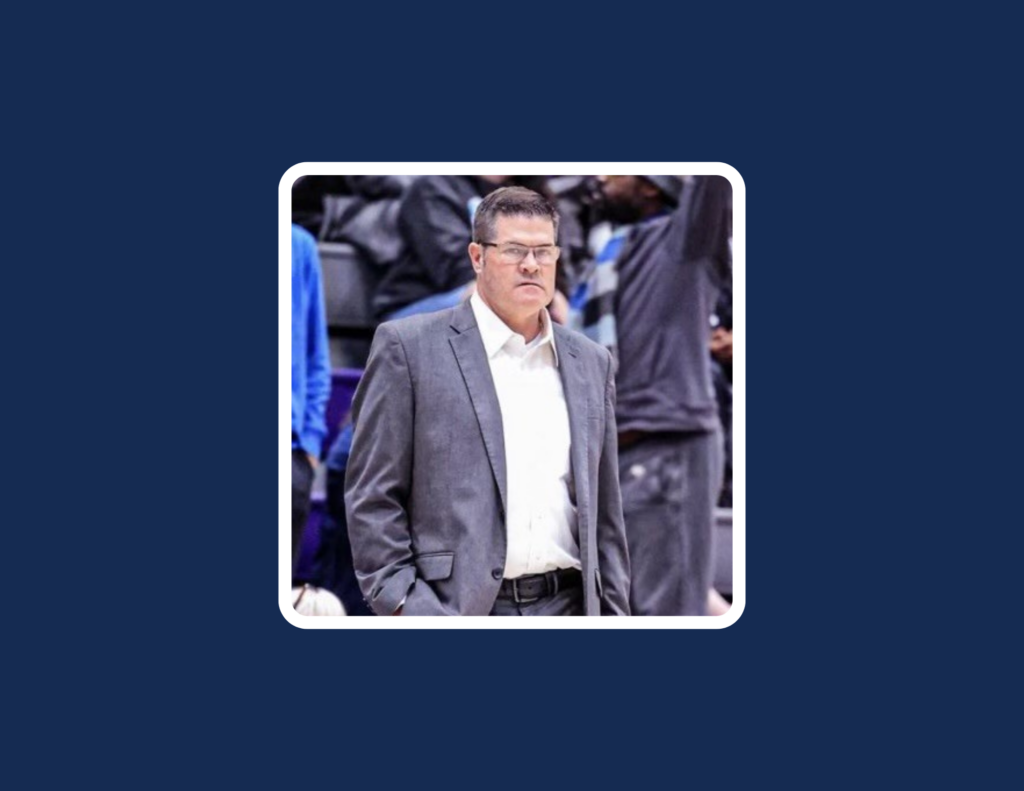
BRAD STAMPS – FAYETTEVILLE (AR) HIGH SCHOOL BOYS’ BASKETBALL HEAD COACH – EPISODE 1199

Website – https://www.fhsbulldogs.com/Staff/Bio/12
Twitter – @bstamps22
Email – brad.stamps@g.fayar.net
If you listen to and love the Hoop Heads Podcast, please consider giving us a small tip that will help in our quest to become the #1 basketball coaching podcast.
Brad Stamps is in his 7th season as the Head Boys’ Basketball Coach at his alma mater, Fayetteville High School in Arkansas. Brad’s first job was coaching 8th grade basketball at Woodland Junior High where he worked alongside his mentor and former Fayetteville High School Head Coach Kyle Adams. Stamps later became the head coach at Shiloh Christian where he took a program that had won only one game the year before he arrived and turned it into a 28 game winner and state semifinalist in his final season. Brad also served as the head coach at Springdale High School where he won two conference championships in 6 years and led the team to a state runner-up finish in his fifth year.
Stamps has also had several stints as an assistant coach and brings a unique perspective regarding the relationships, responsibilities, and skill sets needed to succeed as both a head coach and an assistant.
On this episode Mike and Brad discuss what it takes to build a successful high school basketball program in 2026. Brad shares the importance of nurturing relationships within the basketball community, particularly between coaches, players, and their families. He explains how effective coaching transcends just on-court instruction, advocating for a holistic approach that fosters emotional connections and personal growth among athletes. The discussion further explores the structural alignment of high school basketball programs, highlighting the necessity of integrating youth and middle school teams with the high school framework to ensure sustained success. As we delve into Stamps’ strategies and philosophies, listeners are afforded a comprehensive perspective on the multifaceted responsibilities of a modern high school basketball coach.
Follow us on Twitter and Instagram @hoopheadspod for the latest updates on episodes, guests, and events from the Hoop Heads Pod.
Make sure you’re subscribed to the Hoop Heads Pod on Spotify or wherever you get your podcasts and while you’re there please leave us a 5 star rating and review. Your ratings help your friends and coaching colleagues find the show. If you really love what you’re hearing recommend the Hoop Heads Pod to someone and get them to join you as a part of Hoop Heads Nation.
Please take some notes and get ready to learn and grow as you listen to this episode with Brad Stamps from Fayetteville High School in the state of Arkansas.
What We Discuss with Brad Stamps
- How to build a sustainable high school basketball program in 2026
- Coaching involves love and support along with discipline from day one
- Success requires flexibility and awareness of player strengths
- Effective practice planning is essential and requires collaboration among coaching staff to ensure efficient use of time and resources
- Engaging with youth programs fosters a strong basketball culture and builds connections between players and their communities
- Ensuring a consistent coaching philosophy from elementary through high school
- The importance of delegation and collaboration between the head coach and staff
- Cultivating community service opportunities for players, enriching their experience and reinforcing the values of giving back to the community
- Consistent communication with players and parents enhances trust and understanding
- Scouting efficiently and effectively
Like this show? Please leave us a review here — even one sentence helps! Consider including your Twitter handle so we can thank you personally!
We’re excited to partner with Dr. Dish, the world’s best shooting machine! Mention the Hoop Heads Podcast when you place your order and get $300 off a brand new state of the art Dr. Dish Shooting Machine!

Give With Hoops is a groundbreaking initiative that fuses basketball analytics with modern sponsorship. Built for teams who see data as opportunity, from AAU programs to college powerhouses.
By tying on-court performance directly to community and sponsor engagement, Give With Hoops help programs raise more while deepening support from those who believe in the game.
Traditional fundraising disconnects donors from the action. Sell candy bars, wash cars, beg for donations, it’s exhausting and ineffective. Players perform better when their stats matter beyond the scoreboard. That’s why Give With Hoops was created.
Give With Hoops connects game performance to community support. Every basket, rebound, and assist becomes a chance to raise funds. Transparent, exciting, and proven to raise 3x more than traditional methods.
Your first impression is everything when applying for a new coaching job. A professional coaching portfolio is the tool that highlights your coaching achievements and philosophies and, most of all, helps separate you and your abilities from the other applicants.
The key to landing a new coaching job is to demonstrate to the hiring committee your attention to detail, level of preparedness, and your professionalism. Not only does a coaching portfolio allow you to exhibit these qualities, it also allows you to present your personal philosophies on coaching, leadership, and program development in an organized manner.
The Coaching Portfolio Guide is an instructional, membership-based website that helps you develop a personalized portfolio. Each section of the portfolio guide provides detailed instructions on how to organize your portfolio in a professional manner. The guide also provides sample documents for each section of your portfolio that you can copy, modify, and add to your personal portfolio.

Hey coaches — you’ve got a game plan for your team… but do you have one for your money?
That’s where Wealth4Coaches comes in.
Each week, they deliver simple, no-fluff financial tips made just for coaches. Whether you’re getting paid for camps, training sessions, or a full season—Wealth4Coaches helps you track it, save it, and grow it.
It’s time to stop guessing and start building.
Subscribe now at wealth4coaches.beehiiv.com/subscribe
And follow them on Twitter @Wealth4Coaches for daily money wins.
Your money needs a coach.
Start with Wealth4Coaches.
THANKS, BRAD STAMPS
If you enjoyed this episode with Brad Stamps let him know by clicking on the link below and thanking them via Twitter.
Click here to thank Brad Stamps via Twitter
Click here to let Mike & Jason know about your number one takeaway from this episode!
And if you want us to answer your questions on one of our upcoming weekly NBA episodes, drop us a line at mike@hoopheadspod.com.
TRANSCRIPT FOR BRAD STAMPS – FAYETTEVILLE (AR) HIGH SCHOOL BOYS’ BASKETBALL HEAD COACH – EPISODE 1199
[00:00:00] Narrator: The Hoop Heads Podcast is brought to you by Head Start Basketball.
[00:00:20] Brad Stamps: We don’t ever miss an opportunity to make sure our kids understand from day one that we’re gonna coach you really hard, but we’re gonna love you even harder. And so to do that, it’s not necessarily words. It’s let’s show them what that means.
[00:00:37] Mike Klinzing: Brad Stamps is in his seventh season as the head boys basketball coach at his alma mater, Fayetteville High School in Arkansas.
Brad’s first job was coaching eighth grade basketball at Woodland Junior High, where he worked alongside his mentor and former Fayetteville High School head coach Kyle Adams. Stamps later became the head coach at Shiloh Christian, where he took a program that had won only one game the year before he arrived and turned it into a 28 game winner in state semi-finalist in his final season.
Brad also served as the head coach at Springdale High School, where he won two conference championships in six years and led the team to a state runner up finish in his fifth year. Stamps has also had several stints as an assistant coach and brings a unique perspective regarding the relationships, responsibilities, and skillsets needed to succeed as both a head coach and an assistant.
Hey Hoop Heads. I wanted to take a minute to shout out our partners and friends at Dr. Dish Basketball. Their Dr. Dish shooting machines are undoubtedly the most advanced and user-friendly machines on the market. Learn more@drdishbasketball.com and follow their incredible content @drdishbball on Twitter, Instagram, Facebook and YouTube.
Mention the Hoop Heads podcast and save an extra $300 on the Dr. Dish Rebel Allstar and CT models. Visit drdishbasketball.com for details. That’s a great deal Hoop Heads, get your Dr. Dish shooting machine today.
[00:02:05] Tom Heil: Hi, this is Tom Heil, Head Men’s Basketball Coach at Baldwin Wallace University and you’re listening to the Hoop Heads Podcast.
[00:02:16] Mike Klinzing: Coaches, you’ve got a game plan for your team, but do you have one for your money? That’s where Wealth For Coaches comes in. Each week, we’ll deliver simple, no fluff financial tips made just for coaches. Whether you’re getting paid for camps, training sessions, or a full season, wealth for Coaches helps you track it, save it, and grow it.
It’s time to stop guessing and start building. Subscribe now at Wealth For coaches.beehive.com/subscribe and follow us on Twitter at Wealth for coaches for daily money wins, your money needs a coach. Start with Wealth for coaches,
please take some notes and get ready to learn and grow as you listen to this episode with Brad Stamps from Fayetteville High School in the state of Arkansas.
Hello and welcome to the Hoop Heads Podcast. It’s Mike Klinzing here tonight without my co-host Jason Sunkle, but I am pleased to welcome back to the Hoop Heads Pod for his third appearance, Brad Stamps from Fayetteville, Arkansas and Fayetteville High School. Brad, welcome back to the Hoop Heads Pod man. Great to see you again.
[00:03:37] Brad Stamps: Great to see you, Mike. I appreciate you having me back on. Looking forward to this.
[00:03:45] Mike Klinzing: Thrilled to have Brad on what we’re gonna talk about tonight because obviously for those of you who are out there listening, the episode’s gonna take a little different flow than it normally does, where we get into our guest background and kind of talk about where they’re at.
And you can obviously go back and listen to Brad’s first episode with us where we talked about Brad’s background and, and got into his whole story. But tonight what we thought we would do is pick Brad’s brain in terms of what it takes to run a great high school basketball program. With Brad’s experience and the things that he’s been able to do in his career, I think you’re gonna find a ton of things that are actionable from our conversation tonight that you can apply immediately.
If you’re a high school coach, even if you’re a college coach, taking some of the ideas and thoughts that Brad has to be able to make your program better. So, Brad, again, welcome. Looking forward to diving into this topic. And let’s just kind of before we dive into that, just kind of give us a, an update of you know, again for maybe people who don’t go back and listen to that entire episode, but maybe just kind of where you’re at, how long you’ve been at Fayetteville, and just a, a quick 32nd recap of, of kind of where you are in your career.
[00:04:37] Brad Stamps: Yeah, Mike, I’d love to do that. You know, we, I’m in year seven at my alma mater, Fayetteville High School as a head coach. I was four as an assistant before that you know, and so this is year 17 for me as a head basketball coach. I spent four years at Shiloh Christian as a head coach six years at Springdale High School, which is one of our rival schools.
And then now been back, you know, 11 years, but seven as a head coach. Year 28, 29 overall, I think. And so yeah, we’re excited about where we’re at and you know, we’ve got unfinished business at Fayetteville High School, that’s for sure.
[00:05:17] Mike Klinzing: Alright, so that being said, what we’re gonna do is we’re gonna go through a series of different issues, topics, things that a high school coach has to be concerned with when you’re talking about building a great program.
And I think we’re gonna start with putting together your staff, because clearly when you get a job, one of the first things that you have to do is figure out, okay, where is my staff coming from? Do I have any holdovers from the staff that was there previously? Do I have coaches that have been with me at my previous job?
Do I have connections? From coaches that I’ve coached against, coached with in the past. So let’s start with just hiring a staff and then we can get into the roles and responsibilities and how you kind of divvy that up in your program and what advice you might have for, for high school coaches out there.
[00:06:09] Brad Stamps: You bet, Mike. It’s, you know, I, I believe, you know, our structure I think is important to talk about before I talk about my staff and, and job responsibilities and those type of things. Our structure at Fayetteville High School, we’re a nine through 12 school, and so we have three basketball periods during the school day that my entire staff are in those periods.
We have a freshman basketball team that’s led by Coach Tyler McCullough. He’s also not only is he a freshman head coach, but he’s also one of my varsity assistants. We also have a JV two period during the school day led by Lance Fisher. Then in the afternoon period, we have our varsity jv, varsity athletic period, which is together.
And I’ve got my associate head coach, Jordan Rose, who’s been with me for quite a while now. And then coach Spencer Brown, who is my JV head coach, but he’s also my varsity assistant. And so every night in our varsity games on my bench, you’ll see, you know, the four of us on our bench. And, you know, it’s a great staff and it’s, it truly is, you know, a collective responsibility.
Among all of us. You know, every major decision Mike, that’s made within our basketball program goes through a filter of all four of us. And we spend a lot of time, you know, we spend a lot of time together, obviously, like most basketball staffs do, but we, we are constantly trying to push each other to the next level.
We’re trying to maybe debate sometimes argue but at the end of the day, Mike, I, I think the most important thing about that is, you know, not only are we talking about ’em, but when we come out of a room or we come out of a, a session where we’re heavily talking about something that’s important, the structure of our program, the day-to-day operations, whatever it is, is we’re united front.
And I, I, I think that’s important, and I’ve always believed this and that, you know, you surround yourself with great people and let those great people do their job. I’m blessed to have a staff that has unique skill sets. They have some of their strengths are my weaknesses. And, and I, I, I think that we mesh well together because of that.
And so, you know, that’s kind of the way we do things. And then we obviously have, you know, our, our freshman, or I’m sorry, our middle school coaches. Which is our, you know, we’re vertically aligned with, you know, our, our two junior highs and our middle schools all are lined up, you know, to what we want and how we feel like is best to, to fit our kids’ needs.
[00:08:50] Mike Klinzing: Obviously that’s key, right? To be able to have everybody working together and we’ll get into sort of how you synchronize that. Yeah. All the way down to the youth level in a minute. But let’s stay focused with the staff and, and one of the things that I hear you saying, and, and I think it’s something that has been a theme of a lot of conversations that we’ve had here on the podcast with both high school and college coaches, is that delegation piece, right?
And you talked about hiring guys or having guys that are on your staff that fill in for your weaknesses. They may have a strength or you have a weakness or vice versa. But one of the things that I think is always interesting to hear coaches talk about is how do you go about doing that delegation? Has it gotten easier to do that?
As you’ve become more experienced. ’cause one of the things that I hear from coaches, Brad, is that when I’m a young coach, right, I kind of want to have my hand in everything, right? Yeah. And it’s hard to give up to that control, especially when it’s my first head coaching job. I wanna make sure that I’m overseeing this and that I’m doing this, I’m doing that.
And then as guys get more experienced, they’re able to kind of pull back and understand that, hey, if I put this over on my assistance plate, now I know that’s gonna get done. And I could then focus on more of the overall picture of the program and leave maybe the details in that area to one person on my staff.
So talk a little bit about just the evolution of being able to delegate for you. Was that something that came naturally to you early? Was it something that you’ve become much better at as you’ve gone along? Just talk about that piece of it.
[00:10:29] Brad Stamps: I would say early, no. I think, you know, my first head coaching job.
Shiloh Christian, you know, I’m young, I’m green. And I felt like, you know, I’m going into a situation where they were a football dominant program. They have never, never won in basketball. And my inner circle’s telling me not to do this. My ego is telling me, yes, do this and prove people wrong. And so when you jump into that many times it’s okay, I’m gonna do this and I’m gonna show people I can do this.
And that’s ego, that’s all that is. And you learn even though we had great success, you learn that, you know, it’s you, you really run yourself ragged. You also, you know, obviously in coaching you’re gonna make sacrifices, but you many times you misstep along the way. And, and what I learned is I don’t have all the answers and.
I started surrounding myself with really good assistant coaches at that point in time that I poured into, but they also, you know, I, I trusted the fact that not only are they gonna have the kids’ best interest, but they’re gonna be loyal to me. They’re also going to take some things off my plate, is what you mentioned.
And it takes a while. As a young coach, you, you know, you wanna, you wanna go out and show everybody that you can do something that people think you can’t or you wanna be successful. And that all that is, is ego getting in the way. And at some point in my life, I discovered that, you know what, like, you surround yourself with people good people, good solid people and then just let them do their job.
And so for us now, as our staff has evolved, is I know 100% without a doubt that things are gonna get done because of the people that I have in place and. We don’t walk into a room day one with my staff and say, Hey, this is what you’re doing. I need you to do this because I’m weak in this. We get in a room and we write every, and I’ll never forget it.
And we’ve got a, you know, I, I’ve got a degree in organizational management and I study businesses, and I see, you know, some of those things and leadership and how businesses fail, but also how they succeed. And, and I, I just truly believe this, that you empower the people around you. And not only do you share, you know, with them maybe what you, you know, admire about them, but you know what they bring to the table.
And, and those things are important. And so we ride every single role and responsibility that it takes to run a, in our case, a a six a program, which is the top classification. And we write ’em all down the board and we, we get input. We say, Hey, what’s important? What do we have to do? What are roles that.
You know, are necessary for us to be able to operate. And then, you know, we, we specifically go around the room and, and I allow my assistance to choose, Hey, I, I would be really good at this. Or, Hey, let me do this, and hey, let me do that. And at the end of the day, you create this flow chart I guess is the best way to say it, or organizational chart of, okay, these are job responsibilities.
This is a job description. So when we turn this into our admin they look at it and they’re like, oh, wow. Like, first of all, that’s a lot of responsibilities and sometimes I don’t think people are aware of what it takes. And so, you know, all those little detailed things, you know, all the way down from scouting to film exchange, to doing the laundry, to all the bus request and making sure we’re doing the travel and, and all those things.
Now we’ve got an organizational chart that guides us, that leads us and there’s overlap obviously between some of the job descriptions, but at the end of the day, we feel like we’re covering everything we need to do based on each other’s skill sets.
[00:14:21] Mike Klinzing: How many light line items are there on that whiteboard as you guys are going through that?
How many, how many things are there? Well,
[00:14:28] Brad Stamps: I’ll tell you, we, we filled a board and I think we got to 68 the first time we did this. And it’s ever evolving because not only is, you know, the landscape around is changing, it’s, you know, it’s, it’s a lot different coaching in 2025 than it was in 1995, I promise you.
And so, you know, it’s, it’s, it’s ever changing and that’s fine. And we’re trying to be ahead of that and, you know, we’re always trying to push the envelope and try to make our program you know, take it to the next level
[00:15:00] Mike Klinzing: when you have guys who have been a part of your staff. And you’re going through that and they’ve done things in the past like, Hey, I’ve taken this, I’ve taken that.
Do you go through and say, Hey, I’m taking that again. Do you try to mix it up to help guys to, to grow or maybe, hey, why don’t you take this new area? Or how do you approach the idea of somebody bringing their strengths? But also, again, I know one of the things that you and other head coaches love to do, right, is to develop your people, to be able to help them to grow, to eventually to the point where maybe if they wanna have their own program, they can do that.
So how do you approach that piece of it?
[00:15:34] Brad Stamps: No, that’s, that’s a great question and yes, I, I want my assistant coaches, I want them to be where they’re at a point of, of, you know, of I wanna be a head coach. And so I wanna make sure that, you know, I’m pushing them in those areas, but I’m also giving them opportunity.
And, you know, we, as far as our staff goes, and the structure of every day, I have an offensive coordinator, which is my associate head coach, Jordan Rose. Highly skilled in, in offense. Studies offense is constantly coming to me with different ideas, different ways. Our personnel from, from year to year, obviously changes, but not only our personnel, but our style has changed.
You know, obviously, you know, our DNA and our backbone is always gonna be, you know, man to man defense and, you know, transition offense. But as far as half court and some of the things we do, it’s, it changes. And so I trust him. I believe in him. He does an outstanding job with the offensive side of the ball.
I also have a defensive coordinator, and when I say those, and that’s Spencer Brown, my assistant coach, who’s young, energetic loves that side of the ball. And when I say we have an offense coordinator or defense coordinator, that doesn’t mean that I walk away from either side of the ball and I just throw it at them and say, Hey, this is what you’re doing.
We’re in conversations daily every single day about. Whether it’s a practice plan or whether it’s, you know, an individual workout or whatever it is on those sides of the ball. So it’s a collaboration. It’s you know, a collective responsibility, like I said before of all of us to make sure that every area is covered.
And, and that’s kind of the way we do things there.
[00:17:12] Mike Klinzing: That leads into the next piece of this, and we can approach it both from a coaching perspective, but also from a relationship with your player standpoint. When you talk about the relationships that are a part of your program, you have your staff in place.
There’s obviously a relationship that you’re talking about with them, right? Just that daily communication about the program and whatever. But then you also have the relationship with the players. You have relationships with people within your school environment. You have relationships with people in your community.
So just talk about how important it is to develop all of those relationships. And you can take the groups one at a time. You can just talk about your general philosophy, however you wanna do it. But tell me a little bit about the relationships that are so important as a high school basketball coach.
[00:18:02] Brad Stamps: No, it, Mike, it’s number one for me.
You know, and when I, when I, as an early coach and as a young coach, I think all of us, we set out to be, we wanna be successful, we wanna be successful, and maybe we gauge success on wins and losses and winning games, or winning a state championship or winning that last game. And that, and that’s fine. But I think when you really, especially when you get older, like I am, and you’ve been in it for a while.
Your perspective, maybe? I wouldn’t say completely changes. ’cause you still winning’s important. Like, I, I won’t take that away. And when you’re at a place like Fayetteville High School where the expectations are high, winning is important. But I think the day-to-day relationships with kids keeps me in it, an old guy in it.
Because those are important. And you know, we’ve, we’ve got a game coming up tomorrow night and all of those guys that I talked about that were in that senior class last year coming to the game, and they’re coming to the game because one they played in the program they’re proud of. But two, the relationship and, you know, it’s, we don’t ever miss an opportunity, I would say to make sure our kids understand from day one that, you know, we’re gonna coach you really hard, but we’re gonna love you even harder.
And so to do that it’s not necessarily words, it’s it’s show them, you know, what that means and. We’re trying to push, you know, the envelope on those areas all the time. We do, last year we started a five Hs with our players, where on Sunday when we come in and watch film, we, each individual at some point over a course of a season will get up in front of the group.
The staff goes first, I went first last year. And really what you see in the five Hs, you know, for anybody that that wants to know that I think it’s a powerful tool for all. Not necessarily coaches, but for everybody. You know, and we talk about those things and those five Hs are, you know, get up and talk about in front of the group what your biggest heartache or heartbreak has been in your life to this point.
Who your heroes are and why the history. Give us a history of, you know, your story, basically. Your hopes, you know, what those hopes are. You know, for maybe high school career, but also after, and then your biggest highlight up to this point. And it’s really powerful, Mike, when you start to see these young people get up in front of their group and even our staff of, you know, them humbling their selves their transparency you know, and just really letting your guard down.
And, and I, I truly believe that builds chemistry. It builds a group that, you know, they’re, we’re going behind the scenes. We’re, we’re finding out about each other’s families and we’re all different. We’re, we come from different backgrounds, we come from, from all those things. And, and then we try as a staff, we try to get out and, and see these young people outside of basketball and whatever other activities they’re in, whether they’re in choir or whether they’re in, you know, other sports or other extracurriculars.
We try to make sure that, you know, we’re always there. We’re always present. Then just, you know, the day to day the dayday interaction are, are what I’m after. And you know, whether it’s a two minute conversation with a young man about life or a five minute, 30 minute our door, we have an open door policy where we, we tell our young people and we tell our parents at parent meeting, like, our door’s always open and we want your young person to take advantage of that.
And in those closed door sessions, it’s free. It’s I would say it’s safe. It’s a place that we really can talk about tough things and have tough conversations. We don’t avoid ’em. Whether it’s playing time in season, whether it’s, you know, things that have gone on outside of the walls of the basketball gym and life and, you know, we don’t take those for granted.
And, and we truly believe in relationship building. It’s, it’s important topic for us and that’s, that’s something that we’ll never back off on.
[00:22:00] Mike Klinzing: I think there’s two things there that. Come through very clearly. One is the importance of those relationships. And then two, I think the balance of formal and informal development of those relationships, right?
Because you have your five Hs, which is obviously a formal setting in that it’s something that you’re doing intentionally to be able to give every player, every staff member an opportunity to get up and talk in front of the group. And obviously then for the group to be able to listen and internalize that so that, and you’re building that bond.
And then at the same time you’re talking about just the daily one minute check-in, Hey, how you doing? Hey, we’re stretching and I’m walking through and having conversations. Or you’re in your classroom and somebody stops in and says hello. And those are the things that, again, they’re not formally planned, but those are a big part of what you’re trying to do too.
And I think that when I’ve talked to so many different coaches about relationships. Those are the two ways. People have obviously different ways of doing it in a formal setting, but so many guys have talked about that informal of you have to do that check in with guys every day. You have to see ’em outside the basketball off outside the basketball court.
You have to be able to take an interest in who they are as people and who their other interests are besides just the game of basketball. And when you do that, that’s when you really start to see those relationships blossom. And then it goes to the second point of what you said there, which is that when you do that and you build those relationships, now you’ve made those deposits to be able to then coach your kids hard and get the most out of them so that they wanna play for you.
I think one of the things that you’ll often see is a coach who maybe hasn’t invested in that relationship side, hasn’t invested in the person, and then when things get tough or you run into adversity. Instead of everybody kind of banding together, that’s when things sometimes break apart because the relationship isn’t strong enough to fight through that adversity and those tough times and those tough conversations like you talked about.
And so I think, again, it’s an obviously an ongoing process. It doesn’t happen overnight, but if you’re investing in it intentionally through whatever system that you wanna invest in intentionally, and then you’re also having the informal daily conversations and interactions, I think that’s where the magic sauce I is and, and the balance between those two.
[00:24:34] Brad Stamps: No, I, I, Mike, I think you hit it. It’s, it really, it, it goes beyond, I, I’ll never say that. X’s and O’s and scheme and, and all those things, you know, aren’t of major importance. I’ll, I’ll never say that, but I truly believe in 2025 more than any time before we have to check. Pulse, so to say, every single day of our athletes.
There, there’s so many things, whether it’s social media, whether it’s just the day to day, I’m sorry whatever it is, we’ve gotta check in on them. And, you know, the mental health and all those things are important. As kids go through things, adults, we go through things and we don’t hide from those.
And, you know, to be able to share even as a staff, you know, with whatever it is, if we’re having a bad day or, you know, we talk about that and we, we don’t back away and we share those things because really, you know, as I tell our players all the time that, you know, one of the, the our favorite parts of the day so to speak, is, you know, at three 30 in the afternoon when our athletes are walking in the gym, they’ve been in class all day as a staff, you know, we’ve been in planning and we’ve been in.
Planning for practice. And then we get there and we get to see each player walk into the gym and, you know, you can read a lot by the way they enter the gym. And I think those, those touches is what we call ’em, where, you know, we, we have every na kid’s name on our practice plan, and we wanna make sure as a staff that somebody within our staff is, is.
And we check it off each day, that we’re making sure that whether it’s a comment, whether it’s a high five a, you know, a pat on the back, whatever it is, we’re touching every single player every day in some capacity. And I think that’s important. And I think, to be honest, I think the psychology of it is way more important on a grand scale than, than X’s and o’s and, and scheme and all those things.
[00:26:39] Mike Klinzing: That daily connection with players I think goes a long way. And sometimes I think it’s underrated, especially by people outside of the coaching profession who only watch a game on Friday night or Tuesday night, and they don’t see all that behind the scenes stuff that you see every single day as a high school coach.
And like you said, how important and in some ways, vulnerable kids can be right to all the things that, again, sometimes as adults we, we forget about what a 16, 17-year-old kid is going through on a daily basis. And then you throw in all the, as you said, social media and phones and things that got old guys like us didn’t have to deal with back in the day when we were That’s sure.
When we were student athletes, none of that stuff existed. And so I think it’s really important to, again, as you said, to, to keep those things in mind as you’re, as you’re building relationships with your players. Talk a little bit about your relationships with. The parents of players, and I know that that’s a really hot button topic for high school coaches in particular, that parents have continued to be involved, let’s just say, in their children’s athletic careers, and sometimes that can present a challenge.
So just talk to me about how you try to develop relationships with parents so that you end up on the same team and not being adversaries throughout the course of a season and throughout the course of a, a player’s time in your program.
[00:28:13] Brad Stamps: Yeah, for sure. And you know, those relationships whether it’s one-on-one or, or whatever it is, they start early.
Because, you know, our, our staff and our youth programs are, are tied together. And so most of these parents have seen us at their child’s games from. Third, fourth grade, all the way through. And so when they get to us, we at least, you know, seen each other. We’ve in passing have had conversations, whatever it is.
And then, you know, we, we structure parent meetings throughout the year. And in those parent meetings we talk about a lot of things. And we, we share with them that, hey, we have one common, like we share the same goal, we share the same interest. And that’s to make sure that we’re a partnership and pushing your child to be the best he he can be.
And, you know, just back us, just support us. Just make sure that, you know, they understand that, you know, we’re not gonna do anything to embarrass their child. We’re not gonna put their child in a situation that is unsafe that, you know, can, that they can be embarrassed by. We just don’t believe in that.
And so. You know, just trying to get the word across that we’re in it together. We share our expectations of what it’s like. We want them coming to games. We want them coming to every event that we possibly could have. We do a preseason, you know, tailgate for a football game and all of our families are there.
We cook burgers, a local bank, cooks, burgers. We do things like that prior to tipping it off on game one to where we’re all together outside of basketball. Developing some of those trusting relationships, but also just getting to know each other. I think that’s important. And then, you know, when it’s all said and done, it’s, it comes down to trust.
Trust the fact that, you know, we’re gonna do everything, every single day to push your child to his limit but also be there to encourage support. And it goes way beyond just, you know, coaching, coaching their son in basketball. It, it goes way beyond that. We wanna be there for, you know, for, for all kinds of things way beyond their, when they’re inside of our gym and those type of things too.
[00:30:35] Mike Klinzing: And I think those proactive messages that you’re talking about, right? When you’re doing that in the preseason, in the off season, you’re building that relationship throughout the time that a kid is a part of your program, that then if you do ever get in a situation where. You have to have a more difficult conversation with a parent beyond just, Hey, what we’re trying to do for your kid in a positive way.
But when there are those issues of playing time or whatever may come up, that can be a problem. If you’ve already built those relationships and there’s some positivity to fall back on, it makes the more difficult conversation a little bit easier because the parent knows from where you’re coming, right, that you’ve put the time in, not just to their kid as a basketball player, but as a human being.
And it’s much more difficult, I think, to be adversarial when you’ve already established. A positive relationship and the parent has already seen some of the things that you’re doing that have nothing to do with basketball that just have to do with supporting their child as a human being. To me, I always think that that’s the best way to go.
If the first time, it’s kinda like being a teacher, right? If the first time the parent hears from you is when the kid’s acting up in class or they’ve failed a test, that conversation’s gonna be pretty hard because we don’t have any kind of rapport at all. I’m just calling you to say, Hey, your kid’s acting like a knucklehead in class.
Okay? But if I’ve developed a relationship with you before and the parent has heard from me about something positive the kid’s done in class, or again in the basketball court or just in life, it makes that much easier. It makes that conversation a lot easier.
[00:32:19] Brad Stamps: No, it does, and I, I think the, maybe the general theme there is communication.
You know, communication is such a big deal and it’s things get. Maybe misconstrued or in, in, you know, it can change when you’re, there’s not communication. And so that communication’s important. We, we send out, you know, a weekly email my staff does where we outline the week ahead. We, everything we’re real specific in those, those weekly emails.
So they’re hearing from us at least every week in a group. But then we also welcome, you know, like if, if you have an issue, we always, you know, tell these parents or our parents that you know, number one, have your child. If there’s something going on, have your child approach us. We’ll visit with the child.
If that can’t get solved, we welcome you. Come in and let’s sit down and talk. Because I, I think a lot of times problems get taken care of when you’re in front of somebody and you’re a listener and you’re truly listening. It’s not a you know, a burden or it’s not something that. Oh, no, I’ve got so and so coming in to, to sit down with us.
It’s, let’s listen, let’s actively listen to what’s going on and then let’s, you know, give a response based on, you know maybe some, you know, some dialogue or some things that we actually know. And so I think that communication piece is so important to constantly have that. Then we’re open we like to, to visit and, you know, it’s, it’s, it’s, it, things can get taken care of in that realm.
[00:33:58] Mike Klinzing: Give with hoops is the first platform turning basketball analytics into fundraising impact. Every stat tells a story and now every story drives sponsorship engagement and team growth programs nationwide are transforming basketball stats into funding power. Learn to use performance data to attract sponsors, engage fans, and raise more with every play.
Give with hoops will help you raise three times more money for your program as their stat based pledges consistently outperform traditional fundraisers. Visit give with hoops.com/hoop-heads-podcast to learn more and take your fundraising to the next level. Give with hoops.
Let’s talk about another relationship that is very important as a high school coach, and that’s your relationships with your administration. So your ad, your principal. Your superintendent and just making sure that, again, to go back of this theme of communication, just tell me a little bit about those relationships, how important they are, and how you handle the relationships with your school administration.
[00:35:06] Brad Stamps: It, it is important. I, I think I heard Coach Kaari say it when he took the Arkansas job, or, or maybe it was before that, I don’t know. But it always stuck with me that, you know, coaches win games, but administration wins championships. And I don’t know, I, I think it’s every level you know, you’ve got to have support.
You’ve got to have encouragement. You’ve got to have, you know, somebody that, you know, if you’re not doing things the way you should be doing that they can, you know, have a conversation with you and lead you in the right direction. That’s important. ’cause we all, you know, I can tell you, you know, all the things we’re talking about tonight, we’re not perfect.
Fayetteville basketball is not perfect. Brad stamps is not perfect as a leader. And to have people around you that can steer you in a direction or help you is very important. It’s leadership is lonely. And sometimes I think you, you know, you can fall into you know, some dark areas as a leader when you don’t feel supported or you don’t feel encouraged the people, your superiors, you know, and they’re not checking in on you, or they’re not, you know, you, you can’t go to them or they’re, you know, they’re absent or distant.
It’s really a struggle. And so I think it’s important to be able to have those relationships that, you know, you can go to them at any point in time about anything and, and talk about those things. And then, you know, the day-to-day interaction. You know, we, all of us coaches in our building.
We, we have supervision duties during the school day, and so our principals, all of them do the supervision with us. And so we’re around them. These are school leaders. We’re around them during the day. They hear us talk about not only our team and our team’s needs but also our school and, and what our school needs.
And we want to be interactive. We want, we want that relationship to be so solid that, you know, we’re one we have one high school in Fayetteville. You know, and so the support you know, our community and all those things, it’s important. And so we take it serious and, you know, we’re constantly pushing each other to, to try to get better in all areas, whether it’s athletically or.
You know, education or whatever it is. And so it is important, Mike and I, I, I see where Coach Cow, you know those comments about coaches. You know, we do, we can, we can rally and we can win some games and whatever it is, but at the end of the day, you’ve gotta have great administrators and, and great people fighting for you pulling for you and to win the ultimate prize.
I think it’s an
[00:37:52] Mike Klinzing: extremely underrated part of what makes a high school basketball coaching job a great job, a mediocre job or a bad job, is what kind of support are you gonna have from the administration for your program? And that goes to a lot of the things that you just talked about. There’s lots of facets to what support looks like.
I do think that if I was gonna give advice to any high school coach before you go and, and take a job or as you’re going through the interview process, I would do as much possible vetting and question asking of a, the administration themselves, but also for people who have worked for that administration, even if it’s other coaches that are coaching in the athletic department at that school already, somebody who’s been there that’s worked with those administrators in a coaching capacity somewhere else.
I, I think if you can get into a situation where the administration is going to be on your side and is going to help you to grow and develop and help your program, you’re much more likely, as you said, to be able to build a championship program. Whereas if you end up on the other end of the spectrum and you have a, an administration that isn’t supportive, no matter how great of a coach you are, I know I.
Several guys who have been in situations where the administration and just the, the infrastructure around the program, regardless of how great they were as a coach, made it really, really difficult to have success in certain places. And so I think, again, if I was to give a high school coach some advice, it would be to make sure that you are asking questions of the administration and make sure that you feel comfortable with the amount of support that you’re gonna get for your program before you, before you take a job.
[00:39:37] Brad Stamps: No, I, I, I agree. And, you know, we are fortunate enough to, university of Arkansas is right in our backyard, and so we get to go, we have the opportunity every year, Mike, to go speak to college students that want to get into coaching. It’s a couple of classes. We, we go on campus and we, it’s a question answer session and it’s really good.
And several of those coaches over the year are, I should say, students that were in that class over the years are now coaches. And we feel like, you know, we can mentor them and when we go speak to them, we talk about a lot of things. And what you just hit on is so important. When you’re going into your first interview or you’re going for your first job that’s one of the things top of the list, the checklist of, you know talk to people and find out everything about that school culture.
Find out from the custodial staff, find out from the receptionist, find out from the registrar. Like go to people that not necessarily are in leadership positions but are value of great value to that school. And find out. ’cause you’ll find out a lot of things talking to the people whose, you know, boots are on the ground.
And so I think that’s a great point.
[00:40:53] Mike Klinzing: Yeah, there’s no doubt You’ll find out a lot. You talk to those people that you just mentioned, those, those groups are, will definitely have will definitely have stuff for you. All right. Let’s talk a little basketball now and think about practice planning. Let’s start with just overall general, outside of the season, putting together what you want your program to look like.
Maybe even putting together, I dunno if you call it a pacing chart, a curriculum, just kind of how you want your season to develop over time. So let’s look at that big picture planning. Okay. And then we’ll kind of narrow it down to a day-to-day, what it looks like putting together a practice plan for your team on a given day.
But let’s start with the big picture.
[00:41:36] Brad Stamps: Sure. No, well, we as a staff, we, we get together. You know, starting the first day of school you know, we, we really have a plan as to what we want our off season program to look like. Our season every year doesn’t start until around November 15th, as far as games go.
And so we break it into a, an off season and then an end season. Our off season we always start the, the Tuesday Falling Labor Day as far as the weight room and conditioning and individual skill work. And we will do individual skill work. We’ll do weights and we’ll do conditioning starting that Tuesday, falling labor day all the way through till mid-October.
Once we get to mid-October we really start, you know, we continue with the weights and we continue with the conditioning, but it’s more of our, you know, getting our install, our, our offense and our defense and, and those type of things in. And then, you know, now that we’re in season the weights, we go twice a week.
We go on, we bring our kids in on our, our conference games are Tuesday, Friday. Obviously, we’re in an, our conference schedule right now in December where it feels like we’re playing every night. But it you know, as far as travel goes. But we, we it’s important for us to continue to hit the weight room.
And so we do that on Sunday and Wednesdays. And then, you know, we get into just our week of, you know, our prep, our scout, our film watching and all that stuff, which we can talk about in just a second as far as what our end season looks like. But we’re really working on our bodies. Our tryouts every year are in April.
Every kid that was on a team the previous year also has to go through a tryout every single year. And so we go through the tryout process in April, and then as soon as the tryout results are posted. We start working on our, you know, our camp. And our camp is, you know, through April. In May, in June, we try to have as many team camps in our state.
There’s no restrictions on being able to practice or play. You know, during the, the year other than two weeks, we have a man mandated dead period where we can’t see our athletes. But we try to play as many games as we can in the month of June with our new team. And then so when we get into, we take July off.
I’m just a firm believer a lot of our guys are playing a a u or on the circuit or whatever, but I just believe Mike and maybe it’s the older I get, I start seeing how important it is that, you know, many times, and we’ve talked about this in our previous conversations, that we take so much from these kids, the time and the valuable time is of being a kid, whether that’s.
You know, going to the lake or going to a pool or being able to, you know, to go play golf or family vacations or whatever that is. I feel like we’re pulling in Adam in so many ways, in so many different directions that I think it’s important to give them time. I know I need time, I need time with my, my wife and, and my kids and grandson to, to be able to, you know, step away, to renew and, and to before we come back in August and, and are at it again.
And so we give July off. But then, you know, we get started again. So that’s kind what our year looks like. We can specifically talk about, you know, practice planning in season, which is what we’re doing. That’s, that’s where we’re at at at the current moment for sure.
[00:45:10] Mike Klinzing: Alright, two things about what you just said.
One, I think that idea of refreshing, right? And being able to. Step away and then step back to basketball. It’s one of the things that when I talk especially to college coaches at the division one level, when I look at the amount of time that their kids spend on campus now with the rules the way that they are, and then I think about my experience as a division one basketball player a long time ago, but our season would end and we’d get a workout, be two or three pages and hey, you leave campus and we’ll see you back here in August.
And I wasn’t having the same amount of contact with the coaching staff that players are having now. And I always just try to go back to my thought process as a 18, 19-year-old college basketball player. And how much. How grinding it would’ve been to see the same coaching staff, hear the same voices nonstop throughout the year.
You needed an opportunity to step away, to be able to then come back fresh and ready to go and have some enthusiasm. And I can’t remember who told me this, Brad, but at one point somebody said to me, you have to be away from something in order to miss it, to sort of re-energize yourself. And that always stuck with me that so often we just are like, we gotta do it every day.
We gotta do it every day. We gotta do it every day. But some, there’s something to be said for, let’s walk away for whether it’s a day, a week, a month, and we can come back to it and even to do it again. That doesn’t say, that, doesn’t mean that your players aren’t touching a basketball in July. It just means they’re not touching a basketball in July.
With you and your coaching staff and in that environment. And so that allows them to kind of develop, again, a desire to come back to that. And I think that’s, I think that’s really an important point, is just the ability to refresh, I think is sometimes overlooked at every level of the sport. You can go down to youth basketball, you can talk about high school basketball, you can talk about college basketball.
I, I think that there’s, there’s probably a bigger need for that refresh than what we th what we think. Right. So that’s number one. And then the second thing I wanted to ask you is, and we talked about this a little bit before we formally push play on the podcast, but just every year as a high school coach, it’s not like being in college where.
You’re recruiting a bunch of players to your system, right? Every year. So you have a different set of personnel year to year, and clearly, as you said, you have a way that you wanna play right there. There’s a philosophy that you have as a basketball coach, but sometimes your personnel dictates that you tweak it slightly this way, and sometimes you tweak it slightly that way.
So how do you, as a coaching staff, and you as a head coach, when do you go through the thought process of, you talked about having the tryouts in April and kind of putting together the new team and then trying to get as many games in as you can during that early period in June when, when you’re with your guys, how do you start to develop how you wanna play for a given season?
What does that process look like as you look at your new personnel?
[00:48:31] Brad Stamps: No, it, and that’s to be, to be completely frank with you or real with you that goes on even throughout your non-conference, right? Because of so many reasons. You know, for us, it, you know, from year to year, yes. It, it varies based on what you have, who you have as far as size, no size athleticism, maybe not necessarily as athletic, whatever that is.
Our DNA at Fayetteville High School has always been, we’re gonna guard you in a half court in man to man defense and you know, that we hang our hat on that we wanna be the best defensive team. And so, you know, that’s, that’s always been there. That doesn’t mean that we won’t come out in zone press or we won’t come out and, and play some zone defense.
’cause I think you have to be able to to do several things. As far as that goes, depending on who you’re playing and the scout and all those things. But offensively we wanna play fast and we wanna play fast and transition. We wanna rebound it and we wanna push and put the defense back on their heels.
But year to year you have different strengths as far as your personnel goes. Last year, group undersized, but we shot it really well. We set two school records during the year with three point attempts. We wanted to, to, you know, push and transition and then find the first available good shot that we could find from the perimeter.
This year we have the luxury of having, you know, two six eights, a six eight senior and a six eight sophomore. We play ’em together and so it’d be crazy for us to just be set in our ways to be. Stubborn and say, no, this is the way we’ve always done it. Let’s stick with this when, you know, quite honestly this group couldn’t play the way we played last year and be successful.
And so wherever, you know, we’re always challenging ourselves as a staff of finding new ways have a growth mindset of what is the best way this group is going to be successful. When I say it changes throughout a season, you know, we just lost a young man that had size that as a starter who tore his ACL a couple of weeks ago.
And so now we our bench players or our guys that are coming off the bench don’t have that kind of size. And so maybe we do a little different when, when that group and that rotation is in, maybe we play a little differently than we have before where we don’t have two bigs in or whatever it is. So.
But yeah, it’s, it’s, it’s a constant. It’s, for us, it’s pushing, you know, each other to finding new ways to do things. But yeah, we, we like our group. We like to be able to, to play fast, but also play through our big guys with some high low and some different things because they’re really good at those type of things.
So yeah, it’s you, you raise a great point. And every year, you know, we don’t have the luxury going out and saying, Hey, we need a point guard. Let’s go find one. It doesn’t work that way. And so whatever you’re dealt with, you have to be creative and find a way that you’re gonna be successful. That takes time.
It is important that, you know, when we get our guys and after our tryouts to start working with them in individual skills and working with them to get ready for June to get a head start. We played 12 to 16 games with our new group before we ever get started in school. And. And those times are important.
And, you know, we’ve been criticized maybe a few times of, you know, not having our entire install in and looking like we will in November and December, and that’s fine. Really we’re trying to see who’s gonna compete and, you know, see who, you know, we can really trust and rely on as far as some things there.
And so it’s, it’s ever changing for sure.
[00:52:26] Mike Klinzing: Yeah. Adaptability, right? The, yeah, looking at your team and, and seeing what you need. And again, that can be season to season. That could be month to month, that could be week to week, and that can obviously be day to day. And then you throw injuries in there and all of a sudden, boom, you gotta really adapt to something that you weren’t anticipating.
Way, shape, or form. And so I think the best coaches, right? You have your philosophy, you have your way that you’d like to play, you have your principles that everything that you do is based upon. And then you take that center and then you see what you have around that to be able to make it mix and match to, to fit into what your, you know, to what your philosophy is.
And like I said, that that can vary dramatically from season to season and week to week, month to month, day to day. And you know, again, the best coaches are able to, are able to adapt to whatever the circumstances and personnel and, and figure out ways to make it work. That’s part of the growth mindset that you talked about, right?
You just trying to grow and, and improve and get better as a coach and help your team to be successful and and not, not be stubborn and stuck in your ways. Tell me about the day to day practice planning. Yeah. And what that looks like, both in terms of how do you do it? So are you sitting down together as a staff and discussing it and putting it together?
Are you writing it first and then sharing it with the staff? So, so kind of the process, but then also what does that practice plan look like? Is there a standard sort of rhythm where you’re always defense first, then offense, then skill development, or just how do you, how does it, how does it roll together?
So the process and then the actual result of what you, what you create from a practice planning standpoint day to day.
[00:54:04] Brad Stamps: Yeah. That’s, that’s the war room as we call it. Our staff gathers every single morning together before the school day starts. We’re, we all have, you know, kind of an area where all our offices are.
And so we have a whiteboard and we literally we’ll stand at the whiteboard and we’ll be around that whiteboard and we’ll discuss whatever we want to emphasize that. Specific day in season where we, you know, we write our thoughts of, okay, well we, we need to work on, you know, our help side defense.
We need to work on our tags, we need to work on our ball screen coverages. We need to, whatever that looks like, we’ll write that on the board. Then offensively, we’ll, we’ll talk about reads or, you know, what we, maybe it’s an install, maybe it’s a new baseline out of bounds, or a sideline out of bounds. And so we write our topics or the things that we really wanna get accomplished that day, and then we break it down.
We do have a practice plan that’s a template that we use every single day, but it, it starts with the whiteboard of, we write the times. You know, we start, our kids get outta class at three 15. We start practice at three 30 every day. And so we start with that three 30 up there on the board and whatever our end time is that day, it’s at the bottom.
And then we, we fill. And it, it changes from day to day as far as, you know, we don’t always do offense first, defense last or, or whatever. We, we just try to among the group, figure out what’s important for that day, what we need to get out of that day, and then we devise a plan. We always want to make sure we’re, we have skill work within a practice.
I think that’s important to work on skills and individual skills every day. I’ve got great skill coaches. So we do a post perimeter split where we’ll have two coaches on one end with our bigs, two coaches with our guards on the, we try to do this every day. And it could be our offensive actions on both ends where we’re spending time, 10 to 12 minutes you know, within a practice of, of just working on some, some basic skills of.
Offense. Sometimes it, it may just be getting shots up within our offense and those type of things, but they’re getting skill work every day. We have a component where we always wanna compete. Kids wanna compete, and so we always, we live by the, it’s living by the numbers for us, and we keep track of what our goals are in, in four or five different I would say drill work that we do.
Whether it’s fast break layups, whether it’s five ball shooting, Razorback passing, all those things. And we, we keep a number and we try to beat that number every day or there’s a consequence. And so they love it, they look forward to it, they try to beat it every day. And we try to do that somewhere towards the, the front of practice after we stretch and, and get going.
Just to kick off, practice the right way of, okay, we gotta compete here we are, we’re gonna beat a number. And then we get into our, you know, our team sessions and those type of things. But it, it all starts on that whiteboard every day. I’m not saying that, you know, we’re not at home at night writing down a few notes and then sharing them through a group text.
Our Purple Dog coaches group thread because that, that happens every night where somebody has an idea and, Hey, I’d like to do this, or I’d like to see this tomorrow. And then sometimes, many times, Mike, it’s seeing different personnel groups you know, where we’re sharing those of, Hey, I’d like to see so-and-so play with this group today.
And so that’s, that’s the fun part of trying to craft it, put it together, and then execute it. And we, we truly, we’ve got four managers and our managers, they have a practice plan every single day. They, it’s scripted of each session is 5, 10, 15, whatever it is, minutes. And so that clock. They’re on the clock.
They’re following the practice plan. And so we’re just instructing the practice as it goes. And it’s pretty efficient. It’s also there’s no wasted time. There’s no wasted reps and we, we move from one skill or one drill or whatever pretty quickly based on what our practice script is.
[00:58:24] Mike Klinzing: What’s your process for evaluating a practice once it’s over? You talked a little bit about, Hey, we go home, and each coach kind of is thinking through it. Yeah. Which again, we all do. Right? And, and then sharing ideas back and forth. But do you have any kind of formal way that you go through and, and kind of review practice or what, what’s your what’s your process for going through a practice and thinking about how effective it was?
[00:58:48] Brad Stamps: Yeah. We film we, we have huddle focus. It’s a camera in our gym that we turn on every day during our time. And our assistant coaches do a great job. We, we watch practices, we go back and we clip our practices and show good and bad clips. You know, and that’s, we watch a lot of film as, as a basketball team and you know, whether it’s our scout of our opponent, which we can get into in a minute as far as what the scout looks like and those type of things.
Scouting your opponent. But we spend a lot of time reflecting and you reflect by watching. And so we show our players. You say you run the outside lane and you know you’re a sniper. You’re supposed to get to that corner. Well, you stopped at the three point line. You didn’t make it to the corner. Why?
And so we’re asking those questions and we’re getting feedback and, and those film sessions are, you know, we always tell them like, you know, we’re safe in here and our job is to, you know, give you constructive criticism to make our basketball team better. When you see it, and my coach used to tell me this, and our players, I’m sure get tired of me saying it, but the eye in the sky don’t lie.
And so, you know, film doesn’t lie and it shows things that sometimes it’s a valuable tool for them to see themselves and to see things that maybe they thought they were doing that they didn’t. But it’s, it’s not always criticism. It’s, we show this is, this was a great job by, you know, you setting the screen and you slipping the screen or whatever it is.
It’s, it’s the little detailed things that we spend time on as far as our practices go.
[01:00:24] Mike Klinzing: I think film, especially at the high school level, is so underrated. In terms of not just team development, but I think individual player development and understanding what it takes to be a smart basketball player and developing an iq.
And I, I’ve discovered this with my two of my kids, that I’ll watch film of their games with them and try to help them to pick up things. And as you said, you do see things on the film that your perception of what you think you saw or as a player, what you think you did in a certain situation. And then you watch it on film or you watch it with with a player and, and they’re talking through it.
And what they think they saw or what they think they did doesn’t always turn out to be what you see on the film. And there’s just so many good opportunities for learning, both, as you said, in a positive and a negative direction right there. It’s, it’s important I think. Sometimes when I think about old school film sessions that I used to sit through, I would say 95% of it often was negative, right?
And looking for the mistakes that players made. And I think we’ve gotten better as a coaching profession of not just pointing out, Hey, here’s something that you did wrong, but also pointing out like, Hey, here’s a possession where, wow, look at all the good things that we did here. Now we just need to take that and put it on repeat.
And there’s certainly value in both of those areas. You have to have a balance between a more, if it’s all negative, kids, tune, tune out really fast. If all, if all you’re showing ’em is the negative plays, it doesn’t get the same response as when you, when you share positive things. For sure.
[01:02:07] Brad Stamps: No, I, I think so, and I think you have to have a thermostat as a coach of when that positive needs to happen and when it doesn’t.
And the other thing is, Mike, is I think studies show this, but we definitely see this, the longer we’re in the film room, the maybe the less value it is. And what I mean by that is, you know, you start to lose them. And so we try to, I challenge our staff every day when we’re doing clips of, okay, let’s show, you know, seven to 10 minutes and then let’s get ’em out on the floor.
’cause we, our film sessions are prior to practice. Our scout is usually prior to a practice. And so we try to make those film sessions and those scouts you know, really pull back to where we’re not in there for long periods of time.
[01:02:56] Mike Klinzing: Alright. Talk to me about the scouting process, what you guys do as a staff.
How much information you gather on your opponent, and then how much of that information do you share with players? And is there anything in particular that you find is valuable for the players to know? And then anything in particular that it’s important for you guys as a staff to know, but that maybe when you’ve shared it with the players in the past, it doesn’t necessarily have a direct impact, if that question makes any sense.
[01:03:28] Brad Stamps: Yeah, I think there’s a lot there to kind of unravel. I, I think first of all, when I say, you know, our league or our state really our region, like you, if you wanna see somebody play, there’s access to film. And you’re not gonna hide anything. You’re not gonna, you know, and most coaches, they don’t mind sharing film anyway, but it’s there if you want it.
And so we are assistants, you know, when I talked about the job description earlier. We’re all involved in film exchange to where we have an upcoming opponent who’s just played or have played several games or whatever. We try to get as much in our library as possible on that particular team. Once we get that library and we get that film, our staff is split up into who’s doing the scout for this particular game.
And we do that by our schedule and they know beforehand who’s doing what game. And so that assistant coach will take that particular scout for that game. He will watch several films, and then he’ll get clips from each particular film like I told you before, whether it’s baseline out of bounds, a couple of those whatever their man to man or zone sets are you know, maybe a couple of, and then obviously we start with personnel.
We, we go over their entire, if they’re playing seven kids, every single kid will have a picture. Our players will see a picture of that kid. They’ll also see clips of that particular kid, what their strengths are. And then we go into the, the, the stuff themselves like as, as baseline, out of bounds, sideline out bounds in their sets and try to get a feel for what they do, what their strengths are.
And our scout always ends with what are the three keys for us to have success. And then we, we go out and practice and whatever the scout, we have our assistants that will take a scout team on the other end while we’re working on other stuff. On the other end, we come together, we’ll guard their actions and we will, you know, rep what the other team’s gonna do against us offensively, as well as defensively.
We’ll practice against it. And it’s really worked well for us. You know, when we don’t spend, you know, many, many days or many, many hours or minutes in that film room, but it’s short, it’s sweet. We show ’em what the important things are and then we go out and we, you know, we, we practice against ’em and they get those reps.
I think that’s, that’s important. You know, I think you know, the scout team most of the time for us, we want all of our guys to at least rep, whether, you know, we’re guarding the other team’s offense many times we won’t just be the scout team that’s running that. We’ll have our, our top seven or eight guys running their actions so they know exactly how they play, what they play, and then we’ll defend it.
I think there’s value there.
[01:06:18] Mike Klinzing: Have you ever sent anybody out to Scout in person anymore or is it all just
[01:06:21] Brad Stamps: video? You know, years ago, yes, Mike, we many scout trips, we did that. But now, you know, it’s just video is so, everything’s streamed, everything is, you know, matter of fact, I watched a couple of games last night in my recliner at my house.
I had the Razorback game on my big tv. I had my laptop watching a game, and then I had my phone watching another game, and my wife was like, how are you getting all this? I was like, well, I’m doing the best I can. So, you know, it’s, it’s, you know, there’s, it’s, you’re always, there’s always something that you can see and, and view.
And I think you know, if you can get the important things and then base it down to these are the three keys and then really work on those three keys, whatever it is, and our staff does a tremendous job of scouting whether it’s Coach Rose or, or Coach Brown with the Scouts. They do a really good job of preparing our kids and making sure that, you know, we’re mentally where we need to be going into an opponent.
[01:07:18] Mike Klinzing: We’re a long way from the days of driving film to the FedEx box and, and dropping the VHS tape in so to, to be able to trade trade film with people. It’s always, I think probably in all honesty, when I think about the coaching profession, back when I was a player and early on in my coaching career, I honestly think that just the accessibility of film might be one of the biggest changes in the coaching profession, just in terms of how that’s handled and what it allows you to do as a coach.
Both with your own team, right? Yeah. And, and watching your own team’s games and your own team’s practices. Then you think about just the ability to scout and it’s almost like you can probably be in danger of, because there’s so much film out there when you’re preparing for an opponent, it’s like, do I cut it off at watching two games at four games at eight games?
There’s just, there’s so much information out there that it’s almost possible, I think, to get overloaded, which clearly wasn’t a problem in the past when it was so difficult to be able to exchange film and, and get your hands on film. And as you said, the coaches used to like to be secretive with the stuff that they do.
And now it doesn’t matter. Everybody’s willing to share everything ’cause it’s all out there. Nobody, you can’t, you can’t hide anything, even if you wanted to. So it’s it’s definitely a different world when it comes to, when it comes to film exchange. I wanna jump back to something that you highlighted a little bit earlier when we were talking about.
Coaching staff and, and putting together a staff. And you talked about the vertical alignment, right? Yeah. Of your program from varsity to JV to middle school. And then we didn’t really hit on the youth program, but let’s talk a little bit about how important that is from a public high school standpoint.
When you start talking about building a program, this is what I always say, Brad, is that you can have winning seasons if you don’t have a great program because maybe you get a group that has a lot of talent in it and they just come and you can coach ’em up and, and you can win games. But in order to have a program, you have to have invested in your youth program.
You have to have invested in your middle school program so that when you have a down year, right, if you have a good program, if you have a down year, you’re probably still gonna win more games than you lose because you have systems in place. Even if you have a team or a class or a class or two in a row that doesn’t have great talent, they still have been developed in the right way and they understand how you wanna play.
And I always think that’s the great, that’s a sign of a great public high school program, is a team that their good years are outstanding and their down years are still, you know, they’re gonna be tough to play against. They’re probably gonna win more games than they lose. That to me is a sign of a great high school program.
So how do you put together that vertical alignment from your varsity all the way down to your youth program?
[01:10:19] Brad Stamps: No, it’s so important. And you know, we we’re highly involved in our youth programs. We, we have a boys and girls club here to where, you know, some of our former players are coaching those, those younger kids.
We do clinics for them. We also have a. A, a o facility where these kids are getting skill work, but they’re also being put on teams and competing against each other. And we have our former players involved there as far as designing practices and, and trying to do some things. Obviously, you know, to me it’s running plays is third, fourth, and fifth, fifth and sixth grader isn’t of great importance to us.
We want, you know, to be honest, I wish we could go to three on three year round for our young kids to where every kid has to touch a ball. You know, you’re not putting your biggest kid in a pick and roll stuff in third, fourth, and fifth grade, and three kids never touched the basketball. And maybe that’s coming.
We’re gonna continue to push that. I think a, a o has started doing a three on three league for older kids. I’d like it to start young age and we’re gonna continue to push that, but. We’re highly involved in that and we’re there at those games after those teams we’re at the tryouts. When those teams are picked and chosen, what I really like is we’ve gone back because our youth leagues now compete against our conference schools on Saturdays or Tuesday night, or I’m sorry, Thursday nights.
And so, you know, we, we have every kid, whether they’re at one elementary on one side of the town or one elementary on the other, they’re all wearing a Fayetteville jersey that says Fayetteville crossed it in our colors which I really like. And they’re competing against other schools in our league, but they’re representing, you know, Fayetteville and that’s a big deal for us.
And then as they progress you know, to the middle school area. It gets more competitive. And, you know, they’re playing in the summer. We do clinics. We just got through with the clinic not too long ago for all those coaches of all the youth teams in our, in our district where they come to our gym, Fayetteville High School’s gym.
Our players help us. We go through a practice session showing them, you know, man-to-man defensive principles or, or different things that are important to us. So they’re hearing the same lingo, they’re hearing the same verbiage. You know, that vocabulary is the same. It’s familiar all the way through from, you know, third grade all the way to the high school.
We’re a no middle defense. And so they’re always hearing, you know, don’t allow the ball to the middle of the floor and, you know, and so all those things. And then our, our middle school and our junior high coaches do a really good job of aligning Exactly, you know, how we want it. We have a.
Professional development every summer where our seven through 12 coaches are together. It’s a valuable time for us ’cause we, there’s so much planning involved in the, the next season or the next thing, and we want everybody in the same room. Really talking about how we can develop young people, but also just the day-to-day structure of a program and what that means.
And, you know, we have presenters, we have people come and, and talk to us. We have, like I told you the other earlier, that the partnership between us and the University of Arkansas is important. When co-chair Luman was there he had an open door where our staff could walk across the street and watch practice anytime we wanted to, we could stay and ask questions.
Now that Coach Cal’s there, he’s done the same for us. And so we’re always trying to find ways to learn, to try to find something new, whether it’s X’s and O’s or scheme, or whether it’s just motivation, leadership, whatever it is. We challenge each other as a staff. ’cause we want it to be better at the end of the day, Mike, you know, we, we want to create memories of a lifetime for all of our kids and all of our players.
But it starts early and you know, we call it purple pride. We want them, those kids to value playing for their community. And what that means I’m a product of that. My two of my staff members are products of that. And so we speak about that often of what it means and the pride it takes to, you know, and, and you should value playing for your community.
And these people are gonna come out and watch you because they’ve been watching Fayetteville basketball for years. It’s important to them. Our former players come back who’ve played in the program and they watch and they support and it’s just a big deal for us. And, you know, we we’re continuously trying to find ways to do things better.
But our youth programs are a valuable tool for us. And, and we’re constantly evaluating those kids and getting to watch those kids build relationships like we talked about earlier. And then they come to our games, our kids go to their games, but they come to our games. We have our youth programs involved in our game nights and sometimes they play at halftime.
Sometimes they will be Ball Boys or Ball Girls for, you know, our girls program. And so it, it is a partnership and it is, you know, something. It’s, it’s a family and something that we take great pride in.
[01:15:29] Mike Klinzing: I think that is extremely critical. When I think about a youth program, there’s all kinds of mechanics that go into it.
Right. And you talked about some of those in terms of aligning. The things that you’re trying to teach and getting them to hear the terminology and, and doing the coaches, clinics and all those things are really, really important. And, and those are what allow you to develop players that have some of those concepts instilled in them, them from a young age.
So when they get to middle school, when they get to jv, when they get to high school and the varsity, that they’re, they have those things that are a part of sort of their basketball DNA, ’cause they’ve been taught it and they’ve seen it and they’ve heard it from their coaches since the time they’re seven, eight years old.
But I always think that the most important thing, and it, it’s something that in the communities that I see that have success from a basketball standpoint, there’s that connection that you talked about between the varsity program up here and the third graders down here. Yeah. And then there’s a connection all the way between, because I think.
I think about my own experience as a eight, nine, 10-year-old kid, and this is back long time ago when things were a little different, but the high school players used to coach our teams in city recreation basketball. This is pre-travel, pre A a u pre, all that stuff. And I often say that the guys that I coached, or the guys that coached me when I was 8, 9, 10 years old, I still have relationships today with some of those guys.
Yep. And then conversely, when I was a high school kid and I was coaching some of those younger kids, I still have relationships with those guys. And so it’s just such a strong connection that. I remember how important it was to me to go to a high school game when I was in fifth, sixth grade and watch the high school team come up and come out of the bands playing and warming up.
And guys, I remember I thought it was so cool, Brad, when guys could slap the backboard on their layup. And I, I couldn’t wait for the day that I could go out there and run out to the pep band and, and, and slap the backboard on a layup. And so from the time I’m eight, nine years old, I always wanted to be like those kids because I knew them and I had interacted with them.
And that’s so, so valuable in a community to have somebody that is the role model for a kid who’s eight, nine years old, especially, let’s face it, right In the days of high school basketball that we have now, where players at this level are already being recruited. There’s private schools, there’s this, there’s all these different competing factions.
To be able to have a kid who’s in third or fourth grade go to a varsity game and look and say, someday I wanna be like Steve because Steve has been to my practices, he’s been to my games, he knows my name. That stuff to me is extremely valuable. And then you can kind of flip it on its head and how valuable is it for your high school kids to go down and learn how to interact with the players who are younger than them and the coaches who are coaching those teams.
And even just saying hello to the parents of those 8, 9, 10 year olds. All that stuff to me just feeds and builds a basketball community, which again, I think is a super underrated part of what it takes to make a great basketball, again, program, not a great basketball team or a great basketball season.
’cause you can have those without having a great program. In order to have a great program, you have to have that kind of community connection where younger kids aspire to be those older kids and be a part of their program and they know who coach stamps is and they wanna, someday I wanna play for that guy.
Like he, he’s been saying hi to me. He’s been talking to me since I was eight. Yeah. I can’t wait someday to be a part of his program. I, I think that’s so underrated.
[01:19:38] Brad Stamps: No, I, I agree Mike. And that’s one of the, the things I didn’t even hit on this, but as you’re talking it, you know, we do a kids camp every summer.
It’s the first week that school’s out. And to be honest, Mike, we, over the last two years, our numbers have been off the charts bigger. Each year has been bigger to the point where we’re thinking about having to have two different sessions or two different camps now because we have three gyms and all three gyms are so full and we have our players work these kids camps, and I can’t tell you how much pride.
A Fayetteville kid, a Fayetteville product who went through those kids camps and now on where I’m at in my career to stand at that door every single morning at the arena when the parents many of those parents that I either went to school with that now have kids or, you know, that are just Fayetteville Legacy family, families, walking their kids in for a Fayetteville kids camp and watching our kids, our varsity kids teach these kids and are around these kids and are mentoring these kids.
Like it truly is one of my favorite type things that, that we do during a school year or even in the summer, is the value of that and the pride that you see. That’s something that I’ll, when I retire someday that’ll be something that I truly miss. Are, are those kids camps.
[01:21:00] Mike Klinzing: That leads into another topic that you mentioned.
Our exchange before the podcast, and that’s school and community service. Right. And part of, again, your players working and with the younger players providing back to the community a way for them to give back to a program that has been good to them. But talk about what you do as a head coach to facilitate some of those service opportunities for your players.
[01:21:28] Brad Stamps: Yeah. We, we believe in that. We believe in serving our community and, you know, we want to give back and we do so many different things every year. We do a few things that we haven’t done the year before. And so it’s, it’s always you know, and, and Mike, the biggest thing is as we’re doing these events, we’re planning these events.
You always, we always search for things that we feel like are gonna impact our kids. I’m sorry that are gonna impact whoever we’re, we’re doing these community service events for, but. At the end of the day, Mike, what I’ve found out every time we do these are the impact that it’s making on our young people and of service and being able to serve and being able to do some things the gratification they get from that.
And so it’s twofold and we want our kids to experience what it means to, to really go out and serve. And so we try to find opportunities where that’s the case. We always do a blessing basket during Thanksgiving where we’re working at a local church and our kids are you know, they’re, they’re either in the warehouse and they’re packing food baskets.
They’re bringing the inventory out. We’re actually, cars are pulling in. Our kids are loading these boxes of food into cars so these families can have Thanksgiving meals. There’s so much value in that. We do an angel tree every year. For different organizations. Every year it’s been different for different groups that we feel like, you know need things.
And we try to really hit on necessity items, things that these families may not have that, you know, that we’re blessed to have. And so there’s power in that. There’s power of giving to somebody who doesn’t have something. And we, we always you know, at the beginning of the year when I talked about our parent meeting is, you know, I challenge our parents and I give the parents, you know, Hey, be involved in this.
Give us if you know of something or a need or whatever it is, let’s get our young people out there and let’s serve and be involved in that. And so now with our graduation our new states our governor, they require that you have a certain amount of community service hours. To go along with your, you know, your graduation requirements.
And so, you know, not only is it important and the gratification that you get, the satisfaction you get from being able to serve and, and what they get out of that. But it’s also something that they have to do to be able to, you know, to go along with their degree or their diploma, I should say. And so we’re pushing, you know, every day we’re trying to find new things, new ways to do that.
We try to do two every fall, and then we try to do two or three in the spring when our season ends. And, you know, we’re actually doing a, an angel tree here coming up soon. So our players are always involved in, in those type of things. School service wide, we try to, if there’s a we have a great drama department and we try to get our kids involved in that.
I was a judge last year at a fashion show in our building. We try to get our players involved in things outside of basketball. We’ll travel as groups to go watch our football team or our, you know, our volleyball or our track or whatever it is. We wanna be there for other athletes as well. Come and get outside of our lane and support other people doing other things.
[01:24:56] Mike Klinzing: All that is so important, and I think sometimes it’s easy to lose sight of that in the day to day, both as a basketball coach, as a basketball player, even as a basketball parent, right? Sometimes it’s difficult to, we get so caught up in the performance of the day, or how was practice or did we win or lose this game?
Or how did I play? What, what’s, what’s our record? All those things. It, it’s easy to get caught up in that and sometimes we, we forget that the biggest lessons and value ultimately, that we all get out of sports is that the ball stops bouncing. I don’t care if you end up playing 20 years in the NBA. At some point, even LeBron, the ball’s gonna stop bouncing and he’s got the rest of his life to live as as a person.
And so what do you take away from being a part of a basketball team or a basketball program as a person? And all the things that we’ve talked about for the last 15 minute minutes, both in terms of the youth program and the connection there, and then just getting out in the community and getting out in the school.
And I reflect back on what you said earlier about just giving kids a chance to be a kid and go to a pool, or again, if you’re a basketball player, get to a football game with your friends. Or to be able to go and, and be a part of a fashion show. Or be a part of a play, or just, again, all the things that impact you in life.
Do they theoretically make you a better basketball player? No. But do they make you a better person, which can then make you. A better basketball player and a better teammate and all the things that we talk about and and wanna have an impact as coaches. I think those things are, are really, really important.
And I think, again, if you’re having a good program, being able to incorporate that school and community service, I think is invaluable. Not just for the kids who are involved and for the whatever charity or group that you’re impacting, but it, it just sets a great tone for what your program, what your program’s all about.
And then I’ll take it back to the basketball side of it. You mentioned before we jumped on that you had seven seniors in your graduating class last year, and seven of those nine are playing college basketball. Yeah. Currently or on college basketball rosters. Yep. Talk to me a little bit about your role as a high school coach and, and kind of, again, it’s a different era in college basketball, recruit.
With NIL and the portal and everything that goes along with that and players being recruited outta high school. It’s a little bit different and it’s not the same way it was 10 years ago. So just talk to me a little bit about your role as a high school coach in, in helping to facilitate your players’ ability to be recruited and make good decisions in that, in that area.
[01:27:56] Brad Stamps: Yeah, it’s, it is important and, you know, last year’s group was special in a lot of ways. And, you know, it starts with conversations with your young people of, do you have college basketball aspirations or dreams? And then once we get that feedback we really dive into, okay, let’s create a portfolio for you.
Let’s create it with video. Let’s create it with you know, your transcript. Let’s create it with different things that you do so that we have something, to market you with. And then we have a college day every, every season. We, I have fortunate enough to have several relationships in the college coaching, whether it’s JU code D two NAI, a division one several coaching friends across the country and different places and different and my staff as well.
And so we call those coaches beforehand and say, Hey, let’s, let’s find a date where you can come to our gym. And we put our, we, we actually design a, a portfolio for all of our guys, and we give those to these coaches as they come. We set ’em courtside and we put ’em through a workout. It has their jersey number, it has the summer basketball team.
They play on, it has their parents’ information, it has their contact information. It has their GPA currently, it has their a CT score. So it’s really a vital tool for these coaches. They come in, they watch us work out, but then they have something that they can use to recruit our players during the season.
We’re in constant contact with these coaches about, you know, how they’re playing and those different things. And then, you know, we’re always having conversations like, I’ve got seniors right now that one of them he’s had several offers and, you know, and he’s, he’s going through that trying to be patient and we’re trying to push that on him.
And it’s different now, Mike. It’s different. Recruiting’s different now for high school seniors because of the transfer portal and because of the different things that are going on. And college coaches tell me all the time, it’s a different world for them as well. And so getting a kid to understand that, getting a kid’s parents to understand that, you know, you may not get what you want right now, but at some point something’s gonna work out.
Something’s gonna happen. So having those tough conversations about that and what that looks like, you know, are important. You know, it, I think phone calls to parents and just say, you know, Hey, here’s, this particular school really likes your, your son. They’re gonna be in our area. They would like to come by and, and see you, but you can also come up here and, and visit with them.
And then, you know, staying in constant contact, giving feedback, always being able to, to give information to your young people about, you know, when we go on the road, just, we just went to a tournament last week where we had a couple coaches saying, Hey, we’re gonna be at your game. And then following up with them afterwards.
I think follow up is big to where the player always knows where they stand. There’s no guessing game, you know? We do, I feel like we do a tremendous job in that area of giving kids information they need, giving parents information they need. And then it comes down to making decisions, you know, at some point.
And if a kid wants to play college basketball and he tells us they wanna play college basketball, we’re gonna do everything on our side and our team to make sure that those goals and those dreams happen at the end of the day. You know, things are gonna work out. It just, sometimes it, it takes a little time and a little patience for sure.
[01:31:36] Mike Klinzing: Being an advocate for your players. Right. And, and also being a source of, of education and information for, for those players and their families. I think that’s one of the things that sometimes people take for granted, just how complicated it can be. Right. Again, depending on the level and, and where you’re at and, and what you’re trying to make a decision between, in terms of.
Different schools and coaches, and obviously for a lot of families it’s the first time that they’ve gone through that process. And so to be able to lean on someone like yourself and your staff, that that’s gone through it with multiple players, kind of gives you a perspective that you can share with those families to be able to help them to make an informed decision, a good decision.
And clearly, again, the, the landscape is ever changing. Yeah. And changing probably more quickly than it has at any point in history. And so to be able to have, as a high school coach, if you’re out there and your coach at high school basketball, you, you owe it to yourself and to your players to become as educated as you can on the current rules and processes and what’s going on so that you can be an advocate.
For your players and to be able to help them, as you said, if they have goals, if they have dreams, and not every kid does, but for those that do, to be able to do whatever you can to try to help them to find the right fit so that they can go and have a successful basketball career, but also have success academically and and fit in socially and, and make the whole thing just again, a positive experience and find that proverbial right fit for them.
Brad, we have hit on a bunch of things and we are, we just we just cruised past an hour and a half and I feel like we probably have like 20 more topics we could easily, we could easily hit on, but I think we probably, we’ll probably leave it there. And before we get out, I want to give you a chance to share how can people who listen tonight, how can they reach out to you, find out more about what you’re doing with your program at Fayetteville, but just share email, social media, website, whatever you feel comfortable with.
And then after you do that, I’ll jump back in and wrap things up. Yeah,
[01:33:45] Brad Stamps: for sure. Mike and I, it, networking is important. Relationships are important. I always want to talk life and basketball with as many people as possible. So yeah, I think it’s, I’d love to share my, my contact social media on XI.
It’s @bstamps22 is my personal @FayBulldogsBB is our basketball X page as well as Instagram. My staff runs that. I don’t so if you see something posted and you don’t agree with it or don’t like it, that didn’t come from me. And then my email is Brad.stamps@fayar.net
[01:34:31] Mike Klinzing: Brad, it has been great to have one of the original hoop heads back on the pod. I think, if I remember correctly, I think you were number seven. So. For people who are out there listening, if you go back and listen to Brad’s original episode to get his backstory, please don’t judge me on my ability to conduct a podcast interview back in the day.
Hopefully I’m a little bit better after a thousand some reps with that, so please don’t judge me if you go back and listen to Brad’s original episode. But nonetheless, consider you one of the original hoop heads. Really blessed to have you on for a third time. So thank you to Brad and thank you to everyone out there for listening, and we will catch you on our next episode. Thanks.
Your first impression is everything when applying for a new coaching job. A professional coaching portfolio is the tool that highlights your coaching achievements and philosophies, and most of all helps separate you and your abilities from the other applicants. The Coaching Portfolio Guide is an instructional membership based website that helps you develop a personalized portfolio.
Each section of the portfolio guide provides detailed instructions on how to organize your portfolio in a professional manner. The guide also provides sample documents for each section of your portfolio that you can copy, modify, and add to your personal portfolio. As a Hoop Heads Pod listener, you can get your coaching portfolio guide for just $25.
Visit coaching portfolio guide.com/hoopheads to learn more.
[01:36:09] Narrator: Thanks for listening to the Hoop Heads podcast presented by Head Start Basketball.