
BEN WILKINS – SETON HILL UNIVERSITY MEN’S BASKETBALL HEAD COACH – EPISODE 1169
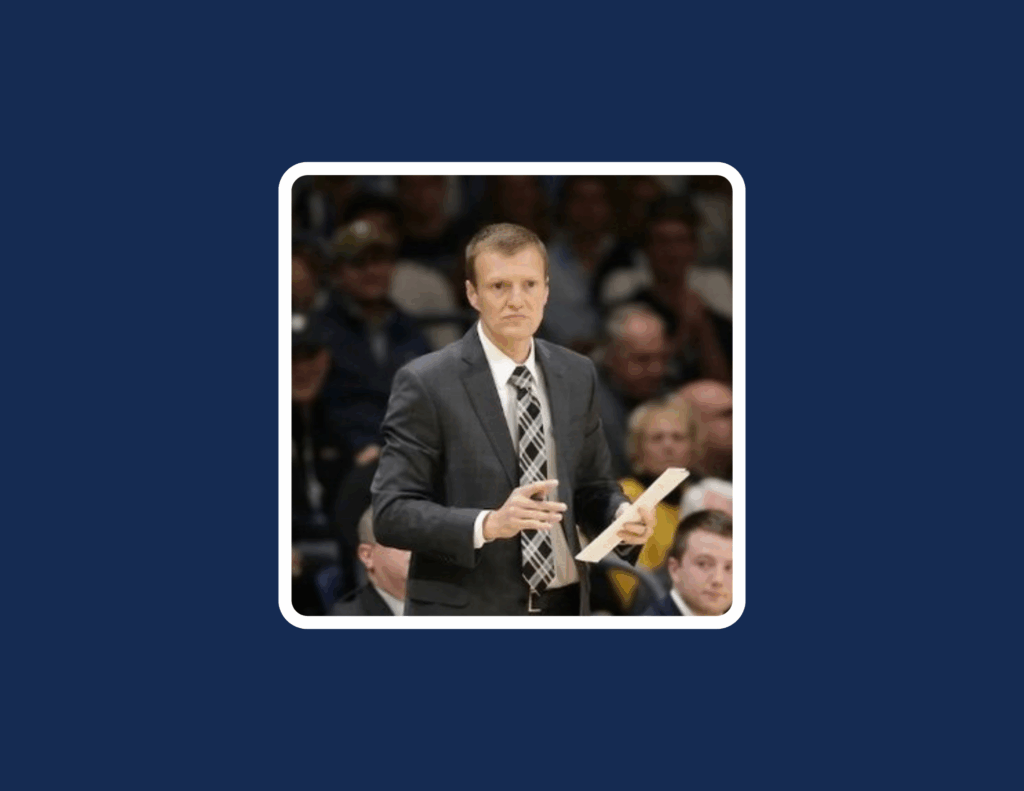
Website – https://athletics.setonhill.edu/sports/mens-basketball
Email – [email protected]
Twitter/X – @CoachBenWilkins

If you listen to and love the Hoop Heads Podcast, please consider giving us a small tip that will help in our quest to become the #1 basketball coaching podcast.
Ben Wilkins is entering his fourth season as the Men’s Basketball Head Coach at D2 Seton Hill University. Under Wilkins, the Griffins have posted three consecutive 16-win seasons, tying the most wins in the program’s NCAA Division II era. The program also notched its first-ever Pennsylvania State Athletic Conference Tournament win (over Edinboro in 2025), tied the school record for road wins, and beat two nationally ranked teams—just the second and third such wins in school history.
Prior to Seton Hill, was the Associate Head Coach at Army West Point, where he helped guide the most successful four-year stretch at the academy since Mike Krzyzewski. Earlier roles included Mount St. Mary’s (Associate Head Coach, two NCAA Tournament appearances), William & Mary (six years under two-time CAA Coach of the Year Tony Shaver), and Barton College, where his final recruiting class helped capture the 2007 NCAA Division II National Championship.
On this episode Mike and Ben discuss the importance of establishing a strong culture and fostering an environment conducive to winning and growth. Ben shares insights into his coaching philosophy, which centers around accountability, hard work, and the development of strong relationships among players. Throughout the discussion, he reflects on his experiences at various institutions, including Army West Point and Mount St. Mary’s, and how these shaped his understanding of leadership and teamwork. The episode further delves into the nuances of coaching style, including the balance between structure and adaptability, as well as the significance of open communication in nurturing player development.
Follow us on Twitter and Instagram @hoopheadspod for the latest updates on episodes, guests, and events from the Hoop Heads Pod.
Make sure you’re subscribed to the Hoop Heads Pod on iTunes or wherever you get your podcasts and while you’re there please leave us a 5 star rating and review. Your ratings help your friends and coaching colleagues find the show. If you really love what you’re hearing recommend the Hoop Heads Pod to someone and get them to join you as a part of Hoop Heads Nation.
Grab your notebook and a pen as you listen to this episode with Ben Wilkins, Men’s Basketball Head Coach at Seton Hill University.
What We Discuss with Ben Wilkins
- Keys to fostering a winning culture that prioritizes hard work and team cohesion
- Establishing an environment where players feel free to make mistakes is crucial to their growth and development on the court
- Effective communication and honesty between coaches and players lay the foundation for a successful program and enhance individual player accountability
- Utilizing video analysis and film study allows coaches to provide personalized feedback that helps players understand and improve their performance in games
- The balance between confidence and humility is essential for effective leadership in coaching
- In assessing every decision, you must prioritize whether it will positively impact winning
- Fostering connections and understanding among players
- Building relationships with players is crucial for their development both on and off the court
- Advice on creating a positive student-athlete experience
Like this show? Please leave us a review here — even one sentence helps! Consider including your Twitter handle so we can thank you personally!

We’re excited to partner with Dr. Dish, the world’s best shooting machine! Mention the Hoop Heads Podcast when you place your order and get $300 off a brand new state of the art Dr. Dish Shooting Machine!

Your first impression is everything when applying for a new coaching job. A professional coaching portfolio is the tool that highlights your coaching achievements and philosophies and, most of all, helps separate you and your abilities from the other applicants.
The key to landing a new coaching job is to demonstrate to the hiring committee your attention to detail, level of preparedness, and your professionalism. Not only does a coaching portfolio allow you to exhibit these qualities, it also allows you to present your personal philosophies on coaching, leadership, and program development in an organized manner.
The Coaching Portfolio Guide is an instructional, membership-based website that helps you develop a personalized portfolio. Each section of the portfolio guide provides detailed instructions on how to organize your portfolio in a professional manner. The guide also provides sample documents for each section of your portfolio that you can copy, modify, and add to your personal portfolio.

Hey coaches — you’ve got a game plan for your team… but do you have one for your money?
That’s where Wealth4Coaches comes in.
Each week, they deliver simple, no-fluff financial tips made just for coaches. Whether you’re getting paid for camps, training sessions, or a full season—Wealth4Coaches helps you track it, save it, and grow it.
It’s time to stop guessing and start building.
Subscribe now at wealth4coaches.beehiiv.com/subscribe
And follow them on Twitter @Wealth4Coaches for daily money wins.
Your money needs a coach.
Start with Wealth4Coaches.
THANKS, BEN WILKINS
If you enjoyed this episode with Ben Wilkins let him know by clicking on the link below and thanking him via Twitter.
Click here to thank Ben Wilkins via Twitter
Click here to let Mike & Jason know about your number one takeaway from this episode!
And if you want us to answer your questions on one of our upcoming weekly NBA episodes, drop us a line at [email protected].
TRANSCRIPT FOR BEN WILKINS – SETON HILL UNIVERSITY MEN’S BASKETBALL HEAD COACH – EPISODE 1169
[00:00:00] Narrator: The Hoop Heads Podcast is brought to you by Head Start Basketball.
[00:00:20] Ben Wilkins: Just making sure, Hey, does every decision we have, is this going to affect winning or not? And if it doesn’t, don’t worry about it. We’ll figure it out down the road. And then the culture, we have to get the kids to play really hard, to be really connected, to understand how to win, to be about each other. We just want culture.
[00:00:36] Mike Klinzing: Ben Wilkins is entering his fourth season as the men’s basketball head coach at Seton Hill University. Under Wilkins, the Griffins have posted three consecutive 16 win seasons, tying the most wins in the program’s NCAA Division two era. The program also notched its first ever Pennsylvania state Athletic conference tournament win over Edinburgh in 2025, tied the school record for road winds and beat two nationally ranked teams, just the second and third such wins in school history.
Prior to Seton Hill, Wilkins was the associate head coach at Army West Point, where he helped guide the most successful four year stretch at the academy. Since Mike Czyzewski earlier roles included Mount St. Mary’s, where he was the associate head coach and made two NCAA tournament appearances. William Mary, where he spent six years under two time CAA Coach of the Year, Tony Shaver and Barton College, where his final recruiting class helped capture the 2007 NCAA Division two national championship.
Hey Hoop Heads. When a player becomes unguardable, the game shifts the defense breaks the crowd roars, and your team takes control. Great players don’t just get lucky. They stoke the fire within. They’re built in practice accelerated with the right reps, the right motivation, and the number one selling shooting machine in America, Dr. Dish, feed your fire. Follow their incredible content @drdishbball on Twitter, Instagram, Facebook and YouTube. Mention the Hoop Heads Podcast and save an extra $300 on the Dr. Dish Rebel, All-Star and CT models. Those are some great deals Hoop Heads! Get your Dr. Dish shooting machine today.
[00:02:14] Brad Fischer: Hi, this is Brad Fischer, Women’s Basketball Head Coach at the University of Wisconsin Oshkosh, and you’re listening to the Hoop Heads Podcast.
[00:02:23] Mike Klinzing: Coaches, you’ve got a game plan for your team, but do you have one for your money? That’s where Wealth4Coaches comes in. Each week, we’ll deliver simple, no fluff financial tips made just for coaches. Whether you’re getting paid for camps, training sessions, or a full season, Wealth4Coaches helps you track it, save it, and grow it.
It’s time to stop guessing and start building. Subscribe now at Wealth4Coaches.beehive.com/subscribe and follow us on Twitter at Wealth4Coaches for daily money wins. Your money needs a coach. Start with Wealth4Coaches.
Grab your notebook and pen as you listen to this episode with Ben Wilkins, men’s basketball head coach at Seton Hill University. Hello, and welcome to the Hoop Heads podcast. It’s Mike Klinzing here without my co-host Jason Suckle tonight. But I am pleased to be joined by Ben Wilkins, head, men’s basketball coach at Seton Hill University.
Ben, welcome to the Hoop Heads Pod. Thanks, Mike. Fired up to be here. Excited to have you on. Looking forward to diving into all the interesting things that you’ve been able to do in your career so far. Let’s start by going back to when you were a kid. Tell me a little bit about some of your first experiences with the game of basketball.
What made you fall in love with it?
[00:03:40] Ben Wilkins: Yeah, Mike it’s interesting. I come from western PA. I’ve actually spent more years of organized football and baseball than I have basketball. So, my first love was, was football and baseball. When I was little. Man, I loved those sports and just for whatever reason, didn’t play basketball.
Western PA is, is not as big as football, especially when I was growing up. And so I got a little bit later Mike played a little bit of rec, but nothing serious. And then seventh, eighth grade started playing. basketball more seriously. And, and, and it’s interesting I think sometimes in life, like certain things happen for you.
And what happened here is I’m not a guy that likes to get screamed and yelled at a lot. And we had a new football coach come in. There was a screamer and yeller. We had an old basketball coach who was a screamer yell, and he left and we had a new guy named Joe Gun Dunn come in.
That’s an unbelievable human being. And baseball, I kind of just lost the love of baseball. And so really I love to say like, man, I superly loved it. when I was young, some of us, I just didn’t want to get yelled at as, as a, as a player. And I wanted to, I wanted to play for somebody that I liked in sports.
And Joe Dunn kind of really changed my life and be before that Brad Wetzel was a ninth grade coach. And those guys kind of really, it was about coaches a little bit over the sport, Mike. And then I fell in love because of those guys. And then I found that I think it fits me a little bit more as a coach than football.
So probably a way different, track that Most people I was just an okay, high school basketball player, Mike. Man, I wasn’t great at all. But I, but I, what I did get to do is play for two great coaches.
[00:05:02] Mike Klinzing: Tell me about those guys that you got an opportunity to play for and how they influenced you then, and how they continued to influence you today in terms of how you approach your coaching philosophy.
[00:05:18] Ben Wilkins: Yeah, I think first and foremost, I think Brad Wetzel I was probably 15 out of 15 on the roster, Mike when I was in ninth grade team. And to his credit I think he liked me because I was a good kid in, in his history class. And but he treated me the same, right?
And he coached me and he helped me get better. He invested in me. He didn’t treat me any different because I wasn’t I wasn’t helping when we played games. And and I was a little overweight, Mike. And I think sometimes you have to tell people the hard truth if, if you care about him.
And he, and one day he’s like, Hey Ben, man, if you ever lose weight, maybe you can play. And what it did is it actually gave confidence in me that, hey, I could play maybe, but I have to lose some weight. And then I lost some weight and help. So I appreciate that, that he always treated me the same as the best player invested in me and then was willing to tell me the truth.
And I think people really want to know the truth. And so I’ve carried that over with our guys. I’m not scared to, to tell him the truth, but just like he did, he, it’s not harmful. It wasn’t mean. It was, it was the truth that I needed to hear. And I appreciate that with Coach Wetzel and then Coach Dunn.
he was way before his time. Mike, I think he’s people talk about modern coaches now. He was a modern coach in 1997 and before that, but he was not a screamer and yeller. He was a teacher. He cared more about stuff off the court than on the court. He let us play without worried about making mistakes.
And my favorite thing that Coach Dunn always said is. If we as players make a mistake and ever go look at the head coach, he’s not doing his job right, because we’re worried about what his reaction is instead of going to the next play. And so I think that’s one of the biggest things that I try to do as a coach is, man, I, when our guys make a mistake, Mike, in a game, I don’t want them looking at me.
And if they do, that means they’re worried about me and I did something wrong, not them. And coach coach loved us and, and scream and yell and I always loved there was two, three minutes left and a close game and he’d come in with a big smile and say, man, this is a lot of fun.
I love this. And I, I just, I I was just blessed, man. But those two guys, it’s just two lessons are two stories that they gave me. And it’s cool being back here and maybe we’ll get to it, but there I’m 25 minutes from Seton Hill and I got a chance now Coach Wetzel is there, and then I got a chance to coach Dunn, my head coach.
I got a chance to coach against his son at Shippensburg. So you talk about a, a full circle moment, Mike. Really surreal. he, he runs down the court and I remember when he was two years old and Mike’s like. Hey, coach, how you doing? A big smile. And it’s like I smile him on the butt and it’s like, that’s special in life.
sometimes we can get this wins and losses and then seeing my coach there and I think one of the coolest things is he said he said the co the guys seem to really play hard for you and love to play for you. And that might be the best compliment I’ve gotten in, in the profession because it’s somebody that’s means so much to me.
I wouldn’t be where I’d be without those two guys. How do you
[00:07:49] Mike Klinzing: establish. That kind of culture where guys are AFL are, are not afraid to make mistakes and they’re not looking over at you, what does that look like on a day-to-day basis in practice, in your conversations? How do you establish the fact that, hey, you have to play loose.
You have to play with the ability to, to try things and not be afraid to make mistakes. because we all have been in situations, obviously, where we’ve played for coaches or seen players that we know play for a coach where every time there’s a mistake, the buzzer goes off and there’s a sub coming in and anybody who’s ever played in that environment knows that it’s really hard to play when you’re looking over your shoulder.
So what do you do? How do you do that on a daily basis to make sure your guys understand that, hey, you don’t have to look over here. I want you to play and play loose and play free. And obviously that doesn’t mean there’s no accountability, but I’m just curious how you balance that out.
[00:08:43] Ben Wilkins: Yeah, I think it’s first just talking about the relationship with growth and anytime you grow you’re going to have to fail.
And so for me, I talk to our guys all the time like, Hey, I want you to get in situations that you’re uncomfortable in practice because, and, and, and I want you to get better. And making them understand that the first time you do something, you’re probably going to fail. Then just telling them, Hey, that was a good rep right there.
Hey, now we do this a little bit better. And so for, for us, have a different relationship with failure. Is the, is the first part. And we talk one of our core values is growing. And we have a phrase with that is, be a man on the rise. And so we want our guys to fail. because if you’re not failing, you’re never going to grow.
And if, for me, I’m just not a screaming or, and a yeller mic and that it’s just more a teacher, Hey you did this next time, let’s look at this, let’s use the film. And I know the game’s made of a million mistakes and no one intentionally has gone on the court and tried to turn the ball over and tried to make a mistake.
But it’s a hard game. You make a million mistakes, a million decisions in a fast period of time. You’re, you’re going to make a lot of mistakes. And I think it’s just a little bit of mindset of letting them play through it. And we use a film a lot, Mike. I think film’s a good teacher because then you, then you’re doing it after the fact.
There’s no emotions. Everybody’s looking at the same things and then say, Hey, what can we learn from here? But I think in game day, Mike, I think as a coach way more than a tactician. We are a sports psychologist and I think the more that we can give those guys confidence and be calm and help them out the better they’ll play.
because I think most of our coaching should be done in practice. game day. I think you have to trust your guys on game day and, and, and give them confidence and so I dunno if that answers your question, but that’s kinda the mindset, some of the things that we try to do. But I’m okay with our guys try to do different things and it’s the only way you’re going to grow.
Totally makes sense.
[00:10:19] Mike Klinzing: When I think about just the ability of a coach to remain calm on the sidelines and not be going crazy, and then you think about sort of that old school model that you talked about earlier of the guy yelling and screaming and everybody’s looking over their shoulder every time they’re out there on the floor.
I just don’t think that you can get the best. Your players by approaching it in that way. And I think you made a really good point in terms of the sports psychology aspect of it, right? Is that when you think about the mentality of a 19, 20, 20 1-year-old kid, again, there’s a lot of, there might be a lot of bravado on the outside, but that on the inside there’s a lot of questions and a lot of self-doubt and a lot of trying to figure things out.
Just like I’m 55, I’m still trying to figure things out. And so I know when I was 18, 19, 20 years old as a college basketball player I walked around like I had a lot of confidence and in some ways I did. And then in other ways you’re always kind of questioning yourself and trying to figure it out and wondering are you keeping your coach happy so that you can play?
And all those kinds of things that, that go into that. And so for you to talk about being able to instill confidence in your guys, I think there’s a ton, a ton of value in that, being able to. Get them to understand that you believe in them and then give them that opportunity, as you said, to try new stuff.
Especially in the practice setting, right? Where, as you said, when you’re learning something new, mistakes come along with that. When you think about the growth mindset and the ability to kind of push yourself into that area, just beyond your comfort zone, right? Where you have to stretch for that new skill or whatever that may be.
So I think what I’m guessing is that a lot of what you do in terms of that is intentional in terms of your practice design. So how do you, if you’re, if you’re trying to introduce something new that is new to, is new to your guys or something that you want them to, to try, what does that look like?
What’s the conversation look like and how do you think about, in terms of designing the drill or the four on four or whatever it is, however you put that stuff in, what’s, what’s the, what’s the best way for you to introduce a new skill and make sure your guys understand that, hey, this is, this is going to push you maybe a little bit beyond what you’re capable of right now.
[00:12:34] Ben Wilkins: Yeah, I think, I think the first thing I’ll give any, anybody listen, Doug la Mo’s book on coaching I forget the name of it, but Doug Lamov has the best book you could ever about teaching and coaching. And so I suggest anybody buy it. It’s elite. And I think a couple of it is, first and foremost is you should, as a coach, throw down and say, okay, what mistakes are my guys going to make right now when we put something new in and anticipate the mistakes?
because part of that, Mike, is I think as coaches, sometimes we get so mad. It’s like we feel like we’re a bad coach and like we get mad at the guys, but we’re really like worried about our insecurities. And like you said, we have, we’re, we’re, we’re dealing, we’re dealing with human problems, right? Yeah. And so, like, first of all, okay, if I’ve already ma it out, okay, these five, six mistakes they’re going to make, and then when they make them, I can be a lot calmer because I already anticipate them.
And then for our guys, it’s like just saying, Hey, we’re going to work on a new concept. It’s going to be, we, we did one the other day. We we’re working on different, like a three low spacing and we’re just like, Hey guys, it’s going to be really bad. And what I like to do is is we sold some stuff from Drake and Ben McCollum and so we show some film beforehand.
because I think we learn by visual the best, right? And so I think the more you can show people what you want and they can see it, they can then, then reenact it. And so showing those first is the best way. And then our guys, what? We were 50 50 Mike man, we had some really good reps and some ones that looked like we never did it before.
And in each time just be really calm and be, Hey, that was really good. Hey, what do you want to do here? Ask good questions. And then the guys kinda learn and I think it’s become a culture with our guys. Like, so they’re okay trying something new and we were doing it a five on, five up and down. Like they had to, they had to just do it randomly.
Mike. So I think a lot of it’s just anticipating it and, and knowing that, one thing I’ve learned too is anytime you put a new drill in as a coach, you should expect that first drill is going to be so bad. Like no one knows what’s going on. Everybody’s going to fill out the drill and then you have to come back the next day and come back to it and revisit it and then it’ll be good.
And so you almost just have to expect, guys, we we’re going to need this day two. We’ll get something out of this drill and don’t get mad at the guys. because it takes a long time to figure it out. And last thing I say, Mike it’s great for me. I’m super lucky. Like I get to do this for a living. My guys are going to class and they’re watching Netflix and they’re hanging out and I’m thinking about a drill for two hours, and I come in and explain it in two minutes and I expect them to, to be thinking about it all day.
Like me, man. It just, this is the first time they’ve seen the drill. So and it takes time. it just takes time and you have to be comfortable. Now I do think part of that, Mike, is don’t always put new drills. I think drills are so overrated. I think that don’t do a lot of drills.
That’s what I going to say. because every time you put a new drill, it takes two days to get something out of it. So if you’re always trying to get these new drills, you’re just learning the drill, not playing how to basketball, sorry, I want a different direction there. But that’s, that’s our, that’s our concept.
But I think the biggest thing, if you could take a good visual of how to do it and show people beforehand, they’ll, they’ll, they’ll, they’ll do a lot better than if any other way.
[00:15:07] Mike Klinzing: We talked a little bit about film before and then mentioned it again here. How do you share film with your guys? Is it mostly in a whole group before practice?
After practice? When you’re watching game film, what does that look like? Are you meeting with guys individually, positionally, just how do you go about sharing the film? Not so much how you break it down as a coach, but how do you share it with your players? How much film are they seeing with you and your coaching staff?
[00:15:35] Ben Wilkins: Yeah, Mike, I love film. Maybe to a fault. So what we do, and I learned at Army West Point, you don’t have, you don’t have that much time with your guys, right? And so you can use technology to your advantage. And so what I do is I I take every practice I have a team edit at every practice. And what I’ll do is I’m talking like I am to you.
I use sports code, I use arrows. I, I talk and I, and I just go through it, like I’m talking to a team in front of me, right? And then I upload it to YouTube. Then we send it to our guys on YouTube. And the reality is, again, I love film. That film is from 30 minutes to an hour right now. And our guys watch it and our guys will come back and they love it.
They actually said sometimes they like it better than when we do in person because they can watch it on their term and they can slow down and rewind and they, they sometimes you can go too fast as a coach. And so we do that as a team. We don’t and sometimes we’ll do it in front of the team.
Obviously we get to games and stuff, but I like that because I do every practice, Mike, I haven’t missed a practice yet this year. I think it’s just a, the film is a huge way to get better. And then I do individual edits as well. So then all of a sudden individual might get five or six minutes of a clip and say, Hey Mike, you have to work on these couple things.
I do the same concept now with the guys, all the guys that are in the rotation, I’ll meet with at least once a week and we do a 30 minute. Check in, Hey, how you doing? Tell me how you’re feeling. And then we watch the video and talk through it together. And I believe as a coach, a head coach, there’s nothing more important than my guys and investing in them and helping them grow.
And so we spend a lot of time and their staff breaks down some different things with rebounding and stuff. But I do a ton of film and I just think it’s a great tool to get better. And I know, I don’t know, maybe a lot of the coaches are a lot better than me, but I go back and watch a practice film and I’m like, man, I don’t know where I was at practice half the time.
I pick up so much stuff. So we deliver a lot of film. But I think that YouTube uplift, it’s super easy. If anybody hasn’t done it, I never uploaded it YouTube until I went to Army. It’s super easy, it’s super free, and our guys love it. So that’s what we use.
[00:17:18] Mike Klinzing: I like the idea of the access on their own time, right?
Where they can pull it up at 10:00 PM before they’re going to bed or they’re done studying or whatever, they have to break in between classes. They can pull that stuff up and look at it again, as you said, on their own time. And I think they’re. Guys that clearly learn differently, right? In terms of watching that film.
And there’s some guys who are going to spend a lot of time with it because they find it valuable. And there’s probably other guys that are breezing through it and maybe not getting as much out of it just because of, again, the way that everybody has like a different learning style of, of how they go about doing it.
But to be able to have access to that and to have not only just the access to it, but I can only imagine getting the feedback from your head coach. And it’s it to me, what I would think of this is the first thing that came to mind as you were saying this, Ben, is that what I’m getting every day is an insight into my head, coach’s mind of what is my head coach looking for?
What does my head coach want? When my head coach praises my teammate for this boy, not only am I looking at my performance, but I can learn something from that. And I know that’s one of the things that I’ve always tried to tell any player, my own kids or any player that. Is not playing for my team, even though it’s, it’s a good message for your, for your own team.
But I, but I’ve tried to tell people that I’ve worked with, like, if you really want to maximize your opportunity to get on the floor and have a bigger role, well figure out what your head coach likes and figure out what your head coach wants, and then try to do those things. If your head coach loves offensive rebounding, well guess what?
Maybe try to be a better offensive rebounder. And I would think that your guys, with all of that feedback from you directly, that they have a pretty good understanding very quickly of what is Coach Wilkins like and what does he doesn’t, what, what is it that he doesn’t like? And that, to me, as a player would be tremendously valuable feedback to be getting that all the time, to be getting that every single day after practice.
I mean, wow. That’s just, again, I can see how talking about growth and improving that seems like it’s, it’s a, it would be a huge thing from a player development standpoint. I.
[00:19:25] Ben Wilkins: Yeah, I would agree. And Mike, if I don’t mind jumping over one on you just actually made me connects two things. And I think it comes back to the failure piece because then I’m sending the film, we’re both seeing together and I say, Hey Mike, I want you to improve in this area.
Let’s try to do this. And so now when they do it, I’m not like, sometimes the assistant coaches might work, but the head coach doesn’t know why that person’s trying something. Right? And so we’re in this thing together. And I think this one thing at verbiage is really important as as a coach, is I never say, Hey Mike, you have to do this.
I say, we have to get you to do this. We have to do this because we’re a team. And so everything I do is like, it’s, it’s a we generated, right? And so I want the guys to feel like, because we’re in this together, we’re invested we’re in this and the same thing. Hey guys, they’ll come to me and, Hey coach, what do you think about this?
And I see in the film a little bit different, and I tell them, I want you to come back at me and what are you seeing? What are you thinking? Like, you’re on the floor. Let’s, let’s do this thing together. But you’re right. I, they, they know exactly what I want and what I view.
[00:20:16] Mike Klinzing: You talked about it a little bit, but I want you to expound on just the idea of.
The film is clearly helpful to your players in helping them to learn, but you talked a little bit about yourself saying, Hey, sometimes it feels like I wasn’t, what was I doing there in practice? And how much have, how much are you learning through that process when you’re going through that each day in terms of trying to refine your teaching points, trying to re refine your demeanor, trying to refine something as simple as like, Hey, where am I standing and how am I communicating?
What’s my eye contact? How have, how has all that film work and going through and putting that YouTube stuff together, how much has that helped forget about your players? How much has that helped you to become a better coach and in what ways?
[00:21:02] Ben Wilkins: A ton. I a ton Mike. I think first of all you get more reps, right?
And so now all of a sudden when I’m watching it and I’m watching each clip four or five times and I’m rewinding, like, I now know what I should be looking for a little bit more closely next day on the practice floor. Right. And so now I’ve seen that same play and I’ve seen these tendencies and it’s like anything, if you get more reps at it, you’re going to get better at it.
And so now all of a sudden you you just, you, you, you’re, you’re seeing more basketball, you’re seeing more five guys like you just, you’re, you’re, you’re going to process information better. It doesn’t matter who you are. I think that’s a huge piece of it. And then, and then I’m and then I’m also like I’m learning too.
Like I, I was very lucky, Mike, I worked for Herb Sinek as a student manager at NC State, and there was a video coordinator there, and Herb was big. He’s from Patino Tree Alts film, right? I, you learn from like your first guy. And I learned so much from Herb. And I remember being in there, man, when I was a video guy.
And Archie Miller’s in there. Mark Repps was that coach at Drake was in there. And other, other great guys, like John Gross was just in Illinois. He was on staff. Sean Miller, like Herb had them all right? And so when you’re in there and you listen and Herb would be like, Hey, what should he do here?
Why do you think that? What are we going to go here? Let’s spend five minutes on one play. And, but it wasn’t being jerks. It was, they were trying to learn the game and learn the decision making to help the players, right? And so, like I learned of like how much those guys were growing as coaches watching the film that way.
And I and you hear Sean McVay talk about that with the Rams, how he watch it play four or five times. And so I just saw that and asking those questions, why did he do that? What should he done differently? Where should his eyes be? Asking yourself questions so you can teach better, right? And so sometimes if I can’t answer the question clicking really slow, how the heck is someone supposed to answer that question full speed in, in the course of a game?
? And, but part of it is like sometimes a lot of the eyes where, where are the eyes at? And then what am I telling him? Why should he do something different? So that, those are the questions. I think I ask myself more questions than anything. My wife probably thinks I’m crazy and watch film because I talk to myself the whole time.
But I learned a lot I couldn’t, I couldn’t I just. It’s just a big piece. And again, you learn from I learned from Herb Sinek, that’s what he did. We watch film all the time at NC State. And and, and that asking questions, I tell everybody, film them, ask questions and watch them watch each clip multiple times.
[00:23:14] Mike Klinzing: All right. Let’s go backwards to NC State and tell me a little bit about how and why you get into coaching. Did from the time that you were younger that you wanted to be a coach in some capacity because of the influence of the guys that you talked about earlier? Was that something that you always dreamed about or was it you got to school and an opportunity presented itself and you say, Hey, this is, let, let me try this.
Where was your mentality as you went to school in terms of what you were thinking about career wise and was coaching something that had always been on your radar?
[00:23:49] Ben Wilkins: Yeah. as everybody I I thought I was going to be a pro athlete, Mike, and then I realized pretty quickly that that was no chance of that happening.
So then it my dad has always told me, Hey, Ben, you love sports. You should do something in sports. My dad’s a big dreamer, and I’m lucky to have a father that has instilled a lot of positivity in me and, and, and going for it in life. And so I still thought I wanted to coach football, even though I was playing basketball and quit playing football.
But my high school coach, again, he came to me one day and said, Ben, what do you want to do? And I said, I want to coach I want to coach football. And he looked at me and said, Ben, you’re not mean enough to coach football. I think you should coach basketball. It’s a better fit for you. And he changed my life forever, Mike, and I just trusted him.
I listened to him. I said, okay, I’ll coach basketball. And he said, I know a couple coaches. He called Jean Katie at Purdue called Skip Prosser at the time was Xavier. And he knew Herb Sinek. All Pittsburgh guys are relations at Pittsburgh. And said, Hey, I got a guy who wants to coach. Great human being.
He’ll be a student manager. And coach Sinek knew my coach and took me without knowing me and said, Hey, I’ll be a student manager. Back in the day there was five student managers. It was hard to get a, I see staff there 30. I don’t dunno what they do. There’s 30 student managers. And so I knew it was the a CII liked the cold, I liked the warm weather.
And never visited NC State. Said, it’s what I want to do. I said, I’m going to NC State and best decision, one of the best decisions I’ve ever made. And that’s how I got there. But trusting my head coach and then leap of faith, I’m not a if I want to do something, it’s, I’m just going to trust and, and go for it.
[00:25:10] Mike Klinzing: When you first walked in there and you get behind the curtain of a college program, how much of it was shocking, surprising in terms of, man, I had no idea that this was going on. When you thought, Hey, maybe I want to get into coaching, but then you’re looking around going, is this really what coaching is?
What, what were some of the things that surprised you?
[00:25:33] Ben Wilkins: Yeah. And you ma you made me laugh, Mike. I haven’t think this forever, ? And, and it’s great because when you get old, you forget. And I remember being an 18-year-old manager walking in the office, I had my hat on backwards. I’m like a flip flops.
You don’t know what’s going on. And I got yelled at pretty quickly. I get the hat off, wear some shoes, and like, and now I see freshmen and you kind of give them the same license lessons. And that was one of the first ones. But I I thought I knew about basketball, right, Mike? And then I realized I had no idea about basketball, right?
You get there and you see Sean Miller and Herb Sinek run a practice, and you’re like, oh my goodness. Like, I don’t know what I was I don’t know anything about it. But you, but you learn. It’s still about people. Even at those levels. And you talk about the confidence sometimes talking to the players, like even though in a CC and great players like struggling with confidence and belief and you realize that the basketball Xs and os is important, but we’re coaching people that play basketball and we have to coach that person before the, before the, before the scheme.
And but it was fun. it was fun to be, be be around a program at that level. And what I would say is I’m lucky to be at, at, at levels a lot of different levels. And if you love what you’re doing, the level, it’s cool, but it’s, it’s not the, it’s not the, it’s not as big as some people think in tv.
getting to do what you want to do is a passion, is the best. But it was a good, it was a, it was awesome. It was great to see it. And and I was always respectful of the coaches that treated as greatest managers and all of them did. But Sean Miller was the best. And I’ll stick up for Sean Miller any day.
He was an unbelievable person and always great to us managers and watching him pr watching him coach I said, man, one day I want to coach with him with a passion, excitement. And his guys always, always they, they, they went hard for Sean Miller.
[00:27:04] Mike Klinzing: Was there any thought at any point that once you got into it that you weren’t going to go into coaching?
Or was it just coaching, this is what I want to do, it’s clear that these are the guys that I want to be around for the rest of my life. In terms of the coaching profession, was it clear that that was the direction you were going to go?
[00:27:21] Ben Wilkins: I. Yeah. No, I, I, yeah, I wanted to coach. Yeah, I wanted to coach. it was, it was in that direction.
I was going to stay with it. I, I loved it. And now again, being naive, right, Mike, I thought I was going to, my first job was going to be like an a, CC assistant. Again you, you’re 20 years old and people don’t understand pre-internet. Like, you don’t like pre-internet. Mike, we’re old. Like, people don’t understand.
Like, you, you didn’t have the information at your fingertips. And but I always knew, wanted the coach and it wasn’t going to change at all. I was ready to coach and so I was excited to get out of there just to get a chance to, to actually get to do what, what I’ve always wanted to do.
[00:27:53] Mike Klinzing: So tell me about the first job search when you graduate. What’s that look like? Obviously, you’ve got some guys that have great connections that you’ve built relationships with, and as we all know, in, in the coaching business, the relationships are huge in terms of being able to help you to get your first job or get your next job, or whatever it may be.
But just talk about that first job search after you graduated.
[00:28:16] Ben Wilkins: Yeah I remember going to the coaches and just they’re willing to help any way they could. trying to get, get a foot in the door and really wasn’t getting much traction. And one of my buddies, Mike Odom, who’s a, a Deputy D at Creighton now his, his girlfriend at the time wrote a letter to all the, teach all the, in Wake County, all the schools to try to get a high school teaching job.
So I said, why don’t I do this for coaching? And so what I did, Mike, on the East Coast every division one, division two, division three, I wrote a handwritten letter. I mean, it typed up letter but I personalized it a little bit. sent it out with postcards get people don’t understand, like back, not postcards stamps.
And just sent it out to East Coast Coast. And at the time I got interview with w and j up here thought I was going to get the job. They had one, they were like one in 30. And I’ll never forget, like two weeks later I come back, herb Sinek’s in the office, he’s reading a paper again, you don’t have the internet.
You read a paper and goes, Ben, sorry to hear about w and j. And I’m like. Play it off. Like, yeah, whatever. He’s like, yeah, I can’t believe he got fired and the coach got fired. I had no idea, Mike. And I’m like, man, so and so, I thought I was going to get that job. And so I couldn’t get anything. I had no traction.
So I did the same thing. I wrote every school in, in Wake County, because I was a teacher as well, I. Luckily I did that because there was a job at Apex High School that wasn’t posted yet. They needed to get like five more students in and they were going to have a half guidance counselor, half history teacher.
They needed a JV boys basketball coach. And because I wrote that letter they just, they, they offered me the job and I, my first job was at, as a high school teacher and got a chance to be a JV coach for David Neil was, was a great, great coach at Apex his first year there, which was cool.
And I have to be a JV head coach which was pretty cool. And I, I take that back, I, the story’s running a little bit. I was just supposed to be an assistant coach, and then I went to every open gym and I, David, coach Neil got to know me really well. He didn’t know the JV coach. The guy was coaching football too.
He said, Ben, you want to be the JV coach? And I was like, great. So I got to be the JV coach, Mike, head coach right away 23, 24 years old. It was, it was awesome. And got a chance to to teach your first opportunity
[00:30:08] Mike Klinzing: as a head coach of a JV team. You walk into the gym for your first practice and you’re looking at.
12 to 15 kids looking back at you. Okay, coach, what do you got for me? What are you going to do? What was that very first practice like for you? If you can remember back standing in front of those kids for the first time, and then I’ll tell you what my experience was like.
[00:30:28] Ben Wilkins: Yeah. I I think I just, I just felt alive, Mike.
I felt like I was where I was supposed to be. I had some good kids. And I think I was always confident naive to be that confident that age, right Mike? But I was, and so my experience was, was really good. And I just, I felt like I was right where I was supposed to be and it just felt so good to just to be in that position.
It just, it just felt amazing.
[00:30:52] Mike Klinzing: I remember being super excited and going in to practice and I always say that one of the things that I regret, that I wish I had done differently is. Growing up and as a player, I had played for the same high school coach for my entire high school career. And I played for the same college coach my entire college career.
And I always thought I’m a good player, so that’s going to make me a good coach, which we all obviously know is far, far from the truth. And so the only thing I knew in terms of drills, in terms of philosophy, in terms of the way to do things, was what my coaches did with me. And so I remember I set up the first drill, which was a drill that we had done with my college team and did the drill for like five minutes.
It was just like a rebound and outlet, run the lane and then get a variety of different shots off like a two on, basically a two on oh situation. And I watched the drill for five minutes, Ben, and I just remember it in my head. This is my most vivid memory. I think probably of that whole season was just going.
There was like 500 mistakes in that first five minutes of this like unbelievably simple drill. Like what, how, how am I going to do this? Like, I don’t even understand how I can even begin to fix or correct or do whatever with these guys. And of course, obviously you learn that you can’t fix everything in the moment and you have to pick and choose what is going to be important to you and all those kinds of things.
But I mean, it was, I just remember that first day just being excited just like you, but also after the first 10 minutes feeling like I’m overwhelmed and I really have to try to figure this coaching thing out because being a player did not prepare me in any way, shape or form for being, for being a coach.
And you learn very quickly. And I, and I wish, looking back at my career now, after having done this podcast for seven years and talked to so many coaches, I realized that the way that I approached things early on in my career. I could have been so much better had I taken more time to invest in myself as a coach and just didn’t let my ego get in the way of, again, I was a good player and I thought that was going to make me a good coach and my own experience, nothing, nothing could have been further from the truth.
And as I went along, I learned that in my career, but I, but I didn’t learn it probably early enough. Just like you, I thought I knew a lot more than I did at age 23 than what I, than what I actually knew in terms of, in terms of being a, being a good coach. So how important, when you look at the totality of your career, how important were those head coaching reps that year?
As a JV coach. because once you get into college and you’re a, an assistant, you, you forget that you don’t get those same reps in terms of especially the game piece of it, of under the subbing and just making decisions on the fly. How, so when you look back on that, that time as a JV coach, how important were those reps for you as you move forward in your career?
[00:33:57] Ben Wilkins: Yeah, I think Mike, I think the biggest thing for me is I’ve been really lucky in life and for whatever reason, universe, God, whatever you believe in, gave me an unbelievable team. So we were 17 and one Mike, and it wasn’t because of me. I mean, we were just so much more talented than kids we, we were playing against.
And so like, I think it actually gave me some confidence that I could do the job, but I also could stay calm and be positive and, and have good relationships with the guys. And so like, I think it gave me some just confidence of I had success year one that like, this is the right path for me. you asked that question like, were you still going to coach?
And I think it just gave me the, almost the the go ahead and say this is what you should be doing. And I think that’s way more than the reps of being a head coach. It was just, because if it’s you if you’re that coach at the end of the day, like you make all those decisions and there’s a little bit more responsibility there as an assistant.
So I think it just gave me some confidence and belief that, okay, this is the right path. This is where I should be.
[00:34:50] Mike Klinzing: Was there any thought after that experience of just continuing on that path of being a high school teacher and coach? Or did you have your mindset always on college basketball or where were you in your thinking in terms of a career path at that point?
[00:35:07] Ben Wilkins: Yeah, no, I still I still wanted to be a college coach, but I knew that I could be a high school teacher and a, and a coach the rest of my life and be super happy. It’s so rewarding. It’s such an important job. There is. I mean, it is, it, to be able to influence young people in this world is so important.
And so I was super happy, but I still was driven to be a college coach and college coach coach. what happened is I talked about those letters. I wrote up East Sound Coast. I must have done such a good job on a lever a letter named, a guy named Ron Leitz. He was the head coach of Barton, kept my letter, and a year later it was like three days into the practice season, he didn’t have an assistant coach.
And Wilson was 40 minutes down the road and he called me and said, Hey, I got a job. Now it pays all of $6,000, no benefits, no housing do you want to be a college coach? And so that letter, again, that got me my first job, but it got me a second job. And I tell people that you, you, you have to, you have to put yourself out there.
University. You have to try, you have to try to get lucky. And so I still wanted to do that and I didn’t think year two I was going to get in it, Mike, Greg, I thought and then all of a sudden out of nowhere I get this call. And got to, got to work for another incredible human being and great coach.
And Ron leaving Sea of Barton College. Was it hard to give
[00:36:13] Mike Klinzing: up the full-time salary at all? Did you bat an eye at all about the money or was just, Hey, I know that when I get into college coaching, you had been around it enough to know that, to get your start, you kind of have to take the jobs that are offered to you to get your foot in the door and then do the best job that you possibly can.
And that’s kind of how you move up. What was the thought process there in terms of just the salary piece of it and trying to, trying to make ends meet on $6,000 a year?
[00:36:39] Ben Wilkins: Yeah, I think two things is in full Mike, I was, I was worried about, I was a teacher, right? And I didn’t want to leave my kids in the middle of a class season at of the year.
And I didn’t want to leave the basketball team, right? And so there was a lady named Michelle Patel who was in the guidance counselor department that I was working with along with teaching. And she brought me in and said, Ben, this is how you wanted to do, there would always be another class you have to go.
And so, like, that was kind of nice to someone again, gimme some permission that like, there’s going to be other people, right? The kids will be fine. And then my father he said, Ben, it’ll be the biggest regret in your life if you don’t go for this. He’s like, this is what you wanted your whole life. Like, there’s always money.
You can always go back being a teacher. And so I think that was a good piece. And it was cool too our, our principal at the time brought me in and said, Ben, it’s the biggest mistake of your life. You are going to be begging for a teacher job again. You’re going to be tired of taste chasing 18 and 22 kids that were around.
And I didn’t say a word, I just thought to myself, you don’t know who you’re talking to. Not in arrogant way is like, I’m going to make this happen. And so it was just cool how different people could just have different perspectives. I think there’s too many people in this world to tell you not what not to do, but man, chase our dreams.
We have one of them. And so I was fortunate that my father gave me that advice. And Michelle Patel as well,
[00:37:43] Mike Klinzing: a college coach. What’s one area that you feel like you had to grow in when you first got the job? What was an area that you improved the most over the first couple years of your college cor coaching career?
So maybe you came in and it was an area that, I don’t want weakness, may be too strong of a word, but just what’s an area where you feel like you grew?
[00:38:04] Ben Wilkins: I think the, I think the biggest area, I had no idea how to recruit Mike. Like, I had no idea. Maybe I remember my first phone call being nervous as can be picking up the phone, trying to figure that aspect out.
That’s that, that was by far the biggest area for me. And I, I don’t know why. And I, and I think, so it, I just, I just as a coach tried to like imminate some of the, like I was around great coaches. Mike, and I think so. I was just so lucky as a coach sometimes just, I kind of just was trying to, and not, not just, I was still Ben Wilkins, but I had learned from some great people and for whatever reason, I just have a little bit of a belief in myself.
And so like the coaching piece on the court, and I worked for Ron Le, he let me coach and I think I was so lucky and I saw Herb Sinek, those assistant coach and un hear some places like where the only the head coach talks. And so I came in and I coached and Coach Le he let me, and again, I I I believed that I was John Wooden and Mike, right.
And again, not arrogant, but I just, I believed in myself and, but I also would. I think there’s a, there’s two things that I think I’m good at, Mike, is I’m going to have confidence in front of people and I’m going to, I’m going to, I’m going to, I’m going to do everything I can do to get us better, but then when that door closes, there’s a little bit imposter syndrome of like, okay, Ben, you don’t really know what you’re talking about.
We have to figure this out. And so spending some time learning to grow, to reflecting, to asking questions. I think there’s two parts and I think as a leader, you have to balance those things of, of having that confidence, but also being very humble of what and don’t know and willing to learn.
And so, like, that’s one thing that I pride myself in is I’m a learner and I’m okay looking like an idiot and trying to figure things out. And I want to get to the answer at some point. So I think that’s the biggest thing for me was recruiting. And but the on the floor stuff wasn’t, wasn’t as big of adjustment as I actually thought it, the game was a lot faster, but the, but the adjustment wasn’t nearly as big as I thought it would be.
[00:39:44] Mike Klinzing: I think that imposter syndrome slash confidence thing is. Really informative when you think about coaching because I know that there have been times where I’ve gone into most practices, right? Where I’m prepared, I know exactly what I’m going to teach, I know exactly how I want to teach it. I know exactly what I’m going to be doing.
And when I’m in that particular mindset, I’m a much, much better coach. I’ve also been in positions where I’ve helped to coach one of my kids’ a A U teams, and maybe I’m just like the third assistant. And so I’m maybe not as well versed in the four or five or six or whatever out of bounds plays or this piece of offense.
And I’m coming in there, I’m standing in practice and I’m watching going, God, hope the kids don’t ask me a question because I’m not so sure I know what I’m supposed to be teaching here. In terms of this, in terms of this play and it, and it speaks to right again, what gives you confidence is. That preparation and just from our conversation so far, and the amount of time, right, that you’re putting in watching film and understanding and knowing your guys and what it is that they do, and obviously that translates to what you’re trying to teach offensively and defensively and all those things.
So when you walk on the PLA practice floor, exactly what you want to teach. Now, maybe it doesn’t work sometimes, right? Maybe sometimes there’s like, Hey, I need to approach it differently. But in the moment, what you’re trying to do and what you’re trying to accomplish, you’re confident in that.
And I think that the best coaches, it speaks to preparation, right? And I think confidence comes from preparation. If you’re confident and you’re not prepared, well, that’s a whole nother that’s, that’s a whole nother problem right there. But it, you can, but if you’re, if you’re prepared, then you’re coming in the door confident.
And then I love what you said about, hey, even when I’m confident and I’m putting that out on the practice floor and game day or whatever. I still have to go back and have to reflect and be self-aware that even though this is the way I wanted to do it, I did it exactly the way I thought. But man, maybe there’s something that I could do a little bit differently.
And that goes back to our earlier conversation about the film and all that. So I think you make a really good point there. It’s just, it’s, there’s a balance, right? There’s, there’s a balance. You have to be supremely confident on the one end through your preparation, and yet not be so overconfident that you’re like no longer willing to learn or look at yourself self, be self-aware and be critical and try to figure out how can I improve and get better.
I think that’s a really hard balance sometimes to strike, because it’s easy to get, it’s easy to get overconfident if you’re like, Hey, this is what I know I know exactly what I’m doing this. Absolutely. And put all this time in. Absolutely. And you don’t listen to your players absolute or you don’t listen to your assistant coaches or you don’t watch, you just don’t see some of the things easy to sometimes to miss that.
the proverbial you miss the forest for the trees. Tell me about the opportunity after you’re at Barton, you next get the opportunity to go and work at William and Mary. Tell me how that opportunity comes across your desk and what it’s like moving from your first job at the college level to your second one.
[00:42:58] Ben Wilkins: Yeah. Actually at one year at NC State in between Mike, and that happened with, luckily, I was working at Okay. No, that’s okay. I was working at team camp and it was disaster, right? And Larry at the time, Larry Hunter moved on to Western Carolina and they, they didn’t, and it was disaster.
And I was there and I was a manager. You do everything right, Mike. And so our video guy was like, Hey, let’s hire Ben for the new spot. He can fix camp, he can do stuff. He’s here. Herb, saying again, this wouldn’t happen today. Herb calls me and says, Hey Ben, you want want to be the video coordinator at NC State?
And I was like, great. And so I go there for one year and then Herb takes the Arizona State job. At that time, right, Mike? And again, this is nothing wrong with co coach is awesome. You basically have 48 hours. Do you want to go to Arizona State or do you want to stay in the East Coast? that’s how this business works.
And at the time, Auer the ad said, Hey, Ben, we need somebody to go to class and stuff like that. If you want to stay, I’ll promise you a job for a year. And just make sure people don’t get in trouble basically. And so I stayed I decided to stay and just thought East Coast Connections was a better chance for me to move up.
And a guy named Pete Strickland came in as assistant with Sidney Lowe staff. I got to know Pete really well. And a month later assistant job at William Mary came up and I said, Pete, do Tony Shaver? And he says, yeah, actually I actually recommended a guy that got a job for him earlier.
And so he called Coach Shaver for me. And just I’m lucky I’m just a lucky guy, my good connections. And coach was looking to go more two guard style and Herbert played the Princeton and NC State and, it was the lowest paid spot in the ca so that helped me too. And coach, I got a chance to go to William and Mary and be a full-time assistant at Division one and the ca at the time the youngest ca assistant.
And that’s when the ca was the ca you had George Mason, VCU, old Dominion. I mean, it was a monster lake. And it was an unbelievable experience. And coach Saver, another guy, he knew one thing. Coach has a, he’s a two time hall of Famer guy, William Mary in, in Hampton City. And he’s an unbelievable person and he knows what he doesn’t know.
And he, and he played a different style at Hampton, Sydney, and he was trying to do what William Mary wasn’t working and he was well aware enough to say, Hey, this isn’t going to work. I need to, I need to hire some people to help me. I’m going to let them, even though I’m fi at the time, probably 45, 46 years old, I’m going to let them figure it out.
And I learned so much from him. And then he does the leadership stuff, the culture all that stuff he does. Unbelievable. So like, I’m not trying to, but like coach’s ability, how many coaches do that? There’s so many egos in this business and that’s why coaches, the best coach in William Mary history, she said she’ll be the coach at William.
And Mary just was in the Hall of Fame. We went to the Hall of Fame a month ago with my wife. And so great opportunity to be at William and Mary and spend six unbelievable years in Williamsburg.
[00:45:34] Mike Klinzing: Talk a little about delegating because that’s what you were just talking about, the there with Coach Shaver that he had the ability to, to delegate and not let his ego get in the way and give some parts of.
Program to his assistant coaches. And I know from talking to lots of people, both in my own personal life, but also here on the podcast, that especially when you’re a young coach or a first time head coach, that that’s difficult, right? Because you kind of want to have your hands and everything is ultimately it’s your name that is on the program.
The one loss record gets attached to the head coach doesn’t get attached to the assistant coaches who are running the offense or in charge of out of bounds or whatever special situations. So how have you handled that delegation piece as a head coach and how do you think about A, giving your assistant coach’s responsibility and then B, helping them to prepare ultimately for their opportunity to maybe run their own program someday?
[00:46:30] Ben Wilkins: Yeah. I think it’s one of those things, Mike. It’s, it’s, it’s it’s been a little harder than me than I would think to be able to delegate. I’ll be honest, the first time head coach I’ve got Jamal Stokes has been our, our assistant coach here with us. This is year four, our fourth year.
He’s been tremendous with us, super loyal great relationship builder. He’s been our defensive coordinator for four years, so he’s really done a good job on that side of the ball. I like the coordinator idea to give people’s more specific areas, kinda what you were saying about as a, as an au assistant in the third.
Sometimes you’re not, you’re not going to have the answers to everything as assistant sometimes. So I think if you can, if you can give them a smaller area and say, own this area, or at least be an expert in this area, it helps them and also helps them. If someone goes to Coach Stokes and asks an offensive question, he just say, Hey, go to the offensive coordinator.
And that’s okay. Like, it’s almost given permission and everybody knows. So I try to go offensive defensive coordinators which has been really good. And we, we had, Conner Levity was our we have a grad assistant as well. Unfortunately, Connor was a great, great coach. Young, great, unbelievable young man.
He passed away from a rare disease in our second year. he’s, he’s, he’s 24 years old and the most tragic of tragic. And so we won one year with one assistant, it was me and Jamal. We lost assistant during the year. So that was a a, a very challenging time for everybody to, to handle.
And then this year, it, it’s interesting, this year we, we, we actually, I have two ex-players now that we’re with us at Seton Hill. One’s a volunteer with us and one’s a ga and the GA is we got two guys on the defensive side and the, and the, and the other volunteer who just was a great player for us.
He’s going to be offensive coordin, year one. And what I like now, Mike, is they kind of, it’s easier to delegate now in year four because they, they know how I want to do things. Now they know, right? And. Some of it is, I didn’t know exactly what I going to do either, Mike. Right? So it’s hard to delegate sometimes when you’re still right as a first time head coach trying to figure things out.
They’d be like, how can I delegate? I have to, I have to figure out what’s between my own brain my own ears. So but now it’s easy. Like Ryan, my knows our offense as well as I do. And, and I’m step back a lot more this year than I have and try to go more big picture and trust those guys.
And it’s been really good. And I got an unbelievable staff. And then we added Chris Wando, who’s a, who’s a, a volunteer as well who I coached his brother at Mount St. Mary’s. So but those two ex-players have been great because they give me a different perspective too. They know what it’s like to be coached by me, right?
And they know what it was like year one at Seton Hill, and then Coach Stokes came in, Jamal came in with me. And so, like, I’m lucky to have those guys, but I try to delegate as much as I can. And it’s an area that I think I’ve taken a step this year. So I can you can only do so many things as a head coach and trusting them and empowering them is important.
[00:48:52] Mike Klinzing: What’s the one thing you, you don’t want to give up? What’s your favorite part of being a head coach? Something that you’re like, I’ll never delegate this piece of what it means to be a great head coach.
[00:49:02] Ben Wilkins: Yeah, I think, I think the two things you can’t ever delegate is relationships and culture. Like it’s about the people and the relationships.
You talked earlier, like you have to have relationship with your players as a head coach and the culture’s have to come from you. I think the film will be hard for me to delegate one day, but I’ll tell you as I get older, Mike, and I think if I had if Ryan Mice, the guy who’s a player for us now is here for two or three years, he might just take the offensive film and I might spend more time with the guys.
And I think I think I could delegate almost anything at this point, but not the, not the relationship and the players and the culture. Those are the two things that I’ll never give up.
[00:49:34] Mike Klinzing: Tell me about the relationship building side of it. What does that look like day to day in terms of on the practice floor, outside of basketball, how are you building those relationships?
Is it. More of an informal process for you? Are you thinking about, Hey, formally I want to meet with these guys once a week. I try to schedule a lunch with each player every two week. Are you scheduling things or are you more, hey, just, obviously there’s probably a little bit of both in terms of the informal, but just how do you go about making sure that you’re building those relationships and investing in your guys, not just as basketball players, but as human beings and as students?
[00:50:14] Ben Wilkins: Yeah. I think it, it’s both, like you said, Mike, I think at the beginning of the year, middle of the year, end of the year at formal meetings and I love walking meetings, so I walk. So I think it’s really important. Steve Jobs talk about walking. I think especially as a, especially this day and age, these kids are so used to using their phones and staring down and not having eye contact.
So if you can walk, there’s something of you’re going shoulder to shoulder and you’re looking ahead, that you’re going to get more honest answers from them. And they’re not as intimidated as sitting in a, in, in a room. So I love walking meetings and, and I like a lot of open-ended questions and I shut up Mike.
I feel bad for people. They’re going to listen if they listen to this podcast, they have to listen to me talk for, for an hour and a half. But I like to listen to our guys and I like to ask open-ended questions and then, and then ask follow up questions. And then I think in each, each just like a great podcast co host, and I’ve listened to a lot of your podcasts, and I can tell each one goes a different way.
And that’s what you have to do as a coach. You can’t just have cookie credit, credit questions and ask everybody the same questions. You’re not going to have a genuine response or relationship or a conversation. So I go in with one or two open-ended questions and I just see how this conversation’s going to go.
And so I do that formally a couple times a year. And then, and then in a year, it’s, it’s, it’s, I I believe that you need to do two things as a head coach every day. You need to think and you need to observe. You need to think and you need to observe. So I like the beginning of practice, observe our guys who’s walking a little bit different maybe who’s handling something different on the sidelines.
And just say, Hey, hey, you’re, you’re doing okay today. And then, and they’re always going to say, yeah, I’m doing good, coach. And then be like, Hey Mike, how you really doing? And then that second follow up is so powerful, Mike, because then they’re going to give you the truth. And then, and then finding out ways that, like if I see somebody struggle or something trying to get confidence in and I don’t want to take credit for this but I think it’s important that we give confidence.
We had a kid the other day, rig shooter for us. He’s probably had three or four days in a row where he just hasn’t made shots. Like he’s capable, right? Mike and I just look at him before price, say, Hey, this is a day, Trey, you’re about to hit six or seven, man. Like, you’re, you’re, you’re so close. All your misses are good.
Like, it, it’s the day and then he hits six or seven. So I think that’s something that it’s really important that you you continue to instill the confidence in those guys. You have to, you have to find out in that observ observation of where they’re at and sometimes the little interactions, the three or four minutes go a long, long way.
And so you, you just have to organically want to get to know the guys spend time around them. And if you can pop in I think sometimes that lunch is great intentionally, but I think sometimes if you can just pop in at the lunch table and just sit there and BS with those guys five minutes when they’re having a conversation and leave, I think sometimes that’s, that’s a great way to build it as well.
[00:52:48] Mike Klinzing: So you have two more experiences before you get to the head job at Seton Hill and Mount St. Mary’s, and then obviously at Army West Point, which is a completely different type of environment than what you see at most colleges. So give me one thing that you learned from Mount St. Mary’s and then let’s talk a little bit more in depth about just the experience at Army and how unique that was.
[00:53:10] Ben Wilkins: Yeah, I think the biggest thing I learned at at Mount St. Mary’s is Jamie and Christian. We kind of took over a situation that was it was a little toxic when we took over. And so finding a way, year one, coming into a different situation and how to rebuild a program we went to the NCAA tournament.
And so just seeing that piece of, of year one, I think that was it’s the first time I’ve ever been to year one, and so that really, really prepared me for Seton Hill. So I was lucky to go through that with Jamie and have some success there. And again, I, how I got to West Point, I think you have to put yourself out there.
And there was, at the times, B Sack Spiker was the head coach in the Army and they do a, a coaching clinic and they bring, they bring, they’re smart, they bring guest speakers in and topics they want to talk about. And we pressed at Mount St. Mary’s and they, they brought me up there to speak about pressing and I was nervous as can be.
No one wants to talk about your subject in front of your peers. And but I was like, what? I have to grow. I have to get out. So my cons, comfort zone and went up there and Jimmy Allen at the time was associate head coach and like my presentation, me and Jimmy loosely stayed in contact. And even before when Spiker got the Drexel job, Jimmy called me and said, Hey, if I get this job I want you to come and, and help us build the program and.
So I was got an unbelievable opportunity to go to Army West Point to, to, to be there for six years. And I’ll talk about that place all day, Mike and the young men that, that represent our country are the most special special. And I thought West Point was going to be a cool experience, Mike, and it was about 10 times better than I thought it would, could be.
And I’m just, I’m just so lucky that I got time to be there in that environment around those people. And then the cool thing is some of my best friends are, are all my staff. We’re on staff together there. You have a bigger staff there for the furlough for Patriot League and it was so much fun.
I loved it there always. Is there any question, anything you want to know about West Point, Mike? I would love to talk about it.
[00:54:50] Mike Klinzing: Alright, so let’s start with just the mentality of the players that you recruit and that are a part of the program. I’ve had the opportunity. Just through a, a friend that I know who put on some some conferences and as part of those conferences, I had an opportunity to go to the Naval Academy and get a tour and also go to the Air Force Academy and get a tour and be walking around that campus while the students are doing their thing.
And what I’m always struck by in both of those instances was, man, it takes a special kind of 18-year-old kid to make a decision to go to this environment with the discipline and just the daily regimen and all the things that go with being at an academy as opposed to just rolling into a normal school and being an athlete for a basketball program or just being a regular student.
And so tell me a little bit about just the mentality of. The players, players that you were able to coach and how that impacted what it was like day to day, interacting with them outside of practice, in practice, what was it like to interact with the kids who make the decision to go to a place like West Point?
[00:56:09] Ben Wilkins: Yeah. I was always in awe those guys, Mike, because I couldn’t have done what they did. Not at 18, 22 years old, I wasn’t mature enough. I wasn’t tough enough, I wasn’t mentally strong enough. So I was always in awe of the, of, of what they, what they could do. And I think it starts in recruiting process.
Mike the reality is none of those guys thought they were going to be at an academy, right? And so you call the, you call them the first time and they just wanted to play division one basketball. But what they all had in common, Mike, is they wanted to be successful in life. They wanted to be high.
They are high character and they’re driven. And so once you, once you start to educate them and say, Hey, west Point can give you everything you want. But you have to join the army. And then they’re willing to take that leap of faith and say, Hey, I want to be really successful. I want to be challenged. I want to become the best version of myself.
I’m willing to do what it takes. And so you just, you get the chance to have. Young men with the mindset of they are relentless, right? And they’re going to do whatever it takes to be successful. And it was hard. And so I think the cool thing is you could have such high level conversations with them because they were just so driven.
And they were about the team. They were about doing things the right way. And so that mindset was such an advantage for us. And mean you just got to coach the most special kids in the world. And it, it was just, it was just so cool Mike. But and what I’d say too is like Luke Morrison, it was a, was a player for us.
And he told me, I love my inter my exit interviews with those guys. Were like five hours long. Mike, I loved it. Sit down in the library for five hours, just talk about their experience was the best time of my life. And Luke was saying, he said, the thing about West Point is every one of us wanted to leave at one point.
At one point everybody wanted to quit, right? And the guys that quit. About 75% of them. It’s the biggest regret in their life that they didn’t stay with. And he said and he said, the guys that stayed for four years, not one person regretted and it all, they all realize what a better person they were because they went through the journey at four years.
And because that place challenges you in every way. And I think in life when you get challenged and you’re willing to keep fighting, you grow. And unfortunately, we all are in a society where everything is so easy today. That we, we, we don’t put ourselves in enough environment that challenges us so we don’t grow enough.
And those guys are willing to challenge themselves and grow. And we had a kid, Josh Caldwell two time defensive player of the year. Mike almost fell out of west, out of West Point because he couldn’t pass Raval swimming. He came in, he didn’t know how to swim. And if you see a kid at 6:00 AM that didn’t know how to swim.
That has full fatigues on, he’s got the lights are blaring on and off, horn’s going off wave pool. He’s going down a slide backwards with a machine gun in his head. And you’re watching this saying, this kid’s going to drown. And he’s willing to go there for an hour at 6:00 AM and pass survival swimming.
And who does that? Right. and that kid, that kid is, and I say, kid now is a coach. Sometimes you say kid Josh is a, is a, is a man now. And so that’s just one story of like Josh was willing to do that. He, he didn’t, he didn’t come in, he couldn’t swim. And he was two time defensive player here at a Patriot league and a lot, a lot of the kid did that.
How does that environment
[00:59:13] Mike Klinzing: impact you as a coaching staff in terms of scheduling, in terms of just running a program at West Point versus running a program at a quote unquote normal? University, what did you see as being some of the differences, whether it’s just in scheduling in terms of approach, I don’t know what differences stick out in your mind, but what’s different about how you have to coach or what you have to do at West Point that maybe is different from a normal college environment?
[00:59:47] Ben Wilkins: Yeah. I think you get way less time with the guys and when they do their, they can be tired some days the fatigue level’s just, it’s real. And so I think you have to be, and Jimmy Allen was great at, Jimmy Allen was at Navy for a long time. His father went to West Point he’s been around it.
So Jimmy really knew how to navigate Army West Point at a high level. And so we would, we’d make sure that, hey, if there’s days that, hey, we’re going to go for an hour and it’s only an hour and we’re getting out of here, or giving our guys a little bit more time off. To make sure that they were fresh. He understood that, he understood that, especially that freshman year is called the plebe year.
He said that plebe year, sometimes freshmen in practice, they look like could never dribbled basketball in their life, Mike. And instead of getting mad and yelling and screaming, he’s like, oh, he’s just having a plebe day. He just can’t function today. And Jimmy did, didn’t get rattled with it. And so you just had to know that they were dealing different, different obstacles than other people were.
And you didn’t have them during the day to go get shots up. You didn’t have any of that opportunity. And so you had to make the most of your time and be very efficient. And I think it helps you as a coach is realize, Hey, what do we really have to practice and what is this fluff that we don’t need to practice?
And I think the advantages you gained is we didn’t have to deal with anybody like, oh man, these guys aren’t bought in, or These guys are, are not hardworking, or These guys are soft, or stuff. We hear coaches talk all the time. We didn’t deal with any of that. And it was just, and they were getting leadership training at the highest possible level in the world, down the hill, down the hills is the academic area.
So yes, we had our own leadership stuff. Yes, we were developing our culture and our leadership, but they were also getting that same kind of treatment, the training down the hill. And so you had guys that were getting elite team building at the highest possible level. So you had some huge advantages with that.
And I also think the team chemistry, I really believe that people that struggle together become a lot closer. And so, like our guys go through basic training together. They go through survival scrimming, they go through their summers. that makes them really tough because they have those cool, Hey you, you’re like me.
We went through that basic training together and our chemistry was unbelievable because of those suffering. That’s, that West Point makes you go through that again become, makes you become a better person, but also brings our team a lot closer together on the basketball court.
[01:01:49] Mike Klinzing: Did
[01:01:49] Ben Wilkins: you
[01:01:50] Mike Klinzing: find yourself becoming.
More disciplined in any way in your own personal life, just by being in that environment. Did it change the way you approached things in your life away from basketball, just being around that kind of culture and discipline and leadership on a daily basis? Did it impact you off the court?
[01:02:11] Ben Wilkins: Oh, absolutely, Mike, absolutely.
I think, I think you’re, you’re, you’re in, in, in the, an environment where everybody is just striving to be the best version of themselves and everywhere you go it’s just elite people everywhere. And so you look around and you say, man, I can’t get left behind. And you realize like, I have to raise my game.
Like I have to eat a little bit better I better work out a little bit. I better meditate I better journal. Like, I have to, I have to try to figure some things out. Like these are what the best of the best do and I have to, I have to raise my level to them. And the cool thing to us, we, we had officer reps.
Which were officers at West Point most of the professors at West Point are officers, and you’re actually on military orders when you go for a road game, right, Mike? And so when you go, you have to have an officer travel with you. And so we get to know these guys that are army rangers, that are Delta force, and what’s cool is they’re just the most normal guys that, that are total bad asses, right?
But they’re just the normal guys. And you see them how they operate and you say, okay, I have to, I have to raise, I have to raise my game. And absolutely that environment. And I believe that with anybody, right? If you’re in a bad environment, it’s going to sink you down. And if you’re, I saw it firsthand it’s the most elite environment by far I’ve ever been in it’s West Point, right?
There’s not many west points. But it raises you up and everybody there is pushing themselves and it’s just special. It’s really special. Mike, our country’s lucky to have the academies.
[01:03:29] Mike Klinzing: What’s one of those habits that you built there that is still with you now that you, that you feel like is indispensable in your life?
I’m going to give you the
[01:03:37] Ben Wilkins: weirdest habit that’s maybe not a West Point habit, but Jeff Monken is a football coach there, right? Illegally and two things. Jeff Mung is every, every staff meeting was in the front row and taking notes and locked into every staff meeting. And we all know it’s all staff meetings.
Sometimes people don’t pay attention. You get all in the football coach at, at West Point, and Jeff Monkin would walk around campus and he any trash, he picked up trash and threw it away. And you just see Jeff Monken do that and say, why don’t, why don’t I do that? Right? And so that’s something, and I I I actually talked to our guys about it and the other day it was cool.
We’re all conference player. I saw him on campus and he was picking up something in trash and putting it away off the, off the ground, and felt pretty proud. And I never thought about that, Jeff Kin, how much you could walk by trash, but that’s just a little example. But you see that and it’s like, that’s what everybody there does.
Everybody there is just I know it’s probably not the answer you’re expecting, Mike, but man, now I see trash. I pick it up and throw it away, and I feel like it’s my obligation to seat hill on our campus to we got a beautiful campus. Let’s, let’s, let’s throw the trash in, in, in, in the trash can where it belongs.
[01:04:35] Mike Klinzing: Little things make a difference, right? And you can extend that to pick it up trash and you see it. And there’s a million other examples we could give, right, of something small that in the moment if you walk by that paper cup and you don’t throw it away to make that bit much of a difference in the moment.
Probably not, but man, if you do it and just imagine if everybody did all those little things and then you multiply that by 10 other little habits that you picked up, or 10 other little things that you try to grow. And all of a sudden, man, now you are making a real difference, not only in your own life, but in your, in the lives of the people that are around you and in your environment and in your city and on your campus, whatever it might be.
And I think that again, when you talk about being in an elite environment, it doesn’t get more elite than West Point. And I just don’t know how you couldn’t be in that place for as long as you were there and not come away with just so many things that you’re like, I have to, I have to, I have to do better at this.
I have to, I got, I have to be, I have to try to maximize the person that I can be. because man, those people there, I just remember walking around those, the academies and just the way that you have to walk in this you have to walk on the certain the freshmen have to walk on this certain pathway at the at the Naval Academy and just being like.
At 18, like, who, who’s choosing this? As opposed to just, again, you had your baseball hat on backwards and your flip flops walking into the basketball office and, oh, here these guys are in full full regalia walking through and they’re straight. And just, it’s just, I mean, both, both of those experiences at the two academies and I was there for five hours at each one.
And it, it impacted me in such a way of just, again, being, being proud of, of, of the people that make the choice to be there. As Americans, like you said, it, we should all be thankful that there are, that there are young people that, that want to go in that environment and want, want to be the types of leaders that this country, this country so desperately needs.
And man, it’s just, I don’t know how you couldn’t be affected by that. So. All right. Let’s, let’s jump to your current job. Why Seton Hill? What. Attracted you to the job, what made you think it was a good fit for you, and what made you think that hey, this is a place that I think we can win at and I can be successful.
[01:06:56] Ben Wilkins: Yeah. Mike, I’ll give you the honest answers. I tried to get a million head coaching jobs and I couldn’t get any they’re really hard to get at any level. And then when I looked at Seton Hill Seton Hill had a lot of alignment for things that, how I wanted to run a program.
First it’s 25 minutes from where I grew up, so I know the area. I love the area. So for me to get a chance to come home was special. Seton Hill is a very good academic school spending time, especially at William and Mary and Army West Point. I like to attract high high character and very intelligent young men.
And you have to have a really good school to be able to, especially the intelligent piece, right? There’s, there’s degrees that are different and we’re a really good private school. I love that we’ve never been to the n NCAA tournament. I’m a Mike, I’ll give you a good trivia question.
I’m sure your fa people know this, but since the start of the NCA tournament, there’s only three teams that have never been to the NC tournament and Citadel’s, one of them. William Mary’s one of them, and West Point’s one of them. So I’ve spent 12 years in my life at, at, at, at two of them. And we were darn close at both of those places going to the NC tournament.
And I want to be somewhere first. Like I’m a chip on a shoulder type guy. I’m not a, I went to NC State, I didn’t go to Carolina. Right. Like, I, like, I like to be that underdog type guy. And so I like seat Hill. we’ve only been co co-ed for 23 years now, but we’ve never been to the n NCAA tournament.
We played an unbelievable division two league, the psac we took over a program that only won three games. And so I saw a lot of opportunity within it, but, and saw a chance to grow. And, but there was an alignment from top to that. This school doesn’t the number one thing for our president is student athlete experience.
Period. End of discussion. If our student athletes have good experience, I’ll have a lifetime job. If they don’t, they’ll fire me. It doesn’t matter if I go to the NCA tournament, it doesn’t matter if I win five, win five games and I can run a program doing it the way I believe is best and helping impact these young men so they can be successful in life.
So there’s just so much alignment and it’s been awesome. It’s been terrific, and our administration’s top-notch and they’re all about the right things. And I inherited an, an incredible group of young men that reality just didn’t have much direction and we’re in a they were in a bad environment from the previous regime.
And I was lucky to inherit this group and I’m proud of what we’ve done. What
[01:09:01] Mike Klinzing: was in your mind when you took the job and you thought about trying to get the program going in the direction that you wanted it to and to try to reach your vision? What was the number one thing that you felt like, I’ve have to get this going right away.
I have to get this right in order for us to get to where I want to go. What was the, what was the first thing in your mind when you took over?
[01:09:22] Ben Wilkins: Yeah, just culture. Culture, Mike. We, we and everybody says it, but I really believe it and we live it here. This isn’t just this, this talk on a podcast. And so everything was everything.
Decision year one was about culture and sticking there. And if something kind of didn’t affect winning, did not worry about it. I think sometimes people get caught up in, in, in stuff that’s silly. That doesn’t matter. And just making sure, hey, does every decision we have, is this going to affect winning or not?
And if it doesn’t, don’t worry about it. We’ll figure it out down the road. And then, and then, and then the culture. We have to get the kids to play really hard, to be really connected, to understand how to win, to to be about each other. And, and I think that’s the nice thing. Sometimes you take over a pro with win the three games, Mike, what are we going to win too?
Like, you don’t have to worry about winning games like and so I, we just want culture and I remember we had a kid, Sam Tappe, who was our best player coming back. But when you’re the best player coming back, you average 13 points a game shot like 39% from the floor, right?
And so Sam wasn’t practicing as hard as he needed to. And, and our first scrimmage, I didn’t know what I was going to do starting wise, Mike. I couldn’t start them. So I made a rookie I made, I think one of my good decisions is I said, what we’re going to do? because I knew, I, I didn’t want to say I’m not going to start him, but I also knew if I’m saying play hard, he’s not doing what he needs to do.
I can’t start him. So I just said, guys, what we’re going to do is we did an NBA draft and we picked a starters, a scrimmage out of a hat and by position, so we couldn’t get five centers out there. Now the crazy thing is the same five guys were picked out of the hat that started the previous year. And so we made sure we did the subs out of the hat too, Mike, to see that all the names were in there.
I didn’t pick it, we didn’t rig it. And then I told Sam, if you don’t play harder. If you don’t do this, like I’m not going to start you and Sam to credit Unreal human being. I love Sam. We have an unbelievable relationship. Sam was very coachable. Ended up having an unbelievable year. It was all conference 19 points, a game after like 55% for the floor.
Playing professionally in Greece now. And we have an unbelievable relationship. But Sam a let me coach him and I just knew that like, I had a, and I bench, I’d bench Sam three or four times during course of games. because I thought his body language and his attitude just wasn’t where it needs to be.
And I think I was willing to just say, Hey, we’re going to, we’re going to have that standard the way it needs to be. And Sam, again, I’m lucky to have guys like Sam that want to be coached that want to do it the right way and so culture, culture, culture. Mike, and not lip set. That’s all I cared about year one.
And really clarity how we’re going to play. Very simple. We’re going to play really hard and have some simple stuff on both sides of the ball, but be really clear.
[01:11:41] Mike Klinzing: Yeah. It goes back to what you said earlier on in the conversation, right about having. An honest discussion with somebody, right? And telling them the truth.
And here’s your returning leading score. You’re a brand new coach, probably a guy you want to have on your side, but if he’s not doing the things that you need him to do, you have to have that conversation. And by doing that, you gave him what he needed and he was able to turn it around and become the player that you thought he could be.
And it’s not always easy to do. Right. Tho those conversations, again, it sounds like you learned that early on, but some people don’t always learn that, hey, those tough conversations and telling players the truth. Sometimes, especially for young coaches, that’s hard to do. And especially when it’s your best player or somebody that you’re really dependent upon, you’re kinda like, eh maybe I can just let this guy slide a a little bit.
And you realize that if you do that. It never works. It always comes back to bite you. And you’re much better off ripping that bandaid right off and having the difficult conversation. Then you get the most out of you get the most out of somebody that that you possibly, that you possibly can.
Where are you and where were you when you first took the job in terms of your philosophy, how you wanted to play Xs and O’s, Ys, your style of play offensively and defensively? because I know I talked to a lot of guys, right? And you had the opportunity to work for a lot of great coaches in a lot of different places.
And clearly everywhere you go you learn something. You pick up things, you say, Hey, I like this, I don’t like that. And then as a head coach, you kind of have an idea, especially in your first job of. This is kind of how I want to play. And then it, it takes you a little bit of time sometimes to, to kind of figure out and hone exactly what you want your teams to look like.
So where are you in that process of, and again, obviously you tweak it a little bit depending upon your personnel and in college you have some control over bringing in guys that fit the way you want to play. But there’s always tweaks being made, but just where are you in terms of a comfort level with your philosophy of, of how you want your teams to look and how you want them to play.
[01:13:45] Ben Wilkins: Yeah. Yeah, I’d say we’re still growing there, Mike. I think year one offensively, I looked at our team and said, okay, let’s, what are we going to do to, to, to, to have some success? We just opened some double gaps, strove it. We were really simplistic. We had some success there. I loved when I was at Army, we played against Joey Gallo at Merrimack in that zone.
And so I know Joey and Phil Katano, one of the assistants, and they I went up there and studied them and said, Hey, we want three games. I’m going to try to do a different defense. I think we were at a more challenging job sometimes being unique. So we played the Merrimack Zone, never coached it before barely ever coached zone and said, Hey, we’re going to jump into this.
We barely played any man, and I think this year we might play a little bit of Man Mike and still play that zone. And so we’re still learning a little bit on the defensive end a little bit of when we play, man. Exactly the best man. But we got some good players to do it.
And then offensively after year one. At William and Mary, I really liked the idea that we played more of a Princeton style. But the only thing I didn’t like, I liked it that the fact that the ball really moved. But I didn’t like that it always went through the five man. And so now we basically just said, Hey one spring, Hey guys, all I want to do is I want everybody to try to get in any many two man actions as you can.
We can go scream, we can go get game, we can set ball screen. I don’t care if it’s one on five, five on one. Let’s, and then here’s some basic concepts. So we kind of have a free flowing motion, Mike, where our guys we’ve now gotten some rules within it because this is year three of it. We have an older team.
They kind of know how they’re going to play and what it lets each guy do is use their own strengths within an, an emotion. And we say, Hey, you’re, you’re a downhill driver. You should be cutting the help here. You should be how do you put yourself in position? Hey, you’re a shooter.
What, what’s you’re spacing on the perimeter? So we kind of a free flowing motion. That’s, that’s kind of work in progress, Mike. But. Part of me is, Hey, there’s 10 people at the game. I love where I’m at, it’s great level, but like I’m not if you’re, if you’re John Shire and your first job’s at Duke, you, you have to be a little risk, risk averse.
I’m just going to try some things on, on basketball side and see how it goes. And I love how we’re playing offense right now. I really do. I it’s a fun way to play. Our guys like it. We really only call set plays on dead balls, so I think we have more clarity there. Defense, we’re getting there.
But we played the zone all the time. We’re pretty good defensively. So, but I’m always looking for new things. I love studying the off season and different concepts and you have to stay ahead of the game. I mean, the game’s so much better coached and taught than it’s ever been simply because the information, right?
We’re on this podcast talking and people are going to listen in their car wherever they listen to. And same with videos and YouTube and Synergy and when I was at Barton and William and Mary that didn’t exist. And these young coaches don’t understand how lucky we are to have this information Yeah.
To really grow and to learn. So but I love how we’re playing offense and we’ve evolved a lot since we started, but the last three years we’ve been the same offensively.
[01:16:25] Mike Klinzing: Yeah. It’s fun, right? It’s fun to evolve and change and grow and figure stuff out. And as you said, when you can go and there’s so many avenues to be able to learn, whether it’s through.
The relationships that you have with other coaches and going and picking their brain or watching practice or, again, as you said, the internet is just, it’s incredible. It’s an incredible tool. You have to be careful, right? because you can find a million things that you’re like, oh, I love that. I love that, I love that, I love that.
And so you have to be discerning in terms of what you what you, what you pick up and what you incorporate. But certainly there’s no shortage of tools for coaches who wanting be out there and grow and learn and pick up new things. And I think as a. As a first time head coach, everybody that I’ve talked to says it, it takes a year, two, three years to kind of really get the feel for, Hey, who am I as a head coach and what do I want my teams to look like and what are the core things that I believe in?
And I think that as you get to that point again, you then you just get to where, where you’re tweaking and you’re saying, Hey, this is kind of the general area. This is my basic philosophy. And then there are things that we come off of that, that help us to, to grow and be, be different each year.
And then obviously as the game evolves, there’s adjustments to be made from a coaching standpoint there as well. All right. I want to ask you a final two part question to wrap this up. So first part of the question, when you look ahead over the next year or two, what do you see as being your biggest challenge?
And then the second part of the question, when you think about what you get to do every single day, what brings you the most joy? So your biggest challenge and then your biggest joy.
[01:17:56] Ben Wilkins: I think the biggest challenge, Mike, is just always enjoying the little things in life. And we always say in our program that the journey is the reward and to really make sure that we all enjoy the journey and not get caught up in wins and losses.
And I think sometimes year one was easy, Mike we went from three wins to 16 wins and now that we won 16, three straight years, so some people say you’re stuck on 16. And each team’s a new team. we have, we have team 23 right here, just enjoying my time with those guys, enjoying the relationships.
And I talked about Josh Caldwell earlier and I, and as this podcast, one of the best parts for me in this podcast. Mike has been thinking about players that I got a chance and coaches I got a chance to coach with. And like, that’s what’s special. It’s not wins and losses, it’s not games. And just remembering that when you’re in the moment.
I think as coaches we all want to win. We’re super competitive. But really remembering what matters the most and enjoying the journey. That’s my biggest challenge. And sorry, what was the other question? Biggest joy. Biggest joy. I think the biggest joy, biggest joy is just sometimes the big, yeah.
The biggest joy Mike is just man walking in that gym. Like, Hey my joy is when I walk up, we have steps to get into our gym and I hear the balls going and the music going, and you walk in there and you see the guys and just be like, man, we get to, we get to have another practice. ? And I think that’s special and I think there’s something in life you don’t want to take special for granted.
And being part of a team, and for me, getting a chance to be a leader and a mentor for a special group of people that’s special. And I don’t want to take that for granted, and that gives me the most joy.
[01:19:24] Mike Klinzing: Well said. And I think it goes back to what you talked about in terms of. What Seton Hill’s looking for, right, is providing guys with a great experience.
And if they’re provided with a great experience that goes along with the journey, that goes along with the joy of just being with your guys on the practice floor, on the bus, on the road, at games, whatever because you’re providing with a great experience. And to me, that’s really, again, ideally what it’s all about.
Because if they’re having a great experience, I think the wins and the wins and losses take care of themselves. If you’re, if you’re giving guys an experience where Guy won and Guy 15 on your roster all could walk away and say, Hey man, it was, that was a great four years playing for Coach Wilkins at Seton Hill.
There’s, there’s, there’s no better compliment than that. Before we get out, I want to give you a chance to share how can people get in touch with you, reach out to you, find out more about your program, share email, social media, website, whatever you feel comfortable with. And then after you do that, I’ll jump back in and wrap things up.
[01:20:23] Ben Wilkins: I have a Twitter, I have no idea what the handle is.
[01:20:26] Mike Klinzing: We’ll get that figured out.
[01:20:28] Ben Wilkins: Okay. My email is, I think [email protected]. By far the best way though. My cell phone is (757) 813-8964. Shoot me a text. I would like to stay off email and social media as much as I can so if anybody wants any, who wants to talk hoops, any questions?
Man, I love to talk Hoops would help anybody out. I can and I’ve been blessed with a lot of people helping me during the journey. So one of my things is always give back. So if any way I can help, shoot me a text and I’ll help you out.
[01:20:55] Mike Klinzing: Ben, cannot thank you enough for taking the time out of your schedule tonight to join us.
Really appreciate it and to everyone out there, thanks for listening and we’ll catch you on our next episode. Thanks.
Your first impression is everything when applying for a new coaching job. A professional coaching portfolio is the tool that highlights your coaching achievements and philosophies, and most of all helps separate you and your abilities from the other applicants. The Coaching Portfolio Guide is an instructional membership based website that helps you develop a personalized portfolio.
Each section of the portfolio guide provides detailed instructions on how to organize your portfolio in a professional manner. The guide also provides sample documents for each section of your portfolio that you can copy, modify, and add to your personal portfolio. As a Hoop Heads Pod listener, you can get your coaching portfolio guide for just $25.
Visit coaching portfolio guide.com/hoopheads to learn more.
[01:21:57] Narrator: Thanks for listening to the Hoop Heads Podcast presented by Head Start Basketball.