
ANNIE MCDONALD – DUAL SPORT ATHLETE AT SPIRE (OH) ACADEMY & HER COACHES KRISTA PHILLIPS & MICHAEL LARKIN – EPISODE 1031
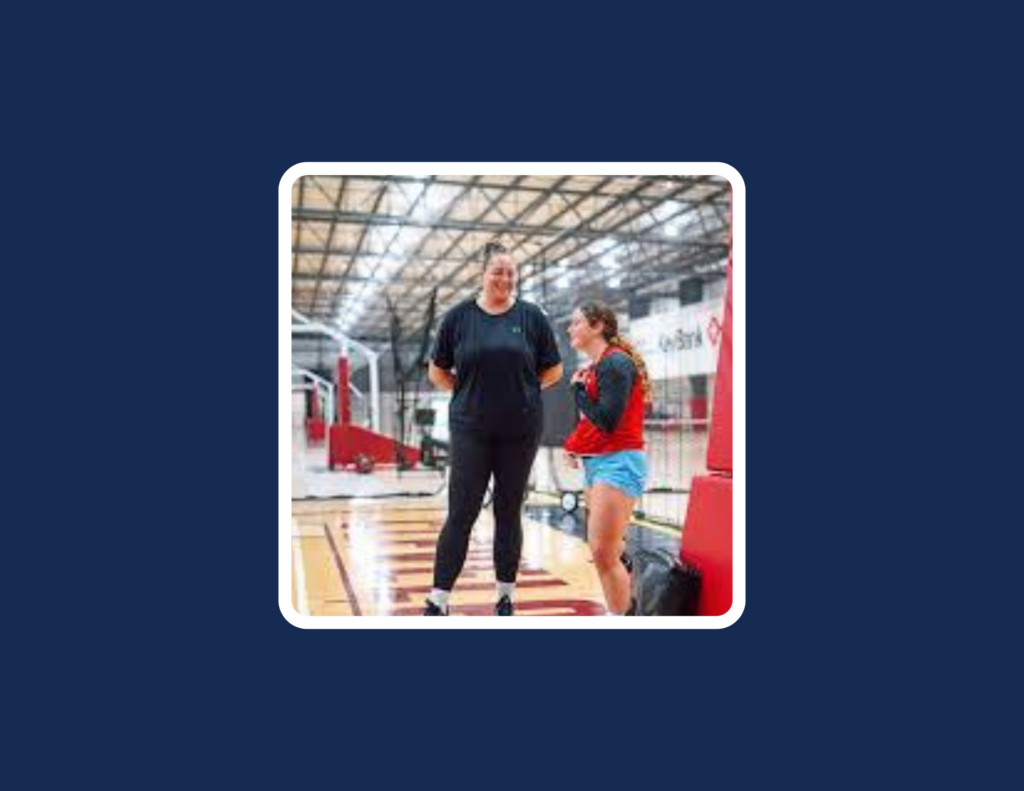

Website – https://www.spireacademy.com/the-wire/annie-mcdonald-dual-sport-athlete/
Email – amcdonald25@spireacademy.com
Twitter/X – @SPIREHoops
If you listen to and love the Hoop Heads Podcast, please consider giving us a small tip that will help in our quest to become the #1 basketball coaching podcast.
Annie McDonald is a dual sport athlete at Spire Academy in Geneva, Ohio where she competes in both Track & Field and Basketball. Annie grew up in Santa Barbera, California playing a variety of sports before focusing on basketball and track. McDonald has competed in the Junior Olympics twice, in Javelin, Discus and Shot Put. This past summer, she was selected to play on a basketball team that traveled through Europe.
Joining Annie on this episode are two of her coaches at Spire, Krista Phillips, Girls’ Basketball Head Coach, and Michael Larkin, her throwing coach for Track & Field.
Mike and Annie discuss her journey balancing both basketball and track and field. With a strong foundation in athletics, Annie shares her experiences competing in the Junior Olympics and her recent basketball tour in Europe. Her passion for sports is evident as she highlights the importance of teamwork and the human connections forged through competition. Coaches Krista Phillips and Michael Larkin provide insights into Annie’s training and development, emphasizing her impressive work ethic and leadership qualities. Together, they explore the challenges and rewards of being a multi-sport athlete, showcasing Annie’s determination to excel in both sports while pursuing her academic goals in marine biology.
Follow us on Twitter and Instagram @hoopheadspod for the latest updates on episodes, guests, and events from the Hoop Heads Pod.
Make sure you’re subscribed to the Hoop Heads Pod on iTunes or wherever you get your podcasts and while you’re there please leave us a 5 star rating and review. Your ratings help your friends and coaching colleagues find the show. If you really love what you’re hearing recommend the Hoop Heads Pod to someone and get them to join you as a part of Hoop Heads Nation.
Grab a notebook and pen before you listen to this episode with Dual Sport Athlete Annie McDonald, and her coaches, Krista Phillips, and Michael Larkin from Spire Academy.
What We Discuss with Annie McDonald, Krista Phillips, & Michael Larkin
- The benefits of being a dual sport athlete, balancing basketball and track
- How the coaching staff at Spire Academy supports Annie’s multi-sport aspirations, fostering her development in both areas
- The importance of family support in young athletes’ success
- The need for flexibility in coaching to accommodate dual sport athletes
- The ability to balance academics and sports requires strong time management skills
- The significance of teamwork and camaraderie in both individual and team sports
- Annie’s unique ability to articulate her goals and experiences sets her apart as a leader
- How Annie’s maturity sets her apart from peers
- Annie’s journey is a testament to hard work and dedication
Like this show? Please leave us a review here — even one sentence helps! Consider including your Twitter handle so we can thank you personally!

We’re excited to partner with Dr. Dish, the world’s best shooting machine! Mention the Hoop Heads Podcast when you place your order and get $300 off a brand new state of the art Dr. Dish Shooting Machine!

Prepare like the pros with the all new FastDraw and FastScout. FastDraw has been the number one play diagramming software for coaches for years, and now with it’s integrated web platform, coaches have the ability to add video to plays and share them directly to their players Android and iPhones via their mobile app. Coaches can also create customized scouting reports, upload and send game and practice film straight to the mobile app. Your players and staff have never been as prepared for games as they will after using FastDraw & FastScout. You’ll see quickly why FastModel Sports has the most compelling and intuitive basketball software out there! In addition to a great product, they also provide basketball coaching content and resources through their blog and playbank, which features over 8,000 free plays and drills from their online coaching community. For access to these plays and more information, visit fastmodelsports.com or follow them on Twitter @FastModel. Use Promo code HHP15 to save 15%
Your first impression is everything when applying for a new coaching job. A professional coaching portfolio is the tool that highlights your coaching achievements and philosophies and, most of all, helps separate you and your abilities from the other applicants.
The key to landing a new coaching job is to demonstrate to the hiring committee your attention to detail, level of preparedness, and your professionalism. Not only does a coaching portfolio allow you to exhibit these qualities, it also allows you to present your personal philosophies on coaching, leadership, and program development in an organized manner.
The Coaching Portfolio Guide is an instructional, membership-based website that helps you develop a personalized portfolio. Each section of the portfolio guide provides detailed instructions on how to organize your portfolio in a professional manner. The guide also provides sample documents for each section of your portfolio that you can copy, modify, and add to your personal portfolio.
Hey, coach! Want to take your team to the next level this season? Introducing GameChanger, the ultimate game-day assistant with tools to give you a winning advantage. With GameChanger, you can track stats, keep score, and even live stream games, all for free! Get the stats and crucial game video you need to lead your team to victory, all from the palm of your hand. Coach smarter this season with GameChanger. Download GameChanger today on iOS or Android and make this season one to remember. GameChanger. Stream. Score. Connect. Learn more at GC.com/HoopHeads
THANKS, ANNIE MCDONALD
If you enjoyed this episode with Annie McDonald, Krista Phillips, & Michael Larkin let them know by clicking on the link below and thanking them via Twitter.
Click here to thank Annie, Krista, & Michael via Twitter
Click here to let Mike & Jason know about your number one takeaway from this episode!
And if you want us to answer your questions on one of our upcoming weekly NBA episodes, drop us a line at mike@hoopheadspod.com.
TRANSCRIPT FOR ANNIE MCDONALD – DUAL SPORT ATHLETE AT SPIRE (OH) ACADEMY & HER COACHES KRISTA PHILLIPS & MICHAEL LARKIN – EPISODE 1031
[00:00:00] Mike Klinzing: Hello and welcome to the Hoop Heads Podcast. It’s Mike Klinzing here without my co-host Jason Sunkle tonight, but I am pleased to be joined tonight by three guests. The star attraction here, Annie McDonald, two sport athlete at Spire Academy in Geneva, Ohio, and she’s a basketball player as well as track and field, as well as some weightlifting in your past, as I understand.
So we’re going to dive into all those things. And then we are also joined by coaches, Michael Larkin and Krista Phillips. And we’re going to talk to Michael and Krista a little bit later on. We’re going to start the conversation here with Annie. So first of all, Annie, welcome to the Hoop Heads Pod. Excited to have you on.
[00:00:40] Annie McDonald: Thank you. I’m excited to be here.
[00:00:42] Mike Klinzing: So let’s start by going back to when you’re a kid. Not that you’re not still a kid, but when you were much younger, tell me how you got into sports, athletics. Who was the driving force behind getting you involved in sports?
[00:00:57] Annie McDonald: I would definitely say my parents. I mean, I always, I always was interested in sports, but I probably would have quit somewhere along the line if it weren’t for my parents.
Me and my sister are pretty close in age. She’s just about two years older than me. So we were always doing sports together. We pretty much tried every sport growing up and then eventually narrowed it down to our favorites. But yeah, I would definitely say our parents got us into sports from a very young age.
[00:01:25] Mike Klinzing: What was the sport that you played when you were younger that you liked the least?
[00:01:30] Annie McDonald: Oh, probably soccer. Yeah. Soccer.
[00:01:36] Mike Klinzing: No, no offense to soccer coaches out there, but I always feel like a sport where you can’t use your hands. I’m not sure that’s, I’m right there with you. And I didn’t play a lot of soccer when I was a kid, but if you can’t use your hands I’m just not sure that that’s a sport that I want to spend a lot of, spend a lot of time on.
Yeah, it wasn’t my sport. I completely understand. So tell me how Basketball and track and field sort of moved to the top of the list for you. And as you started to get more serious about those kind of what you did to continue to improve as both, both a track athlete and a basketball player.
[00:02:11] Annie McDonald: So I feel like track was always like the heart of it all.
Like there was never any question about whether or not track was going to be in the picture. Like I always knew track would be like there. And it was always like, it came down to track, basketball, and volleyball. Those were my sports and I always kind of thought it would be volleyball. I don’t know why, but I realized that I just love basketball more.
And so it was sophomore year when I quit volleyball and just focused on track and basketball. And honestly, I wouldn’t have it any other way.
[00:02:48] Mike Klinzing: So tell me about, let’s start with the track side of it and then we’ll jump to basketball. As you’re getting more involved in track as a younger person, what does it look like in terms of figuring out what events you’re going to do?
And did you try everything within track? How do you end up with the events that you end up with?
[00:03:09] Annie McDonald: I definitely tried everything. I think young, like when you’re young doing track, they really like put you in everything. you don’t really have like maybe you’re good and you’re better at one event, but like you’re really forced to do all the events.
So yeah, I tried everything except for pole vault. But yeah, I guess throwing was always just what I was best at. I always did running and jumping on the side. I ended up getting injured long jumping. So that was the end of my, my running and jumping career. But yeah, from a young age, like I just started out doing all the events.
I kind of always thought I would be like a heptathlete or a pentathlete or something, but it just, throwing ended up being what I was best at and what I liked the most.
[00:03:54] Mike Klinzing: But when you first pick up the javelin or you first pick up the shot, is it something that just immediately came natural? Obviously there’s a ton of technique that you have to develop in order to get to be able to reach your potential.
But when you first pick those up, I think for most kids, I’m guessing that those are pretty unnatural things to be able to do in terms of most kids aren’t in their everyday life throwing something that looks like a javelin or picking up a heavy shot. So did you, did you kind of take to it naturally? And then obviously over the course of time you, you perfect your technique, but did it come easy to you when you first picked those things up?
[00:04:31] Annie McDonald: Yes, it came easy to me. And especially because I was so young, like, it just, I was so young, I was able to really, like, get a feel for it early, and, but also, like, it took a lot of hard work, because it’s so technical it took a lot of time and patience, like, my dad, he built me and my sister, like, a shot put ring in the backyard, and we’d be out there for hours and hours, just, like, practicing, practicing.
So I would say yes, it came naturally, but it really took a lot to like get to where I am now.
[00:05:06] Mike Klinzing: Dad have any background in the javelin or the shot? Did he have any technical expertise that he could share with you or is he just bringing enthusiasm?
[00:05:15] Annie McDonald: A little of both. He threw in high school and He became kind of obsessed with it when me and my sister started doing it.
So he like, he learned through videos and stuff like that. But yeah, he was, he was always there he was always our, our biggest, biggest fan and biggest critic.
[00:05:37] Mike Klinzing: Think that’s a role many parents play. There’s no question about that. All right. Let’s flip over to the basketball side of it.
Tell me a little bit about your first experiences With basketball, at what age did you start playing and how’d you get into the game?
[00:05:53] Annie McDonald: I started when I was five doing like YMCA basketball. And it’s, it’s just a fun sport. Like it’s always been so fun for me. I really feel like it, it really I’m able to be competitive and physical, and that’s really fun about it.
So I think that’s what really drew me to it at such a young age. And then. When I was in, I think like seventh grade, I joined this club team and that’s where I met like all my best friends it was just like such a family. So that team is really what, what solidified my love for basketball. And I really just basketball is like the human condition.
And I think that’s why I love it so much. It really, I’m really passionate about humanity and, and there’s nothing quite like a team sport like basketball.
[00:06:46] Mike Klinzing: All right. So tell me how, I love that comment. I’m going to recommend a book to you in just a second, but tell me about the humanity piece of it. How does basketball and your participation and how does that represent humanity?
Because I think you’re a hundred percent right. Obviously there’s a lot of different aspects of the game that you can relate to the real world. Just tell me your perspective. Then I’m going to share the title of the book that I think you should read.
[00:07:12] Annie McDonald: Mm hmm. I think just like being such a team sport.
like, like you win together, you lose together, you, like, you struggle at practice together, and then you laugh about it later together, and even just, like, sometimes it can be pretty intense, but at the end of the day, like, you’re a family and you’re gonna get through it together, and I think that you get so much closer with people when you go through hard things together.
And so even when we’re like dying at practice running or whatever it is, like at the end of the day, like, I’m just grateful to be there having that human experience with my teammates.
[00:07:55] Mike Klinzing: Absolutely. Tell me your favorite memory of playing with that travel team that you talked about. Cause I know I’ve had two daughters that have played travel basketball.
And I was coach for both of those teams. And I know both of my daughters would say that just the memories that they have of playing with those teammates on a travel team, where obviously you’re going on trips and you’re going and staying in hotels and you get a chance to play. And so just tell me, what’s your favorite memory of playing with your travel teams?
[00:08:25] Annie McDonald: Let me think. This is, this is a funny story. Once we were at a tournament in LA and we all went to Target one night and we were playing hide and seek, we were playing hide and seek in Target. And my best friend Sonia is on that team and she is not the sharpest tool in the shed. And so we were playing hide and seek and she hid inside of like the toilet paper like shelf, And someone like some random old guy who wasn’t one of us Like moved the roll of one of the rolls of toilet paper to like reveal Sonia
[00:09:05] Mike Klinzing: And
[00:09:05] Annie McDonald: she didn’t know what to do and we still joke about that and it was like six years ago
[00:09:11] Mike Klinzing: That’s funny.
That is a good one. My, my son, one time they were at a tournament and I was not present for this. I was on the trip, but I was not present for it. But they him and some teammates grabbed the little carts that you can drive around in the motorized carts that you can drive, like in Walmart that looked like little bikes.
And they were, they were racing around the parking lot going like two miles an hour, having like a mini Indy 500 in the parking lot. So there was always, there was always some hijinks that go on on travel basketball tournaments. So yeah. We talked a little bit about sort of how you went about practicing and improving as a track athlete.
Tell me a little bit about your practice routine back home from a basketball perspective. How did you work on your game as a basketball player?
[00:09:55] Annie McDonald: My coach, the coach of that same travel team, over quarantine, we couldn’t really do group workouts because we had to social distance. So during quarantine, I started individual training with him.
And I think that’s where I really got most of my skills was from like getting such personalized workouts. And I really had nothing better to do over quarantine. So like I was practicing a lot and training. So I think that’s where I got most of my skill. I definitely owe a lot to that coach. And then just Over time, just reps on reps, like I think it was definitely, I definitely owe it all to that club team though, because it was year round.
So I really was able to not get rusty during the off season. Yeah.
[00:10:49] Mike Klinzing: Right. So I got to give you my book recommendation before I forget. So. There’s a book. It’s by David Hollander, who is a professor at New York University, and he wrote a book called How Basketball Can Save the World. And he has 13 principles of the game of basketball that all relate to current events and things in the world.
So it’s a great, great book if you love basketball and you love just thinking about how basketball could impact greater society. It’s just a super, super interesting book. I think. Anyone who likes basketball would really love it. When I heard you say basketball is like humanity it touched a nerve with me because my, my episode that I did with with Dave Hollander about his book was probably one of my favorite episodes ever because he and I kind of got to dive into some things, not just about basketball, but how basketball in so many ways for a lot of us, it is, I can never give back to basketball what basketball has given me.
And so that book is one that had a big impact on me. So I hope you. Get a chance to at least take a look at it. Cause it’s a very, very, very good book. And I think you’ll, I think you’ll really enjoy it.
[00:11:57] Annie McDonald: Yeah, that sounds right up my alley.
[00:11:59] Mike Klinzing: There we go. Perfect. All right. Tell me about the workouts that you would do both with your trainer when you’re working by yourself.
What types of things did you like to work on? Maybe describe your game for the people who are out there listening. What kind of player are you? And then what kind of things did you like, like to work on in your workouts? When you talk about developing your skills, what were some of the things that you were working on back then?
[00:12:22] Annie McDonald: So when I was younger, I was kind of like bigger and taller than everyone. So I was a post player. Up until high school, so I worked on a lot of post moves a lot of yeah, post moves and stuff, and I didn’t really start working on more of like my outside game until I got to high school. So, honestly, I think I benefited from that because I have, like, experience playing the post.
Not that I think I ever will again, but I still have that and I, and I have experience playing the guards. So I’m, I’m glad that I have a diverse background.
[00:13:01] Mike Klinzing: Now you take those little guards down in the post and just post them up. That’s what you got to do. Yeah. They’ll never
[00:13:06] Annie McDonald: see it coming.
[00:13:07] Mike Klinzing: All right.
Tell me about the decision to go to Spire. And for those people who aren’t aware, if you haven’t read the bio, Annie’s from California. So how does that decision come about? How do you find out about Spire? Do you come out and visit? Obviously, I’m assuming at some point you have a discussion with Krista and some of the other coaches on staff at Spire.
Just tell me about the decision making process to, to leave home and, and travel all the way across the country to come to Geneva and, and, and be a, be a student athlete at Spire.
[00:13:42] Annie McDonald: So, Honestly, my family has been kind of moving around for the past three years, so I never really felt like I was gonna be like, leaving home necessarily.
So that part of it wasn’t really a concern for me, but I found out about Spire, my older sister went to a track camp here, and at the time, like, she was already committed to going to IMD for her senior year, but she, she thought that Spire would be a good place for me because it’s smaller and it’s more they were, they would be more it would be a better place for me if I wanted to do track and basketball as opposed to just one sport.
So I started talking with some of the, like, admissions people about doing two sports and they were super open to it. The coaches were super open to it. And honestly, it just felt like the, the right move.
[00:14:38] Mike Klinzing: So tell me a little bit about your day to day and what that looks like in terms of just your participation in both sports, obviously when one’s in season versus the other, and how do you try to balance your athletic responsibilities Spire?
[00:14:59] Annie McDonald: So it’s a little tricky because each sport has a set schedule. So I’m technically, I have like the basketball schedule, so it doesn’t necessarily align with the track schedule. So every day I go to my three classes and basketball practice and then lift with the basketball team. But on Tuesdays and Fridays, I have a study hall when track has track practice.
So I use that study hall to go to track practice. So currently I’m only getting two track practices a week, but I think that’s okay for now. It’s only preseason and there’s only a few other throwers on the team. So I still get a lot of reps, a lot of coaching. So I think it’s working out pretty well.
[00:15:46] Mike Klinzing: All right.
Tell me about the basketball experience to this point with coach Phillips and what you like about it and has it been What you anticipated that it would be coming into it. What’s been the, what’s been the positive aspects of just being a part of the basketball program?
[00:16:02] Annie McDonald: It’s been great. It’s such a tight knit group of people and we spend so much time together.
We’re getting really close. I think also we’ve really turned a corner in the past couple of weeks and we’re really starting to find our flow and I’ve seen a lot of improvement. Individually and in the team, which is rewarding. So I think it’s, it’s been so fun, honestly.
[00:16:28] Mike Klinzing: Tell me about making friends and, and bonding with your teammates.
Cause obviously at a place like Spire, it’s not like going to your local high school down the road where There’s a bunch of people that have grown up together that know each other. People are coming in from different parts of the country and building a team together, but yet a lot of times you come in and maybe you don’t know anyone at all or maybe you just know one or two people and then all of a sudden, boom, we got to put together this team and, and bond and make friends.
Tell me what that process has looked like for you and for, and for the team.
[00:17:02] Annie McDonald: I mean, we all pretty much clicked right away. I don’t think that was hard. I do think we struggled at the beginning playing together for the first time figuring out everyone’s strengths and weaknesses and playing to our advantages.
I do think that was a struggle, but I think we’re starting to get to the point where we’re all kind of being a cohesive unit, and I think it’s, that’s part of the, like, that’s one of the coolest things that everyone’s from all over. Everyone has different, . style of playing, and you can put that together and it can be really, really cool.
[00:17:37] Mike Klinzing: Yeah, to be able to have everybody meld together, I think it’s always one of the things that, going back to the basketball is humanity comment, right? It’s the, a basketball team is, is such an interesting dynamic when you talk about, again, it functions best, right? When everybody knows the role and plays together and shares the ball.
And yet we all know that anybody who’s played basketball that their kid, it’s easy. It’s easy within that team concept for people to be selfish and to not necessarily always follow that, that team dynamic that makes basketball so special. And so it’s awesome to hear that you feel like, again, not just from a basketball standpoint, but it sounds like from a friendship standpoint as well, that you’ve been able to really navigate that and make it work for you.
How about on the track side? How’s it been? Because obviously, as you said, you’re not, You’re not full time track right now. You’re just kind of a part time track athlete here during basketball season. So, so what’s it been like on the track side, sort of with that same idea of making friends and bonding, obviously the track dynamic of you as a thrower is slightly different from trying to fit in and make a basketball team cohesive.
But just what’s it been like on the track side of it?
[00:18:49] Annie McDonald: The track team, it’s such a supportive group of people. Even I think I was a little nervous about that. Only being a part time For now, I was kind of nervous about not feeling like really part of the team, but they Are so welcoming so supportive.
And we only really have four throwers including me and it’s honestly Like it doesn’t even feel like we’re any smaller than a different throws team maybe because it’s so it’s so supportive and You I think that’s one of my favorite thing about track is that even though you’re technically competing against your teammates, it never, it never feels that way.
It always feels like even if it means they’re beating me, like I’m happy to see my teammates succeed, ?
[00:19:37] Mike Klinzing: That’s awesome to be able to have that. Supportive environment, right? The kind of environment that you want to provide for your teammates is the same one that I’m sure that we all wish that our teammates would provide for us, especially when you’re talking about an individual sport like track and field and those throwing events.
Right? And so it’s again, there’s a team element, but yet when you go out there and you’re throwing, it’s just, it’s just you. Your performance is your performance. Your teammate’s performance doesn’t affect you in the same way that it does on the basketball floor. All right. So let me ask you about your goals, your aspirations as an athlete.
Obviously part of coming out to Spire was to be able to put yourself in the best possible environment to maximize yourself as a person, as an athlete, as a student. So when you look ahead into your future, what’s, what are your goals? What are you open to accomplish in terms of. Going to school and eventually again, as you continue to mature as an athlete, what, what’s the, what’s the ultimate goal here?
[00:20:37] Annie McDonald: That’s a tough question. I think that’s what I’m trying to figure out throughout this year. I definitely, as of right now, I’m not ready to give up track or basketball. So I would say my goal is to find a place where I can do both to the best of my ability. Yeah, I just want to keep all my doors open, see what happens, see how these seasons go.
But yeah, I’m definitely not ready to give either of them up. So I guess I would say my goal is to just have, have a fulfilling career in both of them. And see where it takes me.
[00:21:18] Mike Klinzing: It’s awesome that You’ve continued to be able to pursue two sports because I know that it’s a freaking conversation that when we talk to coaches on here, Annie, about the challenges of being a two sport or three sport athlete, which for an old guy like me, back in the day, there were many more people that were able to participate in multiple sports simply because sports weren’t year round necessarily in the same way that they are today.
And so, so many kids. Sort of find that to be just challenging in terms of the things that you’re talking about, where I’m in basketball season, I’ve got to go to track practice and I’ve got to take care of my academics and I’ve got to do all these things. Or maybe they’re just not skilled enough in one sport or the other.
And so eventually people end up having to choose one. And in a lot of ways, it always feels sad to me. So I give you a lot of credit for continuing to want to, to do both sports. And I can, again, see in your face as you talk about each one, just How much fun each one of them is for you and clearly in slightly different ways, but when you’re talking, I can hear in your voice how much you love each one of those.
Let me ask you a little bit about the academic side of things. So I know that this is a question that probably people, people ask you all the time, but what do you want to do when you grow up? What’s your, what’s your goals as far as when you see yourself as, as an adult, what do you think you might study when you go to college?
What do you think you might want to, what, what do you think you might want to be? Where do you want to end up?
[00:22:49] Annie McDonald: I want to study marine biology. I’ve always loved the ocean, animals, the environment. Yeah, that’s what I want to study. And I want to go into something in that field after college.
[00:23:01] Mike Klinzing: Very cool.
That’s awesome. That is very, very cool. So again, I think what you’ve been able to do and what you’re continuing to do, Their inspire is something that not a lot of kids get an opportunity to be able to experience, to, to play two sports and play them at as high of a level as you’ve proven yourself capable of doing.
And it’s a credit to you. And it’s also again, a credit to your coaches. I think that you have to have a cooperative coaching staff and a cooperative environment to make the accommodations that are necessary to be able to allow you to compete in two things that you love very, very much. So, Annie, I really want to thank you for taking the time tonight to jump on here and talk with us.
Hopefully you’ll go out and pick up a copy of How Basketball Can Save the World and read that. Do a book report for me or something and just let me know, let me know if you’d like to let me know if you’d like the book. So Again, I wanna be respectful of your time. I know you’re a very busy young woman, so I want you to be able to get some rest and be ready for practice tomorrow, and we’re gonna chat a little bit with, with your coaches, okay, Annie.
[00:24:09] Annie McDonald: Okay. Sounds good. Thank you so much.
[00:24:12] Mike Klinzing: Awesome. Thank you Annie. Really appreciate it.
[00:24:14] Annie McDonald: Bye
[00:24:15] Mike Klinzing: bye-Bye. All right, Krista and Michael, well welcome you guys back in. And I guess I’ll just let each of you, Krista, maybe you go first to sort of explain your role with Annie and then we’ll let Michael do the same.
And then we’ll, we’ll talk about some of her experiences there at Spire with you guys. So Krista, go ahead first.
[00:24:35] Krista Phillips: Absolutely. So I took over as head coach in October of last year. But previous to that, I met Annie in the summer. She came with her mom on a visit to Spire and I got a chance to sit down and talk with them while they were here.
She was in her full knee brace had just had ACL surgery. Her and her mom were like stopping to sell the family car on the way to the airport and moved to Costa Rica. So she’s has lived an interesting life in that regards, but you had the opportunity to obviously meet with her, chat with her about being a dual sport athlete, we talked really openly about the challenges.
That would come with that. Being as the schedule aspire is pretty rigorous. And she just the whole time enthusiastic. You’ve seen her natural, she’s so naturally charismatic just like the most wonderful young woman. And we were just thrilled to be able to provide her this opportunity.
[00:25:36] Mike Klinzing: You guys didn’t know about her prior to her coming. She sort of found it on her own. You guys weren’t actively recruiting her or know anything about her. She just kind of showed up and right on your doorstep. Yeah. Got it. All right. Michael, let me know a little bit about your role. Talk to me about your work with Annie.
[00:25:52] Michael Larkin: Yeah. So this is my, this is my first year with Spire. I spent almost a decade at the collegiate level beforehand. And I’ve been lucky to work with dual sport athletes my whole career. It’s not something that I personally shy away from. I really see it as like only a benefit to them. Right. It’s just a just the better athlete you are.
The better athlete you are, so you can move a little bit more fluidly between those sports and the things that you pick up as an athlete. You can just translate better to the court or onto the field. With her being in like preseason right now, she came out that first week that I was on campus working with the throwers.
And it’s very clear when someone shows up and has a deep background of really what I would consider probably her off event, right? Our first practice was shot put and she’s really excelled in the javelin, excelled in and I mean, since coming here, excelled in like the weight and the hammer so first day, not knowing anybody really not knowing me and just picking up a shot, but responds super quickly to instruction, blended in with the group immediately.
I try to use each of them as like teaching models for each other. And there’s just so much in her like fluidity and her athleticism that obviously comes from basketball that I can use as an example. And I can always just like point to her and say, look, like I didn’t like these sorts of things, but the tempo and the rhythm of her throw is just beautiful.
If you guys can do what she’s doing, you’re going to have a lot more success. And it’s cool because then I see them start coaching each other as they’re waiting or they’re picking up on things. And that’s something that she does really quickly. She, as you saw today, is super charismatic, talks with all of the throwers, talks with the jumpers, sprinters.
Everybody knows who she is already, even though it’s only been a couple months. And it’s just one of those things, the more you can make an individual sport like a team sport. like a basketball the better. And she really brings that energy as well as the talent in the, in the throws.
[00:28:22] Mike Klinzing: So from a technique standpoint, as a thrower, does that, how much, how much of that credit?
I don’t know how well you her, her background in terms of how she’s been coached and who she’s been coached by, but she obviously mentioned her dad and the amount of time that he spent with her and diving into it. So. Yeah. Do you feel like a lot of that in terms of technique is just that she honed with her dad or what’s her background like in terms of who was coaching her in those events back before she got to Spire?
[00:28:51] Michael Larkin: She’s obviously got a great base in terms of, like, an understanding of the event, and what it comes down to when you start any event, when you start anything, you want to get from really choppy movements to really fluid movements, right? Nobody pauses taking a free throw, right? But when you see a seven, a seventh grader shoot their first hoop, it’s just, it doesn’t look good.
And then and that’s really where she’s at. She’s very fluid. I’m sure, and I credit that to her coaches, both in the past track, as well as her past other sports, especially with like basketball now, like the technical aspects. Playing basketball doesn’t make you a better shot putter, and being a shot putter or a jav thrower doesn’t make you a better basketball player but it makes you a better athlete, which is a linear progression.
The same thing, right? We’re trying to, we’re trying to make a better athlete. The technique side of it comes, that I have my way of coaching it. Wherever she goes for college, it’s going to have another way of coaching it. We’re all trying to get the same thing. And the more athletic you are, the easier it is to make those changes.
[00:30:15] Mike Klinzing: Absolutely. I think what’s interesting to me always about this conversation. And I think back to myself, like 10 years ago, when all of this athletic training started coming online. And I remember I was actually working, training a kid in basketball at the local rec center. And there was. Some kids with a guy who was teaching like running technique to like seven year olds.
I remember thinking in my head going, who’s paying for this? Like, why would anybody go and do this athletic training? And then I started thinking about like the way that, at least for me, the way I became a better athlete was like running through my neighborhood and climbing trees. And how did I learn to throw?
Like I learned to throw by trying to hit my neighbor with apples as he was hiding behind some fort somewhere. And. Jumping out at running off my neighbor’s garage roof and seeing how far I could jump and doing stupid things and all this stuff that like, again, kids today, they don’t necessarily have those things.
And, and like I talked about with Annie a little bit, right? It’s, it’s so hard now to be a dual sport athlete because at such a young age, kids are, I don’t want to say forced is maybe the wrong way to do it, but at a certain point you kind of have to make a choice because so many kids are doing things year round, especially in the sport.
Again, like basketball or a technique based sport, like track and field. If you’re not practicing those techniques all the time, and then there are kids who are, you’re obviously going to fall behind and it’s just such a challenge. Because again, as you said, Michael, I think the benefits of being able to play multiple sports to you as an athlete, but also just again, as a person in terms of your role on different teams and obviously track and field as a more individual sport compared to basketball.
The way you fit in and do those different things impacts you, not just as a, as an athlete, but also as a, as a human being. And so Krista, I know both of you have mentioned, and clearly I could see it in our conversation with Annie, right? That you mentioned how charismatic she was. You mentioned how comfortable she is speaking.
I mean, there’s not many high school kids that can come on and be able to have a conversation with an adult and, and speak and do the things that she just did for 25 minutes. So, how does that impact, Krista, on the basketball court? You as I asked her, you’re bringing a bunch of kids together who maybe three months didn’t even know each other and now you’re trying to put together this team.
So talk about what having somebody with Annie’s personality and that ability to be outgoing and I’m assuming connect people, what’s that like having her a part of the team aside from whatever her basketball contribution is, just her contribution to your team as a human being? Yeah. Absolutely.
Absolutely.
[00:32:58] Krista Phillips: Absolutely. I think Annie is so special in that way. She, when she speaks, people listen. She is the vice president of the student council. She was the very first Spire athlete of month. All of these things are not by accident. She is the type of person who is genuinely cares about people and their experiences and and the way that she interacts.
With the other student athletes at Spire, that, that’s very evident that she just is a genuine, kind person and you pick up on that. And so I think her, her contribution that way, she’s a natural person. And she sees the world through a different lens. She knows exactly what she’s trying to do.
She is comfortable with where she’s at. It, what she does couldn’t happen if she’s not who she is. Because she’s like, again, one of the most mature high school seniors I’ve ever dealt with. And I think, again, that’s because she’s spent her time. getting life experiences. And the way that she handles herself every day is what makes her ability to do this possible because she rolls with the diversity.
Like, obviously, she’s torn her ACL. She’s just rolled with the diversity. it’s tough walking into what we do where we have the ability to recruit highly talented athletes. And that’s the challenge in itself and she couldn’t, she couldn’t, she couldn’t. Be here doing what she’s doing if she didn’t have the hard work the dedication and there’s the grit to get the job done every day She hasn’t come into practice and had one bad practice in the two months that we’ve been here.
She always comes with a great attitude, One of the hardest working and just like that lends itself to the kind of team that we can build the kind of culture We can have with someone like that who’s showing up every day Saying i’m here i’m ready to go You Who’s coming with me?
[00:35:05] Mike Klinzing: Yeah, that, and I think that’s, Michael, kind of what you were getting at, right, is that when you have somebody who’s on your team like that, that sets the tone, and again, forget about their basketball or their skill on the track, you’re talking about just from a human being standpoint, Just bringing that enthusiasm and being a model, not just of athleticism, but a model of, Hey, this is what a great teammate looks like.
This is what coming, being prepared every day. So that’s kind of what you’re seeing as well, Michael, kind of what Krista just described, if I’m not correct.
[00:35:37] Michael Larkin: Absolutely. Absolutely. Every day it’s, she’s locked in every day that I work with her. She works with another one of our coaches coach Powell, specifically in that hammer and weight category.
And, A lot of this stuff is new, right? Like she’s done shot, she’s done disc, she’s done jab very, very well. But to do that and then on top of it, add new events, the weight and the hammer that you don’t typically see in high schools. Unless you’re in Rhode Island. You don’t typically see that and it’s different.
You’re spinning the wrong way, right? You’re spinning different than you do with a shot and disc and it’s way heavier. But she just picks up things super quickly. She’s there ready to learn, ready to listen, and it immediately translates to success in the technical aspects of the events. So yeah, when Krista said that she’s like one of the most mature high schoolers she’s ever worked with, coming from a collegiate background, she’s one of the most mature athletes I’ve ever worked with.
I mean, whether they’re a 23 year old grad student. On their second COVID year, what way she’s able to like lock in and take, take direction and then apply it immediately. Like that, that neuroplasticity that she has to just hear what she needs to do, see it on a video and then execute it within three minutes is, is incredible.
All
[00:37:17] Mike Klinzing: right. I’m not about to compare Annie to LeBron James, but I’m about to compare Annie to LeBron James in this. in this way, that when I think about LeBron, and this is a conversation I’ve had with lots of different people, that when you think about him as a 18 or 19 year old coming into the NBA, and obviously Annie’s situation, she’s not facing the kind of media scrutiny and press conferences and all the things that LeBron had to do.
But there really wasn’t, like LeBron is who he is because he just, that ability to be able to speak to the media, to be able to talk articulately about. What was going on in his life, what was going on during games and to be that polished and that present is something that now people may have talked to him about it, but that’s not something that you can teach to somebody.
You either have that ability to do that and you can hone it and you can make it better. I don’t think anybody took LeBron from somebody that couldn’t speak in front of a microphone to suddenly somebody who looked as polished as he did. And I get a sense that, and he’s probably the same way that. We could probably wake her up out of bed in the morning and throw a camera in front of her.
And she’d be able to, she’d be able to talk and explain very articulately what she, what she wants to do. And so it’s just interesting when you have, as you guys have both described, an athlete, a person, especially at such a young age, that is able to talk with adults in that way and also be able to relate to their peers the way that you guys are describing.
That’s something that’s very special. I don’t know if you guys have talked to her at all about just, Sort of where that ability has come from in terms of almost like a metacognition with her, like, does she realize that the things that she’s doing in that realm is unique, or is it just, she’s kind of still like, Hey, it’s just, I’m me.
And this is what I do. So Chris, I’ll let you take that first. And then Michael, you can feel free to hop in.
[00:39:19] Krista Phillips: Sure. She came with a plan and I think. That’s one of the reasons that she can articulate so well how she’s gotten here and where she’s going. She, I think, quite humbly, quickly passed over that subject, but she came with a plan when we I sat down with everyone, every single person on the team and said, Okay, like, where do you think you can play right now?
And where are you trying to go? Right? If you have your dream and her, she very quickly, And very astutely listed where she thinks she can play and what she’s trying to do. And so I think it’s, I think it comes naturally to her because she’s a planner. And you would have to be to do what she’s doing.
We, we, I, I guess, specifically, make no exceptions for her. She’s doing this on her own, so she has to do everything that everybody else is doing. And on top of that, she’s doing track two days a week, and she only has a study hall because she’s taking an online talk course outside of Spire to ensure that she can graduate.
So she’s, she’s taking on everything and more. Our schedule is rigorous. We’re like 6 a. m. to 7 p. m., like, almost every day of the week. On top of that, she’s doing individual workouts on the basketball side. On top of that, all of our kids have to make 250 shots a day. And then on top of that, she’s going to track practice.
So, again, you don’t, you don’t have the ability to do all that if you don’t know exactly what you’re trying to do.
[00:40:55] Michael Larkin: Michael? Yeah, it’s the, it’s the professionalism that comes with the teams, right? You, you can have all the measurables and the things that are going to set you apart really inspires how well you’re able to maintain that.
Level of composure, that level of focus and drive for a long season. Basketball is a long season track is a long season and they overlap. She will be in competition. Your first competition was a few weeks ago. For basketball, she’ll be in competition through the end of May. So, and that, that’s every it’s every week.
She’s going to. Be competing at a high level at multiple different things, right? She’s playing basketball, which is always changing play to play. And then she’s going to track meets where she has to switch and sometimes be doing multiple events at the same time. Javelin’s going on, shot put’s going on at the same time.
She’s in finals for shot. She’s going to have to move to jab. She’s going to have to move to hammer. Those, the ability to switch and. know where I’m going, what that plan is on a day to day basis, has really built out into her life. She knows what she’s doing every day. She sets that schedule. We can try our best.
We set our practice times. We tell them, Hey, you got to go fuel and do this and try to get minimum seven and a half hours of sleep. And you got to get your work done and you got to do all that. And here, watch these videos. We can say all that, It takes the athlete to do it, right? I, I say to all my athletes, I haven’t told them this yet because we haven’t gotten to a competition, but all of their results are their own.
All of their successes are because of them. And if we hit a roadblock, I need to look at that. I need to look at what I’ve done so I can make sure that you’re doing the best that you can. Because I just assume that they’re doing everything that they should be doing. And for her, I’m right. Every single day I know she’s doing what she’s supposed to be doing and I see that every time she practices.
I’m excited to see her compete because I’m sure it’s going to be the same thing.
[00:43:22] Mike Klinzing: All right. So when I asked Annie the question about where she thought she was going to go or what her goals were she said that she wanted to be able to continue to play both sports as long as possible and continue to be able to have fun with both of them.
So I’m not going to ask you to reveal her secrets, but just tell me a little bit about each of your roles I’m assuming that her recruitment, her college decision making process, she’s starting to think about what she’s going to do next year. So just without revealing again, details that you don’t need to reveal, just talk to me a little bit about your role in her recruiting and her college decision making process.
So Krista, I’ll let you go first and then Michael, you can jump in after.
[00:44:06] Krista Phillips: Sure. Yeah. So her, I think, goal and we’ve talked at length about track. versus basketball, versus both because at the end of the day, she wants what she wants but whether or not both are possible will remain to be seen.
And I think she’s very clear on that. Our goal on the basketball side is to ensure she has the tools and has done the work to do her best to secure that opportunity. So her continuing to practice every day. is and continue to work on her skills is really what’s going to afford her that opportunity.
At the end of the day, if it’s just track, it’s just track. If it’s just basketball, it’s just basketball. And again, not a conversation that I had to have with her because she brought that to me. She said I like both. I’m not I’m maybe more talented at track than I am at basketball.
She said, but I’m not willing to give up basketball. So we’ve got eight months to put the work in to see if we can make this happen for you. And at the end of the day, she’ll be happy with kind of whatever comes. But she’s a competitor, so she wants both. So we’ll do our best to try and get her both.
So we on the basketball side are already doing all of the things because I designed our schedule to be immersive. We’re getting the, the competition, we’re getting the exposure in front of college coaches. So that’s already built in. So she just has to bring herself to the table and give herself that opportunity.
[00:45:41] Michael Larkin: Michael? Absolutely. I will say like from the track side, from what I’ve seen that there, there’s definitely a big, there’s a shift happening at the NCAA level where 10 years ago, 15 years ago, we saw a lot of dual sport athletes. And then we saw a big shift to, nope, everybody’s doing one thing.
Working with, working with coaches. They were like, nope, football’s football, we’re, we’re, we’re football all year round. And you can look at athletes like Tiger Woods or Stefan Holm, he’s a high jumper. They only did that forever, but you look at so many athletes now, like all of the really elite athletes talk about how good they were at other events.
They specialized when they had to be professionals. And you look at University of Miami football team when they won the Rose Bowl. I forget when that was 2003 or something. They had six athletes on the track and field team, right? They absolutely dominated Oregon. Devin Allen was an all American football player and then an all American hurdler.
And now he’s an Olympian. And he plays for the Philadelphia Eagles, right? I don’t think playing those sports. Hook away, obviously from their ability to have success. It’s just finding those coaches that are willing to be flexible in their schedule. And Krista does a great job with that. I’ve been lucky to be able to do that for the past 10 years.
And it’s, it’s really not a training problem. It’s a scheduling problem. Everything she’s doing on the basketball court is helping me out. And I try to have everything that she’s doing in specifically the weight room. And the mental side of throwing where you have to reset literally every time you get six throws and you’re done, like you’re done in an hour.
And most of the time you’re sitting around waiting, thinking about all the things you messed up in your previous throw. So taking that goldfish mentality. If I did poorly on this, I’m going to, I know what I have to do. I’m going to do it again. To the court, that’s awesome for me. She’s doing plyometrics every single day running up and down the court.
She’s in a ridiculous fitness shape for a thrower. We like, we like to think of throwers as just kind of I was in, I was in meals and throwing up tons of weight in the weight room. And to a certain extent, that’s true, but you see Ryan Krauser, world record holder in the shot put, he is at over three meter broad jump, right?
His plyometric measurables and his athletic measurables are humongous. They’re off the charts. And that’s what she’s working on in the weight room. That’s what she’s working on when she’s in the circles with me. That’s what she’s working on in the court. So it’s not a training issue. There’s definitely some scheduling that has to be done, but that’s our, that’s our problem.
That’s a coach’s problem. That’s not an athlete problem. So I think now we’re seeing a lot more coaches ironically, more so at the division one level just because of the access to resources. Be more open to that division, that, that dual sport type thing. Now I’m not going to have a softball player and a track and field athlete at the same time.
It, it happens. They’re in the same season. So that’s, that’s really difficult to do, but a soccer player, a basketball player, a fall sport to a winter and spring sport happens all the time. And like, I, like, I can just reiterate. If she wants to do that, we’re going to make that happen for her. And I I’ve, for track, it’s a little bit harder for coaches to come out and see, but they will at our, especially at all of our indoor events, right?
They’re going to be there and you just have to look at it. You’re like, okay, that girl is crushing it and she’s doing well. She has a whatever in O season this year. These are her metrics on the basketball court. She’s been doing this. The change isn’t for her. The change is for me. How am I going to be a better coach?
That’s, that’s the mentality that they have to have. I think there’s a lot of coaches at the collegiate level at this point that are really kind of embracing that. So for us, it’s just finding those opportunities for her and advocating on her behalf because she can explain it super well. But when they ask us questions, it’s like, yeah, go for it.
She’s been doing it. This is nothing new for her. You ain’t got to figure it out. What you see, what you see is what you get, right? Exactly. Exactly.
[00:50:44] Mike Klinzing: I mean, when you start talking about, again, all the measurable things and the athletic performance that you can see, whether it’s on the basketball court or on the track side of it, yeah, that all counts for something.
But then, I would assume just the way 25 minute conversation and each of you have come away from You’re now many interactions with her. The measurables are one thing. And then when you put the personality and the, the person behind those measurables, now you really have something. How much have you guys talked with her family in terms of kind of what they wanted to accomplish with her and what she wants to accomplish?
What were those conversations like? What are they like with the family? And Chris, I’ll let you go first.
[00:51:29] Krista Phillips: Man, Annie, Annie’s driving this boat, so what, what Annie wants, I think Annie gets, and that’s, I think,
[00:51:36] Mike Klinzing: again, the
[00:51:37] Krista Phillips: reason that she has the ability to do what she can do, I mean, I’ve spoken with her parents, we talked after the first game, they were lovely, they were supportive and that’s exactly what I would love for all parents to be not, She’s, she’s the master of her own destiny and she’s her maturity has given her the ability to, to do the heavy lifting in that regard.
And they, her parents have the opportunity to be supportive. I was very clear. With our whole parent group about the expectations that I lay out for our student athletes and I’ll, I don’t ever leave them guessing about what are for them. And I do that for a reason.
So there’s no questions. They can’t say, Oh, I didn’t know. Yes, you did. And her parents were just extremely supportive on board. She’s taking a couple of our student athletes who are, here over Thanksgiving, she’s taking them to her home. That’s just the kind of kid she is.
[00:52:37] Michael Larkin: Michael? Yeah, I, I haven’t had the privilege of meeting her parents yet. I’m excited for it. I’m, I can’t wait for our competitions to start, but that’s just me being selfish. And so she’s gonna, I’m, I’m sure her parents are coming out. I know she’s excited to have them see her compete in the, in the throws.
Especially the new throws weight and hammer, like sets you apart as a high school athlete, getting exposure to them. They’re super technical. And she really does drive the boat. When I came in and I asked her, I said, Hey, I’ve looked up your met, I’ve looked up your marks. You’re you’re a solid athlete across the board.
You’ve got huge, you’ve got more of a background in jab. What do you want to do? You can’t throw jab indoors. We’re going to train it. You can’t throw it indoors. She’s like, well, I just want to do everything. I was like, have you ever thought about doing weight? Have you ever thought about doing hammer?
She’s like, it’s an event. I’ll do it. And that’s really, that’s really where it came down to. It’s like, okay, we’re doing everything. We’re, we’re not shying away from this. She’s already doing so much. This is not a extra thing on her plate. She, she knows how to handle it. And like she said, she really, really drives.
what she wants to do and she’s in control of that. So I’m excited to kind of show that off. She gets to, she gets to put on a show for her parents when she gets to see the competition. We can send out, we can send them all the practice videos, but even though I’m hyped behind the camera, they don’t know what that means.
They’ve never seen a hammer get thrown. So I’m just excited for that. And. I think, I think her parents testament to them coaching her in the throws growing up and then really giving her free rein to. Do what she wants has really made her the athlete and the privilege to coach her has been, has been awesome.
So
[00:54:42] Mike Klinzing: before we wrap up, I want to give each of a chance either to, if you have any final thoughts that you haven’t shared about Annie or about anything related to her story, you can do that. And also if you wouldn’t mind just sharing how people can reach out to you and find out more about each of your respective programs.
at Spire and then after each of you do that, I will jump back in and wrap things up. So Krista, we’ll go to you first and then Michael second.
[00:55:10] Krista Phillips: Yeah, Annie is just a privilege to have kids like that. This generation’s, I think, built a little different but I would exclude her from that that that group because of just the way that she is.
By far one of my favorite kids I’ve coached. And on the basketball side, fact check me if I’m wrong Mike, but I think it’s like less than 2 percent of high school basketball, female high school basketball players, play basketball at the next level. Correct. And I tell them that every single day, because they need to hear it.
Because I think they’re they have to have realistic expectations. And she does. More than probably anyone else. We have, I had so many kids last year who came and said, you’re my dream school is Yukon. And I said okay, our dreams need to be attainable. we can’t, we can’t all play at Yukon.
And so just to have a young woman like that, whose head is so securely on her shoulders is a privilege, an absolute privilege.
[00:56:13] Mike Klinzing: Michael, go ahead.
[00:56:14] Michael Larkin: Yeah, I’ll, I’ll piggyback off that her, her drive, her focus, her determination to be successful while also keeping a positive attitude, right? I’ve, I’ve worked with a lot of athletes who have that drive, have that passion.
They don’t have a lot of friends, right? They’re very successful. But they’re, they’re intense and can, can be a little abrasive. She’s not like that. She’s got all the drive. She’s got all the passion. She’s got the plan that she’s executing and she’s doing it with a smile on her face.
She’s doing it while making friends while really taking a leadership role without even being asked, without even probably knowing how much she’s taking a leadership role. I’ve, I’ve got my four athlete, my four throwers, and I work with the sprinters and hurdlers and jumpers as well.
So I’ve, I’m split in a couple of different directions and it’s very easy for me to say, all right, I’m coaching with Kellen or Nico today and working on them on this. Annie and LaRouche, like you guys are working on this and then they work and bounce off each other. And she really drives the boat with that.
Which is, which is great to see. It makes my job easier. It makes my job a pleasure to do. So I’m, I’m super excited for that. In terms of the realistic aspects of it, she knows what she wants, and that makes it very easy for her to have those real conversations with coaches as she’s getting recruited.
You don’t have to waver to somebody at the collegiate level just because they’re They’re recruiting you. They’re recruiting you for who you are. What she is, is she’s an amazing athlete, both as a basketball player and as a track athlete. So I think that’s going to take her to wherever she wants to go, right?
UConn. UConn’s probably done recruiting. They probably got her class, but she’s, she’s been realistic. The places that we’ve talked about throughout the country and the places that she wants to be a dual sport athlete for or have at least negotiations about that, she knows what she wants.
She could sit down in an interview. Like it’s a, like it’s a job interview and be totally prepared, hit that elevator pitch, tight 15, and everybody’s gonna want to bring her on. So that’s, that’s the coolest thing for, for me as a coach to see. And so I know by the end of this year, she’s going to be at a spot where she wants to be, she’s going to be ready for success at that next level.
[00:58:58] Mike Klinzing: Krista, Michael, I want to just say thanks to the two of you for, Taking the time out of your schedule to come on and join us tonight. And I want to also thank you for the opportunity to talk with Annie. Again, obviously from listening to the two of you talk and having an opportunity to talk to her directly tonight. You can see what a special person and special athlete that she is and the impact that she’s had on the two of you. Just like I told her when, when she was talking that I could sense her enthusiasm and passion for sports and talking to the two of you, I can sense your enthusiasm and passion for her as, as coaches.
And again, when I think about what we do as coaches, right, the opportunity to be able to have a special athlete, a special young person like that, that you get an opportunity to. to interact with and you get an opportunity to impact them, but then also conversely, they get an opportunity to impact you. And I think that’s really when you start talking about the coaching profession, that’s really what it’s all about.
So again, thank you for sharing your time. Thank you for sharing Annie with us. Truly appreciate that. And to everyone out there, thanks for listening and we will catch you on our next episode. Thanks.