
ANDREW WINGREEN – NEW COLLEGE OF FLORIDA MEN’S BASKETBALL HEAD COACH – EPISODE 1116
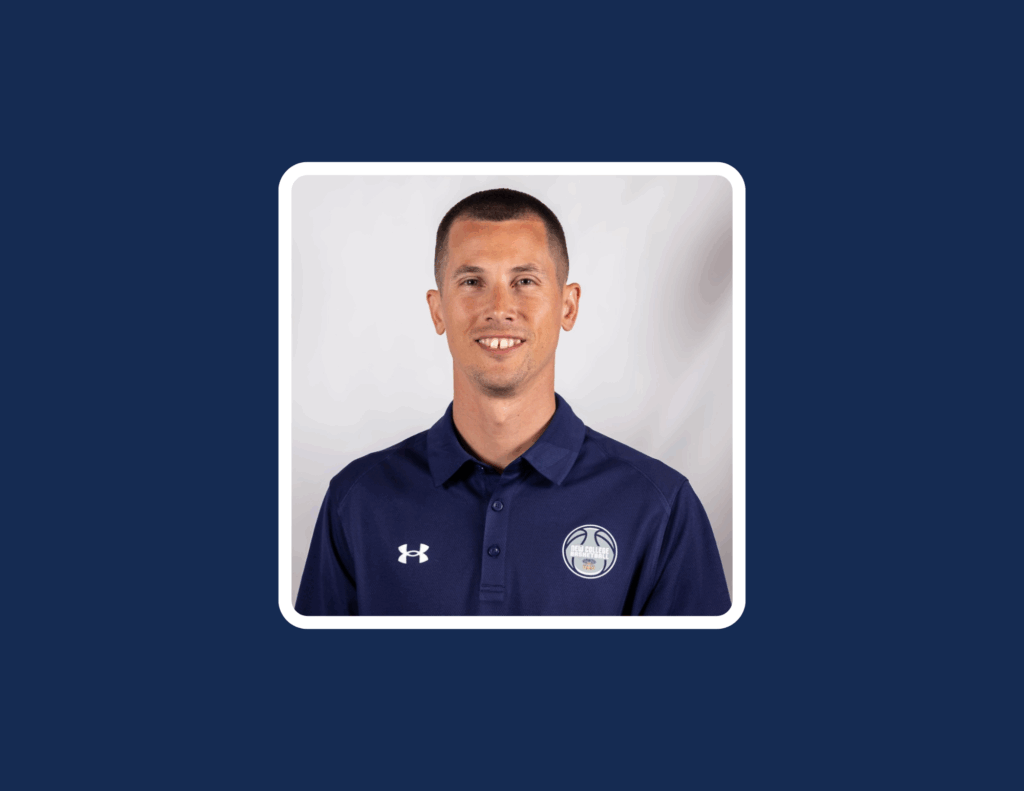

Website – https://gomightybanyans.com/sports/mens-basketball
Email – awingreen@ncf.edu
Twitter/X – @CoachWingreen
If you listen to and love the Hoop Heads Podcast, please consider giving us a small tip that will help in our quest to become the #1 basketball coaching podcast.
Andrew Wingreen is the Head Men’s Basketball Coach at New College of Florida having been hired on May 1, 2023 to start the Mighty Banyan program from scratch.
In their first season as a member of the NAIA and The Sun Conference, Wingreen led the Mighty Banyans to a 14-15 (7-9) record, which would be good enough for fifth place in the conference. The Banyans qualified for the Sun Conference Tournament in their first season as the #5 seed
Entering his 16th season on a college sideline, Wingreen most recently served on staff at Stetson University in DeLand, Florida under head coach, Donnie Jones. Prior to his time in DeLand, Wingreen was the head men’s basketball coach at NCAA Division III, Lancaster Bible College in Lancaster, Pennsylvania where they won the NEAC South Division in 2019.
Wingreen also served as an assistant coach at Bethel University, Bob Jones University, Rockford University and Northland International University.
On this episode Mike & Andrew discuss the challenges and triumphs of establishing a new basketball program from the ground up. Having been appointed to lead the Mighty Banyans, Wingreen reflects on his initial season in NAIA, where the team posted a commendable 14-15 record, qualifying for the Sun Conference tournament in their inaugural year. The episode delves into his coaching philosophy, emphasizing the importance of cultivating high basketball IQ players who thrive within a continuity ball screen offense. Wingreen highlights the significance of building a strong team culture, rooted in the core values of love, service, and competition, which fosters resilience amidst adversity. Furthermore, he shares insights on the recruitment process and the pivotal role of player relationships in shaping the program’s future success.
Follow us on Twitter and Instagram @hoopheadspod for the latest updates on episodes, guests, and events from the Hoop Heads Pod.
Make sure you’re subscribed to the Hoop Heads Pod on iTunes or wherever you get your podcasts and while you’re there please leave us a 5 star rating and review. Your ratings help your friends and coaching colleagues find the show. If you really love what you’re hearing recommend the Hoop Heads Pod to someone and get them to join you as a part of Hoop Heads Nation.
Get ready to take some notes as you listen to this episode with Andrew Wingreen, Head Men’s Basketball Coach at New College of Florida.
What We Discuss with Andrew Wingreen
- The challenges and rewards of starting the men’s basketball program at New College of Florida from scratch
- The importance of recruiting high IQ players who can adapt to a continuity ball screen offense
- Building a strong team culture centered around love, service, and competition
- Navigating challenges such as limited resources and establishing a competitive identity in the conference
- The significance of resilience and adaptability in coaching
- Allowing players to make mistakes during practice which fosters learning and improves decision-making skills on the court
- Establishing a coaching staff from scratch involved networking and selecting individuals who shared the same vision and values for the program
- Success is defined by culture and relationships, not just wins
- Game night logistics require teamwork and organization
- Practice should focus on competitive play and flow
- Memorable moments come from overcoming adversity
- His upcoming book Win One Won and why writing can be a vulnerable but rewarding process
Like this show? Please leave us a review here — even one sentence helps! Consider including your Twitter handle so we can thank you personally!

We’re excited to partner with Dr. Dish, the world’s best shooting machine! Mention the Hoop Heads Podcast when you place your order and get $300 off a brand new state of the art Dr. Dish Shooting Machine!

Your first impression is everything when applying for a new coaching job. A professional coaching portfolio is the tool that highlights your coaching achievements and philosophies and, most of all, helps separate you and your abilities from the other applicants.
The key to landing a new coaching job is to demonstrate to the hiring committee your attention to detail, level of preparedness, and your professionalism. Not only does a coaching portfolio allow you to exhibit these qualities, it also allows you to present your personal philosophies on coaching, leadership, and program development in an organized manner.
The Coaching Portfolio Guide is an instructional, membership-based website that helps you develop a personalized portfolio. Each section of the portfolio guide provides detailed instructions on how to organize your portfolio in a professional manner. The guide also provides sample documents for each section of your portfolio that you can copy, modify, and add to your personal portfolio.

High school and middle school basketball program directors, listen closely. Coaches are expected to do far more than just coach. You know this. It doesn’t matter if you’re doing the coaching yourself, or you have a full staff of coaches with you. You know very well that coaches handle scheduling, academic issues, parent communication, leadership development, and even mental health concerns for athletes. A lot to deal with, and they haven’t even gone home yet to balance those responsibilities.
No matter the passion for the game, and burning desire to help athletes develop, this level of responsibility can lead to burnout, inefficiency, and less time spent on actual coaching. You know it’s true.
When coaches are stretched too thin, it impacts the development of athletes, team morale, and the overall success of the program. Now here comes the outsiders throwing their two cents in about what’s happening. Then come the parents complaining about how you’re running things, as if they know what they’re talking about. When’s the last time you went to their place of work chiming in from outside their window?
Before you let that fire fizzle out, know that it doesn’t have to be that complicated. There are several ways to prevent you or your coaches from feeling overwhelmed. However, I’ll tell you one of our favorite ways to keep coaches firing on all cylinders, and that’s athlete-driven accountability and organization.
Instead of coaches constantly reminding players about assignments, grades, and practice schedules, our programs at Playmaker Planner puts the responsibility back on the athletes. By tracking their own academics, goals, and commitments, student-athletes become more self-sufficient, which of course allows the coach to put their babysitter hat in the closet, and put their coaching hat back on, allowing them to focus on what they love doing.
Are we offering planners that you can get at the dollar store as a solution? Of course not, but we are starting a conversation with you to see if our programs can be a compliment to what you’re already doing. Let’s find out. To learn more visit https://playmakerplanner.com/stop-is-this-for-you
THANKS, ANDREW WINGREEN
If you enjoyed this episode with Andrew Wingreen let him know by clicking on the link below and thanking him via Twitter.
Click here to thank Andrew Wingreen via Twitter
Click here to let Mike & Jason know about your number one takeaway from this episode!
And if you want us to answer your questions on one of our upcoming weekly NBA episodes, drop us a line at mike@hoopheadspod.com.
TRANSCRIPT FOR ANDREW WINGREEN – NEW COLLEGE OF FLORIDA MEN’S BASKETBALL HEAD COACH – EPISODE 1116
[00:00:00] Narrator: The Hoop Heads Podcast is brought to you by Head Start Basketball.
[00:00:20] Andrew Wingreen: I tried to recruit bigs who can stretch the floor, tried to get high IQ players because we do a lot of flow offense, and so it’s a continuity ball screen offense that has a lot of reads out of it. I want to give our guys a lot of freedom, but in order to have freedom to make decisions, you have to be smart.
[00:00:37] Mike Klinzing: Andrew Wingreen is the head men’s basketball coach at New College of Florida, having been hired on May 1st, 2023 to start the Mighty Banyan program from scratch. Their first season as a member of the NAI and the Sun Conference Wingreen led the Mighty Banyans to a 14 and 15 record, which would be good enough for fifth place in the conference.
The Banyans qualified for the Sun Conference Tournament in their first season as the number five seed. Entering his 16th season on a college sideline Wingreen. Most recently served on staff at Stetson University in Deland, Florida, under head coach Donnie Jones. Prior to his time at Stetson, Wingreen was the head men’s basketball coach at NCAA Division iii, Lancaster Bible College in Lancaster, Pennsylvania, where they won the NEAC South Division in 2019.
Wingreen has also served as an assistant coach at Bethel University, Bob Jones University, Rockford University, and Northland International University.
Hey Hoop Heads. This month only our friends at Doctor Dish Basketball are giving you an exclusive $2,000 off plus free shipping on your purchase of a doctor Dish. CT Plus All Star Plus or Rebel Plus. Hurry to secure your savings before June 30th or while supplies last. Learn more @drdishbasketball.com and follow their incredible content @drdishbball on Twitter, Instagram, Facebook and YouTube. Mention the Hoop Heads podcast and save an extra $300 on a Dr. Dish Rebel Plus, all Star Plus and CT Plus models. Those are some great deals Hoop Heads. Get your Dr. Dish shooting machine today.
[00:02:18] Ganon Baker: Hi, this is Ganon Baker and you’re listening to the Hoop Heads Podcast.
[00:02:25] Mike Klinzing: Your first impression is everything when applying for a new coaching job. A professional coaching portfolio is the tool that highlights your coaching achievements and philosophies, and most of all helps separate you and your abilities from the other applicants. The Coaching Portfolio Guide is an instructional membership based website that helps you develop a personalized portfolio.
Each section of the portfolio guide provides detailed instructions on how to organize your portfolio in a professional manner. The guide also provides sample documents for each section of your portfolio that you can copy, modify, and add to your personal portfolio. As a Hoop Heads Pod listener, you can get your coaching portfolio guide for just $25.
Visit coaching portfolio guide.com/hoopheads to learn more.
Get ready to take some notes as you listen to this episode with Andrew Wingreen, Head Men’s Basketball Coach at New College of Florida.
Hello and welcome to the Hoop Heads Podcast. It’s Mike Klinzing here without my co-host Jason Sunkle tonight. But I am pleased to be joined for the second time. Andrew Wingeen head men’s basketball coach at the New College of Florida. Andrew, welcome back to the Hoop Heads Pod.
[00:03:42] Andrew Wingreen: Yeah, thanks for having me on again, and always love being a repeat guest on people who are doing things the right way and love your show. So thanks for having me.
[00:03:51] Mike Klinzing: Well, appreciate the kind words and yeah, it’s always fun to have somebody come back and update us on what’s new since we last talked to them.
And in your case you were at Stetson the last time we talked, and since then you have taken on what I would say is a pretty big challenge of starting a college program from scratch. So kind of give us the update on how that came to be, and then we’ll dive into what the process has been, has been like trying to build the program there.
[00:04:17] Andrew Wingreen: Yeah, a hundred percent. I mean, this job was, I don’t want to say it fell into my lap, but it was something where wasn’t really sure what God was doing and was trying to look to see what was next and just, it’s a long story for another time, but just through a lot of prayer and understanding kind of where we’re being called.
He opened this door where the school, New College of Florida. I saw a job posting for it. It’s in Sarasota, but I’d been in Florida for several years. I’ve coached a long time and I had never heard of the school, so I’m like what is this place? And did a little research, saw that they were just starting athletics from scratch.
It was all going to be brand new. The school itself has been there since 1960, but they had never had intercollegiate athletics or anything. So I was thinking, Hey, this is a great opportunity. I feel like the doors are opening. I reached out to the athletic director. We had a quick phone conversation the same day that I reached out to him, and actually went down there for an interview about two days later and ended up getting the job about a week later.
So it was a really fast process. everything felt right. It seemed like God was opening the right doors. And that’s kind of how we got there. And obviously building something from scratch at a place that was going through a lot of transition, a lot of ups and downs just as an institution was a whirlwind.
And it’s still been a whirlwind, but really thankful to have this opportunity and it’s been fun.
[00:05:46] Mike Klinzing: What were some questions that you had for them in the interview process? Because obviously there’s nothing to go on, right? You can’t talk to people who worked there in the past. You can’t use your network to figure out, well, hey, what’s this job going to be like? You’re going in pretty much blind. So what were some of the things that you wanted to ask that you wanted to know from them before you felt comfortable taking the job?
[00:06:14] Andrew Wingreen: Yeah, I think you said something really powerful there, like usually relationships and that word of mouth that means a lot. And especially for someone like me who is very relational and I love to just bounce things off of other people and always ask those questions. So it was difficult not knowing that ad, not knowing anybody who had been there before.
Even just asking coaches I knew in southwest Florida, like, Hey, what do you know about New College of Florida? And they’re like, dude, I’ve never heard of it. So I tried to, to do my homework as much as I could. Some of the big questions I had just from a. a job standpoint and a culture standpoint was the school was going through a lot of transition with a lot of politics in the state, and I was trying to figure out is that something I something.
Put on my radar right now. because I know there’s I could have some other things to deal with outside of basketball. And so try to ask a lot of questions about that and get a feel for the temperature of the school from that side of things. And then obviously starting a program from scratch, the big things were okay, how, what are the resources?
Like, do these people are they all in, are they supportive? Will they be behind us in building this thing? What kind of we’re going to be a NAI school, and so what kind of scholarships are we going to have? for people unfamiliar with the Sun Conference, it’s very high level basketball, and I know several of the coaches and teams at this level, so I wanted to make sure we could compete, we could get kids in school.
And I really had to just ask questions about everything, academics, what’s the criteria, how do we meet that, what are we looking for? And so, yeah, it was just learning on the fly. But while we’re doing all of that, I. We don’t have a mascot name yet so I’m like, just trying to figure out kids ask, what’s the mascot?
What are you, what are your colors? I’m like, I don’t know, man. Like, we haven’t announced it yet. We don’t have a facility on campus, so I’m trying to, I’m trying to figure out where are we going to play our basketball games at. you have to recruit an entire roster from scratch, have to put a schedule together.
And I’m doing this in May and June when most people had theirs done. And so that first year we played, I think it was 25 game or 24 games on the road in our first season and so just so many things. It was, it was a lot, but again, it’s been really cool to see how God has used it to, to just grow people and it’s been fun to build.
[00:08:35] Mike Klinzing: When you think back to your first month on the job, what were some of the most important things that you were able to accomplish in that first month that when you look back now, you’re like, oh yeah, those were the things that really got us off to a good start and got us headed in the right direction.
[00:08:51] Andrew Wingreen: Yeah, I think getting that first commitment was huge. because I probably spent I think I got the job. They, they told me I got the job around April 10th or so. It was just after the final four. And so obviously started recruiting and talking to people right away. And then I think officially got hired end of April.
But probably for the first month we didn’t have anybody commit. because if you think about it, I mean, these kids are asking all the questions, right? What’s, what’s the, the culture? Like what, how good are you? What are your facilities? Like, what have you done in the past? And it’s like, I had nothing.
It was, it was me and the relationships and the trust that I could build with these kids. And so it took a little bit for us to get that first commitment. But Jack Scott, he was a transfer from Palm Beach Atlantic and he came on a visit, was the first kid to commit to New College of Florida. And I felt like when that happened I felt like we had a good player.
It gave me some confidence thinking like, okay, like. We can actually get kids here. And then when, when other recruits saw all right, somebody said yes, the snowball effect kind of took place. And from there recruiting became a little bit easier. At least we had something move in and other people were, were joining up.
And so it gave us momentum. And I think that was what I was looking for, was how do we, how do we create some momentum to, to get people, people to buy into this thing that there’s nothing to go off of other than blind trust in somebody they don’t know. So yeah, I would say that was one of the biggest things we had to do in that first month.
[00:10:21] Mike Klinzing: What did you try to sell about yourself to those first couple guys that you got in the door? because obviously, as you said, that’s what you were selling at that point. Mm-hmm. They didn’t have anything to go back on. So what did you try to sell guys on about yourself as a head coach?
[00:10:36] Andrew Wingreen: Yeah, I mean it’s, it was all about relationships, just the type of, the type of team we wanted to be.
I think for myself, I wanted to convey that, Hey, I’m going to love you guys. It’s going to be bigger than basketball. Our core values are love, serve, and compete. And so I was just very honest with guys that, hey, if we’re going to, if we’re going to build this founda, we’re going to lay this foundation and give us something to build on.
We have to do it with the right people. I maybe could have gotten better talented players right away, but I don’t know if that would’ve started us out on the right foot. And so I want to make very sure that we were going to have the right people. And I was just very transparent about that. Like, if you’re going to be here, you’re going to buy into what we’re doing.
And I need guys who want love each other. They want to love their teammates, they want to serve other people. They want to compete for something bigger than themselves. They want to compete for their teammates, not necessarily just against them to get attention, but I think that was something I tried to sell and I wanted them to just see who I was.
I tried to be open and honest and just get to know them, share my heart and really try to. give them that vision of you get to be part of something that has never been done before. Like, there’s going to be one first team in the history of this school. And if you think about it, not many people have had that opportunity.
And if they did, it was 50 years, 75 years ago. It was a long time ago. because a lot of these schools are established. And so really just tried to, to create that vision and that buy-in. And I talked to everyone. We said we’re, we’re going on an adventure together. I tried to sell that, that it wasn’t it wasn’t just something we were doing that everyone else is doing.
Like, you know my old an old mentor mindset, journeys, you go on by yourself, but adventures you go on with people you love. And we just tried to create that from the get go. We tried to create that, that camaraderie, that buy-in and that vision. And we ran with it. And then we tried to sell Sarasota, try to try to sell the beach in the water.
because that’s about all, all we had to go off of here.
[00:12:36] Mike Klinzing: How long did it take you to.
[00:12:39] Andrew Wingreen: Man, we, it’s a great question. I think, I think we had it done probably mid-July. Like I said, once we started getting some momentum, we started getting players in typically our school closes enrollment before that time, but that first year they gave us a lot of leeway to make sure the teams could fulfill their rosters and get the kids in.
So I think it was about mid-July. So the that month of May, June, they were just, it was nonstop just trying to, trying to find the right guys.
[00:13:10] Mike Klinzing: What have you done then since in terms of facilities?
[00:13:15] Andrew Wingreen: Yeah, so we, we play at State College of Florida, which was a junior college down here in Bradenton.
it’s. It worked out for us to be able to use their facility because they shut their program down. And it was they’ve Tom Parks he was the coach there for a long time, did a, a heck of a job. One of the best coaches at the junior college level that I’ve, I’ve been around and so on.
On one hand I was sick to my stomach that they had to, had to close their program. I hated to see that. But again, it was one of those things where it felt like God’s hand was on it and it opened the door for us to have a facility. And I honestly, if that didn’t happen, I don’t know what we would’ve done.
Like, I think the school started athletics and we didn’t really have a plan and it was like, let’s figure this out. But. They worked out and so we’ve been playing and practicing at State College of Florida, which is only about eight minutes from our campus. And so it’s, it has its inconveniences at time, but it’s a great facility.
The the people there are are fantastic. And we’re in the process in the next five, five years or so. We should have our own facility on campus. But until then, that will do the trick.
[00:14:24] Mike Klinzing: What was the biggest challenge in those opening few months as you were heading towards season number one?
What’s the one thing that stands out to you that when you look back, you’re like, man, that was, that was really hard to get us to where we needed to be.
[00:14:40] Andrew Wingreen: Yeah, I. Well, I kind of mentioned the political temperature of the school and for people who don’t know the school itself, it’s a state university, it’s part of the state university system of Florida was a very liberal school.
Just a lot of, a lot of, as far as politics it would have leaned that way. And Ron DeSantis, our governor, changed that, did a drastic 180 turnaround. And so because of that, there was a lot of people unhappy. And as I mean the political climate of our country’s just been, been different and crazy over the last 3, 4, 5 years.
And so, not only was I trying to put a basketball team together and run a basketball program, but we’re, we’re having protests on campus. We, there’s a lot of alumni, a lot of people who did not want athletics there did. And it wasn’t necessarily they had something against us. as basketball players or coaches, but it was just the, the nature of how things were going.
And so I’m having to navigate that getting dms from people just saying the craziest stuff about me and my family, about our guys. our players are getting the same stuff. They come on campus and they’re getting yelled at. And it was something I had never experienced before. I’ve never had to deal with as a leader.
And so I think that that first year was like, again, just really trying to make sure our guys understood. Like, hey, we’re, we love each other and we have a bigger purpose. And, you know kind of that calling, I had to come here and take this job was. Go be a light in a dark place. And I just tried to keep that mindset of, hey, I like through the ups and downs, like we’re going to, we’re going to shine, we’re going to do things the right way.
And people will see that and it’s going to take some time. But again, like looking back two years later, it’s been really cool to see how us handling some of those situations the right way has really impacted our community and our campus for the, the better.
[00:16:35] Mike Klinzing: Well, basketball standpoint, obviously you had quite a few stops along the way in your career.
Previously you had been a head coach at Lancaster Bible, so you had some experience in that way in terms of putting together how you wanted to play, what you wanted your teams to look like. Obviously the talent on hand and trying to recruit an entire roster in in three months obviously puts a challenge on what your team is going to look like and how you’re going to play.
So just how did you think about what kind of product you wanted to put on the floor? From a basketball standpoint, once you kind of formulated the roster and saw what your guys were, how did you put together the way that you wanted to play? What was that process like?
[00:17:14] Andrew Wingreen: Yeah, I think going into it, I had an idea of what I wanted to do and I knew I might not be able to be as picky as I wanted to be, just with the nature of the, the recruiting process.
But being at Stetson was incredible learning from Donnie Jones and we we had Brendan sir, who’s an NBA coaching legend. Like I got to learn from some really, really good coaches who had won championships at the highest levels and a lot of things that, that Donnie did offensively.
And just learning from that mindset I soaked that up. I had always been a more of a defensive minded coach, but I saw something different from those mentors I had at Stetson, and so I kind of wanted to play a similar style. And so I tried to recruit. have some, some bigs who can stretch the floor, try to get high IQ players because we do a lot of flow offense.
And so it’s a continuity ball screen offense that has a lot of reads out of it. I want to give our guys a lot of freedom, but in order to have freedom to make decisions, you have to be smart. And so try to get some bigs to stretch the floor, try to get some guards who I felt like could make good reads out of ball screens and be playmakers.
And thankfully I referenced State College of Florida, how they shut down. We actually were able to get two of their players and turned out to be starters for us. And I just again, feel like God brought the right people to us for what we try to do. And it I had to wait and see a little bit of how we would be, and we did make a lot of adjustments.
We started the season, I want to say one in 11. First semester before Christmas. We were one in 11 that first season. And so, as you can imagine. From a basketball standpoint, that’s really hard to go through. And then the other things we were dealing with outside of basketball, there was just the morale was low.
And so just trying to keep those guys together, we made some adjustments that Christmas time ended up finishing that first season really well. And it again, we, I talked a lot about laying that foundation and I think we set a good style. We set the right culture, we set the right way we want to play.
And this last year we, we doubled our win total. So I think we’re, we’re moving in the right direction and just, just hope we keep getting the right people in our program for that.
[00:19:25] Mike Klinzing: Okay, so go along with the right people. We talked a little bit about the players. What about the coaching staff?
Where did you go? Who did you talk to to put together again, a coaching staff from scratch, right? There’s nobody, yeah, there’s nobody that you can, there’s no holdovers that you can say, Hey, I’m bringing this guy back because he is got some institutional knowledge. He can help me to sort of know how to navigate things.
So you’re bringing in a whole new staff. What did that process look like?
[00:19:48] Andrew Wingreen: Yeah, so didn’t have a huge budget for staff. That first year. We just had a couple small stipend positions, so knew I was going to probably go, need to go get some young guys, inexperienced guys, and really relied on word of mouth and my network of coaches to not necessarily someone that worked for them directly, but hey, like, talked to this guy, I trust him.
And I put, put it out on Twitter. We posted the job, got so many applications that I I went through and really locked in on, but kind of gravitated towards those people who I could just tell aligned with what we were trying to do. They had the, the same heartbeat, they had the same mindset.
They were like-minded and really just tried to hone in on it was probably about eight to 10 guys. And then through that process, leaned on my network heavily. People I trusted and if they recommended them or said I could trust the person that was recommending them. that’s who we went with.
And so that first year one of my best friends, he was from Chicago, was a, a high school coach and athletic director. He came down to actually be the assistant ad, so he had another role, but he, he helped with that. And then I had two guys who, one of them was a manager at Florida Gulf Coast, and the other one was a manager at Auburn.
And so they had been around high level programs inexperienced coaches, but they were hungry, they were determined, and they were the guys that we needed for that first year.
[00:21:16] Mike Klinzing: But you obviously had the opportunity, as you mentioned earlier, to work for some really great mentors and head coaches and guys that poured into you.
So when you think about your role as a head coach and then bringing in those guys who, as you said, young, inexperienced. Hungry to learn, hungry to grow, hungry to continue to be successful in their career. How do you think about pouring into them as assistant coaches in your role as a head coach?
[00:21:44] Andrew Wingreen: Yeah, it’s, it’s a very high priority for me because I’ve been, I’ve been around both sides of it, right?
I’ve been around some coaches who they, they’re not as relational and they just kind of, Hey, go do this, go do that. But like I said before, I, being around Donnie, Donnie Jones, I can’t speak highly enough about that, man. He is one of the best people, one of the best coaches. I’ve been around and I saw how you could be successful.
You can do things at a high level. You can work your butt off, but you can also. Put family first. You can also create relationships. You can like you said, pour in and just care for people. And he, he wasn’t perfect, but he was really, really good at it. And he, you could tell it was a priority.
And so that’s just been something I’ve always appreciated as an assistant coach. When people take the time to ask how I’m doing and they, they see it as bigger than basketball. And so I want to make sure that I do that with my assistants. And it’s I want to see them grow. I know that they may not be here for, for many years.
It’s like I said, doesn’t pay a lot, but with their time with me and in our program, I want them to see something different. I don’t want them just to see that, hey, basketball is everything. Like, it’s important. We want to win, we want to compete, but like, it’s about being a good leader, a good husband, a good dad, just like we would with our players, right?
Like, it’s the same with the staff. And it’s been really cool to see those guys grow, to see them. last year one of those guys we hired, he went. Got on staff at Sanford with Bucky McMillan and just seeing them grow, seeing them mature is powerful. But yeah, I just, I want to be that, that mentor and that coach for these guys just like I had for me.
because I know how impactful and important it was in my journey.
[00:23:28] Mike Klinzing: When you guys are work in practice and you talked a little bit about the style of play that you have and running the flow offense and being able to make reads and look for high IQ players, how do you think about teaching decision making or improving decision making with your players?
What does that look like?
[00:23:46] Andrew Wingreen: Yeah, I think the biggest thing is you have to be willing to let your players make mistakes. I see too many coaches where when guys turn the ball over in practice or they dribble the ball off their foot or just make a poor read, they get upset and it’s like, nah man.
Like that’s not the right way, but I. As a teacher, like that’s how I, I try to grow as a teacher. Like I don’t just see myself as a coach. And I think you have to, especially with decision making, like you, you have to go through it and make the mistakes or you’re never going to realize that you’re making the wrong decision.
And I think practice, especially workouts, that’s the time and place for that. Obviously, you, you want to start limiting those and hopefully once you get to the game time, you’re not making those mistakes. But John Wooden, he’s always quoted as saying doers make mistakes. And I think decision making and anything I’ve done in life where I’ve had to make decisions, I’ve had to make mistakes and I’ve had to learn from those.
And so just trying to be patient with our guys obviously being able to not only go through it experientially, but then showing on film I think is crucial because you can obviously see you can see more, you can slow it down, you can talk through it, but, heck, it’s just learn by doing, learn by going through it, and really just always trying to make that the priority that we’re going to, we’re going to help them walk through this and we’re going to call them up, not call them out.
[00:25:08] Mike Klinzing: You balance that within a practice session in terms of you see a kid, maybe make a read where you thought they should have made a different read, or there’s a mistake and yet you don’t want to interrupt the flow of practice. I’m always curious how different coaches balance that out in terms of you wait till the kid comes off the floor and then the assistant goes over and talks to them and says, Hey, let’s think about this.
Do you maybe address it as a big group of, Hey, today when we were coming off screens, we have to really improve our decision making and then we’re going to look at that on film as a group, or maybe individually, just how do you approach it within practice so that you don’t completely disrupt the flow and yet still be able to.
Coach slash teach, however you want to look at it. That decision making process, using both the practice time and the time in the film room, how do you balance all that out?
[00:25:59] Andrew Wingreen: Yeah, I think different parts of the season call for different ways of doing that. Obviously earlier on you can maybe slow down and teach more later on.
You don’t have as much time as you’re prepping for games. But I learned this from Coach sir at Stetson. he had all his NBA years and really just brought a whole different dynamic to how he ran practices and what we would do, there is a ton of five, E five, right? We played a lot of up and down.
There was very little drill work, very little slow down. But at the same time, we were never afraid to slow down and teach. And so I’ve tried to take that with me where if, if there’s something blatant and it’s like, okay, this is, everybody’s struggling with this, like it’s okay to just stop it, slow it down and teach like.
I’ve had to wrestle with that as a coach, as I’ve, as I’ve grown and I’ve gone from place to place, like sometimes you want to go, go, go and no, we have to, we can’t slow down. But I think there is, you start learning how to balance that better. And if it’s, if it’s a group thing, like let’s just, let’s just teach it.
Just take two minutes, take four minutes, walk through it, show the read, show the decisions, why this is there, how to read the defense. Because if you take that time, I think it pays off down the road, right? If you rush through it, or everyone’s not on the same page, you’re probably going to have to address it again.
And that’s when you start you keep making the same mistakes over and over, and now you don’t have time for it. So I think, again, another John Wooden quote, if you don’t have time to do it right the first time, when are you going to have time to do it over? So I’ve tried to allow myself to slow down, let my assistants teach.
And then later on in the season, sometimes it’s, it’s more, Hey, let’s just pull this guy off. Let’s talk through it. Maybe draw it up on the board, send them back out there. Maybe we’ll pull it up on film after practice where we might need to expedite practice a little bit or we don’t have as much time.
But yeah, I think for me as a young coach, and I would just encourage other coaches, don’t ever be afraid to just slow down and teach the game to your players. It, it pays off in the long run.
[00:27:59] Mike Klinzing: No doubt. I think when you start talking about the ability to be able to, and I love that you equated the fact that coaches are teachers, right?
I think that that’s something that sometimes gets overlooked when we watch coaches on TV and you see them going up and down the sidelines because we forget that the actual work, the actual work of a coach, we see very little of it. For those of us who just watch a game on tv, you’re, you’re not seeing the time spent teaching in the practice facility and just how you go about doing that on a day-to-day basis with the players.
That’s really where you’re making and earning your money as a coach. When you think about practice and putting together a good practice plan, what do you think is the key to putting together a good practice plan? And what is your methodology for putting that practice plan together? Are you sitting down as a whole staff?
Are you putting the practice plan together yourself? Just what steps do you go through to put together a good practice plan day to day?
[00:29:03] Andrew Wingreen: Yeah. I think for me it’s, it’s all about understanding the heartbeat of our team. I really try and allow that to dictate what we do. A lot of times there’s some days where I feel, hey, we have to.
Work more on offense, or we have to have a longer practice, but maybe it’s just our guys are banged up, or we had a tough day on defense the day before, and I really try and feel my team out. I try and talk to my coaches. I do get a lot of input from our players. I ask how they’re feeling.
I ask, what do you guys want to do more of? Where do you feel like we need more work? What do you enjoy doing? What should we do more of? and I don’t, I try and do that for everybody. I, I think it’s important to get that feedback from everybody around you. I’m a, I’m a collaborator.
I feel like I’ve always flourished in that setting. Like, I’m not a dictator. I don’t ever want it to just be me the head coach running the show. Like, I want everybody to have their input and then I’ll, I’ll try and make the final decision and bring the, the ultimate wisdom to it. But for me, the flow of practice is so important.
So how we how we transition from drill to drill. Which again, we don’t really do a ton of drills, but everything we do, we try and do as competitively as possible. We play a ton of five on five and really most of our practice is all five on five. So we’ll set up different games within that.
We’ll do different series of competition. Sometimes we’ll break it down into like three on three small side game stuff. But we we feel like, at least in my opinion, and again I learned this from Donny and Coach Sir at at Stetson, but you play the game five on five, and so we have to practice five on five and we have to learn how to read things in that way and then break down when necessary.
But for me it’s the, it’s the flow, it’s the pace, it’s the efficiency. I never, honestly, I don’t know if we practiced over two hours one time in my two years at New College so far. Usually we’re about an hour and a half to two hours. And then we’re, we’re even shaving it down more as the season goes on.
But I want it to be efficient. Let’s get in, let’s focus, bring the energy, bring the effort, show up with the winner’s approach, and then let’s get the job done. Like we don’t need to, to drain ourselves and be here all night, but let’s do what we have to do and then we’ll put the extra work in if we need to.
But that, that’s kind of where I put my, all my focus when I’m thinking through it. And what do we need? It’s okay, what’s the heartbeat? What are the guys saying? What’s our flow like, let’s, let’s make sure we get through this the right way.
[00:31:30] Mike Klinzing: When you go five on five, how do you mix up the lineups? Do you always go starters against reserves?
Do you mix up, you’re starting five into two groups, so they’re competing against each other sometimes. How do you balance out the five on five groups that you put together for practice?
[00:31:46] Andrew Wingreen: Yeah, early on pre-season we’re mixing teams up a lot. Just really trying to, to get competitive, see who’s got the chemistry, see who’s working well together.
I think once you get into gameplay, you, you, I mean, basketball’s such a game of, of chemistry I think momentum is built on a lot of that. And the guys who play well together, you want to try and get the right lineups on the floor for the right situations. Whether that’s executing in the half court playing flow, like we might have these five or six guys that we go to if we need to turn up the pressure and really play some scrappy d we might play these guys.
And so as we get into gameplay, I do try and keep those teams fairly the same. We might move one or two guys here and there to, to test things out. And I’m also not afraid to mix them up during practice, right? It’s not like one day everybody’s on the same team. The whole practice will, will mix it up a little bit just to give guys different looks or give them different opportunities with lineups.
And this past year we kind of had it where. Our offensive guys who worked really well offensively together kind of panned out and then we had like defensive lineups. So it was kind of actually fun and it worked out to do that more consistently this upcoming year. We might have to tweak that a little bit, but yeah, I really want guys to get a feel for each other and learn how to play with each other.
[00:33:03] Mike Klinzing: Alright, let’s shift to game night and just putting together the logistics of a home game. As a brand new program, you’re a head coach, how do you get game night to look the way that you want it to look? Just from a logistical standpoint, running the scoreboard, having people at the scores table, all the things that none, nobody really thinks about, but that obviously as a head coach are very important, is that your game flows smoothly.
So how did you put that together as yourself, as the head of the basketball program, but also I’m assuming as an athletic department?
[00:33:42] Andrew Wingreen: Yeah. It was a whirlwind for not just basketball, but for every sport. Right. because even to this day, like we don’t, we don’t have student workers. And so a lot of it was, we would get different teams to maybe have some volunteers or some of our other coaches from other sports who would help.
For some sports that’s easier than others, right? Like in soccer you can get a couple guys to go run balls and do things. But basketball was more challenging. Probably the most challenging because you have to have a score, bookkeeper who knows what’s going on running the scoreboard and the shock clock.
You have to have competency with that. And so we had a few guys we could pull from for those, but we figured it out. We also are required to do livestream broadcasts, and so we had to set up, set up livestream get, bring all of our equipment, our cameras, our soundboards. We had to bring that every day.
Again, I’m, I’m thankful of what we had an amazing SID. He had great people and they were very competent in what they did. So again, God worked it out where we had the right people in place. But yeah, every, every game we had to make sure people could help. And it was people want, had to, want to be there because we weren’t giving them extra money, we weren’t doing anything like, it was, hey, like, and I had to do the same thing, right?
I’m, I’m out working baseball games, I’m out working soccer games and it’s, it was, hey, we’re, we’re a startup company, right? Like, we, we all have to pull our weight and we we’re the ones setting up the chairs. We’re the one tearing down the chairs, we’re picking up trash. And on, on one hand, coming from division one, you’re like, I shouldn’t be doing this.
But it’s, it also brought a good perspective because we should be doing that, even at the division one level, we should be doing that. Like, again, it goes back to our core values of love, serve and compete. Like no, like, no, no position is too high. No one’s too big for any job. So I. Let’s just all be in this and let’s do what we have to do to succeed.
And again, let’s make each other better. So yeah, it’s, it’s a little crazy on game days, but we figure it out. And you, like I said, you put good people around you and everyone. That’s so important, right? Because if you don’t have good people, then they’re going to be like, nah, screw you. Like, I’m, I’m going to go do this.
So people are the most important thing of any organization.
[00:35:48] Mike Klinzing: Absolutely. I don’t think there’s any question about that. No matter whether you’re talking about athletics or business or schools or anywhere you want to go, the people are clearly the most important. Thinking back over the two seasons that you’ve been there, what has been the most fun part of starting the program from scratch?
And or what has been your favorite moment? So you could combine those into two split or combine those into one, split them into two, however you want to look at. But what’s been the most fun about building the program and what’s been the most memorable moment of your two seasons so far?
[00:36:24] Andrew Wingreen: Yeah. I mean, I think just the, the overall adventure has been the most fun.
because it’s you’re, you’re, you’re getting to set up the team how you want it to be set up, right? Like, I don’t, I don’t have to, there’s no players that return, there’s no coaches that return. It’s not like you’re trying like, Hey, like we have a vision, we have an idea of what we want to do, and let’s go do it.
Like we can do it our way. And I it’s, again, like I told you before with practices, I do the same thing with our team. Like, what do you guys want to make this? Like, this is your team. I’m just here to, to ultimately guide you and be a resource to make this happen. And so that’s just been fun to, to kind of dream and put things together in a way that.
Again, not many coaches get that opportunity to do that. So I don’t take that for granted. And it’s been a really, it’s also been a very frustrating thing and it’s been a, a whirlwind, but it, it’s not anything that I would trade because it I think all, all the good things that happen in life, it, it comes through trials, it comes through heartaches, it comes through adversity.
And you look back years later and you’re like, you know what? Like I’m so happy that we went through that and that we got through that. because man, what kind of memories and what kind of special thing did we just do? So that’s been the most fun for me. There’s been a lot of fun memories. I think last year we had a we played at FIU.
We were, we were winning the game with under a minute to go. I mean, again, just division one team Conference, USA and for us to even be in that game as a second year program, first year in the NAI was crazy. And we ended up losing. But it was, it was like just fun to see our guys fight and really we were in a lot of close games last year, seeing how those guys handled adversity and fought for consistency is, is something that we’re going to learn from and grow from, but it is just also cool to see, right.
It, they didn’t all end up our way, but I think those were cool memories to make.
[00:38:23] Mike Klinzing: What’s the best piece of advice that somebody in your network gave you when it came to running the program, starting a program from scratch? What’s something that somebody said to you that you really took to heart that turned out to be.
Exactly true. And that really helped you in, in making this process a successful one.
[00:38:47] Andrew Wingreen: Yeah. As you started asking that question, I was like, shoot, I don’t know how I’m going to answer this. And then I was like, oh my goodness, I have the answer. And it was Richie McKay, who’s the head coach at Liberty great, great mentor of mine as well.
I love Coach McKay. And he had had experience starting a program from scratch. So he was somebody who I kind of relied on in those first couple months. And I remember talking to him right after I got the job and he said, make sure when you’re recruiting you get people you can lose with. And I was like, what do you, what do you mean by that?
And it’s, it’s going to be rough, right? You’re, you’re not going to have as much success as you want right away. And if you don’t have the right people in the room that you can lose with and grow with it’s going to be a long, it’s going to be a long season. And. At the time, I it made sense, but It didn’t make sense.
And looking back on it, I’m just like, man, how, how wise is that? Like, get people you can lose with, because when you start going through those and it feels like the ship’s about to sink and guys can make one of two choices. Like, I’m going to be a cancer, or I’m going to be somebody who elevates the energy in the room.
And overall, our staff, our players, we had those guys that we could lose with, and they ultimately got to be good enough to where we could win with them too. And so that, that advice and that wisdom is something that I’m, I’m going to cherish. And I think it was so profound. And it makes total sense, right?
Like hindsight, you’re looking at it like, yeah, what, what would that season have been like going six and 24 our first season if we did not have guys we could lose with, like, we could have, we could have sunk the ship before it ever left port. So yeah, that, that advice from Coach McKay was, was awesome.
[00:40:31] Mike Klinzing: Go along with that. When you think back to the days prior to your first season and you’re thinking about how am I going to define success? Because as much as you want to win every game, as you said, you probably understand going in that it’s going to be difficult to maybe win as much as you would want. And clearly you’re someone who has the ability to define success in other ways besides just wins and losses on the scoreboard.
So in your mind, as you were heading into that first season, how were you looking to define success when you got to the end of season one? What did that look like in your mind?
[00:41:13] Andrew Wingreen: Yeah, it was, it was going to be, how did we show up every day? Those core values. How did we love, how did we serve and how did we compete?
Right? Like, we knew it wasn’t going to be easy. We all felt like we were the underdogs. We had that chip on our shoulder. Every, we, we felt like the world was against us. And it, it really did feel like that at times, not just from a basketball perspective, but it allowed us to, to really grow strong. And at the end of the day, it was, Hey, if we, if we show up every day with that mentality and that mindset, at the end of the season, we’re going to look back and say, we laid a foundation that.
Can withstand anything. So again, just like a house being built, a foundation doesn’t look sexy. It doesn’t, it doesn’t look like the finished product, but if you don’t lay that good foundation, especially down here in Florida, your house is going to get blown away when that first hurricane hits. And so that was something I was so proud of, and that’s how we define success that first year.
And really we’re still defining that. Like we’re, we’re laying more bricks now, but it’s still, hey, like we have to, we have to keep doing this thing the right way. And when those storms hit, we’re going to, we’re going to hold together and keep building.
[00:42:24] Mike Klinzing: How do you, when you’re talking to your guys, and whether it’s during the season, postseason meetings, what were some pieces of feedback that you’ve, from your players, that you feel like has had an impact on?
You talked about, just even in terms of practice and getting an idea of, hey, what do you guys like, what, what do you not like? What, what is it that we need to do more of? But just when you think about the feedback that your players gave you or have given you, what’s been the most valuable piece of feedback you’ve gotten from a player that you’ve been able to implement and that you feel like has had a positive impact on the program program?
[00:43:00] Andrew Wingreen: Yeah. I think one thing was actually just recently, we, we had a kid named Charlie Yoder on our team. He, he had been to two other schools before us. He actually led the NAI in scoring this year points per game and led the led it led the country in free throws, really, really great player. But player, his feedback not only to me, but also to our guys and like during the season and end of season meetings was don’t take for granted what we have here.
Like, it’s not like this everywhere. Coaches don’t treat you this way everywhere. Players don’t. Love each other this way everywhere. It’s not like everyone says they want to have a family, but it’s, it’s not like that everywhere. And hearing him say that and having that voice with our team, I think was meant everything to me.
Because again, I want to win more games, right? Like, I don’t, I don’t want to win 14 games every year, but knowing that we’re different and hearing it from a great player who’s been to other places, like, that’s, that’s what I want for our guys. That’s what I want for our team. And again, I think you hear teams like Duke talk about their brotherhood and you just talk about those relationships and we say we want to be a healthy family, not just a family, like a healthy family.
because everyone’s got a def different perspective and definition of what their family is, right? Some people had all the money and their mom and dad were great. Some people had no dad. Some people came from their grandparents raised them. And it’s just. When you say family, it can mean different things to people.
But when Charlie kind of spoke that up, and I heard that from several guys, that that feedback, it resonates with who we are as a team. And I think, again, we, I just keep saying that word foundation, like it helps us run our flow offense better. It helps us do our defense better because you have guys who are in it for something bigger than themselves.
And so that, that to me is, is what it’s all about. And I’ve loved seeing that we’re established in that culture here at New College.
[00:44:59] Mike Klinzing: It’s a powerful perspective coming from a player because oftentimes you as a coach have worked in lots of different settings with lots of different coaches. You’ve seen lots of different styles, lots of different approaches, but.
Players. Players, although it’s becoming more prevalent, obviously now in the era of NIL and the transfer portal, guys are playing at more schools. But traditionally, right, a guy has played maybe at one school and doesn’t have the perspective of, hey, it’s not like this everywhere else. Well, this is the only, this is the only everywhere else I’ve ever been.
I think back to my own experience, I played for the same high school coach, same college coach. Those were the two cultures I knew. Good, bad, indifferent, whatever. I couldn’t bring that same perspective of, Hey, we’re lucky to be here, or, Hey, this is terrible. because I hadn’t been anywhere else and played under anyone else to know that.
So to be able to have that kind of perspective, I would think that moving forward, if I was thinking about what are some of the positives of NIL and the transfer portal, to me one would be. If you bring a guy in and you have the right culture, and that guy left the previous program for whatever the reason may be, they now have a perspective on, hey, where I was before compared to where I am now.
This is something that man, I could talk to my teammates about, like, we have something special going here. I’ve been in other places and it’s not like this. And I would think that for somebody like yourself, who obviously is building the culture and the relationship piece of it that’s so important to you, I would think that that’s something that as guys move around maybe a little bit more than they did in the past, that them bringing in that perspective of having played in multiple places, they can know, Hey, I’m in the right place because they’ve had some experience elsewhere.
Maybe it wasn’t as positive, if that makes any sense.
[00:46:57] Andrew Wingreen: Yeah, I think it, it is very powerful for us, and I think I’ve even had those conversations with, with transfers and guys who are in the transfer portal, right? Like, hey, what, I always ask the question, what are you looking for from your next place? Like, tell me what you expect from your coaches, what you expect the team culture to be like, what, just what, what do you want?
Like, what is your heart and what is your vision? And you hear it so many times that everybody wants that. They want, they want good relationships with their teammates. They want good relationships with their coaches. They want to have fun, they want to enjoy school, right? Like everybody wants it, but sometimes they get blinded by the other things.
The, the level of play, the gear, the money that might be being thrown out in NIL. When I hear those questions, now we can actually talk about it. And the most powerful tool that I have as a coach and as a recruiter is my players. Because again, now I feel comfortable, right? I know their hearts and I talk to them and we’re on the same page, and I feel like I can trust them to, Hey, can you, can you go reach out to this recruit and just be honest, like, tell them the good, the bad, and the ugly of what our program is about.
And again, I know they’re, it’s not perfect, but I also feel very comfortable that they’re going to be saying the right things and they’re going to be saying the truth, right? Because there’s a lot of coaches who can fake it, and they can say whatever they want and act like their program has it all together.
But it ain’t that way. And so I just want to be I want to be real. I want to be a truth teller and I just want to be open and transparent with, with who we are and if, if there’s areas we have to grow in that. Aren’t working, like, let’s fix them. Because like you said, guys are hungry for leadership, they’re hungry for mentorship, they want to be coached, and they want to, they want to have a great experience playing the game of basketball.
So that’s what we’re trying to do. And again, I’m so thankful for the guys in our program that are handling things so well.
[00:49:00] Mike Klinzing: High school and middle school basketball program directors Listen closely. Coaches are expected to do far more than just coach. You know this. It doesn’t matter if you’re doing the coaching yourself or you have a full staff of coaches with you. You know very well that coaches handle scheduling, academic issues, parent communication, leadership development, and even mental health concerns for athletes a lot to deal with.
And when coaches are stretched too thin, it impacts the development of athletes, team morale, and the overall success of the program. There are several ways to prevent you or your coaches from feeling overwhelmed. However, I’ll tell you one of our favorite ways to keep coaches firing on all cylinders, and that’s athlete driven accountability and organization.
Instead of coaches constantly reminding players about assignments, grades, and practice schedules, the programs that Playmaker Planner put the responsibility back on the athletes by tracking their own academics goals and commitments. Student athletes become more self-sufficient, which of course allows the coach to focus on what they love doing most coaching.
Let’s find out if the programs from Playmaker Planner can be a compliment to what you’re already doing. Visit playmaker planner.com/stop. Is this for you to find out more?
Grow your win total from year one to year two? You’re heading into year three. What do you see as being the biggest challenge in your continued growth and rise as a program?
[00:50:30] Andrew Wingreen: Yeah, it’s this, we’re losing, like I said, the leading score in the NAI is gone. We had a, a second team all conference player who was our point guard.
He was, I I always said he was the, the guy that you had to stop or else we were going to figure things out. He is gone, he graduated and then we had our stretch big man who he graduated and is going to go do his MBA, which we don’t have an MBA program at New College. So he transferred out and he’s going to play at a division two school.
So we have about 56 points per game that we’re trying to replace for next year. And so I love the guys we have returning though. We had a lot of guys who probably didn’t play as many minutes as they should have or were capable of just because we had such studs on the floor and it was hard to take them off.
But I think they’re going to, those guys are going to step into big roles now and I’m excited for that. And then the, the guys that we’re bringing in we’re going to have all the puzzle pieces necessary. To, to compete and to win. And we may not have the one or two guys that are going to go get the 20 plus points every night, but overall, I think we’re a better team.
And so again, the goal is to, to keep improving, to keep trying to get better. And we were 14 and 15 last year, made our, our conference tournament in our first year ever in the conference. So we had a lot to, to step on and to build on, but I think this team is going to be set up for a lot of success going into year three.
And they’re, they’re hungry, they’re motivated. Like I said, a lot of guys didn’t play as much as they probably should have or wanted to. And so they’re, they’re ready to go and we’re locked in this summer. So I’m, I’m excited to see what happens.
[00:52:08] Mike Klinzing: Yeah, that’s awesome. And you can clearly tell that the growth from starting a program from scratch, getting to where you are heading into year three and just all the positivity that surrounds you as the leader of the program and.
Being able to bring in the right kind of guys to be able to grow in the right way. Being focused on your own def definition of success, which again, clearly relationships, creating that family atmosphere that you talked about. Those things, although they’re not direct, there’s not that direct line to winning more basketball games.
We all know that there’s a through line there that those two things are connected. The kind of culture and the kind of atmosphere that you put around your program. If you have the right one in place, it eventually leads to continued improvement in the WIN column. And I’m sure that’s the direction that you’re headed.
Let’s change gears and talk a little bit about the book, the podcast. You tell me a little bit just about how you got started with those two ideas, those two projects. And I’ll let you dive into the details and then I’ll ask questions as you go.
[00:53:15] Andrew Wingreen: Yeah, no, I appreciate it. Yeah, so I have been wanting to write a book for a long time and I’ve actually started and stopped.
A dozen or more times. I’ve had things close to completion, but just didn’t ever feel like it was flowing the right way or was the right time. And our, it actually, my idea for this new book, which it’s called Win one One, and it kind of stemmed from a pre-game talk I had when we were at Coastal Georgia, and it actually turned out to be our first conference win in the history of our program.
But I just talked about the way we’re going to win this game is we have to win every moment. We have to win every play. We have to do the little things that are going to lead to it, right? And we have to do it one possession at a time, one play at a time. And when things don’t go our way, we have to move on to the next play.
And I told our guys, if we do those things at the end of the day, we’ll have won. And so I wrote those words on the board, win won as like the number one ONE and then won WON. So ever since that talk again, it just, it was something, hey, we just, we embraced, we embodied and said. You have to win every moment, every day, and you have to do it one day at a time.
And I think just breaking it down into the, the little details, the habits, the approach, the next play mentality it turns into something big if you stack enough days. So the book kind of came from that, that heartbeat, that, that resonated with our team and just wrote a, a fable story about a high school basketball player who had to grow up and had to figure it out and had coaches in his life who taught him this philosophy.
And went through that, grew, went into college and just, it’s a fun story. But it just hits on, on all those things. And some of them are true stories that we went through as a team. Some of them are things I’ve gone through as a coach. But it’s, it’s been something where, again, it’s just God’s given me a vision for it.
And it’s, it’s flowed and it’s, I feel like it’s going to impact a lot of coaches, a lot of teams, and a lot of people out there who are just looking, Hey, how do I, how do I achieve success? And then how do I sustain it?
[00:55:18] Mike Klinzing: How did you arrive at the fictional story idea as opposed to writing at as a more traditional nonfiction leader leadership coaching book?
[00:55:30] Andrew Wingreen: Yeah, so all the other times I’ve tried writing, they’ve been more nonfiction. Whether it was just about my journey or about things I’ve experienced or just leadership things and it just never felt right. And honestly when I started writing Win one, one, I started writing it that way as it was just going to be a leadership book and I was going to try and touch on points and I just, it never felt right.
And to be honest, I think sometimes it’s, it’s scary to. Put yourself out there, right? Like you write nonfiction and yeah, everybody knows like, this dude’s writing from real life experience and sometimes that’s it. It makes you vulnerable and it, it’s, it’s scary, right? There’s some fear. And the truth is, is like, when I’m writing this fable, I don’t feel that way, even though so many of the, the stories and so many of the, the things that we’re talking about are true.
And they would be in a nonfiction book too, but like I don’t know. I just, it felt like I could, I could share my heart more, felt like I could be more v vulnerable, felt like I could go places that maybe I couldn’t go, just writing about myself personally. So just maybe I’m different that way.
But that’s kind of how we settled on that. And again, when I started it just, it felt right and it took off and was, was easier to write that way.
[00:56:49] Mike Klinzing: An interesting perspective, I guess. I never really thought about it that way in terms of. Vulnerability. But it does make sense that nonfiction, you read it and you feel like that person should be an expert, right?
That everything that they’re saying in this book, you’re going to take it, you’re going to try it, and if it doesn’t work or it doesn’t work for you, all of a sudden you’re blaming the author, right? That Andrew, wind Green guy, he told me I should be doing this. Or he said, this is what worked for him, and man, it didn’t work for me.
Versus when you’re writing that fictional narrative, I can then pick and choose. Maybe there’s some, there’s some things that, yeah, I was in a similar situation to that, or man, that really resonates with me. Maybe I can take and pull that lesson out. And it doesn’t, as you said, feel. As quite directly connected to you as it might in the fictional narrative.
So I really think that’s an interesting perspective. And even as you sat down, even more than that, go ahead.
[00:57:41] Andrew Wingreen: Even more than that, it’s, it’s like it’s that, like, I have, like imposter syndrome, I feel like, right? It’s not even so much that I’m, yeah, I’m worried about people not liking it, but it’s, I don’t feel like I’m, I don’t, I don’t feel like I’m the expert, like, who am I to write this book and tell people, Hey, this works, this doesn’t work.
Like I think that’s what I feared the most was like, I’m not, I’m not good enough. I haven’t arrived. I haven’t, and so like, why would I, and I think that’s the fear I’ve had to overcome, even though I do feel like I’m a good coach. I feel like I’m competent. I feel like I’m a good leader, but like that’s, I have that imposter syndrome that I think a lot of high performers battle and go through.
So yeah, it’s, it’s, it’s really interesting. But that’s kind of where, where I’m at now,
[00:58:25] Mike Klinzing: that is, there is no doubt the imposter syndrome is definitely real. I can honestly say to you that I’ve sat down a couple times and I probably haven’t gotten nearly as far with a book as you got in your first couple attempts, but I’ve definitely sat down and after doing whatever number of interviews on the pod 700 or however many we’re up to at this point, I felt like there’s just a ton of things that I’ve learned from coaches.
And then when I sit down I’m like, but who am I to be the person to write this book and share all this wisdom from guys? And so I’ve definitely felt that feeling. Yeah. That you just described. And I do think that by shifting it from the nonfiction to the narrative, I can see where that gives you feel.
What it means to write the book. And it’s interesting. It’s definitely something that I said, like I, I haven’t thought about it in that particular way, although, again, I’ve definitely felt the imposter syndrome.
[00:59:30] Andrew Wingreen: Yeah.
[00:59:30] Mike Klinzing: Without question. There’s no doubt. There’s no doubt that that’s there for Yeah. For anyone who’s trying to do something, do something big and something that they want to be impactful.
There’s a party that always says, am I the right person to be doing this? And I think no matter how much you’ve accomplished, probably most everybody in some way, shape or form probably feels like, well, yeah, this works for me, but if I share it with everybody else and they start trying, is it, is it going to work as well for them?
Mm-hmm. As it did for me? So I think that’s a, I think that’s a big part of, of things for, for anybody in those particular circumstances. What’s, what’s been your, your process for writing the book? Are you sitting down and writing for an hour at a time? Are you doing it always in the morning, always at night?
Just how do you go about the actual process of sitting down and writing the book?
[01:00:19] Andrew Wingreen: Yeah, I wish I had a better process to share. I think I’m, I’m very, I love like, ambiance, right? Like anytime it’s raining, anytime it’s kind of dark outside. I love that. I love putting a lamp on my desk and writing.
So I feel like I did most of it at nighttime. I tried to just force myself to write every night, and some nights that was five minutes and I just couldn’t get anything going. And then other nights I couldn’t stop. And initially I tried to just go from start to finish and kind of go through the, the frameworks and the process and put this story together.
And then once I got to the frameworks, I realized, okay, like how do I make this flow? Like this is hard. And so then I started leaning on things I was actually going through with our team, things I was going through in my leadership journey. And I would kind of focus on those areas. So I kind of would like the next play mentality, right? That’s, that’s in part two of the book, not part one, but I wasn’t there yet, but I’m like, you know what? That’s just what’s fresh on my mind, and so I’m going to, I’m going to write that part. And so I kind of got the frameworks together and then once I felt like the frameworks were in the right order and I had some, some meat to it, I had to try and make the, the narrative story fill in those lines.
And so that was tough, but it, I just made a commitment to, I’m going to do this every night. I’m going to I’m, I’m coaching during the day, I’m doing things in the office. And so I don’t just have whenever I’m like, but I have to, I have to make myself do this. And it’s, it’s either. Commit to it or don’t commit to it and be consistent with it.
And that consistency was a big word for me this year. And I just said, Hey, I, we talked about this as a team. I’m asking my guys to be consistent. Like, you better show up and be consistent too. because if, if you’re asking them to do it, you better do it. And I don’t ever want to ask somebody to do something I’m not willing to do.
So that was kind of the challenge I put on myself. And like I said, I don’t know if there is a, a process or a system to it, but we, we made it work.
[01:02:21] Mike Klinzing: Committing to the time. I think, look, it’s a difficult process. Anybody I’ve talked to that’s ever written a book of any kind, especially their first one, I think it’s a struggle.
It’s a trying to figure out what works for you, how do you do it? It seems overwhelming to anybody who’s thought about doing it and hasn’t done it yet. It always feels like, how could I possibly sit down and crank out a book of X number of pages? And so I think that. Word commitment to me makes a ton of sense.
As somebody who is just starting out, right, you just have to, you have to just do it. You just have to do it. You have to commit to doing it and take action. You can sit and think about, oh, I’d love to write a book. I’d love to write a book, and love to write a book, and love to write a book. And if you never take action on it, right, it’s the John Wooden doers, right?
You’re just do it. And maybe you make some mistakes. Maybe it doesn’t turn out in the first draft exactly how you want it, but the process and being committed to that, I could see where you’re going to end up getting good results. Tell people when the book is going to become available, when are they going to be able to get it?
And then we’ll talk a little bit about the podcast.
[01:03:32] Andrew Wingreen: Yeah, so I am finishing up the, the final editing phase right now of the book. So sent the manuscript in a couple weeks ago. Have had it proofread, edited, and now we’re going through this developmental edit, just trying to make the story really hit home and make sure everything’s in order.
And so that will probably be done in the next two weeks here. And then I’ve been talking to publishers trying to still decide. If I want to publish with somebody or do the self-publishing route. And that’s, the writing seems easy now because trying to figure all this, this part out is, is the, this is the real headache and trying to and do that.
But my hope is that we’ll have it have a date here by the end of summer. I would love for it to, to be available for the school year and for teams to use and for schools to use and just to, to really start getting it out there and at least launch it and maybe give us a year to really push it and get it out there.
But that’s, that’s my goal whether or not that that happens that way. But we’re, we’re in the final stages. Just have to have to get over those last few steps and get it in people’s hands
[01:04:34] Mike Klinzing: across the finish line. You’re almost there. Yep. Alright. Tell me about the podcast, how you got it started and what that’s been like, kind of going through that, obviously.
Yeah. We’ve done a lot of podcasts here, so I’m always curious to see what other people’s experiences has been like.
[01:04:47] Andrew Wingreen: Yeah. For me it was, again, I. I tend to, like you said, I I’ve always wanted to do it. I feel like I listen to podcasts and I’m impacted by them. So as I’m going through this book, I’m writing obviously having a lot of ideas and I’m writing them down and I’m like, man, I just, I want to share these with people now.
And I don’t know if you’ve ever heard of a guy named Justin Sua. He’s a mental prof, a mental skills coach. Works a lot with baseball players, but he has a podcast called Increase Your Impact, and he releases them daily. They’re like two minute episodes, super easy, super fast. Like I listen to them all the time and it’s just, Hey, you need a, a quick, a quick boost of energy or a quick, quick nugget.
Like, that’s the podcast I go to. And so I was like, Hey, what? I have all these little thoughts, I have all these little ideas. And that’s kind of how it started was I’m just going to share a couple of these and then as I’m writing, I kind of wrote them into a little bit more of a podcast script and.
Honestly, like one night I sat down and just recorded about 15 episodes. I had all these scripts I wrote and just tweaked them a little bit and just recorded a bunch. And that’s kind of what I’ve been doing and just was hoping it could be a, a quick and easy fast podcast that people could flip on and two or three minutes later they have a quick nugget to give them something for the day.
And that’s, that’s really the heartbeat behind it, and that’s what I want to continue doing. So it’s I had another podcast that I did more interviews with. This one is just me ranting off some thoughts that I’m literally dealing with and going through as a leader in my personal journey. So,
[01:06:23] Mike Klinzing: Yeah, it’s good stuff. And if you’re looking for a quick hitting way to pick up one thing per day. Of the same name as the book we should mention? Yep. So win one won. So make sure you check that out. It’s available wherever podcasts can be found, so make sure you check out Andrew’s pod there.
Before we wrap up, Andrew, I want to give you a chance to share how people can connect with you, reach out to you, give them social media, email, whatever you feel comfortable with. And then after you do that, I’ll jump back in and wrap things up.
[01:06:59] Andrew Wingreen: I’m on nearly every social media platform and Coach Wingren is my handle for all of them.
So follow me @CoachWingreen. I love to engage and interact with people. I try to be very active on those platforms because I think it’s a powerful tool. So would love to connect with people there. Have a website, www.coachwingreen.com. And then, yeah, my email address is on our basketball website, gomightybanyans.com.
So if anyone wants to send an email or ever come to a practice or a game, we would love to have you a part of our program and connect with you there.
[01:07:35] Mike Klinzing: Andrew, I cannot thank you enough for taking the time out of your schedule to jump back on with us and talk a little bit about your experience starting a program from scratch.
Congratulations on the book. Super exciting. Always love when guys start doing podcasts and join me in this crazy world of podcasting. So kudos to you for that and to everyone out there, thanks for listening and we’ll catch you on our next episode. Thanks.
[01:08:00] Narrator: Thanks for listening to the Hoop Heads Podcast presented by Head Start Basketball.