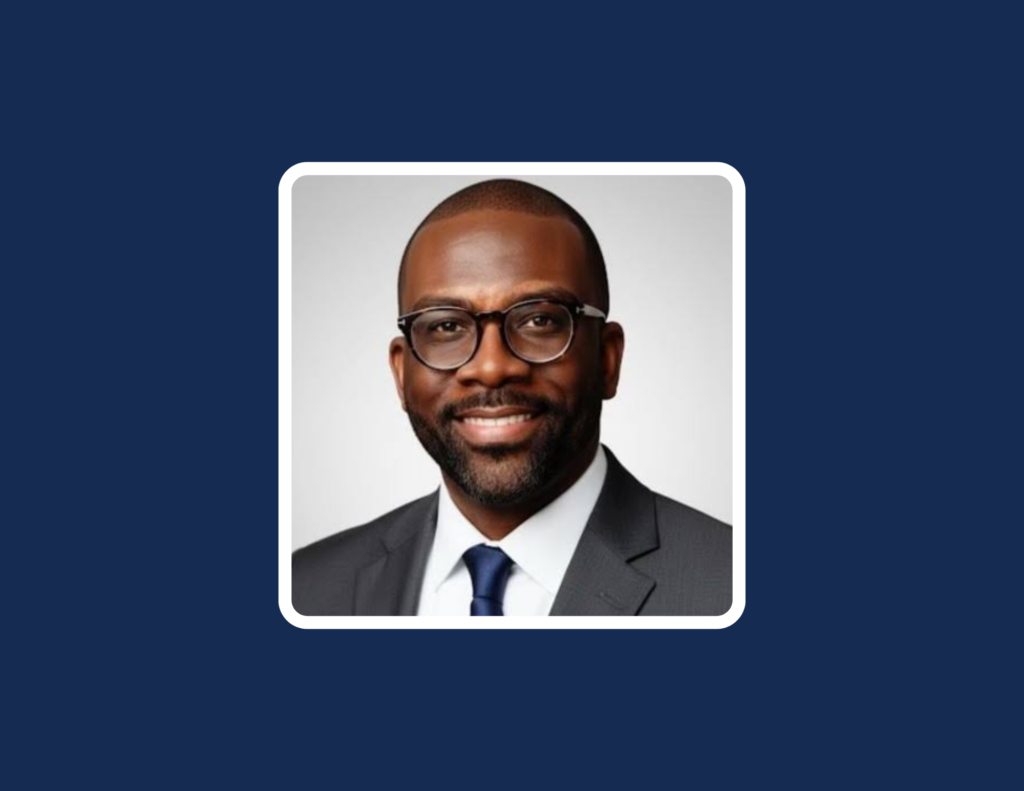
ANDRE JACKSON – DIRECTOR / PRODUCER OF THE DOCUMENTARY FILM “BEYOND BANNERS” – EPISODE 1294
Website – https://beyondbannersdocumentary.com/
Email – [email protected]
Instagram – @beyondbannersdocumentary

Andre Jackson is the producer and director of the documentary Beyond Banners which follows sixty years of Gwynn Park High School basketball, a powerhouse public school program in Prince George’s County, Maryland. The doc begins as the story of one basketball program and grows into an examination of what is happening to high school sports on a national level. As school choice, Name, Image and Likeness (NIL) deals, and unrestricted transfers change high school sports, the film asks what communities lose when the players who once carried their traditions leave and go elsewhere.
On this episode Mike & Andre discuss the making of Beyond Banners, a documentary about Gwynn Park High School’s historic basketball program and its impact on the surrounding community. Director Andre Jackson, a former Gwynn Park player, explains how a conversation in a barber shop inspired him to tell the story of the school’s championships, player development, and father-son coaching legacy. He discusses the challenges of becoming a first-time filmmaker, gathering archival footage, shaping the story in the editing room, building a professional crew, and recovering from a serious health scare during production. The conversation also examines how NIL, AAU basketball, private schools, and player transfers are changing the landscape of public-school basketball and weakening long-standing community connections. Beyond Banners is a reflection on legacy, loyalty, teamwork, and the importance of preserving the community-centered culture that helped generations of athletes thrive.
Follow us on Twitter and Instagram @hoopheadspod for the latest updates on episodes, guests, and events from the Hoop Heads Pod.
Make sure you’re subscribed to the Hoop Heads Pod on iTunes or wherever you get your podcasts and while you’re there please leave us a 5 star rating and review. Your ratings help your friends and coaching colleagues find the show. If you really love what you’re hearing recommend the Hoop Heads Pod to someone and get them to join you as a part of Hoop Heads Nation.
Listen and learn on this episode with Andre Jackson, the producer and director of the documentary Beyond Banners.
What We Discuss with Andre Jackson
10 Key Takeaways for Basketball Coaches
- Build continuity across every level of the program.
Strong programs connect youth basketball, middle school, and high school instead of treating them as separate teams. In the episode, Andre Jackson describes how Howard Matthews’ recreation program prepared young players to run the same system used by the high school, making the transition nearly “plug and play.” Coaches can create this continuity through shared terminology, common principles, coach collaboration, and regular interaction between older and younger players.
- Develop people before developing players.
A basketball program should teach life skills alongside basketball skills. Andre explains that the early Gwynn Park model emphasized teamwork, learning how to handle failure, getting back up, and becoming better people—not simply gaining exposure or pursuing scholarships. Coaches can reinforce this by praising preparation, accountability, communication, and resilience as much as points, rankings, or statistics.
- Protect the team’s identity and sense of belonging.
When players feel connected to the school and community, they are more likely to sacrifice for one another. Andre says that Steve Matthews helped revive Gwynn Park by reinstalling school pride: “We are Gwynn Park. We are the Yellow Jackets.” Coaches can make identity tangible through team rituals, school traditions, alumni involvement, community service, and consistent language that reminds players what they represent.
- Understand that relationships cannot be rushed.
The episode contrasts long-term coach-player relationships with today’s increasingly transactional environment. Mike points out that college coaches once expected to have four years to influence a player, while many now may have only nine months. Coaches should therefore be intentional from the beginning: learn each player’s goals, family situation, personality, and challenges rather than focusing only on immediate performance.
- Teach players how to navigate money and opportunity.
Andre is not opposed to athletes being paid, but he believes young players need financial guardrails, literacy, and guidance about saving and investing. A coach may not control the entire NIL system, but they can bring in trusted financial educators, encourage long-term thinking, and help players understand that a large payment does not automatically create long-term security.
- Recruit your own players by earning their trust.
The episode explains that public-school coaches increasingly have to recruit and retain players who once would have naturally stayed in their neighborhood program. Private schools and AAU programs may begin influencing athletes at a very young age. Coaches can respond by building relationships with families, creating a compelling development plan, communicating the value of the local program, and making players feel wanted before they reach high school.
- Use older players as mentors and cultural carriers.
Gwynn Park’s success was strengthened by younger players watching older athletes and eventually taking their place in the program. Coaches can formalize this process by pairing varsity players with younger athletes, inviting former players to speak with teams, and having older athletes coach or assist at youth practices. This gives younger players role models while teaching older players leadership and responsibility.
- Preserve and use program history.
Andre initially did not know the full extent of Gwynn Park’s success until researching the documentary, including its state championships and history of producing college players. Coaches should make the program’s history visible through banners, alumni events, team presentations, archival videos, and stories from former players. History becomes useful when it gives current athletes a standard to live up to rather than simply decorating the gym.
9. Balance competitive ambition with community responsibility.
The episode recognizes that modern opportunities can benefit players, while also warning that constant movement can weaken community ties. Coaches do not have to reject exposure, transfers, or new opportunities; they should help players weigh those options against development, education, relationships, and long-term well-being. The goal is balance—not pretending the basketball world has stayed the same.
10. Create a culture that can survive beyond one coach.
Gwynn Park’s story includes a father-son coaching legacy and later a former player taking over the program. That succession demonstrates the value of developing coaches and leaders from within the program. Coaches should document their principles, mentor assistants and former players, involve alumni, and build systems that remain strong even after they leave.
Like this show? Please leave us a review here — even one sentence helps! Consider including your Twitter handle so we can thank you personally!
Your first impression is everything when applying for a new coaching job. A professional coaching portfolio is the tool that highlights your coaching achievements and philosophies and, most of all, helps separate you and your abilities from the other applicants.
The key to landing a new coaching job is to demonstrate to the hiring committee your attention to detail, level of preparedness, and your professionalism. Not only does a coaching portfolio allow you to exhibit these qualities, it also allows you to present your personal philosophies on coaching, leadership, and program development in an organized manner.
The Coaching Portfolio Guide is an instructional, membership-based website that helps you develop a personalized portfolio. Each section of the portfolio guide provides detailed instructions on how to organize your portfolio in a professional manner. The guide also provides sample documents for each section of your portfolio that you can copy, modify, and add to your personal portfolio.
Aiming to go D3? The D3 Recruiting Playbook gives you a clear, step-by-step roadmap to the recruiting process – what coaches value, key milestones from early high school through application season, and how to build a target list of schools that fit your needs.
We’ll demystify researching D3 programs and how to stand out without chasing every camp or showcase.
The modules cover things like writing emails to coaches, building an effective highlight tape, using social media well, planning ID camps and visits, and navigating application strategy.
You’ll get templates, checklists, and an outreach plan to communicate confidently, learn how to compare financial packages, and avoid common missteps. By the end, you’ll have a prioritized school list and a decision framework you can use to land your best-fit opportunity.

Give With Hoops is a groundbreaking initiative that fuses basketball analytics with modern sponsorship. Built for teams who see data as opportunity, from AAU programs to college powerhouses.
By tying on-court performance directly to community and sponsor engagement, Give With Hoops help programs raise more while deepening support from those who believe in the game.
Traditional fundraising disconnects donors from the action. Sell candy bars, wash cars, beg for donations, it’s exhausting and ineffective. Players perform better when their stats matter beyond the scoreboard. That’s why Give With Hoops was created.
Give With Hoops connects game performance to community support. Every basket, rebound, and assist becomes a chance to raise funds. Transparent, exciting, and proven to raise 3x more than traditional methods.
THANKS, ANDRE JACKSON
If you enjoyed this episode with Andre Jackson let him know by clicking on the link below and thanking him via email.
Click here to thank Andre Jackson via Email
Click here to let Mike & Jason know about your number one takeaway from this episode!
And if you want us to answer your questions on one of our upcoming weekly NBA episodes, drop us a line at [email protected].
TRANSCRIPT FOR ANDRE JACKSON – DIRECTOR / PRODUCER OF THE DOCUMENTARY FILM “BEYOND BANNERS” – EPISODE 1294
[00:00:00] Narrator: The Hoop Heads Podcast is brought to you by Head Start Basketball
[00:00:21] Andre Jackson: The social conditions that lent itself to Gwynn Park being one of the most dominant dynasties in the state of Maryland from the sixties through the eighties, those social conditions have changed and they no longer exist today, and as a result, it’s much more challenging to have the same results.
[00:00:40] Mike Klinzing: Andre Jackson is the producer and director of the documentary Beyond Banners, which follows sixty years of Gwynn Park High School basketball, a powerhouse public school program in Prince George’s County, Maryland.
The doc begins as the story of one basketball program and grows into an examination of what’s happening to high school sports on a national level. As school choice, NIL deals, and unrestricted transfers change high school sports, the film asks what communities lose when the players who once carried their traditions leave and go elsewhere.
Ever since I founded Head Start Basketball in nineteen ninety-three, we’ve helped young players develop their skills, confidence, and love for the game. Now we’re partnering with coaches and athletic programs to bring the Head Start Basketball camp experience to new communities. Our camps run for five days, three hours per day, and serve boys and girls in grades one through six.
You or someone on your staff directs the on-court portion of the camp while Head Start Basketball manages registration, promotion, parent communication, T-shirts, trophies, website setup, and administration. There are no upfront camp planning headaches, and the profits are divided fifty/fifty between your program and Head Start Basketball.
If you want to reach more families or strengthen your youth basketball pipeline or just create additional revenue for your program, visit headstartbasketball.com to explore hosting a camp.
[00:02:00] Mark Downey: Hello, this is Mark Downey, the head men’s basketball coach at Arkansas Tech University, and you’re listening to the Hoop Heads podcast
[00:02:09] Mike Klinzing: Listen and learn on this episode with Andre Jackson, the producer and director of the documentary, Beyond Banners.
Hello, and welcome to the Hoop Heads Podcast. It’s Mike Klinzing here tonight without my co-host, Jason Sunkle. But I am pleased to be joined by Andre Jackson, the director and producer of the new documentary, Beyond Banners. Andre, welcome to the Hoop Heads pod.
[00:02:34] Andre Jackson: Good evening, Mike. Thanks for having me.
[00:02:36] Mike Klinzing: Thrilled to have you on. Looking forward to learning more about the journey to making this documentary. You obviously have a personal connection to it, which we’ll get into in just a minute, but curious to go through the, just the whole entire process of what it’s like, especially for you as a first-time filmmaker, some of the challenges that went into that, and obviously it’s a fascinating story.
So I’m going to let you take it from the beginning here and just give people an idea. When we’re talking about this documentary, Beyond Banners, give us the one-minute sales pitch. What’s this documentary all about?
[00:03:08] Andre Jackson: Sure. Beyond Banners is a documentary about a high school called Gwynn Park. It’s Gwynn Park in Prince George’s County, Maryland.
Some people are familiar with Prince George’s County. It’s the home of Kevin Durant. That’s how m- most people know of Prince George’s County. But the documentary essentially is about Gwynn Park High School. For roughly two to three decades, Gwynn Park led the entire state of Maryland in terms of the number of state championships.
They won 10 state championships over a 20-year period. And within that story is a father-son coaching legacy where a father kinda established a culture of youth development, grassroots community-based basketball. And then his son came in later to the actual high school in the same community and kinda turned the basketball program around at a, at very difficult time.
We’re, very fortunate to have Tubby Smith in the film who provides kind of a national perspective based off of his experience with Kentucky and other colleges and universities, and also having won a gold medal with the US Olympic team. So really good good film.
And it really kinda speaks to some of the national issues that have emerged in terms of the drain of talent from public school basketball programs throughout the country
[00:04:29] Mike Klinzing: Yeah, there’s a ton of issues that I think the film hits on that are very contemporary when we look at the landscape of both high school basketball and certainly college basketball.
You or I go back five or 10 years, nobody could have imagined that college basketball, the recruiting process, AAU agents, just all the money that’s now involved in college athletics, nobody saw this coming, and I know there’s some interplay with that in terms of topic in your film. So let people know your personal connection here as a former student athlete at Gwynn Park and how that kind of led you to this story, and then when did you get the idea to actually make this into a documentary?
Was it a light bulb moment? Was it a slow build of, “Hey, somebody’s have to tell this story”? Just give us your personal connection to it and kinda how the idea came to be.
[00:05:26] Andre Jackson: Sure. So I graduated from Gwynn Park in the late ’90s, and I played for Steve Matthews, who is the, kind of the central character of the film.
I played for S- Steve Matthews in the late ’90s and then I went on to play at Division I level at Canisius College and also at North Carolina A&T State University. But, I just knew that the program at Gwynn Park had produced a lot of Division I players, I think roughly 23 players since 1981.
And I just wanted to kinda deep dive and better understand, what what led to those players being developed and moving on to Division I level programs, and even some to the NBA level. But, I was actually sitting in the barber’s chair when the idea struck me. My barber was contemplating what high school, they wanted to send their child to, and they made a comment to me saying that Gwynn Park is a football school, so I’m not going to send my kid to Gwynn Park.”
And so from that moment, that kinda struck a chord in me to hey I think, the history of the basketball program needs to be told. The football program, I think we’ve produced eight, eight to 10 NFL players over the last 20 years, which is remarkable in and of itself, but, I just wanted to shine a, a light on the, the basketball program because I know it had a lot of success as well.
[00:06:48] Mike Klinzing: Did you immediately think documentary film? Did you consider other forms of media? Was there ever a thought of, “Hey, maybe I should write a book to tell the story”? Why did you settle on… Again, you’re not a filmmaker, or you weren’t a filmmaker prior to this. Why did you settle on the idea of, hey, a documentary’s the right way to go?
[00:07:07] Andre Jackson: So that’s a really great question. Initially I was contemplating a book versus a documentary and I just landed on a documentary. I, I knew that, one, I’m a big fan of sports docs in particular, on the heels of The Last Dance, which I have a connection to The Last Dance through Beyond Banners.
And I’ll mention that as well, but just The Last Dance and Prince George’s Basketball County, In The Water, the Kevin Durant doc on Prince George’s County, and how many NBA players have been produced from the area. I just wanted to do one on Gwynn Park, and I knew that, historically, a lot of attention has been paid to the DeMatha Catholic.
I’m not sure if you’re familiar with DeMatha-
[00:07:48] Mike Klinzing: For
[00:07:48] Andre Jackson: sure … and Paul VI, kind of the national powerhouse private school programs. But at one time, there was a Gwynn Park, a small little school out in farmland in Prince George’s County, and it was competing with the top schools in the state.
So I w- really wanted to tell that story.
[00:08:04] Mike Klinzing: I can certainly see why, right? As somebody who’s an alum, went through the program, feels a sense of pride. We all know that the schools and the programs that we went to and that we played for, there’s just something a little bit extra, right? There’s something a little bit special about being back around those programs that you once wore the name across your chest.
So obviously you have that deep connection, which allows you to have sort of the insider view of telling the story. When you decided on it being a doc, what’s step one? Is it calling somebody? Is it working through, “Hey, what are the steps I’m going to need to take?” What do you do first when the idea comes in the barbershop and you’re like, “All right, documentary”?
What’s step one? What do you– What’s the first thing on day one that you do?
[00:08:51] Andre Jackson: So the, the fir- it was a combination of things. The first thing was to do some research on my own on, independent research to understand what it entails, what would I need in terms of resources. I’m a bit, a relatively big networker reaching out to folks who I already know who may be in the industry who can kinda, sit down with me and kinda give me a blueprint and, give me, a, a data dump on things that I need to know.
So it was a kind of a combination of independent research and also just sitting down, networking and talking with folks, trying to better understand what I needed to do in order to pull that project off
[00:09:32] Mike Klinzing: For me, here’s my first thought, Andre. When I- I’m picturing myself having an idea, just transposing you into me and thinking about, “Hey, I want to do this about my high school,” my first thing would be, where do I get the video?
How do I find enough- … archival video to be able to cohesively tell a story? Where is all that stuff inventoried? Who has it? Is that, is it at a former coach’s house? Does the school have it? How’d you go about trying to find and gather the video that I know you needed in order to be able to put this thing together?
[00:10:08] Andre Jackson: During the development phase, the pre-production, as I was doing the research I identified a lot of news articles through The Washington Post. They had done a number of articles. And then I was fortunate to come across an alumni who had just written a book. From 1968 to 1970, Gwynn Park won back-to-back-to-back, a three-peat state championships, and one- the starting point guard on those three teams actually wrote a book.
And in addition to that, he had footage from the late ’60s and the early ’70s and he was more than thrilled and excited to, participate and contribute to the project. So I was able to leverage some of the archival footage that he had already amassed and collected, and just kinda incorporated that into the project.
In addition to that, sitting down with my co- my former high school coach, Steve Matthews, he had a ton of VHS tapes and other archival materials. So it was really kinda just tapping into the community and seeing what, archival footage and articles and pictures and stories. And that was…
what I feel s- kinda distinguishes Beyond Banners from a lot of high school documentaries, ’cause there’s no shortage of them is I think this is one of the last– We’ve captured one of the last generations with a living memory of a public school culture kinda rooted in loyalty and pride.
I think in today’s society that has kinda faded away with a lot of mobility, with kids moving from, transferring in and out of school to school. You just didn’t have that back then, and they had the continuity as a result of staying together, kinda working through the ups and the downs, right?
And so yeah, just being able to leverage the community to collect that archival footage was very key.
[00:12:02] Mike Klinzing: How long did it take you to figure out the story arc or the story outline of how you wanted to put it together? ‘Cause obviously you get the idea, you’re like, “Hey, I think there’s something here.”
But in order to make it engaging you have to have a story arc of what is going to actually go on and try to build towards something. And so how long did it take you in the development process to really streamline what you wanted the movie to show, to say, to be able to, again, follow that arc of beginning, middle, and you get to the modern era and just the changes that went along.
How long did it take you to kinda settle on what you wanted it to look like?
[00:12:45] Andre Jackson: We wrapped post-production in July. So this, we just came out of all this, this is early September. So I would say, during that final editing phase, it was kinda, story was kinda written in the edit if that makes sense.
W- I have a very fortunate to have a very experienced crew. Me being a first-time filmmaker, not knowing what the heck I was doing. It was critical that I basically partner with other, filmmakers and crew that had a lot of experience. So my editor was Daniel Bowie.
He had worked on and has credits with the the Basketball County and the Water, a documentary produced by Kevin Durant and Quinn Cook. He’s been there, seen it before. Our animation motion design consultant was Henry Gritzinger. He was on The Last Dance. Bringing on those guys i- in addition to some other folks Susan O’Hara was a producer.
They really, helped out a lot in terms of kinda educating me on, how to kinda shape the story. But I would say to more directly answer your question, the story was really written in the edit. When I started out, it was a more narrow view on, “Hey, I want to do a story on my alma mater,” my, the Gwen Park basketball program.
But it kinda grew out of that. I think bringing on and interviewing Neil Greenberger, who was the sports editor for The Washington Post for a number of years, really added a lot of value. He spoke a lot to the NIL issues and things that are impacting public schools like Gwen Park today. And again, Hall of Fame coach Tubby Smith as well as Randolph Childress, they really kinda brought in their national experience having, been around the NBA and the highest levels of NCAA.
They kinda shed a light on some issues as well that are impacting public schools.
[00:14:37] Mike Klinzing: So as we work our way towards that more national point of view, let’s kinda circle back to your experiences at Gwen Park and how you incorporated those into the film, just in terms of the perspective. You mentioned earlier something that struck a nerve with me, which is you think back to the era when you played high school basketball.
I think back to the era when I played high school basketball a long time ago in the late ’80s. But it struck me when you said that there was a degree of loyalty, right? And there was a sense of community. And I just remember, again, growing up, I tell people this all the time, that one of the things that I loved about my upbringing in basketball here in Strongsville, Ohio, where I grew up is Our recreation basketball program at the time, when you were a high school player, you coached on Saturday morning the younger kids.
And so you made a connection as a high school player, you made a connection with the younger kids, and then I was a younger kid who had been coached by- Wow … guys who were in high school when I’m in, fourth, fifth, sixth grade. And so there are connections that are made there, and I still am in contact with people that I coached and people that coached me who were a part of that program.
And I have this team photo from when I was in, think I was in fifth grade maybe, and there was a group of fourth and fifth graders that we went… And this is back before the big era of travel basketball, but it was like a recreation, so city all-star team based on this little one community league, and then we went and played in a tournament.
And I still have this team photo of all these skinny little guys. We’re all standing there like this. And almost to a T, all those kids in that photo were either my teammates in high school, or maybe they ended up going and not being basketball players, but they ended up being the best players on the football team or the baseball team- Right
or whatever. And there was never a thought, I never remember a discussion amongst any of those guys that I kinda grew up with of, “Hey, I’m thinking about going here,” or, “I’m leaving here.” It was kinda like we just knew where we wanted to be. And that, to me, that sense of community and that just connectedness.
Like I went to games when I’m in fourth, fifth, sixth grade, and the coolest thing was when guys would go up in the layup line and slap the backboard. Yeah. I thought that was the greatest thing in the history of basketball, and I couldn’t wait till I was going to be in high school and I could run out with the fight song and I could be in warmup lines and slap the backboard.
And I look around at the basketball world today, and I think it’s what Beyond Banners is getting at, is that there was a feeling like that, I’m guessing, at Gwynn Park, and now everybody’s a mercenary and you don’t have that same connection. Am I capturing kind of the spirit of what you experienced and kinda what people talked about from that era in the film?
[00:17:33] Andre Jackson: Yeah I think, yeah, what you just said was very spot on. In Gwynn Park there, even still today and it’s funny, when I was there in the late ’90s, they didn’t have the banners up on the wall. But over the years they– I-I’m not sure what happened I went miss, but I didn’t know the history, I guess is what I’m trying to say.
So this was all new to me. I just learned it through research and discovery. I didn’t go into the project knowing that how many, state championships the school had won and that it was the most in the state of ch- state of Maryland. I had no idea. But it was really based off to what you just called out, a collective idea.
There’s a bunch of banners on the wall, but it was really about the relationships between the players, the coaches, the families, and it was more of a community. Whereas just like you said Howard Matthews, who started the youth program in Brandywine, Maryland, the Brandywine Recreation, Rec-Recreational Council, He just, grabbed nine, 10, 11-year-old kids in the neighborhood organized g- they were introduced to an organized game of basketball.
That was the first time they had ever played, right? And it wasn’t about exposure and AAU and traveling to Tennessee and California and all of these expensive endeavors. It was more about learning life skills, right? Becoming better people, better humans learning teamwork, learning to fail and get, pick yourself back up.
And not, moving on because, you might not have liked the way a coach coached you. So it, it built character, it built community and they actually served as models, like, so the older players, to your point similarly the older brothers, older siblings would bring the younger siblings to games and they would, watch them win.
And then when it was their turn and they were in high school, they won. And it was really about the chemistry that they developed that I think lent itself to them being so successful during their time period. That’s what, Beyond Banners is really all about, is kinda going back to the community-based model versus today we see a very exposure-based model where it’s about social media likes and, and, I try not– It’s, it’s– I’m actually happy the kids have opportunities these days. I’m not, I don’t want to be a, a, a Debbie Downer o- on, kids getting opportunities to get paid. It’s just it would be great to have a little bit more balance because if everyone leaves, there’s not g- who’s going to be around to pass anything on?
How can you create a legacy if everyone is moving on every year or every other year? Those are just some of the, you know, issues that are kinda called out in the film
[00:20:11] Mike Klinzing: Absolutely. I think that it is really interesting to think about how it shifted from a we mentality to a we mentality– or a me mentality.
And I think that’s where w-we’ve seen the greatest shift in the game of basketball, especially at younger ages. You go to AAU tournaments, and watch parents, and watch kids, and watch social media, and you see just, again, how there’s so much “Look at me,” and now you have this pot of gold at the end of the rainbow where before it was, hey, your odds of making it to the pros as an NBA player are infinitesimal, right?
The, the, the likelihood of that is next to nothing. Even to get a scholarship, we’ve all seen the statistics of whatever, 1.2% of high school players get an opportunity to play Division 1 basketball. So even that, you’re still chasing. But now, not only are you able to get a scholarship, but now you look at the money that’s being thrown around in college basketball, whether you’re talking about the Power Five conferences, whether you’re talking about mid-majors.
The money that is out there, I think just exacerbates this whole problem and makes people even more crazy about, “Hey, if I can just get my kid to that position.” And then it goes to what you were just talking about in terms of what’s the greater legacy of this is about us as a community, this is about us as a group, this is about us as people building relationships.
Instead, it’s about, “Hey, what can this program do for me?” Or, “What can this coach do for me?” Or, “What can this exposure opportunity do for me?” And we lose what, in my mind, is always the magic of basketball, which is me and you, Andre, are on the team with three other guys, and we figure it out, right?
It’s just one of those things that you look at– I’m not a Knicks fan, but you look at what the Knicks did to win the NBA title this year, and it was like somehow, some way, they found the magic of what it meant to be a great basketball team with everybody sacrificing and nobody caring what their role was, and everybody doing their role exactly.
And I feel like a lot of ways, the culture that we’ve created in youth and high school basketball, in a lot of ways has disappeared unless there are coaches that really try to instill and build that. And there are a lot of coaches that are out there that are trying to do that. But the system, I think in a lot of ways makes it challenging.
[00:22:42] Andre Jackson: Yeah, absolutely. And it’s not lost on me or accidental that a lot of the legendary college coaches started to just kinda check out,
[00:22:50] Mike Klinzing: Yeah …
[00:22:51] Andre Jackson: and also as it relates to the New York Knicks, that’s a great point. But, going back to the continuity and chemistry piece, three of those guys won in college, right?
And they, stayed together. They were fortunate, which is very rare for three- Yeah … guys to be able to stay on the, on the same NBA team, sa- same roster. And, it produced a championship team
[00:23:14] Mike Klinzing: Another thing that is unique about Gwynn Park is the father-son coaching tree.
Doesn’t happen very often. I’m sure it’s happened before, but there are not many schools that can say the program started with the father, and then when the father exits, at some point the son returns and takes over the program. Very rare. Clearly, when you’re talking about building community, building family, there’s no better way to do it than have two coaches- Right
who are, have that father-son connection, and both obviously understand the relationship between them and the program. So talk a little bit about just those two guys, their relationship, and then their relationship to the job and to Gwynn Park basketball.
[00:24:02] Andre Jackson: Sure. The father, again, Howard Matthews was his name.
He started the Brandywine Recreation Council in the same community that Gwynn Park is located in. And what that did is serve as like a, a feeder. Essentially, he, provided a feeder system where they, He would work with the high school coach. So he wasn’t the high school coach. He was the youth development community basketball coach.
And there was a gentleman by the name of Larry Gandy. And Larry Gandy was a legendary coach at Gwynn Park. He led the school to, I want to say, eight state championships in 12 years or something. It’s he was like the Pat Riley of Prince George’s County. O- and so what happened was he would ensure that the players were ready.
They were running the same essentially system that the high school team was in, like middle school, elementary school. So by the time they got to high school, they were… it was easy. It was plug and play. And so that dynamic, Steve Matthews, Howard’s son, grew up watching that. He grew up as a kid.
He wasn’t an athlete but he was just a student and a sponge watching what his dad did in the community. And because of his dad being such a prominent figure in the community he had certain expectations, right? So there is an element of pressure that was associated with him coming into Gwynn Park, given the history and the success of the school.
And, he had to come in and turn things around during somewhat of a, a turbulent period, sh- within the timeframe that he stepped in as head coach. But I just think it’s a really good, That’s kind of the emotional center of the film is the father-son relationship.
And to your point, I think it is. Has it happened before? Sure. I know you have the Hurleys in terms of the coaching trees and other folks that John Thompson et cetera, et cetera. But- This was unique because it was in the same community. And the son came in, hel- turned everything around, and did, some unprecedented things in school history.
I don’t want to give the movie away. I’d like folks to check it out. But it’s a really compelling story about, the dynamic of a father-son coaching legacy and the impact that they had on a community
[00:26:14] Mike Klinzing: And without giving away the movie, what’s one thing that had to be done in order to turn the program back into what it had previously been?
What was the key to to tu- to turning it around for Steve Matthews?
[00:26:32] Andre Jackson: I think it was reinstalling that, that pride, just s- school pride. We are Quinn Park. We are the Yellow Jackets. We are… and just that being in, kinda infectious to all of the kids that came through the program.
There are a number of, like I mentioned, Division 1 players. There’s a guy named Sherron Ford who’s, signed with s- several NBA teams and just really athletes. There’s a lot of athletes that come out of the school, both NFL, professional boxers, you name it. But that basketball program really impacted a lot of lives and I think that really comes across in the film.
[00:27:11] Mike Klinzing: From a filmmaker’s perspective, I know that you went through a health scare while you were involved in the production of the movie, and you can talk as much or as little as you want about that. But when you think about the challenges of just putting this documentary together, what was the most challenging and yet satisfying part that, man, you kinda had to struggle to get this right or to find this particular piece of information, then when it finally came together, you were like, “Yes, this is exactly what my vision was”?
Is there something that kinda fits that bill?
[00:27:49] Andre Jackson: These are some really good questions, man. I, So the, the most difficult thing without question was my health scare. I had a few cardiac arrests early in January this year. And I’m just thankful. Thank God I was able to recover from that and, kinda get back to my passion project.
First and foremost my family. I try to, make sure that’s front and center. My health and I have three kids, so I want to be around for them and my wife. Once I was able to pick myself up and get back to it I would just say just the team, having a Henry Gretzinger who again, worked on The Last Dance, the animation, the motion design coming up with creative ideas about how we could integrate and incorporate it into Beyond Banners.
Working with the editor on, different cuts and pacing ’cause it’s so important. In this social media age, it’s hard to keep folks’ attention, right? So like, how can we tell a story but do it in a way where it’s, compelling and engaging and interesting to try to hold, folks’ attention?
But yeah I don’t… I’m trying to think if there’s a particular… there’s a segment and it’s a through line for the… So there’s a a big rivalry between Gwynn Park and another high school called Douglas High School that goes back to the integration period. They call it the Battle of 301, which is a a highway that kinda is between Gwynn Park and Douglas, the Battle of 301.
And so we actually went to their rivalry game, and as part of our video footage, we were able to capture the entirety of that game, and I think that was a real, a, a real win for the project because we were able to kinda incorporate that, which was really important to tell Gwynn Park’s story.
You had to kinda go back to Douglas, which a lot of the folks that won those three-peat championships actually came from Douglas High School, ’cause it was a all-Black school. Gwynn Park was all white. They integrated, and so you had families playing families, Battle of 301, and so it was a bragger right there.
[00:29:50] Mike Klinzing: Yeah.
[00:29:50] Andre Jackson: Absolutely.
[00:29:51] Mike Klinzing: Absolutely. Absolutely. You can see where that would be a very compelling, A, rivalry over the course of time, and B, I can certainly see why that would be an important part of the film. In the course of making the doc, your wife played a pretty significant role in helping this thing get made, so talk a little bit about her role, and then how the two of you worked together so well, or maybe not so well.
Yeah. I don’t know how exactly it went, so you could… i’ll leave that to you to tell that to tell that part of it.
[00:30:22] Andre Jackson: Yeah, so another I think somewhat interesting and I guess relatively unique piece of the story is my wife is also an alumni of Gwynn Park We met at Gwynn Park. I was 15, she was 14.
We were high school sweethearts. 30 years later, to be telling the story of doing a documentary on the, school that we met at and graduated from, I think is also somewhat unique. But her role she comes from a– She’s an engineer, a very technical, very detail-oriented. I’m not
So she’s able to add that, and she’s also, really good at kinda taking a step back and seeing the forest from the trees, being strategic as well. So she brought all of the skills that she had, you know, developed through industry, having worked at, some pretty large organizations, most recently at Amazon Amazon Web Services.
She was able to kinda bring that business hat to the project and make sure things were operating on schedule, on time, and as best we could on budget . Can’t forget that. The I think the most difficult part is, especially for me being so passionate about the project, is, hey, when do we take the wife-husband hat off and the producer-director hat on and vice versa?
It kinda blends itself. We live together, we work together so that, that was a interesting dynamic, I guess I’ll s- I’ll say. W-we’re used to each other. We know how to kinda work through things. I think that hel- definitely helps. And so we were able to, collaborate and I think come up with a really good product
[00:32:01] Mike Klinzing: As you went through the final editing process to get the film in its final form, how much of it did you have to cut?
How much tweaking was there of, “Hey we’ve got this. May-maybe it’s a little bit too long”? What was the process like from putting it in a form where you thought, “Hey, we’re getting close,” to when you finally made the finished product?
[00:32:27] Andre Jackson: Yeah. So that, being a first-time filmmaker that was definitely one of the most challenging parts of it.
I really leaned on… the editor, having a good editor is worth its weight, gold, platinum, whatever you value. Daniel Bowie did a outstanding job in terms of leading that effort. Of course, I would review. We would do a number of reviews and iterations and go back and forth.
But I think that where it landed was, it’s really good pace to the telling the story, and I can’t, harp on that enough. Pace is really important because, y-you want to be able to keep folks’ attention and kinda switch in and out, really exciting. It m- it might drag a little bit then, pick it back up within certain cadences, and he was really good with that, having a timeline to know when it’s time to pick it up and when it’s time to kinda allow it to normalize.
So yeah, just throughout the post-production process, it went on a little bit, maybe a little bit longer than I had anticipated or we had planned, but we were really… I can’t tell you It had to get to a point where I got tired of watching my own movie. Like you watch it repeatedly and cut, edit, watch it again, edit, watch it again, edit, and it’s just a continuous cycle of iterating on, let’s get to the best cut that we possibly can.
But, what I really I’m really proud about is the crew, the professionalism and the expertise of the crew and also the, the on-camera cast that we have. Tubby Smith, Randolph Childress, a former Washington Post journalist. Like these are folks that are the consummate professionals.
Ida E. Jones, who I brought in, she is a PhD and she’s like a American history expert. And so she really for that integration period when Gwynn Park was getting started she provides context and a lens that I think kinda distinguish it from most sports docs. It’s not uncommon in sports docs to have a coach, a player a journalist.
So we have those things, but I think what Dr. Ida Jones, E. Jones brings is something completely different for certain segments where it’s needed, where she provides context on how it was for an all-white school to be integrated with Black players for the first time and what, what went on in the communities and in the state of Maryland during that time period.
So it’s kinda layered. It’s not just sports. Sports is the lens and the main thing that we tell a story through, but it’s about community, legacy, relationship, history and we definitely got a ton of highlights in sports, too. Like I said, Randolph Childress is in the film. We know what he did at Wake Forest ACC legend, and so we also kinda touch on that as well.
And so yeah, I’m just really excited to share this film with the world
[00:35:25] Mike Klinzing: There’s a lot of threads that go through the main storyline, and obviously each of those on-camera guests that you just talked about bring something unique to the table. So let’s talk about the basketball piece of it. Start with Tubby Smith.
Just tell me a little bit about the perspective that he bought– he brought to the interview process and brought to the film and some of the issues that he talked about.
[00:35:49] Andre Jackson: Sure. Just for context, Tubby Smith’s connection to Gwynn Park is he actually grew up in southern Maryland. The high school that he attended, Great Mills High School, they actually played against Gwynn Park, when he was in high school.
He was able to speak to that, Gwynn Park from like a, a competitor or rivals perspective. And then once he, I think he graduated from High Point. He was a player, was a really good player at High Point in North Carolina. He came back to his high school, then he coached, and he coached against Gwynn Park.
And in both of those instances, he came up on the losing end both as a player and a coach. So he had some, he had admiration for Gwynn Park, and he was able to provide context in his opinion and perspective firsthand, having competed competed against the school in the ’60s and the ’70s.
But so he provided that context. But outside of that, on a national level, he was able to speak to some of the things that he’s seen. I think he even mentioned, he said, I’ve been coaching for 50 years.” It’s wow. And this is what I’m seeing now. And what, everyone should be cogniz-cognizant of it is, there’s certain things that we are losing as we commercialize the sport increasingly.
And so he really kinda talks much better than I could about those issues. And so I, I always go back to what Tubby contribute– Coach Smith contributes from that perspective about kind of the national landscape and NIL with kids being play- paid and how that’s so much different from when he came through.
Being an African American, he just wanted the opportunity to play on the even on the same stage, right? So to go from that to now being paid, he definitely kinda dives into those issues. So yeah, that’s what Coach Smith brings to, to the film.
Both the rivalry competitor’s perspective, but then, the ability to kinda zoom out and touch on some of the issues that he’s seen throughout his 50-year coaching career and how that’s impacting schools like Gwynn Park now.
[00:37:58] Mike Klinzing: Yeah, the perspective that he has, right? Just from, you go back to when he’s a kid and into his high school career, and you’re talking about the integration- of college basketball, obviously a huge change in the game for everybody.
[00:38:16] Andre Jackson: Yeah.
[00:38:17] Mike Klinzing: Wow. You go through a whole era when he’s playing, and for the vast majority of his coaching career, where players are competing and they’re on scholarship, right? And that’s the extent of the benefit they have. And then all of a sudden, boom, you’re at a point now where guys are being paid two, three, $4 million a season to participate on a college basketball team.
And again, anybody who’s been around the game for a long time, I talked to lots of coaches, and you expressed this sentiment earlier that there’s not one coach that I’ve met that is opposed to players earning money as a result of their earning money as a result of their participation in college athletics.
However Nobody thinks that the current system that we have is the one that is best for anyone. Not that it’s best for the players, not that it’s best for coaches, not that it’s best for the schools, but it’s just the way that the system has evolved because pretty much the NCAA, anything they try to rule on, somebody takes them to court and they end up, and they end up losing.
And so consequently, they’ve almost washed their hands of the whole thing. And so it’s just, again, very interesting to look at how that change has impacted a guy like Tubby Smith, who’s been in the business forever. And coaches that I talk to, Andre, what I hear from them is you have guys that are frustrated and trying to figure out how they can navigate this new world.
And not that they don’t want players to be paid, but a lot of guys have said to me that One of the things, and one of the reasons why you get into coaching is you love the game of basketball, but you also love being able to make an impact on young people using the game of basketball. And for college coaches especially you go out and you get to recruit the players that…
It’s not like a public high school where you coach whoever shows up at the door-
…
[00:40:24] Mike Klinzing: That’s who’s on your team. In college, you get to select the players who are part of your team. And in the past, most of the time when you recruit a kid, you had that kid for four years. That’s four years of relationship that you have an opportunity to make an impact on a player.
And so the coaches that I’ve talked to, as we’re discussing the NIL, most of them have come to the conclusion that it’s just changed in a sense of, I no longer can think of it as I’ve got four years to impact this guy, both as a human being and as a basketball player. Now, I might have nine months. And so how can I condense that impact and try to make an impact on that kid academically, socially, as a human being, as a basketball player, when I used to have four years and now I have a year?
And I can understand how somebody could be really frustrated with condensing that timeline and just feeling like it’s a very transactional relationship as opposed to a transformational relationship where I’m really having a chance to have an impact. And so I think guys who have come up in the… Like Coach Smith, who’s been around for such a long time, and y- it’s always been this way, and now all of a sudden it’s different.
There’s definitely an adjustment period, and it’s always just interesting to hear different guys talk about their perspective of how they’re handling it, because it’s definitely strange for everybody to think about, hey, we’re paying this kid $800,000, or we’re paying this kid $1.2 million, or we’re paying this kid whatever, $10,000.
It’s funny when I think about this for myself, and you could probably think of the same thing when you were playing. Over Christmas, my last two years, I’m living in an apartment and the, the, the dining halls close. And so they give you… They– I used to get 300 bucks my, my junior and senior year, and I’m like to be able to eat.
And I’m like, “I think I could, I think I can get by with spending 150, and then I can get myself a pair of shoes.” This is unbelievable.” And a- and now the amount of mon- the amount of money that is being thrown around, when I think about that, it’s– it feels absurd to me, and I’m sure it feels absurd to a guy like Tubby Smith, who, again, coached for so many years under the old system.
[00:42:42] Andre Jackson: Yeah, I just, my own personal view is I wish they had guardrails around mandatory and I think it’s increasingly happened with the like financial literacy. That’s one thing. But I actually think they should force them to save and invest a large portion of it to save them from themselves.
And I say that as someone who you know, at a young age, I inherited a little bit of money. It wasn’t much, but I blew it. I just didn’t have the maturity and the foresight to be able to save and invest. I just didn’t know at that time, right? So sometimes you have to save people from themselves, and that’s what I wish was in place so that they wouldn’t go out here and just, waste their money essentially on things that will, be of no value to them, in, in the next couple years, five or 10 years, so that’s just my own personal viewpoint on the matter. And I’m actually surprised that some coaches like Coach Cal Calipari, and the coach at St. John’s, his name is escaping me right now. But he’s been around forever.
[00:43:43] Mike Klinzing: Pitino …
[00:43:43] Andre Jackson: Pitino. How they’ve, they are trying to adapt and stay afloat, Yeah
So it’s just interesting
[00:43:53] Mike Klinzing: Yeah it’s definitely a different, it’s a different world, and I think you have to adapt. You have to try to figure it out, and everybody’s just flying by the seat of their p- their pants being like, “Ah, I don’t know what to do.” I’ve had coaches that say that they used to build relationships in the recruiting process when you’re talking about…
That’s even if you’re recruiting high school players. Yeah. A lot of coaches aren’t even recruiting high school players, just recruiting the portal. And again, from a coach’s perspective, makes sense, right? If you can take a kid who’s already adjusted to college life, has proven they can be a college basketball player, much less risky than taking an 18-year-old kid who you don’t know if they’re going to be homesick, you don’t know they can handle the academics- you don’t know the adjustment to-
[00:44:32] Mark Downey: Yeah …
[00:44:32] Mike Klinzing: college work ethic and all. There’s a million different reasons, but it still is just a different way of going about it. But I’ve had coaches say to me that it used to be, “I’ve got to build a relationship with the kid, and then I’ve got to build a relationship with the family, and then I’ve got to figure out is it mom, is it dad?
Who’s got the most influence? How can I, again, build those relationships, build that trust with that player over the course of a year, two years, three years as I’m recruiting this player?” And now, so many of it is just, it comes down to Andre’s willing to pay me 750,000. Mike’s willing to pay me 600,000.
It doesn’t matter to me if it’s Andre or Mike. I… The relationship doesn’t… It’s just one person can pay me more than the other.” And as a coach, then you feel like, man, it’s almost been commoditized. Like me as a coach, does it matter if I can coach? Does it matter if I’ve taken the time to get this know- to know this kid as a person, as a human being, and invest in them?
Or is it just, “Hey, I can make this kid’s wallet the biggest,” and that’s why I get that player? And I think for coaches, again, it’s frustrating because they want to be able to have… Look, the reason why they get into it is because they love the game, and they love teaching it, and they love having an impact on young people, and I think it’s just more challenging to do that in the environment that we have today.
[00:45:52] Andre Jackson: Yeah, absolutely. It’s very transactional, is the way I kinda-
[00:45:55] Mike Klinzing: Absolutely. Tell me about the Randolph Childress piece of it and what perspective he brought to the table.
[00:46:02] Andre Jackson: Sure. Randolph Childress actually attended Guampart for- For a year or two in the late ’80s. In fact, he was a member of their last state championship team.
And he’s able to speak to his experience in coming into Gwynn Park and the, the accomplishments that he had on a collegiate level. And he points to actually the– a guy who was coaching him, the late George Leftwich who used to coach with John Thompson at Georgetown.
And after, I believe after coaching at Georgetown, he actually came to Gwynn Park for a couple years, and they won back-to-back state championships. And so Randolph was a member of that team. And he speaks about how George Leftwich had a an outsize impact that he thinks changed the trajectory of his career.
And again, in this little small school out in Prince George’s County their, lives were being impacted by, these coaches and mentors. So that’s the story that we’re telling.
[00:46:58] Mike Klinzing: Without giving away the ending, without giving away the key points to the plot, in today’s program at Gwynn Park, what’s one of the challenges that the program faces on a daily basis that they’re trying to overcome?
[00:47:17] Andre Jackson: I won’t say… and just for context, Steve Matthews one of his former players is actually the coach now. So that’s why we were able to, say it started with the Matthews family, but now, one of Steve Matthews’ former players is actually coaching now. So he’s able to kinda, or try to instill some of the things he learned as a player under Steve Matthews to today’s player.
The challenge is, and even Steve honestly ran into it, and I guess I was guilty of it because I was one of his players. Over time, the social conditions have continued to evolve and continue to change. So when Steve was a little– Steve Matthews was a, a young child, his father was, running the recreation council.
It was a different community. It was farmland. It was less developed. Families, somebody’s father next door down the street might chastise, your kid, and it was just a different dynamic. It was more close-knit family oriented community. As time went on it kinda changed.
So even in Steve’s era, my, late 90s, things were beginning to ch- they hadn’t quite changed, but they were beginning to change where, on my team, Steve Matthews had, I think in his starting lineup, we had four Division I players, and that’s rare. Some private schools don’t have that.
We had that as a public school. And so he was able to develop, help develop this pipeline of, as I mentioned, players that went to Boston College and started Clemson other mid-major universities and had really good careers. And now today The social conditions have continued to change.
But one thing that I will say that I think shows up, pretty prominently is that there are still Gwynn Park alumni showing up for games that have been going to games since the ’60s– Well, not the ’60s, but the ’70s and ’80s. And I think that’s rare and somewhat unique that the Gwynn Park, again, I mentioned, I believe we captured the last generation with a living memory of public school pride and loyalty.
And so you can kinda see some of that still today. It’s probably not as strong and prominent as it was in the heyday it’s still holding on. And so that coach has to deal with the social media era, the, NIL, the private schools constantly coming in. So Gwynn Park is located, they have a– we have Gwynn Park Middle School, which is like essentially across the street.
And Ty Lawson, I don’t know if you remember Ty Lawson, he went to Gwynn Park Middle School. He was considering coming to the high school, but he ended up going the private school route. And so recently we had a 6’5″, 6’6″ kid who was in eighth grade, all the private schools wanted him. He– Back in the day, he would’ve came to Gwynn Park.
Ty Lawson would’ve came to Gwynn Park. They ended up being sucked up by private school. So that’s what that coach today has to, Spencer Way, has to deal with. He has to deal with constant recruiting, not only from the private schools, the AAU programs are kinda pulling the strings on where kids go to school and directing those activities in terms of, handling the kids at a very young age.
And so you have to contend with that. And then you to you– I think you mentioned it earlier, you have to basically work with whoever shows up to practice, and you don’t know what you’re going to get sometimes from one season to the next. So it’s just the different social conditions, the social conditions that lent itself to Gwynn Park being the most dominant, one of the most dominant dynasties in the state of Maryland from the ’60s through the ’80s.
Those social conditions have changed, and they no longer exist today, and as a result, it’s much more challenging to have the same results
[00:51:09] Mike Klinzing: You have to recruit your own players, right? As a high school coach, as a college coach, something that nobody really ever thought about before i- in the past. It was, say, kid’s in my program, and kid’s going to be there for three years or four years as a high school player, three years, four years as a college player, and now you’re having to spend an inordinate amount of your time recruiting your own players to make sure that even though you’ve already got ’em in the door, you have to keep ’em.
Keep ’em. And in the case of a high school you have to build relationships with those kids when they’re in third, fourth, fifth, sixth, seventh grade to make sure that you even have a chance of those kids coming to your school a- as a public school. And so I’ve always been a big proponent of public school basketball and like I said, when I was a kid, just private school was never on my radar at all as far as a choice or a decision about what I was going to do.
I just knew that I wanted to play with my friends and go to the school here in my community, and that was it. There was never any consideration of, oh, this’ll give me a better opportunity to play at the next level or get more exposure or play a better schedule or whatever other things that schools try to sell players on today.
But it’s definitely something that coaches have to do at all levels now. I don’t care what you’re coaching you have to recruit your own players.
[00:52:27] Andre Jackson: Absolutely. And there’s one thing real quick I would like to just mention, Mike, and that’s public schools… i’m concerned, having been a alumni, a, a product of a public school, athletically, I’m not sure what the future holds.
And I, that’s not to be negative or anything like that, but when I think, like Michael Jordan came from a public school, right? Magic Johnson, Kobe Bryant, and then some folks might say that was a long time ago.” And even in Maryland, Len Bias, the late Len Bias was a, a public school product.
But Jalen Brunson just won a NBA championship. He actually went to a public school in Illinois. If you look at it, I just don’t know that the talent level will continue to be where, it produces anything remotely close to that level of talent in the future.
[00:53:21] Mike Klinzing: I think it takes somebody who is, and I was going to say an amazing coach, but I think the better way to say it is an amazing person-
…
[00:53:30] Mike Klinzing: That can be the charismatic, magnetic leader that is going to keep kids in the community and keep them at the public schools. I know that public school coaches that I know here in the Cleveland area, I think that’s one of the things that they talk about all the time, is how can we keep our kids in our program and not have them leave and go to a private school?
It’s a constant conversation among public high schools. And I do think that when you look at how the playing field is somewhat imbalanced, yeah, I think it’s going to be difficult to have… It take, it takes something really special to be able to build a powerhouse public school basketball program. It can still be done, but I think you’re going to see it, it’s fewer and far between and I and I think that when you look at the best teams, and you can probably think back to your era playing in high school, and I can kinda think back to my era playing in high school, and sure, there were good private schools, but there were only a couple, and they were the biggest private schools.
Now you have schools that might have an enrollment of 200 kids- That’s the very first … and that enrollment of 200 kids, they’ve got nine Division 1 basketball players amongst those 200 kids, and that didn’t exist in our era, for sure.
[00:54:54] Andre Jackson: Yeah, the basketball academies, for sure
[00:54:58] Mike Klinzing: All right. So that’s the film.
The next part of it for you is, okay, I made this thing. Now what? Now how do you get it in front of the public? Talk me through the marketing plan. Where do you go from here now that the film is made, ready to be seen, ready to be distributed? What’s the marketing plan? How have you gone about putting that all together?
[00:55:23] Andre Jackson: Yeah, that’s a great question, Mike. It’s funny, I thought the most difficult thing was just making the film, right? Trying to distribute the film is a whole different animal. And so basically wh- what we’re doing is we’re trying to raise awareness. It’s a lot of distraction.
Social media’s always something going on. The news cycle is what it is. So how do we kinda let folks know that, hey, there’s this film called “Beyond Banners.” It’s an indie film project. Right? We’re not some big studio. So basically just, organically generating media coverage. I was fortunate over the past several weeks to go on ABC7 News.
Just last week went on Fox 5 in DC on the “Marissa Mitchell Show.” I’ve been doing, podcasts and, very fortunate to do HoopEd’s. Thank you so much for this opportunity. Just kinda, spread the word so that folks will have an opportunity to hopefully s- they will see this film within the next several months.
We were fortunate last week to receive our first licensing offer that we’re evaluating. But we’re still in conversations with sales agents, other producers that could, potentially attach their name to the film and open some doors. It’s, it’ll be between that or just going straight to consumer, which I’m a, a big advocate of.
I’m actually in favor of that. It’s just, put it up somewhere where folks can just directly access it, and I think we’ll be doing that at the conclusion of our film festival run. We anticipate getting into, entering into several film festivals throughout October and November. And then, like I said, I just want to, put the trailer out sometime maybe in late October and then launch the film for rental in by the end of November, early December.
So that’s kinda the timeframe we’re working on right now. But distribute- Yeah … distribution is a beast. It’s an animal all of itself.
[00:57:17] Mike Klinzing: All these different pieces, right? Here you are sitting in the barbershop and you’re like, “Hey, I got this idea, man. I want to talk about Gwen Park Ba- Gwen Park basketball.”
And boom, before you know it, you’re becoming an expert in all these different things that you had no idea were even a part of it when you started. So yeah, to be able to get it out, and obviously something that you took a lot of time with, that you took a lot of pride in putting it together, and again, that personal connection for you, having gone to school there, met your wife there, played basketball there, now having created the documentary, just all those connections, and then finally having this finished product and just wanting the opportunity to be able to put it in front of as many people as you can and then trying to figure out and, hey, how do I do that?
What’s the best way to do it? Was there one person that took the lead or that you reached out to, to help you with that distribution process? Was it somebody that was already a part of the filmmaking team, or did you go outside kind of the group that put the film together?
[00:58:15] Andre Jackson: Yeah, a combination of both.
As I mentioned Susan O’Hara she was the first partner I brought in a- as a producer on the film. Just because she has the experience. And also me being biased, like I, I knew I’m subjective. I went to Gwen Park. It’ll be a lot of inside baseball speak if I’m just highlighting Gwen Park basketball.
But she was able… she’s from New York she’s, a, a female obviously, and she was able to kinda bring something different, an outsider’s perspective to kinda balance out my subject- sub- subjectivity. I think it’s good that, obviously that I have the access that I had so that it’s a more immersive feel like we’re in the locker room, we’re with the team, embedded with the team, so you can it’s very close. But she brings, kinda allows us to zoom out and be like, okay, someone in Iowa, someone in Europe, let’s make sure that they can understand what’s going on here at Gwen Park. So I think, that kinda balances itself out. Daniel Bowie as well his experience kinda up- definitely upleveled the film and the project.
So yeah, just, bringing in really seasoned folks that are, definitely well-versed in making films and creating really good content was vital
[00:59:34] Mike Klinzing: Final question before we wrap up. When you think about this film and you think about the conversation that we just had, is there one thing that we haven’t touched on, something that you would want a prospective viewer to know, to think about as they go to watch this movie that we haven’t talked about yet?
[00:59:55] Andre Jackson: Yeah, I think that the NIL conversations and I don’t want to just, I’m not trying to beat up on NIL. As you said, and you said it well, like there are a number of things at play, right? It’s a confluence of different conditions that are going on all at the same time, right?
It’s kind of a snowball effect. So it’s not just any one thing. So I, I want that to be clear, and I think that’s clear in the film as well. But it’s really about how these things issues are impacting communities. It used to be communities would, the pride, the loyalty, hey, Mom and Dad, and even after their kids stopped playing, they still came to games and rooted for the local neighborhood high school because it was a form of identity and pride and loyalty again.
And so I think a lot of that is being lost. And so we basically are calling out what’s being lost as a result of these myriad of other issues nationally. Yes, Gwynn Park, had its heyday and has that, that school culture and pride, but I’m sure there are other schools, throughout the country that are experiencing the same exact thing.
And so hopefully folks will be able to see their own high school or as my wife calls it, any town USA. They can see that in the film and in Gwynn Park. And hopefully it just kinda lends itself to a more nuanced conversation about these issues and how communities are being impacted
[01:01:31] Mike Klinzing: Definitely resonates with me.
I see a lot of things in what you’ve talked about that are facets of what I’ve seen both here in my community and from talking to coaches all across the country at various levels in terms of just, again, like I said earlier, I think you’ve gone from, it was frequently about we, whether that we was just our team, whether that we was our school, whether that we was our community, and now we’ve fractured it into a bunch of different mes going all kinds of different directions.
And maybe they come back together at some point, but you’re definitely, I think, on the right track in terms of where we are with public school basketball and that feeling of community, right? Everybody just kinda disappears into their phone and their own social world, and you kinda forget about the greater community of…
I think when I was playing again, the, the fire chief would come to the games and sit, and he didn’t have kids that were there, or the, a policeman, or there would be a guy that just was 75 or 80 years old that would come to every game that went to the high school, 50 years before. And I don’t know that you see that all over the…
I’m sure there are still places where that happens, but I think the community piece of it is huge. Andre, before we wrap up, I want to give you a chance to share how can people connect with you? How can they find out more about the film? Where are you going to release the process that they’re going to have to go through to be able to see the movie?
Give me all the information of what people need in order to be able to connect with you and find this film when it comes out.
[01:03:05] Andre Jackson: Sure. So the first thing is, we we have an active email list. So beyondbannersdocumentary.com. Please go to our website, sign up so that we can notify you before, we do any announcements broadly in terms of where the film can be watched and how.
So that would be my first ask. The second would be if you’re on Instagram follow us on Beyond Banners Documentary. I’m also on Facebook, Andre Jackson around Beyond Banners as well, but it’s more of a personal page. But again, everything I’m doing now is in terms of trying to get the word out about this documentary project.
So Facebook, Andre Jackson Instagram, Beyond Banners Documentary and the website. Please sign up for our email list. No spam emails. We’re only going to give you relevant information about where you can watch the film, and that’s really it. And I, I hope that, individuals who watch this program have an opportunity to watch it, and I hope it definitely adds value and kinda sheds a light on some of the issues that we’ve discussed today.
[01:04:12] Mike Klinzing: Andre, first of all, congratulations on making the film. As a first-time filmmaker and just going through the entire process, I can only imagine how daunting it was to go through all the steps and the learning, and the value in that to you if you ever want to do this again and create something else. But just again, the process of doing it, and I’m excited to see it when it comes out after having had an opportunity to, A, kinda go in and do some research and learn a little bit more about what you’re doing, and then talking you to you tonight and kinda walking through the story arc of what this thing is all about.
If you’re out there listening in our audience, Beyond Banners, Andre Jackson, sign up for the email list, go to the website. I think if you do that and you get an opportunity to watch the film I don’t think anybody’s going to feel like it was not time well spent. And again, kudos to you for putting it together.
Kudos for your wife for working, the two of you working together to get this project off the ground and to pay the respects to a community and a basketball program and a school that obviously had a huge impact on your life. So again, Andre, thank you for taking the time out of your schedule to join us tonight.
Really and truly appreciate it. And to everyone out there, thanks for listening, and we will catch you on our next episode. Thanks.
[01:05:32] Narrator: Thanks for listening to the Hoop Heads Podcast, presented by Head Start Basketball