
KATIE PATE – GEORGE MASON UNIVERSITY, SENIOR ASSOCIATE AD, DIRECTOR OF DEVELOPMENT – EPISODE 1015

Website – https://gomason.com/staff-directory/katie-pate/538
Email – [email protected]
Twitter/X – @coachkatiepate

If you listen to and love the Hoop Heads Podcast, please consider giving us a small tip that will help in our quest to become the #1 basketball coaching podcast.
Katie Pate is the Senior Associate AD and Director of Development at George Mason University. Throughout her career within intercollegiate athletics, Pate has excelled in many leadership positions as a head basketball coach, a broadcaster, an external relations leader, and a fundraiser. She previously worked in athletic administration for both Appalachian State and Longwood University.
In addition to her administrative success, Pate had several coaching stops, including head coaching positions with Belmont Abbey, Lenoir-Rhyne, and her alma mater, Coker College, plus stints as an assistant at Marshall, Georgia State, Coker, Wingate, and USC Upstate.
As a student-athlete, Pate was a first-team All-Carolinas-Virginia Conference pick and a three-year team captain at Coker.
On this episode Katie shares her journey through the world of basketball, from her early days as a player to her current role in athletic administration. The conversation highlights her experiences as a head coach, broadcaster, and fundraiser, emphasizing the lessons learned along the way. Pate discusses the evolution of women’s basketball and her personal experiences in a male-dominated sport, describing how she navigated the challenges and opportunities presented to her. Through her narrative, she reflects on the importance of mentorship, particularly from her stepmother, who was a pioneering figure in women’s basketball, and how that influence shaped her desire to coach and lead others. As she transitions into her current role, Pate emphasizes the significance of building relationships with donors and the community, and how those connections are crucial for the success of athletic programs in today’s competitive landscape.
Be sure to follow us on Twitter and Instagram @hoopheadspod for the latest updates on episodes, guests, and events from the Hoop Heads Pod.
Make sure you’re subscribed to the Hoop Heads Pod on iTunes or wherever you get your podcasts and while you’re there please leave us a 5 star rating and review. Your ratings help your friends and coaching colleagues find the show. If you really love what you’re hearing recommend the Hoop Heads Pod to someone and get them to join you as a part of Hoop Heads Nation.
Be sure to grab your notebook before you listen to this episode with Katie Pate, Senior Associate AD and Director of Development at George Mason University.
What We Discuss with Katie Pate
- How her early basketball experiences were shaped by her father’s encouragement
- Youth sports in the 80s were different, with less pressure from parents
- Why her high school success led to a challenging transition to college basketball and her first year wake-up call
- Discovering her passion for coaching during her time at Coker College
- The evolution of women’s basketball
- The value of empathy in understanding the challenges faced by coaches
- Connecting with players is crucial for effective coaching
- The importance of leading from the back of the line, supporting the vision of a leader
- Self-awareness is key for personal and professional growth
- Finding joy in the small victories is what keeps you going
- Transitioning from coaching to administration requires adapting to new responsibilities and challenges
- Building personal relationships with donors is critical to successful fundraising in athletics
- Understanding the evolving landscape of NIL is essential for modern college athletics success
- Her experience as a player and coach informs her approach to athletic administration
- The challenges of balancing work and personal life are significant in the athletic field
- The need for resilience and adaptability in sports management
- A strong network is vital for success
Like this show? Please leave us a review here — even one sentence helps! Consider including your Twitter handle so we can thank you personally!

We’re excited to partner with Dr. Dish, the world’s best shooting machine! Mention the Hoop Heads Podcast when you place your order and get $300 off a brand new state of the art Dr. Dish Shooting Machine!

Prepare like the pros with the all new FastDraw and FastScout. FastDraw has been the number one play diagramming software for coaches for years, and now with it’s integrated web platform, coaches have the ability to add video to plays and share them directly to their players Android and iPhones via their mobile app. Coaches can also create customized scouting reports, upload and send game and practice film straight to the mobile app. Your players and staff have never been as prepared for games as they will after using FastDraw & FastScout. You’ll see quickly why FastModel Sports has the most compelling and intuitive basketball software out there! In addition to a great product, they also provide basketball coaching content and resources through their blog and playbank, which features over 8,000 free plays and drills from their online coaching community. For access to these plays and more information, visit fastmodelsports.com or follow them on Twitter @FastModel. Use Promo code HHP15 to save 15%

Your first impression is everything when applying for a new coaching job. A professional coaching portfolio is the tool that highlights your coaching achievements and philosophies and, most of all, helps separate you and your abilities from the other applicants.
The key to landing a new coaching job is to demonstrate to the hiring committee your attention to detail, level of preparedness, and your professionalism. Not only does a coaching portfolio allow you to exhibit these qualities, it also allows you to present your personal philosophies on coaching, leadership, and program development in an organized manner.
The Coaching Portfolio Guide is an instructional, membership-based website that helps you develop a personalized portfolio. Each section of the portfolio guide provides detailed instructions on how to organize your portfolio in a professional manner. The guide also provides sample documents for each section of your portfolio that you can copy, modify, and add to your personal portfolio.
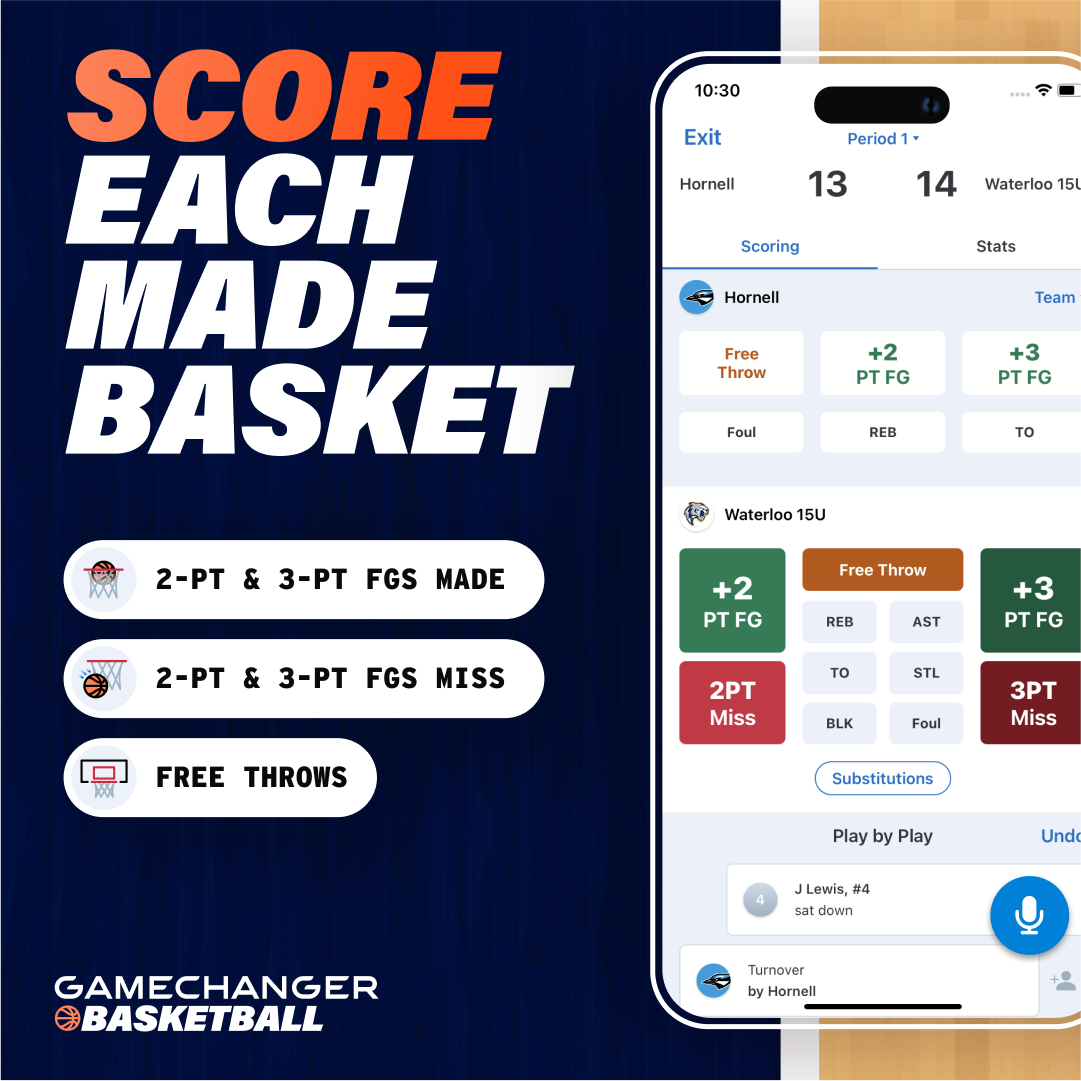
Hey, coach! Want to take your team to the next level this season? Introducing GameChanger, the ultimate game-day assistant with tools to give you a winning advantage. With GameChanger, you can track stats, keep score, and even live stream games, all for free! Get the stats and crucial game video you need to lead your team to victory, all from the palm of your hand. Coach smarter this season with GameChanger. Download GameChanger today on iOS or Android and make this season one to remember. GameChanger. Stream. Score. Connect. Learn more at GC.com/HoopHeads
THANKS, KATIE PATE
If you enjoyed this episode with Katie Pate let her know by clicking on the link below and thanking her via Twitter.
Click here to thank Katie Pate via Twitter
Click here to let Mike & Jason know about your number one takeaway from this episode!
And if you want us to answer your questions on one of our upcoming weekly NBA episodes, drop us a line at [email protected].
TRANSCRIPT FOR KATIE PATE – GEORGE MASON UNIVERSITY, SENIOR ASSOCIATE AD, DIRECTOR OF DEVELOPMENT – EPISODE 1015
[00:00:00] Mike Klinzing: Hello and welcome to the Hoop Heads Podcast. It’s Mike Klinzing here tonight without my co-host Jason Sunkle, but I am pleased to be joined by Katie Pate, the Senior Associate Athletic Director and Director of Development at George Mason University. Katie, welcome to the Hoop Heads Pod.
[00:00:19] Katie Pate: What’s up, Mike? It’s great to be here tonight.
[00:00:20] Mike Klinzing: Thrilled to have you on, looking forward to diving into all of the very diverse things that you’ve been able to do in your career. Let’s start by going back in time to when you were a kid. Tell me a little bit about some of your first experiences with basketball. What you remember about just getting into it as a young girl.
[00:00:37] Katie Pate: Well, so I’m going to give my age away. So I am 49 going on 50 in February, same birthday as Michael Jordan. So yeah, I, I like to hang my hat on that birthday, February 17th.
[00:00:50] Mike Klinzing: That’s a good birthday.
[00:00:51] Katie Pate: Yeah. The goat. That’s another podcast episode.
[00:00:54] Mike Klinzing: We can talk about, you wanna talk Michael Jordan, let’s talk Michael Jordan.
That’s a topic I’ll never get bored of. I’m on that soapbox constantly on the podcast, so.
[00:01:04] Katie Pate: I love it. I love it. When people try to get into some type of a debate, it’s a lose-lose for anyone that tries to question it. But no, I think the interesting part, Mike, is when I was introduced to basketball, so this would have been, oh gosh, early 80s, and we weren’t quite there yet, right?
The opportunities were available, the sport was starting to grow and emerge, but it was really the pioneers. In the 40s, 50s, 60s, and 70s, I had laid the groundwork. And so at the time our family, we’re living in Minnesota, right outside Minneapolis. And there was this thing called the OBA, it was the Osseo Basketball Association.
And the first run at this was in the second grade. And at the time the last thing I wanted to do was play basketball because boys wouldn’t play basketball. Mike? And that’s, that’s what I thought is, is my, my mind was, I should be in dance, I should be in gymnastics and just because I’m tall, I’m the tallest person in the grade out of all the boys and girls, doesn’t mean I should be playing basketball, dad.
But dads have dreams too. And so I jumped, I jumped right in. At an elementary school age with organized basketball. Now at the time, Mike, I really think it’s pretty brilliant. We played with mini balls. The small size, the small size basketball and we played on eight foot hoops.
And everybody might think that’s kind of crazy and ridiculous because you certainly don’t play with that ball as you get older. But when you think about the size of a little kid’s hands and you think about forming their just that, that. That, that repetition, that, that body memory, that, that mind memory of shooting a shot having your hands in the right place.
I mean, you’ve even seen the basketballs that actually have the little hands on them. But it, it it worked and I scored a lot of points. those, those games were, those games were like 10 to 8. Final score. Yeah, but
[00:03:05] Mike Klinzing: think about what those score would have been if you were playing on a 10 foot basket with a regulation ball. Yeah.
[00:03:09] Katie Pate: Zero to zero.
[00:03:11] Mike Klinzing: Yeah, exactly.
[00:03:12] Katie Pate: Painful for parents. And so But so just, just being exposed to the sport really as youth basketball as we know it was starting to be developed now and in hindsight, I look at I’m like, man, this was pretty cool. This was starting to happen all over the country.
And at the time there was opportunities for girls to play on boys teams in the sixth grade. I played on, I played on the elementary school boys team. And got a chance to experience that, but the, the youth sports aspect was really pivotal for me. And then certainly it grew into an AAU experience, which is decidedly different than it is now.
And, and sometimes when I try to explain it to people, they don’t, they’re like state championships. I’m like, yeah, you played to go to nationals, like two teams got to go and you play in the Badger State Games in Wisconsin. And hope that you, that you make it to Orlando. So and the parents didn’t travel either.
We just, we sold candy bars to pay for our bus trips and you did what you could, but the the early stages of it were pretty special. And of course you get to see it now and it’s, it’s remarkable.
[00:04:16] Mike Klinzing: What do you remember about coaches that coached you in those early years and sort of the influence they had on you?
[00:04:23] Katie Pate: Yeah, well, for sure. I mean, at an early age, my dad was my coach. not like a lot of, not unlike a lot of kids where their dad coaches their team and, and I, I absolutely unequivocally remember my first two AAU coaches. Lauren Parsons out of Eau Claire, Wisconsin, and then Keith Knoll, who is a bit of an icon in, in the AAU circles, really was the one that built Wisconsin AAU girls basketball in the Team Wisconsin format.
Those guys poured their hearts and souls into it. I mean, they believed in it. They believed in the development of, of young, young people through sport. They believed in finding ways to teach us discipline and fundamentals in a way that, that would perpetuate college scholarship opportunities. It was work.
It, it just worked. No air conditioning gems. I mean, you’re, you’re carpooling everywhere. But making. Making a team was really, really special. And I think those guys knew that too. I mean, those tryouts were tough. You’re in the middle of the state and you’re trying out against dozens of other kids and you make that team.
And, and I would not say at no point, Mike, did I feel pressure. I think the youth sports piece was a little bit different back then. So we’re talking about late eighties at this point. Just simply because the parents didn’t travel as much. They weren’t as available at those games because they weren’t local.
You had to travel a long way. So the, the kind of self imposed pressure that we see a little bit now in, in youth sports and certainly in high school and college, college sports I’m sure there were kids that felt it. I never really did. And certainly not from, from my AU coaches, but make no bones about it.
It was discipline. It was fundamentals and you were going to work your butt off.
[00:06:07] Mike Klinzing: Probably a testament to your dad, I would guess, that not feeling that pressure right there. He did, he did it right. Right. He coached, he coached you and tried to make you better, but he knew where that line was not to cross over it, it sounds like.
Yeah.
[00:06:19] Katie Pate: Now, now this, this is also the man that fast forward into high school would sit up at the top row of the bleachers at high school basketball games and he had a, he had a referee voodoo doll. Which is actually in my office named Refy and would stand up, he’s all 6’6 and a giant lumberjack and would remove appendages off that doll during the game.
So, anyway, but it was, it was a great time.
[00:06:47] Mike Klinzing: What do you remember about just you trying to become a better player during that time from, let’s say, junior high school into high school? What did you do? Besides, beyond the AAU circuit, what were you doing to become a better player?
[00:07:03] Katie Pate: Oh, that’s so funny. You’re really taking back.
So, I, I need to pepper in this one piece and you probably read about it. My parents divorced when I was young and my dad remarried. And when my mother remarried, or when my dad remarried my step mom was the head coach at the University of Minnesota. So, I grew up in, in third, fourth, fifth, and sixth grades while she was a head coach at the U.
Pioneer of the sport in the Hall of Fame, head coach at UCLA during John Wooden’s last year, all the things, okay. So I’m growing up around Big Ten women’s basketball on the cusp when the sport is getting ready to explode. TV is just starting to trickle in just a little bit. And that was all I could think about was.
Man, I want to be like that player and I want to be like my mom. So when she decided to retire from coaching and that kind of that transition space from junior high to high school, I was tall, not so tall now, 5’11 doesn’t really count anymore, but at the time it did. So she retires and my parents buy a fishing resort in Northwestern Wisconsin and that’s when training camp started.
Like Lake Northwestern, Wisconsin training camp. And she, we had huge basketball courts built out at the resort because my mom ran basketball camps after she retired. These kind of exclusive elite, it would be like elite training camps now. But the we did ball handling drills, like on the courts and we had, oh, like used janky weight equipment.
of course my dad. We, we had you, you typically you have the door and the door frame and you measure like how tall you are. Right. For sure. We did the, we did vertical jumping. So he would measure vertical jumping like with a pencil and a ruler and, and trying to 34,
[00:08:50] Mike Klinzing: 34, 34 inches, Katie.
Is that yours?
[00:08:52] Katie Pate: No, no, no. He still would say my vertical jump is just enough to slide a piece of paper right underneath my feet. There we
[00:08:58] Mike Klinzing: go. Me too. I’m right there with you. I’m right there with you. That’s a story of my career too.
[00:09:03] Katie Pate: So it, I mean, unconventional. There, there wasn’t machinery. There wasn’t I mean, there, there was a broken Nordic track machine.
Sometimes we got on it. Sometimes we didn’t. But at the end of the day, I always remember my step mom saying, if you can shoot, you’ll have a place somewhere. And so that’s what I tried to do is just get shots up after shots up at shots up. Loved Open Gem. In the ninth grade, during lunch hour at Hayward High School in Hayward, Wisconsin, it was open gym, so anybody could go into the gym and play basketball.
Well, that’s all we did. Ninth grade, like, forget lunch. No lunch. We’re going to hoop. Let’s go. Boys versus girls, girls versus boys, mixed teams, you name it. That was an opportunity to get some extra reps in and kind of started to lay the foundation of maybe I’m, maybe I’m okay at this.
There might be, there might be a future here.
[00:09:58] Mike Klinzing: What was your favorite memory from playing high school basketball?
[00:10:02] Katie Pate: Well, you ask these questions. You did not, I did no prep for this.
Oh, jeez.
I broke the all time scoring record, which was a really big deal. And it hung for about 25 years. And then this little knucklehead. Her dad was a classmate of mine. She broke the record, but I’ll back up. So, I don’t know necessarily how it is now, but we had freshman JV in varsity at Hayward. And so in the ninth grade I got bumped to JV right away.
And after five games, I got moved to varsity. Well, like a couple of games, you could split quarters. You could do like two quarters JV, two quarters of varsity. And so then after five games, I got bumped to varsity. And after one game, I became a starter as a ninth grader from a confidence building standpoint and feeling like, okay, this is, I’m going to take some ownership here.
Incredible on the mean girl side, really, really hard because I took a senior starting spot, Lori Somerville, I doubt she’s seriously listening to this podcast, but if she was, I remember you, Lori, and I remember all the things that you did. But I think knowing that I had put in some of the work and it was recognized and then had the ability to start at a young age was pretty powerful for me.
That was a big deal, real big deal.
[00:11:27] Mike Klinzing: It’s funny that you say that about the sort of, I don’t know what the correct word is, but just not being nice to. Someone who was younger, who becomes part of a team. I played when, when I was playing. So we had junior high, so I wasn’t even in the high school as a ninth grader.
I was just on the ninth grade. It was the ninth grade team. It wasn’t the freshmen team. Cause from the term freshmen, I don’t think even existed when I was around. So we’re talking like I played on the ninth grade team at a totally different school. So by the time I get to the high school and I’m in 10th grade and I I’m on the varsity, I still remember that.
Not so much the guys on the team necessarily, but there were a lot of kids who were friends with guys on the team that maybe I took some of their minutes or their time and them not treating me nice in school. And I feel like there was a much greater divide between grade levels. Like you didn’t cross mix with.
If you’re in ninth grade, you weren’t really friends with very many kids who were in 10th grade and vice versa. And now it feels like my kids have gone through school and it doesn’t even make ninth grade seniors. It just, it all just kind of flows together. And I don’t feel like it’s the same sort of pressure or the ostracizing that I think did happen exactly as you described.
I know a lot of people that were in that same position that played on a varsity team in whatever sport. When they were young and kind of felt like they didn’t get treated maybe as well as and I think now today that becomes in most cases. I’m not saying it never happens, but it feels like it’s a lot less relevant than it was during the time when you and I were growing up.
[00:13:02] Katie Pate: Yeah, I agree with you. I think the the we’ll call it maybe the in this transfer port, kind of transfer portal and, and these these young guns coming up through the system kind of that pay your dues model, you’ve got, you’ve got five, you’ve got five seniors on your team. You’re going to win the state championship.
Well, these kids are transferring as, as often as ever, even at the high school level. So no, it, it, when someone interrupted that system the farm league and Mike comes in and they’re like, whoa, whoa, whoa, now, Katie, slow your roll. What are you doing? No, it was there were some challenges there, but it was just, I think one of my first lessons of where hard work goes.
doesn’t guarantee, does not guarantee that starting spot, but I can’t get it without it.
[00:13:50] Mike Klinzing: Absolutely. There’s no question about that. All right. Tell me a little bit about your college recruitment, what the process was like. Obviously, you have your mom who has lots of experience in that area, your stepmom, and then your dad clearly has been a big influence with the, with, with Reffy up there in the stands.
So, so clearly, so clearly he’s involved in the process. So just tell me what it was like. What you remember, obviously, a lot different from what recruiting looks like today compared to when you and I were being recruited back in the day. So just tell me a little bit about what your experience was like.
Gosh, that’s, that’s,
[00:14:23] Katie Pate: that’s so great. Well, I remember somehow there was a roll top desk that was pawned off on my bedroom and I had created this drawer and I had all these file folders, hanging file folders of all the letters that I received, cause this is. Of course, the land of snail mail and real telephone calls.
And so I saved every letter and I’m a D2 girl, right? So I played Division II basketball and I was recruited by some Division III, few D1s. But at the time there was a, a showcase cam called WCSS. It was Wisconsin Coaches Scouting Service. And it was held kind of southern part of the state, maybe outside Milwaukee.
And being up in Hayward, Wisconsin, the northwestern part of the state, the closest big city is Duluth, Minnesota. It’s not like people are knocking down to get on flights and go watch your high school game. It’s impossible to get to. You’d have to fly into Minneapolis and drive three and a half hours.
So anyway, down at that camp and I think probably my sophomore year, started to get some letters and I was really excited about it. And I had a couple Division I letters, of course, some letters that came. I remember I got a coach, I got a letter from Coach Vanderveer right when she got to Stanford.
That was a total bribery letter from my mother. That’s what it was. Hey, Ellen, it’s Tara. cause when she was at Minnesota, Vandermeer was at Ohio State. And we saw Katie. I was like, she’s not really recruiting me. This is just a nice letter. But it was so fun. to take those letters and look at them and file them away.
And then you would you’d get a phone call every now and again. And my parents were very much Katie, you’re going to, you’re going to learn this. You’re going to learn who you like, who you don’t like. You’re going to do your research. There’s no internet. I mean, you’re like looking up in encyclopedias and newspapers and things like that to try to research.
They’re setting these Huge things that would cost so much money now, these big binders of information and view books. Of course, media guides that were still printed and you could only put color on the front and the back. And so just really trying to get a sense of where might I fit. I knew I was a big fish in a little pond and I didn’t want to lose that.
So I was definitely interested in pursuing opportunities where I could make a difference on the court. Didn’t really know what I was going to do or what I was going to study, but in my, my ACT, I will make a public, I don’t care, just to prove that your, your test scores don’t necessarily equal your salary that So I, I, I took the PSAT, I will not reveal that score, but I took the ACT once, I scored an 18.
I don’t even know how they do the scoring, but that was the number you had to be eligible. So I was like, Oh, I’m good. That’s all I’m going to do is take it one time. And so I set I set up official visits with Michigan Tech who at the time the head coach was Kevin Borseth, who of course is. An elite leader of women’s basketball, longtime coach at UW Green Bay, just won a bajillion championships, had a brief stint at the University of Michigan had an official visit at St.
Cloud State University. I’m trying to remember the woman’s name. I know her nickname was Zip. And then I had an official with the University of Minnesota Duluth. So I had those three official visits. I took the official visit at St. Cloud State Hockey School, big hockey school at the time. The United States team trained in their hockey facilities.
And it’s a pretty big school. So I was like, Oh, but we did get to stay at a holidome for anyone out there that even knows what a holidome is. It’s basically a Holiday Inn with an indoor swimming pool.
[00:18:07] Mike Klinzing: That’ll like it. I had one right down the street in my community. We used to, when I was a kid, we belonged to the Holiday Inn pool club.
So like, that’s where we, that’s where we would go swim. Cause our neighborhood, when I was a kid, did not have a pool. And so we belong to the Holiday Inn, and we would go swim when my sister and I were little. We’d go swim at the Holiday Inn, so I’m right there with you. That makes
[00:18:26] Katie Pate: perfect sense to me. And then took a visit to UMD up at Duluth.
Same thing. It was a hockey school. We went to a hockey game. And I really, really liked the girls on the team. And after the visit, I, I said to my parents, I said, I think I want to go to UMD. At the time there were NAIA getting ready to transition to NCAA Division II, so my freshman year was their last year NAIA under head coach, Karen Strummey, hugely successful.
She was a pivotal administrator with heavy duty NCAA committee work over the last several years. She’s retired now, but the worst part about my decision is my parents made me call St. Cloud State and Michigan Tech. I had to call St. Cloud State, say I was going to UMD, who was in the league. And Michigan Tech, I had to call and cancel my official visit.
Horrible, horrible, worst, worst things ever to have to call and tell people no, but yeah, that’s, that was my first, my first step into college basketball and it was fast and furious and certainly did not go how I planned. But that was, that was how I landed, landed at UMD.
[00:19:31] Mike Klinzing: Well, you’re probably a better person for having to have to Make those calls.
My son did the same thing with his recruitment when he ended up choosing Ohio Wesleyan and with the, with the FAFSA being delayed and not getting the information. Like we, we built relationships with, I mean, he basically had it down to five schools and we built relationships over the course of his entire spring AAU before his after his junior year, then all summer, then through the whole entire high school season, because we just didn’t know what the finances were going to be.
And so, you By the time he had to tell four of those five coaches, Hey, I’m going somewhere else. That was, I mean, I give him a lot of credit. He made the phone calls and picked up the picked up the phone and did it. And I think, again, just like I said to you, I think he’s a better person for having made those calls and having those difficult conversations.
As you well know, in any career that you have, the ability to have difficult conversations is going to help you to advance in your career. And it’s going to help you to have more success because if you try to avoid those for your entire life, you’re going to put yourself in a lot of sticky situations that you could have resolved by having one somewhat uncomfortable five minute conversation.
[00:20:45] Katie Pate: Well, and as and a sort, certainly being on the coaching side, I recognize There was 87 players in line behind me. Right. Exactly. Yeah. It stung for about three minutes and then the coach picked up the phone and offered the ride to somebody else. Correct. Absolutely. But no, I, I agree with you completely.
The life lessons in between the activities on the court, probably the most powerful. All right.
[00:21:10] Mike Klinzing: So tell me what your vision of college basketball was and tell me what the experience, how it was different from what you envisioned.
[00:21:18] Katie Pate: I was the star at Hayward High School. I was the all time leading scorer.
I won all the prizes, all the awards. we, we almost won a state championship had it not been for Katie Voigt at Lakeland High School, my nemesis. The, yeah, I know it’s crazy how we remember these names, right? It is. All the one,
[00:21:35] Mike Klinzing: everybody, everybody, all the losses and the people that beat you, I remember those way more than I remember any win that I ever had.
I can tell you that.
[00:21:42] Katie Pate: Oh, yeah. Yeah. Isn’t that the truth? But so my, my thought was, it’s just going to be more of the same. I had no, no understanding that everybody’s a star from where they came from. It wouldn’t matter if it was a walk on, it wouldn’t matter if it was your leading scorer. And I did not like to do work outside of practice at that point.
And I’ll never forget this. One of the first preseason practices we had at UMD and Coach Strumming was tough. She’s a very tough, very good coach. Unlike anything I’d experienced to that point, the toughness that I’d had in AU was just a sliver of what I was getting ready to go into in college. And we were big.
The team was very big, big, big, big Big ladies, tall, just strong, and we started doing track workouts. Well, I’ve never done a track workout. What’s a track workout? And I’m like in the, in the infield, passed out, freshman, rookie, and they’re like, Oh, here we go with this, like this kid right here like she didn’t do her workouts in the summer.
I partied. I did all the junk. And it was a rude, fast awakening. Just how serious everybody else took the sport. And it was really put up or shut up time. And I’ll be honest with you, Mike, I failed my first year. I failed my first year. I made terrible mistakes off the court. And it, the story is compelling afterwards, but my lack of mental preparation and ego, frankly led to some, led to some big mistakes that, that could have, could have really impacted me longterm, but had a few really good people in my life who said.
There’s another chance here. We, we can reroute. Let’s hit the reset button. But it wouldn’t matter if, if you were going to a JUCO. Somebody is better than you. And I, I wasn’t ready for it.
[00:23:33] Mike Klinzing: Yeah. I mean, that’s one of the things that I think it’s probably easier to avoid that today from a standpoint of there’s just more information.
available. There’s more stories. There’s more things you can see. There’s more people to talk to. Whereas again, in the era when you and I were heading to college, I mean, I had really, again, no idea what I was getting into. I mean, my recruiting story is just like the school that I ended up going to, I actually turned down an official visit for, from them because I thought I was, I was waiting, saving my visits for Ohio State and North Carolina and dude that’s what I just was like, I didn’t know my high school coach didn’t know my parents didn’t know.
And that was kind of the, the way that I approached it. And so again, I just, you just had no idea. It was much, much harder to start to get a gauge on, well, who am I, where am I, how do I, how do I fit? And so I can, I could totally relate to the idea that you kind of come in and you don’t, you don’t know, because again, as you said, you’re kind of in this.
You kind of are in your little fishbowl and you’re, you’re doing your thing and you don’t, maybe what I might’ve known what some kids around greater Cleveland were doing, but other than that, I mean, you talk about kids in Columbus or Cincinnati. I have I have no idea. Like when my son was playing this past year and making college decisions, like, He’s all over Twitter looking at every guy in the state who he’s played against in AAU and saying, this kid’s going here, this guy’s going here, this guy’s going there, I’m better than him, or I’m worse than him, or this kid’s, .
And so you have this comparison of you’re like, okay, I kind of can figure out sort of where I slot. Whereas you and I were going in completely, completely blind.
[00:25:10] Katie Pate: There were no like, here’s my top nine school social media graphic.
[00:25:14] Mike Klinzing: No, there was not. There definitely, that definitely, that definitely did not exist.
All right. So what do you, when, when do you get a handle on what you want to do academically, career wise? Is coaching at all what you’re thinking about? Obviously with the influence of your stepmom, your dad, as your coach you said kind of initially, maybe that wasn’t a direction that you were thinking, but when did coaching sort of becomes an idea that you thought, Hey maybe when I’m done playing, that might be a direction I want to go.
Or, or did it not occur to you till you were completely done playing? And then you’re like, Oh man, I gotta, I gotta figure something out here.
[00:25:49] Katie Pate: Yeah. No, I would say for sure, a hundred percent. When I transferred from Minnesota Duluth, I went to a little tiny D2 private school in Hartsville, South Carolina called Coker College.
And as soon as I got there and my head coach there, she was really young. She was really young. She was great. And, and I’ll share this. I have opportunity So I’ll be inducted in the Hall of Fame there, February of next year. And so, thank you. And so I called Coach McBride about two weeks ago, and of course she picked up, she said, Katie, I’m like, Coach, what’s going on?
You’re not going to believe this. And, and she, I think she was a bit of a reminder of what I really admired about my step mom. And I knew very quickly. Under her leadership and her belief and, and, and me and a willingness to say, okay, we’re going to do a reset because I believe in you. It was all I ever wanted to do.
I want to be a college basketball coach. That’s what I want to do. I want to do what my mom did. I want to do what Coach McBride does. She tied me in. We got special permission for me to attend the WBCA National Convention. My first convention was in, Oh, gosh. Bob Huggins was the head coach. Oh, gosh.
Where was it in Ohio? Was it Cleveland? No. Akron, Akron. Cincinnati. He was at Akron. No, it was when he was at Oh, it was when he was at Cincinnati. Yeah. He was at Cincinnati. He was at Cincinnati. Mm hmm. Yep. that was my first professional development as a, I was, I think I was a junior in college, but I knew, I knew I loved basketball and I loved leading and had an opportunity to be a team captain and things like that and, and felt like I think I could, I think I could do this and I really love it.
And I really don’t want to do anything else. I thought I wanted to be an athletic trainer. That was a lie. And there’s way too many science classes, way too many. So I think I would say my sophomore year, the light came on and that was it, that’s all she wrote.
[00:27:47] Mike Klinzing: Let’s start thinking about the game differently and look at it from the perspective of a coach.
Cause people always ask me that and say, did you think like a coach while you were playing? And my answer to that, it was always no. Like I always. was focused on being a player. And I never really looked at the game from the coaching perspective, but a lot of coaches do. And then a lot of people sort of have that light bulb go off where all of a sudden they realize, Hey, I think when I’m done, I might want to coach.
And now suddenly they’re looking at things differently. So I don’t know how that applies to you.
[00:28:16] Katie Pate: Same film. It’s when I got introduced to film. And we had done a little bit of that my freshman year in college, but again, I just, my focus wasn’t there. Barely, barely watched film in high school. I mean, hardly at all.
And then when I got to Coker, we, we watched film and I was like, well, this is like, why this, and why why flare this way or why chase on this screen, or why do we go over the top? And what the rationale and, and kind of the. The strategy behind it was intriguing and I could see it.
It wasn’t like being in the action where you’re trying to execute a play and make sure that you don’t screw it up and have to to run lines. That was that definitely caught my interest and, and started to be a bit of a student.
[00:29:02] Mike Klinzing: Yeah, that makes sense. I mean, I think to your point that, well, first of all, watching film, I’m sure during your college career was, was quite an experience, kind of, kind of like mine.
I always laugh because I think about sitting in a locker room and. Our coach hitting the rewind button saying, Hey, I want to see that play again. And hitting the rewind, it would go like two minutes back. Then you’d have to rewatch all this irrelevant stuff. And you just like so, so to watch film, I’m sure it was just a painful, painful experience for coaches in the late eighties, early nineties when I was around, so yeah, now the technology obviously makes it, makes it much easier to be able to, to watch film.
But I can totally see where, again, as you start diving into that X and O piece distancing yourself from, Hey, what do I have to do as opposed to looking at the whole picture? I mean, my, my perspective as a player was just, what do I have to do? And not necessarily looking at the whole picture, which obviously as a coach, that’s that’s where you have to get to.
So what are the conversations like then with your coach at Coker as you get done with school and you start thinking about, okay, what’s my first step to actually get into What do you remember about those conversations then? What are the things that you do to try to get your name out there and get an opportunity?
[00:30:17] Katie Pate: So, I, I distinctly remember, so I went through a head coaching change there at Coker. So, Coach McBride left and took the head job at UNC Pembroke, which was a bigger D2 school in the Peach Belt Conference State School. And then we had a new coach come in, Ann Walters just a, a tough, tough lady, but very, very good.
And I had a medical red shirt. I had a, had had a shoulder injury. And I was getting ready to spend the summer studying in Spain. And I, like my, I could either take that last year or I could graduate at the end of the summer. I thought I’d add a degree in Spanish just so I could travel. I don’t really use it very much anymore, but anyway, the I, I sat with coach Walters and I, and I talked about it and she she said, She said, well, what do you want to do?
And I said, well maybe I’m thinking about coming back and using my last year. And she said we could build this out where you’re almost like a, a a coach, a player coach type of thing. And for the first time, she really challenged me to be the player as well. It was her and Jean Hill, who’s the head coach at Georgia State University right now, a dear friend of mine.
And they both kind of sat me down and said. If you’ll get in the best shape of your life, you’ll be the player everybody knows you can be, and you’ll be able to lead in a way that’s indicative of the coaching profession. And I decided to do it. I did it. It was the best thing I ever did is I decided to use that last year of eligibility.
And because I had had so many credits at that point, my schedule was fluffy. And I was able to spend a ton of time in the office, kind of almost serving as an intern, a coaching intern. And it was totally to prepare me for what was next. Now, what I knew was coming is that Jean. He was at Georgia State, was getting ready to graduate, leave, and go take a job at Lander University.
So the part time coaching position that he was vacating was going to be open. And so coach had talked to me about taking that spot. What he needed to know about that spot was that it paid 2, 500 over a 12 month period of time. And it worked in conjunction with a part time work study coordinator job that paid 6.
20 an hour. You could only work 20 hours a week. And I was like, sign me up, man. I am in. We’re
[00:32:41] Mike Klinzing: done. We’re done. We’re done. Where do I sign?
[00:32:44] Katie Pate: And that’s what I did. So took my seat, took that, took that red shirt year. We had an incredible season, had a lot of personal success, team success, and prepared me for life as a very young, unintelligent Division II assistant coach.
That’s
[00:33:01] Mike Klinzing: What did immediately about it that you’re like, this is the right, this is the right choice? How’d ? What, what, what about it did you immediately gravitate to?
[00:33:11] Katie Pate: I wasn’t afraid. I, I realized that I had learned more than I knew I did. That all of the sitting in the office and watching film and all the time of, of whether it was leading in a drill or leading from the back of a line, all of those things were going to transfer over to the profession.
I enjoyed connecting with the players and almost serving as a translator between the head coach and the player that it, that, Hey, she’s getting on you because of this. This is why this is important. And being able to find that thread of relatability between the head coach and the player. And as, as we know, the assistant coaches are always kind of in the friend zone and they’re the ones that are trusted by the players and the head coach’s office is the Bermuda Triangle.
But I was the one that they weren’t afraid of yet. And I, I enjoyed that. I enjoyed being able to share in that experience and, and to help kind of service that conduit between the head coach and the, and the player.
[00:34:10] Mike Klinzing: Yeah, that assistant role, I think, is one that it’s, it’s really interesting to just kind of talk to it.
So walking through it with my son this year again, as a, as a freshman in college and the division three level, you have one head coach and they have one assistant coach and then another guy who’s kind of a volunteer who’s around, sometimes former player. And it’s just interesting having the conversation with my son, just trying to navigate the two.
the two relationships and figure out, Hey, how do you, how do you bond with the assistant coach versus how do you bond with the head coach? How do you approach one versus the other? And again, it’s interesting from a player perspective, but you think about that as a coach and just how, again, no matter what you want to say, the relationship between that assistant and the players versus a head coach and the players, it’s, it’s different.
And there’s, there’s, there’s just no way around it when you start looking at you start looking at that. When you think about it, obviously we’ll talk about your time as a head coach here in a second, but. When you think about your various experiences as an assistant coach, what do you think are the one or two top lessons that you learned that made you a better head coach when you got that opportunity?
That’s
[00:35:21] Katie Pate: a
[00:35:21] Mike Klinzing: great
[00:35:22] Katie Pate: question. Finding personal value in serving as someone’s right hand. I can’t read. What school t shirt do you have on?
[00:35:33] Mike Klinzing: Penn State.
[00:35:34] Katie Pate: Kent, okay, okay. So this is going to, this can be our, here’s my Kent State story. And this’ll, this’ll kind of epitomize the question. Which by the way, one of my high school teammates, she’s in the women’s basketball hall of fame there, but my dearest friend mentor and basically brother is their head women’s basketball coach, Todd Starkey.
And when I was able to serve as Todd’s associate head coach back at Lenore Ryan, and I just got a chance to see him a few weeks ago, he was inducted into the Hall of Fame there, and he basically forced me to go down there is I gotta tell you, there, there’s probably been no better time in my life professionally than serving as his associate head coach, and that’s coming from someone who loves to be at the front of the line.
What he taught me and the space that he allowed me to grow in and lead from in support of his philosophies and values and beliefs in the program and what he was trying to execute, but giving me the space to find myself in his world. It, it changed my life. It absolutely changed my life. It’s, it it’s extremely powerful learning how to lead from the back of the line and not having to do it from the front in support of the vision of a leader.
And did we agree on things all the time? Absolutely not. And most of the time I’m like, you’re wrong about everything all the time. And I don’t even like you, but it, the, he took the time to teach me his why. in the decision making, whether it was from a player personnel standpoint or if it was a formal schematic standpoint.
And that was, that, that was absolutely invaluable to me. And, and I’d already been a head coach twice after I was in that position, but I didn’t learn those lessons. The first at, at Coker when I was a head coach at Belmont Abbey College. But I learned them after that with him and I damn sure took that lesson with me into college athletics administration and building my teams on this side of the house.
So that, that just, I can’t say enough about his mentorship for me. And, and that lesson of giving assistants the opportunity to lead where they are.
[00:37:44] Mike Klinzing: I think that’s something that, and we’ve talked to a bunch of coaches on here, Katie, about this same topic. And it comes down to. And ability to, I guess, I don’t know if delegate is the perfect word, but the ability to delegate and so many coaches that we’ve talked to have expressed the idea that, Hey, when I was a young coach, I kind of wanted to do everything and have my hand in everything and control everything.
And clearly when you first become a head coach and you’re trying to put your stamp on the program and you don’t yet know who you really are as a coach, it’s completely understandable and then. They all say, after three years, five years, ten years, I started to realize that when I hired good people and then gave them the space, like you’re describing, to be able to do what they do, to utilize their talents, that it just exponentially made what we could do as a staff so much better.
And yet they all said that it took a long time to be able to sort of get to that point where you, whether it’s. You trusted somebody else or whether you just trusted yourself to be able to give up that control over all these different aspects that, again, you want to have your hand in. There’s a reason why anybody who gets to be a head coach at any level, there’s a reason why you’ve had success leading to that point to give you that opportunity.
And so you feel like I got to have my hand in all this stuff, because it’s me, it’s my, it’s my program, it’s my name on it. And so to give it away as a little scary, but it’s amazing how many coaches. We’ve had conversations with her, like, as soon as I gave it away, everything just got better. And it’s, it’s kind of an amazing thing.
[00:39:28] Katie Pate: It is. It is. I, I was actually, I was on another podcast this morning. We were talking about this very thing and I shared a quote. I, I have no idea who said it, but it says, be, be stubborn about your goals and flexible about your methods. And I, I shared it took me way too long to recognize the fact I sucked at late game play calling.
I hated it. I didn’t like it. I didn’t like pressure cookies, cooker situations. I liked the big overarching concepts. And so finally one day I was like, Well, I’m really bad at that, so why don’t I just hire it? And I went out and I hired a high school guy, Brad Mangum, at Alexander Central High School. I picked up the phone, I said, Hey, let’s go have dinner, man.
And I sat him down and I said, Do you want to come to, you want to come to the college side? Because I need a guy who can run late game situations. I know you’re a pro at it, I’ve watched you let’s do this. Take that part of my program over for me, because I’m not good at it. And so I think with age, of course, and, and, and season valid self analysis, at least for me, is a whole lot better.
And listening to people that are smarter doesn’t become, doesn’t, isn’t quite as difficult.
[00:40:36] Mike Klinzing: Yeah. Self awareness as a coach or even as a human being is a very, very underrated tool and skill. If you are able to self evaluate and are self aware of what your strengths and weaknesses are, and you’re willing to maybe not admit is the wrong word, but willing to recognize What your strengths and weaknesses are, and then, as you said, find people who can fill in those gaps for you.
I mean, that’s a powerful way to build what you and your program can do as opposed to being stubborn to the point where, Hey, I know I can do this, even though you may have a track record that says, that says, that says otherwise.
[00:41:15] Katie Pate: It’s the definition of insanity. Okay.
[00:41:18] Mike Klinzing: That is true. That is true. All right.
Let me flip that last question on you. As a head coach, what did you learn during your time that then allowed you to become a better assistant and then allowed you, and we’ll use it, use this question, maybe to transition into the administrative side of it. And then what did you learn about sort of administering staff as a head coach?
You obviously told us one lesson that you learned that you have to be able to allow people the freedom to be able to lead, but just what are some things that you learned as a head coach that helped you in your subsequent positions, both as an assistant and then as getting into the administrative side of it?
[00:41:55] Katie Pate: I think, I think just frankly, a degree of empathy for anyone that sits in that chair. even right now, I’m working for a first time athletics director. You might as well be a first time head coach or head men’s basketball coach, first time head coach. That, it is, it’s one of the loneliest places in the world.
And so certainly going from being a head coach down to an assistant is being able to when I left Lenore Ryan, I went to Marshall University, worked for Tony Kemper. who’s now down at Central Arkansas, Tony’s first head coaching job at Marshall, and he needed someone who knew what it felt like to sit in that chair.
He was wise beyond his years to make a decision to put his bet on the staff at a mid major. And, and so that things like he’s a male head coach and you have female women’s basketball players coming into your office and wanting to close the door. I’m like, dude, leave the door cracked open. Like seriously, just the basic business practices.
I mean, little tiny, it would never would’ve thought of it. Well, I thought of it cause something happened to like other friends of mine and just good business practice. Right. And so I think for me in all those different ways of the trains coming down the tracks, it ran over me 10 years ago.
I’m here to protect you from it. You don’t have to do what I say, but I’m telling you, if you don’t do this, the train’s gonna run over you. Is being able to serve as, again, that, that translator, that person that says, Hey, here, here’s what’s coming. Let’s get ready for it. I’ve been here. I’ve seen this. Let’s make a plan or let me help you make a plan or be assistive in whatever that capacity is.
But, but I think now, for me, It, it really, part of my responsibility today is I need to make sure Marvin Lewis has what he needs and I need to make sure that someone, if it’s not me, is just asking how Marvin Lewis is doing. Like, how are you doing? How would you like to be a first time athletics director in this climate at a high mid major sitting in the A 10 wondering, how are we going to raise eight to nine million dollars to make sure our men’s basketball team qualifies for an NCAA tournament and lifts the position of an entire institution?
No pressure. None. First gig, I was like, are you sure you made the right decision when you did that? And he’s like, don’t talk to me. But so I think even in the smallest way and in the biggest way, just recognizing that The big chair is the big chair and it doesn’t matter all the professional development, all the conversations that we can have to prepare ourselves to sit in that chair, there will be things that you simply can’t be prepared for, but having an audience and a team around you that, that really can serve as trusted advisors.
That you’re not in it, you’re not doing it by yourself. You’ve got people, you’ve got your own people that, that’s a role I’ve really learned to fall in love with.
[00:44:41] Mike Klinzing: It’s a great, great point because I think when I think about the things that I’ve done in my career. So during my day job is as a teacher and I feel like teaching.
is very similar to coaching in a sense of when I close my door and I have challenges and I have issues within my classroom or right now I’m teaching elementary phys ed within my, within my gym, a lot of times it feels like I’m the only person in the world who is experiencing those problems. And I know that lots and lots of other teachers that I’ve had conversations with feel the same way.
And then because you very rarely get time to step outside of your classroom and talk to. colleagues, first of all, in your building, but certainly colleagues that are working somewhere else, that you do, as you said, you feel very, very lonely. You feel like you’re the only person in the world that has these problems.
And all of a sudden you talk to somebody else. You’re like, Oh, there’s lots of other people that have these same issues. Not alone. Maybe if we talk to each other, we might be able to figure these out. Or maybe there’s somebody out there that’s already experienced this. And all I have to do is ask them.
And now I have a solution instead of me pounding my head against the wall. And coaching is very similar, especially Again, if you’re a young coach, maybe you haven’t built up sort of your network of coaches and people that you can call and mentors and that kind of thing, it can definitely feel like you’re on an island.
And I think that’s a very, very good lesson, especially for young coaches out there that you want to be able to rely on your staff. You want to be able to hire people that are not just going to say yes to every single thing that you do. They’re going to tell you like, Hey, crack the door open.
Hey, you got to do this. Hey, this is something that you need to think about because it’s just going to allow you to build not only on your own experience, but on the experience of the people that you have that are a part of your staff. So I think that’s a, that’s a very good lesson. Tell me about the pivot, the change to athletic administration away from coaching.
Was that a conscious decision that you made or was that a case of an opportunity was presented to you and then you’re like, Oh, well, I never really thought of that. Let me, let me consider whether or not that might be a good option. Just how do you get to the administrative side of it and, and leave the coaching side of it?
[00:46:49] Katie Pate: Yeah. So I think the first part of it is when people think about maybe the weight of administration or the experience that you’ve got to have the beauty of JUCO is that you’re going to wear multiple hats at those levels. So you invariably pick up all of these administrative responsibilities, even when you don’t want them, but there’s nobody else to do them, so you have to do it.
So it was a steady stream of. nearly 20 years of picking up administrative responsibilities without even knowing it. And when I was at Georgia State with, with Jean Hill, who I referenced earlier I, I moved from Huntington, West Virginia to Atlanta. I love Atlanta. And I thought a bit of a geographic cure would make me kind of fall back in love with coaching.
Cause I really struggled at Marshall. I was coming up closer to 20 years in the business and waking up at four in the morning to catch a flight in Huntington, West Virginia for a conference game at UTEP. No kids, I got an ex husband, I never see my family, and I’m in my 40s. I’m like, what, what, what am I doing here?
and so even at Georgia State, when I found that I didn’t love teaching the skill of basketball, which of course at this point is the last thing you get to do anyway, if I didn’t love that part, I was doing a disservice to myself and to the kids. And so I started to think about what on earth would I do?
I had teached, I had taught before I loved that, I loved being in the classroom. So I thought, well, maybe I could go back and get my doctorate, I could get in the college classroom. And I did the one thing that I would never advise anyone, which is to leave a job without having one. But I, I called it a sabbatical, Mike.
I said, I’m a faculty member, I’m a faculty member of life, so I’m going to take a three month sabbatical. I had hired a career coach. And I got into some consulting work briefly in Charlotte. And, and just I’ve told this story a million times, but it’s, it, it just happens, right? You get older and your net, if you’re focused on your network at all, you hardly interview for jobs and.
I was trying to figure out my life and I took a call from Griff Aldrich, who’s the head men’s basketball coach at Longwood University, and his college roommate was Ryan Odom, and Ryan and I worked together at Lenore Ryan. This was after this is, this is post UMBC when they’re the first 16 seed and they beat UVA and all the things.
And. Griff calls and says, Hey, we’re our new ad’s trying to hire an external leader and she wants to go outside the box. Are you still trying to find your, find yourself ? And I knew Griff just because of Ryan briefly, and, and I thought, Farmville, Virginia man, like. But I, I had taught marketing classes at Lenore Ryan and I had been in the marketing space and I’d really kind of tried to create a niche for myself in that area and Michelle Meadows took a chance and I was, I was prepared to go back to coaching.
Be an assistant at a D2 and teach in order to make, make payroll at, I don’t know, 43 years old. So it was like going back to the ramen noodle, the, the 6. 20 work study job. But I will say this when I was at Lenore Ryan, I went through my contract wasn’t renewed in 2017, there was an athletics director change.
And I, and it’s always a really important part of the story that I like to tell Mike because. I didn’t do anything wrong. She just, I just wasn’t her person, right? We won a bunch of games. It was fine. For all intents and purposes, I had done exactly what I was supposed to do, but I just wasn’t her match.
And the beauty of going through a non renewal and finding success after is the freedom that comes with it. I couldn’t get to that without therapy, friends, and a whole bunch of other things. But if you stay in a business long enough, like a lot of other businesses, it’s going to happen to you. And it’s okay.
Because what was on the back side of this, of course, if you would have told me when I was staying at my mother’s house in my early 40s thinking, Oh, what am I going to do with my life? That this is where we are now, I wouldn’t have believed you. But the seeds were planted. They’ve been planted for a while.
[00:50:58] Mike Klinzing: All right. So At Longwood, what are the responsibilities of that job? What are, what were you doing day to day?
[00:51:05] Katie Pate: Well, it wasn’t, I was there for six months and then we went into COVID. So my whole life was cut out fans, cut out pets. We had a pet program where you could, we could do cutouts of your pets. And it was, I mean, it was a full blown education on health administration.
So add that to the list, right? Yes, yes. But so it was external overseeing, marketing, promotions, little bit of communications trying to elevate a small Big South men’s basketball program and women’s basketball program. Rebecca Tillett, who’s now the head coach at St. Louis has won chips at both places.
Yeah. Trying to, trying to find them some relevancy in a small Virginia community and, and through COVID and, and everything that went with that I picked up broadcasting heavy on that side. I did color commentary for all the men’s games, all the women’s games, loved it, fell in love with that piece.
We had some SportsCenter top 10 plays and you could hear my, hear my voice in the background. So I really got a kick out of that part, but filling the gaps was a necessity because you never knew who was going to get sick or who was going to be down for the count. And, and we could not have fans because the venue was too small and the court was too close to the bleachers.
So trying to create an experience that show would show well on television really became one of, one of the big pushes and how we could, how we could get some revenue generation out of that. So.
[00:52:26] Mike Klinzing: It
[00:52:26] Katie Pate: was wild.
[00:52:27] Mike Klinzing: It doesn’t seem real like now when you look back on it. It’s, it’s just, I still, sometimes I’ll look back and think and like, was that, was that really real?
Did we, did we really experience that? And I was fortunate in the sense of my kids were not, I have two in college now, and thankfully they weren’t in college. They didn’t have to experience the shutdown. Obviously their, their high school and whatever was closed and they were home for a significant portion of time.
And clearly they missed some things. As a part of that high school experience and they missed whatever parts of a season, whatever, but they didn’t, they didn’t miss going to campus and some of the things that kids were at the college age that that you were experiencing. I mean, it just seems like that was
[00:53:15] Katie Pate: where were you when, and it’s funny.
I was watching the start of the Mac women’s basketball tournament. I was getting ready to watch Starkey’s game against Kent. I had just gone to the, the quarterfinal conference tournament game for our men it was at Radford College. And, and I remember they brought out all these hand sanitizers and I’m like, if it like, and then just like that, it was over.
[00:53:36] Mike Klinzing: I had a, I had one of my fellow teachers come to the door of my gym, just dropping off her class. And this is the conversation I remember her saying, she said to me, she goes, I think maybe we’re, we’re going to be out of school for a day or two as a result of this. And I’m like, I think it’s going to be two weeks.
That’s what I told her. I think we’re going to be out two weeks. She’s like, she’s, she’s like, no way. She’s like, no way we’re going to be out two weeks. I’m like, I, I think so. and then boom, all of a sudden all of a sudden, the whole world just, just shuts down. So it’s, it’s crazy. So in between you go to App State before you get to George Mason, Mason, let’s, let’s jump, let’s jump over the App State experience and go right to, go right to George Mason.
Tell me about App State. What you do, what’s your title that we, that we read off at the beginning. Tell me what that actually means. And again, kind of what your day to day looks like in terms of what you’re doing.
[00:54:27] Katie Pate: So if you see someone with the title and it has the word development in it, basically, if you’re on the other side of the table of that person, it Basically means hide your wallet because I’m coming for your money.
There you go. There you go. So, I have the responsibility of overseeing our fundraising team in kind of four buckets is, is, and it used to be three buckets, okay, and we’ve added a fourth and this is kind of at the mid major and high mid major level, so I oversee our director of annual fund.
Annual funds typically are the scholarship dollars that people that participate in the scholarship space. Okay. Or small sports specific giving. Then major gifts, those are usually pledged out gifts of the 8 figure variety. Naming rights would fall into that category. I oversee our capital giving campaign.
So buildings, we’re going to build something. We’re building a basketball and academic performance center. And then the fourth one is the new one, and that’s NIL. So of course in the state of Virginia, as well as the state of Tennessee probably four or five months ago, we had some state legislation pass.
outside of the House case settlement and the 900 other court cases that says we essentially can pay athletes now outside of the revenue share. Of course, the NCAA says no. Danny White at Tennessee says next year’s season tickets were going 10 percent talent fee attached to those tickets.
And he said Tennessee, Tennessee law trumps NCAA rules. So it’s but that, that bucket in particular. As you can imagine is the slipperiest of all of them because it, it’s the newest it’s the most ambiguous away from kind of the traditional fundraising aspects. And a lot of people, when I tell them what I do or coaches could never ask anybody for money, I could never do that.
And all I tell them is, you’re actually fundraising, you don’t even know it, my whole life is one official visit after the next. All I do is sit across from a table, from a person or people that love what we’re doing, and we talk about what dream they want to build. And it’s, it is so deeply relational and so rewarding in that sense I never would have thought that coaching would translate the way that it does but it, it essentially is a perfect fit.
[00:56:40] Mike Klinzing: So as you have those conversations, and this is a conversation that I’ve had with a couple of guys that played at Kent, both with me and saw a couple of them played a little bit after, and you start talking about the, the situation with with NIL versus sort of, I guess, old school donating where let’s say I call up the program like, Hey, I want to donate X amount of dollars.
And maybe that’s going to go to the practice facility, or it’s going to go to helping to fund new uniforms, or it’s going to buy a shooting machine, or it’s going to whatever. There’s, there’s some tangible thing that my money is going towards. And then now when you talk about like the collectives, for example, it’s like, okay, I’m donating money to this collective.
And then that collective is being used to essentially pay a player’s salary, essentially, and then you have no idea whether that player is going to A, stay there, B, be productive, and now I’ve made this donation and where did it go? Versus in the past somebody could say, Well, yeah, I helped to contribute to this new Athletic Performance Center.
I helped contribute to this study lounge or whatever, whatever it might have, might have been. So your colleagues in the space, what have you guys talked about in, in those terms as far as appealing to donors and just the message that you’re sending to people?
[00:58:06] Katie Pate: Yeah, no, it’s just, it’s so complicated, right?
There’s so many layers. To the conversation I would say the center point of it, it, it really boils down to, do you want to win? I mean you watch college game day the same way I do. You can listen to Nick Saban. We can listen to all the pundits and, and I’ll even say in, in, in more recent conversations that we’ve had going back to something that I said earlier, you don’t have to play in the space.
But you can’t win if you don’t, and you have no chance if you, if you opt out and you have a chance if you opt in. Now you’re not guaranteed it, but you’re guaranteed nothing if you don’t. And Marvin uses a really great word, I like how he frames this often, is the neighborhood of an institution.
So what is the university’s position in its community? In its region, what happens if sports goes away? what happens if sports turns great and you capture lightning in a bottle? I mean, obviously coming from App State, I know what that’s like. I was there when we beat Texas A& M in college game day came a week later.
It, it, if people don’t think it moves the needle, it moves the needle. I mean Kent State could, I mean, the Mac is murderer’s row. I mean, who wants to play anybody in the Mac? I mean, it’s a freaking nightmare. And so I, I just, I think that’s the part that we, we come to is it’s, it’s navigating A couple flagship sports and their ability to move the needle, not just for the department, but for an entire institution, a community, all the employees, the students, it boosts enrollment.
I mean, every single piece. You can’t deny the data. And for someone who has a propensity for sparkles and glitter way more than she does mathematics. The mathematics and the numbers don’t lie. They just don’t. And time and time and time again, we have models and examples that are presented to us that, that validate what happens if your school makes the NCAA tournament.
And and George Mason, of course, is, is a deep reflection of that. being one of the kind of the first in the category of Cinderella’s back in 2006. So Yeah, absolutely. now is it, is it easy to convince someone to participate in the collective space? Not in a million years. And I’m going to talk about tax deductibility and the fact that it’s extremely difficult to try to work in a great area to develop someone who wants to make a big gift that they have any tax, tax assistance with that.
But you got to talk about it if you want to be about winning.
[01:00:45] Mike Klinzing: Yeah, so true. I mean, there’s no way around it. It’s like the, the rules, the rules of the game are the rules of the game. And if you choose not to, as you said, opt in, then you’re just putting yourself in a position where there are a lot of other places that are going to opt in.
And then there’s only so much that you can do with that. And so that becomes a real challenge if you, if you don’t try to take advantage of the rules that are, that are out there and, and again, buy into your community and try to get people to see what the value is. And have a successful athletic program.
All right, Katie, before we get out, I want to ask you a final two part question. So part one, when you look ahead over the next year or two, what do you see as being your biggest challenge? And then second part of the question, when you think about what you get to do every day, what brings you the most joy?
So your biggest challenge and then your biggest joy.
[01:01:42] Katie Pate: Biggest challenge, the amount of time that the business requires. I think that’s the biggest thing. And work life balance, I don’t even use those words. I think this is not a business for the faint of heart. You’ve got to just, you just got to love it.
And so I’m a, I’m a glutton for punishment, but it doesn’t always make it easy. The best part, I think I’ve been here three weeks. We beat Dayton. They were, I think maybe eight or nine in the country. That’s the best part, being, being there in those moments. But it’s, it’s the buzzer beaters, right? And it’s those, those signature moments, but it’s also for me now, these deeply intimate relationships that I have the opportunity to forge with donors and people that believe in the fan experience and the passion of sport the same way that I do.
I love the fact that I’m given permission in this job to be a fan and it’s without judgment and I can share in that experience. the same way my donors do. I think some of the donors are like, is she really, she’s, she’s losing her mind, right? And I’m totally fine with it. In fact, they write bigger checks.
[01:03:08] Mike Klinzing: There you go. That’s right. This lady, this lady’s a fan. She’s serious. Let’s get, let’s get her some cash.
[01:03:15] Katie Pate: so I think the challenges, like I said before, the business just it’ll take from you it, it doesn’t matter what level, I mean, it’ll take from you, business will take from you.
But if you stick around just long enough. you get, you get to see the miracles happen.
[01:03:29] Mike Klinzing: Absolutely. All right. Share how people can get in touch with you, reach out to you, contact you, email, social media, whatever you want to feel comfortable with. And then after you do that, I’ll jump back in and wrap things up.
[01:03:39] Katie Pate: Okay. So LinkedIn, you just type in Katie Pate. You could add George Mason. There’s a couple of Katie Pates out there. You’ll find me with the George Mason stuff. Drop me a message. I’ll get right back to you. We can jump on a zoom, jump on a discovery call. I love to do these things. Easiest, quickest way is on Twitter or X @CoachKatiePate.
I’m on there all the time. I’m a bit of a Twitter maven and happy to connect any time. And if you if you get me on an email at work, my cell phone number is in my signature. So. I won’t give it out over the call, but if you dig a little bit and you send me an email and you get a response, you’re going to see my cell phone number.
[01:04:19] Mike Klinzing: Katie, cannot thank you enough for taking the time out of your schedule tonight to join us. Really appreciate it. And to everyone out there, thanks for listening and we will catch you on our next episode. Thanks.