JONAS DE BRUYNE – INTERNATIONAL BASKETBALL COACH – EPISODE 978
Website – https://www.linkedin.com/in/jonas-de-bruyne-025419214/
Email – [email protected]
Twitter/X – @jonasdebruyne

If you listen to and love the Hoop Heads Podcast, please consider giving us a small tip that will help in our quest to become the #1 basketball coaching podcast.
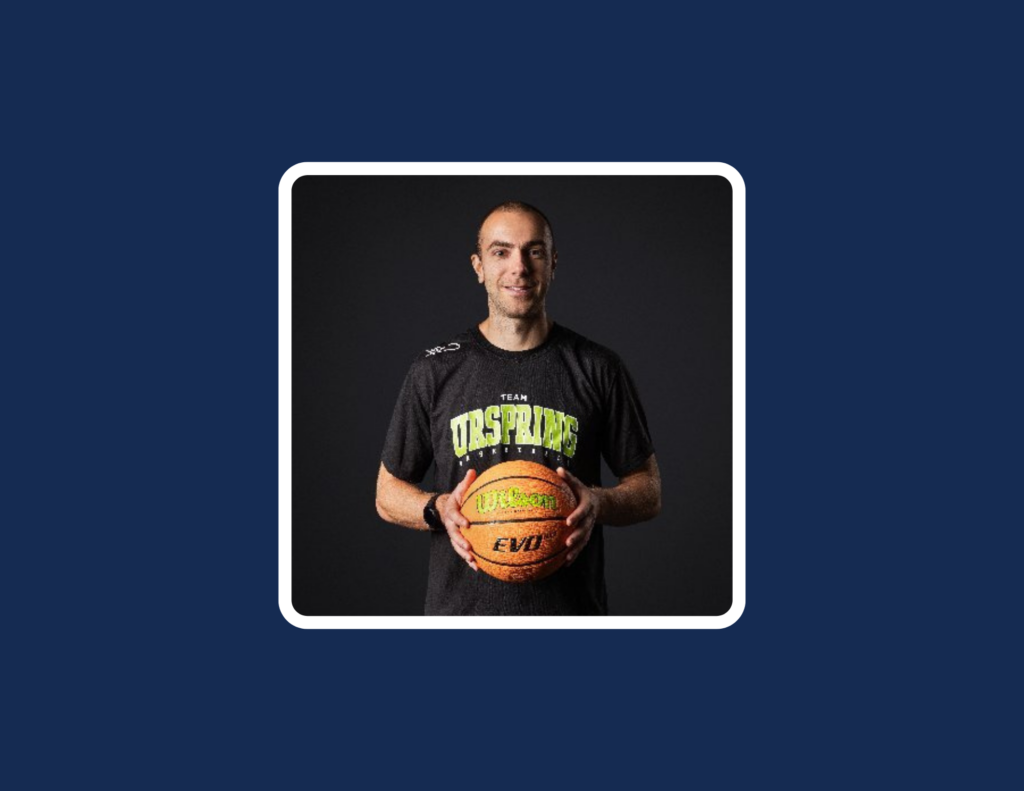
Jonas de Bruyne was most recently a player development coach with Urspring Basketball Academy. He is a licensed B basketball trainer who previously worked for Elite Academy in Belgium. Jonas shares his insight on how he uses the Constraints Led Approach and Differentiated Learning in his coaching.
If you’re looking to improve your coaching please consider joining the Hoop Heads Mentorship Program. We believe that having a mentor is the best way to maximize your potential and become a transformational coach. By matching you up with one of our experienced mentors you’ll develop a one on one relationship that will help your coaching, your team, your program, and your mindset. The Hoop Heads Mentorship Program delivers mentoring services to basketball coaches at all levels through our team of experienced Head Coaches. Find out more at hoopheadspod.com or shoot me an email directly [email protected]
Be sure to follow us on Twitter and Instagram @hoopheadspod for the latest updates on episodes, guests, and events from the Hoop Heads Pod.
Make sure you’re subscribed to the Hoop Heads Pod on iTunes or wherever you get your podcasts and while you’re there please leave us a 5 star rating and review. Your ratings help your friends and coaching colleagues find the show. If you really love what you’re hearing recommend the Hoop Heads Pod to someone and get them to join you as a part of Hoop Heads Nation.
You’ll want to have a notebook handy as you listen to this episode with Jonas De Bruyne, International Basketball Coach.
What We Discuss with Jonas De Bruyne
- How his youth coaches varied in their coaching techniques and demeanor
- His experience as a physical education teacher and using CLA in sports other than basketball
- “Players had a lot more fun. We’re always playing games.”
- 15 minutes of learning per day
- “Why would you do a layup if there’s no one in front of you?”
- Developing more versatile and holistic players using CLA
- Simple tagging games to help players become better movers
- Teach the players in practice what they need to do on game days. You’re not a PlayStation coach. The players should make their own decisions.”
- The need for coaches to not get overworked coaching too many teams or training too much
- Ways to implement differential learning into your shooting workouts
- “The goal is not to make the basket, but to shake up their movement solutions and make them better movers.”
- Creating a digital collection of basketball knowledge
Like this show? Please leave us a review here — even one sentence helps! Consider including your Twitter handle so we can thank you personally!

We’re excited to partner with Dr. Dish, the world’s best shooting machine! Mention the Hoop Heads Podcast when you place your order and get $300 off a brand new state of the art Dr. Dish Shooting Machine!

Prepare like the pros with the all new FastDraw and FastScout. FastDraw has been the number one play diagramming software for coaches for years, and now with it’s integrated web platform, coaches have the ability to add video to plays and share them directly to their players Android and iPhones via their mobile app. Coaches can also create customized scouting reports, upload and send game and practice film straight to the mobile app. Your players and staff have never been as prepared for games as they will after using FastDraw & FastScout. You’ll see quickly why FastModel Sports has the most compelling and intuitive basketball software out there! In addition to a great product, they also provide basketball coaching content and resources through their blog and playbank, which features over 8,000 free plays and drills from their online coaching community. For access to these plays and more information, visit fastmodelsports.com or follow them on Twitter @FastModel. Use Promo code HHP15 to save 15%
Your first impression is everything when applying for a new coaching job. A professional coaching portfolio is the tool that highlights your coaching achievements and philosophies and, most of all, helps separate you and your abilities from the other applicants.
The key to landing a new coaching job is to demonstrate to the hiring committee your attention to detail, level of preparedness, and your professionalism. Not only does a coaching portfolio allow you to exhibit these qualities, it also allows you to present your personal philosophies on coaching, leadership, and program development in an organized manner.
The Coaching Portfolio Guide is an instructional, membership-based website that helps you develop a personalized portfolio. Each section of the portfolio guide provides detailed instructions on how to organize your portfolio in a professional manner. The guide also provides sample documents for each section of your portfolio that you can copy, modify, and add to your personal portfolio.
Hey, coach! Want to take your team to the next level this season? Introducing GameChanger, the ultimate game-day assistant with tools to give you a winning advantage. With GameChanger, you can track stats, keep score, and even live stream games, all for free! Get the stats and crucial game video you need to lead your team to victory, all from the palm of your hand. Coach smarter this season with GameChanger. Download GameChanger today on iOS or Android and make this season one to remember. GameChanger. Stream. Score. Connect. Learn more at GC.com/HoopHeads
THANKS, JOONAS DE BRUYNE
If you enjoyed this episode with Jonas De Bruyne let him know by clicking on the link below and thanking him via Twitter.
Click here to thank Jonas De Bruyne via Twitter
Click here to let Mike & Jason know about your number one takeaway from this episode!
And if you want us to answer your questions on one of our upcoming weekly NBA episodes, drop us a line at [email protected].
TRANSCRIPT FOR JONAS DE BRUYNE – INTERNATIONAL BASKETBALL COACH – EPISODE 978
[00:00:00] Mike Klinzing: Hello and welcome to the Hoop Heads Podcast. It’s Mike Klinzing here this afternoon without my co-host Jason Sunkle, but I am pleased to be joined by Jonas De Bruyne. International basketball coach. Jonas, welcome.
[00:00:12] Jonas De Bruyne: Hi Mike. I’m happy to be here. Good that we found the time.
[00:00:15] Mike Klinzing: Thrilled to have you on. It’s going to be a lot of fun.Looking forward to diving in and talking to you. Let’s start by going back in time to when you were a kid. Tell me a little bit about some of your first experiences with the game of basketball.
[00:00:28] Jonas De Bruyne: Cool so until my six year, until I was six years old, I played a little bit of everything and did a lot of, like, movement stuff, like a little bit of gymnastics, some swimming, but I really didn’t like something specifically but then I rolled a little bit into athletics, so track and field for you guys.
That’s what I would’ve been doing until I was 10. And then I got a little bit tired of that. And then my mom actually she brought me to a basketball practice because that’s what she did. When she was younger, she was a basketball coach. I was doubting between basketball and soccer because I I also liked that a lot.
But I did my first basketball practice when I was 10, I think, or 11, and then I just stayed in basketball in my local basketball club. So that’s a little bit. Oh, I rolled into basketball then I played until I was, I think, 22 or 23. Not at a high level, like the fourth or fifth level in Belgium, like a men’s team.
But I was injured badly twice on my left ankle, didn’t get in the team anymore. But I was already coaching from when I was 17, I think. Like, always lower age groups, like under 12s, under 10s. And then, from when I stopped playing basketball, the coaching became a little bit more competitive, I would say. A little bit more serious.
I was doing CrossFit and a lot of running next to that. So that’s where I kept my conditioning up, I would say. And then when I was, I think, 24, 25, I changed clubs. So I was always coaching with my local club. So it’s called Basic Smellzilla. And when I was 25 I wanted to do a little bit more serious.
So then I went to Elite Academy. Four years I was coaching there. There I met I was working with Jurik Michiels. He’s the leader of the academy. Really good guy. I know him from my bachelor degree. I did sports with him. So that’s how I got with him. That’s also where I met Alex Sarama in the second or third year.
And then I kept coaching at Elite Academy for four years. And after that, so that’s two years ago. Alex called me to come over to Italy. Because he had a coaching opportunity there. So I was there for one year. Then the club didn’t exist anymore, so I had to find another job. And that’s how I ended up here in Germany with Ushpring Basketball Academy.
Where now the season is just done. So that’s a little bit, in short, my story. On how I got here in Germany as a Belgium guy, I would say.
[00:03:09] Mike Klinzing: All right. Let’s work backwards. Tell me about your experience as a player and the coaches that worked with you and how their approach might be different from how you approach coaching.
[00:03:26] Jonas De Bruyne: From what I can still remember, I had yeah, a lot of different kind of coaches. When I started to start basketball, it was more about fun. So it was a woman, I forgot her name. But she, she always played with my mom. And then like I was there for one year. Doing like the, the static ball handling stuff and the layups and how to teach the layup and then the passing with two hands.
Just just to each other like the, the stuff everyone did or does, still does, I think. And then I got a few weird coaches, I would say. Maybe because my level was not that high. But there were, yeah, there was one coach who was always yelling next to the sideline.
It was weird, like. His practices were also really structured, really a lot of discipline.
He had to shut up during the practice, just listen to him. It wasn’t a lot of fun because that was a year like I actually wanted to quit, but that was not the only one. There were a lot of players in that team. So then the management changed that coach. He was only there for one year, which was good, I think, because he was not a really nice guy, not a nice person.
And then I had a few good coaches Joost de Burgrave. He was my coach for three years, I think. He did some local regional teams also, so he was a pretty good level back then. That’s already more than ten years ago, I think. And then Julmere, also a guy that knows a lot tactical wise, but is a little bit different than The approach I use now.
Obviously when I started coaching and I was doing the local, the, with the, the, the local teams in my old club, I was using a lot of them stuff of them,
Like with tennis balls. I mean, it’s, I’m not saying that it’s bad, but the transition to a real basketball game is still different because I knew I was practicing with my under 14s there the last year before I went to elite academy.
So that’s six or seven years ago. And then we’re doing tennis ball drills every, every, every practice. Doing some read and react, two on zero, three on zero. And I was wondering like, why, why they, we do this every practice and at the game, they don’t do it, like, why is this a problem? And then I went to Elite Academy and there Yurik was also really nice and modern as an approach.
And then I met Alex and then it was a little bit, it made sense why it wasn’t transitioning. Yeah, so that’s also why I stayed with Elite Academy. I mean, they are also really. Invest in coaches development. For me, that’s really important. That’s also why I left Belgium. I went to Italy last year, so yeah, that’s a little bit my approach I had when I was younger.
[00:06:07] Mike Klinzing: Okay. So when you get those first. to coach the younger teams before you kind of know what you’re doing and you’re just still sort of copying the coaches that had coached you and using methodologies that now you’re looking at them going, I’m not sure how effective those are. There still had to be some part of you that really liked.
Coaching, obviously, because here you are, you’re still coaching. So what do you remember about those first experiences that you really enjoyed that made you think, Hey, this is something that I want to do for a career. Think back to that time.
[00:06:38] Jonas De Bruyne: Yeah, I think I started at 17 and I really had really at a young age, I really figured out that I wanted to do something with sports and yeah, young, young people.
And that’s also why I started studying sport for a sport teacher. Yeah. So after my secondary school so when I was 17, 18. I did that for four years, a year longer, because it was so interesting. I know I just had some troubles. But yeah, that’s also why I figured out I wanted to do something with sports and movement.
So it, it, it kept me triggering. And it’s also like, that’s also where I discovered that I want to keep improving myself to be the best movement coach then because sport teaching is general movement. That I couldn’t be. And that’s also why I already like the last year as a primary school teacher, I was also experimenting a lot already with the CLA, but with different sports. And and I still know that I was trying some stuff with volleyball. And I mean, the plans I needed to follow and the sport teaching in Belgium are pretty broad. They need to get some, some certain stuff, but how you come to that is like pretty open.
So they have some practice plan, as I would say, but yeah, I know like, okay, I need to teach volleyball and it’s first grade. Okay, I know they can this and this. Okay, let’s just try. And it was like a little bit sometimes, it’s like now too, like you try something and sometimes it’s working and sometimes it’s not working.
And during that time, a lot of stuff was not working. But, yeah, I also wanted to give myself a chance to really try it because I thought it was interesting. For myself, but also for the for the students I had because they had a lot more fun. They were all, in their eyes, it’s, we’re always playing games.
Which is certain, which is true until a certain level, but yeah, there’s also something behind it. But with basketball, it’s a lot easier because yeah, I like basketball a lot more so it’s easier to get into something if you’re really interested. I mean, I also like volleyball and also like soccer and I also like gymnastics.
But that’s still different than basketball, in my opinion, for me, for myself, so.
[00:08:48] Mike Klinzing: When did you first come across the constraints led approach? And how did you start to look at it and incorporate it to start to use it with? the players that you were coaching? Was that something that you came across by looking at video?
Was that something that somebody showed you in person? Was it when you went and worked with Alex or when you worked with Jurek? It’s just, how did you come across it at first?
[00:09:19] Jonas De Bruyne: I think in my when Alex visited Elite Academy, so that was in the second year, I think when I was there I really saw that it was doing something different. I mean, we were at Elite Academy, we’re still doing, they are still doing something between games approach and CLA. It’s sometimes a weird mix, I think.
They still do some on-air stuff. I working about the details, like you can discuss if it’s, it’s for some period it may be valuable or maybe not. But that’s in my opinion, what they do now. So I was also doing a, a mix between on-air working details stuff and games approach in my first year.
But when Alex came into it started to change a little bit, and then I would say in the third year, so when Alex left. I really started to experiment with that myself, but I only had two practices during that time because it was right after Corona and a little bit of a tough time myself. But I still remember that I did some differential learning shooting with players for the first time, which was also weird for me.
But also for the players, because they never did it. They also, they were under 18 and under 21, so it’s not that they don’t think about what they’re doing or what I say. If it would be smaller guys, they, they don’t really care, they just do it. But for me it was also a bit of a tough time, because I didn’t felt like I already knew enough for that to really explain it to them, but I was already experimenting with it.
Also from the moment I went to Elite Academy, I had my 15 minutes of every day that I invest in myself to learn something new, like yeah, we call it the Kaizen mindset. It’s from Elite Academy. I use it a lot and they’re using it a lot. And it means like getting 1 percent better every day. So that’s what I tried to do, like 15 minutes of learning for myself.
And that’s how I got a little bit more into detail about the salient and ecological dynamics. So I would say my third year was starting to experiment a lot with it. And then in my fourth year I really went fully in on it. And yeah, I’m still, so I really like it. It’s really open. You can try a lot.
The players like it. So in my opinion, it doesn’t have any non benefits, I would say. So for me, I really like it. The players like it. So why wouldn’t I keep doing it?
[00:11:38] Mike Klinzing: Let’s start with the player piece of it. And then we’ll go into sort of from the coaching side of it, from a player perspective, why do you think players like to be in the type of environment where their practice is primarily based around CLA?
[00:11:56] Jonas De Bruyne: I think the younger guys they like it because they just see it as playing. And that’s what if, if you have young students or young people that like to move who doesn’t like to play a tag game or who doesn’t like to play a finishing game with rock, paper, scissors.
Who doesn’t like to score be the first one to score first? That’s a little bit, I think if, if, if you’re a little bit of a supportive outcome because that’s also yeah. Like this last two weeks here, I also did a little bit of a sport teaching job here because someone was someone was at home because they had a child.
And there I really saw, like, why I stopped teaching sport to 17 to 18 year olds. Because that’s totally different. There were, yeah, there were sports classes, but also classes of, like, girls that, oh no, my nails, or I’m gonna scratch them, I’m gonna run. So that’s really, that was a really big challenge, but Even with them, I tried to do a good job and let them have fun. In their eyes, it was a little bit weird, I think, because I was only there for two weeks, so I only had them three or four times. But the teacher that is a normal is really classical and traditional in his approach. So that was a really big difference. Especially to them because they’re the, they were the oldest, so they’re 17 to 18 years old.
So that was a little bit of a tough time also for me, because I saw they were not enjoying it. And they’re also not getting it. Like you need to do, I was teaching them a layup, for example, it was also basketball. They didn’t have it this, this year yet. The teacher told me, so I did basketball with them and I teach them a layup.
But it was already with a defender in front of them. So they had to give a handoff and then do two steps. It worked. I mean, there were some guys doing a layup without, they know they were doing a layup. But other ones, they, they were not sportive at all or not really athletic. For them, it was tougher.
And I tried to explain with them, to them that And that’s not how we learn like on air stuff. Why would you do a layup if there’s no one in front of you? Or why would you do going that side? If there is no one that takes away your straight line, for example. That was a little bit tougher. But I do think it’s doable.
Like if you simplify the task a lot of the small side game or the activity you do, you do I think it’s doable. Yeah.
[00:14:22] Mike Klinzing: Would you say to a coach, if you were having a conversation with someone who is still using some of the older coaching methodologies, whether that’s on air or stationary ball handling, that kind of thing, what would you say to a coach to help them to understand the benefits of CLA and what them and their players will get out of it?
[00:14:46] Jonas De Bruyne: I think that’s a little bit of a tough time because it’s also what I had here in Germany actually a little bit. The thing is, I think it’s easier if you have a program that is not really competitive. So if, for example, here I’m just going to give an example. The under 19s, they had, last year they had the top four here in Germany, which is really good.
And this year they just missed it. So they’re like, came in like sixth or seventh out of the whole, whole Germany. So they have results with the under 19. So then it’s for me tougher, prove them wrong a little bit. Because they have results with the stuff they’re already doing. But I think if you start a team from scratch, it’s easier to get into the coach, if it makes sense, because they don’t have any results.
That’s the first thing I think. The second thing also is. I’m not arguing with the coaches anymore. I mean, it’s like if you go on Twitter or you post something on transformation basketball, for example, you see all the replies and yeah, I’m not reading that anymore in the beginning. I did it a few times, but I mean, you always lose on social media.
So what I would try to do with a new coach is I would try to explain how I work and why I think I do what I do. And then just try to get a little bit, give them options. Like for example, okay, what do you do for a warmup? Okay. I do dynamic stretches. Okay, then let’s try instead of the dynamic stretches with under 12, under 12, for example, try to the tag game and let’s see if you like it or not and try to implement like not all the whole practice But maybe one thing or okay, you do on air layups.
Okay, instead of the on air layups as a coach Just stand in front and see what happens Just try to give them like really little ideas or little tweaks that they maybe can change That’s also what I’ll do it a little bit here to the under 14 coach and there were also some under 12 coaches here. We had a cooperation with two other teams.
So it was Ushpring and then Surflingen and Ehingen. And I went also to practices of the under 12 and under 14 in Ehingen. And I just gave them options and tried to give them a little bit of feedback. And now it’s really cool to see that they start to implement some stuff, like a little bit more time on task.
That was a little bit of the biggest mistake they made here. They have a lot of big groups, not a lot of gyms here. So they were the under 12s, for example, they were with more than 20 players. And he, for example, only had like one ball for a warmup game. Yeah. Okay. Maybe instead of doing one ball, okay.
Then I guess maybe try to with two balls and then he tried with two balls and then it’s working out. Okay. Next time it’d be three or four. It’s like, yeah, some small tweaks like that I think could help a big time. And then also like the under 16s, I think there’s also a difference between some coaches because under 12 coach just liked it when I was there and just gave them feedback on the fly which really worked well for him and for me, I really liked that instead of me saying to the players what they need to do, I was running the practice.
behind the scenes a little bit. So if I saw something like, okay, they’re only finishing with the right hand, maybe I told to the coach, maybe give them double points for a left hand finish. If I saw they were not attacking the straight line out of a finish okay, now you get double points if you can only finish with one dribble.
Stuff like that. And that worked really, really well for him. And then the other coach, he was a little bit more I wouldn’t say he was impressed by my practice, but there was one time he was not feeling really well and I told him like, should I run the practice? Because I was there anyway, I did a practice and for him, that was really nice to see how I worked with his players.
He just gave me a topic. Okay. I want to teach pick and roll on the side. How would you do it? And then I just did my stuff. I think how I should teach it to them and give him some ideas on where he can already build on. So I think, yeah, one, don’t argue with him, just maybe give him some options.
So small things and then to also really invest your time as a coach to help other coaches out, like go to their practices because a lot of clubs are like doing clinics. One time during every three months or something like that. But if you want to really impact someone, it’s the same with players.
If you, if they only practice one time every three months, they’re not going to improve. So I really tried to invest some time, although it was not my job actually here. Yeah, to, to go to the practices of them. They were, they were interested. They also came to my practices with the play development here.
And I could learn from them and they can learn from me. Yeah, I liked it, to spread the word a little bit.
[00:19:26] Mike Klinzing: What do you see as being the biggest improvement that you’ve seen in the players that you’ve worked with compared to a player who maybe plays for a coach that uses more traditional methods or players that previously played for you that use more traditional methods?
In other words, what’s the biggest benefit of a Using the CLA, using differentiated learning. What do you see in your players? Is the learning faster? Is it that it’s more fun? Is it that it transfers more quickly? Just what do you see as being the main benefit to the players when you utilize some of the things that you’ve been talking about?
[00:20:09] Jonas De Bruyne: Also think that if you have an environment where they do a mix, like they did here in Ooshpring. For me, it’s tougher to get through them. One, because some guys, for example, the pro team here, they’re playing the third level and I only had them once every week and there was 60 minutes and.
Yeah, I didn’t went fully CLA on them because they need to perform and they don’t Always feel comfortable with the stuff that I’m doing so I got a rule like the first 20 minutes is for them So we do whatever they want to do So some guys were doing DL shooting with me and other guys were just doing spot shooting or doing dynamic stretches Whatever they wanted to do and then the next 40 that was more 30 minutes was then for me I would say so with them I didn’t feel I had a really big impact because I mean, if you have two play development sessions and five team practices a week, and you only have one play development session where you do 30 minutes of small side games and the way I think basketball should be played, I don’t think I have a really big impact.
But there were guys, especially the under 17s here, because there’s a big gap, they play under 16 and then they immediately go to under 19. So, the under 17s, they had a lot more practice time with me, because, yeah, they don’t play a lot in the weekend. Because there’s a lot, two years, three years older, other guys that are playing, so.
But with them, I sometimes had them like three or even four times a week. And I think the biggest difference between them and other players we were playing against was just their base. What I mean by that is they you have a specific role most of the time when you’re in the 19 here, so you’re, for example, a guard and you’re passing first.
You’re, for example, a big who is a pick and roll player. But the guys I had in my play development sessions, I think they were pretty or they got more how do you say, positionless. They got more broader, like, I don’t know what the right word for it is, but they, they had, there was one guy, for example, who was a really good shooter, but now he got also really good at finishing close to the rim.
He, he got really good in making using his body a lot more on the drive. There was one guy, for example, who had a really good finish inside the paint, but his catch and shoot tree from the corner was already getting really solid now. So I would say they are a little bit more like, fuller, like, more holistic players, if that makes sense.
Well, from what I see maybe someone else has another opinion about that. I also think there were a lot better movers. I also did a lot of tag games, so for a warm up I did a lot of yeah, movement games, like just also stuff that I stole from Olivier Goodluck. He’s like, they use like fighting monkey stuff with tennis balls and stuff like that.
It’s a little bit weird, but they just get better movers by doing that. And I think that’s the biggest difference you saw, for example, with the guys I had a little bit more. And then, for example, compared to the pro players who only had 30 minutes.
[00:23:14] Mike Klinzing: So I know we’re on audio, but can you explain maybe a tagging game that you play for a warmup for a coach that’s out there listening? Is there a simple one that you like that you can describe with words and not have to draw it out or have somebody see video? Is that, is that something you can share?
[00:23:31] Jonas De Bruyne: Yeah, sure. There’s one tag game I played sometimes. There’s two players, let’s say inside the circle at the half court line. They don’t have a ball and you have 30 seconds to try to tag each other’s feet as much as possible. So you’re just tagging the feet of the other person with your own feet.
And every time you tag the feet of the other guy, you get one point. So that we play for 30 seconds. So they’re like a little bit more like a boxer, I would say. So light on their feet. That’s when I did a lot then with a ball just the same thing. Then I had like, you can do every second dribbling to do a change of direction.
You can do, they’re like endless constraints with that. Like if you see they’re not moving a lot, you can do, for example, say, okay, every, every after every tech you go you need to take the circle. On another quarter of the circle. So they move a little bit more. If you see they’re only using their right hand, you say, yeah, you can only use your left hand.
It really depends. It’s also a little bit more what I learned here. And also last year in college is like, I had some stuff I wanted to do. So I know before the practice, I’m doing the warmup. That’s a topic of the play development session, but how I get there is not really certain yet. So I know I do, for example, the tagging that I just explained, but I don’t know what they will do or don’t do.
So depending on what they do or don’t do, I’ll give the constraints. That’s, yeah, that’s a little bit, that’s also something I needed to learn a little bit because I was pretty attached to my paper, I would say before, When I was a younger coach at Melsil and then the first two years at the academy also.
But then after that it got a bit better because they also at under 14, they had school and I saw they were sometimes mad and not working really well. But last year at prep, I really learned by just observing. And, and, and yeah, it’s also a bit of that approach observing the players and then give them constraints yeah, during the practice.
[00:25:29] Mike Klinzing: So it’s a combination of preparing before the practice. So knowing, Hey, I’m going to do this tagging game. And then after you’re doing that prep work, which obviously you want to come in prepared and knowing that, Hey, I want to do this. I want to do that, but not knowing exactly what it’s going to look like.
And then as a coach making observations about what the players are actually doing. Yeah. within the environment that you’ve created and then based on what the players are doing, then you make changes and put in constraints or give them guidance as far as, okay, this is what you need to do based on what you’re seeing.
Is that an accurate description of what you’re talking about?
[00:26:11] Jonas De Bruyne: Agree. And then with, with for example, new players, it’s a little bit more like the students I had, for example, like last week so they’re not really athletic, not really supportive. It’s maybe also showing them what the solutions are. And with the players I had, there were obviously good moves.
I’m used to playing basketball. It was a little bit more tweaking and then tried to get out of them without me telling them what I want to get out of them, if that makes sense.
[00:26:40] Mike Klinzing: No, it does. And I think one of the things that I find to be super interesting about CLA and just how you go about approaching it, is when you have players out on the court and you’re not, the old traditional way is you tell the player, Hey, this is what we want you to do.
And the coach is stopping play and saying, Hey, you should have done this, or this is what should have happened. And with CLA, it’s much more of a case of, You’re putting those obstacles, those constraints in the player’s path, and then the player has to figure out what is the solution. So instead of the coach coming up with the solution, the coach is providing the problem and the player is providing the solution, which in many cases, you think about traditional coaching, it’s almost the opposite where what the player is doing is the problem and the coach is providing the solution.
And what I like about CLA is it’s the opposite and that requires you as a coach, as I said before, To prep. Then also to be aware of what’s going on while your kids are practicing, which sometimes coaches, as you said, you kind of get married to your practice plan and you’re like, okay, this is what we’re doing.
And you don’t necessarily look and say, well, this is what we’re supposed to be working on, but what I’m actually seeing is something different. So I, I, I think that’s, that’s kind of what, what you’re explaining.
[00:28:05] Jonas De Bruyne: I want to build a bit on that, Mike if that’s okay. Okay. What I Sure. Really recognized also like last year.
Was we only had two practices a day at max. At prep, like in the morning it was play development and in the evening we had a team practice. But even though it were only two practices, so let’s say in the morning it was an hour and in the evening it was an one and a half to two hours. It’s let’s say three hours of two and hours and a half to three hours of, of practice time.
Like you’re really tired because of that, because that’s really the difference or where the thing is, like you need to be really present and observe and you’re explaining, but then you need to be a lot more inside the practice. It’s not like you’re doing this for 10 minutes. Okay. They’re done doing your layup lines.
We go to the next one and explain it and then done again. It’s a little bit more I wouldn’t say it’s intensive, but for your mental state, it’s, it’s, that’s compared to. Okay. The years I teached the practice at Elite Academy or at Mouseseal, that was a really big difference.
I don’t get really like how you can coach. For example, I talked with a coach a few weeks ago and he told me if I would come I’m still searching for a new coaching opportunity, but that’s something else. But I talked with a coach and he told me that I should coach five teams and like I don’t really get how you can coach five teams, even though it’s maybe like, yeah, it’s, I mean, if, if I did it also sometimes here, play development, it was only like 45 to 45 minutes to one hour.
And on Tuesdays and Wednesdays were the most because then the most players were free because it was based on their school schedule. So it was like, I think I had a maximum of five hours of coaching. And after that day, I’m really dead. Like I’m. You don’t need to talk to me in the evening anymore because it’s like, yeah, not today.
But also sometimes I only had one or two and you just recognize or just recognize that you’re more present and more into the practice. Like, I wouldn’t say my practices of those five hours a day were bad or something, but it’s still different. Also, for example, when you coach a game like you’re, yeah, now the European Championships are also here.
So the under 20 girls are already from Belgium, already playing. So I watch some games of them. And when you watch coaches on that platform, they also have a totally different approach. Like they They yell, they really have a lot of body language, but it’s also a bit quite opposite to what I’m doing. I’m more observing and I think I’m more calm.
I’m not saying that you can’t be energetic or that the players sometimes don’t need to be straight to the point or something like that. But it’s a little bit of a different approach also into coaching because you teach the players into practice what they need to do on game days. And that’s, you’re not like a PlayStation coach or something.
You’re not playing a game on a TV. The players should make their own decisions and that’s also what they should do on, on, on game days. So that’s a little bit also different than a traditional coaches. Yeah.
[00:31:09] Mike Klinzing: Yeah, for sure. I think that that’s where you get back to what’s the major benefit. And the major benefit is that what you’re doing in practice, Looks very, very similar to what players are going to have to do in a game.
You don’t get many breakaway layups where it’s one on zero that doesn’t happen very often in a game, but there are a lot of times where you might beat your defender and then there’s the help defender and now you got to make a read or a decision. You got to figure out how do I finish around this help defender?
Or do I have to kick to one of my teammates or whatever it may be? And so. I think that goes back to what we just talked about in terms of practice, right? The, the game is the situation that the coach has prepped the players for through the things that they’re doing in their practices. And so I, I really, when I hear you talking about the, the transference of learning and just putting the players in an environment where it’s more similar to what they’re going to see in an actual game, that’s where I picture, again, Somebody who uses this approach, as you just described, being on the sideline, being calm, making observations the same way you would do in a practice setting, rather than someone stomping up and down the sideline yelling and trying to get their players to listen to them.
In the midst of a game, which we all know, anybody who’s played the game or coach the game, the, the chances of your instruction, getting to that player in time for them to process it and act on it in a game, the, the percentage of that is, is really, really low. I would say that’s, that’s, that’s, that’s a tough one.
And then the other thing that I found interesting that you said was when you talk about coaching five teams and I never coached five teams, but Before I started the podcast, I was doing a decent amount of training and there would be times where in one night I might have four or five one hour training sessions with a player.
And I know by the time I got to that fourth or fifth player, I was not nearly as fresh And observant as I was in the first one, two or three hours of that particular training session. So I had to be really careful and make sure and be intentional before I started that fourth or fifth hour of, Hey, I got to really make sure.
That I’m doing what I’m supposed to do because it was real easy to be to be mentally tired as a coach When you’re going through and trying to try to work that many hours and again when you’re talking about having five teams That’s a lot of players that you’re having to sort of process what their strengths and weaknesses are and how you can help them
[00:33:52] Jonas De Bruyne: I think that’s just honestly a little bit crazy I mean I can do that But I don’t think I can do it in a way that the players got something out of it and that I can Get something out of it, I mean I’d rather do maybe two teams, like, really decently, get to know the players, get to build the relationships, get them play development plans, give them maybe a strength and conditioning program or whatever, than having five teams that play five games a week and then going from the one game to another.
I mean, it’s, yeah, that’s also a bit the way Coaches or, or teams work, I guess maybe a little bit for, for the money also financially, because. Coaches need to be paid but, yeah, I don’t, I don’t think you can be like you just said, be present in all the practices, or, it’s the same with the players, I mean, if you put if, if they have a whole day at school, for example, I also saw it this year with the play development, it was sometimes during school.
And you also recognize it with the players. I mean, if they just sat eight hours on a bench, listening, listening to a teacher, and then immediately after that, they have played a weapon with me 45 minutes and they need to go again, like being really present and pay attention and be careful that they’re, they don’t get hit on their toes, for example.
It’s tough, but for the coaches, it’s just the same thing. I was lucky a little bit here. The, the, I think the maximum I had was only two play development, two play development sessions behind each other. So it was two hours and then a break which was okay. But I think if you have three hours or four hours after each other, it’s just, I’m not saying it’s undoable, but it’s not ideal to perform your best. I think.
[00:35:39] Mike Klinzing: Yeah, I agree with you a hundred percent there. I think it’s, it’s tough to. It’s tough to go back to back to back to back to back and really be as on point and as much having as much attention to detail as you probably need to be able to do the best job that you can for your players. Can you talk a little bit about differentiated learning when it comes to shooting?
Because I think it’s a concept that Not that many coaches out there really have, even to be honest, heard of it, Jonas. And I think that if you can kind of shed some light on what it means, what the theory is behind it, and then how you kind of put it into practice.
[00:36:21] Jonas De Bruyne: So the simplest way I can try to explain it. But I also tell the players sometimes if, In their eyes, they’re doing weird stuff. So, I always tell them like, if you can shoot it in a bad way, really good. So, if the ball goes in in a bad way, then you can also shoot it in a good way, really good. So, for example, if I tell them to put their feet close to each other, And then normal and then wide.
I tell them yeah, if you can shoot it with your both feet together. Like imagine how you can shoot the ball when you’re really in balance. That’s how I explain it to the players a little bit. How I would explain it to coaches is a little bit different. I would say Yeah, in difficult words, it’s actually just opening degrees of freedom.
So what I mean by that is by making them better movers and just give them a lot of movements that they can practice. Is that if they will figure out their own solutions and get to a better way. So for example, if I have a player this year who was really shooting flat. Like for there was a player here in Ushpring I would not say, for example yeah, put your hand there and shoot it more from your legs.
So you get more stronger upwards rotation of the ball, for example, but I would just try to give him constraints in a way he needs to shoot the ball higher. So yeah, the, obviously the most helpful constraint is then like shooting for breads or swishes. Like, Brad is back rim and down, so the ball goes into the rim, touches the back side, and then it spins back to you on the same line, and a switch is obviously just a switch.
That’s the number one constraint I would give to players, because then they need to have a high arc, because if they don’t get a high arc, they don’t get the Brad or the switch. And then another one I gave them, for example, to him is To just give them three options. Give them three options.
Like one, you’re shooting flat. So below the backboard to the second shot you take is as high as the backboard and then three you shoot entire as the backboards. So just to try to give them options and then in the hope that they will self regulate see themselves like, Oh, if I shoot it higher in the backboard, I got more chance for a bread or a swish.
That’s a little bit how, how I would explain it to to a coach. So instead of really giving them details about how to shoot, I would just try to give them a constraint or an option where they doing something that I want them to do without me saying them to do it. If that makes sense.
[00:38:51] Mike Klinzing: No, it does. And I was looking kind of in preparation for our talk. I was looking at some of the stuff that you have on Twitter and on Instagram and that you’ve used with players in the past. And one thing that caught my eye was you had a player that was working on, I’m assuming, trying to get Ark on their shot that was shooting.
From the baseline and trying to shoot the ball over the corner of the backboard, which when you think about it, you’re like, okay, well, that kid’s probably never going to take that shot in a game. So the traditional, the traditionalist in me would say, why are we practicing shots that we’re never going to take in a game?
And yet, just based on what you said a moment ago. It makes complete sense, right? Like you didn’t, then when you’re having the player shoot from the deep corner from on the, on the baseline and shoot over the backboard, you’re not telling them, Hey, put your hand here, or you’ve got to do this in order to be able to have the shot to go in.
What they have to figure out, how do I get the ball over the backboard and still get it in the basket? I thought that was a super interesting. approach. Now, part of me wonders, how does that, how many times do they have to do that in order to have that sort of become, to have them incorporate that into their shot?
And so that’s what I wonder about is when you’re working with a player and you’re doing some of the differentiated learning and you’re putting them in these different spots where they’re trying to start to solve for themselves, how long have you found it to take for them to do some of these different things to get them so that when they’re actually shooting in a game that they’ve incorporated some of the things that they’ve, they’ve learned.
Because I totally understand the concept. I guess my question is, what’s the timeline for the benefit to start to show up? If that question makes sense.
[00:40:37] Jonas De Bruyne: Yeah, it makes sense. I think that’s a little bit a tough thing to say because everyone learns at different rates. So what I tried to do is for example, with that player, I think I know which player it was for him.
It was really frustrating because I literally told him to shoot, shoot 60 seconds from behind the backboard. So obviously he maybe only made one or two, but it’s really frustrating. So With the DL shooting, I think with also the new guys I had this year, with the under 14s from this year I think I did it like maximum 6 to 8 minutes.
So I did always 1 minute. I rebound, the other guy shoots, and then after 1 minute we change. So I think I did 3 or 4 rounds of that, so I’m not doing it a lot because I sometimes get really frustrated by that. Because the goal is not to make the basket, but to shake up their movement solutions and make them better movers, if that makes sense.
But with him, the time span, it’s tough to say. There is a guy who I had a lot and just February, March, he was really shooting well. But then the Plate of Admin Sessions, I’m not saying it’s because of the Plate of Admin Sessions, but the load here went down because it was end of the season.
So, April and May he had a really bit of a shooting slump, I would say. Yeah, it’s tough to say. Sometimes it goes up, sometimes it goes down. There was a guy who was shooting pretty consistently the whole year through. And he was having me a lot, I would say. So, it’s tough to say. I can’t really put a time span on that.
I just know with some players it takes not a lot of time. With other players, it takes a really long time. And with some players even, maybe it never changes. It’s, I think it really depends on the individual. But yeah, that’s also not, not my job, I think. My job is to just Help them, help them the way I can help them in as many ways as possible.
And just try to do my best and doing the team practices and doing the play development sessions. And if they get it, they get it. And if not, also fine. I mean, I’m not going to be mad because the guy is not shooting with a high arc in a catch and shoot tree and into the game. I will still give him feedback or stuff like that, or, or help him based on his play development plan, but I would never be mad or like, he’s not doing what I want him to do, or no, I, yeah, it’s tough to, to put a really time limit or a period on that, I think’
[00:43:02] Mike Klinzing: Searching for solutions, right? So you as the coach and the player are working together to, to search for a solution. If arc is the issue and you’re trying to figure out, Hey, what are some ways that we can help this player to improve their arc? And obviously if they improve their arc, we’re going to expect that eventually they’re going to become a better shooter.
But to your point, sometimes it takes. a lot longer than I’m sure players would, would like for it to, would like, would like for it to take. I know that, like, I’ve worked with my son who has a pretty flat shot and kind of shoots the ball behind his head. And at one point he and I worked for probably like six weeks.
And I guess I probably, at the time I hadn’t heard, this is probably, I don’t know, Two and a half years ago, maybe, and hadn’t heard of differentiated learning and probably would’ve been something good to try with him back then. But we worked for like six weeks trying just different things. And I was trying to get him to move.
And we did some, some different sort of actions to, to load his shot in a different way. And it just, it just never took, like I, we, we worked on it, we worked on it, we worked on it. And he would eventually just kind of revert back to. The way he was shooting and eventually I’m like, we’re just kind of spinning our wheels here and not getting anywhere.
And we eventually just decided, Hey man, you got to just double down on, on what you do. And like you said, sometimes you can be a, a good shooter shooting the ball. badly. And that’s kind of what we just, that’s kind of what we decided is like, you have to get good at this motion, even though I don’t know that it’s the most efficient or the best motion, but it’s what we have to work with.
And so let’s try to try to do that. And that’s kind of what we’ve done, but it’s, I think it is for a player who like my son, who just kind of was locked into a certain way of shooting that, that probably isn’t optimal. This to me seems like it could be an interesting way to at least potentially break that cycle.
And allow him to get closer to what, and what an ideal shooting form might be.
[00:45:02] Jonas De Bruyne: Also, is he like a good shooter now? Or
[00:45:06] Mike Klinzing: He’s pretty good from, I’d say 12 to 17 feet.
[00:45:10] Jonas De Bruyne: Okay.
[00:45:11] Mike Klinzing: So he’s a good, pretty good mid range shooter, but threes, he’s just really flat and it ends up being much more of a, like it’s back and it’s much more of a, it’s more of a, it’s more, yeah, it’s more of a slingshot, but it’s just interesting. Cause again, you try different things. So
[00:45:28] Jonas De Bruyne: So for him, it’s maybe a movement solution until he’s like this year. I also had a player a special guy. He shoots his midrange with his right hand, and from the moment he goes by the triple line, he shoots with his left hand. Wow. So that’s, see,
[00:45:43] Mike Klinzing: Okay, so I have a question. I, so I have a question for you. Yeah. Like, so growing up I’m a lot, I’m a lot older than you, so I’m 54, but when I was a kid a lot older,
[00:45:53] Jonas De Bruyne: I’m 60 ,
[00:45:56] Mike Klinzing: I don’t have, when I was a kid, I don’t remember anybody who had like did one thing like that with their right hand and something else with their left hand.
And they did this like in their hands, you were either right handed or you’re left handed. That’s just the way I remember. And then, so my kids, my son for one, one of, of one of my kids, obviously he shoots, he shoots baskets with his, so he shoots with his right hand. Everything that basketball, he plays right handed, but he writes with his left hand.
He eats with his left hand. So he’s just, every different activity is. You know, he does one thing with the other. Then I have a daughter who she’s 14, going to be 15 years shortly. She shoots the ball jump shots with her left hand. So she shoots threes. All her jump shots are left handed, but she’s a much better dribbler with her right hand.
And her right handed layups are way better than her left hand. And I’ve always I look at my kids and I’m like, I don’t under, I don’t even understand how that is even physiologically possible. Like it just makes, it just makes no sense to me. It’s so interesting.
[00:47:01] Jonas De Bruyne: With that guy, it’s the same thing.
I once looked it up because I wanted to know, and apparently it’s something in the brain, like the left or right, that there’s some connection that is different than in ours. Or maybe it’s not different because for them it makes sense, but it’s just different in, for example, my brain because I do everything with my right hand. It’s pretty interesting. Like you said, indeed. It’s cool.
[00:47:25] Mike Klinzing: Yeah. When you start really, yeah. When you start really thinking about, again, and you mentioned earlier, just trying to take 15 minutes a day to improve yourself and learn and try to figure stuff out. Like that’s, that stuff to me is, is super interesting of the sort of the why behind it.
And then if you can take those whys and try to apply them in the coaching realm, that’s really then where you start to, where you start to get things. And I know that one of the things that when you think about coaching, right, it’s always. You’re looking for, well, who’s somebody that is doing some of the things that I believe in that I’ve seen and take copy those.
And then you are able to tweak them and make them work better or do some that they fit better to your style. So the question that I have for you is when you’re thinking about CLA differentiated learning and, and putting together stuff, are you better? at being on the basketball court, figuring out a drill or figuring out a constraint in the moment, or are you better sitting down with a pen and paper or at the computer and kind of thinking it out beforehand?
Because for me, I know I’m much better when I’m on the court and you give me like four players and say, Hey, put together a drill that works on da, da, da, da. And usually I can figure that out while I’m standing on the court. But if you said, Hey, sit down with this piece of paper and pencil. and try to draw out what a drill might look like or conceptually create a drill, I’m not nearly as good.
So I don’t know if either of those approaches is similar to what you do or how you think about that.
[00:49:00] Jonas De Bruyne: I think if it’s not this year, I worked more as a play development coach. And last year was a bit of a mix. But if you say just now to me, like, those are four players, design a drill on paper or on the court, I can do it both if it’s more play development related, I think.
But I think the more, the most progress I can still make is as a head coach. This year, I had with Joe as the head coach here of the Pro B. We had in the beginning of the, of the year, we had a rule. Every time we saw each other I would give him a small set game and he would take notes on his, on his computer.
And then he would give me some kind of situation. And I would need to draw it up on the board, so for example, okay you’re two points behind, you have those set up from players, you needed three 60 seconds, bam, and he was timing it, and I was drawing it up. And that’s something I really need to, to work on more on the tactical side of stuff, I would say, on literally the drawing, because if you don’t practice that enough, that, for me, it’s not good.
That’s the thing I would say. Also during a team practice I’m used to play development sessions. So it’s a maximum of six. So you can really clearly see like, okay, those two guys are now working. So I focus on those two guys and they’re resting. So that’s okay. But sometimes during a team practice, it’s a little bit too chaotic.
I wouldn’t say it’s too chaotic for me, but it’s different. For me, I had a little bit of a tougher time to also see it on court now. Maybe it’s just because last year I didn’t have it because I still had the team practices. But this year, I really recognize, like, if we’re playing five on five and there’s like five other or six other players next to the court waiting and they sub, I sometimes have a tough time to see the overview, if that makes sense.
No, it does. Yeah, that’s a little bit this thing I can make the most progress still on. But I think it will come back when I’m, be head coach and I have more team practices that will come back, I think. But that’s now a little bit for me, the, yeah, I wouldn’t say my weakness, but the stuff I can make the most progress in, yeah.
[00:51:01] Mike Klinzing: Yeah. Those reps I think are really important. I always tell this story. I’ve told it a bunch of times on the podcast. That’s my first. practice ever when I was a head coach of a junior varsity high school team. So we’re talking about 14 and 15 year old kids, and this is back 30 some years ago. And I walked out into the practice and it was just me.
I was the only coach. I didn’t have any assistants. It was just me and 12 kids. And we started doing some stuff. And I just remember the first thought that came into my head, Jonas, was that those kids are doing a million things wrong and how am I ever going to fix all all million of those things that they’re that they’re doing wrong and you very quickly, one of the things you realize very quickly as a coach is you’re not going to quote fix all the things that your players are doing wrong.
And so I think if somebody would have probably explained to me CLA and differentiated learning in that moment, I probably would have gotten it immediately. It would have made complete sense because I would have been like, yeah, I can’t as a coach, I can’t go out there and put this kid’s foot here and this there and make sure that they’re doing this and that.
It’s like, you have to give them situations and then allow them to figure out those solutions. Cause as a coach, I was looking around going, if I need solutions to all 500 of these mistakes that just happened in that first five minutes of the drill, there’s no way I’m going to be able to do it. It’s crazy.
No, it’s just, I mean, it’s such a challenge. So let me ask you about that 15 minutes of learning that you do every day. What are the sources? Where do you go to? What’s your process for, for trying to learn? Because I think that’s one thing that coaches who are listening to a podcast like ours, yeah.
they’re trying to get better. They want to learn, they want to grow, they want to improve themselves. So what are some of the places that you like to go to try to improve yourself during that, during that 15 minute learning time that you give yourself every day?
[00:52:52] Jonas De Bruyne: Now for me, it’s really important that I’m interested in everything that’s a little bit of interested in everything about movement.
So I get, Stupid example. For example, I get a lot of emails from strength and conditioning coaches also transformation basketball is there now in they have a newsletter basketball immersion. I get a lot of emails from those and I just saved them. So they’re just in my inbox. And when I don’t have anything else to do, or I have not a really interesting podcast to listen to or to watch.
Then I just go through the emails and I take notes. So now I have like an activity book. So all my small set of games are in there. And I have like it’s like, yeah, I call it how to teach basketball or like, you can also call it the basketball Bible, for example, or whatever. But if I see something that is interesting and I want to remember it, I just put it in there.
So I have. Yeah, different how do you call it? Modules? Not, but like different parts, like for example, shooting, finishing but also tactical stuff like conceptual offense, CLA but also like how to give feedback, how to learn how to get a coaching job. So if I watch a podcast or if I listen to some kind of podcast or I read something or I go to a life clinic, I just take the, the notes or the notes that are most important for me and I put them in there.
So now this stuff, I started doing it when I started doing it at the Elite Academy, so now it’s been five or six years and now I’m every summer I, I clean it up, I would say. And now I have 170 pages of like all basketball knowledge. And the activity book is now a little, little, little bit more than 100 small side games.
So if you do, yeah, at Elite Academy I was still doing a full time sport teaching job and then coaching. So I just only did 15 minutes, but from last year and this year I just did it whenever I was free or whenever I was fresh. Like, for example, now I’m, I have vacation, so in the morning, the first 50 to 60 minutes I always work on there.
I call it work, but it’s just literally watching a podcast or, or whatever, and then taking, filling in, filling it in the small side of games or the Bible, I would say. So that’s a little bit how I keep it. Yeah, and I also started small. The 15 minutes were not 15 minutes in the beginning.
I started with five minutes because it’s habits. I mean, it should be so small that you could do it every day. Because if you do it only once every two weeks, 30 minutes, it’s not going to add up. But if you do, for example, five minutes every, every day of the week, then it’s already 35. You already have more than you did in one week.
So it should be so small that there’s no limit or thing that holds you back. So I started with five minutes and then it became 15 when I was still sport teaching and then became 30 minutes during Corona and then it make it two hours during Corona because now it’s just, whenever I have time I just, because now I’m a full time professional coach, I would say, so that’s my job.
Just like the players need to evolve and try to get better, I also try to get better as a coach. That’s also a part on what, what, what got me here is just try to do that 15 minutes a day. It maybe sounds stupid, but if you add it up in one month, it’s a lot of hours that you’re watching or reading basketball.
And then obviously also going to clinics in Belgium. I think when I’m in Belgium, now I’m still in Germany, but when I’m back in Belgium, I try to watch as many clinics as I can because I think even if it’s a traditional coach, I would say you can still a small side of the game or you can tweak it a little bit.
Like also from coaches that have a different approach from you, you can still learn. Even if it’s a bad thing, like, okay they do five on zero. Okay. Maybe I would put a defender there because it gets a little bit more representative. There’s always something you can take away from that. So I think small habits get big results.
[00:57:01] Mike Klinzing: That’s a good way to say it. Is your notebook digital or is it pen and paper?
[00:57:06] Jonas De Bruyne: It’s a digital pen and paper. Yeah. I mean the clinics now I just go to the clinics and take my paper, but I’m not taking as much notes as I did before. Now it’s just like maybe one small set of game or a quote or something.
You see what I’m saying? So it’s not a lot and I just take a note of it on the paper and then I put it on my computer.
[00:57:29] Mike Klinzing: Got it. Yep. Makes sense. Makes sense. All right. Let me ask you this. I want to wrap up with two part question. So part one, when you look ahead over the next year or two, what do you see as being your biggest challenge?
And I know one of those is going to be getting yourself a full time coaching job. So your biggest challenge. And then after you answer that part, second part of the question is when you think about what you get to do coaching basketball. What brings you the most joy? So your biggest challenge and then your biggest joy.
[00:58:01] Jonas De Bruyne: Biggest challenge, I would say Yeah, in Belgium you have a rule that you can, I’m a sport teacher and I had a certain amount of hours So I can go back to my old job for five years. So now I’ve already done two so I would say my biggest challenge would be to Get an environment or to figure out if I really want to do the coaching job For my whole life or not within the next three years.
That would be the biggest challenge Yeah, I think yeah, that’s the the stuff And then my biggest joy I have I think the relationship with the players itself. Also in my opinion you, you need to have, it’s also maybe a little bit more because I was a play development coach this year because then your relationship is different with the players than you’re for example a head coach.
Yeah, as a head coach you need to decide about minutes, about, Who’s starting, who gets subbed first, who plays in money time. So that’s a little bit different, but I would say now the biggest thing I had joined was my relationship with the players I had off the court.
Yeah, that’s a thing I think for example, the thing is also if you have a really good relationship off the court It gets easier translated on the court. That’s also what I recognize, for example, with the pros, because I only saw them one time a week, and they’re pros, they will do what I say I, I do, but it’s still different than, for example, guys where I was head coaching under 18, and four of those guys were always there, and when you drive here in Germany for three hours to a game, and you drive three hours back, I mean you, you build a relationship because you’re sitting in the car with for six hours.
So it’s maybe a little bit weird to say but the car rides were I wouldn’t say they were enjoyable because it’s three hours of driving, but that was a fun thing. That we, that we developed also the, the, the trips this year to Vadezi and Berlin with the under 17s were really nice. Like, okay, you’re on court, you do your stuff and they need to do their stuff.
But off the court, the fun or the dinners we had and the joking around or like the swimming, I think that’s the biggest thing, I think for me, that the relationships with the players you build up.
[01:00:18] Mike Klinzing: Yeah, that’s good stuff. All right. Before we finish, I want to give you a chance to share how can people reach out to you, find out more about what you’re doing.
Offer you a coaching job. How can they do that? Give them your social media, email, whatever you want to share. And then after you do that, I’ll jump back in and wrap things up.
[01:00:36] Jonas De Bruyne: I think the easiest way to reach me is just on Twitter. It’s just @JonasDeBruyne_
And then my email address is [email protected]. Those are the things I think are the useful. And then on Instagram, I’m also known as JonasDeBruyne I’m not the guy with a special nickname or something like that, . It’s just my first name in my last name. Keep it simple.
[01:01:13] Mike Klinzing: Keep it simple.
[01:01:15] Jonas De Bruyne: So you can reach out to one of those channels. That’s great.
[01:01:19] Mike Klinzing: Awesome. So Jonas, can I thank you enough for taking the time out of your schedule today to jump on and join us as a lot of fun, getting to know more about you and learning more about the CLA and differentiated learning.
And I think there was a lot of great conversations that we were able to have. So thank you. And to everyone out there, thanks for listening and we will catch you on our next episode. Thanks.