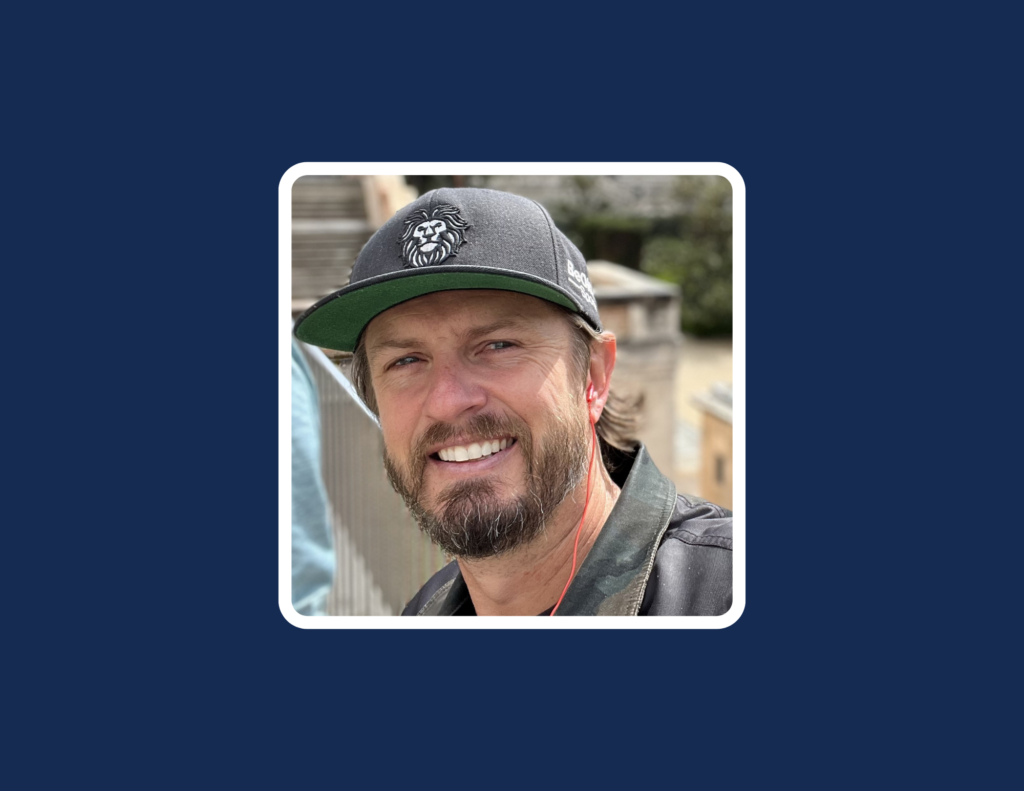
SCOTT DEANS – FOUNDER & CEO OF BeONE SPORTS – EPISODE 905
Website – https://beonesports.com/
Email – [email protected]
Twitter – @BeONE_Sports

If you listen to and love the Hoop Heads Podcast, please consider giving us a small tip that will help in our quest to become the #1 basketball coaching podcast.
Scott Deans is the founder and CEO of BeONE Sports, a platform that uses AI and computer vision to help young athletes maximize their performance, gain exposure for their talents, and get advanced training on demand. Scott is a former collegiate kicker and punter, architect, designer, and data analytics manager.
If you’re looking to improve your coaching please consider joining the Hoop Heads Mentorship Program. We believe that having a mentor is the best way to maximize your potential and become a transformational coach. By matching you up with one of our experienced mentors you’ll develop a one on one relationship that will help your coaching, your team, your program, and your mindset. The Hoop Heads Mentorship Program delivers mentoring services to basketball coaches at all levels through our team of experienced Head Coaches. Find out more at hoopheadspod.com or shoot me an email directly [email protected]
Be sure to follow us on Twitter and Instagram @hoopheadspod for the latest updates on episodes, guests, and events from the Hoop Heads Pod.
Grab a notebook and pen before you listen to this episode with Scott Deans, Founder and CEO of BeOne Sports.
What We Discuss with Scott Deans
- “Building a mobile AI Application that allows athletes, coaches and parents around the world to hit their best skill development.”
- Being born and raised on a boat in San Francisco Bay
- Playing high school football
- How a broken elbow sidelined his football recruitment
- The story of how he ended up as a punter and kicker at Portland State after a stint in junior college
- Majoring in architecture at Portland State
- The journeys that I’ve been through being an athlete, even today as an entrepreneur or a business person or former whatever I’ve been, it’s always been because of the things that I learned as an athlete in playing sports.”
- “Even if you don’t make the team, even if you don’t make the next level, you’ve already built such a tremendous skillset that will ring true in anything you do forward.”
- Helping design a Montessori School
- Working at BP for 12 years after the Deepwater Horizon Oil Spill in the Gulf of Mexico
- The story behind the idea for BeOne Sports
- “It’s because I lived it. I was that little kid that could have used the help.”
- “How fast can you flatten the learning curve so the kid can make the team?”
- “There has to be some kind of parity in the market that allows people to learn without having to already be at a certain level to get the best tech to then learn even more.”
- You record yourself doing the action. And then within two seconds, you can analyze that action based on the body mechanics that coaches, and a majority of our actions are based on expert coaches, typically look for to assess superior performance.”
- “This is plain visual feedback. You learn it in seconds and move on so that your next shot is informed with what you just learned. And this is what’s flattening the curve.”
- Using AI and collecting data from athletes through the BeOne app
- BeOne Sports and NIL – focusing on athletes at all levels
- How coaches can use the BeOne app with their players
- “The technology is reinforcing what coaches have been saying, but it allows the athlete to see it really fast.”
- Comparing your technique with the athlete data points in the app to visualize corrections to be made
- Focusing on individual human technique development
- “Comparative training and learning from other accomplished athletes in a systematic way.”
- “Get big and go crazy and have fun and make an impact.”
Like this show? Please leave us a review here — even one sentence helps! Consider including your Twitter handle so we can thank you personally!

We’re excited to partner with Dr. Dish, the world’s best shooting machine! Mention the Hoop Heads Podcast when you place your order and get $300 off a brand new state of the art Dr. Dish Shooting Machine!

Prepare like the pros with the all new FastDraw and FastScout. FastDraw has been the number one play diagramming software for coaches for years, and now with it’s integrated web platform, coaches have the ability to add video to plays and share them directly to their players Android and iPhones via their mobile app. Coaches can also create customized scouting reports, upload and send game and practice film straight to the mobile app. Your players and staff have never been as prepared for games as they will after using FastDraw & FastScout. You’ll see quickly why FastModel Sports has the most compelling and intuitive basketball software out there! In addition to a great product, they also provide basketball coaching content and resources through their blog and playbank, which features over 8,000 free plays and drills from their online coaching community. For access to these plays and more information, visit fastmodelsports.com or follow them on Twitter @FastModel. Use Promo code HHP15 to save 15%
Your first impression is everything when applying for a new coaching job. A professional coaching portfolio is the tool that highlights your coaching achievements and philosophies and, most of all, helps separate you and your abilities from the other applicants.
The key to landing a new coaching job is to demonstrate to the hiring committee your attention to detail, level of preparedness, and your professionalism. Not only does a coaching portfolio allow you to exhibit these qualities, it also allows you to present your personal philosophies on coaching, leadership, and program development in an organized manner.
The Coaching Portfolio Guide is an instructional, membership-based website that helps you develop a personalized portfolio. Each section of the portfolio guide provides detailed instructions on how to organize your portfolio in a professional manner. The guide also provides sample documents for each section of your portfolio that you can copy, modify, and add to your personal portfolio.

We know you’re invested in the next generation of athletes, so why not give them the star treatment this season with GameChanger. Introducing GameChanger, a free app that provides you with data to make strategic coaching decisions and to deliver memorable moments to your team and its fans. Engage your players, empower your coaching decisions, and give parents the thrill of watching every play unfold in real time this season. Download GameChanger now on iOS or Android. GameChanger equips your team with the tools they need to succeed. Download it today and make this season one for the books. GameChanger. Stream. Score. Connect. Learn more at gc.com/hoopheads.
With GameChanger you’ll get automated highlight clips for all scoring plays as well as rebounds, steals, assists, and more. Plus free live streaming, advanced scorekeeping, and team management. No complex setups required, just easy, free streaming from your mobile device. AI powered technology will automatically pan and zoom…
THANKS, SCOTT DEANS
If you enjoyed this episode with Scott Deans, let him know by clicking on the link below and thanking him on Twitter:
Click here to thank Scott Deans on Twitter
Click here to let Mike & Jason know about your number one takeaway from this episode!
And if you want us to answer your questions on one of our upcoming weekly NBA episodes, drop us a line at [email protected].
TRANSCRIPT FOR SCOTT DEANS – FOUNDER & CEO OF BeONE SPORTS – EPISODE 905
[00:00:00] Mike Klinzing: Hello and welcome to the Hoop Heads Podcast. It’s Mike Klinzing here with my co-host Jason Sunkle tonight, and we are pleased to welcome in Scott Deans, CEO of BeOneSports. Scott, welcome to the Hoop Heads Pod.
[00:00:15] Scott Deans: Yeah, thanks guys. Thanks for having me.
[00:00:18] Mike Klinzing: Excited to have you on. Looking forward to learning more about you and about BeOne and some of the exciting innovations that you have going for athletes in all sports, not just basketball, but across the sports landscape.
So let’s start there with just giving people an idea who may have not heard of BeOne, who you guys are, what you do, and what you’re hoping to accomplish with BeOne Sports.
[00:00:45] Scott Deans: Yeah, no, that’s great. I mean, the simplest way to describe it is we’re building a mobile AI Application that allows athletes, coaches and parents around the world to hit their best skill development, learn form and technique, but do it in a device that we all have, or at least 95 percent of the planet has.
And it’s really meant to sort of democratize sports technology. And it’s something that I think the industry can use. I think it’s certainly what the customers can use, and we’re going to see some real great benefits from it.
[00:01:21] Mike Klinzing: All right. And we’re going to dive into much greater detail than that as we go forward. But let’s start by going back in time to when you were a kid. Talk to us a little bit about your sports background, kind of how you grew up and then we’ll eventually work our way towards your career choices and how you ended up at BeOne. But let’s start with when you were a kid. Just give us a little bit of your athletic background.
[00:01:45] Scott Deans: Yeah. I can’t talk about my childhood without also talking about being born and raised on a boat in San Francisco Bay. That’s something that I talk about often because it sort of created my character. It’s something that has always been with me since leaving the boat, but it was my first 18 years.
So it had a pretty big impact on me. And in doing that I was by myself a lot of times. So imagination and curiosity and all those things started really young, but also to stay busy, I would just throw rocks at stuff and I would kick balls against sheds and trees and all of a sudden I realized that I was pretty good at kicking stuff and throwing stuff.
So when I got into middle school, I decided to go out for sports. Basketball, interestingly enough, was the very first school led team sport that I had. Other than that, I’ve been playing club soccer and things like that. But at the school, I played basketball and just was terrible.
I mean, just terrible. I was a tall kid. So everyone immediately thought I could jump, couldn’t jump. Everyone thought like maybe I could play center or something, get some rebounds. Nope. Couldn’t do anything, but I was pretty good at dribbling and shooting. So interestingly, again, I didn’t really play much, decided basketball wasn’t for me.
And ultimately in high school, after playing many different sports outside of school, I decided to go out for football. Not because I wanted to, it was more because my friend made me and I went out to the very first practice coach gave me the ball and he said throw it to that guy. And of course, nice tight spiral, threw it on a rope and he was like, okay, I think we got a quarterback here.
And then a guy was running and I knew I could kick the ball. So I was like, coach, watch this. And I punted the ball. And I just happened to really hit a good one. And he looked at me and said, we’ve got a putter. It was like, anything else you can do, Deans? And I was like, I think I can put it through the post too, coach.
And so anyway football became my sport, right there in freshman year.
[00:04:06] Mike Klinzing: All right, let me go back to the boat. So what’s the why behind the boat? Why did you live on a boat?
[00:04:10] Scott Deans: You know, I asked my parents that when I was old enough to get the real answer. They sort of both defected from the East coast.
They moved to California got married as a young couple, didn’t have the money to survive in California. So they bought a boat. That boat was only 36 feet long and it was a very interesting, active but humble beginning where didn’t have too much. And they subsequently divorced when I was four years old, but I stayed on the boat with my dad for the rest of the 12 years after that.
[00:04:49] Mike Klinzing: Got it. All right. What’s your favorite memory from playing high school football?
[00:04:51] Scott Deans: Well, so I was a quarterback, kicker and punter, as I mentioned I played at Sequoia high school in Redwood City, California. In 1994 I made the All-state, the Cal High All-state football team as a punter and that was also the year that Tom Brady was an upperclassman for the same Cal High All-state team, so I have this cool sort of newspaper clipping where it’s like a picture of him, and then my name is in the clipping, but almost disappearing at the very bottom.
And so that’s my kind of cool claim to fame. On the field, one of my favorite things is my junior year. We had some pretty cool coaches come in coach Bob Hetherington and Tim Collier from the 49ers and others. And we actually took the team to the playoffs, which was like the first time in 36 years or something. So pretty interesting kind of journey there, I’d say.
[00:05:54] Mike Klinzing: Did you have any idea as you were playing high school football that you were going to maybe have an opportunity to play in college? I know, obviously, eventually you did at Portland State, but just talk a little bit about just the process for choosing a school, what the recruitment was like, what your process was for eventually choosing to go to Portland State.
[00:06:13] Scott Deans: Yeah, I mean Even a young kind of Huckleberry Finn lifestyle out on a boat, the kid dreams to play in the NFL. And so that was my only goal in life. And so when I was playing high school, it was do whatever I can to go to the next level. As a quarterback, I was also a pitcher and ended up breaking my elbow pitching. And so, and at the time, I had been heavily recruited as a quarterback, even kind of handwritten notes from Tom Osborne in Nebraska University of Oregon, Oregon State. It was looking really great. And interestingly, I broke my elbow and all the letters stopped. Everything stopped.
And that was kind of the end of that. So I knew kicking and punting was my, my sort of remaining you know, ticket, so to speak, and just really focused on that. And at the end of my senior year, just didn’t have the year that I needed and didn’t get anything. So I said, well, I’m going to junior college and went to the local junior college there, San Mateo County, San Mateo Bulldogs.
Had some really great seasons there. And I think that’s when Coach Walsh at Portland state took a chance on me and brought me up there and said, look, compete for your scholarship basically, and unfortunately I had like the other. Greatest kicker in the Big Sky Conference already there, Dan France.
And Dan and I ended up competing every day, made each other better. I like to think throughout that process, but yeah, the recruiting, ultimately winning the scholarship and then competing every day to get on the field. That’s what everything was there.
[00:08:04] Mike Klinzing: What was your thought process as far as academics? You’re clearly, as you said, just like a lot of kids, you’re kind of focused on athletics can do for you. What were you thinking about in terms of schooling?
[00:08:16] Scott Deans: I’m going to, I’m going to tell an honest statement here that I, my mom’s going to love this. When we went on my recruiting trip up to Portland we were sitting in this motel, my mom and stepdad, and they said you got to pick a major.
And I was like, Oh man. So I had the catalog for PSU and I literally took it, took all pages and like flapped them like, and whatever it landed on, I was like, it’s architecture. And I looked at my mom, like, I can draw, like I like building stuff. Let’s try it. So that was it. I chose architecture. And to be honest, during football it was impossible.
The time commitment to become an architect and to be successful in architecture and design. It’s just really difficult to also be a scholarship athlete and or really like anything other than focusing on schooling, and I subsequently learned that I was one of the very first scholarship athletes through the architecture program at PSU. It took a lot longer than I expected, but nonetheless got through it.
[00:09:37] Mike Klinzing: All right. So after graduation, what’s the plan? Well, how do you set out to? Get a job. You obviously don’t make the NFL, which is something that most athletes end up if they get fortunate enough to be able to play at the college level.
For most of us, that’s where it ends. And so what do you do career wise? What’s your thought process? What do you remember about job hunting? You sound like a kid that was similar to me where I got done with school. I got a business degree and I started looking around for jobs. I’m like, I don’t know if I really want to do this.
I’ve never really worked a day of my life. I just worked at my sport. So what was your mentality as you graduated?
[00:10:20] Scott Deans: Well, and I think one thing to mention is football ended, my eligibility ended. And that’s when the whole free agency journey went on.
And that was about a year. And then after that, realizing I wasn’t going to play any further. And I sort of hung up the cleats. It was like a, just a switch that went off in my head and all that commitment, all that strength, all that time and power and all those things went to school and I remember my teachers vividly saying a month or two after I had made that switch, like, Hey I really like what you’re doing lately.
You’re here all the time. You’re really focused, all those things. And I said, guys I don’t have enough brain power to focus on so many different things at a hundred percent. So here I am, I’m not playing football anymore so I’m yours. I’m learning this whole world of architecture and design.
So yeah, just a hundred percent back into school. And you know, the neat thing, I think it’s a story that I, that I often say to young people is You learn so much more than sports while playing sports. And the journeys that I’ve been through being an athlete, even today as an entrepreneur or a business person or former, former, whatever I’ve been, it’s always been because of the things that I learned as an athlete in playing sports.
So that’s a really neat thing. And it’s something that I think young people should remember, even if you don’t make the team, even if you don’t make the next level, you’ve already built such a tremendous skillset that will ring true in anything you do forward.
[00:12:15] Mike Klinzing: Yeah, that’s well said. I think something for coaches to remember too is that part of our job as coaches is to provide some of those life lessons and to point out to our athletes that, Hey, here’s something that may not have gone perfectly, or maybe it’s something that went really well, but there’s something that you can learn that you can apply beyond just what you’re doing on the court or on the field or whatever it may be.
And I think you’re a hundred percent right that when you talk about athletes, you’re talking about. People who have developed a certain skill set that I think in a lot of cases enables them to be if they were successful Athletes on the field of the court enables them to be successful in Whatever their next career is that they go on if they apply the lessons that they learned when they were a member of a team so I know that one of the things that you did just kind of going through and looking at your background that Jason and I both are currently teachers.
So I’ve been teaching elementary Phys. Ed. now for 10 years. And I had 19 years before that in the classroom. And Jason right now is currently teaching fourth grade. And so he’s busy with being a school teacher. And I know that one of your jobs, you worked in a K 12 environment and worked about kind of designing what a school should look like and talking about kids and their environment.
So tell us a little bit about that experience. I’m just curious kind of what you did when you were in that position.
[00:13:38] Scott Deans: No, that’s, that’s really cool. So as an architect, I sort of became known as, I don’t know, usually the person that comes up with the big ideas in the beginning and sort of can draw out all of these interesting new places and spaces and all that.
There was a really cool project for a Montessori school, and I didn’t know anything about Montessori at the time, so I went off and researched and learned all about Montessori theory and realized that there was like a really neat design solution that You could actually promote the learnings or the theories in Montessori and ended up building this school.
It was actually in San Antonio and Bernie’s San Antonio. I’m not positive it got built exactly how I, how I envisioned it. But nonetheless, the concept was that like in Montessori theory, like you. You have guides. You don’t necessarily have teachers. You’re promoting the curiosity and the growth of individuals on their own and all those things.
Well, it meant that it had, the architecture had to enhance that experience. Enhance those things that are supposed to occur in a Montessori environment. And along with the building, I was thinking through curriculum. Because I can’t accurately or really design this amazing place without also envisioning how kids are learning in that place.
So I ended up sort of writing this little book on what it’s like to work in this or play or learn in this Montessori space. And I remember doing little diagrams where I drew a tomato plant and an equals sign. And then a GI Joe figure. And everyone asks me, what the heck does tomato plant equals GI Joe figure mean?
I said, well, like in the old days, all we would do is like, not all we would do, but kids would often play with GI Joe figurines and you’re always like banging figurines across and smashing each other, like just banging plastic together or whatever, but the tomato plant could actually be just as interesting, just as responsibility building.
And you’re actually learning science while growing a thing or growing essentially an organism or organic life. You’re like, whatever. So anyway, that was something that was really an exciting time because you’re designing and exploring and you’re building and all those things. So that was the Montessori kind of journey.
[00:16:32] Mike Klinzing: It is interesting when you start talking about just the different and Jason, I can, I’m sure there’s many podcasts that we could talk about educational theory and philosophy, but when you start talking about trying to meld the environment. To enhance a student’s learning, I mean, I think there’s definitely something to be said for the kind of environment that you put a student in and whether that enables them to further develop their learning or whether it hinders their learning, depending upon the kind of environment they’re in.
So that’s really, I think, something that, again, it’s interesting to me and to Jason, just because that’s kind of where we spend our days. So that’s cool that you were involved at one point with that. And then I know the other interesting thing that. Again, people probably wouldn’t associate with an architect is you end up in the Gulf of Mexico with the BP oil spill.
So tell us a little bit about how that comes to pass and then that leads you down what I think a 12 year time period in your career where you’re working for BP.
[00:17:29] Scott Deans: Yeah, that’s right. So yeah undergraduate degree and then masters in architecture and then about five years postgraduate work doing things like the Montessori School and other.
Kind of medical facilities, really research based science based architecture and things like that. But in 2010, when the, the BP Deepwater Horizon event occurred and, and that response across the Gulf of Mexico was underway, there was this sort of massive recruiting effort. And, and I essentially was recruited originally looking for Architects who are out of work.
And I said, well, what are you guys looking for? What do you need? And at this time I know absolutely nothing about the oil and gas industry, the energy industry, none of it. I’m just watching CNN like everyone else. And it turns out that what they were looking for is somebody who knows how to do org charts and think structures and systematically and communicates well and can put something together to sort of help them. And I was like, that sounds pretty interesting. And at the time I wasn’t particularly happy with what I was doing. And I said this is a once in a lifetime opportunity.
I’m going to be there. I’ll take the job. And. Two days later, I was in Louisiana, at the BP facility, which was it’s called ICS, Incident Command System, where you have federal, state, local, and responsible parties all working on it. In collaboration to essentially mitigate and protect every, everyone and the environment around the incident.
And that too was completely new to me. But similar to the Montessori story where I knew nothing about Montessori, I just immediately started researching, learning, observing, listening, and in about a week, they were like 18 hour days, but in about a week’s time, I had developed a system to completely track all of the personnel and the federal, state, And local agencies moving inside of the entire command system.
And that at one point reached 45,000 people. This was like another, and what’s funny, it was literally no different than what I’d been doing as an architect, which is kind of parachute into an environment, listen and learn the customer, the problems, things, or everything that, that.
Makes up what you’re trying to do or makes up what you’re trying to fix and then design a solution, like just be creative, go for it. And that’s what turned out. And what happened is I ended up putting this in place. It became a really sustainable model and ended up kind of running that for about a year.
Until BP said this was pretty cool stuff. Once you consider coming to Houston and work in the main office there in Houston. And at the time I’d really grown a huge respect for the way that BP was responding. And I didn’t know any of these companies or the industry, but as an observer, really just kind of unbiased. I was really impressed. And I said that’s kind of a company that I could work for. So I went for it and yeah, just did that same thing over and over again at BP and it ended up turning into about 12 years.
[00:21:34] Mike Klinzing: So let’s get to BeOne. You’ve got your background in all these diverse places. You’ve got the energy side of it. You’ve got the architecture side of it. You’ve got the sports background and your personal life. So how do you start thinking about the idea behind BeOne? Just give me the process that you went through. Did the idea hit you one day out of nowhere? Was it sort of a slow build to it? How’d you get to the idea to start with?
[00:22:03] Scott Deans: The idea started when I was kicking field goals at Sequoia High School. I just didn’t know it until about two years ago. The interesting thing was I had always as an athlete been researching, just like I’ve been mentioning with anything else. I’m trying to learn, but in that case, I had nowhere to go to learn or have anyone teach me how to kick a field goal better.
I was a soccer player originally, but no one told me that I’d kick a field goal even better. And it was just a little bit of form and technique change. It was just a little bit of knee over here instead of over there, or an angle relative to the ball different. And none of that stuff was for me.
And when I decided to go back to business school at Rice University, really what happened through that MBA journey was I was just reinforcing that this idea could actually become a business. And that there’s a lot of other people out there, young athletes, even older athletes who want to learn there’s a lot of people out there who could benefit from exactly what I wanted to create, which was a mobile and accessible and affordable, fast, simple technology to get people to the next level. And that’s when it all kind of came together. I was in the second year of the program there at Rice it’s a top entrepreneurship program.
So immediately every single thing that I was doing in the program was actually the beginnings of the company. And so the earliest strategy meetings and the earliest algorithms we built, all of those things were really a part of my cohort at Rice. And then it was almost a natural transition.
We graduated and we were already kind of an entity and growing and sort of interesting things on the horizon. So that was kind of the transition. Now it was still, it’s only two years. The two years have gone by really fast. We’ve gone a long way, but we have a massive amount of work to do.
We’re really just at the very beginning of what the full vision is. And yeah, that’s the challenge and the beauty of having a startup.
[00:24:53] Mike Klinzing: Right. So I think one of the areas that struck me as I was reading about what you guys are doing, and I related to what I read, and that was that one of the things that was important to you was to be able to bring sports tech to the masses, to everyone who participates in sports, whereas it seems like today a lot of the best tech is sort of concentrated in the hands of the super elite athletes.
They’re the ones that get access to those kinds of tools, just because in some cases, right, the budget, if you’re at a major division one college powerhouse or you’re playing professionally or you’re a big time high school athlete, maybe you get access to some of that stuff. But if you’re a kid who’s a sixth grader that wants to get better at basketball, you may not have access to those same types of tools.
So talk about maybe a little bit why that part of it was important to you in terms of making it affordable and making it easy to use and how that’s kind of played into sort of the groundwork that you guys have laid to this point.
[00:26:03] Scott Deans: It’s because I lived it. I was that little kid that could have used the help.
And that’s really the driver. I often say that we’re a sports tech company and we’re building technology and we’re building a product. But the most important thing about our company is the people that we’re working with. It’s the lives that we could impact, and it’s the sort of inspiration or the potential that this product could unlock.
And so we keep that in mind now in building the technology. And like you said entering a market that’s pretty saturated, especially growing and growing competition, lots of people playing around sort of athlete development, video analytics Like you said, many of the companies are focused on the elite level partly because this is new technology.
They know they can gain the value of bringing it to the market because it just doesn’t exist. Quite frankly, like the professionals need it, right? They’re going to get even better because the competition is so tight. Well, what I’m kind of interested in bringing to the world is a solution for the 99% like it doesn’t have to be military grade radar that’s tracking the spin of a golf ball or the speed of the baseball or this or that to the nth degree.
It’s like. How fast can you flatten the learning curve so the kid can make the team? Right? Like how fast can you help a parent who is dishing out tons of money, but actually doesn’t know if the kid wants to play? There has to be some kind of parity in the market that allows people to learn without having to already be at a certain level to get the best tech to then learn even more.
So yeah, that’s part of it. And you might sense some frustration in my voice, but I think what’s really neat and what drives us are when a coach or a parent reaches out and says, Hey we’re not changing the stars here with your technology, but guess what? My son just gained enough confidence to go out for the team and they used your product for an hour.
I’m like, that’s a win. So yeah, it’s a slightly different thing now to be completely honest we are not in the same place today that we were when we started two years ago. I’m constantly in this sort of direction changing and making sure that we’re heading in the right direction.
That’s not only going to generate value for our business and our company investors and everything else, but we have to remain true to our mission and our customer. And as long as we’re increasing the learning and flattening that learning curve then how we get there is the journey we just have to make cool decisions to do that.
[00:29:37] Mike Klinzing: All right. So just let me ask you a question from an end user standpoint. So if I’m a kid again, let me give that sixth grade basketball player example and I am going to interact with BeOne and I want to use this to help me to get better. What does that process look like?
[00:29:52] Scott Deans: It’s supposed to be the simplest and easiest process as possible.
So you take out your phone which, you probably already have. Kids these days are even better at it than anyone else. So, you take out your phone, you record yourself, which you’re probably already doing anyway. You just push a different button. You push the button in our app instead of the Apple camera button or the Android camera button.
You record yourself doing the action. And then within two seconds, you can analyze that action based on the body mechanics that coaches, and a majority of our actions are based on expert coaches, typically look for to assess support performance. So, for example, if you were to learn how to shoot a better free throw, you record yourself, we have multiple angles, you can record yourself because you’re learning different things based on your perspective, right?
Where you’re actually viewing the athlete, you record it. And then at the push of a button, you see that rep, that shot that you just took, and the AI is basically telling that athlete within two seconds, where he or she is building in consistency shot to shot to shot. And the neat thing about the AI is it’s completely visual.
It’s not oversaturated with dashboards and metrics and you need a data science degree just to understand what you’re looking at. This is plain visual feedback. You learn it in seconds and move on so that your next shot is informed with what you just learned. And this is what’s flattening the curve.
It’s the ability to do rapid repetition, but you’re learning in between each one. And again, that gets back to mobile, accessible, visual, and simple. You gotta do all those things. So yeah, that’s a little bit about what makes us pretty different right now.
[00:32:06] Mike Klinzing: Absolutely. Alright, so explain to me how You collect the comparative data. So you said that you’re getting it from coaches that agree that these are the best mechanics. So what does that end of the process look like for you guys? Who are you collecting that data from? How are you getting it? What coaches are you accessing, what athletes are using as sort of a comparison data, for lack of a better way of saying it.
[00:32:31] Scott Deans: Yeah. So, a real differentiator for us. And I’m pretty certain we’re the only company right now converging computer vision or mobile computer vision sports training with NIL. And Name, image, and likeness as everyone probably knows now by now is something that’s been around for two years.
It’s been legalized now that collegiate athletes can monetize or commercialize their NIL. And I literally founded the company the same month that NIL became legal. And what I realized is we have millions of amazing athletes on the planet and we are not doing anything to train the next generation with that skillset.
It’s like the largest body of athletic talent that is completely unlocked, like completely locked up. So our technology is actually digital. We’re actually digitizing the form and technique of accomplished athletes of today. In order to train the next generation so that that little kid that has no access to coaches, no access to anything, like very, very little money or resources can actually learn from somebody who is inside of the app.
And the trick in all of this that makes this really different is it’s not to get too kind of techie here, but it’s systematic and consistent across space and time. So, so if you’re shooting a free throw in Germany or Alabama, then the athletes that are in our app will match up with the exact moments that that athlete is taking to make that shot.
So it’s something that is really exciting because we have built what I think is the largest catalog of learning opportunity in an app and learn athletic learning opportunity in a sports tech app
[00:34:59] Mike Klinzing: So as you continue to get more users on the platform and you continue to collect more data, how does that make what you’re doing even more efficient?
[00:35:07] Scott Deans: Yep. We’re obviously building a system, like here we are, we’re back to building a system. But in this case, this is a data system. This is all about the machine and what is wrapped completely around a business model, around actually collecting, interpreting, and then outputting insight or data. And so our collection process of the machine is NIL. It’s finding coaches and athletes who want to contribute and obviously have an earning opportunity to also help train the next generation and train people. There’s a data system inside of the machine that is basically collecting.
So for example, we put the app on the Apple store like 30 something days ago, and in 30 something days, we have almost doubled the amount of data in terms of unique human positions than we used to train all of our algorithms. And 26 actions across nine sports. So every single video that is taken from our app is just providing tremendous amount of data that goes right back into our models.
So we are in a continual learning situation and every day we’re growing and getting better. So the more we grow, the better we get. And the neat thing about that is, the fidelity of our models, the accuracy of the models are already moving into the type of levels that elite athletes need.
We obviously are going to make sure that we are successful with our mission around bringing this to maybe under resourced or under privileged kind of communities. But the tech is getting better every day. So it won’t be long. And to be honest, that’s why I’m here in Florida. We’re working with NFL athletes and pre NFL combine athletes.
So it’s something that’s really interesting. And again, it’s all kind of coming back to the system. It’s just a big machine.
[00:37:40] Mike Klinzing: All right. How does the NIL piece of it work from your end of it, from a business standpoint, and then how does it work from the athlete end of it? What does that relationship look like between BeOne and the athlete?
[00:37:53] Scott Deans: That was one of our first efforts. And we knew that breaking into the sports industry even further, the college and professional sort of communities is really challenging. So With NIL, it gave us an opportunity to create a new kind of and 100 percent equitable chance for these student athletes to have a larger impact than just earning some money.
So what happens is we obviously there’s a lot of platforms now for NIL. You know, Mogul and Opendoor and Influencer, but the one that we partnered with was Iconsource. And Iconsource, if you don’t know, is the platform that sort of connects brands with athletes because there’s a brokerage that’s required.
We have to protect the student athletes to make sure they’re not being taken advantage of, that contracts are being written in favor of both parties. Compliance is a huge issue. Especially with everything the ambiguity around NIL. So in doing that, we partnered with icon source, we created a large campaign, and then it was really just about building relationships.
I had a zoom call with, I would say 99 percent of the 150 athletes or coaches that we’ve signed at BeOne sports. And the reason for that is because I wanted them to know why we are a company, not just what we’re doing. And I think that was something that I think they appreciated.
They got a sense of what it means to be a BeOne sports athlete that, yeah, we’re creating an earning opportunity for you, but guess what, the bigger value here is you have the chance to train kids around the world and what you’re doing as a student athlete, just what you’re already doing as a student athlete, which is train is now monetized for you, but you’re providing this tremendous learning exposure, exposure to learning and opportunity for anyone out there who wants to learn your action or learn your sport.
And I think it’s just been tremendous and positive feedback so far. I will say, however, the NIL landscape constantly changing, obviously, and a majority of NIL is focused on kind of the power five and the top athletes. I think there’s statistics that would sit definitely quote this better than me, but it’s primarily focused on what on all the athletes whom everybody knows.
We’re excited to say actually that I would say probably 85 percent of all of our athlete are not the blue chip athletes that you see on ESPN every night, they’re the ones that are grinding still division one, division two athletes still top two, three, four, 4, 5 percent on the planet. And they’re looking for the same earning opportunity that the top athletes are looking for.
And quite frankly, that’s really exciting for me and us because when we meet with an athlete who had zero NIL deals, right? Peyton Kinney from UConn is an amazing pitcher. Softball team, she was one of our first athletes. And the thing that really stuck out about Peyton was she said, I really thank you for doing this.
And we said, well, what do you mean? She says, no, like I wasn’t getting a lot of action or getting any NIL deals. And I said, well, that’s kind of crazy because she’s very charismatic, awesome athlete. So many kids could learn from her. But as you might know, if you’re not in the kind of top three to five popular, most focused or on TV all the time type of sport or that athlete, then you’re not getting the NIL opportunity that you deserve.
And so that’s really what’s neat about I think what we’re doing is that this is 100 percent not equitable across any collegiate level. NAIA, D3, 2, 1 or in some cases like we have the Kansas Jayhawks. 80 percent of the best college basketball team is in the app. I mean, that’s amazing. However, we also have Andrew Mason and Andrew Mason was one of the top shooters in the NCAA.
That’s kind of a neat thing about what we’re doing with NIL.
[00:43:01] Mike Klinzing: So how does that work with from a team standpoint? So how does that work when you go and negotiate with a team? Are you negotiating with the athletic department? How does that work?
[00:43:07] Scott Deans: It depends in every situation. If you’re working with an individual athlete, you could just be working with the athlete. Sometimes the athlete has representation. You’re working with their agent. Athletes have marketing teams, as they say collectives are set up for big schools, more and more schools now. And so I really have worked across all of them.
Everyone from even parents often are there either the representation of their son or daughter. So it’s really case by case. What I’ve noticed certainly is there’s a little bit of research that has to be done. We’re trying to be really responsible.
Obviously we don’t want to bring any of the wrong kind of energy to the company. We research athletes, we research programs and collectives and all that. And if you had followed us to see us through the NASCAR deal and the very first NIL NASCAR with Kansas to be honest, that was the openness, creativity, and kind of willingness to do something different. Dan Beckler and myself, and then the other folks who joined in, which included four or five different organizations to make something really cool happen. And it did. It was something that even today we’re building the die cast car of the very first NIL NASCAR.
So, yeah, I think it’s a little bit of having to deal with a lot of different agencies and organizations and just be ready to speak to anybody and listen to them. What’s important to them and how do we make it happen?
[00:45:15] Mike Klinzing: What’s been the biggest challenge that you’ve faced so far in getting the company to where it is right now?
[00:45:19] Scott Deans: The biggest, well, I mean, there’s like 10 of them probably, but all of the challenges I would say are a little bit having to do with something brand new. So for example, we’re building a technology that kind of doesn’t exist in what we call comparative training. At least it doesn’t exist the way we’ve built it.
We’re dealing with sort of a business model that includes NIL that’s only been around two years. No one really knows exactly what we’re doing or where it’s headed. We’re building a data system that’s using mobile computer vision, but continual learning on the background, sort of brand new.
So I think the biggest challenge is, like with many startups, you have to believe and keep going and know that what you’re doing is adding value. And then you have to get people to believe in it. And we’re in a stage now where we’re just now starting to make some really interesting stories and impacts.
And we have to do a good job of bottling those up and sharing that as opportunity and potential. For ultimately investors, because now’s the time to really, to really go for it and, and make it big, but at the same time, we want more and more coaches to realize this is for them. This is just a tool to compliment all the amazing years that they’ve been building.
And what’s neat about it, it’s completely unbiased. It’s completely objective and data driven insight that more than likely is going to reinforce what they’ve been saying year after year after year. And this is what we’re hearing. So we just need to tell everybody about it and get out there.
[00:47:25] Mike Klinzing: Let’s take it from that coach perspective. Let’s say I’m coaching a youth, whatever sport, but obviously with us basketball. So I’m coaching a youth basketball team. How would you envision or recommend a coach could implement it with their team?
[00:47:40] Scott Deans: Yeah, we’re doing it right now. The goal is that you can have a coach let’s just say one coach and 15 athletes.
The neat thing about what we’ve built is the coach downloads the app on his or her device. And we’ve made it so simple that now all 15 athletes download the app. And they connect to the coach. So if they’re at practice, you literally take your phone out, you could prop it up on a backpack on the bleachers, or put it on a tripod, or have an assistant hold it, have somebody hold it, a parent, who knows, just somebody hold the phone, and if you’re doing skill development, or sort of station training, right, as you’re working on a crossover, or a step back jumper, or a three pointer, or a free throw, any of those Individual technique and skill development sort of trainings.
All you do is press record. And what’s neat about it, then, is from the coach’s device, all 15 of those athletes data, like the recording and all the data of those 15 athletes at the push of a button are separated into their own accounts. So, the coach can actually go and review any of the athlete’s data immediately.
And it’s all separated and clear, so you’ll get immediate insight on, say, well, you know this particular athlete, 80 percent of the time they’re shooting their elbows out. Okay. Next practice or tomorrow, we’re focused on elbow in this athlete, you might find that they’re pigeon toed or their hips are misaligned or whatever, but the AI is what’s visualizing and it’s actually circling the areas that are the most different from what either athlete you like, if you chose a comparative athlete it’ll tell you immediately where you’re different. And then if you don’t have a comparative athlete and you’re just training to yourself, you can actually lock in your best shot. So the neat thing about this, let’s say you’ve been working with a kid and, or any athlete actually, and just say, You’ve been working on a particular change, whatever, let’s say we’re working with a lot of quarterbacks now, let’s say you, you’re working with an athlete to get their hips turned faster than their arm to help create that rotational force and all those things.
But the coach can only talk about that and say, got to get your hip turned, got to get your hip turned. And the kid’s going, okay, okay. You know, when you can show that and say, look, your hip is back here and your arm is up here. That means you’re not turning it. And when you show that against a division one quarterback or a professional quarterback, it’s like a light bulb goes off and they’re like, Oh my gosh, like I see it.
You know, that’s the really neat thing about how coaches now are almost saying that the relationship is starting to change because the technology is enforcing what they’ve been saying, but it allows the athlete to see it really fast. So that’s a really neat kind of outcome of this.
People are already seeing it because everybody is recording themselves doing this stuff. The difference is instead of sitting there wasting hours and hours, scrubbing video, And trying to show a moment in space and time relative to that same exact moment in a different space and time, it just becomes completely impractical, waste of time doesn’t happen. That’s what AI, that’s what our AI is doing. It’s making it systematic and fast to make those comparisons and at the push of a button.
[00:51:51] Mike Klinzing: So what do you see as being the biggest challenge moving forward? What direction do you want to take this?
Where do you see the future a year or two from now, five years from now? What do you hope to accomplish with BeOne?
[00:52:07] Scott Deans: Yeah, that’s a great question. So first and foremost, challenges of just today are awareness, marketing, sales. We’ve built a really cool product. We’ve got really great relationships.
We’ve got amazing opportunities. Now’s the time to really be able to execute on all of it. But like with any startup, you need the capital to do all of it. Otherwise, you go at a different pace. So to avoid going any slower than we have been going, we certainly need to get some jet fuel.
Like I said, we’re just at the beginning of what this full vision is. The data, the technology is in its infancy. Computer vision at large is really quite young. And the nice thing about this is you’re getting a lot of different people playing with computer vision. In my personal opinion, I think sensors and the kind of beginnings of tracking data the hardware required, all of those things are going to change and go to a much more mobile and accessible solution.
What I want for the future or what I think would be ideal is actually that we grow the opportunity with other great companies. And the reason I say that is sports technology is amazing. There’s so many people focused on so many different amazing parts of sports tech. If you would just have a company that said, you know what, we need that, that, that, and that.
And you would get this suite of amazingness there’s like no company out there that can do all of it. And we picked out a slice that’s focused on individual human technique development. And there’s not a lot of companies that are doing that. And then within that, the concept of comparative training and learning from other accomplished athletes in a systematic way.
Nobody’s doing that, at least in the way we’re doing it. So I’d like to collaborate. I want to build with companies because this is just a small portion of what sports potential can truly be. And I think to get there, you have to open it up and learn from others and get big and go crazy and have fun and make an impact.
[00:54:43] Mike Klinzing: Absolutely. Have fun and make an impact. There’s your slogan right there. Share with us how people can get the app, find out more, learn, get involved, give us everything. Let us know how people can get in touch with you. And after you do all that, I will jump back in and wrap things up.
[00:55:00] Scott Deans: Yeah, no, it’s great. We’ve got so many different ways. We’ve got all the channels open, all social media Instagram, X, as they call it now, I guess or Twitter, Facebook, the website, BeOnesports.com and then just reach out. I’m a pretty accessible person. Anybody who’s interested, any coach any parent, athlete, executive, or just intern, or business person, whomever, student athlete, you can just reach out.
I think, obviously, the app itself is on the Apple Store. Just search BeOne Sports. You’ll see the lion. And you’ll know that’s it and then join the team.
[00:55:48] Mike Klinzing: Very good, Scott. Appreciate you taking the time out of your schedule tonight. I think what you guys are building is exciting. It’s new. I think the direction that you’re taking it, there’s no question in my mind that sports technology and what it’s going to be able to do is going to have a huge impact on athletes moving forward, and I think you guys are going to be at the forefront of that. We appreciate you sharing with us tonight, taking the time out of your schedule, doing it on the road, in a rental car. I think this might be our first one. Good work on that, Scott.
We’re very impressed. And that’s also an ad for our podcast recording software, Riverside. So if you’re enjoying Scott’s episode, thanks to Riverside. And again, we appreciate you and to everyone out there, thanks for listening and we will catch you on our next episode. Thanks.