
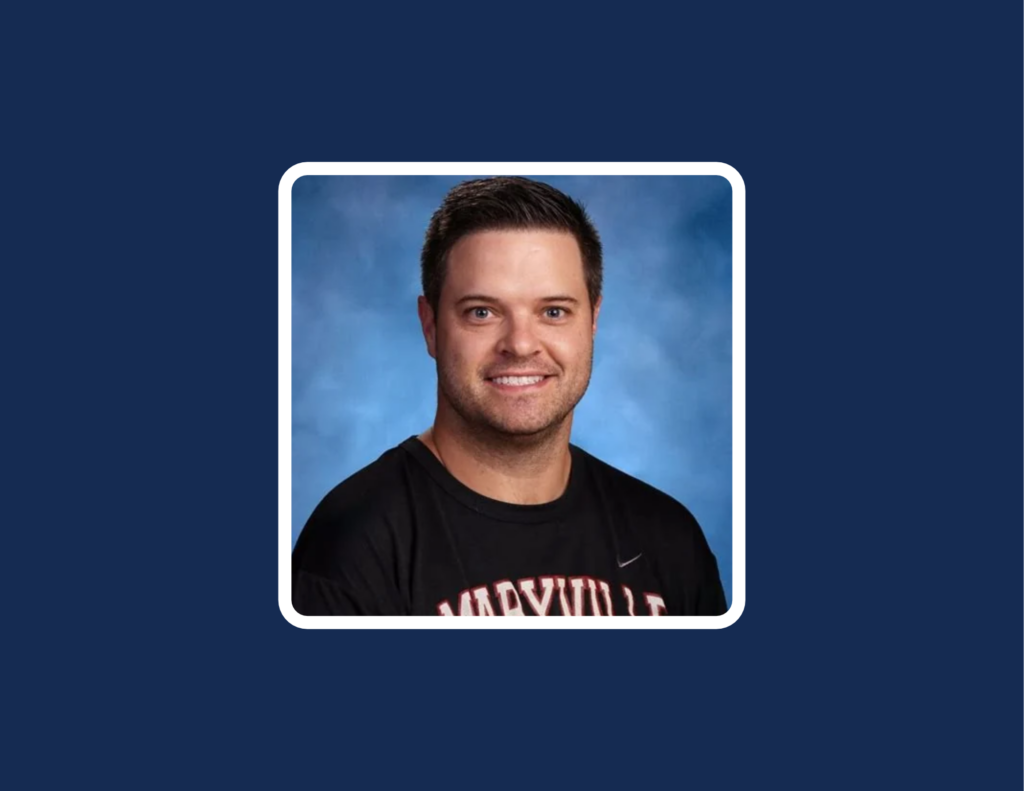
WES LAMBERT – FOUNDER OF BALL COACH AI & MARYVILLE (TN) HIGH SCHOOL BOYS’ BASKETBALL HEAD COACH – EPISODE 1321
Website – https://www.ballcoach.ai/
Email – [email protected]
Twitter/X – @BallCoachAI

Wes Lambert is the Founder of Ball Coach AI and the Boys’ Basketball Head Coach at Maryville (TN) High School. Ball Coach AI scouts your team and your opponents, builds your playbook, runs your call sheet, and tracks games live, so you walk into every gym already prepared.
Follow us on Twitter and Instagram @hoopheadspod for the latest updates on episodes, guests, and events from the Hoop Heads Pod.
Make sure you’re subscribed to the Hoop Heads Pod on iTunes or wherever you get your podcasts and while you’re there please leave us a 5 star rating and review. Your ratings help your friends and coaching colleagues find the show. If you really love what you’re hearing recommend the Hoop Heads Pod to someone and get them to join you as a part of Hoop Heads Nation.
Take a moment to grab a notebook before you listen to this episode with Wes Lambert, Founder of Ball Coach AI and the Boys’ Basketball Head Coach at Maryville High School in the state of Tennessee.
What We Discuss with Wes Lambert
10 Key Takeaways for Basketball Coaches
- Build a reliable system for saving and organizing plays.
Wes describes saving plays from X only to lose track of them in his camera roll; months later, he rediscovered a horns series he’d meant to use. A searchable playbook can keep useful ideas available when it’s time to plan.
- Keep coaching notes attached to the play.
Wes says he adds notes to every frame, and the tool can capture handwritten notes or generate coaching notes for a diagram. That helps preserve the purpose and teaching points—not just the arrows and screens.
- Make plays easy for players to understand under pressure.
Wes discusses animated play diagrams, and Mike points to a last-second timeout as a moment when players may struggle to interpret a coach’s quick sketch. The practical lesson: have a clear way to show the action, especially when there’s little time to teach it.
- Keep scouting focused with a simple structure.
Wes’s routine is to identify three offensive keys, three defensive keys and three intangibles for each game. That framework gives a coach a concise starting point without pretending a short list captures everything.
- Use data to spot changes, then verify with your own eyes.
Wes recounts an opponent switching to a five-guard starting lineup in two makeup games he hadn’t seen; the report surfaced the change, and he updated his projected lineup before the game. The example shows how a timely data point can prompt a coach to investigate and adjust.
- Make scouting reflect your team’s terminology and style.
Wes says coaches can enter their preferred terminology and playing style, because different staffs may describe the same action differently. He also emphasizes self-scouting to track player progress and team trends.
- Treat technology as support for coaching judgment, not a replacement.
Wes says a report based only on stats has limits; his own input and film observations matter, and the tool prioritizes coach-provided information over less direct data. He also says he wouldn’t go into a game relying only on an AI scout.
- Use in-game tracking to notice trends you might miss.
Wes describes logging shots by location, then getting timeout prompts about hot players, scoring droughts and a player’s success from a particular spot. One example he gives: a prompt that his team had six straight empty possessions and might need a set.
- Use shared staff notes to connect scouting with practice.
Wes describes staff members adding opponent and player notes that attach to the relevant scout, and collaborating on practice plans during the day. That can help keep what coaches notice in film connected to what the group prepares.
- Make feedback specific and track progress over time.
Wes says he grades players at season’s end, shares self-evaluations and compares a player’s prior-year grades and stats with the next season’s. That creates a clearer record for conversations about growth, rather than relying only on memory.
Like this show? Please leave us a review here — even one sentence helps! Consider including your Twitter handle so we can thank you personally!

XCIV.ai: Game planning for coaches, no film required. No video staff? No problem. Upload your opponent’s box score or a photo of the scorebook (or film, if you have it), and XCIV.ai builds a scouting report, a game plan, and a practice plan. It’s made for high school, middle school, and AAU coaches. Built in Colby, Kansas, XCIV.ai is a corporate partner of the Missouri (MBCA) and Indiana (IBCA) basketball coaches associations. There’s a free plan, and it’s on the iPhone.
Start free: https://hoopheads.xciv.ai

Your first impression is everything when applying for a new coaching job. A professional coaching portfolio is the tool that highlights your coaching achievements and philosophies and, most of all, helps separate you and your abilities from the other applicants.
The key to landing a new coaching job is to demonstrate to the hiring committee your attention to detail, level of preparedness, and your professionalism. Not only does a coaching portfolio allow you to exhibit these qualities, it also allows you to present your personal philosophies on coaching, leadership, and program development in an organized manner.
The Coaching Portfolio Guide is an instructional, membership-based website that helps you develop a personalized portfolio. Each section of the portfolio guide provides detailed instructions on how to organize your portfolio in a professional manner. The guide also provides sample documents for each section of your portfolio that you can copy, modify, and add to your personal portfolio.
Aiming to go D3? The D3 Recruiting Playbook gives you a clear, step-by-step roadmap to the recruiting process – what coaches value, key milestones from early high school through application season, and how to build a target list of schools that fit your needs.
We’ll demystify researching D3 programs and how to stand out without chasing every camp or showcase.
The modules cover things like writing emails to coaches, building an effective highlight tape, using social media well, planning ID camps and visits, and navigating application strategy.
You’ll get templates, checklists, and an outreach plan to communicate confidently, learn how to compare financial packages, and avoid common missteps. By the end, you’ll have a prioritized school list and a decision framework you can use to land your best-fit opportunity.

Give With Hoops is a groundbreaking initiative that fuses basketball analytics with modern sponsorship. Built for teams who see data as opportunity, from AAU programs to college powerhouses.
By tying on-court performance directly to community and sponsor engagement, Give With Hoops help programs raise more while deepening support from those who believe in the game.
Traditional fundraising disconnects donors from the action. Sell candy bars, wash cars, beg for donations, it’s exhausting and ineffective. Players perform better when their stats matter beyond the scoreboard. That’s why Give With Hoops was created.
Give With Hoops connects game performance to community support. Every basket, rebound, and assist becomes a chance to raise funds. Transparent, exciting, and proven to raise 3x more than traditional methods.
THANKS, WES LAMBERT
If you enjoyed this episode with Wes Lambert let him know by clicking on the link below and thanking him via Twitter/X.
Click here to thank Wes Lambert via Twitter/X
Click here to let Mike & Jason know about your number one takeaway from this episode!
And if you want us to answer your questions on one of our upcoming weekly NBA episodes, drop us a line at [email protected].
TRANSCRIPT FOR WES LAMBERT – FOUNDER OF BALL COACH AI & MARYVILLE (TN) HIGH SCHOOL BOYS’ BASKETBALL HEAD COACH – EPISODE 1321
[00:00:00] Narrator: The Hoop Heads Podcast is presented by Head Start Basketball.
[00:00:20] Wes Lambert: Ball Coach can scout all of your opponents. However much data you can give it right now, it can give you the most detailed report you would ever want.
[00:00:33] Mike Klinzing: Wes Lambert is the founder of Ball Coach AI and the boys basketball head coach at Maryville High School in Tennessee. Ball Coach AI scouts your team and your opponents, builds your playbook, runs your call sheet, and tracks games live so you can walk into every gym already prepared Ever since I founded Head Start Basketball in 1993, we’ve helped young players develop their skills, confidence, and love for the game.
Now we’re partnering with coaches and athletic programs to bring the Head Start Basketball camp experience to new communities. Our camps run for five days, three hours per day, and serve boys and girls in grades one through six. You or someone on your staff directs the on-court portion of the camp, while Head Start Basketball manages registration, promotion, parent communication, T-shirts, trophies, website setup, and administration.
There are no upfront camp planning headaches, and the profits are divided 50/50 between your program and Head Start Basketball. If you want to reach more families or strengthen your youth basketball pipeline, or just create additional revenue for your program, visit headstartbasketball.com to explore hosting a camp.
[00:01:40] Oronde King: Hello, this is Oronde Coach King, boys basketball head coach at Putnam Valley High School in New York, and the founder of King’s Basketball Teams and Sports Performance Training, and you’re listening to the HoopHeadz Podcast.
[00:01:55] Mike Klinzing: Take a moment to grab a notebook before you listen to this episode with Wes Lambert, founder of BallCoach AI, and the boys basketball head coach at Maryville High School in the state of Tennessee.
Hello, and welcome to the HoopHeadz Podcast. It’s Mike Klinzing here tonight without my co-host Jason Sunkel. But I am pleased to be joined by Wes Lambert, the founder of BallCoach.ai. Wes, welcome to the HoopHeadz Pod, man.
[00:02:21] Wes Lambert: Yeah, I’m excited. Thanks for having me, Mike.
[00:02:24] Mike Klinzing: Sure. Absolutely. We’re thrilled to have you on.
Looking forward to learning about what it is that you’ve built and how it could potentially benefit our audience of coaches. So let’s start with just for people who are tuning in, wondering, “Hey, what’s this all about?” Just give us an idea, BallCoach AI- Yeah … the elevator pitch, the one-minute speech on what it’s all about.
Give it to us.
[00:02:48] Wes Lambert: So I’m a high school head coach in East Tennessee, and every day I deal with all the, the issues that coaches have to deal with just in the day-to-day life. Whether it’s saving too many pictures on my camera roll from X of plays that I like, and they, go to the graveyard.
I can’t even find them anymore. Or it’s, checking our stats and seeing if there’s any trends or anything that we can apply to our practice planning, things like that. And then finally we’ve always had statting features on the bench, but I’ve never really fell in love with one specific one.
And so with all that in mind, I created BallCoach AI and it’s truly built off of the, the issues I’ve had as a coach straight to a program for other coaches to use.
[00:03:45] Mike Klinzing: All right, so how do you go from, I have this idea. I’ve been there before, man, with the lights. I know that feeling well, getting the, getting those things turned back on.
The motion sensor is always key. Wes is recording tonight. For those of you who are only audio, Wes is recording in his classroom, so he’s got the motion sensor lights in there. So how do you go from your pain points as a coach. Things that you’ve had to do by hand, things that you’ve done, but maybe they, you haven’t done them well.
It’s hard to keep it all organized. How do you go from that, again, everybody has those pain points, right? Inside- Yeah … and outside of coaching. We all have things that, “Man, if I could just fix this,” or, “Man, if this just worked easier,” or, “Man, if this was just smoother, I c- that would be great.” So how do you go from that to, okay, AI, we know it’s coming in some version.
Anybody who’s used it at all, I told you and I’ve told anybody that I talk to any time I ask it to do anything, I come back being like, “Oh my God,” like I can’t believe what it’s capable of doing. So just walk me through your thought process of going from the pain points of coaching to, “I think AI might potentially be a solution here.”
[00:04:54] Wes Lambert: Yeah. Day, my day job is a teacher like most high school coaches are, and I knew AI was coming. It was going to, change the whole landscape of education. And so for me, I wasn’t necessarily excited about the AI, but I didn’t want to become a dinosaur. I didn’t want to refuse it. So every opportunity, every professional development, whatever I had to do, I would always try to do it focused around AI.
And it honestly started just teaching me to question and look at daily life and figure out how to make it more simple. That’s ideally what we’re always trying to do. I don’t want to… I want to work smarter, not harder. And so what I did basically was last basketball season, I just started taking notes.
I just started trying to figure out what are the most annoying things I deal with, and then I taught myself how to, quote-unquote, code with the help of AI, and next thing I know it worked. Yeah. It was good. And it blew me away. And so honestly, I think it was just more I was refusing to get passed up because I’m going to, I’m going to work extremely hard at whatever I do, but AI allows you to put so much more effort and time into what I care about most, and that’s like the delivery.
That’s the, the face-to-face interactions, with my players or my students and it’s helped in every aspect.
[00:06:43] Mike Klinzing: All right. So what was the first problem that you thought, “Hey, I see a…” Again, I’m going to say fairly simple. Yeah. I know it’s not all fairly simple, but what was the first thing that you saw that you’re like, “I think that we can solve this,” or, “I think I can solve this problem that I have using AI”?
What was the first thing you tried to get it to do?
[00:07:06] Wes Lambert: It’s a no-brainer. The very first thing was how can I take my pictures from Twitter, from X and be able to upload them and it look just like a diagram play like any of the programs we use, and that way I can organize it, put it all within my different playbooks and filter it from there.
And I was looking through my phone at pictures. I was in the airport or something trying to, you know- … I’m bored, trying to delete get more storage, and I start seeing all these plays and it reminded me of this series that I wanted to put in, in, in a horns look one year, and I completely forgot about it because I’d found that stuff, in March or April at, right after the season.
And so I sat down with Claude, my best friend now, and we just started going back and forth. One of the biggest things with interacting or talking with AI or the way that I found is I’ll ask it to ask me as many questions as possible until it, we’re on the same page. And basically told it the problem, said, “I have these pictures.
I want to be able to produce drawn plays and I want to be able to have that in my own drawling program.” And so it, it grew to a point where every play would… There would be a little bit of things off here and there, and then I would say probably midsummer I brought on my childhood best friend who is in the tech world to look over my stuff and then add to it and he joined on and it has, like it’s almost perfect to a T of how you would how you would draw it.
It picks up on some of the craziest incra- intra- intricacies of, a play
[00:09:15] Mike Klinzing: So let me ask you this. So I’m trying to make sure that our audience can understand exactly- Yeah … what is, what the AI is taking from the input that you’re giving it. So I know for myself, and again, I’m speaking for lots of other coaches, specifically coaches at the high school youth AAU level that are scrolling through Twitter, right?
We’re scrolling through all the time. “Hey, wow, look at that play.” Whether it’s film, whether it’s a drawing, what- we all know. Again you talked about it yourself, right? You grab something and then you forget about it, it disappears, and you’re like seven months later, you go, “Oh man, I remember I saw that.”
W- and that stuff is all gone. So when you’re talking about it’s taking a, a play that you have, is that strictly just a diagram drawing? Is that what it’s grabbing and then putting it into, again, like a play diagramming type of thing? Is that what we’re talking about? I just want to make sure I’m clear.
[00:10:07] Wes Lambert: Yes and no. Okay. So yes, it can do that. Okay. But if you drew a play on a napkin, you could take a picture of it and upload- Okay … that as well, and it will- Gotcha … draw that play.
[00:10:18] Mike Klinzing: Okay.
[00:10:18] Wes Lambert: So it’s literally taking whatever is in the cropped picture and producing that into a play.
[00:10:28] Mike Klinzing: Got
[00:10:28] Wes Lambert: it. And then, the easy part of it, which To me I love putting framed notes.
Like, all of my plays, every single frame’s going to have some type of coaching note at the bottom. Yep. Yep. I used to always get frustrated when I’d find stuff and I would want to hear their side of it, whoever made that play. So now it will take the f- the frame notes if they’re on there. If you write the notes on your, whiteboard, it will add that to it as well.
If you don’t have notes and you’re using the tool to draw your plays, it will produce the coaching notes for you. It has… It’s taken parts of… I m- you know as well as I do, when you’re building out your playbook, drawing the plays on a program takes 1,000 times longer than it does on hand, but you’ve have to be organized, and I wanted to make sure I wasn’t wasting more time just by digitizing it than putting it in a notebook
[00:11:38] Mike Klinzing: So when it comes out then on the other side, right?
So I have the diagram in whatever form I have to input it, then what’s the organizational method that you use on the output side of it to keep it… Again, the whole point of this not only is to get it digitized, but then also to be able to organize it. So talk a little about the organizational piece of it.
Once you’ve gotten it into the system, then how do you go about… And again, maybe it can be customized for every coach. You just walk me through what that looks like.
[00:12:10] Wes Lambert: Yeah. Any of the play diagramming platforms out there they have like your pl- your all your plays, they’re filtered, you can go through those, and then you can create your own playbooks.
Think that it’s the exact same within Ball Coach other than every play you draw, then we’re going to produce a animated version of it. And so for me, I used to always use one of the most popular drawing-
[00:12:38] Mike Klinzing: Yep …
[00:12:38] Wes Lambert: platforms, and they had the animation, but it would take me like 30 minutes to get the animation correct on a simple orange look, and it just would frustrate me, and I’d, I wouldn’t do the animation.
Now, like with ours, it pairs that two. So all that to say is, within Ball Coach, one of your features or one of your landing pages is your playbook page. You can organize it just like you would in any other platform. You can print it, it’s customized, it’s branded to your team. If you’re a high school team, it automatically syncs for max prep, so like your colors, your logos, everything is on there.
And then it’s just organized for you, and you can access it on any device. You can share it with your, y- your team, you can share it with your coaches. And then the final stage, of the playbook would be the in-game statting feature, and we will talk about that later. When you hit a timeout, it will prompt if you want to pull up some of those plays.
And so you can, in essence, have animations of ATO’s that maybe your team doesn’t know or you don’t practice, but you want them in your back pocket. Now you can play it for your team. They can see the animation, and now you have everybody on the same page
[00:14:07] Mike Klinzing: Yeah, it’s a great tool. I again, as you’re saying that, I’m picturing myself during many a timeout at the end of a close game after we’ve run the out of bounds plays that we’ve run all season and being like, “Oh man, based on what our opponent’s done to us all game, I got a really good idea of what I think could work.
But man, trying to diagram this so that all my- Yeah … 13-year-olds on this team can-
…
[00:14:33] Mike Klinzing: Figure it out in that 30-second timeout or whatever it is, yeah, I’m not sure that’s going to happen. But to be able to not even have to think about it and just be like, “Okay, here’s my last second whatever. I need a three, or here’s my last second, I have to get a layup.”
Whatever it is, to be able to call that up and to be able to have it, and then you said, like the animation piece of it, huge for your players to be able to see it. ‘Cause look, you and I as coaches, the diagrams and the X’s and the O’s and the arrows and the dribbling and the screens and all, like y- okay, sure.
But- Yeah … in a pressure moment, right? A high school kid looking at that diagram and looking at a coach who’s scribbling on a board We all can, I think, have testimony that what we diagram in the huddle- Oh … the fans who are up in the stands going, “What’s this coach doing? He has no idea what he’s supposed to be doing.”
And you think about what you drew up and then what actually gets executed on the floor, those two things don’t always match up. And I can totally, again, picture how having that animation and just being able to call it up at boom, spur of the moment, I need this, and now all of a sudden it’s there.
Real world practicality, I think any coach listening can see where the value in that-
[00:15:41] Wes Lambert: Yeah …
[00:15:42] Mike Klinzing: would be, right?
[00:15:44] Wes Lambert: And I think we’ve all as coaches, there’s been a moment in your career after a timeout, you’ve looked down and your board looks like a jumbled mess, and you’re like, “There’s no way these 15-year-old boys can figure out what I just drew up.
I can’t even understand it.” And this helps… It helps in that sense, too.
[00:16:03] Mike Klinzing: I… What’s funny is that I always laugh when sometimes you’ll see coaches, and I’ve probably been one of them, where a coach is diagramming, the kids are sitting down, and the coach is diagramming and the, the board is flat, and the coach is looking at it.
The kids can’t even… Hell yeah. They’re all nodding their heads, but they can’t even see the board because of how it’s being, how it’s being held to the- my
[00:16:23] Wes Lambert: dad-
…
[00:16:24] Wes Lambert: My dad coached in college for 40 years, and he’s left-handed, and he would… he used to drive me crazy in the locker room. He would write, and where he had to write from, I couldn’t see any of it, and I played for him.
Yeah. I just had to listen the whole time.
[00:16:40] Mike Klinzing: All things that we had no idea that AI was coming to be able to- Yeah … solve for us. All right. Anything else about the playbook side of it before we jump into some of the other capabilities that you want to share?
[00:16:51] Wes Lambert: Yeah. Yeah. We… we have something called a play bank, and basically it’s…
Right now it’s me adding plays every day. And so we’re close to 500 sets that you can filter and add straight into your playbook which is, for younger, newer coaches, phenomenal, piece of resource there. As, as you get more in your way of thinking and down, your thought process, would it help you?
Yeah. It could challenge you. It could give you some other options that you may not be thinking about, and that’s why it’s there. Yeah. And so that would be the only other true part of the playbook feature.
[00:17:36] Mike Klinzing: All right, let’s jump into the next part. Yep. Scouting. And let’s start with scouting your own team, how that works from a digital perspective, and then we can talk about how you scout your opponents and how Ball Coach can help in both- Yeah
of those two areas.
[00:17:51] Wes Lambert: Yeah, so I’m, I’ve just, it’s been ingrained in my body and my mind my whole life that when it comes to scouting, I’m going to try to get every single film that team has played before me. If I play them again I, I’m going to have every game, especially in your area, your region, district, whatever you call it in your state I’m going to have every game that they have.
And then everybody uses Hudl. Hudl, they have Hudl Assist. You pay f- a lot of people pay for that, and now you’ve got all of the data and stats at your disposal. So in the past, my thing was I’m going to get all that. I’m going to build out my personnel build out, obviously what I think they do offensively, defensively, and then it’s always been, I don’t know why, but it’s always been a thing where I put three offensive keys for us to win, three defensive keys, and three intangibles.
And I, I took that from my dad. He coached at Maryville College, D- Division III school for 40 years and that just… I love the simplicity in that. And I would do that for every game. And you know as well as I do watching film takes nothing but time. And I wanted to find ways, especially on tourna- like tournaments, w- Christmas tournaments where you have a quick turnaround, things like that, I wanted to find a way to still be prepared, but also still be present at home with my daughters and all of those, balance acts you have as a coach and all the hats you wear.
And Truthfully, Ball Coach was created out of one specific story from last season. And so my early stages of it it’s honestly kinda embarrassing, but my early stages of it, it would send me a bus briefing every game day. And so I would listen to this English accented AI talk about my opponents every game.
And so we’re at a cross-town rival district game. I’m sitting in the first row while our JV’s playing and watching them, and I’m listening to the bus briefing, and it says, “They’ve gone away from playing a traditional post player.” And I was like, “No way.” Th- I’ve watched every game. No way they’ve done this.
It’s wrong. I don’t have what I, I thought I had. And then I find out they had two snow makeup games the previous two days that I didn’t know about. So I pull them up on YouTube, and both games they started five guards. And so b- my, prototype Ball Coach was accurate on that. I walked straight into the locker room, erased my projected starting lineup and put what Ball Coach said was the starting lineup, and sure enough it was spot on.
Was it luck? I don’t know. But that, that kinda exploded my thought process on how can I use AI to improve scout scouting and just the organization of it. And so basically, fast-forward to today, Ball Coach can scout all of your opponents if you give it as… however much data you can give it right now, it can give you the most detailed report you would ever want.
It syncs automatically with MaxPreps, so if their team is on MaxPreps and they have their stats It pulls automatically. If they don’t, which a lot of teams don’t do that it has an option for you to upload huddle- your huddle reports. And then the cool part about it is it prioritizes what the coach says over what AI says.
At the end of the day, it’s liter- it takes the emotion out of it. It’s only looking at data right now. But, the coach knows exa- they’ve put their eyes on it. So the way it’s built now is the coach can put in their input, it blends it all together, and then it produces printable, shareable, unbelievably detailed scouts on your opponents.
And obviously, if you pair that with the in-game statting of Ball Coach, then it produces heat charts tendencies more, even more. So as far as scouting goes So I used to be a grad assis- when I first graduated college, I went to Belmont to be a grad assistant and, I’m doing the grunt work.
They’re giving me a list of prospective athletes and telling me, “Go find their stats.” And they would say, “Go to MaxPreps.” And if a, if an athlete didn’t have anything on MaxPreps, they would, in essence, tell me to move on. And that immediately like I earmarked that experience and I said to myself, “When I become a coach, I’m putting everything on MaxPreps.
I don’t care if my opponents get it, because if I’m never going to be the reason a college doesn’t recruit my player.” And so that’s why I put it all on there. And in Tennessee, they make a big push for us to try to upload onto MaxPreps. So it’s… I’m hoping that people use it more ’cause In today’s world, you can get every film, you can get stats just about any- anytime you want.
So high school should look like college’s version of Synergy.
[00:23:52] Mike Klinzing: It’s a great point, and it’s one that I think i- it’s interesting, again, to look at the evolution of coaching, film, sharing data, and just how that’s changed over time. Now, in 2026, you want to keep something a secret ’cause you developed some great offense, or you have some secret out of bounds play that you don’t want anybody to see or know.
The days of you being able to keep that under wraps, those days are long gone, which has been great for me as a podcaster, right? ‘Cause guys will come on and talk about what they do and how they do it, and they share. And again, the basketball coaching community, right? Everybody cares about not just…
Again, look, we all want to win and compete and all that stuff. Yeah. But everybody cares about the game, right? Yeah. Everybody cares about leaving the game better. And the way you do that is by sharing, and I think you make a good point that, if you go back, I played college basketball from 1988 to 1992.
At that point, everything was VHS. It was impossible. You’re going to mail stuff at the FedEx- Yeah … location. And w- it- it’s just a completely different world. And at that point, sure, if you wanted to keep something kinda secret-
[00:25:03] Wes Lambert: You
[00:25:03] Mike Klinzing: could … maybe you could do that in that era. Nowadays, obviously that- that’s totally impossible.
So then I think that goes to the next point for you, which is, yeah, you want to be able to get your players out in front of as many schools as they can if you’re a high school coach, right? Get their stats out there, get their film out there, get things out there that they can be seen so that somebody can stumble across it in whatever way that is, using something with AI or just, again, just a guy going out and looking at Twitter or looking at- Right
MaxPreps or whatever it might be. And so to be able to have the opportunity to do that, I think is critical. Then the other thing that struck me that you talked about was the fact that a coach has eyes on what’s going on in relation to the scout, and you talked about how the coach can, I don’t know if override is the right word, but the coach can guide or direct what Ball Coach AI- Exactly
is looking for or how they’re, how- how it’s parsing through the statistics. So give me a real-world example that if, let’s say I’m a coa- I’m just going to throw a scenario at you. Like I’m a coach that I want to play fast, so I’m going to press up and down the floor. I want to get shots up in 12 seconds or less.
And so I’m- I want to play with pace on both ends of the floor. How can I help the AI to understand that’s my style of play, so that when I get that scouting report out, it’s relevant to the style of play that I want my team to be showing out on the court?
[00:26:21] Wes Lambert: Yeah. So- Awesome question because every program’s different.
You can know the game, but you can walk into five different practices, and all five coaches are going to say the same action a different way. And so again, that’s the beauty in me being a coach and doing this as well on, as a passion and trying to help the game and help all of us grow.
I knew that right away. So in the settings, you can actually put in terminology, you can put in styles, you can talk about, your team, like you said and then see it from there. And what kinda pairs with this, not enough coaches self-scout. And create a scout on your team. And I made sure Ball Coach was going to be able to do that and do it well enough to where you want to look at it weekly.
And I’ve… it’s been phenomenal for me because it’s shown progression of my players. It has kept track of, how they’ve done. I can even notice trends that are going on with my team. That’s… as a high school coach, you don’t get that. You don’t get it. A- and this allows the everyday, high school coach to have the s- tools and the power that college programs have with manpower.
We don’t get that. We don’t have, unlimited staff members, so this is hopefully the, the solution to it.
[00:28:03] Mike Klinzing: Coaches, this episode is brought to you by XCIV.ai. You heard founder Zach O’Dell right here on the HoopHead’s pod. Now, here’s what his team built. You’ve got a game Friday and no time to chase film.
Take your opponent’s box score or just snap a photo of the score book and upload it. XCIV.ai turns it into a scouting report, a game plan, and a practice plan. No film required. It’s built in Colby, Kansas for high school, middle school, and AAU coaches, and it’s a corporate partner of the Missouri and Indiana Basketball Coaches Associations.
There’s a free plan, and it’s on the iPhone. Go to hoopheads.xciv.ai. That’s hoopheads.xciv.ai. So let me play the skeptic, right? So when I hear this for the first time, and it’s not the first time that I’ve heard it, but when I hear this for the first time and I think, man, as a high school coach or as a college coach, I’m spending literally hours watching multiple films of my opponent.
I’m seeing with my eyes what it is that they’re doing. That’s enabling me to see tendencies. That’s enabling me to see personnel. It’s enabling me to see how they react and guard certain actions that maybe my team does, and I’m doing all that by visually watching-
…
[00:29:26] Mike Klinzing: The film. Now, you’re telling me that I can input, again, data, right?
Statistics, things that I’m pulling from MaxPreps, let’s just say, where it’s numbers, it’s data, and then I’m getting an accurate scouting report even to the point, like the example that you gave, where something that you hadn’t seen because, again, of the snow days and the makeups that-
…
[00:29:52] Mike Klinzing: It was able to come up with something that you weren’t even aware of.
And the skeptic side of somebody who hears this for the first time is going to be how can it possibly come even remotely close to what a coach can do watching four or five games, looking for tendencies, all the experience that a coach has- Right … watching film. How can it do something similar to that with data?
And again, I know there’s a lot of things in between that question that we can read in between the lines, but just walk us through how does… how does this thing work? How does it take numbers and then spit me out- Yeah … something that I can take in my hand, read, and then go and utilize with my team?
A- as I’m hearing that as a coach who’s never been exposed to this, part of me is going, “Man, I just… How can that be accurate? I just don’t see how that could
[00:30:37] Wes Lambert: work.” Y- there’s multiple answers to that, and I love this. I’m sure there is. I love this. The f- the first one, and this is the, I don’t know risque answer would be probably the same people said that when the calculator was created.
[00:30:52] Mike Klinzing: Yeah.
[00:30:52] Wes Lambert: For sure. Like, why do I need to use that? I know how to do math in my head. Again, that’s that one side of it. To me, it pairs… So it’s multiple avenues. It pairs coach’s input as well. But if I’m statting the game inside my program, Ball Coach, and I’m using that statting feature, it– the way that I’ve created the statting is not inputting made basket, missed basket, rebound.
What- the way you do it on ours is it has a court. You’re put- you’re literally just pressing your finger on the court where that action happened, and then the AI logically knows the game and is going to ask you questions based off of that. Super quick. All– Like one of my criteria was thumb travel. I didn’t want a user’s thumb to have to go all over a screen.
And by doing that, it allows the AI to see the game. It allows to see where those actions are going. And so when you pair that with the raw data in the stats, it can produce it, it knows right hand dominant, left hand dominant. It knows, where they’re most successful, where they’re not. Does it know their attitude?
Does it know that they, they can get in under your skin? No, it doesn’t. That’s where the coach comes in. I’m not trying to replace coaches. That would replace me. I’m… All I’m doing is trying to allow trying to allow myself the same amount of materials to prepare for a scout, but produced way faster than it would’ve taken me to do on my own.
I’m not asking you not to scout at all. In fact, I hope all my opponents buy Ball Coach, Ball- Ball Coach and then don’t scout, because it’s never going to replace a human. And I hope not. So yeah, would it produce a extremely accurate scout if all I gave it was its max preps data? No, it wouldn’t.
Would it be accurate enough for a quick turnaround in a tournament game? Thousand times, yes. It can be the the foundation for you to start that scout. But if I’m putting in district opponents and I have every stat, I have their film, I have calls, I have tendencies, and I put it all in Ball Coach, it’s going to produce something better than you could ever have done.
Because it’s taking what you know paired with the data, and then it literally runs trends and sees if you can, or if it can find something that you haven’t mentioned
[00:33:48] Mike Klinzing: Talk about the way that you input the data beyond MaxPreps, right? Yeah. Which I’m assuming it’s just go- it’s just going out and collecting that.
You give it direction, it goes out and it collects- Yeah … those stats, if those are available. But if you are inputting the data yourself as a coach, so I’ve have to pull the data from Hudl, or I’ve got other things that I want to include in there. I’ve scouted the team, I’ve got tendencies and things I want to put in there.
What does the intake page look like-
…
[00:34:14] Mike Klinzing: For a coach? How does a coach put that, quote, “extra information” in there that’s going to give you an even better product in the end?
[00:34:20] Wes Lambert: Yeah. So the way it’s built is the moment you create your account and you get linked to your school, every high school is on MaxPreps.
So whether there’s stats or not, it’s going to pull your schedule, it’s going to- so all your opponents, all of that. So then when you go to the scouting feature, every opponent is created in a table-esque, and each one has a card, and it has their logo, and it tells you when you play them. And if you click on that, then it opens up the home dashboard for that scout.
With Hudl, we use Hudl Assist. So when you go to reports in your Hudl, you can export, and it makes, it just creates a CSV file, like a, a spreadsheet. Literally, you can drag and drop that in, and it automatically recognizes it and knows where to apply it. It knows that if it has pulled data from MaxPreps, but you’ve inputted data from Hudl, if Hudl’s more accurate, it’s going to, it’s going to make that the priority over MaxPreps.
And then if you are statting in our app, then the statting is priority over all of them, because that’s firsthand statistics. So with that, basically it’s as easy as it sounds. It… There’s even a, a coaching chat feature where, so my staff uses it obviously, and what’s neat is you can go to the coaching chat, you can type you can click opponent, and it will populate your opponents.
I can click whichever one it is, type in a note, hit enter, and it will notify my coaches of that on the chat feature, but it will also attach that to the scout of that opponent. Same with individual players. It can, it’ll even attach that. So the, vision is your coaches are watching film, they have BallCoach up, and everybody’s talking back and forth, and it applies what you’re talking to your scouts
[00:36:39] Mike Klinzing: That’s awesome to be able to– Again I think about AI use in not necessarily every day, but you go to the doctor, right?
And the doctor says, “Hey, do you mind if I set out my recorder, and AI is going to record everything we’re saying, and then it’s going to take and it’s going to take that into account and help me to better remember what we talked about and then improve for the next time.” And that’s the same feature, right?
Now, you and I are having a conversation about our opponent, right? We’re paying– playing the school down the street, and we’re going through it. We’re watching the film. We’re talking. Boom, all that stuff. We’re– as we discuss it, now that all becomes data. And it just– It, it’s amazing to me, again, even as you and I are talking, and like I said, looking at the stuff that you sent over to me and going through it and trying to have an understanding of what it was that you had built and my own use of AI for different things that I’ve done, which again, every time I use it, it just continues to amaze.
I’m like, “Holy cow, it can do that?” But even as it, even as we’re talking and I’m going through and thinking about, man, I, I never would’ve thought of that, it that way or y- yeah, wow, holy cow. That’s an application that, yeah, works here, but it also works here. And you just… I’m sure for you in your mind, as you first created this thing and talked right off the top about there’s some pain points and then how do you solve it?
And you start going, I’m sure there were iterations where you’re like, “All right, I got kind of this, but man, what if we could add this and what if we could add this?” And I’m sure that’s a constant process for you.
[00:38:10] Wes Lambert: It is. Since you mentioned it, what we’re working on right now, and this is not, this is… W- we’re way closer than we thought.
And basically Hudl Assist, you send it off, they have somebody somewhere in the world that stats the game for you, and it comes back. I’m not trying to replace Hudl. I’m not that dumb. Like I know I can’t go up against them. And I don’t want to. I want this to be the coaching side of it.
And so what we’ve done is we’re now being able to input an entire game film, and it breaks it down exactly how a coach would. It, and it even puts them into playlists for you. It tells me what they’re doing after timeouts, what they’re doing at the start of quarters. It’s doing player personnel, everything.
And the best part about it is because I’m a coach, like I, I know this. I do it on my team just because I know my team more than anybody, and it is unbelievably accurate. And so we’re, that’s our next push to allow film because that’s what everybody wants. Everybody asks- Yeah … that’s the question I get over and over again: Can you upload film?
Does it stat? And as of right now, it’s not a feature, and it’s soon to be probably like a, a higher tier feature for it- Yeah … because it’s wild.
[00:39:44] Mike Klinzing: It’s funny that you say that. So I’m going to give you a story. When I first heard about, and back in the day it w- it was kind of Hudl and Crossover, right? I don’t know if you remember Crossover.
[00:39:54] Wes Lambert: Yeah.
[00:39:54] Mike Klinzing: But I remember when those two things, and I was already out of… I stopped coaching in high school, I think I always get my years confused. But it’s been a while. Like 2010, 2011 is when I last coached at the high school level. So none of this stuff, none of these tools were really around when I was still coaching.
But I remember when I first heard about Hudl and Crossover, and I’m like, “How do they take the film, and what computer program is capable of taking the film and statting it- Yeah … and giving it back to you?” And I remember having multiple conversations with a couple of different people who were like me.
They’re like, “I don’t know. Somehow they do it. I have no, I have no idea.” And then I remember being amazed that it was actually human beings-
[00:40:37] Wes Lambert: Yeah …
[00:40:37] Mike Klinzing: that were doing all that stat work. I was like, “What?” I’m like, “What are we talking about?” It just, it was one of those things that I thought that what you just described here in 2026 was what was happening back when those companies- Oh
first came- No, I didn’t too … when these first came about. That was my vision, is that I take my film, I send it to Hudl. Hudl stuffs it in some computer program. Yeah. The computer program does its thing, spits out all the stats, and then sends them back to me. That’s what I thought happened.
And no, it was actually human beings, who knows where, sitting there just like you or I would sit and stat the film. And that to me was incredible. And now we’ve come full circle, and I’m not surprised at all to hear you say that’s the next thing that’s coming.
[00:41:23] Wes Lambert: Yeah.
[00:41:23] Mike Klinzing: Because again, if you think about it from 2010, if I look at it from that 2010 perspective, my answer would be that seems impossible.
I just don’t, I just don’t envision how that could ever be the case. Now you take me into 2026, and you show me what you’ve already showed me it’s capable of, and then what I’ve seen it be capable of, not in basketball or coaching- … but just in general what it’s capable of, and I would tell you that I’m 100% certain that it’s going to be able to do that, and going to be able to do it with 99.999% accuracy as more and more people start feeding it more and more data from NBA to college- Yeah
to high school to AAU to… Just the amount of data that eventually is going to be available and the amount of film that it’s going to be able to train itself on- it’s almost a no-brainer Wes? It really is.
[00:42:25] Wes Lambert: A- and my thing with that is it’s going to be… It’s going to come.
It’s going to get here at some point and for me, I would rather be well-versed and completely comfortable with it when it does so I can still be, the best coach, the best version of myself. Absolutely. And that’s the whole thing. That’s the whole process in all of it.
[00:42:47] Mike Klinzing: Yeah, and I think to take that a step further I think, and again, I don’t want to get into an existential AI discussion with you- Yeah
but but one of the worries which you jokingly mentioned before is, “I don’t want to get replaced by AI,” and nobody does, but when I think about this when I think about all the things that you’ve done with Ball Coach this far, thus far, and then I think about what’s coming, and we can even talk further about what you think might be possible further out into the future in a few minutes, but when you think about all that, what I think about is tools that make me way more efficient, that then I have to use my human ability, my knowledge.
You talked about the film and the AI can’t study attitudes. It can’t study intangibles. It can’t study some of those things, at least not yet, and now me as the coach, that’s where I add the value. I take- Exactly … the output from these tools, and now I’m adding value as a coach. And instead of- spending hours and hours breaking down 10 films of my next opponent, I can now condense that work once I get to the point where, hey I trust this thing a- as much as I trust my own eyes, that it’s going to do for me what I need it to do.
And again, that’s not to say that you’re going to totally never watch a film again as a human being.
But you’re going to be able to get confirmation. It’s okay, I see this, now does the AI confirm what I’m seeing? You think about, again, you mentioned synergy earlier. You think about as a coach, right?
There’s an eye test. Like, man, these three dudes, when they’re on the floor together, that looks really good. And intuitively, 20 years ago, coaches would’ve said, “Yeah, these three guys are my guys. When they’re on the floor, I know we’re having success.” But there was really… Unless you’re way advanced and charting all that stuff- Yeah
there’s no way to know. Now with synergy it’s just hey, man when Billy, Joe, and Tom play together-
[00:44:48] Wes Lambert: Yeah …
[00:44:48] Mike Klinzing: we’re, our, our point differential is plus 14, and you’re just confirming what you- Exactly … as the coach, what your eye test shows you. And I think there’s so much potential in that to, again, take the human side of it and then just back that up with analytics.
And then I guess the other part that I always think about is, X’s and O’s, scouting reports, all the stuff that goes along with the technical aspect of the game. You and I both know that there are people who are geniuses at X’s and O’s that can’t coach a lick
[00:45:23] Wes Lambert: because- Yeah, it’s the delivery.
It’s the leadership, the intangibles, the-
[00:45:27] Mike Klinzing: Exactly. It’s the ability to communicate with players. I c- I can have all the information, I can have all the information that I want, and if I can’t communicate that to my team and I can’t get my team to buy into it and I can’t figure out how to teach it, then all the rest of that stuff doesn’t matter.
And so what I love about what you’ve built is just the idea that it’s a tool that is going to make you better at what you do, and there’s still some human skills That’s what great coaches have. They have- … human skills. And I think sometimes, I think coaches know that, but I think there are people that think, “Hey man, this guy just is great X’s and O’s, and this and that, and always is in the film room.”
But there’s more, there’s so much more to coaching the human side of it, which I think is critical. And to get back to the point of this whole rant that I just went on is it’s a tool to make you as a human being, as a coach, better, and that’s what I love about it.
[00:46:21] Wes Lambert: Yeah. Without a doubt. That’s the intent.
It’s not trying to, it’s not trying to allow you to cut corners either. Yeah … and that’s the biggest thing that I keep telling myself or keep telling, my staff or whoever it is. Yes, this is here for our use, this is a resource, but again I’m not ever going to, say I’m going straight into a game with only ball coach or whoever’s-
[00:46:48] Mike Klinzing: Right
[00:46:48] Wes Lambert: AI version of a scout. Not yet. But a tool, 100%. And it allows me to spend more time on my players, honestly That’s what I love about it.
[00:47:04] Mike Klinzing: Yeah, there’s no question. There’s absolutely no doubt. We talked a little bit about the real time statting.
[00:47:11] Wes Lambert: Yeah.
[00:47:12] Mike Klinzing: Tell me about, A, a little bit more detail about how that works just from a technical standpoint, and then B- Yeah
how you utilize that in games to be able to benefit you while the game’s going on. Obviously, having that kind of access, now we see in the NBA, high level college, the coaches that… With the iPad and they have information in front of them- Yeah … and w- we all see that on TV. All looking
[00:47:36] Wes Lambert: at the-
[00:47:37] Mike Klinzing: The exact-
channel after
[00:47:38] Wes Lambert: not.
[00:47:39] Mike Klinzing: Correct. We don’t see that, we don’t see that at the high school level- No … very often. So- No, we don’t … tell me about how this feature can- Yeah … bring that to some degree into high school. Give me the technical aspects of how it works, and then give me how you utilize it to help make your in-game coaching better.
[00:47:57] Wes Lambert: All right. So it’s… The best way to explain it is how I… What I was trying to solve, the problem I was trying to solve as, as a coach last year. We used a free app that is really made for baseball, GameChanger but they have a free version to do your statting. And one of my assistant coaches would always do the statting.
He liked doing that. It kept him locked in more. But we could never do our team, our players, the other team, and their players. It was too much. He couldn’t… He could do- Yeah … our team and players and the other team, but we never had the players. And, halftime or, end of a quarter, I c- I just, I wish somebody would hand me that 16, under, under 16, under, under 12, sh- stat sheet.
But again, it’s high school. We don’t have those capabilities. We can’t put somebody at a scores table to do that. And so with that being said, we started trying to figure out how can we solve those problems. And the first one was I’m… I told myself, “I’m going to create it in a way to where the coach can share the link to one manager, and that manager can say, ‘I’m going to be us,’ share the link to the other manager, and that manager say, ‘I’m going to be the opponent,'” and it blends it and syncs it together live.
So now we have both. So that solved that problem for me. Then the next part was, okay, if I’m doing that, then how can I utilize AI to help within the game? And my main thought was around here in East Tennessee, we have a lot of… There’s a lot of like single A small schools that have great coaches, but they don’t have any staff.
They, their school won’t pay for it, what- whatever the, the reason may be, but they always have a good old boy sitting on the bench with his clipboard, and- Yep … and for me, I thought, okay, if I can allow that guy to use our program, I’m going to have AI constantly reading the data and giving him cues to tell his coach.
And so now in essence it turns, Joe Schmo into an elite coach because it’s looking at all that. And I mentioned earlier how we set it up, but the idea of being able to click the spot on the court and then it logically asks you, and it’s just yes or no questions. So if I click outside the three-point line, it’s going to ask make or miss.
It knows it’s a three, so I don’t have to mark two or three, and then it automatically trees off of that. If I hit make, it asks if there’s an assist. If I hit miss, it asks if it’s an offense, defensive rebound and so on. And that way the user isn’t having to scramble all over their screen for the, the actions, the stat that happened.
And so with that When you call a timeout, it goes to a timeout mode. It tells you if any players are hot. It tells you if any players need to rest. It tells you if there’s any trends going on, if they’re on a, on a… If you’re on a scoring drought, if they’re on a run, whatever that may be. Because you’re putting it on the court, it knows, the hotspots, the locations.
It can even say, the opponent’s number three is scoring at a, a high clip on the left wing. We’ve have to force him right. And so it’ll prompt those things. Then the coach uses it how they want to. It’s just a tool for them to decide whether or not they want to, address that or what, whatnot.
[00:51:59] Mike Klinzing: What do you find for yourself when you think about how you would use it? What do you find being the most valuable insight or insights that it could give you during a timeout that you think would make a difference that you might not have- Yeah … thought of or realized prior to having the tool available?
[00:52:17] Wes Lambert: The best thing and I love this question because at… One of my flaws is I’ll go un- Oh, there goes my light again.
[00:52:26] Mike Klinzing: There you go.
[00:52:29] Wes Lambert: I’ll go eight, nine possessions and not realize that we didn’t get a quality shot or even a bucket. I’m focused, I’m hyper-focused on something else.
And so with this, my favorite so far is I’ll hit a timeout, and it literally will tell me, “We may need to, we may need to do a set. We- we’re six straight possessions, empty possessions. We’ve have to figure something out with that.” And that’s I want to be cued those things.
I want, I want all of my staff to be open to talk about it, and this is just allowing, the AI to take out the emotion and s- and give you the raw data and tell you when something’s working and when it’s not
[00:53:12] Mike Klinzing: I think what’s interesting here is that, and we’ve all been, I think, in these spots as a coach, right?
Where you are watching the game and you are perceiving one thing. Maybe like you said, it’s ’cause you locked in on one particular aspect of your team’s execution offensively, defensively. There’s something that, “Man, we’re doing this really great,” or a lot of times it’s, “Man, we’re doing this really poorly.”
And you get locked in on those things, and then maybe you miss some of the bigger trends. But then when you go back after the game and you watch the film, maybe it’s confirmed, or maybe it’s not as bad as you thought, or maybe that really wasn’t the reason why things were going well or going poorly.
Maybe it was something else. And you do that by watching the film, ’cause in real time we all are perceiving different things, right? We’re cued in on one particular area, and then we can’t see the whole picture at the time. And so I know from my time as a coach and going back and watching film, that oftentimes what I thought happened or what I thought was the cause really wasn’t the cause.
Yeah. Without a doubt. And so if AI can help me i- if AI can help me identify that, not just after the fact, but in the moment- In real time … yeah, in real time, during a timeout, at halftime “Hey, think about this,” or, “Hey, this is what I see,” or, “Hey, we have to do this differently.” To be able to have that as a tool that previously would’ve only been available to you after you go back and watch the film and that game is over and the result is already in the score book the value of that just to be able to have during a timeout, during halftime I can only imagine the swing in what it’s capable of doing in terms of swaying you from a win to a loss- Yeah
or from a loss to a win because of what it… because of the insight that it brings you that, again, you probably would’ve saw on film after the game, but in game, there’s so much going on that it’s difficult to process all that stuff- Yeah … and see it. And so for the AI to be able to pull all that data and boom, give you real time information.
And again it’s like an assistant coach. You can read it and be like, “Eh,”
[00:55:34] Wes Lambert: exactly.
[00:55:34] Mike Klinzing: I’m not, sometimes we all-
[00:55:35] Wes Lambert: I would’ve called it.” “No.” Yeah. And then they hit the bucket, and you’re like, “Exactly.”
[00:55:39] Mike Klinzing: We’ve all been there, right? We’ve been in that assistant coach’s chair, or we’ve been in the head coach’s chair, and assistant coach says, “Hey, I’m seeing this,” or, “Hey, what do you think about that?”
And sometimes the head coach is “You’re 100% right. I, I missed it.” Yeah. Then there’s other times where, you know, “Hey man,” “Okay, that’s fine. But we’re still going to do X.” And you as the head coach, that’s what we talked about earlier, right? It’s the human element. It’s using your judgment.
But to be able to have that tool there to present you with just the way an assistant coach presents you with ideas or options or, “Hey, here’s things we can consider,” the AI is now another tool to be able to provide that i- and as a- Yeah, the value to me leaps off the page.
[00:56:12] Wes Lambert: As a head coach, would you not want constant, constant feedback, something that’s trying to pick up on things?
I would always want my staff to be talking constantly to me, whatever they see. Because like you said, we all look at it differently. We all key in on different moments and, the more eyes the better, or the more tools to use the better.
[00:56:37] Mike Klinzing: Yeah. It just feels like having another set of artificial eyes, for lack of a better way of saying it, on things.
Yeah. And again, everybody brings a different perspective. Most human beings bring a perspective that is slightly skewed for whatever reason because of personal bias, because of what we’re knowledgeable about, all this stuff, and the AI is just, this is the data. This is what the data- Yeah … is telling me, and it’s not biased.
It’s just this is what it is, and you can choose to take it and utilize it and see if it helps you, or you can choose to ignore it if the case may be. So I just think- As we’ve talked about for the last hour, it’s a tool, right? It’s a tool that can help you to be a better coach and to be able to do it more efficiently.
One of the things that coaches struggle with, you talked about it, we talked about it before we jumped on the podcast, talking about your two daughters. Most coaches at some point in their life have a family. There’s time constraints. One of the things that we talk about constantly on the podcast, Wes, is how do you balance it out, right?
How do you balance your time with your family at home and your basketball family, and how do you make that work? And if you can be more efficient at what you do Any tool that can help you to do that I think is valuable- Yeah … in the coaching profession. There is no question about that. So I- The, the- … don’t know if you want to give us anything there.
Go ahead …
[00:58:03] Wes Lambert: the thought that I latch onto is I want to be present at wherever I am. Yep. If that means in my program, in the grind, getting ready for season opener, I want to be fully in. And for that, I want as much info, as much data, as much, advice, whatever it is, let me filter it all and then present and lead.
And then I want to be as present as possible at home. And with this, it has allowed myself to take things that would’ve been, after I put my girls to bed, would’ve taken f- two hours to do, and it’s already ready for me for the morning.
[00:58:45] Mike Klinzing: That, that’s- Now you can sleep.
[00:58:47] Wes Lambert: Yeah. I can actually talk to my wife.
That’s
[00:58:50] Mike Klinzing: right. Absolutely. Absolutely. I know. Look, I can vouch for the value of AI tools in podcasting. Like I said, when I started this thing in 2018, and granted, I wasn’t very good at it back then, but just the amount of time it took to take an episode and turn it into something that was fine to be able to put out in front of the public compared to how long it takes now and the volume of extra goodies that I get to put together with any episode because of AI, it’s just, it’s incredible.
And it’s coming in all walks of life. And the fact that you’ve been able to harness the power of it to be able to utilize the AI for the benefit of high school coaches so that they can have some of the tools that NBA and college coaches have had available to them for a number of years, I can just completely…
I see every s- every single one of the tools and the parts of Ball Coach AI, I can totally see where the va- where the value is. Just thinking about going back to the beginning of our conversation with the playbook, right? Like I’m envisioning when you talked about uploading film and getting statistics, I’m en- I’m envisioning you and I both scroll through Twitter.
You’re like, “Oh man, check out that out of bounds play,” or, “Check out that hornset,” or, “Check out this pin down action,” whatever. Boom, I grab the video I throw it in Ball Coach AI and not only does it take the film and whatever now it gives me a play diagram of that same thing. So I can envision that, I’m sure, at some point coming where…
Yeah like sometimes, again I’m sure you’re just like me, like I’m looking at it on Twitter, I’m scrolling through, I’m looking at it, I’m looking at it, I’m replaying it 14 times, I save it in my bookmarks, then I go back the next day and I’m trying to make sure I understand the action- Yeah … then I’m diagramming it, whatever.
And now you’re tell- you’re telling me that eventually here what I’m going to be able to do is just pull that video- Put it
[01:00:44] Wes Lambert: and
[01:00:44] Mike Klinzing: move it to- … and boom, it goes right in the tool. The tool diagrams it for me, gives me the traditional play diagram, but then it also gives me an animation that then I can share with players if I decide I want to inqu- it’s just, I mean-
[01:00:57] Wes Lambert: Yeah
[01:00:57] Mike Klinzing: The possibilities are endless. Oh, yeah. So let me ask you… Go ahead.
[01:01:00] Wes Lambert: I was just it’s crazy on what can happen with it. And one of the best examples, and this kind of plays into one of our strong suits, is because we’re small, because it’s me and my best friend I sent out an email, co- cold call email.
Coach says, “This looks interesting. Let me ask you this. Can… I’ve been looking,” he said, “I’ve been looking for a program that I can draw a play and then add defense in and see how the defense reacts to the play.” And I emailed him back and I said, “That’s an incredible idea. I’m going to have it done by the weekend.”
And then, and we’re doing it. And so now- That’s awesome … I’m literally watching these animations of a defense and I’m telling it they’re in a drop coverage or they trap all ball screens. Will this play be effective in that? And you watch the play and you watch how the defense reacts and where the options are.
It’s- That’s awesome … wild how, how- Yeah … just… I don’t know. It’s crazy. It, it-
[01:02:08] Mike Klinzing: It is crazy … mind-blowing. It’s completely crazy. And like I said, any time I interact with AI in any way, shape, or form I, I’m constantly amazed. I think I might’ve shared this story on another pod, but I had a lock.
I bought an electric bike. I had a lock that I threw away the paperwork. The, the lock came with the bike, and it was like a combination lock. And like I picked up the lock and I was looking around for the paperwork, I couldn’t find it, and I was literally just about to throw the lock away because-
[01:02:38] Narrator: Yeah …
[01:02:38] Mike Klinzing: I don’t have the combination.
What good is it to me? And I’m like, “You know what? Let’s see what AI can do.” Took a picture of the lock. It’s like, “This is a Riko lock from China.” “Typically, those can be reset by doing da.” You go in and did whatever it told me to do. Within like 15 seconds, I had the thing unlocked and reprogrammed- Yeah
with a new code. Now, I don’t know if I want to use that with my bike because somebody comes along and takes a picture of it and can reset it- … and just take it apart in 15 seconds. I’m not sure it’s the most secure lock that’s out there, but just the fact that you could do something like that just by taking a picture of some random- Yeah
product. It’s-
[01:03:17] Wes Lambert: I mean- … it’s insane … last night my, my TV was glitching, and I was mad. Yeah. And I got on AI and I said, “Can… Is there any way you can see my TV on our network?” And it, “Yep, I can. Here, let me do this and tell me if it…” And it deleted it asked for approval, but it deleted- … like all the apps I don’t use on the TV, and now my TV’s like the fastest it’s ever been, and it’s
[01:03:43] Mike Klinzing: wild.
That’s hilarious. It’s incredible. It’s absolutely nuts. All right, so two questions here. One, is there anything feature-wise or just something about Ball Coach that I didn’t ask you about, or that we haven’t talked about that you think is important for coaches to know? Let’s answer that first, and then I’ll ask my second- Okay
question here.
[01:04:05] Wes Lambert: Two, I think two things honestly, probably that would be the best. One is the practice planning. So I’ve never used any type of practice planning platform. I’ve always wanted it to be, my way whatever the case is. So I’ve built out a practice planning model basically where it…
You can add your own plays in or your own drills in. It has a drill bank. But not only does it do that, it also, as the season goes on, will look at your stats and recommend things for next practices. And then on top of that, it’ll, if you’re playing an opponent for the second time, it will pull from the previous version of the game and add that to practice and it allows you to just agree or disagree, and it puts it in there.
That’s been unbelievable for us. And I talked about how we talk, like my staff talks on the coaching board. That’s been the best for practice planning. We have our practice plan up. W- high school coaches, somebody may have a planning period here, a planning period there. No, but we can’t ever meet as a group unless we’re staying after practice.
And so this way, throughout the day, we just look and if somebody has posted something, we put it in the practice or we edit the practice, and that, it has made my staff so much more cohesive this year than ever. And then I’m big on grading my players. I’ve always told my players I want to be the most upfront with them, open book.
I never want them to question, what I’m thinking of them. And so every year at the end of the year, I do a, a player evaluation and I basically grade their season. Through Ball Coach, you now can do that. You can send a self-evaluation to that player, and then let’s say that player was a sophomore, the next year you’ll see last year’s stat or last year’s grades compared to this year.
And so to me that’s huge, like instant feedback that you can give to, your players and everybody’s wanting to, obviously keep parents and players happy and this has been a, a very organized approach to that for me
[01:06:36] Mike Klinzing: That’s very cool
[01:06:37] Wes Lambert: Yeah.
[01:06:37] Mike Klinzing: Yeah. That’s very cool. All right, final question, and one of the things you already revealed as what may be coming sooner rather than later.
So let me extend it out even further with this question of, if you could wave your magic wand, dream scenario, at some point, what’s the one thing that if you could just will it to happen right now that you feel would be a tool that Ball Coach could do, could… A problem they could solve? What’s the dream feature if you could come up with anything that you knew you could make it work, what would that feature be?
[01:07:20] Wes Lambert: I think, I think I’m working on it right now. And it all plays into the film. Yeah … I wish I could show you. It’s… I wanted it to filter look through film like a coach would. And so right now what we’re working with is basically it will clip the game exactly how you would want it. So now you don’t even have to watch the full game.
As soon as you go in there, it, it- the way it’s laid out, it- it’s scary accurate. And it’s unbelievably organized ’cause i- if you’re like me, I’ve got seven notepads. I’ve, I’m writing here, I’m writing there. I forget where I’ve put half my scout on this one. And so now being able to do the, the video part of it I don’t see an, a bigger problem for coaches.
If I can take your hours of film watching and, cut that in half, I think every single coach would give you a blank check. At least most of the coaches I know. Film stinks. It’s it’s a grind and you can’t speed it up. And so the dream, that’s the dream. The dream is you input it, it provides it.
Now go plan your attack.
[01:08:41] Mike Klinzing: You just solved Mike Klinzing’s dilemma from 2010 of sending a film to Crossover or Hudl and thinking that there was some magician back there in the back room- Yeah … that was making it happen and you’re going to make it happen here in 2026. Yeah, I think the ability to be able to load up film and have something come back and have the AI be able to, as you said, watch it like a coach tremendously valuable.
And then you can put your eyes on the film and- Wow, this thing is-
[01:09:09] Wes Lambert: Yeah …
[01:09:10] Mike Klinzing: really accurate. And the more that trust builds, the more then the coach can take and, again, be efficient with their time and how they do it. And so I think that’s a vision that I have no doubt that’s coming. I have no question that you’re going to get there and make that a reality.
All right, Wes, before we wrap up, I want to give you a chance to share how can people find out more about Ball Coach? Where can they get signed up to get involved? Where can they contact you? Share everything that somebody would need who’s been listening to get involved a- and get themselves get themselves connected to you and get signed up for Ball Coach.
[01:09:44] Wes Lambert: Totally. Yes. So you can go to ballcoach.ai is our website. But you can do a free trial. You don’t have to put a credit card number in. The free trial’s based off of allowing people to use the AI, so it’s not a time thing which has been great for people. You can find us on X @ballcoachai.
We’re on all the socials, but really predominantly on X. YouTube, we’ve got videos out there, kinda walkthroughs, but the biggest thing is for me, I think coaches live on X, or at least I do. And for basketball, I get a lot of information off that, so I’m trying to be as active as possible through that platform.
And, I’ll answer… I answer every DM. I, I… All I want to do is grow the game, grow Ball Coach, and talk basketball. I- if there’s somebody that just wants to, talk basketball, talk ball DM me. I’d love to chat, love to grow just my network of people.
[01:10:50] Mike Klinzing: Wes, cannot thank you enough for sharing what you’ve built with Ball Coach AI.
Really appreciate your time tonight. And to everyone out there, thanks for listening, and we will catch you on our next episode. Thanks.
[01:11:06] Narrator: Thanks for listening to the Hoop Heads Podcast, presented by Head Start Basketball