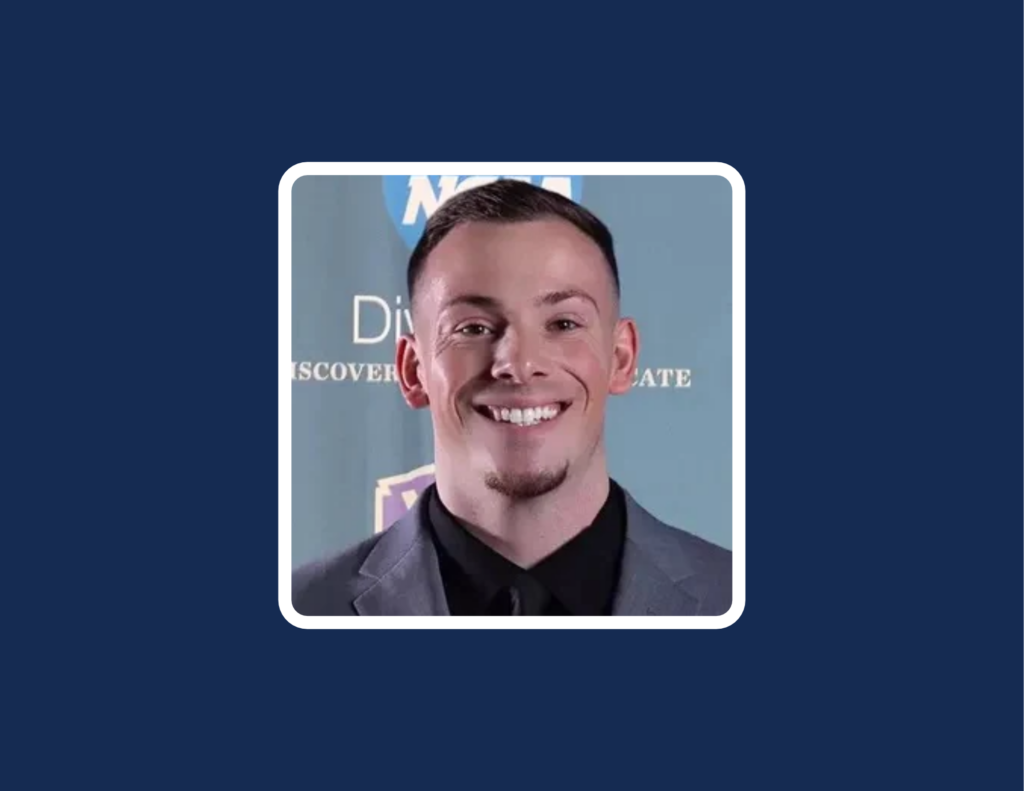
AARON JACOBS – ROCKFORD UNIVERSITY MEN’S BASKETBALL HEAD COACH – EPISODE 1317
Website – https://rockfordregents.com/sports/mens-basketball
Email – [email protected]
Twitter/X – @CoachAJacobs

Aaron Jacobs is entering his first season as the Men’s Basketball Head Coach at Rockford University. Jacobs previously served as the head assistant coach and recruiting coordinator at North Park University under Head Coach Edwind McGhee.
Prior to North Park, Jacobs served as an assistant coach at Wabash College from 2022-24. Jacobs began his collegiate coaching career at Wisconsin Lutheran College during the 2021-22 season.
As a student-athlete, Jacobs competed at Holy Family College from 2017-20, where he helped lead the program to the best record in school history and its first national tournament appearance in 2020. Jacobs later attended Lakeland University, earning a bachelor’s degree in business administration while serving as a student-athlete and member of the Student-Athlete Advisory Committee.
On this episode Mike & Aaron discuss how he rebuilt the Rockford roster that started at nine players into a team with eighteen new faces, including twelve transfers, and shares the daily habits that build trust, from an open-door office stocked with snacks to “family announcements” and a practice plan built around competition. He closes by defining year-one success by habits instead of wins and naming his biggest challenge (building slowly) and his biggest joy (his players), which is essential listening for any coach thinking about the leap to head coach.
Follow us on Twitter and Instagram @hoopheadspod for the latest updates on episodes, guests, and events from the Hoop Heads Pod.
Make sure you’re subscribed to the Hoop Heads Pod on iTunes or wherever you get your podcasts and while you’re there please leave us a 5 star rating and review. Your ratings help your friends and coaching colleagues find the show. If you really love what you’re hearing recommend the Hoop Heads Pod to someone and get them to join you as a part of Hoop Heads Nation.
Grab pen and paper before you listen to this episode with Aaron Jacobs, Men’s Basketball Head Coach at Rockford University.
What We Discuss with Aaron Jacobs
10 Key Takeaways for Basketball Coaches
- Make your office a magnet.
Aaron Jacobs keeps a big couch, water, liquid IV, snacks and protein shakes in his office on purpose, so players have to stop by even when they have no reason to. That is how he spots who is struggling before practice. Build small, low-pressure reasons for players to walk in.
- Greet every player, every day.
During the ten-minute warm-up, Jacobs looks each player in the eye, dabs him up and asks how his day is going, managers included. With 20-23 guys he cannot coach everyone one on one, so this check-in tells him how to coach each person that day and shows that he cares.
- Talk about everything except hoops.
Jacobs asks players for their top three foods in Rockford and bets 10 pushups on who will be last into film. Conversations that “don’t matter” make players feel human, and he says “nobody cares what you say until they know you care.”
- Use daily family announcements to remove guesswork.
Each day the team breaks down in a circle, and players share things like a sick teammate, an MRI result, or Jacobs’s first night in his new house. With twelve transfers and eighteen new players, this builds understanding and means “it’s never a guessing game” where he stands.
- Build team chemistry before you build the offense.
Jacobs’s staff made the team attend every other sport’s events, and the players wrote down goals, fears and motivators. His view is that players first have to like each other, and the court fit is his job. Those answers also tell him how to approach a hard conversation with each player.
- Stage practice in short segments so players can learn.
Jacobs’s plan runs from partner shooting through a perfection drill (make layups at 6 AM), action shots, mini breakdowns, and a kill drill of three stops in a row. Free throws come between segments, with a four-second sprint as the penalty for a miss. He says a long scrimmage is hard to run while so much is being installed, and he does not have the headspace to watch them mess up everything he just taught. Competition runs through every segment, such as compete to ten or first to thirty.
- Define success by habits, not wins.
Jacobs says “you can’t even talk about winning a game until you win all the small battles,” such as being on time, executing a play, not missing a box out, and responding to a bad call. His year-one goals are that seniors graduate with a great experience and that the team gets out of its own way.
- Treat the weakness list as a daily priority.
He says a team cannot be good at everything, so the team works constantly on what it struggles with and keeps growing what it does well. He tells his players to be “elite at the controllables,” noting even the best players shoot only about 50% on layups. He expects good teams to find their stride late, so the nonconference schedule leaves room for error until the conference season starts.
- Collect ideas in a system from day one.
Aaron Aanonsen told him, “Act like you’re in the next chair.” As a GA he saved clips in Google Drive, wrote on the video what he liked, and drew plays in Fast Draw. That folder is the raw material for his own philosophy now that he is a head coach. Every young coach should build something similar.
- Learn from mentors who delegate and let you fail.
Jacobs says Edwind McGhee at North Park gave him recruiting, offense and back-end work, and “a lot of room to mess up.” Kyle Brumett at Wabash taught him that “everything matters” and showed him how hard to recruit, including evaluating early and showing up to games. Jacobs also burned his best player’s jersey in the dryer during his first week as a GA, and Aaron Aanonsen and Sean Smith helped him work through the mistakes. Give assistants real responsibility, because it prepares them to lead.
Like this show? Please leave us a review here — even one sentence helps! Consider including your Twitter handle so we can thank you personally!

XCIV.ai: Game planning for coaches, no film required. No video staff? No problem. Upload your opponent’s box score or a photo of the scorebook (or film, if you have it), and XCIV.ai builds a scouting report, a game plan, and a practice plan. It’s made for high school, middle school, and AAU coaches. Built in Colby, Kansas, XCIV.ai is a corporate partner of the Missouri (MBCA) and Indiana (IBCA) basketball coaches associations. There’s a free plan, and it’s on the iPhone.
Start free: https://hoopheads.xciv.ai
Your first impression is everything when applying for a new coaching job. A professional coaching portfolio is the tool that highlights your coaching achievements and philosophies and, most of all, helps separate you and your abilities from the other applicants.
The key to landing a new coaching job is to demonstrate to the hiring committee your attention to detail, level of preparedness, and your professionalism. Not only does a coaching portfolio allow you to exhibit these qualities, it also allows you to present your personal philosophies on coaching, leadership, and program development in an organized manner.
The Coaching Portfolio Guide is an instructional, membership-based website that helps you develop a personalized portfolio. Each section of the portfolio guide provides detailed instructions on how to organize your portfolio in a professional manner. The guide also provides sample documents for each section of your portfolio that you can copy, modify, and add to your personal portfolio.
Aiming to go D3? The D3 Recruiting Playbook gives you a clear, step-by-step roadmap to the recruiting process – what coaches value, key milestones from early high school through application season, and how to build a target list of schools that fit your needs.
We’ll demystify researching D3 programs and how to stand out without chasing every camp or showcase.
The modules cover things like writing emails to coaches, building an effective highlight tape, using social media well, planning ID camps and visits, and navigating application strategy.
You’ll get templates, checklists, and an outreach plan to communicate confidently, learn how to compare financial packages, and avoid common missteps. By the end, you’ll have a prioritized school list and a decision framework you can use to land your best-fit opportunity.

Give With Hoops is a groundbreaking initiative that fuses basketball analytics with modern sponsorship. Built for teams who see data as opportunity, from AAU programs to college powerhouses.
By tying on-court performance directly to community and sponsor engagement, Give With Hoops help programs raise more while deepening support from those who believe in the game.
Traditional fundraising disconnects donors from the action. Sell candy bars, wash cars, beg for donations, it’s exhausting and ineffective. Players perform better when their stats matter beyond the scoreboard. That’s why Give With Hoops was created.
Give With Hoops connects game performance to community support. Every basket, rebound, and assist becomes a chance to raise funds. Transparent, exciting, and proven to raise 3x more than traditional methods.
THANKS, AARON JACOBS
If you enjoyed this episode with Aaron Jacobs let him know by clicking on the link below and thanking him via Twitter/X.
Click here to thank Aaron Jacobs via Twitter/X
Click here to let Mike & Jason know about your number one takeaway from this episode!
And if you want us to answer your questions on one of our upcoming weekly NBA episodes, drop us a line at [email protected].
TRANSCRIPT FOR AARON JACOBS – ROCKFORD UNIVERSITY MEN’S BASKETBALL HEAD COACH – EPISODE 1317
[00:00:00] Narrator: The Hoop Heads Podcast is presented by Head Start Basketball.
[00:00:20] Aaron Jacobs: It’s really hard to play for a coach you don’t have a great relationship with. That’s important for us is having a great relationship as a group, as a whole.
[00:00:28] Mike Klinzing: Aaron Jacobs is entering his first season as the men’s basketball head coach at Rockford University. Jacobs previously served as the head assistant coach and recruiting coordinator at North Park University.
Prior to North Park, Jacobs served as an assistant at Wabash College from 2022 to 2024. Jacobs began his collegiate coaching career at Wisconsin Lutheran College during the 2021-22 season. As a student-athlete, Jacobs competed at Holy Family College from 2017 to 2020, where he helped lead the program to the best record in school history and its first national tournament appearance in 2020.
Jacobs later attended Lakeland University, earning a bachelor’s degree in business administration while serving as a student-athlete and member of the Student-Athlete Advisory Committee. Coaches, this episode is brought to you by XCIV.ai. You heard founder Zach O’Dell right here on the Hoop Heads pod.
Now, here’s what his team built. You’ve got a game Friday and no time to chase film. Take your opponent’s box score or just snap a photo of the scorebook and upload it. XCIV.ai turns it into a scouting report, a game plan, and a practice plan. No film required. It’s built in Colby, Kansas for high school, middle school, and AAU coaches.
And it’s a corporate partner of the Missouri and Indiana Basketball Coaches Associations. There’s a free plan, and it’s on the iPhone. Go to hoopheads.xciv.ai. That’s hoopheads.xciv.ai.
[00:01:57] Rommel Corro: Hi, this is Romel Cora from the ABA champion Austin Bats, and you’re listening to the Hoop Heads podcast.
[00:02:04] Mike Klinzing: Grab pen and paper before you listen to this episode with Aaron Jacobs, men’s basketball head coach at Rockford University.
Hello, and welcome to the Hoop Heads podcast. It’s Mike Klinzing here this morning without my co-host, Jason Sunkel. But I am pleased to welcome in Aaron Jacobs, head men’s basketball coach at Rockford University. Aaron, welcome to the Hoop Heads pod, man.
[00:02:26] Aaron Jacobs: Hey, Mike. Thanks, man. I really appreciate. I’m glad we could find a date.
It’s been crazy with the move and just transition of everything, and it’s my, been my wife’s birthday, so i- it’s been busy, man, but I’m really glad we could figure out a date and I really appreciate all you do for coaches across all levels. This is a great podcast to be on.
Yeah.
[00:02:43] Mike Klinzing: Absolutely. Appreciate the kind words. And yeah, Aaron and I have been going back and forth with his move and getting a new job and everything else that’s going on as the season’s starting here. So we finally were able to get connected. Looking forward to our conversation, Aaron. Let’s start by going back in time to when you were a kid.
Tell me about your first experiences with the game of basketball. How’d you get introduced to it? What made you fall in love with it?
[00:03:03] Aaron Jacobs: I guess it would start really young. So my first word actually was ball. … My my, my parents like to remind me a lot about that, and it comes up probably more at family parties than anything.
I really got introduced to it though really just through my parents. My, my parents are huge on being active. Like, when I was growing up, I was not able to have like a TV in my room and I was always outside. I was always doing something, right? And so whether that was… when you’re a kid you get involved in everything.
Everything’s awesome, i- is kinda how I like to say. So I was in soccer and baseball. I was a three-sport athlete kid. But as time went on I really fell in love with basketball and the scheme of basketball. So I’d say my parents. My parents really introduced it to me, and they encouraged me just to be active and my love started from there
[00:03:48] Mike Klinzing: As you started to get into the game more, take it more seriously, what were some of the things that you did to try to improve yourself as a player?
And I always like to ask, how does it compare and contrast with the guys that you’re coaching now? Not that you’re an old guy like me, but again, there’s this sort of divide between the way that maybe you grew up in the game, the way your guys that you’re coaching now grew up in the game. So just talk a little bit about your improvement plan, how you tried to get better as a player when you’re a middle school, high school player.
[00:04:17] Aaron Jacobs: Yeah, so for me, I think, and my dad did a really good job of being real with me, right? And I got the short end of the stick. My sister’s taller than me, everyone else in the family is taller than me. I’m a 5’10” – … guard, right? There, there’s, there, there’s a bunch of them. There’s a bunch of them out there.
My dad did a really good job just being honest, right? And a- and telling me in a realistic way of “You have to be able to space the floor. You have to be able to be the smartest guy on the court. You have to pretty much be everything the coach wants. You have to be elite, I would say, at the control holes,” right?
And I’ve kinda taken that into my, in my real world, right? I I’m pretty type A. I take care of a lot of things on my own, right? And I have a lot of oversee kinda everything I do, but when it came to workouts, man I didn’t really, I didn’t have a trainer, right? Obviously it’s a different time, and I’m not that much removed from the game, but it’s very different from what it is now.
I think for me a lot of stuff was, is, was just being really able to make my teammates around me better, right? It… My dad always said “When you’re not, when you’re not making shots, like, how else do you impact the game,” right? And for me, that was the biggest thing, especially being a small guard, is I had to be able to impact the game and help winning in another way when you’re not scoring.
My workouts looked a little bit different. I obviously, I know every every kid that played AU probably has a little bit of resemblance to this of, you got a car ride with your dad and you’re dreading it ’cause you had a bad game. My dad did a really good job though of just being real with me and showing me where I can improve and also what I did well.
So my workouts were really with him, whether that was at the school, whether that was outside i- in my driveway, in my home. That’s kinda what workouts looked like with me, was just my dad
[00:05:47] Mike Klinzing: How scientific were you guys about what you were working on in terms of planning it out and thinking ahead?
Or were you just kinda getting on the court and figuring it out as you went?
[00:05:56] Aaron Jacobs: For me, i- it was kind of things that things that we focused on were catch, shoot threes. Now, our driveway’s a little bit funky. It’s just one left side. So it’s on an incline, so I can only shoot on the left side of the floor.
It’s funny ’cause if you put me on the floor, the left side of the floor, I shoot so much better than the right side which is hilarious, just from growing up. But with that being said, a lot of stuff that we did was yo catch, shoot threes, ball screen reads and then the last thing was really just free throws, right?
My dad was huge. My dad threw on me all the time free throws. I remember this today I would shoot free throws and as a kid it really upset me. My mom would just come outside, right? And she… My mom was doing something, right? Whatever it may be, she’d come outside and she’d just count, “Oh, for one.
One for two.” And I was just like, “Where did you come from?” Why are you doing this?” Those are some things I remember. That’s really what it was. Nothing crazy. I know now there, there’s so many different trainers involved and so many things that are a little bit more detailed.
For me it was just a love for a game and my dad putting me through whatever he thought was best at that time.
[00:06:49] Mike Klinzing: What’s your favorite memory from being a high school basketball player?
[00:06:53] Aaron Jacobs: That’s a great question. Wow. I w- I would say my, my favorite memory i- is probably my s- my sophomore year.
We had an older team. We had a bunch of seniors. We won. And this is just, it’s so- it’s something that we were really good my sophomore year. But I would say the biggest thing was just cutting down the net, right? And I didn’t have a huge piece of our sophomore year. We were really senior-heavy.
We had some guys that were really good, but just piecing that down, right? W- winning conference having a setback and knowing that all the things that we’d put, that we were doing and Coach talked about paid off, right? And that was the first time where delayed gratification really hit for me, right?
And I knew that, things that Coach was talking about early it translated, right? I learned a lot my sophomore year. And it was great to see it all pay off.
[00:07:38] Mike Klinzing: When you think about college basketball as a young player, was that something that was always on your radar? Was that a dream?
I know you talked about your dad helping you to kinda have a realistic view of yourself as a player, which as you well know, that’s not always the case with parents in the basketball world. Yeah. Yeah. A lot of times they’re not realistic about the level that their kid is and where they can play and that kinda thing.
So just talk a little bit about the college basketball, just sort of aspiration for you, and then how that led into kinda your recruitment and ultimate decision.
[00:08:11] Aaron Jacobs: Yeah. So I think I think for me, like I knew, my high school career didn’t necessarily go the way I wanted it. I had a, I had an okay high school career.
Got hurt, banged up. We had a lot of guys like transfer my senior year. It w- it was not necessarily ideal for my high school career. I knew I always wanted to play college basketball. I think for me the biggest thing was I knew that I had to take a really big jump going into college.
Being an undersized guard, being small I knew I had to take a really big jump. And for me, especially when I got hurt my, my, my senior year and tore my ACL, like it was completely derailing to kinda understand that. And the reality is and I tell my guys all the time I’m a small 5’10”, not super athletic guard, right?
So- … i, I just knew for me that I had to take a big stump step, excuse me. I, I knew also the reality though, like this is what kinda was the plan for me, and necessarily if I had a great college career or not I knew I always wanted to be around the game. Like even when I was growing up I actually kinda leaned more in wanting to be the athletic director side of things.
As time kinda went on and on I think the reality of where does the satisfaction come from in being an AD? Like bus schedules and stuff, that does not ne- necessarily sound appealing to me the older I got and kinda transitioned to being just a coach per se.
[00:09:27] Mike Klinzing: When you went to school, did you– were you thinking about coaching while you’re playing? Was that something that was on your mind in addition to, as again, as you said, you’re thinking about the AD piece of it, and I completely understand the idea of, all right-
[00:09:40] Aaron Jacobs: Yeah …
[00:09:41] Mike Klinzing: obviously coaching, you have the wins and losses, the competitive side, which on the AD you don’t maybe get necessarily as directly.
But just what was your mindset as you went into college thinking about career? Was coaching sort of the direction you were headed, or were you like most 18-year-olds, like, “I have no idea what I’m doing”?
[00:09:55] Aaron Jacobs: I kinda always knew to be honest with you. I’m a hoops junkie, man. I love this. I really love this.
My wife probably gets so annoyed with me ’cause no matter what basketball it is, I’m going to turn it on, right? If my cousin, like six arrays a game, like I’m there. I’m coaching him. Like I’m excited for it, right? I, I’ve always known. I’ve alwa- I’ve always loved basketball. Basketball has brought me so many different relationships and so many great things that kinda transpired in- into the position I am today.
So I knew I was getting into coaching. I didn’t necessarily know what level or what it was going to be, but I knew I would always be in it even if it was AU or whatever that kinda may be
[00:10:31] Mike Klinzing: So as you get closer to the end of your playing career and you’re looking at, okay, I’m going to graduate from Lakeland, I’m trying to figure out, hey, what is it that I, what is it I want to do next?
Who are the people that you’re talking to in the coaching profession that are acting as your mentors? What’s that first coaching search look like? Just walk me through the process that you went about in order to be able to get a coaching job. ‘Cause we all know it’s not easy, right? There’s a million guys out there that want jobs.
There’s not that many jobs out there. As you said, trying to figure out what level do I want to coach at. There’s obviously, you can go to high school, you can go to college, then there’s all different levels within that. So just talk to me about the process of that first job search after you graduate.
[00:11:14] Aaron Jacobs: Yeah. So my path was a little bit different. So when I graduated, it was kinda like the beginning of the COVID situation. It was really odd. I… In college I lost my dad to a heart attack. And so my mom was a widow and didn’t work for 18 years which is a really long time. My main priority a- and just to be honest with you, too, I kinda thought that my, my head space was go home and go back to Rockford, take care of my mom, and a- and go from there, right?
A- and that’s what I did. So I went back home. I, I went back home. I actually got, I got a job at, at Enterprise. I worked at Enterprise, which is crazy ’cause it’s actually eight minutes away from here. And I did it for about two months and I, and, during that time I was miserable.
I hated it, right? But I knew I needed to take care of my mom. I knew this was, this was the ideal 9:00 to 5:00 situation, but it wasn’t for me and when I was doing that, I was still involved with working guys out and still being around the game. During that time and me being miserable, Sam Schroeder, who was my coach at Lakeland, reach out to me about, about, being a graduate assistant.
One of his close friends who was by the name of Aaron Onson at Wisconsin Lutheran College had, had a opening, and I was like, what is, what does the money situation look like?” Milwaukee’s not far, but I need to make sure my mom’s okay. I need to make sure mom’s taken care of and everything like that.
Told me what all the details were of a GA, and at first I was like, “No, absolutely not.” I’m pretty much working for free. School is great, but no. No way, I’m not doing it. And then just Sam did a, an amazing job of just being real with me and knowing that I didn’t love what I was doing.
I was doing it to help my family and during that time my mom was a huge piece in me being like, “Hey, follow your dream. I’ll be fine. I’ll be fine. Go follow your dream and do what you want to do.” And that, that’s when the switch hit and I was like, “Okay. Yep, like I, I need to do what is best for me and I have full support from my family.”
Ended up taking and interviewing and going to work for Aaron Onson at Wisconsin Lutheran College which was phenomenal. I was there for about a year. He taught me so much. But it was great, man. It was absolutely phenomenal time there. It’s crazy, ’cause my last game when I was at Lakeland was actually at WLC.
So it’s just funny how tho- those things kind of work.
[00:13:24] Mike Klinzing: Did you know right away when you took the job after a week you were like, “I found the place that I’m supposed to be”? Obviously you didn’t find that at Enterprise, but did you know right away- Yeah … when you’re for a week you’re like, “This is where I’m supposed to be”?
[00:13:35] Aaron Jacobs: Yeah. And I knew I always wanted to give back to coaching or being, being around it. I still was around it, just not at the level that I wanted. I think at the end of the day I was trying to take care of my family and, but like it was a no-brainer. Once I got into it I was like, “Oh, yep, like never going to do anything else ever again.”
So yeah.
[00:13:53] Mike Klinzing: When you think about yourself as a coach, and then you think about the influence that your dad had on you, and obviously the amount of time you spent with him through coaching, him coaching you and working you out, and just again, all those car rides, and I know what all that’s like with with my own kids.
And so when you think about yourself as a coach and all the time you spent with your dad, what are some… a characteristic or two that you took away? When you look at yourself now, you’re like, “Oh, I can see my dad in this part of my coaching style- Yeah … or my philosophy or whatever.”
[00:14:28] Aaron Jacobs: Yeah, I think man, a- as coaches, we get so caught up in like half of coaching is reactions, right?
A- and reacting to things that happen on the floor and your team responds to that, right? It could be in a good way or in a bad way. I think something that I do really well with my team is most of the time coaches just yell. You need to teach all the time. You’re a teacher of the game, right?
And you have to talk to different guys differently, coach guys differently and I think I do that very similar to what he did, right? I do a really good job of like having great relationships with my guys and most of the time yelling isn’t really beneficial unless we’re trying to raise the intensity or unless we’re trying to get through to one individual guy.
But most of the time guys need to be taught ’cause they don’t know, right? So for me, that’s something that definitely carried on from my dad and something that I will continue to do
[00:15:15] Mike Klinzing: Yeah, it makes sense. And I think the relationship piece of it is critical and it’s super important. And I think whenever you talk to coaches that have had success, I think that relationship piece is where it starts, and then everything else builds from there, right?
Getting to know your guys a- and really investing in them. How do you go about doing that day to day? And I know it’s different head coach versus assistant coach. Yeah. There’s layers to it in terms of building relationships. But just how do you think about that on a day-to-day basis, building that relationship v- versus doing it, let’s say formally, like sitting down and having, “Hey, we’re going to have a formal meeting once a week,” versus just grabbing guys and talking to them during practice or, you know- Yeah
catching them before or after, p- guys popping into your office. Just tell me a little bit about that relationship- Yeah … building and how to go about that.
[00:16:01] Aaron Jacobs: So I think that’s the biggest thing that we’ve really tried to push through. And my assistants, man, they do a phenomenal job of doing a lot of back-end work that I don’t see.
I’ve been really fortunate to have especially at such a late time, have guys that are phenomenal. And with that being said, though we have a, we have an open door policy. Our open door policy is, And I know all coaches say that, but my guys come in a lot.
We got a big couch in my office. We got a bunch of chairs. My guys come in a lot. We got water, snacks. You would be surprised by having water and snacks. It forces guys to come in all the time. Like we keep our fridge stocked with protein shakes and waters in my office, and we do that specifically ’cause guys have to see me all the time, even if they don’t, right?
‘Cause they’re never going to say no to a water or liquid IV- … or a snack or whatever that may be. That’s something that kind of forced them, a- and I think it helps us to feel them out for practice, right? And know like some guys are struggling, some guys, you know what- whatever that may be.
And we meet them there, right? We meet them there a couple other things that we do as well is every day when guys are stretching, warming up, I give them about 10 minutes to warm up. I look each guy in the eye and I dap ’em up, and I go each, every single guy, every single, every…
whe- whether it’s a manager, no matter who it is, I’m just like, “Hey, let’s have a great day. How’s your day going?” Every single guy, right? They’re hearing from me, they’re having one-on-one time. It’s a really good time for me to feel out how they’re doing a- and need to know how I need to coach them for that day.
And I think at the end of the day as well too it shows them that I care, right? Like we have a roster of 20, 23 guys a- and the reality of it is I coach all of them, but it’s harder to coach them all one-on-one. It’s just not reality, I think that really is a huge separator for them, knowing that I care.
And then the other thing, man is I try to really talk to these guys about everything other than hoops, right? I w- no matter who, no matter what it be, right? 20 minutes before practice is when guys are expected to be here. And I ask them things all the time, right?
“Hey,” “Top three favorite foods in Rockford so far. What’s your restaurants?” I know yesterday yesterday we had film after practice, and I said, I asked a couple guys like, “Hey, let’s make a, let’s make a bet for 10 pushups. What’s, who do you think’s going to be the last guy that’s going to be here, right?
Walking to film, and what time?” Having a lot of conversations outside of hoops, right, and things that necessarily don’t quote-unquote “matter,” ma- makes them f- feel more human, right? This is definitely, unfortunately it is a business, right? And this is my coaching career, and I’m blessed that it puts food on the table a- and all that stuff.
But at the end of the day, it’s all about the relationships and the people and transforming young men. Those are some of the things that we do. And then the last thing is we do family announcements every single day, right? We break it down in our circle. We have family announcements, and it can be anything.
Our family announcements today was we have one guy that’s sick, we have one guy that got results back from his MRI and then the last thing was I just spent my first night in my new house, right? A- and then I give them things to say as well. “You guys have any other family announcements?”
And it can be good, it can be bad, but it kinda lets the whole team know where we’re at, right? And it… we try to communicate at an elite level so that there’s no miscommunication or misunderstanding. And I think it’s been re- it really pays off, right? We have so many new guys.
We have 12 transfers, which is a lot. But we’ve done a really good job of just opening and being honest and communicating. And my guys aren’t always happy with me, right? But they always know how I’m feeling. It’s never a guessing game. I don’t play the mind games. My guys always know how I’m feeling ’cause I’m going to tell ’em
[00:19:20] Mike Klinzing: That communication part of it covers so many different things, right?
When you talk about just getting to know guys, and not only for you as a coach to know them, but also for them to know their teammates and to be able to have an understanding of what guys may be going through. I think that’s always an important piece of feeling connected, especially as you go through a season and- Yeah
the season’s going to inevitably have ups and downs, and things are going to be going well, and then all of a sudden things are going to be maybe going not so well. And when you’re- Yeah … together, you understand your teammate’s story It makes you, I think, a lot more invested in playing for that guy who’s next to you.
And I think when you have a roster that is the size that, you have of 23, I think that’s one of, again, always the challenges in Division III is figuring out what’s that ideal roster size.
[00:20:06] Aaron Jacobs: Yeah.
[00:20:07] Mike Klinzing: Because, again, you can go where you have a, a, a big roster, and then it’s hard for guys 22, 23 on your roster who probably are going to have a hard time cracking the lineup or getting on the floor at all.
Yeah. And even trying to find practice time for guys 22 and 23. Yeah. I’m not telling you anything you don’t know. Like that, that’s tough. And so-
[00:20:26] Aaron Jacobs: Yeah …
[00:20:26] Mike Klinzing: to be able to build those relationships, I think helps. And so it’s all a part of that process of putting a team together, especially as a first-year coach and, again, with new guys- Yeah
and all that stuff, that, that communication and getting an understanding of one another, I think is really critical. Let’s work backwards to Wisconsin Lutheran. Let’s go back to the beginning, kind of your career. We’ll work our way back up to some more questions about Rockford and what you’re doing to build the program there.
But at Wisconsin Lutheran in your first year, when you walk in there, what’s a strength that you feel like you had right away as a coach, and then what was something that as you look back now, you’re like, “Eh, maybe that was an area that I really had to, I really had to dive in and improve on”?
[00:21:06] Aaron Jacobs: Man, it’s a great question.
I think the biggest thing was just the relationship piece. I’m a relationship guy. If you ask all my former players and current players I love– I’m a people person. I love people. I love relationships. I love everything that comes with it, the good and the bad.
So recruiting was definitely, I would say, a strength of mine, just being able to meet guys where they’re at and relate and show them what WLC had to offer. On the flip side of things man, I was, I really struggled to manage everything and be organized and all the back-end work, right?
Which sounds funny as a GA man, Aaron Onosen and our assistant at the time was Sean Smith, two guys that completely e- elevate everything I did, right? And those guys are phenomenal coaches, and they really poured into me and are the reason that I’m a head coach now.
But man I struggled. I really struggled. I remember burning our… I burned our best player’s jersey. I put it in the dryer not knowing it’s my first week on the job. I had no idea. We had media day the, that weekend. Just y- you had no idea, right? And Aaron Onosen and Sean Smith, they did a phenomenal job of helping me work through mistakes, right?
And that doesn’t necessarily mean I didn’t get told what was wrong and I didn’t hear about it, right? But they really helped me bloom, right? And helped me work through that stuff and were absolutely transformational i- in me being com- becoming a head coach
[00:22:25] Mike Klinzing: I think all those things, when you get an opportunity to do some of that stuff that everybody has this vision, right?
When you’re outside the profession of what coaching, especially college basketball coaching, is all about. And one of the things that I think always comes up in conversation whenever I’m talking to guys is that people have no idea, who are not coaches, how much time you spend doing things other than coaching basketball, right?
Yeah. You talk about just doing the laundry, and there’s obviously a million things administratively and whatever that coaches have to do. And I do think that when you start out in a position where you have to get your hands involved in a lot of those things, it helps you as you move forward in your career.
I’ve talked to so many guys who have had those initial experiences where, yeah, I had to be the one that was making sure that we had reservations at the restaurant, and I had to make sure that we were getting all the bus and transportation for them, so we had all that put together, and we’re making sure that we’ve got the gym and this and game day operations, and all the things that go into running a good program that people don’t even see.
And so I think for you to be able to have some of those experiences, I’m sure was valuable at the beginning of your career, and then you just kinda start to grow into, you take your strengths, and you keep amplifying them, and then you look for, hey, what’s some areas where I can grow? Yeah. And you keep on doing that.
After that first year at Wisconsin Lutheran, then you get an opportunity to go to Wabash. Talk about how that came to be. How’d that opportunity come across your desk?
[00:23:49] Aaron Jacobs: It, basketball, man, it makes the world so small. Coach Aaron Oddison, who obviously knew Sam Schrader, was my old coach.
Coach Oddison and Coach Kyle Brummett, who’s head coach at Wabash were connected and knew each other and, Both of them were both at Lakeland University, which is where I played. Got connected through them. It was really late in the process. Actually I accepted a job as an assistant coach for Wabash.
Did well in the interview and then ended up working for Kyle Brummett for about two and a half. It was like two and a half years. I had a phenomenal, man, I learned so much, right? And Kyle Brummett is a phenomenal coach. He’s won a whole lot. He does a really good job of raising the intensity level in, in practice and in raising the standard in everything he does.
He’s really someone that taught me what the urgency level looks like to be successful. He is absolutely phenomenal coach of raising the urgency level in everything we do, whether it’s film we’re in, whether it’s film, whether it’s class, whatever it may be, is everything that we’re doing is, it has to be at a really high level.
He taught me that everything matters. And I think before working for him, I didn’t necessarily know what winning at a really high level necessarily looked like until, I learned a lot from him
[00:25:05] Mike Klinzing: When you start going through your various stops as an assistant coach, and you’re a couple years into your career now, and you start thinking about from an X’s and O’s standpoint, was there one area, one side of the ball, one particular thing that you started to gravitate towards that, “Hey, I’m going to grab onto this and it’s going to be my thing”?
In other words, offensively, defensively, is there a certain scheme, something that you like? You’re a, you’re an out of bounds, underneath play guy. What’s y- what started to become your specialty or what did you really start to dive into from an X’s and O’s standpoint? Yeah.
[00:25:40] Aaron Jacobs: No it’s funny, man.
It’s I… When I was with Coach Onsen at WLC, he is a phenomenal offensive-minded coach, like elite, next level. And then obviously I didn’t take as much of the things that he did offensively. Part of it was too ’cause I was just so green and didn’t necessarily know at that time how high level of stuff he was running.
I went to Wabash. I really transitioned more to we were really efficient on the offensive end. And I was able to work with Assistant Pat Sullivan, who is now at Allegheny College as the head coach, and then Kyle Brummett was obviously the head coach. And those guys were really good about just always looking for advantages, right?
Like they called advantage-based basketball and being really efficient. And like we’re elite at the details of holding guys off and timing. And I really learned a lot on the offensive end and X’s and O’s from them and looking for small advantages all the time, whether that be in fast breaks or ball screen constantly, whatever that may be.
So I learned a lot from those guys. They taught me so much and I think I really clinged on to a lot of things that, that we did offensively when I was there, and they’ve stuck with me. We do a little things a little bit differently with with wrinkles and o- wrinkles offensively.
But I, I would say those are some of the things I took away the most from them at my time at Wabash.
[00:26:51] Mike Klinzing: Ever since I founded Head Start Basketball in 1993, we’ve helped young players develop their skills, confidence, and love for the game. Now we’re partnering with coaches and athletic programs to bring the Head Start Basketball camp experience to new communities.
Our camps run for five days, three hours per day, and serve boys and girls in grades one through six. You or someone on your staff directs the on-court portion of the camp while Head Start Basketball manages registration, promotion, parent communication, T-shirts, trophies, website setup, and administration.
There are no upfront camp planning headaches, and the profits are divided 50/50 between your program and Head Start Basketball. If you want to reach more families or strengthen your youth basketball pipeline, or just create additional revenue for your program, visit headstartbasketball.com to explore hosting a camp How did you start to gather things that you felt were going to be important for you as you look towards maybe at some point get an opportunity to be a head coach in your career?
How did you gather film clips, ideas, thoughts? Are you a Google Drive guy? Are you a, “I got notebooks”? W- what was your process for kinda putting together things that were going to become Aaron Jacobs’ philosophy-
[00:28:04] Aaron Jacobs: Yeah …
[00:28:04] Mike Klinzing: as you move on in your career?
[00:28:05] Aaron Jacobs: And this is something that Aaron Onstott taught me is, and man, credit to him, man. I’m going to talk about him probably all day ’cause he would he really poured into me, right? And so did Shawn Smith. Those guys are phenomenal. And they just Aaron always, Aaron Onstott always told me to just act like you’re in the, the next chair.
He would always tell me that. And as a two-week, two-week-old NGA, I was like, “Man, what? I don’t even know what’s going on,” right? “I don’t even, I don’t know what huddle camera is. I don’t know what anything is right now.” And he always continued to told me, tell me that, right? And I would just I would collect things that I liked and I would put it in Google Drive.
I still have a folder today of kinda everything I liked, whether it was something that we did well offensively. I would cut it up, I would put it in Google Drive. I would add most of the time I would add video in there, and then I would write it on the actual screen of what it was, so I have that clip and edit with my phone.
And then if I wanted to draw it out, I would draw it on my own as well and a- and add it via FastDraw. That is kinda how I started collecting things. Whether it was practice plan, whether it was everything, I did all of it on Google Drive and kinda kept me organized and knew what I wanted to eventually put together when I was head coach
[00:29:13] Mike Klinzing: I think it’s always interesting to hear how guys go about doing that, right?
And it’s one of those things that, as you said, when you’re young and you’re first getting into it, I think you’re just swimming, trying to figure out like, “Hey, how do I- Yeah … how do I keep my head above water?” Yeah. And then eventually as you start to get into your career and you realize, hey, like I have so many opportunities to learn from so many great coaches that you have an opportunity to work for, right?
And you want to take those things. And we all think we would remember, hey, I know I’ll remember this, or I know I’ll remember that, and then two weeks later or a month later, you’re trying to think back and, So I think always, like collecting it and writing it down- Yeah … putting it in a drive or whatever is always critical.
For any young coach out there, if you’re not coming up with some kind of system that works for you to keep things and collect them and start to put it all together, ’cause then eventually if you do get an opportunity to run your own program, now you’ve got this stuff that you can go back to, things that you’ve built and accumulated over time that can now mold into, you’re taking pieces from everybody that you worked for, and now you’re starting to put that into your own philosophy and seeing what that looks like.
So one more stop before Rockford. You go to North Park. Obviously, you get a chance to coach in the city of Chicago. Edwin McGee, guy that I had on the podcast a couple years ago, really a good coach. Talk to me about how you got to work for Edwin and what that was like.
[00:30:30] Aaron Jacobs: Yeah. I got connected with Coach McGee.
I- it’s crazy, man. So before I was at Lincoln, I was at an institution called Holy Family, which was an NEI that unfortunately closed. Actually played against Coach Ed when he was a coach, an assistant at Lincoln, which was an NEI school. So I had a little bit of familiarity with who he was through that.
And and then the guy that I worked with at Wisconsin Lutheran College, who was Sean Smith, he he got the head coaching job at North Park, and his assistant was Edwin McGee. So Edwin got promoted to the head coaching job whi- which was phenomenal. And then obviously basketball’s a small world.
I got connected with Coach Ed a- and worked for him for two years and he gave me a, a really good opportunity the opportunity to come closer to home. Ed’s a really good coach. He does a really good job of building authentic relationships. He gave me a lot of opportunity to recruit the guys that I wanted.
I got… I was recruiting coordinator and he gave me a huge say in, in what we did on the offensive end. And by the time we both left North Carolina, we were scoring 86 points a game. And we did a really good job of putting the pieces together. There was a lot of times where it was me and him and our GA, Jalen Boyd, in the office and we’re trying to figure it out.
I appreciate him a lot for kind of giving me a first look at being a head assistant in a great conference in the CCIW and allowing me to lead, lead the recruiting and run a lot of what we do offensively and tweak it and mess up. He gave me a lot of room to mess up and to learn and yeah he’s a huge reason as well as why I’m able to be a head coach now
[00:31:58] Mike Klinzing: On the recruiting side at those three different institutions, talk about how it’s the same, and talk about how it’s different at each one of the schools that you’ve been in terms of what you had to do to recruit.
Obviously, just the location- … of each one of the schools is different. Just talk about your evaluation process and how, again, the recruiting similar and different at each one of those schools.
[00:32:20] Aaron Jacobs: It’s very different. All three of those schools I would say are completely opposite to be honest with you.
So we’ll start with Wisconsin Lutheran College. Obviously being a Lutheran school it is a little bit different. Obviously it’s in Milwaukee, which is a great location. So we’re really looking for the right fit, I think is the most important thing. It is also a pretty good institution as well when it comes to GPA requirements and things like that.
So navigating the recruiting process with that was a lot of guy- guys that were right fit, right? Obviously it’s a huge school like Sheboygan Lutheran, all the Lutheran schools that are in Wisconsin, it’s a great funnel school for those potential student athletes.
Looked at a lot of things like that. Obviously like Wiscon- Wisconsin Lutheran, the high school was down the street, which is really cool. And then through connections that Coach Smith and Coach Johnson built our, is kinda what our funnel was. Coach Johnson has a really good rep in Wisconsin for recruiting good players and more importantly, winning, right?
Does a great job with having good guys that buy into what he’s trying to do. When I made the transition to Wabash it was different. Obviously it’s an all guy institution which is very different. In, in Crawfordsville, Indiana which is not the biggest town the town does a great job of really loving what Wabash has going on, but when you go to Walmart or when you go to Schnucks, like everybody knows who you are, right? I couldn’t tell you how many times I went to Schnucks at 9:00 or 10:00 “Hey, Coach.” I’m like, “Hey.” Not necessarily sure who that person was but the support there is, is phenomenal, and part of that is what kinda Coach Brum built among- amongst his time there. But when it comes to the recruiting side of things a- again, Coach Brum did a really good job of having connections with all the high school coaches. Like I learned so much from him on calling high school coaches all the time and making relationships with them because he kinda already had the pathway for it.
We recruited a lot of Bigger schools, HSC was a school that recruited from a lot a lot of bigger schools in Indy or in Brownsburg area or places that are really within an hour and 30 radius that are bigger schools that have won, that have been successful, even if it’s not necessarily the best player on the team, but guys that know what winning looks like, and I learned a lot from Coach Brum on our recruiting strategy and he was pretty confident in knowing in what guys that we were going to go after. We did a great job of evaluating early and showing up all the time. He’s one of the best head coaches I know that he kinda taught me how to do this is like he recruits really hard, and as a head coach, showing up for a high school kid’s game, that means a lot, right? And the second thing he taught me was just we evaluate all the time, I would go to watch a high school kid’s game, and we’d be texting our group chat on what’s going on, and I’m keeping stats of the kid on my phone, right?
And and it helps us to continue to evaluate. I think the biggest thing with Coach Brum was like are guys continuing to get better throughout the season, right? And that would help us evaluate what our team’s going to look like next year if they come in, and if we need to go on someone different which was really huge for me in learning.
And then my last stop before here was North Park University, which obviously is in the city. That was really different as well just ’cause we were really transfer heavy, right? And North Park does a great job of having transfer packages and they do a great job of it’s a different feel when it comes to being on campus.
The, the campus is great and but it’s in the city, right? And that’s necessary- not necessarily s- the most appealing thing to high school kids and more specifically their parents, right? So for us something that we targeted was getting older guys that have experience, and that knows what college basketball looks like and recruiting them hard to kinda plug in some of the pieces that we need to be successful, and that doesn’t mean that we didn’t recruit high school kids, but we recruited high school kids that kinda made sense for us. We recruited a kid that was from Marist and started for us actually last year, and it was a no-brainer, right? They won a lot at Marist. Coach shines just a great job there, and he knows what the expectation of winning looks like
[00:36:19] Mike Klinzing: Did guys immediately, when you start talking to them, obviously there are some guys who want the city, and then there are other guys who clearly don’t want the city.
Did that make it almost easier, where you could just have a conversation right out, “Hey, are you interested in coming and going to school in the city of Chicago?” And some guys are like, “Yeah, absolutely.” And I’m sure there were other guys that are like, “Eh, I’d rather have a more-” Yeah … whatever, traditional campus experience.
Did you find that to be a- Yeah … hey it’s either hit or miss, and we can either get this guy or we can cut bait immediately ’cause it doesn’t seem like he wants to come to the city?
[00:36:49] Aaron Jacobs: So I think so. I… It was two or three things, excuse me. The two things was, obviously, do you want to go to North Park and be in the city, right?
That was the first thing that you just talked about. And then the second thing was, like, our play style was very unique. We pressed, we switched everything. We played 10 guys. We played a little bit deeper. That is not necessarily a fit for everyone. So those are really the two things that we were looking for.
And if they didn’t fit those two things, most of the time they weren’t necessarily our guy, so that helped really eliminate who we were going to go after hard and who we weren’t, but you’d be surprised by, Unfortunately sometimes kids don’t know what they don’t know, right? I’m not blaming them, but most of the time kids would be a little bit reserved from being in the city, and then they would come and see it and love it, right?
You really just don’t know until they take a visit, and then that kind of tells you all you need to know.
[00:37:40] Mike Klinzing: Yeah, that makes sense. At this stage of your career, so going back to last season, are you actively thinking about pursuing head coaching jobs at that point? What’s your mindset as far as, “Hey, I’ve been in my career for a few years.
I’m still a young guy.” Are you thinking, “I feel like I’m ready.”? Does the Rockford opportunity just come out of nowhere? Explain to me how you go from where you were at North Park to the opportunity at Rockford. Obviously being, again, close to home clearly was a positive for you, but just tell me how that opportunity dovetailed with what, where you were at mentally in terms of your process of going through your career.
[00:38:25] Aaron Jacobs: Yeah. I think the b- I was ready to take that next step in my career. I knew I always wanted to be a head coach. Some people that were in my circle knew that I wanted that really bad and knew that I was trending, that I was ready, I was ready. And I think the, the funny thing is you’re not really ever ready unfortunately, to be a head coach.
I don’t care how many years you are as assistant, but the really, the biggest thing is just being… Y- you’re managing your own company as a head coach, right? Whether it’s the people, your brand, how you communicate with people, the representation. You’re, it’s your own company, right? And I knew that, that was a strength of mine, right?
And strength of managing people and talking to people in different ways and a- and getting things to click and teaching them. And when I was working for Coach McGee at North Park, he did a great job of of helping me learn becoming a head coach, right? He talks about it all the time, is he would give me a lot, and he would delegate in a way that prepared me to be a head coach.
Whether it was scheduling, whether it was doing maybe some of the backend work that you don’t even know that you have to do as a head coach, which by the way, is a lot. And so I knew I was ready, right? I k- I knew I was ready and Coach McGee did a great job of continuing to instill that I was ready, right?
I think when you are a head coach, sometimes it feels like you’re on an island, right? It’s you verse the world, right? And but he just did a phenomenal job of continuing to instill confidence in me, and not that I ever doubted, but just getting the best out of me, right? And people in my circle did as well.
And when the opportunity came for Rockford, I was looking to take that next step, right? The opportunity came through somebody that was in this league that I have a great relationship with. Knew that I was going to apply for it and reached out to me, and a couple other people reached out to me as well, and I contacted the AD b- before it, it really even got open and it went from there.
So I was persistent. Obviously, it’s home. I- it’s what I know. And then when it comes to support system of my mentors and the people that are in my circle, the support and the help to get me this job was absolutely phenomenal
[00:40:23] Mike Klinzing: What was the most fun part of the interview process for you?
[00:40:26] Aaron Jacobs: Man, that’s a great question. I think for me was with the guys, right? Like what being with the guys. The interview s- part is pretty… I wouldn’t say standard, right? I think it’s a really gruesome day. You’re there from 8:00, and you don’t necessarily get done till 5:00 or 6:00, right?
Depending on what that day kinda looks like. But being with the guys, right? You can really tell the culture of a team from the last coach based on the guys, right? And first and foremost, like Coach Rigell did a phenomenal job here at Rockford. He has absolutely phenomenal people.
And I knew that right away talking to some of those guys, that they were good people and they were doing things the right way. And I think ultimately that’s what attracted me more to this job is having good people and knowing that he did a great job of recruiting good people in a program and was able to win with those guys
[00:41:14] Mike Klinzing: What questions did you have for the AD, the president, the interview committee at Rockford about the job?
Things that you wanted to know were going to be in place or things that you could count on if you were going to take the job. What did you want to know about them? Obviously, we always think of the interview process as them wanting to get to know you-
[00:41:34] Aaron Jacobs: Yeah …
[00:41:35] Mike Klinzing: as a potential coach, but what did you want to know about them?
[00:41:37] Aaron Jacobs: I asked a lot about the support system of what it’s like to win. I think that’s the biggest thing as… and my AD is phenomenal Jess Stanica, a- and she really supports what we’re trying to do here, and she’s been– she’s going to continue to help. And I think when you’re talkin’, when you’re talkin’ and asking questions they, you need to know that she has your back, right?
She or he has your back. And I know that my AD has my back, right? And she supports me. She doesn’t necessarily probably always agree with some of the dumb mistakes that I’m going to make and will continue. But I know that she supports me and has my best interest forward, right? And that was something that I really needed to know, especially as a young coach that’s going to make mistakes.
And then a couple of the other things that I asked were kinda obviously about the admission requirements and standards, and I was just thinking the whole time “How am I going to get guys in?” “What does it look like?” A- and all that stuff, and, “Am I going to be able to get transfers in?”
So I asked a lot about support system here, which I knew from obviously the community, but I didn’t know necessarily the institution-wise itself. And then the second thing that I asked a question about was the process of getting people to come to the institution, right? A- and what that kinda whole process looked like, and how fast we can make things happen here.
[00:42:47] Mike Klinzing: What was the conversation with with your wife after you go through the interview process and you and her sat down and kinda talked about… Again, obviously, there’s decisions to be made around not just the basketball side of it, but there’s the life side of it. So what did that conversation sound like?
[00:43:02] Aaron Jacobs: Yeah, man and my my, my wife she understands it. She played at Western Illinois. She played volleyball at Western Illinois, so she’s been around sports her whole life. She’s so much better an athlete than I ever was first. But she understands what coaching is, a- and she understands how much this means to me and how crazy I am about it and how much I love people and this is mission work for me, right?
At the end of the day we talk about all the time coaches get in the way. I tell my assistant all the time “Man, we’re getting in the way,” right? Yes, we had a bad practice, but we take small things that we’re doing to get better, right? And at the end of the day, we’re trying to graduate great young men, and, like, when they get married, I w- I want the most important thing is that I’m getting FaceTimes from them, and I’m getting calls.
My, my wife knows. My wife knows what it is, and the conversation we had was wa- was a tough conversation. We bought a house in the city. We were about a mile away from North Park, and I was walking to work every day, and life was great but the opportunity to come back home and to become a head coach was a no-brainer, and my wife knew that.
That, that certainly didn’t mean that she wasn’t frustrated at times, but she knew it was best for me in, in the long run and best for us as a family. My wife sacrifices so much for me to be in this position. She does a, she has a great job. She supports me, and she probably hears too much about how good or bad practice was.
But at the end of the day, she is a, she’s the backbone of our family and is a huge reason of why I’m able to do what I am today
[00:44:28] Mike Klinzing: Having a good spouse when it comes to coaching is so critical. Having somebody that has an understanding of what it takes to be successful. ‘Cause we all, as we all know it’s not an easy it’s not an easy job on, on either side of it.
It’s not easy on the head coach or the assistant coach, whatever it may be, and it’s not easy on their spouse, because the amount of time it takes to be able to be successful-
[00:44:48] Aaron Jacobs: Yeah …
[00:44:49] Mike Klinzing: anybody who’s in the coaching profession understands that you don’t win and have a successful program working six-hour days.
It just doesn’t. Yeah. It just doesn’t, it just doesn’t happen. And so- Yeah … to be able to have somebody that understands that, that, that supports you, I think is critical to your success. And obviously, it sounds like you have that. Once you take the job you guys decide, “All right, we’re going to, we’re going to take this thing,” you sign on you take it.
What does week one look like? What are some of the first things that you do when you set foot on- Yeah … campus, or you’re just… What do you do? What’s the first week look like?
[00:45:21] Aaron Jacobs: Yeah. So great question. So I think a couple things is for me, when I was interviewing, I already knew, kinda like my staff was pretty much done.
I took the job, and I think that’s the most important thing is the, a lot of people like to show, throw around the culture word, which I think culture is definitely real. But culture to me is about the staff, the people that are in your circle, and the people that you bring in your program, right?
And I knew for me, if we were going to do things the right way and the things I want, I need familiarity within my program. And having my staff in place was great. Like I have three guys that are my assistants. Mark Smith who’s my head assistant who followed me from North Park.
We built a great relationship there. My other guy is Malachi Luster, who was my college teammate. He was also my like we played AU together. We grew up together. He’s from Rockford. It was a no-brainer for him. And then James Snodgrass as, as well, so someone that I built great relationship with as well.
So that was the first thing that I kinda had to put in place so that we could push this thing forward and be successful. I think the other thing was, Meeting with, we meeting with admissions, meeting with alumni. Like the first week was pretty much making sure that I introduced myself to everybody in every single department.
Whether it was brief, whether it was taking them to lunch no matter what that kinda may be. And then obviously meeting with our team, right? We met, I met with the guys as a group. At that time, I think we had nine guys at that time. Kinda met with them as a group and told them what my plan was, right?
And then I met with each of them individually as well to kinda tell them what my plan was to push forward and what I wanted. And then we kinda went from there. I think it was a lot, it was a lot of recruiting. After that first week, it was full go of recruiting. I feel bad for my wife.
The first two weeks of the job here was probably miserable for her. I probably texted her twice or called her once. But it was a lot. It was a lot to do. I was always on the phone with somebody, whether it was a high school coach asking that about a kid that was unsigned in the area, or whether it was a transfer that was still looking for a home, right?
So we worked really hard as staff to take care of things that we had here first and know that we’re new, but also know that, hey, we have to start recruiting right now, right? We have to start recruiting right now, a-a-and we finished our finished our group and recruiting, and we have 18 new guys, which is a lot.
So 18 new guys which is a lot of new guys, and there’s a lot of familiarity with-within our group. Out of those 12 transfers, we have three guys that I had coached before that, that were at North Park at one point that, that came over and followed me. We have a couple other guys that I recruited when I was at another institution.
Actually three guy- three other guys that I recruited at another institution. One of them actually went to that institution, and then when I became head coach, actually those three guys came and followed me. But then all the other guys went to a higher level, right? And then ended up coming back down that I recruited out of high school or whatever else that may be.
So a lot of familiarity within our program
[00:48:12] Mike Klinzing: Yeah, to be able to balance out right, having a conversation with the returning guys, the guys who were there, as you said, your roster of nine when you inherit the job, and then looking around and going, “Yeah, I can’t have a roster of nine. I have to go out and I have to get guys, and I have to do that.”
And it’s obviously on a compressed-
[00:48:29] Aaron Jacobs: Yeah …
[00:48:29] Mike Klinzing: timeline compared to somebody who’s had the job and is in multiple years, and your recruiting process for next year will look different, right? Just in terms- Yeah … of the-
[00:48:36] Narrator: Yes …
[00:48:36] Mike Klinzing: in terms of the timeframe and the scheduling- Totally … and how that… Yeah, you’ll be able to be into it a little bit earlier in the, Yeah
in the season and in the process as you go through next year. But yeah, trying to throw all that roster stuff together, getting the job a- and trying to make it work a- as you head into your first, as you head into your first year What about from, you talked a little bit about thinking about the culture side of it, right?
And you talked about how important it is your staff is in that process. And so when you think about the kind of team that you want to put together, right? You’ve had an opportunity as assistant. We talked about how you go about collecting the things that Aaron’s going to be all about when he becomes a head coach.
So when you look at and you think about the vision for what you want the program to be, what are the two or three things that if somebody comes to your practice, or somebody comes and watch you guys play this year, what are the things that an Aaron Jacobs Rockford University team is going to be known for?
What do you want people that when they walk in your gym, what do they, what do you want them to see? What do you want them to take away from-
…
[00:49:40] Mike Klinzing: The experience of watching your team practice and play?
[00:49:43] Aaron Jacobs: I think, Man, that’s a great question. There there’s a couple things, right? And we talk about it all the time, like it’s on our practice sheets.
It’s on a lot of things that, that we have here is staying true to ourselves, right? I know every coach has their acronym and the reality of my group is we have a lot of guys that are looking to make a statement, right? We have a lot of guys come from other institutions that have won, and they necessarily didn’t have the role that they wanted, but they’re hungry to, right?
Or or something different from that. But we stay true to ourselves and that stands for T is being together, right? We’re together and we’re truthful, right? We have really hard conversation, conversations all the time. That’s what a family does. And the R kind of stands for relationships.
That’s the most important thing is being together. I talk about it all the time it’s really hard to play for a coach you don’t have a great relationship with or, with for. That, that’s important for us is having a great relationship with as a group, as a whole. Urgency.
My group knows for me I’m always zipping around campus and just how I am. I’m… I zip around campus. I’m on the phone. I’m… Whatever I do I have a lot of urgency in, in doing it. I think to be the best version of yourself you have to have a lot of urgency in everything, right?
And I think for me as well that’s my edge is whatever I’m doing it super urgent and getting it done and it fits my group as well, right? It fits my group as well. And then the last thing is enthusiasm, right? And a-and being a vitamin, having contagious e-energy and my guys are probably sick of me hearing it since we’ve had like now 10 days of practice with eight days in the first few days of practice is like we have to– I tell them all the time, we have to be elite at controllables.
Sometimes I don’t even say anything. I just say controllables, right? And because the reality is when you go on the road and you travel, they’re… Like, the best players in the world like shoot 50% from layups, a-and for us, like when we go on the road and we have far games that are away, like being prepared and being elite at controllables, whether that’s communication and our habits, that’s the stuff that’s going to translate, those are some things that my guys hear me say a lot and I think people here know as well when it comes to me. And I think the last thing I didn’t talk about, man, is we have really good people. We have really good people in this program, right? And I’m blunt and honest, and I tell them where they’re at, right?
And they know, and they’re not– aren’t necessarily always happy with me. And I say that because that’s the truth. But they always know that I love them and that I hold them to a high standard but that I’m going to tell them how I feel, right? Because at the end of the day, when they come in here and close that door but when they leave, we both have to be on the same page.
And he knows I have his back, and he’s going to play as hard as he can ’cause he knows I’m going to take care of him and I love him
[00:52:14] Mike Klinzing: What is the, or what did the preseason look like for you? Obviously, a very important preseason. Lots of new guys. You as a new head coach coming in. You mentioned the eight days that now you get in Division III, which I’m sure if you go back and you trying to imagine doing this thing without those eight days – Yeah
just jumping in on October 15th with practice number one, and then trying to get your team ready for the, for a game. But just tell me a little bit about how you designed the preseason to get your team- Yeah … A, acclimated to you as a head coach, to bring them together as a group, and to get your team eventually prepared here in a couple weeks to play your very first game.
[00:52:54] Aaron Jacobs: Yeah, so we did obviously they had they had, workouts four times a week when it comes whether that was, like, lifting or s- or conditioning. Sorry, excuse me, lifting or conditioning with our strength coach, who is Matt Mulvenna, who, shout out to him, man.
He’s phenomenal, too. He’s also a Rockford basketball alum, but he has been absolutely phenomenal when it comes to pioneering and pushing this forward, thing forward when it comes to building a culture. His standard is really high and that’s why we get along so well. But that, that’s the kind of stuff that we did that everybody does, right?
And obviously they play on their own, and obviously with Division III, we can’t be there, and they do open gym and stuff like that, which is the hardest part as I have to be at home while my guys are playing, but it’s part of it, right? And then we did a lot of things together that necessarily don’t have anything to do with basketball, right?
They have nothing to do with basketball. We made it a priority to go and see every single sport and support them, right? Whether football volleyball, whatever that sport may be we made it a priority to go and see them and make it mandatory as, as team bonding. I always tell these guys the support is a two-way street, right?
Like when men’s soccer suits out, out there for their game, we’re hooting, hollering, and there’s 58 people there, right? They’re going to know that we’re there supporting because we take care of our home, right? And I tell our guys that all the time we take care of our home, we take care of this place.
We’re a team that picks up the trash. We leave it better than found. And I know in that we will get a return from them, right? And I think that really shows that, it’s more than just hoops as well. The biggest thing with having a new team is just them knowing how we work, right?
Obviously they have to gel on the court, right? But that’s for me to figure out, right? I’ll figure that those pieces out. The first thing is they have to like each other and get along, right? And that’s the most important piece. And, we wrote down goals on what we want to do as a team, right?
They wrote down individually what they want to do as a team what their biggest fear is and kinda what motivates them, and then their goals individually. And the reason we did that is ’cause one, it kinda helps you coach those guys, right? And it kinda have you get a feel for if you have to have a hard conversation with him, where’s his head space at so I can meet him and direct him at what role I need him to be, right?
And so tho- those are kinda some things that we did to help get our group to be together. And so far it’s been phenomenal and our group has really bought into, to loving each other and taking care of each other.
[00:55:21] Mike Klinzing: Have you seen in this early time, whether it’s through what they’re doing in the weight room with conditioning, obviously now you’ve gone through, as you said, 10 practices at this point.
Have you seen guys naturally start to emerge as leaders within your group? And then to kinda go along with that, how do you think about developing those leaders or developing leadership on your team?
[00:55:43] Aaron Jacobs: Yeah. So we have, right? And it kinda helps a little bit ’cause I’ve had I’ve coached three of these guys before when I was at North Park ki- kinda telling them they know what I expect, they know what I want, they know what this kinda looks like.
E- like even when I was assistant, I was a little bit I would say tightened up, right? And they kinda knew what I wanted, and probably was the assistant that stands up more than anybody in the country. I couldn’t sit down, right? And it’s just kinda how I’m wired. That helps a lot, have familiarity within the program, even though it is a new complete group.
But I think really the thing that establishes, like coaches don’t play guys they can’t trust, right? And that’s really more than anything and like the leaders that, have emerged are guys that I can really trust, right? And guys that have really taken what I want and what I expect and ran with it.
And I think a lot of that is credit to what we did in the preseason of just having real conversations, right? We have a team bonding event, and I already know the people that are calling the other guys to ask where they’re at when it’s five minutes before we’re supposed to be there, right?
You usually know, right? You usually have a pretty good feel for who the guys are that you can trust, right? Those are the guys that you, that, that help you sleep at night, right? When you’re thinking about your team and my mind is running and I’m trying to figure out how we’re going to do this thing the right way.
So yeah. They’ll… You usually know right away
[00:57:03] Mike Klinzing: I think It just of- oftentimes it happens naturally. There’s some guys that gravitate to those leadership positions, and they take control of. And I think it’s really important at the Division III level, where your off-season is in many ways dependent upon- Yeah
guys within your program taking the lead on getting guys to play and get to open gym, and get some runs in, and all the things, and just being the guy that’s leading in the weight room, and with conditioning, and all that stuff. And keeping guys connected and talking to them. And I just think that’s– It’s important, obviously, at every level of basketball, but I just think from a Division III standpoint, with the restrictions on how much you as a coaching staff can have contact with them during the off-season, to be able to have guys that are leaders, that are not just taking care of themselves, but also bringing guys along with them, I always think that’s a critical piece.
And especially when you as a new coach are trying to develop that in your program without necessarily, as you said, you don’t know everybody on your roster, but you got some familiarity with some of your guys. It’s a good place- Yeah … to start, right? The guys know what you’re about and what you expect, and then they can communicate that to other people on the team.
And before you know it, it’s seeping through everybody, and you’re getting all your team on the page that you want them to be on. As you were going through this preseason and as you’re looking ahead to the season, what’s your process for putting together a practice plan? How do you like to do that?
Do you sit down yourself, put it together? Do you brainstorm with the assistants as you’re going through the planning process? Just walk me through how you go about designing a practice, and let’s keep it right now, to the, this sort of preseason time. Yeah. ‘Cause again, obviously, when you’re preparing for a specific opponent, it may be a little bit different.
But just walk me through what a practice design looks like for you here during the preseason.
[00:58:45] Aaron Jacobs: Yeah. I… So whenever we do our practice plans my my, my head assistant, Mark Smith, is always with me. He’s always with me. It’s been great to work with him ’cause we have s- we’ve known each other for a good amount of time, and he knows how– sometimes he doesn’t even really even need to say anything.
He just knows that I’m just being me, and I’m just venting, and he’s like, “Yep. Okay, Coach.” “This is what we have to do.” But what we try to do as a staff we try to sit down. Obviously, there’s times where I just do, do it on my own, right?
Sometimes. But I always ask for their input. I think as a head coach sometimes we can… and all my guys know this too I’m a head coach, but I work like I’m a GA, right? I think part of me being young is I ha- I’ve, I haven’t feel like I arrived, right? I will never feel like that.
That’s not who I am. That’s not who I am as an individual or how I go about things, right? For me I want my staff’s input, right? I want my staff’s input on what we’re trying to do. For us, we always, So whether we say we’re starting practice at three o’clock, we always do partner shooting 10 minutes before to get them warm and see some shots go in and I’ll blow a whistle and then we’ll break it down.
We’ll talk about family announcements, like I said, and then I’ll give them 10 minutes to warm up. That’s when I’ll go through every guy and every guy make sure they see me and I make contact with those guys. After that, we will go, We’ll usually do either it’s a perfection drill, right?
Something to kinda get their brains fired up and thinking right away, but also keep them warm. Like we did a perfection drill today, which is pretty much make A layups. A- and sounds easy, right? But when it’s 6:00 AM, you would be surprised by how some of these guys are thinking in the brain fog.
But we’ll either do something to perfection to get their brains fired up and their bodies fired up, or we will do guards, bigs, and we’ll split up and kinda get them some skill development work. Or we’ll do action shots, right? And action shots is kinda running our stuff, whether it’s a ball screen, whether it’s a flare screen, whatever it kinda may be, and just getting reps out of it and make it competitive.
So we’ll split up two sides and compete to 10. Loser’s got pushups and then we’ll go to the other side or go to the next progression of that. And then we kinda go into, to what we do defensively. A lot of mini breakdown stuff, right? Whether it’s four and four co-continuous closeouts, four on four continuous shell drill with DHOs, right?
And then I always break up each segment into making free throws. And for me, I know a lot of coaches are like, “Oh, we have to run.” And for me for me, we play a little different style of hoops. We press, we do things a little bit differently. So for me, I try to be a little bit lighter on their legs, and usually the loosest just has a four-second sprint from one side of the court to the other.
Right now, obviously, if you don’t go hard for that one sprint, the four seconds is going to be brutal ’cause we’re going to keep doing it. But just kinda setting the standard of of knowing that they have to make it, and then that one time, if you do it once, it’s really not that bad. It’s a sprint.
And then we kinda go into five on O. Right now we have about three teams with some guys that we have banged up. So we go on five on O. We do our tran- we do our transition drill, and then the last two, so we have four trips. The last two of those four trips are running some of our sets but continuing to play fast.
We usually do first team to 30, so they’re competing out of it. Even though it’s five on O, we’re still competing to it, and I think it helps them think about it, too. Obviously, the first two head heads are going to be layups whatever that may be. But the last thing, it really helps you think strategically do I really want to get an efficient layup here?
Do I need a three? How can I compete? And that’s the most important thing in our practice plan is we’re trying to compete, right? And then from there, like today, we did blob execution and sideline execution. For us we really have to execute, especially being a smaller team we really have to execute, so getting things out of that.
And then we usually end the day with something that we kinda call region shooting you know, which is kinda just like us getting a bunch of sh- shots up. And then we’ll end with the kill drill, which is kinda like getting three stops in a row, and you need three of them in the half court, right?
Most of the time, we’ll throw it into the big. We’ll practice our digs, the Laker cut and they have to get three stops in a row per kill, and they need three kills. We do a little bit of everything. I think it’s important that we work up to it, right? I think it’s important that that we’re playing in segments where they’re also learning.
I think it’s hard to play a five or 10-minute game sometimes because there’s so much to install, so much to learn and I don’t necessarily think sometimes I have the head space to watch them mess up everything that I installed for 10 practices. That’s kinda what a practice plan looks like for us.
[01:03:06] Mike Klinzing: So that goes to the next question I wanted to ask you, is how do you think about, again, as a first-year head coach, how do you think about the pacing of making sure that you can get everything installed to have your team ready to play in your opening game? Yeah. Again, as an assistant, not necessarily something that you’re responsible for, obviously as a head coach, something that you need to understand and take care of.
So how have you thought about that kind of in preparation beginning with practice one and then heading into-
[01:03:32] Aaron Jacobs: Yeah …
[01:03:33] Mike Klinzing: your first game in a couple weeks?
[01:03:34] Aaron Jacobs: I think the reality is as a head coach, you would like every to be good at everything. And which is just not the reality whether it’s sets, whether it’s rebounding, right?
But as a head coach, you have to have a couple things that are super important to your group as a head coach. And for me I, I think I know there’s things that we struggle with, right? And then those things that we struggle with, we have to do all the time because they’re going to keep us in games, right?
And the things that we do well, we will continue to take strides with them. But I have to know at the end of the day that what we do well is really going to help us, but we need to continue to work on the things that we struggle with, right? ‘Cause that at the end of the day, it’s a really long season, and the teams that are best really find their strides late, right?
They find their strides be- late, and that doesn’t mean that you c- you have to win early as well, but you have a little bit more room for error u- until that, until conference hits. That’s what it looks like for us. Obviously early, you feel like you can get better at everything.
You don’t do anything well. But some of that too is just the head coach lens and me wanting to be elite
[01:04:40] Mike Klinzing: When you look at where you’re at right now, and let’s project to the end of the season, how are you going to define the success of year one? And I’m not looking for a win-loss record, but when you think about in your mind come next March, what’s it going to look like in your mind if you say, “Hey, we had a successful season”?
What does that look like?
[01:05:04] Aaron Jacobs: I think there’s, I think there’s a couple things, right? I think the most important thing is and it’s not going to be everybody, right? I would be naive to think that everybody kinda, kinda thinks this, but our guys, they need to gradu- our seniors need to graduate and have a great experience, right?
And that experience comes to a, a bunch of different things, right? Like loving all the new things that we’re doing, absolutely loving their teammates, right? And the last thing is having realistic delayed gratification if it is delayed gratification, right? Like I tell our guys all the time like the biggest thing that is in our way is ourselves, right?
If we can’t even talk about beating another team unless we get out of the way of ourselves, right? And that really clicked for some of our guys and because that’s the most important thing, right? Like the people that are in my circle, whether that’s my staff, my managers and my guys, like those people are the most important people.
You can’t even talk about beating another team until you get out of your way, right? So those are some things that I would define as us being successful, right? I don’t even want to talk about wins and losses because I think winning ultimately is your habits. It’s winning the small games within the game, whether that’s tight huddles and responding to maybe a bad call, responding to whatever else it may be.
But you can’t even talk about winning a game until you win all the small battles within the game, right? Whether that’s, being on time, whether that is executing a play, whether that is not missing a box out. Like those things are what translate to winning at a really high level, and I think if we do all those small things, wins will come, and if we don’t, naturally as every other team, we will struggle and not be at the place that we want to be.
[01:06:44] Mike Klinzing: Makes sense, right? If you’re able to execute and do the small things and do those things every single day, then the accumulation of that eventually leads to winning at whatever- Yeah … level it is that you’re talking about. All right, Aaron, final two-part question. So part one, when you look ahead over the next year or two your first job as a head coach, building the program, getting a new roster, putting your staff together, all these things, what do you see as being the biggest challenge?
And then the second part of the question, when you think about what you get to do every day, what brings you the most joy? So first your biggest challenge, and then secondly, your biggest joy.
[01:07:19] Aaron Jacobs: I think the biggest challenge, Man, that’s a great question. Give me a little, give me a little bit of time to think about that.
That’s a great question. So I would say biggest challenge, just like everybody else, is going to be finding the balance of being bought into having delayed gratification, right? And and Coach Aaron Harrison did a phenomenal job of of kind of telling me, and he will continue to tell me even when I call him, is like, “Build it slow.
Build it the way you want but build it slow.” And I think obviously as a young head coach and how I’m wired, I’m like, “Whatever, Coach. Like I got this.” I’m, like it… That’s who I am, right? But I also know the reality is he’s right. Like we got– If you want to build this thing the right way it doesn’t happen overnight, right?
It takes a lot of hours. It takes the right people. It takes the right players, and it takes the right support staff, right? That, that’s really the big- the biggest thing is the challenge of that and knowing that, maybe necessarily we didn’t have the best year this year or whatever that may be, or that situation may be, but knowing that we’re going to continue to build upon that for years and years to come.
And then second question what was it? I’m sorry.
[01:08:27] Mike Klinzing: Biggest joy.
[01:08:28] Aaron Jacobs: Biggest joy is my guys. I love my dudes. I absolutely love my dudes. I love what basketball teaches them. I love, The opportunity to be with them every day. When we have 6:00 AM workouts, like I’m with them, I’m putting it through.
I think that’s part of me being a head coach is like, being a young head coach is me. I can show you what the workout looks like, and I’m going to do it, and I’m probably going to talk a little smack and tell you what you’re doing wrong and that I’m competing with you, right? And I think that really helps my guys know that I’m with them in the fight, right?
I have their backs, and I can show them what it is, and I might not necessarily do it as well as they do, which is great. That means I’m in a great position. But- … they know that I care and that like, when I expect, I will never ask them to do something that I know is too much of them or something that I won’t set a standard for myself.
They know every day when we do 6:00 AM workouts for these eight days I’m here, I’m coaching, I’m sweating, I’m putting them through that. And I think it helps with the, a buy-in, right? It helps with the buy-in. It helps with commitment to what we’re trying to do. A- and more importantly, it shows that I care, right?
I know for me, that’s the most important thing is nobody cares what you say until they know you care. That’s the most important thing. So tho- those are some of the things that we kinda do and some things that I love to do a- about being a head coach.
[01:09:43] Mike Klinzing: It’s well said. Before we wrap up, Aaron, I want to give you a chance to share how can people connect with you, find out more about your program, share email, social media, website, whatever you feel comfortable with.
Yeah. And then after you do that, I’ll jump back in and wrap things up.
[01:09:57] Aaron Jacobs: Yeah. Any, any way they want, right? I’m not hard to find. Obviously with the social media platforms, it’s really made it really easy for coaches to connect. I would love to connect with anybody and, a- and this world is small when it comes to hoops.
It’s like a little fraternity almost. Whether that’s Instagram, whether that’s Twitter or it’s email, what- whatever kind of that may be, that’s most suitable for, for anyone to reach out to me. I’ll always take conversation. I always love meeting new people. And more importantly, I love to pick other coaches’ brains and learn, right?
I think when we stop learning and think we arrive, that’s when you’re in trouble, right? I always want to learn from other coaches and situations how they put themselves in or have experienced.
[01:10:34] Mike Klinzing: Aaron, cannot thank you enough for taking the time out of your schedule this morning to join us.I really appreciate it. And to everyone out there, thanks for listening, and we will catch you on our next episode. Thanks.
[01:10:51] Narrator: Thanks for listening to the Hoop Heads Podcast, presented by Head Start Basketball.