
MICHAEL MARTINEZ – OVERSEAS PRO PLAYER & BILINGUAL CONTENT CREATOR – EPISODE 1300
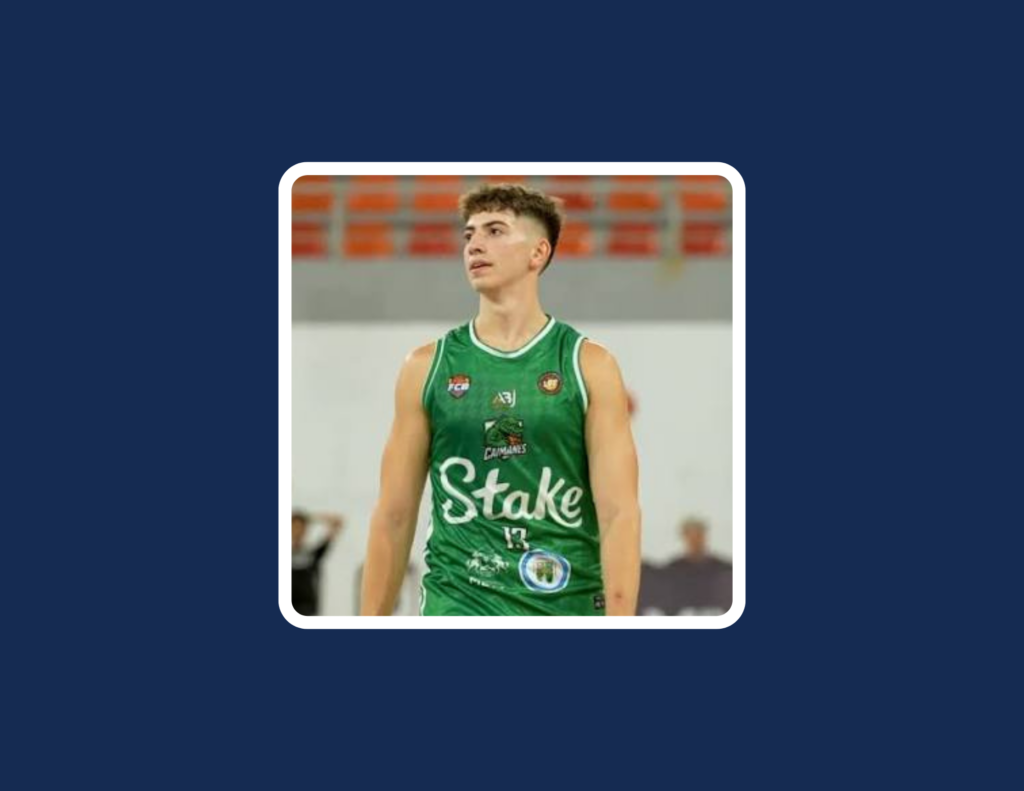
Website – https://basketball.latinbasket.com/player/Michael-Martinez/
Email – [email protected]
Instagram – @michaelmartinez__

Michael Martinez is an overseas professional basketball player who currently competes internationally in Columbia. Michael has also built a bilingual following of 275K+ across Instagram, TikTok, YouTube, and Snapchat, posting training, game day, and everyday content in English and Spanish.
On this episode Mike and Michael discuss how disciplined training, careful shot tracking, and his father’s guidance helped him develop from a young basketball player into a professional athlete. He explains how making more than 150,000 shots during COVID, practicing with purpose, and maintaining a “next shot” mindset changed his trajectory. The conversation also explores the importance of AAU exposure, finding the right tournaments, embracing a specific role, and choosing opportunities where a player is genuinely wanted. Martinez discusses overcoming ankle reconstruction surgery, limited playing time, and the challenges of proving himself at each level of basketball. He also describes how bilingual content creation, social media strategy, and his Colombian heritage helped him build a platform, connect with fans, and create new basketball and business opportunities.
Follow us on Twitter and Instagram @hoopheadspod for the latest updates on episodes, guests, and events from the Hoop Heads Pod.
Make sure you’re subscribed to the Hoop Heads Pod on iTunes or wherever you get your podcasts and while you’re there please leave us a 5 star rating and review. Your ratings help your friends and coaching colleagues find the show. If you really love what you’re hearing recommend the Hoop Heads Pod to someone and get them to join you as a part of Hoop Heads Nation.
Be prepared to take some notes as you listen to this episode with Michale Martinez, overseas professional basketball player.
What We Discuss with Michael Martinez
10 Key Takeaways for Basketball Coaches
- Build every workout on fundamentals
Michael explains that his father never let him begin by casually firing up threes. He started with form shots, making 10 swishes from several spots, then progressed to mid-range shots, free throws, and finally threes.
Coaching application:
Begin practices and individual workouts with foundational technique. Require players to establish balance, alignment, touch, and repetition before adding speed or complexity.
- Teach deliberate practice, not just time in the gym
Michael emphasizes that “a hundred reps of something good” are better than “a thousand reps of something bad.” Simply being in the gym does not guarantee improvement.
Coaching application:
Give each workout a specific purpose. Instead of telling a player to “get shots up,” assign a measurable goal such as making 50 game-speed corner threes after a sprint or completing 25 finishes through contact.
- Track measurable progress
During COVID, Michael tracked his shooting and eventually made more than 150,000 shots. Mike also describes using notebooks to record makes, workouts, games, and hours spent practicing.
Coaching application:
Have players record makes, attempts, turnovers, defensive stops, or other role-specific metrics. Review the numbers regularly so players can see whether their habits are producing progress.
- Teach players to respond to failure with the next-play mentality
Michael’s father repeatedly told him, “Take a deep breath, next shot.” That message stayed with him from driveway workouts through college and overseas basketball.
Coaching application:
Create language your team can use after mistakes: “Next play,” “Next possession,” or “Flush it.” Reinforce that confidence is not the belief that a player will never fail, it is the willingness to perform again after failure.
- Reward the traits that cannot be coached
Michael says coaches can teach shooting and dribbling, but they cannot simply teach players to be good teammates, coachable, energetic, or positive.
Coaching application:
Track and praise behaviors such as sprinting into drills, encouraging teammates, accepting correction, taking charges, communicating defensively, and staying engaged on the bench.
- Help players understand that roles become more specific at higher levels
As Michael moved into professional basketball, his role became clearer: defend the opponent’s best player, rebound, sprint to open spaces, set screens, and make threes.
Coaching application:
Explain how a player’s role fits the team. A young player may handle the ball everywhere, while a college or professional player may earn minutes by becoming exceptional at one narrow responsibility.
- Teach players to stand out without needing to be the leading scorer
Michael struggled for minutes in high school because his coach viewed him mainly as a big man, even though he saw himself as a shooter. He found ways to contribute through energy, defense, effort, and willingness to guard the best player.
Coaching application:
Show players how they can create value when shots or minutes are limited. Hustle, defensive versatility, communication, rebounding, and unselfish play can keep a player valuable even when scoring opportunities are scarce.
- Evaluate players with fresh eyes
Mike points out that coaches can unintentionally keep viewing a player as the person they were two years earlier. Michael’s body, conditioning, shooting, and overall game changed, but some coaches continued to see him through an outdated lens.
Coaching application:
Reassess players throughout the season. Ask: “What can this player do now that they could not do previously?” Update roles and expectations as players grow physically, technically, and mentally.
- Encourage players to control what they can control
Michael did not always receive the playing time he believed he deserved. Rather than quitting, he continued training, performed well in reserve games and AAU tournaments, and prepared for the next opportunity.
Coaching application:
Help players separate controllable factors, effort, preparation, attitude, fitness, and response to coaching, from uncontrollable factors such as rotations, a coach’s preference, injuries, or another player’s role.
- Prioritize fit and opportunity over reputation
Michael advises players to go where they are wanted. A school that communicates consistently and offers a realistic opportunity to play may be a better choice than a famous program where the player is unlikely to see the floor.
Coaching application:
Teach families to evaluate development, playing opportunity, relationships, academics, and overall fit, not just the logo on the jersey. The best basketball environment is often the one where the player will be valued and challenged.
Like this show? Please leave us a review here — even one sentence helps! Consider including your Twitter handle so we can thank you personally!
Your first impression is everything when applying for a new coaching job. A professional coaching portfolio is the tool that highlights your coaching achievements and philosophies and, most of all, helps separate you and your abilities from the other applicants.
The key to landing a new coaching job is to demonstrate to the hiring committee your attention to detail, level of preparedness, and your professionalism. Not only does a coaching portfolio allow you to exhibit these qualities, it also allows you to present your personal philosophies on coaching, leadership, and program development in an organized manner.
The Coaching Portfolio Guide is an instructional, membership-based website that helps you develop a personalized portfolio. Each section of the portfolio guide provides detailed instructions on how to organize your portfolio in a professional manner. The guide also provides sample documents for each section of your portfolio that you can copy, modify, and add to your personal portfolio.
Aiming to go D3? The D3 Recruiting Playbook gives you a clear, step-by-step roadmap to the recruiting process – what coaches value, key milestones from early high school through application season, and how to build a target list of schools that fit your needs.
We’ll demystify researching D3 programs and how to stand out without chasing every camp or showcase.
The modules cover things like writing emails to coaches, building an effective highlight tape, using social media well, planning ID camps and visits, and navigating application strategy.
You’ll get templates, checklists, and an outreach plan to communicate confidently, learn how to compare financial packages, and avoid common missteps. By the end, you’ll have a prioritized school list and a decision framework you can use to land your best-fit opportunity.

Give With Hoops is a groundbreaking initiative that fuses basketball analytics with modern sponsorship. Built for teams who see data as opportunity, from AAU programs to college powerhouses.
By tying on-court performance directly to community and sponsor engagement, Give With Hoops help programs raise more while deepening support from those who believe in the game.
Traditional fundraising disconnects donors from the action. Sell candy bars, wash cars, beg for donations, it’s exhausting and ineffective. Players perform better when their stats matter beyond the scoreboard. That’s why Give With Hoops was created.
Give With Hoops connects game performance to community support. Every basket, rebound, and assist becomes a chance to raise funds. Transparent, exciting, and proven to raise 3x more than traditional methods.
THANKS, MICHAEL MARTINEZ
If you enjoyed this episode with Michael Martinez let him know by clicking on the link below and thanking him via Email.
Click here to thank Michael Martinez via Email
Click here to let Mike & Jason know about your number one takeaway from this episode!
And if you want us to answer your questions on one of our upcoming weekly NBA episodes, drop us a line at [email protected].
TRANSCRIPT FOR MICHAEL MARTINEZ – OVERSEAS PRO PLAYER & BILINGUAL CONTENT CREATOR – EPISODE 1300
[00:00:00] Narrator: The Hoop Heads Podcast is brought to you by Head Start Basketball.
[00:00:20] Michael Martinez: They can coach anyone how to shoot. They can coach anyone how to dribble. But they can’t coach you being, like, a good kid off the court. They can’t coach you being a good teammate, having a good attitude, just being coachable.
[00:00:31] Mike Klinzing: Michael Martinez is an overseas professional basketball player who currently competes internationally in Colombia.
Michael has also built a bilingual following, over 275,000 people across Instagram, TikTok, YouTube, and Snapchat, posting training, game day, and everyday content in both English and Spanish. Ever since I founded Head Start Basketball in 1993, we’ve helped young players develop their skills, confidence, and love for the game.
Now we’re partnering with coaches and athletic programs to bring the Head Start Basketball camp experience to new communities. Our camps run for five days, three hours per day, and serve boys and girls in grades one through six. You or someone on your staff directs the on-court portion of the camp while Head Start Basketball manages registration, promotion, parent communication, T-shirts, trophies, website setup, and administration.
There are no upfront camp planning headaches, and the profits are divided 50/50 between your program and Head Start Basketball. If you want to reach more families or strengthen your youth basketball pipeline or just create additional revenue for your program, visit headstartbasketball.com to explore hosting a camp.
[00:01:38] Matthew Raidbard: Hi. This is Matthew Radbard, author of Lead Like a Pro, and you’re listening to the Hoop Heads podcast.
[00:01:47] Mike Klinzing: Be prepared to take some notes as you listen to this episode with Michael Martinez, overseas professional basketball player. Hello, and welcome to the Hoop Heads podcast. It’s Mike Klinzing here tonight without my co-host, Jason Sunkel.
But I am pleased to be joined by pro hooper Michael Martinez. Michael, welcome to the Hoop Heads pod, man.
[00:02:07] Michael Martinez: Thank you for having me. Thank you for having me. I’m excited to have a really good podcast.
[00:02:12] Mike Klinzing: Appreciate it, man. We are thrilled to have you on. Looking forward to diving into your basketball life, your basketball career.
You’ve had an opportunity to do some interesting things, play in some interesting places, and with all your social media presence, you’ve had the ability to document a lot of the things that you’ve been able to do, which I think is going to be fun for me to, as an old guy, to kinda learn some of the tricks of the trade that you young guys are rolling out there.
So let’s start by going back in time to when you were a kid. Tell me how you got introduced to the game of basketball. I know your father was a big influence on you early on. But just talk about your first introduction to the game. What do you remember about it early on?
[00:02:50] Michael Martinez: Yeah from the very beginning, I always feel like basketball has always been my passion.
I grew up right outside of Atlanta. It’s called Woodstock. And I went to a high school called River Ridge. And it’s just always been something that’s been very passionate. When I was really little, I actually did martial arts, and I feel like that taught me a lot of discipline and stuff like that.
But my passion was always basketball, ’cause my dad played. My, both of my parents are from Colombia. And they came over to this country in the late ’90s. And my dad played basketball growing up professionally and all of that, and my dream was to always play in college. I didn’t think I would be able to play professionally, but obviously I got blessed, and I worked hard to get to that point.
[00:03:35] Mike Klinzing: So what does it look like when your dad introduces you to the game? W- what’s he showing you? Are you guys just shooting on the driveway? Is he taking you to the playground? Is he beating up on you one-on-one? What’s… is he trying to teach you the fundamental skills? What’s it look like, the interaction between you and your dad as he’s trying to teach you the game?
[00:03:54] Michael Martinez: Yeah the most I can remember, when I was really little, in our driveway we had a hoop set up, and he would just teach me how to shoot. My dad’s thing was always shooting. When he played, I always bothered him ’cause there wasn’t a three-point line. Eh, but it’s funny because what I do is shoot and mainly threes.
So it was funny that he would always teach me how to shoot growing up, and we just did everything that had to do with the fundamentals of basketball till eventually we got into the gym, and we would be in the gym three, four times a day, just being there, grinding, till eventually I got a trainer, and then started playing AU and growing up and all that, and basketball was literally just everything for me.
[00:04:34] Mike Klinzing: When you were working on your game, let’s say, as a middle school kid, so now you’ve got at least a little bit of experience, and you’re in the gym with your dad- … or you’re getting in the gym by yourself. How… I’m going to use the word scientific. How scientific were you about what it was that you were working on?
Did you have a plan each and every day that you, where you were like, “Okay, I’m taking this workout from this trainer that I’m seeing on YouTube. I’m taking this drill from over here, and I’m putting all that together into a plan”? Or were you just kinda going in the gym and just being like, “Man, I just love basketball.
I’m just going to get some shots up and work on whatever comes to mind naturally.” Were you more scientific or more just, “Hey, I’m just getting in the gym to play ball”?
[00:05:15] Michael Martinez: I would say a little bit of both. I would get in the gym to play ball when there was, like, runs going on or just comp, because I feel like as a kid I would say pretty much every kid isn’t going to get stay dialed in the whole entire time, right?
So whenever it’d be me and my dad going in early mornings or in the evening whenever there wasn’t anyone alone, let’s say I would go in and right away start shooting threes and get mad why I would miss. So then when that would happen, my dad would be like, “No, you have to start with form shots.”
So we would start with 10 swishes from every single spot. Corner, wing, in front of the rim, other wing, and then corner, but right under the rim and just practicing on form shot, just one, two, three. And then after that, move to mid-range, same thing, 10, 10, 10, 10, 10. And then in between everything, we’d do free throws, and then eventually get to threes.
And the difference that that would make, it was just insane how just lining up your shot and just really f- like focusing on the technique. Even now, I walk into the gym now, I’m not getting a shot up until I at least make 50 form free thr- or form shots.
[00:06:17] Mike Klinzing: I would say that’s one thing.
If there’s anything that I did as a father and a coach to probably my son, but my daughters as well, is just get them to be able to go in the gym and take their form shots before they start shooting. So your dad was definitely doing something. He was doing something right. He knew what he was… He was setting that foundation for you to get that shot looking the way that it was supposed to.
And I think that doing form shots obviously is something that sets that fundamental base and gets you ready for whatever it is that you’re about to do next. When you were working with your dad- What was that relationship like between you and him? Would you say that it was mostly smooth? Did you guys have conflict about your dad wanted you to do this and you wanted to do that?
Or what was it like? What was that son, coach, father relationship? How’d you guys navigate
[00:07:08] Michael Martinez: that? We definitely butt heads a lot. I would say me and him are very similar. So let’s say if I would start getting frustrated ’cause I wouldn’t make it I would start just… Obviously, when I was little, I would just try to make an excuse on everything else, not like that I’m not focusing, i’d blame his passes. I would blame the ball. I would blame the court. I would blame the shoes. I would blame everything except my dad, till eventually I just switched to being like, “Look…” Or he would just… He always told me “Just take a deep breath, next shot.” And literally, even up to my games in college, to my games overseas, he would always tell me just next shot.”
He’d be like, “Stephen Curry doesn’t make every single shot,” right? So it’s just always the next shot mentality ’cause shooters shoot, and if he’s taught me one thing, it’s just keep shooting because I’m not going to make 100% of the shots. And that’s like in life. In anything you shoot, you’re not going to make 100% of the shots, but as long as you keep shooting
[00:08:00] Mike Klinzing: So much of being a good offensive player, and really being a good player on either end of the floor, has to do with what you just said, which is you have to have the confidence to go and try to do something, right?
We’ve all seen, you’ve probably had teammates that were like this. I’ve seen players that I’ve coached. I’ve talked to my kids about this at various times, where you’ve have to have the confidence to go and try to do something. If you just step out on the floor and you’re not doing anything, you’re afraid to make a mistake, or you’re afraid to miss a shot, you’re not going to be very effective.
And when you go and you’re like, “Hey, the next one’s going in,” right? “I shot this one, didn’t go in, but I know the next one’s going in,” you have to have that confidence. A part of the confidence comes from the amount of time and the hours that you spend in the gym working on your shot. That’s so that “Hey, I’ve been in the gym.
I know I missed this one, but boom I know I’m going to be able to make the next one.” I think that willingness to put in the work a- and put in the time and make shots over and over again in practice is what eventually translates to having confidence in games. But there’s some people that, they just never get it, right?
They always feel a little bit hesitant. You- I’m sure you’ve played with guys who, they just, for whatever reason, their skill set maybe in practice looks like one thing, and then it comes time for a game and they kinda shrink a little bit. So I think it’s, you have to develop that confidence in practice, but then there has to be that translating factor of, I have to be willing to do that in a game.
It sounds like your dad was able to pass that mentality along to you in, in a really positive way.
[00:09:36] Michael Martinez: Exactly. And I feel like he just engraved so much hard work ethic into me that when I’m in the game I feel like we would just train so hard. In between sets it would be, like, suicides, so that by the time I got to playing with high-level AU teams, high, like high-level college ball, high school, whatever I played, it, I feel like it all came easy to me because it’s nothing that I didn’t do.
And I feel when it really switched for me and, like, when, I really just it all clicked for me was, like, during COVID. Going into COVID, I would say I wasn’t really in the best shape ever, but I was just so determined. I was like, “Look, and COVID was my sophomore year of high school, and I pretty much lost that whole entire season.
So I was like, if I want to play in college, if I want to get to my goals, now is the time that I need to make a change. So every single day during COVID I’d have online school, but if not, I would be running or I’d be shooting. And I tracked all of my shots. By the end of COVID, I ended up making 80 or 90,000 shots over, or over that.
I was doing literally 1,000 a day, and I wouldn’t stop until I made that 1,000 a day. And that’s really just, like, where everything, after that, everything just went up
[00:10:46] Mike Klinzing: So here’s where you’re going to know that I’m a dinosaur, Michael, because I think back to when I was a kid, and probably younger than you.
I probably was doing this when I was 11, 12, 13. But I’m assuming you kept track all your shots on Google Drive, or you had some fancy
[00:10:59] Michael Martinez: app- On My
[00:11:00] Mike Klinzing: Notes. Yeah, there you go. You’re keeping track- Yeah … all that. So I have all these old-fashioned spiral notebooks, where literally when I’m 12, 13 years old, I would write down the date, and I had…
It was just, it was pencil. I was writing down in pencil, September the 9th, 2026. I’d write, “Played one-on-one against Tony. Won 100 to 98. Shot free throws with Dad, made 79 out of 100. Took-“
[00:11:28] Michael Martinez: Yeah … “
[00:11:28] Mike Klinzing: 14 one dr-” I had all these, like, all these ti- And then I would track the hours that I would shoot, and then at the end of the month, I’d total those up, and I had a whole little thing.
And again, I think the lesson here is whether you’re a low-tech, old school, old guy like me, or you’re new school, doing it on the phone, on the app, tracking what you do as a player, what gets measured gets improved, right? So if you’re looking at your threes and you’re going day after day, you should see improvement.
If you’re putting the right kinda effort in, you should see that- Exactly … number of makes going up as you go through the process. And if you’re not tracking it, it’s really hard to know, “Hey, am I improving or not?” It sounds like you had a plan for trying to improve and get better, and obviously, COVID threw a, a big wrench into everybody’s plans and what they were trying to do.
And so there were a lot of people that kinda doubled down and became more productive during COVID, and there were other people that kinda shut down. It sounds like for you, it was a more productive time than maybe for some- Exactly … other people.
[00:12:33] Michael Martinez: Yeah dur- when COVID st- I’ve always been determined, but whenever that happened, I was just hungry for everything.
I just wanted to just activate, and I actually found the notes. So look. October, I don’t know if the camera will take it. October 4th, 2020. It says- All right,
[00:12:49] Mike Klinzing: I got it … “
[00:12:50] Michael Martinez: Shots made, goal until tryouts. March, April, May, June-” That’s
[00:12:56] Mike Klinzing: awesome … “
[00:12:57] Michael Martinez: July, August.” Yeah. So that’s- That’s awesome … that’s how I tracked the…
Yeah. And I ended up- That is awesome … at the end of it, I ended up making over 150,000, actually.
[00:13:07] Mike Klinzing: That’s fantastic. Yeah. Man that’s how you do it, man. You want to know the plan? If you’re a player and you’re out there listening, you want to know how to get better, that’s it right there. Track your, track what you’re doing.
Keep tr- keep careful records. Yeah. Check it every day. Make sure you’re getting in the gym, getting your shots up, working on your game, and that’s how you’re going to see improvement. So tell me then, as a result of that- You come out and you’re in your junior year after COVID, where things, again, didn’t necessarily return completely to normal, but were at least trending in that direction.
So tell me a little bit about just the ups and downs of your high school career. ‘Cause I know I watched a couple of your videos and things of you talking about your career. Yeah. And I know it wasn’t just a straight, “Hey, we start here,” and it wasn’t a straight trajectory up. I know you had some, some ups and downs throughout your high school career.
So just kinda talk about that and how you maintained your effort level and your positive attitude, and just decided, “Hey, I’m just going to keep working to make sure that I get the opportunities that the work that I’ve put in made me deserve.”
[00:14:10] Michael Martinez: Yeah, but before, before we get to that, I just wanted to clarify.
So everyone that’s watching, you can put in all the work that you want, but it has to be the right type of work, right? You can get in the gym and let’s say, you can say “Oh, I just put up 1,000 shots,” but you’re putting up 1,000 shots, like, not trying at all. You’re not going to get better. It’s better to do 100 reps of something good compared to 1,000 reps of something bad.
So everyone knows the practice makes perfection, but I don’t really believe in that. I believe in perfect practice makes perfection ’cause you ha- you have to do something and improve every single day, at least 1% better every day. But yeah. Oh, what were you going to say?
[00:14:47] Mike Klinzing: No, I think you’re 100% right there.
A- again- Yeah … I think of the concept of deliberate practice. I can go out and it’s always the difference between me of “Hey, I’m shooting around,” or I’m actually in there working on my game. I’ll give you another example from me. Again, my time as a player is long, long since passed. But I remember when I used to get in the gym when I was in high school and college, and there was a guy that lived in my area, and we would go to the gym, and I’d be on my court working on things just like you described, right? I’d be trying to work on a specific thing. I’d be tracking it, counting how many I made, writing it down when the workout was over.
And this dude over here, he’d be walking around. He’d be casually taking shots. I’d see him, he’d stroll out. There was, like, an aerobic exercise area right outside the gym. So he’d walk over. Somebody would be on the exercise bike riding the bike, and he’d be over there. He’d be talking to them. He’d walk over and get a drink.
And I’d be in there for my hour and a half or hour and 45 minutes, whatever. I’d get done. I’d be walking out, and he’d be like, “You’re leaving already, man? I’m going to be in here for getting shots up for four hours.” I’m like, “Dude you haven’t done anything. I’ve been here for an hour and a half, and I’ve done da, and you’ve done nothing besides casually walk around and flip shots up.”
And so yeah, there’s a difference between guys who really want to get better and guys who are just, quote, “in the gym.”
[00:16:04] Michael Martinez: Exactly. And there’s no point in being in the gym if you’re just going to sit there and lollygag. I would say one big thing for me is I hate wasting time. So if you’re going to be in the gym just and you can only give 45 minutes, those 45 minutes no water break, no nothing.
Those 45 minutes, you better leave the gym like you can’t even move. And that’s just the philosophy that I feel like I’ve engraved my whole entire life. But so in high school, obviously, it didn’t start all cupcakes and rainbows, right? So I went to a really big high school and I would say our team was really good.
So the competition to get good minutes and everything was rough. I was always like that, quote-unquote, “shooter,” and I always had to improve to expand my game besides just shooting. If that was, like, being the energy guy, which that’s a, a big thing of me, like I’m… I always bring the energy. If it’s pick up the best player on the other team, anything like that, that that you can’t really coach, I feel like that’s the way to stand out, and I felt like I had that.
But the coach that we had really only saw me as a big man. And my high school, we had two seven-footers. So getting minutes, you can imagine. They’re… i’m like 6’5″, 6’6″ right now. At that time, I was probably like 6’3″, so they’re not going to put me in over two seven-footers. So getting time was rough, but where I did excel is no one was in the gym more than me.
No one would get more shots than me. No one was more ready than, for an opportunity than me, and I was always just outworking everyone. If I saw someone that was somewhat working me, I was going to work twice as hard, and I feel like I see a bunch of stuff with Kobe. You see him right there. I… a lot of that mentality – and I see your mic thing.
I have a mic right here. Yeah. I feel like a lot of that, I just have seen so many stuff of them, and I engrave that. And then towards the end of my sophomore year actually, that we played a couple of games towards the end of high school sophomore year, but then AAU started, and that’s when everything really started clicking.
I wa- I was playing really good in games. I was playing really good in the showcases, and then I eventually got my first offer towards the end of my sophomore year. So going into my junior year, I was one of the only ones on the team in our high school with a offer, and then after that, they just kept coming in
[00:18:18] Mike Klinzing: All right, so talk about this.
This is something that is really interesting to me. And again, I’ll lay out kind of the timeline. So probably 10, 12 years ago, Michael, I had somebody come to me, and I’ve been in the game of basketball for my entire life. And 10, 12 years ago, my kids were probably– my oldest daughter was maybe 10, my son was maybe 8, and my youngest daughter was, like, 4.
And so I remember somebody came to me and said, “Hey, at some point AAU basketball is going to be more important than high school basketball.” And I remember going, “Dude, man what are you talking about? There is no way that’s ever going to happen.” And at that point, I had been coaching high school and I had stepped away from it, and I really wasn’t in the AAU basketball world very much.
And then as my kids got older, obviously they started getting involved in it. And what’s interesting, to piggyback off your story, is like for my son, who ended up playing Division III or is playing Division III college basketball, he got an opportunity to do that, had nothing, literally zero to do with his high school career, and it had everything to do with his experience playing AAU.
He got really lucky, got on a really good team with some really good dudes, great coach, got to the right tournaments Played the right way with that group of guys, and that’s what ended up getting him opportunities. And now schools came and watched him play in high school, but that was only after he was, quote, “discovered” as an AAU player, and they were already interested in him.
It wasn’t like they found him as a high school player. They found him as an AAU player, and it sounds like it was a similar experience for you.
[00:20:00] Michael Martinez: Yeah, exactly. High school is good and everything, but honestly if you’re a, if you’re a young hooper and you’re watching this and you’re not getting a lot of minutes in, in on your high school team, trust me, it does not matter.
I… If it wasn’t for AAU, I wouldn’t have gotten to the level that I’m at now. Without AAU, no one would’ve known who I was, right? At that time, I didn’t do social media, which I know we’ll get to that eventually. But at that time, I didn’t do social media. I wasn’t going to be known. I was on a team.
I was just known as the energy guy, and in practice, everyone knows me- knew me as the shooter. But in game, it’s not. I would come in, maybe hit back-to-back threes, come out right away. That was my job. That’s what I would do, and just h- be positive on the bench. That, and that really frustrated me, because I was like, “I don’t get it.”
I was trying to blame it on everyone else, but not realizing that I couldn’t control that, not– I was just frustrated with how much I trained, like, how good I played AAU. I already had offers. I was just like, “I don’t get why I don’t play.” But obviously, that’s not something I can control, and I just kept my head down.
I controlled what I was able to control, and I focused on where I was getting the exposure, which was AAU, really focusing on playing my best in the AAU and using high school to prepare for the AAU tournaments, and that’s when I played better, and that’s obviously where I got all of my looks.
[00:21:16] Mike Klinzing: So tell me about getting on an AAU team where you don’t have as big a role as you maybe would have liked on your high school team. What does it look like when you’re trying to find an AAU team? How do you sell yourself? Are you going to tryouts? Do you have a connection with somebody? Is it a friend of yours, a teammate, somebody that you know from another school that says, “Hey, you should come be a part of this team”?
How do you get yourself on the right team for AAU? What did that process look like for you?
[00:21:46] Michael Martinez: Yeah. So the team that I played on was actually my trainer’s team. Nice … he, h- his name’s Jack Shaughnessy. He had a team called OTP. And he, he– I actually got connected with Jack through one of the assistants at our high school, and he played at Seattle.
He’s a, he was a big time player. And now he made this organization which combined with another really big team, and whenever that happened, I knew they were going to be in circuits. I knew they were going to be in really good tournaments. I knew all of this going before I started to play, and so that’s the way I went.
And then after that, you just… You pretty much just pick up whenever you know it’s going to be a good tournament. For example, in here in Atlanta, there’s a really big sports complex called Lake Point. I bet you’ve– you probably know about it. So any tournament… I played in Lake Point every single weekend, and that’s where all the coaches are.
If it wasn’t Lake Point, it was Swanee Sports Academy, and if the AAU tournament wasn’t in one of those, I wasn’t going to play. That’s– You just have to know the, the coaches are where the best players are, and the best players are going to play wherever the best facilities are. And to get there, you have to be on a good team.
More than anything, circuit. That’s what I would say. Any circuit, Adidas, Nike, Puma, really anything now, New Balance. Any circuit is going to get you the looks that you need.
[00:23:03] Mike Klinzing: I think you make a great point that so much of your AAU experience has to do with playing in the right tournaments. And this is a conversation that I have with parents mostly because those are the people that are a lot of times helping the kids to make decisions.
But when you get to high school, obviously you have some say in what you do and where you go and where you play. But I think that people have to understand, especially… And again, it depends on what level ultimately that you can play at in college as to when schools really start looking at you. But in a lot of cases, if you’re a big time Division 1 player people, generally speaking, they know who you are by the time you’re in eighth, ninth, tenth grade.
Those guys have been identified. People know who they are Pretty simple. If you’re a Division II or Division III player, a lot of teams, at least here in the Cleveland area, what I find is a lot of times those teams are chasing exposure when they’re in eighth, ninth, 10th grade, where Division II and Division III schools aren’t even looking at players who are in eighth, ninth, 10th grade at all.
They’re literally not… You could be on the, a tremendous team filled with a bunch of Division II, Division III players that are going to play in college, and in the spring of your 10th grade year, nobody’s going to be at your games. They’re just not going to be watching. You could be the best team out there, and they’re just not going to watch you because, again, they’re focused on that incoming, that next year’s class.
And it’s really after the spring of your junior year where you want to make sure that you’re at the best tournaments and the tournaments where the coaches are going to be. And that’s where You as a player, if you want to educate yourself, certainly, but you want to make sure that you’re playing for a team where your coach or the greater organization has an understanding of these are the tournaments we need to be at, because that’s where the coaches are going to be that are going to look at players who are on this team who can play at that particular level.
And I think that’s something that a lot of players and a lot of parents of high school kids don’t necessarily understand, that you have to not only play on a good team, but you also have to be in the right tournaments where there are going to coach- where coaches are going to be. ‘Cause if you’re in a tournament where there isn’t any coaches, it’s not going to do you much good when it comes to exposure and getting a chance to, get an offer and get an opportunity to play at the next level.
[00:25:24] Michael Martinez: Exactly. And I feel like a big thing that goes unseen is just I feel like a lot of people have the bad idea that you’re only going to get looked at or you’re only going to get a offer with if you go in the game and drop 50. Which that’s not the case at all. I have a lot of former teammates that now they’re, like, assistant coaches, GAs, anything, right?
And I talk with them, and even at the time, a lot of the coaches that I was talking to, I built good relationships with them. They tell me it’s the stuff that you can’t coach. ‘Cause they can coach anyone how to shoot, especially with the ac- access that they have in these schools. They can coach anyone how to shoot, they can coach anyone how to dribble, but they can’t coach you being, like, a good kid off the court.
They can’t coach you being a good teammate, having a good attitude, just being coachable. And I feel like that’s a big thing that a lot of people that maybe they’re really good on the court, but they don’t know why they don’t have offers. It’s because the stuff that that you can’t teach.
[00:26:17] Mike Klinzing: So let me piggyback off that, and this is something that I never really thought about this, Michael, before I had the podcast.
And the first guy who ever said it to me was a guy named Mike Procopio, who he used to be Kobe’s trainer, and then he was the director of player development for the Dallas Mavericks for a number of years. And when I had him on the podcast, what he told me was is that as you go up in levels, right? So you start out as a middle school kid, and then high school, and then you go in college, and then eventually, if you’re lucky enough, you get an opportunity to play at the pro level.
But each level that you go up The skill set that you need to have becomes more and more specific. It becomes more and more dialed down to a ro- a specific role that you need to play. So when I’m in middle school, I might be the do everything player that has the ball in my hands and I’m handling it and I’m coming off screen and roll.
I get to take whatever shot I want. I’m distributing, I’m doing all this stuff. And then by the time I get to college, I might be a role player who’s only a three and D guy who shoots corner threes. Or maybe my only role is I’m a big who I screen and roll to the basket and defensively I’m a shot blocker, whatever.
My skill set becomes much more specific. And so just that’s what you’re talking about, right? Is you have to be able to do more than just score, because eventually you reach a level where you may not end up being the guy that just gets the ball and gets to do everything. Even at, you think about the NBA, right?
How many guys in the league does the coach just hand the ball to and say, “Hey man, go do your thing. Do whatever you want.” There, there’s not even one guy on every team. Now obviously there’s some guys that get that opportunity, but there are very few. Yeah. Most of the guys who are playing in the NBA are role players, and I’m sure you’ve experienced that to some degree as you’ve gone through different levels.
So talk a little bit about that particular piece of it in your experience when you get an opportunity to play at the pro level, you’re not just getting the ball and being like, “Hey man, go do everything.” You have a specific role you have to fill.
[00:28:20] Michael Martinez: Yeah. Obviously if we skip past high school, college, and just getting to pro, whenever you get to pro, I think what it took me realizing was, like, leaving my parents which obviously I left my parents…
i’m a only child, so it’s kinda difficult for me, but leaving my parents for college, that was tough, but they were really only what? Two or three hours away. But leaving to another country, being gone, I was gone for a full year. I played two seasons. So when I touched down realizing “Oh my gosh, I’m on my own,” this is my job, I have to produce ’cause if, in a job if you don’t produce, you get fired.
And the overseas life, FIBA, anything like that, I quickly realized that if you’re not there doing your job or you’re not serious about it, just like any job, they’re going to fire you. And so obviously my job, I was there to bring my shooting capabilities, which I’m very confident in my shooting, and then I would say my defense and just my knowledge of the game from the United States, bringing it overseas.
‘Cause overseas people love pl- foreign players from the United States. So obviously I was there g- like perfecting my shots. If I had an open shot, I was in there to shoot, and on defense I was always trying to lock up the best player on their team. That’s what I engraved, just having the heart to being like, “Hey coach, that guy’s killing us.
I’ma guard him.” That’s just what I picked up. And I guess that’s the exact role, three and D, that I was able to pick up. Just play hard on defense. If I had a, if I saw a rebound, no one was going to beat me to that rebound, and then on the other side I’m sprinting to the corner, getting ready to come off a screen, flares, anything like that, and just ghost screens and hit the three.
[00:30:03] Mike Klinzing: So to piggyback off of that, right? And we’ll jump back to, again, where we were in the story, but I just wanted to get your perspective on the idea that I have to play a role, right? Yeah. And it’s not just about, I think, again, at the lower levels of basketball, players and parents have this perception that you talked about, right?
That I have to score as many points as I can. That’s what college coaches are looking for when they’re sitting there on the sideline. They want to see the guy that can score the most points. And I can tell you from experience, I can tell you from all the co- conversations that I’ve had with college coaches, that’s not what they’re looking for.
Now, there’s, again, there’s a requisite level of talent and physicality and size and things that you have to be able to play at certain levels. But ultimately, there’s lots of intangible things in terms of work ethic and effort, and just the way you conduct yourself, and the skill set that somebody looks at it and say, “Hey, can this– what this guy does, can it translate to our level of basketball?”
Whatever that is. Is that an AI? Is that Division I? Is that… W- what is it? Can it translate? And it’s not just, hey, can this guy score 25 points a game? Not many people get to go to college and average 25 points a game. You have to figure out what your role is on the team. So pick up the story from there with you’re starting to pick up some offers as a result of AAU basketball.
You take it from there.
[00:31:29] Michael Martinez: Yeah. So I started to pick up offers, and that literally jumps into my next point, what you just said. I feel like I was taught from a very young age from my parents, from my trainers and everything, is you’re not– Like, I’m not going to a team to be, like, their guy, right? If I happen to be their guy, obviously that’s a good benefit, right?
But I feel like I was taught every team already has their guy. So even if I feel like I’m going to get there and be the guy, as a freshman, they have a fifth year senior who is four or five years older than me, who’s been doing it, and is coach’s favorite person ever, I’m not going to play over him, right?
So I feel like that was a big reality that everyone really has to realize, especially if you’re getting ready to start playing to college, if you’re getting ready, if you’re getting some offers. I got my first offer going into my junior year after that, After that AAU season, right after COVID, and then after that, they just started picking up all junior season.
High school ball I don’t know. H- high school ball, junior and senior year it I kinda forget about it ’cause when I would get in, I would do what I can, but that was never my focus. My focus was always AAU, playing as many AAU tournaments as I can traveling wherever I could, and just picking up as many offers as I could, wherever would be the best fit.
And one thing that I learned a lot is you have to go wherever you want, you’re wanted, right? You can go somewhere that… let’s say your dream school could be Duke, but let’s say there’s this D2 over here that loves everything about you, and you’ll get there, and they’re going to give you a good opportunity.
They care about you. You need to go to the D2 school, right? So obviously, once you start picking up offers, that’s, you just have to have a good connection and you have to know the right fit. Start taking visits, like, seeing if you could really be there
[00:33:15] Mike Klinzing: Yeah, I think that’s a great point, and it’s one that I’ve talked with tons and tons of coaches about in terms of finding the place.
It’s always go where you’re wanted. Go where you’re wanted. If there might be a– your dream school that maybe they sent you a letter, maybe a coach talked to you one time at an AAU tournament, but they’re not really that quick to return your phone calls, they’re not reaching out to you, but then there’s another school that’s talking to you all the time, that’s coming to your games, that’s probably the place where you want to end up.
And I think one of the things that people get caught up in is, hey, what’s the level, right? Everybody has a dream when we’re kids, right? We want to play at Duke, we want to play at North Carolina, we want to go and play at Kentucky. But the reality is that not many kids get the opportunity to do that, and so then you have to recalibrate your dreams and figure out hey, where am I wanted?
And ultimately, I think you can probably attest to this and what I’ll say is that you ultimately want to play, right? Because the reason why you picked up the ball with your dad in the driveway wasn’t so that you could go play college basketball here or go play overseas basketball in Colombia. You picked up the ball ’cause you loved to play, right?
It was fun. And it’s not nearly as much fun when you’re not, when you’re not playing. When you’re not getting minutes on the floor. Look, it’s obvious from listening to you talk during your high school career that it wasn’t nearly as much fun for you as it was playing AAU, where you were getting an opportunity to be on the floor.
And for 99% of players it’s going to be more fun to go to a D2 school and play than it is to go and sit on the bench for Duke and never play a second. And again, I know, whatever, we can make whatever school names we want to put out there. But you get the point of what I’m saying is, you want to be able to find where you can play, and then you take it one step further and you start talking about, is it a good fit for me academically?
Is it a good fit for me socially? Would I want to go to school there? If I blow out my knee and I can’t play anymore, would I still want to go to school there? You start putting all those things together, and then you can make a good decision about where you want to go. So talk a little bit about your process for kinda wading through the different offers that you had and ultimately making a decision.
What advice would you have for somebody who’s out there who’s going through a similar experience to what you had?
[00:35:37] Michael Martinez: Yeah. So obviously, to go back about the playing time, high school itself, I guess I would play. I would get in when I got the opportunity. It was hard to obviously get in the rhythm, especially as a shooter.
If you’re just coming in just to shoot a- after sitting for a while it’s difficult. And I feel like I would still come in, do my best, and I was proud and I was happy with how I was performing. But compared to, let’s say fall leagues like preseasons, where we had different coaches I would play a lot, and I would ha- I had multiple 20, 30 very high-scoring games where I hit large numbers of threes.
So and then AAU, obviously every tournament it was a lot of fun, but that, that’s a lot more fun. And then you once you start getting those schools, I started getting schools from really far away, and I guess a big thing for me was being able to drive to see my parents, not having to drive 20 hours.
So I was really waiting for the schools around Georgia to start coming in, but obviously seeing where the best fit is that I would play a lot. And then after a good amount of offers started coming in, really all levels opportunities, walk-on opportunities, preferred walk-on really any opportunity you could think of, I was talking to them.
But where I thought would be the best fit was LaGrange College. That’s where I did my first two years. As soon as I got to LaGrange, went in one of my first practices, I blew out my ankle and I had to get ankle reconstruction surgery. So my freshman year of college, I medically redshirted, and I wasn’t able to play, obviously, at all.
I was just in the weight room pref- like, preparing my body, because what I did realize out of those couple of practices that I did, my body was not ready to play at the college level. So I hit the weight room hard, just prepared for all that, and getting ready for my sophomore season
[00:37:28] Mike Klinzing: What was the adjustment like to college once the basketball piece of it went away?
‘Cause obviously basketball is a big piece of your identity, it’s a big piece of why you made the decision to go to the school. So what was it like for you just adjusting to college life, but not having the basketball be a part of it? I know you’re probably still around the team, and as you said, you’re lifting and doing those kinds of things, but it’s still not the same as being able to grind it out and practice every day and feel like you have an opportunity to play in games.
So what was that like?
[00:38:01] Michael Martinez: Exactly. I feel like it just really was a huge eye-opener for me that in a way I feel like I needed it because it made me realize that one day the ball’s going to stop bouncing, and I can’t put all of my eggs into basketball as much, even though as much as I want. And obviously I feel like that goes completely against what I’ve been talking about to anyone listening to this, but it’s the truth.
As we get older, our bodies decline if we don’t take care of them, and one day, no matter if you’re invincible, one day you’re going to have to stop playing basketball at a very high level. And that made me really realize it, and it made me just realize what else I could build on that basketball has provided for me.
But obviously I was still at all of the practices and everything and just itching to get back to playing, but I couldn’t put pressure on my foot for six months, so I was just very, like, particular and very thoughtful on all of my PT that I had to do and my recovery, and I just did everything really good so I can get back and be even better than I was before.
[00:39:01] Mike Klinzing: What did that summer look like between your freshman and sophomore year in terms of the amount of work that you put in to prepare yourself for that season coming back off the ankle injury?
[00:39:10] Michael Martinez: Yeah, so I ended up breaking my ankle in around November. I got the surgery in January. So I was supposed to be back to 100% right before our first game.
So really the whole entire year, instead of being on campus since I got my surgery in January, I was at home just recovering, doing all of my PT. And then once I was able to start running, start moving, oh my gosh I would get home and my foot would be, like, this big because how– ’cause I was overworking.
I was… All of the momentum and just, I wanted to just get it all and be good right away, but I also had to listen to my body. But obviously the more I worked the better I got. And I would say after that injury, I came back in the best shape of my life, the best, i, I– Literally, I got to the point where I would go to the gym in a w- in a chair and just shoot free form free throws.
Or not free throws, form shots. And that’s, I didn’t lose my shot
[00:40:20] Mike Klinzing: Yeah. That’s the nice thing about it being an ankle injury, right? You at least have the ability to still utilize your shooting and y- your shooting motion. And so no matter what you in- you’re injured, you can always be creative in what you’re working on, right? If you hurt your right arm or your right hand or your right shoulder, you can always then become a, become more proficient with your left hand.
So there’s all kinds of stories out there of guys who’ve gotten hurt and then continue to take advantage of what they were able to do. So once you’re back- … and you’re able to be mobile again, and you’re able to get out, back out on the court, talk a little bit about that sophomore year and what you experienced during that year.
I know, again, you didn’t have quite the experience that you hoped for that year. You did get a, a much better opportunity to play. We talked about how important it is to get a chance to play. But just explain to people how that year went for you, ’cause it’s something that I don’t even know that a lot of people know exists at the college level, kind of the experience that you had as a sophomore.
[00:41:10] Michael Martinez: Yeah. So as a sophomore, we had- dang I’m not even sure. We– Too many super seniors to count. So those are really the ones that got the opportunities, but all I wanted to do was play. So there’s obviously some schools that, let’s say they’ll have an excess of players, so they have, I don’t want to call it a JV team, but it’s just a team that you can play on the main team or on the second team, and you could just, you can just play.
And that’s what you need, right? You need film, you need to just get minutes, especially me coming off an injury, I just needed to play. So I was on that second team, and the numbers that I was putting up on there was crazy. But obviously I was playing both. But the main team, it w- it was difficult to get minutes, just like it was difficult to get minutes in high school.
But you can never stop working, man. You just have to keep going.
[00:42:04] Mike Klinzing: Yeah. It’s a great lesson to be learned there. My son, when he was a freshman, their team had 24 guys on the roster, and they did not have a dedicated reserve team, but they played, I think that year they played three or four reserve games against some other Division III schools that had big rosters.
And so my son loved that, right? Because in his freshman year, he played in a couple of the real games, quote real games at the beginning of the season, and then really didn’t play at all for the rest of the year, but got to play in those three or four reserve games. And it was like, you’re just kinda letting the horses out of the barn to go and play and just be able to get up and down and, like you said just to be on the floor and have the opportunity to do that.
And I don’t think there’s a lot of people that really understand that there are schools that have a reserve team and some schools play a big schedule. How many games did you guys play that year?
[00:43:01] Michael Martinez: Over 20, easily. Yeah. Just- Man … yeah. It’s– And the competition, we’re still playing good schools.
You’re still traveling good. And lucky for me and my scenario, it got me to where I needed to get to. So it’s not like– Because I would say on that team that year, we probably had 24 guys also, and I would say everyone was neck and neck. It wasn’t like one player was insane, one player was bad.
It just came down to age and coach’s favorites. And obviously if you’re not in that little bunch right away, it’s difficult to get into it, so you just have to control what you’re able to control.
[00:43:37] Mike Klinzing: That’s a really good point, and I think it’s a lesson that clearly travels through your entire story, right?
Is that things aren’t always going to go the way that you want them to. Not every coach is going to see things exactly the way that you as the player see them. And you have two choices. You can either say, “Hey, I’m going to keep working and look for my next opportunity,” or, “I can shut it down, or I’m going to let this coach take away my enthusiasm and love for the game.”
And there are guys that go on both of those paths, right? Michael, I’m sure guys that have experienced things that are similar to you that are no longer playing the game. I knew guys back then. I’ve seen players do it Sometimes you just are like, “Okay, it’s not working out and I’m going to go another direction.”
And then there are other players that just put their head down and keep working, keep grinding away, and eventually you get to the right place and you get the right opportunity, you get the right coach who believes in you. And it is funny, again, a lot of the interviews obviously that I do on here are with coaches.
And so many times though I find myself even now, and again, I’m 56 years old, so I’m an old guy, and but I still– and I haven’t played real basketball since I was 22 and graduated from college. Obviously I played a lot of basketball as an adult in leagues and that kind of stuff, but as far as like my actual career ended when I was 22.
And yet still at age 56, so often I find myself looking at things through the lens of a player rather than through the lens of a coach. And when I hear you talking and I hear you talking about “Hey, I felt like I was good enough to play in high school. I felt like I was good enough to play in college.”
And what I hear when I hear you saying that a lot of times is that coaches sometimes get an idea of what they think or who they think a player is. And so maybe your high school coach saw you were in there when you were in ninth grade and maybe you were a little bit smaller, or maybe you were a little bit out of shape, or maybe you weren’t quite as good and started looking at you and thought of you and put you in this box.
And then you went out and you worked, and you got better. And by the time you got back and you’re a junior and you’re not the same guy anymore, unfortunately that coach just sees the same guy he saw the first time. And I think sometimes coaches are guilty of that. And if any coach is listening to this, and again, most of our advice has been for players, but I think for coaches who are listening, it’s make sure you’re always looking at your players with a fresh eye to be able to see and look as, “Is what I think I’m seeing what I’m actually seeing, or am I really looking at a version of a player that I thought he was two years ago and now he’s not that player anymore.
He’s now different.” I think that’s something that unfortunately, Michael, it probably happens to more players than, than coaches would like to admit.
[00:46:32] Michael Martinez: Yeah. Obviously I feel like- It really just depends how you take it, right? In high school I could have easily just hung it up and been like, “Okay, I’m not getting minutes.
So what?” But deep down I knew I was going to do more, right? And if we’re going based off of everything on the table, I shouldn’t have gotten to play in college, right? So now I’m in college, I got the opportunity that in reality maybe s- to some people I didn’t deserve that or I shouldn’t have gotten there, but I got there, right?
So it’s either I’m going to make the most out of this opportunity or I’m just going to hang it up here and be complacent with that, right? So obviously me being me, I made the most out of the opportunity. Even though I had a big injury, I still worked my butt off and still got to being the best player that I believe I’ve been, like, after despite of everything.
So then with the opportunity I was given, make the most out of it. Just put your head down. You can only control what you can control. And then that’s when social media kicked in and I started getting a l- the exposure that I feel like I needed and obviously a lot of good stuff came after that.
[00:47:38] Mike Klinzing: It’s powdered Or you could have gone a different direction, like you said, and just kept working, and then this social media piece. So let’s throw that into the mix now. Tell me how you decide that’s a direction that you want to go. Tell me what the original thought was of, “Hey, I want to start creating content.
I want to do…” W- what… just give me the idea, where did it start? What did it start looking like at the beginning? How has it changed since you first started it? Just break it down for us.
[00:48:09] Michael Martinez: Yeah. So I’ve always loved social media, content creation, entertaining, inspiring. It’s– I feel like deep down it’s always been my passion, but I was just scared to bring it out because I was scared about what people would think about me.
I was scared about, “Oh, I’m in high school they’re going to look at me differently.” But man, none of that matters, right? If you’re watching this and you want to make content, just post the video. In reality, no one cares. And I’m telling you, it’s going to benefit you so much more than what you think.
It changed my life. Like, when it started, I started posting these funny videos with my dad, of course. And out of nowhere they blew up and got millions of views. They got posted on ESPN, on Lit, like any platform you can think of, Sport Center they got posted. And after that I started getting some followers and I was like, “Dang I kinda really like this.”
And I realized. So then after that, I just started documenting my life as a Colombian basketball player playing in the NCAA. That was like the series I started and I was– When I first started it, it was only in English and I started posting. All of like my quote unquote “friends” from high school were all like hating on me, saying that I’m weird for posting in it and all this stuff, and I lost like all of the followers that I had from high school.
I didn’t have a lot of followers, but it was the followers that I had from high school, I lost all of that. Till eventually I started posting. I was like I speak Spanish, so might- might as well just post in English and in Spanish.” After that, after two weeks of doing that, I gained 10,000 followers every single week for three months, and I hit 100,000 followers in three months.
So after that, the, all the opportunities, all the brands, like everything just came flooding in and I feel so much faster than what I was expecting, and this was during the season in my second year of college
[00:49:58] Mike Klinzing: What do you think it was about the videos? What was it? Is it your dynamic personality? Was it the bilingual stuff?
Was it just the luck of the draw that it became popular? What do you think it was about what you were doing that hit a nerve with people that made them want to follow and ch- and check out what you were producing?
[00:50:17] Michael Martinez: Yeah. I would say a lot of it, I obviously give thanks to God, ’cause I feel like he’s given me a platform and just thoughts that I’m able to inspire and connect with people.
But I think the main thing is… I think people in the United States don’t realize how lucky and how easy we have it compared to other countries, right? And that’s a big thing that I’m, like, big on. My parents worked their butt off to come to this country so I could have a better life, right?
So obviously I’m going to make the most out of it, and… But there’s kids all over the world, not just in South America, not just in Colombia, not just in these small countries, that wish they were here. And I guess them seeing what life is like here from a person’s eyes that I’m just speaking very straight up, I’m not sugarcoating nothing.
I’m literally just saying how I’m talking right now, my videos, I think they just connected so good. And because of that, I was able to touch and inspire. And I have messages that I’ve saved that have literally brought me to tears with how much I… these kids have said I’ve changed their lives
[00:51:24] Mike Klinzing: It’s honestly crazy when you look at the power of social media and the power of the internet to be able to connect people all throughout the world and in so many different ways, right?
Like I’ve had the opportunity to interview coaches from all over the world, and every time I sit down with them, I’m amazed that I could be sitting here in Cleveland, Ohio, and somebody can be across the world, and yet we’re face to face having a conversation about basketball. And then you take it a step further that there are actually people who are listening or watching that conversation between two people from different sides of the world.
And then I think about what you’re doing, and again, as you said, the inspiration of showing somebody, “Hey, this is what you can do,” or, “This is what I’m doing. Here’s the experience that I’m having. Here’s what it’s like when I’m in Colombia playing professional basketball. Here’s what it’s like when I’m at my house in the United States.
Here’s what it was like growing up with my dad.” There’s so many different factors of things that people can take something from and draw inspiration from. So I can certainly see where all that stuff plays itself out to be able to create some popularity. And then the bilingual thing is unique, especially here in the US where you go abroad and there’s a lot of people in countries other than the US that speak multiple languages.
Here in the US, unfortunately, most of us just speak one language. Yeah. We just speak English. You can go– Anyway, I went to Europe. I took a trip to Europe with my family this, for the first time this this summer. I went to Switzerland, Italy, and Greece. First time I’ve been to Europe. And pretty much everywhere we went, you were able to find somebody at a store, at a restaurant, at a hotel.
Somebody was there that could speak English that you could communicate with. And as I’m doing that, in my mind I’m thinking about, man, imagine if one of these Swiss a person from Switzerland, an Italian somebody from Greece comes and is in the US, what are the odds that they can find somebody here in the US that speaks their language that can help them?
Almost nobody. Yeah. So that bilingual thing I’m sure is a huge piece of what’s helped you kinda develop the following. So let’s take that part of it and now explain to me how creating the videos, creating the content, making the channel, doing all this stuff, how does that then lead to the next step in your basketball journey where you’re at LaGrange, you’re playing a 20-game season with the reserve squad.
What’s next and how does the social media part play into it?
[00:54:08] Michael Martinez: Yeah. So I feel like even with AAU, like the exposure that I was getting, I feel like I’ve always been under the radar. And for the amount of work and like the skill that I believe I have, I was never been able to fulfill that, right? Or get in front of at the eyes that I feel like I needed to.
So with social media, that completely changed it ’cause I, if anything, I got in front of too many people, right? Obviously I’m very blessed with that. So after a couple of… I think it was like three or four months, I was about like 110,000 followers. A lot of brands in Colombia started reaching out to me and being like, “Hey are you actually Colombian?
You look white. Do you speak Spanish or are you using AI?” All this stuff. And I’m like, “No, like my, my parents are fully Colombian. I’ve been to Colombia a couple times, but I haven’t been in a while.” At this time, I didn’t go back in eight years. So they’re like, “Let’s fly you out.
Let’s do tours all around Colombia.” And I’m like, “Dude, that sounds insane,” right? So then we booked it, we planned it, and we started booking tours all lit- like a literal tour all around Colombia, just going to different cities, going to different basketball events, games. I hosted a couple of like park, like takeovers where I played in them and it…
Oh my gosh, that, that moment, like I feel like that’s when I felt like my calling, right? So as soon as I got there, in the airport, when I got off the airport, I instantly got recognized and I had like kids like running up to me and I was like, “What is going on?” I was so confused. So then we got in the car and then when…
I was like, “Let me go to a court,” ’cause I didn’t know what a court looked like there. I get to the court and I just get swarmed. So after that we’re like, “Okay, we need to like travel deep with security and all this stuff,” right? So then towards the end of the tour that we were doing after all like the park takeovers and all of that, just interacting with people, doing stuff for the community, The final of the pro season was happening, and I got invited to come out.
So then whenever I went to the final, it was, like, really cool, and I started talking with the coaches of the national team, of the actual teams, and they were like, “What are you doing tomorrow?” And I was like I’m here.” And then they were like, “You want to come hoop?” So then I was like, “Yeah, absolutely.”
So the best player of Colombia of all time, his name’s Brian Angola. He played at Florida State and now he’s playing in the ACB. He’s one of the top scorers. He’s a freaking dude. So then he’s like, “Yo,” “let’s train tomorrow.” I’m like, “Oh, snap.” This is getting real, right? So then him and then this other guy, Tony Trocha he played at…
Dang, I forgot which… He played at a really high major school as well. But so pretty much I did a training with them, and those are, like, the two most known guys that played at very high major schools and then very high major professional. We did a full workout, and then after that, I got the opportunity to play professionally, and I took it and started just running with it.
[00:57:06] Mike Klinzing: So before we dive into some of the specific details, this is a question I always ask anybody who’s played overseas.
[00:57:12] Michael Martinez: Yeah.
[00:57:12] Mike Klinzing: What’s the craziest overseas basketball story? What’s the craziest thing that happened during the time that you’ve been over there playing? PG-13. PG-13. Craziest, crazy, craziest European- craziest overseas basketball story.
[00:57:29] Michael Martinez: Like my personal or anyone’s?
[00:57:32] Mike Klinzing: Give me… I’ll take both. Give me one of each. If you got one of each, I’ll take one of each.
[00:57:36] Michael Martinez: Okay. So I would say a lot of teammates were just talking about how whenever they would go to the games, the fans would find out where they lived, and they would wait outside of the, out of, outside of their houses that were, like, provided with the team.
But obviously I feel like that’s not too crazy. As far as me, there was one game that I was getting subbed out, and while I was getting subbed out, a kid ran onto the court asking if I could sign his jersey mid-game. So that, that was pretty cool. Yeah.
[00:58:11] Mike Klinzing: Very cool. Very cool. All right. So tell me then a little bit more about just the experience of being an American playing in Colombia.
Just give us a feel for what that’s like, what your experience was in totality, both on the court and off the court.
[00:58:27] Michael Martinez: Yeah. So obviously, I feel like my situation is a little different compared to just any American going to play over there because with that workout that I did with those guys I pretty much proved that I can go toe-to-toe with the top guys that ever come out of Colombia.
So then that’s why I got the opportunity, and as soon as I got there, it was just like interviews, it was all of this hype, all of these people waiting so they could see the practice, waiting for my videos, and just the games were just packed out. So the main thing for me was, like, I’ve always worked my butt off, always had all this stuff, but now it’s a whole country I feel like has their eyes on me with the hype.
Am I going to live up to it or am I going to crap the bed? You know what I mean? So that, that was the main thing that’s like the work ethic, it was there. It became my job. So I feel like I was surrounded by people that think just like me, that they’re all in their 30s and I’m a 20-year-old, so they’re all mentoring me and coaching me, saying “Look this is what you have to do.
You have to follow this. You’re the rook. You have all this attention, but don’t worry about that. Just hoop.” And I… We had a lot of Americans on the team, thankfully, so I was able to connect with a lot of them. But then off the court, it was, as far as me, it was either “Go over here, do this event.
Go over here, do this podcast. Go over here, do this interview.” So it was like I w- I never just stood still or relaxed ’cause I feel like my job was two jobs while I was there.
[00:59:59] Mike Klinzing: How much do you what’s your favorite part of the social media/celebrity/endorsement- … side of it? What’s your favorite, what’s your favorite part of that aspect of it?
Obviously, we know from talking to you for the last hour, the passion and the love that you have for the basketball side, right? But that kinda takes care of itself. The other stuff, you can either look at it as, man, it’s a lot of work to maintain, or you can try to find the fun in it. What’s the most fun part of all the stuff outside of basketball?
[01:00:28] Michael Martinez: I would say just the experiences that I’ve had, and just the type of connections that you can build, and in reality, the people you can touch. I… There’s no better feeling that I can describe than when I was just walking down and someone comes, like sprinting to me. He’s like, “Oh my gosh, Michael.”
And they are hugging me like a little 10-year-old boy, and they’re, like, crying from meeting me. There, there’s no description to feel that. And now it, thankfully it’s like bleeding into United States. Recently, I don’t know if you saw Shaq, he had the Dunkman competition.
[01:01:04] Mike Klinzing: Yeah.
[01:01:04] Michael Martinez: Did you see it?
[01:01:04] Mike Klinzing: Yep.
[01:01:05] Michael Martinez: So that’s at OTE. It’s not too far from my house. I was blessed enough to be able to go to pretty much all of them. Made a good relationship with Shaq. So now it’s like all of this stuff is just building. And yeah, so I’m very blessed with all of that.
[01:01:20] Mike Klinzing: It’s crazy, again, like how connections work and just the fact of what you’ve been able to do.
And I think here’s the other thing, too, and I’m sure you can speak to this and it relates to the greater point with Shaq and all of it is, I think people don’t have an understanding of the amount of time and effort that it takes to put into creating the amount of content and at the quality level that what you’re doing.
I think people with a podcast, just as an example, there’s been so many people I know that they’ve come on the podcast or I’ve known them through various circles, and they’re like, “I’m going to start a podcast.” I’m like, “All right.” And they’ll have– they’ll do five episodes, and then their podcast will disappear, and later I’ll talk to them like, “What happened?”
And they’re like, “Man, it’s, it’s a lot of work.” It takes a lot of time.” It’s yeah, they see me sitting here talking to you or hear me talking to you and having this one-hour conversation, but they don’t realize all the stuff that goes on behind the scenes. And I’m sure that you feel that, again, just the amount of time and effort that it takes to create what you create.
And then by doing that and doing it at a high level, you put yourself in position where brands, individuals, you get these connections, and then before you know it, boom, like you’re like, “How does Michael know Shaq?” And now who knows what’s going to become of that relationship and that connection. And it’s just, again, it all kind of builds on itself.
But people, I think, underestimate. They think, “Oh, he just got lucky, and this happened,” or whatever, but they don’t really understand all the work that goes on behind the scenes. So just kinda lay out for us, how much time are you spending on the content creation piece of it to make sure that it fits kind of the brand that you’ve built a-and just to be able to put what you’re putting out there in quality form so that people associate you with a high level of production, if that makes sense.
[01:03:16] Michael Martinez: Yeah. I feel like I think you couldn’t have said it any better the way you described it. I feel like people may see it and think it’s “Oh, it’s just pick up the phone, record, and you’re good,” right? But that’s not it at all. I think what people don’t realize, it’s– it was two– it’s now been a little over two years of consistent thoughts, planning, content, record, editing, and post every single day for over two years.
And where I think I get that from comes from basketball, right? So I feel like content creation to me is a new passion that I’ve built apart from basketball, but the same ethics and morals that I’ve built and learned through basketball comes to content creation, right? But now, thankfully, content creation is more turning into a business for me, so- On Instagram, I have a certain game plan to how I’m going to post on Instagram, what views I’m expecting every month, how many people, how many followers, all of this like very tedious stuff that Instagram is where you really work with the brands and I’ve been blessed enough to work with some really big brands and I work with really big brands and it all comes from just the strategy and just having like I would say a clean face, right?
Obviously a brand let’s say… I’m not sure. The brand that made that poster behind you, right? They’re not going to want to come to you if all you’re doing is posting you partying, you doing stuff that you shouldn’t do, cussing all the time. Like you have to have a very clean brand, and I feel like my personal self-image ha- is a reflection of how I really am.
So it’s easy to market myself that way. TikTok is a whole different side because with TikTok it’s just quick viral moments. You just have to post a lot. YouTube is a whole different because then that’s long-form content and you have to be able to entertain. I’ve gotten into streaming which that’s a whole different monster.
I’m on Snapchat which Snapchat is just documenting behind the scenes everything and then out of all of that I feel like I learned so much to the point where I’ve started other accounts. So I have a clip account that’s just like my most viral content and then I don’t know if you see this shirt, I started a clothing brand as well.
So my clothing brand I’ve used everything that I’ve learned with social media, with marketing and just so much business side that I’ve learned through social media working with companies, working with brands and thankfully I’ve built a really good s- like team around me that it all comes really easy to do.
[01:05:49] Mike Klinzing: So how long do you feel like it’s been since you’ve had a really good handle on a social media strategy? ‘Cause clearly when you started you liked social media but you kinda just started doing stuff and then like you said it went viral and then all of a sudden you’re like, “Oh man, like there’s all these things coming at me.
What do I do now?” So how long has it been since you feel like you’ve had the strategy that you just described where you understood each one of the different channels, what you were trying to do on each one? How long has that been that since you really felt like you got your arms around it and you really have a solid plan for what you’re trying to do?
[01:06:28] Michael Martinez: I would say I haven’t even fully done it yet because every single day I’m learning and social media has so m- the… What I’m working on now is building a AI DM messages for my clothing brand ’cause I’m getting a lot of DMs. So that every single time you can always just build and build more stuff.
But where I really realized that it’s not just pick up the camera and post was probably a year and a half ago. Because for the first six months, I was just posting. I guess I posted what I was supposed to and I got 100,000 followers really quick. So then after that it’s just like I had brands start reaching out and I guess I did a lot of videos and not realizing a lot of stuff behind.
Hey, if I’m promoting a brand, they have to have a contract, they have to have rights behind it. I need to have some rights. There needs to be obviously money involved, and it’s a lot of stuff like that I feel like that side of stuff, I was just like, “Oh my gosh, this big brand’s contacting me.
I’m just going to do whatever they say,” right? But they’re benefiting so much more than what I was benefiting. So once I realized that and started clicking all aspects, that’s when that plus basketball I just hope everything keeps going good
[01:07:41] Mike Klinzing: You had to figure out the business side of it, too. There was the- Exactly.
the social media side of it, the basketball side of it. Now there’s a business side of it that nobody sees as well. All right, so I think this is a great point to ask my final two-part question. So the final two-part question is, part one, when you look ahead over the next year or two, what do you see as being your biggest challenge?
And then the second part of the question is, when you think about what you get to do every day as a pro basketball player, as a social media influencer, as a businessman, what brings you the most joy? So your biggest challenge first, and then your biggest joy.
[01:08:20] Michael Martinez: I would say my, my biggest challenge is just being able to balance everything and keep a level head with everything, right?
I don’t want to be, do something and do it only 5%. If I do something, I want to give it my all. And the main thing is just if I can get an opportunity pr- like a really good opportunity. I’ve been talking to a couple teams in Europe, a couple teams in South America as well. But really just what’s the best fit for me next on my basketball career.
And then as far as social media, just keep building a good team around me and just face all the challenges head on that if I don’t know how to do something, hopefully I have someone around me that knows how to do it, and just keep building that empire up. And then- All
[01:09:08] Mike Klinzing: right.
[01:09:09] Michael Martinez: Yeah.
[01:09:09] Mike Klinzing: Biggest joy.
[01:09:11] Michael Martinez: My biggest joy, I would say just fulfill my loved ones.
I want to get to the point where I can look at my parents and I can look at them and being like, “Look, y’all have done so much for me. Here’s this in retorn… Like in return. You guys don’t have to work anymore. You guys, here’s a car.” Stuff like that. And obviously being in a position where I can provide for my future family and just be happy overall.
That’s what gives me joy.
[01:09:38] Mike Klinzing: Awesome. That’s good stuff, Michael. All right, before we get out, now this is normally a question where I ask s- a 60-year-old coach or I ask somebody, “Hey, share your social media, share your email. How can people get in touch with you?” Yeah. Sometimes guys- Yeah … don’t know what their handle is.
You’re going to have no problem with this question. How can people find you? How can they reach out to you? How can they see all the stuff that you’re doing? Lay it all out for us where people can find what Michael Martinez is doing.
[01:10:03] Michael Martinez: Yeah, you can find me everywhere. Just, you can search up Michael Martinez.
It should come up. If not, it’ll be michaelmartinez__. Feel free to reach out to me whenever, and I’m excited to, to see where this goes.
[01:10:17] Mike Klinzing: Michael, we cannot thank you enough for taking the time out of your schedule to join us. It’s been a lot of fun learning more about your basketball career and how you’ve married that together with your social media career, and then now you got the business side.
So there’s all these different parts. It’s been really fascinating to talk to you and learn about all those different pieces of what you’re trying to do, and we wish you nothing but success moving forward. And again, thank you for your time. Appreciate you jumping on tonight. And to everyone out there, thanks for listening, and we will catch you on our next episode. Thanks.
[01:10:51] Narrator: Thanks for listening to the Hoop Heads Podcast, presented by Head Start Basketball