
Coaching the Possession, Not the Outcome
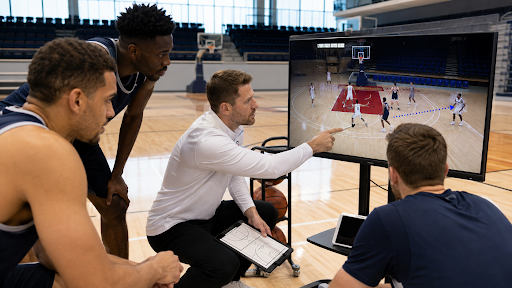
A made basket can hide a poor decision. A missed shot can complete a well-executed possession. Coaches know this in principle, yet film sessions still drift toward the most visible event: whether the ball went through the rim.
That habit creates noisy feedback. A contested pull-up may earn praise after a lucky make, while an open corner three draws criticism after a miss. Better evaluation separates the decision, the execution and the outcome.
One Result Tells Only Part of the Story
A single outcome can create a misleading impression of the process that produced it. Each spin in online pokies is generated independently, so a recent win or loss does not make the next result more predictable. Basketball involves skill and tactical choices, but coaches fall into a similar evaluation trap when one made or missed shot defines their assessment of an entire possession.
Consider a 38 percent three-point shooter taking an uncontested corner shot. Even under favorable conditions, most attempts will miss. One failure says little about the read. The relevant questions are whether the pass arrived on time and the offense created the intended advantage.
This distinction now has analytical support. A 2025 study published in the International Journal of Sports Science & Coaching introduced Expected Action Value, a model comparing a ballhandler’s immediate shot and passing options. Instead of judging only the action taken, it estimates the value of alternatives available at that moment.
Three Parts of Every Shot
Breaking a possession into three stages gives film review a cleaner structure.
| Stage | Coaching question | Example |
| Decision | Was the correct advantage identified? | Corner defender helped into the lane |
| Execution | Was the chosen action performed properly? | Pass reached the shooting pocket |
| Outcome | What happened after release? | Open three missed long |
A coach may grade the decision and pass positively while flagging the shooter’s balance. That is more useful than labeling the entire possession a failure.
Shot Quality Needs Context
Two attempts recorded at the same coordinates can have completely different levels of difficulty. A useful review should account for:
- the nearest defender’s position and closing angle;
- whether the shooter caught the ball in rhythm;
- the remaining shot-clock time;
- possible passes after the defense rotated;
- the lineup’s offensive-rebounding coverage;
- the player’s established range and role.
A three with 14 seconds left, a defender recovering and a teammate open at the rim deserves a different grade than the same shot with two seconds remaining. The Expected Action Value research supports this contextual approach by comparing the selected action with the other shots and passes available at that moment.
The box score records both attempts in the same way. Coaching analysis must preserve the circumstances the box score removes.
Makes Can Require Correction
Result-based coaching becomes especially dangerous after difficult makes. A guard rejects a screen, drives into two help defenders and scores a fading bank shot. The crowd responds, the bench celebrates and the possession appears successful.
Film may reveal that the roll man had inside position and a pocket pass would have created a finish at the rim. Praising the shot without discussing the missed read rewards a choice that usually produces a worse return.
The coach can acknowledge the finish while showing the available pass. The basket was difficult, and the decision can still improve.
Misses Can Confirm the Offense
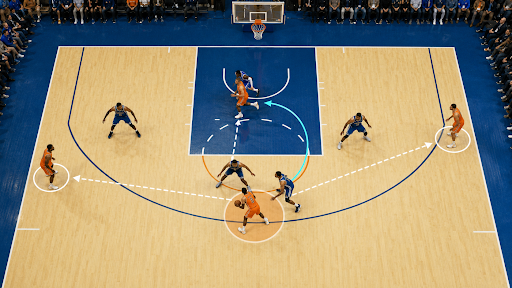
The reverse situation matters just as much. Suppose a team runs a Spain pick-and-roll, forces the low defender to tag the roller and sends the back screener into open space above the break. The final three misses, but the action produced exactly what the staff designed.
That possession deserves reinforcement. The screen angles worked, the ballhandler held the help defender and the pass beat the closeout. Criticizing only the miss can produce hesitation when the opportunity returns.
Good offenses depend on repeated sound choices. A system cannot function when players abandon open shots because the previous two did not fall.
Film Language Shapes the Next Possession
Players quickly notice what receives praise. If coaches celebrate every make and criticize every miss, the stated commitment to process carries little weight. Feedback should name the behavior that can be repeated.
Useful comments are specific:
- “The early pass forced the second rotation.”
- “The shot was open, but the feet arrived late.”
- “The drive drew two defenders; the corner read was available.”
- “The decision was right, and the next possession needs the same spacing.”
This language supplies an action for the next trip rather than a verdict on the previous one. Process-based evaluation does not excuse poor preparation, rushed footwork or ignored teammates.
Build a Grading System Players Understand
Staffs can mark each possession with separate decision and execution grades, then record the result without allowing it to control the other scores. Three labels—positive, neutral and negative—are often sufficient.
The categories should remain stable across games and players. A star should not receive a positive decision grade for the same contested attempt that earns a reserve a negative one. Role and ability matter, but the criteria must be explained before film begins.
The aim is not to remove emotion from basketball. It is to stop a single bounce from becoming the entire lesson. When players understand which reads created value, sound possessions become easier to reproduce even on nights when the scoreboard offers little reassurance.