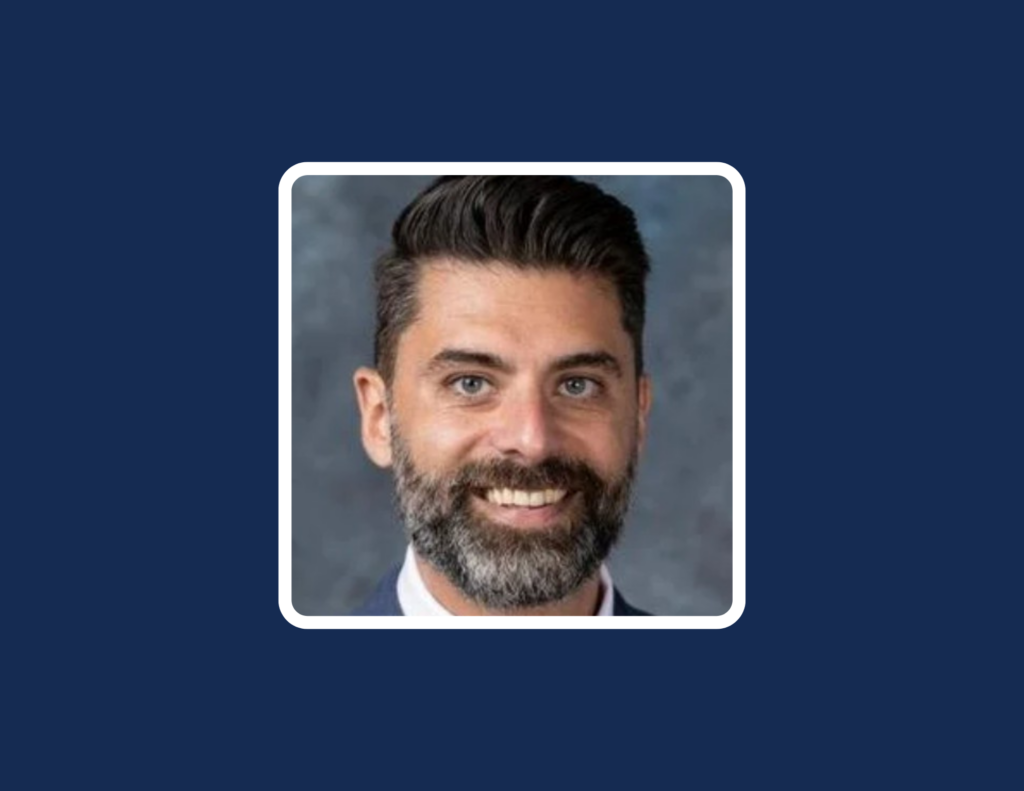
ARI MILLER – FOUNDER OF ASM PERFORMANCE – EPISODE 1280

Website – https://www.asmcoach.com/
Email – coacharimiller@gmail.com
Instagram – https://www.instagram.com/arimillercmpc
If you listen to and love the Hoop Heads Podcast, please consider giving us a small tip that will help in our quest to become the #1 basketball coaching podcast.
Ari Miller is the founder of ASM Performance and a Certified Mental Performance Consultant who helps athletes, coaches, executives, and organizations perform more consistently under pressure. Miller began his career as a college basketball coach, serving on staff at St. Michael’s College, Bryant University, and the University of Vermont. He brings more than 15 years of experience in college athletics as a coach, administrator, counselor, and performance specialist. Miller has developed and led mental health, leadership, and performance programs at several NCAA institutions, including Vermont and Johns Hopkins. In 2024, he began working with New York University Athletics as a mental performance consultant for its student-athletes and coaches. Through individual coaching, team workshops, and leadership development, Miller provides practical, evidence-based strategies designed to strengthen confidence, focus, resilience, and sustained high performance.
On this episode Mike and Ari discuss why physical preparation is essential for athletic success, so too is the mental preparation that athletes must undertake. Throughout our conversation, we explore the intricate relationship between mental resilience and athletic performance, delving into strategies that foster confidence, focus, and composure under pressure. Miller shares invaluable insights gleaned from his work with athletes, coaches, and organizations, illustrating how tailored mental performance strategies can lead to sustained high performance. Cultivating a strong mindset is not merely advantageous but essential for those striving to excel in the competitive arena of basketball.
Follow us on Twitter and Instagram @hoopheadspod for the latest updates on episodes, guests, and events from the Hoop Heads Pod.
Make sure you’re subscribed to the Hoop Heads Pod on iTunes or wherever you get your podcasts and while you’re there please leave us a 5 star rating and review. Your ratings help your friends and coaching colleagues find the show. If you really love what you’re hearing recommend the Hoop Heads Pod to someone and get them to join you as a part of Hoop Heads Nation.
Grab your notebook before you listen to this episode with Ari Miller, founder of ASM Performance.
What We Discuss with Ari Miller
- Why performance routines serve as a critical component in fortifying one’s mindset for optimal performance
- His transition from coaching to mental performance
- Understanding the interplay between cognitive responses and physical performance is essential for athletes facing pressure situations
- Athletes must actively prepare their minds, much like they physically prepare their bodies before competitions
- Building self-awareness is crucial for athletes to navigate their mental challenges effectively in high-pressure situations
- Why athletes often struggle with performance anxiety, which can severely impede their ability to deliver
- The mind-body connection is critical in sports; mental training is as vital as physical training
- Understanding your own unique mental preparation style
- Emotional resilience and the ability to navigate adversity are paramount skills for athletes
Like this show? Please leave us a review here — even one sentence helps! Consider including your Twitter handle so we can thank you personally!

Your first impression is everything when applying for a new coaching job. A professional coaching portfolio is the tool that highlights your coaching achievements and philosophies and, most of all, helps separate you and your abilities from the other applicants.
The key to landing a new coaching job is to demonstrate to the hiring committee your attention to detail, level of preparedness, and your professionalism. Not only does a coaching portfolio allow you to exhibit these qualities, it also allows you to present your personal philosophies on coaching, leadership, and program development in an organized manner.
The Coaching Portfolio Guide is an instructional, membership-based website that helps you develop a personalized portfolio. Each section of the portfolio guide provides detailed instructions on how to organize your portfolio in a professional manner. The guide also provides sample documents for each section of your portfolio that you can copy, modify, and add to your personal portfolio.
Aiming to go D3? The D3 Recruiting Playbook gives you a clear, step-by-step roadmap to the recruiting process – what coaches value, key milestones from early high school through application season, and how to build a target list of schools that fit your needs.
We’ll demystify researching D3 programs and how to stand out without chasing every camp or showcase.
The modules cover things like writing emails to coaches, building an effective highlight tape, using social media well, planning ID camps and visits, and navigating application strategy.
You’ll get templates, checklists, and an outreach plan to communicate confidently, learn how to compare financial packages, and avoid common missteps. By the end, you’ll have a prioritized school list and a decision framework you can use to land your best-fit opportunity.

Give With Hoops is a groundbreaking initiative that fuses basketball analytics with modern sponsorship. Built for teams who see data as opportunity, from AAU programs to college powerhouses.
By tying on-court performance directly to community and sponsor engagement, Give With Hoops help programs raise more while deepening support from those who believe in the game.
Traditional fundraising disconnects donors from the action. Sell candy bars, wash cars, beg for donations, it’s exhausting and ineffective. Players perform better when their stats matter beyond the scoreboard. That’s why Give With Hoops was created.
Give With Hoops connects game performance to community support. Every basket, rebound, and assist becomes a chance to raise funds. Transparent, exciting, and proven to raise 3x more than traditional methods.
THANKS, ARI MILLER
If you enjoyed this episode with Ari Miller let him know by clicking on the link below and thanking him via Email.
Click here to thank Ari Miller via Email
Click here to let Mike & Jason know about your number one takeaway from this episode!
And if you want us to answer your questions on one of our upcoming weekly NBA episodes, drop us a line at mike@hoopheadspod.com.
TRANSCRIPT FOR ARI MILLER – FOUNDER OF ASM PERFORMANCE – EPISODE 1280
[00:00:00] Narrator: The Hoop Heads Podcast is brought to you by Head Start Basketball
[00:00:20] Ari Miller: Performance routines are an essential piece of strengthening your mindset, preparing your mind for what it’s about to do next. You can’t just roll up to the game, not stretch, and play. So your mind is the same way.
[00:00:33] Mike Klinzing: Ari Miller is the founder of ASM Performance and a certified mental performance consultant who helps athletes, coaches, executives, and organizations perform more consistently under pressure.
Miller began his career as a college basketball coach, serving on staff at St. Michael’s College, Bryant University, and the University of Vermont. He brings more than 15 years of experience in college athletics as a coach, administrator, counselor, and performance specialist. Miller has developed and led mental health, leadership, and performance programs at several NCAA institutions, including Vermont and Johns Hopkins.
In 2024, he began working with New York University Athletics as a mental performance consultant for its student athletes and coaches. Through individual coaching, team workshops, and leadership development, Miller provides practical, evidence-based strategies designed to strengthen confidence, focus, resilience, and sustained high performance.
Are you or an athlete you know planning to go D-III? Check out the D-III Recruiting Playbook from D3 Direct. Their playbook gives you a clear step-by-step roadmap to the recruiting process, what coaches value, key milestones from early high school through application season, and how to build a targeted list of schools that fit your needs.
The playbook demystifies researching D-III programs and how to stand out without chasing every camp or showcase. The modules cover things like writing emails to coaches, building an effective highlight tape, using social media well, planning camps and visits, and navigating application strategy. You’ll get templates, checklists, and an outreach plan to communicate confidently, learn how to compare financial packages, and avoid common missteps.
By the end, you’ll have a prioritized school list and a decision framework you can use to land your best fit opportunity. Click on the link in the show notes to get your D-III Recruiting Playbook from D3 Direct.
[00:02:25] Jonas De Bruyne: Hi, this is Jonas De Bruyne, international basketball coach, and you’re listening to the HoopHeadz Podcast.
[00:02:34] Mike Klinzing: GiveWithHoops is the first platform turning basketball analytics into fundraising impact. Every stat tells a story, and now every story drives sponsorship, engagement, and team growth. Programs nationwide are transforming basketball stats into funding power. Learn to use performance data to attract sponsors, engage fans, and raise more with every play.
GiveWithHoops will help you raise three times more money for your program as their stat-based pledges consistently outperform traditional fundraisers. Visit givewithhoops.com/hoop-heads-podcast to learn more and take your fundraising to the next level. GiveWithHoops
Grab your notebook before you listen to this episode with Ari Miller,
[00:03:19] Ari Miller: founder of ASM Performance
[00:03:23] Mike Klinzing: Hello, and welcome to the Hoopeds podcast. It’s Mike Klinzing here tonight without my co-host, Jason Sunkel, but I am pleased to be joined by Ari Miller from ASM Performance. Ari, welcome to the Hoopeds pod.
[00:03:37] Ari Miller: Mike, thank you. Thanks for having me. Great to be here with you.
[00:03:40] Mike Klinzing: Absolutely. Thrilled to have you on, looking forward to diving into all of the interesting things that you’ve been able to do in your career, and diving into some specifics about mental performance and how coaches who are listening to the episode can take some of the things that you’ve done working with teams, working with players, working with coaches, and apply them in their own situation.
But I want to start by going back in time to when you were a kid. Tell me about how you fell in love with basketball. What do you remember about the early years of the game? Who were some of your influences? Just give me an idea of kinda what your childhood looked like in terms of basketball.
[00:04:16] Ari Miller: Sure. So I fell in love with basketball pretty early on in my life, and I grew up in northern Vermont, just outside of Burlington.
And in a pretty small town, basketball was not something that was necessarily in my family or passed down to me. It just, I saw the game at a young age and something clicked. My first memory of watching hoops is the nineteen eighty-nine National Championship game, Michigan-Seton Hall. I remember, I have s- memories of sitting down with my dad, watching that game on TV, and just being floored by all of it, every aspect of it.
So got into it at a really young age and just tried to play as much as I could. The opportunities weren’t that plentiful in a pretty… in a small town, playing rec basketball on Saturdays. But, mixed in learning how to play and trying to become a player with just loving the game itself.
So everything that was whether it was following the NBA, following college basketball, trying to learn the ins and outs of the game all of the culture that goes with it, the sneakers, the music, just how the NBA was I was in that late ’80s, early ’90s as a kid, so I got to experience the tail end of Bird versus Magic, and then the Isiah Thomas Pistons, right into Jordan’s, rise to becoming this mythical figure that we all know now.
So that really lined up with just me coming of age, where I was already into this thing, and then it had its, I don’t know what you’d want to call it, but it went from what it was to what it became now through these very dynamic superstars, and then all the drama, that, that goes with that.
So that was what really, all those factors kinda made me fall in love with with the game, with the NBA, with college basketball, and that, that was really how I got my start with… as a pretty young age.
[00:06:01] Mike Klinzing: What was your favorite championship team of that era when you were young growing up?
[00:06:07] Ari Miller: So I, I have to I’m a little bit biased towards the ’89 Pistons, similar to that the Michigan State and Hall game. That’s the first finals I remember watching. They swept the Lakers in four games, and as a smaller guard, the Pistons won a championship with their, probably their two best players being guards.
Joe Dumars was the MVP of the ’89 finals. Isiah Thomas was who he was. Rodman wasn’t quite himself yet. He was, I think, his second year. They had some… they brought in Mark McGuire that year. Laimbeer was a big part of their team, Rick Mahorn. But their key guy was listed as 6’1″. He was probably 5’11”.
So that Pistons team, you can talk about them in a lot of ways, and I probably wasn’t old enough at the time to understand how they were playing defensively and some of the hard fouls in the paint and all the drama that came with that after the fact. But those ’89 Pistons always to me will be the team where I first was like, wow, this is incredible to watch th- these, guys who aren’t seven feet tall dominating a series and winning a championship.
[00:07:06] Mike Klinzing: Isaiah is a guy who, because of the rift, let’s say, with Michael Jordan, and probably in all circumstances could have, should have been maybe on the dream team, but- … his fractured relationship with Jordan, I think has maybe knocked him down a peg historically for- Yeah … how great of a player that he was.
And again, in an era where guards were separated more into this guy’s a point guard, this guy’s a scorer. And Isaiah, I think probably walked that line as well as anybody in that era of, if you need him to be a pure point guard, he could be that pure point guard, and distribute and get other guys involved.
And if you needed him to score, even on a turned ankle in the finals and put up- … 42 against the Lakers- … he could do that as well. And I think that’s been lost to history just because, again, he was on the other side of the Jordan rules. And clearly, there’s a lot of people that have Jordan hanging on their wall and not nearly as many people that have Isaiah- Yeah
Thomas hanging on their wall. But I think historically, Isaiah’s probably been underrated, as you said, as one of the few small guards. And really hadn’t seen it in a while until we just saw Jalen Brunson do it this year for the Knicks- Yeah … a- as a small guy leading a team to a title. So I think historically, Isaiah’s pretty underrated.
[00:08:33] Ari Miller: Yeah, I couldn’t agree more. The dream team the walking off after the ’90 those ’92 playoffs, and or ’90– It was the ’91 playoffs, actually, when they don’t- ’91, yep … shake hands going into the ’92 summer. That whole drama does take away from… If you really look at it from ’87 to the– So they win in ’89 and ’90, but in ’87 they’ve got the Celtics beat, game five in the Garden, and that’s that famous la– is that, Bird steals it.
The Pistons win that game, they might go to the finals. In ’88, they go to seven games against the Lakers. That’s where you just, that sprained ankle in game six. So they won two. A few things fall a different way, they could’ve won three or four in a row. They were that good of a team from ’87 to nine, to ’91.
So yeah, that, I think he gets overlooked. I think– I say this often to some of the players and teams I’m working with if we’re talking NBA and I’m a little biased ’cause of my age and my era, but he do- Kyrie Irving is a player cop with him. Kyrie’s a little bit more dynamic around the rim and maybe a little longer, but in terms of just ability with the ball, creativity in the paint, shot making, like that’s a decent comparison for players who haven’t really seen Isaiah play.
[00:09:44] Mike Klinzing: I agree with you there. I think that’s a really fair comparison. And in a lot of ways, just the When I think of Isiah, I think of the ball handling, right? I think about his ability to get into the lane at that time. And it’s, the game is so different now. A- as you well know, the things that you might have tried to do on the floor, that I might have tried to do on the floor that we couldn’t get away with, that would’ve been called a travel instantaneously, that now from a footwork standpoint, players can do.
The game has changed so much. It’s funny, even when I’m working with … the other day, I was in the gym with my son, and I’ve always worked on with m- a couple of my kids a step through, and then I’m always like, “You have to keep your back foot down when you go up.” Yeah. And now I’m like I’ve been watching games now for the last three years at high school, middle school, college.
It never gets called. I’m like, I have to readjust my teaching. Yeah. Hey, you can step through, and now guess what? You can pick up that foot and go with a one-footed finish or whate- So it’s just interesting when you think about, again, Kyrie versus Isiah, the sort of everybody thinks of Kyrie as having this tremendous bag, which he obviously does, and yet at the same time, the restriction on footwork and pivot feet and just steps and how you can move your body, completely different.
And sometimes you wonder, again, what would an Isiah Thomas, what would a Michael Jordan look like with the ability to do some of the footwork things that would’ve been called a travel in their day that in the modern NBA guys can, I don’t know if get away with, but it’s just become part of the game, and the rules have d- have changed or morphed in that way.
So it’s interesting to think about.
[00:11:18] Ari Miller: No doubt about it. A- and the rules have shifted towards offense, as you c- the final scores of games over the last 10 years, you go look at some of those nine the Bulls/Jazz games, it’s like 88, 85 finals, and it’s like-
[00:11:30] Mike Klinzing: Yeah …
[00:11:31] Ari Miller: rock fights. And just, I remember think learning about illegal defense, right?
Where it was like you either had to go double the ball in the post, you had to either commit to the double or you couldn’t be below the free throw line or they would just call it, it would be a technical foul. All these things that have made it easier to score and, … So yeah, it’s interesting to think about what those guys could have done with the game being completely different.
[00:11:53] Mike Klinzing: In so many ways, I say this all the time, that the game that I played as a college basketball player from ’90 to ’92, in many ways is unrecognizable to me. I can probably count, Ari, the number of ball screens that I was involved in as a ball handler or as a defender, I might be able to count those over a four-year career on maybe one hand.
Maybe I would get to two Just wasn’t part of the game. It was all Bobby Knight motion offense. I think about- Yep … I don’t believe I ever penetrated into the lane and then threw a pass from the lane back outside the three-point line. Now, I might’ve dumped it off to somebody cutting or somebody on the opposite block, but there was no guy- Yeah
fading to the corner for me to hit for a corner three. There was no me under the rim turning and kicking it back out to the top. Like those plays, I tell players all the time, they didn’t exist. Like it wasn’t even on the radar. I don’t think I ever made that pass once in my entire career, and now you watch games at every level, and those passes are critically important to how the game is played.
So it’s just- Yeah … it’s really interesting to look at how the game has changed and morphed. And so let me take that concept and throw it back at you with a question about, as you’re playing the game as a kid, is coaching something that you’re thinking about while you’re still playing? Do you feel like you were thinking the game as a coach and thinking, “Hey, maybe someday that’s what I want to do”?
Or do you think you were more focused on, “I just love basketball. I love playing. I’m thinking about it from a player perspective”? Which one of those maybe fits you better?
[00:13:41] Ari Miller: I think as I got into high school and started getting around better players and then going away to some summer camps, there was a group, a small group of us, three or four guys, who were trying to all play in college, and we went out to, at that point it was, like, Five Star was the camp to go to, and we, we were 15 years old, and we went to Five Star Camp.
And after doing, that summer, I remember thinking about, “Wow, I just learned more about basketball in five days than I’ve, than I could possibly have imagined.” So I think that was w- was when I started thinking about I really just love everything about trying to the chess match of this game and all the different strategy.
I think simultaneously what was happening at that point was I was realizing, okay, I’m not very tall or athletic, so if I want to keep playing this game, even to make varsity at my high school, I need to understand. I have to think this game. I’ve have to be ahead, a step or two ahead of everybody else, ’cause I wasn’t going to be able to just go into a pickup game and go, put my elbows on the rim or block a shot.
So I had to figure out a way to even play, which was to think the game. So I very early on, I think in that point, maybe 14, 15, started thinking about coaching and wanting to be a part of the game in that way. At, even in high school I started helping out with AAU teams as well. Junior, senior year I started coaching younger AAU teams in my area.
So I think there was a part of me, whether I probably wouldn’t have admitted that to you when I was 16, that I came back from Five Star “Wow, I’m not that good at this game as much as I love it.” Matched up with s- some guys there that opened my eyes to it. I think that’s probably where the coaching part of it came in, into play for me, was just my overall interest in learning about the game and also realizing, all right, I’ll play as long as I can, but a lot of the tools you need to play this game I just don’t think I have physically, so I’ll see what I can do.
[00:15:34] Mike Klinzing: Yeah, that makes sense. And- Five Star is another thing when you talk about a different era of basketball. I always say, if you were to take the top 15 or 20 high school players today and tell them, “Okay, you’re going to go to Robert Morris or Honesdale, or wherever it was that you went, and you’re going to play on some converted tennis courts on the asphalt against the other 15 or 20- Yeah
best players in the country with your shirt off,” and i- it’s just the way that, that, that era of basketball was versus the way that it is now, and the access that players have to gyms and tournaments. And it goes to… We’ve ta- Yeah … I’ve talked about this on the podcast millions of times, but Five Star to me just encapsulates the difference between sort of the pickup playground basketball culture that was around.
Certainly when I was a kid, probably was getting closer to flipping as you were as you were coming up. But then now has flipped completely where those best guys, h- have they ever played a competitive basketball game outside five on five on cement or asphalt? I’m not-
[00:16:49] Ari Miller: Yeah …
[00:16:50] Mike Klinzing: I’m not a, I’m not a, I’m not 100% sure.
So it’s always- Yeah … whenever I hear Five Star, I always have fond memories. I had a chance to go for one, one time, and again, just like you said, a remarkable experience. The level of play and even probably more impressive than the level of play, just the level of coaches that you got an opportunity to be exposed to at, at-
[00:17:09] Ari Miller: Incredible
[00:17:10] Mike Klinzing: It was just, it was an inc- it was an incredible experience.
[00:17:12] Ari Miller: Yeah. Th- that camp may have fueled the fire more than anything for me. Just n- not necessarily to play or to coach, but just to love the sport, and those experiences with those guys I went with, that was the thrill of our year to be able to just see if we could stack up against guys from all over the East.
Basically anyone from DC to the tip of Maine was at Honesdale or at Robert Morris. And then on top of that, being from a small town and, growing up in northern Vermont- Our junior year, we were at a camp with Jay Williams, Steve Blake. Those were the two best guys. Mike Dunleavy Jr.
was there. A bunch of other really high-level guys. We got to watch Jay Williams and Steve Blake basically play a pickup game for the championship, sit in front row, and they were our age. It was unbelievable. They w- they were going head-to-head right in front of us. It was unbelievable.
I’ll never forget that. Yeah … and then to see those gu- to they go in the ACC and have all those battles in some of the biggest games you could possibly have, to get a chance to sit there, you’re 16 years old, and you’re sitting five seats down from Coach K watching those guys play, it was…
There was nothing like it. Really nothing like it. Yeah,
[00:18:19] Mike Klinzing: that, that’s incredible. Again, the opportunity to see those guys, like you said, up close, they’re your age. The week I was there, Billy Owens was the guy, and I still remember- Oh … Garf talking in front of everybody, standing up and Billy Owens was on.
He was on the plan where he had to serve milk in the cafeteria so he could get his free, f- get to camp for free. But I remember Garf standing up and goes, “Here he is, Billy Owens, the Baryshnikov of basketball.” And that was the nickname for Carlisle, Pennsylvania back in the day. And yeah, just crazy that you think about the names and the players who went through that camp.
It’s just, again it’s incredible. So let’s circle back to your, circle back to your journey. UMass Amherst. Talk to me a little bit about your college experience and what you were thinking about in terms of career. You get involved with the basketball program. Just walk me through the college experience for you.
[00:19:15] Ari Miller: So I graduated from UMass Amherst. I started out at Hamilton College in Clinton, New York. I was a D3-ish recruit. I had a few schools recruiting me and ended up going there. I lasted a couple years there, and didn’t work out plan-wise, wasn’t quite good enough. That was a really high-level program at that point and pretty much maxed out what I could do as a player, and kinda had to get to a crossro- I came to a crossroads whether I liked it or not.
And I think that was the beginning of my career now, was that in, 2001 when my playing career wasn’t going the way I hoped it would go, there really wasn’t anyone to talk to. I didn’t really know where to go, and any of the other Division III schools that had been recruiting me were like you didn’t play at all the last two years, we don’t want you.”
So my career ended just because it ended, and that was always– that was a really tough time in my life. It was hard pill to swallow at that point. And I was trying to figure out, how do I stay involved in basketball? I want to coach. And I was lucky enough that the director of operations Paul Coppolo, who’s now the head coach at Castleton University, had been an assistant at St.
Michael’s College where, around where I grew up. I used to go play pickup with those guys. They’d let me in. And so he ended up being at UMass, and I called him for advice, and he was like if you want to get into coaching, come to school here and be a manager, and we’ll, give you exposure to the game.”
So that’s what I did. And I was able to be around Steve Lappas for a couple years, that whole staff, and just learn about high-level basketball in a way that there’s no real other way to do it than to just be sitting around doing whatever’s needed. And that, that was how I got my start in it.
I did a lot of video stuff. They didn’t have a video coordinator at that point, so I was learning the video editing software, and we were still doing VHS stuff, so I was digitizing VHS. But that takes real time, so you have to s- you can’t there’s no– you weren’t converting it. It was just digitizing it in real time.
So I was a lot of time in the film room and being around in the meetings, getting lunch, getting coffee, and learned about not only that level of basketball, but just the dynamics of a coaching staff and the hierarchy, how responsibilities are divided up, and just to be around it i, in any way that I could.
[00:21:27] Mike Klinzing: Did you know right when you got involved in it that, hey, this is kinda what I want to do? Did you know right away?
[00:21:35] Ari Miller: So yeah, yes and no. I loved the basketball side of it, and I loved being part of the team. I think I was taken aback by the lifestyle of it, and the hours, and just how intense and stressful, and that to me was eye-opening for sure.
I don’t- I- that part made me maybe take a step back and say, “Wow, is…” “This is… Does this fit my personality? Am I… could I do this?” But it ended up being that I wanted to give it a shot, but that was… It definitely, I had some pause. I was… when you didn’t really know, I…
It’s interesting in life when you think you like something and then you see what it really is and you’re like, “Whoa, I didn’t realize it was like this.” So that was my, my, what- whatever you would call it my just, my eyes were opened fully to this is what high-level competitive basketball looks like, and what it looks like to be on a coaching staff, and the travel, and when things don’t go well how it feels, and all those things.
[00:22:28] Mike Klinzing: It’s interesting to hear you say that because I think back to my experience as a player, and I know that when I was playing, I was one of those guys that I never really thought about what my coaches were doing. I never really thought about the game from a coaching perspective. I usually looked at it from how can I improve my performance to help our team improve their performance?
And that was where it began and ended for me. And when you talked about, “Hey, I’m going to get an opportunity to go and be a manager,” I remember thinking as a player, it never once in four years of playing college basketball crossed my mind that, hey, the guys who are managers for our team, maybe one of the reasons why they want to do that is to get into coaching.
That never once crossed my mind. It was always like, oh, they much just like hanging out with the players and the team and all. Never- … crossed my mind that being a manager was a pathway to- … becoming a coach. And then I think what you talked about in terms of not understanding what is going on a coaching staff behind the scenes that players don’t see.
I had no idea the amount of time and energy and effort and in the office at whatever time and out of the office at whatever time that my coaching staff was doing. In my vision of it, maybe I stop in during class to talk to them about academics, and so somebody’s in the office and they maybe they get there 15 minutes before practice starts.
And then as soon as practice ends and I’m done with my shower and the locker room clears out, I’m sure they’re heading home to dinner and whatever. And you just don’t, I didn’t at least think about in any way, shape, or form what that coaching lifestyle looks like. And I can certainly think where if you didn’t realize that stuff, and then all of a sudden you’re like, “Hey, I’d like to coach,” and you get into that, you’d be like, “Whoa, this is way more than what I ever would’ve, what I ever would’ve guessed.”
And it’s funny, Ari, because the year I graduated from school, the NCAA had two graduate assistant positions
Leading into, so I graduated in ’92, so in, in ’93 they cut that back to one. And almost every school had those staggered. So I wanted, I thought I’m going to try to get into coaching. My playing career is over. I don’t know if I’m going to get an opportunity to play anywhere. Let me get into it. And I sent 200 letters to people- and saying, “Hey, I’d love to join your staff as a graduate assistant.” Obviously, I didn’t hear back from everybody, but I heard back from, several people, especially in our league and whatever, and they’re like, “We’d love to have you, but we have a guy that’s coming back for a year,” because we had them staggered.
So nobody… There was basically, the year I came out, there was no jobs. And I often think about what would’ve been, like, how shocked would I have been to go from what my perception of coaching was to what I was really going to be asked to do. I’m not sure, I’m not sure I would’ve been ready for that to piggyback off what you said.
You look at it and you’re like, “Whoa.” So you obviously got over that. So when you go out to start looking for that first opportunity, what does it look like?
[00:25:41] Ari Miller: So I started out, after that experience, because I had done so much of the video work, I ended up working with the company that did the sports editing software.
They were called Pinnacle Systems. I think they were bought by Exo, so I’m not sure what they’re called now. But I started out just going around working with them to try and use that as leverage to get a coaching job. It was, it’s just as as many of the people listening probably know, it’s, those are s- the market for getting jobs is nearly impossible.
There’s thousands of people that want ’em every year. There’s very few spots. So I did that, and then I was lucky enough at St. Michael’s College, was able to get a job in student life there, so working in, at the college, and then got a volunteer assistant job for Coach Tom O’Shea in 2006. So I was living in an on-campus apartment, supervising residential life staff and doing all that stuff, and then moonlighting, in theory, as an assistant.
But that was my, what I really wanted to do, and that was a volunteer position, so I, he’d give me… if camp went well, I’d get a few thousand bucks, but for the first two years I made no money coaching and was just trying to learn as much as I could and be around. And so that was how I got my start, was getting another job and then volunteering as a coach on, at the college I was at.
[00:27:00] Mike Klinzing: I always say it’s the glamorous life of a college basketball coach, right? It’s all the money you’re making, it’s all the publicity, and you’re on TV all the time, and you got a beautiful place to live and all this stu- In so many ways, there are so many guys that have a start like you, right? That, as you said, there’s thousands and thousands of people that want to get into it.
There aren’t that many jobs. You have to be willing to work for little or no money. You have to be willing to move wherever you have to move, and you have to be willing to do whatever it is that a coach or a coaching staff needs you to do when you come on as the low person on the totem pole. And I think that if you can learn those lessons early a- and get through those times and still love it, then I think you set yourself up for having an opportunity to have a pretty good career and have some good opportunities.
‘Cause again, like you said, part of what helps you to get a job is the people that you’ve connected with. And when you connect with those people then are the ones that maybe they don’t hire you directly, but maybe they end up saying, “Hey, I got this guy that I know. Maybe you should hire him because if you’re looking for…
If you’re looking for a position.” So just walk me through the next couple of steps and kinda how the career progresses, and even more importantly, what’s your mindset in regard to what you want to do with your career and how coaching fits into that?
[00:28:22] Ari Miller: So yeah I’m in my mid-20s at that point, and I think throughout the course of the whole seven years I was in college coaching, what I said to you about my experience at UMass was always on my mind.
I… as much as I loved basketball and loved teams, there were parts of the profession where I’m like, “Maybe this isn’t a fit for me personally and my personality and who I am.” And, loving basketball is different from wanting to have college coaching be your career. That is, those are two very different things.
And, I often say this to my clients or the guys on the teams I’m working with is that there’s basketball and there’s college basketball. Those are also two different things. And I spent four years at St. Michael’s, and I was lucky enough at that point that part of being there was I could take graduate level classes at, either for a really reduced price or for free.
So I started taking psychol- graduate level psychology classes, just one or two at a time. And initially it was, I had an interest in coaching and people, and I wanted to leverage those two things and maybe that makes me a better coach. And so I started out, a class here, a class there, and then as the years go by, I ended up finishing the master’s in psychology at St.
Michael’s, which then propelled me into this phase of my career. But I stayed in coaching for three more years. I went down to Bryant University, where I was the director of operations there in Smithfield, Rhode Island. They were in the third year of a four-year transition to Division I. So we played a Division I schedule, but we weren’t able to participate in the conference tournament.
We were the roster was kinda half of the Northeast-10, Division II guys who were all great players, and then for… that’s a fantastic league, still is to this day. And so I spent a year there. And then just I got extremely lucky with a coaching change happens at the University of Vermont, and then Coach John Becker gets promoted and gets the head job, and he offered me a spot as the director of operations there.
And I went back and did my last two years in coaching on his staff. And those are some of the, two of the best years of my life both per- personally and professionally with that, with those group of guys and just with that whole coaching staff. I lasted seven full years on the path of like I’m going to be a college coach.
[00:30:33] Mike Klinzing: And what’s the tipping point, or is it a more gradual realization of maybe this isn’t, as you said, the exact match for who I am? I still want to be involved in this space, but maybe not at the same, maybe not in the same way that you were doing during those seven years. So how did you make that transition from, all right, I’m on the college basketball coaching track, to I want to be able to shift and get to this mental performance side where I can still be involved with college basketball coaches, teams, players, but I can do it in a different way.
How did you make that transition? What was the process?
[00:31:16] Ari Miller: So it was a difficult summer that 2013. It w- it was… I kinda felt like I’m at a crossroads here that for a lot of life reasons, just financially looking at guys who were 5 or 10 years ahead of me who were all getting out of the business.
I had a lot of mentors or people who I’d met where I was calling them to check in, and they were like, “Dude, I’m out.” “I’m I’m, I’m, my wife says I’m done.” Or like… So I started seeing all these people who I really looked up to, and when I called them for advice, they were like, “If I were you,” “if I could go back 10 years, I would’ve left coaching 10 years ago.”
So I started hearing that and thinking, okay I have to look in the mirror. Your career and how you pick what you do isn’t just about what you love. It’s about trying to blend passion, joy, and the things that you feel connected to with some level of practicality mixed in with what you have talent in And I was a fine coach.
I think I was okay. I wasn’t terrible, I wasn’t great. But the thing that I was… in hearing feedback from the guys I had recruited or the guys I had coached, the thing that I was always getting a lot of positive was, “Man, you really helped me with the mental side of things,” or, “You really built a strong relationship with me that felt genuine,” or, “I really trusted you like I haven’t trusted another coach.”
And I think having that master’s in psychology under my belt for a couple years and using, maybe even subconsciously using some of those tactics that I had learned to connect, to talk about anxiety and stress, to navigate just getting through a college basketball season, the players were giving me a lot of positive reinforcement around that.
So I think I, I pieced all of that together over that summer and I was like, “Okay, I don’t think I want to just completely switch gears. There are a lot of things about this I love. What am I actually good at? What am I talented at? And what is something that makes me a bit unique in the field that I’m in as opposed to being just like a dime a dozen?”
Some kid who like, played a year and change of D3 and then just wanted to coach there’s a million of those guys. But how many people are blending Basketball, having a basic baseline basketball knowledge and experience with mental performance, sports psychology, things that thinking about how the bo- mind and body are connected, taking specific basketball topics and connecting them to those either psychological concepts or very specific cognitive things that fall maybe more into mental performance.
I, I came to this realization that I think that this is something that I might be able to both have massive impact in terms of connecting with young people and maybe changing the course of their life in a way that if I’m teaching them how to shoot off the dribble, not a bad thing, but maybe not as impactful.
And what do I have a chance to make a career in? That the last thing I wanted to do was be the guy on the other end of that phone call in 10 years with the guy who’s in my shoes being like, “Dude, I have to get out.” So I felt like that was the smart play, was like to to make that shift. And it was very difficult.
I– it wasn’t like… It took me months to really make the decision. Coach Becker was incredible. He basically was like, “Let’s talk about it. Let’s take the summer, talk it through.” He he’s been a unbelievable person in my life and still is to this day. But that, the way he handled that with me, as someone who was just turned 30 or so, I didn’t really know how to handle it.
He really helped me with that.
[00:34:49] Mike Klinzing: So how did what you started out doing or what you envisioned you were going to do, how has that changed from when you first made this shift to what you do now? Does it look a lot like what you thought it would, or does it look different than what you thought when you started on this path?
[00:35:13] Ari Miller: So when I started on this path, it was still on the periphery. I was doing a lot of trying to convince people it was important, and almost like meeting with ADs or coaches and trying to sell them on the idea that this is a competitive advantage. For so many years, and so often, mental health is combined with mental performance, and they’re both…
Mental health is incredibly important, more important than mental performance. Without your mental health, you can’t even get to the mental performance. But that, it wasn’t really talked about that much. There wasn’t a lot. There was a handful of programs that had Dr. Bob Rotella had, was the pioneer, at least to my knowledge, of working with college hoops.
I think he was with Virginia for many years. I read all his books. I was really trying to be like him, but there weren’t, it wasn’t like every team had somebody. So at the beginning, it was a lot of trying to convince people that this was of value, and I started out consulting with a local prep school where I lived, and I started taking on private clients.
So mostly high school players at that point, and I would meet with them once a week. I would go do talks with teams, and it was, this was pre-COVID, pre-Zoom, so everything was in person. And that was how I started the first couple years, was just trying to build a business around this idea, and it was slow.
There were some months where I was like, “What did I do?” I’m not ma- I’m making no money. I don’t know if this is even a real thing. I think it is, but maybe it isn’t. So had some dark days where I’m like, “Man, did I make a mistake? Should I have just stayed in coaching? Should I have just switched careers?”
I was very unsure if this was going to become anything. So a couple years of that, and then it slowly started to pick up steam, and I think what really propelled it was some high-profile athletes talking about it and being more open and vulnerable about working with a mental performance coach, the challenges that they’d had with anxiety or with the pressure that they felt, and how navigating that with a coach actually allowed them to continue their careers.
Michael Phelps comes to mind. His, he had some mental health challenges, too, but that was a big one. Ron Artest in his post-game interview after winning with Kobe like references his sports psychologist. Little things like that kinda just happened and allowed m- gi- gave me some talking points to have this feel like, oh, this is something that high-level athletes are benefiting from.
[00:37:40] Mike Klinzing: Let’s talk a little bit about some of the specifics that you work with players, teams, coaches with. What are some of the big, whether, I don’t know if issues is the right word, or whether it is just certain aspects of mental performance that you feel are common themes that a lot of athletes or coaches or teams deal with in your experience?
[00:38:06] Ari Miller: So that has shifted a bit over the last couple years with how college basketball has shifted, but I think there are some themes that come up a lot for me. Performance anxiety is number one and how we navigate the cognitive and the somatic response to doing something that we really care about that is our full identity, and this isn’t just for basketball players.
This is any person I’m working with, and I have private clients who are in other sports, I have some people that are in the business world I’ve worked with all different kinds of people in the performance space. But for basketball specifically, at least because that’s the sport I played and also felt like it was a big part of my identity, the weight of what happens in that sport is so catastrophic if it doesn’t go well.
And the understanding that if you have a difficult practice or you get coached hard or you’re struggling to make shots or whatever’s going on for you, the negative thoughts that come with that cognitively are going to be, or what’s called catastrophizing, where you take the smallest thing and turn it into the worst possible thing.
And not understanding that you are observing those thoughts and deciding which ones you want to listen to, what 18-year-old knows that? So you’re essentially many players become victim to just listening to the negative voice in their head, which we all have, right? There’s varying numbers, but I’ve seen anywhere from some people have, I think it’s 30,000 thoughts a day that a person has, right?
And so if you’re practicing for three hours and getting coached and this is the most important thing in your life, that’s going to be the loudest voice. Or those voices that you have are going to be the loudest voices. Now, for some people, that also translates to a somatic response, meaning that they physically feel the, that stress or that anxiety to the point where they, heart racing, sweating, nauseous.
Now there’s a threshold there, right? There’s some of that’s natural and exciting and should be there, and where’s the line, right? And so deciding where’s that line is really important, and that’s something I get to in my individual sessions. Or setting a barometer for what’s expected and what you should feel and what is something that borders on panic or that needs a cognitive skill to, to navigate.
Now basketball specifically, it’s a unique game, and I just did a team session today. Th- there are really specific parts of the game that test us mentally, and one of the biggest ones is free throw shooting. And there’s some obvious reasons, but if you really get into the weeds of it, if you think about it, it is pretty counterintuitive to the rest of the game.
Basketball’s a flow game. You may go 10, 12 possessions where there’s really no time to think. Even if you’re open and you have half a second to shoot, whether you’re feeling confident or not, and it goes up. There isn’t that much time to hear that n- that voice in your head or to feel the somatic response.
But from the second you get fouled to when you go to the line and shoot two free throws can be 40, 60, 70 seconds of stoppage. Now, in addition to that stoppage, everyone’s just staring at you. So free throw shooting is really about how you navigate attention. How do you feel about the spotlight being on you?
Do you like attention? Do you… Are you a shy person? There’s all these little things. So that would be one area where I really get into the weeds with my private clients and my teams. If you can shoot 75% from the line as a team, every time you’re getting fouled, that’s 1.5 points per possession if you’re shooting two.
That would be the most efficient shot ever. You’re never going to get that in a half court possession. You’re not even going to get that on a layup. So I try to k- for the teams I’m working with or for the players who don’t know anything about mental performance, I always try to really connect it to the specificity of basketball, so it isn’t just this general thought that you could hear on TikTok or some corny idea that you’re like, “Oh, I’m never going to use that.”
I’ve found that some mental performance coaches or some people will just boilerplate it, and that’s fine. It’s not a bad thing. But to reach a college player or to connect with a team, the work that I do is as specific as possible to, to the experience of the sport
[00:42:09] Mike Klinzing: It’s a great answer, and I’m going to throw a personal experience that I had during college at you and get your advice.
And after you’re done giving me this advice, I’m going to wish that you had been there next to me when I went through what I went through. And I’ve thrown this at a couple other people, and just that have come on the podcast that are in this space, and answers have been similar, but I always love just hearing what somebody would have done or said with me when I was in this experience.
So I’ll lay it out for you, and then I’ll let you, I’ll let you take me to the take me to your office a- and walk me through the things that I should have done or could have done at the time to, to help me. So going back to your identity piece, right? As a kid, as a high school player, even as a college player, I would say that the vast majority of my identity was tied up in basketball, for sure.
And as a high school player, and again, I’m what… I graduated from high school in 1988. I still have the season free throw shooting record for percentage at my high school. So I shot- Wow … I think just under 90%. So I was, quote unquote, “known for being a great foul shooter.” Don’t shoot- … don’t foul Mike.
End of the game, Mike’s running for the ball. Mike’s stealing the ball from his own teammates to make sure that he’s the guy- … who’s getting fouled. And that was- Yeah … the mental toughness piece of that. Everything was part of my identity. So I go to college. My freshman year, I play sparingly. My sophomore year, I start the year.
I’m a starter 2/3 of the way through the season. There was not necessarily one thing, but what I remember is that we would do a drill at the end of practice where you didn’t have to make five free throws, but you had to swish five in a row. And at some point, I remember it shifted from me trying to just shoot the ball to me trying to aim the ball and get a swish because I didn’t want to have to get up at 6:00 in the morning, which was the punishment to run if you didn’t make these five swishes in whatever X amount of time.
And it literally went from me shooting, at that point in the season when this happened, I was probably shooting 90% from the line, and I think I went one for my last 10, and literally I was in practice scared to death- … to shoot a free throw. I literally could not get the ball to the basket, and the Ben Simmons, the anybody else you want to say whose career ended, I felt like the yips, whatever, I just could not, I could not figure it out.
I changed my routine. I di- whatever, and the whole time, Ari, while this was happening… Now again, it’s stunning looking back on it that I was a 90% free throw shooter who suddenly was shooting air balls and couldn’t get the ball anywhere near the basket. No one, not a teammate, not a coach, not a trainer not anyone came and talked to me about it at all.
Yeah. And so the season ended and, again, like I said, I ended I think one for 10 i- in my last 10 free throws. And so I leave and over the summer and I go home and I try to figure it out and I’m just, it’s just me. In my head. My dad, I don’t think I really talked about it with him. It was more like an embarrassment for me, so I didn’t want to talk to anybody about it.
And I changed my routine and I got myself to respectability as a junior. I think I shot 76%, and then as a senior I shot 82, which to me is a miracle. L- a literal- … I might be prouder of that than just about anything I’ve done when I think about just the experience of how low it was when I was- at my low point. But I was completely by myself. I would, even thinking about a free throw, like I could feel my bo- Like I’d be sitting on a couch and think about me shooting a free throw, and I would tense up and I could- … feel like just standing there ready to take a sh- I could feel my body tense up.
Nothing on anything else, not shooting in the game, as you said, free flowing. I’m just, I’m not in my own head, but free throws just became this thing that, again, I was, it was such a part of my identity and then suddenly that was just gone. And I had no idea what to do, and I was all by myself. So let’s say, Mike, sophomore year, 1990, comes to you in February.
I don’t… Look I don’t know what happened, but suddenly I’ve got all this nerves, all this energy that I can’t figure out how to channel it in the right way. What do I do? What’s the advice? What do you and I talk about?
[00:47:14] Ari Miller: So what you’re describe– First of all, thanks for sharing that with me.
That’s a really difficult thing to go through, and a lot of young players go through something very similar to what you just described. So the first thing I would probably say to you if you walked into my office or we opened up a call like this is I wouldn’t talk about free throw shooting at all. I would want to learn about you, and I would want you to get reps just verbalizing thoughts and feelings because what you just said and that embarrassment and that feeling oh, I’m not tough enough, or just the act of holding onto those feelings is a weight you’re carrying around.
And if we wa– if we just try to go right to them, you’re going to probably– You don’t know me at all. You don’t know if you want to t– who I’m talk– So that would be my first thing is even in our first couple sessions, I wouldn’t want to talk about free throws at all. I’d want to hear about your life, your school, your family talk about the NBA.
Let’s just get reps talking. Just like you would go form shoot before you go into your shooting drill, I would want to just hear you vocalize and verbalize what’s going on for you. Once a couple of those sessions have gone… Now again, sometimes this is time sensitive where if there’s a game tomorrow, I always– That can happen, and you-you’re putting the mental performance coach in a tough spot ’cause you’re outside the realm of the progression.
But if we had time to kill, meaning we had a couple weeks when I could sense that you were comfortable enough to talk about it, I would want you to describe everything that was going on for you at the line, and I’d want to hear you say what you just said, which probably now as an adult is maybe even hard for you to say, I don’t know, but at 18 would be very hard for you to say.
And there’s probably a lot of emotions that come with that make you think, “I’m a coward, I’m failing, I’m not tough.” And the reality is that none of those things are true. You’re just a human being who really cares about basketball. That’s all that’s happening, right? Now, if you were able to verbalize that and get that stuff to the surface, once you felt comfortable with me talking about that, then I would want to get into the weeds and talk to you about how stress and anxiety take an automatic action that our body does and remove our focus from where it needs to be.
The idea being that if you think about walking when you walk up stairs, you’ll trip And trying to reframe those feelings you were having not as something wrong with you, but a natural progression of being a high level player, and then working in cognitive skills in your routine. More than anything, it would probably be to get you doing very specific controlled breathing the second you get fouled.
Okay, and I’ve stolen that from Steph Curry. If you listen to him, if you watch him when he gets fouled or you wa- you hear him talk about what he does, he’s trying to bring his heart rate down. His routine doesn’t start with when the ref gives him the ball. The second he’s fouled, he’s starting to do some sort of breathing exercise to bring his heart rate down as low as he can.
Our central nervous system loves symmetry, so if our heart rate is close to our pace of breath, the fight or flight mechanism shuts… The, that parasympathetic nervous system it slows down and you’ll feel a sense of calm. You’ll feel less in danger. And you’re even describing the the somatic response, like the tightness in your chest.
That’s a very natural response to anticipating failure. So that would be in a nutshell. There’d probably be some more avenues we’d go, but that’s what I would do if you were my client or if I was working with your team, is I’d want you to first get those thoughts and feelings to the surface so you could be honest with what was going on and see that I wasn’t judging you for that.
I was actually applauding you for talking about it. And then once you got there, we then get into the weeds. We’re like, all right this is just about your routine, but what’s happening in your body? My, my guess is that you maybe were even holding your breath. I’ve had some guys say that, like, when they’re in a free throw slump or in a shooting slump where things are going hard for them, they’re actually not breathing at all.
You go to the free throw line almost suffocating. And that’s a natural response to stress, is when you tighten up your chest to protect yourself you get no oxygen in your body, and your body does not like that. So whatever stress or anxiety you’re feeling, it gets magnified by the fact that you’re getting no oxygen
[00:51:43] Mike Klinzing: Makes complete sense.
And i- it’s hard for me to, again, know for sure what that… I know what it feels like ’cause almost today, again, as an adult, I can take myself back there fairly easily. Maybe not with the breath, but I certainly can feel that sensation of the tightness, and I also can think about the fact that I just know that it was such a weight that I carried it with me to class, I carried it with me to dinner, I carried it with me with my friends, I carried it with me everywhere that I went, and there was not a moment where I felt like I could set it down- and just do anything. It was just a constant thought of, “How am I going to fix this? Why is this not working? This is something that I’ve always been able to do, and now suddenly I can’t do it.” And I think that’s, again, this is, I guess I look at it as an extreme example of what we’re talking about when we’re talking about mental performance and being able to maximize what you can do with your mind to be able to put yourself in the right frame to be able to perform at your best.
And this is almost again not the opposite, but you’re at… i’m at a really low point in this one specific part of my game, and then I’ve have to figure out how to claw my way out of it. And like I said, it was just, when I look back on it now and I think about the resources that you yourself are providing or that lots of schools, coaching staffs have people who perform this role, and then here I was just like every…
it wa- it wasn’t like it was hidden. Everybody could see what was happening, at least outside. Maybe they couldn’t see what was going on inside. But they’re certainly looking at, this guy’s shooting 90%, now he’s, can’t even hit the rim in practice. What can we do? There’s have to be something.
And like I said to kinda have figured and solved that out, even though I never solved it to the point where I got back to where I was before that, I’m always say that to get back to be able to shoot 80-plus percent, it sucks that when I look at it ruined guys’ careers, that guys were completely afraid to ever do anything or get fouled.
And so- … just one of those things that I’m thankful for. For whatever reason, I was able to claw my way out of it to, to some degree. So just, again, one of those things that I never thought I would experience, and honestly never really talked about it until I had the podcast and I had a couple of sports psychologists on and I’m like I’m just curious what people would say.
And I think your point of getting to know somebody, talking about it, getting feel comfortable being able to acknowledge it, and then figuring out, hey what can we do to make this better? I think that’s always a key, that’s always a key thing to figuring it out. So I appreciate your answer and taking the time to indulge me in my- Of course
in my trip down, in my trip down down memory lane. Let’s shift it to The idea of just helping an athlete to get the best out of themselves, to tap into the power of their mind to help them perform better. What are some things that athletes can do to prime themselves mentally to get to the point where they’re performing at their best, where maybe they’re not dealing with a slump, they’re not playing poorly, they just want to maximize what they can do from a mental standpoint?
How do you approach those kinds of conversations?
[00:55:05] Ari Miller: So it’s a really important thing to talk about, and the earlier we talk about it, the better. I think that Because the mind and the mind-body connection is not something we can see, it’s not like we go in the weight room and lift for six months and we can physically see that we’re in better shape, or you work on your shot for six months, now you’re making more shots.
The mind is so elusive and confusing, and it’s always going to be a moving target. I say this so often to my athletes is, if you think you’ve found it, the second you think you’ve found it, you probably will lose it again. So you have to come to it with the idea that I’m going to train my mind like I train my body, and I’m not going to try and find this perfect perspective.
I’m going to maintain psychological flexibility that I can shift and adjust as my career and life changes. But one of the most, I think, easiest places to start is just really thinking about pre-performance routines and the value of not… the free throw routine is the most obvious one. Everybody has a routine that they do.
Anyone that’s a serious player has a routine. There’s a reason for that, is that when you need to do something under duress or under pressure the mind likes the comfort of doing something that it’s done over and over again, and that applies to pre-game, that applies to halftime, that applies to post-game, that applies to practice.
So priming your mind, warming your mind up for what it’s about to do, even if you’re not going to meet with a coach or you’re not going to use different mental skills or cognitive skills, I think just thinking about the idea that pre-performance routines are an essential piece of strengthening your mindset, preparing your mind for what it’s about to do next.
You can’t just roll up to the game, not stretch and play. So your mind is the same way. If you… And again, that’s, there’s some flexibility there because we’re all different. Meaning for me, if I, if my personality and my character is that I’m a very excited, anxious, wound-up person, I might need to calm my mind before a game.
So I’ve have to think of ways, how do I slow down my thinking and manage my thoughts and emotions so my first shot doesn’t fly over the backboard? There are other personality types who are more reserved and calm and introverted. They may need to activate their system with their routine. So it isn’t just a boilerplate do X, Y, and Z.
It’s knowing your personality, understanding your triggers and the things about you that are hard, and then forming these routines to then prepare your mind for playing or for whatever it is you have to do. My, this is the, my whole coaching philosophy, really. My initials are ASM, but for my business purposes, it stands for awareness, strategy, mastery.
That’s my coaching philosophy. With each athlete I work with, we’re going to start with that self-awareness and really do a self-scout And we do this in, we watch film all the time, right? Every game we play with every team we’re working with, we’re watching 20 minutes of clips on how do we guard this? How do we do this?
Each of us are the same. We need to self-scout on how we approach hard things. How do we navigate our role changing? How do we navigate transferring to a new school? All the things that come with being a basketball player. So that’s the thing I would say to start, is to really think about how am I preparing my mind for what’s next, and do– the best way to do that is with pre-performance routines, and then not just for a free throw.
[00:58:22] Mike Klinzing: How many athletes that you work with, and I don’t know if you want to throw a percentage on it or just anecdotally answer the question, but how many athletes are aware of what you just talked about in terms of their style of preparation? How many athletes have consciously thought about, “Hey, I want to do this because it helps me to be in the best frame of mind”?
Obviously there are some players that are like listening to music, or there’s the guy who right has his head down in the locker and he’s thinking it through. And then there’s the other guys that want to have it loud and boisterous, and they want to be talking, those kinds of things. But those feel like, at least to me, more things that I’m just like, that’s just what I’m doing.
I’m not necessarily consciously thinking that’s helping me to prepare to be at my best. So when you talk to athletes, do they– are they already aware that of some of those things in terms of their style of preparation? Or are both ath- most athletes kinda like when you bring that to them, they’re like, “Oh man I never really even thought about that.”
[00:59:24] Ari Miller: So the it’s probably difficult to put a percentage on it, but I will say this. It doesn’t always mean changing or adding things. There are many players who come to work with me who are already doing 90% of what I just said, but they don’t even realize that it’s a pre-performance routine. So sometimes- Yeah
the answer is to be aware of what I’m already doing and why I’m doing it, right? Sometimes we just subconsciously start doing things that help us perform better because it feels right. So I would say there’s probably 10% of people I come across who are, like, locked in on that already. They’ve either had a mental coach when they were young, they’re interested in the mind ga- in the mental game, so they’ve read some books.
They’ve, th- they’re up on it themselves. The other 90%, I have to coach them to either understanding what they’re already doing and tweaking it to make it work for them, or starting from scratch and saying, “Okay clearly what we’re doing now isn’t working. Let’s r- let’s hit the reset button and figure out, how do we get your pre-game routine or your halftime routine into a functional space for you?”
So that that’s… it’s probably nine out of 10 people don’t have what they need or don’t even realize what they’re doing. And then the next iteration of that I would say is taking those routines or the things that we’re formulating and the things that we’re bringing to the surface, and then applying them to other parts of basketball.
Most notably, how do we come back from a mistake? That’s the next phase. Once we have those routines set how do we then… Everyone always says, next play,” but very few people tell you how to move on to the next play. They just say, “Next play.” And then it’s up to the athlete to figure out how do I get to the next play?
I feel like, I feel so much emotion, I could cry or I could fall over, or I’m feeling anger or frustration or all these things.” So that’s the next iteration, is once we’ve got that baseline of awareness to apply it to other parts of the game that are hard for them or are the landmines, so to speak, of basketball.
The two fouls in the first half. Thinking you’re starting and you get there and then your name’s not on the board, or getting, screamed at in a really negative way, which happens all the time and is part of the game. A little ankle, you tweak your ankle, but you’re not hurt. You’re not injured, but it hurts.
All these little things. So the beginning is the pre-performance routines and bringing the self-awareness to the surface. Once we have that awareness, how do we sprinkle it into these little parts of the game that could deter your focus or could deter your plan, and what do you have in your tool belt for that?
[01:01:50] Mike Klinzing: Yeah, that ability to bounce back from a mistake, I think is critical. In basketball, the one thing that you can say about it is because it moves so quickly, it does almost force you to, whether you consciously or subconsciously do it, it forces you to kinda go to the next play because if you don’t, very quickly one mistake becomes two, becomes three, becomes four- Oh, no.
Yep … if you don’t get onto the next thing. And so I would guess that talking it through a- and having a more, I don’t know if formal is the right word, but just having a way of thinking about getting to that next play and talking it through with someone like you to be able to have an understanding of, “This is what I need to do to get to that next play,” I can see again where that’s tremendously valuable.
It’s just a quick, … Again, there’s all different types of things that people do to be able to get to that from a mental standpoint, but you can see the value in that for sure in helping somebody to improve their performance. I think the other thing that always is interesting to me, and I think it’s probably dives a little bit into the mental health side of it, too, but we often hear of athletes who, and again, this goes across sports, not just basketball, but as you said, the performance in a game, in a practice, in a stretch of games, is so tied up in who we are, especially as young people, right?
As a high school athlete, as a college athlete, we don’t have this long list of career accomplishments that we can look at. We don’t have our spouse, our kids. W- All those things that maybe we have when we’re an adult that if we have a bad day at work, we don’t just evaluate, “Oh, I’m a terrible marketing account, marketing account guy.”
I still have all these other things that are positive, but a lot of times when we’re athletes in high school and college, like everything that is about us has been from the time we were younger, is tied up in who we are as a basketball player or an athlete. So when you run into a situation like that where a player’s not performing as well as they would like, and it starts to bleed into their regular life and they start to feel down and they’re not, then they’re not giving their best effort in class, or they’re having trouble with friends or relationships, how do you disassociate that identity as a greater person with their identity as an athlete?
[01:04:16] Ari Miller: There’s always going to be some overlap in what you’re describing with the mental performance and the mental health, and just the basic wellbeing of a person. So I’m really careful with anyone I’m working with to set really specific boundaries before we get started around what my work is, what I’m credentialed to do, and what I’m not.
And there are many cases where I will stop a session or refer somebody to an academic advisor, or refer them to a licensed therapist who, if something comes up in one of our sessions or something is to my attention, I’ll never compromise that person’s trust. I’ll always run it by them first, of course.
But I think that’s a big thing in the mental performance world, is to be able to have your radar up for when… Because anything can come up in these sessions, anybody, anything. So to make sure you’re not, “Here’s what I’m credentialed to do. Here’s what I’m not.” And having the, your own ability to, to self-regulate and say, “Okay, this isn’t for me to help you with,” and that’s okay.
Now, sometimes those conversations are needed, right? Where it’s not a mental health challenge, it’s not a clinical disorder, it’s not something that could be diagnosed, but the, your pride or your ego is severely hit. Or in the last, I don’t know, 10 years or so, with the emergence of social media and Instagram and NIL and branding, we have most athletes, if not all, are putting out to their entire social network, both either virtual or real, things they’re going to do before they’ve done them.
Meaning you… And this is no judgment it’s all great and people do what they want to do, but having a full photo shoot of yourself in uniform before you’ve played a game. And all of these things that I get it from a promotional standpoint and followers and monetizing, that’s all great, but basketball and any sport is you have to go out and do it on the court.
So if you’re saying you’re going to do all these things and then you don’t do them, that is a very difficult place to be. You’re not just navigating that you aren’t playing as much or playing as well, but now you have to confirm very publicly that everything you said you were going to do, you’re not doing.
So a very natural part of playing basketball is failing, right? There, there’s a small percentage of people who are talented enough as freshmen or first years, and they go to the right level, and based on the roster dynamics or whatever, they get to play. Not the case for most people, right? Now, I know we’re in a different era now where there’s people who are transferring schools and everything’s changing, but even then, like, when you go to a new place to just expect yourself to just pick everything up, all the terminology, all the different ways we play, like- Continuity and connection of a team takes time, and there’s a rhythm to great teams, and that it’s very hard to just recreate that rhythm with a bunch of talent.
There’s many examples of that at the highest levels of the most talented team doesn’t win. So I think that’s why I think giving my athletes some context about what they’re trying to do and the world that they’re in, so talking about social media, talking about the landscape. There- if you’re 18 right now, you don’t know any different.
You’ve never, you haven’t seen any other way to exist in college basketball or pro basketball. So some I’m not always in the problem-solving business. I think I’m sometimes in the let’s be honest and real about what the environment that we’re in. If you post on social media that you’re going to average 20 points a game, and you don’t average 20 points a game, you’re going to feel a certain kind of way about that.
You’re not going to be, feel as proud. You’re not going to feel as excited to go back home for Christmas or whatever it is, and none of those feelings are an indication that you’re failing. You’re actually probably doing great, but it feels like you’re failing. So that’s where I go with it, is number one, always having my radar up for when is this outside the realm of what I’m supposed to be doing, and I always will put those expectations or parameters on it, and then also being open to those more general conversations that are context and environmental and just being, having a conversation of okay, this is where we’re at.
There isn’t maybe a mental skill or a cognitive challenge going on here. We just have to talk about these dynamics and be really honest about what’s going on for you, and sometimes the clarity of that can take away the pressure of just understanding that the negative self-talk and what your mind is telling you is not necessarily the clearest picture.
It might actually be dead wrong
[01:08:40] Mike Klinzing: That’s a really great point, and I think it’s one that I always go back to. I think in any profession, in anything that you do, I think the ability to be self-aware of what’s going on, I think is always helpful, especially if you have someone on the outside of your mind that you can talk to that can help you to become more self-aware o, o- of things that are going on that may feel devastating on the inside, may feel incredibly crushing, and yet when you look at it, you’re like, “Hey, it’s just this,” and there’s all these other things.
There’s 99% of the game or your life or whatever that are going great, and let’s figure out how we can help with this one little aspect. And you talked about social media. I can’t even imagine at this point being a college athlete in the social media era and having to deal with just that on top of, again, your own self-critique, the critique of your coaching staff, your teammates, maybe a couple friends that you talk to after a game, let alone your 15,000 followers or your 20,000 followers or whatever it may be that you have to then somehow answer to them.
It’s just a whole nother thing that, as you said, an 18-year-old doesn’t know any better ’cause that’s all that they’ve ever been in. For me, I’ve never been in that. I can’t really imagine what that’s like to have that additional pressure compounded on top of what I already felt back when I was playing.
And so it’s just, again, I think that the takeaway that I get, Ari, when I talk to you or to a- another person in this space is just the overwhelming need for this profession to be able to help athletes to function at their best. Because I think that most athletes are in some way, shape, or form stuck in their own head, and they just need a way to be able to get some of those thoughts out, to get the faucet flowing.
And- … and when you get the faucet flowing, I think it allows you then to kinda clear out some of the sludge, and then get yourself back to a place where, A, you can perform better, and B, you can feel better about what it is that you’re doing on a day-to-day basis. But it’s, whew I just, again, think back to where we were 20, 30 years ago before this existed, and I just think there’s such a need for it, again, with NIL and the transfer and the money and all the things that are coming at kids way faster than they did, and transferring high schools and jumping from AAU team to AAU team, and just there’s a million different things that kids face that man, to be able to have somebody there as a resource, the val- the value is huge, let’s put it that way.
That’s the way I always, that’s the way I always come away from the conversations going. I… As you and I talked in our pre-phone call, right? The number of people that tell you, “I wish I had this when I was playing.” I- you can add me- Yeah … to the list of I wish I had this when I was playing, because I think the value of it would be tremendous.
[01:11:55] Ari Miller: That’s said, and I think my hope is that people continue to engage with this work, and as things shift and change rapidly, that we give young athletes or any athletes the space to investigate this and see if the work would be valuable for them or how it could fit to their careers. The idea of being a lo- just your story about free throw shooting, there are many different iterations of that where people feel that they just can’t even verbalize what’s going on for them.
And thinking about the mind like we think about the body, training the mind like we train the body, the highest levels of basketball, these are skills that are being coached and taught and talked about in the same breath as everything else. And the more that young athletes understand that and look at it not as, “Oh, I’m weak,” or, “I need to fix something,” that that’s not it at all.
What this is a way to sharpen your actual ability to play, and over a long enough timeline, really calcify some of these skills where they just become reflexes. Like you don’t even think about it. This is just how you play. And-
…
[01:12:56] Ari Miller: Once you do that mentally, now you’re at a place where you still need coaching and reinforcement and connection, but you’re self-func- you’re self-regulating a lot better, and that’s when it becomes…
if we had a lot of young athletes in that space or learning that early Who knows how how that might look in five or 10 years.
[01:13:16] Mike Klinzing: Yeah, absolutely. And I do think that it’s needed, and I do think there are a lot of athletes that are feeling like they’re on an island, and it’s hard to talk to people.
Even today there’s still that, that toughness piece of I can get through it. I can get through it on my own.” And I think the faster we get away from that and the more we realize that getting ourselves out of our own head i- is going to be, is going to be the best way to do it.
So all right, final two-part question. Part one, when you look ahead over the next year or two, what do you see as being your biggest challenge? And the second part of the question, when you think about what you get to do every day, what brings you the most joy? So your biggest challenge first, and then your biggest joy.
[01:13:57] Ari Miller: So I think the biggest challenge for me is probably something that a lot of college coaches are also feeling, is that the sport that I’ve grown to love is almost unrecognizable now, and the things that drew me to it and the things I love about it, which are connection growing together as a team, helping people get through the 18 to 22 years of their lives, that has…
as beautiful as that still is, because of the influx of money, and which of course everyone should earn what they’re worth, I’m all for that, but it has now changed the landscape of this really special thing. So that’s my biggest challenge is being able to adjust myself, right? Like I’m at a point in my career where it’s been the same for a while, and now all of a sudden I blink and in, in two years it’s completely changed.
So in, in my work with teams, I’ve had to adjust how I work with teams. I’ve had to work with head coaches on, okay, let’s, how are we going to get the most value and impact out of this service? It’s not what it was. Trust is not what it was. A lot of these people don’t know don’t know who I am. Yeah, that would, I would say would be my biggest challenge would be just continuing to, adjust to this changing landscape, and to realize that it’s changing, a lot of it for the better, and how do we as coaches, as people that are in support roles, how do we adjust with it and still have the most impact?
[01:15:33] Mike Klinzing: Second part, most great- biggest joy.
[01:15:37] Ari Miller: The greatest joy for me in this work is seeing somebody conquer a challenge, whatever that challenge is for them. And sometimes in basketball it’s really subtle. And this coming sea- I’m working with, starting to work with teams this July and with my private clients, and we’re getting ready for their next season.
I don’t know what challenges they’re going to conquer next season, and I always look forward to that, that I’ll have a moment where a player I’m working with will go 10 for 10 from the line or will do something that clearly is through their mental work, or they’ll handle adversity in a way that doesn’t phase them, and they’ll say to me after, “Man I…
That was great.” I don’t know what those moments are going to be, and sometimes they’re few and far between. You never know when it’s going to hit you. But a- as a coach, as someone who just has spent my whole career trying to be present for others and help them grow, I always look forward to those little moments where somebody hits that next phase of their own development, and then they see it and I see it, and it’s just, that’s as special as it gets to me.
And that’s my purpose in this work, is to be a guide for others to find that level of clarity or growth
[01:16:45] Mike Klinzing: Said. And I think it sums up the conversation that we just spent an hour and 15 minutes talking through a lot of those points that you just made i- in that final just capture of what brings you joy.
Before we wrap up, I want to give you a chance to share how can people connect with you, find out more about what you’re doing, share email, social media, website, whatever you feel comfortable with. And then after you do that, I’ll jump back in and wrap things up.
[01:17:12] Ari Miller: Sure. Thanks so much for having me. This was a great conversation.
I’m on Instagram @arimillercmpc. My website is asmcoach.com. So I would say those are the two ways to connect with me. So I’ll say that again. Instagram is arimillercmpc, and my website is asmcoach.com.
[01:17:32] Mike Klinzing: Ari, we’ll get all that in the show notes. I can’t thank you enough for taking the time out of your schedule tonight to join us.
Really appreciate it. And to everyone out there, thanks for listening, and we will catch you on our next episode. Thanks
Your first impression is everythingwhen applying for a new coaching job. A professional coaching portfolio is the tool that highlights your coaching achievements and philosophies, and most of all, helps separate you and your abilities from the other applicants. The Coaching Portfolio Guide is an instructional membership-based website that helps you develop a personalized portfolio.
Each section of the portfolio guide provides detailed instructions on how to organize your portfolio in a professional manner. The guide also provides sample documents for each section of your portfolio that you can copy, modify, and add to your personal portfolio. As a Hoop Heads Pod listener, you can get your coaching portfolio guide for just twenty-five dollars.
Visit coachingportfolioguide.com/hoopheads to learn more
[01:18:38] Narrator: Thanks for listening to the Hoop Heads podcast presented by Head Start Basketball