
EDNAIJA “NAY” LASSITER – THE GOVERNOR’S ACADEMY (MA) GIRLS’ BASKETBALL HEAD COACH & CEO OF HEAVY HEARTED CONVOS – EPISODE 1276
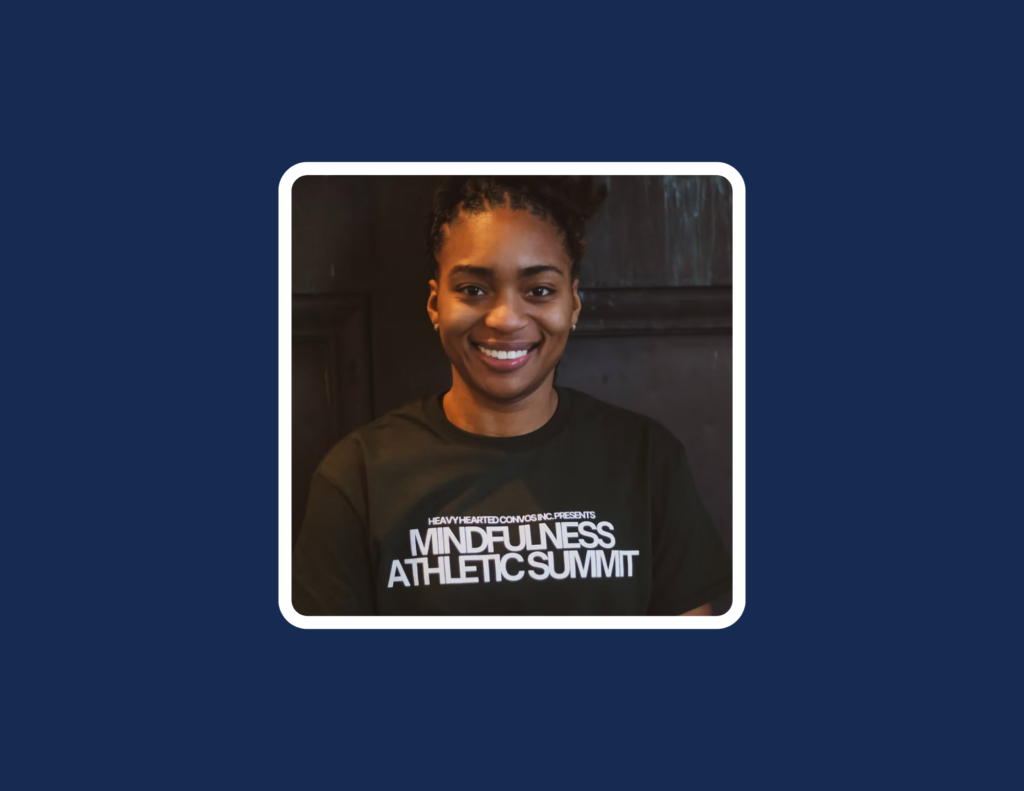

Websites – https://www.heavyheartedconvos.com/ https://www.thegovernorsacademy.org/athletics/teams-schedules/team-details/~athletics-team-id/42
Email – ednaija@heavyhconvos.com
Twitter/X – @nayybaee0
If you listen to and love the Hoop Heads Podcast, please consider giving us a small tip that will help in our quest to become the #1 basketball coaching podcast.
Ednaija “Nay” Lassiter is the Girls’ Basketball Head Coach at Governors Academy in Byfield, Massachusetts. In addition to her coaching role, Nay is the founder and CEO of Heavy Hearted Convos, a non-profit organization dedicated to mental wellness and fostering open discussions about emotionally challenging topics.
Nay began her coaching career as a graduate assistant at Northeastern University, followed by an assistant coaching position at The College of Charleston.
As a player, Nay played college basketball at the University of Rhode Island and Southern Connecticut State University, earning a degree in Sociology.
On this episode Mike and Nay discuss the challenges faced by female athletes, particularly in securing opportunities and navigating competitive environments. We explore her commitment to fostering an inclusive and supportive atmosphere for her players, emphasizing the importance of building genuine relationships within the sport. As we discuss her aspirations for the future, Nay articulates her vision for empowering young women in basketball and beyond, ensuring that their voices are heard and valued.
Follow us on Twitter and Instagram @hoopheadspod for the latest updates on episodes, guests, and events from the Hoop Heads Pod.
Make sure you’re subscribed to the Hoop Heads Pod on iTunes or wherever you get your podcasts and while you’re there please leave us a 5 star rating and review. Your ratings help your friends and coaching colleagues find the show. If you really love what you’re hearing recommend the Hoop Heads Pod to someone and get them to join you as a part of Hoop Heads Nation.
Be prepared with a notebook and pen as you listen to this episode with Nay Lassiter, Girls’ Basketball Head Coach at Governors Academy and CEO of Heavy Hearted Convos.
What We Discuss with Nay Lassiter
- The importance of mental wellness in youth sports through initiatives like Heavy Hearted Convos
- How her uncle’s influence shaped her passion and dedication to basketball
- Fostering player-led environments that empower athletes through communication and collective decision-making
- Balancing ambition with mindfulness
- Improving mental health awareness in sports
- Why coaching at the prep school level presents unique challenges
- Heavy Hearted Convos aims to bridge the gap in mental health discussions among young athletes
- The integration of film study into practice fosters deeper understanding and improvement among players
- Developing genuine relationships between coaches and players
- Encouraging athletes to take ownership and contribute to the team’s direction and decisions
- Building a culture where excuses are not accepted and every effort is made to improve
Like this show? Please leave us a review here — even one sentence helps! Consider including your Twitter handle so we can thank you personally!
Your first impression is everything when applying for a new coaching job. A professional coaching portfolio is the tool that highlights your coaching achievements and philosophies and, most of all, helps separate you and your abilities from the other applicants.
The key to landing a new coaching job is to demonstrate to the hiring committee your attention to detail, level of preparedness, and your professionalism. Not only does a coaching portfolio allow you to exhibit these qualities, it also allows you to present your personal philosophies on coaching, leadership, and program development in an organized manner.
The Coaching Portfolio Guide is an instructional, membership-based website that helps you develop a personalized portfolio. Each section of the portfolio guide provides detailed instructions on how to organize your portfolio in a professional manner. The guide also provides sample documents for each section of your portfolio that you can copy, modify, and add to your personal portfolio.
Aiming to go D3? The D3 Recruiting Playbook gives you a clear, step-by-step roadmap to the recruiting process – what coaches value, key milestones from early high school through application season, and how to build a target list of schools that fit your needs.
We’ll demystify researching D3 programs and how to stand out without chasing every camp or showcase.
The modules cover things like writing emails to coaches, building an effective highlight tape, using social media well, planning ID camps and visits, and navigating application strategy.
You’ll get templates, checklists, and an outreach plan to communicate confidently, learn how to compare financial packages, and avoid common missteps. By the end, you’ll have a prioritized school list and a decision framework you can use to land your best-fit opportunity.

Give With Hoops is a groundbreaking initiative that fuses basketball analytics with modern sponsorship. Built for teams who see data as opportunity, from AAU programs to college powerhouses.
By tying on-court performance directly to community and sponsor engagement, Give With Hoops help programs raise more while deepening support from those who believe in the game.
Traditional fundraising disconnects donors from the action. Sell candy bars, wash cars, beg for donations, it’s exhausting and ineffective. Players perform better when their stats matter beyond the scoreboard. That’s why Give With Hoops was created.
Give With Hoops connects game performance to community support. Every basket, rebound, and assist becomes a chance to raise funds. Transparent, exciting, and proven to raise 3x more than traditional methods.
THANKS, NAY LASSITER
If you enjoyed this episode with Nay Lassiter let her know by clicking on the link below and thanking her via Twitter/X.
Click here to thank Nay Lassiter via Twitter
Click here to let Mike & Jason know about your number one takeaway from this episode!
And if you want us to answer your questions on one of our upcoming weekly NBA episodes, drop us a line at mike@hoopheadspod.com.
TRANSCRIPT FOR EDNAIJA “NAY” LASSITER – THE GOVERNOR’S ACADEMY (MA) GIRLS’ BASKETBALL HEAD COACH & CEO OF HEAVY HEARTED CONVOS – EPISODE 1276
[00:00:00] Narrator: The Hoop Heads Podcast is brought to you by Head Start Basketball
[00:00:20] Nay Lassiter: The organization continues to grow and continues to make a larger impact on youth in the city of Boston. So although I feel like there’s so many places I should be and I can be and I’m maybe missing out on, just seeing how far we have come has been beautiful.
[00:00:35] Mike Klinzing: Ednaija “Nay” Lassiter is the girls’ basketball head coach at Governors Academy in Byfield, Massachusetts.
In addition to her coaching role, Nay is the founder and CEO of HeavyHearted Convos, a nonprofit organization dedicated to mental wellness and fostering open discussions about emotionally challenging topics. Nay began her coaching career as a graduate assistant at Northeastern University, followed by an assistant coaching position at the College of Charleston.
As a player, Nay played college basketball at the University of Rhode Island and Southern Connecticut State University, earning a degree in sociology
Are you or an athlete you know planning to go D3? Check out the D3 Recruiting Playbook from D3 Direct. Their playbook gives you a clear step-by-step roadmap to the recruiting process, what coaches value, key milestones from early high school through application season, and how to build a targeted list of schools that fit your needs.
The playbook demystifies researching D3 programs and how to stand out without chasing every camp or showcase. The modules cover things like writing emails to coaches, building an effective highlight tape, using social media well, planning camps and visits, and navigating application strategy. You’ll get templates, checklists, and an outreach plan to communicate confidently, learn how to compare financial packages, and avoid common missteps.
By the end, you’ll have a prioritized school list and a decision framework you can use to land your best fit opportunity. Click on the link in the show notes to get your D3 Recruiting Playbook from D3 Direct.
[00:02:11] Joe Stasyszyn: Hi, this is Joe Stasyszyn from Unleashed Potential, and you’re listening to the Hoop Heads Podcast.
[00:02:21] Mike Klinzing: Give With Hoops is the first platform turning basketball analytics into fundraising impact. Every stat tells a story, and now every story drives sponsorship, engagement, and team growth. Programs nationwide are transforming basketball stats into funding power. Learn to use performance data to attract sponsors, engage fans, and raise more with every play.
Give With Hoops will help you raise three times more money for your program as their stat-based pledges consistently outperform traditional fundraisers. Visit givewithhoops.com/hoop-heads-podcast to learn more and take your fundraising to the next level. Give With Hoops.
Be prepared with a notebook and pen as you listen to this episode with Ednaija “Nay” Lassiter, girls basketball head coach at Governor’s Academy and CEO of Heavy Hearted Convos. Hello, and welcome to the Hoop Heads Podcast. It’s Mike Klinzing here without my co-host, Jason Sunkle tonight. But I am pleased to welcome in Ednaija “Nay” Lasser from Heavy Hearted Convos and the Governor’s school.
Nay, welcome to the Hoop heads pod.
[00:03:33] Nay Lassiter: Thank you. Thank you for having me today.
[00:03:35] Mike Klinzing: Excited to have you on. Looking forward to diving into all the interesting things that you’ve been able to do and experience in your basketball life. Let’s start by going back in time to when you were a kid. I know basketball is your family business, so tell me a little bit about how you got into it and what you remember about those early years with the game.
[00:03:54] Nay Lassiter: Yeah. So my uncle actually founded the AAU program that I played with for a majority of my life. He pushed that drive. He saw something in his nieces that they were cons- extremely passionate about. So it started at a really young age, but I will say give a lot of credit to my uncle for pushing that drive and making sure we succeeded in a way that was, beneficial for us.
So he started an AAU program called the Boston Showstoppers which started in the city of Boston, and it was a small group. And then from there, just started recruiting, and then I went to Newton, where I played high school basketball, ended up transferring to Archbishop Williams and then came back to Newton.
So my early childhood days came from really my uncle playing basketball, seeing his friends playing. He played at Suffolk University. He didn’t really have much skill on the offensive end but his defense was incredible. I can, I l- I compare him to Marcus Smart as such. But that’s really where my drive came from.
And like I said, just he created a vehicle for us to pursue our dreams.
[00:04:55] Mike Klinzing: What did it look like for you as a middle school, high school player trying to get better? What were you doing? Were you on the court by yourself? Are you working with your uncle? Are you working with a trainer? Are you playing and trying to find pickup basketball?
Just what’s the process for trying to become the best player you could be in your middle school, high school years?
[00:05:14] Nay Lassiter: Yeah. Honestly, I don’t think I even knew back then. I knew where I wanted to get to, but I didn’t necessarily know the work that was required. But again, I did have my uncle who pushed me, and I had a lot of other people in my corner just growing my network through my uncle.
So I don’t– I wouldn’t even say I knew what it was, but I was a basketball addict. I loved basketball. It was something that I did every day. So whether it was shooting, dribbling down the street or even just going to the court to play pickup, that’s something that I always did. But as far as like knowing what work to do to actually pursue my dream I had no clue.
But I knew I had the drive
[00:05:51] Mike Klinzing: So what does it look like for a high-level female player to try to find pickup basketball and then to be able to kinda work your way into games with guys, which I’m assuming that’s something that you did probably pretty frequently, and then trying to find a group of young women that you could play against?
Just what were the challenges there? ‘Cause obviously it’s a challenge that on the male side, guys don’t have that same issue.
[00:06:16] Nay Lassiter: Yeah. I w- I would say honestly, getting to get to where I got to, it was c- it came from playing with boys a lot of the time. Unfortunately in the city there were not a lot of spaces for young girls to play basketball.
It was very few spots within the city that you knew “Okay, that’s where we could go play.” So a lot of the times it was integrating the girls into the boys’ spaces, and honestly, like I, I truly think that pushed myself and every one of my sisters that I played with to kinda make sure that we were the ones in the city that did make it out and that people saw us.
So wasn’t much, and thankful for my uncle for creating that platform for us and then, letting us be who we are showcasing our talent throughout the city. But definitely started with playing with boys and making sure our name was known within the parks, within the teams, all that.
[00:07:05] Mike Klinzing: What was your favorite memory of your AAU basketball time?
[00:07:10] Nay Lassiter: My favorite memory. Honestly, there, there are a couple. So I played for my uncle, and then my uncle used to always sprinkle me with the boys, and so there was a program called MABC. A man named Larry Merritt, he ran it. And, I’m coming in there, I’m the only girl in the gym, and I’m thinking he’s going to take it easy on me, and he threw the ball at me.
I would never f- I’d never forget this day. He threw the ball at me, and I’m like, “Whoa.” Okay, so I’m one of them. I’m going to be treated like one of them. And I think that was one of my favorite memories because from there on, I knew that I belonged because no one treated me differently. He ta- he treated me the exact same, the expectations were the same, and I met them, so from there, I just was like, “Okay, I’m going to pursue this. This is what I want to do.” So I would say that’s one of my greatest memories, and of course, playing with the Boston Showstoppers and just building so many great relationships that I still have to this day was by far, one of the both, the best experiences of playing basketball growing up.
[00:08:09] Mike Klinzing: And then talk about how playing with the Showstoppers and being on the AAU circuit, how that impacted your decision-making process for where you were going to go to school and what your recruiting looked like.
[00:08:22] Nay Lassiter: Yeah, so I, me personally, I was recruited pretty late within my journey, unlike some of my other teammates.
I was that late bloomer. Always had the game but was really oversized for a guard. And again, not knowing really what I wanted and how to do it so the diet wasn’t there, but the game was. The game, the heart was there. So playing, going state to state, playing against the highest competition possible and we were a low-market program, so not a lot of people knew us.
No, actually, no one knew us, just to be quite frank right? And we were coming to gyms, and we just had this hunger about us that you just couldn’t deny, right? So being on those sidelines and also going to see all these other girls it made me… It was eye-opening, one, to make me realize how much I am lacking.
But it was also beautiful in the sense where I was getting the opportunity to s- to showcase myself in front of college coaches when there were so many young girls who just didn’t get the opportunity. And, one thing I was told in my household at a very young age, growing up in a single-parent household, was like, “I’m not paying for school.”
“I just don’t have it.” So that was, that is really what drove me. I looked forward to every Friday because the weekends we were either away or we were playing in a college showcase. So it, that, that’s really what it was. Navigating recruitment. When it came for me, I only had about three schools to choose from, if I remember correctly, and what a process, it was really hard, but ultimately, I do feel like I made the right decision to, for where I am today
[00:09:52] Mike Klinzing: When you think of that decision-making process, who in your life was there to bounce thoughts off of, ask questions of? Was there anybody, an adult in your life, that kinda acted as a mentor through that process for you?
[00:10:05] Nay Lassiter: Honestly, no. And I only say that because I don’t think the people around me honestly knew how to navigate that space, ’cause they hadn’t done it before either. So it was more of just trying to figure out what it is that I wanted. All I knew I wanted was really basketball. So I had my sister that I talked to a lot, and just we’re totally different.
She is she sees everything through, where I’m more of I react off emotion. So using her was very useful. But I didn’t, I don’t, I didn’t have anyone for sure. It was more of people just excited and everyone saying, “You should go here,” but not really giving a reason,
[00:10:43] Mike Klinzing: so what quest- what questions then did you ask yourself? What were some of the things that in your mind, as you were going through the process, what was important to you? Obviously, as you said, the basketball piece of it kinda took precedence over everything. But I heard you say a few minutes ago that getting the opportunity to go to school knowing that if you could get a scholarship and pay for that, that would open up an opportunity for you to have your education.
So just as you’re going through, was it the school? Was it the coach? Was it the players that you met on your visit? Was it … What was it that you were looking for that helped you to make your decision?
[00:11:19] Nay Lassiter: Honestly, at that time, again, I don’t think I knew what I wanted, but I knew that I wanted to make my family proud.
URI’s where I initially signed to, and it wasn’t too close to home. And I felt like I was, like stuck in between, like I knew I needed to get away, but I felt like URI was … And it was in Kingston, not Providence, where most people think Rhode Island is, right? Kingston is a little further out. It’s about a hour from Providence, so I felt like it was further enough to kinda get away, but I really was looking for an escape, like an escape from my circumstances, from my environment and just to feel something different.
So as I mentioned, growing up in a single-parent household, like that was tough. That, that, that came with stresses of itself that I just didn’t recognize, and eventually started to catch up to me. So I felt like I needed a break and that’s really what I was looking for. Where is the program family-oriented?
Where can my family still reach me, and I can reach them? And where are people growing and looking for places, people and the place, the opportunity to grow, honestly
[00:12:24] Mike Klinzing: So you get there, and what’s that adjustment like for you coming from the environment that you came from, coming into obviously a new situation, new coaching staff, your new teammates, and then you have the school piece of it and all that goes along with not only just adapting to the basketball side, but also adapting to the school side of it and the social and all that goes along with going to college for the first time.
What did that look like for you? What do you remember about your first couple days on campus and kinda trying to look around and figure things out?
[00:12:56] Nay Lassiter: Yeah, it was really hard. I didn’t know what I was walking into. Although I was extremely grateful, it was really challenging, right?
Like I said, my, my uncle started the program for me, and it was like really grassroot. Everything was really family-oriented, and when you go into the college business, it… everyone’s really out for their own, right? So when I was looking for that pat on the back or that teammate to lift me up and pick me up, it really wasn’t like that.
It was like every shark out there on their own. So navigating that was, it was so hard because I had not come from an environment like that. It was it was a big sisterhood. We all cared about each other, and we all worked to be our best selves so that the next person could be their best self. That was really tough navigating.
And what that started doing to me was not being able to build relationships with people because I felt there was, it was we were com- going at each other’s heads all day. So there was, instead of us trying to learn each other and understand each other as young women both coming in, it was more of us, we started off c- way too competitive at the start.
So that was extremely hard to navigate, and again, being 18 years, 17, 18 years old I’m a young girl who I’m in that environment now, and I come from a similar environment, and so all I knew how to do was take your head off, right? That’s just the way I competed, was to fight, to be a dog, to be vocal, to make sure you feel me on every possession.
B- but again it started to affect the relationships that I was having with teammates, with coaches because they didn’t necessarily understand what they were seeing, right? It was just, “Oh, whoa she’s a little too loud. She’s a little too rowdy,” right? What’s going on? But that was the way that I put myself in the room.
But outside of the game, I’m here. I’m ready to rock. I’m ready to make re- you know, build relationships. But the way that I competed was quite differently. And I don’t think at the time college basketball, especially in the women’s game, was appreciating that style of basketball.
[00:14:50] Mike Klinzing: So when you think about, and we’ll get back to the rest of your college experience, but I think this question fits right here.
So as you transitioned eventually into coaching and you think about coaching young women who maybe some of them have some of those same personality traits and way of going about things that you had, how do you make sure that- You still want to keep that competitiveness, right? ‘Cause if you want to be successful as a team, you have to have that internal competition.
And yet, I think you hit on a really good point, and one that a lot of coaches, especially young coaches, sometimes struggle with, which is, how do I make sure that I keep that competitive spirit in my team during practice and at times when they’re– I need them to go at each other, and yet as soon as we put the shoes away and we’re in the locker room, that now we can go back to becoming one again instead of being the competitiveness.
So how have you thought about that and approached that as a coach based on that experience that you had as a player?
[00:15:50] Nay Lassiter: That’s a beautiful question. I would say, honestly, I let everyone be themselves. I don’t try to change anyone. If someone, I have players who don’t speak at all, right?
And there’s no point of me trying to force them to be too vocal, but maybe I can find another strength of theirs. And I think, a lot of times, especially, when– not that I- I’m making myself sound old, but when I was in college, it was like, you had to be this way. And that just came from older coaches being in the game, right?
And kinda wanting things how, the military way and black and white, but there is a gray area within everything, right? So for me as a coach, I try to let people be people, let them be who they are, and help them grow within who they are. Like I mentioned, like I have players who are not vocal. I have some that are too vocal and need to learn how to, tone down their communication so that it be- can become effective, kinda like myself.
So embracing everything under… and letting the team know that everyone is the same, no matter what your differences are, what your strengths are. We all have something to give to the mission and, to the program. So that’s truly my message and something that I can truly say I preach each and every day
[00:17:02] Mike Klinzing: As you well know, that psychological piece of getting everybody together on the same page and just the relationship building, it’s amazing.
I think people outside of the coaching profession or outside of professions that deal with kids or deal with athletics, when you’re in a business setting, I don’t think people understand necessarily how challenging it is to be able to build those relationships, not only between coach and player, but also as a coach to foster those player-to-player relationships so that you can have the kind of success where, again, everybody’s competing, but at the same time, everybody still realizes that after we compete, we then have to come back together as a group if we really want to get to where we want to go and have success.
And so at Rhode Island, th- that first season that you’re there, y- you get out on the court you have a pretty successful freshman year. You get an opportunity to play in a lot of games. You start a bunch of games. Just tell me what you remember about that experience. Was it… Did you look at it as a positive in terms of, “Hey, I’m getting on the floor.
I’m getting an opportunity to contribute,” or was there some things that, yeah, I’m getting to do those, but maybe some of this other stuff in terms of the relationships maybe made you feel a little bit reticent about kinda what you were going through? Where was your mindset as a freshman?
[00:18:21] Nay Lassiter: I was extremely happy to be playing, but I also knew That we could be better and there’s more that we could do.
So I’ve always been that person who never really worried just about herself. It was more of like, how are we all moving in the same direction? And I may not always have the best way of trying to demonstrate that or say that and articulate how, what I was trying to accomplish, but that has always been where my heart is.
So it was really difficult for some people to understand why I was upset because I was playing, but it just didn’t seem like the program and the team was going in the right direction. And there were a lot of situations that occurred that were really challenging, right? The college b- basketball business is, it is, it’s scary.
There are a lot that doesn’t go onto the table anymore within college athletics. It’s, with Title IX and all these things that are now put in place. But there were so many things that were getting swept under the rug that I just, wanted to be able to make change for, and it was, I saw myself suffering, I saw teammates suffering, and ultimately that suffering was, it resulted in our r- our record, honestly.
So that was really tough, trying to get people to understand, like, why I wasn’t happy, but it was like, there’s other things than just putting the ball in the hoop or lacing up and putting on this jersey. Me as a human being has, my holistic being has to be, happy and feeling peaceful within my space.
So I truly felt like it was a lot more that I could give it. My mind was just in another s- spot, so it was affecting my physical ability.
[00:19:53] Mike Klinzing: Was there somebody that you felt like you could go to with those thoughts and express them? Even if somebody didn’t necessarily understand what you were saying, was there at least an outlet, somebody that you felt like you could talk to and at least share what you were feeling, even if they maybe couldn’t fully understand what you were saying?
[00:20:12] Nay Lassiter: Yeah, I had my teammates, but that’s honestly about it. My teammates and my sister were always the space where I went to but never within school, like within a school setting, within a team. I never felt comfortable. I tried it once or twice, but I always felt like there were things that did get to my coach, and I was like, “How did you know that?”
“How did you know I had that appointment?” So I n- I never felt too safe in those spaces. It was always just in a dorm room talking to my teammates, calling my sister or my friends back home and them kinda just keeping me grounded and keeping my foot, one foot in front of the other
[00:20:46] Mike Klinzing: When you think about the, lack of connection that you were able to have with your coaching staff, and I can honestly tell you, I’ll give you a good story from…
And again, when you said you feel old-
…
[00:20:57] Mike Klinzing: You’re talking to a, you’re talk-you’re talking to a really old guy here- … when I t- when I say how long ago it was for me. But back when I was playing, my coach was a guy who, again, old school. He was in the military. There was very little personal interaction.
It was more just felt “Hey, what can we do to help our team win?” That was what our coach was interested in. As far as getting to know us as people, it didn’t necessarily feel like that ever happened. I never would’ve gone to, especially my head coach, with really anything of any kind of a personal nature or even talking about the team.
It was kinda just he makes the decisions, tells you what to do, and then you try to go out and do it. And when I graduated, didn’t talk to him for probably, I don’t know, 30 years, and I actually got reconnected with one of my assistant coaches. And in the course of talking to one of my assistant coaches, he’s “Oh, your head coach would really like– He he’d love to hear from you.”
And I’m like, “Really?” And so I called him up on the phone, and I talked to him for an hour and a half, and he knew things about my family. He asked me about my sister. He was talking about this time that he talked to my parents in the parking lot after a game about such and such a thing. And I was like, “How?”
I had no idea that this guy would have had any inkling at all of who I was as a person or who my family was or whatever. I would have gotten no sense at all that he cared about me in that way. And you look back on it and you’re like– And if he just would’ve given us collectively, as me and my teammates, just a little bit more of his humanity and a little bit less of his kinda hard line, I often just think about how different our experience would have been just as people, but then also how much more successful could we have been as a team had we done those things.
And it’s just, again, I just always look at it and think The people element is such a huge part of what makes, A, the experience good, and B, also helps teams to be successful. And I’ll tell you, Nay, one of the things that has been interesting to me is as I become a parent, and my kids have all played sports to varying degrees, whatever, and as I’ve gone through the process, I’ve come to realize that, yeah, I want them to do well on the court or on the field or whatever it may be, and that’s important.
But ultimately, like I want their experience to be good, and I want it to be one that they can look back on, where they have people that they’re connected to as a result of that, and that they look back fondly on those experiences and… ‘Cause the wins and losses and the points scored and all that stuff eventually melts away.
And it’s just really interesting when I get a chance to talk to somebody like you who has an experience where “Hey, I, I’m playing. Like people around me should be thinking that, ‘Hey, this is great. Like she’s getting to live out her dream, and things are perfect.'” And yet you know that behind the scenes, there’s so much more to the experience, but also so much more to you as a person than just as a basketball player.
So I don’t know if anything that I just said resonates with you in any way, but that’s kinda what I’m getting when I hear you talk, is there’s an experience that it’s not just on the court. It’s a more holistic experience that you’re hoping to get or that you were hoping to get out of your college, out of your college basketball playing days.
[00:24:22] Nay Lassiter: No, you hit it right on the spot, and it resonated me like literally to the core because I haven’t spoken to my head coach yet, but I have seen a couple of the assistant coaches, and I still connect with the strength coach that, who was there with- while I was there. A few of the assistant coaches I may talk to a few times throughout the year.
And there w- I was going back to Uriah ton. There was, there’s a new coach there. Was a new coach. She just actually left to go to Florida to coach the Florida Gators. But I would go back there and connect with the academic advisors that I had, the athletic staff the athletic trainers.
So It was it brought me back to, although people may not have seen or understood what we needed then to see the relationship come to fold now although I had a really difficult time in college, it is really beautiful and something that, I’m grateful for because people grow, too, and that’s something that I had to be mindful of throughout my journey is I can be so angry and I can be mad and wish this person did this for me, but we’re all growing and I have to give the same grace that I would like as well.
[00:25:26] Mike Klinzing: Yeah, that makes complete sense, right? And it’s hard sometimes in the moment to be able to recognize that, and sometimes you don’t even know yourself what you want or what you need. Y- you, you may not even recognize until years later you’re like, “Ah, I wish that would’ve been different,” or, “I wish this…”
Again, when I was doing it, just the way it was. There was no like, “Hey, I don’t have anything to p- compare it to. I’m not playing in any other schools. I’m not playing for any other coach.” This is just it is what it is. And so I know that, man, when you and I talked before we jumped on the podcast just about the experience that you had and then how that kinda led you into what you’re doing today, and we’re going to get more into that as we go through the conversation.
But just maybe here’s a good time to just kinda talk a little bit about how your experiences as a college athlete have kinda impacted the direction that you’ve kinda taken your professional life.
[00:26:14] Nay Lassiter: Yeah, so my experience just, like I said, navigating mental health challenges while being a Division One athlete in itself was a job and then trying to be a great student.
So I just, while I was hurting I kept a journal of everything that was bothering me, and like I said, I always talked to my teammates. And I started the organization, which it started off as a clothing brand at first to bring mental health, to kinda bring everything that I was writing into a clothing brand while I was in school, things that I could wear to express myself because for some reason I always felt like my mouth got me in trouble.
So I always tried, I was like, you know what? What if I can wear it, right? What if I can walk around with it and we bring some fashion to it? We not only bring the conversation around mental health, but it’s also fashionable. So it started off as a clothing brand, and then when I end up transferring from URI after losing my scholarship, I went to Southern Connecticut State and graduate, and literally graduate in the middle of COVID.
I was in class, English class, I vividly remember this, and it was on the loudspeaker. They made us all go home. We had to all pack up and leave campus. So I went home and I’m like, everything just hit me at once. It was like, whoa. I felt completely unfinished. I felt I wasted a lot of my time.
I was angry with myself, angry at coaches, angry at teammates, angry at my family, like angry at the world, just totally upset, sad, lost myself. And I thought about, like, how many athletes are, like, feeling the way that I’m feeling, and, I had just the mental fortitude to continue pushing, right?
But there were times when I had suicide idolat- idolations and didn’t want to live and felt like my life was over, like I had no purpose. And I kept seeing stories of athletes, You know dying by suicide. And that was really tough because, again, I felt like that should’ve been me, but I just kept going, and there was a point where I’m like, “You know what?
I have to give someone else the platform to have a Heavy Heart of Combo. My heavy– My heart is heavy. I need these conversations that my teammates… What my teammate was giving me, I needed to give that to the world.” So that’s where Heavy Heart of Combos initially started from, was just trying to turn pain into purpose and help athletes and individuals from all wa- walks of life who, may feel like they’re a failure or f- may feel like, they put themselves in certain positions or their home circumstances are not how they want it to be.
Just having a platform to talk because we all need people, and we all need a conversation, and I truly think conversations can help people grow, ’cause it definitely helped me grow. So that’s where the nonprofit really kicked off when I got home, just wanting to bridge the mental health and wellness gap in sports any way that I could.
And we started off with one, one initiative. It was a basketball tournament, and what we did was we tried to invite as many girls as possible to create spaces for them and bring some mental health practices and tools for them with some guest speakers from college athletes and professionals who played so that they’re pouring back into the next generation.
But that’s where it started. I know that was a lot.
[00:29:14] Mike Klinzing: No that’s great because, again, helping me to understand kinda what your vision was initially, right? Is, okay, you’ve had these experiences yourself, and now you’re looking at it going, “Okay I want to try to help somebody who maybe is heading into this same situation or maybe has already experienced it, and how can I utilize what I have to be able to have an impact on that next generation so that they don’t experience some of those same challenges that you faced?”
So to be able to, again, start something from scratch and figure out okay, I got this vision of kind of what I think I want to do, but then how do I actually take it from an idea over here to something concrete that I can utilize? And obviously, I always say that one of the things that I love about doing the podcast is that it’s a platform that- It’s centered around basketball, but I get to have conversations like this that I feel like are bigger than the game of basketball, and I get to use basketball as the vehicle to be able to have an impact, whether that’s a conversation like this that maybe helps somebody who’s going through a difficult time.
Maybe it’s just a conversation with a coach about how they build their program, and maybe there’s some little thing that a coach grabs from it and takes it and implements it, and all of a sudden now they’ve created a better environment, a better experience for the players that are a part of their program.
And I can never give back to basketball what basketball has given to me, but I do think that the opportunity to use the game to make an impact on whoever it might be is the thing that I always find to be the most gratifying and the most powerful, and I think that’s kinda where you started out, right?
You’re like, “Okay, I’ve got these ideas. Let me utilize it through the game of basketball to be able to reach young women who are in the similar position that I was in, and now I can find experts and people to bring in to, to be able to help them to navigate those things.” So I think just to be able to put that together and how close is where it is today to what your initial vision was when you first– when that light bulb first went off and you’re like, “I want to do this,” how close is what you’re doing today to what the original vision was?
[00:31:23] Nay Lassiter: It’s taken off. It’s taken so many different directions, and it’s crazy. Yeah. I literally just was … I was looking at old photos of apparel that we did and our fr- our first programming that we put out, and just how I put so much pressure on myself now, the same way I did as an athlete, to be so great instead of just enjoying the process.
But I’ve come so far, I’ve learned so much, and I try to, I always bring that back to my basketball career and life and even as a coach now. Instead of looking at the overall picture and the overall goal, right? Yes, you want to get there, but how are you taking care of each and every day? And I had to pat myself on the back recently because things have gotten increasingly better every year.
Our programming has gotten better. The organization continues to grow and continues to make a larger impact on youth in the city of Boston. So although I feel like there’s so many places I should be and I can be and I may be missing out on just seeing how far we have come has been beautiful.
[00:32:21] Mike Klinzing: So lay out the spaces where you’re at.
Give me some of the i- an idea of some of the things that you’re doing now, some of the initiatives that you have going.
[00:32:28] Nay Lassiter: So every year we have a Mindfulness Athletic Summit, and what that is, it’s a one-day mental health and wellness initiative where we bring mental health practitioners, clinicians, people with sound bars, yoga, stress therapists.
We have a really strong panelist full of women and men who play from all levels of sports whether it’s basketball, soccer, football NFL players, NBA players, WNBA players. We’ve even had executives who are within sports teams come and talk to the youth. And just to give the youth an understanding about How to use the game, not as
Like, Kyrie said something and I … it was a quote that I love because it’s just something I truly believe in, but instead of using basketball as your master, it’s your tool, right? So how to navi- how to use this game of basketball to, yes, continue to pursue greatness, but use this platform to get you in different rooms.
And how you may not make it to the NBA, but maybe you can make it to the NBA in another way, right? And the same for the WBA. The ball always stops bouncing, but how can you navigate yourself and still be useful and valuable in different spaces? And that’s not something that I ever was taught growing up.
It was just basketball player. So that’s really important to me, and we do that every November, in the start of the city of Boston’s athletic season to get as many youth out as possible, just to get their mental health and wellness get them to think about it, get them to start that conversation to understand that it matters.
We have a mentorship collect- mentorship collective program, and that’s a year-round mentorship program for youth ages 14 to 25. And what we do is we pair individuals on one-on-one with mentors. They meet weekly and we come together as a group every month just so the youth can come together and then have these heavy-hearted conversations, and we give them
We, we track their progress and their goals and help them reach some of the things, whether it’s internships, jobs in that regard. And we also have our Ladies Hoop Too showcase, which we have every year. And this is the, honestly, the only platform for women’s basketball within the city. We bring over 250 girls each year, and when I’m in the competition, it’s high level.
It’s a weekend just for girls’ basketball, even down to the referees. Every referee is a woman. We’re really celebrating women in sports. We give a community award every year to two young women t- in the community that are pouring into the city, to women in sports, and just to young girls in general.
And honestly, I would say the showcase is something that I’m really proud of because, again, it’s the only year-round platform that young women have. Every other space that we’ve had, it’s, it’s been here, but it’s gone missing or it’s every other year. So trying to keep this up consistently so that the girls feel seen, they feel validated, and they feel, that their talents are being, respected in the same way that the men are.
So that, that has been lovely. And this year we’re starting our first Ladies Hoop Too clinic, and what that is, it’s a free clinic open to elementary and middle school girls. And one thing that I, that drives me crazy, and I coach now and I see it a lot, is just the learning curve for young ladies, right?
In boys’ basketball, the athleticism kinda can make up for a lot But within the girls’ game, you really kinda have to have knowledge of the game, a strong IQ. And I feel like there are a lot of young girls, watching so much NBA, and that basketball is not what emulates the WNBA. And so they’re lacking so many skills, whether it’s learning how to line up from the free throw line or learning, where out of bounds is and things that…
What a travel is. So what we wanted to do this year was really be that space where young girls are actually learning the game, not just in, while growing their game, but also building relationships with coaches and mentors and with athletes who… where they want to be. So having all college-level athletes as the staff and some professionals is what we’re trying to do.
But this will be our first year. We’re super excited. It’s limited to only 80 spots, and we’re filling up quickly. We look forward to hosting it this year
[00:36:32] Mike Klinzing: Putting all that together-
[00:36:33] Nay Lassiter: Yeah …
[00:36:34] Mike Klinzing: from your perspective of getting all the people involved, from the mentors to the athletes to the executives to the coaches to the officials to all that kind of thing, I can only imagine what that looks like from an administrative standpoint of trying to talk to all those people and explain your mission and getting them involved in it.
So what does that process look like for you? How hands-on are you? Who helps you with that, reaching out to the people who eventually serve as the mentors and the people that are going to pour back into the, to the youth that come and participate in all of your events and activities?
[00:37:08] Nay Lassiter: Yeah, so it’s a small team.
It’s only three of us. And the two staff that I have, they are in and out, so mainly, I don’t want to say it’s mainly me, but we do operate as a team. But for the most part I’ve been just, my foot’s been on the gas with this since I started. And it’s really a lot of relationship building, same, similar to what I was doing.
Being an athlete I will say has helped because a lot of people know my name in the city and know what I’ve accomplished and where I’ve come from and what I’ve done. So that’s beautiful. And just trying to, like you said, get them to understand my mission behind what it is that we’re actually doing.
It starts with first me being vulnerable about my journey, right? Not trying to gaslight anybody, make it seem like I had this magical career because I didn’t, right? It didn’t end up working out the way that I wanted it to, but that’s why it’s my goal to make sure the next person’s situation is different.
So it starts with just that, right? Building that relationship where there’s transparency through all communication. And usually people end up wanting to be on board, but it definitely is hard just getting people all in one spot. And consistency, trying to grow every year, stay open to the trends, it’s really hard.
And AI is not making anything better, but… I will say it’s making it better, but also is making everything kinda look the same at this point. I don’t know if that makes sense to you. But we want to stay different, so we don’t want to just use AI, AI to get things done quickly when we want to make a real intentional impact.
[00:38:33] Mike Klinzing: No, I think you’re 100% right there. When you’re looking at the uniqueness I listened to a podcast talking about how, like with college essays and how different people wrote college essays and then the graders graded those essays, and they all graded the individual essays as being well-written when they were written by AI.
But then- … they all followed like a s- the same theme. So it was like the creativity, the writing itself- was good, but it, they were all the same because AI can. And I think to your point, that is something that I’m starting to see just with some of the stuff that I do. There’s a time where I’m like, “Oh, maybe I should just have AI come up with an idea for that.”
And then I look at it, I’m like, “That sounds just like program X down the road. Let me just change that and make sure it’s in my voice so that gets out.” So I can completely understand what you’re saying. And I’m sure, the other thing that popped into my head as you were talking is that I’m sure that from the beginning when you first started, and you have to articulate it completely to that very first person that you’re trying to get to come on board, right?
You got this idea, and you have to get that first person to say yes. And now that you’ve been established for a couple years, I’m sure it’s a little bit easier now to reach out to somebody and say, “Hey, I’ve already got this. These are the people who are involved,” rather than it’s just me as myself trying to reach out to with a vision.
I’m sure it’s easier now than it was initially, although you probably need more people now so maybe that mitigates it.
[00:40:03] Nay Lassiter: Yeah, it’s definitely easier, and I think, using social media as the platform to get out what it is that you’re doing people are seeing that on social media, and so they’re seeing the work that we’re doing and, they want to be a part of it.
So it’s always beautiful. But I will say it, my, my pitch is getting better, but I feel like it changes all the time because there’s so many ideas in which I want to go to. So that’s been the hardest thing sometimes telling myself like, “Okay, just go, just be concise with it,” because I can go on and on about what I want to do with Heavy Hearted Convos and the impact that we can have.
But, trying to… When you say too much, that’s when you lose people. So saying less. Less has been more, honestly.
[00:40:42] Mike Klinzing: It’s the vision, right? The vision’s all, the vision’s up here, and then you have to kinda narrow it down so that you can actually get somebody to understand what it is that you’re trying to do.
So I can totally relate to that. I definitely have a million ideas. I’m like, “Yeah, those are all ideas,” but I have to really figure out what I can execute on. So I’m guessing that based on the conversation that you and I have had for the last 40 minutes, that part of your desire to do what you did with Heavy Hearted Convos, but also getting into the coaching profession, has to do with you making an impact in a way that maybe you felt like coaches that you played for weren’t there for you.
So talk a little about why you wanted to go into coaching, and when the idea of becoming a coach crossed your mind first. Was that something that you were thinking about while you were playing, or once you were done, you looked back and you’re like, “Man, I’d like to maybe try to help somebody else have a different experience than the one I had.”
Just when did coaching get on your radar a- and why was it important?
[00:41:47] Nay Lassiter: Honestly knew I wanted to coach when I was playing in college. I was always that person that was in the coach’s office going through X’s and O’s. I always did the extra workouts. I, I studied the film, I knew the plays.
So I’ve always wanted to be a coach. And it’s funny, my head coach actually told me, she used to always tell me “You’re going to be a coach someday. You’re going to be a coach whether you want to or not.” And I’m like… ‘Cause she drove me crazy. I’m like, “There’s no way. There’s no way you’re going to g- y- you don’t know me, so back to, how they al- you don’t think they know something, but they do. But she definitely knew something that I didn’t know because coaching is something that I’m extremely passionate about. It’s something that I can’t let go, but I honestly, I love what I do, but I got into coaching, like you said, just because I wanted to change the trajectory of young girls’ lives.
And again not e- You can play basketball, you don’t even have to have the goal to want to play Division I or play college basketball at all. But if you play, how can I still be an impactful in your life regardless of what your, how far you go, how far you don’t go? And that’s always been something that drives me because I feel like I, I was only loved at a certain point because I was succeeding as an athlete, and that was really tough because when it didn’t go my way, not everyone would be posting me or liking my Instagram pictures the same, right?
And that was really hurtful, and it made me feel like just me as a human didn’t matter. So I vowed to never have an athlete of mine feel like that, whether they want to play or they don’t want to play. This is just a place where we’re going to pus- push to be our best self each and every day. Whether you fail, that’s fine, because we’re going to fail and we’re going to grow and we’re not going to be afraid of failure.
But I will say I was afraid of failure because I knew that maybe people weren’t going to like me. I was afraid of all those things that I couldn’t control. So that’s who I try to be as a leader and I love it. I truly love coaching. I’m passionate. Everyone that knows me will tell you, you can hear me from a mile away, like you’re going to hear my voice.
That’s always been what it was. But they also will tell you that I push, but I push with love, and that’s something that has … I’m not always good at taking it, but it really feels good i- to my heart, when I hear those things ’cause it’s okay, I’m doing what I said I was going to do, and I’m being who I said I was going to be
[00:44:05] Mike Klinzing: Really heartening to hear you say that you’re valuing somebody as more than just a basketball player, because I think that when I think about the experiences that I’ve tried to generate for the players that have played for me when I’ve coached teams and coached individuals, that’s what I always try to do, is see that it’s more than just the game.
It’s more than just your performance. And I’ve tried to do that as a parent with my own kids of looking at it like, want you to do your best. You have to learn how to maximize your talent, and yet at the same time, you have to understand that regardless of how you perform in a given game That’s not really what it’s all about.
I’m going to love you the same way when you come home, whether you scored two points or you scored 25 points. It doesn’t– Whether you won, you lost. That stuff, again, I want you to do well, but if you don’t, we’re going to talk about it, we’re going to figure it out. I’m still going to, I’m still going to love you in the same way.
And I think that’s something that I’ve come to, again, realize that what’s important is the experience, because all the other stuff melts away. The, When I was playing, and I’m sure you felt the same way, that when I was playing, the individual game to me and my performance and my team’s performance in the moment that was the most important thing to me in the moment.
I d- I lived, breathed, died with how I performed on the court. And yet, now here I am, whatever, 35 years later, and I can even honestly say five years after I was done gradu- after I graduated and was done playing people would ask me about, “Hey, do you remember that game against whatever when you were a sophomore and whatever?”
I’m like, “That was a league game.” I might’ve played that team 10 times. I don’t, like I don’t remember that individual game. I don’t have one of those kinds of memories. And what I remember is my teammates and the feelings and the road trips and all the stuff that had nothing to do that.
In the moment, I was like, “I…” Whatever. But I was worried about my performance. But ultimately, what fell away was my performance, and what was left with was the experiences and the people and all that stuff. And so I think as coaches, to be able to understand that lesson and for you to understand it early in your career because of your experience as a player and being able to internalize that and understand it and then say to yourself, “As a coach, I want to be able to provide an experience that maybe wasn’t like the one that I had,” that can be powerful stuff.
And so I’m sure that the players that have had an opportunity to play for you have felt that. So going back to the decision or the idea of, “Hey, I want to coach,” what’s– Once you know that’s the direction you want to go, what’s the first step? Who do you call? What do you do to try to get into the coaching profession?
What’s the first step to trying to get your first coaching job?
[00:46:50] Nay Lassiter: Yeah, so I was a GA at Northeastern, and that was really the first step to getting into college learning the game at a higher level. So my goal was always to get to college and my goal is still to get to college one day, and even maybe the pros.
But I started as a GA at Northeastern and after that transitioned to coaching at the College of Charleston, where I learned a different, a number of different tools and got my feet wet in a different state. So kinda learned the business, kinda learned how, really orchestrating a college basketball team worked and just a team in general.
There was a lot of things that I did at Charleston that I didn’t do at Northeastern, whether it was, like, booking flights and looking at the overall budget and, when we had camps, team camps, doing all the organizing for that. So- after leaving the College of Charleston, I’m like, I feel like I can run my own program.”
Let’s go put my head in, let’s go put my hat out there, put my name in some different hats. And Governor’s Academy was one of them, and they reached back out, and the relationship has been beautiful ever since. It’s a place that I love. I consider it home. And every year as a program, we’ve gotten better and better since I’ve been there.
And my goal ultimately is to bring a championship to the school and bring a championship, to the girls and change their lives ’cause I know it will. Like you said, the memories are something that you’ll remember forever. So going on that pursuit for that championship, they may not remember the game, but they will remember that season and the smiles and relationships.
So that’s something that, I’ve been on a hunt for since starting, and this will be my fourth year.
[00:48:16] Mike Klinzing: As a assistant coach, obviously when you’re a GA and then you get an assistant job, the decision-making process doesn’t end with you. You’re the suggester. You bring ideas to the table, or you’re booking flights or you’re figuring out meals or you’re, whatever it is that you’re doing, but you’re not necessarily where- Sometimes you’re
[00:48:33] Nay Lassiter: just a fly on the wall, though.
Yes. Sometimes you’re just a fly on the wall.
[00:48:37] Mike Klinzing: That is true. That is- Yeah … that is definitely true. Sometimes you just sit and absorb, right? Especially at the GA level, there’s no doubt about that. So when you get to run your own program, obviously now you get to make the decisions, but when you first step from assistant to running your own program, what did you enjoy most about being that ultimate decision-maker?
What did you enjoy? What was the process or what was the piece of it that you really took the most joy from?
[00:49:07] Nay Lassiter: Ooh, that’s a good question. I will say I got the most joy of having to come up with answers for you- for young girls, right? Like, when they needed somebody, my phone was the one that was ringing.
When there was a problem, my phone was the one that was ringing. And being a solutionist for them in their lives, whether it was big or small, was something that I really valued because to me, whether it was big or small, I felt little things add up, and if I can show them that I’m here for this, then I- they’ll know I can be here for the big things.
So that was the most gratifying that I, the… That’s what I found really gratifying throughout the whole process and just simply building the relationships with each and every girl. Like I said every one of them is completely different. They have different personalities, different hobbies and, at, and at the prep school level, sometimes you have players who play other sports.
So I have a ton of lacrosse players, and even being able to learn their game and how they, the lacrosse game is played and how you just use various parts of your body, like just m- h- having them feel seen, validated, it, it really does help the rest of the team the camaraderie, I would say. Because, and it makes people push harder because if you can see me, not as a basketball player, but who I am, I’m going to make sure I go through this wall for you, right?
I’m going to make sure I do exactly what you say. And I think that’s just a respect piece, so I would say that’s been beautiful and ultimately just being able to make sure that the program is s- is player led, right? That’s something that I have been always wanted to do. Like, wherever I run a program, it’s never going to be about me, it’s going to be about the players, and that’s just how it’s going to be.
They’re always going to be the priority. So being able to be the voice of that and run the organization how I would like to run it and making sure our players are validated and seen and respected each and every day is, it’s been beautiful. It’s been really beautiful.
[00:51:03] Mike Klinzing: What does that player-led program look like boots on the ground?
So when you say it’s a player-led program, I have a vision in my head of what that means. What does that mean to you- … on a day-to-day basis? Give me an example or two of something that says, “Hey, it this shows this little activity or this, that we do it this way demonstrates that this is a player-led team.”
Just for a coach who’s out there listening and saying “Hey, I’d like to incorporate more of a, less of that top-down me always dictating everything.” What are some things that you do to give the players that sense of connection, that sense of camaraderie that you were talking about?
[00:51:37] Nay Lassiter: A lot of conversation, and sometime it starts from, just reaching out individually to players and just asking how they’re doing.
We don’t have to talk basketball, but let’s talk life, right? Seeing how mom is, seeing how the dog’s doing. And if you listen, if you’re a good listener as a coach, sometimes you’ll hear things that maybe you could talk about later on, whether it’s their interpersonal relationships, that’s something you could talk about.
But another thing that I’ve found really useful is giving the players a voice. Stop always making decisions for them, right? So lay out one to two, three options, and you delegate someone to say, “Hey, can you get the team to come to a consensus on this?” And that way they’re all working together, and it’s not coach in the room or coach’s opinion, and they feel like, oh, we have to pick this because coach is here now.
What I also try to do is I’m a coach who’s vocal, so I believe my players should be vocal. So a lot of times players, coaches, they see my players and I going back and forth. I don’t look at it as they’re disrespecting me or disrespecting the program. It’s both of us coming to an understanding of what needs to be done.
And that’s been beautiful because the players understand it, and the more voice I give them, I feel like the more they learn and the more they trust me on their journey. You don’t want someone just always telling you what you have to do, right? You want someone to tell you like… sometimes you want to tell them what you want to do too, and that’s okay, and how can we tweak it and meet in the middle?
So that, that’s something that I have found very useful as far as my player-led program, but it really starts with just communicating. Communication. It’s a lot of talking, and sometimes, as coaches, there have been times where I’ve seen coaches take the communication to another level.
You have to make sure, you’re the adult in the room at all times, right? So although we communicate a lot, trust me, they know I’m– I know where to draw the line, and it will be drawn. So always keep that in mind too, but that’s definitely some tips that I would give to a coach.
[00:53:33] Mike Klinzing: When you think about the communication with players and having those conversations where you’re getting to know them, do you think of those as being more informal, like you’re walking before practice and talking to players while they’re stretching, or you’re grabbing lunch with somebody?
Or are they more intentional “Hey, we’re having a meeting once every two weeks to sit down and get to a check-in of where you’re at?” So I don’t know, do you do it informally, formally? Do you… H- Just what’s the process for having those conversations that allow you to get to know your players so that you can have the kind of relationship like what you’re talking about?
[00:54:06] Nay Lassiter: I think it’s a little bit of both, right? And when you start to really learn your players, you start to learn when is the best time to get them. ‘Cause there are some players who, as soon as you say, “One, two, three, practice is over,” they’re sprinting out. Their mind is done. You may not get anything out of them.
So maybe you get them before, or maybe they’re better when they’re in their dorm room, relaxed after their long day, and you call them on the phone. It really, it changes every time. But something that I don’t always do, but I try to do and this has been really helpful, was like after a bad game, so whether it’s a good game, I will ask someone like, “Hey, what’s something that I coulda did better at?”
And quite frankly, they’re always quite honest with me. “When you yelled on that possession, you did a little too much.” And that always puts me back in my place. But giving them the opportunity to correct me as well so that it shows that we’re all here, like we’re all growing. I’m not perfect. I’m your leader, but I’m not perfect, and I would never pretend to be that.
That kinda lets everybody relax “Ooh, we could fail, and she’s still going to love me,” “she’s going to, she’s going to yell, but I know she still loves me.” So it’s a mix of both, for sure. You have to… I wouldn’t say it’s one way or the other. I do like the combination because, again, you have to, you have to meet people where they are
[00:55:20] Mike Klinzing: Yeah, that vulnerability that you mentioned too, I think is really important, right?
Especially in today’s world where it’s not the top down, everything I say is gospel and anything that you say is completely discarded and not important. It’s much more of that, as you said, the two-way street of being able to communicate back and forth. And when you can communicate that, “Hey, I’m not perfect.”
“Hey, I made a mistake here,” or, “Hey, I’ve made mistakes. Here’s an example that we can all learn from, something that I did in my life that we can take as a lesson that can help us to improve as people and as players.” I think there’s a lot of power in that, and it again builds the human connection, right?
Because for so often– W- for so long when we’re kids we look up to adults and we often think that those adults can never do anything wrong. And then as we get older, we realize that, hey, those adults are just as they’re trying to figure it out the same way I am when I was 12 or 13. I think you realize that about your parents as you get older.
I know that, you look at it and you’re like, “Oh, I felt like my parents had it all together.” And then you look and you’re like, “I’m sure my dad or my mom felt similar the way I do,” that you’re just flying by the seat of your pants trying to figure it out and do the best that you can in the moment with what you have.
And so I do think that vulnerability is a huge part of what can play into the success of a coach and the ability to build relationships like what you’re talking about. And obviously you coaching at the prep school level is unique. We have a lot of high school coaches, we have a lot of college coaches, and I’ve had a- some prep school people on, but I think again, in the Northeast people are pretty familiar with the prep school model.
In a lot of other areas of the country, prep schools are “What? What are we talking about?” So tell us a little bit about what you enjoy about coaching at the prep school level. What makes it unique?
[00:57:08] Nay Lassiter: Oof. That, what makes it unique? I will say every g- e-every day is, you don’t– Within the NEPSAC, I will say that’s where I coach in the NEPSAC ISL.
You never know who you’re going to get, and everyone is really good. The, these– Night in and night out, there is someone that can give you their best, and that’s what I loved about it because I went to Newton North, and there was only maybe two to three teams that we knew where we were every year that was the only one circled on the calendar.
Everywhere, everyone else we killed, and that didn’t really push us, right? That didn’t really get us any better. But it was fun. But I will say the NEPSAC is extremely competitive, and it grows every year. You– Like these teams and these schools are getting in players every year, so it’s either you keep up or, you’re just going to get left behind.
I will say that’s one of the hardest things also. Although it’s really, fun to be a part of, it’s really hard to recruit within these schools. These schools cost so much money and, financial aid, a lot of kids need the financial aid to come to these schools, so that’s been really hard to navigate.
But other than that, I’m someone who, you know, whatever you give me I’m going to try to work with this, and we’re going to do the best that we can. I have no complaints from me. The job is a job. Let’s see what we have here, and let’s get to work. So that’s kinda been my approach. I never try to get too greedy when it comes to recruiting players or I need that player and, making players feel like they have to be at Govs.
It… I just try to continue to build great relationships just across the board so that, if a player ever feels Govs is their place, “Hey, we’re here for you.” But again, if a player just needs someone to talk to that’s where I come in, and that’s where I vow to always be.
So it’s been beautiful, just the competitive nature, but recruiting has been difficult
[00:58:52] Mike Klinzing: Yeah, I would think that when you have the number of schools, right? And just again, as the prep school, that route has become, I think, more popular or at least more well known, where more players start to see it as an opportunity, especially when you start talking about the next level and the way that the NIL and the portal and all that, those things have changed, that now the opportunity for a player to take an extra year to be able to maybe maximize their opportunity at the next level, which obviously was always there at the prep school level.
But now I think even more so players think, “Hey, I get another year to develop academically. I get another year to develop athletically, and now maybe that opens up some more opportunities for me at the next level to be able to have the chance to maybe play at a division one school versus previously I could have gone to a division two or division three or whatever it might be.”
So I could totally see where, again, it’s a challenge to recruit and bring in the players when you’re talking about the NEPSAC and the number of– as you said the quality of competition that you’re playing day in and day out, and yet at the same time, the opportunity that the kids are afforded to play for you and to play in your program, to be able to then get those opportunities to, to move on and play and maybe reach their dream, if that’s what it is, to be able to go and play college basketball.
For you as a coach, developing your craft, and obviously all the things that we’ve talked about are a huge part of developing your craft, right? Is understanding how to motivate players and how to connect with them and build relationships. That’s all super important. Let’s shift a little bit to the basketball side of it.
How do you work on your craft as a basketball coach? X’s and O’s, philosophy, how you want your teams to play. Where do you go? Who do you talk to? What do you look at? Where do you go to study the game?
[01:00:38] Nay Lassiter: You have to watch a lot of basketball. And I watch basketball on, all levels, high school, college, professional, both men and women just to learn the different nuances from different games and how you can bring both games together.
Building relationships, again, like with different college coaches and being able to call coaches who are my mentors within all different levels of conferences in the NCAA has been something that I’m extremely grateful for. Because if there’s something that I need or need help on, whether it’s like, “Look, this team plays 3-2 tonight, what are some quick hitters that I can implement today that the team can learn fast?”
‘Cause it’s usually a two-day turnaround. So learning from different coaches, going into different college practices. A lot of colleges have opportunities for open practice, or you can build a relationship with the coach, the head coach, or some assistants, and they’ll let you in. Just being a sponge. I’m someone who I can watch basketball all day.
I can sit in the office all day and cut up film and watch film and clip it just because I really love the game of basketball. So that’s the way that I study. And, using systems like Synergy and YouTube clips to watch old basketball games and go back and, watch oh, how did Brad Stevens run that play?
Or Joe Mazzulla, right? These are all things that I do nonstop. I do go to the Final Four every year, which has been beautiful. And again, building relationships there and just asking different players different questions so that I can bring back and be better for my athletes has been extremely helpful.
But again, just putting my hat in different places and making sure I’m learning in every way possible is something that I try to do.
[01:02:18] Mike Klinzing: Yeah. The ability to use film and Synergy, what it’s done for coaches to be able to pull up anywhere, any league in the world, anywhere you want to go, any level, you can find it and go in and do a deep dive on a coach, a team, a league, a whatever it is that you want to do.
And so again, just a tremendous tool for learning and being able to, as you said, add some nuance to your game and what you do as a coach. So to go along with that, if somebody comes to one of your games or comes into one of your practices, what are the one or two things that you would hope that somebody who sits down, if they come to your practice and they sit down and they watch your team, or they go to a game and they sit in the stands and they watch your team what do you hope they take away as the one or two things that a Nay Lassiter team is known for these one or two things?
What are those things?
[01:03:12] Nay Lassiter: They’re going to be tough, and they’re going to have zero excuses. There are no excuses. We get the job done and that’s just that. If the job is not done, then we failed. We’ll– let’s learn from and move on, but we didn’t, we did not accomplish our mission. So I would say if you come into our practices, you’re going to see girls going 100 miles per hour, nonstop, p- putting their best foot forward at all times.
And if you ever come to a game, you’re going to see the same. You’re going to see toughness from, on both ends of the floor and a team that never gives up, that is simply relentless, honestly
[01:03:46] Mike Klinzing: That sounds good. If you can get that going you’re halfway there. The magic of basketball is one, you have to play com- extremely hard, and number two, I always say you have to share the ball, right?
And if you do those two things, there’s a lot of ways to get to those two things, but if your team plays hard on both ends of the floor and nobody cares who scores, you’re about 98% of the way there to being a successful basketball team. So talking about practice and getting an opportunity to see, hey, how tough your team is.
We don’t make excuses. When you’re putting together a practice plan, what does a typical practice look like for your team? Do you like to have it structured in a similar way where, hey, we always come in and we do skill development for the first 20 minutes, then we’re on defense, then we’re offense? Or do you mix it up day to day based on what you feel like your team needs at a given moment?
[01:04:39] Nay Lassiter: So for us, we do everything in blocks and typically it goes off because we don’t have much time to prepare like college. It goes… Our practice slots after games are usually to prepare for half of it would be what we missed on the previous game. We’ll watch it on film, and then the other half will be to prepare for our next opponent.
But for the most part, every block goes off of each other. So what one thing is, like from the first block to the second block, what we did on the first block is going right to the second block and second block going to the third. So there’s nothing that you really should be missing on. Everything goes into each other and the learning should be continuous.
So that’s something that I try to do every single practice. One thing we do, what we don’t miss is every practice we end with free throws. A lot of the times you see a great game and then a team doesn’t hit free throws, right? Or fouls too much. It’s those little things that really changes the game.
So at the end of a hard practice, we always finish with free throws. Always. Because those really matter. They’re free. It’s the only time you’re by yourself at the basket, so we have to make them. But yeah, blocks are really useful. Making sure it’s organized. Your players will know if you don’t have some sort of organization with it.
They, they can feel it, they know. And then you start to lose them in practice. So being really organized and str- strategic about what it is that you’re doing is important as a coach coming in.
[01:06:02] Mike Klinzing: How do you like to organize it? In other words, when you’re planning a practice, are you sitting down pen and paper?
Are you doing a Google Doc? Or h- what’s your process for actually sitting down and putting that plan together each day? For
[01:06:16] Nay Lassiter: me, I have to start off with pen and paper, and then I type it out because these practice plans I always like to give a coach one as well. We also have someone who does the scoreboard, so I like to run things like a real college level program so everything’s kinda ran efficiently.
But our manager on- our managers are on the scoreboard, so all the timing is there. So every block is timed. It w- it will have the exact time so the manager knows, like I, I shouldn’t even hear the buzzer. If time’s off, put the next time on so we can go right into the next drill. So I like to write it out and for me personally, writing some things out, sometimes I go back or I think about something else and if I can write it with a pencil, I can erase it or something instead of writing with a pen.
But it’s always easier for me to write it than type it out and make sure I get it to the coaches.
[01:07:02] Mike Klinzing: Yeah, it’s interesting. Everybody always has a different way of putting it together that works for some people, and other ways don’t work for others. I’m like you. I feel like I have to scribble it out in my own handwriting first, and then I can go back and type it out and m-make it look a little bit organized instead of just me with all these different diagrams and this and that, and this play.
I always tell people that one of the things I’m terrible at, A, is giving names to my drills. I’ve always been terrible at it. Whenever I’m coaching, I’m always like, I’m the guy who wastes practice time where I’ll be like, “Okay, we’re going to do that drill where, we have two lines here and then we pass.”
Instead of just giving the drill a name, I’m always taking 30 seconds to explain. They’re like, “All right, we got, we know what it is.” I’m like, “I should just come up with names for those.” But I’ve been, I’m always terrible at that. But it’s interesting how, again, everybody has a different way of putting together their practice plan to try to maximize, as you said, making sure that you’re organized so that it flows from one thing, things to the next.
And clearly when you’re not organized, and we’ve all probably been there, where there was a practice where it just, we didn’t have it set the way we wanted it to, and those things deteriorate very quickly when you don’t know what it is that you want to teach and you’re not 100% solid on what you’re going to do.
The prep work for practice is critically important. And you talked a little bit about using film, right? To prep your team or to look back at the previous game. How much do you use film with… I know you’re watching a ton of film as coaches, right? And Synergy makes it easy to watch whatever you want of your team, and obviously whatever you want of your, as many games of your opponent as you possibly want to.
But how do you break down the film into chunks so that your players can actually watch it and synthesize it? How much of what you actually do with the film do you then share with players, and what’s your process for doing that?
[01:08:49] Nay Lassiter: So after every game, no matter how late it is, I try to clip the game because what– I give myself 24 hours to be upset, whether it’s a win or a loss, right?
And after that, I have to move on because I have to be, better and available for the g- for the girls. So I only give myself the night to be upset, and so I have to clip it that day. And every time I clip the game, I usually put… I type something so the girls can see. I, you know– We use Hudl.
So Hudl it’s getting better when it comes to its features. So you can circle things. You can put, p- screen positions and you can also send each clip to individual players, so that has been really helpful. So I do that almost every game. Our players love it because they’re able to continuously watch it, and it goes directly to their email and in their Hudl file.
So that’s been really good. But trying to do one-on-one sessions before games, I feel like sometimes doing film sessions with groups, kids get insecure in certain rooms, right? So it can be a little bit more difficult for them to learn. But putting them in smaller settings, they can kinda see their mistakes, admit their mistakes, and move forward a little bit more.
So again, mixing up from small to those big to small groups individual film. But it is a lot of film, and teaching kids how to watch film is something that I really try to teach them as well, right? A l- I have a kid who at one point all she saw was her with the basketball. But on the other end, she didn’t see how she was out of position ever, and how it messed up the whole play. So teaching kids how to watch film and how to read the game before things happen has been something that I try to do as well.
[01:10:26] Mike Klinzing: Yeah, that’s a great point, and it’s one that I think we sometimes as coaches forget that a lot of times kids tend to watch games on film of themselves the same way they watch A game on TV, right?
They’re just watching the ball. And if it’s their game, they’re obviously just watching themselves, particularly with the ball, waiting for something good that they did. They can’t wait to see that. And so to be able to teach somebody to watch, A, the action that’s happening off the ball, whether it’s with them or with their teammates, and as you said I love the idea of teaching them how to anticipate and look at what he– Let’s freeze it here.
What’s about to happen? What should happen? What did happen? And then let’s compare the two, and then that’s when you can really start to learn. It is incredible just the amount of learning that can be done through film for players. And I know it’s one of the things that, again, I’ve done with my own kids, is trying to spend a lot of time with them, just teaching them again how to watch, what to look for.
Okay, here’s this play, and yeah, the end result was over here, but the end result really came about because of what happened over here, and this is really what you have to see because that’s where you can really make a change. This part that happened over here with the ball, it is what it is. You weren’t trying to miss the shot or you weren’t trying to, have somebody reach in and knock it away, but it’s how did we get to that point and how can we put ourselves in position to be successful, whether it’s offensive or le- or defensively.
And I think you make a tremendous point that I think is really overlooked in that players have no idea how to watch film and if you just take them into the film room and start watching it, they’re not going to be watching the same thing you’re watching unless you’re articulating to them what you’re actually looking for while you’re watching.
I think the more they do it, the more comfortable they become with their ability to then look at the film and have an understanding. But just throwing them in the room or saying, “Hey, go watch this film,” they’re not going to be watching anything like what you’re watching as a coach, that’s for sure.
[01:12:31] Nay Lassiter: Absolutely.
[01:12:33] Mike Klinzing: All right. I want to ask you final two-part question before we wrap up, and you can take this in whatever direction you want. So the first part is, what do you see as being your biggest challenge? And you can throw that on the coaching side, you can ta- throw that on the heavy-hearted convo side.
You can mix and match those together. But what do you see as being your biggest challenge over the next year or two? And then the second part is, what brings you the most joy about what you get to do each and every day? And if you forget the first part after you answer the challenge, I’ll be– I’ll jump back in and tell you the second part.
But the first part, biggest challenge.
[01:13:08] Nay Lassiter: Biggest challenge. It’s a really good question I will say, I don’t even know if this makes sense, but you let me know. But I feel like Instead of aiming so high, just try to be perfect at the things or really good at the things that I’m doing now. I feel like I am someone who completely goes I believe there are no limits, right?
And that’s a good thing. But there are a lot in my life right now that I could, pay more attention to or give more love to and give more knowledge to and put more effort into. So I would say that’s my biggest challenge right now is slowing down. Slowing down has always been something that I’ve been, pretty bad at because I always want to keep going.
But slowing down and kinda just Being grateful and mindful of what’s in front of me right now, even though I want to be the greatest I can be. Like, just being present where my feet are is something that has definitely been a challenge for me.
[01:14:10] Mike Klinzing: That makes sense. I think when you talk about dreaming big, and you got all these ideas, and you want to chase ’em, and yet you have to be able to execute on the main ideas as you start to try to move to those bigger picture ideas.
So I completely understand exactly where you’re coming from there. Execute where you are in the moment, and then you can continue to shoot for those dreams, but make sure that you’re not neglecting the things that are right there in front of you in the moment. Makes complete sense. Second part of the question: What gives you the most joy in what you do?
And again, you can take all the things that you do together, answer it however you want, but what brings you the most joy day to day when you wake up in the morning?
[01:14:50] Nay Lassiter: Our relationships are really genuine across the board, whether it’s coaching, Heavy Hearted Convos, the people that I work with the coaches and mentors that I have.
All of my relationships are genuine and that’s something that I’m really appreciative of. There is, there is– I w- I would be nothing without the foundation that I have and the relationships that I have because all of them pour into me. So that’s definitely something I would say.
The relationships have been beautiful. Have been beautiful. They continue to… They continue to grow and we continue to pour into each other, so the relationships for sure.
[01:15:24] Mike Klinzing: Good stuff, and it’s not a surprising answer based on the conversation that we just had for the last hour or so. Clearly, the people that are in your life are the ones that you value and the ones that you get a chance to pour into and the ones that have poured into you.
It’s easy to see that, that’s a very important part of who you are and what you do. Before we wrap up, I want to give you a chance to share how people can connect with you, find out more about what you’re doing, share email, website, social media, whatever you feel comfortable with, and then after you do that, I’ll jump back in and wrap things up.
[01:15:57] Nay Lassiter: Gotcha. So we are on Instagram, heavyhconvos. Again, that’s heavyhconvos, and we’re on LinkedIn. You can find me on LinkedIn at Najah Lassiter. The organization also has a LinkedIn page, Heavy Hearted Convos Inc. We’re on Facebook. Our website is www.heavyheartedconvos.com where you can see our services, you can see all about us, you can see all our events, our partners.
You can also just contact me on the page as well where all my contact information is there. But our website honestly has everything, so you can always find us there.
[01:16:31] Mike Klinzing: Perfect. Nay, cannot thank you enough for taking the time out of your schedule tonight to join us. Really appreciate it. And to everyone out there, thanks for listening, and we will catch you on our next episode.
Thanks.
Your first impression is everything when applying for a new coaching job. A professional coaching portfolio is the tool that highlights your coaching achievements and philosophies, and most of all, helps separate you and your abilities from the other applicants. The Coaching Portfolio Guide is an instructional membership-based website that helps you develop a personalized portfolio.
Each section of the portfolio guide provides detailed instructions on how to organize your portfolio in a professional manner. The guide also provides sample documents for each section of your portfolio that you can copy, modify, and add to your personal portfolio. As a Hoop Head’s Pod listener, you can get your coaching portfolio guide for just twenty-five dollars.
Visit coachingportfolioguide.com/hoopheads to learn more
[01:17:36] Narrator: Thanks for listening to the Hoop Heads podcast presented by Head Start Basketball