
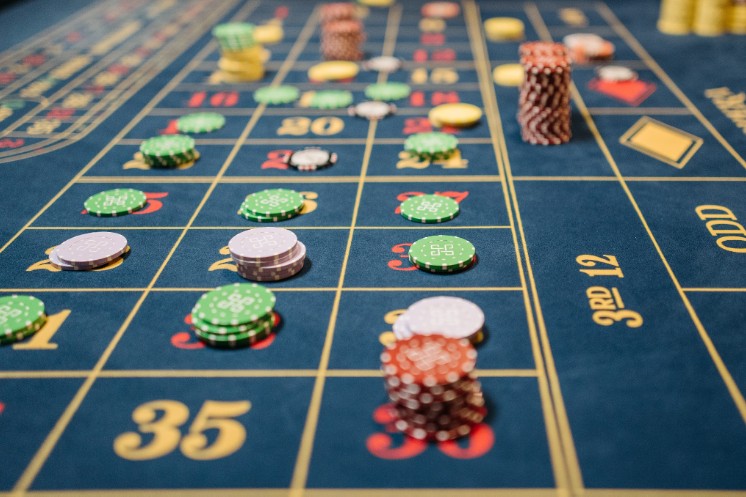
Roulette has a language of its own, not a difficult language, but a quick one. A dealer calls “no more bets,” the ball drops, chips move, and a player who does not know the basic terms can feel one step behind before the first spin even finishes. Learning roulette vocabulary will not make the wheel kinder, but it will make the table easier to read.
The useful terms fall into three groups: wheel terms, bet terms, and money terms. Wheel terms explain the game structure. Bet terms show what the chips cover. Money terms explain payouts, limits, and the house edge. Once those pieces click, roulette stops looking like a busy grid and starts looking like a set of clear choices.
Why the Right Words Matter at the Table
A player who studies roulette77.us in the middle of learning the game will usually meet the same core idea again and again: roulette terms matter because every word points to a real bet, rule, or risk. “Straight-up” does not just sound stylish. It means one number only. “Outside bet” does not mean casual or safe. It means a wider section of the layout, still beaten by zero.
According to Roulette 77, beginners often make better decisions once they understand coverage before payout. That sounds plain, but it fixes a lot of confusion. A bet that covers one number pays more because it hits rarely. A bet that covers 18 numbers pays less because it hits more often.
Wheel Terms: The Words Behind the Spin
The wheel has its own small vocabulary, and players should know it before talking about systems or lucky numbers.
| Term | What it means | Why it matters | Common beginner mistake |
| Wheel | The spinning numbered disc | It decides the result | Looking only at the layout, not the pocket count |
| One numbered slot on the wheel | Each pocket has one possible result | Forgetting 0 or 00 counts as a result | |
| Layout | The betting grid on the table | It shows where chips go | Thinking layout size equals better odds |
| Zero | Green pocket marked 0 | It gives the house its edge | Ignoring it on red/black bets |
| Double zero | Green pocket marked 00 | It appears in American roulette | Treating American and European odds as equal |
| Inside area | Numbered grid | It holds higher-payout bets | Chasing big wins too often |
| Outside area | Larger group bets around the grid | It holds broad bets like red/black | Calling them “safe” bets |
| No more bets | Betting has closed | No chips can move after this call | Trying to change bets too late |
Bet Terms: Small Words, Big Differences
Roulette bets get their names from coverage. A straight-up bet covers one number. A split covers two touching numbers. A street covers three numbers in a row. A corner covers four numbers. The names are short because the table moves quickly.
| Bet term | Numbers covered | Standard payout | American roulette hit chance | Plain-English note |
| Straight-up | 1 | 35 to 1 | 2.63% | One number, big payout, many misses |
| Split | 2 | 17 to 1 | 5.26% | Chip sits between two numbers |
| Street | 3 | 11 to 1 | 7.89% | One horizontal row |
| Corner | 4 | 8 to 1 | 10.53% | Four-number block |
| Six-line | 6 | 5 to 1 | 15.79% | Two rows together |
| Dozen | 12 | 2 to 1 | 31.58% | 1–12, 13–24, or 25–36 |
| Column | 12 | 2 to 1 | 31.58% | One vertical column |
| Red/black | 18 | 1 to 1 | 47.37% | Broad bet, not a coin toss |
Money Terms: Payouts, Edge, and Limits
Roulette players also need the financial terms. They sound dry until a session starts moving too fast. Payout means the amount won compared with the stake. A 35 to 1 payout means a $1 winning straight-up bet earns $35 profit, plus the original stake returns.
House edge means the built-in advantage for the game over long play. American roulette usually has a 5.26% house edge on most standard bets while European roulette usually has 2.70%. The difference comes from the extra 00 pocket in American one. Forbes has described casino games through the wider idea of risk, reward, and house advantage, and roulette gives one of the easiest examples because the wheel count does so much of the explaining.
Table limit means the minimum and maximum bet allowed. Beginners often look only at the minimum. Big mistake. The maximum matters too, especially for players tempted by progressive betting systems. A system that needs bigger and bigger bets can crash into the table limit before it recovers anything.
French Terms Players Still See
Roulette kept many French words because the game grew through French gaming culture. Before playing a table with French-style rules, players should know these terms:
- La Partage: an even-money bet loses only half when zero lands.
- En Prison: an even-money bet stays on the table after zero for one more spin.
- Voisins du Zéro: “neighbours of zero,” a wheel-section bet covering numbers near zero.
- Tiers du Cylindre: a section bet covering part of the wheel opposite zero.
- Orphelins: a group of numbers not included in the two main French wheel sections.
Online Roulette Terms That Matter Now
Online roulette added its own little pile of terms. RNG means random number generator, which handles the result in software-based games. Live dealer means a real presenter spins a real wheel on video. Auto-play means the game can repeat rounds automatically, where allowed. Re-bet repeats the last wager. Turbo mode speeds up the process.
These tools can help, but they can also make sessions slippery. A re-bet button feels convenient until ten losing spins pass in a blink. Hot and cold numbers look useful, but they only show past results. They do not predict the next spin. The ball has no memory, and the software does not owe balance after a streak.
RTP, or return to player, appears in many online rule panels. It shows the theoretical return over huge numbers of rounds. American roulette’s standard RTP usually sits around 94.74%, matching the 5.26% house edge. That does not predict one player’s short session, but it tells the long-term price of the game.
Terms That Beginners Misread
Some roulette words cause trouble because they sound safer than they are. “Outside bet” sounds less risky, but it can still lose several times in a row. “Even money” sounds like a fair swap, but zero and double zero break the fairness. “Hot number” sounds active, almost alive, but it only means a number appeared often in recent results.
The most dangerous misunderstanding involves “coverage.” A player may cover half the layout and feel protected. That feeling can lie. More coverage usually means more chips per spin. A busy table can drain a bankroll faster than one careful bet.
A quick mental check helps before betting:
- What term describes the bet?
- How many numbers does it cover?
- What does it pay?
- Does zero or double zero beat it?
- What is the total stake for this spin?
That short check turns vocabulary into practical play. A player who knows the words but ignores the stake still plays blind.