
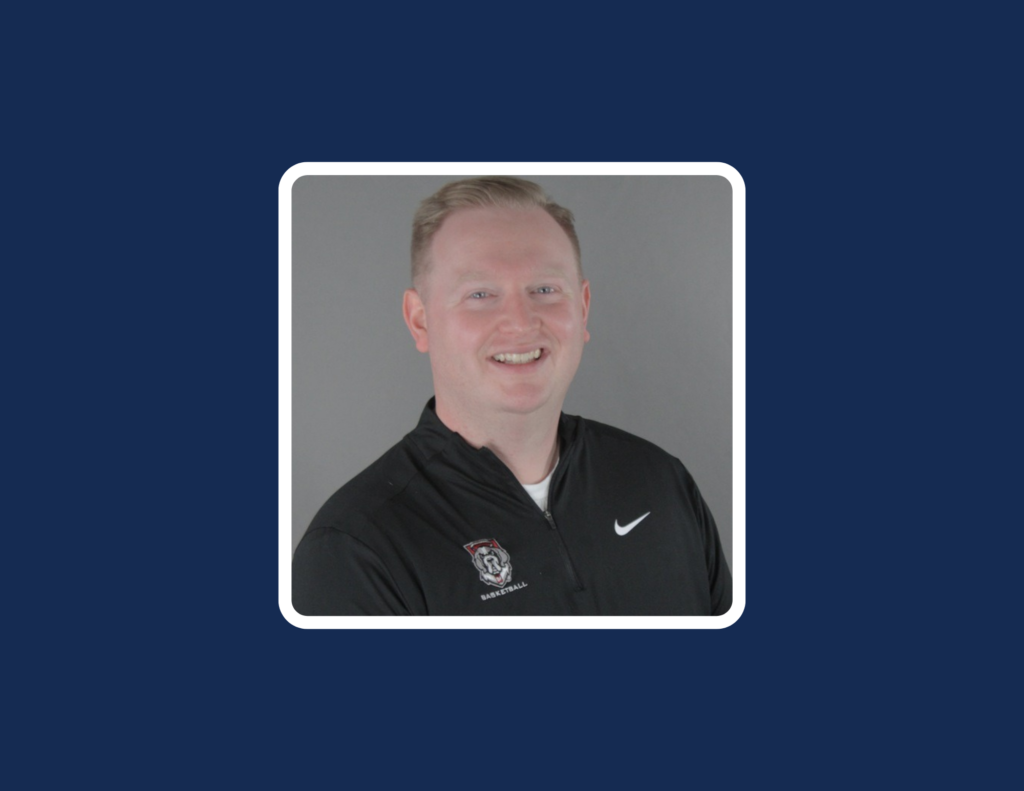
ANDY STARK – D’YOUVILLE UNIVERSITY MEN’S BASKETBALL HEAD COACH – EPISODE 1262

Website – https://dyusaints.com/sports/mens-basketball
Email – starka@dyu.edu
Twitter/X – @Coach_AndyStark
If you listen to and love the Hoop Heads Podcast, please consider giving us a small tip that will help in our quest to become the #1 basketball coaching podcast.
Andy Stark is entering his 5th season as the Head Men’s Basketball Coach at D2 D’Youville University. The Saints advanced to the East Coast Conference Semifinals in 2026 and continued the program’s upward trajectory since Stark took over the program in June of 2022.
Stark previously served one season on the Baylor men’s basketball staff under Scott Drew. During his time with the Bears, Stark helped the team to a 27-7 record, winning the 2021 Big 12 Championship and making it to the NCAA March Madness Round of 32 as a No. 1 seed.
Prior to his time with the Bears, Stark served as an assistant coach at D3 Penn State-Behrend and at D2 Gannon University. He began his coaching career at Stevenson University in Owings Mills, Md. as a graduate assistant for the men’s basketball team after having served as the head student assistant at St. Bonaventure while earning a bachelor’s degree in journalism and mass communications.
On this episode Mike & Andy discuss the transformative experiences that shaped his coaching philosophy, emphasizing the significance of nurturing relationships with players. Stark addresses the trials and tribulations of his initial coaching years, acknowledging the steep learning curve associated with transitioning to a head coach. Stark explains how he learned to balance rigorous coaching with compassion, asserting that fostering trust is paramount in building a successful team culture. His narrative underscores the importance of patience and celebrating incremental progress, particularly in a program that is in the nascent stages of development. Through his insights, Stark illustrates the complexities and rewards of coaching, particularly in the context of leading a team through challenges while striving for excellence. His commitment to creating a positive environment, where players can thrive academically and athletically, is evident as he discusses the roles of mentorship and community in shaping the identities of young athletes.
Follow us on Twitter and Instagram @hoopheadspod for the latest updates on episodes, guests, and events from the Hoop Heads Pod.
Make sure you’re subscribed to the Hoop Heads Pod on iTunes or wherever you get your podcasts and while you’re there please leave us a 5 star rating and review. Your ratings help your friends and coaching colleagues find the show. If you really love what you’re hearing recommend the Hoop Heads Pod to someone and get them to join you as a part of Hoop Heads Nation.
Be sure to grab your notebook before you listen to this episode with Nick Lorensen, Men’s Basketball Graduate Assistant at La Salle University.
What We Discuss with Andy Stark
- Keys to building strong relationships with players, fostering an environment of trust and support
- The need for constant adaptation and learning
- Evolving as a coach to meet the needs of your team and your individual players
- Why celebrating small victories is essential in transforming a struggling program into a successful one, as it helps to instill a winning mentality
- Delivering hard truths is a crucial part of leading a team effectively
- Character and work ethic often outweigh raw talent in building a successful team
- The joy of coaching comes from witnessing players grow academically and personally, as well as their development on the basketball court
- Balancing tough love and genuine care for the student-athletes’ development
- Mistakes are inevitable in coaching, but they serve as learning opportunities for growth
Like this show? Please leave us a review here — even one sentence helps! Consider including your Twitter handle so we can thank you personally!

Your first impression is everything when applying for a new coaching job. A professional coaching portfolio is the tool that highlights your coaching achievements and philosophies and, most of all, helps separate you and your abilities from the other applicants.
The key to landing a new coaching job is to demonstrate to the hiring committee your attention to detail, level of preparedness, and your professionalism. Not only does a coaching portfolio allow you to exhibit these qualities, it also allows you to present your personal philosophies on coaching, leadership, and program development in an organized manner.
The Coaching Portfolio Guide is an instructional, membership-based website that helps you develop a personalized portfolio. Each section of the portfolio guide provides detailed instructions on how to organize your portfolio in a professional manner. The guide also provides sample documents for each section of your portfolio that you can copy, modify, and add to your personal portfolio.
Aiming to go D3? The D3 Recruiting Playbook gives you a clear, step-by-step roadmap to the recruiting process – what coaches value, key milestones from early high school through application season, and how to build a target list of schools that fit your needs.
We’ll demystify researching D3 programs and how to stand out without chasing every camp or showcase.
The modules cover things like writing emails to coaches, building an effective highlight tape, using social media well, planning ID camps and visits, and navigating application strategy.
You’ll get templates, checklists, and an outreach plan to communicate confidently, learn how to compare financial packages, and avoid common missteps. By the end, you’ll have a prioritized school list and a decision framework you can use to land your best-fit opportunity.

Give With Hoops is a groundbreaking initiative that fuses basketball analytics with modern sponsorship. Built for teams who see data as opportunity, from AAU programs to college powerhouses.
By tying on-court performance directly to community and sponsor engagement, Give With Hoops help programs raise more while deepening support from those who believe in the game.
Traditional fundraising disconnects donors from the action. Sell candy bars, wash cars, beg for donations, it’s exhausting and ineffective. Players perform better when their stats matter beyond the scoreboard. That’s why Give With Hoops was created.
Give With Hoops connects game performance to community support. Every basket, rebound, and assist becomes a chance to raise funds. Transparent, exciting, and proven to raise 3x more than traditional methods.
THANKS, ANDY STARK
If you enjoyed this episode with Andy Stark let him know by clicking on the link below and thanking him via Twitter/X.
Click here to thank Andy Stark via Twitter/X
Click here to let Mike & Jason know about your number one takeaway from this episode!
And if you want us to answer your questions on one of our upcoming weekly NBA episodes, drop us a line at mike@hoopheadspod.com.
TRANSCRIPT FOR ANDY STARK – D’YOUVILLE UNIVERSITY MEN’S BASKETBALL HEAD COACH – EPISODE 1262
[00:00:00] Narrator: The Hoop Heads Podcast is brought to you by Head Start Basketball
[00:00:20] Andy Stark: Coach them hard, but you’ve got to love them even harder. They have to be able to trust you. And honestly, my first year, I probably didn’t love them enough as how hard I coached them. You make a million mistakes as a head coach, and I think that’s why I’m 10 times the coach now than I was four years ago.
[00:00:35] Mike Klinzing: Andy Stark is entering his fifth season as the head men’s basketball coach at D2 D’Youville University. The Saints advanced to the East Coast Conference semifinals in 2026 and continued the program’s upward trajectory since Stark took over in June of 2022. Stark previously served one season on the Baylor men’s basketball staff.
During his time with the Bears, Stark helped the team to a 27 and 7 record, winning the 2021 Big 12 Championship and making it to the NCAA March Madness round of 32 as a number one seed. Prior to his time with the Bears, Stark served as an assistant coach at D3 Penn State Behrend and at D2 Gannon University.
He began his coaching career at Stevenson University in Owings Mills, Maryland, as a graduate assistant for the men’s basketball team after having served as the head student assistant at St. Bonaventure while earning a bachelor’s degree in journalism and mass communication.
Are you or an athlete you know planning to go D3? Check out the D3 Recruiting Playbook from D3 Direct. Their playbook gives you a clear step-by-step roadmap to the recruiting process, what coaches value, key milestones from early high school through application season, and how to build a targeted list of schools that fit your needs.
The playbook demystifies researching D3 programs and how to stand out without chasing every camp or showcase. The modules cover things like writing emails to coaches, building an effective highlight tape, using social media well, planning camps and visits, and navigating application strategy. You’ll get templates, checklists, and an outreach plan to communicate confidently, learn how to compare financial packages, and avoid common missteps.
By the end, you’ll have a prioritized school list and a decision framework you can use to land your best fit opportunity. Click on the link in the show notes to get your D3 Recruiting Playbook from D3 Direct.
[00:02:29] Marshall Cho: Hi, this is Marshall Cho from Meadowpark Basketball, and you’re listening to the Hoop Heads Podcast.
[00:02:39] Mike Klinzing: Give with Hoops is the first platform turning basketball analytics into fundraising impact. Every stat tells a story, and now every story drives sponsorship, engagement, and team growth. Programs nationwide are transforming basketball stats into funding power. Learn to use performance data to attract sponsors, engage fans, and raise more with every play.
Give with Hoops will help you raise three times more money for your program, as their stat-based pledges consistently outperform traditional fundraisers. Visit givewithhoops.com/hoop-heads-podcast to learn more and take your fundraising to the next level. Give with Hoops
Grab pen and paper before you listen to this episode with Andy Stark, men’s basketball head coach at D’Youville University
[00:03:30] Andy Stark: Hello and welcome to the Hoop heads
[00:03:33] Mike Klinzing: podcast. It’s Mike Klinzing here without my co-host Jason Sunkel tonight, but I am pleased to welcome in Andy Stark, head men’s basketball coach at D’Youville University.
Andy, welcome to the Hoop Heads Pod.
[00:03:45] Andy Stark: Hey, Mike. Thanks for having me. Obviously, first off, thank you for all you do for the game of basketball. Love listening to the podcast, and then also, I am excited the last couple people, all national champions on the podcast. I feel a little nervous to talk today.
Coach Hirt did some good… I liked your stuff. I know Easton pretty well. Easton was obviously great on here, and then Mike Williams at Grand Valley is unbelievable coach. Just an honor to be on the podcast and, excited to talk about our program.
[00:04:14] Mike Klinzing: Appreciate all those kind words, and hopefully we’ll toss a little karma your way- Okay
And bring you some good things for the upcoming season. But I appreciate the kind words, and yeah, it’s been nice to be able to talk to people who have reached the mountain that so many coaches obviously are trying to get to the top there. And to be able to talk to some people who accomplished that is always, I think, insightful both for me and for our audience, to be able to hear just what those seasons looked, felt, sound like as you’re going through a- and trying to get up to the top where everybody’s trying to get to.
So I appreciate that. And again, yeah, we’re excited to have you on. And let’s start by going back in time with you to when you were a kid. Tell me about how you got introduced to the game of basketball and what made you fall in love with it.
[00:04:55] Andy Stark: Yeah. The big thing with me was my grandfather was a coach.
My dad was a high school football coach for a long time. My mom also was a coach, so grew up in a family that was surrounded by athletics. Waking up at 5:00 in the morning, going to football practice with my dad every summer. So I’ve always wanted to be a coach. I played a lot of hockey growing up.
Loved hockey, and I still do. But transitioned into that seventh and eighth grade year into playing basketball and fell in love just with everything about basketball. And was a decent player in high school. Your standard catch-and-shoot three guy. Got some technicals, takes a lot of charges one of those guys.
And I was lucky enough I played for a really good high school coach, Jeff Thompson Gananda High School down in Rochester, New York. Unbelievable high school coach. Always had the gym open. Would drive me and some of our teammates to other games not even teams we’d play, just, “Hey, this is going to be a great high school game tonight.”
Just fell in love with the game. Ended up, going to St. Bonaventure team camp and all that stuff and wasn’t really sure what I wanted to do basketball-wise. And then I went to a St. Bonaventure game in Rochester. They always play a big game in Rochester and- I don’t know, I just woke up the next day and I’m like, “That’s where I want to go.”
So then I got in touch with the ops guy, Matt Papano, and started figuring that stuff out. And, every good program’s always looking for good managers and people that just want to be around the game. And going to St. Bonaventure was huge. Coach Mark Schmidt, who just ended up stopping coaching there, unbelievable basketball coach.
And the one cool thing that I think that you kinda look at my background and my story is I’ve been to places where guys have taken over programs that were dead. And so that’s… We’ll kinda get into that, I’m sure, later. But like Coach Schmidt, Bonaventure dead in the water, and he got there, turned it around, and then won the A10 championship. And some of the stuff that I take with him is just his player development. He was always finding, hidden gems all over the place recruiting wise. So that was a huge thing. His offensive mind is unbelievable.
And like I just thought the one thing… Oh, the one thing that really does stick out at Bonaventure was my, my senior year, so by the time I was a senior, I had a lot more responsibility obviously and Coach Schmidt tore his Achilles. So I ended up driving him everywhere. So like when as a young guy that’s trying to break into this profession, do you get a 20-minute car ride every day with the head coach of the A10 coach of the year?
I was the luckiest person in America. And so we still have a pretty close connection. And then do you want me to kinda keep going through that background?
[00:07:39] Mike Klinzing: I circle back to just the idea of when do you understand that the student manager path is the pathway to becoming a college coach?
Is that something that because of your family background with coaching that you were aware of early on? ‘Cause I know you mentioned that, “Hey I kinda thought I always wanted to be a coach.” So when did you start to look at that managerial track, for lack of a better way of saying it, was going to be a way to kinda get yourself into the profession?
[00:08:13] Andy Stark: I think the big thing with that was I had some schools recruiting me, nothing like concrete, and I think it was kinda, the handwriting was on the wall. It’s time to get into coaching and, it’s always something I wanted to do. So it was easy for me, b- going to St. Bonaventure was a great fit, and I think selfishly for me it’s a small school, right?
And it’s in the middle of nowhere. There’s nothing to do there except for study and basketball. So it’s great. They don’t have a… They didn’t have… when I was at Baylor, we had 47 managers or whatever. At Bonaventure we had, I don’t know, five. You get a really nice hands-on. Your coaches like Steve Curran that’s now at George Mason takes you under the, his wing and really helps you out.
I would go out and kinda help him recruit and, everything. So you’re you’re able to really get your hands dirty in that program and, that’s what I wanted to do. I didn’t want to just go someplace and be just another person. You want to go in and you want to try to learn and, I think Bonaventure definitely was a place where I found my identity in coaching and it’s “Yeah, this is what I want to do.”
[00:09:15] Mike Klinzing: When you think about your time there as a manager, what’s something from that experience that you are still carrying with you today now as a head coach that you learned for the first time while you were there at Bonaventure? Is there one thing or maybe two that stick out for you as, “Hey, these are clear lessons that I learned right away being involved with the coaching staff there”?
[00:09:39] Andy Stark: Stuff with the coaching staff really would be just like Coach Schmidt, big on relationships, always taking care of his people. That was something that was, like, eye-opening to me, like how he treats everybody. And, and it’s a great family atmosphere. And I think just the Bonaventure, the other thing at Bonaventure that always will stick out to me is how important, at that school a good basketball program is, and it’s the heartbeat of the school and it was really fun.
Those are the things. But, and then also just I think the one thing I always take with Coach Schmidt and kinda learned from Bonaventure is how you can kinda play and structure offense through your better players. He… if you need a, if you need a, if you need an ATO or you need a set to get the ball on the block to your best player, there’s no one better in the country at doing that.
If you need to get a three-point shooter open at the end of the game I just every couple of weeks I go on m- my Synergy account and just pull up his ATOs. There’s a couple other coaches I do that with, but he’s al- he’s on that list, which is crazy. I- he’s always been, he’s always been really good at finding mismatches and getting his best players the ball.
[00:10:43] Mike Klinzing: Yeah, I think when you can pick out something there’s two things. The relationship piece, which again, everybody knows is so important, especially in today’s game, just the way that things are and the way that today’s players are, being able to build those relationships. And then obviously, you’re taking something from an X’s and O’s standpoint.
And I think what’s interesting when I talk to coaches, Andy, is that everybody you take those pieces. You take, “Hey, I really like this,” or, “Hey, this is something that I’m really dialed in that this guy is really good at, and I want to take his strength and be able to incorporate it into who I am as a coach.”
And for you to see that as a manager first, to be able to start to look at, “Hey, these are things that I really like, that I respect about this coach on the staff or this coach that I can take with me,” those things are really important. And this probably goes to maybe even further on as you continue through your career as an assistant, but did you even at that point have a way of, whether it’s note-taking, collecting things that you started to look at and and say, “Hey, if I’m going to go into this profession, these are things that I want to make sure I remember.”
Did you have a system for kinda collecting those things? Three-ring binder, old school? Were you Google Drive? What was your go-to for kinda collecting stuff?
[00:12:00] Andy Stark: Yeah, I still, like in my desk right over here, I still have every single scout from 2011 to 2016 at St. Bonaventure. Every practice plan, every…
I keep everything. I’m a, a hoarder in, in, in that, that, that capacity. Obviously, my organizational structure’s changed a lot now. Everything’s through video and everything like that. But back then, it was really, I had a spreadsheet too, like of every single coach that I was trying to connect with and put their number in, and meticulously “This is the last time I contacted them.”
Not to be annoying, but “Hey, it’s been a month since… Hey Coach, how’s the season going?” ‘Cause obviously you’re not, you knew you’re just a student manager. You have to, the next step is to find that job, and I think that was really important. But yeah, like every little set that we had I have it tucked away somewhere.
And every- everything that, every scout, everything. I’ll I kinda have a weird brain but there’ll be times I’ll be like, “How did we guard so and so back in 2012 at UMass?” And I’ll pull out that scout, and my staff here will roll their eyes and be like, “No one plays like that anymore, Coach.”
I’m like, “But I remember that’s how…” And then you kinda take and tweak some of that stuff. And you, like you said, you take your own style from everybody
[00:13:13] Mike Klinzing: Yeah, there’s no question about that. I think you take and tweak, right? You take it, you’re like, “I like this,” and then let me use it to fit my personality or my style or my team and who I have in terms of personnel and those kinds of things.
I think that’s really important. When you graduate from Bonaventure, any thought to getting a quote unquote real job, or at that point were you 100% sold on I’m going out to try to find myself a coaching position, which obviously you were able to do getting a GA job at Stevenson. But just walk me through your thought process and then the steps that you took to be able to get that first coaching job.
[00:13:49] Andy Stark: Yeah, there was never any thought of taking another job. The one thing was, like, I did work with the Hoop Group for a long time, and through the Hoop Group, they gave me some leeway and it opened a lot of doors and a lot of connections, and I was very lucky with that. They were very loyal to me, which is amazing.
So I think I would’ve had an opportunity to stay in that grassroots side of basketball. But, I- luckily I, I got connected with… I probably interviewed, and I always try to tell people that when they’re looking for that next job is honestly like those GA spots are sometimes the hardest ones to get because there’s maybe one on a staff, two on a staff, a lot of times they’re not paid.
So it, I– shoot, I probably applied to 150 different jo- like it’s really that, and that’s not an exaggeration. Everyone’s doing that. You’ve… I had a bunch of interviews, some stuff didn’t work, ops jobs, video jobs, GAs, and I ended up getting that job at Stevenson and it ended up being a good fit for me
[00:14:45] Mike Klinzing: Kinda like that’s the top of the funnel, right?
Everybody who’s starting out, everybody’s kinda going through that same meat grinder of trying to get that GA position. And like you said, there just aren’t many. It’s interesting just hearing you talk about your experience in applying to whatever X number of schools. I remember… Now, this is a long time ago, Andy.
It was a long time ago. I graduated in 1992, and I remember that when I got done, I started looking around, and what I wanted to do is I went… I wanted to be a GA, too, when I was when I graduated from Kent. And the year I graduated, everybody cut the GA positions from two back to one. The NCAA reduced it, and so all the schools basically had their GAs staggered.
So you had somebody that was, on for this year, and then they’d stay there two, and then whatever. And so when I applied, basically there was zero… there was– Not only was everybody fighting for those jobs, but there was literally zero openings because everybody had them staggered and had somebody coming back for a year, and I would’ve ended b- ended up having to wait a year.
And I got so many letters from coaches saying, “Hey, we just don’t have anything,” or, “Hey, we’d really be interested, but we just don’t have anything because Guy X is coming back and because of the cut in the NCAA.” And so I oftentimes think about, and obviously I didn’t end up in college coaching, I ended up going back to school and getting my teaching license and becoming a teacher and coaching a little bit in high school and whatever, but I often think about just how my life might’ve been different had the NCAA ruling not been to cut those GA jobs back down from two to one.
And who knows? Maybe I’d have been a college coach at some point going through and having a completely different career path in life. It’s one of those things that just luck of the draw, good or bad, depending on how you want to look at it, that it… I just happened to be in the, either the wrong place at the wrong time, or maybe it was the right place at the right time with, my life turned out pretty good. I got no complaints, but it’s just interesting to, again, hear you talk about just the sheer number of applications and letters that you had to send out in order to just get any opportunity at all. And I think that’s, if… It’s a lesson that I think has come through a lot on the podcast from guys is, you have to be super persistent.
You have to just keep working and try to leverage the relationships you have and do whatever it takes. Be willing to go where you have to go. Be willing to pay, work for whatever pay or whatever non-pay, … that you can to get your foot in the door. So tell me a little bit about the experience at Stevenson and did you know right away, obviously once you get in there, that you’re like, “Hey I’m 100% in the right place”?
[00:17:23] Andy Stark: Yeah. It was great. So again, like you have that manager experience, and then you go to the small school college basketball. So there’s the head coach assistant coach and then the GA. And that’s it. You show up and you’re like, “Shoot, I really have to coach my butt off.
I really have to bring value or,” I remember one of our first meetings, Coach Stewart, Coach Gary Stewart was like, “So who you recruiting?” “I’ve been here for two days. What do you mean, who am I…” He’s that’s your job.” And it’s just his own little way and his own little twist of doing stuff, but, so sure enough, and luckily we had a great AD with Brett Adams that was, “Hey here’s the, here’s a recruit… not your own personal recruiting card, but we have these recruiting cards throughout the school.” He’s “Just take it. Just go everywhere.” So we were down in that DMV area where all the players are and, you’re just meeting a zillion people.
I’d go to a zillion games. I was probably probably out every other night. Again, young guy, nothing else to do. Just love hoops, and then you’re down in a great area for basketball, so you’re just going watching a ton of basketball, and it was a great fit. And then you start getting into game prep and you’re doing your own scouts, and you’re getting trusted with that stuff, and you get more and more.
And, that was something that I’ll always be grateful for at Stevenson is that’s where I really was able to lay my roots recruiting. And, you’re able to make mistakes as a GA, you… And then you’re also going through scouts, but you’re learning player personnel. You’re doing all that stuff.
And it was a unique situation ’cause I’d say probably half the team was older than me. So you really have to work on those relationships. Those are unique relationships that you have to be careful. You don’t… Especially when you’re… I’m not cool enough to be friends with them, but you don’t want to be friends with them, but you also want to have that mutual respect.
So that’s always something that it wasn’t really a challenge at Stevenson, but something that you kinda always had on your brain
[00:19:10] Mike Klinzing: Yeah, I could see that. I think one of the things that I have heard people say a lot in that position especially as a young assistant, but I think in any coaching position, right?
So much of it is what kind of preparation are you doing for your interaction with the players, right? Whether that’s from a player development standpoint, whether that’s from understanding what you’re trying to do offensively or defensively, being able to teach it, right? Ultimately, the players want to get better, and they want somebody who can help them to be able to do that.
And if you come in knowing your stuff and being confident and being someone who can help them with their goal to be better individually and to be better collectively as a team, that’s really what helps to build the respect. And it sounds like that was the experience that that you had at Stevenson initially, even as a guy who, as you said, may have been younger than some of the guys you were coaching.
[00:20:02] Andy Stark: Yeah, and that’s part of the, that’s part of the deal when you sign up for that. You’re in a really different situation and, there’s times where you’re like, “What the heck is going on?” And you just… You- you’re thrown in the fire, and that’s… Guess what?
You’re going to get thrown in the fire again when you’re a head coach. So it’s a great opportunity.
[00:20:18] Mike Klinzing: From recruiting standpoint, I think this is always an interesting topic to raise with somebody, is how long do you feel like it took you to get a feel for The level of player that you needed at Stevenson to be able to win and that you could realistically get to come to Stevenson.
I think this question can apply to every single job that you’ve ever had, right? Because you have different levels that you’ve been at. But just when you’re getting to a new job, how long does it take you to acclimate to, “Hey, these are the kind of guys that we should be going after, that we need in order to win, and yet they’re also guys that are realistic for us to be able to get”?
[00:20:59] Andy Stark: I think a lot of it goes to who the head coach is, when you’re an assistant especially, what the head coach likes. I know me personally, I like to bring in guys that are pretty tough, hard-nosed, tough-minded people. So those are the guys, and guys that play really hard. Those are the guys that I kinda gravitate to when I’m watching.
But, I thought at Stevenson, you– Gary Stewart has a certain style that he wanted. He wanted to bring in athletes, he liked to score. He wanted to play fast and, that’s what you’re kinda looking at. Now, you, you– the other thing is you try to… at least my advice for young coaches, and I still try to do it, as a head coach, is you don’t have…
you have a list that may be at that level again you’re in that funnel, right? So you’re recruiting tons of guys, and we do that here at the Division II level. But, “Hey, okay, he doesn’t like this guy. If he wants to ask for another point guard, I better have three or four more ready to go.”
So you’re always just ready to present guys to that head coach. What head coach is going to, “Oh, stop, you’re bringing me too many players”? It’s never going to happen, right? So again, like you, you kinda learn through trial and error. But also on the other side, I worked with an assistant, Jeff Smith that was at Stevenson for a long time.
Unbelievable recruiter, super tied in to the DMV area, worked with Baltimore Elite and all those guys down there. He was just bringing me around and showing me kind of the ropes, too. And Coach Curran at Bonaventure did that, too. Said, “I think you need guys in your life, especially early on, to be like, ‘Yeah, this is what we’re looking for.
Oh, Coach won’t like that. Coach likes that.'” And we have that with our GA right here now at D’Youville in our assistant that’s been with me for two years. The GA will bring him players and he like, “Nah, he not going to like that.” Or, “He’s going to, he’s going to really like that guy.
Let’s get moving on that
[00:22:35] Marshall Cho: play.” Yeah.
[00:22:36] Andy Stark: I think the real thing is make sure you’re bringing guys to the attention. Always have enough guys to bring to the head coach, but know their style and, you have to study the film from the previous years of guys that, that he’s been successful with.
[00:22:49] Mike Klinzing: Yeah, absolutely. Having an understanding of the history of which type of players have had success, which type of players that head coach likes, I think that’s always a critical piece of it, without question. One of the interesting pieces about being a GA is not only do you have all the responsibility that you’re talking about from a basketball standpoint, but you’re also trying to get a master’s degree while you’re there working as a GA.
So for you, how did you balance the academic requirements that you had with, obviously you’re essentially a full-time coach as well. How did you balance those thing, those two things? What do you remember about that phase of your life, trying to go through it and give your best to both of those areas?
[00:23:29] Andy Stark: You’re just on the computer 24/7. All the classes there were on- online. But it was… it’s tough. It’s tough. You… It’s really har- it’s hard enough to just be a coach, and then you have to take the classes on top of that, and the classes at Stevenson were pretty hard. I think you’re just really…
It’s that time in your life where you have to kinda put the pedal down and grind it a little bit and you know what, how important getting that master’s degree is, and I think that’s really the big thing. We were all in the office, all the GAs there were in the office all the time. You’re either doing homework or watching film or we were all going crazy.
So it’s… But again those are the times you kinda miss, being a GA and you’re in a GA office with other, 15 other GAs. It’s a cool, it’s a cool time, and you’re all with a bunch of like-minded people.
[00:24:16] Mike Klinzing: So from there, you get an opportunity at Gannon, who obviously, as you mentioned earlier, just won the Division II national championship here in 2026.
But tell me a little bit about how you get that opportunity at Gannon. Is it a connection? Is it again, just pounding the pavement? What, what allows you to end up at Gannon?
[00:24:35] Andy Stark: So goes back to Bonaventure. Coach Riley was at Gannon, used to come watch us practice at St. Bonaventure all the time. So it started out as simple as, and this sounds cheesy, but me grabbing him a chair, “Here, coach, here you go, have a seat.
Welcome to St. Bonaventure.” Next time you see him, maybe a month later, little more conversation. Next time, a little more conversation. Then I get the job down at Stevenson. We just kinda keep in connection, and he’s from Bowie, Ma- he was, he’s from Bowie, Maryland, where I was kinda right down there from.
So now he starts calling me about players. “Hey, you’re down there tell me about this guy, tell me about this guy, tell me about this guy.” And, that’s my little cheat code to everything, is the Division III coaches know the area better than anybody. It’s not even close. If I ever need to know a kid down at the DMV or, Ohio or New York City, you call a couple Division III coaches, you’ll get the answer real quick on the kid.
‘Cause they work harder than anybody. They recruit better than anybody. It’s not even close. But that’s, that’s kinda something that Coach Riley took. But that, again, that’s that Bonaventure connection. He wanted someone that worked with Coach Schmidt and knew… That, that was able to be a part of good programs and winning programs, and it was a, that was, that thing fit like a glove.
I love Coach Riley. That’s really the first start the full-time assistant, you’re not doing your master’s degree. It was unbelievable and, we had Coach Chris Viscuso with us, too, as, he was an assistant with Coach Riley for a long time. And that was, it all comes down to connections like you said.
It’s that, just simple as, “Hey, Coach, how you doing?” Introducing, and then you just kinda keep putting little tidbits in, and then obviously guys that want to rise up in the profession, especially when you’re young. People aren’t hiring young guys ’cause they’re this offensive genius or defensive genius.
Sure, there’s a few unicorns and everything, but if you have access to players and you’re good at evaluating players and you have access to AAU coaches and good high school coaches, and you can, you get on the phone and call good junior college coaches and you have that good relationship, you become a lot more valuable to people than just a guy that can just do X’s and O’s or just do player development.
[00:26:43] Mike Klinzing: Yeah, absolutely. So talk to me about that piece of it for you. I know you said earlier that working with Hoop Group, obviously that gives you some opportunity to connect with a lot of those people that you just mentioned, AAU players, coaches, organizations, high school coaches. So talk to me a little bit about how you built or how you continue to build those relationships with those grassroots coaches, those grassroots players, those grassroots organizations that you can then tap into now for yourself with your program, but obviously as an assistant you’re tapping into the different places where you were.
So just tell me a little bit about those relationships and how you build them.
[00:27:20] Andy Stark: I think it’s just authentic, and honest. I think one of the things that people respect that I try to do and I really make sure our assistants do is if we take someone else that call the AAU coach, “Hey, we ended up taking so and we still love your kid.” The way the transfer portal is, you never know what’s going to come back around, and you’ll– and I– we’ll probably talk about that here in a little bit with the U of O, but you just… As long as you’re honest and you’re upfront and you’re about the right things, I very meticulously work on relationships.
Like an example is, Chris Diaspara at Crown. You know you can go get a kid out of his program, and they’re going to be a good person, they’re going to be a good teammate, they’re going to be well-coached. So like– and hopefully on the flip side, he thinks that if they come to our program.
So it’s just, you kinda keep building, and then it’s also little tidbits. “Hey, did you see this kid? He’d be great for your program. He fits what you want to do.” And I think it’s just like taking a genuine interest in people and really caring. Like I think that’s the most important thing when kinda building those relationships, and it’s not just what can you do for me.
If you actually, “Hey, let’s go out and get a coffee. Let’s… Hey coach, how you doing? Just checking in.” That means more than I want to recruit your best player. No one, everyone gets that. So like you have to have some real relationships and especially on your… Like for example, you might be part of a watching AAU program and their 17s that year aren’t good, but you still sit your butt there at the 8:30 game ’cause you, you love that coach and you have a good relationship.
So it probably drives my assistants nuts that I keep talking about that, but at a lot of these AAU tournaments, I just watch the same seven or eight programs that I really like their coaches and they’re like, “Oh, the– you have to go and see this player. You have to see the…” I’m like, “I don’t– We’re not going to get that guy.
Like I know what I like. This is what we’re going to do.” But that’s the name of the game, and I think… I know I kinda keep talking about Steve Kern, but he, he– there’s no one better than him with relationships and just treating people right with respect, being honest and upfront with them.
Yeah, if we ended up taking another player, the truth might hurt, but it’s better than stringing the kid out for another six months and then he thinks he’s going to come to your school and you don’t even have a spot for him
[00:29:26] Mike Klinzing: Yeah, I love that. I, I– The idea that for me, what you talked about in terms of it being a two-way street of I know if I go to this coach’s program or if I know I go to this organization, that I know what kind of player and person is coming out of that program.
And then conversely, for a good AAU coach or a good AAU organization, they’re not interested in just sending their kid anywhere. They want to find the right fit for them. If they’re doing things the right way, they want to find a program and a coach where what they’ve instilled and what they’ve tried to build with their team or with their individual players, that can continue for that player wherever it is that they end up in college.
And I think that’s a great point that sometimes gets lost in, like you said, the pursuit of, “Hey, we’re just going to chase this player, and then here’s a coach that’s given us 15 guys over the years, and they’ve all been solid citizens and good players and contributed. And yeah, maybe they’re down a little bit this year, and now I just ignore that guy ’cause he doesn’t have anything to give me in this particular year.”
Doesn’t make a whole lot of sense, and I think the other thing that I like that you said, and it reminds me of the experience that my son had in AAU, and he’ll be a junior next year at Ohio Wesleyan, and he, his AAU program… Again, it just had nothing to do with me. We just lucked into just getting on a really good team with some very good players and with a, just an outstanding coach.
And I had coaches come to me and say, “Hey, we just really like watching this team play because they play like a real team. They don’t play like a bring the ball up and guys are fighting to see who gets to go one-on-one and take the shot. They’re being held accountable. They’re running an offense. They’re organized defensively,” all these things.
And I can’t even tell you, Andy, how many coaches came to me and said, “We just like watching this team play, even though, hey, maybe we don’t have a guy that’s a perfect fit or we have a relationship with a coach.” It’s just interesting, again, when you start thinking about what are the genuine relationships as opposed to I’m just kinda glad-handing people to try to be able to get access to player X or player Y.
So I love both of those points that you made there for sure.
[00:31:45] Andy Stark: Yeah. Like I said, I just think– And I think kids and parents and coaches can see through any phoniness and, it’s fi– I think if you’re just authentic and you’re real with them, like you’re going to have a better chance of them being successful when you get them, too, especially the recruits, and the families.
You’re recruiting a whole boatload of people when you’re recruiting one kid
[00:32:06] Mike Klinzing: Yeah, absolutely. Especially today, right? There’s a lot, there’s a lot of people to keep, there’s a lot of people to keep happy besides just the player. Yes. There’s a lot of people that you have to kinda keep keep tabs on as you go through that.
So next stop, Penn State Behrend. Tell me about that opportunity.
[00:32:21] Andy Stark: Unbelievable experience. Long story short, they, they ended up letting the head coach go, my head coach at Gannon. And he- by the time he got in the parking lot, he already had another job offer and I’m like I don’t know.”
“What am I going to do?” The next day Coach Nyland kinda got the news and he’s “Hey I don’t have anything on my staff, but if you want to come be a part of it, I have a…” I don’t know what it was, 1,000, 100, it don’t matter. I was still going to do it no matter what. … I just respected his program and, he his son and I are close, but, they were always winning and I knew they ran their program a lot differently than how we ran it at Gannon, so it was a unbelievable year there. I learned so much, but the big thing was, you go into an office and you’ve been a full-time assistant, and now you’re going back and, I’m sitting in an office with a guy that I never met before as an assistant, and he ends up being my best friend, he was in our wedding, Chris Klimchok.
But now he’s a Pitt Greensburg coach, unbelievable coach. You’re like just, it’s like a total change of pace. Like you’re you’re part of a really good c- culture and program at Gannon, and now you kinda don’t ha- you like lose your identity in a way as a coach. And it was really hard and that Coach Nyland and Klim were able to really pick me up.
The other thing was, you’re, n- now how do you make it financially work? And this is every- … every coach goes through this, so it’s not “Oh, look at me, we work so hard.” No. Every coach has some sort of story like this, unless they’re extremely lucky. So I end up working at this bar, and I work from…
And I end up being, long story short, they end up making me the manager ’cause I was good at managing people, and, so you end up working from 4:00 PM. So I go straight from practice, work from 4:00 PM to 4:00 AM, sleep a couple hours, go back in the office about 8:00 Kind of do my thing, go back in, and then I would take a quick 20-minute lunch break, and I’d go up to the parking lot in the gas station and sleep in my car for 20 minutes, drive back, and just be juiced and ready to go for practice.
So it was… Again that was– And I’ll tell Dave Nyhlen when I see him on the road all the time recruiting, it was the most fun year I’ve ever had of my life coaching. I learned so much ’cause it’s polar opposite, again, and, they still had all the great standards and the culture was unbelievable, but they just played differently.
They played a little bit slower. They weren’t as physical. But again, like you kinda said, this, a beautiful basketball. Balls pinging all over the place, drilling threes. I, I’ve never… It was just unbelievable. And the one thing with Coach Nyhlen that I feel like I learned was really how to dissect the game and really watch a game and…
he would… You would s- tell him why, they’re running this.” Why do you think they’re running it? Why would they run that against us? Is this the coverage that…” So now your wheels are spinning. You really start to learn. I think there I really started to learn how to really become a lot better X’s and O’s coach, and, he runs that dynamic two guard offense.
He’s kinda gotten away from it a little bit, but, the, just the nuances of that and the flow and… like, when I got there, I was always, “Man, we’re going to win.” My first practice there, I was like, “We’re going to win with these guys?” And sure enough, I think we won 25 games or something, and the guys he’s so good with skill development and just the guys got better and better.
And then it, it really showed me, too, like you don’t need to have unbelievable talent. They just played so well together, so it’s so hard to guard, it was so hard to do anything, and it could be anybody’s night. And the other thing on top of that is Penn State Behrend’s a super high academic school, so you’re coaching really smart kids and, I’m not…
every kid I’ve coached has been smart, but those kids that are engineers are on a whole ‘nother brain length. They’re talking about stuff when we’re going to games, and I’m like, “I… Guys, I don’t even know what you’re talking about. We need to get… We… Focus on the game.” But, they’re…
Just the way they process stuff and like they, they just run and they’d start calling sets and they’d be able to run a whole offense. They knew the scouts. They knew everything. It was the most fun and it… Most fun year of my life, but also you’re back on the bottom of the totem pole, so it was great to just kinda like grind, and you didn’t have a ton of responsibility.
You didn’t have a lot of pressure on you to win, like you did at other stops.
[00:36:37] Mike Klinzing: It’s interesting to hear you talk about asking the questions of, “Hey, why are they doing this?” Or, “Why do you think they’re doing that?” I think that’s something that, again, it’s probably always been a part of meetings in a coach’s office.
But I do think that it’s something that when I think about the way that I was coached as a player 30 some years ago, that coaches didn’t ask questions. They just told you, “Hey, this is the way it is.” And it wasn’t, “Hey, what did you see?” Or, “Hey, what do you think about this?” Do you find yourself as a coach talking more with your players and asking questions of what they saw or getting their input than maybe even you did at the beginning of your career?
And how important is that in terms of you developing them and helping them to feel a part of what you guys are doing?
[00:37:28] Andy Stark: It’s, goes back to the relationships in your culture and building trust and, I’m huge. A lot of times in practice and even in games shoot, my point guard, we had a point guard this year from France that was unbelievable.
We, you don’t let everyone do this obviously, but he would grab the board from me and be like, “This is what we’re doing, Coach.” “Yeah, let’s go.” But that’s also stuff like, he’s also the kid that’s in my office watching film. He’s k- he’s bringing film to me. “Had d- Hey, did you see this?”
And “No, I didn’t see this ’cause it was at 3:00 in the morning. You should be sleeping. But I’m glad you were watching that game in Europe.” But he- so that’s part of that trust, and he was really good and we have another point guard that’s kinda in this pipeline that, that’s doing the same thing.
And, I think that’s part of having a good program is if the guys ch- have genuine interest of this is what we want to do. And going back to your question about the why I know I- it’s probably been talked about too much, but this generation of student athletes is all about why.
So now when I put the stuff in, we’re going to run this type of action because they’re guarding it like this. Or this is why we’re doing this. So I’m pretty clear and concise right away with why we’re doing the stuff we do. Otherwise, it just opens up and they ask a lot of questions, and that’s great, but, you, that, you just have to kinda get organized in that facet.
[00:38:47] Mike Klinzing: What in your mind makes for a good assistant coach? When you think about both yourself and the guys you worked with when you were an assistant, and then now you think about yourself as a head coach and what you look for in assistant coach, what are two, three qwe- key qualities that you think are important in a good assistant?
[00:39:05] Andy Stark: The first one automatic comes to mind is loyalty. That’s the most important thing. Loyalty slash trust, being trustworthy. ‘Cause obviously you’re going to have conversations with assistants and about, “Hey, this guy’s not doing this. Player’s not doing this.” You don’t need your assistant sometimes to d- all the time to run up, “Hey, Coach says you’re doing…”
So that loyalty and trust is huge. That’s all that matters. E- even if they don’t agree with you all the time, that’s fine, and you don’t want it. That might be point number two. You don’t want assistants that agree with you. We, it’s funny, we did this thing in our athletic department today.
We did a disc assessment and I’m an I and then our one assistant is is a C, so they’re, we’re as polar opposite as could be and that’s why we work so well together. But- You know, like he, every time I bring up a quest- I bring up like a thing, “Hey what if we did this? What if we did this?”
He usually disagrees with me, and I think it’s great. I think it’s great. You can’t be afraid of that confrontation, and you can’t be afraid of other ideas. ‘Cause he’s also been at really good schools. He’s been at James Madison, and he was at Louisiana Tech, so he’s got a great background, too, and he’s learned from great people.
So that the loyalty, the trustworthiness, the not afraid of conflict and I just think the willingness to be humble and do whatever it takes. I have a GA here right now that is just unbelievable of, “Hey we’re going to drive to New England tomorrow. Buckle up. Let’s go.” “Yeah, Coach, let’s go.”
And have a genuine excitement. “Hey, we, I want you to work out the bigs today.” “Yeah, let’s go.” “I want you to, do the laundry.” “Sure, Coach.” There’s never, you never have to worry about him or any of the assistants. “Hey, can you please do this for our program?” And it’s “Oh, gosh, I don’t want to do that.”
You have to have, you have to have some humble fibers in you to do that, too. But, I think that’s all part of that loyalty and that, that respect portion, too.
[00:40:56] Mike Klinzing: I think that’s a great point in terms of For any coach who’s just getting into the profession or early in their career is, one, be willing to do anything.
But I think to extend it, which I thought you did a really good job of, is to do that willingly, enthusiastically, look for opportunities to even do more than what you’re being asked to do, and I think those are always the key points. I go back to some of the very first interviews I did on the podcast, Andy, like whenever, eight years ago, and I remember vividly multiple coaches just telling me that you’ve got to be great at whatever job that you’re in right now.
And if that job right now is sweeping the court before practice and doing the laundry- … and making arrangements for the travel- … then be the best person at those three things that you possibly can be. And if you focus on that, and you do it enthusiastically, and you work hard, that’s how your next opportunity is going to come.
Your not- next opportunity is not going to come by putting your nose up in the air and looking down and saying, “Oh, I’d never do those jobs. Those are beneath me.” A- and it struck me… Again, now I’ve heard it multiple times and have a good understanding of it. At the time, kinda “Okay, yeah, that makes sense to me,” but I don’t know if I would’ve expressed it that way before I heard so many guys tell it to me i- in that particular way of, “Hey, you just have to do whatever it takes to be able to excel at the role that you have, and then that’s where you’re going to get the opportunity to step up and roll a- and get another chance at something maybe a little bit one step higher and one step higher.”
And- … I think about your story and kind of the different places you’ve been, and you talk about taking a 20-minute nap in your car at the gas station. And the phrase that I always use is that’s the glamorous side of college basketball that everybody aspires to, right? We watch games in the Final Four, and everybody thinks about, yeah- this and that and all the money that’s involved. Then we’re like, yeah, but guess what? 95% of the coaches are guys that at some point slept in a gas station in their car because they were working for $500 for the year and were h- just hoping to get a meal at McDonald’s every day ’cause their head coach took mercy on them and, tossed them a $10 bill to be able to feed them.
And I think people who are outside of the profession, I don’t think have a tremendous understanding of, A, all the different levels of coaching, right? And B, what it takes to be able to succeed and get to those glamour jobs, for lack of a better way of saying it. And again- Some people want those glamour jobs.
Some people find a place that they love, and hey, they spend 30 years of their career because- Yeah … they love the particular city they’re in, they love their school, they love the type of students and athletes that they get to coach, and again, you just, everybody finds their niche. So for you, the next stop is Baylor, which again, completely different level- Yeah
both in terms of Division I, Division II, Division III, but also just, again, a school that’s had a tremendous amount of success recently- Yep … in the game of basketball. So tell me about the experience at Baylor.
[00:44:14] Andy Stark: So again, long, long story short, it’s all to relationships. Probably when I was at Gannon they would, the Erie BayHawks, a G League team, would practice in our gym every day, and it’d be, so you become friends with the guys that are the laundry guys for the BayHawks or, the video guys and th- the skill development guys, ’cause they’re calling me.
I’m the young assistant at Gannon, they’re calling me at 1:00 in the morning, “Hey, Seth Curry wants to come in and shoot. Can you unlock the gym?” And I’m like, “Of course I will.” You don’t want to? Sure, you don’t. But you’re going. You start going and going, and they’ve, they had the same head coach for three years, Bill Peterson, and Coach Peterson and I got really close.
Just r- and he was really close with Coach Riley at Gannon, so you’re just building that relationship. And my now wife was also at Gannon. She was the acrobatics and tumbling coach there. She gets the head coaching, or not the head coaching job, the assistant coaching job at Baylor for acrobatics and tumbling.
So we were going to move down there no matter what, right? So when we moved down there and Coach Peterson, now the Erie BayHawks coach, is on staff at Baylor. So I show up, “Hey, Coach P can I just watch practice?” “No. We, no.” Next day, “Hey, Coach P, can I come watch practice?” “Sure.” So I start going to practice, right?
I go every single day. Now keep in mind, it’s not like I’m just some warrior, I go to every practice. I had absolutely nothing to do in Waco. So I’m I… And then again, everyone that’s a good basketball coach would go watch Baylor that just won a national championship. Coach Drew’s unbelievable.
So you, you start going. So I go, Coach Tang, Coach Jakos Alvin Brooks Adetayo Malhotra, like those guys. So now you’re just kinda talking to them. Hey man, like, why have you been to practice for two straight weeks? Did you just move here? What’s the deal?”
Yeah. So you start building those relationships. So then I get, I start kinda just- Being around a little bit and then all of a sudden they’re– Coach P’s “Hey, like we, we might be able to do something here.” I’m, “Okay.” We need you here at 5:00 a.m. to work guys out.” Okay. That’s an easy one, right?
You’re working out Adam Flagler and, the best players and, Jeremy Sochan, who’s playing in the championship, and John Tchamba and all those guys. So you’re, you start doing that stuff and, you take a tiny role. They didn’t even know what they wanted to do with me.
They just saw that I was decently loyal, I was showing up and, you know your role. You’re not doing anything. You’re just kinda sitting back there, taking everything in and you’re learning, and then all of a sudden you get more and more. So now you’re doing scouts, and now you’re doing, you’re helping with recruiting.
And, it’s comes down to Coach Drew’s “Wait, I…” So he’s “I want you to pair up with Coach Jakos and you’re going to not run the offense, not at all, but like just help. Just help.” So sure, that sounds great. So now I’m full blow, like everything, boom.
And all of a sudden coach is “I love the way you put your play calls on this,” middle ball screen, side ball screen. If they’re in a drop, we’re doing this boom. So we start doing that and, he likes that. So then you start, you just start finding your niche in that program.
And, it was a unbelievable year. We were number one for most of the year. And, the biggest thing, and I know we talked about this already, is just the relationships at Baylor. They– Everywhere else I’ve been has b- had great relationships, but Baylor’s just completely different.
The relationships that, Now, you have to also kinda keep in mind for people that are listening, like at that, like high major power four level, there’s a lot more money. So like they could bring us out to lunch every single… Like I couldn’t bring my assistant out to lunch every day. I’d be, I’d go broke.
But like they do things like that. Like they really care about you as a person. They’re going out to eat with the players all the time and, like just all that little stuff and you can really, you really feel loved and you really feel wanted, even if you’re the lowest guy on the totem pole.
And then, the player development portion, they give the GAs and managers and stuff a ton of stuff to be able to, “Hey, this is what we want our guys to get better at.” And, I, it was great at Baylor, just kinda be a fly on the wall. I was in every single coach’s meeting, obviously, and you just kinda sit there and I think sometimes, I remember Coach Drew’s “Are you going to say anything?”
And I’m, “Shoot, I didn’t even know if I was supposed to.” And then then you kinda get, gain respect ’cause he said what do you think about this?” I don’t think, I don’t like it.” And then he was like, “Oh, so you’re just not a yes man.” So like it became it became really cool and like I was going to stay.
I had no plans to leave him, obviously. And we loved it there. My wife was there. My won- my, my wife won a national championship there. And Waco is a place that’s near and dear to our heart. But that, that obviously was an unbelievable unbelievable year.
[00:48:54] Mike Klinzing: What was the adjustment like, obviously, again, the level which you kinda talked about, but just in terms of the number of coaches on the staff and the number of people and the way that the responsibilities are divided up.
As you said, early in your career it’s head coach, assistant coach, GA, three guys maybe- … for some of the schools, right? And then now suddenly you’re at Baylor where you have, again, go through the list of how many coaches you have, how many, what guys specialize in this versus that. Talk about just the size of the staffs and how that, y- you said how good the relationships were, but just talk to me a little bit about, again, the division of responsibility and then how that played into the relationships between the guys who are on staff.
[00:49:40] Andy Stark: So each assistant kinda got like their own little scout group, so you kinda pulled some guys together and guys would run scouts and then, oh, this coach would run the offense, this coach would run the defense, this guy would run special situations, ATOs, BOBs. And, these guys are responsible for these three guys.
These guys are responsible for the point guards. These guys are responsible for th- for the bigs. So it really does become like this wheel that just keeps moving and you have a million different cogs in it and everyone’s working towards the same goal, but you are intermixed. Like I might be working with Coach Jakos on the offense, but also I’m on staff with helping develop one of the bigs with Coach AB.
So I think that’s one of the cool things and obviously, it’s easy when you’re winning and you’re number one for most of the year a- and they just come off of a championship season that’s… there’s a lot of juice behind that. So it is easy and for everyone to say, “Oh, this culture really works.”
So that, that’s, that was the cool part of having that same goal. And obviously you’ve probably seen but Coach Drew does the joy stuff, so Jesus, others, yourself. So that’s huge with him. So the thing with Coach Drew and Coach Tang does a great job of this and Coach Jakos is…
And Coach Br- Coach Brooks when I was there as well, just you’re finding guys that fit Baylor. That’s all that matters. ‘Cause honestly like everyone thinks, “Oh, it’s a great…” But Baylor doesn’t fit everybody. It’s, so it’s very important that you’re finding the right people. They just don’t take everybody.
Like I would as… Like when I was coming from Penn State Behrend there, “Oh, it must be easy. You just must look at the t- 15 McDonald’s All-Americans and you’re just picking what you want.” I mean they were taking, like Adam Flagler the year I came from Presbyterian. Like they’re taking transfers and he they take a long time to kinda figure out what they want to do and it’s m- recruiting-wise it’s really meticulous and analytically driven but also film driven and, what system did they play and what coach did they play for?
It’s a really… It was eye-opening. Just how everything runs in an elite championship mindset all the time.
[00:51:42] Mike Klinzing: It’s almost you just have more tools, more eyeballs, but the basic idea of finding the guys who fit the program and fit the school and fit the coach It doesn’t matter what level you’re at.
You could be at Division II, you can be at Division III, you can be at the high level Division I, everybody’s looking for the great players who
also fit into-
…
[00:52:05] Mike Klinzing: Their system and fit into their coach’s personality so that they can meld that into a successful team at whatever level it may be. And again, obviously, as you said, Baylor has more people, more tools at their disposal to be able to figure that out, and they’re recruiting a higher level player with more talent.
But ultimately, what you’re doing is the same, whether you’re doing it at Division III, you’re doing it at Division II, you’re doing it at Division I. You’re trying to find the right guys at your program, probably that can play at one level higher than where you are, right? Because in order to be able to win at a high level, you have to find guys who are probably borderline able to compete at the next level- to really be able to have the kind of success that you want to have on the floor. And yeah, it’s just, again it’s so interesting that even though the surrounding environment is different because of the resources, right? You’re getting to go out to lunch every day with the coaching staff, or there’s just always a coach available to work out a guy at- Yeah
10 at night or whatever it may be. But ultimately, goals as a coach, right? It’s the same, it’s just a matter of how do we make the most use of our resources. And I think this goes back to, and I’m sure you’ll agree with this, and it’s something that I think has come along in many different interviews and has come through loud and clear to me, is when you start out at a lower level, and I’ve had guys on who have started out at Division III, I’ve had guys who have started out at high major Division I.
And when you’re at… when you start out in a lower division, you get your hands in everything, right? You’re thrown in all of a sudden like at two day, two days into your job, you’re like, “Hey man, who you recruiting?” Now whereas Division I level, you have more responsibility divided amongst guys. You become a little bit more specialized.
Maybe you’re not as involved in X, Y, or Z, or maybe, “Hey, I’m just coaching on the floor. I’m not worried about the travel and the things that sometimes you have to do as a lower level coach.” And I’ve had guys that I’ve started at both levels that really love that, “Hey, I got to really dive into everything because I started as a Division III assistant,” or, “Hey, I got to really dive into X’s and O’s on the offensive side of the ball because I started at the Division I level, and that was the guy who was my mentor on staff, and that was what he was into.”
And so there’s good parts to starting your career in whichever area it is that you start. And it’s just, I love hearing the perspectives of guys who have been in different places. For somebody like you who’s been at all these different levels, to be able to see and compare what one level is like to the other and the resources and how that gets managed, and yet at the same time it still all comes back to the same sort of thing, right?
You’re trying to get the best players, the best students that fit you as a team so that you can ultimately win games. And so I know you said that, hey, you get to Baylor and your wife’s got a great job. She wins a national championship. You feel like, “Hey, like, why would I ever want to leave this place?” So how does the opportunity at D’Youville come to you?
What’s the thought process? Were you at any point in your career at this juncture, are you thinking about, “Hey, I might be ready to become a head coach”? Are you actively at all looking for head coaching jobs? Are you just kinda putting feelers out? W- where were you in terms of your career ladder at that point?
[00:55:19] Andy Stark: Definitely not looking, that’s for sure. I was pretty happy. We w- my family was happy. But again, relationships. The, at St. Bonaventure, again, it’s a tight-knit community. Anna Halliday, who’s the athletic director and my boss here she was an assistant softball coach when I was a student there.
Again, just very… Nothing crazy, but just very friendly, “Hey, how you doing?” “Hey, nice win last night. Oh, your pitcher looked great. She did a great job.” Just little things like that. So The job opens up here and they played in the– they were Division III. Then they moved up to Division II.
So I actually coached against them when I was at Penn State Behrend. And I– my wife was like, “Ah just throw your throw your your stuff in and let’s see,” ’cause I’m only about an hour and a half. My family grew up a-an hour and a half from here. Get the call, they fly me up.
I had no intention of really taking the job, but I was like, “Okay, it’s going to be…” I’ve, I interviewed for a lot of other head coaching jobs and just never got them. Again, like that’s part of that thing is take as many interviews as you can possibly get ’cause you just get better and better at them.
And I show up here and all of a sudden it’s oh, y’all went Division II, and you redid the gym, and you redid the weight room, and you put in three new medical buildings. So now I’m like halfway through the interview and I’m texting my wife like, “I think we’re going to be moving to Buffalo.”
I’m like I can’t believe it.” Everything aligned and the number one thing that’s important to me is working for great people and a great athletic director, a great president that, that backs me and we all have the same mission is, yeah we want to win.
We want to win at a really high level, but we want to do it the right way. We want to have great standards. We want our guys to graduate. We want to have great community service and, everything aligned. So I went back and flew back to Waco and waited a couple days and, talking it over with Coach Drew.
And Coach Drew’s “No you’re taking it, you’re going.” And he’s you can’t pass up head coaching experience.” And he said, “You can always come back here.” I’m like, “Okay.” So we end up taking the job here and I think, shoot, I think we were like there– at the time there’s 302 Division II schools.
We were 301 when I got the job. And, I loved every second of it. I think it was the best thing to ever happen to me. You get to just learn and you get to make mistakes and you just get to get better. And that was the same thing, like Coach Drew took over a program that had a ton of NCAA sanctions at Baylor, so same thing.
I talked to Coach Schmidt at Bonaventure, took over a team that had a bunch of NCAA sanctions. Like obviously here we didn’t have the NCAA stuff, but they’ve never won here before. And they wanted to change the culture. They wanted to change their identity. Now, they didn’t win at the Division III level.
Now they’re bumping up to Division II. So I love the challenge and, some of my mentors are like, “You’ll be kicking yourself if you don’t take it.” And then on top of that, like I said, you have great leadership here. Came in and loved my interview with all the coaches and the coworkers that I have here.
And, I– Buffalo, I love Buffalo as a city, so it was a no-brainer for us to move up here. And then my wife ended up getting a job two days later at the school down the street, Buffalo State for acro and tumbling, so it was meant to be.
[00:58:31] Mike Klinzing: Yeah. It’s nice that you guys have been able to coordinate jobs, right?
‘Cause so often-
[00:58:35] Andy Stark: Wow …
[00:58:36] Mike Klinzing: the spouse has to kinda tag along with the with the coaching journey, which sometimes they don’t always know what they’re getting signed up for. But it sounds like your wife had a pretty good idea of what she was of what she was getting into with you.
[00:58:47] Andy Stark: Yeah. I think it was opposite, ’cause she’s the way better coach, and she’s got way more rings than me, so I think I think I’m the one that’s trying to figure it out still, but yeah.
[00:58:55] Mike Klinzing: There you go. So what advice did all your mentors, what did they tell you about taking over a program that had struggled? What were some of the things that they said, “Hey, if you want to get the thing turned around, these are a couple of key-” characteristics or key things that you should focus on? What kind of advice did you get?
[00:59:17] Andy Stark: Shoot, there was a lot of stuff. I think the big thing was just that I had to realize early was you have to celebrate small wins. I think my first year we only won a couple games, celebrate a good half, celebrate a good four minutes. We really went into four minute wars.
Every four minutes, that’s all that matters. We… I don’t even care what the end of score was. I know that s- that sounds cliche and people are probably like, “Oh, you’re not competitive da.” The… we just need to get better every four minutes. We were one of the worst teams in the country.
So really, that skill development and again, coach them hard, but you have to love them even harder, and they have to be able to trust you. And honestly, my first year I probably didn’t love them enough as how hard I coached them. And you make a million mistakes as a head coach, and I think that’s why I’m 10 times the coach now than I was four years ago.
[01:00:06] Mike Klinzing: What was the area that you felt like from a head coaching position transitioning from an assistant, where was the learning curve the steepest? I know the standard answer for somebody who goes from being a head coach and you ask hey, did you feel prepared?” And they’re like, “Yeah, I needed to improve on everything.”
But when you think about just an area where, yeah, you’ve improved in lots of different areas, but where was the area where you were like, “Oh man, like that learning curve of me figuring that out, I have to get to that pretty quick, because that learning curve is steep.” Does one or two things stand out in that, in those areas?
[01:00:39] Andy Stark: The big thing was not that I’m some X’s and O’s savant, but like I quickly realized, like I can run a practice, I can do scouts, I can do X’s and O’s. It was all the other stuff running a program. It was overseeing a program, overseeing assistants, delegating stuff. The other thing that, that- Not blindside you as a coach, but you have to get used to doing it, is those really hard conversations with your kids.
Like the first thing I did when I got here, the roster I think was at like 25. I had to cut nine kids. So it was tough. Right from the start you’re like, “Hey man,” like everyone’s dream is to play college basketball, and you’re ripping that away from a kid, which is really hard. So that, that delegating and kinda overseeing everything and those hard conversations with people in- including, receiving hard conversations from your athletic director.
Like that you want to go to a place where your athletic director has high expectations, is trying to get you, to keep leveling up. But that, the tough thing I think for me was, having tough conversations with people. As an assistant, you don’t need to have all those conversations.
The head coach kinda puts those out, or if you have really good assistants, they kinda put the fires out before. Where here, we didn’t have a fu- we, I didn’t have a full-time assistant, so you’re kinda doing everything, which is great, but, you’re, you- you’re trying to have tough conversations with people, and then you have to coach them, and then you have to love them, and then…
so you really kinda value… I kinda learned the value of kinda being really black and white and blunt with people in terms of “I love you, but this is what you need to do. You’re not doing it. Bingo.” “Do you understand what I want? Good.” Then they walk out, and then you have to make sure you pick them up, 20 minutes later.
But that was definitely for me the 100% like that I was just used to be the relationships, everything’s great, help these guys out. Now you have to deliver bad news and that’s tough
[01:02:35] Mike Klinzing: Yeah, that is definitely, I think, an adjustment for anybody, right? Going from an assistant coach to a head coach if you’ve never done it before, especially taking that first head coaching job.
And I think it’s also difficult when you’re young in your career to sometimes, as you said there’s a dream there that somebody has. Maybe you’re taking that dream away from them. A lot of times, sometimes we all feel like it’s easier maybe to just, eh, I’m just beating around the bush with the point that I’m trying to make, hoping that they can read between the lines and get it.
And then whenever you do that, ultimately one person thinks they said something, and the person they were talking to walks away thinking they said something completely different from what it is that the message that they were actually trying to send. And then I’ve found in my life, both when I’m on the coach’s side or some cases the parenting side or whatever, when you’re on that side, if you don’t make it clear what it is that you expect, it gets really confusing very fast for the person who’s on the other end of the conversation when the coach is saying one thing, and then the actions that are occurring on the back end don’t match up with the conversation that you had.
And what I’ve found, and I’m sure you’ve found the same thing, is that when you have the conversation and you make that difficult statement, whatever it may be, whether it’s about playing time or whether it’s about a hey, this is what you– how you have to develop or whatever it might be, that ultimately The people who are on the receiving end of that conversation maybe don’t want to hear that, but I can tell you that they appreciate hearing that rather than being left to twist in the wind.
Because when you’re left to twist in the wind, what I’ve found in my experience is that, that leaves a lot of room for interpretation, and a lot of things fill in that vacuum, and now the player’s talking to mom or dad or cousin or AAU coach or now agent, right? Yeah. And when things aren’t made clear, all of a sudden now there’s lots of different opinions that can come in about what that conversation may or may not have meant, and then that just creates a whole new set of problems.
So I think that, again, great lesson for any coach out there, especially if you’re young and starting out in your career. The better you get at having those tough conversations, the better off you’re going to be as a head coach. And a lot of times you don’t get a chance to have those conversations as an assistant, right?
Because you’re– If you think of it as good cop, bad cop, right? Coach a head coach, whatever, yells, takes away playing time, whatever, and then who does the player go to? They don’t go to the head coach, right? They go to their most trusted assistant coach, and then that assistant coach has to reinforce the head coach’s message, but do it in such a way that it picks the player back up, and you just don’t get a chance to do that until you become a head coach.
And I, I know how difficult those conversations can be. I’ve been on both sides of them and from lots of different perspectives.
[01:05:38] Andy Stark: Yeah, that’s the, that’s the hardest part, and like I kinda go back to that. You don’t think about that when you’re taking jobs. You don’t dream about, “Oh, I’m going to have to have really hard conversations.”
You don’t practice those in your head, as an assistant really, so that’s… It’s tough.
[01:05:52] Mike Klinzing: Tell me about the process of building your roster when you take over the job. You said first thing you have to do is get rid of a bunch of guys that, again, your roster was just too big. Yeah. So then when you start looking at recruiting and trying to bring in guys that fit how you want to play, the type of guys you mentioned off the top that you’re looking for toughness and guys who have a work ethic and those kinds of things.
So how do you go about turning over the roster, looking for those kinds of guys? Tell me about the keys to recruiting to try to build the roster that you’re looking to build. ‘Cause obviously players are lay… It all, it starts with you have to get the guys on campus and then you can start to build your culture around that.
[01:06:31] Andy Stark: Yeah the big thing with that was I didn’t come in here and, whether it’s right or wrong, I didn’t start telling guys, “Hey, you’re never going to play here. Get in the portal.” I kept everyone on scholarship that had scholarships and I honored that. Now, that didn’t mean they played and I didn’t try to recruit over them.
100% I did, right? But I wasn’t… It wasn’t a mass, mass exodus here ’cause I don’t believe in that. Maybe now a- and today, n- not five years ago, but today, maybe it would look a little different just ’cause the transfer portal is so much more prevalent. But, so we kept these kids here.
Like I had kids that were on full scholarships for four years that maybe only played 15, 20 minutes the whole time here. So you know, you that, that creates a weird dynamic sometimes, but, you have to have that relationship with people, and I do think I honored… they probably are still mad that I didn’t play them enough, sure, but I did honor that they were on that scholarship.
And so that was a different dynamic. And then the other thing is obviously some of those kids are on those scholarships, which is fine, but then you have to go find kids that are walk-ons that are going to play for you. The best walk-on we ever had here my first year ended up getting drafted to the G League, but that was a lucky strike obviously, but built on relationships.
But, that’s kinda what you’re trying to do and you’re trying to find guys. I think early on I was trying to just amass as much talent as possible, and again, I would probably do that a little differently now where you really try to build on those standards that you have of, guys that fit your program, but also fit your university and your university’s mission, which is really important.
And I, when I talk about toughness, I- it’s also mentally tough, even more than physically tough. I, I– we’re big on watching body language at any AAU tournaments and stuff like that. The other thing that I really value here in the recruiting process is my two young assistants will reach out to guys, and if they’re goofy with them or they don’t hit them back or it’s just weird, like that’s not going to be a guy that’s going to work in our program.
Like I have a lot more success picking up the phone and calling a kid and they pick up, “Yeah,” ’cause I’m the one that can offer him a scholarship. Every- everybody wants to talk to me. Sure, I get that. But if they’re different and they’re goof- acting goofy with those guys, like we’ve had a lot of success with that, and it’s funny, some of those guys then go to other programs, and then they’re in the portal, and then they’re in the next por- Like we tr- re- really try to find the guys who are very meticulous about the character stuff, family.
Now, like you said, agent. Everyone’s have to be on board. It’s have to be a perfect marriage. ‘Cause I- ideally they’re here for… we do a lot, we do more transfers and junior college guys, but we do have high school guys here, too, and I don’t want guys transferring. And we only had two guys transfer this year.
One went up Division I, one went down Division III. I don’t want that. Sure, we have to embrace that, ’cause that’s the culture of what it is now, and we… And I also love that kids can transfer and further their dreams, and they might have better opportunities, but, you want to build a culture and you want to keep guys in your program, and I think that was something that we’ve been able to do here, and now we’ve flipped that roster over.
We brought in 10 guy- 10 new guys this year, which was difficult but, you also have that reputation of now that we’ve become a program that can win. We went to the, we went to our conference semifinals this year, lost to Damon, who’s one of the best teams in the country.
Gave them a couple decent games and, we c- at the end of the year, we were playing really well. So we had a lot of momentum and really trying to strike on that. But the one thing that Coach Tang would always say at Baylor is “You might let someone else go, you might not quite like them, or they might not be a great character fit for your program, and they might beat you two or three times a year, and that’s fine.
You have to just stomach that. But you don’t want to have guys in your program that are going to beat you 365 days a year.” And that always just that, that quote right there just kinda hit me like a knife, ’cause like I have coached guys, maybe not here or other places, too, but like you just don’t want to be around them 365 days of the year.
Yeah. Like that’s very important. If they beat you twice, tip your cap to them, “Hey, that’s great,” and you’re happy for them, but like those mistakes you don’t want to make. You can always make basketball mistakes in terms of you can always get kids better and kids can grow with personalities, and they can grow out of stuff.
We’ve taken some kids that have had a lot of problems and really tough upbringings, and there’s a lot of success stories there. But also you’re at a point in your program where you have to be really careful right now who you bring in. We had one spot left And the kid we ended up taking was a kid that I recruited five years ago, four years ago, that I just have a great relationship with.
And he’s going to be a good player. He’s going to be our sixth man, seventh man, whatever. But, like you’re just not bringing in anyone. You have to be very meticulous about what you’re doing. And again, that starts with honest conversations. And the one thing I thought we had this year was we had one or two walk-ons at the end of the bench that knew they weren’t going to play, but they were elite teammates.
Energy givers big time, and that, that started with that honest conversation in the recruiting process. You’re not… We don’t see you playing You know, I think you can come in and add value, but it’s not going to be with minutes on the team. Does that suck? Yeah. And do you want to hear it?
No. But that’s what you’re s- if you want to come here, that’s what it’s going to look like. And, they’ve been some of the best kids we’ve had in our program, and I don’t– You know, that same kid, I told him, “Hey, we’re never going to travel you ’cause we just don’t have room on the bus when we travel with the women’s team.”
We went on the road, and it was so quiet on our bench. M- meanwhile, this kid is never going to play in a game. So quiet on our bench. I told our staff at halftime, I said, “Player X always comes on the road with us. There’s no way we ever leave him at home. Our bench is dead. He gives way too much energy.
There’s too much juice. He adds more value than a guy that might play.” So I think that’s really important when you’re building that stuff.
[01:12:26] Mike Klinzing: Yeah, I love that, and I think I, I’ve seen it with teams that I’ve coached. I’ve seen it with teams that my kids have played on, that when you have guys who are at the end of your bench who don’t play, who are as into or more into-
The game a- and being a positive force of energy on the bench, as you said, that is tremendous- tremendously valuable when it comes to just having everybody be energized. And again, I think that’s one of the things that as a head coach that it’s not always easy to do, right? It’s ultimately everybody wants to play, no matter where you’re at in the pecking order, everybody wants to play minutes.
And so as a head coach, and maybe it’s one of those things that you don’t think about as much as an assistant, but as a head coach, when you’re thinking about the whole program-
[01:13:16] Andy Stark: Yeah …
[01:13:16] Mike Klinzing: it’s always, how do I keep guy 12, 13, who there just isn’t minutes for, how do I keep those guys engaged so that they’re a positive force on my team instead of they become a guy who’s grumbling in the locker room, or they become a guy who maybe now they pull guy nine who’s only playing six minutes a game, and they pull that guy over the, to, to the side of being disgruntled.
And I, I think that’s really an underrated part of being a head coach, is being able to engage every guy on your roster to keep them rowing that boat in the same direction, regardless of how many minutes that they get, and that’s a really hard thing to do, as I’m sure- … you well know trying to do that every day as a head coach.
So to go along with that sort of point, when you think back to taking over the program on day one And you had, I’m sure, a vision of what you wanted it to look like culturally, X’s and O’s style of play. You’ve worked with obviously a lot of different coaching staffs at a lot of different levels, and like we talked about at the top of the interview, you’ve pulled things from everybody trying to figure out your philosophy.
So now that you’re a few years into the job, how close are you from a X’s and O’s culture standpoint to what the vision was? Forget about records and wins and losses and all that stuff, but when you just think about, hey, the kinda team that I want to put on the floor, does it look like what you envisioned?
Did you have to make adjustments along the way? Just how close is what you thought it was going to be to your philosophy of what it’s become?
[01:14:48] Andy Stark: The philosophy never really changes. Your standards don’t change, but your road your pathways to it change a lot. I think you have to be flexible.
I would say I probably have changed my coaching style a little bit since day one. I was probably way more rough and gruff to start, and now I’m a lot more loving, and you realize that r- if y- if you have great relationships with your players, you can do– you can coach them really hard. But if not, then y- then you really can’t.
They’re not going to listen to you. But I think also last year, winning a playoff game for the first time in our school history in the basketball program and going to the ECC semifinals and winning a lot of games down the stretch this group got a taste of it, and I think that’s obviously the most important thing is they get the taste of what it looks like to win.
And that’s the hardest part is in this whole transition of stuff, you’re going from losing to changing the culture to playing games to not lose, right? And then you try to win, and then you’re still in that mindset of oh, are we going to… the guys are, “Are we going to lose? When is it going to happen?
When’s the water going to hit the dam?” type of thing. And then now I think we’re kinda especially the last half of the season and when we got in the league, it wa- we showed up and we were expecting to win, and I think that’s where you want your program to be. Now it’s still a work in progress.
We’re not even close to where I want to be, but there’s definitely a lot of positive and exciting momentum in our program right now.
[01:16:15] Mike Klinzing: Yeah, I think when you start to get it and you start to see the– You plant those seeds i-in the early years a-and you start to figure out, “Hey, what do I want this thing to grow into?”
And you keep working towards that. And I think that goes back to something you said a few minutes ago about you have to look for those intermediate wins, right? You have to look for those little wins of, let’s win this half. Let’s win and we have a goal of committing less than 12 turnovers in a game, or whatever it is.
And y- and those become the guideposts of, this is taking us to where we want to go, and then that eventually translates onto the scoreboard. And I think that’s the right approach when it comes to that incremental growth that you have to do when you’re taking over a program, especially when you’re building it from the ground up at a place where there hadn’t been- Sure …a ton of success.
Plus, you guys moved up a level as well. So all right, before we wrap up, I want to ask you a final two-part question.
[01:17:09] Andy Stark: Sure.
[01:17:10] Mike Klinzing: So part one, when you think about the next year or two and where you’re at in this stage of building the program, what do you see as being your biggest challenge over the next year or two?
And then once you answer that, when you think about what you get to do every single day, and I think it goes to the theme of the entire conversation that we just had, what brings you the most joy about being a college basketball coach? So your biggest challenge and then your biggest joy.
[01:17:37] Andy Stark: Yeah.
That’s a good– the challenge one’s interesting. I think that the biggest challenge part is now Not like we have crazy standards on us, but there, that, that group that we coached last year did, like we told them that last game of the season “You guys set the standard. Now, we expect to win.” Now, the guys that we recruit, like that wheel’s turning.
So I think there is some, not e- really internal pressure, but there is pressure. Our guys want to win and they want to keep this thing going in the right direction. There’s they don’t want a lot of slippage and, and I think, like we talked about, you just do that with the right guys and the right people in the building.
And I think that’s the next kind of like you said, like the danger touch points of, you really have to make sure, like this is a really important year for our program and, it is a little scary bringing in 10 new guys. Now, we bring back four starters, but 10 other guys that, how fast can we get these guys in and, a- and acclimated to what we want to do and change our playing style a little bit.
We’re going to play a little bit differently probably, and that you obviously have to change it every year with your personnel. That’s the caution tape with going forward with this group and making sure everything clicks. And then the other side of just finding joy in your job, like this is something I’ve wanted to do my whole life.
Like I, it’s not very hard to find joy in your job. Even we have, this year we graduated six guys, five of them were first time their family, fir- first guy in their family to graduate, and that’s just unbelievable. You really see guys’ lives change. I’m getting old enough now where guys that I coached at Gannon are having, their wives are having kids, and you’re going to their weddings and it’s…
That’s the most important thing, is seeing people grow up and, yeah, do we remember with the big wins and then this and that? Yeah, 100%. But a lot of the times you remember the bus trips or, like our guys at Gannon will, I’ll talk to them sometimes. We got stranded on a bus for 18 hours in a snowstorm.
That’s what they talk about first, not the championships we won. They talk about that and the goofy stuff on the bus, and we were stuck in a snowsto- like just craziness. Like these are the best years of guys’ lives, their, student athletes’ lives, so I think it’s amazing to be a tiny part of that for them.
But, and the last thing I’ll leave it with is, this is, and college is where you go to really find yourself. So these guys are coming in and they’re young and very green behind the ears, and y- they’re boys. They’re boys that are in our program, and when they leave, they’re grown men and they’re ready to go.
Luckily, a lot of our guys have gone on pro contracts, but they, a lot of guys go get jobs and they’re ready to go, which is the number one thing
[01:20:13] Mike Klinzing: Ultimately, it really is a people business, and I think that’s come through the entire interview, both in terms of your commitment to your players, but also your relationships that you’ve built with all the coaches that you’ve had the good fortune to be able to work alongside throughout your career.
Last thing before we go, Andy, I want to give you a chance to share how people can connect with you, find out more about your program. So share email, social media, website, whatever you feel comfortable with, and then after you do that, I’ll jump back in and wrap things up.
[01:20:42] Andy Stark: Yeah. No, no problem. I love any conversation.
Anyone can call me at any time. I’m an open book. If you’re ever in Buffalo, come watch practice. Email is on the website, starka@dyc.edu. On Twitter it’s @coach_andyStark. And just hit me on one of those and I’ll– feel free to give you… I’ll give you my number on there and we can connect. I’ll– I talk to anybody about hoops and culture and anything.
I love it, so I’d look forward to it.
[01:21:09] Mike Klinzing: Awesome. Andy, cannot thank you enough for taking the time out of your schedule tonight to join us. Really appreciate it. And to everyone out there, thanks for listening and we will catch you on our next episode. Thanks.
Your first impression is everything when applying for a new coaching job. A professional coaching portfolio is the tool that highlights your coaching achievements and philosophies, and most of all, helps separate you and your abilities from the other applicants. The Coaching Portfolio Guide is an instructional membership-based website that helps you develop a personalized portfolio.
Each section of the portfolio guide provides detailed instructions on how to organize your portfolio in a professional manner. The guide also provides sample documents for each section of your portfolio that you can copy, modify, and add to your personal portfolio. As a Hoo Heads Pod listener, you can get your coaching portfolio guide for just twenty-five dollars.
Visit coachingportfolioguide.com/hoopheads to learn more
[01:22:13] Narrator: Thanks for listening to the Hoop Heads Podcast presented by Head Start Basketball