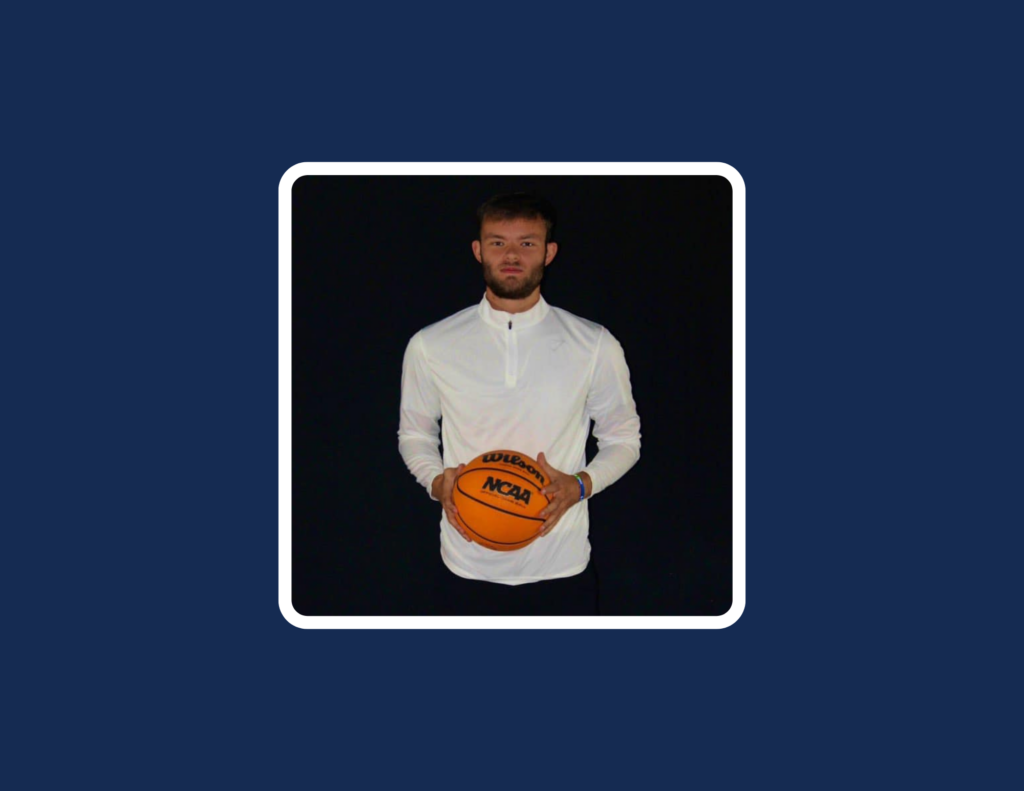
COLIN DOSS – MURRAY (KY) HIGH SCHOOL BOYS’ BASKETBALL HEAD COACH – EPISODE 1243

Website – https://www.fieldlevel.com/app/coach-profile/colin.doss
Email – [email protected]
Twitter/X – @CoachDoss20
If you listen to and love the Hoop Heads Podcast, please consider giving us a small tip that will help in our quest to become the #1 basketball coaching podcast.
Colin Doss just completed his first season as the Head Boys’ Basketball Coach and Assistant Athletic Director at Murray High School where he led the Tigers to a 21-8 record and was named the 2026 KABC Region 1 Coach of the Year.
Doss guided the program to a 2026 2A Sectional Championship, Murray High School’s first 2A title in school history and led the largest turnaround by a first-year head coach in the state of Kentucky as the team improved from 9 – 19 in 2024–2025.
Colin previously served as the Head Men’s Basketball Coach at John Melvin College in 2024-25 after being hired as the youngest Head Coach in College Basketball at 23 Years Old. At John Melvin, Doss was named the 2025 New South Athletic Conference Coach of the Year and was a USCAA DII National Coach of the Year nominee.
Doss spent two seasons as a Men’s Basketball Assistant Coach for NAIA Brescia University and has coached for PHD Hoops since 2023.
On this episode Mike & Colin discuss the importance of building relationships with players as the foundational element for fostering a competitive spirit and commitment to the game. Without trust and mutual respect, players are unlikely to exert themselves fully on the court. Doss, who has recently achieved remarkable success in his inaugural season, leading the Tigers to a 21-8 record and their first 2A sectional championship, illustrates how nurturing these connections can transform a previously struggling program. His journey from college to high school coaching underscores a commitment to adaptability and personal growth, focusing on the unique challenges inherent in high school athletics. This episode delves into Doss’s coaching philosophy, the significance of understanding player dynamics, and the strategies he employs to cultivate a thriving team culture.
Follow us on Twitter and Instagram @hoopheadspod for the latest updates on episodes, guests, and events from the Hoop Heads Pod.
Make sure you’re subscribed to the Hoop Heads Pod on Spotify or wherever you get your podcasts and while you’re there please leave us a 5 star rating and review. Your ratings help your friends and coaching colleagues find the show. If you really love what you’re hearing recommend the Hoop Heads Pod to someone and get them to join you as a part of Hoop Heads Nation.
Grab your notebook before you listen to this episode with Colin Doss, Head Boys’ Basketball Coach and Assistant Athletic Director at Murray High School in the state of Kentucky.
What We Discuss with Colin Doss
- The transition from college coaching to high school coaching involves adapting one’s approach to fit different player dynamics
- Building strong relationships with players is key for enhancing their performance and trust
- Effective communication with parents is crucial in fostering a supportive environment for high school athletes
- Self-awareness and the ability to reflect on one’s coaching methods are essential for continuous improvement
- Keys to implementing a fast-paced playing style
- Maintaining a winning mentality and fostering a positive team culture
- Winning a championship is a collective achievement that fosters joy and unity among players, coaches, and the community
- Adapting coaching strategies based on player strengths is essential for success, especially in a high school setting
- Advice on player development
Like this show? Please leave us a review here — even one sentence helps! Consider including your Twitter handle so we can thank you personally!

Give With Hoops is a groundbreaking initiative that fuses basketball analytics with modern sponsorship. Built for teams who see data as opportunity, from AAU programs to college powerhouses.
By tying on-court performance directly to community and sponsor engagement, Give With Hoops help programs raise more while deepening support from those who believe in the game.
Traditional fundraising disconnects donors from the action. Sell candy bars, wash cars, beg for donations, it’s exhausting and ineffective. Players perform better when their stats matter beyond the scoreboard. That’s why Give With Hoops was created.
Give With Hoops connects game performance to community support. Every basket, rebound, and assist becomes a chance to raise funds. Transparent, exciting, and proven to raise 3x more than traditional methods.
Aiming to go D3? The D3 Recruiting Playbook gives you a clear, step-by-step roadmap to the recruiting process – what coaches value, key milestones from early high school through application season, and how to build a target list of schools that fit your needs.
We’ll demystify researching D3 programs and how to stand out without chasing every camp or showcase.
The modules cover things like writing emails to coaches, building an effective highlight tape, using social media well, planning ID camps and visits, and navigating application strategy.
You’ll get templates, checklists, and an outreach plan to communicate confidently, learn how to compare financial packages, and avoid common missteps. By the end, you’ll have a prioritized school list and a decision framework you can use to land your best-fit opportunity.
Your first impression is everything when applying for a new coaching job. A professional coaching portfolio is the tool that highlights your coaching achievements and philosophies and, most of all, helps separate you and your abilities from the other applicants.
The key to landing a new coaching job is to demonstrate to the hiring committee your attention to detail, level of preparedness, and your professionalism. Not only does a coaching portfolio allow you to exhibit these qualities, it also allows you to present your personal philosophies on coaching, leadership, and program development in an organized manner.
The Coaching Portfolio Guide is an instructional, membership-based website that helps you develop a personalized portfolio. Each section of the portfolio guide provides detailed instructions on how to organize your portfolio in a professional manner. The guide also provides sample documents for each section of your portfolio that you can copy, modify, and add to your personal portfolio.
THANKS, COLIN DOSS
If you enjoyed this episode with Colin Doss to let him know by clicking on the link below and thanking him via Twitter.
Click here to thank Colin Doss via Twitter
Click here to let Mike & Jason know about your number one takeaway from this episode!
And if you want us to answer your questions on one of our upcoming weekly NBA episodes, drop us a line at [email protected].
TRANSCRIPT FOR COLIN DOSS – MURRAY (KY) HIGH SCHOOL BOYS’ BASKETBALL HEAD COACH – EPISODE 1243
Mike Klinzing
00:00:00.240 – 00:00:00.560
Foreign.
Narrator
00:00:13.360 – 00:00:17.600
The Hoop Heads podcast is brought to you by Head Start Basketball.
Colin Doss
00:00:20.640 – 00:00:34.370
Building those relationships is the number one thing of what we want to do because without those relationships, kids don’t play hard. If they don’t trust you, if they’re not confident in you, if they don’t like you, they’re not going to play hard for you, why would they Colin.
Mike Klinzing
00:00:34.370 – 00:02:14.850
Doss just completed his first season as the head boys basketball coach and assistant Athletic Director at Murray High School in Kentucky where he led the tigers to a 218 record and was named the 2026 KABC Region 1 Coach of the Year.
Doss guided the program to a 2026 2A sectional championship, Murray High School’s first 2A title in school history, and led the largest turnaround by a first year head coach in the state of Kentucky as the team improved from 9 and 19 in 2024 25. Colin previously served as the head men’s basketball coach at John Melvin College in the 2024-25 season.
After being hired as the youngest head coach in College Basketball at 23 years old at John Melvin, Doss was named the 2025 New South Atlantic Conference Coach of the Year and was a USCAA Division 2 National Coach of the Year nominee. Doss spent two seasons as the men’s Basketball assistant coach for Nai Brescia University and has coached for PhD hoops since 2023.
Give with Hoops is the first platform turning basketball analytics into fundraising impact Every stat tells a story and now every story drives sponsorship, engagement and team growth. Programs nationwide are transforming basketball stats into funding power.
Learn to use performance data to attract sponsors, engage fans and raise more with every play. Give with Hoops will help you raise three more money for your program as their stat based pledges consistently outperform traditional fundraisers.
Visit givewithhoops.com hoop heads podcast to learn more and take your fundraising to the next level. Give with Hoops.
David Thorpe
00:02:18.770 – 00:02:19.810
Hi, this is David.Thorpe from TrueHoop.com and the Pro Trading center and you’re listening to the Hoop Head Podcast.
Mike Klinzing
00:02:19.810 – 00:03:55.200
.
Are you or an athlete Planning to go D3? Check out the D3 recruiting playbook from D3 Direct.
Their playbook gives you a clear step by step roadmap to the recruiting process, what coaches value, key milestones from early high school through application season, and how to build a targeted list of schools that fit your needs. The playbook demystifies researching D3 programs and how to stand out without chasing every camp or showcase.
The modules cover things like writing emails to coaches building an effective highlight tape, using social media well planning camps and visits and navigating application strategy. You’ll get templates, checklists and an outreach plan to communicate confidently. Learn how to compare financial packages and avoid common missteps.
By the end, you’ll have a prioritized school list and a decision framework you can use to land your best fit opportunity.
Click on the link in the show notes to get your D3 recruiting playbook from D3 direct foreign notebook before you listen to this episode with Colin Doss, head boys basketball coach and assistant athletic director at Murray High School in the state of Kentucky. Hello and welcome to the Hoopets podcast. It’s Mike Cleansing here without my co host Jason Sule tonight.
But I am pleased to welcome in Colin Doss, head boys basketball coach at Murray High School and assistant athletic director in the state of Kentucky. Colin, welcome to the Hoop Heads pod.
Colin Doss
00:03:56.160 – 00:04:01.880
I appreciate it, Mike. It’s been a long time being able to listen to this show, so it’s, it’s an honor being on the show tonight.
Mike Klinzing
00:04:01.880 – 00:04:36.690
Well, thrilled to have on a longtime listener and we have kind of an unusual situation here, Colin, that it’s not often that we actually meet in person with someone who’s on the podcast before they’re on the podcast.
I’ve had lots of people that I’ve had on and then bumped into them or met them or seen them in their city, but it’s rare that it happens in reverse order.
So Colin and I got to meet each other in person at the Final Four this weekend in Indianapolis and now here we are doing a podcast just a couple days after meeting in person for the first time. So kind of a unique situation.
Colin Doss
00:04:37.730 – 00:04:49.570
It’s even better of how we met in person. It wasn’t I didn’t come up to you or you didn’t come up to me.
You somehow happened to sit in front of me at the D2 national championship game and just miraculously happened.
Mike Klinzing
00:04:49.570 – 00:05:07.390
So sometimes things are meant to be. So hopefully that means we are headed for one of the all time best hoop Heads podcast here. So we’re going to give it our best ship.
We’re going to give it our best shot. So Colin, let’s start out by going back in time to when you’re a kid. Tell me a little bit about your first experiences with the game of basketball.
What do you remember? What made you fall in love with it?
Colin Doss
00:05:08.190 – 00:05:42.890
Yeah. So when you grow up where I come from in the great state of Kentucky, I grew up in the western part of Kentucky.
So when you Live in Western Kentucky, you better play basketball. And if you don’t, you got something seriously wrong with you. I kind of.
I kind of look at it as like a little Indiana, but Kentucky is a hoop state, man. So growing up, I grew up with a ball in my hands.
My family, all of my family played basketball, whether when they were kids or one of them went and played in college. So it’s just one of them things that, that I’ve always been a part of. And I was fortunate enough to be pretty decent at it as I got older.
Mike Klinzing
00:05:43.210 – 00:06:00.610
So when you think about the process for you getting better and improving as a player, what were some of the things that you did in the game to make yourself a better player when you’re younger and you could take younger into whatever age you want, just how’d you get to become a good player?
Colin Doss
00:06:01.570 – 00:07:29.060
Yeah, so I, I grew up. I was always the tallest kid, so I was always the one stuck down in the post when I was a little kid. And I’m six five now.
I was six five in high school. So in my opinion, looking back at it, I probably didn’t get good at basketball until my eighth grade year.
I was just kind of that weird little uncoordinated kid.
And then I started figuring out, I started going to the park every single day with my dad and shooting on double rims and, and running and doing all this stuff that I was like, man, this is, this is dedication. This is what basketball is all about. So when I got actually dedicated to the game and I got decent at it, I knew how hard I had to work.
And then I started studying a little bit about more. More and more players, whether they’re in the NBA or college, and their mentality on things.
And I was fortunate enough with a great coach in high school, one of the, one of the better, in my opinion. High school coaches in Western Kentucky, I was coached by Greg Overstreet. He taught me a lot, and he taught me what it was like to be a leader.
I transferred high schools, I think, my junior year, and so I got to be under him and be a player under him, and he taught me how to be a leader. And he made me really, really fall in love with basketball and made me, I guess, view. View myself differently on the floor.
I could view myself as a coach, kind of a player coach. And then that’s how everything really just took off for me. So I was fortunate enough to play in college as well and all that good stuff.
Mike Klinzing
00:07:29.140 – 00:08:02.540
You think that his influence. Because I always say that there’s two paths to coaching, right? There’s somebody that kind of always has known that they wanted to be a coach.
Even when they’re playing, they’ve kind of thought the game like a coach. Then there’s other guys that are just strictly, hey, I’m a player.
And then my career, career ends and I’m like, oh, I. I want to be able to stay involved in the game, so let me get into coaching.
And it sounds like maybe you were already, once you got exposed in that way that you were able to maybe start thinking about, hey, at some point, maybe I want to get into coaching. Or was that something that wasn’t on your radar? I’m not sure.
Colin Doss
00:08:03.420 – 00:08:57.770
It’s. It’s actually something that’s always been on my radar. So it’s I was never the kind of kid. I was always realistic with myself.
I’m a 6 5, slow, not super athletic kid from Kentucky. I knew that I probably wasn’t going to make the NBA when I was in the fifth grade. But actually, video games helped me realize I want to be A coach.
Playing NCAA basketball 2008 and being a coach on that game and all those things, I was like, man, this coaching stuff’s cool. when I got older, I realized, yeah, this is what I want to do for a living.
I never view myself as a pro basketball player or a businessman or anything like that. I was always, probably from my freshman year of high school on, I was like, I want to be a college basketball coach.
And it worked out that way, fortunate enough for a little while.
Mike Klinzing
00:08:57.930 – 00:09:06.010
So tell me about your favorite memory as a high school player. What’s something that stands out when you think about your time as a high school player? What’s the one moment that stands out to you?
Colin Doss
00:09:07.420 – 00:10:15.260
Man there’s a bunch like I said, I was.
I was fortunate enough to be a pretty good high school player and go on and play Division 3 basketball, so had a ton of really cool experiences, whether that was playing in tournaments or being MVP of games or things like that. I think looking back at it now, I have it from a whole lot different perspective because at the time I was the man.
I was the cool kid in school. Everybody was looking at me. I was the tall kid that was pretty good at basketball. So everybody knew who I was.
And I feel like I took it for granted just a little bit. But looking back at it now from a coaching perspective I think it’s. I Think it’s pretty cool.
But there’s not one certain memory that I have other than just being a part of the game, being a part of the environments, the pack gyms and all and things like that. And, of course, it’s one of the reasons why I made a career goal that we’ll go into later. Career decision.
I mean, so if I had to pick one moment, probably the environment, how much people really, truly care about high school athletics, especially in Kentucky.
Mike Klinzing
00:10:15.420 – 00:11:56.140
Yeah.
I do think that the environment in high school is one that it’s really hard to replicate in terms of the intensity of the crowd, especially if you’re in a community that’s a basketball community where people come out and they support the team, and it really is super fun.
And then I think one of the things that’s interesting, and my son’s playing Division 3, and I know that was an experience that you were fortunate enough to be able to have as well.
And I know at one point my son said to me this year, he’s like, I kind of miss some of the crowds that we had at our high school games, because sometimes Division 3, if you win a lot of times, you can get a pretty decent crowd. But if you’re not winning right, it sometimes is difficult to get people to those games.
And I do think that, to your point, that that’s an experience, that whether you’re a coach or you’re a player, it’s always more fun to play in a good atmosphere with a packed gym. There’s nothing. There’s. There’s nothing like that. And anytime you get to experience it, I don’t care what level.
I don’t care if it’s middle school basketball. I don’t care if it’s high school. It’s Division 3, it’s Division 1, whatever.
Playing in front of a packed house, regardless how big that house is, it’s a. It’s a lot of fun. So tell me about just your experience making a decision to go and play at a Division 3 school.
And I don’t know if you have a piece of advice for somebody who’s out there, who’s maybe a high school player, a high school parent who’s in the process of making a decision about college basketball and something that you learned about the process as you went through it that maybe would be relevant for somebody who’s going through something similar today.
Colin Doss
00:11:57.340 – 00:14:18.240
Yeah. So I had. I did have one Division 2 offer. It was a partial scholarship.
I had a good amount of NAI offers and a good amount of D3 offers with some juco offers. So I had plenty of decisions. If off top of my head, probably 15 or so 10 to 15 different schools that really wanted me.
I went to the place that I thought I could be the most impactful, but also I knew what I wanted to do. So I knew I wanted to be a coach. So that was a big deal for me.
I wanted to go somewhere where the coach valued me, where I could learn from that coach. I just, the, the environment of Division 3 was so cool. And people ask me all the time why would.
Would you go Division one if you could out of high school? And, and I don’t know if I would. I really don’t. I loved division, everything about Division 3 during my time.
Now, I didn’t play all four years because I got into coaching really early, but the years that I did play Division 3, it was the best experience of my life. you’re riding on charter buses and stuff like that. You didn’t do that in high school. So it was super cool.
of course you don’t have athletic scholarships, so I didn’t get school for free. I have student loans now. But still people ask me, would you do it again? Of course I would.
I would take out student loans again to go play Division 3 basketball. The feel the environment of, of a team mentality at the Division 3 level I played with guys that were realistic as well.
So at the D3 level, we had guys that, they wanted to be athletic trainers, they wanted to be therapists or doctors or whatever that may be. They had a. Or business people like myself, I have a business degree. They had an end goal that didn’t necessarily involve basketball. 110%.
Some of them did. Of course, some of them wanted to play at a higher level or some of them wanted to play pro basketball.
But for the most part, everybody knew their vision of what they wanted to do in the future outside of basketball. So it made things more fun. it wasn’t constantly about basketball.
You’re actually having fun off the floor, especially with your coaches, . So I think, me personally, I’m very biased to D3, but I was very fortunate with an amazing coach, a coach that I look up to today.
So maybe it’s a different experience for me, but I absolutely loved it.
Mike Klinzing
00:14:18.240 – 00:16:45.990
Well, I think for me, again, and I’m speaking as a parent, that one of the things that I like about it and the experience that my son’s getting to have at Ohio Wesleyan is.
You have the basketball, which is at a high level, but yet you also, because of the rules and the way things are and the lack of contact in the off season, you can also be a real college student and you can get involved in things on the campus that I think with Division one, especially today, it’s really hard to do. And I always go back to.
Honestly, I think, Colin, my experience as a Division 1 athlete from 1980 to 1992 is probably closer to what a Division 3 experience looks like today than what a Division 1 experience looks like today. Like, I’ll give you an example. So when our season ended when I was at Kent, we would go in and have our postseason meeting with coach.
And when we had that meeting, I would get handed, hey, here’s your workouts for the summer. And it was like a two page ditto of like, hey, here’s, here’s the weights and whatever. And then they’re like, we’ll see you back here in August.
And there was no, there was no summer workouts. Like, I never was on campus once during the summertime.
And I just got to go and work on my game and play pickup and do all the things that I wanted to do to make myself a better player.
And now I look at the Division 1 situation where guys are on campus basically 48 weeks out of the year, 50 weeks out of the year, you’ve got the, the 20 hours, you got the workouts in the off season, which again, there’s benefit to that. Obviously guys get better and they have coaching and whatever.
But I always think, man, I don’t know if I’d want to listen to the same set of voices year round now. Again with the portal. I guess you don’t have to listen to it for four years. You got to listen to it for.
Yeah, you only listen to them for a year, but still, if that. Yeah, exactly. So there’s definitely some differences.
But I just think that the Division 3, what I love about it is that you’re playing basketball at a high level with good dudes and you get an opportunity to still amess yourself into campus life and experience some of the things that a, quote, normal student gets to experience. And that’s what I’ve loved about it the most for my son.
Colin Doss
00:16:46.950 – 00:17:46.929
Exactly. I mean that.
And honestly, if it wasn’t for that, if it, if it wasn’t for having the downtime and stuff after the season or shoot, even when you first get on campus in that August or something, you’re not really doing anything besides a Couple of open gyms here or there with your teammates and you’re getting them together. But those, those summertime off season kind of deal, I get to go home.
That’s what got me into coaching and that’s what got me into coaching full time in the summer. Busting my butt. And I think it really, truly got me to where I was today.
If I went Division 2 and played or I took that nai offer, maybe I’m, I may, who knows where I would be.
Maybe I would be ga right now or maybe I would be at a small, who knows, you never know small college doing the same thing I was doing when I was 20 so, or 21. So like you never, you never know.
And I think that’s why I always look back and I don’t regret one choice because if it wasn’t for that downtime like you’re talking about, I wouldn’t have got as far as I have so far at such a young age in my coaching career.
Mike Klinzing
00:17:47.090 – 00:17:59.890
So talk about the transition from player to coach. How does that happen? What does it look like? What’s the first coaching job? What do you remember about it, what you love about it?
Just tell me how you get from A, I’m playing to B, I’m coaching.
Colin Doss
00:18:01.170 – 00:21:21.840
Hard work and funny stories. So like, so I graduated high school, I was 18 years old and in the summer I started my own AAU program.
I was like, what, I’m not doing anything. I’m just working to get better for, for my freshman year of college. Let’s start, let’s start doing something with coaching.
Like let’s, let’s get a head start on it. So I started going to some, some college camps and working as a camp coach, doing it old school.
Not many people do that nowadays, but I listened to so many podcasts over the years and so many people told me to do this. So I did. I’m like, I’m going to do it the old school way. I’m not going to send out just emails or try to call people.
I’m going to make connections over the phone, of course, but I’m going to these schools and putting a face to face and having a conversation with these coaches.
So I would do that and then started my own AAU program and it grew to be one of the largest, most well known AAU programs in the state, which I’m very proud of. But I was 18 years old coaching 17 you kids. So I’m coaching kids, even some unsigned seniors.
So some kids that was in My grade, I’m coaching in the summer. It was crazy. It was nuts. I mean, nothing.
Nothing horrible or nothing like that, but people would be at these AAU tournaments and be like, who’s the coach? Who’s the coach? I was like, that’s me. So that’s where. That’s where things got started. And I was really busting my butt. I would.
I mean, I would be there Monday through Thursday. I’d be in Wisconsin or Ohio or eastern Kentucky. I did a couple camps there, ut, Martin, Georgia, at wherever. Monday to Thursday, me and a camp coach.
And then Friday, Saturday, Sunday, I’m in Cincinnati or Louisville or somewhere being an AAU coach. So, like, it’s a lot of hard work that put me into that position. And I made a ton of connections during that time.
And fortunately enough, it gave me a couple job opportunities going into my junior year of college. So I was 21 years old, and then that’s when I got my first college job. So it just fell into that. I built this AAU program up.
I traveled so much and met so many people, and I had actually a college that was recruiting, recruiting One of my players in aau. I took him on a visit, left there with a job offer, and I was like, okay, this is something I need to think about. Because of course, this is.
Being a college coach is something I’ve always wanted to be. And I’m 21 years old and so I was like, maybe I need to think about this because I wasn’t playing a ton.
I was the slow guy at Division 3. I wasn’t very fast. I could just shoot the basketball. That’s all I could do. I could shoot it.
So I was like maybe I need to seriously consider this, because if. If I’m going to be like this for the next two years and not really play a whole lot. I mean, I’m realistic with myself.
I know I’m not as fast as some of these other guys coming in. And so I was like, I’m going to think about it. And ultimately it led to my first college job. I was at Brescia University for a couple years.
I was an assistant coach. A guy leaves. I ended up getting bumped up to the head assistant coach at 22. So, like, everything was really taken off.
And like, so to sum it all up, a lot of hard work. And when you look up and look back at it, you’re like, Holy cow. And 18 year olds coaching 17 year olds.
And then when I was 21, we had a player that was 28, so. So we had you would think, oh, my goodness, how does this work? But it worked.
It worked building relationships with the players, and it was a pretty cool experience. That’s how I got started in this whole thing.
Mike Klinzing
00:21:22.090 – 00:23:31.700
How do you look back on the reps that you got in the time when you were coaching aau? I always think that being able to coach your own team, regardless of the level, is really, really important.
And I’ll give you an example from my own life. So for 13, 14 years, I was the varsity assistant coach.
And as the assistant coach again, it’s different than sitting in that head coach’s chair, right? When I’m the assistant coach, I’m not making the substitutions. I’m not deciding when to call timeout. I’m not making the decision strategic.
I may have input, but ultimately the decision isn’t mine.
And so I remember when there was a year, probably maybe my 10th or 11th year as an assistant, where our JV coach left, and I was not only the varsity assistant, but I was the JV head coach. So now all of a sudden, I go from just sitting on the bench doing my role to I’m back actually coaching the team and making decisions.
And it took me, Colin, probably five, six, seven games before I could manage in my head all this stuff. Like, again, I’m like, I’d for. Like, I forget the sub. Like, I would be going, I’d be coaching. All of a sudden I’d be like, oh, God, I forgot.
I forgot. I have to. I have to subside to get some guys in here and. Or like, I’m the one we should be calling time out here.
I’m like, yeah, you’re the guy that should be calling timeout.
And I think those reps, when you talk about like a you where you can play 30, 40 games in a summer, or I’m sure you probably were coach coaching multiple teams right in your program. So now you’re coaching 70, 80 games, and people are like, it’s just AAU.
But you do learn some of those things that you need eventually to be a good coach. You’re just getting reps, coaching games.
I think that’s so underrated, is just the volume of reps that you can get for any young coach who’s listening.
I think personally, and from just the people that I’ve talked to, and I’m sure you’ll back this up, that the more games you can coach, regardless of whether you’re coaching fourth grade basketball or 17, AAU or whatever it is, the more reps you can get, the better off you’re going to be in the long run for your career.
Colin Doss
00:23:32.900 – 00:26:02.660
I agree. And I. It’s all about how you run it too.
If you want to take it as an approach of you just want to win and you want to have some trophies hanging in your house or whatever, probably not going to work out. But when I wanted to do it, I. I did it. I didn’t do it for fun. I started the program.
My dad was my assistant coach, my best friend was my assistant coach. And I was like, I just, I want to get into coaching. I want to coach college basketball.
I want to run this how I would imagine a college basketball program would be run. Because of course I was going to be a freshman in college. So I. I didn’t really know what it took at the college level to run a program.
So by year two of that I had a whole year of college. I got to see my coach run the program. The ins and outs of things, how things worked.
So I took that approach from recruiting kids to play on my 17U team, to getting on a circuit, to just building and branding and things like that. I took it as a college job. I really did.
And you’re right, I mean, I probably coached 50 to 60 basketball games in the summer, not counting doing all the little things as a camp coach of trying to organize kids, trying to make sure you get a headcount of everybody, make sure nobody’s hurt or somebody does get hurt, what you do there. So, like there was just so much stuff I’d done in my early years of when I first started. And I think that’s really.
I mean, I was the head coach I was the program director and I built it up and people wanted to play for us. And I mean, it was really cool. Of course we won and stuff. We got.
I mean, in the four years that I did it, we got 30 something kids to play college basketball. I think it’s all about how you run it.
If you want to go in with that mentality, like I did of, hey, I’m going to build this like I would a college program. So if somebody comes calling one day, whether that’s an assistant coach or whether I’m a head coach in the future.
At the time, I probably thought I was going to be a college head coach at like 30, but it happened way sooner than what I thought so. So I was like, I’m I’m going to have some experience doing this. I’m going to know what I’m talking about.
And it actually led to an interview, a head coaching interview at a really, really small juco in Minnesota. When I was 22, I knew I wouldn’t got the job, but I still got the interview. And I feel like I did a good job. They gave me good feedback on it.
So just those little things like that, it’s all about how you approach the job. It’s all about how you approach AAU and your mentality of thinking of things. It’s going to be a lot of long days, a lot of long weekends.
But five, ten years from now, you’re going to look back and say it’s worth it. And I do it again.
Mike Klinzing
00:26:02.820 – 00:27:08.150
I think having the plan right of how what I’m doing right here in front of me can impact the long term of what I want to do.
And it sounds like for someone as young as you were at that time to be able to have the mindset and the mentality of I’m going to do this with the idea that that’s going to help me to get here. Even like hearing you talk about going and working camps, which is, as you said, completely old school.
So many guys that are my age who are in coaching, that’s what they did right when they were in college, when they were just coming out of college, they went on the camp circuit. And again, camps were a much bigger deal back then because you didn’t have right AU didn’t proliferate the same way that it does now.
But every college had a camp. The bigger schools had huge camps. So they’re running multiple weeks and they got four or five hundred kids there every week.
And so everybody went there to be able to learn and network and put themselves in front of people. What was your favorite camp that you worked? Did you have one that stood out that you’re like, man, this one was really well run. I loved it.
Colin Doss
00:27:08.150 – 00:28:51.420
Which, which one was your favorite by far? I worked a couple years at Marquette University. Shaka smarts camp.
So it’s funny because I was in high school, my dad has always been a huge Shaka smart guy. When he took him, when he took VCU to the Final Four, my dad was a huge Shaka smart fan. So I grew up not a Kentucky fan.
I grew up like a VCU fan for about a year. When I started getting into basketball, then I was a Texas fan.
So then people was like, why in the world are you a Texas Fan, especially when you’re in Kentucky, you didn’t get good looks. And I told him, Shaka’s smart. I love the energy. I love the way he plays and all that.
So he goes to Marquette, and I’m old enough, and I see this camp job opening, so I hit up the director of ops, and I’m like can I do this? And at the time, I think it was his. Maybe his first year, second year at Marquette, maybe second year. I’m not sure. I can’t remember.
They didn’t provide housing. I had to get my own hotel. But they were like, hey, we can pay you 400 bucks. I said, I don’t care. That’s enough for my hotel and gas. I’m coming.
And then that ended up leading into, like, thing of meeting Shaka Smart and talking with him and he’s answering questions and he’s happy to help with me and my future, future coaching career. And then meeting Nevada Smith and Mark Dixon and all kinds of coaches at Marquette and building connections with them.
Then I come back the following year. They all know me. I’m in practices. I’m. I’m viewing behind the scenes of stuff.
I’m getting to go with a couple coaches, different places and seeing what they do. And I’m still super young, so it was. It was still like a little.
They were still a little standoffish with me, but I got to learn so much from my favorite coach. I just. I thought that was the coolest thing in the world.
Mike Klinzing
00:28:51.420 – 00:30:48.360
Yeah, absolutely. I think when you talk about just the opportunity, again, it puts you there in person. Right. And so it’s a lot easier to.
It’s a lot harder to connect with somebody via email. It’s a lot easier for a coach to ignore an email, to ignore a voicemail, than it is for somebody to be at your camp working.
And you can just, again, make that personal connection. I got another. I got another great story here. It actually. It actually relates to Five Star. And I.
Not that I wore the shirt for that, but a guy, that guy that’s been on the podcast multiple times. Joe’s decision who he works for USA Basketball and he works with, unleashed potential in Carlisle, Pennsylvania.
And Joe told me a story about when he was working at Five Star, that they always had the famous Station 13, where you’d have your normal stations, and then after the regular session was over, guys would stay and coaches would run Station 13, and some players would stay and work on their game or whatever.
And Joe always told me that he always Wanted to work at Station 13 and work really hard and come up with great drills and put all his energy into it and because he never knew who was watching. And Howard Garfinkel, who used to run 5 star one time, just came by his station 13 while he was working.
He said Garf just kind of looked at him and like nodded his, nod his head at him and said because, hey, you’re doing, you’re doing a good job. And Joe’s like that, that told me everything that I needed to know about. Just again, wherever you’re at, right?
And do the best work that you can. And if you’re doing the best work that you can where you’re at, then somebody’s going to notice that. And then that’s how you get your opportunity.
If you’re already looking for your next opportunity while you’re somewhere, it’s probably not going to work out. But if you’re focused on what you’re doing, somebody who’s over here that you’re not even looking at is probably going to notice you.
And then that’s where again, it builds those connections like you were talking about that gets you, gets you some opportunity. So talk a little bit about that first assistant coaching job at the college level and what you learned from that experience.
Colin Doss
00:30:49.720 – 00:35:13.370
It was, it was awesome, man. So like I said, I was 21, um, and I was, I was working. I was a, I was at Brescia University NAI in Kentucky.
It was about 40 minutes away from my hometown, so I drove probably about 45, 50. I drove back and forth every single day, 50 minutes or so. One way to make sure I was there every single day.
I didn’t miss a practice unless I was like sick or something crazy happened. Didn’t miss a practice, didn’t miss a game so I was like, I’m doing this full tilt. I don’t care. I made I think $2,500.
And I was like, I don’t care. I was like, I will pay you if I have to. Like, I’m a 21 year old assistant coach. It was an amazing experience.
we, we had a lot of really good players. We, we recruited a lot of really good players in there. Got multiple Division 1 bounceback kids.
So I got the opportunity to coach guys that’s played at a very, very high level. Got to coach some really good players that now play overseas. One of them plays in Europe, another plays in Mexico. So really cool experiences there.
But being At a small college like that nai school we had, it was the head coach, me and another. Another guy. So I did everything. At 21, I was you weren’t going to tell me. I wasn’t going to say no. I’m going to do whatever it takes.
So I’m up washing uniforms at like 3am on road trips. And I’m also like, recruiting, full on recruiting and offering scholarships to kids that some of them were older than me.
And it was just awesome. I. I got to learn how to run a program. And then by that assistant coach left, took the head women’s job at Brescia.
And then I got bumped up to the head assistant coach at 22. And I’m like, oh, my goodness. Like, this is like. I don’t know. It’s a small nai. And we were about 500. We weren’t great.
We weren’t top 25 in the nation or nothing like that. But I was doing all these things, and I’m like, just. Things are falling into place. Like, there’s no telling what could happen next.
So I was there, and my first scout was against Murray State University. Steve Prom came back, and I think that may have been Steve from first year back or second year back. I can’t remember right offhand.
And I was tasked with the very first game of the season, doing the scouting report, and I was like, okay, this is probably a test, because it’s a buy game. Nai. We’re expected to lose by 30, 40 points. We’re there to get our money and go.
So I was I was like, okay, but I’m going to do it to the best of my ability. So I’m on Synergy. I’m looking up their Twitter pages. I’m looking up coach, prom, style of play and all this stuff.
We get into the game at Murray State University, halftime, we’re down two, and, like, I go back and I’m walking back in the locker room looking around like, if we win this game, I’m going to look like a genius. Like, I. I’m so cool. And I just thought that was the coolest thing in the world. We ended up being down three with in the last media timeout.
And then division one things happened. You.
We lost by like 18. But it’s just like the surreal feeling. I was a young dude that’s always been wanting to do that.
And then sure enough like, I’m there doing a scout against Division 1 opponents. Conference opponents, rivals. I proved myself and I wasn’t always good. By no means.
Looking back at it now, the where, where I’m at and the experiences that I’ve had now, I would probably look at that coach and be like, you’re an idiot, dude. Like, come on, get it together. But I was trying my best. I was trying to learn.
And whether that was learning myself or learning from my head coach, it doesn’t matter. I was trying to learn and trying to do my best in learning the business.
And ultimately it led to a head coaching job at the college level at 23, which is like unheard of. And I did well. I proved myself. That’s just, that’s all it.
One school took a very crazy leap of faith chance at a very, very small school, and it worked out. And it goes back to doing the laundry at 3:00am or doing scouts or whatever it took to be the best coach I could be.
So it was a great experience.
Mike Klinzing
00:35:13.610 – 00:35:20.970
What do you remember about that interview process for that job? What were some of the things that they asked you? What were some of the things that you asked them?
Colin Doss
00:35:22.090 – 00:37:00.500
Yeah, so of course I’ve been through a lot of interviews now, so it’s, it’s hard to. Honestly, it’s hard to remember every little thing.
Um, but at that level, I, I brought that kid on the visit, one of the kids on a visit, and the head coach was like, well, what do you think about being an assistant coach for me? And I’m like, I would think about it. Yeah, for sure. I. I mean, I don’t. Yeah, I’m not playing much anyway, and I want to get into the business.
Like, if this is an offer, I’ll do it. And so it wasn’t a huge, like a big interview process.
It was kind of more of like, hey, I’m looking for help because I don’t have enough money to pay people to get people in here. But I think it ended up being a win, win, maybe.
But through the interview processes of all the other jobs that I’ve had it’s always, it’s always young. It’s always about being, are you going to discipline the kids? How’s your discipline level? Things like that, being as a young coach.
And I totally get it. I understand. So I think that did come up. Um are you going to be able to do whatever I need you to do? Um, I was, of course, yeah.
No matter what it took, I’m not going to say no. I’m just not that kind of guy. And like I said, I don’t care if I have to pay money. I don’t care if I had to do it for free.
It was close enough to home where I could live at home. So I’m not out any money besides gas. Um, but I had another job. I was working, doing online school, too. I don’t care. Whatever it, whatever it takes.
And I think the ambition got me that very first job, the excitement, the enthusiasm that I brought, and I still do today as a head coach. So I think that was the biggest thing there.
Mike Klinzing
00:37:00.740 – 00:38:31.530
Yeah, I think that you hit on a couple of things that have been themes that have run through many interviews on the podcast for young coaches. And one is you got to be willing to do whatever it is that you need to do and then do even more as a young guy. Right?
You got to be willing to sweep the floors, you got to be willing to do the laundry, you got to be able to go get the coffee, you got to be able to do whatever. Lots of things related to basketball, but lots of things that are unrelated to basketball. I think that’s a. A huge piece of it.
Two, you got to be willing to work for little or no money at the start of your career.
And then the one thing that didn’t affect you maybe nearly as much, but a lot of times you got to go and travel wherever it is that you got to go to be able to get that, to be able to get that job, you have to be willing to move across the country if necessary.
And those are three things that, for anybody who wants to get into coaching at the college level, those are probably the three most common answers I’ve gotten to the question of what do I have to do to get into it? And that’s work hard, be willing to work for little or no money, and be willing to go wherever the job is going to take you.
And I think if you do that, you’re going to at least get yourself in the door and get your career started. And then after you get that assistant job, then you go and you get an opportunity to be a head coach Right.
Pretty quickly thereafter and become the youngest college coach as a head coach in the country. So how does that happen? And what do you remember about that interview process and getting that job?
Colin Doss
00:38:32.810 – 00:40:41.360
Yeah, so that was pretty crazy. So, John Melvin, COLLEGE I had a connection through there and so I. I coach USA, Team USA.
I started that in 2023 as an assistant coach for Team USA and United World Games. Not the one where you see Jason Tatum and Michael Jordan, all them. It’s PhD hoops.
So it’s I kind of look at it as like a team, USA B team probably. And it was. I mean, it was just one of them crazy things that I met one of the coaches that knows the president of the school.
And I was like, can I get this job? And he’s like, colin, I don’t know. Like, I don’t know if you want this job. Like, it’s, it’s going to be grueling. It’s going to be daunting on you.
Like you don’t know what you’re getting into. It’s super small college. They opened, I think, maybe three or four years before, and they never.
They had a baseball program and a volleyball program and they want to start men’s basketball. And it was kind of. They didn’t advertise it super well. So not many people knew about it.
But I just happened to go through a job listing and just see it and I’m like, hey, Tim, I know you have a connection here, right? He’s like, yeah, I do. I’ll call for you. So I interviewed people, put in good words for me, and ended up getting the job offer.
And they may have offered it to a couple more people, but I accepted it within probably 30 seconds down, and it’s in Florida. So I was like, I accept. I’m moving myself to Florida tomorrow. I’ll meet you at the campus. So it was crazy how it happened.
It was probably a little bit. Probably a little bit of luck. I would say definitely a little bit of luck.
I was very fortunate because there’s a lot of coaches, great coaches personally, probably better coaches than me that haven’t gotten an opportunity yet. I was just so happened to be. To know a person that knows the person that is hiring, and the job wasn’t advertised very well.
So not many people knew about it. And I just somehow fell on the job and I did a great job in the interview. And it led to. It led to being a college head coach at 23 years old.
Mike Klinzing
00:40:43.040 – 00:41:18.250
What’s that like in terms of the learning curve? Figuring out both on the court, off the court, running a program. What were some of the key lessons that you learned over the course of that year?
Figuring out what it meant to be a head coach? Because I think that, again, different sitting in the assistant chair at whatever level and then moving over to the head coaching position.
So what did you learn? What lessons did you take away from your first year of an experience there at John Melvin.
Colin Doss
00:41:19.600 – 00:43:32.150
Yeah. So it was definitely different because when I was an assistant, I had all these ideas. Happy, go lucky that this is going to work.
This is going to work, and this is going to work, and we need to do this better. And then I got in that chair and I’m like, no, this isn’t. One of my assistants will say something. I’ll be like, no, this is not going to work.
This is not going to work. So I definitely got that aspect of it but so starting a program, it’s not like getting a job. And this.
This school’s been around for 100 years, and they have players coming back. I had no players. And they just started a men’s basketball program.
So we were practicing and playing out of a high school, so we didn’t even have our own college basketball gym. So there were so many challenges that you had to face.
We’re in Pensacola Beach, Florida, so that is the biggest recruiting pitch, the biggest selling point, like, hey, come play at the beach. Um, and we got fortunate to get really good guys, in my opinion, because of that and because of the play style that I have.
But it was super challenging. Like, I was still having to do everything. I was still doing the laundry. I was still. I kind of wanted to micromanage everything.
Like, I wanted to make sure. I was like, okay, I know that it will be done right if I do it. And that it was only for a couple months.
And then I realized, like, I started listening more to people. Actually, a couple of guests on your show even said the same thing.
Like, I was micromanaging those first couple years of head coach and didn’t work out. So I may be going into October practices, maybe a month before the season.
And I’m like, okay, I’m going to give some leniency up a little bit, and I’m just going to try this because this is a lot on me. I’m still recruiting kids. I’m still trying to talk to kids. So this is a lot on me. So I’m going to give some to my assistant coaches.
And it ended up working. It ended up relieving some stress for me. They ended up. I mean, I had great.
A great staff there for a year, and a lot of really good things happen.
So I believe just not having to micromanage a head coach and you got good assistance, that’s the best thing that can happen to you as a Head coach. And that can make you look even better, which it did. So super small school with a lot of challenges, but we made it work.
Mike Klinzing
00:43:32.630 – 00:44:01.830
Easier said than done to delegate, let’s put it that way. It is easy to talk, it’s easy to talk about that, especially as a first time head coach.
It’s easy to say, oh yeah, I’ll delegate this to this assistant, I’ll delegate that.
But the honest truth is when it’s your name on the program for the first time and the wins and losses get attributed to you, now they don’t get attributed to the head coach and you’re just sitting there as the assistant coach. Your whole mindset definitely shifts and looks at things a little bit, a little bit differently.
Colin Doss
00:44:02.710 – 00:44:06.190
Right. And well, it’s even harder on me because I mean, at the time I’m 23.
Mike Klinzing
00:44:06.190 – 00:44:07.430
Correct, absolutely.
Colin Doss
00:44:07.430 – 00:44:24.610
The young, the young card is always flowing, floating around. Always floating around. Whether it’s admin, whether it’s ad, whether, no matter what, it’s always going to be floating around.
So if I make one mistake, he’s young, he can’t do this. So that’s why I was so nervous on doing that. But like I said, I have really good assistance and it ended up paying off really well.
Mike Klinzing
00:44:24.610 – 00:45:46.310
So yeah, makes sense. I mean, it’s the right thing to do. It’s just not easy to do. And right people who do it. Well, part of it is you got to hire well, right.
You have to have good assistants that you can trust that are loyal and they’d have some expertise and then you hand it to them and they take it and run. And again, you’re the guy steering the ship. Right?
Everybody, there’s lots of people that have jobs on the ship, but ultimately you’re the guy that, that steers, that steers that boat and keeps it all going in the right direction.
From a basketball standpoint, in terms of how you wanted your team to play, obviously at the college level, you have some degree of ability to recruit the types of players that can fit into the way you want to play.
And I guess this is one benefit of having no returning players is you can you go out and get the style of player, the type of player, at least theoretically, that you might want. So where were you in terms of having an identity of what your team, what you wanted your teams to look like on the floor when you took that job?
Did you, and how close to the vision of before you got the job when you were thinking about, okay, what do I want my team to look like? How close did you come to actually getting your team to look like what you thought you would want them to play like, once you put them on the floor?
Colin Doss
00:45:47.350 – 00:49:55.010
So I had my philosophy all planned out for when I was going to be a head coach when I was at Brescia. Excuse me. Not because I didn’t agree with anything, nothing like that.
Just because like, I’m studying, I’m learning the game, and of course I incorporate things, but I had my whole philosophy of what I wanted to do. So my kind of philosophy. I’m a big Jim Crutchfield guy.
I’ve never been able to meet or speak to him, and who knows, I probably will never be able to at Nova Southeastern. But I’ve studied so much. I’ve listened to every podcast he’s been on. He was even on one podcast that wasn’t even talking about basketball.
But I still listen to it because maybe he’ll drop something that I need to know. So I wanted to. I wanted to implement his system.
And of course you got Shaka smart and his energy and his level of toughness and what he instills in his program too. I’ve been around that. So, like, of course I’ve always been a fan. Like I mentioned, I was a fan when I was a little kid.
Then I got to kind of work with him a little bit and see what he does in practices and see the energy that he has. So I’m like, okay, I want to put these two together. But then also got my little things that I’ve learned from other people along the way.
And I kind of bundled it up into one big play DOH ball and made Colin Dawson’s system out of it. So we are going to play fast, we’re going to run and jump, we’re going to press for 40 minutes.
And of course some game scenarios, you may see us in a zone or something like that in half court, just whatever it takes to win. But for the most part, 95% of the game, you’re going to see us playing fast.
We’re getting up and down the floor, we’re playing with a 10, 10 to 12 second shot clock in practice, trying to make quick decisions. Freedom. On the offensive side, we want our guys to be able to play conceptual basketball.
We, so we focus on skill development, we focus on playing live in practice, disadvantages, advantages, whatever that may be for the offense or defense. So that offensive side of the ball, we wanted the guys to play how they feel like they can play. I want to give Them confidence.
I want to build a connection with them. If I let them play how they want to play, then they will play freely, they will play more confidently.
And the more confident you play, the more shots you knock down, in my opinion. I’m a big guy on mentality and toughness and all that stuff. And that’s from shock and smart. So I wanted to do that on the offensive side.
On the defensive side, I’m going to coach you up, I’m going to coach you as hard as I can. We’re going to press, we’re going to trap, we’re going to get deflections, we’re going to count deflections.
We better have this number of deflections per game. We better have this many kills, which goes back to a Marquette thing. Shotgun smart. But we want to control the tempo.
Ultimately, we want to get more shots off than the other team, because if you get more shots off, you statistically have a higher chance to win. And it worked. So we were USCAA, Division 2, very small. A lot of people don’t even know what USCA is. It’s for the small colleges.
And we led the nation in the whole USCA, Division 1 and Division 2 in points per game, 96 points per game. I think we averaged 11 made threes a game. Number one in three point percentage, number one in rebounding. And we did not have the biggest team at all.
But it was all built off toughness, grit and effort and playing fast, getting an opportunity to get offensive and defensive rebounds. So that’s the kind of guys I was looking for. Guys I was going to play as hard as they could. And of course, guys, a little skill.
But at first I first got the job, I was looking at, I need to find this 611 guy. I need to find this 6 foot 10 guy. We did get. We got a 6 foot 10 guy, we got a 6 foot 9 guy. They ended up getting there.
And we didn’t play super fast at first. We played with them, we tried to press and all this other stuff. 610 Kid in a scrimmage against a junior college in Mississippi, breaks his ankle.
So then he’s done. And then the other kid goes home and gets homesick and goes home to California. So then we have a smaller team.
My biggest guy’s now 6 foot 7 and then my next guy’s 6 foot 7. I got a 6, 6 guy. That’s my biggest guys and they’re pretty much guards. So I’m like, we can do what we want to do now.
And it ended up working and moving to the high school level, I do the same thing and it ended up working there as well. So that’s great.
Mike Klinzing
00:49:55.730 – 00:50:31.440
How do you instill that toughness that you’re talking about? What does that look like dayto day in practice, in conversations with your players, with your coaching staff?
When you talk about being able to press and having that mentality, I just think of the relentlessness, the, the toughness. Those two things to me go hand in hand.
So I, how do you get your team to buy into that day by day so that they can have those characteristics on the floor when they need them? What does that look like for you?
Colin Doss
00:50:31.680 – 00:53:04.990
The, the, the biggest thing is relationships. You have to be personal, not transactional.
So if I’m personal with the kids, if I’m able to talk to them about off court issues, about this, whatever it may be, maybe they have something going on in their life. I’m going up and I’m talking with them, I’m laughing with them. We’re having fun, we’re joking around.
But when we get, when we hit the floor, it’s all serious. It’s, it’s serious business.
We take care of practice for an hour and a half or we, whether it’s a game, we got 40 minutes of a basketball game, we’re going to go out and compete. Building those relationships is the number one thing of what we want to do.
Because without those relationships, kids don’t play hard if they don’t trust you. If they don’t, they’re not confident in you. If they don’t like you, they’re not going to play hard for you. Why would they?
Honestly, I probably would have been the same way as a player. Why would I play hard for a guy that don’t care about me? so just everybody’s a little selfish at the end of the day.
So building relationships was the first thing. And as far as the early season practices, we’re going, we’re, we’re, we’re adopting the Jim Crutchfield style.
We’re playing games that can, our conditioning is games to 150 points. You stop every 25, 50 points, you’re running with a 10, 12 second shot clock.
Some days toward the end of the week, when we were doing it and they were tired, I’d be lenient and give them 14 seconds. So things like that, where you have to play hard, like there’s no, there’s no second chances, there’s nothing.
You get 14 seconds for a Possession, you better go and you got to go hard. And then that just becomes the norm all season long.
So the relationships and the way we approach practice, just the toughness of practice, we’re trying to get one thing to the next. We’re practicing for maybe an hour and a half, hour 45. We’re getting done with a drill, maybe it’s six minutes long. Okay, boom, blowing my whistle.
This is what we’re running next. We’re jumping right into the next drill and we’re going and going and going and going and going.
So when you get into a game, that toughness and stuff, it’s not necessarily that you built it, it’s just what you instilled. So they don’t know anything else. They don’t know anything different.
They’ve been going as hard as they can since August or September, wherever that, whatever that may be, that start date. So it’s just, it’s the norm for them. It’s not necessarily anything crazy or different. You just got to work your butt off with the relationships.
If you don’t do that, then you, you don’t know what kind of team you’re going to get. You’re going to get an emotional team. You’re going to get a team that maybe shows up late, kids show up late.
You’re going to get an unorganized team, dysfunctional team. It’s all about those relationships first. That’s how you get the hardest playing teams.
Mike Klinzing
00:53:05.960 – 00:53:49.010
How do you think about building that relationship in the balance between a formal meeting with the kid where maybe you once a week sitting down with every player for 10 minutes, or you do a pregame, a preseason, a mid season, a postseason.
So more of the formal things that you do on purpose that are in your schedule versus sort of the informal guys are stretching before practice or you’re in the locker room or there’s a team gathering or you’re in school and they’re walking by and you’re just grabbing them to have a quick conversation. How do you go about building those relationships and talk about the balance between formal and informal conversations?
Colin Doss
00:53:50.050 – 00:56:06.640
Yeah. So one thing I’m the young guy, so I, I, I’m on tick tock and all that stuff.
I view social media so I know what they like, I know what the sayings are, I know what they’re talking about. So just cracking jokes with them and stuff.
Just one thing, one thing with me is if one of my players walks by, I will never, ever just not say anything to them. If I See them out in public. Sorry, but you’re going to have to talk to me for at least 30 seconds before you can go on.
Like, I’m going to make sure I grab you. How you doing? Everything good? What you doing? just simple stuff. And that builds a level of connection. Already with the kids.
They don’t know you from Adam. Like, especially at the college level. I had no one of them came down from New York. Never even been to New York. California, Colorado, Utah.
So, like, place people from all over the nation. Why would they trust me? Right? But it’s this. I’m going to make sure that I care about you.
And a big thing is for me is the, the kids want to text. Now, they’re not necessarily they don’t want to hear a 15, 20 minute conversation, sit down all the time.
And I may be different, maybe they do, but the kids that I’ve had so far in the two years as a head coach, they don’t want to hear that. So I may just send them a text. All a text is going to do is they can read it, reply to it, boom. It take a minute.
I’m just going to say, hey, just want to let you did an awesome job in practice today. I care about you. I’m super excited for your future. Things like that, they get that.
And they also get to keep that message so they don’t forget about it. They can always go back to that. Right? So if they ever get mad, well, coach didn’t play me tonight.
Hey, remember, dude, go back to the message I sent you a month ago. Like this, this matters to me. You matter to me. That helps. That mean that, that right there does it.
So I’m not a big guy on of course we want to have end of end of season meetings and if we ever have an issue with a kid, yes, we’ll sit down and talk to them. But as far as things go with the way kids are now, being able to just shoot them, just a simple text or a phone call saying, hey, care about you.
Just let me know if you ever need anything. Things like that, that goes a super long way with them. It’s worked so far. It may not work in the future, who knows, it may not work next year.
But so far it keeps working. So I’m going to keep riding on it.
Mike Klinzing
00:56:07.440 – 00:56:38.120
That’s a great point. In terms of meeting the kids where they are, right? You got to, hey, everybody’s texting or everybody’s doing that. This is how we communicate.
Let’s figure out a way to communicate and meet them where they are and then continue to lift them up so they can communicate in person when they’re talking to you face to face. But yeah, it’s a great point about, yeah, we don’t need to talk for hours.
We can just, boom, quick text, let somebody know you’re thinking about them, you’re talking to them, you’re sharing something with them and that continues, that continues to build that connection.
Colin Doss
00:56:39.080 – 00:57:54.700
Right. we’re always on our phones now. It’s just what we are.
I am, I mean, I’m a young guy, so maybe not everybody is, but they’re going to see that and maybe it’s not the best way to do things, but it’s my way of doing things and it’s, and it’s worked just a simple text or simple phone call. Hey, want to let I care about you. Let me know if you ever need anything. And it’s always, thanks, coach. I love you, coach.
You’re awesome, coach.
I appreciate you giving me this opportunity, all of those things, and it means a lot to me because honestly, it’s something that I can go back and I can look at as well. So like if we’re on a losing streak and I’m like, man, what am I doing?
Like, I’m messing everything up, I can go back and realize, man, these kids care about me too. So we’re going to get through it together.
So, I mean, it helps both of us it just just, just positivity, spreading positivity around whatever program I’m at, that’s what we want to do. Because the more positive, the better you play, of course.
And the more games you win, and of course the more you win, the more job opportunities there is for me, potentially more money. That would be amazing. So it’s, it’s all about positivity. If you let negativity in your program, it’ll come crashing down. So.
And it’ll crash down faster than all of the buildup of positivity. So it’s just my way of doing things.
Mike Klinzing
00:57:54.860 – 00:58:45.250
I love that in the sense that it’s a two way street, right? That, yeah, you’re building a relationship with the player, the player is also building that relationship with you.
And there’s positive energy flowing both directions. And I think that’s really, really important because sometimes coaching can be a lonely job.
And there’s a lot of Times where you feel like you’re on your own and everybody’s against you and you’re got a losing streak. And sometimes it’s nice to be able to just look at a message and say, hey, yeah, I remember when I connected with this kid.
Or that’s what it’s all about.
And I think being able to have those anchors, those things that you can go back to as a coach when times are tough, a simple little message from a player certainly can be valuable in that particular way. Without. Without question. Tell me about it. And me go ahead. Sorry. No, you go.
Colin Doss
00:58:46.770 – 00:59:40.320
me as a. As a young coach, like, I have severe anxiety because I’m just always afraid to mess up. You always see it all the time is, well, he’s a young coach.
He’s not ready. I mean, not necessarily talking about me, but anybody he’s not. He’s not ready or he’s. He can’t discipline a program.
He can’t do this, he can’t do that. He’s young. So when I hear that it’s it for me, it’s like, it gives me severe anxiety of every single game.
my heart’s pumping, I’m nervous, I’m shaking. Like, I don’t. I just want to win.
I don’t care if we’re playing a team that’s 30 and oh or a team that’s owing 30, I’m going to be shaking, and I’m going to be nervous just because I want to win. I want to prove everybody wrong. So that goes back to seeing those texts, because there is a lot of times.
There’s a lot of times we had a really good year at Murray High School this year. We had a really good year last year at John Melvin. But there was times that, I mean, I was like, man, like the world is against me. Nobody.
Nobody wants me here. Nobody cares about me. But then I can go back to those text messages, and it’s pretty cool.
Mike Klinzing
00:59:41.200 – 00:59:56.000
All right, so tell me about the transition from college head coach to high school head coach. First of all, talk about the why, and then we can get into the year that you had at Murray.
Colin Doss
00:59:57.120 – 01:03:07.070
Yeah. So everybody asked me, why. Why would you. Why would you leave a small.
it’s a small college program, and that’s why I said right there, because it’s a small college program. It was a definition of a small college program. Nothing wrong with that. Just new, newer schools have challenges.
They have different ways that they, they can only do their limited money. For instance, like I said, we didn’t have a gym, so we were. We were going playing and practicing out of high school.
There’s a lot of challenges that came along with that. And the thing about Murray High School is, is it’s back home, it’s in Kentucky, it’s about an hour away from my hometown.
But it’s built off a tradition. They’ve had so many good teams, they have won so many basketball games through their history, so many championships.
it was just a job that was special to me. And I just was like, man, I got the call about it and I was like, man, we could really do something special there.
And of course going back to what I was talking about earlier as a player, the environment of things. So small college. John Melvin. We were 25 and 6 last year. I think off the top of my head, maybe 11 and three in conference play.
And we are the number 10 team in the nation in USCAA, the highest scoring team in USCA, I guarantee you, at our home games, I think maybe we had the maximum of maybe 40 people there. Like, it’s just there wasn’t an environment. And it the thing about Murray is, is they pride themselves off of basketball.
They love football, they love basketball, they pack the gyms, and people truly care. So when I got that call about it, I was like, I’m thinking about this. This is. This would be a really good opportunity for me.
Of course it’s dropping down from the college game, which made me really nervous. So I was kind of debating back and forth, is that what I want to do? And actually, I was.
I had three other head coaching interviews at a college colleges, another two USCAA programs, and a junior college program in Virginia. And I was a finalist for two of those, but then they ended up choosing somebody else. And it goes back to the age thing.
And I was like Murray Murray. Murray’s interested in me and I’m interested in Murray. I think this is where my heart is. It’s an opportunity for me to go back home.
I’ve built enough connections now. Division one, two, three, Nai Juco. hopefully I’m blessed enough to be back in a position.
It may have to be an assistant coaching position in the future, in college or something, but right now I’m super happy where I’m at.
I’m assistant athletic director and a head coach at now at 24 years old at a really, really respected high school in Western Kentucky, a high school that used to beat the dog crap out of me when I was playing. So it was a tough decision. It was the hardest decision in the world. And it brought a lot of really good memories back.
Being at the Final Four this year and seeing all the good college coaching friends of mine, how much I do miss college, but I love the high school game just because of what I was just talking about. And it was. It’s been a great decision, and I plan on being at Murray for a long time. I’m happy there. And that’s what. That.
That’s what matters the most, ultimately.
Mike Klinzing
01:03:07.070 – 01:03:10.910
Absolutely. Biggest difference between college and high school off the top of your head.
Colin Doss
01:03:12.110 – 01:05:03.420
Well, so I got the high school job at Murray, and it was about April, and a little after that going into June, because we always play summer basketball in Kentucky in June. So we were busier than June. But between April and June, I caught myself sitting at home watching tv, and I was just like, what am I doing right now?
I don’t know what to do with my life. I realized I’m not recruiting 100 kids anymore. Like, I’m not having to be on phone calls and text all the time. I was like, I’m going to have to.
I’m going to have to go out and do something this summer. So, like, I got to go on trips. I got to go with friends to different places across the country. I went to Las Vegas, I went to Louisiana.
I went to Florida.
And just I had me time, free time, and I didn’t have to go recruit and go on AAU visits and high school visits and all this other stuff and meeting kids. And it was a nice change of pace. Definitely different.
You don’t really realize it until you’re out of it for a little bit because you’re just constantly recruiting, and the times you aren’t recruiting, you’re worried about coaching a basketball game and how you’re going to win. So it was a really nice change of downtime and change of pace. Of course, you’re dealing with a whole different skill group now.
So I’m dealing with guys that really. That they’re coming to John Melville to play basketball, that basketball is their main sport. It’s what they want to do.
Some of them want to go play pro. May love the game, but at the high school level, maybe my third best player, his.
His best sport is baseball, or he cares the most about football. you never know so you got to have that mix. And that’s actually helped me in my coaching career. Just real different things. Like the Murray.
The high school level has helped me so much, and I feel like it has elevated me even further from when I was in college.
Mike Klinzing
01:05:04.750 – 01:05:06.030
How’d you put together your staff?
Colin Doss
01:05:08.110 – 01:07:00.930
So I was so fortunate enough. The John. The at John Melvin. I got to hire a couple people. I hired a guy from Louisiana who actually went.
Ended up taking over from me, and then I also hired another guy from Florida. So I got to do just normal college coaching staff. The high school staff. I was super lucky.
The two assistants that was there before me, that was with the. They were there. One was there. I think he went on his seventh year this year. Amazing. And I’m talking amazing like he is a coach.
Kendrick is one of the best assistant coaches anybody could ask for. There’s times where he is. I’ve came up to the gym before, and he has personal workouts going on.
And he didn’t even have he’s like, oh, I just. I didn’t want to bother you. He said. He said they wanted to get some shots up, and this was your day off, so don’t worry about it. I’m good. I’m just.
I’m working them out. Like, that is. I’m like, holy cow, this is awesome. Like, so I fell into a gold mine with him. Dwayne Curtis is another assistant mine.
He’s an alumni, so people already know who he is. He hit one of the biggest shots in Murray high school history, so he’s known for that. He’s great at player development.
I was like, I want to keep you on staff, too, so. And then my third assistant, none other than I, reunited from the AAU days. I brought my dad back on coaching staff with me.
Um, so he is my assistant coach as well, so we get to share that Father, son duo on the sidelines. Probably not always happy go lucky all the time. Of course, you got to clash heads at some point, but it was really cool.
Like, we won a lot of games this year. Murray was nine and 19 before I got there. The same exact kids they had. Nobody graduate. And we went 22 and 8 this year. Sorry, 21 and 8.
And it was. In my opinion, it was because of the amazing assistant coaches that I had.
Mike Klinzing
01:07:02.130 – 01:07:15.250
What’s the most underrated key thing to building a good high school program in your mind? What’s something that people don’t think about very much that you think is the key to building a Good program.
Colin Doss
01:07:16.370 – 01:11:02.270
I think it goes back to the relationships because you build these relationships off the court and on the court. That helps them mature. And the more mature program that you have, the more you’re going to win.
Just in my opinion if you have an immature program where you’re talking and you got the little freshman on the sidelines, it’s poking fun at somebody or dribbling a basketball that’s immaturity within a program where you make these connections with each kid. And I did that within the freshman team and the senior, the seniors on the team. And of course it’s hard.
You got 30 something kids in the program. you can’t always build the best connection, like we are best friends kind of connection with every single one of them.
But I do the best I can and our staff does the best we can. That’s one of the biggest things I told them. It’s like, guys, make sure we value relationships more than anything. I think that will be where.
Because you’re trying to flip losers into winners. they were nine and 19, they won nine games last year.
That was the least amount of games that Murray Highs won in like 20 years or something like that. So they, so they’re not used to losing. And they were kind of the younger guys on that nine win team.
They didn’t graduate anybody, but they were inexperienced. So their first real roles of varsity basketball was losers. So of course when I got there, the whole program was negative.
Like from, from, from people, the view of the community, like, man, they’re just not, they’re not great. The media, I think they picked us like ace or ninth out of 15 teams in the area. The, the players were negative. Like, I don’t want to lose again.
I don’t want to do this crap again. and this was their third coach in three years, so it’s super tough for them. So I was like, here’s the biggest approach.
We got to make positive relationships first and then everything else will fall into place. And I feel like personally, especially at the high school level, if you don’t do that, then you’re going to have immaturity in your program.
You’re going to have everything’s going to start trickling down. And another thing on top of that is trying to get the parents on the same, same page as us.
When you’re at the high school level, the parents, the parents are a part of your program too. I’ve Heard plenty of coaches over the years. I don’t get involved with the parents. I don’t want to talk to the parents.
I. I want to talk to the players because I want to build life long whatever. I just want to build maturity within them. I want to teach them this. Sorry, but little Johnny, that’s 15. Sorry. You have to talk to his parents.
And a lot of people may not like that, but unfortunately, you have to. I mean, you have to have parents involved in the program. And I’m fortunate enough where I have amazing parents. I really do.
At the start of the year, we went through, hey, here’s the rules as a player, here’s the rules as a parent. We need everybody on one collective page if we’re going to turn this thing around. We ended the year with zero parent meetings.
Nobody came to me, said, I need to talk to you. We need to sit down and talk or nothing. And I think that was because we were all on the same page.
And of course, I’m sure not everybody was happy within the program, but they didn’t go and spread that to their kid. They didn’t go spread that to somebody else.
And then it trickled down to another player, because when that happens the player will start thinking that negative mentality again and start thinking about what, what mom or dad told them, and then they’ll turn against me or turn against another teammate, and then things can trickle down from there. So I think that’s the two biggest things is the relationships with the players, the staff, and your community.
And the second thing, of course, is having the. Having the parents involved and having the parents on the same page within the program.
Mike Klinzing
01:11:02.510 – 01:11:13.470
Yeah, you make a great point that I think a lot of coaches would say that they don’t necessarily love talking to parents. Right. I mean, it’s not anybody’s number one thing.
Colin Doss
01:11:13.870 – 01:11:16.110
I don’t either. Trust me, I don’t. I do not.
Mike Klinzing
01:11:16.670 – 01:12:49.250
Correct. It’s like nobody, nobody loves that. I know again, in my teaching career, nobody likes to have a conversation with the parent.
That’s just not something that, again, coaches and player and coaches and teachers just don’t love to do that. And yet, at the same time, it’s so important. I always say proactive communication, Right.
Trying to be able to talk to somebody before there’s a potential problem. You get to know them, you build the relationship, you build it positively.
And then if there ever is a situation where something goes maybe a little haywire. Now you’ve already established a Good relationship with the person that makes that second, harder conversation much easier.
And yet that’s, like I always say, that’s easier said than done. And I’ve been. I’ve been a parent on teams where the coaches were very open and would talk all the time.
And then I’ve been in other situations with coaches where the coach could walk right by you before or after a game and might not say a word to you, even though you’re walking two feet away from them, and they clearly know who you are. So everybody has a different philosophy.
I think the one that you’re espousing is the right one, because whether you like it or not, especially in today’s world, the way that the youth sports and youth basketball in particular has gone right, Parents have been driving their kids to travel in AAU games from the time they’re eight years old.
And so by the time they’re 15, 16, 17 years old and they’re on the varsity team, that parents logged a lot of miles and a lot of money and a lot of time.
Colin Doss
01:12:49.410 – 01:12:49.890
Yes.
Mike Klinzing
01:12:50.060 – 01:13:02.620
With their kid.
And so to think that they’re suddenly going to just hand them off to you and completely disappear, it’s not the way it works at the high school level. So you have to make sure that you keep them engaged for sure.
Colin Doss
01:13:02.620 – 01:13:53.710
Exactly. And. And I’m not. I’m not perfect. By no means.
There was probably some times during the season where I did walk past some parents and not say anything but if. If a parent ever approaches me like, hey, coach, great job, or whatever it may be, hey, coach, I’m.
I’m looking to get food for the kids next week. I’m going to stop and talk to them. But when you’re in that season mode, you just kind of. But I’m no saint with it. I’m. I’m sure.
I’m sure I’ve made people unhappy, but I truly don’t mean to. And. And vice versa. I’m sure parents made me unhappy, and I’m sure they didn’t mean to.
But if you get them all on the same page, that’s something that I’m still going to. I’m still trying to do and work to do better of in year two. I think.
I think that makes a very successful high school program, especially if the parents are thinking positively the players. That’s easier to get the players to buy into.
Mike Klinzing
01:13:54.590 – 01:14:37.390
We’ve talked a ton about different things that you’ve done to improve your craft over the course of your young career at this point. But when you think about what you do to try to grow as a coach and improve your craft, what are some of the things or people that you turn to?
Is it books? Is it watching film? Is it reaching out to fellow coaches or mentors?
I’m sure it’s probably a combination of all those things, but just talk a little bit about your own personal growth plan and how you try to improve day by day as a coach the same way you’re asking your players to do.
Colin Doss
01:14:38.570 – 01:17:09.430
Yeah. So from, from a, from a mental, mental standpoint, a.
A mentality standpoint, a team standpoint, a culture building standpoint, I’m going to resort to books or some kind of video or article that I can get better at things that I can learn, whether that’s psychology, whether that’s another basketball coach on, on team building. Shoot. Even some football coaches or things like that. you can learn a lot from different coaches.
So I probably tend to reading things or listening to things when it comes to things like that.
When it goes to X’s and O’s, I want to watch film on I want to make sure I’m going to find you can go to Twitter and find 100 different plays, and people are like, man, this is a killer play, but that’s a killer play for UConn. I don’t necessarily have kids that can play at UConn.
So I think for a coach, finding plays and finding sets and things that actually fit your personnel. So usually what I do I kind of just sit down and break down my personnel before I really want to put a play in.
I want to make sure, okay, I can put this guy here, this guy here, this guy here. If they’re fouled out, I can put this guy, this guy, this guy here.
And I’m like, if I, if I think that can work, then we’re going to roll with it. So a lot of analyzing plays and sets before I put anything in, a lot of what ifs go into that. Like, what if this happens?
What if that happens? So that goes to more video and film work. So a lot of things. But I turn to a lot of coaches as well.
Just, just on little things, like, if I ever need to talk to somebody, I’ll go to my mentor and be like, hey, I’m having this trouble with this kid. Have you had any experience like this before? If so, can you help Me out with it. What approach would you take? Things like that.
Shoot, sometimes I’m even like, hey, I need this and this. Do you got anything for it? But for me personally we’re. We’re fast paced. We want to play fast. Well, we had.
We were a top 25 scoring team in the state of Kentucky this year. Of course, I told you, number one in the nation last year in college in uscaa. So we always play fast.
The coaches that I’m friends with don’t do anything like I do. So the rules and principles are a little different. So it’s hard to get things all the time.
But the cool thing is, is this year, at the end of the season, we had to resort to a 113 zone. Actually, we didn’t have to resort to that. I chose to do that. I want to do something different. And I got that from Help me out.
UNLV chewed on the towel. I cannot believe I just went blank. I’m sorry. It’s late.
Mike Klinzing
01:17:09.510 – 01:17:11.830
Oh, Jerry Tarkanian. Yes.
Colin Doss
01:17:11.830 – 01:18:00.400
Yes. I’m sorry. I’m sorry. Yeah. 11 3Amoeba defense. And I was like, what? I think I can put this in with my group.
And we ended up doing it, and it worked well.
And I turned to slowing things down, so I turned to more coaches that play half court style basketball and things like that, and they helped me out a ton with it. And it went pretty well. Probably not as good as the fast paced style I like to play, but it’s a little different and I learned from it as a coach.
So a ton of different ways no one specific answer, but there’s a lot of things you can get out there on the Internet these days. But the biggest thing is, is knowing that just because Michigan runs it, just because UConn runs it, doesn’t mean your team can run it.
Doesn’t mean your fifth grade team can run it. you. You have to make sure your personnel, your team can run it before anything.
Mike Klinzing
01:18:00.640 – 01:18:33.260
A great point, because there’s so much good stuff out there that I’ll find myself. And I’m not even really coaching a team, and I’ll find myself scrolling through and I’m like, oh, let me see what it did. Let me look at this.
And Right. Oh, I love that. Let me, let me, let me bookmark that and take that. And then I’m like. And I go back and really look at it.
I’m like, yeah, there’s like four different actions going on at the Same time. And then it ends with an alley dunk over the back of the zone.
I don’t think I’m really going to be, I don’t really going to be able to run that and implement that with my with my high school freshman girls, sophomore girls. I don’t think that’s really going to be able to help us out too much.
Colin Doss
01:18:33.980 – 01:19:35.200
So I did that, I did that at the end of the year. I I was just into the year long season this past year.
I think we’re sitting at 18 and 5 or something like that along those lines, 18 and 4. We started playing our. We have a, a kid, a big kid, six foot five, probably 300 pounds. He’s a four star lineman.
Every SEC school in the country has offered him for football. Tennessee, Kentucky, Louisville, Ole Miss offered him today. So that’s a different perspective.
And later in the season I’m kind of getting drained. I’m like, I really like this play. And I think it was a horns action into kind of a chin series.
But then I guess I watched it and then scrolled and then just scrolled without finishing it. Ended up in a windmill alley oop dunk. And I was like, I don’t think my big guy can do that. Let me go ahead.
And it was a back screen into a, into a lob windmill dunk. I don’t remember who did it. I think maybe Texas or somebody. But I was like, yeah, let me get that one off of there. So I clicked.
Mike Klinzing
01:19:36.080 – 01:19:55.590
That’s funny. That’s good stuff, Colin. I do that. I do that all the time. I’m like, I like the action.
Then I really look at, I’m like, ah, I don’t really think you can do that. All right, what’s the number, what’s the number one lesson you learned this past season about coaching a high school team?
When you look back and reflect it on the season, what’s the number one thing you learned?
Colin Doss
01:19:57.270 – 01:21:05.330
Probably the biggest thing that I learned is everybody takes in different terminology. Terminology from the college level, high school level is way different.
There was some times earlier in the season before we really got started playing, I felt like I wasn’t doing my job. Like I there’s a lot of terminology that I was using that was maybe a little advanced for them. Then I slowed things down and went.
And I was like, I don’t think I’m doing the right thing. Like, this feels really simple. This feels like stuff that should have been taught a long time ago. But it’s not because I had to slow down.
And remember, some of these kids are 14 so the terminology was the biggest thing I think from a basketball perspective. I was like slowing things down. I felt like I wasn’t doing my job. I was like, man, I’m not doing good enough.
But I was, I was teaching them new things. And now we’ve gotten to a point where I can talk to them in a terminology how I did at the college level.
So I think that was one of the biggest things. But it worked out. It worked out. And it’s developing their iq. It’s helping them fall in love with the game more, be students of the game.
It’s worked out well for us. Hopefully it will continue to do that down the line.
Mike Klinzing
01:21:05.850 – 01:22:10.820
That’s really well said.
I think the idea of standardizing your terminology and matching it to the age of your team or the ability of your team to be able to comprehend it, I think is key. And then the only way that you’re able to figure that out is by being self reflective. Right.
And I think that being self aware and understanding yourself and always trying to look at and analyze is what I’m doing working. Is there some alternative way that I can do it?
I think as a coach and just as a human being in general, I think it’s one of the most underrated skills that a person can have is the ability to look at themselves critically. And not critically where you’re beating yourself up, but just critically in terms of, hey, I tried this. Did it work?
Yeah, it worked well, why did it work or no, it didn’t work. Why didn’t it work? And then trying to figure out how can I do that better?
And I think the best coaches certainly are very, very good at that ability to self reflect. And I think you obviously were able to do that and come up with, I’m sure, more than one thing that you, you figured out good, good and bad, right?
Colin Doss
01:22:11.460 – 01:25:12.140
For sure. Yeah. Coach, I, I criticize myself and beat myself up more than any coach in the nation probably does.
I, I won a college coach of the year conference coach of the year last year. I won a region coach of the year.
This so back to back coach of the year awards and I was nominated for a national coach of the year at a college level. I still to this day say, no, I’m, I’m not a very good coach.
I’m just, I’m not it, I’m not the I’m not the guy just because one, I don’t I don’t view myself that way, but yeah, I’m just, I’m realistic. I feel like to be a good coach, you have to be kind of realistic with yourself. I. Last year I was very fortunate with really good players.
This year I was fortunate with really good players. who’s to say down the line 10 years from now, maybe I can reflect and say maybe I got to do this a lot better.
Maybe I need to change my system. Maybe I have different players now that just it’s all about being realistic with yourself.
And that’s one thing that I’m always, I’m okay with being I’m coachable. I always have been. In my opinion. You may ask my high school college coach, they may say no way. At least in my opinion.
I just may have been as dumb as a box of rocks back then. But I tried to be coachable the best I could. I’ve always been a coachable guy. So I don’t care if it’s a parent, there may be a parent.
Hey, coach, how about you try this and this? Okay, I’ll keep it in the back of my mind.
Maybe it will work so I’m, I’m always a student of the game, but I’m always realistic with myself if something’s not working. Okay, let’s, let’s pull out of this press. there’s a couple of times this season we were doing the run and jump, it didn’t work.
We caught ourselves down 15, 17 one time. I’m like, okay, I have to change things up. Being realistic with yourself is the biggest thing.
And actually changing things up actually helped us come back from down 17 and win that game by two points. So, like, it’s just, that’s a necessity if you want to be a really, really good coach. And of course I have no room to Talk. I’m.
I’m 24, going to be 25 and just started my head coaching career. Of course it’s been great, have a great overall record, great win percentage, great accolades, all that stuff.
But I’m nowhere near where a guy that’s been in 50, 50 years, 40 years as a head coach, nowhere near that level.
And I have a long time to go, but at the end of the day, in my opinion, it’s all about being realistic with yourself, knowing what you have, what you don’t have, not only from a team perspective, but yourself as a coach. Maybe I’m not the most well spoken. Okay, I need to work on that. Maybe I don’t have the best offensive stuff. Okay, I need to work on that.
But also give credit where credit’s due to. If you’re a pretty good defensive minded coach, gloat that around a little bit. Pick yourself up sometimes too. I don’t do that very well.
You can ask anybody, anybody that you want to. My assistant coaches see it all the time. My friends see it all the time. I don’t pick myself up ever, but I try to once in a very blue moon.
Mike Klinzing
01:25:12.940 – 01:26:31.920
Well, here’s the thing. I think what you sense is that you have to have some confidence, right? You have to have confidence and belief in what you’re doing.
And part of that comes from your preparation. But then you also have to have a growth mindset that you understand that where I’m at now is not where I can be a year from now, two years from now.
And I’m going to continue to grow. The game obviously itself evolves.
And me as a coach, I continue to grow and study and learn and do all the things that we’ve talked about tonight in terms of studying and reading and watching film and talking to mentors and all those things are, yeah, you could be confident in what you’re doing right now, today. And then also with the idea that I know I’m not perfect, I’m not a finished product, I can keep growing.
And I think anybody, regardless of whether you’re 24 years old or you’re 56 years old, I think again, the best people in whatever it is that their career is, they’re trying to do those things all the time. That’s just what good people do. All right, before we wrap up, two part question to finish it out.
Part one, when you look ahead over the next year or two, what do you see as being your biggest challenge? Obviously, you’re heading into year two as a head coach, so your biggest challenge.
And then the second thing, when you think about what you get to do each and every day, when you wake up in the morning, what brings you the most joy. So let’s start with your biggest challenge and then your biggest joy.
Colin Doss
01:26:32.960 – 01:28:02.390
my biggest challenge is probably going back to what I said earlier is being able to adapt. I have my system, I have my philosophy that I really want to run all the time.
But now I mentioned, I mentioned Ryan Walls, the big kid, the big four star lineman. He didn’t play much for me at the start of the year. I probably should have played him more. He’s dominant down in the post.
He didn’t play much for me because he’s a little slower in what we try to do. Just I was so stuck of. Of. We need to press. this is how we’re going to be successful. And we were. But he came in and was he.
He was starting by the end of the year. He played the last 10 games of the season and dominated.
So knowing that, okay, maybe I need to adapt to a few things, that’s going to be my biggest thing. just being.
Not being stuck in one certain way of having to play fast, keeping that same level of mentality and intensity that will never drop. You better play as hard as you can and go as hard as you can in practices and games and all of that.
But maybe at the end of the day, maybe I need to switch up some presses.
Maybe I need to look at things a little differently because of personnel, because you’re not always going to have that pressing style year in and year out. You may have a couple slower guards in the future.
And if you have slower guards in the future that get blown by that, the press that I run is probably not going to work too well. So that’ll probably be the biggest challenge. I’m not a very smart guy, so you may have to repeat the second question for me.
Mike Klinzing
01:28:02.470 – 01:28:09.970
Second part. You are not. You are not alone. You are not alone in this one. The biggest. The biggest joy.
What do you get the most joy from and what you get to do every day?
Colin Doss
01:28:09.970 – 01:30:12.810
Colin, man, I love. and it goes back to a couple. It goes back to what I said earlier, too.
But my biggest thing is I love seeing the joy on everybody’s faces when we win. So Murray High has always been a 1A school. Dominated. 1A went up to 2A in 2024, I believe. 2024. Didn’t win a 2A sectional. 2A, none of that.
Well, we won the 2A sectional championship. We do it differently in Kentucky. The 2A, 1A and 2A tournaments are in the middle of this year.
So we won our two A sectional and the kids were winners.
They got to cut down a net in January and, like, looking around and seeing parents happy and taking pictures and the kids cutting down nets and taking pictures with each other and hugging each other. And, like, I think that’s why. That’s why I look forward to I love winning. Of course, I love getting the credit for winning.
But I being able to see the kids happy, coming in there and joking around and picking fun with me or the other coaches or the other, their teammates. I love it. I love being able to be a small thing in their life, a small piece of their life.
I feel like it helps me as a person, helps me as a coach, but I truly enjoy that. And then also I, I love doing what I do every day because of the environment of things.
I love being able to walk out in the bands, playing every student that I see every single day in schools. CHEERING and Coach Dawes. Look who it is, Coach Dawes. I love it and I love the environments of the crowd. I love the people that care in the community.
It is awesome.
So I believe right now, at this single moment 10 years down the line, if I’m a college coach again, hopefully one day, maybe that may, I may have a different outlook on things. Who knows? Which kind of goes back to what we were just talking about.
But right now being able to see the joy on the kids faces when we’re getting to win, when they’re doing something, accomplishing something that they didn’t think that they could do, it’s pretty cool. It’s really cool. And that’s why I do it.
Mike Klinzing
01:30:13.130 – 01:30:25.560
As well said, tell us how people can reach out to you. Find out more about what you’re doing, share, email, social media, website, whatever you feel comfortable with.
And then after you do that, I will jump back in and wrap things up, man.
Colin Doss
01:30:26.360 – 01:31:26.000
Yeah. So you can reach out to me. CoachDoss20, I believe, is what my Twitter or X handle is. That’s what I’m big on.
I’m always on Twitter all the time. You could also reach me at Colin [email protected]. Happy to answer emails through there as well.
Whether that’s about our system, what we run, I’m sure I’m going to have some coaches on here that I’m going to have to play next year, so I’m not giving them any information. Sorry, but they won’t hear back from me. No district rivals or nothing like that. I’m not going to be able to respond to those.
But any outside coaches or anything like that that want to reach out and disconnect. I love connecting with coaches, whether they’re.
I don’t care if they’re elementary school coaches or the head Dan Hurley at UConn, I don’t care who it is. Like, I want to make sure I make a connection with you. So I love doing that.
So anything you got, reach out, whether it’s questions, concerns, or why in the world do you do this? Or you should quit coaching. Whatever it is, just reach out to me. I’m happy to talk to you.
Mike Klinzing
01:31:27.680 – 01:32:27.660
That’s awesome. Colin, I cannot thank you enough for taking the time out of your schedule tonight to join us. Really appreciate it.
And to everyone out there, thanks for listening and we will catch you on our next episode. Thanks. Your first impression is everything when applying for a new coaching job.
A professional coaching portfolio is the tool that highlights your coaching achievements and philosophies and most of all helps separate you and your abilities from the other applicants. The Coaching Portfolio Guide is an instructional membership based website that helps you develop a personalized portfolio.
Each section of the Portfolio Guide provides detailed instructions on how to organize your portfolio in a professional manner. The guide also provides sample documents for each section of your portfolio that you can copy, modify and add to your personal portfolio.
As a Hoop Heads Pod listener, you can get your Coaching Portfolio Guide for just $25. Visit coachingportfolioguide.com/hoopheads to learn more.
Narrator
01:32:31.590 – 01:32:35.990
Thanks for listening to the Hoop Heads Podcast presented by Head Start Basketball.