
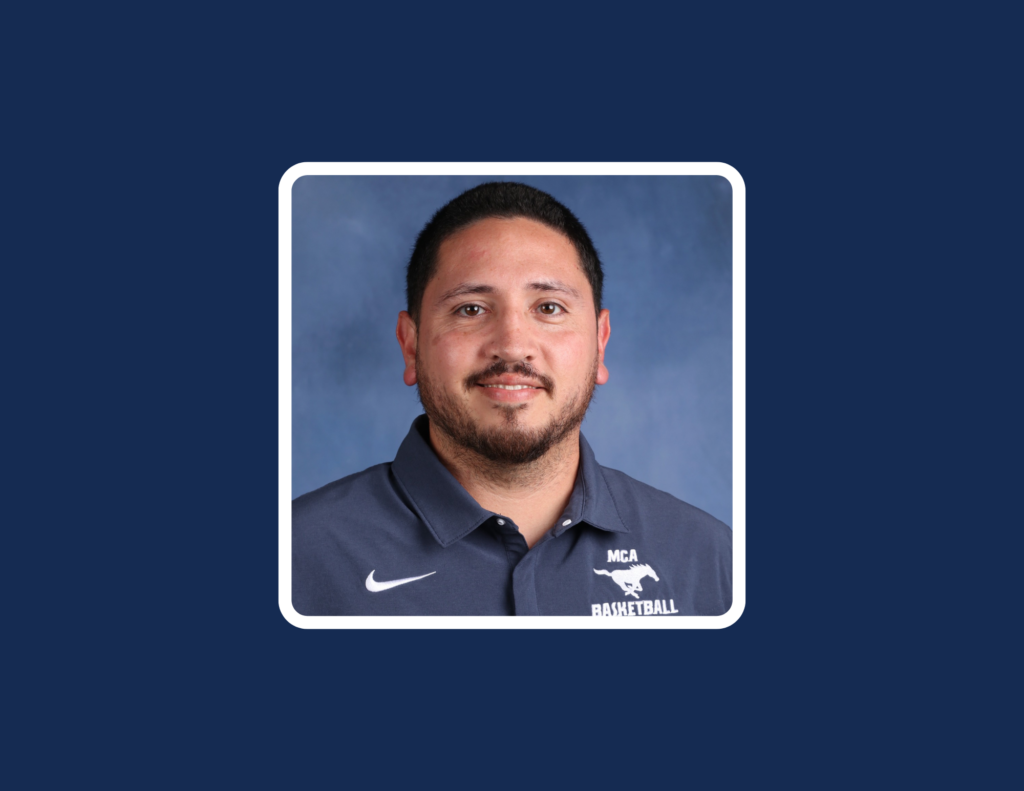
FONZO MARTINEZ – MCKINNEY CHRISTIAN (TX) ACADEMY BOYS’ BASKETBALL HEAD COACH – EPISODE 1238

Website – https://mckinneychristianathletics.org/sports/mens-basketball
Email – fonzo.martinez@mckinneychristian.org
Twitter/X – @MCAboysbb
If you listen to and love the Hoop Heads Podcast, please consider giving us a small tip that will help in our quest to become the #1 basketball coaching podcast.
Fonzo Martinez is the Boys’ Basketball Head Coach at McKinney Christian (TX) Academy where he led the Mustangs to a Texas Association of Private and Parochial Schools 4A State Championship in 2026. With over a decade of coaching experience, including five years at McKinney Christian, Martinez is the winningest coach in school history.
Fonzo previously served as the Head Coach at Flower Mound (TX) Coram Deo, where he also became the winningest coach in school history. Over his career, he has helped lead teams to five district championships, four state tournament appearances, and two state titles. He has been honored as TAPPS District Coach of the Year three times and TABC Coach of the Year twice.
On this episode Mike and Fonzo discuss the dynamics of team culture and the development of winning mindsets among players. Fonzo talks about the critical importance of fostering strong relationships, both with players and parents, to cultivate an environment conducive to success. Throughout the discussion, he emphasizes the necessity of instilling values such as resilience, accountability, and work ethic, which transcend mere athletic performance and contribute to the holistic growth of each athlete. Furthermore, he reflects on his own journey, illustrating how personal experiences and challenges have shaped his coaching philosophy. This episode serves not only as a guide for aspiring coaches but also as a reminder of the profound impact that leadership and mentorship can have on young athletes.
Follow us on Twitter and Instagram @hoopheadspod for the latest updates on episodes, guests, and events from the Hoop Heads Pod.
Make sure you’re subscribed to the Hoop Heads Pod on Spotify or wherever you get your podcasts and while you’re there please leave us a 5 star rating and review. Your ratings help your friends and coaching colleagues find the show. If you really love what you’re hearing recommend the Hoop Heads Pod to someone and get them to join you as a part of Hoop Heads Nation.
Be prepared to jot down some notes as you listen to this episode with Fonzo Martinez, Boys’ Basketball Head Coach at McKinney Christian Academy in the state of Texas.
What We Discuss with Fonzo Martinez
- The importance of maintaining a strong team culture
- Establishing a winning culture requires intentionality and consistent effort from both coaches and players
- Building relationships and support between players and coaches
- Personal growth and development of each athlete
- Effective communication with parents is crucial to manage expectations adequately
- Implementing a structured practice routine that emphasizes skill development and teamwork
- Maintaining focus on core values amidst external pressures
- Keys to incorporating pressure defense
- Celebrating the success of teammates to prevent jealousy and promote unity among players
- Reflecting on your motivations and priorities
- Keeping the emphasis on continuous improvement and teamwork.
Like this show? Please leave us a review here — even one sentence helps! Consider including your Twitter handle so we can thank you personally!

Give With Hoops is a groundbreaking initiative that fuses basketball analytics with modern sponsorship. Built for teams who see data as opportunity, from AAU programs to college powerhouses.
By tying on-court performance directly to community and sponsor engagement, Give With Hoops help programs raise more while deepening support from those who believe in the game.
Traditional fundraising disconnects donors from the action. Sell candy bars, wash cars, beg for donations, it’s exhausting and ineffective. Players perform better when their stats matter beyond the scoreboard. That’s why Give With Hoops was created.
Give With Hoops connects game performance to community support. Every basket, rebound, and assist becomes a chance to raise funds. Transparent, exciting, and proven to raise 3x more than traditional methods.
Aiming to go D3? The D3 Recruiting Playbook gives you a clear, step-by-step roadmap to the recruiting process – what coaches value, key milestones from early high school through application season, and how to build a target list of schools that fit your needs.
We’ll demystify researching D3 programs and how to stand out without chasing every camp or showcase.
The modules cover things like writing emails to coaches, building an effective highlight tape, using social media well, planning ID camps and visits, and navigating application strategy.
You’ll get templates, checklists, and an outreach plan to communicate confidently, learn how to compare financial packages, and avoid common missteps. By the end, you’ll have a prioritized school list and a decision framework you can use to land your best-fit opportunity.
Your first impression is everything when applying for a new coaching job. A professional coaching portfolio is the tool that highlights your coaching achievements and philosophies and, most of all, helps separate you and your abilities from the other applicants.
The key to landing a new coaching job is to demonstrate to the hiring committee your attention to detail, level of preparedness, and your professionalism. Not only does a coaching portfolio allow you to exhibit these qualities, it also allows you to present your personal philosophies on coaching, leadership, and program development in an organized manner.
The Coaching Portfolio Guide is an instructional, membership-based website that helps you develop a personalized portfolio. Each section of the portfolio guide provides detailed instructions on how to organize your portfolio in a professional manner. The guide also provides sample documents for each section of your portfolio that you can copy, modify, and add to your personal portfolio.

Hey coaches — you’ve got a game plan for your team… but do you have one for your money?
That’s where Wealth4Coaches comes in.
Each week, they deliver simple, no-fluff financial tips made just for coaches. Whether you’re getting paid for camps, training sessions, or a full season—Wealth4Coaches helps you track it, save it, and grow it.
It’s time to stop guessing and start building.
Subscribe now at wealth4coaches.beehiiv.com/subscribe
And follow them on Twitter @Wealth4Coaches for daily money wins.
Your money needs a coach.
Start with Wealth4Coaches.
THANKS, FONZO MARTINEZ
If you enjoyed this episode with Fonzo Martinez to let him know by clicking on the link below and thanking him via Twitter.
Click here to thank Fonzo Martinez via Twitter
Click here to let Mike & Jason know about your number one takeaway from this episode!
And if you want us to answer your questions on one of our upcoming weekly NBA episodes, drop us a line at mike@hoopheadspod.com.
TRANSCRIPT FOR FONZO MARTINEZ – MCKINNEY CHRISTIAN (TX) ACADEMY BOYS’ BASKETBALL HEAD COACH – EPISODE 1238
[00:00:00] Narrator: The Hoop Heads Podcast is brought to you by Head Start Basketball.
[00:00:20] Fonzo Martinez: Every team is going to have a leading score. How do you make sure the guy that isn’t, but maybe his parents think he could be? He’s not jealous of that guy’s success, and he, in fact, even celebrates his success. So it’s like making sure those type of things don’t bleed into your program.
[00:00:38] Mike Klinzing: Fonzo Martinez is the boys’ basketball head coach at McKinney Christian Academy, where he led the Mustangs to a Texas Association of private and Parochial schools for a state championship in 2026.
With over a decade of coaching experience, including five years at McKinney. Christian Martinez is the winningest coach in school history. Alfonso previously served as the head coach at Flower Mound Corrum Deo, where he also became the winningest coach in that school’s history. Over his career, he has helped lead teams to five district championships, four state tournament appearances, and two state titles.
He has been honored as TAPPS District Coach of the Year three times, and the Texas Association of Basketball Coaches Coach of the Year Twice.
Are you or an athlete you know planning to go D3? Check out the D3 recruiting playbook from D3 Direct. Their playbook gives you a clear step-by-step roadmap to the recruiting process. What coaches value key milestones from early high school through application season and how to build a targeted list of schools that fit your needs.
The playbook demystifies, researching D3 programs and how to stand out without chasing every camp or showcase the modules. Cover things like writing emails to coaches. Building an effective highlight tape using social media, planning camps and visits and navigating application strategy. You’ll get templates, checklists, and an outreach plan to communicate confidently.
Learn how to compare financial packages and avoid common missteps. By the end, you’ll have a prioritized school list and a decision framework you can use to land your best fit opportunity. Click on the link in the show notes to get your D3 recruiting playbook from D3 Direct.
[00:02:19] Darrin Ford: Hi, this is Darrin Ford, boys basketball head coach at Nordonia High School, and you’re listening to the Hoop Heads Podcast.
[00:02:29] Mike Klinzing: Give with Hoops is the first platform turning basketball analytics into fundraising impact. Every stat tells a story and now every story drives sponsorship engagement and team growth programs nationwide are transforming basketball stats into funding power. Learn to use performance data to attract sponsors, engage fans, and raise more with every play.
Give with Hoops will help you raise three times more money for your program as their stat based pledges consistently outperform traditional fundraisers. Visit give with hoops.com/hoop-heads-podcast to learn more and take your fundraising to the next level. Give with Hoops.
Be prepared to jot down some notes as you listen to this episode with Fonzo Martinez boys basketball head coach at McKinney Christian Academy in the state of Texas.
Hello, and welcome to the Hoop Heads Podcast. It’s Mike Klinzing here without my co-host Jason Sunkle tonight. But I am pleased to be joined Fonzo Martinez, head boys basketball coach at McKinney Christian Academy.
Fonzo, welcome in, man.
[00:03:37] Fonzo Martinez: Hey, Mike, thanks for having me on, man. Really appreciate it.
[00:03:40] Mike Klinzing: Absolutely excited to have you on. Looking forward to diving into all the interesting things that you’ve been able to do in your career. Let’s start by going back in time to when you were a kid. Tell me about your first introduction to the game of basketball.
What made you fall in love with it? What are some of your earliest memories of the game?
[00:03:56] Fonzo Martinez: For me I guess you could say I grew up a little old school. I grew up in the inner city of Dallas and there was always a park by our apartment complex or wherever we lived. Man, it was just like you don’t need a whole lot of, a whole lot of money.
You don’t need a personal trainer, anything like that. You can just go ride your bike or walk down the street and you can call next and you can earn your respect. And I loved it, man. I grew up playing at the park my whole life. We lived in Dallas for a long period of time. We moved to Amarillo, little small town in Texas.
And I remember we lived by this park called Memorial Park, and man, the lights stayed on there till 2:00 AM and that’s when I was told that had to come home was when the lights came off. And man, we would stay out there and we just hoop all day. Man, I just fell in love with it at a really early age.
[00:04:47] Mike Klinzing: What’s your favorite memory of pickup basketball from that era of your life?
[00:04:52] Fonzo Martinez: Yeah favorite, one of my favorite memories, growing up as a kid and playing pickup, I would say is, at the park that I used to go to, they had multiple courts. I think, if I remember correctly, it was three courts and it was like the first two courts were all the young guys just playing around, middle school, high school, everything like that.
But that last court was, it was like the OGs, it was the old guys. And it was also like some high school guys. If you were really good and defense calls fouls you do not call a foul and you have to play good and you have to play well. And guys will get upset if, you didn’t hold your own.
And I was always a little intimidated to, to go on to that main court. And I remember I was like on the second court and I was just shooting it. I could always shoot really good at an early age. And this guy that was older was like hey man, you want to come over here and play? We need one. And I’m like.
Me and my dad’s go over there. This is your chance. And man, I went over there and I was like, all right, I have to play really hard. I have to rebound the ball. Don’t turn it over, don’t shoot bad shots. That was like my mindset. And I remember I was like making every shot that I took and my dad was happy and man, like that little moment, it’s like your first time getting to play with the older guys and feeling accepted.
And it was like, after that it was cool because as I got older they were like, Hey, you come over here and play. And I’m like, yeah. Like I got, I got accepted now on the big court, so that, that was probably one of my favorite memories.
[00:06:16] Mike Klinzing: Yeah. It’s very cool when you get an opportunity.
It’s amazing how so many parks back in the day were like that. If you had multiple courts, you had the court, it was like you said, the young guys or players that weren’t very good. And then you had the court where everybody knew that’s where the players were going to be, right? Yeah. And that’s where you had to try to earn your way up.
And I’ve told this story a couple times on the pod here, but when I was a kid, maybe I’m 13, 14 years old, I was used to try to go, because I wanted to play on that court just like you, right? So I would go early so I could get in that first game, maybe the nine guys are there and Hey, we’ll take Mike, he’s, we’ll take that little guy, we’ll get it, we’ll take him on our team.
And then I’d wait around until the very end. So maybe there’s 8, 9, 10 guys straggling at the end. Yeah, I’ll play that. I’ll play that last game before everybody goes home. And so at least you could get yourself on the court that way, and then people get to know you and eventually, as you said, you earn your stripes and get there.
Certainly different from the way that the players that you coach today grow up in the game. I don’t know what the playground culture looks like in the Dallas area. But like here in Cleveland, at least, it’s not nearly what it was. Where when I was a kid, you could drive around and you could find this court, you could find this gym, you could find this playground wherever, where people were playing.
Now it’s really difficult if you’re even a good high school player, it’s difficult to find a really good pickup game to play in.
[00:07:39] Fonzo Martinez: Yeah. No, I’m with you. It’s if you drive by the park, it’s it’s sad, but it’s like there’s nobody out there. Nobody’s hitting the lights like they used to back in the day trying to, man, I remember there was one time the cops got called because the lights went out, but everybody was having really good games and the old heads pulled their trucks up and they put the headlights on and it’s you don’t want to go home.
You just want to keep open. It’s like those days don’t happen anymore. It’s everybody’s training with their personal trainer. You’re playing a you play so many games that. It’s just like pickup is a little bit outdated. And now it’s if you go to a gym, like a LA Fitness or Lifetime, it’s like you, you walk in there at least years ago when I used to go and it’s all you hear is just a bunch of guys arguing and it’s just, it’s not the same like it was back in the day where it was it was where you earned your respect,
[00:08:25] Mike Klinzing: definitely. There’s no doubt about that. I think now you just walk in and like you said, you just play and anybody can be in the game. I, when I was a kid, I always had a rule. I wouldn’t play in games with guys that had jeans on running shoes or baseball hats, and now I defy you to find many games that don’t have one of those things of somebody playing.
It’s crazy. So when you think about your development as a player, would you say then that you spent the majority of your time playing the game and that’s how you improved? Or were you also balancing that out with. Getting on a court by yourself and working on your game. How did you balance those two things out growing up as a high school player, let’s say?
[00:09:04] Fonzo Martinez: Yeah, no, I played a lot at an early age. The crazy thing is I was going to play a u ball going into my senior year. Had a pretty traumatic injury that prevented me from doing that. So it’s like I never even played a u ball, I just always played pickup and then school ball. I never really had a personal trainer when I got good in high school, I started having, coaches and people that wanted to work with me, but, and that wasn’t until probably my freshman or sophomore year of high school.
So for me it was like. I just want to always find a place where I’m playing with people that are better than me. And I try to pick up moves and different things that I would see guys do. And then I was always a gym rat, so when I probably, I’d say probably my freshman year of high school when I started getting like really good coaching, I had some good high school coaches and stuff like that, it was like I really started to break down the game and I was like, okay, I got good athleticism, but I’m not elite, so I’m going to start working on my ability to shoot my footwork.
I’m going to be really fundamentally sound. And that’s probably when my game took up, probably a bigger jump. I played football growing up. You live in Texas, you play football. And man I loved football and I would say football may have even been my favorite sport when I was a kid. And then probably maybe sophomore, junior year of high school, I started to just get a little better at basketball.
And I was like, all right, that’s probably what I’m going to choose to play and try to play it at the college level.
[00:10:25] Mike Klinzing: How did you. Come up with what you were doing when you were shooting and working on your game by yourself. So I always say for me again, pre-YouTube, pre-internet, I did the same workout every day.
I had one that I did when I was by myself. Then if I was lucky enough to have a friend that wanted to shoot with me, then I had a workout that we’d rebound for each other, play some one-on-one, that kind of stuff. But now there’s such variety in the drills and what kids could do. I always look at it, I’m like, man, I was not creative at all.
I just did the same thing over and over again. So what was it like for you in terms of working out? How’d you come up with the ideas for what you were going to actually work on, and how intentional were you with what you were doing?
[00:11:10] Fonzo Martinez: Yeah, no, I definitely would try to always get into the gym and it was like, okay, after I master one thing, it’s okay, how are you going to improve your shooting range?
Or how are you going to improve your footwork? I was already doing box drill. Even when I was little. I was like, man, I found it on online or somewhere like on a DVD at the time. I guess that’s what we watched back then. And I was like, okay, how can I be creative and come up with different counters and moves?
So every time I get to this spot, I’m difficult to guard. Man, I even remember two things I used to do to really work on my shooting touch and everything like that. I’d get on the side of the backboard and I’d shoot, and I would say I’d have to shoot and I’d have to hit the top of the backboard, and it has to bounce on the backboard at least three times.
So that means I’m shooting it and it’s just dropping in that basket, like great touch. And then another one I came up with was like, all right, we had a heavy ball that I would use for ball handling sometimes. And I’m like, I got the idea, okay, I want to increase my range. Let me shoot form shots with a heavy ball and then let me go back and shoot threes, like five feet off the line.
And it would help me not change my form.
[00:12:13] Mike Klinzing: So when you think about your early career, and you mentioned just a few minutes ago about once you started to get good coaching, right? So when you think about those coaches that you had in middle school, high school, what’s something that you took from one of those coaches that you carried with you that you still feel like is an important part of who you are as a coach today?
[00:12:37] Fonzo Martinez: One of the things I say I learned definitely was my head high school coach my last two years, coach Herb Evans. He was a great coach a good man and a really good leader for us. And he was very demanding and he was a no nonsense type of guy. And I think for me, transferring in there and having an idea that, hey, I’m the best player, so other guy serves me, and I’m I’m the guy and I get all the shine and the recognition, I was able to learn a lot from him about what being the best player actually really looks like and what it should look like. In that to lead, you have to serve and that great teams, usually, if you’re the leading score, you’re a guy that celebrates other people’s success and you realize that you can’t get anywhere without those other four guys on the court with you.
And so for me it was like I had a really good opportunity to learn Hey, no, no person is bigger than the team and you can’t make it about yourself, you have to make it about others. And so for me it’s I’ve always remembered that and hey, no matter who comes in the door, you get really good players.
But one of the first things you have to always remind every guy is that the team’s have to come first. So something that I definitely took from that experience, learning it the hard way.
[00:13:54] Mike Klinzing: So that’s a lesson obviously in the moment, right? That you learned as a player. And now you’re reflecting back upon that as a coach while you were playing, were you thinking about coaching in any way, shape, or form, or were you completely focused on being a player?
Because what I’ve found FSO is that people come to coaching in two different ways, right? There’s the kid who’s eight years old, nine years old, they’re drawing plays in the dirt, they’re scratching stuff on a napkin. They’re trying to lead their teammates. They’re thinking already about being a coach.
They know at some point they want to be a coach. And then there’s other guys who I feel like I fit into this category. While when I was playing, all I cared about was playing. Like I wanted to figure out how could I play my best to help my team win. And everything that I did was focused upon who I was as a player, and how that impacted my team and my success.
And I didn’t think about it at all as coaching. And then all of a sudden when my playing career was over, I’m like. What do you like? Where’s basketball going to be here? Yeah. Now lemme think about, now maybe I’ll get to coaching. So I don’t know if one of those paths rings more true for you.
[00:15:00] Fonzo Martinez: No, I definitely never thought about it playing not in high school.
I literally had never crossed my mind. I had several coaches tell me have you ever thought about coaching? I feel like you’d make a, you’d make a good coach. And I’m like, no, I don’t. I don’t see that in my path at all. And then when I got to college, man I had a really rough experience because I had some really traumatic knee injuries, like three reconstructive knee surgeries in less than three years.
So when I stopped playing in college, it basketball, I had a really bad taste in my mouth. because in my mind I’m like. My career wasn’t what I thought it was going to be. I thought I would be able to do X, Y, and Z. And everything from these injuries just kept going a different direction. It kept going downhill.
So I’m like I’m never, I actually said these words, I’m like, I’m never going to coach basketball like that won’t be in my past. So definitely not something that I thought I was going to do growing up or anything like that. But obviously God has some different plans for me. I hear you. And I can’t imagine, I can’t imagine doing anything else now.
[00:16:03] Mike Klinzing: So tell me about that transition from playing. Obviously the injuries play a factor in what you’re planning to do. Yeah. Prior to the injuries, obviously just like every kid who’s playing at the college level, you have dreams of, I’m sure playing professionally at some point, dreaming about that since you were a kid.
But once you start to see that, hey, that’s not going to happen. What were you originally thinking that maybe you wanted to do as a career? Before you eventually found your way into coaching? Yeah. So just what was the whole genesis of what are you thinking and how do you eventually get to the coaching profession?
[00:16:38] Fonzo Martinez: Get into coaching. Woo. All right. I’m going to take you on a little bit of a story then. Initially I, obviously, I love sports, so I’m thinking I do want to do something in sports. I’m thinking like being a sports analyst. I remember in high school, I was the editor of our newspaper. We had a sports paper we would put out every month.
So I really enjoyed writing. I enjoyed media, I enjoyed talking about sports. Even sitting here talking to you and you got a great podcast, I’m like, I could have seen myself doing something like that, right? Just talking to different people about sports. What, what makes you thrive as an athlete?
And just picking up on different things. So that was where I thought I would go. And then, I actually went down a totally different path, so a lot of people in my family worked for the railroad for Burlington Northern Santa Fe and working there is a really good job. And right out of college I was afforded an opportunity to go work for them and that quickly turned into me going to engineer school, became an engineer.
So I actually drove trains for about three or four years which is a really random thing that a lot of people sometimes don’t even know about me. Like you drove train like they’re thinking like Amtrak or a Dart and I’m like, no, like a class one locomotive engine with 130 cars.
Like those are the type of trains I used to drive.
[00:17:55] Mike Klinzing: That’s cool.
[00:17:56] Fonzo Martinez: Yeah. Yeah, it is definitely something in the family, but it just wasn’t for me. So I found myself going from that job to then I was in corporate America doing sales and. Man, there was always like, I felt like good things happening, but there was this emptiness, and so my wife and I, we had just gotten married at the time, and I’ll make this story a little shorter, but basically, man, it was just really like a god thing. I was just like, I feel like I’m supposed to do something else. And God had put very specific things in my life and my path put people in my life where they were like, have you considered coaching?
Have you considered coaching? I feel like you’re supposed to coach. I’m like, man, what is the deal with this coaching thing? Am I supposed to do this? This makes no sense. And so then finally when I got to a place where I was like, okay, I don’t think this is like a coincidence.
I think guys trying to tell me something here. I’m talking to my wife about it. I decide to make a huge career change. Leave corporate America. I’m doing sales at the time. I’m like a regional sales manager at a optics company. And no, things are fine there. And I’m like, I feel like I’m supposed to do something else.
And the, I remember thinking it was like the week that I was transitioning, I get a call from a buddy and he’s and we had just become friends now. He’s one of my best friends at the time. His name is Emmanuel Ante. And he calls me, he’s Hey, he’s this is, he called me or text me. But he is this is super random.
I’m a head high school basketball coach. We can’t coach our guys while they play in leagues in the off season. Would you be interested in doing something part-time? And I’m like, you know what? I think I’m supposed to say yes to this. And man that one yes turned from doing that a little bit part-time to then me being offered a full-time position at that school.
And it’s crazy because as Mike, like coaching is a very competitive field. And so while I had that little part-time gig, you could say which was like for two or three months, I remember sending emails to tons of schools, just trying to get an interview. And, but I had no experience, obviously, right?
And I could barely even get a reply. And so I definitely feel very blessed and thankful that that was the beginning of my journey 11 years ago. And now, I’m pretty blessed to be a head coach at a really good program, and so I certainly don’t take people for granted that have definitely been in my path and are the reason why I’m, I am where I am.
[00:20:19] Mike Klinzing: What did you love about coaching in that first experience? What was it like? You knew, right? You had this feeling that it was going to work, but what was it about that first experience that made you say. Oh yeah, I’ve now found the right place. What did you love about it right away?
[00:20:35] Fonzo Martinez: 1000% relationships.
I think be the ability to go to work and say, my job is to make sure all of these guys feel super confident, valued, trust feel loved, and then all like each other, and then want to be super competitive for a few hours and go at each other, but then be the best friends afterwards and do life together.
I’m like, man, like that’s what makes this sport so great, so for me it was like, instantly I’m like, yeah, I’m probably going to do this until I’m 70. And I joke even with a few former players that I’m like, Hey, when it gets that time where I can’t coach anymore as a head coach, I’m definitely going to be sitting in an assistant chair.
But I just love the game. I love going to practice. I love before practice. I love seeing the guys at lunch. I like talking to them. I like being in the weight room, joking around with them. To me, man there’s nothing better than trying to build that family atmosphere within a team.
[00:21:38] Mike Klinzing: Let me ask you about the thing that you found out about coaching that you’re like, Ooh, I’m going to have to get better at this if I want to be a good coach. So what was the thing when you got in there and you’re like, I love the people, I love the kids, I love the relationship, I love basketball. I know this is where I’m at, but what did you think of as you’re going through that first month, that first experience of two to three months and it gets done and you’re like, I have to really study up, or I have to figure out this piece of it.
It’s an area that I want to try to improve. What’s that growth area that you felt you had after that first experience?
[00:22:11] Fonzo Martinez: Yeah, I think I’d say there’s two things that stick out to me. The first thing is, I got an opportunity after my first year coaching as an assistant coach to be a head coach.
So I probably wasn’t ready for, oh, I definitely wasn’t ready for that. But what I learned is like there is a lot more outside of Xs than OS that go into running a good program. And so you’re like, okay, I know how to do this, but I don’t have a great off season program and I’m not great from the standpoint of we don’t have an exit interview process and what are we doing in our middle school program and our feeder stuff, and how are we helping our guys get to college and how are we making ourselves attractive as a program?
There’s all these other things that I’m like, whoa, okay. I didn’t even think about, you’re just like, I’m going to go to practice, I’m going to coach my guys and hopefully we’ll be successful. And you’re like, it’s being organized, it’s working with ads, working with your school. Can you communicate well with parents?
Because man, if your parents are really unhappy. That’s going to be a tough situation. So it’s like you need parents and players to be on board with your vision. And so the second thing I would say is man, I was staying up really late and I was a grinder and I’m like, I’m trying to do everything I can to help this team that I just took over that’s never won and become a winner.
And you lose sight a little bit for a second there. You’re like there’s also my family, my wife, I got a little one. So it’s like you have to find that balance of I love the game, I want to constantly be growing, but I have to make sure like I prioritize the thing that’s most important to me in my life,
[00:23:46] Mike Klinzing: yeah, absolutely. That’s a challenge for every coach. I think you never grow out of that. It’s funny, Ponza, like I’ve had conversations with people both on and off the podcast about just hiring high school coaches and I always feel man, for somebody who has a family, it’s a really tough job if you’re at a certain point with your kids and where they are and if they’re involved in activities and that kind of thing.
It’s really difficult. And there’s part of me that’s man, if I was an ad, I think I’d hire either the 25-year-old single person who has no family or the 62-year-old retired guy who’s family’s all gone and wants to just get back into the coaching. because the family part of it is just, again, I think every coach at every level, I don’t care if you’re coaching at the high school level, if you’re coaching at the college level.
Obviously the pro level with all the travel, having a family and coaching is something that you have to be really intentional about. Trying to figure out how to make sure that both sides of that equation get what they need so that you can have a good and happy team and you can have a good and happy family at your house.
Yeah, and that’s not easy to do. It’s not easy to do.
[00:24:54] Fonzo Martinez: No, absolutely. Absolutely.
[00:24:56] Mike Klinzing: I want to ask you about that job search for your first quote, real job, right? You said you’re reaching out to literally tens of, if not hundreds of schools, right? To try to find an opportunity.
Yeah. So you get that first assistant job. What do you remember about the interview process for that job?
[00:25:16] Fonzo Martinez: I didn’t realize, first of all, I was interviewing because, what kind of happened was I’m hired to come in and be, just like a part-time seasonal coach and Hey, it’s going to be done.
But for me it was like it was just genuinely, I was so happy to have an opportunity, right? And what I realized is that, hey, once I was there, I’m thinking, okay, I have to find now where my full-time gig is going to come from. But what I didn’t realize is that, hey, people pay attention and the families were really enjoying, the off season program and me coaching their kids and stuff like that.
And they’re reaching out to our ad on my behalf and, some of that I didn’t, I wasn’t even aware of. And the ad just took me out for lunch one day and he is Hey man, I definitely think, like you you’re made to be a coach and so we want to bring you on full time and here’s some ways that it can look like, how do you feel?
I’m like yes, absolutely. Like I don’t have another coaching opportunity and his name was Doug Hicks and just a great guy. He’s a head football coach out here now, and he’s always been a football coach, but just he, I remember him telling me, he was like, if I hired resumes, I wouldn’t have hired you.
But he is I hire people. And he is I remember just seeing you talking to you, being around you. And I’m like, this is a guy that can lead young men. And I’m like, wow, okay. I have to remember that when I’m hiring a staff that, I don’t get too caught up in like an accomplishment or what you’ve done.
Those things are great and obviously they matter to an extent. But it’s like, who are you at the core? Who are you as a person? And man, if he didn’t, if he didn’t do that I might’ve been searching for a while trying to find my first spot.
[00:27:03] Mike Klinzing: All right. So what makes a good assistant coach in your mind?
What is it, characteristics wise, when you think back to your experience as an assistant, and obviously now you’ve had a couple head coaching jobs, what do you look for in an assistant coach? What’s important,
[00:27:17] Fonzo Martinez: man? I think one thing that makes a great assistant is the ability to give the head coach different options and scenarios and things to think about different than what he would do while at the same time, if the head coach wants to do what he wants to do or, disagrees and wants to do something, that you have the ability to flip that switch quickly.
And man, you can just teach it, not just coach it. The guys feel that, like you guys are all on the same page, right? I joke about it’s have to be like your marriage, right? It’s like you and your wife, like y’all may think differently, but when you’re talking in front of the kids, you have to all be on the same page and then you can have a conversation away from them, right?
And I’m like, man, as a coaching staff, if you can all be different, but when it comes to talking to the kids and what we need to do in scenarios, it’s like y’all are all very much aligned. But you can challenge the coach in that way. And I think that makes a really good
[00:28:22] Mike Klinzing: assistant’s a really good point.
I think I remember back, I spent 13, 14 years as a varsity assistant coach. That was the majority of my quote, real coaching career. And I just remember what we always said as a coaching staff was when the door to the coach’s office is closed. We’re having discussions, we’re talking things out. We’re hashing out this idea or that idea.
We’re bringing different things to the table, and then when that coach’s office door opens back up and we walk out. We’re all on the same page regardless of what disagreements or differences of opinion we may have had while we’re having those conversations in the coach’s office, once you walk out, it’s a united front, right?
With an ad, with a parent, with the players, whoever, we’re all on the same page, regardless of, we may not have completely agreed on whatever, but when we walk out, we’ve now agreed that this is what we’re going to do. And obviously that comes from the head coach on the top down after the discussion is had.
But I think you make a great point there that united front to me, I think is always one of the most important things that a really good staff and a really good coach head coach does is make sure that we have this united front so that everybody’s projecting the same thing. And it that builds confidence in the players.
Parents have confidence and parents know that, Hey, I can’t go to this guy and kind of subvert and go around the head, coach’s back and talk to this assistant. All that is really important.
[00:29:46] Fonzo Martinez: Yeah, absolutely. And me personally, I always, it’s not like an absolute must, but I think I’ve found myself too, that I have a tendency when I hire a staff, I like having a lot of different types of people.
Like I have a guy where, this was his first year, like coaching on the high school side. He’s really young, he’s played college basketball. He’s going to be a really good coach. He’s coached aau. So he has experience, but, he’s just a totally different type of coach. And then I have another guy who we’ve been blessed to have him the last few years.
He coached in Indiana at Washington High, coached the Zillow brothers, and he is coached like 42 or 44 years. So it’s two very different sides of the spectrum. AU guys, non AU guys, married guys, non-married guy, and I think. I think that also to me provides a, a really cool aspect within the staff because it’s not every person is the same.
So it’s like somebody might be a little bit more relatable to one of our guys, but it’s like between our whole staff, you’re going to have a close relationship with some of the head coach or some of the coaches, if not all of them, in different ways.
[00:30:57] Mike Klinzing: That ability to find there’s somebody for somebody, right?
There’s somebody for everybody on your staff, and you can figure out a way to make that work. That makes complete sense when you think about that first head coaching job and opportunity, and like you said, you thought you were ready, but probably not ready. I think the standard answer for every coach is, right.
I had no idea what I was getting myself into. It looks completely different from the head coaching chair than it does from the assistant coaching chair. And you laid out some of the things that you hadn’t thought about that had nothing to do with. Coaching your team on the floor, but there’s all these other things that you have to do if you’re going to build a program.
So in that first experience, and I know the answer is going to be, you haven’t completely figured it out even today, but how long into that first experience do you feel like it was before you had a really good handle on A, how you wanted your teams to play and what you wanted them to look like? And then B, all that program building stuff, how many seasons did it take before you felt again, I know you’re still learning and growing, but how long was it for you to get that kind of in place where you felt comfortable with who you were as a coach?
If that question makes sense. Yeah,
[00:32:15] Fonzo Martinez: no, that’s a great question. I would say for me it was like year three. I probably felt like I had somewhat of a foundation. Okay, there’s a ton of areas I have to improve on. I haven’t even started in this area, but I’m okay, I have somewhat of a grasp of I know who I am.
I’m not going to, I’m not going to be different. I’m not trying to be somebody else. Here’s how I coach. Also, okay, am I the type of person that we’re always going to play this way or do we adapt to the players that we have? And okay, we adapt, but what is that percentage? I have a 70 30 rule that, 30% of what we do usually is brand new every year.
And 70% is we’ve done this before. And some years that may change a little bit, but yeah, I think it took a few year, probably three years before. Okay. We really started to figure it out and that was the year we, I think we lost in the regional round, but man, we had a really good season.
We won 27 games. It was the most wins we ever had in our school history. Started to figure out, okay, this is how you really run an off season program. This is how you develop guys. But then I think as a head coach, you also need time to put, figure out how to put your assistance and utilize them in the best position possible.
So then I was like, okay, yes, I do a lot of talking, but like I have to give this guy authority in this area and I have to make sure I’m bringing out the best attributes of him as a coach. And hey, we have to figure out how we maximize the potential. We can’t change the guys that we have, so we have to figure out how do we maximize the potential of the guys that we do have.
And so I think that just that takes a little bit of time to start to, to get into a groove. If that makes sense.
[00:33:58] Mike Klinzing: No, it does. That delegation piece I think is always something that is interesting to hear coaches talk about how they get there, right? Because most people who are successful in any walk of life, but in coaching, right?
When you start out, you feel like I have to have my hand in every single thing that’s happening, right? Because I know what I want my program to look like. And when it’s your first year, especially when you’re a first time head coach, like you don’t even know what you can give away yet. You have no idea. So consequently, your hands are in everything.
And I’ve had so many coaches, fans that have talked to me in the same vein of what you’re talking about, where at the beginning you’re trying to figure yourself out and organize and get what you want to do, and then. Eventually you get to the point where you realize I have to take advantage of, there’s a reason why I hired this guy on my staff because he’s good at X, Y, and Z, and so I have to give him some ownership of X, Y, or Z.
And when I do that now. I’m getting his expertise and it also frees me up to maybe do something in another area, or it frees me up to bring my strengths or it frees me up to be, I have Rob bro comes on my podcast all the time, who’s the head coach at Bolingbrook in Illinois and he and I do things and talk all the time.
And his analogy I think is a great one. He’s we got a big giant cruise ship. And he is there’s all kinds of things going on. There’s chefs and there’s the steward and there, whatever. And he’s I’m just in the back with the rudder and I’m just moving the rudder back and forth and I have to steer the ship and all this other stuff is going on that I’ve delegated and hired people to do.
And he is that’s when my program really took off, when I had the ability to give people what their strengths are and just make sure that the ship is going in the right direction. I think that’s a really good analogy for kind of what you’re describing.
[00:35:51] Fonzo Martinez: Yeah, no, absolutely. I’ve been blessed.
I got I got two coaches, two, two of my main assistants. Both of them have been up for Assistant Coach of the Year Awards, won assistant coach of the year, one’s been middle school coach of the year. So it’s been cool to see the the journey that even they’ve had and how they’ve grown where I’m like, man they were good coaches when they came in, but now they’re really good coaches, and it is it is very satisfying and I think it gives you a lot more peace because you get to Hey, this coach is running weights today. Hey, we’re going to go work on this. Hey, we’re doing this. Hey, he’s got guys over on that end. And, or one of my coaches leads are early morning stuff, which is, we call Breakfast Club, where guys just come in for an hour before school, just do nothing but shooting.
And it’s I don’t really have to think about every single time, every single thing they’re doing, because I’m like, he does really good stuff. I’ve seen everything. I know how he coaches and we’re just aligned on what. A good shot. A great shot looks like, and a bad shot. And so it’s it’s yeah, it’s when you get to that place, you’re like, okay, now we can start worrying, or I wouldn’t say worrying, but we can start concerning ourselves with like other things now that make our program even better, which is when you’re like, okay, now we’re taking things to another level.
[00:37:10] Mike Klinzing: Absolutely. You got the checklist, right? And you might have 50 things on there, and you’re like, all right, check. We’re up to item number 31, and we still got these 19 things that we haven’t gotten to, but there’s all these 31 that now we have them under control. So to go along with that visual, what’s your method of organizing yourself as a head coach?
So as you’re talking about the different things that you want to do, whether it’s X’s and O’s, whether it’s culture, whether it’s leadership, whether it’s dealing with administration, all the things that a head coach has to do, what’s your process for keeping all that? Organiz so that when you need something, you know where to go to find it.
Are you a Google Drive guy? Are you the three ring binder guy? Or how do you go about just organizing what you have?
[00:37:56] Fonzo Martinez: Yeah. No, I would say I am not a three ring binder guy. I keep everything online and, hey, this is our itinerary for what we’re doing in the off season. These are the things we’re supposed to do.
I’m big on checklists for myself. So it’s Hey, when we meet as a staff, we have meeting notes. I’m also big on prioritizing things because I feel like, as coach, it’s like there’s so many good things you can do every single day in the off season, but it’s like you have to make sure you’re doing the ones that are the most important.
So we try to prioritize, Hey, okay we meet. Before every season. So we meet before the spring, then we meet before the summer, and we’re meeting a ton throughout that. But we have these larger scaled meetings where we talk about what is going to be our priority? Who’s going to let that be their domain?
Who’s going to run this? How are we functioning together? This is where their coach is going to be, this is where I’m going to be, and now let’s continue to talk through that as we move forward. And hey, what do we think? This summer we all do A-T-A-B-C showcase, but outside of that, it’s are we doing team camp?
Are we going to summer leagues? What do we want for our guys? How are we working with them, with their AE teams? So there’s all these things I think. I think now we’ve been doing it, I’ve been doing it for a while where it’s I know before every season comes up, spring, summer, fall, before we even get into actual season, that it’s like we know the things that we need to figure out every single time before going into that,
[00:39:30] Mike Klinzing: easy. In today’s world, there’s a million things you could chase, right? You could look at something on social media and see this and hey, this coach is doing that. Hey, I’d like to try that. Or Here’s this new event we could go to, or there’s this, and to your point, I think really sitting down and being able to prioritize what’s important as a staff, make sense that’s the starting point, right?
That’s the building block. You have to understand this is what’s most important, and then you take it and you build out the details beyond that. Here’s what we have to do. Then we take the steps. How do we figure out what we’re going to do and how we’re going to do it? It makes complete sense in terms of keeping yourself organized and figuring out, again, how to run a program.
Tell me a little bit about the opportunity at McKinney Christian. When you take that job, what is it that made the place special, that made you think, Hey, this is somewhere where I think I can build the kind of program, which obviously you’ve been able to build over the last few years.
[00:40:25] Fonzo Martinez: Yeah. For me, I would say it was actually relationship.
I had a really good relationship with a guy named James Wheeler. He was our ad he’s now like a head of school or principal out at a private school of Trinity out in Georgia. But him and I just had a really good relationship and so I was in a weird phase of coaching where I was like, okay, I think my time’s coming to an end at my first school I was having some opportunities to, to coach at the college level and I was like, maybe that’s what I want to do.
You’re trying to figure all that out. because I’m much younger at the time and I think as a coach you also think, okay, I have some success. So maybe that’s just the natural progression. Which now I’ve self-reflected and I’m like, man, I really actually love high school a lot.
But I had one specific opportunity that I thought, okay I’m maybe going to move forward with this. And then COVID hit, and it was like when COVID hit, there was just so much uncertainty, like with finances, with school situations, everything like that, where I was like, I just don’t think, like those jobs, they just come with a lot of question marks.
And I don’t feel like I can do that to my family and move somewhere. But I already knew, I’m leaving my school. And so I’m like, man, what does that look like? And so McKinney Christian was like, man, we’d love for you to come here. And my, the relationship I had with James, he was like, Hey, I want to build this program and I’d love to build it with you.
And here’s what we think that can look like and. He was becoming the head coach at the time. And so he is Hey, it would be like an associate type of head coach. We really value what you bring. And I knew that and we had a good relationship, but in my mind I’m like, I’m leaving a school that we just made the state tournament and I’m a head coach and I’m going to another school that, didn’t even have 10 wins that year before, and I’m going to be an assistant coach.
I’m like, oh gosh, I don’t know. Is this the right move? And but man, the more I just kept talking to the school and the ad at the time, and Judy Collins, she was a really great person and my wife always wanted to move to McKinney. It was just like too many things made sense and the only thing that didn’t make sense was.
They’re not good at basketball and am I willing to be an assistant for maybe a year or so? And if I want to take over the program, then I can do that. Yeah, man, I said, you know what, let’s take the leap of faith. One thing that I’ve figured out I’ve enjoyed doing as a coach is building a program. I think there’s something fun about being able to establish a new culture, a new standard.
And it’s it’s a little easier if they weren’t winning before. because it’s we, what was, what we’re doing before wasn’t working, I think it would be hard to come into a place where it’s like they’re winning a lot and it’s Hey, are you going to keep doing that? Or, because if you change it up and we’re not winning, it’s it’s a little bit more on you. So yeah, that was my situation and I walked into it and then I was like, okay, this is where I really want to be. I want to stay long term. And James was like, all right man, it’s time for you to then here’s the keys to the car. It’s your program. You take it over.
And it’s been a fun ride ever since.
[00:43:34] Mike Klinzing: So let’s get into the building part of it. And I know that a key word that you’ve talked about over and over again is relationships. And obviously building a program that’s clearly where it starts. You have to have a relationship with your players. You have to have a good relationship with families with your school.
So just tell me about how you go about, let’s start with the players. How do you build relationships with players? How much of it is informal? How much of it is formal? What’s the process? How do you think about that in terms of building the relationship with the kids who are part of your program?
[00:44:07] Fonzo Martinez: Yeah, I think you have to be very intentional mapping out.
So I, we do that. Player agreements, culture building stuff, leadership days, like literally map it out. What does it look like on a yearly basis, on a monthly basis, on a weekly basis, and then even a daily basis. I think it’s easy to say the word culture. I think it’s easy to say we’re relationship driven and we care about these things.
But it’s okay, but it’s more than just a conversation. Are you being intentional? What are you doing off the court? How are you talking to guys on a daily basis to make sure it’s like you guys are having like a deeper level and an impact, on the it’s important that it’s like you find those ways to be very intentional.
So we preach like just a bunch of different things. Like we say man, we have an open door policy. So it’s hey. We want our guys to come in while they’re at lunch. Like my office is in the gym and it’s like, Hey we want guys to stop by there and just talk about life. You know what I mean?
And it’s like we do I have a thing where it’s like we try to eat after a game, even if it’s just picking up Chick-fil-A cane, something real quick. But we really want the guys to all ride back with us, share something, quick meal, spend time together and it’s win or lose. That way they know the relationship is not dependent on the result that we have as a team.
You know what I mean? Yeah. And so it’s like you’re trying to find all these creative things that you can do to make sure these guys know that you love and you care about them.
[00:45:47] Mike Klinzing: How do you take a program that hasn’t won and help to instill. The winning attitude before the actual wins on the scoreboard come.
because one of the things I think that’s difficult when you take over a losing program is obviously a new coach comes in and starts talking about, Hey, this is the way we’re going to do it. This is what I believe. I’m building the relationships with players. But at the same time, sometimes maybe you just don’t have the talent, or it takes time to build that culture.
And so maybe you don’t win as much initially out of the gate as you’d like to, and yet you still have to get your guys to buy into what it is that you’re trying to do for the long term. So how do you think about changing the mindset to a winning mindset when you first come in and take over the program?
What does that look like for you?
[00:46:46] Fonzo Martinez: Yeah, no, that’s a great question. I think for me now, this has just my, been my train of thought, right? And I’ve always had this, at least coaching is I’m like, if we can have a great culture and we can be great at the things we can control, we’re going to be pretty competitive every year.
And then if we have some talent, then we’re going to be in the mix of doing something special. But even if we don’t have talent, you’re not going to want to play us if we have a great culture and we’re great at the things we can control. So for me I’ve learned that like as big as the X’s and O’s are, as big as our defensive scheme and our offensive scheme are all of these things, it’s like it is way more important.
How hard we play, the mentality that our players have, their approach to practice, their approach to games. Then was this guy in the gap properly defensively, was he in the proper two on one on that baseline, full body help? It’s no. Yes, that matters. But if our guys have a great mindset, they play hard through mistakes.
They’re super connected. They talk, it’s to so much energy and effort, mass mistakes. And so to answer your question, it’s every time really focus a lot every single year, not just when, I walked into the program about okay. We have to have a standard in non-negotiables.
What time do they guys show up before practice? How does it look when we practice, when we leave a game? How do we leave our bench? How do they carry themselves going to another gym? How do they carry themselves post practice? What is the expectation for off season when we’re doing a drill? What does the baseline look like for the guys that are in, when we’re playing?
What does it look like from a bench perspective? So then it’s like when you put all these things into play and the highest priority things are things that require zero talent and you’re able to love on your guys and build relationships, that’s where I think the best player and the worst player feel like they can serve a purpose.
And now all of a sudden you look up and you’re like. Man we’re so connected. We have so much energy when we play, it’s infectious. And yeah, we might make some mistakes, but now as we’re growing and we’re focusing on some of those other things, it’s like we revert back to all of these really great habits that when you, a lot of games, it’s, and it’s also character building.
So it, it instills values and characteristics of these guys that will help them after basketball too.
[00:49:27] Mike Klinzing: So with those standards, how do you get that ingrained in the players thinking about just, this is what our bench looks like, this is how hard we play, this is what we do when we’re on the road. This is what we do when we’re in warmups.
This is what our practices look like. Is that just the daily messaging over and over again and pointing out when the standard is being met and then also pointing out when. Hey, here’s the standard. I don’t think we’re meeting it right now. Is it, I don’t want to say, is it that simple? because I know it’s not simple, but is it?
Yeah. Mostly a matter of just recognizing when it’s happening and when it’s not happening, and then bringing it to the player’s attention. I don’t know if I’m simplifying it too much. Yeah. But how would you characterize that?
[00:50:14] Fonzo Martinez: I think that’s part of it, but I think for us let’s look at our week.
So in a daily week, right? Let’s say we had no games and we’re starting the season. And we’re going six because we go six days a week, right? So we lift, watch, film, and practice every day. So all three of those combined, you’re looking at two and a half to three hours. Because we practice for about an hour and a half, an hour and 40 minutes.
We’re lifting for 40 minutes. We’re watching film for 20 ish, transition, everything like that, right? So I think it’s if you spend a ton of time, Mike, let’s say with your team on shooting five days a week, they know you really value shooting the ball, right? It’s placed at a very high priority.
I would say if you don’t spend time on defense every single day, even though you want to be a great defensive team and you spend a whole lot more time on offense they, they’re going to be a little bit more offensive minded. So for us, when it comes to like standard and culture, we’re like, it’s have to be bigger than us just praising it and saying it and pointing it out.
We have to be intentional about it. So we have what we call a leadership day every single week. So imagine a part of practice, a part of weights and a part of film. We take little portions of all that and we give a solid 45 minutes, if not a little bit more once a week on top of a bunch of other stuff we are doing.
Where we’re bringing in a speaker or us coaches are speaking. We even have a thing called me. We you where every player, two at a two at a time each week have to give a speech, something they’re proud about themselves, something they’re proud about the team about, and then they have to honor one of their teammates.
Now we’re building guys that know how to communicate effectively and with a purpose. We’ve done stuff like bench cam before where we’re just watching the bench. We’ve done stuff where we’ve pointed out the 95% rule that Billy Donovan talks about where he’s Hey, you spend 95% of the time in a game without a basketball and we’ll show film of guys just without a basketball.
And so we’re like. Don’t let that 5% be the thing that you concern yourself about. Let it be the 95%. But it’s like when you’re able to spend time being intentional in a classroom, not just a quick, fleeting moment, and you’re sand it off the cuff, it’s like all of a sudden you look at these guys and you’re like, they’re about all the same things that we’re about.
[00:52:47] Mike Klinzing: Yeah, absolutely. And I think, again, like you said, it goes back to what you talked about earlier, right? You’re setting priorities and then you’re being intentional about what those priorities are and your guys see it. And when you just talk about something, you’re right. A lot of times it’s easy for that to fall by the wayside.
So they have to see it, they have to see what you’re doing, they have to see what you’re talking about, and then they have to do it themselves. And as you do that, you really start to get things going in the right direction where you want them to be. because they see it’s valued, right? They see it’s valued every day, and that’s where you start to get everybody to be able to buy in.
And as you said, communicating with each other. All that stuff, I think is critical when it comes to building the kind of culture that creates a winning environment for kids. Tell me a little bit about, you mentioned earlier about getting parents. On your side. And working effectively with parents, which for anybody who coaches at the high school level, right?
We all hear the horror stories of the reasons why a lot of coaches get out is because of parents. And so it’s always, I think, an interesting conversation just to hear how people think about bringing parents into their program that are going to be supportive of their players, the other players on the team, the coaching staff, and then the program as a whole.
So how do you approach that issue with parents?
[00:54:06] Fonzo Martinez: We have our ways, but I will say this, I think I’ve been a little lucky that I’ve gotten some good parents, if I’m being honest. because I’ve seen the other side of it. We try to get ahead of it. We have preseason meetings with all of our families.
I think if I’m being honest, it’s been less and less every year because you get to a place where we’re blessed where the program is the program and everybody knows the standard and everybody knows the expectation, and you’re like, everybody falls into place about what we’re supposed to do and who we’re supposed to be.
But for us it’s hey, especially the guys that are newer to the program are coming into high school making sure we’re having those conversations about healthy boundaries. As a parent, this is what you can expect from us. And there may be a situation where your son, this could happen.
He’s not playing, how are you going to handle that? But here’s our expectation for how that would look. And if that’s not something that like, you can see yourself, doing, we understand the program may not be the best fit for you, but. We do feel like, Hey if you can buy into what we’re doing, then your son is be a, become a better basketball player and man from this, and I think too, you have to have, you have to want to hear parents out to a certain extent and talk to them. It’s okay, if you have boundaries about what you can’t talk to them about, it’s can you take the time to talk to them about some of those other things? Because as it’s you have a ch if you have a child that’s playing a sport, it’s you want to feel like you can trust that coach.
And but I would say, man, I think as, when the relationship is really good with the players, it also usually is really good with the parents. You know what I mean? And so when our guys are like, even if it’s a guy that’s not playing, but he is no, our coaches are awesome, this team is great. I’m treated very fairly.
I’m not getting something I deserve. Coach has me in the best position to be successful. It’s as a parent, what do you say to that? So it’s we have to make sure those relationships with the players are really strong. And so that’s why, we put a lot of investment into that and the guys doing things with each other.
And like I talked about those leadership things because every team is going to have a leading score. How do you make sure the guy that isn’t, but maybe his parents think he could be, he’s not jealous of that guy’s success. And he, in fact, even celebrates success. So it’s like making sure those type of things don’t bleed into your program.
[00:56:26] Mike Klinzing: Yeah. And it’s all connected, right? It’s all the connection between the players and the coaches, the players and the players, parents and coaches all those relationships kind of form this big web that if the web is healthy and strong, it makes each piece of it. Easier for the coach to be able to manage.
And I think that it’s clear when you have good relationships, those relationships bleed into other relationships within the program, which makes complete sense. And then being proactive, right? Reaching out and having those conversations when they’re positive, where if there ever is a situation where maybe you have to have a tougher conversation, you’ve already built those relationships, makes the conversation much, much easier.
[00:57:04] Fonzo Martinez: Yeah, absolutely. Absolutely. It ma, it matters a lot.
[00:57:07] Mike Klinzing: Yeah. Alright. Tell me a little bit, let’s go, let’s shift to some basketball stuff. Yeah. Tell me a little bit about how you like to run a practice. What does a practice look like for you? How do you plan it? What’s that? What does the daily practice look like for you?
[00:57:20] Fonzo Martinez: I would say 90% of the time. High intensity, high energy would like to be where the pace is really fast that way. I’m not big on, like, when I was a young coach, I’m like, man, I’m having these guys run so they can be real conditioned. And I felt like we were in okay shape. But it’s funny now because I don’t think we ever just run in a practice, but we do so many other things that condition us, and we are a team that picks up 94 feet and we’re in phenomenal shape.
And so it’s I’ve learned and we don’t miss on the basketball piece. So I’ve learned how to get the goal that I want, but in a different way. But yeah, I think practice for us, it’s it looks different every day and every week. There might be a few things that we’re like, okay, we love these things so much that it’s like, to a certain extent, it hits our practice.
More often than not, but a big thing for us is we meet before at the end of every week. And as coaches we’re talking about what do we have to do to get better? Like we have all this stuff that we’ve talked about in the beginning of the season, but as if we’re 15 and oh or we’re two and 13, those things have to start changing, and so it’s okay, we’re talking as coaches, like what are the most important things? because I don’t ever want to go a week of practice where my assistant coach is man, I think this was the most crucial thing. And we didn’t even touch it. So it’s like we have those meetings, we put all of that down.
And then based upon game plan, who we’re playing, what our week looks like, it’s okay, when can we really push them? When does it make sense for that to be in our practice plan? Are we coming off of a game or we had a practice the day before, we’re a little more rested. And so we structure it in that way.
And then I’m big on, I like doing a lot of small sided basketball stuff. Don’t get me wrong, we do some five V five stuff every single day and week, but we do a ton of non five V five stuff. I’m really big on breaking down like the elements of things. So I’ll give you an example. Like I said, we picked up 94 feet, about 90% of the season this year, and we ran and jumped people.
And so a practice for us, it’s like we may not from a defensive standpoint, play a whole lot of half court defense. And we may not even work on a whole lot of five E five full court. And what we’re actually working on is, hey, if a guy, if we make how to make a guy, first of all, catch it with one step of momentum going to the sideline and we’re just repping that.
So then our guys are really elite at a shot goes in or a missed shot and it’s like somehow we constantly find ourselves influencing the basketball exactly where we want to. And then how are we really good at back taps? So putting them in certain situations where we get to work on that. And how do we pill switch?
And so it’s we want them to be really good in the nuances so our guys can just react. And so we like to do a lot of disadvantaged stuff, from an offensive and defensive situation. And that’s what it looks like during the week. And then on our Saturday practice, that’s a little bit of our guess you could say.
Chiller day, we throw the music on in the weight room, we want guys to be having some fun. We still practice, but we do a good amount of skill development on Saturday. So now we’re working on, hey, this is a specific skill within our offense we want you to do. And then we end Saturday with recovery because we play a ton of games, I’m sure, as you saw.
So we’re like ice bass, Whirlpool, that sort of thing. And foam rolling, getting the lake sleeves on and trying to give their body a good rest that Saturday, Sunday. So then we can hit the week again.
[01:01:07] Mike Klinzing: I want you to press, press is. The mentality because I see teams that are really good pressure teams.
Like just for an example, I went to the Final four this weekend and I watched Gannon win the division two championship with probably the best full court press that I’ve seen in a long time. I just felt like they were everywhere. They pressured the ball, they did it from different places, they did it with different kinds of timing.
They forced the ball to places that I’m sure the other team didn’t want it to go, and they were just relentless. And whenever I see that, I always think what’s that coach doing to instill in his entire roster that they’ve have to play it this way, they have to be this intense, they have to be able to read and react, and obviously you have to be in tremendous shape to be able to get up and down the floor and do that.
But when you think about your pressure defense, what’s the key to making sure that. Everybody on your team can execute it. How do you teach it? What does it look like?
[01:02:12] Fonzo Martinez: Ooh, that’s a great question. There’s a lot of, there’s a lot of things. It starts off with the willingness to guard the ball and make it uncomfortable.
So that’s the first step because I’ve never seen a team be a grateful, core pressing team that doesn’t pressure the heck out of the ball. So that means you have to have, you have to be okay with getting beat, right? Like you’re going to get beat. And so we, we have a thing we call one V one alley where we kind of line up the cones and we play a little bit outside the paint tunnel.
And we do it often. And you’re required to get a minimum of three turns on every single guy. And that number goes up throughout the year. And it’s exhausting. And you learn how to handle the ball through pressure. And we, we don’t let our guys foul. You’ve have to be within the arms distance.
You have to be pressuring the ball. You have to be in his hip. You have to, we, we preach a lot of oven mitts and we preach a we are very big on, you are constantly influencing it. If you’re not influencing the ball’s influencing you. And we don’t care how good of a player you are.
If you average 30 a game, we’re sending you one way. And what way is that? And just understanding that all the time. So it’s like we do things like that. But then I think too, I’ve so the last few years, I’d say the last two years has been the least amount of shell drill. I’ve done in my entire coaching career.
If we ever do shell, we do it a unique way where we usually do four V four, we may do five V five, but it’s usually four V four. And we actually do this thing where we tell the guys they have to give up a straight line drive and we go 50% speed. And all we’re working on is them constantly giving full body help from the proper position and our other guys off the ball.
We call it being in the window where it’s like they’re always playing the three on two and the two-on-one in the perfect spot. And what it allows them to do is just be really great at anticipating and understanding where the help is going to come from. I’m thinking about a few guys that we actually had this year that when we started playing full court, man to man, I’m like, they never got a deflection ever.
It was either a still or nothing. So I think the skill of getting a deflection is very crucial if you’re going to play a lot of pressure defense. So for us, we have a ton of things that we do, but one of the things that we just love a lot is, we’ll put guys three V three inside the three point line in the arc, in the baseline, if the ball or any part of the offense touches baseline or the arc it’s a win for the defense, right?
And the defense literally just traps them for 30 straight seconds. So it’s like something so simple as that. You are getting in that drill. When we do it for five minutes, you might get over 50 reps of how to trap the ball, how to use your feet when, so okay, I want to leave the floor, but I don’t want to leave it at a certain spot where I go past the offensive player where he can step through me.
I want to leave it early where I have to make him pass fake. Because our thing is if you make an offensive player pass fake, you’re giving a second to your other guys to recover. Yep. Just trying to do a whole lot of things like that where our guys are like man these guys seem so long.
And like they’re everywhere, and they’re used to using their feet. And we tell guys all the time, a kickball is a win. I remember we had a possession this last year. I kid you not a kid hit a ball from a sideline out of bounds, deflected it out, ref resets it inbound or gets ready to throw it in.
He kicks it out. He is done it twice now. The third time that player, even though he didn’t create a turnover, was thinking I have to do something different. LOBs the ball up, our guy runs through the passing lane, we get a steal and a lay it that was created by the deflections. because even though the deflection wasn’t a steal, it’s making them think I have to do something different because that’s not getting through.
[01:06:16] Mike Klinzing: Yeah. It’s amazing what pressure can do, right? In terms of just the way a team reacts to it. And once you’ve put that pressure on them, it just continues. The vice just continues to get tighter and tighter. And then teams start making mistakes almost preemptively, right? Where it’s then it becomes, no longer are we maybe even directly forcing the turnover, but now we’re indirectly forcing the turnover.
because the guy is, sees the pressure coming and he’s just trying to chuck it to get it out of his hands and he is throwing it all over the gym. And I think that there’s a lot to be said for doing that. In a small sided game setting, like you said, because you’re maximizing the reps, you’re putting people in situations that mimic what they’re going to see in a five on five game, but where they’re going to get an opportunity to rep it out more often than they would if you’re just going up and down five on five.
And I just think, again, whenever I watch teams that are really good pressing teams in my own mind, going back for as long as I can remember, both as a player and as a coach, I’ve just always been attracted to teams that want to pressure defense and get up and down the floor, right? Everybody always says they want to play fast.
You have to be in shape to play fast and you have to be willing to defend if you want to play fast. Those are two things that I think sometimes players forget, they’re like it. It’s funny. My daughter, I was telling her about, she’s a sophomore in high school and I was telling her about the Division two Champion men’s championship game that I was at, and I’m like, Gannon, just.
Their press was as good as anything I’ve seen. And they’re just flying up and down the floor and she’s I’d really like I’d like our team to play that way. And I just looked at her, I’m like, you better get in better shape than what I saw you play this year. You, you want to get up and down the floor.
You be, you have to be able to be willing to move and you have to be willing to play defense. And I think that there’s sometimes people don’t understand how much goes into the chaos that you see in a press, but there’s so much more than just what it looks like. Just a bunch of dudes flying around. But as you well know, teaching that system and getting kids in the right places it takes a lot.
[01:08:25] Fonzo Martinez: It does. You have to be so great. The chaos, you have to be able to live in it. Because I see team, we went against teams that picked us up and I’m like, man, you better get out of this. We’re getting a layup and we’re getting a wide open shot. And it’s that’s our thing is like we can’t press team. And we had some spots this year where it was like, man, we’re tired or we’re in foul trouble.
This team is really good. And they’re essentially punched us in the mouth a little bit offensively, okay, we have to go to half court. But we’re like, we can’t lose our identity even in half court. We’re like, the second you get across that line though, make no mistake. We’re getting into your we’re pressuring the ball.
But to your point, coach, I think it is a mindset. It’s like also that blue collar mentality about we’re going to play really hard. Okay, I got beat, but as I got beat and my guy’s getting all of the way rim, I’m pill switching off. One of my favorite turnovers that we get a lot is when a guy beats us off the bounce, he gets to the rim and he kicks it out and one of our guys, it comes off and steals it.
We go the other end and we score. because it’s just the example of not giving up on a play. And I think when you got guys that just don’t get that, and they’re going through it and they’re like, Hey, we don’t give up. It’s you might give up something in one possession, but then you’re going to have a lot more success,
[01:09:40] Mike Klinzing: yeah, absolutely. And I think the best pressing teams, you just described it, right? That. You’d like to get a turnover in the back court every time out of a trap. But the reality is that doesn’t happen every time. But you talked about earlier, right? The poke from behind that you’re teaching. How do we run and get that poke from behind?
And then now here’s another scenario you’re talking about where a team gets the rim, they’re turned around kicking it back, and our guys are hustling back and getting into position to get those steals. And that’s what the best pressing teams do. Because again, you’re not going to turn somebody over in the back court every single time.
If you’re good, you’re going to do it enough, but they’re going to beat you sometimes. And are your guys going to sprint or are they going to jog? And that’s the difference probably between being an effective, pressing team and not. And that’s again, just instilling the effort and getting guys to understand how hard you have to play in order to be a pressing team.
[01:10:32] Fonzo Martinez: Yeah, I mean we we got to the state championship and obviously you get there, you’re playing a really good team. And they had a phenomenal big and some really good guards, so we picked them up and pressed them in spots, but we couldn’t do it the whole game. We’re like, it’s probably not the best scenario for us to win this game, and this probably isn’t a game where we’re going to score 80 even though we averaged.
But we talked about it. We’re like, Hey, great defensive teams know how to be great defensively in multiple areas. Shading guys to their weekend, digging from certain spots, taking away the things that they do well. And I remember I was telling our coaches, man, one of my proudest moments is, man, I don’t even know if we pressed them as single possession in the third quarter, but we were up one at halftime in the state championship game.
And we had some stuff we were doing a little bit defensively in the first half, but we felt like we had a few extra things we could bring out in the third quarter that would really put us in a great position. And so we go to some of those things and we held them scoreless in the third quarter of the state championship game.
And it was like, okay, our guys knew it, it didn’t matter if it was half court, it was, it’s back to that mentality of we really love to guard and play defense. And I think when you press, it’s like you start to get that mindset of man, we don’t care if our shots are falling.
We’re going to get up and we’re going to guard you and we’re going to bring ourselves back into this game and we’re always going to put in ourselves, put ourselves in a position to maybe win a ball game just by how the way we play defense.
[01:12:03] Mike Klinzing: Yeah. I’ve coached teams where sometimes we’re not necessarily even a pressing team, but we might come out and press for the first minute of the game just to get the mindset of we’re coming out aggressively and we have to play and we have to attack and we’re going to attack defensively, we’re going to attack offensively.
And even though we may not be a. 32 minute pressing team, we’re going to come out and just establish that mentality. And I think sometimes, again, you’ve have to get to know your team and what buttons to push and all those kinds of things. But there’s definitely teams that just need that jumpstart to get them going and pressing, I think is a great way to do that if you, again, you have to instill the mentality.
[01:12:43] Fonzo Martinez: Yeah. I like what you said. There’s something about when you say, I’m willing to pick you up full court, man.
[01:12:49] Mike Klinzing: Yeah.
[01:12:50] Fonzo Martinez: It doesn’t say you’re scared of them. It’s like even if they score, you’re at least coming out and saying from possession one man, we’re here, we’re we don’t feel like you’re way better than us.
We could pick you up full court versus you, you fall back into a two three zone and you’re just like, hopefully we can rebound. It’s like it says something different when it’s oh, you’re right here.
[01:13:09] Mike Klinzing: Absolutely. Absolutely. All. I want to ask you one final two part question, fso.
Okay. So part one, when you look ahead over the next year or two, and you think about what you have coming down the pike, what do you see as being your biggest challenge? And then second part of the question, when you think about what you get to do each and every day, what brings you the most joy? So your biggest challenge and then your biggest joy.
[01:13:33] Fonzo Martinez: Okay. The challenge, I would say that one’s kind of easy. I was actually talking to my wife about this. We’ve been talking and trying to make sure you always keep the main thing, while you got into coaching. But I think it’s like I’ve been fortunate enough and blessed in my last coaching position in my last school that we had some really good success, right?
And at the very end it’s okay, we really got this thing rolling. And now I feel like at my current school, McKinney Christian. We’ve been even more blessed where we’re, it’s been at a much higher level. We’ve won two state championships and it’s every year it’s gotten a little bit better and better.
And last year we go 38 and two and I’m like, man, we’ll never do something like that again. Even though we didn’t win it all. I’m like, I can’t believe that happened. So we graduate every starter. We have two kids that start for us this year that transferred in, but I’m like, in my mind I’m thinking, I don’t care if it’s two kids that transfer in this start, it’s like losing five starters.
You, you can’t replace that. But our team was incredibly connected and we go, we do go from 38 to two to 39 and one, and the thought goes through my head of like constantly we will not be better next year. We will not go 40. There’s no scenario where that happens. I would love to. But that’s just not realistic.
And the ability to win state every single year, unless you’re just got talent out of this world, it’s it just doesn’t happen, and so I think my biggest challenge is for myself and our coaches and our players to, as much as we want the, on the court success, to not get consumed by that.
Because I think when you have that, it can start to become your focus and your priority. And so it’s just reminding ourselves daily about, Hey why are we here? Why do we love this game? How are we trying to grow? We can’t think about winning there and doing that if we just don’t get better today.
So we have to focus on the little things because people will build you up and awards will happen and things will happen, and it can get a little bit in your head like, oh my gosh, where this? And it’s no, man, that’s not what got us here. It was a, it was that workman’s mentality. It was our culture.
It was your togetherness. And so let’s just keep it about that. So I think that’s probably going to be my challenge as a coach is not concerning myself with what has happened the last two years, making sure our players aren’t concerned. I don’t know what will be ranked before the season. Gosh, I hope it’s not high.
I hate being ranked high because then you’re like. Oh, there’s no way, like this last year you were preseason ranked number one, and I’m like, what? Gosh, I want to sneak up on people. So much for that, yeah. And it worked out. But I’m like, I just I just think it’s like it becomes increasingly more difficult.
Yeah. Absolutely. What was the second part?
[01:16:33] Mike Klinzing: Second part. Biggest joy?
[01:16:35] Fonzo Martinez: Oh, the biggest joy of coaching or what I see for this next year or so.
[01:16:40] Mike Klinzing: Biggest joy. Just biggest joy. When you get out of bed in the morning, what brings you the most joy about what you get to do every day?
[01:16:46] Fonzo Martinez: Oh man. It’s threefold.
Okay. It’s, I get to do my lifelong dream now, which I’m realizing my purpose is getting to coach full time. And I’m like, man, that’s awesome. I got great players, great coaching staff. Great school. So that’s an incredible blessing and I don’t take that for granted. Second thing, second most important thing would be my family.
The fact that I got an incredible wife, my kids, everything like that. My support system is just awesome. And our kids are all under 10, so it’s a really fun phase of life. And the number one thing, Mike, would just be my relationship with the Lord. I definitely it’s shaped and molded who I am.
And I would be lying to you if I said. That didn’t happen. I don’t think I would’ve been a very good coach, because naturally I’m very impatient and not always the most selfless person. So it’s it’s been a, it’s been a really good impact on me, shaped a lot who I am, and then also how I coach, and man, those three things, I feel very blessed that I get to do that, and I remind myself that even when I hear the crying and the craziness, I’m like, this, we, me and my wife joke, we’re like, sometimes it’s so loud and you just want a little peace and quiet, a little relaxation.
And the second they’re with grandparents for one night, we’re like, man, it’s so quiet. We miss them. So it’s you realize how much of a blessing it is.
[01:18:09] Mike Klinzing: Yeah. There’s no doubt about that, man. It goes fast and yeah. When they’re, when they’re little, then it’s crazy. And you’re tired and everything.
It’s just it all goes quick. I will tell you that. And there’s nothing better. There’s nothing better than your kids and your family.
[01:18:21] Fonzo Martinez: What age are your kids?
[01:18:23] Mike Klinzing: So I have my oldest daughter’s going to graduate from college this year. And so she’s she’s got a job she’s got two jobs lined up.
So she’s going to go to, she’s going to go to Oregon from Ohio for three months this summer to work for the National Park System. And then she’s got a job in Boulder, Colorado after that. So going from Cleveland, so my wife and I are dealing with she’s actually going to go and be an adult and live across the country.
So we’re figuring that piece of it out. And my son is a sophomore, plays basketball at Ohio Wesleyan division three. And then my daughter is a sophomore in high school yeah, she’s
[01:18:57] Fonzo Martinez: she a hooper too.
[01:18:59] Mike Klinzing: Yeah, she plays too. Yeah, so she plays too. My oldest stopped playing when she was in Latin in like ninth grade.
And then the other two are still playing. So yeah, get to be a dad and go watch them play. And it’s a lot of fun, man. I appreciate you asking and yeah, being a dad and then try to do all the basketball stuff too, and the podcast and coaching and everything else that goes into it, as you well know, we talked about trying to balance all that out is.
Is always is always challenging and you want to give the best of what you got to, to both of those. And it’s not always the easiest thing to do. So I think it was well said, just how you laid it out in terms of, again, what brings you the joy. Those are obviously the most important things that that you laid out for sure.
So before we get out, I want to give you a chance to share how can people reach out to you, find out more about what you’re doing. Email, social media, website, whatever you feel comfortable with. And after you do that, I’ll jump back in and wrap things up.
[01:19:49] Fonzo Martinez: Yeah. I’m happy to share any nuggets I have.
I certainly don’t do everything well, but you can take the stuff I do bad and not do that. And I’ve definitely learned a few things where you know I’m always in the business. I think we joke as coaches, like we love to steal things. It’s take one thing from this guy, right? Take one thing, which, that’s what makes coaching such a brotherhood.
But yeah, happy to share anything. My email is fonzomartinez935@gmail.com. If anybody ever wants to come to a practice, has a few questions about my journey or I can be. Some sort of inspiration or encouragement that hey can happen to anybody. Even though I’m just a small town, high school coach, it’s like still I get to do my dream every single day.
And then man, I don’t know what my Instagram is. That’s a great question, but you can, there’s not too many Fonzo Martinez, like type in Fonzo Martinez on ig and you’ll find me. And feel free to DM me if you need anything.
[01:20:53] Mike Klinzing: Perfect. Perfect. Fonzo, I can’t thank you enough for taking the time out of your schedule tonight to join us.
Really appreciate it. And to everyone out there, thanks for listening and we will catch you on our next episode. Thanks.
Your first impression is everything when applying for a new coaching job. A professional coaching portfolio is the tool that highlights your coaching achievements and philosophies, and most of all helps separate you and your abilities from the other applicants. The Coaching Portfolio Guide is an instructional membership based website that helps you develop a personalized portfolio.
Each section of the portfolio guide provides detailed instructions on how to organize your portfolio in a professional manner. The guide also provides sample documents for each section of your portfolio that you can copy, modify, and add to your personal portfolio. As a Hoop Heads Pod listener, you can get your coaching portfolio guide for just $25.
Visit coaching portfolio guide.com/hoop head to learn more.
[01:21:57] Narrator: Thanks for listening to the Hoop Heads Podcast presented by Head Start Basketball.