
AUSTEN HURLEY – HIGH SCHOOL BOYS’ BASKETBALL HEAD COACH IN SOUTH DAKOTA – EPISODE 1237

Website – https://coachtube.com/users/austenhurley
Email – austen.hurley@k12.sd.us
Twitter/X – @CoachHurls
If you listen to and love the Hoop Heads Podcast, please consider giving us a small tip that will help in our quest to become the #1 basketball coaching podcast.
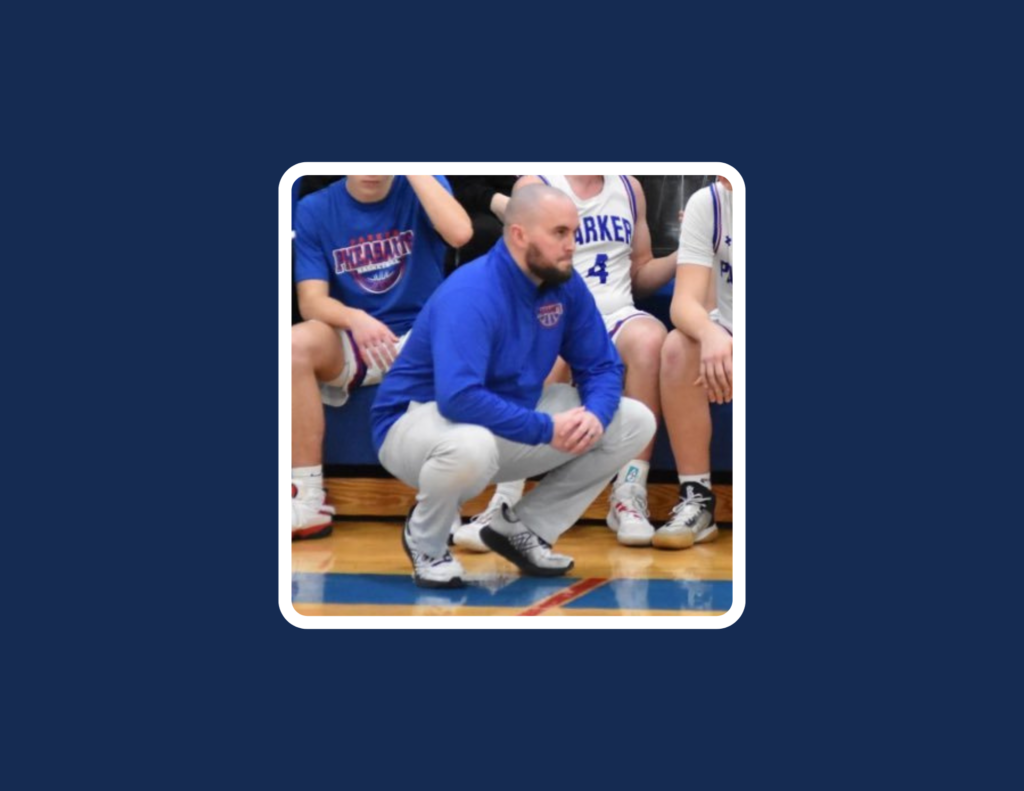
Austen Hurley is a high school basketball coach in South Dakota. Austen has served as a head coach at Parker (SD) High School and as an assistant coach at Tea (SD) High where he helped the team make three consecutive South Dakota State Basketball Championship Appearances and win 2 South Dakota State Championships. He was named assistant coach of the year in 2019. At the time of this episode Austen is currently searching for a new head coaching position.
On this episode Mike and Austen discuss the importance of fostering positive relationships with players, emphasizing the need for coaches to communicate effectively and build trust. Hurley illustrates these principles by detailing his approach to managing player interactions, such as standing shoulder to shoulder with them during discussions to create a sense of teamwork and camaraderie. Additionally, he highlights the significance of teaching players how to analyze game film, thereby enhancing their basketball IQ and decision-making abilities. The episode underscores the vital role of intentionality in coaching, as well as the profound impact that coaches can have on their players’ lives, both on and off the court.
Follow us on Twitter and Instagram @hoopheadspod for the latest updates on episodes, guests, and events from the Hoop Heads Pod.
Make sure you’re subscribed to the Hoop Heads Pod on Spotify or wherever you get your podcasts and while you’re there please leave us a 5 star rating and review. Your ratings help your friends and coaching colleagues find the show. If you really love what you’re hearing recommend the Hoop Heads Pod to someone and get them to join you as a part of Hoop Heads Nation.
Grab pen and paper so you’re ready to take some notes as you listen to this episode with Austen Hurley, high school basketball coach from the state of South Dakota.
What We Discuss with Austen Hurley
- Intentionality in coaching practices, such as structured meetings and clear expectations, cultivates a positive team culture
- Effective communication with players should involve asking questions to encourage critical thinking and self-reflection
- Standing shoulder to shoulder when talking with a player during practice rather than face to face reduces defensiveness and improves communication
- Building relationships with players and their parents through proactive communication enhances trust and support within your program
- Instilling values such as leadership and accountability in young athletes shapes them into better individuals
- Developing Basketball IQ
- Why teaching players how to watch film critically can significantly enhance their understanding of the game and improve their performance on the court
- Establishing a culture of leadership within the team requires intentional discussions and feedback from players
- Keys to creating engaging and structured practice sessions that aid in developing skills while maintaining a continuous flow, ensuring players remain focused and active
Like this show? Please leave us a review here — even one sentence helps! Consider including your Twitter handle so we can thank you personally!

Give With Hoops is a groundbreaking initiative that fuses basketball analytics with modern sponsorship. Built for teams who see data as opportunity, from AAU programs to college powerhouses.
By tying on-court performance directly to community and sponsor engagement, Give With Hoops help programs raise more while deepening support from those who believe in the game.
Traditional fundraising disconnects donors from the action. Sell candy bars, wash cars, beg for donations, it’s exhausting and ineffective. Players perform better when their stats matter beyond the scoreboard. That’s why Give With Hoops was created.
Give With Hoops connects game performance to community support. Every basket, rebound, and assist becomes a chance to raise funds. Transparent, exciting, and proven to raise 3x more than traditional methods.
Aiming to go D3? The D3 Recruiting Playbook gives you a clear, step-by-step roadmap to the recruiting process – what coaches value, key milestones from early high school through application season, and how to build a target list of schools that fit your needs.
We’ll demystify researching D3 programs and how to stand out without chasing every camp or showcase.
The modules cover things like writing emails to coaches, building an effective highlight tape, using social media well, planning ID camps and visits, and navigating application strategy.
You’ll get templates, checklists, and an outreach plan to communicate confidently, learn how to compare financial packages, and avoid common missteps. By the end, you’ll have a prioritized school list and a decision framework you can use to land your best-fit opportunity.
Your first impression is everything when applying for a new coaching job. A professional coaching portfolio is the tool that highlights your coaching achievements and philosophies and, most of all, helps separate you and your abilities from the other applicants.
The key to landing a new coaching job is to demonstrate to the hiring committee your attention to detail, level of preparedness, and your professionalism. Not only does a coaching portfolio allow you to exhibit these qualities, it also allows you to present your personal philosophies on coaching, leadership, and program development in an organized manner.
The Coaching Portfolio Guide is an instructional, membership-based website that helps you develop a personalized portfolio. Each section of the portfolio guide provides detailed instructions on how to organize your portfolio in a professional manner. The guide also provides sample documents for each section of your portfolio that you can copy, modify, and add to your personal portfolio.

Hey coaches — you’ve got a game plan for your team… but do you have one for your money?
That’s where Wealth4Coaches comes in.
Each week, they deliver simple, no-fluff financial tips made just for coaches. Whether you’re getting paid for camps, training sessions, or a full season—Wealth4Coaches helps you track it, save it, and grow it.
It’s time to stop guessing and start building.
Subscribe now at wealth4coaches.beehiiv.com/subscribe
And follow them on Twitter @Wealth4Coaches for daily money wins.
Your money needs a coach.
Start with Wealth4Coaches.
THANKS, AUSTEN HURLEY
If you enjoyed this episode with Austen Hurley to let him know by clicking on the link below and thanking him via Twitter.
Click here to thank Austen Hurley via Twitter
Click here to let Mike & Jason know about your number one takeaway from this episode!
And if you want us to answer your questions on one of our upcoming weekly NBA episodes, drop us a line at mike@hoopheadspod.com.
TRANSCRIPT FOR AUSTEN HURLEY- HIGH SCHOOL BOYS’ BASKETBALL HEAD COACH IN SOUTH DAKOTA – EPISODE 1237
Narrator
00:00:00
The Hoop Heads podcast is brought to you by Head Start Basketball.
Austen Hurley
00:00:15.480 – 00:00:44.270
One thing I’ve always done is I pull a player off to the side.
Even if they turn the ball over or maybe they are having a tough time with a set, I pull them off to the side and I don’t embarrass them. I say, hey coach, you got this. Or like hey guys, keep playing, keep playing. And I always have them stand shoulder to shoulder next to me.
I never stand face to face because it’s actually research. If you stand face to face someone, they get defensive. But if you stand shoulder to shoulder, you’re a team.
Mike Klinzing
00:00:45.390 – 00:02:06.810
Austin Hurley is a high school basketball coach in South Dakota.
Austin has served as a head coach at Parker High School and as an assistant coach at T High School, where he helped the team make three consecutive South Dakota State Basketball Championship appearances and win two South Dakota State Championships. He was named the Assistant Coach of the year in 2019.
At the time of this episode, Austin is currently searching for a new head coaching position Are you or an athlete you know Planning to go D3? Check out the D3 recruiting playbook from D3 Direct.
Their playbook gives you a clear step by step roadmap to the recruiting process, what coaches value, key milestones from early high school through application season, and how to build a targeted list of schools that fit your needs. The playbook demystifies researching D3 programs and how to stand out without chasing every camp or showcase.
The modules cover things like writing emails to coaches, building an effective highlight tape, using social media well planning camps and visits, and navigating application strategy. You’ll get templates, checklists and an outreach plan to communicate confidently. Learn how to compare financial packages and avoid common missteps.
By the end, you’ll have a prioritized school list and a decision framework you can use to land your best fit opportunity. Click on the link in the show notes to get your D3 recruiting playbook from D3 direct.
Danny Young
00:02:10.330 – 00:02:13.690
Hi, this is Danny Young, the head boys coach at Shaker Heights High School.
Mike Klinzing
00:02:13.770 – 00:03:31.160
And you’re listening to Hoop Heads Podcast. Give with Hoops is the first platform turning basketball analytics into fundraising impact.
Every stat tells a story and now every story drives Sponsorship, engagement and team growth Programs nationwide are transforming basketball stats into funding power. Learn to use performance data to attract sponsors, engage fans and raise more with every play.
Give with Hoops will help you raise three times more money for your program as their stat based pledges consistently outperform traditional fundraising. Visit givewith hoops.com hoop-heads-podcast to learn more and take your fundraising to the next level. Give with hoops.
Grab pen and paper so you’re ready to take some notes. You listen to this episode with Austin Hurley, high school basketball coach from the state of South Dakota.
Hello and welcome to the Hoop Heads podcast.
It’s Mike Cleansing here without my co host, Jason Sunkel tonight, but I am pleased to be joined by Austin Hurley, high school basketball coach, currently in between positions, having just finished up a season of coaching at the middle school level. Austin, welcome to the Hoop Heads pod.
Austen Hurley
00:03:32.040 – 00:03:33.320
Hey, thanks for having me.
Mike Klinzing
00:03:33.800 – 00:03:38.120
Excited to have you on. Looking forward to diving into all the interesting things that you’ve been able to.
Austen Hurley
00:03:38.120 – 00:03:38.920
Do in your career.
Mike Klinzing
00:03:39.160 – 00:03:48.900
Let’s start by going back in time to when you were a kid. Tell me a little bit about your basketball and athletic experiences.
What do you remember about your first introduction to sports into basketball in particular?
Austen Hurley
00:03:50.500 – 00:06:57.510
Yeah, so I really got into basketball because my dad was a pretty good basketball player in Canton, South Dakota. He was really good. He played at the University of South Dakota for a little bit as well.
So I really got into basketball because, like, growing up, I would go to his, like, men’s rec games and watch him play, and then he would like, actually go from playing basketball to go work in a night job, things like that. So I really like basketball and my. My mom was a gymnast, so being athletes just kind of ran in our family.
So, yeah, just playing basketball on the driveway growing up and then got to the high school level, played four years of basketball at Sioux Falls Lincoln here in South Dakota, which is very fortunate. Our senior year, we won a state title, which is pretty cool. We actually went undefeated.
We’re the only double A school in this state of South Dakota, or for double A, other A schools have done it. So really love the game, have a really special connection with the group of guys that I played with there.
We had 11 seniors that year, which was crazy amount of seniors to have, but we were very talented. And then, so, yeah, like, from there, just love the game of basketball. I was better at football than I was basketball, but I just.
Basketball came naturally. I could see the floor very easily.
Went to college, graduated, got a degree in education, and then I actually wanted to be a ref before I wanted to be a coach. I actually went to college and I did intramurals and I actually was like, oh, I like this reffing thing.
it’s pretty cool thinking I was going to go do this high school officiating. And then actually my assistant principal, my first year in T where I got my first job, he was like, hey, like, you want to do a volunteer coaching?
Like I’ve seen you ref basketball, but like, I know you’re interested. Would you want to come over and help us? And I said sure. First year there, we went a state title, which is pretty cool.
And then we actually went to two more in after that and we won two out of three, which is pretty cool. So. And then I did that for six years at T. We won two state championships out of the six years I was there. It was a lot of fun. And I had two.
I had a bunch of great coaches. The coaches that mentored me my first three years before we got a new coach.
They really like, really like grilled me hard on like, if you can’t bring us a set, these are the questions we’re going to ask you. If you bring us an offense or a defense, these are the things we’re going to ask.
And you have to look at this way before you bring this stuff to us because we don’t want to waste time having to go through this. So. So that’s how like how I think and do with my coaching. And then I got a, a new coach my last three years there and like he was great.
Drew Webery does a great job at T. And then I got a head coach. My first head coaching gig at Parker was there for two years. It was a 35 minute drive. We had a third, our third kiddo.
So it was time just to be closer to home. So yeah, like right now I’m just kind of in between, just kind of coaching here and there, just seeing what the next step is right now.
Mike Klinzing
00:06:58.950 – 00:07:11.350
Go back to when you’re a kid and you’re playing in high school obviously with 11 seniors. Did you guys grow up first? Did you guys all grow up together?
Was it the same group playing together from like second, third grade all the way up through the varsity?
Austen Hurley
00:07:12.630 – 00:08:15.240
No, actually. So I live in Sioux Falls or I live in Harrisburg, But Sioux Falls, South Dakota is a town of 200, 000 people. It’s like 130.
Back then we actually went to either the different middle schools or like started different. Then we just kind of come together.
Majority of the guys did play on travel team together where like there’s like maybe three or four of us that didn’t. But we all knew each other growing up.
We knew each other since sixth grade and then we just kind of came together as freshmen and then from there it was just lights out. Like we Were just playing really well. We had, like, two or three guys. Two guys, like, moved up right away their freshman year.
We haD3 of our guys move up their sophomore or three of them were playing varsity at sophomore year. And then like, our sophomore year, like, I was on the sophomore team, and we went 19 and one that year. It was just. We just have a really good bond.
And when we got to our senior year, the coach was like, I’m not messing with this. These guys, like, we’re letting these 11 guys be here.
And he’s like, I don’t care what parents say, I’m going to have 11 seniors because we’re not messing this up.
Mike Klinzing
00:08:17.720 – 00:09:11.290
It’s awesome that you had that perspective. Not every coach would have that when you were playing. I always think there’s two sort of routes to coaching.
There’s the guy who, from the time they’re 8, 9, 10 years old, they’re kind of the coach on the floor. They’re the one drawing up plays for football in the dirt during the huddle. They’re writing up stuff on a napkin as a basketball player, right?
They’re thinking the game as a coach. And then there’s other guys that just are strictly focused on trying to be the best player they can be.
And then at some point, their playing career comes to an end and they kind of look around, they’re like, basketball is over. What am I going to do? And then that’s how they kind of fall their way into coaching.
So would you describe yourself as somebody who, as a kid, do you feel like you were thinking the game as a coach already while you were playing, or was that something that came after your playing career was over?
Austen Hurley
00:09:12.650 – 00:10:36.930
Yeah, I would say I was more of a like a coach. Like, throughout that. I was never like the tallest kid. I’m six foot.
I went from like five, seven to six foot in from eight to freshman year. And then I stopped growing. I was 6 foot from there on out. And then there’s guys like. And I played the 3 and 4.
And in freshman year, sophomore year, and junior year, I was like, yeah, I could play with these guys. And then he gets a varsity. Or like, I know if you ever.
Like, when I was a junior, I don’t know if you know the name Colt Iverson at all, but he played at Minnesota. He’s 6, 11. I stood next to that guy and I went, yeah, that. That ain’t happening. Like, coach, you got to get someone else for this guy.
Or like Cody Larson, we had. He played at Iowa down In Florida, he was 6, 8. Like, I had to guard him for, like, a few minutes because we had our big. Was in trouble.
I was like, this is a whole different ball game for someone that my size. So. And I was always the kid where my.
I was raised by my mom, and my mom was always like, you need to know every position because you have no idea when you’re going to get in the game. And that’s always stuck with me. So, like, even when I play football and basketball, I knew every spot, everywhere on the floor.
So then, like, when we’d be on the sidelines, they’d be like, man, like, what do I do on this one? I go, hey, guys. Like, so when he does this, you got to do that. And then it’s like, he’s going to go here.
And then, like, even my buddies are like, really? Like, how? How do you know that? I go, I don’t know. I can’t tell you. It’s just. It’s there.
Mike Klinzing
00:10:38.500 – 00:11:38.380
That’s awesome.
And there are people that have that ability, right, that you can see something once or twice, and then you can dissect that in your mind and be able to identify, okay, somebody’s got to go here, somebody’s got to go there. And that’s definitely, I think, a skill.
Do you have the skill of being able to remember as a coach, if somebody says, hey, what about the game you played two years ago against such and such? Do you remember what the score was or the situation?
Do you have one of those memories where you can kind of pick out specific things from games that you either played in or coach? Because I know there are some guys, like, I have a friend that I coached with.
I was his assistant varsity coach for a number of years, and he could go back, like, eight years and be like, hey, do you remember when we played against Hawken and the score was 42 to 40 and we had Steve with the ball over here and then he passed to this guy. I’m like, dude, I don’t even remember what I had for lunch yesterday. And you’re calling out plays from, like, eight years ago.
Do you have that kind of memory in terms of just remembering games and things that happened? In games you were coaching?
Austen Hurley
00:11:39.980 – 00:12:52.170
There’s, like, key plays that, like, sit in my brain. Like, when I was an assistant, my head was down all the time because I was running a possession chart.
But there’s, like, key plays that I have where we had one kid, his name’s Ethan Freida, like, he was going down the Court, full sprint. It was in a. It was in a semifinal game. And he did the Larry Bird like he was full court sprint.
There was a loose ball, caught it, shot it from behind the backboard, teardropped in. Obviously a no call. And we’re just like, what just happened? Like, it’s things like that that or it’s like we’re playing a game.
It was Freeman, small town. I was at Parker my second year, and we were down three, and there was, like one second left.
And they threw the ball out of bounds on the sideline, opposite bench. And I’m yelling, flip, flip, flip. Which is just a horns flare. And for my lefty shooter. And it’s set up perfectly. And he was three feet behind line.
He caught it. He switched that thing. We went into overtime and then wanted two more. It took us two more overtimes to win. Like, those are.
The games are like, plays that I can remember. But yeah, like, when it’s like, I got a get buddy too. He’s like, he can remember, like, NBA finals that happened 12 years ago.
I’m like, I have no idea.
Mike Klinzing
00:12:53.850 – 00:13:57.130
Yeah. I’m always amazed by people who have that ability to just remember everything.
And then sometimes I look at my friend and I’m like, dude, you’re totally making this up.
You don’t really remember that game from eight years ago in this possession in the third quarter when it was a game that we were up by 15 or down by 15 or whatever it is. I’m like, you’re making this up.
He’s like, no, no, I’m not like, all right, I got to go back and watch some film and figure out whether he’s lying or not at some point, but. All right, I want to take you back to the transition from you think you want to be an official. You get asked to come be a coach.
You step onto the sideline for the first time as a coach. What do you remember your feelings about coaching in that first month that you became a coach? What did you really like about it?
What was an area that maybe you were surprised that you’re like, ooh, I have to figure some of this stuff out. Because I thought I kind of knew what coaching meant, but, man, there’s some aspects of it that I didn’t realize.
So what was that first month like for you in terms of what were you good at initially? What were some things that you felt like maybe you had a learning curve to kind of get to where you wanted to go?
Austen Hurley
00:13:58.570 – 00:16:59.250
Yeah, my. My first, like, month. Yeah, I Can really remember that I was a volunteer assistant. So I wasn’t on payroll. At our high school.
I was the fourth coach. We had a varsity, A JV and a C team which is freshman, sophomore. And I was just like the assistant for the freshman, freshman, sophomore coach.
But I remember though, like those first practices, like just being a sponge, I was just like, okay, like I know the, these coaches are good. They’ve had great success. You’re like, they’re been to the state tournament a bunch of times. Which is really.
Back then it was really, really tough at the school we were at. Like, you had to win your whole region. You had to win like to win a state title then even in the A’s. Now the you have to win six games in a row.
Like, and it’s top. In my first month there’s, it was a lot of, okay, I’m going to listen, I’m going to be a sponge.
And then I’m just going to echo what these coaches are doing. And once that happened, it was just kind of like, okay, fit into your role, be your own coach. Don’t try to be them.
Be yourself and add some variety or some options to that. And I still remember my first year, it was drinking water, a fire hose, but I was getting it.
And I get things pretty quickly when it comes to game of basketball. But like, I still remember my first year, I’d be going to the JV coach who was my assistant principal at the time.
And I was like, hey, like, what do you think about this? Or like this and that. And it was like, okay, I’ll look at it. And he never looked at it. He was like, you have to earn some trust here.
And then eventually, like throughout the season it went on. It was like I started to get some trust. They started listening a little bit more, which was, which was really cool.
And then by the next season it was like we’ve been together and we just knew what we were doing and we were all on the same page and our expectations for kids were all the same. Yeah, that first month was a little nerve wracking. But then it was. I learned a lot from the JV coach. He was my mentor.
He was dropping names of all these coaches that I have never heard about in my entire life. Like from South Dakota, you know who Don Meyer is? I like, you know that guy? But he was like throwing up Rick Majeris. And I’m like, I have no idea.
He’s like, you need to go watch this video. I’m going to Send it to you. Or he’s like, hey, you need to go watch this from Jay Wright, or you need to read this article. And that’s.
That’s what I thought coaching was. Is like, okay, I just got to learn the. What these old coaches have done, what these coaches are doing now, and, like, just kind of learn everything.
And that’s what I really learned that first month was just like, man, I need to just.
Just really deep dive in this and just really, if I want to be great and know how to be a certain offense or defense, I have to know that offense or defense. And that is literally what I got out of it. And then from there on, it was. I was hooked. I was just like, okay, I learned this guy.
I learned this, learned this, I learned this offense. And like, yeah, and then it. That’s just how it went.
Mike Klinzing
00:16:59.810 – 00:18:38.910
It’s amazing how quickly when you get into a job that you realize what you thought you knew. You really know very, very little. just enough to be dangerous, Right?
And it’s to the point where I know when I was a young coach, and I’ve said this on the podcast before, I wish that somebody had taken me a little bit deeper into, hey, you got to go and do what you just described, right? You got to go and study the people who have had success.
You got to understand what they do offensively and defensively, and then that can start to shape your philosophy as you look at, well, hey, what do they do here? And what do I like about that? Or what would I maybe change or tweak about this? That better fits what I’m trying to do or fits my personality.
And I feel like that’s something that, as a young coach, I didn’t do nearly enough. So if you’re a young coach out there, you’re just getting started in your career.
The more you can study what other coaches do, whether that’s through film, whether that’s through having a mentor, somebody that you can talk to, X’s and O’s culture, all those things. The more you can just immerse yourself in the game, the better off you’re going to be in the long run in your career.
I don’t think there’s any doubt about that. So as you go through and you’re still in your role as an assistant coach, what did you learn about. Obviously, the trust factor is huge, right?
As an assistant, you’ve got to earn the trust of the other members of your coaching staff and specifically your head coach.
I think that’s a huge piece but when you think about what it means to be a good assistant, both when you were an assistant and then obviously once you become a head coach and you have assistance on your staff in your mind, what do you think makes a good assistant coach? Give me two or three characteristics that you feel like make for a good assistant coach.
Austen Hurley
00:18:39.950 – 00:20:22.240
Well, obviously, the first one’s loyalty. even if you don’t align together, like, maybe the same offensive or defensive principles or philosophies, you got to be loyal.
It’s like, okay, we’re going to run this style offense. Loyalty is a huge one. And that’s. that’s what we call respecting the absence.
So, like, if you’re not around the head coach, you’re not talking about the head coach and like, saying, hey, with other coaches or teachers, like, I disagree with this. It is. And that’s my second quality is trustworthiness and just being communication.
So, like, if there’s something that you think’s not working, I want an assistant coach to come to me and be like, hey, coach, really, we got to scrap that, man. Like, we need to look at something else. And I’m like, and my thing with that.
And I had an assistant coach that my first year came to me and was like, hey, this ain’t working. I go, all right, you have a problem. What’s the solution? And he told me, I don’t know. I go, okay, that’s fine. Go find one. Bring it to me.
Because I didn’t see the problem. You are. Which is fine, but come tell me what the solution is, and I will look at it and then I’ll make the final say.
But that’s what I really would like as a. As assistant coaches is like, hey, if I had a staff of three, which I would just be like, hey, guys, you see a problem, you come talk to me.
I’m not going to rip your head off or anything, but I’m just going to be blunt, honest. I have the last say, but give me a solution to it.
If it’s like, hey, we’re having a tough time against a switching defense, what’s your solution to beat that one? Or if you think our offense is too slow when you speed it up, or bring me a different one or a different style that.
Or drills that can really push our guys, and then I’m going to let them coach. Like, I’m not going to sit here and take over the mic and be like, hey, this is all me.
I’m going to be like, hey, Coach Jimmy over Here it has a drill for us that’s going to make us better for the next game. Listen up, you got the floor.
Mike Klinzing
00:20:23.040 – 00:22:43.610
I love that. And I’ve had other coaches tell me that same thing about everybody can point out a problem that’s pretty easy to do.
It’s coming up with the solution to that problem.
And when I talk to assistant coaches, I remember Chris Kapko, who just got the job at Ball State, actually, where Rick Majera’s coached at one point in his career.
But when I had Chris on earlier this year, he told me that he always tries to make sure, just like you said, that he’s bringing solutions to his head coach and not bringing his coach more problems. And when you bring them solutions to your point, right, the head coach can either look at it and say, okay, that’s a good solution.
We’re going to implement that, or, hey, I don’t really think that’s the right solution. We’re going to go a different direction. And as an assistant, Chris said, hey, you’ve got to have a low ego, right? You can’t take that personally.
You’re just trying to come with ideas.
You’re trying to come with things that you think can make the program better with the understanding, as you said, that ultimately the head coach is going to make that decision.
But I think if you are an assistant coach and you can come in with the mindset of what I’m bringing to my head coach is solutions to the problems that I see or solutions to the problem that the head coach has, or just making things that were on the head coach’s plate disappear because I’m taking them over.
I think those are all really important qualities for an assistant coach, both for anyone who is an assistant or if you’re a head coach, when you’re thinking about trying to mentor your assistance and give them some guidance in terms of what makes them valuable, I think all those things we just talked about are really, really important. And so obviously you as an assistant coach, you’re learning, you’re going through, and you’re trying to figure out who it is that you are as a coach.
And then eventually for you, you get an opportunity to interview for a head coaching job and you get the job at Parker.
When you were preparing as an assistant, were you a guy that took notes and started putting things together of like, hey, when I get my own program, I’m going to do X, Y and Z? Were you taking things like, hey, this is what I like from this coach. Let me put that here in this file. Let me write that down. Maybe.
Here’s something I don’t like. Were you starting to put together that program philosophy while you were an assistant in order to prepare for that eventual head coaching job?
Austen Hurley
00:22:45.040 – 00:26:21.660
Yeah, and I was. And that’s what I learned from my mentor coach was he was like, anything you find, keep it, because you never know when you’re going to have to use it.
One time, I was like, hey, I want to learn about the read and react offense. Do you have anything? He goes, come with me. We go into his office. He pulls out a drawer, and it’s DVDs. It’s like a Willy Wonka drawer.
It just goes forever, and it’s DVDs. And he goes, here you go. And then I was like, okay. And then so, like watching the drills, and then I came back.
I’m like, all right, I need to learn the, like, block remover. Do you have block remover? He goes my DVD’s back. He pulls out even more. He goes, here’s the block remover.
Or it’s like, hey, we ran the dribble drive. And he’s like. He goes, hey, you need to learn the dribble drive in order to coach with us. Here’s the DVDs.
And so I was like, okay, I need to start collecting these DVDs. Like, that’s what I thought a good coach did, because these guys are good.
And then for that, like, I was collecting things, but then as an assistant, I was actually reaching out to my mentor coach, but actually, other coaches around the nation of just, like, anyone that I found on Twitter that was like, a head coach. And I was like, hey, I want to be a head coach. What are things that I need to do and prepare for to get that?
And so, like, coaches, like, here’s a resume builder. Here’s what you need a resume for. Here’s a coach’s guide. So, like, I created a coach’s guide, and it’s, like 15 pages long.
So, like, when I apply, I send it in, but it’s got everything. It’s like, what’s our offensive philosophy? What’s our philosophy on how to ride the bus? What to wear on the bus?
What are we doing home and away games? It’s. I put a practice plan in there. I put in how we communicate to parents, captains. Everything you think of it is in that guide.
And that is what has stuck with me. And I just keep updating it.
Once I see, like, oh, hey, I really like what this coach put on Twitter, like, about Captains and like, how he actually does a weekly captain. So he does a meeting every week, and it’s this captain’s change for each game.
And I’m like, I love that because if you’re not performing as a captain for a week, as not scoring, not as far as playing, but just like. Like, I have the three E’s, energy, enthusiasm and environment. So, like, if you don’t follow those three E’s, like, you can’t be a captain.
But if you show me that in a week, you’re going to be up for a captainship the next week. And then like, the biggest things is like, Don Meyer, Don Meyer’s website. I don’t know if you’ve ever been to it. It is so amazing.
I steal so many things from there. So, like, my second year at Parker, my assistant got me a bunch of. Got me 25 binders, and we were binder guys.
So I printed off every single set that we were throwing in, and I was standing at practice to be coming in. I’d be handing them out. Here’s your sets. Or we’d have meetings before our late practice and we’d sit down and be like, watching film.
And I’d have the breakdown of that film printed out. Or it was, hey, we have a. A poem that we’re going to analyze or, hey, we’re going to talk about brotherhood today. Things like that.
Like, those are bits and pieces I took where I was like, hey, like, it needs to be more about X’s and O’s. It needs to be more about, like, these guys need to trust me and know who I am before they even can go on the court and perform.
Because if they don’t know who I am, they’re never going to trust me and they’re not going to allow me to be their coach. So just, yeah, as an assistant, I would just say, like, I took everything, even if I thought it was good or bad.
Like, oh, man, maybe I do want that at some point. Or it’s just, hey, this coach I’ve seen blow up. I’m going to. Like, I’ve been on zoom calls with coaches like that. I was an assistant.
I was just like, hey, let me know what you do. Because I just want to know what to do to get myself prepared for a head coach someday.
Mike Klinzing
00:26:22.860 – 00:27:48.850
So that leads to the next question for me, which I think is something that, especially in the world that we have today with social media, with just access to so much information, right? And I know that I’m not even coaching a team, right? Now really.
But I sometimes feel like I have information overload where I’m scrolling through Twitter or I’m looking through YouTube and I’ll find 25 things in a half hour. I’m like, oh, I love that out of bounds player. Oh, look at that press breaker. Oh man, that’s a really good last second play or whatever it is.
And you can pull all those things together or maybe I’ll grab something that’s culture related and I can almost have too much.
And so I’ve got to kind of take all that and figure out, well, what of that fits who I already am, whether that’s philosophically, offensively, defensively, whether that’s culture. So how do you. Again, I understand completely the idea of, right, I’m collecting everything, especially as an assistant coach. Right.
I’m grabbing this, I’m grabbing that.
So then once you become a head coach and you start to kind of figure out, well, who am I as a coach and what are my philosophies, how do you kind of go through then and pick and choose the things that are going to be important to you as a head coach that are going to fit who you are? If that question makes sense, just in terms of kind of dialing up all the stuff that you have.
Austen Hurley
00:27:50.290 – 00:31:19.760
Yeah. So I fell into that trap my first year as a head coach. So I love the rehood react offense. It was really good.
Our tallest guy was only 62 at the time. So I was like, man, I need a five out or a four out, Princeton kind of hybrid kind of deal.
And I knew the Euro ball screen that Gonzaga used to run and I kind of had two offenses going where I could switch it up if I felt that. And then as more and more I dived into things, I slowed myself down. I was like, I’m doing too much.
I need to have something that is simple, direct and basically just lets kids play. So the more I was teaching and the more I was learning and there are a lot of like good things that come out of social media.
Like I see a lot of like, hey, teaching offense through play. Well, the best book I ever ran was Saba the Anti Fragile Offense. That taught me how like I, I read that book after I was done head coaching.
I was like, I haven’t read this book but Brian McCormick has is all over. And I’m like, I’m going to read it.
And it changed how I taught offense the entire time and how the game of flow changes where it’s like, hey, don’t call A set in, lie to play, let them play, or hey, call a set after a dead ball.
I learned all those things that I didn’t really know and I just had to slow myself down and I had to take a look at my playbook and be like, I’m throwing this out, throwing this out. And then when I was reading the book, I was like, well, I need to have an offense where no matter what that defense do we know what to do?
Like, I don’t need to run a different offense against a switching defense and then a man defense and a zone defense. I need to have a man defense that can just take. That can obliterate or beat any type of defense.
If it’s a switching defense or if they’re peel switching or if they’re icing ball screens or hard head balls, like, we know what to do. And so by learning those things and watching, listening to other coaches like a podcast and stuff, it’s like, that is what I need. And so.
And I found the greatest drill that I think has ever been invented. It’s Canada 4v4, where you put two cones down and you have six zones and players can’t be in the same zone at the same time.
I did it with seventh grade girls and our spacing was so amazing that, like, I, like, I had people. Like, I had my assistant. AD comes like, how’d you do it? Like, the spacing is tremendous. It’s, it’s. I show him the drill. I go, this is the drill.
And I did it with 8th grade boys basketball this year. And these are C and D guys, really low. Their spacing was great. It’s just little drills that I found at it, that it’s like, hey.
And then we played a lot of three on three, all these things. But yeah, so you go, go back to your question though. Like, yeah, I had too much at one point and then I stopped and I said, I need to slow down.
Like, this needs to be something where it’s, it’s simple. Like, I only have one press break and it works. For every single press break, I have one. We have one fast break breakout.
However, the secondary actions are in there that are natural. Instead of being like, hey, we’re running this, this, this, this and this. It’s. Nope.
We’re going to read what the defense gives us and we’re going to go see, I’ve really, like, shrunk it down.
Mike Klinzing
00:31:20.640 – 00:33:00.940
Well, obviously, I think when you talk about coaching in a practice setting with set plays and a bunch of things that the kids have to quote, unquote, memorize, Right. In terms of patterns or hey, I got to cut here, I got to do here in this moment.
And then you’re talking about the spacing and the conceptual offense, right. Where players are reading what’s going on on the floor and then they’re making the decisions.
And I think one of the things that coaches, especially coaches who have been around a long time, sometimes struggle with is how do I give up that control as a coach and hand that control, the decision making process to the players. And then I think the bridge in between that is how do you teach that decision making?
And part of it, the 4 versus 4 Canada drill that you just described, right. Where you’ve got the six zones and you’re trying to work on space and that’s one way to help players make decisions. Right.
They know where they have to be, where they cannot be. And that’s not you dictating. Hey, you got to be here, you got to be there.
That’s them reading what’s going on on the floor, getting themselves to the right space.
So when you’re designing a practice to be able to help players to make decisions based upon what they’re seeing on the floor from the defense or conversely, if they’re defending and they’re playing against an offense.
But what does the decision making teaching process look like for you in a practice, as best as you can describe it, obviously, because we’re not showing video or anything, but just as well as you can describe kind of what, what your practice philosophy looks like in terms of helping players to make better decisions on the court.
Austen Hurley
00:33:02.620 – 00:37:56.260
Yeah. So at the beginning of the year when kids are learning drills, we do a lot of 1v1 offense advantage.
ball in the back, ball on a hip or high five start what you see a lot of European style coaching going on. But when we get all these drills that these kids know by heart, we actually have six hoops in our gym. Each hoop has a different drill.
And in those drills it could be 1v1 advantage start, 2v2 high five start, 3v3 no dribble. It could. And then like the two other hoops in the middle of those are like free throws just to cool down.
And then our last hoop is like partner shooting. Or we’re playing 44 Canada, something like that. And we actually just call it stations. We set like a three minute timer up there, we press it.
Every kid knows what to do. And we have what’s called evil twins.
And I think this is the coolest thing is you get a guy that looks exactly like you, same build and same shape and or speed, and that’s your evil twin. So, like, for instance, if I got two six foot five guys, you know what? I’m not going to have them be on the same team during practice.
You guys are going to go beat each other up the entire practice. And when we do sets, we come together. Even when we ran just offense stuff, because it was all the same, they went against each other.
And I thought that was the biggest component of, like, finishing off two feet. We have a drill for that. And so our first setup in the practice is like, first 18 to 20 minutes is stations.
We blow the horn goes off, they get 30 seconds to go to the next station, Horn goes again, and then they do that drill. What I think allows players to have a lot of success with that is they don’t get a think about what just happened when they go to the next thing.
Because in the game, basketball, if there’s a turnover, you miss a shot or you make a shot, you don’t get to think about, wait, what just happened down there that led me to that. It’s, hey, I have to go back, I have to go do this now.
So I have to go shoot free throws or I have to go do this layup drill or the shooting drill or a finishing drill. And we started, players, like, see a click of like, they weren’t worrying about the last drill. Like, oh, I got blocked, or I hung my head.
It’s like, no, you have to go do this now. And it was a really good conditioner too. 18 Minutes of straight going. These kids were gassed. And so the free throws really help break up.
But then when we’d go into the next set, it would be, I’m really big on. Kind of like when you’re teaching multiplication or addition, you got to have building blocks.
So then after that, it’s, we go into like, all right, hey, we’re going to do 2v2 no dribble, or 2v2 high five start, or, hey, we’re going to do 3v3 disadvantage. But it’s always offense versus defense. We’re never on air.
The only time we’re on air is if, like, we need to get shots up and just see the ball go through the hoop, or maybe working on a skill of like, come to a jump, stop a stride, stop, step through, spin moves, whatever the case may be. Or if we’re teaching a transition offense.
But then when we do sets, like when I teach sets, I don’t I try to teach on air of like what it looks like, but I always end up throwing a defense in because I’m like, you guys need to see who’s going to be screening, right? So a lot of it is. And then we always finish a drip. Like I always do something a 5, 5v5, full court.
One thing that I love to do is if you have a lot of guys on your team and you’re just trying to get them reps and you’re kind of like, man, like I got to give kids chances. But I got my starting eight, but I got 12 other dudes or whatever is three minute games are the best thing. I’ll throw five players out. Three minute.
Five, five, five. We’re going to play for three minutes. Okay, that’s up next. Next five, 10 guys, you’re on.
And then allows me to talk to those 10 or five guys or whoever I need to talk to. I let the assistants go do their thing. They’re in charge. I’m going to talk to them and then you guys are back on. And then.
Or we’re doing what’s called racer drill where it’s 5v5 and it is literally you start with the ball one court, you go down. If you miss the other team gets a rebound. There’s a new five actually coming in on offense. And those are kind of how our practices go.
It’s really just a buildup of skill development, small sided games. Now let’s put it all together and they’re tired, so we don’t run lines.
We only run lines if it’s a punishment which kind of, kind of try to get away from. But it’s like part of like that coaching. Like we have to. But it’s like that’s how we build. It is literally could be 1v1, 2v2, 3v3 or 4v4.
And then we end this, end the game or end the practice 5v5. We’re working on sets based on a balance play special situations.
And the reason we do that at the end is because they’re tired and we want them to be able to be tired and play. We don’t want to be fresh and play five on five because we want to be tired playing five.
Because when it’s fourth quarter, I want you to know those sets where it’s like, oh, I just go here. Don’t have to think.
Mike Klinzing
00:37:59.780 – 00:39:44.620
Coaches, you’ve got a game plan for your team, but do you have one for your money? That’s where Wealth4Coaches comes in each week we’ll deliver simple. No fluff financial tips made just for coaches.
Whether you’re getting paid for camps, training sessions, or a full season, Wealth4Coaches helps you track it, save it, and grow it. It’s time to stop guessing and start building.
Subscribe now at wealthforcoaches.be HYVE.com subscribe and follow us on Twitter eealthforcoaches for daily money wins. Your money needs a coach. Start with Wealth4Coaches.
I want to go back to the station piece of it because I think that’s a really interesting way to structure your practices when those stations are going on. And the kids, obviously, as you said, you’ve taught them what they’re supposed to do at each spot so they know so they’re going at each other.
As you’re watching that as a coaching staff and you’re seeing decisions being made, are you. How are you remembering some things that maybe you want to point out to a kid?
Because I’m assuming you’re not stepping in and stopping when it’s such a short period of time. You’re not going in and giving them a minute explanation of, hey, this decision or this is whatever.
You’re maybe talking to them as an entire group after those stations are over, or you’re pulling one kid aside.
But just how do you evaluate what’s going on and make sure that it doesn’t just devolve into, okay, we’re doing this drill, but we’re not necessarily getting anything out of it. How do you make sure you’re still, quote, coaching and making sure the kids are getting out of those stations what you want them to get out of it?
If that question applies here, yeah.
Austen Hurley
00:39:44.620 – 00:41:42.500
So in a perfect world, I would love to have like four, like, have four coaches on the floor, and every coach is in charge of a drill. So you put together your drill. You’re going to teach that drill.
And you said that, that now when we design, when I design these, it is either 1v1 or 2v2. It’s. We sometimes do 3v3, but I always want to make it where those two players that just went aren’t going right away. They’re coming off.
So, like, I’ll stand at a drill and I’ll look at like, okay, I need to go look, help Timmy out over here. Okay, I can pull the Timmy out and be like, hey, there’s six other guys at the hoop. They can keep going.
And I can just be like, hey, that last time here, remember when you came off one foot what happened? He’s like, well, I came off one foot, and I kind of got bumped, and I missed. Okay, so what do you need to do next? Come off two feet. That it?
That’s it. 10, 20 Seconds, we go. I don’t spend a minute with a player because their attention span, they just want to go play. And.
But the fact that a kid like that can go and be like, hey, I came off one. He bumped me, like you said, and I miss. Okay, so what are you going to do next? Come up to. And then, boom, he’s right back in the drill.
And I make sure after I’m done talking, he gets the next. Next rep, so it’s fresh in his mind, and boom, he does that.
So in my thoughts at that it’s like, it’s either got to be three minutes or four minutes. Four minutes is kind of sweet spot with those stations.
But a lot of the times is we want to make sure there’s enough players where we can pull a kid or two off to the side, talk to them, and let them get back into that drill right away. Not be like, hey, guys, whoa, whoa, whoa, whoa, whoa. now.
Now, granted, if they’re screwing around and not getting anything out of it, then, yeah, coach needs to step in and be like, hey, you6, you need to stop. We need to talk about the purpose of this drill, because it’s not a goof around time.
This is a skill development, making you better, making our team better.
And then if you have to stop, and then you just tell the players, hey, you just wasted two minutes of your time because you weren’t doing what you’re supposed to be doing. And that’s really been a key factor. And kids love it because they’re just. They’re bopping.
Mike Klinzing
00:41:42.500 – 00:42:55.230
They’re going, yeah, I love the idea of structuring the drill so that you can remove a kid from the drill, talk to them, and then send them right back in. And the drill doesn’t have to stop while you pull that kid out to be able to talk to him and give him some instruction.
It’s a really simple technique, but it’s one that I can already see the value in it as I’m picturing your stations in my head. And what that looks like, I can already picture. Hey, all right, here’s a group where it’s. Let’s say it’s three on three.
And at that, three on three, you have eight kids there. And so, yeah, somebody does something, and, hey, we’re going to point that out. To you, we’re going to pull you out.
And meanwhile, somebody just jumps in and the drill continues, and they’re getting as much out of it as they possibly can. So I can certainly, without question, see the value in that. Tell me a little bit about just how you go about preparing a daily practice plan.
Are you a guy that sits down with a pen and paper and writes out your practice plan? Are you doing it on. On the computer, putting it in Google Drive? Just what’s your. What’s your process for putting together a practice plan?
Because I think everybody has different methods and different ways they go about doing that. Do you like to do it with your assistants by yourself? Just. Just walk me through the process.
Austen Hurley
00:42:56.830 – 00:46:23.050
Yeah. So if possible, if I like, when I was a head coach at Parker, I had one assistant.
I made the practice plans, but one of my assistants was my second year, I had a new assistant. He was actually my superintendent of the school. He had 12 years of coaching experience, and we just couldn’t find anyone. So he was my assistant.
But, like, I was like, hey, like, after every practice, we’re like, it’s fresher in mind. Tell me what we need to work on. What did you see in our 5 on 5? And he’s like, we need to do this, this and this. Or like, hey, okay.
And I’m like, tell me the positives. What are the positives? First, what do we do? Well, that we need to continue doing drills on that builds on that.
And then are there drills that we just need to scrap? Because they’re just fluff. And that’s when I really like to do it.
Of, like, just quick, hey, coaches, like, give me just a quick, like, what are things that we need to be better at? And then if a coach says, like, hey, we, like, when was I assistant? You go, hey, I think we need to be better at our zone offense.
I’m like, okay, what do you think we need to do? Hey, I got some sets that we could put in. Okay, I’m going to set a time for you tomorrow. It’s going to say deboer zone sets. You get that time.
I’m going to go down with the freshman, you get the varsity, and I’m going to go work with the freshman during this time. And the freshmen loved it because they’re like, ooh, Coach Hurley’s down here, the head varsity coach. Like, yeah.
And then with that, though, is, if I had a good, big staff, it’d be, hey, we’re all sharing this Google Doc or a spreadsheet. And I would give roles to my assistants of like, hey, what is your best trait?
So, like, if I had a nice young coach who’s like, maybe just at a college ball or like, knows really good moves for kids to learn or is really good, like can actually show kids how to do Euro step without tearing their acl, like, I would, I’d be like, hey, you’re, you’re our skill development guy. I’m going to give you 30 minutes every single day. I’m not going to touch this. That is all you.
And then if I had coaches that was like, like, hey, like my strengths are sets. Like, I know sets for this, this. Okay, you’re going to have to give me all your sets. We’re going to have to sit down and go over which ones we like.
And then we can build off whenever we play a new team, like, which ones you like. That’d be like, hey, this is your time. You’re going to teach that.
And then let’s say my JV coach, like, hey, you and I are in charge of the offense and defense. The whole meat potatoes here. Okay? You and I are going to have to be on the same page of like after practice, real quick, what do we need to work on?
What do we need to do? And then that’s kind of how I am. I like to share it out because I can’t do it all. There’s no way, like that I can do it all.
Like, when I was at Parker, I had one assistant each year. I was doing everything. And burnout hits you when you’re the the guy and you have to make every practice plan.
And when you’re watching film till 1am trying to prepare for two or three teams in a week, like, that’s kind of the thing.
And like, yeah, when I’m like watching film, like I have a big 75 inch TV downstairs, I’m sitting on my couch and I’m like, all right, this team does this and I have a spreadsheet on how I scout teams, like how I look for it. Like, how do they defend a ball screen, how to defend off ball screens? What’s their. What do they do after a free throw?
Are they doing a release or are they going back in zone? What are they doing? And I have all that and I just fill that out and then it’s in my mind. I’m like, okay, we need to do this to beat them.
This, this, this. And that’s basically how I come with the practice plan.
Mike Klinzing
00:46:24.410 – 00:46:41.710
If you had to ballpark how much film you’re watching, let’s say during the season to prepare for an opponent, what would you say that number is? And then we’ll talk a little bit about the off season.
But just in terms of in season, if you’re going to prepare for an opponent, how much film are you watching of that opponent to get yourself prepared?
Austen Hurley
00:46:42.910 – 00:49:33.810
I’ll watch the game about depends on how many teams we have in a week. If we have two, depends how many games. If I have a couple days in front, I’ll watch that game about two times.
Because the way I’ve organized my spreadsheet, I can watch a game, pause and be like, okay, first quarter, they’re a blitzing team because coaches have their tendencies and we don’t shy from it. It’s hey, like, oh, okay, against the ball screen, they blitz or they’re icing or they’re hedging or they’re switching.
And that’s when I put in my notes. And then if I’m watching the game, it’s like, okay, off ball screen, they’re chasing.
Okay, Got to know that because then we can tell like, hey, they’re chasing. We need curls. We need to practice our curls.
So when we do 2v2 ball screening, we have to know, hey, offense or defense, you’re going to be, you’re going to be chasing or hey, they’re going to be switching. So then we go through that. I’m very fortunate enough to have a brain where I can watch a game in one time and I can tell you what they do.
And there’s times I go and watch just games just for fun. And I can tell you within the first quarter, I know exactly how that team’s going to beat you or I know how that team is going to do.
And then I always like the adjustments at halftime, like, oh, they went to a two, three. All right, what are they going to do out of this two, three. So with film, depending on our, our play.
Like we had an in season tournament when I was at Parker, so it’d be like, hey, we watch film. We have three days to prepare for this tournament. We watch, I watch a bunch of film, try to get as much as I can, maybe two or three films.
And that’s the difference too is like if I have three films on one team from different teams, I’m going to watch every single film and I watch it to the full length. I don’t stop because I don’t want to get caught sleeping. You know what I mean? Like, I want to make sure, like, oh, they ran a 1, 3, 1. One time.
They ran one time, but they could come out in that in there. And so we kind of go over that. And then when it’s a quick turnaround, hey, you got to play on a Friday after a Thursday.
You got to watch the game where your form was. You got to get that coach to send it over to you.
It’s 10 o’ clock at night, and I’m sitting here watching that film, and I watch it one, one and a half times. And then during the day, during my playing period, I’ll watch it over again, and then it’s repeat.
Then it’s like, hey, we have a Saturday game, okay? And it’s at noon. Okay, well, I’m up at 6 again, breakfast. And I’m watching the game from last night, and I have to watch our game at the same time.
So it’s about I watch a lot of film during the season. I don’t watch very much tv, and it’s a lot late nights. it’s like, I get kids, so it’s like they go to bed. My wife goes to bed.
She’s like, you come to bed. I’m like, I got to watch this film. I got to make sure we can beat this, beat this team tomorrow. He goes, I’m like, we’re. We’re 2 and 10.
I got to figure something out.
Mike Klinzing
00:49:35.810 – 00:50:07.280
The. After the kids and the wife go to bed time is definitely a time that I can relate to.
I spent many, many hours working late at night on the podcast for sure, when everybody at my house went to bed. I’m a little lucky now because I. I retired in October, Austin.
So now I have some time during the day to be able to do some actual work instead of just being at school all day. So. But I can definitely relate to the idea that everybody in the house goes to bed and you got some time to yourself, and then you just.
You become a vampire, right? You don’t sleep.
Austen Hurley
00:50:07.280 – 00:50:07.600
You’re.
Mike Klinzing
00:50:07.600 – 00:50:55.390
You’re functioning on. You’re functioning on way less sleep than you thought you ever would before you became a parent, let’s put it that way.
Let me ask you this about film. Let me ask you this about film. How much of the prep work from the film do you then share with the players?
What pieces of information that you take out?
There’s obviously a lot that’s important to you as a coach, but then what are the things that you take from the information that’s important to you that then you share with the players?
Whether that’s through actually showing them film clips of things that their opponent might do or just talking or designing things in practice to mimic some of the stuff that they may see in a game. How much of the film work that you do, do you share with players?
Austen Hurley
00:50:56.990 – 00:54:33.470
So I try to clip as, like, maybe 30 minutes or less with players that I’m going to show them, however, through a lot of trial and error with kid kids watching, because I look at times like, how. How long is this kid. These kids watching film?
Well, my assistant was like, well, are they even actually watching the game or they just watching themselves? I was like, we had a weekly meeting. So at our weekly meeting, I straight up asked and said, hey, guys, do any of you know actually how to watch film?
And they go, no. I go, I’m like, thank you for being honest. I don’t want you to say yes and just give me that. I go, so what do you guys look for when you watch it?
And they go, well, I watch myself. I said, okay, so are you just, like, kind of watching to see, like, your highlights? Like, yeah, kind of. this. And I’m like, okay.
I go, so here’s what we’re going to do today for our weekly meeting. I’m going to teach you how to watch film the way I do.
I printed out my form that I have, and I gave everyone a form and a piece of paper and a pencil or a pen, whatever, writing tool. And I said, and it’s not very big. It’s a little like just. Are they a switching team? Are they a man team?
What do they do against screens? Off ball screens, on ball screens xyz. And then, like, what’s their formation of their offense? What’s their style of defense?
And then what’s their fast break? And it’s just. They go, oh, this is what you look at. I go, I literally sit down with this form and watch film.
And I literally write in what they have, right? Type it. So they go, can we watch like, a quarter and do it? I said, yes, that’s what we’re going to do.
So we watch a quarter, and I have to pause. It’s a lesson, like, I’m teaching them. I said, hey, did everyone see a ball screen in the first minute? Here they go, yeah, Coach, I did it.
What did they do? Well, they. They switched. I said, yeah, they switched. So did you write that down? So everyone’s like, okay, I got to write that down.
And then it was like, okay, what were they? And Then I would pause it like another 10 minutes or like five minutes in, and I go, okay, what’s their fast break look like?
What do they do with their big? And they go, well, they. He rim like he’s running up and down the court like we do. I go, yeah, so he rem runs. Okay, so you need to write that down.
Would they have a rim run or now it’s the. They’re trying to do a two sided break, which has kind of been a new fad with transition offense. But it’s a lot of those.
Like, I had to teach players how to watch film, and the players are just like, I can never watch basketball the same. And I go, welcome to my world. I can never watch a game and enjoy it.
And so that was what I had to do, though, to get them to understand, like how you actually watch film. So when I do clips, they understand. Because even if I did clips and said, do you see how they blitz? Because my qu. I never tell them how to beat.
I always ask players, how do you blitz? How do you defeat a blitzing ball screen or a soft hedge screen or a switching screen or an ice screen? And I always ask of that.
And at first they’re like, well, we don’t know. You’re the coach, you have to tell us. So then after trial and error, they finally figured out, okay, blitzing screen. We don’t actually screen.
We slip and split. Is we slip, we ghost it or we do a flip. And I go, yes, you guys are understanding it.
My kids may not have been the skilled my at Parker, but they knew basketball by the end of it, and I loved it. And we actually grew really close because they love those film sessions. They got paper, pencil.
They’re sitting here going, hey, I know the answers to these. This is easy.
Mike Klinzing
00:54:35.630 – 00:56:58.600
That’s good stuff. Austin. I think it’s 100% spoton in terms of I think every high school coach should do exactly what you just described, right?
To be able to teach kids. Because a lot of times we say, hey, you got to watch the film.
And kids may watch the film, but I’m betting that 98, 99% of kids who sit down to watch the film do exactly what you just described your kids were doing before you showed them how to watch film properly. They’re just looking for, hey, when’s that shot coming up that I made? Or hey, when’s that nice pass I made? Or when am I going to get that steal?
And that’s what kids are watching for. I know that with Both my kids who play, so I have a son who’s playing. He’s a sophomore at Ohio Wesleyan.
Then I have a daughter who’s a sophomore in high school.
And with both of them, when I first started watching film with them and I talk them through, and I’d ask them same way, asking questions like, hey, what do you see here? What are you looking at? And they saw absolutely nothing besides whatever they were doing.
Like, if there was an action that involved them, they might be able to recognize what was going on.
But if there was an action that happened away from them on the film, they had no idea how that impacted what was going on in the game or how that affected what they were doing. They just didn’t see it. So you really had to stop and point out, like, hey, here’s you. But look at what’s going on over here.
That’s about to set up what’s going to happen to you or what’s going to get you open or whatever. And so when they start to see that, now you not only can learn from what you’re doing, but now you can also learn from your teammates.
And then I think the most important part is you get to start to see the big picture, right? Like what you’re talking about, where your guys are writing down, well, what does this team do?
And then how can we as a team react to that in terms of how we approach either attacking their defense or being able to guard that other team’s offense?
And I think it’s so underrated because, as you well know, right, Film is so, so, so valuable in terms of being a learning tool, not just for coaches, but as a player, you can learn so much and increase your basketball IQ by leaps and bounds if you understand how to watch film. And I agree with you 100% that I just don’t think most kids have any idea how to watch it.
Austen Hurley
00:57:00.200 – 00:58:40.740
No, they, they really don’t.
And like, when you’re talking about, like, send up plays in that, it’s like, once I taught players how to do that, they were understanding, like, hey, there’s four other guys on the court that I need to know what they’re doing. So that way I’m not cutting when another guy’s cutting or, hey, I know my my, my friend likes to come off these, these screens a lot.
Like, how do you like to get open? I think that’s a big piece, too, is like, you got to ask your players, how do they like to score?
So, like, for instance, when I was an assistant that was a big thing I learned, too, was we had a really good player. His name is Noah Friedel. He plays over in Europe right now. He played at James Madison University. He was great, phenomenal athlete.
But we sat down with him and we’re like, how do you like to score? Do you like to come off all screens? Do you like to come off off ball screens? Do you curl? Do you like to pop?
Or do you just want to have the rock in your hand and. And make something work? And he sat down, he goes, I love to come off ball screens.
He goes, because when I come off a ball screen, if it’s a switching team, I’m going to get some small guy on me and I’m just going to take him to the hole or I’m going to shoot a three over him and he’s like. Or if they don’t switch, I have that beautiful curl for a layup. And it was like, that sucked out to me too. Is like, you got to ask your.
Your starting five or your best players, like, how do you guys like to score? Like, what do you like?
Like, if they don’t like, if they want to have some freedom and they like to this don’t run a continuity, or if it’s like, hey, like, I like to know where the next guy is going to be. Or like, I like to have a spot. This is my spot. It may be a continuity is your thing, and you got to find the right one.
But I think that’s valuable too, is just asking your players, like, hey, where do you like to score from?
Mike Klinzing
00:58:42.100 – 00:59:45.330
Have you always been somebody who coached by asking questions? Because I think back to my experience as a player a long, long time ago, Austin, but also in the early years of my coaching career.
And I don’t think that coaching with questions was really a thing. It was more, if I’m the coach, I’m saying, this is what we’re doing. Here’s where you’re going to be. Here’s where you’re going to be.
I don’t really remember while I was playing, a coach ever asking me, hey, you just turned it over. What did you see there? Or, hey, that broke open. Why did it break open? Or hey, what do you like to do?
I don’t remember a coach ever asking me a question, but almost every single thing that you’ve described in how you’re doing it and how you’re interacting with players, you’re describing yourself, asking your players questions. So is that something that just came naturally to you?
Is that Something that you’ve developed consciously over time, or I’m just curious because I think it’s such a valuable piece of helping players to develop their IQ and decision making.
Austen Hurley
00:59:46.610 – 01:02:51.300
So that was a big piece. And, like, when I was, like, teaching, right? So my mentor teacher or mentor coach was also my assistant principal.
And so he was always be like, hey, you got to get your craft better. You got to do this. And he’s like, the value of questioning, like, I teach math is so important. Like, hey, how did you come to that answer?
Why did you do that, this and that? And then I’m like, I’m going to carry this over on the basketball court.
And so one thing I’ve always done is, like, if I pull a player off to the side and if. Even if they turn the ball over or maybe they are having a tough time with a set, I pull them off to the side. I don’t embarrass them.
I say, hey, coach, you got this. Or, hey, guys, keep playing. Keep playing. And I always have them stand shoulder to shoulder next to me.
I never stand face to face because it’s actually research. If you stand face to face someone, they get defensive. But if you stand shoulder, shoulder, you’re a team.
And so I always put my arm around them, around their waist. And then I always go, hey, so can you tell me, like, what. What’s going on? Like, why are you having a tough time with this set? Can you.
Can you tell me what. What are you. What you’re confused about? Or like, hey, why’d you turn that ball over there? Like, hey why didn’t you do this?
And I’ve always done that because I was always yelled at as a player. Like, hurley, come on, let’s go. Like, you have to know this. And it’s like, it’s like I didn’t care for that.
And like, I didn’t feel like I learned anything. I feel like I learned how to tune out yelling rather than saying, like, hey, like, I’m learning on the court. Because that’s what it is. It’s.
It’s learning. I, Like, I used to be a yeller as a young coach. I am not. I got rid of it. I was like, I only yell when.
When energy, effort, and enthusiasm is not followed. The three E’s that we talk about, when those things, three things are not followed, that’s when I yell. But even then, it’s.
We stop, we come in, we take a break. And like, guys, like, I asked the whole team, why aren’t we Showing energy. Why aren’t we doing this? And then they’re kind of like, what do you mean?
I’m like. And I go, am I wrong? Like, am I like. I go, be honest. Am I wrong? Are we not showing energy? And they’re usually like, no, coach or not.
So I go, what do we need to do to have energy and practice? What do you guys need? And a lot of guys will be like, coach, we need some tunes. I said, done.
Next practice, we had a speaker and it was like, just listening to your players and like, just asking that question is so valuable in coaching because to be honest, if like. So my principal now has a great thing that he taught me was conversation before consequence.
So if my player turns the ball over, my player forgets a set, my player doesn’t show energy, effort, or enthusiasm or isn’t a part of the family, I’m going to pull them off to the side. I’m going to ask them, can you tell me why you’re doing this? And that’s the conversation. And if they straight up say, I don’t care about this, this.
And I said, all right, there’s the bench. You can find it there. I’m not dealing with this right now.
I’m going to focus on the other guys that are on the court right now that want to show those three E’s or the other 12. And always then we’ll have a conversation later about we want you part of this team or this and that.
It just drives a lot of like, man, this guy’s not rude or disrespectful. Like, he actually cares and he wants me to do well.
Mike Klinzing
01:02:52.980 – 01:05:43.180
Makes so much sense when you consider just human nature and the way that we react to different types of instruction.
And I can just completely, again, like I told you when I was picturing in my head your practice with the stations, and now when you’re talking about standing side by side with the player, I can picture that.
I can picture how a kid can be much more comfortable with you standing next to them with your arm around them as opposed to you going face to face, where even if the conversational tone is exactly the same, you’re just body positionally, it just looks different. And I could see how a kid would react better to the side to side as opposed to the face to face.
And I think everything that you and I have talked about tonight keeps taking me back to a word that I’ve used a lot on the podcast with lots of different coaches that I think applies to your situation completely. And that’s being intentional about what you do. Right.
You could have a conversation with a kid, and maybe sometimes you’re standing side by side with them. Maybe sometimes you’re face to face because you’re just kind of doing whatever it is that you’re doing.
But what I hear you talking about and what I think the best coaches do is they try to be intentional in every aspect of their coaching. Right.
So you’re intentional about the way you set up stations to make sure that it’s continuously flowing, and those kids are not only getting basketball skill development, but they’re getting the conditioning. You’re intentional about watching film. We’re not just going to sit down and have 12 kids in chairs looking at a screen, but not processing anything.
We’re going to give them a piece of paper and a pencil. We’re going to actually teach them how to. To watch film. And then you’re talking about having a conversation.
I’m going to intentionally stand next to a kid because I think my message is going to get across to them. And I think the best coaches, Austin, I think that’s what they do.
I think they’re very intentional about how they design everything around your program.
And that’s what I keep coming back to in every aspect of what we’ve talked about in terms of building a program, that intentionality that you have is obviously coming through. And I want to extend that to another area that’s more of an intangible area.
And you kind of touched on it when you were talking a little bit about the captain’s idea of. Of a weekly captain.
But how do you think about leadership in your program and developing leaders amongst your team, and then conversely, or together with developing each kid’s leadership and giving them an opportunity to. To step back?
Because a lot of times coaches complain I don’t have any leadership, and then they never give any space for the kids to actually lead anything. So I’m guessing, based on our conversation, that you’ve got some really good ideas about how you try to.
How do you try to instill and build leadership with your kids?
Austen Hurley
01:05:44.540 – 01:11:26.780
Yeah.
So if I ever get a chance to have my own program again, be a head coach, Having a weekly meeting before school on Mondays would be the number one thing that we would do even before season. do it in preseason, during the season, even after seeing just of, like. Because it’s your teaching.
Like, when it’s like what’s leadership? I need leaders. Like we always had that coach. I need leaders. Well, I came from A single mom household.
Like, I don’t know what a a leadership of a. Of a male is. Like, I just know my mom. And I was like, no one ever taught me that. I learned from my mentor coach. I’m like, what leadership is?
He had to teach me it. And then that was the thing of, like, I need to teach these kids how to do it. And it was intentional.
Of like, our weekly meetings was, hey, what’s leadership, guys? And a lot of these kids didn’t know. I’m like, okay. That someone stepped and I had to teach them.
Like, it’s someone who steps up, speaks their voice with their chest, and does the right thing when no one’s looking. And I said, that’s how we’re going to build this team. And anyone can be a leader.
And I said, it doesn’t matter if you score 30 points a game or you don’t play at all. Anyone on this team can be a leader. And if someone trips up and says something that is correct and to the point, we do not bash it.
If it meets our team philosophy, we’ll agree on it and we’ll prove it. And we constantly, like, I’d put kids in uncomfortable positions like, hey, what do you think about this? And like, wait, what?
Like, yeah, what do you think about our offense? And they’re like like, I really don’t know. I’m like, okay. Or like what is leadership?
I’m like, hey, how much trash did you pick up today on the way to. On the way to class? Because there’s always garbage. There’s pencils. How many pencils did you pick up? I don’t know.
Okay, I go person that brings me the most pencils by the end of the. By practice today. Okay. Skips conditioning. Hallway was cleared. Like, I had kids fighting over pencils. Or.
Or it’s where it’s the fact of just before, like I’ve had my met my team the first time at Parker, and I botched it. I went in with that drill sergeant kind of xyz. Here’s the deal.
If I could redo it, I would have my team meeting, and then I would tell all my upperclassmen to stay, let the freshman sophomores leave. And I would sit down and ask them, what do you love about this program? What have. What have you loved? What has been working so great?
Because I’m coming in here where it’s someone else’s program that you’ve been with for four years, three years, that you’re going to have me for one year. What’s something that you love that this coach built that I can continue to do? And then I always ask, what is some.
What are things that the coach did or what you didn’t like that I could hopefully help with that. And I did that with my seniors. I had six of them and the four that started for me all year.
Like, I still remember we talked and it was before the season started, and they’re like, hey, we can’t do three hour practices. We can’t do two and a half hour practices. I said, done, we won’t do that.
And it’s like, what we didn’t like is if we weren’t getting a drill, we weren’t doing this. Like, he just kind of kept going. I’m like, and I’m not trying to like, say, like, hey, I’m trying to bash a coach.
Like, that’s never my intention with the players. I’m like, I’m not trying to hear you bash a coach. I’m just trying to hear what, what you didn’t like and maybe what I can understand from.
And I was like, okay, like, however, I said, there may be times, like if there’s a set play, we may need to go a little bit longer and throw something out. So that’s probably what that coach had intention. But there might be times we have that, but it’s also given voice.
Also, I always give them a voice of like, those seniors of like, hey, what are we wearing to games? What are we in white socks or black socks, but everyone’s wearing the same sock. We’re not looking ugly out there.
Okay, what undershirt is everyone wearing? Or xyz. And that’s kind of that, like that leadership role with that.
And actually what I do to kind of find who my leaders are on the team is I do Don Meyer’s foxhole test. I don’t know if you ever heard about it, but basically is they draw a circle on a piece of paper, they’re in a foxhole.
We talked about foxholes in World War I and World War II. And Don Meyer said, okay, you’re in the middle of the foxhole.
Okay, the guy, like, you’re going to point an arrow of where you’re, where you’re going. The guy in front of you, or you’re in the front of the foxhole, you have a guy to your right, left and behind. And we.
And I kind of spun it where it’s. The guy on the right is a guy that relies on you. Who’s that guy that relies on you because that’s your strong hand, like you support him.
And it’s like the guy on the left, maybe you’re not left handed and you’re weak. That’s a guy you lean on on the team that like when you’re down or you need support, who’s that guy?
And then I go, the guy behind you is the guy you trust the most not to shoot you in the back and to protect you so you don’t get shot in the back. Who’s that guy? And they really think about it. And then what I do is I collect these papers and then I to a tally of who’s all the guys in the back?
I said, okay, those are guys going to look after for leadership. And then I asked them, where do you think you land in the foxhole for someone else on this team? Are you the guy in the right, left?
Are you the guy in the back? And I kid you not, these kids are like, what? What? Like you’re asking me to like actually think about myself.
And I’m like, yeah, like where do you think you are? And then I always tell my go, where do you guys want to be in the foxhole? They go in the back. I said, how do you get there?
And it really that we do the foxhole throughout the season and, and it changes. Guys move around and it’s, it’s kind of fun to see them because they all want to be in the back.
Mike Klinzing
01:11:29.100 – 01:13:36.470
Love that. I love the idea of the weekly meeting where you’re having these types of conversations that so often practice time is at a premium. Everybody’s busy.
It’s easy for something like that to kind of fall by the wayside, right? Because we got to get on the court, we’ve got to do this, we got to prepare for this opponent, we got to get better at this skill.
But I think so much of building a team and building a culture and building leaders happens in those moments. Whether it’s in a meeting, whether it’s the five minutes before practice, it’s the five minutes after practice, it’s during the stretching.
It’s all those little conversations that you’re having with kids and especially when you’re doing it, like I said earlier, intentionally about what you’re trying to accomplish. I just think you can create such a positive environment that those environments translate to winning.
Now, obviously you have to have some talent in order to be able to win.
But when you put good talent together with a good culture, with a good environment, that can be created by building the types of relationships that you’re talking about. That’s, I think, where the art of coaching comes in. Right.
There’s a science to it, and that’s the watching film, the breaking down, the X’s and O’s and being able to do all that stuff. And then there’s the art of being able to take what, you know scientifically about the game and actually get the kids to buy into it and.
And do what you’re asking them to do and be enthusiastic about it and all that stuff. And it’s just. That is much more difficult to actually do than it is to talk about. Right.
Being intentional helps and planning and doing all the things that you described to learn and improve your craft. And then there’s still an art to taking all that stuff that, you know and standing in front of a group of kids and.
And making it work and figuring it out. And I think that’s when I think about what is so fun about coaching.
That’s the challenge, right, of taking this group of individuals, getting to know them, and then building them into a cohesive team that’s going to, again, be in the foxhole with one another and be the person in the back that is supporting everybody that’s out there. That’s the secret sauce to me.
Austen Hurley
01:13:37.670 – 01:14:38.560
Yeah. And it doesn’t need to be long. Like, I’ve talked to coaches about this. Like, where do you find the time? I go 15 minutes before school starts.
They come to my room, we hang out. they get to see me at the beginning of the week. we get to start the foot. Start with the right foot off.
Or maybe it’s 20 minutes. It doesn’t need to be long. You know that. That’s the part of it is, if you want to do 30, you do 30. If you want to do 20, do 20 or 15.
The kids are there, regardless. They’re sitting, hanging out with their friends, regardless, before school.
Why not have them come in the beginning of the week, Even if it’s a game day and being like, hey, we play St. Mary’s today, guys. All right, this is the stuff we’re looking for. But I just really want to focus on us. And, like, this is our. Our motto today. This is what we’re doing.
And I just really want to connect with you guys before the week started. And I think that’s just a viable thing of, like, just take 15 minutes, bring donuts, take it out of your salad. Like, either you pay for it or.
Or you ask the School to help you out. Are you using your fundraiser get donuts? Those kids will be there early, early to get those donuts.
Mike Klinzing
01:14:39.600 – 01:15:45.050
There’s no doubt donuts are a great incentive. There’s no question about that. You. You break out a box of donuts, and somehow the line form like ants coming, coming to get to that donut box.
There’s no. There’s no question about that.
I want to ask you about a topic that I think typically is on the mind of a lot of high school coaches, and that’s parents of your players and trying to get those parents to be engaged, positive members of your team environment, as opposed to some of the nightmare stories that you sometimes hear or read or see.
So when you think about trying to engage the parents on your team to encourage them to be supportive of their own player, but you as a coach, the team as a whole, the other players, besides their kids on the team, what are some things that have worked for you in terms of engaging parents and that have made it. Made it a good environment for. For both them and their kids?
Austen Hurley
01:15:46.330 – 01:19:51.940
Yeah, I think you need to be really intentional with communication early. Like, I send out my coaches guide. It has my philosophy. It tells everyone what I’m about. I send that out.
I said, I always tell them the parent meeting, hey, I’m going to email it to you. You can send it to your delete file or you can feel free to read it. But I go, it’s a little long, but you can read it. It’s what I’m about.
But I actually do an email for every single player that I have. I intentionally send an email the first week of practice to the kids parents, let them know how great their kid is and how respectful they are.
And because you’re going to have that time where something wrong happens, you get into it with them, they go home, and they’re going to be like, coach really said this? And the parents get on the email. Well what if my first interaction with the parent, either a phone call. Phone calls are amazing, too.
Like, I know sometimes as teachers and parents, like, we want our coaches, we want to get rid of phone calls. I’m afraid of a parent yelling at me. what if I call them saying, and, hey so and so, this is coach Hurley.
I just wanted to let your kid crushed at practice today. They’re flying up and down the court. They were so respectful. I am so honored to, like, coach them and be with them.
Because then when the hard kid conversation comes back, when the kids, like, man, Coach really ain’t playing me right now. This stinks. Or xyz, that parent is going to be like, this is a nice guy. I’m going to just be like, hey, like, coach, just want some clarification, xyz.
Or like, hey, my kid said, you said this. Is this true? And I say, always say, hey, I’ll give you, I said let me talk with your son.
Like, let me talk first with them and then let’s clear the air first and then xyz. Because with high schoolers, it’s, they want to, they’re, they’re venting the parents.
And what I tell parents too is there’s going to be a time your kid is going to hate me. They’re just really going to be mad at me because I chewed them out or I’m not playing them as much as they like. They are venting to you.
They’re not telling you to email me if you want to email me about that stuff. It doesn’t fly about playing time.
I said, if I disrespect your kid in any way, shape or form, you have any and all means to email me or go talk to the ada. But I go, you will never have that because it’s not going to happen.
Because I’ve, I’ve had my ups and downs of, of a parent email and I’ve had a meeting and by the end of it, the parents, like, we’re good. I said, okay, like, thank you. But that communication piece is huge.
And, and even doing a couple calls or emails of just like, even like that, 30 seconds that kid gets in, you’re up 30, you’re down 30.
And they make that bucket and it’s just, you give a high five to that kid and then it’s, you send an email to your kid like, you know that kid’s parents and saying, hey, I have it on film. I’m going to clip it. I’m going to get it to you. Or xyz, it’s just, you got to open up the communication.
There’s so many times where we’re like, no, I don’t want to be by parents because they’re going to come after me. I used to be that way. Like, nope, I’m not going to even eat in the same town. I’m not going to be anywhere.
What I do after games, I always find my players, parents or my players. I say, hey. And I’m like always, usually after a win.
And then by the end of it, I had parents coming up to Me at the end, even on losses, be like, coach, they. And they fought hard. They did a really good job. Thank you. And the coolest thing is when you do that.
The coolest thing I’ve ever had in my coaching experience, I got invited to a wedding. Coolest thing ever. And I walked in the reception and the first table that was there were former players. They turned around, they go, no way.
And they like all ran to me. And then the guy, that kid who was getting married, mom came up, grandma came up. They were like, we miss you so much. He talks about you all the time.
Xyz. Those are the moments you want as a coach. Championships will come. They’ll always be there. There’ll be opportunities.
But because I did what I did with that kid, and I love that kid to death, is that’s when you know you’ve won, is when the parents come up to you and even after loss and say, coach, they gave it their best, we appreciate you. Or even get invited to a wedding, they still remember you even though their son graduated five years ago.
Mike Klinzing
01:19:53.700 – 01:24:12.990
I will tell you that the proactive communication works for coaches, it works for teachers. And if you just make a positive first impression, you’re definitely in a much better position.
If you have to have a more difficult conversation and it’s not the first time that you’ve ever communicated with the parent, if the first time you’ve communicated with them, it’s a negative conversation, the odds of that conversation going well are diminished significantly compared to if you’ve already sent a positive email, you’ve already had a positive phone call, you’ve already had a positive in person conversation.
It makes that second conversation or that third conversation that maybe has to dive into a difficult area a lot easier for the parent to be able to handle it in a positive way if they’ve already had that positive interaction. And I love your story about the wedding. And I’ve got to tell you a story that happened to me this weekend.
So my daughter’s playing in an AAU tournament, and I’m sitting on the bench and our game is about to start. And out of the corner of my eye, I look at and I see a kid. I’m like, I think, I think that’s a kid that played for me. Now this has been.
It’s probably, oh, boy. I mean, I haven’t coached for 16, 17 years. And he probably, it’s probably been 20 years since he played, since this kid played for me.
And then he worked some of my basketball camps for me after he graduated. And But I haven’t seen him in probably 15 years, let’s say. So out of the corner of my eye, I like, I, I think that’s him.
So I stand up and our game’s going to start in a couple minutes, but I get up off the bench and I walk over to him. I’m like, warner Cook, man, how you doing? And he looks up and he sees me and he’s like, coach.
And he, and he comes over and he gives me this giant bear hug. And I don’t know if I’ve ever been squeezed harder on a hug than this kid.
I’m saying, kid, he’s probably now a 40 year old guy squeezes me and he’s just like, coach, coach, it’s so good to see he’s telling me about this and just there’s no better feeling than that feeling that I had this past weekend where there’s times where we all know, right, as coaches, I mean, we know we’re making an impact, but there’s times where the job is tough or as a teacher and you have days where you’re like like, did I, like, what was I even doing here today? Like, I didn’t, I don’t feel like I connected with anybody.
And then you have a situation like that or the, the wedding and it all comes full circle, right, that you remember.
You’re like, even on days where maybe the kid didn’t say that you were connecting with them or maybe they were down or maybe you had to get on them or whatever, man, if you do it right, like those kids, they know you care about them and that carries weight. Not just when they’re 17, but that carries weight when they’re 35, when they’re 40 and going on and on and on.
And I think I always say that the best thing that happens to you as a coach is when you get a phone call and you pick it up and somebody on the other end of the line is like, hey, Coach. And they just want to talk to you and tell you about whatever it is that’s going on in their life. And that again, we all love to win.
And there’s, there’s all the things that we talked about tonight on the podcast, but man, just the impact and being able to use the game to, to have an impact on people, to me, there’s, there’s nothing better than that.
So thanks for letting me jump in with my little, with my little story here, because it was just one that again, really, really meant a lot to me this weekend. And it kind of dovetailed with what. With what you were talking about.
All right, I want to ask you one final two part question here, Austin, before we get out. Part one.
When you look ahead over the next year or two, and obviously you’re in the midst of trying to figure out what your next step is from a coaching perspective, but what do you see as being your biggest challenge?
And then the second part of the question is when you think about what you get to do as a coach, as a teacher, somebody who’s impacting kids, what brings you the most joy? So your biggest challenge and your biggest joy.
Austen Hurley
01:24:14.190 – 01:26:59.920
Yeah. So obviously being in between is the biggest challenge is I want to coach high school basketball.
Biggest challenge is am I going to jump into eager what’s the program like?
Also, other challenges, like, man, there’s assistant coaches that are probably in the district that are wanting to move up, that the ads really like, or the kids really like, that’s a big piece. So that’s always a challenge kind of going into those.
Or the challenge may be, hey do I need to sit and wait for an assistant coach position to open up here where I’m at, or the head coach to leave xyz those are usually the biggest kind of the challenges and just kind of being okay with where you’re at, because I. I do like, for myself, I can be stir crazy a little bit. Like like, man, I really want to coach bat, like high school basketball.
But at the same time, I’m like I get to go home after school every day to my kids, and it’s a nice feeling. But at the same time, it’s like, man, I watch t. Watch a basketball game. Like, and I want to be at that state tournament. I want to do that.
But then again, it’s. I also like have little ones.
So then when I can impact young men and teach them about being a great role model, a leader, a husband, a father, like, what are those traits? because the high schoolers don’t think about that. Like, those are topics that we talk about, like, what become.
How do you become a great father? Like, what do you do? Because, no, unless your dad is a great dad. And sadly, the way that world’s working kind of is. There’s a lot of divorce.
And it’s like, well, we kind of need. Let’s talk about it. What becomes a great dad becomes a great husband.
And we talk about Those things, and we get emotional with it and those kind of things. So that’s the joy I get out of coaching, is just getting to know those young men and just getting to see them grow, too.
Like I said, like, if in my dream world, I would work in a district, and that building was K through 12, and I co. And I taught there, and I knew every kindergartner through 12th grader, because when I did that at Parker, we were K2 building. I knew every 7th grader through 12th grader, and by the time they got to me, like, I knew everyone. And that.
And that’s always a nice one, where the schools around here are really big, but I would still love to coach at a big school.
you get more athletes, but the fact of is, like, hey, we need to make those relationships faster and stronger, and we need to be able to make those connections. And I just love seeing, like, kids grow as athletes, but also as human beings, because I teach math.
Yeah, you’re probably not going to know the quadratic formula or Pythagorean theorem. But you know what? If I can teach you how to be a good person, to be humble, to be kind, I. I am fine with that. That is a win.
Mike Klinzing
01:27:01.040 – 01:27:06.160
Well said. And I think when you think about education in this country, it’s what we can’t measure.
Austen Hurley
01:27:06.240 – 01:27:06.560
Right.
Mike Klinzing
01:27:06.560 – 01:27:34.480
We can measure all these standardized tests and all this stuff. But to me, the true worth of a teacher and a coach is what they do when they put their arm around you and talk to you and get to know you.
And you can’t really measure that with statistics. And that’s what it’s all about. And it was really well said. Austin, before we wrap up, I want to give you a chance to share.
How can people connect with you, find out more about what you’re doing, Share your social media, email, whatever you feel comfortable with. And then after you do that, I’ll jump back in and wrap things up.
Austen Hurley
01:27:35.610 – 01:27:59.930
Okay. Yeah. So, Coach Hurley, you can find me on Twitter at Coach Hurls. Shoot me a DM if you ever need anything. I respond pretty quickly.
That’s the best way to get it. If you ever need to watch a video, you can search up Austin Hurley. I have some videos of Coach DeMarco that are really great. You can go there.
I have some things. If coaches any need anything, just hit me up and I’ll. I’ll reach back as soon as possible.
Mike Klinzing
01:28:01.060 – 01:29:01.080
Perfect. Austin, cannot thank you enough for taking the time out of your schedule tonight to join us really appreciate it.
And to everyone out there, thanks for listening and we will catch you on our next episode. Thanks. Your first impression is everything when applying for a new coaching job.
A professional coaching portfolio is the tool that highlights your coaching achievements and philosophies and most of all, helps separate you and your abilities from the other applicants. The Coaching Portfolio Guide is an instructional membership based website that helps you develop a personalized portfolio.
Each section of the Portfolio Guide provides detailed instructions on how to organize your portfolio in a professional manner. The guide also provides sample documents for each section of your portfolio that you can copy, modify and add to your personal portfolio.
As a Hoop Heads Pod listener, you can get your Coaching Portfolio Guide for just $25. Visit coachingportfolioguide.com/hoopheads to learn more.
Narrator
01:29:04.840 – 01:29:09.400
Thanks for listening to the Hoop Heads Podcast presented by Head Start Basketball.