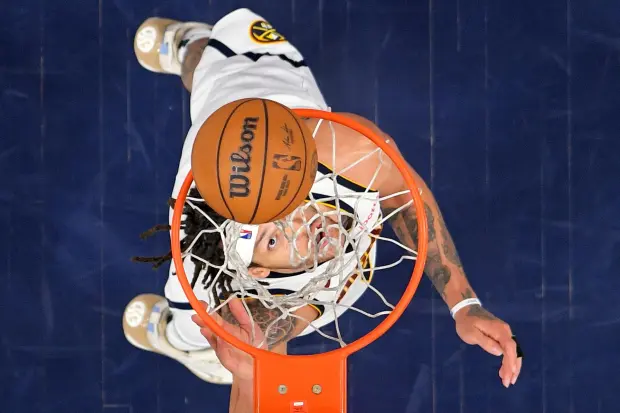
What separates championship-level teams from the rest is often not physical talent alone but the ability to perform when the stakes are highest. The mental demands of playoff basketball, particularly late-game scenarios, elimination pressure, and hostile road environments, have pushed sports psychology from a supplementary service into a core component of postseason preparation.
The science behind pressure management has matured significantly, and the players and the NBA teams that take it most seriously are consistently the ones competing deepest into the postseason.
The Shift From Myth to Measurement in Clutch Performance
For decades, the concept of a “clutch gene” was treated as an innate, unquantifiable trait that a player either had or did not have. That framing is increasingly being replaced by measurable psychological training. Research highlighted by the American Psychological Association confirmed that athletes who practice mindfulness and pressure simulation perform better in late-game scenarios.
A 2024 meta-analysis in Frontiers in Psychology examining mindfulness training interventions across diverse athletic populations found consistent, measurable improvements in performance under competitive stress.
The idea that mental composure under pressure is trained rather than inherited is no longer a fringe position in elite sport, it is the working assumption behind how modern teams build postseason rosters.
Mindfulness as a Structured Performance Intervention
Structured mindfulness intervention has moved well beyond general wellness programming into targeted competitive preparation.
A psychological intervention study involving 512 athletes across individual and team sports found robust improvements in autonomous motivation, marked reductions in both cognitive and somatic anxiety, and significant increases in self-confidence following a structured four-week program combining goal-setting, visualization, mindfulness, and team cohesion exercises.
Research also confirms that mindfulness training improves present-moment awareness and emotional regulation, allowing athletes to respond to competitive stress deliberately rather than reactively. For players entering a Game 7 environment, those distinctions have direct performance consequences.
This growing focus on performance metrics has also influenced how fans analyze games, with many extending their engagement into adjacent areas like predictive modeling, betting discussions, and even the search trends that tend to surface during the postseason, including terms like BetMGM promo.
Stephen Curry and the Measurable Reality of Clutch Production
No active player provides a clearer data set on sustained clutch performance than Stephen Curry of the Golden State Warriors.
In the 2023-24 season, Curry was named the NBA Clutch Player of the Year after leading the league in clutch points with 189, made clutch field goals with 59, and made clutch three-pointers with 32, shooting 45.7% from deep and 49.6% from the field in those situations across 142.9 clutch minutes. The NBA defines clutch time as the final five minutes of games played within a five-point margin.
Curry led a Warriors team that played in 48 clutch games, more than any other franchise that season. His playoff credentials are equally documented: four championships with Golden State, a 2022 Finals MVP award in which he averaged 31.2 points per game against the Boston Celtics across six games, and a career series win rate of 81.2% across 28 playoff series.
On August 30, 2024, he signed a one-year, $62.6 million contract extension with the Warriors, becoming the first NBA player to earn $60 million in a single season, and joined LeBron James and Kevin Durant as the only players in history to accumulate $500 million in career earnings.
Simulating Playoff Conditions During Practice
The most concrete application of sports psychology at the team level involves deliberately replicating the environmental chaos of playoff basketball during training.
Research published in a peer-reviewed sports science journal identified the most common pressure-induction methods used by elite coaches: playing recorded crowd noise during practice sessions, running drills under time constraints that mirror late-game scenarios, having players wear full uniforms and equipment, holding practices at the same time of day as scheduled playoff games, and practicing at the actual match venue when possible.
A separate study confirmed that simulating crowd noise or artificially increasing fatigue during drills adds measurable physical and cognitive demands that directly support competition readiness. Practitioners working with NBA teams during the playoffs have also identified pre-game free throw practice under crowd noise as a valuable test of pressure management skills before tip-off.
Why Elimination Pressure Can Work Against Teams
Research analyzing 1,930 NBA playoff games across 33 seasons found that teams facing elimination were more likely to lose those critical games rather than rise to the occasion, suggesting that the heightened stakes drove uncharacteristic mistakes rather than elevated performance.
When a home team carried a 65% general win probability during the playoffs, that figure dropped to 55% in games that were critical for the home team but not the visiting team.
Conversely, when the game was critical for the visiting team only, the home team’s win probability increased to nearly 74%. These findings directly reinforce why pressure simulation in practice matters. Teams that have rehearsed elimination-level stress are better equipped to resist the anxiety spike that the research consistently identifies as the primary driver of performance decline in critical postseason moments.
The Sports Psychologist as a Postseason Staff Member
Elite NBA organizations now integrate sports psychologists directly into their postseason preparation rather than treating mental performance support as optional. These professionals design the pressure simulation drills referenced in practice research, monitor individual player psychological states across a playoff run, and work with coaching staffs to build team resilience frameworks.
Research on NBA team resilience identifies specific psychosocial strategies coaches can use, including manipulating intra-squad scrimmage scores to simulate large deficits, filming player interactions during high-stress drills, and replaying both positive and negative moments to reinforce desired behavioral patterns.
The structural shift toward embedding mental performance staff alongside strength and medical personnel reflects a broader recognition that psychological preparation is not separate from physical readiness, it is inseparable from it.