
MATTHEW BOWMAN & WAYNE LECHEMINANT – CO-AUTHORS OF THE NEW BOOK, “GAME CHANGERS: AJ DYBANSTA, BYU, AND THE STRUGGLE FOR THE SOUL OF BASKETBALL – EPISODE 1223
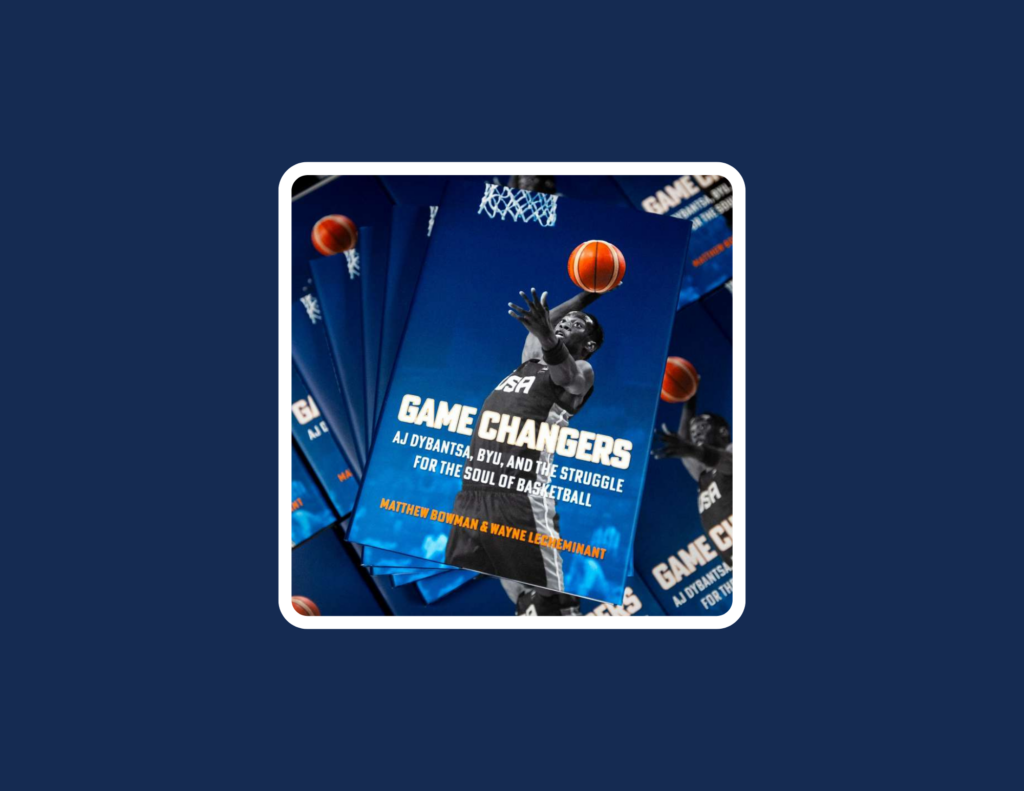

Website – https://www.signaturebooks.com/books/p/game-changers
Email – matthew.bowman@cgu.edu wayne.lecheminant@gmail.com
Twitter/X – @signaturebooks @mbbowman
Instagram – @bedlamingotham/
If you listen to and love the Hoop Heads Podcast, please consider giving us a small tip that will help in our quest to become the #1 basketball coaching podcast.
Matthew Bowman and Wayne LeCheminant are the co-authors of the new book, Game Changers: AJ Dybantsa, BYU, and the Struggle for the Soul of Basketball.
In one of the most unlikely coups in college basketball history, a religious school in Utah signed basketball phenomenon AJ Dybantsa. He will play for Brigham Young University – hardly the sort of basketball powerhouse that typically attracts exceptional and non-Mormon players like him.
Game Changers explores how BYU managed this stunning feat. A year before signing Dybantsa, the university lured coaching star Kevin Young from the NBA to run its basketball program. In the decade before, court rulings and institutional reform put money at the forefront of college sports in ways the American public had never seen. And for generations before that, The Church of Jesus Christ of Latter-day Saints built a theological structure and institutional commitment to basketball that put the sport front and center at BYU.
On this episode Matthew, Wayne, and Mike discuss the recruitment of AJ Dybansta by Brigham Young University and the historical tensions between the moral imperatives of the Church of Jesus Christ of Latter-Day Saints and the commercialization of sports. Through the lens of Dybansta’s journey, the discussion revolves around the evolution of basketball at BYU, which has been significantly shaped by both religious values and the drive for competitive success in a rapidly transforming athletic landscape. The authors provide insights into the implications of this recruitment, particularly in light of the increasing influence of financial considerations in college sports today. Ultimately, the episode serves as an intricate examination of the ongoing struggle for the essence of basketball within the context of institutional and cultural expectations.
Follow us on Twitter and Instagram @hoopheadspod for the latest updates on episodes, guests, and events from the Hoop Heads Pod.
Make sure you’re subscribed to the Hoop Heads Pod on Spotify or wherever you get your podcasts and while you’re there please leave us a 5 star rating and review. Your ratings help your friends and coaching colleagues find the show. If you really love what you’re hearing recommend the Hoop Heads Pod to someone and get them to join you as a part of Hoop Heads Nation.
Listen and learn on this episode of the Hoop Heads Podcast with Matthew Bowman and Wayne LeCheminant, co-authors of the new book, Game Changers: AJ Dybantsa, BYU, and the Struggle for the Soul of Basketball.
What We Discuss with Matthew Bowman & Wayne LeCheminant
- The intricate relationship between basketball, morality, and commercialization, particularly at BYU
- The historical significance of basketball within the Church of Jesus Christ of Latter Day Saints, exploring its cultural impact
- The evolution of college basketball amidst modern challenges such as NIL and the professionalization of college sports
- The recruiting strategies employed by BYU reveal a shift towards embracing non-LDS athletes
- The complexities of identity, family values, and athletic ambition in college sports
- How NIL deals and the transfer portal are reshaping recruitment strategies
- The legacy of Coach Stan Watts, who navigated the complexities of maintaining BYU’s values while competing at a national level
- Maintaining community values and the increasing pressures of professionalization in college sports
- The historical narrative surrounding basketball’s early ties to Christianity reveals a profound intersection of sports and faith, shaping the ethos of the game in the United States
- The recruitment of AJ Dybansta signifies a pivotal shift for BYU basketball, as the program embraces a more competitive stance in the evolving landscape of college athletics
Like this show? Please leave us a review here — even one sentence helps! Consider including your Twitter handle so we can thank you personally!

Give With Hoops is a groundbreaking initiative that fuses basketball analytics with modern sponsorship. Built for teams who see data as opportunity, from AAU programs to college powerhouses.
By tying on-court performance directly to community and sponsor engagement, Give With Hoops help programs raise more while deepening support from those who believe in the game.
Traditional fundraising disconnects donors from the action. Sell candy bars, wash cars, beg for donations, it’s exhausting and ineffective. Players perform better when their stats matter beyond the scoreboard. That’s why Give With Hoops was created.
Give With Hoops connects game performance to community support. Every basket, rebound, and assist becomes a chance to raise funds. Transparent, exciting, and proven to raise 3x more than traditional methods.
Aiming to go D3? The D3 Recruiting Playbook gives you a clear, step-by-step roadmap to the recruiting process – what coaches value, key milestones from early high school through application season, and how to build a target list of schools that fit your needs.
We’ll demystify researching D3 programs and how to stand out without chasing every camp or showcase.
The modules cover things like writing emails to coaches, building an effective highlight tape, using social media well, planning ID camps and visits, and navigating application strategy.
You’ll get templates, checklists, and an outreach plan to communicate confidently, learn how to compare financial packages, and avoid common missteps. By the end, you’ll have a prioritized school list and a decision framework you can use to land your best-fit opportunity.

Your first impression is everything when applying for a new coaching job. A professional coaching portfolio is the tool that highlights your coaching achievements and philosophies and, most of all, helps separate you and your abilities from the other applicants.
The key to landing a new coaching job is to demonstrate to the hiring committee your attention to detail, level of preparedness, and your professionalism. Not only does a coaching portfolio allow you to exhibit these qualities, it also allows you to present your personal philosophies on coaching, leadership, and program development in an organized manner.
The Coaching Portfolio Guide is an instructional, membership-based website that helps you develop a personalized portfolio. Each section of the portfolio guide provides detailed instructions on how to organize your portfolio in a professional manner. The guide also provides sample documents for each section of your portfolio that you can copy, modify, and add to your personal portfolio.

Hey coaches — you’ve got a game plan for your team… but do you have one for your money?
That’s where Wealth4Coaches comes in.
Each week, they deliver simple, no-fluff financial tips made just for coaches. Whether you’re getting paid for camps, training sessions, or a full season—Wealth4Coaches helps you track it, save it, and grow it.
It’s time to stop guessing and start building.
Subscribe now at wealth4coaches.beehiiv.com/subscribe
And follow them on Twitter @Wealth4Coaches for daily money wins.
Your money needs a coach.
Start with Wealth4Coaches.
THANKS, MATTHEW BOWMAN & WAYNE LECHEMINANT
If you enjoyed this episode with Matthew Bowman & Wayne LeCheminant to let them know by clicking on the link below and thanking them via Twitter.
Click here to thank Matthew Bowman & Wayne LeCheminant via Twitter
Click here to let Mike & Jason know about your number one takeaway from this episode!
And if you want us to answer your questions on one of our upcoming weekly NBA episodes, drop us a line at mike@hoopheadspod.com.
TRANSCRIPT FOR MATTHEW BOWMAN & WAYNE LECHEMINANT – CO-AUTHORS OF THE NEW BOOK, “GAME CHANGERS: AJ DYBANSTA, BYU, AND THE STRUGGLE FOR THE SOUL OF BASKETBALL – EPISODE 1223
[00:00:00] Narrator: The Hoop Heads Podcast is brought to you by Head Start Basketball.
[00:00:20] Wayne LeCheminant: They loved Utah. So coming to Utah Prep, I guess in, in some sense, was a no-brainer because they had already decided he was going to go to BYU. So he in fact started BYU early before the fall semester, and he’s had a great time. His parents have told him that he needs to attend class and he seemingly attends class, made the deans list.
So all along the way from his early time in prep school, he describes his own life as I play basketball and I come home. Right? So he’s working out and then coming home and doing homework. And by all measures, that does seem to be what he does. He plays ball, works out and does his.
[00:00:58] Mike Klinzing: Matthew Bowman and Wayne LeCheminant are the co-authors of the new book, Game Changers, AJ Dybansta, BYU, and The Struggle for the Soul of Basketball.
In Game Changers, the authors explore how BYU managed to recruit Dybansta to BYU a year before signing Dybansta the university lured coaching star Kevin Young from the NBA to run its basketball program. And the decade before court rulings and institutional reform put money at the forefront of college sports in ways that the American public had never seen.
And for generations before that the Church of Jesus Christ of Latter Day Saints built a theological structure and institutional commitment to basketball that put the sport front and center at BYU.
Are you or an athlete you know planning to go D3? Check out the D3 recruiting playbook from D3 Direct. Their playbook gives you a clear step-by-step roadmap to the recruiting process. What coaches value key milestones from early high school through application season and how to build a targeted list of schools that fit your needs?
The playbook demystifies researching D3 programs and how to stand out without chasing every camp or showcase the modules cover things like writing emails to coaches, building an effective highlight tape using social media, well planning camps and visits and navigating application strategy. You’ll get templates, checklists, and an outreach plan to communicate confidently.
Learn how to compare financial packages and avoid common missteps. By the end, you’ll have a prioritized school list and a decision framework you can use to land your best fit opportunity. Click on the link in the show notes to get your D3 recruiting playbook from D3 Direct.
[00:02:40] Cat Lutz: Hi, this is Cat Lutz, head of Mental Performance at IMG Academy, and you’re listening to the Hoop Heads podcast.
[00:02:49] Mike Klinzing: Give with Hoops is the first platform turning basketball analytics into fundraising impact. Every stat tells a story and now every story drives sponsorship engagement and team growth programs nationwide are transforming basketball stats into funding power. Learn to use performance data to attract sponsors, engage fans, and raise more with every play.
Give with Hoops will help you raise three times more money for your program as their stat based pledges consistently outperform traditional fundraisers. Visit give with hoops.com/hoop-heads-podcast to learn more and take your fundraising to the next level. Give with Hoops.
Get ready to listen and learn on this episode of The Hoop Heads Podcast with Matthew Bowman and Wayne Laina, co-authors of Game Changers, AJ Dybansta, BYU, and the Struggle for the Soul of Basketball.
Hello and welcome to the Hoop Heads Podcast. It’s Mike Klinzing here without my co-host Jason Sunkle this morning.
But I am pleased to be joined by Matthew Bowman and Wayne LeCheminant, authors of the book, Game Changers, AJ Dybansta, BYU, and the Struggle for the Soul of Basketball. Gentlemen, welcome to the Hoop Heads Pod.
[00:04:09] Matthew Bowman: Hey, thank you for having us.
[00:04:12] Mike Klinzing: Excited to have you guys on. I really enjoyed the opportunity I had this week to read the book, dive into a lot of things that I knew, but also a lot of things that I did not know.
And we’re going to dive into some of those as we get further into the book. So first of all, let’s start with just for our audience, a quick overview synopsis of what the book is about. So I don’t know Matthew Wayne, I don’t know which one of you want to take that first piece of it. And then after that we’ll kind of dive into how you guys got together and the process of writing the book.
[00:04:44] Matthew Bowman: Sure, I can do that. So we initially started with the idea of writing a book about Dybansta and this real burning question, which was why it was Dybansta, of all places, right? He, he is, I think more and more likely going to be the first pick in the, in the draft in June. He was consensus probably one of the best high school players in the country.
And those sorts of players usually end up at Kentucky or Kansas or Duke. They don’t end up at BYU especially given of course that he’s not a member of the LDS church which makes the BU choice even more surprising. Digging into that then opened up all these other interesting questions which gets to the subtitle of the book, right?
The Struggle for the Soul of Basketball. As we begin exploring the history of basketball at BYU, it became really obvious that there has always been, ever since James Naysmith invented this sport 30 odd years ago this real tension between whether or not this sport should be about developing morality and in some cases explicitly religious morality versus using the sport as an engine for commerce and for commercialization and for money and celebrity and all the things it’s coming to now.
So the book really I think focuses on demand. So particularly toward the end but we build up this story leading to him as this real tension this collision between these two forces in the history of the game at BYU in particular, culminating then in the recruitment of Dybansta himself.
[00:06:22] Mike Klinzing: Very well said.
How did you two guys get. To write the book. And then what was the process as co-authors of going back and forth doing the research and just going through the process of writing? So Wayne, why don’t you go ahead and take that one.
[00:06:40] Wayne LeCheminant: Sure. Well serendipity brought us together. We are in the same LDS ward here in Claremont, California.
And so we’ve known each other for quite a few years now. And Matt being the historian he was in, in signature books asked Matt about this project and being busy. Matt was, was absolutely enthusi and also a big basketball fan, as am I. So the idea of writing a book about basketball was great, but the, the sort of the crushing deadline of trying to get a book out in time was I guess daunting.
And so Matt asked if I would join in and helping. And so we decided to write the book together. And in terms of the process, it was basically we kind of just split up the the different areas in which we were going to study or look at the Bon from de Bon set to early church history the use of basketball as a missionary tool for the church, BYU.
And then just went through writing various stages of it and voila, the book came out.
[00:07:39] Mike Klinzing: Let’s start with the history of basketball and the Mormon Church. And what’s really interesting guys, is in the last two or three weeks I’ve read several different books that all introduced me to this theory of muscular Christianity.
And it was something that I honestly had never heard about in relation to the game of basketball. And so I know, Matt, why don’t you walk us through kind of what that meant and how that influenced the early connection between basketball and religion.
[00:08:16] Matthew Bowman: Yeah, you know what really surprised me was just how explicit this is.
Raul, we can talk about this idea. the basketball is supposed to kind of promote good sportsmanship and it’s supposed to make you a better person in addition to kind of developing your physicality. But for James Naysmith who invented it back in 1891, and then a lot of the early promoters of it, these people were like Christian ministers.
A Naysmith was really explicit about the idea, right? That this game is the best sport because it is explicitly designed to promote certain aspects of Christian character. So one thing you may or may not have been familiar with, and your listeners may or not be familiar with, is how controversial football was in the 1890s.
Actually for some of the same reasons, it’s become controversial in the last 15 or so years. The idea that it’s too violent that it hurts people. And of course in the 1890s where people were getting killed playing football, like dozens of people every year are getting crushed and stepped on and limbs broken and all of that.
So basketball was intended to be a more humane alternative to football and an alternative that instead of promoting this kind of like brutish physicality where you just try to hurt other people, basketball is designed to take away the ego to promote sportsmanship, right? Naysmith says and if a quote that we, we cite a lot there’s no place for the ego testing basketball, right?
It’s a place where you’re supposed to sublimate your own sense of yourself, your own ego to helping other people and cooperating with other people. Right. When Na invented the game, there was no such thing as dribbling. The only thing you could do when you got the ball was to pass it. And that was intentional, right?
The idea there is to. Force you to lean on other people, to rely on other people to develop this sort of sense of cooperation. And that then becomes, as the game starts to spread, it spreads primarily through this thing called the Young Men’s Christian Association, which is again, this explicitly Christian organization that is designed in the late 19th, early 20th century to, to try to get kids off the streets.
And they think basketball will bring kids into these churches, into these buildings that churches build. And then we can teach them how to be. How to be good Christian people that is both vigorous, right, athletic, but also not in the football sense, not in the kind of damaging, dangerous, aggressive football sense, rather in the kind of cooperative democratic sense that basketball would teach them.
So it’s really the YMCA that makes the game famous and it spreads it all over America and then into Europe and the LDS church, right? The Mormon church seizes on this too, and they seize on it so much that by the 19 teens and 1920s when the LDS Church begins building new chapels for people to worship in worship, they’re putting basketball courts in every chapter.
Right. Very explicitly embracing this sport and saying, this sport is teaching our young people what we want them to learn. So yeah, the, the, the how explicitly Christian basketball is, and its first 30 years is something that I think really surprise me and I think might surprise a lot of people who read the book.
[00:11:38] Mike Klinzing: I definitely did. There’s no question about that that I knew there was some connection, but I really didn’t have a full understanding before reading the book of, of that, as you said, explicit connection. And then as we move forward and it develops, there becomes this, I’m going to put it in quotes, church ball, right?
And you guys have an excellent story from Fi Bailey of NC State Fame and Utah Jazz Fame, who plays one game of quote church ball and then he has a reaction to it. So I don’t know which one of you want to share that, share that little anecdote from the book, but that was one that I really, I really enjoyed.
Wayne, maybe why don’t you take that one?
[00:12:19] Wayne LeCheminant: Sure. Yeah, church I think the tournament, what was it like 1929, the church developed a a churchwide tournament. I mean, so that’s how quickly basketball had become a thing. And eventually it, it got to the point it wasn’t discontinued until 19 71, 72 and over those many years, the, they would have a various stakes or areas of the church would send their champions along to Utah.
And they would have thousands of people watch the final. And it was broadcast and it was quite the big deal. And so, church ball, as it’s called, as the organized teams in the ward and so forth playing other wards. However when thorough Bailey’s discussion, and it’s something I’ve experienced, Matt has experienced in fact, I went to BYU as an undergraduate, and I have to say the, the, and I played lots of sports you know growing up.
And the only time I was really afraid of playing any sport was. In field playing pickup basketball. It was brutal at times. the fouling and if called a foul people would give you look at you sideways and it was crazy. So Theo Bailey played one game of pickup basketball, and this is after an NBA career, which you figure the people that are on the court in his time Charles Oakley type people, and Patrick Ewing big guys.
And he said that that was it. It was one and done with church ball. Like he wasn’t playing anymore because it was a little aggressive. And it is kind of strange, right, that you have the people say a prayer before a game and then go out and just mall each other. So anyway, but church basketball was that, that just goes to show the popularity of the sport and why the church endorsed it and it helped, as Matt had mentioned earlier, this idea that it was going to bring people together.
It was the way in which early church thinkers like BH Roberts and so forth, thought that it was important to make sure that the soul was in alignment with the body. Right. And the church emphasized things like the word of wisdom and maintaining eating well, not smoking, not using tobacco not drinking.
And so this was, yeah, another piece of that puzzle I think that early church leaders saw and it worked out well. and eventually what we have now are the LDS community are rabid basketball fans or rabid sports fans in general. And and BYU is sort of the pinnacle of what that is for the, for the church and for the many fans throughout the United States.
[00:14:45] Mike Klinzing: And there was a key figure in making BYU basketball sort of beginning to bring it into. Mainstream coach Stan Watts. And I know there again, there was a story in the book that you guys shared about that he was not a regular church goer, and at some point administration came to him and said, we need you to start attending regular church services.
And as I read the book, I just got the sense of him being sort of the bridge to that older mentality, kind of moving things into the semi modern era. So just talk about the legacy of Stan Watts at BYU and what he was able to do to sort of move the basketball program in a way where it became an integral part of the BYU community.
[00:15:36] Matthew Bowman: Yeah. Stan Watts, I think you’re absolutely right to say, right? He, he is a bridge figure. One who I think. Experiences, this tension we’ve been discussing right about kind of basketball is something that’s pretty parochial initially among Mormons, right? It’s something that the church is really sponsoring that’s really spoken about in ways to promote explicitly church ames.
But then at the same time, when San Wats becomes a coach of BYU. 1915, he’s coached for 20 years. That’s the same time the basketball is becoming a massive, big business in the country. Right. The NBA is taking off the NCAA is, is getting built at this time, right? By the time Stan Watts leaves the NCAA tournament’s becoming a big deal.
And Stan Wat this guy who I think is trying to figure out a way to integrate BYU into what’s happening nationally, while at the same time trying to preserve how the leaders of his church are thinking about what basketball is supposed to be, what basketball is for as you say, right. He, he, now, he’s, he is, he’s Mormon through and through, right?
He grows up in a small kind of suburb of Salt Lake City. He goes all of his schooling is in Utah as well. But he is. not uncommon, I think for many members of, of the church in the early 20th century, right? He’s kinda lackadaisical about going to church meetings and stuff like that. And as you say, right after he becomes coach of the, of the BYU men’s basketball team, and particularly after he manages in his first few years as coach, right?
He takes BYU to the NCAA tournament. He wins the NIT tournament outright, which is a kind of an amazing moment and a moment where for the first time, boosters of the BYU team start giving the school money where they, they can buy a new gym, which for a while they were practicing in this really kind of terrible place.
But when that starts happening, when Stan Watts right, really begins to raise the profile of this team. The president of the university comes to him as you say, as you say and says Sam, we really need you to be a really good representative for the church. We need you to be a really good representative for the players whom you are coaching.
And so we need you essentially to code a church more often. And he does right, because he, he sort of perceives that he’s serving in a sense two masters here and that’s tension that really. Him all of his life, but he really, I think, successfully does it. BYU becomes a really modern successful program because of him, he’s eventually inducted into the basketball Hall of Fame.
He’s on the USA basketball selection committee. He, he more or less is one of the fathers of the fast break offenses, and he writes a book about that, the fast break. Right. Which becomes kind of a standard for many coaches. So he does, in a lot of ways, he’s the first kind of figure to take BU basketball into the national realm, but at the same time, right, he is successful kind of managing this sense that basketball is, means something particularly special to Mormons and it need, that needs to be preserved too.
[00:18:44] Mike Klinzing: What did that struggle look like for him and your guys’ research and talking to people that were around and just doing, again, your. Due diligence to, to go back and read about that time, what were some of the internal struggles that he had as a basketball coach and wanting to put a winning team on the floor versus some of the other things that were important to the BYU community and the administration and the church leaders.
There was sort of this dichotomy between the two. What were some of the internal struggles that he was dealing with that you guys read about and researched?
[00:19:26] Wayne LeCheminant: Well,
[00:19:26] Matthew Bowman: well, I think the most pressing of them, oh, I’m sorry Wayne, let me, I’ll just say this. No, go ahead and then you can follow up. Yes. The one that I think certainly left the biggest mark on him, and unfortunately in a negative way is, is the struggle of a race.
Right, because for a long time, until 1978, really from the mid 19th century through 1978 the church restricted the membership of black people. Black people could not hold priestly office in the church. They couldn’t participate in some of the church’s most important rituals in, in in the church’s temples.
And that really became pressing by the late 1960s for a couple of reasons. Right. One reason is BYU was just not. Attracting black players for that reason, but also increasingly other teams in the era of the Black Freedom Movement and the Civil Rights Movement. Increasingly black players, other teams were boycotting by u and didn’t want to play by.
And that really, really frustrated Watts. And a couple of ways, I think the first one was that Watts was very much kind of a person of his time. He was kind of a, an instinctively conservative white person. He thought the kind of demonstrations and the protests that were being levied at BYU were were really unfair.
He, he raged about them. He complained a lot. He said these things are, are certainly he thought organized by Marxist agitators and could not actually reflect the real feelings of black people. And of course he was dead wrong about that. But after. This terrible 1970 season. He, he had, when when nearly every time BYU played a road game, they were faced with protests and, you know protestors throwing eggs on the floor.
One point a Molotov cocktail was thrown onto the floor, A BYU game. After that Watts did. Start to take the first steps towards recruiting black players to play for the by U team. And that meant often recruiting black players who were not lds which was a real big step forward for BYU kind of, and and not on an controversial one, that same university president who had told Watts, you need to start going to church more, right?
Was resisted to this sort of thing because he thought of basketball as something that, that meant something to the Mormon community and he wanted to keep it into the Mormon community. So when Watts begins pushing to recruit non LDS players and black players too, he faced some pushback. Alright. And this is, I think a dichotomy that BYU has really struggled with.
Ever since Stan Watts, this issue of race is still really, really alive. And it’s something of course that eventually leads himself. But Wayne, maybe you had something to add to that.
[00:22:05] Wayne LeCheminant: Yeah, yeah. No, no. That, that was very well said. And that I was going to talk about the issue of race. But on, on, to add to what Matt said there as well, there was also pushback on the idea of scholarships, right?
For these basketball players. And that was, so Stan had to face two obstacles or maybe three. One is his own sort of prejudices that he had to overcome which he did, right, in the sense that he started recruiting black players. Two was the church’s own stance on race and what that might mean to recruiting people.
And then three was promoting the basketball program to be competitive with other programs. you needed to offer scholarships. And Wilkinson, the president time was, was not very enthusiastic about that idea because as Matt had just said basketball was supposed to be something different, right?
It was supposed to promote this sort of communal commitment to bettering ourselves as an individuals so we can help others. And the idea that somehow we could, and also the idea of amateurism, right? That basketball and college programs, we’re supposed be amateurs. You, you did it because you loved it and because you wanted to compete.
And that that said something about the individual rather than you’re gaining something from it. And it’s, it’s almost hard to imagine in, in this day and age, the idea that there’d be pushback on the idea that we’re going to just have people play for free and we’re going to make money off them and so forth.
And then we’re going to push the burden back on them to be selfless. And and so eventually, you know coach Watts got it to where they could start offering scholarships. So things moved very slowly as they often do at BYU. But it was an interesting fight and one that has led us to, I meand obviously now the, the culture of college basketball we’ve seen seismic changes in how this all works out.
And that’s part of the story of, as Matt said, the, the struggle, right? There’s still plenty of LDS people in the LDS community. Who think that BYU sports is supposed to be something beyond just winning and beyond just making money and so forth. And then there are plenty of BYU boosters who want BYU to go through the stratosphere and dominate, and they’re willing to spend whatever they have to spend to get that.
[00:24:13] Mike Klinzing: Well, in so many ways, and we’ll dive into this in a few minutes, but college basketball in so many ways is unrecognizable today, I’m sure, to Stan Watt, I’m sure, to a lot of the figures in the book that you guys researched and wrote about that to see what we’re seeing in college basketball in so many ways for those of us that have lived through the transition.
Again, when you look back at some of the quote college basketball scandals of the last 30 years, and you think about, I always just laugh at the Chris Mills money in the envelope at Kentucky, and it was like $700. And you think about what it, I mean, that was probably one of the biggest scandals in terms of illegal recruiting in, in the history of college basketball.
And now we look at the dollar figures that are thrown around with nobody even bats an eye at them. It’s kind of crazy where we’ve, where we’ve gotten to, but let’s get to that in a minute.
Coaches, you’ve got a game plan for your team, but do you have one for your money? That’s where Wealth4Coaches comes in. Each week, we’ll deliver simple, no fluff financial tips made just for coaches. Whether you’re getting paid for camps, training sessions, or a full season, Wealth4Coaches helps you track it, save it, and grow it.
It’s time to stop guessing and start building. Subscribe now at Wealth4Coaches.beehive.com/subscribe and follow us on Twitter at Wealth4Coaches for daily money wins. Your money needs a coach. Start with Wealth4Coaches.
The next thing I’d like to have you guys just hit on briefly is the two probably prior to AJ de Bonta, the two most famous athletes as college basketball players to pass through BYU, Danny Ange and Jim Fredette. So, in the course of doing your research on those two guys, was there anybody that you talked to that was the best source of information or good stories or anecdotes?
Who were the people that you talked to to get those stories onto the page? About, about Angel and for that,
[00:26:33] Matthew Bowman: you know for an. Oddly enough the best source that we could find, I think was a journalist who covered the Boston Celtics. Which of course which is a really interesting perspective, right?
Because this is someone who cares primarily about age as a Celtic or I, who cares about the Celtic teams. And it probably would not be, have done much with Ange, if not for the fact that he spent his MBA career there. But his perspective on what Angel was doing at BYU and how then he, he saw angel’s past at BYU as leading eventually to him as a Celtic.
And I think that really shaped how we wrote about ends, right? Because in some ways. Ange struggled early on as a Celtic right. In this really interesting way that I think based on our conversation already, we can really relate to, which is a, was a big star at BYU, right? He is the son around whom the team orbit with the possible exception of, of Kresser.
Koge was the best player who would ever played at BY to that point, right? But then he lands on the Celtics and this is when like Kevin McHale is there and Larry Bird is there and all, and all these kinda legends, right? And Eng has to find a way to adapt to become a kind of supporting player to these other teammates.
And that that is how I think the Celtics, excuse me, the Celtic media saw him. And that really, I think that, that played so nicely, I think, into this overall argument that we’re looking at in the book, which is the tension, been doing these two ways of thinking about basketball put in one way that tension is should basketball be, what it so often is on social media or on, you know on perhaps inside the NBA and ESPN, which is to say all about dunks and stars and people making huge names for themselves, or should basketball be about teams as opposed to people.
And Angel’s experience in colleges then in the pros, I think really embodies someone who was able to move back and forth between those two ways of thinking about it. As for Jimmer who was, I think more than anybody else, I think and the person who helped us think about Jimmer is a guy named Jesse Hyde.
Who wrote this really extraordinary long profile of Jimmer after everything, when Jimmer ends up in China and he is a he, he’s blowing the doors off of China. Right. But of course. That is far from where he thought his career might end up. It’s far from where he was when he was, he was just blowing up March Madness when he, when he won the, the Wooden award and sort of took college basketball by storm for about a year and a half there.
Right. It was all about Jim Ft. And of course, far from what he hoped his MBA career would be like. And that was really poignant too, I think, because you, you see, I think well the way we sort of frame it in the book right, is that Jim Jimmer is steered by the media, by the nature of college basketball in the, in the early portion of this century towards being this massive star.
But perhaps, ultimately, right? That was, that’s not. Who he should have been if he was going to make a career in professional basketball he was not going to be a Luka don. Right? He was not going to be somebody like that. But that’s what he set up to be. And that was, I think, in some ways unfair to him.
And Hyde, I think the kind of poignancy of Hyde’s story and it’s really just kind of heartbreaking image of, of Jim or like letting, laying out this little naivity all by himself in this apartment in China, in Christmas when all of his family is back in the United States. Right.
Really kind of captures, I think the, the, the problems that this deep tension in basketball can inflict on just individual people. Right. People like Jim or,
[00:30:34] Wayne LeCheminant: yeah. And if I can add just to something Matt said, I I think one of the, the, the things that’s important about going through Angel and Fort.
And their careers at BU is, is in many ways that that was, I think how the BYU program saw itself. It’s like they would’ve to hope that there would be the diamond in the rough among the Mormon community that would want to go to BYU. And if they were lucky enough to that there was another angel or for dead out there that they would, because BYU is the churches flag flagship college, that they would go there.
And what Banza has done and what with Kevin Young and the is, has dramatically shifted that I don’t think anybody in the I and maybe it’s helpful thinking, but I don’t think anybody in the BYU community now thinks we just have to wait for another LDS player to come along and be dominant. We can in fact start getting the AJ Debas out there.
And so I have no doubt that that’s what, and well there is no doubt Kevin Young has already stated like, that is not what we’re doing. We are going to go get the best guys that we can possibly get. And that means he’s going to go. All the blue athletes that he can find. And so, so for that names definitely stand for a time of when u basketball thought about itself differently than it does in this current manifestation.
[00:31:51] Mike Klinzing: So let me piggyback off that answer, Wayne, and ask you when NIL starts to come down the pike, and obviously when it first appears, nobody knows for sure what that’s going to look like. Clearly. Initially the intent was that players could benefit when their name, image, or likeness was being used to sell product or to be able to maybe get a piece of some of the money from the NCAA tournament on the basketball side or the bowl system, or the national championship playoffs and the football side.
Nobody saw it. Evolving into almost where it’s to the point that players are being paid a quote salary, even though that’s not really what it’s called, but in so many ways, that’s kind of what it looks like. But in your mind, and after having talked to people and been around the BYU community, as this thing started to shift, what were some of the conversations in and amongst athletic administration, university president, boosters, how did those conversations start to evolve in terms of, hey, maybe we want to go in this current direction with hiring Kevin Young, with starting to recruit the best players in the country.
What did you guys find out about what those conversations maybe were like behind the scenes in terms of, again, that dichotomy that we talked about earlier between the moral purpose of basketball kind of historically and this new modern era of college basketball?
[00:33:29] Wayne LeCheminant: It’s, it, well, one we know that there’s a couple of factors in play here, and obviously we go through some of the lawsuits that were critical to the changing of the landscape.
But perhaps the most important thing is that the courts seem to find the idea that the ncaa, which they call the monopoly undoubtedly was using athletes to make a bunch of money that they were not sharing with. And the, and the NCAA is, we outlined in the book, worked very hard to make sure that the athletes were not student workers, or that they were not considered workers.
So they would be free from liability if they got hurt and that they wouldn’t be entitled to pay. And the courts found that to be at odds with the law. And so that just opened the floodgates. And so what we have now is this really rapidly evolving system in which. Players can receive money from a fund, right?
That schools are able to get together from boosters and they can also do endorsement deals, which the Banza, for example, has major endorsement deals with Red Bull and Nike and other entities. But in terms of how Kevin Young fits into this, that is an interesting thing because one, I don’t think Bo U had planned on hiring Kevin Young, right?
Because they the previous coach hope suddenly left because he got a a chance to go back to his alma mater Kentucky, and it is pretty amazing how quickly they circled around the idea of getting Kevin Young, who was a up and coming NBA coach, and was likely to, at some point become a head coach of some NBA team.
He was well liked. He was working for the Phoenix sons at the time. He was well liked by superstars like Kevin Durant, and many people think very highly of his coaching skills. So it seemed inevitable that he was going to end up coaching somewhere in the NB. The LDS church came calling to fill the spot for BYU, Kevin Young.
He, he’s made it quite clear to the press and to the players and to the community that he was going to mold B’S basketball program into an BA pipeline, as he calls it. And and the intention of that is to get more players like Banza and to make them enthusiastic about coming to BYU. And he has embraced full on the changes that have happened in the NCAA basketball landscape.
[00:35:46] Mike Klinzing: So obviously Kevin Young is a huge piece of what takes BYU into this modern era of college basketball. But there’s also some unique things about AJ Bansta and his family and sort of his background and ending up at a prep school in Utah that make him. Uniquely positioned to sort of be the first guy who fits that we’re recruiting the best players in the country, we’re going to try to get those guys to come to BYU.
So what was it about Deon’s family background and sort of his basketball journey that made it clear that he could potentially be that first guy to sort of, I don’t know if break the barrier, but, but kind of be this first player that fits this new mold of BYU basketball?
[00:36:38] Matthew Bowman: Well, I will say to that we, and this is someone I think we maybe gave a little bit short shrift too, but technically speaking, Yor Demmon was the first guy because he is also not LDS, he also was recruited by Kevin Young and played and then became a lottery pick in the BA.
So he is this whole kind of, that Deban is talking about, but I think he’s useful to bring up because there are real similarities between him and dea, which are, which are really useful. DESA said when he was introduced to BYU, right? He said, I love it here. And he uses his phrase, I’m a big family guy.
And that’s what all the BYU people want to hear, right? The sense that he is not a kid who’s going to go out and party. He’s a kid who values stability, values, family values, going to, these traditional values of BYU sort of prides itself on putting out there. And I think that’s genuinely true, right?
It’s significant. I think that. Before AJ himself got to BYU campus, his parents went first and his parents toured to the place first and his parents got the first pitch right? They’re really deeply involved in his life and in his career. And in fact, his family has moved to Provo and they’re all living there together, with the exception of one sister who’s in college elsewhere, right?
All of this, all of this is genuine. I think AJ Deonte is just like Yemen was because Yemen is, he’s not LDS, right? He’s not a Mormon, but he is an Eastern Orthodox and he takes his, his faith pretty seriously too. So I think there is this interesting thing happening, right where BYU is targeting these sorts of players who even though they might not be.
Members of the church, CREs Latter Saints, right? They are, they are in a lot of ways, kind of culturally sympathetic to the sorts of values the BYU Pride itself has. And that, that is, I should say, right, that is really threading a needle for BYU is trying to find these players who are going to be competed for by all the, the really big powerhouses of NCAA basketball, but who also kind of fit this particular model.
And I should say also, even though that’s true of Devonta, right? I think all of that is genuine. When he says, I like what’s happening at BYU and all that, he’s raised, I believe him, but of course he also. B, because he thought BYU would be a good launching pad to the NB. And that I think was almost entirely Kevin Young’s doing.
I think if Kevin Young were not the coach, if Mark Pope had still been the coach Mark Pope, who did not have the NBA background, the NBA connections, all of these things that Kevin Young brought to the table, I don’t think Deba would be at B right now.
[00:39:18] Mike Klinzing: Frank, can you talk a little bit about his prep school journey and sort of his high school experience?
And again, just how that familiarity with the state of Utah and just the connection there that led him to be able to connect with BYU and ultimately with Kevin Young.
[00:39:35] Wayne LeCheminant: Yeah. He started he’s from Massachusetts and he started off school there and was already sort of a, a wonder kid as a a junior high school athlete.
And but perhaps it’s more telling than, his ability on the court is how much his coaches loved him and how much school administrators all had great things to say about him. he’s polite. Does his homework, does he caused as far as we find no trouble. And his father who is from Africa he’d taken AJ to Africa to go visit family.
His mom is from Jamaica and he identifies with both of those cultural communities. And so he already, even as a very young man before he moved on to later California to attend prep school for a year, and then to Utah Prep he already had sort of a wide world vision of what, how he fit into it, what his responsibilities were as a, as a, as a person in the planet.
I was supposed to help other people. And he, he started, he’s already started doing that. And then eventually he, after playing a year in California, he comes to Utah Prep. And that’s likely because his parents were so impressed with BYU there. His they also had a, a deal worked out at Utah Prep with his dad, ACE, who works as I, agent is the wrong word, because they, they don’t like the word agent, but he’s very close to this dad and his mom, and they work out his business arrangements and his endorsement deals and so forth.
But they loved Utah. So coming to Utah Prep, I guess in, in some sense, was a, a no brainer because they had already decided he was going to go to BYU. And so, and he in fact started BYU early you know before the fall semester. And he’s had a great time. His parents have told him that he needs to attend class and he seemingly attends class, made the deans list.
And so all along the way from his early time in prep schools again, it, it is, and he describes his own life as I play basketball and I come. So he’s working out and then coming home and doing homework and and by all measures, that does seem to be what he does is he plays ball, works out and does his homework.
And at BYU there hasn’t been even the hint of a scandal. all reports are that the same young man who started down this path when you know that probably it seems like around 13 or 14, he was starting to realize the sort of skills he is had. And by the way, he has international experience as well.
He was on the under 16 team that won the World Championships. The under he, he’s been all around and done everything and it, it is kind of strange, right, that he has so much worldly experience and experience in basketball. He is he is got Shaquille O’Neal’s phone number on his phone and Kevin Durant and so forth, and yet he’s still that same kid that just wants to, to do the best he can, it seems.
And you this and this book is not a hagiography. AJ by any means. But it does seem that at least in his case, he’s what they’re selling, which is often very unusual for an athlete.
[00:42:39] Mike Klinzing: That is very true. That oftentimes right, the, the picture that is painted isn’t the one that becomes reality.
So from your guys’ perspective, watching this season play out, and obviously he’s had a tremendous amount of success on the floor right? In, in every way, shape or form, I would say he’s lived up to the hype that he came into BYU with as a player. He has certainly lived up to that. What’s been the perception of him and just the whole experience in the BYU community that you guys have seen?
How has the, again, going back to that word of the dichotomy, how has this all worked from that standpoint of. It just being accepted, it being glamorized it being what we thought it was going to be. What’s the perception been like on the BYU campus?
[00:43:34] Matthew Bowman: there’s a couple of communities there and I think the first one I want to mention is the royal blue.
The royal blue is BY u’s NIL collective. Right? And these are the donors who are giving money. And that money then gets bundled into contracts for players and coaches and so on and so forth. And they’re thrilled, right? BYU has very often had a really, really vigorous booster community. There, it’s been giving, pouring a lot of money into their football program for a long, long time.
And now I think they’re stepping up and giving that money to the basketball program. Of course, ESPN has reported that the only NIL collective as big as BYU, as Kentucky’s right. So, and I think a lot of people may be surprised to learn, right? That this school that’s often been kind of mid-tier athletically has this really, really passionate donor base and donors who will give money for these things and who want, they want.
Teams that will compete nationally. They want teams that will be on the biggest stages because I think many of them, and most of these boosters, the vast majority of them are members of the church. They think that this success will further the kind of image of the church, right. And build up a kind of mainstreaming of Mormonism in the United States.
And in fact in the book, we, we mentioned that Bronco Mendenhall, who was a past football coach at BYU, was told this by one of the church’s highest leaders that the success of your teams reflects on our faith right. And helps to mainstream our faith. So that I think is there’s a lot of, I think positivity around that and a lot of sense, I think among in the Mormon community generally that the, this success is reflecting well on the community in the church generally.
Wayne, did you want to add to that?
[00:45:27] Wayne LeCheminant: Yeah, I think that the, the church I, the, the general fan base absolutely is in love with the progress, right? The, and it’s great having BYU being mentioned. Right now, I think they’re ranked 19th and I, the expectations, I mean, among fans you would think that they’re going to win the NCAA tournament no problem.
But I think making the Elite Eight again, would be a, a significant step forward may be a huge success for them. Making the Final Four might be a little farfetched, especially after Saunders injury. But however, there is still, I think there is going to be some tension, right?
About all, and it, and this is something that Matt and I allude to, and this is nothing to do with Banza, but this has to do with the, the, the foundation that’s being laid here about the idea of the NIL, how we’re going to pay players. In. And now with the way the transfer portal works is that everybody can transfer next year and go play somewhere else so they can accept offers from other schools.
So the will be gone. But there are some other players who might be good and they maybe UCLA offers something or a Kentucky and now you’ve have to manage the team like a professional team. And that seems a little odd, right? For a, a church school, the idea that we’re going to go out and make pitches to people, like, oh, we’ll give you this much and we’ll give you that much.
And then something else that the, the LDS Church really wants is sort of equality among the various students, right? BYU is not, I don’t believe as an alumnus there it tries not to be a sort of elitist school, even though Cougar fans like to think of themselves as better than most people.
But, the but the idea now that all this money is start going to start being funneled to football and to min basketball, and at some point it will be interesting to see if there will be pushback as all the other sports are ultimately ignored. a and by the way, that’s happening across all the right, right in the United States.
So BU won’t be different in that regard, but it’ll be interesting to see like what the LDS community, which is the most important community to BYU, what they think about this sort of the rich people giving to the royal blue and then everybody else women’s softball or swimming and track or whatever not getting equal play, but that’s a, a problem for the future.
[00:47:50] Mike Klinzing: Yeah. And that’s a problem everywhere. I don’t think there’s any doubt that we are heading for a situation where the sports that are not revenue generating are going to have to face some type of reckoning within. College administrations in terms of how do we figure out how to fund those sports adequately?
How do we make sure that those athletes have access to some of those same perks and things that men’s college basketball and football have? And again, unfortunately in, in past pastime, sometimes those sports have been eliminated when budgets haven’t allowed for compliance with Title ix. And there’s just a, there’s a million different issues that are potentially out there.
And then when you go to BYU, you also have, again, the religious aspect of it that throws one more thing in there that people have to take into account. And so there’s just a whole lot that is going to shake out in college sports. It will be very interesting to see 10 years from now what the college sports landscape looks like, and in this particular case, how BYU eventually fits into that.
So I want to ask you guys one more. Question just related to the scope of the book and the project of writing it. When you guys think about the different aspects of this story, whether it’s the history of basketball and the Mormon Church, whether it’s the history of the NCAA and why it, what it was intended for, and how it’s morphed now into this NIL era.
When you think about the history of specifically BYU basketball, then you have the the Bansta family and sort of AJ’s trajectory, which one of those particular storylines was the most enlightening for you? Maybe the one that you knew the least about? And I’ll let you each answer that. Maybe just gimme a quick 30 seconds, a minute on what was the most interesting for each of you.
Something that you learned that maybe you didn’t know prior to doing the research for the book.
[00:49:51] Wayne LeCheminant: Matt, you want to go?
[00:49:54] Matthew Bowman: Sure. You throw me under the bus?
[00:49:56] Wayne LeCheminant: Yeah.
[00:49:57] Matthew Bowman: Yeah. I think the thing I learned, well, and I mentioned earlier, right? That it really shocked me how integral. Basketball was to American Christianity in the early 20th century, but I already discussed that, so I’ll, I’ll talk about something else.
And the other thing I think that I just found kind of fascinating and that I had heard about somewhat because I lived in Virginia for quite a while. I mean, I knew something about Oak Hill Academy from there, but diving into these so-called basketball factories, these prep schools where of course the events have bounces between a couple of these on Oak Hill Academy in Virginia is maybe the best known and the oldest, and then the one that has had attracted the most media attention but that those, these schools, right, that are really designed to funnel these young people into professional careers in sports I found really interesting because they speak to, I think this sort of ongoing problem I think we in the United States have when we talk about sports, which is to say what are they really for?
Are they a legitimate career path? Right? These, these academies get attacked a lot because they seem kind of unrealistic. there’s only, there’s only 450 open bank sheets in the NBA, right? And then it is more exclusive than becoming a college professor, getting elected to Congress.
And thinking then about the morality of the economics around this thing and to what we’re devoting so much money to these academies. These academies are paying so much money. they’re, they are, they are trying to attract students, right? They’re paying students because then they get more money from Nike or from Adidas or from these shoe companies that they are contracting with, right?
It shows, I think, how, what we mentioned a moment ago, the professionalization of basketball is moving to younger and younger and younger ages. There are 13 and 14 year olds right now who are at these schools or who might even be on the a a U circuit, right? Who are getting these NIL deals. And this is all just kind of happening without us having a national conversation about is this something that we want?
Those were all the questions I, as a basketball fan had kind of been vaguely aware of, but had never really thought about as deeply as this project helped me to think about them.
[00:52:11] Mike Klinzing: That’s well said. And it’s an issue that I think whenever I talk to coaches, everybody has those same, I think, questions and concerns.
And as a parent of kids who play basketball, that’s a question that I ask myself all the time, ultimately. Right. What, what is it for? And what we’re doing. And I think it’s a, it’s a question that we’re going to continue to have to ask as we move forward. Wayne, how about you?
[00:52:36] Wayne LeCheminant: Mine is the thing that I interested at least to see how things will go forward.
And it’s related to Matt’s question is how the church ends up dealing with this. Right. I mean, thus far the church seems to be fairly silent on letting this all move forward. They all knew the, the apostles are, are involved with hiring any BYU coach, especially for something as a sport as important as basketball.
I and Kevin Young as a devout L Ds member, so I have no doubt that he told them like, this is my plan for basketball. So they seem to be on board with the professionalization of BYU basketball. However, it requires that entire foundation that Matt just outlined. And the, the church is not adverse to making money into letting capitalism seemingly have its way with the world.
But at some point it seems like there will be some kind of tension perhaps. I’m interested to see between the church’s values of each person is individually special to to God that everybody deserves to have the kind of life in which you can flourish and live. And even yet we are funneling so much money collectively as a, as a I guess sports community and as fans and.
Institutionally through schools, institution that are we now forgetting some of the other aspects of the community that require just as much, if not more care. And one of the great things about, at least in my opinion, the LDS Church, is that it, it does try to preach this idea of we need to care for everyone.
But it will be interesting to see how that plays out. As I have, I believe that the at least from the stuff that we put in this book and the research done for this, is that it’s only going to get bigger, the money and the madness and trying to get just individual players as. That was the most important thing to an institution that has thousands of students and that has been around for over a hundred years.
It, it, so this is sort of the tension that Matt and I tried to tease out when this, the struggle for the soul of basketball is where does this all play? Because there’s so many competing as a BYU alumnus, sure. I want BYU to be do great in its sports. Also as a, you know as a BYO alumnus and as a member of the church, I also want us to show that we care for everyone equally.
And so it’ll be interesting to see how that plays out. And that’s what I think the, the Bon ssa, that’s why he is, I mean, I don’t want to put him on a pedestal, but he is sort of the perfect kid for this. He’s selfless, he’s humble, and he’s also like other worldly talented. He could probably be play, he could pick up his bag and go play the NBA tonight, and he would probably do just fine he is great.
[00:55:20] Mike Klinzing: Yep. I would agree. I would agree with that. I think it looks as you said earlier, Matt, it looks like he’s probably going to be the number one pick as long as people can’t figure out what’s going on with Darren Peterson’s injuries or non injuries or whatever. What, whatever’s happening there. I’m not, I’m not a hundred percent sure, but looking more and more like, I’m is going to be the guy.
I’m getting
[00:55:37] Matthew Bowman: flashbacks with him.
[00:55:39] Mike Klinzing: Right, exactly. Yeah. There’s some, there’s definitely some, something’s weird is happening. I don’t know exactly what it is yet, but it’s definitely, it’s definitely strange. Well, guys, first of all, I just want to say thank you for taking the time outta your schedule to jump on with me.
The book is extremely well done for anybody who’s out there listening. If you enjoy college basketball, if you enjoy an interesting story that has a lot of different angles to it this book is definitely for you. So before we get out, guys, I want to give you a chance, share how people can connect with the two of you.
Find out more about the book. Obviously they can get it on Amazon, but just. Give us give us the give us the sales pitch again and let people know how they can reach out to you guys and find out more.
[00:56:22] Matthew Bowman: Yeah, the book is all over the place. You can find it in bookstores, you can find it on Amazon.
You can buy an ebook if you like, or you can buy an ebook and a hard copy. We’d really love it if you did that. You can find me, actually, I teach at Claremont Graduate University, so my faculty webpage is there, and my email and phone number on that if you want to reach out, Wayne.
[00:56:44] Wayne LeCheminant: Yeah, I am. Matt and I are not the best social media people, but we, I’m on Instagram and Facebook and also just since Matt mentioned the ebook, but we should mention that Theo Bailey does a narration for the audio book and he sounds great. So if you’re a Utah Jazz fan, which Matt is it’s a double bonus, right?
You get to hear Thurl Bailey read the book.
[00:57:07] Mike Klinzing: Very cool. I was not aware of that and that’s a cool thing. I actually met Thurl Bailey once at a junior NBA event in Chicago and stood at a little event and probably talked to him for, I don’t know, 15 or 20 minutes. And he told me a great story about their NC State national Championship in 1983.
So again, Thurl was more than gracious to talk to an unknown guy that just sidled up to him at an event. And he spent 10 or 15 minutes talking to me. So as I’m sure you guys well know with your relationship with him really a good guy. So again, thank you to the two of you for taking the time to jump on with us.
Again, if you’re a part of our audience, please go out and get the book. Really well done. And again, thank you guys and we’ll catch everybody else on our next episode. Thanks.
Your first impression is everything when applying for a new coaching job. A professional coaching portfolio is the tool that highlights your coaching achievements and philosophies, and most of all helps separate you and your abilities from the other applicants. The Coaching Portfolio Guide is an instructional membership based website that helps you develop a personalized portfolio.
Each section of the portfolio guide provides detailed instructions on how to organize your portfolio in a professional manner. The guide also provides sample documents for each section of your portfolio that you can copy, modify, and add to your personal portfolio. As a Hoop Heads Pod listener, you can get your coaching portfolio guide for just $25.
Visit coaching portfolio guide.com/hoopheads to learn more.
[00:58:44] Narrator: Thanks for listening to the Hoop Heads Podcast presented by Head Start Basketball.