CHRIS BOUCHER – AUTHOR OF THE NEW BOOK, HARRY “BUCKY” LEW – A BIOGRAPHY OF BASKETBALL’S FIRST BLACK PROFESSIONAL – EPISODE 1211


Website – https://chrisboucher.net/
Buy the Book – https://mcfarlandbooks.com/product/Harry-Bucky-Lew/
Email – chris@chrisboucher.net
LinkedIn – https://www.linkedin.com/in/chrispboucher/
If you listen to and love the Hoop Heads Podcast, please consider giving us a small tip that will help in our quest to become the #1 basketball coaching podcast.
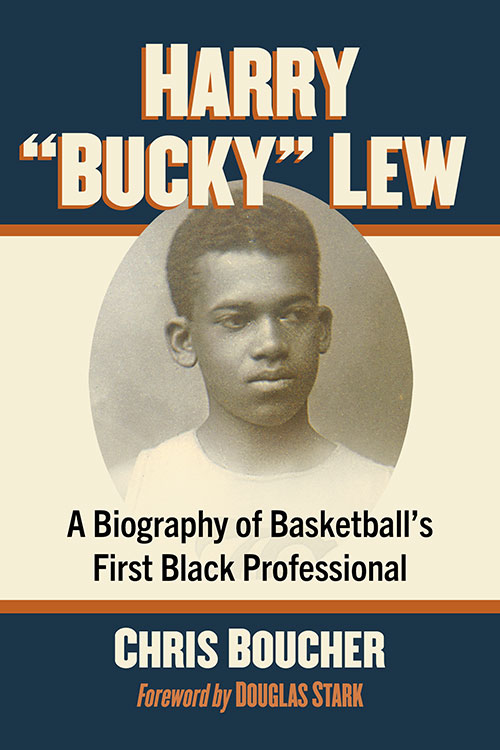
Chris Boucher is the author of the new book, “Harry “Bucky” Lew: A Biography of Basketball’s First Black Professional” The book tells the story of how Harry “Bucky” Lew leapt over pro basketball’s color wall in 1902 and continued to integrate every single role in the game over the next 25 years. He was the first Black player, coach, manager, referee, and franchise owner in otherwise white leagues. His accomplishments were well documented in the newspapers of his day, but he has largely been forgotten, despite his assist to the Dodgers in finding a home for their first Black players in the United States and the full integration of all major league sports that soon followed.
Chris is a lifelong basketball fan and resident of Lowell, Massachusetts and hadn’t heard of Bucky Lew until he started researching the history of basketball in Lowell. He was shocked to learn all that Lew had accomplished and now hopes to get him his proper due.
On this episode Mike & Chris discuss the remarkable life of Harry “Bucky” Lew, the first black professional basketball player. Lew’s significant contributions to the sport include breaking color barriers as a player, coach, manager, referee, and franchise owner within predominantly white leagues from 1902 onward. The discussion highlights the historical context of Lew’s achievements, emphasizing his role in advancing racial integration in professional basketball and his pivotal influence on subsequent generations of athletes. Boucher articulates the challenges Lew faced, including racial discrimination and physical confrontations during games, shedding light on a largely forgotten yet crucial chapter in basketball history. As we explore Lew’s legacy, we aim to bring greater awareness to his story and the profound impact he had on the evolution of the sport.
Follow us on Twitter and Instagram @hoopheadspod for the latest updates on episodes, guests, and events from the Hoop Heads Pod.
Make sure you’re subscribed to the Hoop Heads Pod on Spotify or wherever you get your podcasts and while you’re there please leave us a 5 star rating and review. Your ratings help your friends and coaching colleagues find the show. If you really love what you’re hearing recommend the Hoop Heads Pod to someone and get them to join you as a part of Hoop Heads Nation.
Get educated as you listen to this episode with Chris Boucher, author of the new book, Harry “Bucky” Lew: A Biography of Basketball’s First Black Professional.
What We Discuss with Chris Boucher
- Bucky Lew’s contributions to integrating professional basketball in a variety of roles
- How Lew integrated every conceivable role in basketball, including player, coach, and franchise owner over 25 years
- Why Lew’s significant contributions were largely forgotten, despite his influence on the integration of major league sports in America
- Gambling played a substantial role in the early professional basketball leagues, influencing fan engagement and the dynamics of the games during Lew’s era
- Discovering Lew’s story while researching basketball history in Lowell, Massachusetts, where both men shared their roots
- Lew’s legacy extends beyond basketball as he indirectly assisted the Dodgers in integrating their minor league team, paving the way for future athletes
- The importance of understanding the historical context of basketball, particularly the racial dynamics that influenced Lew’s career and the sport’s evolution over time
- The stylistic differences between early basketball and the basketball we see today
Like this show? Please leave us a review here — even one sentence helps! Consider including your Twitter handle so we can thank you personally!

We’re excited to partner with Dr. Dish, the world’s best shooting machine! Mention the Hoop Heads Podcast when you place your order and get $300 off a brand new state of the art Dr. Dish Shooting Machine!

Give With Hoops is a groundbreaking initiative that fuses basketball analytics with modern sponsorship. Built for teams who see data as opportunity, from AAU programs to college powerhouses.
By tying on-court performance directly to community and sponsor engagement, Give With Hoops help programs raise more while deepening support from those who believe in the game.
Traditional fundraising disconnects donors from the action. Sell candy bars, wash cars, beg for donations, it’s exhausting and ineffective. Players perform better when their stats matter beyond the scoreboard. That’s why Give With Hoops was created.
Give With Hoops connects game performance to community support. Every basket, rebound, and assist becomes a chance to raise funds. Transparent, exciting, and proven to raise 3x more than traditional methods.
Aiming to go D3? The D3 Recruiting Playbook gives you a clear, step-by-step roadmap to the recruiting process – what coaches value, key milestones from early high school through application season, and how to build a target list of schools that fit your needs.
We’ll demystify researching D3 programs and how to stand out without chasing every camp or showcase.
The modules cover things like writing emails to coaches, building an effective highlight tape, using social media well, planning ID camps and visits, and navigating application strategy.
You’ll get templates, checklists, and an outreach plan to communicate confidently, learn how to compare financial packages, and avoid common missteps. By the end, you’ll have a prioritized school list and a decision framework you can use to land your best-fit opportunity.

Your first impression is everything when applying for a new coaching job. A professional coaching portfolio is the tool that highlights your coaching achievements and philosophies and, most of all, helps separate you and your abilities from the other applicants.
The key to landing a new coaching job is to demonstrate to the hiring committee your attention to detail, level of preparedness, and your professionalism. Not only does a coaching portfolio allow you to exhibit these qualities, it also allows you to present your personal philosophies on coaching, leadership, and program development in an organized manner.
The Coaching Portfolio Guide is an instructional, membership-based website that helps you develop a personalized portfolio. Each section of the portfolio guide provides detailed instructions on how to organize your portfolio in a professional manner. The guide also provides sample documents for each section of your portfolio that you can copy, modify, and add to your personal portfolio.

Hey coaches — you’ve got a game plan for your team… but do you have one for your money?
That’s where Wealth4Coaches comes in.
Each week, they deliver simple, no-fluff financial tips made just for coaches. Whether you’re getting paid for camps, training sessions, or a full season—Wealth4Coaches helps you track it, save it, and grow it.
It’s time to stop guessing and start building.
Subscribe now at wealth4coaches.beehiiv.com/subscribe
And follow them on Twitter @Wealth4Coaches for daily money wins.
Your money needs a coach.
Start with Wealth4Coaches.
THANKS, CHRIS BOUCHER
If you enjoyed this episode with Chris Boucher let him know by clicking on the link below and thanking them via Twitter.
Click here to thank Chris Boucher via LinkedIn
Click here to let Mike & Jason know about your number one takeaway from this episode!
And if you want us to answer your questions on one of our upcoming weekly NBA episodes, drop us a line at mike@hoopheadspod.com.
TRANSCRIPT FOR CHRIS BOUCHER – AUTHOR OF THE NEW BOOK, HARRY “BUCKY” LEW – A BIOGRAPHY OF BASKETBALL’S FIRST BLACK PROFESSIONAL – EPISODE 1211
[00:00:00] Narrator: The Hoop Heads Podcast is brought to you by Head Start Basketball.
[00:00:20] Chris Boucher: Lew provided that example to people so that he was someone who the fans, the press, and the players respected both as a player and a leader.
[00:00:32] Mike Klinzing: Chris Boucher is the author of the new book, Harry Bucky Lew, A biography of Basketball’s First Black Professional. The book tells the story of how Harry Bucky Lew leaped over pro basketball’s color wall in 1902 and continued to integrate every single role in the game over the next 25 years.
He was the first black player, coach, manager, referee, and franchise owner, and otherwise white leagues. His accomplishments were well documented in the newspapers of his day. He has largely been forgotten, despite his assist to the Brooklyn Dodgers in finding a home for their first black players in the United States and the full integration of all major league sports that soon followed.
Chris is a lifelong basketball fan and resident of Lowell, Massachusetts, and hadn’t heard of Bucky Lew until he started researching the history of basketball in Lowell. He was shocked to learn all that Lew had accomplished and now hopes to get him his proper due.
[00:01:26] Mike Klinzing: Hey Hoop Heads! I wanted to take a minute to shout out our partners and friends at Dr. Dish Basketball. Their Dr. Dish shooting machines are undoubtedly the most advanced and user-friendly machines on the market. Learn more at drdishbasketball.com and follow their incredible content at @drdishbball on Twitter, Instagram, Facebook and YouTube.
Mention the Hoop Heads podcast and save an extra $300 on the Dr. Dish Rebel All Star and CT models. Visit dr dish basketball.com for details. That’s a great deal Hoop Heads, get your Dr. Dish shooting machine today.
[00:02:04] Aseem Rastogi: Hi, this is Aseem Rastogi from Essential Coaching and you’re listening to the Hoop Heads Podcast.
[00:02:13] Mike Klinzing: Give with Hoops is the first platform turning basketball analytics into fundraising impact. Every stat tells a story and now every story drives sponsorship engagement and team growth programs nationwide are transforming basketball stats into funding power. Learn to use performance data to attract sponsors, engage fans, and raise more with every play.
Give with Hoops will help you raise three times more money for your program as their stat based pledges consistently outperform traditional fundraisers. Visit give with hoops.com/hoop-heads-podcast to learn more and take your fundraising to the next level. Give with Hoops.
Get educated as you listen to this episode with Chris Boucher, author of the new book, Harry Bucky Lew, A biography of basketball’s first black professional.
Hello and welcome to the Hoop Heads podcast. It’s Mike Klinzing here without my co-host Jason Sunkle tonight. But I am pleased to be joined by Chris Boucher, author of the book, Harry Bucky Lew, A biography of Basketball’s first black professional.
Chris, welcome to the Hoop Heads Pod man.
[00:03:25] Chris Boucher: Thanks for having me, Mike. Appreciate it. Appreciate the interest. Happy to be here.
[00:03:29] Mike Klinzing: Absolutely excited to have you on. Looking forward to diving into the book. I had a chance to read it over the past week in preparation for the podcast. Really enjoyed it. As I said, when we first connected, had no idea who Bucky Lew was going into the reading and our conversation.
So for me not only was it an entertaining book, but also one that as a basketball fan, felt like it made me more educated about some of the early history of the game. So before we dive into the nitty gritty details of the book. Just share a little bit about the book itself. Give us the overview and tell people where they can find it as people are tuning in here to the pod.
[00:04:09] Chris Boucher: Sure, I can do that. So the book is a biography of Bucky Lew. As you mentioned, Bucky Lew is basketball’s first black professional. So Lew integrated professional basketball as a player in 1902 and then the college game as a coach in 1903. So both pretty stunning early accomplishments. He wasn’t done there.
He stayed in the game another 25 years. By the time he was done, he had integrated every conceivable role in basketball from player to coach, to manager to referee and even franchise owner. So that’s kind of the high level overview of the book. As far as where to get it the publisher is McFarland so you can certainly get it from their website.
It’s also available at other, at the usual online places, wherever good books are sold, as they say.
[00:04:55] Mike Klinzing: Awesome. Alright, so before we dive into the book itself, let’s. Go and talk a little bit about you as an author and your background. Just tell me a little bit about how you came to become an author and what, again, got you interested in, in sports and in this story in particular.
[00:05:13] Chris Boucher: Sure, I can do that. So after my kids were a certain age and didn’t need me so much, I decided to go back to school and get my master’s in creative writing. And as a part of that I wrote part of a book, which I finished shortly thereafter. I enjoyed that experience. So I wrote another, as I was finishing up that one, I heard about Bucky Lew for the first time, and as I dug into him, I learned that he had not been the subject of a book before and decided to take that on.
So my connection to Bucky Lew is that one from the same town, basically from the same neighborhood. So even though it was a lifelong Ian from all Massachusetts and that is the same town that Okey Lew is from. And actually my grandparents were in the same neighborhood that he was when he was finishing up his playing career.
I had not heard of him previously, so I wanted to look into kind of old time basketball in my own backyard after learning a little bit about it after reading another book by Douglas Stark. And when I looked into it, I discovered that. A neat fact was that my old neighborhood had a basketball team. But even more interesting than that, it was actually the first integrated professional basketball team in the us.
So I was pretty much stunned by that. Tried to learn as much as possible about that. That led to one book. I tried to move on from Bucky Lew and write another one. But because I was researching things in the same era, I kept uncovering new facts. And so I decided to do a second book. This one is full nonfiction with all 600 citations which I was not, which I was pleased to be able to use.
And so I figured that at that point I had done what I kind of had set out to do to write the book, that bucket we deserved.
[00:06:54] Mike Klinzing: Alright, so let’s start with just the process of researching the book. Throughout the book, you obviously have lots of quotes from. Newspapers at the time, and descriptions of games and descriptions of players being assigned to teams, players switching teams, accounts from fans and different things.
Again, all from newspaper sources. So just tell me a little bit about the research projects process for the book and how you go about, how do you find those newspapers that are a hundred plus years old and go back to those and be able to pull anything out that you can actually turn into a cohesive story like you did.
[00:07:36] Chris Boucher: So that’s a great question because at first I didn’t know. So when I first stumbled into Bucky Lew, he had popped up in a Google search. It probably said the typical kind of footnote treatment that he gets, that he was basketball’s first black pro and nothing else. But I had written a book by Douglas Stark who wrote The Ford for the, for the current book about early basketball in the 1920s.
It was actually about a, a Jewish team. So I decided I wanted to look into my own neighborhood, as I had mentioned previously. So I asked him like, what do I do? I wasn’t sure that I’d get a response, but he actually responded immediately and he highlighted the fact that in my hometown in Lowell, Massachusetts, I could go to the UMass Lowell Center for Loeb History, which had an archive on Bucky Lew.
So that really got me started exposed me to the kind of the length and breadth of his career. And from there, I knew I had a lot more research to do. So I went online basically. I was fortunate in that when I developed an interest in Lew, a lot of the older newspapers an area had been digitized, so I was able to access them online and do keyword searches instead of kind of flipping through old newspapers or even the microfiche.
So that really helped a lot, especially when you consider the fact that it had a 25 year career. So, so yeah, a lot of, a lot of that online. Old newspapers. There were a couple of people that were still around that had connections to him. For example, his granddaughter still lives in the Boston area.
I was able to meet with her a couple times, talk through things with her, still trying to make con maintain contact as we try to do more for Lew going forward. Also I was I uncovered a son of a teammate of Lew’s when he was finishing up his career in the 1920s. And I was able to speak to him Now.
He had not seen Lew play. He had not seen his father play, but he remembered hearing the stories. His father had raved about Lew and what a quality person and player he was, and even leader of that team. So that’s really the bulk of my research. So a lot of newspaper reading, but it was nice to talk to a couple people that had a direct connection to him as well to help Mel make it real.
[00:09:47] Mike Klinzing: With all the accomplishments that you mentioned right off the top in terms of integrating the game in so many different ways, why do you think that Bucky Lew is a guy that was sort of lost to history? Because again, before you and I connected, never heard of him. I had no idea that he even existed. Why do you think that he’s been so overlooked in history?
[00:10:14] Chris Boucher: Yeah, so it’s a good question and it’s one I could relate to because about five years ago I had no idea who he was even though I was a basketball fan. So I think part of it is just the era. So like a lot of basketball fans, I knew the game was invented in 1891. I knew the NBA started in about 1946.
I didn’t know what happened in between. I didn’t wonder about what happened in between, I suppose. because no one’s really promoting it. So the NBA wasn’t around then, so it’s not part of their history. So they have no reason to talk about it. That’s unlike baseball. Because you did have Major League baseball going way back and they, and they still kind of connect to that history today.
So I think that’s part of it. Just the fact that it was, it’s a lost era almost in basketball. Another factor I think is once you start to look into it, you realize that basketball is somewhat different than it is today. I mean, I think you could call it the dead ball era of basketball. So you have, baseball has its dead ball era because the scores were, were much lower.
These teams when Lew was playing, were scoring in the twenties and thirties for a lot of reasons. Similar to baseball, they had crude equipment and also very challenging court conditions to play under as well as kind of a defensive mindset by the people running, running the leagues. So I think that those factors, like no one’s necessarily promoting it, and then anyone who goes in and does their own research, their first impression is not going to be necessarily positive since the scores were much lower than they are today.
So, for example, if you go in and see bucking new average, four points a game, at first glance, you’re. If you think about today’s game and how, and how the scoring goes, like, wow, he didn’t know how to play. He couldn’t shoot, like what’s happening? Not knowing all of those other conditions that I had mentioned that influenced that.
So I think those are the two kind of primary reasons.
[00:12:02] Mike Klinzing: Talk a little bit about the appearance of the game, right? And when we think of the modern game, we don’t think of, again, and I was a kid as a high school player, I remember my high school team occasionally in the headlines being described as the Cagers.
So it was the, the Mustang Cagers are playing this game. And again, I knew at one point that the game was played inside of basically a cage, right? With made outta chicken wire separating the players from the fans. But just give people an idea. because I think that’s one of the things that comes through clearly in the book is the description of.
What the game probably looked and felt like, both to the players and to the people who were watching the game being separated by that again, cage fence, however you want to describe it. And just walk us through what those games probably looked and felt like to the players and the fans.
[00:13:00] Chris Boucher: Sure. Well, as you said, they literally played within a steel cage, so they had a fence separating the fans from the players.
I think the early kind of primary reason for that was that in Na Smith’s original rules, when the ball went out of bounds, off the court, the first player to get to it, their team retained possession. So when the ball went out of bounds, basically every player in the court was chasing after that. So when you have fans in the middle of that there’s a recipe kind of for disaster.
So they decided to put a fence in between to separate them, and that affected the game because there was now no out bounds. So it was like boards and hockey. The, the puck hits, the board comes back in and you keep playing. So that was like the ball was live the whole time. They also played on much smaller courts.
They were probably about half the size of the courts that players have today. So you really have this massive guise on the smaller court, a lot less room to. Mike Lewis said that you had hardly time to breathe and nevermind to think so. It was a lot of rabbit action. Balls bouncing off the fence, guys bouncing off the fence too.
It was a lot more physical game as well. That was one of the things especially about, especially with regards to Lew’s league than New England League, because the managers thought that scoring was too high, that fans didn’t want to see scoring. They actually abolished free throws, so there were no free throws.
So the way points were awarded after fouls was that every time your team was followed three times, your team got one point. So you can imagine that they weren’t giving up any layups. You could literally foul someone six times before giving them two points. So there were no open shots to be gotten. So it was a lot more ball control, moving the ball players moving their feet, and you would’ve to be absolutely wide open before you shot.
They also saw shot a lot of set shots, so they’re shooting from like waist level. That’s also hard to get off in a crowd. I did come across, you don’t hear a lot about it, but I did come across some guys who were shooting kind of like hook shots. It wasn’t described as a hook shot. The reporters of the day said they were kind of like flicking it over their head.
One of the challenges of reading this old newspapers is a lot of the reporters didn’t really know what they were talking about. because this was a new game. It wasn’t like they had played, they were kind of experiencing it for the first time. So, so yeah, it was very challenging to, to get space, to get a shot off and then for that shot to be converted.
There were also no backboards in lose league as well, because again, the managers were trying to keep scores down. They didn’t want any. Shooting aids to help those players. The ball was not quite the ball that players have today either. The players of that era described it as a lumpy pumpkin, so it was bigger, it was handmade.
It actually had laces on the outside, so a lot of times it kind of knuckle balled around. It was hard to dribble or pass, and if you shot it and the laces hit the rim, you weren’t sure which direction it was going to go. And again, there was no backboard there to help the ball kind of like drop in. The, the ball was a little bigger than the one they used today, and they actually shrunk the rims after Lew’s first year again to keep those scores down.
So it was a, it was a challenging game especially to score to say the least.
[00:16:11] Mike Klinzing: Then talk a little bit about the physicality.
[00:16:14] Chris Boucher: Yeah, so it was a very fiscal game, as you can imagine. Given what I described about the lack of free throws, there was also only one referee, so they could only see so much.
And a lot of times they were discovered, discouraged from making a lot of calls from the players that were surrounding them, as well as kind of the. The rowdy fans. So it was a, a much more physical game. There were fist fights were, were pretty common. It wasn’t necessarily all always a foul or always a reason for ejection.
So they did have an official rule where there was five fouls allowed for each player. However, oftentimes the managers of each team waved it because they didn’t think the fans wanted to see good players thrown off the court. And also the teams were much smaller in those days. Typically they only carried, carried six guys.
So basically you had your five starters and then an emergency substitute which they didn’t often like to dip into. So for, for those reasons yeah, it was certainly a much more physical game.
[00:17:12] Mike Klinzing: Tell me about the organization of the league and leagues themselves. In terms of just being regional and obviously today, right.
We’re, we’re thinking about a basketball fan today thinks about a professional league as being one that covers the country. That is a, is a much bigger entity. The entities that Bucky Lew is playing in our, much smaller, they’re regional. There’s a smaller number of teams. But just to give people a sense of kind of how those leagues were organized and how that allowed Bucky Lew to get involved and to be able to be a part of those leagues.
[00:17:54] Chris Boucher: Sure. So, so basketball league certainly had a, a much smaller geo geographical footprint than they do today. And even if you think of baseball, which was kind of the number one sport of that time, they didn’t have a true national league. And I mean, even in the fifties, I think the Celtics were only going as far west as St.
Lewis, like that was mm-hmm. You couldn’t call it the west coast, but that was like the west and most team. So and basketball was similar. So you had, in 1898, the first Pro league started and basically had one in the Philadelphia area that called itself the National League, but it was really only Philadelphia area.
And then some teams in Southern New Jersey as well. And then he had one starting in, in Massachusetts at about the same time. And so those two leagues kind of coexisted for a while. As Lee’s career advanced in the New England League, the National League failed. And the, and their players came up to the New England League.
So that’s why it’s described as being recognized as a major league I mean today because all the best players went there. So even though it was mostly teams from Massachusetts in New Hampshire, they were recruiting talent from New York, Pennsylvania, and New Jersey as well. And so that was kind of the circuit.
You had those two circuits players took trains to jump around to their games. That’s kind of how they traveled. One kind of neat thing was that because of the games were so close, fans often traveled too. So on that same train. Ride that the players took. Sometimes the manager would add a, a train car and 50 or so fans would come accompany the team to that.
So they added I think something to the atmosphere. Also encouraged probably gambling a little bit more as well which we might get to because we continue to speak. So, but that was the area, that was the idea. You had kind of like regional leagues. They kind of stayed within a relatively short area and they intended not to last very long.
So I think the average age of the league in those days, it was probably just like three or four years. And especially in New England, after the New England League went out of business in about 1906, there wasn’t a sustained league that lasted more than a year until the Celtics in 46. So was involved in a couple of leagues that lasted about.
Half a season. In 1925, I think it was, the American Basketball League had a Boston team that lasted half a season. Then in 1935, they had a Boston team that lasted one season and then they were gone. So after, at a certain point, and I think maybe because of the physicality of the game, fans gravitated more to the college game versus the pro game.
[00:20:30] Mike Klinzing: Let’s talk about Bucky Lew’s entrance into the game as a player, and what about Lowell, Massachusetts and the racial atmosphere in that area of Massachusetts made it possible and conducive for him to be able to have the opportunity to play where obviously there were a lot of places in the country where that would not have been the case.
And then to even take it a step further. When you think about just the experience that he had and he became pretty popular with fans based on the records and, and the research that you did in certain places. And obviously we can talk about some of the, the racial discrimination that he does face throughout the time, but just the fact that he was even able to get to the point where he could participate in the league and be on a team in that era in America was quite, again, quite a feat.
Right. Just to even be able to participate. So talk a little bit about what was so unique about Lowell and just the situation there racially that allowed him to have an opportunity to be able to, to become the first player in, in those professional leagues.
[00:21:48] Chris Boucher: Sure I can do that. So Bucky Lew turned pro when he is 18, but prior to that he had played at the YMCA in Lowell about four, four for about four years.
So he actually didn’t go to high school. His parents had a dry cleaning business in the city. And when he finished eighth grade, he went to learn the business. So he skipped high school, but he did learn the game at the YMCA and he was able to play there in Lowell at one YMCA because it was integrated.
So it was a Jim Crow era. So, and a lot of, a lot of YMCAs around the country were segregated by race. And unfortunately those that were available to non-whites tended not to have good facilities. So they oftentimes weren’t even exposed to basketball. But Lew was able to train and play at the Y for four years.
He also was a little fortunate in the timing, so. At about 1900 or so basketball became too big for the Y to manage, so they handed it over to the a a U, which then banned black participants. So Lew was kind of grandfathered in. He continued to play because he always had at the Y and so as part of his y team, he traveled up and down, kind of like the Merrimack River Valley.
So he also along with that y team would play in Concord, Manchester, Nashua, Portsmouth, New Hampshire, as well as Lowell Lawrence, Haverhill some other towns in Massachusetts. So he was a star player at the Y. Led them to several championships in that league. The team got a fair amount of press because they were good.
Perhaps because he was part of that as well. He was kind of an attraction. He was a captain in at least his final year and perhaps more than that. So he was kind of a known commodity both in Lowell and outside of it. And I think that eased this path to the pros because a lot of these same cities had teams in the early pro league.
And he was kind of a, a known commodity. It didn’t mean that it was easy for him or that everyone was happy to see it, but at least he had that home base in Lowell where he was always already kind of established and had the support of other players, fans in the press. And I think that helped him on his way to turning pro, to continuing that career once he turned 18 from amateur into a professional one.
[00:24:09] Mike Klinzing: Think about some of the challenges that he eventually did face from a, a race standpoint as he went to different communities, and there’s a little rivalry that is talked about throughout the book that kind of, kind of weaves through his playing career. But just, just tell us a little bit about some of those racial, again, situations that he faced that he had to kind of figure out a way to be able to navigate.
And again, what was incredible to me is that when we talk about this is that you think about when other professional sports and when we think of players as breaking the color barrier, we’re talking 30, 40 years down the road from when this was happening, which makes it even more the story even more incredible.
And the fact that nobody really knows this story, just talk about some of the challenges that he faced from, from that standpoint.
[00:24:58] Chris Boucher: Sure. So you had mentioned the physicality of the game. So, so Lew experienced that firsthand. So he did have a, a number of injuries that were probably influenced by that. So for example, once he was run up against the fence, required stitches had to leave the game, a couple other games he left because he was hit in the eye and it closed, kicked in the stomach and had to depart.
He also suffered from chronically dislocated shoulders, basically starting in his second year as a pro and continuing on the rest of the time. So that second year he actually had it kind of a come out of his socket three times and perhaps cost him a championship at the end of that season two.
And that was something that he had to deal with on a recurring basis. The one, one thing that’s interesting though, Lew did say, so he was interviewed in the fifties later in life on the run up to the opening of the Hall of Fame. And he kind of compared himself to Jackie Robinson. And he did say that while it was a rough game, he got a little extra based on who he was.
But he did say that he gave it right back. And once those players kind of recognized that a lot of them actually became his friends. So a lot of those early kind of adv adversaries became allies of his later in the career. But that wasn’t always the case. And so kind of his big nemesis was a man called Harry Huff, and he was the best offensive player of his gay of his day.
When teams were scoring in those days, like 20 to 30 points, he was always averaging in the teens. So he was known as the best offensive player of the day. He actually organized a boycott of blue in 1905. So this was kind a big deal because. The other leagues in the area had closed and all of the talent came over to the New England League.
They were centered around Lew’s team. He was playing in Haverhill at that point, and Huff’s team, I think they were representing Natick at that point. So these were basically like two super teams. Most of Lew’s teammates were from New York. Most of Huff’s teammates were from kind of the Philadelphia and New Jersey area.
So these were the two best teams in the league, and it was towards the Midseason. There was a game on the road for Hof. So this was at Lew’s. Current city of Haverhill. The fans are excited because you had the two dominant teams in the league playing each other. It looked like it was going to be a champ of preview.
However, Hoff led his teammates and refusing to participate in any in the basketball game while Lew was on the court. So they actually did take the court, but they wouldn’t move until Lew left. So early on, the only times they actually did move was when Lew’s teammates were throwing the ball at their heads and they had to dodge it.
So it almost got ugly. The fans were really fired up. They wanted to see Lew Face, Huff. However Lew sat down. Kind of surprising, considering. The way it might have gone, I suppose, but he may have had some inside knowledge. So at any rate, he sat down, the game went on, but afterwards the league had an emergency meeting.
They decided that they would remain integrated. They find Huff and his teammates for their actions. They said they would expel them from the league if they tried that again. So seems to me that Lew kind of saw the bigger picture and probably speaks to his character a little bit too, that he kind of removed himself from the moment, perhaps saving the native players from going through a, from experience, a riot kind of seeing the bigger picture that if he just bit his tongue and made me, showed a little bit of patience at the moment that in the longer term things would work out for him and they did.
[00:28:37] Mike Klinzing: Coaches, you’ve got a game plan for your team, but do you have one for your money? That’s where Wealth4Coaches comes in. Each week, we’ll deliver simple, no fluff financial tips made just for coaches. Whether you’re getting paid for camps, training sessions, or a full season, Wealth4Coaches helps you track it, save it, and grow it.
It’s time to stop guessing and start building. Subscribe now at Wealth4Coaches.beehive.com/subscribe and follow us on Twitter at Wealth4Coaches for daily money wins. Your money needs a coach. Start with Wealth4Coaches.
Yeah, again, you can been. Try to hold your tongue in those situations and to be able to see that bigger picture. And it speaks to the character that he demonstrated throughout the story. And you can tell again, from the research and the different articles and just the way that things seemingly went for him throughout his career that yes, he faced these challenges, but it seems like he always figured out a way to maneuver to his next opportunity to continue to allow himself to participate, whether as a player.
And then eventually he becomes a franchise owner as again, another new league gets started up and he wants to be involved in it. So tell me a little bit about that process of how he got to how, how he got to be a franchise owner again in an integrated basketball league as the first African American to do so.
[00:30:12] Chris Boucher: Sure. So Lew actually had retired in 1914 because he broke a lag in a game in New Hampshire. Then in 1915 some of the guys who had put together the Massachusetts League are, are talking about getting together another league. So Lew hears of this develops an interest. So he travels down to Worcester to submit his application for a team.
Now it’s interesting because Lowell actually had two applications to that league. One was from Bucky Lew and the other was from another man in the city, a white guy who actually owned the city’s arena. So this is where the, this was the biggest arena where you could have basketball games at that time.
So the two of them made their pitch and somewhat shockingly, Lew was the winner. He was awarded the, the franchise. And so that made him that was another kind of historic step in his career, that now he’s a franchise owner in an integrated league. So he led that. Team about half the season.
The, the league did go out of business about halfway through. I’m not sure exactly why teams stopped traveling. It may have been part, partly due to World War I, a lot of the teams played in armories and they may have been losing those armories as the US was kind of preparing to enter World War I not a hundred percent sure about that, but that is one theory that’s out there.
But at any rate he did have that experience of winning to bid and leading that team. He did come outta retirement to play at that point. He signed himself as the sixth man for the team, which makes sense from a business perspective. He saved himself a few bucks, right? And he actually had a good career then he ended up playing another 10 years, but good season, excuse me.
And then he ended up playing another 10 years after that. But that’s the story, how he won the bid. He was competing against the owner of the biggest arena in Lowell. But it shows you how much respect the men who really knew basketball had for him, that they awarded him the franchise instead of the other guy.
[00:32:06] Mike Klinzing: Absolutely. Talk a little about his coaching, which is another area that he integrated. He had a chance really early in his career, so back prior to this, what we were just talking about in terms of the franchise ownership. And then he eventually goes back to what event the school eventually becomes UMass Lowell.
But just tell me a little bit about just his first experience coaching back in the very early 19 hundreds and then he returns again later in the twenties to to come back and coach again, which gives him now his third role that, that he’s participated in, in, in an integrated situation as, as the first African American.
[00:32:43] Chris Boucher: Yes. So he first coached College of Basketball at Lowell Textile School. As you mentioned, it’s now UMass Lowell, which plays at a division one level. He first did that in 1903, which, which is pretty amazing. So he’s 19 years old and he is already integrated both professional ball and college ball.
So that not much is known about his, his role there In 1903, I just came across one line in a newspaper that mentioned it. I mean, it’s a very early days of basketball and even college basketball. I mean the, the references to that team’s games in the papers has them playing other YMCAs and even high schools.
I think there was one other college that they played, maybe two. They didn’t play much in those days that wasn’t unusual. Like even as Lew was finishing up his YMCA career, his Y team played. MIT and Tufts and defeated them both. So that was just what it was like in the early days of basketball. So he accomplished that in 1903.
And as he was doing that, he was also playing pro in his second year in the pro game, he was actually loaned out to an expansion team in Haverhill. So he had go, he went from playing from Lowell to playing in Haver, and I think that ended his college coaching career at that point because, because of the distance previously he was basically in the same neighborhood.
So he was living in the Pawtucketville neighborhood of Lowell. That’s where his basketball team was. And that’s where the college actually was located too. So, so then when the New England League went outta business, he coached again at what was called Vol Commercial College. That role no longer exists, it sounds, it was kind of a vocational school of, of sorts.
It’s taught like office skills for, for people coming out of school. Then in 1922, he returns to coach at Lowell, Texas School. And this college of basketball is a much bigger deal at this time, and a lot more is known about that. Season there was a lot more references in the paper to their games and who they were playing and how they did.
So then they’re playing other colleges. They played Boston College, Providence Northeastern New Hampshire College as well, which is now UNH. And they fared well. So they actually swept vc which was kind of the highlight of their season. And apparently something that didn’t happen often.
Apparently they consider themselves rivals of Boston College when it came to football and basketball, but didn’t intend to fare very well on the playing surface with the exception of that year when they swept to bc.
[00:35:15] Mike Klinzing: Mentioned it earlier, and this is something that I had no idea about again before reading the book, was how much.
Gambling there was related to these early pro leagues. So you think about where we’re with gambling and professional sports today, and then we went through this long period of gambling being excised from the game completely, right? And everybody being extremely worried about gambling scandal and point shaving and keeping gambling well away from all professional sports.
But you go back to these early beginnings of basketball and these pro leagues in New England from a lot of your research, it seems like what brought many fans to those games was the idea that they were gambling on those games. So just talk about what you were able to find out about the influence of gambling on those early games and those early leagues.
[00:36:16] Chris Boucher: Yeah, so gambling was technically illegal but no one did anything about it. In fact the team managers and even the papers like promoted it as a way to kind of add interest and excitement to the games. And I think the fact that the leagues were regional and fans could, could travel around and follow their team, probably led to more gambling too, because he had fans of both teams in the same spot.
So it was easy to find someone else who was willing to put their money on their team. Right. So it’s interesting, there was certainly some skepticism about the influence that gambling had. For example, a lot of fans were skeptical about playoffs, so that’s why there weren’t really extended playoffs in those days because fans apparently considered them.
Like just another way for the. Perhaps the least to get money. I’m not sure. One thing that’s really interesting though is that gambling may have actually helped Lew get into his first game. So he was playing for gold. The game was in Mar Borough, but it was one of these games where the manager had added a special train.
So fans for gold traveled down to Mar borough. The paper said about 50 or so fans made the trip. So Lew was actually a substitute and his manager had actually told him not to expect to play. It sounds like he was taking some heat from the local newspapers about the, at the local Y star. So he added him to the roster, maybe to placate them, but it sounds like he didn’t necessarily intend to play him.
However since there was only six players and one of the players, I guess Reinjured himself during the warmups the manager tried to play four against five to start the game. Now the fans from Lowell who had made the trip freaked out based on the kind of unfairness of it, and it seems likely that they probably had money on the game.
Like why else were they traveling down to see this? Why were they so upset? I don’t know that that wasn’t reported as a fact, but it seems kind of. Likely that the fact that these folks had money on the line and were very upset about it, actually enforced some kind of fair fairness in in some, I guess perhaps meritocracy to that game to make sure that they wanted the fifth guy to get in that game.
They wanted the Lew to get in that game. They probably thought they had an as up their sleeve, because they might not have expected the road fans to know anything about Bucky Lube or who he was. So they seemed pretty anxious to get him in the game. And then once he played, he played well and that was the end of the story.
He signed the contract like the next week and he was a fixture with the team the rest of the way.
[00:38:50] Mike Klinzing: It was super interesting just again, to hear the different accounts of the games and the seasons and how much. Again, that gambling was a factor, both the fans and then sometimes right. The managers of the two teams betting on their particular game and putting money on their own teams.
Yeah. Which again, when you think about the way that sort of professional sports have handled gambling in the past and even now, obviously how regulated it is. It’s funny that you just would have, the two managers are like, Hey, we’re going to bet X amount of dollars on this series of games or this game.
And so it’s just again, speaks to a different era of American professional sports. Clearly, when you go back 125 years or so.
[00:39:35] Chris Boucher: Yeah, so the managers would, would agree on some pot for the game, and then they would have the newspaper hold onto it. So the newspaper would be holding $500 and the winner of the game would get that.
One other interesting aspect of it, and I’m not voting gambling by any means, but it is interesting, I guess, because it’s so different. It was a story about a game that went down to the wire and the timers disagreed about how much time was left. It was like a one point game, and one timer said each team had their own timer.
One timer said there was 10 seconds left. The other one said the game was up and the timers actually got into a fight, which led to a bigger fight. And then the referee called the game off and the paper said, called the bets off. So I don’t know what authority the referee had to call the bets off, but, but he did it that night.
[00:40:25] Mike Klinzing: And the newspaper, I’m sure it was fun to try to put ev give everybody their money back that I’m sure had to be a, that had to be a good, good time figuring all that out. So, yeah, it was just, there’s a, there’s a lot of stories that you have kind of the basic outline of putting it together. It would, it would be a really interesting thing to be able to go back and get some to be able to see that, right.
To be able to see one of those games, to see what it looked like, to talk to some of the fans and to really get a feel for. Again, filling in some of those details that you were able to get through your research and to, to give it, to bring it to life. Right. To be able to talk to some of those people and hear what that was hear what that was really like, because just again, from your vivid descriptions from doing the research and reading those newspaper accounts and putting it all together, it, it makes for such an interesting story that I think most basketball fans probably didn’t know that this world of early professional basketball existed, as you said.
Yeah. We know that the game was invented in the late 1890s, and yet there’s this whole period from the time that Naysmith inve invents the game until the NBA starts. And we kind of have records and obviously there’s some the New York res and there’s things that are going on in professional sports that maybe some people have heard of, but for the most part, a lot of this.
Again, it’s been lost to history. And I think by you bringing up not just the Bucky Lew story, but just the history of the game itself, I think is again, extremely interesting to anybody who’s a basketball fan. To, to look back on the early years of the game and to look back at the contributions that Bucky Lew made, again, as that first African American to integrate really three different areas as a player, as a coach, and as a, as a franchise owner.
It’s really an incredible story.
[00:42:20] Chris Boucher: Yeah. Thank you. Yeah. I mean, to me, I think it’s a fascinating era. I’d love to watch one of those games. I mean, think about it.
[00:42:25] Mike Klinzing: Yeah.
[00:42:25] Chris Boucher: They were playing with in a cage. There was no outbounds there, basically no stoppages, so they had three 15 minute periods, so they had just those two breaks and they just kept going.
Not necessarily a lot of scoring going on, but there was certainly a lot of action. And that’s, that’s the way that it was described. Then Lew’s part of it to me is, is incredible too. So if we say that he integrated both professional and college of basketball by 1903, like he’s way ahead of schedule.
So the grandfather of black basketball and Lloyd Henderson and the father of black basketball, Bob Douglas hadn’t even seen the game yet. So Henderson was opposed to it in, in Harvard in 1904. And then Douglas saw it in New York City in 1905. So they hadn’t even seen the game yet, and Lew had already integrated, integrated itself pretty fascinating.
And there wasn’t enough flood of integration after that. That didn’t come until generation later when the Dodgers and Jackie Robinson made that happen. But still, at least he had provided that example to people, right? So that he was someone who the fans, the press and the players respected both as a player and a leader.
[00:43:35] Mike Klinzing: Absolutely. And then you just mentioned the Jackie Robinson piece of it. Right? And believe it or not, audience, Bucky Lew had a indirect connection to facilitating the Dodgers, bringing their African-American players along by looking for a minor league city that would be accepting of those African American players coming and playing there.
So Roy Campanella, Don Newcomb, two players who eventually make it to the major leagues with the Dodgers and Branch Ricky is looking for a place to have his minor league team play that he feels will be accepting of African American players. So you take the story from there and lose connection to sort of indirectly contributing to making that happen.
[00:44:28] Chris Boucher: Sure. So Jackie Robinson, everyone knows Signed, was signed by the Dodgers. His first season was actually in Montreal, so he plays a season of minor league baseball in Montreal. So the Dodgers really want to integrate their organization, so they need more players and more teams. And so when they’re making their calls to find that other kind of integrated minor league team to feed some of these other black players into, they get a lot of rejections.
So they really struggle to find a host for that team until they reach a newspaper editor in Fred Dobin and Nashua, New Hampshire. And he assures them that their black players would be welcome there. And you wonder, well, how would he know that? It turns out that he was a basketball star in high school, and his teams played at halftime of Lew’s games in the city.
So Lew was running an independent team outta that city. At that time, Fred Dobin played at halftime of his games, and so he knew kind of what a beloved figure Lew had been and suggested to the Dodgers that their players would be as well. So as you mentioned, they added a couple of their players Don Newcombe and Roy Campanella to, to the Nashville Rogers roster.
Excuse me. They were well received. They were a success. They eventually made it to the majors with Robinson, the Dodgers, with that team a once impedance in a World Series. And then once the rest of kind of major league sports saw the, the successful model that they had to put put together, they copied them.
And so that led to the full integration of Major League sports.
[00:46:00] Mike Klinzing: Kind of amazing. When you look at. Sort of the step by step connection and think about the role that Bucky Lew played in integrating the game as a player, as a coach, as a franchise owner, and then this indirect connection, his influence, right?
His popularity in being able to do something that not many African Americans were able to do at that point in our country’s history, which then enabled someone else who saw that. And then that leads to what you just described with the Dodgers, this kind of an incredible turn of events and just again, talks and speaks to the legacy of what Bucky Lew was able to do.
And again, it’s kind of amazing to me after having read your book and learned this story that more people don’t know. Story and the history of Bucky Lew and all these contributions that he made. So let me ask you this, kind of as an overarching question in relation to the book, what is the one thing, if there was a piece of the puzzle that when you were doing your research that maybe you wish you could have found or a, a firsthand account of something that maybe you only had a, a small description to go on.
What’s the one thing that if you could have found sort of that golden chip of research that you feel like would’ve been super interesting to find? If that question makes any sense.
[00:47:37] Chris Boucher: It does, and I am not trying to dodge the question, but I think I found it with the Fred Dobin connection. because that makes all the difference.
Because that goes to, because before that Bucky Lew was just kind of a one-off, he’s the footnote that he’s been treated as. Right. But once you find that connection, again, that’s what separates Bucky Lew to someone who has a more lasting legacy and actually did assist the Dodgers and did have that influence on the full integration of Major League sports.
And we’re lucky because Dolmans wrote about it at, at that point in the forties and fifties. He’s a newspaper, a columnist. So he’s actually writing about Bucky Lew and what a beloved figure he was. Which makes it really easy for us to connect the dots. So, I dunno what more there could be really, because you, I mean, so you’re going from to the first guy to, to integrate basketball in all these different roles, right.
To someone who is, you know. Giving Jackie Robinson that assist in the forties, which ultimately leads pretty quickly to the full integration of major league sports.
[00:48:43] Mike Klinzing: Are you or an athlete planning to go D three? Check out the D three recruiting playbook from D three Direct. Their playbook gives you a clear step-by-step roadmap to the recruiting process. What coaches value key milestones from early high school through application season and how to build a targeted list of schools that fit your needs?
The playbook demystifies, researching D three programs and how to stand out without chasing every camp or showcase the modules. Cover things like writing emails to coaches. Building an effective highlight tape using social media, well planning camps and visits and navigating application strategy. You’ll get templates, checklists, and an outreach plan to communicate confidently, learn how to compare financial packages and avoid common missteps.
By the end, you’ll have a prioritized school list and a decision framework you can use to land your best fit opportunity. Click on the link in the show notes to get your D three recruiting playbook from D three direct.
Now, it is that connection, right? It is that, like we talked about a minute ago, it’s the one to the next, to the next to the next, and then you get to that bigger picture of what it all, of what it all means. And I think that that’s where, again, this story is so unique in that people don’t know about it and it sort of follows this timeline that eventually starts out.
Very regionally, very small with a, a sport that, let’s face it in the early nineteens hundreds, is a, is a very niche sport that not very many people are paying attention to a small, professional regional basketball league. And then eventually it leads to a story that becomes part of the national consciousness and is a, a huge story that impacts the history of this country in so many ways.
And yet you can tie it back to Bucky Lew being a professional basketball player in an integrated league at the age of 18. It really is something that, again, more people certainly should know and read and understand the story of Bucky Lew and his contributions that he’s been able to make to the game.
Let me ask you this. So in the course of doing the research for the book, was there a person that. Was the most helpful to you in writing the story? Was there somebody that was a historian that pointed you in the direction of, hey, these are the newspapers you should be looking at? Was it again, I know you said you talked to his granddaughter, was who was it?
Who was the person that, if you had to point to one person that was the most helpful in making this story come to life, who was that person?
[00:51:29] Chris Boucher: So I’m going to give you a one A and a one B. Okay. So one A is Douglas Stark, who’s got me started, right? So his was the book that I read about 1920s Jewish basketball that got me thinking about this 50 year period of time that I had never considered before, like what was happening between the invention of the game and the NBA starting.
But then the one B is Lew’s granddaughter, so it was. An incredible experience for me to have done all this reading about Bki Lew. So I kind of knew what was happening with his career and then to be able to sit down and look at her and talk to her, that really made it real. Like she looks like him. I could imagine kind of what he was like as well.
And so that made it real, gave it that like physical presence. So, so those without those two it, it certainly wouldn’t be the same. Like I wouldn’t have gotten started in the first place and then it wouldn’t become like a real thing to me either if it was just reading old newspapers and never meeting ex anyone who actually had a direct connection with him, who was a family member, who remembered him, who had good memories of him and could talk about him in that way.
So, so one A, one B, if that works. It
[00:52:39] Mike Klinzing: does, it makes total sense, right? You had somebody that kind of pointed you in the direction of the story to be able to discover it, and then somebody who had a direct connection to the story, a relative actually, of Bucky Lew. And those two people certainly make complete sense in terms of the importance of, of each of them in the creation of the story.
So I will say, again, the book is very well done to anyone who’s out there listening, if you like basketball and you like history, and you combine those two, this story is one that you probably haven’t heard before. It’s told in a very unique way. And I think, again, Chris, you did a great job of researching it and to be able to include all the different news newspaper quotes about the game.
As you said. What’s funny is to kind of read those quotes from the eyes of somebody who it, it may have been experiencing the game for the first time themselves, trying to describe it. And I really enjoyed all the clips that we’re a part of. Part of the book. You’ve got some, some old photographs from newspaper of, of Bucky and his teams and at various ages.
I know you said that he, one of the things that came out, the stories that he didn’t like to have his photograph taken. So a lot of times that the picture of him when he was a player was from when he was very young. Even when he got to be a little bit older in his career, he was still using the same photo of him from when he was younger.
But there’s just a lot of great information in there for for fans of the game and to learn about a figure that probably, again, most people, I’m guessing who are part of our audience, Chris, don’t know who he is the same way I did in the same way you didn’t going back five or six years. And so I would highly recommend going out and picking up a copy of the book.
So before we get out, Chris, I want to give you a chance again, share how people can get in touch with you, share how they can get the book. And then after you do that, I’ll jump back in and wrap things up.
[00:54:33] Chris Boucher: Sounds good. But first I just want to thank you for saying that because that does mean a lot to me. I was terrified of writing a boring book because I have done a lot of reading and not all the books were interesting to me.
Right. So I just wanted to make sure that I did my best to tell the story and kind of to, to make it interesting and bring it to life. And it sounds like you think I was able to do that. And so that means a lot to me. So thank you for saying that.
[00:54:59] Mike Klinzing: Absolute, absolutely. And I think there’s no doubt there’s a lot of colorful anecdotes in there that you can, especially if you have a vivid imagination and you can picture.
The stories of these games being played inside a cage and fans there with the, their money that they’ve been betting on, and just how that, how that was. And then you think about sort of the racially charged atmosphere that may or may not have been there within the confines of those gyms and dance halls and places where the games were being played.
And then the physicality of it all and how different it looks from today’s modern game. I think if you read the book and you’re picturing all those different things going on in your mind, it really does. You can, you can bring the book to life in your mind through the way that you were able to, to report it and share it.
So again, kudos to you. It’s, it’s very well done.
[00:55:48] Chris Boucher: Awesome. Thank you. Yeah, that means a lot to me. I do appreciate it. But yeah, and I’m sure you’ll put it in the show notes, but the publisher is McFarland, so you can get it from their website. If you have a preferred online vendor, that’s fine too. It’s nice to support local bookstores, so if you would like to purchase it from a local bookstore, go ask them to order it and stock it, right?
So that would be, I think, an appropriate way to support a, a local bookstore. It may or not have it in your bookstore, depending on where you are. I think the father from Massachusetts, probably the father it is to find, so ask him to stock it. So yeah. And the other, the only other thing I was mentioned is my website is chrisboucher.net.
I’m sure that’ll be in the show notes as well. But that is a way to kind of see the latest that I’m doing to try to get the word out about Bulu and has contact information as well if anyone wants to get in touch.
[00:56:40] Mike Klinzing: Perfect, Chris. We will have all that in the show notes. So anyone who’s listening to the episode, just jump on hoop heads pod.com, grab the show notes and you’ll be able to get some direct links to be able to order the book and get it in your hands.
And like I said, I think if you’re a, a person who loves the game of basketball and enjoys learning about the history of the game you will love this book about book Bucky Lew because again, I think most people, I’m guessing the same way that Chris and I maybe didn’t know the story before we were introduced to it.
I’m guessing there’s a lot of people that don’t know his story. Again, it’s one that I found to be extremely interesting and one that I had no idea was a part of the history of the game of basketball. So again, Chris, thank you for writing the book again. I think you’ve done a great service, not just to the human being that Bucky Lew was, but also to the game of basketball.
I think that it’s just something that more people need to know that story. So thank you for writing the book, really appreciate it. Thank you for sharing a copy of it with me. And anybody in our audience, please go out and pick up a copy and support Chris and his work. And I think you’ll be more than happy with whatever money you spend to be able to get the book in your hands and read it.
It’s a story that that needs to be told. And Chris, I’m glad that you were able to tell it. So thanks to you and thanks to everyone out there for listening, and we’ll catch you on our next episode. Thanks.
[00:58:03] Mike Klinzing: Your first impression is everything when applying for a new coaching job. A professional coaching portfolio is the tool that highlights your coaching achievements and philosophies, and most of all helps separate you and your abilities from the other applicants. The Coaching Portfolio Guide is an instructional membership based website that helps you develop a personalized portfolio.
Each section of the portfolio guide provides detailed instructions on how to organize your portfolio in a professional manner. The guide also provides sample documents for each section of your portfolio that you can copy, modify, and add to your personal portfolio. As a Hoop Heads Pod listener, you can get your coaching portfolio guide for just $25.
Visit coaching portfolio guide.com/hoopheads to learn more.
[00:58:52] Narrator: Thanks for listening to the Hoop Heads Podcast presented by Head Start Basketball.