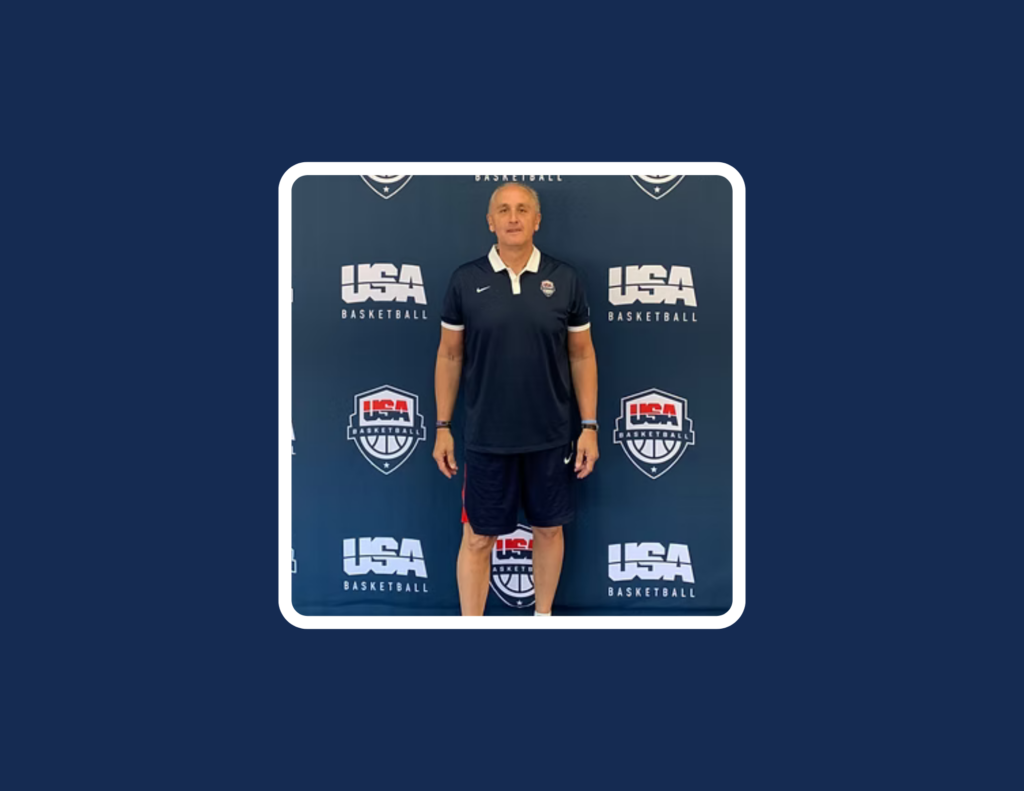
JOE STASYSZYN – FOUNDER OF UNLEASHED POTENTIAL & USA BASKETBALL CLINICIAN – EPISODE 1194

Email – jstasand1@comcast.net
Website – unleashed717.com
Twitter – @coachs717
If you listen to and love the Hoop Heads Podcast, please consider giving us a small tip that will help in our quest to become the #1 basketball coaching podcast.
Joe Stasyszyn is the director of Unleashed Potential, a basketball skill development company, based in Carlisle, Pennsylvania. He is also a USA Basketball Player Development Coach, Speaker and Clinician at Coach Academies, Gold Camps, and Clinics around the United States and around the world. Joe was also formerly the National Director of Basketball and Youth Fitness at 24 Hour Fitness, where he managed programs in over 450 facilities nationwide. This position gave him the opportunity to work with countless elite NBA and WNBA coaches and players. Joe is a 20+ year veteran coach at the Duke University Basketball Camp.
Joe began his coaching career as an assistant coach at Dickinson College and later was the head boys’ varsity coach at Carlisle High School in Pennsylvania for 10 years.
On this episode Mike and Joe discuss the critical importance of deliberate practice in basketball coaching and player development. Joe emphasizes the need for coaches to implement intentional and measurable training strategies to enhance player performance. He shares that true improvement stems not merely from repetitive actions but from a structured approach that includes competition and feedback during practice sessions. The discussion further highlights the global nature of basketball today, with an emphasis on the collaboration between international coaches and the wealth of knowledge shared through USA Basketball initiatives. Throughout the episode, we explore the profound impact that a dedicated and passionate approach to coaching can have on athletes, regardless of their geographical location. This exchange of ideas serves to elevate the game as a whole, as we all strive to cultivate a higher standard of excellence in basketball.
Follow us on Twitter and Instagram @hoopheadspod for the latest updates on episodes, guests, and events from the Hoop Heads Pod.
Make sure you’re subscribed to the Hoop Heads Pod on iTunes or wherever you get your podcasts and while you’re there please leave us a 5 star rating and review. Your ratings help your friends and coaching colleagues find the show. If you really love what you’re hearing recommend the Hoop Heads Pod to someone and get them to join you as a part of Hoop Heads Nation.
Have your pen and paper at the ready as you listen to this episode with Coach Joe Stasyszyn from Unleashed Potential & USA Basketball.
What We Discuss with Joe Stasyszyn
- Measuring performance against time and opponents
- Deliberate practice in coaching, characterized by intentionality and systematic feedback
- Effective coaching requires not only knowledge but also the ability to teach and demonstrate skills
- International coaching experiences highlight the differences in resources available globally, impacting player development
- Understanding the specifics of shot making, including balance and footwork, is crucial for improving shooting proficiency
- Coaches must prioritize the development of their coaching staff
- Feedback is crucial for athletes to make necessary corrections and achieve improvement
- Why international coaches seek to understand the cultural dynamics and organizational strategies of USA Basketball to enhance their own coaching methodologies and player engagement
Like this show? Please leave us a review here — even one sentence helps! Consider including your Twitter handle so we can thank you personally!

We’re excited to partner with Dr. Dish, the world’s best shooting machine! Mention the Hoop Heads Podcast when you place your order and get $300 off a brand new state of the art Dr. Dish Shooting Machine!

Give With Hoops is a groundbreaking initiative that fuses basketball analytics with modern sponsorship. Built for teams who see data as opportunity, from AAU programs to college powerhouses.
By tying on-court performance directly to community and sponsor engagement, Give With Hoops help programs raise more while deepening support from those who believe in the game.
Traditional fundraising disconnects donors from the action. Sell candy bars, wash cars, beg for donations, it’s exhausting and ineffective. Players perform better when their stats matter beyond the scoreboard. That’s why Give With Hoops was created.
Give With Hoops connects game performance to community support. Every basket, rebound, and assist becomes a chance to raise funds. Transparent, exciting, and proven to raise 3x more than traditional methods.
Your first impression is everything when applying for a new coaching job. A professional coaching portfolio is the tool that highlights your coaching achievements and philosophies and, most of all, helps separate you and your abilities from the other applicants.
The key to landing a new coaching job is to demonstrate to the hiring committee your attention to detail, level of preparedness, and your professionalism. Not only does a coaching portfolio allow you to exhibit these qualities, it also allows you to present your personal philosophies on coaching, leadership, and program development in an organized manner.
The Coaching Portfolio Guide is an instructional, membership-based website that helps you develop a personalized portfolio. Each section of the portfolio guide provides detailed instructions on how to organize your portfolio in a professional manner. The guide also provides sample documents for each section of your portfolio that you can copy, modify, and add to your personal portfolio.

Hey coaches — you’ve got a game plan for your team… but do you have one for your money?
That’s where Wealth4Coaches comes in.
Each week, they deliver simple, no-fluff financial tips made just for coaches. Whether you’re getting paid for camps, training sessions, or a full season—Wealth4Coaches helps you track it, save it, and grow it.
It’s time to stop guessing and start building.
Subscribe now at wealth4coaches.beehiiv.com/subscribe
And follow them on Twitter @Wealth4Coaches for daily money wins.
Your money needs a coach.
Start with Wealth4Coaches.
THANKS, JOE STASYSZYN
If you enjoyed this episode with Joe Stasyszyn let him know by clicking on the link below and thanking them via Twitter.
Click here to thank Joe Stasyszyn via Twitter
Click here to let Mike & Jason know about your number one takeaway from this episode!
And if you want us to answer your questions on one of our upcoming weekly NBA episodes, drop us a line at mike@hoopheadspod.com.
TRANSCRIPT FOR JOE STASYSZYN – FOUNDER OF UNLEASHED POTENTIAL & USA BASKETBALL CLINICIAN – EPISODE 1194
[00:00:00] Narrator: The Hoop Heads Podcast is brought to you by Head Start Basketball.
[00:00:20] Joe Stasyszyn: You have to have feedback, whether it’s measuring against time, going against another opponent. That’s why I like our competitive edge model, because when we do shooting, we compete. We have contested shooting. How many contested shots did you hit? You have to measure those things. Almost to the point. I’m not saying you have to do this, but this is like the extreme example.
When you’re missing a shot, are you missing more on the right sided rim? Are you missing more on the left sided rim? Are you coming up short? Most of the time, that’s the feedback that makes it deliberate.
[00:00:50] Mike Klinzing: Joe Stasyszyn is the director of Unleashed Potential, a basketball skill development company based in Carlisle, Pennsylvania.
He’s also a USA basketball player development coach, speaker and clinician at Coach Academies gold camps and clinics around the United States and around the world. Joe was also formerly the National Director of Basketball and Youth Fitness at 24 Hour Fitness, where he managed programs in over 450 facilities nationwide.
This position gave him the opportunity to work with countless elite NBA and WNBA coaches and players. Joe was a 20 plus year veteran coach at the Duke University basketball camp that was started under former head coach Mike Krzyzewski. Joe began his coaching career as an assistant coach at Dickinson College, and later was the head boys varsity coach at Carlisle High School in Pennsylvania for 10 years.
Hey, Hoop Heads score big on Dr. Dish basketball’s end of year sale. Give your team the gift of extra more efficient reps this season. It’s a perfect gift to your team. For the holidays during the Dr. Dish end of year sale, everything must go. You’ll get three to $4,000 off. Select Dr. Dish models.
Visit drdishbasketball.com and get your Dr. Dish shooting machine today.
[00:02:09] Steve Moore: Hi, this is Coach Steve Moore and you are listening to the Hoop Heads podcast.
[00:02:18] Mike Klinzing: Coaches, you’ve got a game plan for your team, but do you have one for your money? That’s where Wealth4Coaches comes in. Each week, we’ll deliver simple, no fluff financial tips made just for coaches. Whether you’re getting paid for camps, training sessions, or a full season, Wealth4Coaches helps you track it, save it, and grow it.
It’s time to stop guessing and start building. Subscribe now at Wealth4Coaches.beehive.com/subscribe and follow us on Twitter at Wealth4Coaches for daily money wins. Your money needs a coach. Start with Wealth4Coaches.
Have your pen and paper ready as you listen to this episode with Coach Joe’s decision from Unleashed Potential and USA Basketball. Hello and welcome to the Hoop Heads podcast. It’s Mike Klinzing here without my co-host Jason sunk this morning. But I am pleased to welcome back. To the Hoop Heads pod for I, well, for what I believe is his fourth quote, regular appearance, but many, many appearances on the coaches’ corner round table.
Joe’s decision from Unleashed Potential and USA Basketball. Joe, welcome back, man. One of the original hoop heads right here.
[00:03:29] Joe Stasyszyn: Thank you, Mike. I love being on with you guys. Yeah. You and Jason started this thing, like you said, I was one of the original guys and I knew, I just knew that this thing was going to take off and I enjoyed listening to everything you guys, all the people you guys have on there, and I’m a learn it all guy.
I learn off everybody. So this is a tremendous resource for basketball coaches, not only United States, but around the world. I work with, with coaches around the world, and I tell them about this all the time. This is just a you guys do a tremendous job and I’m thankful, really appreciate you having me on again.
[00:03:58] Mike Klinzing: Well, we’re appreciative of those kind words and we’re always thankful to have great basketball guys like you. Be a part of what we’re doing here at Hoop Head. So let’s start by. Jumping into what you’ve been doing since we last talked. I know that you sent me an email, we’ve talked back and forth and you’ve been doing a lot of work internationally.
You’ve been doing a lot of work with the Duke Men’s and Women’s basketball program. So just start wherever you want to start and we’ll dive into it and see if we can’t pull out some of the things that you’ve been doing that can benefit our audience of coaches.
[00:04:25] Joe Stasyszyn: Yeah. Well a as you stated we’re still running our unleashed my son, and we’ve done, he’s done a great job that that program has grown tremendously since the last time we talked.
We now have four part-time coaches. we have three full-time coaches, myself included, when I’m in the country and I’m not working with USA basketball, I also help out over there, here in Carlisle, Pennsylvania. So and as I spoke to you a little while ago, we now have, it’s amazing. We have over a hundred kids, boys and girls players playing some level of college basketball right now that we work with on a regular basis.
So we’re really thankful to have that thing taken off. And like I said, that keeps me very busy locally when I’m not on the road somewhere. but other, other than that my USA basketball, I’m still speaking nationally at their coach academies with Coach Don Showalter, who I work very closely with also still doing the gold camps.
Our gold camps have really, really taken off. they’re the top sixth, seventh, and eighth grade, even ninth graders in the country that we are sort of like looking at to maybe get a little radar on some of the younger players for our junior international teams, because that’s that’s what they do worldwide Feba and, and around Europe, they, they start looking at these kids early.
That’s what we do. So that’s, that’s also something great that, that I love doing with USA basketball. The other thing is I’m always out looking helping to evaluate for our junior national teams on the East coast. I get, I get to as many events as I can and keep in touch with Coach Showalter and some players and stuff like that.
So on, on, on the USA and that’s, that’s some of the stuff that I been doing and continue to do. And we always say USA basketball is a gold standard. So that’s, that. That’s just been really, really great. And our, our youth and coach development is really going well. we have those big tournaments now, USA basketball tournaments, a couple places across the country during the summer that have really taken off.
So again I always like to call out Coach Showalter because that guy, man, you talk about the gold standard, he’s the best of the best very close friend of mine. I, like I said, I work closely with him and they don’t get any better than that. So he does a lot of stuff internationally.
Obviously too. But the other, the other big thing that I wanted to talk about, because I think this is really cool, and I’ve been doing this for a few years, but now I’m taking one of the lead roles in this, and this is in conjunction with our USA Olympic Committee sort of like USA basketball, the Olympic solidarity around the world.
FEBA is involved, the NBAs, and we have the NBA involved, the NCAA involved. And what that is is called iab. It’s the International Coaches Apprenticeship for Basketball. And it’s held at the University of Delaware every year. And I just came back we did about I did a couple days on site and we’ve been working with these coaches, working with coaches.
They’re national team coaches from around the world and very high level coaches. And they have to apply for this through the Olympics, solidarity and Feba and the US Olympic Committee. So it’s a pretty prestigious thing to get accepted. And what they do is they come into the United States and they spend.
About three or four days on site at the University of Delaware. And that’s where I first get to meet them and I work on the court and off the court with them on player development, coach development, team development, all those things sharing my knowledge. And we had, we had coaches from each national team, coaches from Egypt, Estonia, Poland, Saudi Arabia, you name it, man, every year we have like 10 or 12 coaches from different parts of the world, which are, which is just tremendous.
And they come in and I spend, we spend three or four days with him Dr. Matt Robinson, who’s a professor at the University of Delaware. It’s, it’s run through his program. He does a tremendous job too. The guy is, is phenomenal. He does a lot of stuff internationally with, with feba, with soccer and and basketball and different things like with the ICA here.
So then after that and we also bring in, we had Tommy Shepherd, longtime general manager in the NBA. He works closely with us. He comes in those first couple days and he talks about how the NBA works and we have people from the WNBA and then we have NCAA athletic directors involved just teaching these national team coaches what USA basketball is all about.
And like I said, I’m very fortunate to do what I do. It’s one of the coolest things that I get to do. And then after that, after they leave, we matched them up with division one programs across the country. Like we had a couple of the guys well, I think the coach from Denmark and a coach from from Poland, we sent them up to national team coaches.
They went up with Shock of Smart at Marquette and they, and they spent up at Marquette. They spent a couple, spent like a couple of weeks, you know. Involved in their program in all aspects, and they have assignments they have to do. So we, we pair them up with like Davidson, we had people down there with Lehigh, we have them all over the place, Villanova Women’s.
So, and then they come back and then I go back to Delaware and I touch base with them like once a week to make sure things are going well. If they have any questions, how I can help them. They come back and then we spend time again at the University of Delaware debriefing, going over everything. And then we eventually they turn in all their assignments and they eventually go back.
But I’m telling you Mike, it’s just I’m very fortunate to be able to be that involved in this program just to tremendous program.
[00:09:44] Mike Klinzing: Alright, so I have two things. So I’m going to ask you first kind of from, from a standpoint of your role and what are some of the things, I know obviously your focus is on player development, but what are one or two of the key things that you try to get across in terms of your philosophy of player development that you want them to take with.
When they go back to their home country, what are the key points that you’re trying to get across them? And I know there’s a million different things that you could go in different directions you could take this, but just if you could kind of boil it down and condense it into what are the most important takeaways that you hope they grab from you, that they take back to their home country?
[00:10:19] Joe Stasyszyn: Yeah. So in doing this a couple years, one thing I have learned is they don’t have a whole lot of resources. A lot of these, I mean, we’re very fortunate here in the United States, man, we, I mean, almost in some ways we’re spoiled. I mean, our facilities are resources and, and the first part of this, that first thing I’ll answer this with is the biggest thing that I stress to them is coach development.
That they have to develop their coaches first. Because as we all know, good player development starts with good coach development. I mean, coaches have to know what they’re doing and that’s one thing I’ve learned from them or found from them, is. They don’t have the luxury of having a lot of help.
So they literally have to start by within their federations, finding coaches, number one, who are going to be committed, number two, who are going to want to learn. Because one of the things that I have found in working with them is they have coaches that are set in their ways and they don’t want to try new things.
And it’s like, nah, this you might want to, some people call them old school. I always say we can’t be old school, we can’t be new school, we have to be one school. We have to take a little bit of the old, some of the new and put it together. And that’s one of the things that I try to, to work with them because they, they have a lot of struggles with that.
Just getting people to be committed people buying in on what they’re trying to do. They get pushback sometimes. And then the other part of that is the resources. And one of the things I do with them, Mike, is especially when I’m on the floor, I teach them to have to be their own performance coach, their own strength coach, their own skill development coach.
I mean, I have a lot of background in I’ve had a lot of personal training certifications cross. I had my CrossFit certification. I’ve had my nas NA SM personal training certification. And I did that for a reason because I’m a performance coach also. So I teach them how to build speed, agility, quickness into their programs because they’re not like Marquette where they got their own strength, strength coach.
They got their own performer, they got a strength coach, they got a performance coach, they got a nutrition coach, they got all these people. They have to be at all. So what I learned very quickly a few years ago when I got started was one of the biggest ways I can benefit them is teaching them how to be all in one, do it, be able to do it all yourself.
Because at the end of the day, I’ll never forget, I had a coach from Africa the Sudan or somewhere a couple years ago. He said to me, coach, I have a question for you. He said how, how can you help me with this situation? He said, we have one basketball court, one full court. We have two baskets. He said, at any given night or day, I have 150 kids I’m working with.
So how do you work with 150 kids on two baskets, one quarter with maybe one or two coaches? So that’s a real challenge. So that’s, that’s the thing that I, that I stress with them. That’s one of the main things that they have to really be creative in what they do. They have to be multi, they have to multitask.
I mean, like I said, you’re doing it all in one. And then the the other thing is that I really work with them in on is something I’m going to talk about here in a little while is called deliberate practice. How to be very, very efficient in what you’re doing, what you have to be very intentional at what you’re doing when you’re working with few facilities, few resources, few coaches, and a lot of players.
So I’m teaching them how to be very deliberate and intentional in their practice planning, in their development, planning, all those kinds of things. So I’d say they’re, and that’s the thing that they really want. They’re like, coach, help us. How can you how can you, can you help us on these areas?
And these, and these people are we, we have male and female national team coaches, tremendous coaches who do a tremendous job, but they’re learn it alls. They want to know, man, they, everybody views as everybody views us. We’re the gold standard. I use that all the time. They want to know how’s USA ba USA basketball do things because we obviously win the most gold medals and all those kinds of things.
So they’re, they’re very open. But, but the interesting thing, Mike, is this too, is I’m learning from them. And I tell them that straight up. I’m like, listen, I’m a learn it all. I don’t profess to know everything. If you, if you feel like you’ve known everything in, in basketball, then you shouldn’t be coaching basketball anymore because we all are learning all the time.
And that’s, that’s another, that’s a huge benefit for me that I get on a side when I’m, when I’m helping them. So hopefully that gives you a little direction, like what, what we’re, what we’re doing. That’s my aspect of what I do with them when I, when I’m working with them.
[00:14:41] Mike Klinzing: Absolutely. So the second part of what I wanted to ask you is that’s your part of the development, what you’re sharing with them.
What are some things that they’re coming to USA basketball looking for? I know you mentioned a couple questions, a couple things that coaches brought to you and said, Hey, we need help with this, or we need help with that. We are some other things that, when you think about the main driver of what they’re looking for, are they looking for X’s and O’s?
Are they looking for organization? Are they looking for culture? What are some of those areas that they really want to be able to improve their coaching when they come over as a part of this program?
[00:15:19] Joe Stasyszyn: Yeah, that’s a great question because honestly, to answer that, they’re looking for all that. They’re like, because a lot of times they say to me, well here, here’s the biggest issue that they have.
A lot of times, here’s what they ask me about is they have a lot of club programs over there, club teams, and I get this from almost every, every single national team coach from around the world that comes. Work with us is they get pushback from the clubs. They’re like, well, coach, how do you, how do you guys get buy-in to have the team, the players play for your national team?
When we try to get our players to play for our international team, we have club coaches fighting us saying, no, they can’t. We’re, we’re not going to allow them to go. We’re not going to allow them to miss our club, our club program to go play for a national team. And I look at them, I’m like, I’m like, really? I mean, that’s the national team.
You don’t get any better than that. You, you have to play in the national team. So they want to know, well, how do we get, how do we get our players to do that? And that’s when I explained to them, I like, listen we have these high level EYBL au teams and they’re the best of the best the Adidas shoe teams and Under Armour teams and all that.
I said, but when these players get asked to go to training camp to possibly play for our US USA junior national teams, they all go. It’s like, it’s not even a, I mean, and then, and then I tell them the story about, and Coach Shoal and I talk about this all the time. I tell him this story about coach Shoalwater uses this.
Like he talks, he had Jason Tatum, he had a lot of these Bradley Beal, all these guy different guys that he coached when he won 10 gold medals. And he said to a single person, these players tell him the best thing they ever did. And I’m talking about McDonald’s, all American team, Jordan Classic, whatever you want to say.
The thing that they say was the best thing that they ever did was play for their USA junior national teams beyond a per no, not one person said it was at something else. So I give them that story and tell them, listen, do you have to somehow get through to these club teams? Like these players need to play on their, on their junior international team.
And, and the only, and the only thing I did tell them this, and this is what happens with us sometimes, and this year was the exception. Our U 19 sometimes aren’t, don’t, don’t get me wrong, they’re always very strong, but they’re not as always as strong as our U sixteens. Our u seventeens. Because when they’re U 19, they’re going into their freshman year in college.
And a lot, some coaches, not all coaches, some coaches on the high level will say, nah, you can’t, we want you on campus taking classes, getting a headstart. So sometimes we lose some of our best U don’t, don’t get me wrong, we still have great U 19 players there, and we did this year, we did very well. But sometimes our best players can’t come because they have their college commitment.
So I tell them that also. But that’s and then getting back to culture, they want to know how do we do things? How do we get buy-in? How do we get players to buy-in? because a lot of, a lot of times I get coaches say to me, well, our best players, they know that we don’t have, we, they know that we’re not as blessed as you guys are to have the greatest players in the world.
You can pick and choose who you want. Some of our best players know if they don’t, if we don’t play, they’re not going to, we’re not going to win. So sometimes that’s a, a big hurdle for them, getting them to buy in and being able to hold them accountable because they’re like, Hey, you need me? We’re here in the United States, we’ve cut, we’ve cut players who are ranked number one or two in the country because they weren’t a good fit.
But we’re still able to field great, great teams, because I always tell these guys, these guys and girls, they’re like, listen, we only pick 12 players for our team. We have, that’s not even one per state. So it’s like we could pick and choose. We don’t, we don’t have a good fit. And you have, you have an attitude or you have bad body language, we’ll cut you.
We’ll not take you. So, and that’s one thing when I go evaluate, and that’s the other thing they want to know, how do you evaluate players? So I could go on for days about this, but I give them what Coach Showalter and I, the things that we look at when we go to evaluate player, if we see bad Bo body language, we don’t care what your ranking is.
That really means nothing to us. We’ll cross you right off the list. Okay. And, but they don’t sometimes have the luxury of that. So it’s a little bit you have to, they’ve have to sort of like tweak it a little bit. Pick and choose how they’re going to, how they’re going to do things. Because it’s not like here we don’t have the resources.
They don’t have the same high level players that we have. I’m talking about like overall they have some very good players, right. But not to the depth that we have. And that’s that leads me to one more thing. I’ll let you jump back in. And we, and I talk about this all the time. The reason we do so well, a lot of it is because our first five are always very, very good on the floor.
But our second five, they’re just as good as our first five. Whereas the other teams, they might have five. These teams these, these national teams, they might have five really good players, but where we get them is the second group. Because the second group, we don’t have any fall, we don’t have any fall off.
In our second group, they have, they have fall off in our second group. So that’s something we talk about too. Yeah. They just want to know the ins and outs. How do we do things, how does it work here in the United States? You know? And I try to help them as much as I can with all those things that maybe they can adapt and use.
That’s, that’s part of that. Yeah. The
[00:20:25] Mike Klinzing: depth of players here in the US is, the depth of players here in the US is, it’s, it’s not comparable anywhere else in the world. Even if you take the top. Seven, eight guys maybe. But once you get beyond that, the depth that we have in terms of player talent here in the United States is like, is like nowhere else in the world.
When those coaches are there in Delaware, how much of what you’re doing is things on the floor where you’re demonstrating drills or you’re going through stuff on the court versus how much of it is classroom based and just kind of talking through and having discussions and presentations?
[00:21:01] Joe Stasyszyn: Yeah, so the, to give you an example of the layout.
So the first day that I’m there, the first day that they, they come in like the night before. Then I’m there for their first full day. I usually will spend a whole morning, we use the University of Delaware’s practice facility. They’re very, you know coach there is Martin Inglesby is so nice to let us use that facility.
And we have some, we have some coaches that go there. I’ll, this will lead to another thing. We have some coaches that actually will stay there. Shadow his program and the women’s program. that’ll be their assignment. But anyway, so I’ll spend the first morning there on the floor and basically, I’ll tell you what it, it’s like, it’s like lightning man.
We’re, we’re on the floor. I’m using the coaches as demonstration demonstrators. Some of the coaches are videotaping everything. I’ll take them through a couple hours of just my model of deliberate practice, competitive edge, show them how to get more efficient use of their time. Because part of that model, the competitive edge is that I speak on USA basketball when I speak around the country in different, other than around the world, is we incorporate competition into skills.
So you’re not only working on a skill we’re competing with, whether it’s passing, shooting ball, handing, there’s a competition, everything we do. So they’re getting, they’re getting both. So I’m trying to teach them how to be more efficient with their time and more deliberate and intentional with their time.
Practice. And it’s really interesting. Like I said, they soak it up. I mean, they’re, I got them actually doing it demonstrating it. And like I said, they’re videotaping it and we share it. And then what we do is we’ll go back and then I’ll spend like the next Dr. Robinson will come in and talk about, talk to them about different things in terms of basketball organizations and how they work and leadership and all that stuff.
And then I’ll spend time in the classroom going over like, best practices of co being a coach at all levels and share all those best practices with them on practice planning, writing writing making practice plans, how do you organize a practice more efficiently? All those kinds of things.
And then the cool thing about it is, like I said, and then, and then they’ll, when they come back, I’ll do maybe another session with, with them in the classroom on team development, coach development. And then, and then when they go to their assignments. They’re taking like analytics, we do a thing on analytics with them.
They’re taking, they’re have to do their own analytic thing at the practices that Marquette was shocked and smart and they’re incorporating. Then they, they draw from them and then they take all this stuff and incorporate it into their own program. obviously they get, they don’t have 10 assistance.
They have to, they have to lessen it a little bit. But that’s what’s so cool about it. because they’re getting a little bit of everything. Me on court, me off the court, Tommy Shepherd in the classroom down there, or in the convention in the, in the, in the hotel convention center down there with us.
they’re getting a little bit, then they’re going on site and getting that stuff. So that’s how that, that’s how that works with me, what my role is. Oh, and then one more thing, I’m sorry, Mike. Then the other thing is, like I said, every, every week while they’re on assignment. I’m calling them, I’m doing Zoom calls at every assignment and just going over, Hey, how are things going on the basketball end?
Are they including you in meetings enough? Are they getting you involved? And all that kind of stuff. So we talk about all that kind of stuff. And then like I said, we bring them back together. They turn their assignments in, they have to make a presentation, they debrief, all that kind of stuff, and I’m involved with that too.
Then we have little breakout sessions where they’ll share what they did at their site and try to see some similarities, some differences and all that kind of stuff. That, that’s, that’s my role also.
[00:24:32] Mike Klinzing: Talk a little bit about the selection process. You mentioned, okay, Shaka Smart at Marquette is going to host some guys.
How do you, as USA basketball and Coach Showalter, how do you guys go and talk to the coaches whose programs are going to kind of open up to the participants from around the world so that those coaches can come in and sort of embed themselves in those programs? What are those conversations like with, because again, we all know that sometimes there is people who are very, very open about having people around them and their program and their practices, and then we know there are other people who are maybe a little bit more closed when it comes to that.
So just talk about that process of finding the right coaches and the right programs here in the US to pair up with these international coaches.
[00:25:15] Joe Stasyszyn: Yeah, so Dr. Matt Robinson, he spearheads this whole thing. It’s his he runs the whole program. So he’s the one who actually contacts coaches. And again, to your point, I, that’s a great, great point because a lot of times we have, we have coaches that’ll say, well can, why can’t we go to Carolina?
Why can’t we go to Duke? Because we have to be careful because we want them involved. We’re not just sending them to be spectators sitting there. We want them in every, as all the coaches meetings. And like you said, some coaches are just closed. Like, nah, we can’t, we, we can’t facilitate that. so, Dr.
Matt Robinson, what he does, and through the years we have, we have programs that we know will cont like, like to take them and they’ll continue to take them. And then he’ll reach out to maybe Chaka at Marquette, Marquette’s like, oh yeah, man, we would love to do this because as man, the international game, look all your players.
We, after this is a whole nother hour we could spend, I work with the players in Ohio, our coaches and players at a high, our coaches are players at the highest level. I don’t think you’ll be shocked, but our coaches might be shocked how many international players are on these rosters, on the high majors, mid-majors low, maybe D one, D two, D three.
It’s a big thing today. And that leads me, that leads me to another point. So like I said, Dr. Matt Robinson will go and he’ll contact coaches and say, Hey, is this going to be a good fit? Is this not going to be a good fit? Where can we put these people? But on the other end of this coaches, they’re using us to their advantage in the United States.
So if If I have the coach from Norway and I have the coach from Poland working with me, I’m shaka up at Marquette, guess what? They might have some really, really good players over there that I’m going to get it in with those players. So it’s, it’s a win-win, honestly, you know shame on those coaches that don’t want to do it.
I don’t, I, we don’t, haven’t had many coaches that don’t want to do it, but we know who to ask to. We know some of the really, really high, high hot high majors and not, it doesn’t, I mean, Marquette’s a high major program. I’m not saying they’re not, but I’m saying a lot of times some of these other programs, it’s not going to be a good fit because they just can’t give them the attention that, that maybe they want to or not.
And Chaka Marquette was phenomenal. I’ll tell you what, these guys from Poland, Poland nor in Denmark, when they came out, they told me, I said, coach, it was amazing. They said, Chaka just literally opened up the whole thing to them. It was, it was, and it was, it was incredible. They said they had experience in their life, and most of them all say that everywhere they go, they said they came back to their city.
It was just tremendous. So that’s, that’s how we do it. Dr. Robinson goes,
[00:27:42] Mike Klinzing: does that, I think when you talk about, again. Intentionality. Right. I’ve heard you say it a couple times and I think that it talks to the preparation that you do before you go in and speak and do your clinics with all those coaches.
It talks about selecting the right programs for those guys eventually to go and kind of embed themselves into, and then you take that. And one of the things that I always come away impressed by with any college coach that I’m interviewing here on the podcast is the amount of, and I think this is what people who are outside of the basketball world don’t always understand is the amount of preparation and intentionality that coaches have in terms of planning, practice, making decisions, recruiting, how they run their program, both from a culture standpoint, from a X’s and O’s on the floor standpoint and all those things that I think sometimes.
There’s a perception that there’s not as much time that goes into it outside of the purview of a three hour practice and the two hours on game day. I don’t think the average person has an understanding of how much time goes into preparing a team and just going through the entire process of, of coaching.
And so I think when I hear you talking, what I keep coming back to is intentionality. And then I want to piggyback on something that you’ve mentioned a couple times, which is the idea of deliberate practice. Right? And I know that a big part of deliberate practice one is intentionality, right? Making sure that you know exactly what you’re trying to do and teach, understanding how you’re going to teach it.
But then I wanted to get your thoughts on something that’s a big part of deliberate feedback or deliberate practice that I think sometimes gets overlooked, which is the feedback that a coach gives while the, whatever the drill, the activity is going on. So talk a little bit about your own personal philosophy in terms of giving players feedback.
While you’re going through and you’re putting them through their paces, how do you make sure that they’re getting the feedback that they need in order to be able to make corrections, to get the kind of improvement that you want to see in a player?
[00:29:43] Joe Stasyszyn: Yeah, that man. You’re, speak my language now, Mike. That’s why you guys are so great, man.
You, you just lead me right into something. I was going to say, you know what I, and I always say this about deliberate practice feedback. I call it the unsung hero of deliberate practice. Because see, and again, I could spend a whole hour on deliberate practice, but I’m going to give you the nuts and bolts here.
So we call regular practice, just going out, just mind. I call that mindless repetition. And you know what, I had a, and it leads into something else, so we’ll get into shortly. I had a conversation with Denise Dillon, who’s the head coach at University of Nova Women’s Basketball. One of the best coaches in the country at any level, men’s, women’s, whatever you want to talk about.
Okay. And we got into this conversation because I work with their staff also on deliberate practice. And I always say this regular practice is like the. The opposite of, of deliberate practice, but you have to start somewhere, right? Like we talked, I talked to this about, about her, to her with this.
And sometimes you have to stand there and do your form shooting, or I get that. That’s, that’s the basic thing. That’s where you start. But at some point it has to become deliberate. Yeah. You have to make sure they’re deliberately getting balanced on their footwork, on their shot. You got to deliberately work on their footwork.
You have to break it into chunks. You have to measure it. Yeah. You got, there’s, it’s systematic. You has to have some form of measurement. You talk about feedback, you have to measure things. And I know a lot of coaches, like are now measuring things in practice and doing a lot of that kind of thing. like doing some analytics.
And again, I like analytics. I’m, I don’t, I don’t, I don’t go completely by analytics. I think it’s a mi a mix of both. Can’t just be, you can’t just be all measurement. It has to be something, look and feel too, you know? But. You have to have feedback, whether it’s measuring against time, going against another opponent.
Alright, competing. That’s why I like our competitive edge model because we compete, like when we do shooting, we compete, we have contested shooting. How many contested shots did you hit? and you have to, you have to measure those things. Almost to the point. I’m not saying you have to do this, but this is like the extreme example.
When you’re missing a shot, are you missing more on the right, on the right sided, the rim? Are you missing more on the left sided rim? Are you, are you coming up short? Most of the time that’s the feedback that makes it deliberate. Rather just go out and say, I love this one. I say this all the time.
Players come to me all the time. Well, coach, I got a thousand shots up today. Okay, that’s great. Did you get. One. Perfect. Did you shoot one perfect shot A thousand times. And I’m not talking about makes, I’m talking about were you on balance every time? Did you have the proper footwork every time? Did you have the proper release every time?
I’m really big on that and I recently I’ve been working with he was ranked number one in a country in a 2027 class. 20 until he reclassed up at the end of the summer ba ton from Maryland. I mean, he’s, he, he’s tremendous. Six 10. I’ve been working a lot and I’ve really spent a lot of time on deliberate practice with his footwork and his shooting.
One of the things that I hear repeatedly, people I look at him now are saying, oh man, his, for six 11, he has tremendous footwork. Well, I deliberate practice that with him every time that I’m with him. It’s different. It’s different. That’s what I mean. it’s what I show we’ll get to this shortly, leads into this.
What I do do with Duke staff on the men’s and women’s side, and like I do with Denise Hill staff at Dell Nova, we work on deliberate practice. I break down the into segments and I get, and you have to give feedback on their balance, on their footwork, on, I make them, I call it earn a shot. I make them make different movements.
I don’t teach any moves. That’s a waste of time doing, we don’t do any iso moves. Okay. To me, that’s, that’s garbage and it’s a waste of time. I will teach movements and footwork and deliver practice all day long. Okay? And that’s, and again, getting back to your, your feedback, you have to identify their weaknesses.
You have to measure things. You have to set up some kind of system where you break things down into chunks. So I’ll start with balance. I’ll start with for work that I go as far as Mike is working on pickups, different ways of picking up the ball. Okay. How many shots do you make when I throw the ball outside your body and you have to pick it up and bring it in and shoot it.
Okay. That’s all deliberate practice, man. That’s that stuff. It’s uncomfortable. you have to give feedback on that. So that, hopefully that answers your question. Like in a nutshell, I could go on and on about that, about the feedback part alone. But you have to find small ways to help them improve and hold them accountable to it.
That’s the other thing is the accountability. Okay. They have to have their best effort every day. Can’t come in one day and say, I’m just going to go through the motions. No, we have to deliberately, we have to, again, back to your, our word intentional. I’m big on you being intentional. I’m big on using force. I’m big on doing things on purpose.
We don’t do anything not on purpose. Okay. And I think that’s how you get, I know. because I’ve seen it. And that’s what I’ve worked with Duke staff and men’s and women’s and the Villanova staff on, is this idea of breaking things down into segments and deliver practice and giving feedback, having a coach.
That’s why the coach’s part is very important. We can all go out and shoot a thousand shots, but we don’t know what that looks like. What are they doing when they’re out there doing that? You’re just going through the motions. What are they doing? So they need that feedback to really, if you want to go from average to good or good to great, that’s what you really need to do.
And again, I just spoke on this in Kansas City for U Us a basketball at their academy. And I got a lot of great feedback. It’s all about feedback. I got a lot of great feedback on that. A lot of questions with coaches. They want to see finishing off a two, that’s a whole nother, that’s a whole nother issue.
And I showed them how to do deliberate practice because you could tell players you need to learn how to play off of two feet. And they’re like, okay, coach, yeah, I got it. No, they don’t. I could tell you a story about that. I’m not going to mention names, but one of the players on Duke last year when I was at their practice early in the season before I met with the staff, they’re like, coach, watch and tell us what you see.
Well, one or a couple of their players, it wasn’t just one, two, a couple of them are very good at it. Cooper Flagg and Con Nipple were tremendous playing off. Two, a couple other players who were not very good playing off two. Well, they, they got that rectified by Midseason and a couple of them ended up going to be on be first round draft picks or second round draft picks.
So deliberate practice works. I know that. So that’s, like I said, I can go on all day about Deliber practice. I’m really passionate about that because I think it’s a, it’s a game changer, man. I’m telling you, in all sports, not just basketball.
[00:35:49] Mike Klinzing: Alright, so quick follow up on that. So you’re working with a player, right?
And you’re working with them on pick your, pick your, pick your skill. You’re working with them on footwork, you’re working them on, on, on a pickup. You’re working with them on balance, what, whatever you want to do. What’s an exact quote from coach decision when they’re doing something? What is something word for word that you would say to a player when their balance is off or when there’s something incorrect with their shot?
What are the things that you’re actually saying? To the player. Gimme an example or two of something, a quote that Joe would say to a player when you’re working with them that would help them to see, Hey, I’m making this mistake and I need to fix it.
[00:36:32] Joe Stasyszyn: Yeah. So the biggest thing is that, I say this all the time, is they have to play with force.
So a lot of times their bounce is off because their foot walk footwork. They’re not playing with force, they’re not being aggressive enough. Okay? A lot of times they’re not coming into their shot aggressive enough. They’re coming in, okay? Yeah. And here’s another one. Casual never works. Like I will not accept being casual.
Don’t be ca. You can’t be casual. So I’m always telling them, use force, do it on purpose. Be intentional, nothing casual. You come casual into your footwork, your balance is going to be off. Your footwork’s not going to be aggressive staying in your shot. You have to be intentional at staying in your shot. All those things.
I mean, I literally, every single aspect I’m hitting them with just these, these target words, you have to use target words. You can’t be out, you can’t stop them and keep explaining. No, your footwork, you didn’t use force on your footwork. You didn’t force on your balance. You weren’t intentional. You, you, you didn’t, you didn’t, you didn’t, you didn’t shoot it on purpose.
You didn’t shoot it on purpose because the further you get out, the more explosive you need to be. So they’re the kind of words that I use and the kind of things that I, that I, that I tell them when I’m working with it. Force intentional on purpose. those, those kind of things be being aggressive.
The best players use the most force. And here’s the other thing I use with them all the time. They’re two superpowers in basketball. Okay? And that’s footwork and shooting, in my opinion. Separators, superpowers, whatever you want to call it. Okay. The best players have the best footwork, alright? The best players use the most force in any, in any sport.
Okay? And then, and then basketball specific shooting is a separator. And that’s what I get from all the coaches that I work with. All the coaches that I talk to internationally at the highest levels nationally, NBA, whatever they shooting is a separator today. Players that can shoot the ball. So that’s, they’re, they’re the things that I really focus on again, and I really break it down into parts and I, and I use buzz words, whatever you want to call them, target words that stick with them.
Because, because they’re going to remember that stuff. So many players tell me, they hear my voice in their sleeve saying, stay, stay. Every shot they shoot. because you have players fall outta their shot. They dancing, dancing around. I said, don’t, I don’t want any, I don’t want to see you dancing after the shot.
Stay in your shot. I have another division one player drives me crazy right now. He plays in the Patriot League. I’m not going to mention his name. Great kid actually might have a shot for an NBAI work with him. He’s from Canada and sometimes he doesn’t stay in the shot. He’s a, he’s at half. He releases the ball from three, he’s at half court before the ball of him gets to the rim.
Like, dude, what are you doing, man? Whatcha doing? Why? Why are you running back to half court to Paul hasn’t have to the rim yet, like so we’re working on that. So yeah, they’re all little, little parts, but, but here again, here’s the difference between good and great. The details matter, right? Yeah. You might be an average or good shooter, you want to be great and you have to deliberately, and it’s uncomfortable.
It’s part, I have to keep saying you, it’s not a comfortable activity. You have to be deliberate in every little aspect that you do. That’s what the great ones do. and I’ll give you another example so I don’t, you probably don’t even know this. I’m going to throw this one at you real quick. So there’s a Cleveland guy that’s not part of my family from the Cleveland area.
Norris Cole, two time NBA champion from Miami Heat. Just married my daughter a couple months ago. So he’s a Cleveland, he’s Cleveland State guy. Went on, played with these guard, with LeBron and those guys, and I, and he still plays professionally different places around the world. So I’m working out with him and one thing that he’s always adamant about and right, the reason I’m bringing this up.
Reason he is, he’s always adamant about is doing something till he masters it. this is a guy who has two NBA rings. He played for the heat, right? He wasn’t a guy on the bench. He played right. So he says calls, he calls me Big Joe. Big Joe goes, I I have to master this, this drill. Like we do the footwork, we do all the intentional stuff.
He goes, I have to master this part before I want to go into anything else. That is key right there. Yeah. This is a guy who’s played at a high level in the NBA, obviously, and very successful and he, he still knows I have to master something before I move on to something else, whether it’s footwork, balance, whatever the case may be.
So that’s deliberate right there. Yeah, that’s, that’s a perfect example.
[00:40:31] Mike Klinzing: No, absolutely. It makes complete sense. And I think one of the things I liked about what you just said, and I just want to clarify it for coaches that are out there, is you talked about teaching with. Buzzwords are teaching with phrases, right, that you have, whether it’s, hey, you have to play with force, right?
Well, the first time you say, Hey, you have to play with force to a player that you never worked with, they have no idea what that means. So you go through the teaching process of having them to understand what it means to shoot the ball with force, or to play with force or, or a particular footwork technique.
And then once you’ve worked with them for a little bit, now you can just say that one word and they know exactly what it is that you’re trying to do. Which again, rather than having to at every rep explain, well, you should have done this, or you have to do that, it’s you’ve taught it. And now you can use that phrase or that buzzword in order to just be able to snap them back to what it is that you want them to do.
And I think that’s where you get into, right, being intentional, being efficient, and sort of developing your coaching vocabulary so that you can work with the player and not have it just be you a running dialogue of talking through the entire thing. It’s just a matter of a quick hey. Need more force there, or, Hey, you have to do whatever, whatever those buzzwords are that you use.
Is that, am I, am I adequately explaining kind of what your process is?
[00:41:46] Joe Stasyszyn: Yes. Micah, you explained it perfectly and one thing I’m so glad you brought this up because one thing that biggest mistake coaches make okay, is they tell them what to do, but they don’t show them what that looks like. Okay. I’m big on that.
That’s one thing, that’s one thing I told the the, I tell the national team coaches all the time, you have to show them, like I said, with a two playing off two feet, you tell a player, they’ll go, okay, coach, I’ll do that. They have no idea what that I’m talking about guys, there were guys at Duke that needed work on that.
There are guys in the NBA that don’t know how to play properly off two feet yet. So they might be great athletes, they might be great at this aspect or great at that aspect, but you have to show them, once you show them, like I’ll literally stop the workout and I’ll show them what coming into your shot looks like, coming into good balance, what that looks like playing with force and again, and what casual looks like.
I’ll show them the difference between casual. Playing with force. Casual never works at any level. They must play with force. And I’m not talking about change of speed, change of direction, that’s a whole different OA whole different object. But I’m just saying in general, playing the game, passing with force, throwing strikes, okay.
Rather than throwing balls off their legs or whatever, you know they’re things that you have to show them. This what a strike looks like. This is what, this is what stride stopping and pump faking, reverse pivoting, coming back. This is what that looks like. I have a whole series I do on playing off of two feet that I showed what the USA basketball thing in Kansas City and I use with the national team coaches, duke, whatever I that I use all the time show because that’s a mistake that a lot of coaches make, especially young coaches.
I call, I say that they’re telling them more than coaching them or showing them how to do it. Because you can’t assume they know anything. Trust me. And again, I’m fortunate I’ve, I play, I’ve worked with people at the highest level. These guys don’t know, a lot of them don’t know what that looks like.
You have to show them what that looks like. Again, I’m not mentioning names. I could, I assume have very high level players that you’d be shocked could even get to the basket and know how to stride stop properly, right? And then reverse pivot and go back or step through or whatever. Okay? That, that’s just something that they’re learned behaviors.
You have to teach them what that looks like. So I’m glad you brought that up because I can stress anything today. I might be one of the most important things I tell you today as coaches, show your players what it looks like. Don’t assume they know, they do not know. They dunno. Don’t assume anything.
Show them what that looks like. Then you could use those words, use force, be intentional, do it on purpose, stride, stop, come back. Then all those things. You have to, you have to, you have to just show them. I that, that’s that. That was a really great, oh, here’s one more I want to add to you. So give you another example.
Deliver practice and went to, I shared this with national team coaches, Maow watch the big guy from Duke, right? Last year. Last year. He’s in the NBA now. Ended up being, he’s going to be tremendous. I’m telling you, just watch what happens. So he played soccer all of his life from the Sudan. Never had to use his hands.
So he grew up so fast. He grew so fast that his hands were not, were behind his f footwork. He had great footwork. So last year when I was at Duke, beginning of the year Justin Robinson, who then was the player development coach, he’s now, who I’ve been working with for the last two years. He’s now the player development coach for the Lakers.
That’s a whole nother side story. He called me up one day and said, coach I won’t be able to work with you anymore down here, because I just took a job. I’m like, oh yeah. Yeah, the Lakers, I was like, well, I guess I did an okay job. You now, you, you graduated the Lakers. So good for you man. I was happy for him.
But anyway, he said to me, can you help us? He goes, they won’t pass them the ball because you can’t catch, this is the beginning of last year. And I was like, okay, I got an idea. because I do performance stuff. We have these handheld med balls we use. They’re squishy. They weigh two or three pounds. So I brought one down to Duke and I was showing Justin Robinson and he’s like, oh man, I love this.
I’m going to, I’m going to get one today. So he ordered one and I showed him what to do with it to help his, his eye hand coordination and stuff. Well, I go to the Syracuse Duke game up at the carrier dome last year, not whatever it’s called now, whatever dome is. And before the game, I’m there and I’m down on the floor.
Here comes man, man. They called it man, man Maow watch comes out for his pre-game warmup. My man has the medicine ball, but the balls, he’s going through his whole routine. Well, guess what? By midseason, that dude’s catching everything. They’re lobbing to him. Right? Left. He’s crushing it. Next thing he becomes a, he’s a first round draft pick.
if he wouldn’t have got that, that down, and I’m not saying it’s, it’s all me. It’s not me. I mean, yeah, I gave him some tools to use some ideas. Obviously Justin did a tremendous job with him, but that was a big help in his deliberate practice to be able to catch the ball. And I saw, like I said, I just laughed at myself.
He’s down there before the Syracuse Duke game going through his routine that, that we worked with him on. So that, that’s really, that was really cool. So that’s, that’s the benefit of deliberate practice by segmenting things and just breaking it down to make them great rather than good.
[00:46:30] Mike Klinzing: Yeah. And it makes sense.
I mean, again, right, if you’re intentional about what you do. And you get your teaching points, and then you’re able to just do it in a quick fashion, in efficient fashion while you’re going through the workout. So you don’t always have to stop and explain every little thing and every little detail.
You’ve explained it once the player internalizes it, you attach a word to it. Now you just say that word or the player knows what correction they have to make or what they’re supposed to be looking for, and it just helps the whole thing be more efficient. It, it makes complete sense. Anybody who’s worked with a player, it seems like it’s, it seems like it would be common knowledge or common sense, but as you and I both know, sometimes just in the heat of battle, things go in a direction that maybe you don’t always anticipate.
And I go back to that word that we’ve talked about a bunch here today. Intentional, right? If you’re intentional about what you do in every practice and every drill and every rep, you’re just going to get a lot more out of it than if you’re just mindlessly kind of going out there and as you said, getting up a thousand shots.
Okay, great. Not that that’s not beneficial in some way, but are you going to see the kind of drastic improvement that we all would love to see from our players without the deliberate practice And without that intentionality, probably not is the answer
[00:47:36] Joe Stasyszyn: correct? I it’s almost like you’re fine tuning a lot of people will work on things, but they won’t fine tune.
Okay. And that, that, it goes back to what I said earlier, that greatness is in the details. You fine tune and again, players go, oh coach, you’re changing my shot. No, I’m not, I’m not changing your shot. I’m going to fine tune your shot. I’m going to fine tune your balance. I’m going to fine tune your footwork.
I’m going to fine tune your release. We’re not changing anything. We might be adjusting and fine tuning. That’s you have, if you look at it as a negative thing. Oh, you’re changing. No. Yeah. Well, we’re just fine tuning. We’re we’re, we’re trying to make it better. You want to, you want to be average or good, or you want to be great.
Good is the enemy of great is what I always say too. I have all these say I give them all the time. Good is the enemy of great man. If you want to be good, go ahead. Great. ISN isn’t for everybody. You don’t want to fine tune anything, okay. Then be average, be good. That’s okay. That’s okay. Okay. So that, that, that’s that’s been my approach.
And I, and I’ll be honest, Mike, I’m telling you I’ve seen a lot of success with it. I just have, I mean and again, it’s nothing new. Like a lot of times coach come up here, there’s a lot of different things out there right now and some of it’s, you’re giving them different words, but it’s not new.
Okay? This isn’t new. I mean, they’re, they’re like, I think I read a story about Tom Hogan, like the golfer way back when, who did deliberate practice and stuff like that. It’s not like Joe’s decision didn’t create deliberate practice, but it got lost. Okay? It’s like you said, dude, somehow it got lost and now I’m trying to apply it to basketball in different ways and I’m seeing great results.
I mean, I I’m out here promoting something that I haven’t seen results. I’m really big on results. Production results. I mean, I’m, you’re doing something that’s not working, you’re not going to be taking, you’re going to be flying you all over the world or doing whatever if you’re out there preaching something that nobody’s getting better with.
So it’s like right. I’ve seen what it does. I’ve seen results. So that’s why I continue to to use it. So and again kudos to Duke. I have long relationship with them, with Coach KI mean, I’ve, he’s one of my mentors very, very good friend of mine you know coach Showalter Kara Lawson’s staff.
They, they sit there, they take notes. I’m there showing them this stuff. I, their assistants are sitting there and they’re filming Justin Robinson’s filming everything. Denise Dylan’s there watching her, staff’s working with me, taking notes. I mean, these people are, they’re, they’re learning all, and that’s why they’re so great.
Know, I’ve heard show speak so many times and I’m always taking notes and he I always tell him, I learn something from you every time I’m with you. And he says to me, I learn something from you time, I’m with you. So like, yeah we both have heard each other so much. We could probably give each other’s speeches or whatever, but that that’s all part of it.
I’m working with a lot of people who are great, learn it alls and that’s that that’s what I am and I know that’s what you are. We never stop learning whoever we’re working with, but
[00:50:26] Mike Klinzing: absolute. Absolutely. Okay. Talk to me a little bit about the relationship at Duke and, and first of all, again, maybe go back and just kind of refresh people’s memory who either haven’t listened to your first couple episodes or just maybe have forgotten just how you got connected to Duke in the first place.
And then talk a little bit about your role there and what, what you’ve done and what you continue to do. Okay.
[00:50:48] Joe Stasyszyn: Yeah, so it’s funny because I recently came across this, I forgot I had this, so when I was in high school, played high school, Carlisle basketball. High school, Pennsylvania. Then I went on, did a PG year up in prep school in New England.
Coach K was the head coach at West Point at that time. And he said he used to send his assistant Chuck Swenson, who ended up being assistant with Tommy Aker, Michigan stuff. He was a young grad assistant. He was at every one of my games for Coach K at West Point. So I still have a handwritten letter from a hand signed letter from West Point.
They recruited me, they wanted me to sign up and all this stuff end of my PG year. And people look at me and I say, oh, I can’t believe he didn’t go coach K. Like, well, nobody knew Coach K was at that point. I liked him, he was great, but I wasn’t sure of, that’s what I wanted. The military service, he had all that stuff.
So I decided not to go there. That’s where I first met him and and it’s interesting because two years later is when he left. So he would’ve been a Duke my last two years, and I still would’ve been at West Point, never would’ve had five more year, five years of military service too to do. So I mean, it, it was okay how it worked out.
So then I coached Carlisle and all that, and I know he was, he was recruiting some people Carlisle, Jeff Libo and Billy Owens and those guys and stuff like that. And then through studio years, when I became head coach of Carlisle many, many years ago, I wrote him, I said, coach, remember me.
I’d like to come work at camp. Well, now over 30, I’ve worked this camp for over 25 years. So he retired. Now I’m, the only camp I still do in the United States is John Shire’s camp because of my relationship with them. So, I mean, back when Coach was, was, was coaching, I was assisting, I was helping coach Chris Kawell, who’s now associate head coach at Duke and John Shire.
I was helping him with player, some player development. And I’ve, I’ve been close to our staff forever. Then when Justin Robinson got the job, he was playing professionally in Israel when all that broke out a few years ago. And he got out of there and Duke brought him on as player development coach, and they asked me to mentor him.
Coach could you please I work with Justin. Justin’s super tremendous learn at all. Tremendous coach. Well, I mean, it speaks for itself. The guy’s now a player development coach at Lakers, so I worked with him for a couple years when I was down there and just coming to practice, Hey coach, what do you see?
what can we do? How can I make these guys better? Different things. So I’ve been doing that for the last couple years till he left. And then I got I was in, I got a call with Mike Roy, who’s administrative assistant for John s Shire. He’s with Coach K’s staff now. He’s with Mike or John s Shire’s staff.
And he said, Hey you when you’re down here in a couple weeks, so we want you to spend some time with, with Jace McCain. I was like, okay. Jace McCain has been a graduate assistant. He’s, he’s Jared McCain’s older brother. He’s a graduate assistant at Duke. And then when I got down there, I realized what was going on.
So I was down there. I started working with him and they just named him the new player development coach for Duke. So he wanted me to start. Mentoring him a little bit and working with him. So now I’m doing that where Jason is doing a tremendous job. He is a great young coach, learn it all. Guy. He played out in, I think he played a, a college basketball out in California somewhere.
Was, was a good player, very good player. And then he got a grad assistant position at Duke, finished that. Now he’s a player development coach. So now I’m spending some time with him numerous times when I go down there. So that’s how that all, I mean, I got a long relationship with Duke and Coach K and that whole staff.
And it’s like, I always tell people it’s like my second home. So then one thing led to another and I ended up working with Kara Lawson staff. Okay. while, Hey, do you mind working with us? So Tia Jackson initiated that. She’s her associate head coach. Tia’s a tremendous coach. They have a tremendous staff.
So they asked me to, did you show them? Work with them? So I go down when I am down there, then I’ll jump over to the women’s side and work with them on a lot of this stuff. My footwork, my deliver practice, my shooting. I’m doing that off and on too. Through, through the year, usually more so during the off season than during, during the season.
because they’re just, they’re just so busy. But they have their own player development coach Pierre, who does a great job. And he’s an all, he’s a learn it all also. So, like I said, I do that stuff. They’re, they’re taking notes, filming. They’re using what they, what they could use. And see, my, my stuff is system list, Mike.
That’s what I tell people. This what, what I’m showing you. I’m not, I’m not showing you X’s and O’s. I’m showing you. I, you could use this in any system. The balance, the footwork, playing off it too. It doesn’t matter what system you run. That’s why I really like it. because it’s adaptable to anybody.
Anywhere, any system, any team. So that’s, that’s how that all transpired. So the only other thing I wanted to mention too, and it’s up to you how much time we have left, but I’ll ask some more questions if you have. That is what I’m currently doing. Like internationally, I’ll be leaving in in January for some stuff.
So I dunno what else questions you had about any of this other stuff, but
[00:55:26] Mike Klinzing: yeah, no, go ahead and jump right into that. Yeah, no, go ahead and share that and then we’ll we’ll dive into that piece of it. Okay.
[00:55:32] Joe Stasyszyn: So Coach Showalter and I we’ve sort of been crossing the ocean different ways. There, there, there’s, there’s a group called Combine Global Academy.
They hold these combines worldwide and they like to bring in they bring in Coach Showalter. They, he was just in Slovenia. They’ve had him in Australia. I’m going to help run these combines where we, we handle the player development part and we help evaluate their players and it, it’s, it’s a tremendous, I’m very fortunate to be able to do it.
I know Clay Moser, who was in the NBA as an assistant coach and he was in college as a coach and he’s doing some of it and some other people, there’s like three or four of us that are doing it right now. And so they’re sending me, I’m going to Wales first week of January, and what happens is they’re running these combines for the best players in these countries.
And again, remember, basketball is global now in the United States we got a lot of international players, so everybody wants to come here and play. So they’re bringing me to Wales for a two day combine here in they do all the NBA combine stuff, the measurements, I’m not directly so much involved in that, but they had me as a head coach, running player development for the, all these players, their top level, top level players in Wales for two days.
Then they do the measurements and they have them play five on five. They’re live streaming it to college coaches in the United States. because everybody that’s just the way it works now. So I’m doing that. So then in, in February I’m going to Norway do, I’ll be there for a three day combine in Oslo, Norway.
Coach Showalter did it last year. They asked me to come do it this year in Oslo where I’ll be there for a week. And same, same format. And then recently I just got asked to go to Dubai in April. Dubai is trying to make a big, you just dunno if you heard about this, like, they’re just they’re having a big tournament in a year or two in Dubai at the high, high level college basketball teams.
And there’s a whole bunch of high majors that already jumped on that. I don’t, I don’t blame them, but they’re bringing me to Dubai for a week. I’m going this, this with a different group though. This, I just got contacted by this group in Dubai to bring me over there for a week. And I think they’re going to bring some college coaches over there too.
And just we’re going to run a clinic. Sort of like a combine type thing, I think, from what I understand I’ll spend a week over there doing a clinic over there. So I’m really fortunate. I mean, I’m just, I was in Hong Kong in April with a group this past April. I was in the Netherlands and go to Italy.
So my internationally, my demand has really, has really skyrocketed. Very fortunate to be able to go and work with some of the best players from around the world, all different parts of the world. So, and also working with these national team coaches. The coach from Poland I mean, I’m excited to go to Poland at some point.
They’re going to have me over there and possibly Egypt and so it’s really I’m getting, literally getting the best of both worlds, of all the world. So I’m very, I’m very fortunate and thankful for working with these great programs, organizations, coaches, and, and players.
[00:58:29] Mike Klinzing: What’s the best part of working with players from outside of the United States?
Is there some difference between. Just going through the process. Obviously in some cases there’s a language barrier, but just talk a little bit about maybe the coachability of players overseas and just some of the experiences you’ve had in these different places that you’ve been.
[00:58:49] Joe Stasyszyn: Well, a, a, again the biggest thing is like you were in high demand.
Like I said, I’m in high demand, but as USA basketball everybody wants to be like us and I, and when I go to these places they’re so dialed in, they’re locked in because like I said, sometimes I think we’re spoiled with the resources and the things and the coaching and stuff that we have here.
And they have great coaches over there. They just don’t have as many of them. That’s, that’s to mean, and there’s no knock on them. They have terrific coaches. Some of some of the best coaches in the world, including the United States, but a lot of times they just don’t have enough of those coaches to share, to learn from.
And that’s one of the reasons I think that they really like to bring us over there coaches from the United States, u USA basketball because they know that we, we work with the best of the best and they want, everybody wants to be that and, and, and the margin is shrinking.
I’m telling you coach show, and I we all talk about that because here’s the question that we get all the time. Why would you guys want to go over there and help players from other countries? And here’s the standard answer, coach Shoal gives this answer, and I give the same answer. When the world gets better, we get better.
Right? You guys are forcing us to get better because they’re getting better. I mean, we have a lot of players from international players in the NBA and like I said, some of these college rosters, half the roster are international kids on the men’s and women’s side. I personally not even getting paid. I don’t want paid nothing like that.
I’ve helped some international players come to the United States and play college basketball, and I’ve received nothing in return. Like, no, I don’t want anything in return. I’m doing this to help you. They all want to come here, but they’re so the biggest, the answer to your question, they’re so di they’re so locked in because they have a different motivation.
And let me say this because I know this is true also. A lot of college, a lot of college coaches and college programs, they want some international players because they don’t come over here demanding huge money for NIL right now. Some of them do. Who, who deservedly should because they might be the best, one of the best players in the world.
But you’re, you, you’re your I won’t say, I don’t mean average in ability, but your average international player that comes here, you’re not going to come walk through the door and ask a head coach, Hey, I’m not going to come to your school unless you gimme a million dollars. Now, if they’re one of the best players in the world, yeah, they could do that maybe, but they’re just appreciative of having the scholarship, the full scholarship, being able to come here and get a college degree in the United States.
That’s what I’m saying. It, it’s so different. That’s what people don’t understand how the world. World basketball landscape works. Unless you’re in it like I am, you start to appreciate and understand their, their motivations. They have a different motivation. They don’t have the same motivation that players have here with with summer demands and things like that, because they just don’t, they don’t have those resources.
That makes sense.
[01:01:35] Mike Klinzing: No, it does. And I think, again, the opportunity, right, to come and play, whether it’s college basketball here in the United States, just for a, as you said, the education, the opportunity to be exposed. Players who either A, maybe want to have aspirations of playing in the NBA, if they have that kind of skill level, or just to be able to come and play here in the US at the college level, and then be able to go back to their home country.
And play professionally, which I’m sure boosts eventually their income when they become a professional player. And it’s one of those things where I look at the international game, right? And I just think, to me, it always ties back to you ask the question of like, well, why, why, why do you do that?
Why did, why does Coach Showalter do that? Why are you trying to help players in other countries around the world get better? And I think a part of the answer, in addition to what you said is always right, that you love the game of basketball and Coach Showalter loves the game of basketball. Or people ask me, well, why do you keep doing the podcast?
You’ve been doing it for seven years. Why do you do it? Well, like, I can never give back to the game of basketball what it’s given me. And I just love the game. I want to share it. I want to make the game better. And that’s part of the reason why I do what I do. And I think that’s part of the reason why you do what you do, is you want to see the game get better.
If you can impact coaches in other countries, right, then those coaches can impact players. And if you can help a player. Come over and get a college scholarship and play their college basketball here. And then maybe they come back and go back to their home country and they pass their knowledge on to a younger player that they get to mentor eventually at some point.
And the whole port part of it is, it just continues to help the game grow and get better. And then, as you said, it then pushes us here in the United States to get better. If you look around internationally and you say, okay, well these teams keep getting better and better and better, and it gets harder and harder and harder to be able to win a gold medal at whatever level you’re talking about.
Whether you’re talking about the the youth basketball and the 16, 17 18 U or you’re talking about the men’s national team or the women’s national team, it just, every year it gets more difficult because the world is getting better. And what that does is just raises the level of the game everywhere, including here in the United States.
And I think that’s something that when I look at the basketball community, one of the things that, if I had to put a theme on the number one thing that I’ve learned from this podcast is just. The number of people who are involved in basketball that just love the game and want to see the game grow and improve because basketball has had such a tremendous impact on their life.
And I know you feel the same way, and you think about just so much of your life with yourself, your kids, the things that you do on a day-to-day basis, how much of that all centers around became a basketball? I mean, it’s the same way for me. I’m either at my kids’ games or I’m working with them, or I’m doing a podcast, or I’m working camps and working with other people’s kids.
Like that’s just the day-to-day ebb and flow of my life comes through basketball. And for you, somebody like Coach Showalter, it’s the same, it’s the same thing. And it’s a way of, again, making the game better and giving back to a game that has given you so much. And that that’s what I always come back to.
Joe, you’re spot on. A hundred
[01:04:45] Joe Stasyszyn: percent. I love the game of basketball. I, and I always go back to this. I share this all the time. Remember Coach K once said to me, if the game has been good to you have to be great for the game. And that’s, that’s what I live by. The game has been so good to me. I’m, I’m not going to stop.
It’s funny, I run into people all the time around town here, wherever I go, coach, how long are you going to do this? I’m like, let me ask you a question. Why would I stop? Right. I love what I do. Yep. I don’t care where it is. I coach players the same if I’m in Hong Kong, if I’m in the Netherlands, which I was, when I’m in Wales, when I’m in Norway, I’m going to come with passion.
I’m going to help impact people. I’m going to try and make them better. I’m going to develop relationships. That’s what it’s all about, man. You know what? Yeah. You, you forget about, it’s a global game. You forget about when, when I’m over there, I’m not USA basketball, I’m just a basketball coach. And I’m here to impact players and make them better.
You know? And I always say, if I leave you better than what I found you when I got there, basketball wise, then I’ve done my job. Let’s forget about whether I’m a USA basketball coach, or you’re from Norway, or you’re nor, because I work with all those coaches, Italy, Italian coaches, coaches of nor we’re all over the world.
I work with coaches. It’s like, you know what? I’m like, you guys, I’m no different than you guys. I’m just a guy that loves the game of basketball and I’m going to bring it wherever I go. I’m going to bring it. One time. My, my daughter always latches goes, she calls me the juice man because I did a clinic at the Hoosiers Gym, I think, and after, after the clinic coach coaches says, man, I got a name for you.
I’m call you the juice man. because you bring the juice. I’m like, yeah, that’s me. I’m going to bring the juice, man. I’m, I’m going to bring it everywhere I go. Whatever I do with game basketball, as long as I’m still walking this, this Earth, I’m going to bring the juice if I can still do it. So, yeah, to answer your question, Mike, I’d do it for the love of the game and like, I always could think back about Coach said coach K.
And it’s been good to you. You have to be great to it. And that’s exactly what I try to do. I try to bring the best of me when, every time, every time I can. So to your point, man, I, you’re, you’re spot on. That’s why I love you guys because I know you guys are the same way. and I’m, I’m here for you guys no matter what.
Anytime you want to talk or, or what have you.
[01:06:50] Mike Klinzing: Yeah. The juice man. I love it, Joe. That’s that, that, that’s, that’s a good, that’s a, that’s a good nickname. You have to get that. You got, you have to get that on the back of your, you have to get that on the back of your shirt, man. The juice, the juice, man, in quotes.
Get the old fashioned t-shirt that you print, that you print yourself. I like it. Got all right. Well. Is there, is there anything else? That’d be my NIL Is there anything else right there,
[01:07:08] Joe Stasyszyn: My older there. Go. That’s it.
[01:07:10] Mike Klinzing: That’s, that’s it. Right? Maybe you can get Tropicana or somebody to be your sponsor.
You’ll have to go about it that way. So it, well, I don’t know if there’s anything else final point or anything that you want to hit. If not, why don’t you share how people can get in touch with you to find out more about what you’re doing with Unleashed Potential with, with USA basketball, social media, email, whatever you want to share.
And then I’ll wrap things up.
[01:07:35] Joe Stasyszyn: Yeah. Yeah. So if you want to get in contact with me my email is, and, and I try to respond every email. Sometimes I’m a little bit late because it depends where I’m in the world, what I’m doing. But it’s jstasand1@comcast.net. Feel free to reach out to me if I can help you out in any way I can.
I’m on X also. I’m on. Oh yeah, I’m on Instagram. It’s @jstasyszyn And let me check out, I don’t even know what my ex, let me look at my ex four.
[01:08:14] Mike Klinzing: I know what, I know what it is. Joe. Joe, I know what it is because the first, like the first 25 guys that I had on, I used to recycle all the episodes all the time, so I know yours.
It’s @coachs717 is Joe’s Twitter, or X. So, so you got it out there So you can find, you can find them right there. You got it. Got that, got that one memorized from having gone through it so many times back in the day.
[01:08:43] Joe Stasyszyn: Mike, my son and my daughter.
My daughter-in-law. They’re like, dad, man, you have to get better with this social media. I’m not, not a big social media guy, but I do what I have to do on there. But I left that all up to that. That’s so. It’s
[01:08:54] Mike Klinzing: All good. I like it. All right, Joe. I cannot thank you enough for taking the time outta your schedule this morning to join us?
Really appreciate it. As always, great to talk to a fellow hoop head. Lot of fun. Appreciate your time this morning and to everyone out there, thanks for listening and we’ll catch you on our next episode. Thanks.
Your first impression is everything when applying for a new coaching job. A professional coaching portfolio is the tool that highlights your coaching achievements and philosophies, and most of all helps separate you and your abilities from the other applicants. The Coaching Portfolio Guide is an instructional membership based website that helps you develop a personalized portfolio.
Each section of the portfolio guide provides detailed instructions on how to organize your portfolio in a professional manner. The guide also provides sample documents for each section of your portfolio that you can copy, modify, and add to your personal portfolio. As a Hoop Heads Pod listener, you can get your coaching portfolio guide for just $25.
Visit coaching portfolio guide.com/hoopheads to learn more.
[01:10:04] Narrator: Thanks for listening to the Hoop Heads Podcast presented by Head Start Basketball.